Tue, 12/01/2020 - 15:24

SEMA News—December 2020

BUSINESS

Navigating the New Normal

SEMA Council and Network Leaders Share How COVID-19 Has Changed the Landscape of Their Respective Marketplaces

By Chad Simon

The entire world was thrown a curveball called COVID-19 in 2020. In order to survive, businesses have had to adapt by using various techniques, including implementing social-distancing measures or going completely virtual. SEMA’s councils and networks are no exception. We spoke with leaders of each organization to find out what initiatives they are working on, what’s currently trending in their markets, and the challenges they face in navigating today’s new normal heading into 2021.

Ben Tucker

Automotive Restoration Market Organization (ARMO)

Chair: Ben Tucker, Camaro Central/Firebird Central/Muscle Car Industries/Muscle Car Central

As I came in as the new ARMO chair in June of this year, our council’s agenda changed quickly due to COVID-19. In-person events such as ARMO’s Hot Product Showcase, Builders Panel, general meeting and reception were all cancelled, making way for virtual-experience discussions for each. With the official notice of the 2020 SEMA Show being cancelled, our council switched gears from our current task forces to begin the process of building virtual events. SEMA hosted several virtual meetings and events with success recently using Zoom and other platforms.

The restoration industry as a whole seems to be doing great. Manufacturers and retailers with an e-commerce outlet are steady if not up from this time last year, while others in the industry that mainly relied on walk-in traffic, swap meets or car shows have seen a decline. The pandemic set the stage for e-commerce to handle car-show clientele as well as mail-order customers. One thing is for sure: The restoration industry is alive and strong.

Over the next year, I see the restoration marketplace continuing to be strong and even show growth. With spring stay-at-home mandates, consumers came out of the woodwork. If a classic car was hiding under some tarps in the backyard, there was a good chance that it got pushed into the garage for restoration. Several retail companies saw healthy growth in April and May when several thousand new customers simply found time to start a project. Those customers will continue to help fuel the restoration segment of our industry over the next year. Consumers who usually waited for car shows to pick up their parts are going to become online customers with the dwindling car-show schedules.

The restoration side of the industry seems to be doing well as a whole. Many companies have implemented strategies to not only survive but also grow in the new normal. From remote employee systems to new e-commerce websites, the restoration industry is shaping up to handle business post-COVID-19.

Additional challenges for our market include material shortages and an increase in demand. Industry-member companies will have to forecast for longer lead times.

Honestly, one of my personal reasons for joining the ARMO select committee was to help the youth programs grow. Without the next generation getting introduced into the hobby/industry, we might miss out on the next Vic Edelbrock, Chip Foose or Marla Moore. Youth initiative programs in our industry are key to promoting future enthusiasts and employees. We’ll wait for the SEMA Board to announce any new youth programs and then see how ARMO might integrate those programs into the restoration segment.

Ian Lehn

Emerging Trends & Technology Network (ETTN)

Chair: Ian Lehn, BOOSTane

COVID-19 has impacted two of our largest initiatives, which were focused on sharing. The Vehicle Sharing Program—designed to be an exchange of sorts for businesses and their fleets for testing and development—was put on hold during the pandemic to avoid unnecessary exposure. The Student Competition Program is for student engineers competing in Formula SAE and member companies. The goal was to create a pipeline for those innovators into the automotive aftermarket. However, we had to pivot our approach with schools and competitions up in the air, but we’re still optimistic with our progress.

I think we will see some business practices carry through over the next year. For instance, virtual meetings will take the place of expensive in-person meetings; offices will downsize; and more people will work from home, etc.

Industry sales seemed to stay on target throughout the pandemic, and I even anticipate an uptick as businesses continue to reopen. That will probably be followed by a little bit of a longer lull than usual, as folks will be pretty well stocked on products and parts.

ETTN’s goal is to continue to deliver value to our members, even from afar. One way we have been successful at that is through our Live Chat. Instead of individual speakers presenting on unrelated topics, we’ve capitalized on our more captivated audience to offer a Live Chat Series, which is focused on explaining the steps toward developing a new product and taking it
to market.

The biggest concern that we are experiencing and foresee continuing to be an issue is the availability of raw materials. With shutdowns and delays, the accordion effect of supply for certain raw materials has continued to be an issue. Larger raw-material purchases cause longer delays.

Jeff Major

Hot Rod Industry Alliance (HRIA)

Chair: Jeff Major, Bedwood and Parts LLC

Although some companies were adversely impacted by COVID-19, many reported significant growth. Waiving any negative impacts of 2020 being a presidential election year, I expect the growth trend to continue over the next year.

Due to the restraints imposed by COVID-19, HRIA held its long-range planning meeting virtually and recently held its first virtual open meeting. Both were successful. We are finalizing a searchable HRIA member-company buyer’s guide for use by the hot-rodding public. We are also preparing a book on the history of HRIA and are working on having a presence at an event on the East Coast in early 2021.

The trend in our segment of the industry continues to be the proliferation of trucks. They are the fastest-growing segment in the aftermarket.

Rob Fisher

Motorsports Parts Manufacturers Council (MPMC)

Chair: Rob Fisher, E3 Spark Plugs

COVID-19 caused us to move our long-range planning meeting to a remote (Zoom) format. Without the 2020 SEMA Show, we have obviously had to put some reception plans on hold. Finally, we are creating a Plan B for the Media Trade Conference (MTC), should we need it, so we are being very proactive.

As for the industry as a whole, it literally stopped for several weeks when COVID-19 stalled much of racing in this country, but we started to see some real momentum as states began to reopen. Many of our council members are reporting better-than-average sales over the last several months. During that time, we focused on getting our council members up-to-date information regarding local rules and track reopenings. The SEMA Show and PRI Trade Show were a tremendous help in accomplishing that.

Over the next year, I believe we will see a surge in the demand for motorsports—particularly at the local or grassroots level. The pandemic forced many major-league sports to curtail or cancel their events, and that created a pent-up demand from consumers for fun/distracting activities. That pent-up demand can be satisfied by motorsports. It’s up to us to market ourselves to potential new fans.

With the MTC on the horizon, the council is building a series of webinars that will be directed at both exhibitors and the media attendees alike. In 2019, we began bringing “new media influencers” to the MTC with much success. We are building on that success by creating webinars that will help maximize everyone’s experience with the MTC.

I think one of the bigger trends in our market is the accelerated adoption of digital technology, not only to host virtual meetings but also its integration into daily business activities. Properly utilized, I think new digital platforms and software will revolutionize the way our industry does business and goes to market.

One of the underlying challenges that our market could potentially experience relates to the sales increases many of our council members are currently experiencing and how to keep momentum rolling. The concern would be what to do if demand wanes. Being proactive in addressing the “what-ifs” will better prepare our members for the future. Through education and communication, the MPMC is striving to do just that.

Dino Perfetti

Professional Restylers Organization (PRO)

Chair: Dino Perfetti, Automotive Concepts

COVID-19 created challenges within the restyling industry, much as it has in many industries. Currently, new- and used-car sales demand is strong; however, inventory levels on new cars and trucks are at an all-time low due to manufacturer shutdowns in March, April and May. Parts shortages exist in all areas of the industry. We will slowly see inventories increase over the next several months as parts shortages begin to diminish.

As a council, we have been working on best practices when selling to dealerships during this challenging time. Consumer safety is the focus in all industries.

PRO held a town hall virtual event that discussed procedural changes for interacting with consumers. It is apparent that more and more vehicle purchases will be done online, with many consumers taking delivery of their purchases either at home or at the office. This creates challenges in consumer awareness of aftermarket products that are available for their new vehicles.

At SEMA360, PRO hosted a seminar discussing the challenges and offering strategic plans for increasing sales for restylers during these changing times. Restyling shops were joined by selected dealer groups in discussing improved ways they could bring aftermarket product awareness to consumers during the current
buying process.

A trend that we are seeing in vehicle restyling in recent months is the desire for more in-vehicle entertainment. With travel restrictions to other countries in place, more families are hitting the road for a much-needed getaway. This is apparent by the huge uptick in the RV industry. Products such as rear-seat entertainment systems that can interact with all passengers have been hot sellers in the past couple of months. On the off-road side of the business, overlanding product demand has increased. The idea of traveling off the grid for a few days at a time while enjoying the great outdoors has enticed many consumers to get outside the four walls in which they have been restricted.

Lana Chrisman

SEMA Businesswomen’s Network (SBN)

Chair: Lana Chrisman, Lions Automobilia Foundation

COVID-19 eliminated our in-person gatherings and is challenging us on how to engage with our membership and be impactful. As a network, our most successful event is Gear-Up Girl, so we are working on creating a virtual version. We are exploring a similar option for our SBN reception at the SEMA Show, turning our physical world into a virtual one to continue to support women in the industry. Our goals are to continue to explore opportunities to reach our segment and provide resources for career advancement.

The industry segment in which I work has been closed during COVID-19. California closed all museums, so the Lions Automobilia Foundation and its museum have been closed since March. We are taking this time to add more robust contents to our exhibits, including a new gallery expansion.

I’m optimistic that our industry will respond in an upward motion once COVID-19 restrictions are lifted. In the interim, I believe our industry to be resilient because of the passion that it is fueled by and the community that makes it strong.

I’ve spoken with a broad range of colleagues in different segments of the industry, and I’ve heard a variety of responses. Some are having the best months in their companies’ histories, while others are circling the drain. The companies that meet the needs of larger demographics appear to be enjoying unexpected success during this pandemic when there’s more time and money for people to spend on
their hobbies.

The SBN is working on virtual platforms to engage our membership. We’ve added Live Chats, speaking with female influencers who share their experiences in the industry. We are continuing to promote women in the industry through our She Is SEMA campaign, and we are in the early stages of developing an online event for members to share their rides or host behind-the-scenes shop tours.

The latest trend we are seeing is greater online engagement and providing creative online content and resources to support our membership and industry. The pandemic exposed areas of business that could be improved and become more efficient. As awful as the effects of COVID-19 have been and the tragic loss of so many lives, we take what we have learned and apply it to be stronger and better.

My greatest concern is that we reach members who really need our support. We talk about turning to virtual platforms, but most of the companies in our industry are small businesses that may not have the technical resources or are not familiar with online platforms and don’t participate.

Erika Marquez

Truck & Off-Road Alliance (TORA)

Chair: Erika Marquez, Warn Industries Inc.

Over the next year, I envision many companies becoming savvy at social media and electronic platforms to promote their products. Retailers will expand from brick-and-mortar to digital and implement safer ways to deliver accessories with curbside pickups and home delivery.

Manufacturers are still trying to catch up with production delays due to business shutdowns as a result of the pandemic, but we have noticed that the demand for truck parts and accessories is on the rise since enthusiasts have more time to work in their garages and more interest in spending time with their families in a safer outdoor environment. Consumer sentiment is positive, especially in the truck and off-
road segment.

According to the most recent issue of “SEMA Future Trends,” the light-truck segment—which includes pickups, vans, SUVs and CUVs—is forecast to account for 69% of all new-vehicle sales by 2025. From 2019–2025, new-truck sales are estimated to rise 10% overall. That is great news for our segment! Also due to the pandemic, we expect more pickup commuters to get into outdoor activities, including off-roading, overlanding and RVing.

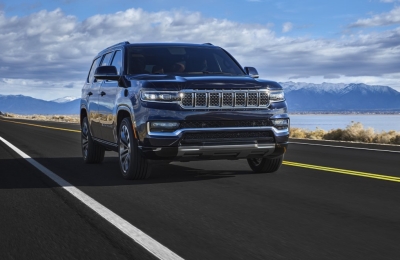
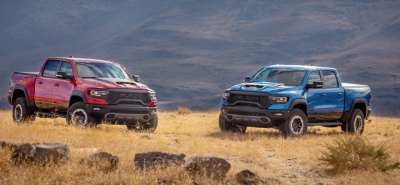
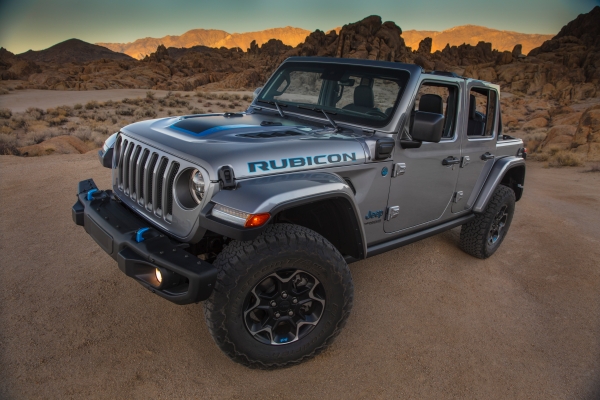
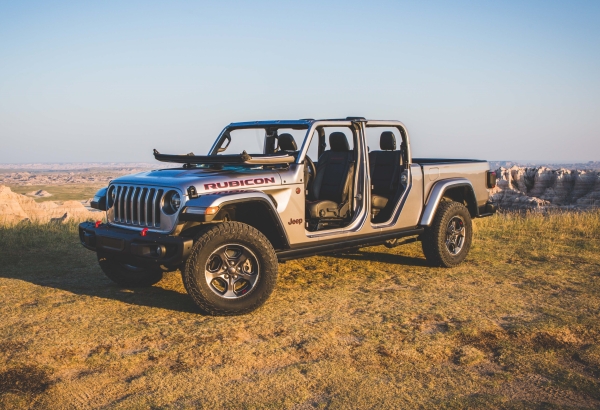
The light-truck and off-road industry segments are thriving, according to the “2019 SEMA Industry Perspectives” report, which stated that 73% of businesses expected sales to increase in 2020. OEMs are capitalizing on this trend by launching new pickups and SUVs that open a wide range of opportunities for aftermarket manufacturers to develop accessories and performance parts. New and notable vehicle launches include last year’s 2020 model-year Gladiator and Ranger pickups. This year, Ford will launch the new ’21 model-year Bronco, along with the all-new 14th-generation F-150. Jeep will debut the all-new ’21 Grand Wagoneer, and Ram will release the ’21 Rebel TRX. Looking ahead, there is an opportunity to innovate products for future electric pickups, including models from Tesla, Rivian, Bollinger and General Motors.

Additional challenges within our market include keeping up with current demand, which is definitely a good problem to have! Growth in the overlanding segment is exploding with new enthusiasts. This is an opportunity for pickup accessory manufacturers to diversify into the segment and support the high demand from consumers.

Another challenge we are experiencing now is the tight labor market. “In fact, our TORA Chair-Elect Troy Wirtz has noted that labor may be our biggest challenge. So we will be looking at creative ways to attract talent and increase benefits to our member businesses.”

Overall, this year has been a challenging one for the council due to the shelter-in-place guidelines imposed by the local and federal authorities. Four of our networking regional events for this fiscal year had to be rescheduled to a later date, and the live SEMA Show was cancelled for 2020.

One of the best ways for us to interact with our members and to create a sense of community is through networking events. Thankfully, technology has been a great support to our effort to continue our interactions with at-large membership. We have been able to host general membership meetings, upcoming virtual seminars, award ceremonies and even networking events.

We are currently working on delivering value through education. The original plan was to host seminars during the SEMA Show, but then we are moved forward with virtual events. One of the seminars, entitled “Off-Road 2.0: Performance Technology and Lifestyle Trends, Powered by TORA,” was formed with a panel of experts in the off-road and powersports segments. Another event we hosted was an off-road builders panel, featuring manufacturers and builders who will offer insights into trends and identify market opportunities.

The council is also continuously highlighting TORA volunteers through a Member Spotlight in SEMA eNews. We do this because we have so much support from volunteers who are not select-committee members, and this is a way to recognize their efforts. All of our volunteers help contribute to the success of our programs and our council.

Tyson Boyer

Wheel & Tire Council (WTC)

Chair: Tyson Boyer, Dill Air Controls Products LLC

COVID-19’s impact on the WTC is somewhat difficult to measure. In the short term, it has eliminated in-person meetings, including the annual Council Summit. However, online video platforms, including Zoom and Skype, are now common ground and a way to keep us all personally connected.

We are seeing mixed results on the industry side. Independent tire dealers are recovering well and, in a few cases, stronger than originally forecasted pre-COVID-19. Car dealers were able to navigate the early COVID-19 timeframe by pushing strong deals into the market. Although they are also on the road to recovery, they still have a way to go, given the unknown duration of this pandemic coupled with their fall new-model additions arriving versus overstock of current models.

For regional- and national-level tire retailers, the headlines are the telling stories. As a subsegment, they are coming back in a spotty formation. These measurements or “spotty-spots,” if you will, are more visible when dissected on geographic scales, marking the dependency on the economic situation of the local market. COVID-19, hurricanes, flooding, forest fires, etc. all play into this.

Some of the greatest divide is apparent with tire manufacturers. Tier 1s are struggling due to their premium market position. As that occurs, Tier 2s are moving in quickly to take up larger market shares. Whether this holds out this way or tilts back will not be very clear until we are well into Q2 2021 at minimum, or
even Q3.

If we look at the whole marketplace within the tire/wheel segment, the most important question business leaders should ask themselves is, “How quickly can I adapt my business to the challenges ahead?”

We are entering new and unprecedented challenges. Miles driven is an important feeding funnel. This year’s decrease may be felt for some time. Again, this goes back to your ability to differentiate your business, minimize the level of internal risk while creatively increasing your direct-to-consumer strategy. Do not shortcut or downplay your digital spend, and be sure to dial into your audience to maximize your usage.

If unsure, have a look at some markets that are exploding with business. Some have changed their approach while others are fortunate to be selling products in the channels that prosper during a pandemic. For example, RVs/trailers, trailer hitches and mountain bikes are all experiencing strong growth. Finding a perfect product recipe is not something any one of us could really have anticipated if we were all asked in January 2020.

Lastly, the product segment that is near and dear to many of us is wheels. Passenger and light-truck wheel sales are setting new records. That is true for any retailer and wheel manufacturer. I think we all have some reasons we can point to; however, with this large of a growth during a global pandemic, there are mysterious insights for which many are thankful.

WTC is continuing to find ways to communicate with members and the greater audience. At the 2019 SEMA Show, we launched The Stage’s inaugural event. The success of the videos that debuted every two to three weeks starting in the spring have shown the importance of growing digital platforms. By the time you read this, the second annual The Stage will have debuted at SEMA360. If you were unable to see the big names we lined up, visit www.sema.org/wtc.

Member spotlights and more live video streams are in the works to support the growth and focus on education, aligning with WTC’s vision.

Kirstin Stone

Young Executives Network (YEN)

Chair: Kirstin Stone, Derive Systems

The Young Executives Network (YEN) has consistently held on-site networking events throughout the country. Unfortunately, COVID-19 brought that to a near-immediate halt. Throughout the pandemic, we’ve put more focus on the Live Chat program, and we’ve been more successful than ever before, thanks to the efforts of Jeremy Headlee, who’s been running that program. We’re also starting a virtual happy hour series, and we’re looking forward to interacting more with our membership in the weeks and months to come.

I think one of the big takeaways for us is really how many opportunities we have for virtual interaction, even after the world really opens back up. There are some programs (like the virtual happy hours) that I’m looking forward to continuing.

Thankfully, much of the industry has continued to prosper despite the weird economic circumstances we’re all living in, and I’m looking forward to continued growth as we move out of this dip.

We are currently working on more virtual events and going bigger than ever on our in-person networking opportunities as soon as we’re able.

Because we’re a network, we don’t see specific segment trends, but watching networking and human communication evolve has been fascinating. While the opportunities to interact are actually more abundant than ever, it’s also shown the value of meeting people in person. While the virtual events do work, there’s nothing like seeing an industry friend in person, catching up, and making live new connections.

Tue, 12/01/2020 - 15:11

SEMA News—December 2020

REQUIRED READING

By Juan Torres

Data to Help Grow Your Business

The SEMA market research department’s primary focus is to develop research reports on consumers and the automotive aftermarket industry to help SEMA members make better business decisions. In addition to providing rich data for businesses, the SEMA market reports available at www.sema.org/research provide journalists with quality data that is often used in their reporting. Below are a some of the journalists who have referenced SEMA’s findings in their stories.
 

The ShopThe Shop

In her business report on the current state of the automotive industry, Stefanie Galeano-Zalutko referenced the “2020 SEMA Market Report.” The journalist highlighted several key findings from the report, including that 59% of specialty-automotive consumers are under the age of 40.


ClassicCars Journal

Classic Car Journal

When Ford unveiled its new-generation Bronco, editor Larry Edsall wondered if the vehicle would result in increased sales for aftermarket accessories. SEMA Market Research Director Gavin Knapp noted that people who own vehicles such as the Bronco and Jeep Wrangler are eager to do personalization and customization.


Auto Service World

Auto Service World


Allan Janssen used the “SEMA Retail Landscape Report” when compiling a “By the Numbers” piece for his readers. He noted that 83% of automotive specialty-equipment retailers reported stable or growing sales in recent years, dispelling reports of a “retailpocalypse.”


Heard on Social Media

“Even as the vehicle landscape is changing, the market for parts to modify those vehicles is growing, according to the new @SEMA research report, ‘SEMA Accessory Opportunity Report: Top Cars and Trucks’.”Motorsports Videos, via Twitter

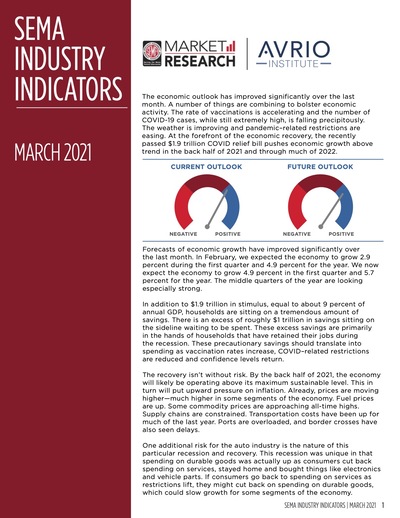
“#SEMA Industry Indicators: The Worst of the Economic Downturn Is Likely Over.”—Automotive Business Review, via Facebook

“According to the latest SEMA Market Report, the specialty-equipment market set a new retail sales record in 2019 of $46.20 billion—an increase of roughly 4%.”Auto Care Week/The Greensheet, via Twitter

“SEMA Market Report: Automotive Specialty-Equipment Market Expected to Rebound.”—12 Volt News, via Facebook


Tue, 12/01/2020 - 14:34

SEMA News—December 2020

LEGISLATIVE AND TECHNICAL AFFAIRS

By Stuart Gosswein

2020: The Year in Review

Bonneville
Bonneville Salt Flats: The Utah Department of Natural Resources and U.S. Bureau of Land Management (BLM) signed an agreement to create the “Restore Bonneville” program and dramatically increase the amount of salt currently being pumped onto the historic landmark. Bonneville’s salt crust diminished over many decades after the BLM issued leases allowing salt to be transferred for potash mining. Salt thickness measurements are now in inches rather than feet. While mining adjacent to Bonneville historically contributed to the diminishment of the salt crust, it is also part of the restoration solution. Once potash is extracted from salt brine through a solar evaporation process, the remaining salt is a waste byproduct owned by the mine lease holder. The mine owner has been pumping salt since 1997, but infrastructure renovation and upgrades will increase the volume. As a result, the racing venue should gradually expand from its current 8-mi. length, with a goal of reaching the original 13-mi. length. SEMA, along with other organizations and companies comprising the Save the Salt Coalition, is working with state and federal officials to implement the 10-year program. The state of Utah and the BLM have allocated $2 million to start the program, and additional funds are being pursued for 2021.

The laws and regulations that govern how SEMA members do business have a continuous impact on the way automotive specialty-equipment products are made, distributed and marketed. The charge of the SEMA government affairs office is to stay on top of all relevant state and federal legislation and regulations and advocate for industry positions to ensure the best possible outcome for SEMA’s membership. The following are a few examples of critical legislative/regulatory issues addressed by the SEMA government affairs team over the past year.

FEDERAL UPDATE

COVID-19: Addressing COVID-19 as a nation and industry was the top challenge of 2020. The legislative agenda for most states and the federal government was significantly impacted as lawmakers turned their attention to pandemic relief measures. SEMA focused on providing members with valuable resources, including webinars and the creation of the www.sema.org/coronavirus webpage. The focus of attention included:

  • Closures and Reopenings: SEMA compiled a database on how each state defines which businesses are “essential” and then worked with other organizations to define essential auto industry work activities within the U.S. Department of Homeland Security guidelines and those adopted by the states. The database then tracked state-by-state reopenings.
  • Small-Business Loans: The U.S. Small Business Administration (SBA) administered the Paycheck Protection Program to provide small businesses with 1%-interest-rate loans for operation costs. The loans were potentially forgivable if at least 60% of the loan was used for payroll. Pending legislation supported by SEMA would require the SBA to create a simple one-page application form to automatically forgive qualifying loans up to $150,000. The SBA had a second program for granting an emergency coronavirus disaster loan of up to $2 million at 3.75% interest to be used for payroll, fixed debts, accounts payable and other bills, including a $10,000 forgivable grant.
  • COVID-19 Liability Protection: SEMA continues to urge the U.S. Congress to pass targeted COVID-19 protection from the threat of frivolous liability lawsuits. The protection would be granted to businesses operating under applicable public health guidelines for the duration of the pandemic. Many states have enacted such legislation, but efforts to enact a national standard have stalled.
  • Tax Credits: The Internal Revenue Service provided a variety of relief measures, from deferring tax filing deadlines to providing employer tax credits.
  • Paid Sick and Family Leave: Lawmakers expanded federal laws covering paid sick and family leave policies to address health and stay-at-home challenges.
  • OSHA and CDC Guidance: The Occupational Safety and Health Administration developed employer guidance for creating a safe workplace, and the Centers for Disease Control and Prevention issued comprehensive guidance on understanding the virus and mitigating exposure.

RPM Act: The Recognizing the Protection of Motorsports (RPM) Act is being considered by the U.S. Congress. The bill (H.R. 5434; S. 2602) clarifies that the Clean Air Act allows motor vehicles to be converted into dedicated race cars and that it is legal to produce, sell and install race parts for those vehicles. Passage of the RPM Act will protect sales beyond emissions-related parts, including racing tires, wheels, brakes, suspension equipment and rollcages, since customers won’t be installing those products if a car or motorcycle cannot be converted into a dedicated race vehicle. The bill has been subject to
previous Congressional hearings, and SEMA is working with lawmakers to approve the legislation in the current Congress. To contact your lawmakers, visit www.sema.org/rpm.

Collector Car
Collector Car Appreciation Day: The 11th annual Collector Car Appreciation Day (CCAD) took place on Friday, July 10, 2020. Both the U.S. Senate and the House of Representatives introduced resolutions (H.R. 998/S.R. 650) to focus attention on the vital role automotive restoration and collection plays in American society. Thousands of Americans gathered at car cruises, parades and virtual events to celebrate the nation’s automotive heritage. The day is also international in scope, as many Canadian provinces passed resolutions and hosted events. The next CCAD is set for July 9, 2021.

Tariffs: SEMA is working with several coalitions of industry associations to oppose the imposition of tariffs on a variety of worldwide products and materials. While SEMA supports the Trump administration’s efforts to create fair and reciprocal trade and to protect intellectual property rights, the association remains concerned that tariffs are not accomplishing that shared objective. SEMA has called for tariff relief during COVID-19. The first request was for a temporary suspension of tariff collections so that companies could preserve cash and pay other bills. The second request was for an extended deferral of collections. To date, both requests have been denied. The following is a summary of specific tariffs.

Steel/Aluminum: The U.S. government has imposed global tariffs on steel (25%) and aluminum (10%). Most of the tariffs began on June 1, 2018, with Argentina, Australia, Brazil and South Korea being exempted based on trade agreements. Mexico and Canada were exempted on May 20, 2019. The tariffs generally apply to processed raw materials (steel/aluminum plate, sheets, bars, etc.) but not finished products (e.g., wheels, exhaust systems, etc.). However, the U.S. government has imposed the tariffs on several product categories, including bumper stampings, for which it has documented a dramatic increase in the volume of imports that could be construed as circumventing the tariffs. U.S.-based companies are eligible for one-year tariff exclusions if they can demonstrate that the foreign-produced material is not made in the U.S. in reasonably available quantity or satisfactory quality. More than 200,000 company exclusion requests have been received to date.

Chinese Products: In July 2018, the United States began imposing tariffs on most imports from China. Tariffs on auto parts began in September 2018 at 10% and were raised to 25% in May 2019. In January 2020, the United States and China signed a phase-one trade deal whereby China will buy more U.S. goods and implement intellectual property enforcement measures and provisions to end the practice of pressuring foreign companies to transfer their technology to Chinese companies. The tariffs were thought to be bargaining chips that would be removed once a trade agreement had been negotiated. However, they remain as leverage to confirm China’s phase-one compliance and pursue a phase-two agreement to address the trade imbalance issues, cybertheft and Chinese subsidization of key industries. There is no timetable for reaching a phase-two agreement. Companies were able to seek tariff exclusions based on hardship and a lack of alternative product sourcing, but a majority of requests were denied, and all exclusions are scheduled to end on January 1, 2021.

Imported Autos/Auto Parts: In May 2018, President Trump directed the U.S. Department of Commerce to investigate whether to impose tariffs on imported automobiles and auto parts if it is found that they pose a threat to America’s national security (manufacturing base). The Department of Commerce report has not been released but is believed to note concerns about increases in the volume of automobile and auto part imports over the past three decades, along with barriers to sales of U.S. exports in foreign markets. A focus of concern is innovations in engine and powertrain technology, electrification, lighter-weight materials, advanced connectivity and autonomous driving. In response to threatened tariffs, SEMA and seven other major trade associations representing the broad scope of the auto industry formed the Driving American Jobs Coalition. The coalition opposes the tariffs as being counterproductive and threatening American companies, workers and consumers.

Replica Vehicle Law: A SEMA-supported law enacted in 2015 will allow small auto manufacturers to sell completed replica cars. Those vehicles resemble cars manufactured at least 25 years ago. Companies will be able to produce up to 325 turnkey replica vehicles (per company) in the United States and 5,000 worldwide under a simplified regulatory system. Until now, the federal government’s regulatory system did not differentiate between a company producing millions of vehicles and a business producing a few custom cars. In 2019, SEMA sued the National Highway Traffic Safety Administration (NHTSA) for failing to implement the program in 2016 as required under the law. The lawsuit helped spur the NHTSA to issue a proposed rule in January, and the industry is now awaiting issuance of a final rule that will allow car sales to commence. In 2019, the U.S. Environmental Protection Agency (EPA) and the California Air Resources Board (CARB) issued guidelines and regulations covering the engine packages to be installed in these replica vehicles.

Digital Millennium Copyright Act: SEMA filed a petition with the Copyright Office to renew an existing exemption allowing vehicle owners and service and repair shops to diagnose, repair or modify a vehicle without violating copyright protections. Congress passed the Digital Millennium Copyright Act in 1998 to ensure that copyright law extended to digital products and services. Congress also included a process for securing three-year exemptions that can be renewed indefinitely when a need to access copyrighted material can be demonstrated, such as accessing vehicle software to repair a vehicle or install aftermarket products.

Federal Enforcement Practices: SEMA submitted comments to the White House Office of Management and Budget (OMB) on ways to improve regulatory enforcement practices employed by the federal government. The comments included examples of excessive practices being employed by the U.S. EPA, such as unscheduled inspections, failure to inform company employees of the right to deny entry and consult with an attorney, overly broad investigations, and the threat of exorbitant fines as a negotiating strategy. SEMA recommended that the OMB issue guidelines requiring that government enforcement procedures take small business size into consideration.

“Made in USA” Regulation: The Federal Trade Commission (FTC) is proposing to issue a regulation to consolidate its longstanding policy to enforce unqualified “Made in USA” claims. For decades, the agency has used its general legal authority to enforce against unfair or deceptive trade practices regarding unqualified “Made in USA” claims. The FTC has issued broad guidance on the topic, most recently in 1997, but has not issued a formal regulation until now. The FTC is not pursuing any changes of substance to its policy, which requires a seller making an unqualified “Made in USA” claim to have a reasonable basis for asserting that “all or virtually all” of the product is made in the United States. Companies may still make qualified “Made in USA” claims for products that include U.S. content or processing but do not meet the criteria for making an unqualified claim. Qualified claim examples include “Made in USA of U.S. and Imported Parts,” “75% U.S. Content,” and “Assembled in USA.”

Tire Dumping Petitions: The United Steelworkers union has filed petitions alleging that certain light-truck and passenger-vehicle tires from Southeast Asia are being dumped or are benefitting from unfair government subsidies. The petitions cite dumping margins as high as 195% for Korea, 147% for Taiwan, 217% for Thailand and 33% for Vietnam. The U.S. International Trade Commission must confirm that there is harm or threatened harm to U.S. industry before duties can be imposed.

NAFTA/USMCA: The United States-Mexico-Canada Agreement (USMCA) to replace the North American Free Trade Agreement (NAFTA) was ratified and implemented by the three countries. Major provisions include a requirement that vehicles have at least 75% North American content, compared with 62.5% currently. At least 40%–45% of the vehicle content must be made by workers earning at least $16 an hour, which will lead to higher wages in Mexico.

Maintenance Backlog on Federal Lands: The SEMA-supported Great American Outdoors Act (GAOA) was signed into law in August. The GAOA will dedicate $9.5 billion over the next five years to address the maintenance backlog on federal lands by creating a national parks and public land legacy restoration fund, enabling the National Park Service, the U.S. Forest Service and several other federal agencies to rebuild and improve trails, roads, docks, campgrounds and more. The bill will also appropriate $900 million annually to the Land and Water Conservation Fund for projects that help to protect natural areas, water resources, cultural heritage sites, and to provide recreation opportunities. The GAOA will benefit many SEMA members in the off-road market, in addition to companies selling wheels/tires, suspension, power and other equipment to help tow RVs and boats to the nation’s parks and recreation areas.

West VirginiaWest Virginia—Military Vehicles: West Virginia Governor Jim Justice signed into law a SEMA-supported bill to allow antique military vehicles to display an alternate registration insignia, as opposed to a traditional license plate. Antique vehicle plates are available for vehicles that are more than 25 years old and owned solely as collectors’ items.

STATE UPDATE

Collector Car Appreciation Day: The states of Louisiana, South Dakota, West Virginia and Wisconsin, along with the Canadian provinces of Alberta, British Columbia, Newfoundland and Labrador, New Brunswick, and Nova Scotia, passed SEMA-requested resolutions locally recognizing Collector Car Appreciation Day.

COVID-19 Liability Protection: Georgia, Louisiana, Kansas, Mississippi, Nevada, North Carolina, Ohio, Oklahoma, Tennessee, Utah and Wyoming each enacted SEMA-supported laws to provide businesses that follow public health guidance protection from unreasonable lawsuits related to the COVID-19 pandemic.

California—Electric Vehicles: California Governor Gavin Newsom issued a controversial Executive Order in September instructing the California Air Resources Board to draft regulations requiring that all new cars and passenger trucks sold in the state be zero-emissions by 2035. Once drafted, CARB’s proposed regulations will be subject to a lengthy regulatory process, including legal, economic and environmental analyses, public comment, and hearings. According to the California Energy Commission, zero-emission vehicles (ZEVs) currently make up approximately 2% of the more than 28 million vehicles in use in the Golden State. It is estimated that at least 8% of new-vehicle sales in California will be ZEVs and plug-in hybrids by 2025. SEMA opposes the governor’s order, which is expected to face numerous legal challenges. California’s ZEV program falls within the state’s greenhouse gas rule, which is being challenged in court by the Trump administration. The federal government is seeking to withdraw EPA recognition of the California rule under the Clean Air Act because it effectively establishes fuel economy standards that are the sole jurisdiction of the federal government. The challenge could eventually be decided by the Supreme Court.

Maryland—Historic Vehicles: The Maryland House of Delegates withdrew SEMA-opposed legislation that would have imposed an emissions inspection requirement on historic vehicles less than 40 years old. All historic vehicles are currently exempt. In Maryland, a historic vehicle is defined as being 20 years old or older and not substantially altered from the manufacturer’s original design.

Virginia Virginia—Motorsports: SEMA-supported legislation in Virginia to create a motor vehicle racing heritage trail in order to promote tourism and economic development became law after the deadline for Governor Ralph Northam’s signature or veto passed. The law convenes a group of stakeholders, including owners of historic NASCAR and other racing tracks, to design and implement the trail.

New Jersey—Vehicle Warranties: New Jersey Governor Phil Murphy signed into law SEMA-supported legislation to require new-car dealers to provide purchasers written notice that it is illegal for manufacturers or dealers to void a warranty or deny coverage because aftermarket or recycled parts were installed or because someone other than the dealer performed service.

Ohio—License Plates: SEMA-supported legislation from 2019 allowing the display of only a single, rear-mounted license plate went into effect on July 1, 2020. The state previously required both a front and a rear plate. This new law is expected to save the state between $1.2 and $1.4 million
per year.

Oklahoma—License Plates: The Oklahoma House of Representatives failed to pass SEMA-opposed legislation that would have required front and rear license plates on all vehicles. Vehicles are currently required to display only a single, rear-mounted license plate.

Washington—Vehicle Registration: SEMA-opposed legislation that would have significantly restricted eligibility of collector vehicles and horseless carriages failed to pass when the legislature adjourned for the year. Under existing law, a collector vehicle must be at least 30 years old, while a horseless carriage must be at least 40 years old. If passed, collector vehicles would have been required to be at least 40 years old, while horseless carriages would have been defined as being manufactured prior to 1916. The bill would also have restricted the issuance of year-of-manufacture plates and considerably increased registration fees.

Wisconsin—Collector and Hobbyist Vehicles: SEMA-opposed legislation in Wisconsin to restrict eligibility and raise fees for collector and hobbyist vehicle registrations failed to pass the Assembly. Currently, these vehicles must be more than 20 years old and are required to pay twice the registration fee as the type of vehicle being registered. If passed, the bill would have further limited each designation to vehicles 30 years old and older, expanded seasonal use restrictions, and increased the registration fees to three times the normal rate. In Wisconsin, a collector vehicle is defined as being at least 20 years old, preserved because of historical significance, and having had no body alterations. Vehicles eligible for hobbyist plates include street modifieds, replica vehicles, reconstructed vehicles and homemade vehicles.

Tue, 12/01/2020 - 14:34

SEMA News—December 2020

LEGISLATIVE AND TECHNICAL AFFAIRS

By Stuart Gosswein

2020: The Year in Review

Bonneville
Bonneville Salt Flats: The Utah Department of Natural Resources and U.S. Bureau of Land Management (BLM) signed an agreement to create the “Restore Bonneville” program and dramatically increase the amount of salt currently being pumped onto the historic landmark. Bonneville’s salt crust diminished over many decades after the BLM issued leases allowing salt to be transferred for potash mining. Salt thickness measurements are now in inches rather than feet. While mining adjacent to Bonneville historically contributed to the diminishment of the salt crust, it is also part of the restoration solution. Once potash is extracted from salt brine through a solar evaporation process, the remaining salt is a waste byproduct owned by the mine lease holder. The mine owner has been pumping salt since 1997, but infrastructure renovation and upgrades will increase the volume. As a result, the racing venue should gradually expand from its current 8-mi. length, with a goal of reaching the original 13-mi. length. SEMA, along with other organizations and companies comprising the Save the Salt Coalition, is working with state and federal officials to implement the 10-year program. The state of Utah and the BLM have allocated $2 million to start the program, and additional funds are being pursued for 2021.

The laws and regulations that govern how SEMA members do business have a continuous impact on the way automotive specialty-equipment products are made, distributed and marketed. The charge of the SEMA government affairs office is to stay on top of all relevant state and federal legislation and regulations and advocate for industry positions to ensure the best possible outcome for SEMA’s membership. The following are a few examples of critical legislative/regulatory issues addressed by the SEMA government affairs team over the past year.

FEDERAL UPDATE

COVID-19: Addressing COVID-19 as a nation and industry was the top challenge of 2020. The legislative agenda for most states and the federal government was significantly impacted as lawmakers turned their attention to pandemic relief measures. SEMA focused on providing members with valuable resources, including webinars and the creation of the www.sema.org/coronavirus webpage. The focus of attention included:

  • Closures and Reopenings: SEMA compiled a database on how each state defines which businesses are “essential” and then worked with other organizations to define essential auto industry work activities within the U.S. Department of Homeland Security guidelines and those adopted by the states. The database then tracked state-by-state reopenings.
  • Small-Business Loans: The U.S. Small Business Administration (SBA) administered the Paycheck Protection Program to provide small businesses with 1%-interest-rate loans for operation costs. The loans were potentially forgivable if at least 60% of the loan was used for payroll. Pending legislation supported by SEMA would require the SBA to create a simple one-page application form to automatically forgive qualifying loans up to $150,000. The SBA had a second program for granting an emergency coronavirus disaster loan of up to $2 million at 3.75% interest to be used for payroll, fixed debts, accounts payable and other bills, including a $10,000 forgivable grant.
  • COVID-19 Liability Protection: SEMA continues to urge the U.S. Congress to pass targeted COVID-19 protection from the threat of frivolous liability lawsuits. The protection would be granted to businesses operating under applicable public health guidelines for the duration of the pandemic. Many states have enacted such legislation, but efforts to enact a national standard have stalled.
  • Tax Credits: The Internal Revenue Service provided a variety of relief measures, from deferring tax filing deadlines to providing employer tax credits.
  • Paid Sick and Family Leave: Lawmakers expanded federal laws covering paid sick and family leave policies to address health and stay-at-home challenges.
  • OSHA and CDC Guidance: The Occupational Safety and Health Administration developed employer guidance for creating a safe workplace, and the Centers for Disease Control and Prevention issued comprehensive guidance on understanding the virus and mitigating exposure.

RPM Act: The Recognizing the Protection of Motorsports (RPM) Act is being considered by the U.S. Congress. The bill (H.R. 5434; S. 2602) clarifies that the Clean Air Act allows motor vehicles to be converted into dedicated race cars and that it is legal to produce, sell and install race parts for those vehicles. Passage of the RPM Act will protect sales beyond emissions-related parts, including racing tires, wheels, brakes, suspension equipment and rollcages, since customers won’t be installing those products if a car or motorcycle cannot be converted into a dedicated race vehicle. The bill has been subject to
previous Congressional hearings, and SEMA is working with lawmakers to approve the legislation in the current Congress. To contact your lawmakers, visit www.sema.org/rpm.

Collector Car
Collector Car Appreciation Day: The 11th annual Collector Car Appreciation Day (CCAD) took place on Friday, July 10, 2020. Both the U.S. Senate and the House of Representatives introduced resolutions (H.R. 998/S.R. 650) to focus attention on the vital role automotive restoration and collection plays in American society. Thousands of Americans gathered at car cruises, parades and virtual events to celebrate the nation’s automotive heritage. The day is also international in scope, as many Canadian provinces passed resolutions and hosted events. The next CCAD is set for July 9, 2021.

Tariffs: SEMA is working with several coalitions of industry associations to oppose the imposition of tariffs on a variety of worldwide products and materials. While SEMA supports the Trump administration’s efforts to create fair and reciprocal trade and to protect intellectual property rights, the association remains concerned that tariffs are not accomplishing that shared objective. SEMA has called for tariff relief during COVID-19. The first request was for a temporary suspension of tariff collections so that companies could preserve cash and pay other bills. The second request was for an extended deferral of collections. To date, both requests have been denied. The following is a summary of specific tariffs.

Steel/Aluminum: The U.S. government has imposed global tariffs on steel (25%) and aluminum (10%). Most of the tariffs began on June 1, 2018, with Argentina, Australia, Brazil and South Korea being exempted based on trade agreements. Mexico and Canada were exempted on May 20, 2019. The tariffs generally apply to processed raw materials (steel/aluminum plate, sheets, bars, etc.) but not finished products (e.g., wheels, exhaust systems, etc.). However, the U.S. government has imposed the tariffs on several product categories, including bumper stampings, for which it has documented a dramatic increase in the volume of imports that could be construed as circumventing the tariffs. U.S.-based companies are eligible for one-year tariff exclusions if they can demonstrate that the foreign-produced material is not made in the U.S. in reasonably available quantity or satisfactory quality. More than 200,000 company exclusion requests have been received to date.

Chinese Products: In July 2018, the United States began imposing tariffs on most imports from China. Tariffs on auto parts began in September 2018 at 10% and were raised to 25% in May 2019. In January 2020, the United States and China signed a phase-one trade deal whereby China will buy more U.S. goods and implement intellectual property enforcement measures and provisions to end the practice of pressuring foreign companies to transfer their technology to Chinese companies. The tariffs were thought to be bargaining chips that would be removed once a trade agreement had been negotiated. However, they remain as leverage to confirm China’s phase-one compliance and pursue a phase-two agreement to address the trade imbalance issues, cybertheft and Chinese subsidization of key industries. There is no timetable for reaching a phase-two agreement. Companies were able to seek tariff exclusions based on hardship and a lack of alternative product sourcing, but a majority of requests were denied, and all exclusions are scheduled to end on January 1, 2021.

Imported Autos/Auto Parts: In May 2018, President Trump directed the U.S. Department of Commerce to investigate whether to impose tariffs on imported automobiles and auto parts if it is found that they pose a threat to America’s national security (manufacturing base). The Department of Commerce report has not been released but is believed to note concerns about increases in the volume of automobile and auto part imports over the past three decades, along with barriers to sales of U.S. exports in foreign markets. A focus of concern is innovations in engine and powertrain technology, electrification, lighter-weight materials, advanced connectivity and autonomous driving. In response to threatened tariffs, SEMA and seven other major trade associations representing the broad scope of the auto industry formed the Driving American Jobs Coalition. The coalition opposes the tariffs as being counterproductive and threatening American companies, workers and consumers.

Replica Vehicle Law: A SEMA-supported law enacted in 2015 will allow small auto manufacturers to sell completed replica cars. Those vehicles resemble cars manufactured at least 25 years ago. Companies will be able to produce up to 325 turnkey replica vehicles (per company) in the United States and 5,000 worldwide under a simplified regulatory system. Until now, the federal government’s regulatory system did not differentiate between a company producing millions of vehicles and a business producing a few custom cars. In 2019, SEMA sued the National Highway Traffic Safety Administration (NHTSA) for failing to implement the program in 2016 as required under the law. The lawsuit helped spur the NHTSA to issue a proposed rule in January, and the industry is now awaiting issuance of a final rule that will allow car sales to commence. In 2019, the U.S. Environmental Protection Agency (EPA) and the California Air Resources Board (CARB) issued guidelines and regulations covering the engine packages to be installed in these replica vehicles.

Digital Millennium Copyright Act: SEMA filed a petition with the Copyright Office to renew an existing exemption allowing vehicle owners and service and repair shops to diagnose, repair or modify a vehicle without violating copyright protections. Congress passed the Digital Millennium Copyright Act in 1998 to ensure that copyright law extended to digital products and services. Congress also included a process for securing three-year exemptions that can be renewed indefinitely when a need to access copyrighted material can be demonstrated, such as accessing vehicle software to repair a vehicle or install aftermarket products.

Federal Enforcement Practices: SEMA submitted comments to the White House Office of Management and Budget (OMB) on ways to improve regulatory enforcement practices employed by the federal government. The comments included examples of excessive practices being employed by the U.S. EPA, such as unscheduled inspections, failure to inform company employees of the right to deny entry and consult with an attorney, overly broad investigations, and the threat of exorbitant fines as a negotiating strategy. SEMA recommended that the OMB issue guidelines requiring that government enforcement procedures take small business size into consideration.

“Made in USA” Regulation: The Federal Trade Commission (FTC) is proposing to issue a regulation to consolidate its longstanding policy to enforce unqualified “Made in USA” claims. For decades, the agency has used its general legal authority to enforce against unfair or deceptive trade practices regarding unqualified “Made in USA” claims. The FTC has issued broad guidance on the topic, most recently in 1997, but has not issued a formal regulation until now. The FTC is not pursuing any changes of substance to its policy, which requires a seller making an unqualified “Made in USA” claim to have a reasonable basis for asserting that “all or virtually all” of the product is made in the United States. Companies may still make qualified “Made in USA” claims for products that include U.S. content or processing but do not meet the criteria for making an unqualified claim. Qualified claim examples include “Made in USA of U.S. and Imported Parts,” “75% U.S. Content,” and “Assembled in USA.”

Tire Dumping Petitions: The United Steelworkers union has filed petitions alleging that certain light-truck and passenger-vehicle tires from Southeast Asia are being dumped or are benefitting from unfair government subsidies. The petitions cite dumping margins as high as 195% for Korea, 147% for Taiwan, 217% for Thailand and 33% for Vietnam. The U.S. International Trade Commission must confirm that there is harm or threatened harm to U.S. industry before duties can be imposed.

NAFTA/USMCA: The United States-Mexico-Canada Agreement (USMCA) to replace the North American Free Trade Agreement (NAFTA) was ratified and implemented by the three countries. Major provisions include a requirement that vehicles have at least 75% North American content, compared with 62.5% currently. At least 40%–45% of the vehicle content must be made by workers earning at least $16 an hour, which will lead to higher wages in Mexico.

Maintenance Backlog on Federal Lands: The SEMA-supported Great American Outdoors Act (GAOA) was signed into law in August. The GAOA will dedicate $9.5 billion over the next five years to address the maintenance backlog on federal lands by creating a national parks and public land legacy restoration fund, enabling the National Park Service, the U.S. Forest Service and several other federal agencies to rebuild and improve trails, roads, docks, campgrounds and more. The bill will also appropriate $900 million annually to the Land and Water Conservation Fund for projects that help to protect natural areas, water resources, cultural heritage sites, and to provide recreation opportunities. The GAOA will benefit many SEMA members in the off-road market, in addition to companies selling wheels/tires, suspension, power and other equipment to help tow RVs and boats to the nation’s parks and recreation areas.

West VirginiaWest Virginia—Military Vehicles: West Virginia Governor Jim Justice signed into law a SEMA-supported bill to allow antique military vehicles to display an alternate registration insignia, as opposed to a traditional license plate. Antique vehicle plates are available for vehicles that are more than 25 years old and owned solely as collectors’ items.

STATE UPDATE

Collector Car Appreciation Day: The states of Louisiana, South Dakota, West Virginia and Wisconsin, along with the Canadian provinces of Alberta, British Columbia, Newfoundland and Labrador, New Brunswick, and Nova Scotia, passed SEMA-requested resolutions locally recognizing Collector Car Appreciation Day.

COVID-19 Liability Protection: Georgia, Louisiana, Kansas, Mississippi, Nevada, North Carolina, Ohio, Oklahoma, Tennessee, Utah and Wyoming each enacted SEMA-supported laws to provide businesses that follow public health guidance protection from unreasonable lawsuits related to the COVID-19 pandemic.

California—Electric Vehicles: California Governor Gavin Newsom issued a controversial Executive Order in September instructing the California Air Resources Board to draft regulations requiring that all new cars and passenger trucks sold in the state be zero-emissions by 2035. Once drafted, CARB’s proposed regulations will be subject to a lengthy regulatory process, including legal, economic and environmental analyses, public comment, and hearings. According to the California Energy Commission, zero-emission vehicles (ZEVs) currently make up approximately 2% of the more than 28 million vehicles in use in the Golden State. It is estimated that at least 8% of new-vehicle sales in California will be ZEVs and plug-in hybrids by 2025. SEMA opposes the governor’s order, which is expected to face numerous legal challenges. California’s ZEV program falls within the state’s greenhouse gas rule, which is being challenged in court by the Trump administration. The federal government is seeking to withdraw EPA recognition of the California rule under the Clean Air Act because it effectively establishes fuel economy standards that are the sole jurisdiction of the federal government. The challenge could eventually be decided by the Supreme Court.

Maryland—Historic Vehicles: The Maryland House of Delegates withdrew SEMA-opposed legislation that would have imposed an emissions inspection requirement on historic vehicles less than 40 years old. All historic vehicles are currently exempt. In Maryland, a historic vehicle is defined as being 20 years old or older and not substantially altered from the manufacturer’s original design.

Virginia Virginia—Motorsports: SEMA-supported legislation in Virginia to create a motor vehicle racing heritage trail in order to promote tourism and economic development became law after the deadline for Governor Ralph Northam’s signature or veto passed. The law convenes a group of stakeholders, including owners of historic NASCAR and other racing tracks, to design and implement the trail.

New Jersey—Vehicle Warranties: New Jersey Governor Phil Murphy signed into law SEMA-supported legislation to require new-car dealers to provide purchasers written notice that it is illegal for manufacturers or dealers to void a warranty or deny coverage because aftermarket or recycled parts were installed or because someone other than the dealer performed service.

Ohio—License Plates: SEMA-supported legislation from 2019 allowing the display of only a single, rear-mounted license plate went into effect on July 1, 2020. The state previously required both a front and a rear plate. This new law is expected to save the state between $1.2 and $1.4 million
per year.

Oklahoma—License Plates: The Oklahoma House of Representatives failed to pass SEMA-opposed legislation that would have required front and rear license plates on all vehicles. Vehicles are currently required to display only a single, rear-mounted license plate.

Washington—Vehicle Registration: SEMA-opposed legislation that would have significantly restricted eligibility of collector vehicles and horseless carriages failed to pass when the legislature adjourned for the year. Under existing law, a collector vehicle must be at least 30 years old, while a horseless carriage must be at least 40 years old. If passed, collector vehicles would have been required to be at least 40 years old, while horseless carriages would have been defined as being manufactured prior to 1916. The bill would also have restricted the issuance of year-of-manufacture plates and considerably increased registration fees.

Wisconsin—Collector and Hobbyist Vehicles: SEMA-opposed legislation in Wisconsin to restrict eligibility and raise fees for collector and hobbyist vehicle registrations failed to pass the Assembly. Currently, these vehicles must be more than 20 years old and are required to pay twice the registration fee as the type of vehicle being registered. If passed, the bill would have further limited each designation to vehicles 30 years old and older, expanded seasonal use restrictions, and increased the registration fees to three times the normal rate. In Wisconsin, a collector vehicle is defined as being at least 20 years old, preserved because of historical significance, and having had no body alterations. Vehicles eligible for hobbyist plates include street modifieds, replica vehicles, reconstructed vehicles and homemade vehicles.

Tue, 12/01/2020 - 14:34

SEMA News—December 2020

LEGISLATIVE AND TECHNICAL AFFAIRS

By Stuart Gosswein

2020: The Year in Review

Bonneville
Bonneville Salt Flats: The Utah Department of Natural Resources and U.S. Bureau of Land Management (BLM) signed an agreement to create the “Restore Bonneville” program and dramatically increase the amount of salt currently being pumped onto the historic landmark. Bonneville’s salt crust diminished over many decades after the BLM issued leases allowing salt to be transferred for potash mining. Salt thickness measurements are now in inches rather than feet. While mining adjacent to Bonneville historically contributed to the diminishment of the salt crust, it is also part of the restoration solution. Once potash is extracted from salt brine through a solar evaporation process, the remaining salt is a waste byproduct owned by the mine lease holder. The mine owner has been pumping salt since 1997, but infrastructure renovation and upgrades will increase the volume. As a result, the racing venue should gradually expand from its current 8-mi. length, with a goal of reaching the original 13-mi. length. SEMA, along with other organizations and companies comprising the Save the Salt Coalition, is working with state and federal officials to implement the 10-year program. The state of Utah and the BLM have allocated $2 million to start the program, and additional funds are being pursued for 2021.

The laws and regulations that govern how SEMA members do business have a continuous impact on the way automotive specialty-equipment products are made, distributed and marketed. The charge of the SEMA government affairs office is to stay on top of all relevant state and federal legislation and regulations and advocate for industry positions to ensure the best possible outcome for SEMA’s membership. The following are a few examples of critical legislative/regulatory issues addressed by the SEMA government affairs team over the past year.

FEDERAL UPDATE

COVID-19: Addressing COVID-19 as a nation and industry was the top challenge of 2020. The legislative agenda for most states and the federal government was significantly impacted as lawmakers turned their attention to pandemic relief measures. SEMA focused on providing members with valuable resources, including webinars and the creation of the www.sema.org/coronavirus webpage. The focus of attention included:

  • Closures and Reopenings: SEMA compiled a database on how each state defines which businesses are “essential” and then worked with other organizations to define essential auto industry work activities within the U.S. Department of Homeland Security guidelines and those adopted by the states. The database then tracked state-by-state reopenings.
  • Small-Business Loans: The U.S. Small Business Administration (SBA) administered the Paycheck Protection Program to provide small businesses with 1%-interest-rate loans for operation costs. The loans were potentially forgivable if at least 60% of the loan was used for payroll. Pending legislation supported by SEMA would require the SBA to create a simple one-page application form to automatically forgive qualifying loans up to $150,000. The SBA had a second program for granting an emergency coronavirus disaster loan of up to $2 million at 3.75% interest to be used for payroll, fixed debts, accounts payable and other bills, including a $10,000 forgivable grant.
  • COVID-19 Liability Protection: SEMA continues to urge the U.S. Congress to pass targeted COVID-19 protection from the threat of frivolous liability lawsuits. The protection would be granted to businesses operating under applicable public health guidelines for the duration of the pandemic. Many states have enacted such legislation, but efforts to enact a national standard have stalled.
  • Tax Credits: The Internal Revenue Service provided a variety of relief measures, from deferring tax filing deadlines to providing employer tax credits.
  • Paid Sick and Family Leave: Lawmakers expanded federal laws covering paid sick and family leave policies to address health and stay-at-home challenges.
  • OSHA and CDC Guidance: The Occupational Safety and Health Administration developed employer guidance for creating a safe workplace, and the Centers for Disease Control and Prevention issued comprehensive guidance on understanding the virus and mitigating exposure.

RPM Act: The Recognizing the Protection of Motorsports (RPM) Act is being considered by the U.S. Congress. The bill (H.R. 5434; S. 2602) clarifies that the Clean Air Act allows motor vehicles to be converted into dedicated race cars and that it is legal to produce, sell and install race parts for those vehicles. Passage of the RPM Act will protect sales beyond emissions-related parts, including racing tires, wheels, brakes, suspension equipment and rollcages, since customers won’t be installing those products if a car or motorcycle cannot be converted into a dedicated race vehicle. The bill has been subject to
previous Congressional hearings, and SEMA is working with lawmakers to approve the legislation in the current Congress. To contact your lawmakers, visit www.sema.org/rpm.

Collector Car
Collector Car Appreciation Day: The 11th annual Collector Car Appreciation Day (CCAD) took place on Friday, July 10, 2020. Both the U.S. Senate and the House of Representatives introduced resolutions (H.R. 998/S.R. 650) to focus attention on the vital role automotive restoration and collection plays in American society. Thousands of Americans gathered at car cruises, parades and virtual events to celebrate the nation’s automotive heritage. The day is also international in scope, as many Canadian provinces passed resolutions and hosted events. The next CCAD is set for July 9, 2021.

Tariffs: SEMA is working with several coalitions of industry associations to oppose the imposition of tariffs on a variety of worldwide products and materials. While SEMA supports the Trump administration’s efforts to create fair and reciprocal trade and to protect intellectual property rights, the association remains concerned that tariffs are not accomplishing that shared objective. SEMA has called for tariff relief during COVID-19. The first request was for a temporary suspension of tariff collections so that companies could preserve cash and pay other bills. The second request was for an extended deferral of collections. To date, both requests have been denied. The following is a summary of specific tariffs.

Steel/Aluminum: The U.S. government has imposed global tariffs on steel (25%) and aluminum (10%). Most of the tariffs began on June 1, 2018, with Argentina, Australia, Brazil and South Korea being exempted based on trade agreements. Mexico and Canada were exempted on May 20, 2019. The tariffs generally apply to processed raw materials (steel/aluminum plate, sheets, bars, etc.) but not finished products (e.g., wheels, exhaust systems, etc.). However, the U.S. government has imposed the tariffs on several product categories, including bumper stampings, for which it has documented a dramatic increase in the volume of imports that could be construed as circumventing the tariffs. U.S.-based companies are eligible for one-year tariff exclusions if they can demonstrate that the foreign-produced material is not made in the U.S. in reasonably available quantity or satisfactory quality. More than 200,000 company exclusion requests have been received to date.

Chinese Products: In July 2018, the United States began imposing tariffs on most imports from China. Tariffs on auto parts began in September 2018 at 10% and were raised to 25% in May 2019. In January 2020, the United States and China signed a phase-one trade deal whereby China will buy more U.S. goods and implement intellectual property enforcement measures and provisions to end the practice of pressuring foreign companies to transfer their technology to Chinese companies. The tariffs were thought to be bargaining chips that would be removed once a trade agreement had been negotiated. However, they remain as leverage to confirm China’s phase-one compliance and pursue a phase-two agreement to address the trade imbalance issues, cybertheft and Chinese subsidization of key industries. There is no timetable for reaching a phase-two agreement. Companies were able to seek tariff exclusions based on hardship and a lack of alternative product sourcing, but a majority of requests were denied, and all exclusions are scheduled to end on January 1, 2021.

Imported Autos/Auto Parts: In May 2018, President Trump directed the U.S. Department of Commerce to investigate whether to impose tariffs on imported automobiles and auto parts if it is found that they pose a threat to America’s national security (manufacturing base). The Department of Commerce report has not been released but is believed to note concerns about increases in the volume of automobile and auto part imports over the past three decades, along with barriers to sales of U.S. exports in foreign markets. A focus of concern is innovations in engine and powertrain technology, electrification, lighter-weight materials, advanced connectivity and autonomous driving. In response to threatened tariffs, SEMA and seven other major trade associations representing the broad scope of the auto industry formed the Driving American Jobs Coalition. The coalition opposes the tariffs as being counterproductive and threatening American companies, workers and consumers.

Replica Vehicle Law: A SEMA-supported law enacted in 2015 will allow small auto manufacturers to sell completed replica cars. Those vehicles resemble cars manufactured at least 25 years ago. Companies will be able to produce up to 325 turnkey replica vehicles (per company) in the United States and 5,000 worldwide under a simplified regulatory system. Until now, the federal government’s regulatory system did not differentiate between a company producing millions of vehicles and a business producing a few custom cars. In 2019, SEMA sued the National Highway Traffic Safety Administration (NHTSA) for failing to implement the program in 2016 as required under the law. The lawsuit helped spur the NHTSA to issue a proposed rule in January, and the industry is now awaiting issuance of a final rule that will allow car sales to commence. In 2019, the U.S. Environmental Protection Agency (EPA) and the California Air Resources Board (CARB) issued guidelines and regulations covering the engine packages to be installed in these replica vehicles.

Digital Millennium Copyright Act: SEMA filed a petition with the Copyright Office to renew an existing exemption allowing vehicle owners and service and repair shops to diagnose, repair or modify a vehicle without violating copyright protections. Congress passed the Digital Millennium Copyright Act in 1998 to ensure that copyright law extended to digital products and services. Congress also included a process for securing three-year exemptions that can be renewed indefinitely when a need to access copyrighted material can be demonstrated, such as accessing vehicle software to repair a vehicle or install aftermarket products.

Federal Enforcement Practices: SEMA submitted comments to the White House Office of Management and Budget (OMB) on ways to improve regulatory enforcement practices employed by the federal government. The comments included examples of excessive practices being employed by the U.S. EPA, such as unscheduled inspections, failure to inform company employees of the right to deny entry and consult with an attorney, overly broad investigations, and the threat of exorbitant fines as a negotiating strategy. SEMA recommended that the OMB issue guidelines requiring that government enforcement procedures take small business size into consideration.

“Made in USA” Regulation: The Federal Trade Commission (FTC) is proposing to issue a regulation to consolidate its longstanding policy to enforce unqualified “Made in USA” claims. For decades, the agency has used its general legal authority to enforce against unfair or deceptive trade practices regarding unqualified “Made in USA” claims. The FTC has issued broad guidance on the topic, most recently in 1997, but has not issued a formal regulation until now. The FTC is not pursuing any changes of substance to its policy, which requires a seller making an unqualified “Made in USA” claim to have a reasonable basis for asserting that “all or virtually all” of the product is made in the United States. Companies may still make qualified “Made in USA” claims for products that include U.S. content or processing but do not meet the criteria for making an unqualified claim. Qualified claim examples include “Made in USA of U.S. and Imported Parts,” “75% U.S. Content,” and “Assembled in USA.”

Tire Dumping Petitions: The United Steelworkers union has filed petitions alleging that certain light-truck and passenger-vehicle tires from Southeast Asia are being dumped or are benefitting from unfair government subsidies. The petitions cite dumping margins as high as 195% for Korea, 147% for Taiwan, 217% for Thailand and 33% for Vietnam. The U.S. International Trade Commission must confirm that there is harm or threatened harm to U.S. industry before duties can be imposed.

NAFTA/USMCA: The United States-Mexico-Canada Agreement (USMCA) to replace the North American Free Trade Agreement (NAFTA) was ratified and implemented by the three countries. Major provisions include a requirement that vehicles have at least 75% North American content, compared with 62.5% currently. At least 40%–45% of the vehicle content must be made by workers earning at least $16 an hour, which will lead to higher wages in Mexico.

Maintenance Backlog on Federal Lands: The SEMA-supported Great American Outdoors Act (GAOA) was signed into law in August. The GAOA will dedicate $9.5 billion over the next five years to address the maintenance backlog on federal lands by creating a national parks and public land legacy restoration fund, enabling the National Park Service, the U.S. Forest Service and several other federal agencies to rebuild and improve trails, roads, docks, campgrounds and more. The bill will also appropriate $900 million annually to the Land and Water Conservation Fund for projects that help to protect natural areas, water resources, cultural heritage sites, and to provide recreation opportunities. The GAOA will benefit many SEMA members in the off-road market, in addition to companies selling wheels/tires, suspension, power and other equipment to help tow RVs and boats to the nation’s parks and recreation areas.

West VirginiaWest Virginia—Military Vehicles: West Virginia Governor Jim Justice signed into law a SEMA-supported bill to allow antique military vehicles to display an alternate registration insignia, as opposed to a traditional license plate. Antique vehicle plates are available for vehicles that are more than 25 years old and owned solely as collectors’ items.

STATE UPDATE

Collector Car Appreciation Day: The states of Louisiana, South Dakota, West Virginia and Wisconsin, along with the Canadian provinces of Alberta, British Columbia, Newfoundland and Labrador, New Brunswick, and Nova Scotia, passed SEMA-requested resolutions locally recognizing Collector Car Appreciation Day.

COVID-19 Liability Protection: Georgia, Louisiana, Kansas, Mississippi, Nevada, North Carolina, Ohio, Oklahoma, Tennessee, Utah and Wyoming each enacted SEMA-supported laws to provide businesses that follow public health guidance protection from unreasonable lawsuits related to the COVID-19 pandemic.

California—Electric Vehicles: California Governor Gavin Newsom issued a controversial Executive Order in September instructing the California Air Resources Board to draft regulations requiring that all new cars and passenger trucks sold in the state be zero-emissions by 2035. Once drafted, CARB’s proposed regulations will be subject to a lengthy regulatory process, including legal, economic and environmental analyses, public comment, and hearings. According to the California Energy Commission, zero-emission vehicles (ZEVs) currently make up approximately 2% of the more than 28 million vehicles in use in the Golden State. It is estimated that at least 8% of new-vehicle sales in California will be ZEVs and plug-in hybrids by 2025. SEMA opposes the governor’s order, which is expected to face numerous legal challenges. California’s ZEV program falls within the state’s greenhouse gas rule, which is being challenged in court by the Trump administration. The federal government is seeking to withdraw EPA recognition of the California rule under the Clean Air Act because it effectively establishes fuel economy standards that are the sole jurisdiction of the federal government. The challenge could eventually be decided by the Supreme Court.

Maryland—Historic Vehicles: The Maryland House of Delegates withdrew SEMA-opposed legislation that would have imposed an emissions inspection requirement on historic vehicles less than 40 years old. All historic vehicles are currently exempt. In Maryland, a historic vehicle is defined as being 20 years old or older and not substantially altered from the manufacturer’s original design.

Virginia Virginia—Motorsports: SEMA-supported legislation in Virginia to create a motor vehicle racing heritage trail in order to promote tourism and economic development became law after the deadline for Governor Ralph Northam’s signature or veto passed. The law convenes a group of stakeholders, including owners of historic NASCAR and other racing tracks, to design and implement the trail.

New Jersey—Vehicle Warranties: New Jersey Governor Phil Murphy signed into law SEMA-supported legislation to require new-car dealers to provide purchasers written notice that it is illegal for manufacturers or dealers to void a warranty or deny coverage because aftermarket or recycled parts were installed or because someone other than the dealer performed service.

Ohio—License Plates: SEMA-supported legislation from 2019 allowing the display of only a single, rear-mounted license plate went into effect on July 1, 2020. The state previously required both a front and a rear plate. This new law is expected to save the state between $1.2 and $1.4 million
per year.

Oklahoma—License Plates: The Oklahoma House of Representatives failed to pass SEMA-opposed legislation that would have required front and rear license plates on all vehicles. Vehicles are currently required to display only a single, rear-mounted license plate.

Washington—Vehicle Registration: SEMA-opposed legislation that would have significantly restricted eligibility of collector vehicles and horseless carriages failed to pass when the legislature adjourned for the year. Under existing law, a collector vehicle must be at least 30 years old, while a horseless carriage must be at least 40 years old. If passed, collector vehicles would have been required to be at least 40 years old, while horseless carriages would have been defined as being manufactured prior to 1916. The bill would also have restricted the issuance of year-of-manufacture plates and considerably increased registration fees.

Wisconsin—Collector and Hobbyist Vehicles: SEMA-opposed legislation in Wisconsin to restrict eligibility and raise fees for collector and hobbyist vehicle registrations failed to pass the Assembly. Currently, these vehicles must be more than 20 years old and are required to pay twice the registration fee as the type of vehicle being registered. If passed, the bill would have further limited each designation to vehicles 30 years old and older, expanded seasonal use restrictions, and increased the registration fees to three times the normal rate. In Wisconsin, a collector vehicle is defined as being at least 20 years old, preserved because of historical significance, and having had no body alterations. Vehicles eligible for hobbyist plates include street modifieds, replica vehicles, reconstructed vehicles and homemade vehicles.

Tue, 12/01/2020 - 13:25

SEMA News—December 2020

BUSINESS

Product Information Management Made Simpler

Now Product Data Is Easier to Create, Update and Share

By Douglas McColloch

PIMS
The recent acquisition of PartsHub will enable SDC-member companies to create and manage product datasets more simply and quickly to share.

Last September, the SEMA Data Co-op (SDC) announced that it had acquired PartsHub, a cloud-based product data management company that offers catalog management solutions designed to enhance a manufacturer’s ability to create and update industry-standardized product information, regardless of the manufacturer’s product data knowledge or expertise.

The acquisition of PartsHub was made to address an SDC shortcoming: the Co-op’s product information management system (PIMS). Its user interface sometimes deterred manufacturers from accessing, visualizing and managing their data independently. The PartsHub acquisition is intended to solve that problem by making product data management simpler, more accessible and more user-friendly for SDC-member companies.

Providing SDC-member companies with a more user-friendly and capable PIMS will:

  • Reduce the “first-step hurdle” by making it easier for manufacturers to get their data organized, thereby providing more data to resellers.
  • Allow manufacturers to become more self-reliant and engaged with their data and the brand image it helps to protect.
  • Facilitate data sets that can easily be exported in formats that resellers need.
  • Allow for additional SDC platform updates for the benefit of manufacturers and resellers.

We recently spoke with Gigi Ho, SDC vice president of operations, about the PartsHub acquisition in order to learn more about the benefits that the merger of PIM systems will confer on existing SDC-member companies. The following has been edited for clarity and length.

SEMA News: We’ll start this interview with the assumption that the acquisition of PartsHub helps to fill some kind of need that existed within SDC. What exactly was that need, and how did it come to be identified?

Gigi Ho: The need had been identified for quite a while in frequent feedback to us by manufacturers and suppliers—the users of our PIMS. The consistent message we kept getting was that the current SDC PIMS is too complicated. It’s not user-friendly, and it’s an impediment to accessing product data.

PIMS
The SDC data team can work one-to-one with member companies to build and manage their product information data sets, and to show how the integration of the PartsHub platform can make the process simpler and hassle-free.

SN: Explain a little bit about what PartsHub is and what it does.

GH: PartsHub is similar to SDC. It’s an online software service platform for data management. It enables manufacturer-suppliers to create industry-standardized ACES [Aftermarket Information Exchange Standard]/PIES [Product Information Exchange Standard] data sets, but it has a very user-friendly interface that is intended for non-data-expert users. It’s aimed at marketers and product managers who know what they want to express about their products and their brands but don’t know anything necessarily about ACES and PIES. They just know the part, how they want it to look, how to describe it, what attributes they want to apply to it, and what vehicles it fits on.

Many product managers and marketers are very savvy, and they’re quite intelligent about a different type of technology. They understand SEO [search-engine optimization] beyond anything I would understand, and they certainly can navigate around CAD [computer-aided design] files and whatever else, but they often don’t know industry standards, don’t know PIES and ACES and all the complexities with naming conventions for product data within the industry, and PartsHub simplifies that.

SN: How did PartsHub come to the attention of SDC?

GH: PartsHub originally reached out to Mike Spagnola [SEMA vice president of OEM and product development programs] in 2019, wondering if SDC wanted to partner with them or acquire them. PartsHub has users who are also SDC members as well, and a lot of those companies were asking Mike to take a look at PartsHub. I used to work for PartsHub and helped to develop their platform originally, so when I signed on with SDC, those big manufacturers again reached out to me saying, “Hey, you should just use PartsHub, because SDC’s PIMS is hard for us to use.”

SN: Without getting into too many granular details, how will PartsHub integrate into SDC’s existing suite of services?

GH: The SDC and PartsHub’s PIM systems already integrate with each other today because of the existing PartsHub customers that are also SDC members. The data flows from PartsHub into the SDC PIMS to go out to our reseller network, so that’s not really going to disrupt the current users of PartsHub at all. However, the reseller relationships are managed in the SDC PIMS, so to manage and approve resellers through the SDC network, manufacturers still will have to log in to SDC’s platform.

SN: What are some of the benefits of this to SDC-member manufacturers as well as to resellers?

GH: One of the shortcomings of our industry in general is that manufacturers—even 20 years into data management and product-information management—are really disconnected from the information that they are giving to their resellers. Invariably, there comes a time when a conversation comes to SDC where someone says, “Why does my product data look like this? That’s not my photo or my description.” And we have to tell them, “Yes, it is, because it’s what we got from you,” because the person who is handling the product data often is not the sales manager or the marketing manager. They delegate that to somebody else, and then we end up having a relationship with someone who is internally disconnected from that product information as well as their brand messaging.

The PartsHub platform gives them the visualization that’s available where they can actually see their product information, almost like what you would expect on a website. They can see that and they can think, “Well, maybe that’s not the description I want to use. Maybe that’s not the image I want as my primary image.” This visualization is going to connect them to their product information and therefore to how they are representing their brand out in the world, so that’s one benefit.

The other benefit for the manufacturers is obviously that the SDC has a very active and large reseller network. SEMA is seen throughout the industry as a great resource for a variety of services, and resellers are increasingly seeing it as a resource for product data as well, so it’s a channel by which to gain access to a huge pool of customers and potential customers that they can grow into.

The third benefit to the manufacturers is that we have a very strong data team, so if there’s any question about which attributes to apply or how best to map fitment information, our data team can help them through that process as well, refining and publishing their product data.

Additional PartsHub Features 

PartsHub provides a user-friendly interface that makes it easy to view and edit product data without having to be an expert in industry standards. Among the many features it makes available to SDC-member companies are:

  • Cloud-based, all-in-one solution for PIES/ACES/digital assets.
  • Inline edits and real-time validations.
  • Built-in workflows with “view only” and “edit” permissions.
  • Import and export to Excel or bulk edit in the app.
  • Receiver-specific scorecards and readiness reports.
  • One-click exports to resellers (XML, XLS, etc.).
  • A well-regarded DIY PIM system; customers score PartsHub at 9 out of 10 across criteria such as ease-of-use, responsiveness, features and functionality.

For existing PartsHub users, the integration with the SDC PIMS will make the transition for current customers simple.

  • Service will continue as is, managing product data within PartsHub.
  • No rate changes with the additional services included.
  • One-on-one training sessions for SDC with be conducted.

Additional benefits are inclusion into SDC’s robust reseller network, access to SDC’s data experts for questions and guidance, and participation in SDC’s Data Excellence Award program. For more information, visit www.semadatacoop.com.


SN: How about resellers and retailers? Will this help to streamline data communications between them and the manufacturers?

GH: One benefit for resellers is that they will now have access to additional brands that are PartsHub users but not necessarily SDC members. We’re also already planning on a new user interface that’s tailored for resellers to make accessing their product data a lot easier. When we finally complete a full integration of PartsHub into the SDC system, the relationship between resellers and manufacturers will be seamless and will only have one portal to log onto.

SN: How soon can we expect to see changes in the SDC website and the ability of manufacturers or resellers to access these new features?

GH: For resellers, we presented the new user interface in our SEMA Education seminar at SEMA360 and walked users through the functionalities of the new user interface. The new interface is intended to be intuitive, so even if a reseller missed the seminar, they should still be able to learn and to create their product exports without additional coaching.

SN: What about for manufacturers?

GH: For manufacturers, we are collecting those who are interested and we’re doing a slow rollout so that we can conduct the training. It’s a matter of contacting Jim Graven [SDC East Coast sales manager] or Tom Ameduri [SDC West Coast sales manager], and they’ll be put into a queue so that we can slowly roll out to them and bring them to this part time.

SN: How much training will be required for SDC members?

GH: Not much, thankfully. Most manufacturers require only one 90-minute session, and then they’re ready to jump in on their own.

The feedback that we’ve gotten since the acquisition was announced has been really positive. Manufacturers are eager to take a look and log in and find out more about it and how they can use it. It was lot of work to get here, and now we have more work going forward, but it’s all really exciting.

Tue, 12/01/2020 - 13:25

SEMA News—December 2020

BUSINESS

Product Information Management Made Simpler

Now Product Data Is Easier to Create, Update and Share

By Douglas McColloch

PIMS
The recent acquisition of PartsHub will enable SDC-member companies to create and manage product datasets more simply and quickly to share.

Last September, the SEMA Data Co-op (SDC) announced that it had acquired PartsHub, a cloud-based product data management company that offers catalog management solutions designed to enhance a manufacturer’s ability to create and update industry-standardized product information, regardless of the manufacturer’s product data knowledge or expertise.

The acquisition of PartsHub was made to address an SDC shortcoming: the Co-op’s product information management system (PIMS). Its user interface sometimes deterred manufacturers from accessing, visualizing and managing their data independently. The PartsHub acquisition is intended to solve that problem by making product data management simpler, more accessible and more user-friendly for SDC-member companies.

Providing SDC-member companies with a more user-friendly and capable PIMS will:

  • Reduce the “first-step hurdle” by making it easier for manufacturers to get their data organized, thereby providing more data to resellers.
  • Allow manufacturers to become more self-reliant and engaged with their data and the brand image it helps to protect.
  • Facilitate data sets that can easily be exported in formats that resellers need.
  • Allow for additional SDC platform updates for the benefit of manufacturers and resellers.

We recently spoke with Gigi Ho, SDC vice president of operations, about the PartsHub acquisition in order to learn more about the benefits that the merger of PIM systems will confer on existing SDC-member companies. The following has been edited for clarity and length.

SEMA News: We’ll start this interview with the assumption that the acquisition of PartsHub helps to fill some kind of need that existed within SDC. What exactly was that need, and how did it come to be identified?

Gigi Ho: The need had been identified for quite a while in frequent feedback to us by manufacturers and suppliers—the users of our PIMS. The consistent message we kept getting was that the current SDC PIMS is too complicated. It’s not user-friendly, and it’s an impediment to accessing product data.

PIMS
The SDC data team can work one-to-one with member companies to build and manage their product information data sets, and to show how the integration of the PartsHub platform can make the process simpler and hassle-free.

SN: Explain a little bit about what PartsHub is and what it does.

GH: PartsHub is similar to SDC. It’s an online software service platform for data management. It enables manufacturer-suppliers to create industry-standardized ACES [Aftermarket Information Exchange Standard]/PIES [Product Information Exchange Standard] data sets, but it has a very user-friendly interface that is intended for non-data-expert users. It’s aimed at marketers and product managers who know what they want to express about their products and their brands but don’t know anything necessarily about ACES and PIES. They just know the part, how they want it to look, how to describe it, what attributes they want to apply to it, and what vehicles it fits on.

Many product managers and marketers are very savvy, and they’re quite intelligent about a different type of technology. They understand SEO [search-engine optimization] beyond anything I would understand, and they certainly can navigate around CAD [computer-aided design] files and whatever else, but they often don’t know industry standards, don’t know PIES and ACES and all the complexities with naming conventions for product data within the industry, and PartsHub simplifies that.

SN: How did PartsHub come to the attention of SDC?

GH: PartsHub originally reached out to Mike Spagnola [SEMA vice president of OEM and product development programs] in 2019, wondering if SDC wanted to partner with them or acquire them. PartsHub has users who are also SDC members as well, and a lot of those companies were asking Mike to take a look at PartsHub. I used to work for PartsHub and helped to develop their platform originally, so when I signed on with SDC, those big manufacturers again reached out to me saying, “Hey, you should just use PartsHub, because SDC’s PIMS is hard for us to use.”

SN: Without getting into too many granular details, how will PartsHub integrate into SDC’s existing suite of services?

GH: The SDC and PartsHub’s PIM systems already integrate with each other today because of the existing PartsHub customers that are also SDC members. The data flows from PartsHub into the SDC PIMS to go out to our reseller network, so that’s not really going to disrupt the current users of PartsHub at all. However, the reseller relationships are managed in the SDC PIMS, so to manage and approve resellers through the SDC network, manufacturers still will have to log in to SDC’s platform.

SN: What are some of the benefits of this to SDC-member manufacturers as well as to resellers?

GH: One of the shortcomings of our industry in general is that manufacturers—even 20 years into data management and product-information management—are really disconnected from the information that they are giving to their resellers. Invariably, there comes a time when a conversation comes to SDC where someone says, “Why does my product data look like this? That’s not my photo or my description.” And we have to tell them, “Yes, it is, because it’s what we got from you,” because the person who is handling the product data often is not the sales manager or the marketing manager. They delegate that to somebody else, and then we end up having a relationship with someone who is internally disconnected from that product information as well as their brand messaging.

The PartsHub platform gives them the visualization that’s available where they can actually see their product information, almost like what you would expect on a website. They can see that and they can think, “Well, maybe that’s not the description I want to use. Maybe that’s not the image I want as my primary image.” This visualization is going to connect them to their product information and therefore to how they are representing their brand out in the world, so that’s one benefit.

The other benefit for the manufacturers is obviously that the SDC has a very active and large reseller network. SEMA is seen throughout the industry as a great resource for a variety of services, and resellers are increasingly seeing it as a resource for product data as well, so it’s a channel by which to gain access to a huge pool of customers and potential customers that they can grow into.

The third benefit to the manufacturers is that we have a very strong data team, so if there’s any question about which attributes to apply or how best to map fitment information, our data team can help them through that process as well, refining and publishing their product data.

Additional PartsHub Features 

PartsHub provides a user-friendly interface that makes it easy to view and edit product data without having to be an expert in industry standards. Among the many features it makes available to SDC-member companies are:

  • Cloud-based, all-in-one solution for PIES/ACES/digital assets.
  • Inline edits and real-time validations.
  • Built-in workflows with “view only” and “edit” permissions.
  • Import and export to Excel or bulk edit in the app.
  • Receiver-specific scorecards and readiness reports.
  • One-click exports to resellers (XML, XLS, etc.).
  • A well-regarded DIY PIM system; customers score PartsHub at 9 out of 10 across criteria such as ease-of-use, responsiveness, features and functionality.

For existing PartsHub users, the integration with the SDC PIMS will make the transition for current customers simple.

  • Service will continue as is, managing product data within PartsHub.
  • No rate changes with the additional services included.
  • One-on-one training sessions for SDC with be conducted.

Additional benefits are inclusion into SDC’s robust reseller network, access to SDC’s data experts for questions and guidance, and participation in SDC’s Data Excellence Award program. For more information, visit www.semadatacoop.com.


SN: How about resellers and retailers? Will this help to streamline data communications between them and the manufacturers?

GH: One benefit for resellers is that they will now have access to additional brands that are PartsHub users but not necessarily SDC members. We’re also already planning on a new user interface that’s tailored for resellers to make accessing their product data a lot easier. When we finally complete a full integration of PartsHub into the SDC system, the relationship between resellers and manufacturers will be seamless and will only have one portal to log onto.

SN: How soon can we expect to see changes in the SDC website and the ability of manufacturers or resellers to access these new features?

GH: For resellers, we presented the new user interface in our SEMA Education seminar at SEMA360 and walked users through the functionalities of the new user interface. The new interface is intended to be intuitive, so even if a reseller missed the seminar, they should still be able to learn and to create their product exports without additional coaching.

SN: What about for manufacturers?

GH: For manufacturers, we are collecting those who are interested and we’re doing a slow rollout so that we can conduct the training. It’s a matter of contacting Jim Graven [SDC East Coast sales manager] or Tom Ameduri [SDC West Coast sales manager], and they’ll be put into a queue so that we can slowly roll out to them and bring them to this part time.

SN: How much training will be required for SDC members?

GH: Not much, thankfully. Most manufacturers require only one 90-minute session, and then they’re ready to jump in on their own.

The feedback that we’ve gotten since the acquisition was announced has been really positive. Manufacturers are eager to take a look and log in and find out more about it and how they can use it. It was lot of work to get here, and now we have more work going forward, but it’s all really exciting.

Tue, 12/01/2020 - 13:14

SEMA News—December 2020

INTERNATIONAL

German Court Rules in Favor of the Automotive Aftermarket

By Linda Spencer

Germany
Leonberg, Germany-based Techart produces a wide range of customizing products for Porsche vehicles, including aero kits, alloy wheels, performance upgrades and interior and exterior styling products. Pictured here is a GTstreet RS, a custom-built super sports car based on the Porsche 911 Turbo S.

The German tuning association Verband der Automobil Tuner e. V. (VDAT) has won an important battle in its lengthy litigation against German sports car manufacturer Porsche. Germany’s second-highest court—the Higher Regional Court of Stuttgart—has ruled that Porsche cannot deny access to its parts and vehicles to aftermarket vehicle customizers.

The court struck down Porsche’s efforts to limit the sale of its parts and vehicles as violating German and European antitrust laws. Specifically, the court ruled that several provisions in a Porsche circular (a so-called Declaration of Commitment, as translated into English) were illegal. The circular placed restrictions on whom its dealers—known as Porsche Centres—could sell vehicles and parts to. Only commercial customers who vouched in a legally binding document that the vehicles and parts were to be used only for repairs and maintenance and not to be used to create customizing products were to be approved. Breaking that contract stipulated a 10,000 Euro (approximately $11,776 USD) penalty payable to Porsche.

VDAT first filed its case against Porsche back in November 2013. That followed a separate case brought against the vehicle manufacturer by Techart, an aftermarket Porsche tuner and VDAT member company headquartered in southwest Germany. The high court ruling in Techart’s favor concluded that Porsche’s denying access to its vehicles and parts as well as its proprietary Porsche Integrated Workshop Information System for diagnostics and information to Techart—an independent aftermarket customizing company specializing in Porsche modification—might well put Techart out of business to the benefit of Porsche’s own customization program as well as its repair and maintenance services of these popular German sports cars.

The German association filed its own suit, noted Harald Schmidtke, VDAT’s managing director. The association suit sought a broader ruling to ensure similar access for the entire industry and to head off possible similar actions by other vehicle manufacturers, as the Techart ruling did not equivocally provide that access beyond Techart.

“Without a similar ruling in the case of VDAT, other vehicle manufacturers could well follow suit and thus greatly harm our industry,” Schmidtke said.

While the Techart Porsche case has already prevailed in Techart’s favor in the country’s top judicial court—the Federal Court of Justice, known in German as the Bundesgerichtshof (BGH)—the broader VDAT case is still ongoing. Porsche is expected to appeal the case to the BGH. It remains to be seen if the court will agree to take up the case or if the Higher Regional Court of Stuttgart ruling in favor of VDAT will be the final word.

Tue, 12/01/2020 - 11:32

SEMA News—December 2020

RETAIL BEST PRACTICES

Dealing With Supply-Chain Disruptions

How Careful Contingency Planning Can Keep Your Customers Happy

By Mike Imlay

Retail
A retailer’s ultimate goal is to build trust and loyalty with consumers. Keeping them honestly and continually informed about parts availability can help keep them from going elsewhere, even when you don’t immediately have the items they need.

There’s no denying that recent supply-chain disruptions are putting a two-fold crunch on many aftermarket sellers. On one hand, consumer demand for aftermarket products is surging as enthusiasts turn to do-it-yourself automotive projects to while away the hours of COVID-19-induced shutdowns. On the other, scarcity of raw materials, temporary closures or slowdowns of industrial facilities and even hoarding of key items have hindered the ability of brands to speed enough product to warehouse distributors (WDs) and retailers to meet market needs.

According to retail expert Barry Moltz, the usual tendency of small retailers to rely on a single supplier has added to the conundrum.

“In the past, that’s been so reliable that they haven’t looked for other paths or vendors,” he said. “But now, since there’s all sorts of disruption, retailers are thinking, ‘Well, I really should have a backup here, and I never really thought about that.”

As unsettling as the situation might be for retailers, it’s all the more so for consumers.

“I don’t think people ever thought they would be unable to get something when they want to get it, especially in America,” Moltz said. “I mean, who would’ve thought that I would go into a grocery store and not be able to get rice or flour or bread or whatever it is. So it’s kind of like a new reality we’re dealing with.”

The upside is that retailers who can bridge the supply-chain gap can gain a decided advantage in an uncertain market. According to Moltz, whether it’s groceries or vehicle parts and accessories, “People, especially during a pandemic, need help when they need it, and loyalty, in my opinion, is totally up in the air now. If you can’t give it to your customer when they want it, they’re going to go someplace else. The ideal thing is to be able to deliver product when people want it, having multiple sources in your supply chain.”

Bridging the Gaps

Of course, the question is how to do so. Gigi Ho, SEMA Data Co-op vice president of operations, said that there are several possible strategies, starting with improved communication with suppliers and WDs.

“Resellers should run sales history reports and communicate forecasted needs of their best movers to their primary manufacturer,” she advised. “Ideally, one-, two- and three-month forecasts should be supplied. If budget and space allow, bring in inventory to satisfy short-term forecasted requirements. Issuing blanket purchase orders for forecasted quantities with scheduled release dates helps manufacturers immensely in planning production and purchasing.

“The same courtesy forecasting could be used by retailers when working with their WDs. There would be a bit more communication required to make sure of the WD orders to forecast. Again, blanket purchase orders is the best method, as the WD is ordering based off sales and not their relationship with the retailer.”

Another proven tactic is to establish relationships with retailers outside your immediate area to create an informal buying group that can share inventory between stores.

“This lessens the financial burden on any one store and yet achieves the inventory availability they need to capture most sales,” Ho said. “However, this only works for stores with similar clientele and enough geographic distance to avoid pirating sales from each other. Ideally, once inventory is received, it is distributed among ‘member’ stores so they’ll have the products on the shelf—sort of a consignment between stores.”

As retailers shore up their supplier relationships, they should also be looking for ways to increase the trust and loyalty of consumers. One method is to find a needed product in stock at the WD and then reach out to a local enthusiast club with a discount offer for in-store
purchases.

“For example, now that it’s lighting season, if your WD has a great inventory of a popular brand’s lights, contact your local off-road club and offer a group buy,” Ho suggested. “If a certain percentage of members order the lighting, everyone gets a given percentage off.”

Shops that offer installation services should also try to pre-book as many appointments as possible to time installations with product availability. Moreover, if your outlet doesn’t already do so, consider offering some sort of in-store financing. The purchase approval and installation scheduling processes could help buy time while product comes in.

Ho also encouraged retailers to line up contingency WDs.

“There are many regional ones who can help support your store and back up your national or primary source,” she said.

Updating Contingency Plans

If nothing else, the COVID-19 situation presents retailers with an opportunity to reevaluate their business strengths and weaknesses and adjust their operations accordingly. Even if your shop is not experiencing disruptions, Alliant Insurance Services Senior Vice President Bob Corwin recommended taking the time to map out your supply chain and develop a contingency-continuity plan. Review inventory levels and how long they can last without replacement as well as how long the business can sustain itself before tapping financial reserves. Finally, develop your Plan B with suppliers while anticipating the premium costs you might pay for product.

“Every business needs to make sure it has lines of credit available based on assets as collateral—for example, the valuation of an owned building,” Corwin said. “Will the company need to buy time with the line of credit to make payroll and pay general business expenses? The answer here could be yes!”

In certain situations, the right insurance coverage may help a business mitigate its potential losses. Retailers should review their policies, particularly in regard to business income loss and contingent business income coverages. Such coverages can be expanded with supply-chain insurance.

“Losses faced by businesses today generally are occurring in the loss-of-income category,” Corwin said. “What this means is that the business owner cannot receive the products or raw materials to make their product due to a supply-chain disruption and thereby cannot sell product.

“In principle, supply-chain insurance is like contingent business income coverage, but the loss and subsequent payout of business income is a result of a non-physical loss, such as a pandemic, a strike or a riot. There is complexity to getting these coverages to protect a business’s bottom line, so it takes a professional broker to assist with this process. Coverage is available, although pandemic coverage may be limited or unavailable at this time.”

Sources 
Barry Moltz
Small-Business Expert
www.barrymoltz.com
barry@moltz.com
773-837-8250

Bob Corwin
Senior Vice President
Alliant Insurance Services
www.alliant.com
bcorwin@alliant.com

Gigi Ho
Vice President of Operations
SEMA Data Co-op
www.semadatacoop.org
info@semadatacoop.org
888-958-6698
 

Strengthening Customer Relationships

Whatever steps a retailer takes, Moltz underscored the necessity of remaining honest and transparent with customers. If you can’t get product right away, clearly communicate when the consumer can expect it and continue that communication throughout every step of the process.

“What customers don’t want is not knowing,” he emphasized. “You order something that was supposed to come in two days, and it doesn’t arrive in two days. Where is it? If you tell them it’s going to take two weeks to get it, then keep updating them on where it is. That helps a lot.”

Ho agreed: “Communicate! Be upfront with your customers. They came to you because they value your experience and opinion, so if a product is on backorder or out of stock, let them know and offer an alternative product if possible. They will appreciate your honesty.”

That said, Moltz also cautioned against apprising consumers of supply-chain difficulties in broader marketing and social-media messaging.

“I think the customer only wants to know how it affects them,” he said. “They don’t care if you’re having general problems.”

In the end, Ho observed that tough times call for creativity. Although the above strategies can put a retailer on a firm course to business survival, nothing beats the innovation that the aftermarket is known for. That is what brings customers to a retailer’s door in the first place. If you can ultimately deliver on that promise, you’ll go a long way toward building customer loyalty even in the most difficult of times.

Tue, 12/01/2020 - 11:32

SEMA News—December 2020

RETAIL BEST PRACTICES

Dealing With Supply-Chain Disruptions

How Careful Contingency Planning Can Keep Your Customers Happy

By Mike Imlay

Retail
A retailer’s ultimate goal is to build trust and loyalty with consumers. Keeping them honestly and continually informed about parts availability can help keep them from going elsewhere, even when you don’t immediately have the items they need.

There’s no denying that recent supply-chain disruptions are putting a two-fold crunch on many aftermarket sellers. On one hand, consumer demand for aftermarket products is surging as enthusiasts turn to do-it-yourself automotive projects to while away the hours of COVID-19-induced shutdowns. On the other, scarcity of raw materials, temporary closures or slowdowns of industrial facilities and even hoarding of key items have hindered the ability of brands to speed enough product to warehouse distributors (WDs) and retailers to meet market needs.

According to retail expert Barry Moltz, the usual tendency of small retailers to rely on a single supplier has added to the conundrum.

“In the past, that’s been so reliable that they haven’t looked for other paths or vendors,” he said. “But now, since there’s all sorts of disruption, retailers are thinking, ‘Well, I really should have a backup here, and I never really thought about that.”

As unsettling as the situation might be for retailers, it’s all the more so for consumers.

“I don’t think people ever thought they would be unable to get something when they want to get it, especially in America,” Moltz said. “I mean, who would’ve thought that I would go into a grocery store and not be able to get rice or flour or bread or whatever it is. So it’s kind of like a new reality we’re dealing with.”

The upside is that retailers who can bridge the supply-chain gap can gain a decided advantage in an uncertain market. According to Moltz, whether it’s groceries or vehicle parts and accessories, “People, especially during a pandemic, need help when they need it, and loyalty, in my opinion, is totally up in the air now. If you can’t give it to your customer when they want it, they’re going to go someplace else. The ideal thing is to be able to deliver product when people want it, having multiple sources in your supply chain.”

Bridging the Gaps

Of course, the question is how to do so. Gigi Ho, SEMA Data Co-op vice president of operations, said that there are several possible strategies, starting with improved communication with suppliers and WDs.

“Resellers should run sales history reports and communicate forecasted needs of their best movers to their primary manufacturer,” she advised. “Ideally, one-, two- and three-month forecasts should be supplied. If budget and space allow, bring in inventory to satisfy short-term forecasted requirements. Issuing blanket purchase orders for forecasted quantities with scheduled release dates helps manufacturers immensely in planning production and purchasing.

“The same courtesy forecasting could be used by retailers when working with their WDs. There would be a bit more communication required to make sure of the WD orders to forecast. Again, blanket purchase orders is the best method, as the WD is ordering based off sales and not their relationship with the retailer.”

Another proven tactic is to establish relationships with retailers outside your immediate area to create an informal buying group that can share inventory between stores.

“This lessens the financial burden on any one store and yet achieves the inventory availability they need to capture most sales,” Ho said. “However, this only works for stores with similar clientele and enough geographic distance to avoid pirating sales from each other. Ideally, once inventory is received, it is distributed among ‘member’ stores so they’ll have the products on the shelf—sort of a consignment between stores.”

As retailers shore up their supplier relationships, they should also be looking for ways to increase the trust and loyalty of consumers. One method is to find a needed product in stock at the WD and then reach out to a local enthusiast club with a discount offer for in-store
purchases.

“For example, now that it’s lighting season, if your WD has a great inventory of a popular brand’s lights, contact your local off-road club and offer a group buy,” Ho suggested. “If a certain percentage of members order the lighting, everyone gets a given percentage off.”

Shops that offer installation services should also try to pre-book as many appointments as possible to time installations with product availability. Moreover, if your outlet doesn’t already do so, consider offering some sort of in-store financing. The purchase approval and installation scheduling processes could help buy time while product comes in.

Ho also encouraged retailers to line up contingency WDs.

“There are many regional ones who can help support your store and back up your national or primary source,” she said.

Updating Contingency Plans

If nothing else, the COVID-19 situation presents retailers with an opportunity to reevaluate their business strengths and weaknesses and adjust their operations accordingly. Even if your shop is not experiencing disruptions, Alliant Insurance Services Senior Vice President Bob Corwin recommended taking the time to map out your supply chain and develop a contingency-continuity plan. Review inventory levels and how long they can last without replacement as well as how long the business can sustain itself before tapping financial reserves. Finally, develop your Plan B with suppliers while anticipating the premium costs you might pay for product.

“Every business needs to make sure it has lines of credit available based on assets as collateral—for example, the valuation of an owned building,” Corwin said. “Will the company need to buy time with the line of credit to make payroll and pay general business expenses? The answer here could be yes!”

In certain situations, the right insurance coverage may help a business mitigate its potential losses. Retailers should review their policies, particularly in regard to business income loss and contingent business income coverages. Such coverages can be expanded with supply-chain insurance.

“Losses faced by businesses today generally are occurring in the loss-of-income category,” Corwin said. “What this means is that the business owner cannot receive the products or raw materials to make their product due to a supply-chain disruption and thereby cannot sell product.

“In principle, supply-chain insurance is like contingent business income coverage, but the loss and subsequent payout of business income is a result of a non-physical loss, such as a pandemic, a strike or a riot. There is complexity to getting these coverages to protect a business’s bottom line, so it takes a professional broker to assist with this process. Coverage is available, although pandemic coverage may be limited or unavailable at this time.”

Sources 
Barry Moltz
Small-Business Expert
www.barrymoltz.com
barry@moltz.com
773-837-8250

Bob Corwin
Senior Vice President
Alliant Insurance Services
www.alliant.com
bcorwin@alliant.com

Gigi Ho
Vice President of Operations
SEMA Data Co-op
www.semadatacoop.org
info@semadatacoop.org
888-958-6698
 

Strengthening Customer Relationships

Whatever steps a retailer takes, Moltz underscored the necessity of remaining honest and transparent with customers. If you can’t get product right away, clearly communicate when the consumer can expect it and continue that communication throughout every step of the process.

“What customers don’t want is not knowing,” he emphasized. “You order something that was supposed to come in two days, and it doesn’t arrive in two days. Where is it? If you tell them it’s going to take two weeks to get it, then keep updating them on where it is. That helps a lot.”

Ho agreed: “Communicate! Be upfront with your customers. They came to you because they value your experience and opinion, so if a product is on backorder or out of stock, let them know and offer an alternative product if possible. They will appreciate your honesty.”

That said, Moltz also cautioned against apprising consumers of supply-chain difficulties in broader marketing and social-media messaging.

“I think the customer only wants to know how it affects them,” he said. “They don’t care if you’re having general problems.”

In the end, Ho observed that tough times call for creativity. Although the above strategies can put a retailer on a firm course to business survival, nothing beats the innovation that the aftermarket is known for. That is what brings customers to a retailer’s door in the first place. If you can ultimately deliver on that promise, you’ll go a long way toward building customer loyalty even in the most difficult of times.