Thu, 07/01/2021 - 23:30

SEMA News—July 2021

RESEARCH

The “SEMA Light-Truck Snapshot” Report

New SEMA Market Research Reveals a Growing Truck Market That’s More Diverse Than Ever

By Mike Imlay

Light TruckThere are more than 281 million passenger vehicles on American roads today, and more than 166 million hail from the light-truck category. If that weren’t reason enough to take note of the truck segment, new SEMA research sees a decided shift in the marketplace, with light-truck offerings set to take an even bigger share of the market. So what does this changing vehicle landscape look like? What’s hot and trending in the truck segment? And most importantly, how can the aftermarket capitalize on those trends? The answers can be found in the latest “SEMA Light-Truck Snapshot” report from SEMA Market Research.

Available for free download at www.sema.org/market-research, the 95-page report starts with an overall picture of the light-truck vehicle landscape, including vehicles-in-operation (VIO) numbers. New-vehicle sales trends are also closely analyzed, and there are breakdowns of market share for small, midsize and fullsize models. The report also compares market sizing for the category’s pickup, crossover utility vehicle (CUV), sport-utility vehicle (SUV) and van segments.

In addition, the snapshot report highlights areas of opportunity for aftermarket businesses, not only by segment but by the most popular truck models and aftermarket applications. There are also sections examining off-roading, overlanding, outdoor recreation and powertrain trends that strongly influence specialty-equipment sales within the light-truck category. Consumer research into shopping and purchasing habits and stats about how truck owners actually use their vehicles round out the report.

“When we look at the specialty-equipment market, the light-truck sector dominates our market like it dominates OEM sales and vehicles on the road,” explained Gavin Knapp, SEMA Director of Market Research. “Pickups in particular comprise the biggest segment for sales of specialty-equipment, parts and accessories. SUVs are another strong segment, and we’re now also seeing the CUV market starting to emerge.”

“One of the things we really want to do with this truck market snapshot is give people an understanding of the diversity of the light-truck market,” continued Knapp. “When they hear light truck, they often default to the image of a pickup. But from a vehicle segment standpoint, light truck means a lot more. It also means SUVs, CUVs and even vans. So when you hear that light trucks outsell cars three to one, it’s not necessarily that people are buying a whole lot more pickups. Often what it means is people are shifting into platforms like CUVs, which is where a lot of the sales are going.”

In fact, with consumers abandoning traditional cars for a growing number of CUV platforms, light-truck sales are expected to climb to more than 80% of new-vehicle sales. But even as CUV sales surge, the stalwart pickup promises to remain big as ever—albeit not literally.

Light Trucks
There has been a significant shift toward light trucks among OEMs
over the past 20 years, with virtually every major automaker now
offering at least one light-truck model of some sort. Note that the
light-truck category includes pickups, SUVs and, increasingly, CUVs.
Source: 2021 Wards Intelligence, a division of Informa. Data as of
March 2021. Source: MotorBiscuit, “Ford and GM Waste a Lot of
Money on Vehicles That Aren’t Trucks and SUVs.” June 21, 2020.

The Return of Smaller Pickups

“As we took a deeper dive into truck segments, another thing we wanted this report to do was look at what’s happening with the many platforms within the broader-segment groups. For example, this report delves into what’s going on with small- Light Trucksversus fullsize pickups and finds an interesting trend playing out,” said SEMA Market Research Manager Matthew Kennedy, who compiled the report.

“Back in the ’80s you had a lot of small pickups on the road mixed with fullsize,” he explained. “Then in the ’90s and ’00s there was a shift not only toward fullsize taking more of the market, but even the smaller pickups growing in size. In 1990, 48% of trucks sold were small pickups, and that percentage shrank even through the ’00s recession. By 2014 or so, only 11% of the pickups being sold were small pickups. But we’ve seen that start to swing back a little over the past couple of years with trucks like the Chevrolet Colorado and the Ford Ranger—these sort of midsize or small pickups that are becoming more prevalent. Even with Ford now announcing the Maverick, there’s recognition that there’s a returning market for smaller pickups.”

According to Kennedy, there’s more at play here than fuel efficiency or shrinking engine displacements. “Frankly, fullsize trucks have gotten expensive and there’s some call among consumers for more budget-friendly options,” he observed.

However, even with OEMs now introducing more modestly sized platforms, fullsize models remain highly popular with truck enthusiasts. Of the 57.6 million pickups registered in the United States, the Ford F-Series and GM Fullsize Pickup top the list at 16.1 million and 18.1 million registrations, respectively. Also making the Top 10 are the Toyota Tacoma and Tundra, Dodge Ram and Dakota, Nissan Frontier and Titan, and GM Midsize Pickup. All in all, pickups comprise 20% of the U.S. vehicle fleet—a healthy market by any measure.

Light Trucks
The “SEMA Light-Truck Snapshot” report also highlights crossover
market opportunities for aftermarket suppliers and retailers. For
example, the high rates of “toy ownership” among truck enthusiasts
offer a world of possibilities. Source: Recreational Vehicle Industry
Association

The Changing SUV Space

Although they now take a diminished share of overall vehicle sales, SUVs also continue to warm truck-enthusiast hearts. In fact, they make up 13% of all vehicles on the road, with SUV ownership especially high in the South.

“SUVs had a big heyday from the ’90s into the ’00s, but they’ve struggled since, and haven’t quite recovered to the sales levels we were seeing prior to the 2008 recession,” said Kennedy. “Still, within the SUV space there are some really iconic models. We go straight to the Jeep Wrangler—while it’s sort of its own phenomenon, it’s one SUV that definitely gets a lot of attention and work. So do SUVs like the Chevrolet Blazer and Tahoe. In fact, SEMA Market Research gets regular inquiries for VIO [vehicles-in-operation] information from folks who are looking to create and sell product for some of these midsize and larger SUVs.”

Because they are such highly modified vehicles, Jeeps and their owners receive special attention in the report. The research shows deep levels of aftermarket engagement among Jeep enthusiasts. Half of them wrench on their vehicle at least monthly or more, and over 70% of all purchased parts are owner-installed. Moreover, Jeep owners are voracious consumers of all sorts of exterior and interior enhancements, wheels and tires, suspension upgrades, braking and steering items, lighting and lifestyle accessories.

“When we’re talking about SUVs, we’re talking a really strong connection between the category and off-roading—number one being the Jeep Wrangler, of course,” said Knapp. “But there’s also a history of other models like the Tahoe and the 4Runner being really capable off-roaders. And then looking forward, we see the next generation of off-road-focused vehicles in the new Ford Bronco, which is very much focused on the off-road, outdoor lifestyle.”

The report notes that off-roading remains as popular as ever, and products that make SUVs and pickups dirt-capable—or at least looking like a true off-roader—remain prime areas of opportunity for the aftermarket. Statistically, about a quarter of accessorized SUVs and nearly 30% of accessorized pickups are used off the payment. Plus there’s synergy between the two vehicle types. Given the prominence of Jeep SUVs in particular, it’s likely Jeep’s Gladiator will become another big off-road player packed with modification possibilities.

Of course, closely related to off-roading, overlanding continues to grow as a phenomenon, and likely got a boost during the pandemic as locked-down consumers looked for ways to avoid going stir-crazy. Based on Lodestone Events data, the report notes that casual and advanced overlanders alike tend to outfit their vehicles with off-road tires, suspension upgrades, auxiliary lighting, air-down tools, roof racks and more. Nor is overlanding likely to be a quickly passing fad.

“‘Living off-road’ is so much a part of our culture, whether it’s true off-roading, camping or going off-road to work on the farm,” said Kennedy. “There’s a connection between trucks and traveling to wherever and doing things. We see that when we look at how people use their vehicles. For all that to disappear, the culture around what it means to own a truck would have to change drastically.”

Light Truck
Crossover vehicles are growing in number, but lag in accessorization,
making up just 13% of 2019 aftermarket sales. Their amalgam
nature—part passenger vehicle, part SUV—presents both a challenge
and an opportunity for specialty-equipment businesses targeting
the segment. Source: SEMA Market Report/2019 SEMA U.S. Market
Data

The Crossover Question

Perhaps the most challenging riddle for the industry will be how the emerging CUV category might fit into the “truck lifestyle.” Although CUVs closely mimic their SUV cousins, crossovers are generally built on car, not truck, platforms. Introduced in the mid-’90s, these newcomers have appealed to consumers through a mixture of good fuel economy and a lot of cargo capacity. What’s more, automakers are increasingly positioning them as outdoor lifestyle vehicles, sometimes with off-road packages. A few CUVs tricked out for camping even appeared in the 2019 SEMA Show’s Overland Experience exhibit.

“The question for our industry will be whether that’s the way consumers will look at these vehicles en masse,” said Knapp. “In other words, are consumers who move from traditional cars into CUVs going to look at them the way that a traditional SUV buyer does? Will they see them as another form of truck and therefore use and accessorize them for camping, towing and hauling, and putting racks on them? Or are consumers largely going to see them as just different-shaped cars?”

“I think one of the interesting challenges is the CUV space represents a lot of sales, but also a lot of platforms,” added Kennedy. “We’ve seen estimates that there will be 170 different CUV models by 2028. Compare that to pickups which are more like 20 models. If you want to cover pickups, you don’t have to plan for too many different models. But crossovers are such a diverse space. Still, that also means there may be plenty of opportunities to find particular vehicles that have enthusiast appeal.”

One noteworthy example has been the Subaru Outback, which consumers have widely embraced for utility and off-road adventuring—so much so that Subaru is introducing an enhanced Outback Wilderness package this year.

For the broader CUV market, however, there may be a period of shakedown while consumers and the aftermarket decide what to make of the vehicles.

Map
The SEMA report tracks light-truck take-up rates by category, regions
and more, with dedicated sections for pickups, SUVs, CUVs and vans.
Easy-to-digest charts offer instant insight into trends that can help
inform sound business decisions and long-range planning. Source:
SEMA Member VIO Program/2021 Experian, Data as of December 31,
2020

“CUVs don’t really say, ‘wow, performance, go fast.’ So it’s somewhat doubtful that the category will have a lot of uptake in the go-fast area of performance as much as the area of utility,” observed Knapp. “However, one aftermarket category that’s small at the moment but could potentially catch on is suspension, wheels and tires, especially as some crossovers take on more of that truck or SUV look and feel.”

Kennedy agreed. “If we see a sustained association with—if not true off-roading or overlanding—at least driving to where the trail begins, then that market for off-road tires might be the gateway drug that gets people into doing more extensive work on their CUVs.”

Download Your Free Report

To download your free copy of the 2021 “SEMA Light-Truck Snapshot” visit www.sema.org/market-research. While there, be sure to check out the many other SEMA Market Research reports that can help your business succeed and prosper.

Thu, 07/01/2021 - 23:26

SEMA News—July 2021

HERITAGE

King of the Hill

By Drew Hardin

Photography: Ray Brock, Petersen Publishing Company Archive (right)

Photography: Bob D’Olivo, Petersen Publishing Company Archive (below)

UnserWhenever the words “Unser” and “Pikes Peak” are spoken, the word “dynasty” is never far behind. A member of the Unser family has been the overall winner in a quarter of the nearly 100 times that the Pikes Peak International Hill Climb has run. Bobby Unser, who passed away in early May at age 87, earned 10 of those overall wins, eight of which set course records. His first was in 1956, in only his second start up the mountain. He won six times in a row between 1958 and 1963, then won again in 1966. (His brother, Al, won in 1964 and 1965.) Unser finished his two-decade streak with a win in 1968, setting a course record that wouldn’t be broken for 11 years. He returned to the Peak in 1986 to earn his final win and course record, a run that made him the winningest Unser on the Peak.

In 1958, the year these photos were taken for Hot Rod, Unser won driving his father Jerry’s Jaguar-powered Unser Special. His record over the 12.42-mi. course was 13:47.900. Twenty-eight years and technological leaps later, wheeling a turbocharged, all-wheel-drive Audi Quattro, Unser powered past the checkered flags at the Peak’s 14,110-ft. summit in 11:09.220.

UnserUnser’s talent behind the wheel wasn’t limited to the unpaved path up the Peak, of course. He began racing in the late ’40s and was a successful stock car, sprint car and midget racer in the ’50s and ’60s. He first raced at Indianapolis in 1963—where, ironically, he came in last—and won the first of his three Indy 500s in 1968. He is one of 10 three-time Indy winners and one of just two men (he and Rick Mears) who won at Indy in three different decades. When his IndyCar career ended in the ’80s, Unser transitioned to TV and radio broadcasting, where his decades of experience and outspoken nature made him one of racing’s most popular color commentators.

“I used to go to bed at night and dream, when I was 10 years old, of winning Pikes Peak and becoming the so-called King of the Hill,” Unser said in a documentary about his win in 1986. “And I pursued that, more than any other thing in my life, a lot more than I ever thought about going to Indianapolis or driving any type of car. I was just possessed with it.”

Thu, 07/01/2021 - 23:07

SEMA News—July 2021

SEMA Data Services:

New Needs, New Offerings, New Name

By Chris Kersting

Chris KerstingNearly 10 years ago, SEMA embarked on a mission to become a central industry source of standardized product data for the specialty aftermarket. The need was clear even prior to that time, as industry resellers and consumers had turned to internet searches and electronic catalogs to research availability and make purchase decisions.

In response to member requests and building on newly established ACES and PIES industry data standards, SEMA formed the SEMA Data Co-op (SDC) to support efforts that would help the many small businesses in the aftermarket harness the power of standardized data and online catalogs.

With data standards just emerging, however, manufacturers struggled to adapt to the new formats, and resellers struggled to draw on its full potential.

Today, the SDC has moved beyond serving as a basic storehouse and distribution point for manufacturers’ standardized product data. It has evolved to help industry members with their changing needs.

SDC now includes a full suite of services, including a data team that coaches and assists manufacturers with product data. There is also a new software platform for product cataloging that is far easier to use than the predecessor platform, and tools to streamline communication between a brand and its reseller customers. Additionally, there are custom APIs and plug-ins for
e-commerce websites to speed up data imports and power online catalog search.

However, as a great philosopher once said, “The only constant in life is change.”

With advancements in technology, tools of communication, types of vehicles in operation, and ways consumers seek out products to modify those vehicles, product data has become even more critical as an energy source to power product searches and results. And even though the ACES and PIES standards have been widely adopted at this point, variances in information provided from manufacturer to manufacturer mean hardships for resellers seeking to market products and confusion for consumers wanting to purchase products.

Recognizing the importance quality product data has in powering commerce from the factory to the garage, the SEMA Data Co-op has rebranded, removing “Co-op” from its name to put the emphasis on Data as it takes the next evolutionary step toward enabling companies to tap into a cleaner source of product information—not only standardized but also normalized and ready-made for searches.

By normalizing descriptions, fitments and other facets of product information, SEMA Data will help manufacturers and retailers share the kind of consistent data that will permit product searches and data accuracy to an even greater degree.

Especially for smaller companies with limited means when it comes to maintaining standardized product data, this process will make a big difference. In the end, SEMA Data aims to be the industry’s go-to resource for product information. With its new data programs and services, it will serve as the resource to power search, source and commerce into the future.

You’ll be hearing more about SEMA Data and its new capabilities leading up to the 2021 SEMA Show in Las Vegas, where the spotlight will shine on new tools to help resellers draw on the full potential of available product information. For now, you can view the range of services and benefits available through SEMA Data at www.semadata.org.

Thu, 07/01/2021 - 22:21

SEMA News—July 2021

BUSINESS

SEMA Building a New Garage in Michigan

At More Than 45,000 sq. ft., the Facility “Doubles Down” on SEMA’s Commitment to Emerging Technologies

By Mike Imlay

Garage
In April, SEMA purchased a 45,000-sq.-ft. building near
Detroit, Michigan. The building is now being converted into a
second SEMA Garage facility that will give aftermarket
manufacturers expanded access to state-of-the-art
resources, tools and equipment to speed products to market.

Building on the success of its SEMA Garage in Diamond Bar, California, the association is “doubling down” on its efforts to help the specialty-equipment industry innovate new products and comply with clean-air standards through the addition of a second Garage in Michigan.

In April, SEMA announced the purchase of a 45,000-sq.-ft. building in the Detroit area to provide manufacturers with expanded access to advanced product-development tools and equipment, a state-of-the-art emissions testing lab, an advanced driver-assistance systems (ADAS) research and development center, and expert technicians who will help bring products to market. The new SEMA Garage Detroit facility is slated to open in early 2022.

Like the high-tech SEMA Garage in Diamond Bar, the Detroit facility will give aftermarket parts manufacturers of all sizes access to sophisticated resources that are typically accessible only to large-scale manufacturers. In addition to exclusive OEM measuring sessions, scanning services, advanced tools and equipment, an emissions lab recognized by the California Air Resources Board (CARB), and a modern training center, the Detroit facility will include enhanced services and offer new SEMA benefits through the ADAS Research and Development Center.

In fact, the ADAS Center represents a novel venture for SEMA and will allow manufacturers to achieve static calibration of onboard vehicle ADAS systems (radars and cameras). With access to OEM-quality equipment and procedures, manufacturers will be empowered to troubleshoot software/hardware obstacles as well as work on dynamic testing in conjunction with local facilities.

“The SEMA Garage Detroit facility opens new doors and opportunities,” said Mike Spagnola, SEMA vice president of OEM relations and product development. “We will be able to take our current offerings to a whole new level by making the services accessible to new members, incorporating new technology, and collaborating with key partners in the area.”

Located in Plymouth, Michigan, less than 30 mi. from the heart of Detroit, the SEMA Garage Detroit facility is also ideally situated near several major automakers and in close proximity to many Tier-One suppliers, SEMA-member companies, test tracks, automotive technology centers and aftermarket suppliers.

SEMA Garage Detroit will undergo extensive facilities improvements and include new equipment, such as emissions and horsepower testing for all-wheel-drive and diesel vehicles, vehicle lifts, full sets of tools, fabrication equipment, an alignment rack, 3-D scanning tools, and engineering software. The lab will be purpose-built to accommodate a 48-in., all-wheel-drive chassis dynamometer and include a new emissions test bench. With equipment that meets CARB’s new 1066 testing requirement standards, SEMA Garage Detroit will be able to perform all required CARB and U.S. Environmental Protection Agency (EPA) test procedures.

“Both the new Detroit facility and the current SEMA Garage in Southern California are game changers for manufacturers,” Spagnola said. “By utilizing the tools and resources of the SEMA Garage, manufacturers no longer rely on trial and error for their product development. They are also able to navigate the complex process of obtaining required certifications and meet compliance.”

The Detroit facility is three times larger than the SEMA Garage in Diamond Bar, which opened in 2013 and has provided more than 1,000 SEMA manufacturers with exclusive access to new vehicles and CAD files and facilitated rapid prototyping and assistance in obtaining CARB Executive Orders (EOs). Through the SEMA Garage’s resources, manufacturers have often been able to develop fully functional prototypes of products in as little as two weeks and obtain CARB EOs in as little as 12 weeks.

Garage
The emissions compliance lab at the SEMA Garage in Diamond
Bar, California, has been groundbreaking for manufacturers in
developing products that embody today’s clean-air standards.
SEMA’s engagement with the California Air Resources Board
has reduced the time it takes to gain an Executive Order to as
little as four months.

“If We Build It…”

“Ironically, when we opened the 15,000-sq.-ft. facility in Diamond Bar, we weren’t sure how we were going to fill it—or even ‘if we built it, members would come,’” Spagnola said. “The idea was to create a product-development center to help walk members through the process of innovating and getting products to market. We also wanted a clubhouse atmosphere that would be inviting for members. We wanted them to see it as their Garage, there to use anytime they wanted it.”

According to Spagnola, the Garage—including its emissions compliance lab—was never viewed as a revenue source for SEMA. Rather, SEMA has invested millions of dollars in test equipment, infrastructure, operating costs and staff salaries to assist association members through the Garage’s many programs. It is currently the only known facility of its kind in the United States, and once it was built, SEMA members did indeed come. In fact, whether they’re developing a $10 set of replacement wiper blades or a $10,000 engine modification, the Garage is a homerun hit with aftermarket businesses of all sizes.

“We’ve even seen members move into new markets with products for the ATV segment, side-by-sides and other categories that were not traditionally SEMA markets,” Spagnola said. “Many niche markets have now become mainstream for SEMA manufacturers because we’ve helped connect them with the vehicles, technologies and other tools or information needed to expand their reach.”

Advancing Emissions Compliance

Perhaps the Garage’s greatest resource to date has been its emissions lab, which has walked numerous SEMA members through the complex requirements set forth by the EPA and CARB to test products and attain CARB EOs that clear them for automotive use. Products that affect fuel or air largely must undergo such testing to be sold in the United States, and SEMA estimates that there are hundreds of member companies in need of such services. The stakes are high: Fines for not demonstrating EPA or CARB compliance before sale can reach tens of thousands of dollars per non-compliant unit sold.

“When we first set out to create the lab, we realized that many SEMA members were not getting their EOs, so we went on a listening tour to understand why,” Spagnola said. “We found that many felt that the application process was overly cumbersome and hard to understand.”

Roadblocks to obtaining EOs were many. There was frustration with the length of time it took to get a test letter or an EO through the agency. The required forms were complicated and easily rejected if not filled out properly, and finding a lab that could perform testing was often difficult and costly.

Spagnola said that SEMA met those challenges head on when building the emissions lab and creating the Garage’s compliance program. It added a trained staff to assist members in filling out applications. The staff also launched awareness initiatives (often in collaboration with CARB and the EPA) to educate SEMA members on the Clean Air Act and the laws affecting the products members make. The Garage further developed a database to track applications submitted to CARB and review them with the agency on a weekly basis. Those efforts helped reduce the processing time for an EO from sometimes as much as a year down to just a few months.

Additionally, the Garage worked hard to cut the costs associated with testing, adopting benefit pricing for SEMA members and offering free assistance with EO applications and guidance through the process. Today, the lab is a SEMA-member-only testing facility running two shifts a day to meet member demand—an achievement Spagnola and his team are proud of.

“Because of our intimate knowledge of the application process, we have achieved a high rate of success in obtaining EOs,” he said, adding that SEMA has proactively worked with CARB and California legislators to help shape a more favorable regulatory environment.

Garage
The original SEMA Garage in Diamond Bar, which has been widely embraced by the industry, will continue serving SEMA members around Southern California. SEMA has never seen the Garage as a revenue source but as an investment to help grow the aftermarket through a host of low- and even no-cost programs.

Leading-Edge Services

Meanwhile, the Garage’s other services have evolved to stay atop emerging technologies. Alongside a Stratasys 450MC 3-D printer capable of working with eight different print materials, the Garage has added a Stratasys F370 unit that can print FDM TPU 92A thermoplastics. (The latter material is frequently used for flexible hoses, tubes, air ducts and vibration dampeners.) Nylon 12 carbon fiber is also available.

Through the Garage’s Tech Transfer program, numerous members have gained access to CAD OEM data to develop high-quality parts faster and more effectively. The program encompasses a large number of participating OEMs that make many of the industry’s most popular vehicles. The Garage staff is also creating an even wider-ranging “scan library” of vehicles and products using the facility’s FaroArm/CMM.

“The Tech Transfer program and the CAD files are crucial for members to develop new products, so that the ability to scan products also was one of the first things we launched,” Spagnola explained. “When we started the Garage, the FaroArm was fairly new to the industry. We saw it as an educational tool to demonstrate how you could scan and reverse-engineer products.”

The program also recently deployed a new I-CAR RTS Portal designed to assist members seeking information on OEM vehicle onboard safety systems. The “look-up” reference is especially important to aftermarket manufacturers, since those systems, functions, nomenclature and positioning can differ across OEMs and platforms.

QROf course, the Garage continues to offer its highly regarded measuring sessions featuring both domestic and international vehicle models; its fully equipped installation center, complete with vehicle lifts, scales and tools; and a training center for educational sessions and industry meetings.

QRIn Spagnola’s mind, the incredible growth of the SEMA Garage and its positive reception have been immensely gratifying.

“I love the challenge,” he said. “We have an excellent team here. We’re all industry enthusiasts who understand vehicle platforms, manufacturing, product development and engineering, so it’s all about the technology we’re bringing to every SEMA member, right down to the mechanic or retailer who installs and sells our industry’s parts.”

QRResources

For further information about the SEMA Garage Industry Innovations Center and its many programs, visit www.semagarage.com.

QRThe SEMA Garage has also compiled a collection of YouTube videos addressing emissions compliance issues. Here are three noteworthy ones to check out:

Thu, 07/01/2021 - 15:19

SEMA News—July 2021

PEOPLE

Meet James Lawrence

SEMA’s INCOMING Chairman of the Board Talks Goals, Challenges and Team Work

By Carr Winn

James Lawrence
James Lawrence has been racing cars since he got his first
remote control model. In July, he will be the new Chairman of
the Board at SEMA. Photo courtesy: Dwayne Culpepper

SEMA News recently caught up to incoming Chairman of the Board James Lawrence to talk shop. Specifically, Lawrence shared his excitement about the next 12 months, along with the challenges facing our membership now and in the future. In love with cars since his first remote-control model, Lawrence now wants to help protect and support the industry that brought him and his wife to the podium and the altar. For more on that story and his goals for the next year, here’s our interview with James Lawrence.

SEMA News: For anyone who isn’t familiar with you and your career, can you give us a little background on yourself, when you fell in love with the industry, and why you wanted to be Chairman of the Board at SEMA?

James Lawrence: I have been in love with cars since I was a little kid. I started with R/C cars and, at the age of 16, finally got the Ford Mustang I always wanted. I quickly took over my parents’ garage and never looked back. The last 30 years of my life, and those of my family and kids, have been intertwined with cars—from racing to motorsports to go-karts. When I met my wife Melissa 16 years ago, she drove a twin-turbo Mustang to work. We won two drag-racing championships together.

I really do believe in the magic of the automobile, and I’ve been blessed with an amazing career, professionally and as a racer, for more than 20 years. It’s time to give back to the industry, the hobby and the lifestyle that has given so much.

In our lives, we each have the opportunity to do things that make the world a better place. The opportunity to lead SEMA into the future is an area where I can offer a unique contribution to our community. I am committed and serious about the chairman role, especially when we find ourselves as an industry in a pretty pivotal timeframe.

Work-wise, I’m the CEO of Power Automedia—an automotive digital media company that was founded in 2006—and my family has a few businesses. I previously co-founded (with former SEMA Board Director Steve Wolcott) ProMedia—an automotive event production company.

SN: Since you began serving on the Board of Directors, you’ve been a strong advocate for racers and motorsports in general. Now that you are chairman, what do you hope to accomplish for that segment of the industry? What kind of priority should it receive?

JL: The motorsports community is extremely vibrant, and the Performance Racing Industry (PRI) Trade Show is such an amazing event. It’s not a typical trade show to me, which is more business-to-business, but more an opportunity for racers, media, manufacturers and service providers to interact on a one-on-one personal basis to discuss everything about motorsports. It sets the table to get ready for the new year.

We have a huge opportunity to provide additional and valuable resources for the racing community—to help it grow and to defend it when necessary. It is my hope that we as a Board will be able to continue the work that we’ve already started with the PRI association, continue to expand resources that we are providing the motorsports community and the relocation of PRI to Indy—the heart of
motorsports.

Dr. Jamie Meyer, the new president of PRI, along with [SEMA President and CEO] Chris Kersting, [SEMA Senior Vice President of Operations] Bill Miller and the entire SEMA team have really prioritized motorsports and worked hand-in-hand with the SEMA Board of Directors to make this happen.

Eventually, off-highway activity, of which motorsports is going to be a big component, will become more vital for our industry. When you take a long-tail look at where we are heading with electrification and on-road automotive performance modifications, the reality is that we will need to eventually start thinking about motorsports and off-highway activities on a 30-plus-year roadmap for how we preserve the automotive aftermarket. That might be a difficult thing to come to terms with, but it’s why motorsports and off-highway activities have to be a core part of the developing strategy at SEMA and why we are putting such an effort into the PRI Trade Show and the PRI association.

James Lawrence
When Lawrence met his wife Melissa 16 years ago, she drove
a twin-turbo Mustang to work. They won two drag-racing
championships together. Now Lawrence is focused on making
sure SEMA protects the automotive life, providing his
children’s generation with the same opportunities and
experiences.
Photo courtesy: Dwayne Culpepper

SN: During the pandemic, some companies have struggled and others have found ways to thrive. What are you hearing from your colleagues? Is there anything SEMA can do to help members who need it most?

JL: It’s been a strange time. Many of our member companies have achieved record-setting sales. Other companies have struggled. It’s complicated to look at the automotive aftermarket industry’s health when you are dealing with the effects of stimulus checks, PPP loans, real estate records, and the stock market at all-time highs.

Overall, I believe that the automotive aftermarket continues to provide value to consumers who are looking to modify their cars, trucks, off-highway vehicles and race cars. The team at SEMA worked unbelievably hard to provide members with guidance through the last two years when there was no playbook to go off.

SN: For members who are relatively unfamiliar with SEMA beyond the SEMA Show, what are some of the benefits you are most proud of that the association provides?

JL: SEMA offers a really comprehensive suite of services for its members. There are really expansive member benefits, and one can find a full list on www.sema.org. SEMA is really mainly known to the public for being a trade show, and that is a real shame in my opinion. It’s really something that needs to change.

The Show is so good that many think that what we call “SEMA” is simply something that happens once a year, but SEMA makes a difference 24 hours a day every day, protecting our industry. We need the public to recognize what SEMA is and what SEMA does so they can help us fight to preserve our industry and to help it prosper. To do that, we need to make people more familiar with SEMA and our strategic priorities. There are millions of people who feel like we feel.

When people ask me why they should be SEMA members, the truth is that, in my eyes, it has nothing to do with member benefits. While it’s not a part of SEMA’s official mission statement, SEMA is in many ways the protector, the leader and the driver of innovation for the entire automotive aftermarket. We might not even have an automotive aftermarket if it weren’t for SEMA.

While it’s true that SEMA exists to support our membership and produce world-class trade shows, there is something bigger. I call it almost a stewardship of this automotive life that so many of us love so dearly. When my wife and I look at our kids and their budding love of cars, we want SEMA to be there for them, to make sure that they’ll get to enjoy the same opportunities so many of us have had.

SN: You have participated in SEMA’s Washington Rally, advocating on behalf of the industry on legislative and regulatory issues. Can you share your perspective on the current legislative/regulatory situation and challenges that our members are facing?

JL: We are facing a tremendous uphill battle. I’d rather just tell it how it is. It’s easy to talk about how awesome everything is and how we are having record sales, but the reality is that electrification is coming, autonomous is coming, Uber is expanding, and most of our members don’t make very many parts for electric vehicles right now.

The aftermarket for electrics is very new and likely to be heavily regulated. We are also in the midst of some absolutely horrendous overreach when it comes to regulating our members’ ability to manufacture racing parts and to create emissions-legal components. The U.S. Environmental Protection Agency (EPA) has the position that essentially 75% of race cars are illegal. Their argument is that no vehicle originally produced as a production vehicle can ever be converted into a race car. This was a position they took several years ago that they backed off due to tremendous public pressure, but they’ve never actually changed their perspective. They simply backed off on enforcement.

Via that stance, the EPA is taking the position that racing in the United States is practically illegal, despite the fact that the amount of emissions produced by motorsports vehicles is so infinitesimally small that it probably cannot be measured. The EPA is trying to target non-compliant parts, which I think is a very valid and understandable position for the agency to take, but we aren’t willing to let racing be the collateral damage in that mission. Reasonable and pragmatic solutions are available. We’re ready and committed to participate in the process of developing pathways to emissions reduction and compliance, but it takes a true willingness to do so on behalf of all parties involved.

We understand that there are some bad actors when it comes to emissions. As an association, we recognize that we have to be better at creating compliance with our members, providing them better and more proactive guidance, including even non-member manufacturers. But that doesn’t mean that we have to allow the EPA to take a position that destroys an entire industry and almost 100 years of motorsports legacy.

SN: SEMA is expanding its Garage services by opening a second location in Detroit. What do you think that will mean for our members?

JL: SEMA is very committed to creating a legal pathway for emissions-legal parts. That’s why we invested in Detroit and are continuing to create and facilitate ways to create emissions-legal components. Detroit does a lot of things for the industry and SEMA, ranging from advanced driver-
assistance systems capabilities to OEM relationships. Detroit is also much more centrally located and allows us to connect with a large group of manufacturers in Michigan and in the middle of the country. With the addition of the Indy offices for PRI, SEMA as a whole will have a much better footprint to service its members, racers and manufacturers.

SN: What do you see as the association’s top priorities over the next 12 months?

James Lawrence
Lawrence has been collaborating with the SEMA Board of Directors
and executive team to help the association get more nimble and
operate with a more tech-centric and digitally focused mindset. Photo
courtesy: Dwayne Culpepper

JL: The SEMA Board and SEMA leadership have been working very hard over the past several years under [Immediate Past Chairman of the Board] Tim Martin and Chris Kersting to take a fresh look at all SEMA programs. There has been a lot of optimization during the pandemic.

We are really preparing the association for some transformative changes, to get more nimble and operate in a more tech-centric and digitally focused way. Top priorities for the next year include facilitating and working on the EPA and emissions/regulatory issues, continuing to develop the PRI motorsports road map and association, SEMA Garage Detroit, and looking at ways for us to improve the association’s capabilities and modernize its marketing and communications approach. I’ve really been surprised in a good way by how much heart the SEMA team has. It’s not just a job for the staff.

Looking forward, we’ve got to drive better alignment with our networks and councils, SEMA’s leadership and the SEMA Board of Directors. We have to pull together on the rope to grow this industry. We each can’t have the end of a rope. No matter how hard we pull, we need the collective force.

SN: Connecting with consumers has been a Board-level strategic initiative for years. What is your opinion of SEMA’s progress in that area, and where do you see additional opportunities for
consumer outreach?

JL: There’s a lot of opportunity for growth there, and it is one of the Board’s top priorities for the next two years. I think you’ll see this at the SEMA and PRI Shows this year, with some upcoming announcements and an expansion in enthusiast access and events in 2022 and beyond. SEMA will do a much better job of speaking to consumers and enthusiasts and creating more touch points for them.

SN: What are you looking forward to most at the 2021 SEMA Show? Any traditions, any must-see, can’t-miss plans? How will you know you’re back at the SEMA Show?

JL: I walked into my first SEMA Show when I was 18 years old and marveled at the world I’d walked into. Losing the Show last year really showed me what magic we all missed. I just want to hear the crowd, see the cars and witness the amazing West Hall. It will feel like my first time at the Show all over again.

SN: Anything else you’d like to add?

My commitment to SEMA, PRI, the SEMA members and our industry is to lead with passion and kindness. Change isn’t easy, and there are many big projects ahead of us. Only by working together for a common goal will we achieve. There are tough decisions that need to
be made.

I am looking forward to working together with the SEMA Board of Directors, the SEMA leadership team, the SEMA staff, SEMA members and automotive enthusiasts everywhere to collaborate on this mission. We need you. This isn’t something that can be done alone.

SEMA RESOURCES

For more information on SEMA, PRI, legislative and regulatory advocacy, and the association’s upcoming trade shows, visit:

Thu, 07/01/2021 - 15:14

SEMA News—July 2021

By Douglas McColloch

Collision Repair New Products

The Newest Parts and Applications From the 2020 SEMA360

As a rule, the automotive collision repair and refinish market could be said to be a recession-proof industry—accidents will happen in any economy, after all—but in 2020, the marketplace was not immune to the effects of a global pandemic.

The COVID-19 disruption, the accompanying plunge in miles driven and, especially, a reduction in vehicle congestion mileage put a substantial dent (no pun intended) in the bottom lines of some larger collision and repair chains, according to a recent article published in Repairer Driven News. To that end, the global market overall was expected to have contracted over the 2019–2020 period by some $2 billion, according to Ratchet+Wrench, but the general outlook for the collision and repair sector remains relatively bright.

According to a 2020 study by the research firm Global Market Insights, the global market valuation of the automotive repair sector is forecast to rise from an estimated $304 billion in 2019 to $340 billion by 2026. The reasons for that include the global growth of automotive sales and an expansion of the commercial vehicle sector due in part to the rise of e-commerce.

The proliferation of new OE safety components (advanced driver-assistance systems) that require special tools and techniques to repair, along with an increase in the number of shops capable of effecting those repairs, will also help drive market growth. In addition, increased consumer demand combined with a drive for greater efficiencies in the workplace will incentivize production of less costly, more environmentally friendly (e.g., recycled) automotive repair products.

In any event, what follows here are product entries from the collision and repair sector that exhibited at the 2020 SEMA360 New Products Showcase, along with some insights provided by industry leaders.

View all of the Collision Repair New Products featured during the 2020 SEMA360.

adasThink
adasThink
adasthink

adasThink is a revolutionary new software that can automatically identify required ADAS calibrations using just a body shop’s estimate, advanced text recognition and adasThink’s database of OEM build data and repair procedures.

416-879-4523
www.adasthink.com

Aero Detail Products
Aero Revolution X-Cut Compound

Aero

A heavy cutting compound that leaves a smooth surface that is ready to be finished. X-Cut will remove deep scratches and heavy swirl marks. Formulated for DA machines, Revolution compounds work great with rotary and orbital machines and can be used by hand. All Revolution compounds are bodyshop-safe.

800-337-9274
www.aerodetailproducts.com

PN: 6287

AkzoNobel Coatings Inc.
Lesonal UV Filler
AkzoNobel

Introducing Lesonal UV Filler, a 1K, fast-curing filler that serves the need for 85% of repairs in the vehicle refinish industry. Needing only seconds of UV-A exposure to fully cure, this isocyanate-free filler helps bodyshops work more efficiently
and reduce labor and energy costs.

800-618-1010
www.us.lesonal.com
PN: 576313, 576314

AkzoNobel Coatings Inc.
Sikkens Autoclear Mix & Matt 250
AkzoNobel

AkzoNobel’s premium “matt” clearcoat— Sikkens Autoclear Mix & Matt 250—is the ultimate assortment for regulated markets seeking a VOC-compliant solution to delivering an irresistible matt finish. Adjustable gloss, smooth to touch and extremely simple to use, the package drives both customer and painter satisfaction. It achieves consistent, spectacular results.

800-618-1010
www.sikkensvr.com
PN: 572546, 572559, 572531, 572614

Alldata
Shop Manager
Alldata

Alldata Shop Manager is an easier way to create essential workflow documents such as estimates, repair orders and invoices, with parts and labor directly from Alldata. Toggle between OEM information and shop documents for greater accuracy and efficiency. Also stores customer and vehicle information, generates basic sales and tax reports and more.

888-252-7775
www.alldata.com

BASF
934-72

BASF

The 934-72 Low VOC White AdPro. Key benefits: adhesion to properly cleaned plastic parts—direct to plastic; flexible adhesion promoter and sealer in one package; ability to utilize all L-Shade ground coat colors; ability to topcoat directly over 934-71/72 in as little as 15 min. and enhance topcoat holdout and coverage.

800-825-3000
www.basfrefinish.com
PN: 934-72

Car-Rep
2KTuff Primer Filler
Car-Rep

Revolutionary two-component, one-compartment technology. No mixing or activation. Ready to use with a long pot life. Use until finished. Excellent anticorrosion properties, extreme bonding, high filling power, easy application, fast drying time and good sandability. Available in two shades of gray. Apply outside spray booths for time and cost efficiency.

702-718-1588
www.car-rep.net

52914_1.jpg

BASF
876
BASF

R-M 876 Dark Grey AdPro/Sealer for Plastics is an adhesion promoter for all paintable plastics on cars. 876 simplifies the painting of automotive plastics because it combines sealing and adhesion promotion steps into a single, easy-to-use product. Acceptable to use on sanded e-coat and properly prepared, previously painted substrates.

800-825-3000
www.basfrefinish.com
PN: 876

50310_1.jpg

Carbench-Robaina
Muraena Universal Fixture Bench System
Carbench-Robaina

Merges a sophisticated design and unique brilliant finish with a tried-and-true 1mm accuracy universal fixture system. It’s no wonder car manufacturers such as Ferrari, Maserati, JLR, BMW, Mercedes-Benz, MINI, Ford, GM, Honda, Hyundai, Kia, Rolls Royce, Tesla, Volvo and more approve, recommend and require Carbench.

949-945-2163
www.carbench-robaina.com
PN: A-CARBENCH-MU515

View all of the Collision Repair New Products featured during the 2020 SEMA360.

Thu, 07/01/2021 - 14:47

SEMA News—July 2021

SEMA DATA

By Gigi Ho

SEMA Data Product News

The products featured below are from SEMA Data member companies that have attained Gold- or Platinum-level data, which means that their product data is robust and complete—likely to drive customer purchase decisions. SEMA Data members meeting data scorecard requirements are invited to submit product releases for consideration to enews@semadatacoop.org.

Boostline
Redarc
FIA

BoostLine

Connecting Rod Set of EIGHT for Chevrolet LS/GEN V LT1 6.125

Designed for high-power forced induction and nitrous applications. A patented, three-pocket design, forged from premium 4340 steel, maximizes strength while minimizing rotating weight. Dramatically improves the rod’s big-end stability under tensile loads and provides a 60% improvement in bending strength and 20% stress reduction in tension compared to H-beam designs. Ideal for high-cylinder-pressure engine combinations.

Information: www.boostlineproducts.com

PN: LS6125-927

Redarc

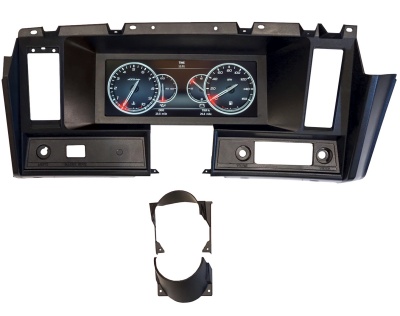
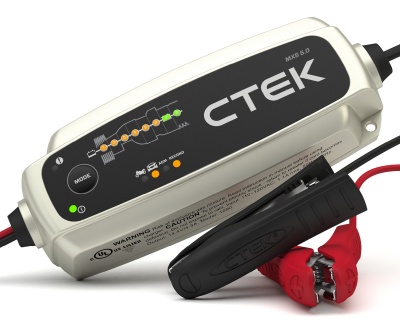
The Manager30 with Color Display Screen

Features color display and Bluetooth connectivity and is a 30A state-of-the-art battery management system designed to charge and maintain auxiliary batteries by incorporating AC, DC and solar inputs. Operates like six separate products: it charges an auxiliary battery from the vehicle while on the move and it’s a 110-volt charger, a solar regulator, a battery isolator, a load disconnect controller—all with a remote-colored battery monitor, making it market-leading. The remote battery monitor is designed to show auxiliary battery information and charge status through its colored display.

Information: www.redarcelectronics.com/products/the-manager30-with-color-screen

Fia

GS900 Series Bug Screen for ’18–’21 Toyota Tundra

Made from heavy-duty tear-resistant mesh. In the spring, summer and fall it protects the grille and radiator from stone chips, bugs and debris. Quick and easy installation with Fia’s patented Stick-A-Stud no-drill installation system. Using a 3M-adhesive-backed stud fastener, just peel and stick to surface and snap on either the bug screen. No tools are required for installation. Custom fit for most vehicles.

Information: www.gofia.com

PN: FIA–GS900

QRSEMA Data is “data central” for the specialty-equipment segment, containing millions of products and vehicle fitments from performance and accessories brands. Created by SEMA, SEMA Data is the definitive, industry-owned and -operated centralized data warehouse, complete with comprehensive online tools, and a team of dedicated data and technology experts to assist manufacturers and resellers with product data needs. Learn more at www.semadatacoop.org or scan the QR code with your smartphone camera.

Thu, 07/01/2021 - 14:41

SEMA News—July 2021

LEGISLATIVE AND TECHNICAL AFFAIRS

Law & Order

By Stuart Gosswein

FEDERAL UPDATE

RPM Act: The Recognizing the Protection of Motorsports Act (RPM Act) has been reintroduced in the 117th U.S. Congress. The bipartisan legislation will clarify that it is legal to make emissions-related changes to convert a street vehicle into a dedicated race car. It will also confirm that it is legal to produce, market and install racing equipment. The bill (H.R. 3281) is sponsored by Representatives Raul Ruiz (D-CA) and Patrick McHenry (R-NC). Since it was first introduced in 2016, the legislation has been subject to committee hearings and inclusion in a 2020 energy bill passed by the House but never taken up by the Senate. Congress must pass the RPM Act to counter U.S. Environmental Protection Agency (EPA) overreach and provide certainty to racers and motorsports parts businesses. For more information, visit www.sema.org/rpmact.

E15 Ethanol: SEMA submitted comments opposing a proposed rule by the EPA to modify or remove the current E15 warning label requirement for gasoline that contains 15% ethanol. Ethanol, especially in higher concentrations such as E15, can cause metal corrosion and dissolve certain plastics and rubbers in older automobiles that were not constructed with ethanol-resistant materials and certain specialty high-performance equipment installed on newer vehicles. In 2011, the EPA prohibited the use of E15 fuel in motor vehicles made before 2001, along with motorcycles, boats and gasoline-powered equipment. The EPA’s proposed new label at the gas pump would weaken the warning message and be smaller in size. SEMA argued that these changes would increase the likelihood of E15 gasoline being used in incompatible vehicles. Instead, SEMA contends that the warning label should be larger and the wording stronger.

Oceano Dunes: SEMA and several other organizations have sued the California Coastal Commission over its March 18 decision to terminate all OHV activity at the Oceano Dunes State Vehicular Recreation Area (SVRA) within three years. The California State Superior Court for San Luis Obispo County has been asked to issue an injunction and vacate the commission’s decision. Since 1974, Oceano Dunes SVRA has been a state-designated OHV park managed and operated by the California Department of Parks and Recreation. The SVRA comprises 3,500 acres, of which less than 1,350 acres of dunes and 3.5 mi. of beach provide open riding access for OHVs. It is the only opportunity for motorized recreation at a state park along California’s Pacific coast. The lawsuit petitioners include SEMA and Ecologic Partners Inc., which is comprised of the Off-Road Business Association, the American Sand Association and the American Motorcyclist Association District 37. The suit challenges the commission claim that there are environmental concerns requiring closure despite decades of OHV access.

STATE UPDATE

Alaska—License Plates: The Alaska House of Representatives introduced SEMA-supported legislation to allow the display of only a single, rear-mounted license plate for all passenger vehicles. Under current law, vehicles must display two license plates. The bill currently awaits consideration in the House Transportation Committee.

California—CARB Registration Fees: The California Air Resources Board (CARB) adopted a series of fees for reviewing Executive Order (EO) applications for many products sold in California, including aftermarket and performance automotive parts. As part of the fee structure, SEMA has worked with CARB staff to help expedite the EO approval process and add clarity and certainty to the application process. While supporting the proposed fee of $500 to $1,000 on each EO application, SEMA has expressed concerns about new procedures that will require applicants to submit multiple applications and processing improvements that have yet to be implemented. SEMA requested that CARB reevaluate the fee structure and application process 18 months after implementation to confirm that intended benefits are being realized and fees are reasonable.

Idaho—Custom Vehicles: The Idaho legislature passed SEMA-supported legislation to add a vehicle registration classification for custom vehicles. The bill defines a custom vehicle as a replica vehicle that is at least 30 years old and was designed and manufactured to resemble a vehicle that would qualify for classic license plates. The bill awaits approval or veto by Governor Greg Little.

Illinois—Antique Vehicles: The Illinois House of Representatives passed SEMA-supported legislation to allow expanded-use antique vehicles to be driven without limitation for two additional months. Currently, expanded-use antique vehicles are defined as being more than 25 years old “or a bona fide replica” and are limited to traveling to and from auto shows, exhibitions,
service stations and demonstrations during the colder months (November 1 through March 31) but can be driven without limitation during the warmer months (April 1 through October 31). The bill proposes that the months without driving limitations be expanded to March 1 through November 30. The bill awaits consideration in the Senate.

Kansas—Antique Vehicles: The Kansas legislature passed SEMA-supported legislation to redefine vehicles eligible to be registered as antique vehicles. Currently, the Kansas Highway Patrol defines an antique vehicle as being “more than 35 years old and as close to the original as possible, without any significant alterations to the major component parts.” The bill would require only that the vehicle be more than 35 years old, regardless of the age of the component parts installed on the vehicle. The bill awaits approval or veto by Governor Laura Kelly.

Kansas—Military Vehicles: Kansas Governor Laura Kelly signed into law SEMA-supported legislation to allow for the registration and on-road use of military surplus vehicles. A military surplus vehicle is defined as a vehicle with three axles, is less than 35 years old and was manufactured for use by the U.S. military or any country that was a member of NATO at the time the vehicle was manufactured.

Mississippi—Vehicle Titling: Mississippi Governor Tate Reeves signed into law SEMA-supported legislation that would allow for the titling of vehicles at least 30 years old and that are missing documents on oath of ownership. Under previous law, there was no such exemption.

Montana—License Plates: Montana Governor Greg Gianforte signed into law SEMA-supported legislation mandating that the state issue waivers for vehicles unable to display a front license plate. Current law permits the display of a single rear-mounted plate for a motor vehicle registered as a street rod or a custom vehicle, and a waiver may be issued for vehicles unable to display a front plate. The new law requires that the waiver be issued.

NevadaNevada—Classic Cars: The Nevada House of Representatives failed to pass prior to a key legislative deadline SEMA-opposed legislation that would have significantly impacted the owners of old timers, classic rods, street rods and classic vehicles. If enacted, vehicles would have been forced to pass a smog check upon initial registration and would be subject to in-person odometer checks at registration and subsequent renewals.

Nevada—Exhaust: The Nevada Assembly failed to pass prior to a key legislative deadline SEMA-opposed legislation that would have banned most exhaust modifications. The proposal would have outlawed any modifications that amplified the vehicle’s noise output.

Vermont—License Plates: The Vermont House of Representatives passed SEMA-supported legislation to require the display of only a single, rear-mounted license plate for a vehicle registered as an antique, a custom or a street rod. The bill currently awaits consideration in the Senate Transportation Committee.

Virginia—Imported Vehicles: Virginia Governor Ralph Northam signed into law SEMA-supported legislation to allow the DMV to issue a title for an imported foreign-market vehicle manufactured at least 25 years ago. Previous law allowed for only a negotiable title to be issued to such vehicles manufactured prior to 1968.

West Virginia—Antique Vehicles: The West Virginia House of Delegates failed to pass prior to adjournment SEMA-supported legislation to create an “antique fleet” plate program whereby the owner of five or more antique vehicles would have been able to use a single registration plate. Currently, antique license plates are available for vehicles that are more than 25 years old and are owned solely as collectors’ items.

West Virginia—Motorsports: The West Virginia Senate failed to pass prior to adjournment SEMA-supported legislation to aid and incentivize the construction of motorsports complexes.

OHVWest Virginia—OHV Trails: The West Virginia legislature passed SEMA-supported resolutions calling for the creation of a semi-contiguous off-highway vehicle (OHV) trail that would run parallel to the Appalachian Hiking Trail. The resolutions are part of an effort to create an interstate OHV trail system that would allow enthusiasts to drive from Alabama to Maine via OHV.

Wyoming—Antique Vehicles: The Wyoming Senate defeated SEMA-
opposed legislation that would have significantly restricted the eligibility of antique vehicle registrations. If passed, antique vehicles would have been required to be at least 50 years old, and registration would have been required to be renewed annually. Antique vehicles must currently be at least 25 years old, and registration requires only an initial fee.

Employee Retention Tax Credit: SEMA members are urged to take advantage of a COVID-19 economic relief program enacted in 2020 and expanded in 2021, the Employee Retention Tax Credit (ERTC). The ERTC is meant to help employers that suffer significant financial losses or that were fully or partially closed due to a government order but continue to pay workers who are unable to perform their duties.

2020: The tax credit is equal to 50% of up to $10,000 in qualified wages paid between March 12 and December 31, 2020. The total credit is capped at $5,000 per employee and applies against employment taxes on wages paid to all employees. There is a 100-employee limitation. The credit is available if:

  • The employer had a fully or partially suspended operation during any calendar quarter in 2020 due to orders from an appropriate governmental authority due to COVID-19; or
  • The employer experienced a significant decline (more than 50%) in gross receipts during the calendar quarter.

2021: The tax credit applies to all four quarters of 2021. The credit is now equal to 70% of up to $10,000 in qualified wages per quarter (including health plan expenses). This means the tax credit is potentially $28,000 per employee ($7,000 for each quarter). Employers can apply who have experienced a 20% or more decline of gross receipts in a quarter compared to the same quarter in 2019. For 2021, the size limitation was increased to employers with 500 or fewer employees (up from 100 workers).

Employers claim the ERTC by withholding payroll taxes for qualified employee wages. Because the tax credit is refundable, if the withholdings do not cover the entire tax credit, the IRS will send you a check for the remaining amount.

Thu, 07/01/2021 - 14:29


SEMA News—July 2021

INDUSTRY NEWS

Photos courtesy SpiedBilde, Brian Williams. Reuse or reproduction without the copyright holder’s consent is prohibited.

’22 Nissan Frontier

This is the upcoming ’22 Nissan Frontier in its base trim, the Frontier S. The configuration has never been seen, as Nissan has debuted the ’22 Frontier in only Pro-4X trim. The rest of the lineup remains to be seen.

The model features a prominent lower front fascia finished in black plastic, along with the base grille configuration and base-level headlights, seemingly without any LED treatment. The wheels are the base units, complemented by black door handles and mirror caps. In back, this base Frontier appears to feature the same LED taillights as the Pro-4X model. A black bumper and single-exit side exhaust round out the package.


Nissan
Nissan

’23 Ford F-150 LIGHTNING EV

Here’s the upcoming Ford F-150 Lightning EV, providing a first look at the (production-intent) electric pickup. Though clad in a substantial amount of camouflage, the familiar shape of the 14th-generation F-150 can still be seen. The prototype features a SuperCrew cabin along with a short bed, and there are no visible elements of an
exhaust system.

Range is expected to come to at least 300 mi., although it is rumored that there may be an extended-range battery that could be added if demand is great enough. Production is slated to start in mid-’22. The pickup should be in showrooms shortly thereafter.


Ford
Ford

’22 Subaru WRX

Here’s a first look at the ’22 Subaru WRX testing near Ann Arbor, Michigan, with a Tesla Model 3 in tow. It appears to incorporate a lot of styling influences from the Viziv STI concept that was unveiled in Tokyo in 2018.

Rumors have been circulating about a replacement turbocharged 2.4L four-cylinder (a boxer type) referred to as the FA24, which could power the next WRX STI with 400 hp and 361 lb.-ft. of torque. Currently, the FA24 2.4L turbocharged four-cylinder moves Subaru’s bigger three-row Ascent.

Expect the next-gen WRX to offer a six-speed manual or an automatic transmission.


Subaru
Subaru
Thu, 07/01/2021 - 14:24

SEMA News—July 2021

REQUIRED READING

By Juan Torres

Eager to Reconnect

After more than a year of forced restrictions due to the COVID-19 pandemic, the automotive aftermarket industry is eager to conduct business in person. The demand to reconnect with colleagues and customers in a trade-show environment was clearly evident when SEMA officially announced the return of the in-person 2021 SEMA Show, scheduled for November 2–5, at the Las Vegas Convention Center. News about the return of the 2021 SEMA Show, along with SEMA’s announced plans for the Convention Center’s newly constructed West Hall, generated plenty of media coverage, as seen from the following publications.

Muscle Cars & Trucks

MC&TJournalist Lucas Allen’s excitement for the 2021 SEMA Show came across in his article about the return of the in-person
event. He stated that the event was “already heating up” even though the Show was eight months away, with more than 1,000 exhibitors registered at that time.


Repairer Driven News

Repairer

For editor John Huetter, the new West Hall expansion meant more space for new exhibitors and the opportunity for companies to expand the size of their booths. He discussed those topics and possible changes to the SEMA Show floorplan with SEMA Vice President of Events Tom Gattuso.
 

Autobody NewsAutobody

SEMA’s return to an in-person Show in 2021 underscored the work Las Vegas and its businesses had done to welcome back large-venue events, John Yoswick reported. He also highlighted that SEMA was still working with authorities to “deliver the best SEMA Show ever.”


Heard on Social Media

“SEMA Show attendees will experience a revamped and enlarged trade show, thanks to the completion of a fourth exhibit hall at the Las Vegas Convention Center.”Tire Business, via Twitter

“SEMA Show organizers announced plans in the new LVCC West Hall for the return to in-person event on track for November 2–5, 2021.”12 Volt News, via Facebook

“@SEMASHOW is on track to deliver an exciting in-person SEMA Show at the Las Vegas Convention Center.”Motor, via Twitter

With exhibits included in the #LVCC’s newly constructed West Hall, the entire #SEMA Show floorplan will be optimized and offers room for new features and enhancements.Truck Videos, via Twitter