By Cristian Gonzalez
Understanding The UTV Space, How They Fit in With the Automotive Aftermarket and Where You Can Find Opportunity
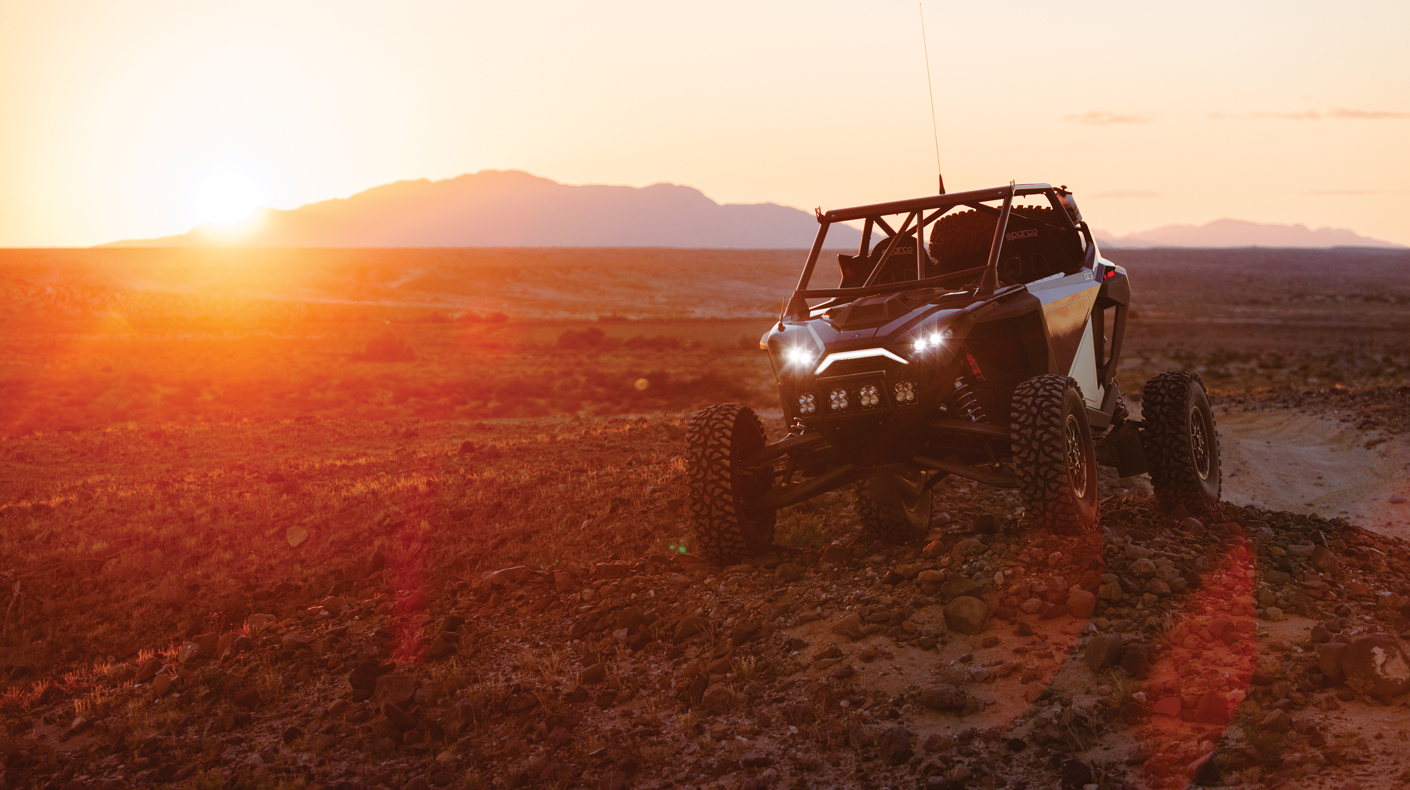
Powersports, particularly utility terrain vehicles (UTVs), also known as side-by-sides, is a growing market within the United States, catapulted by off-road and thrill-seeking enthusiasts.
New companies and products are emerging in this relatively young sector, seemingly going in every which direction but down. With SEMA’s recent acquisition of the Off-Road Business Association (ORBA), a leading organization dedicated to representing businesses and professionals in the off-road and powersports industries, SEMA will assume a more significant role in the industry and off-road advocacy.
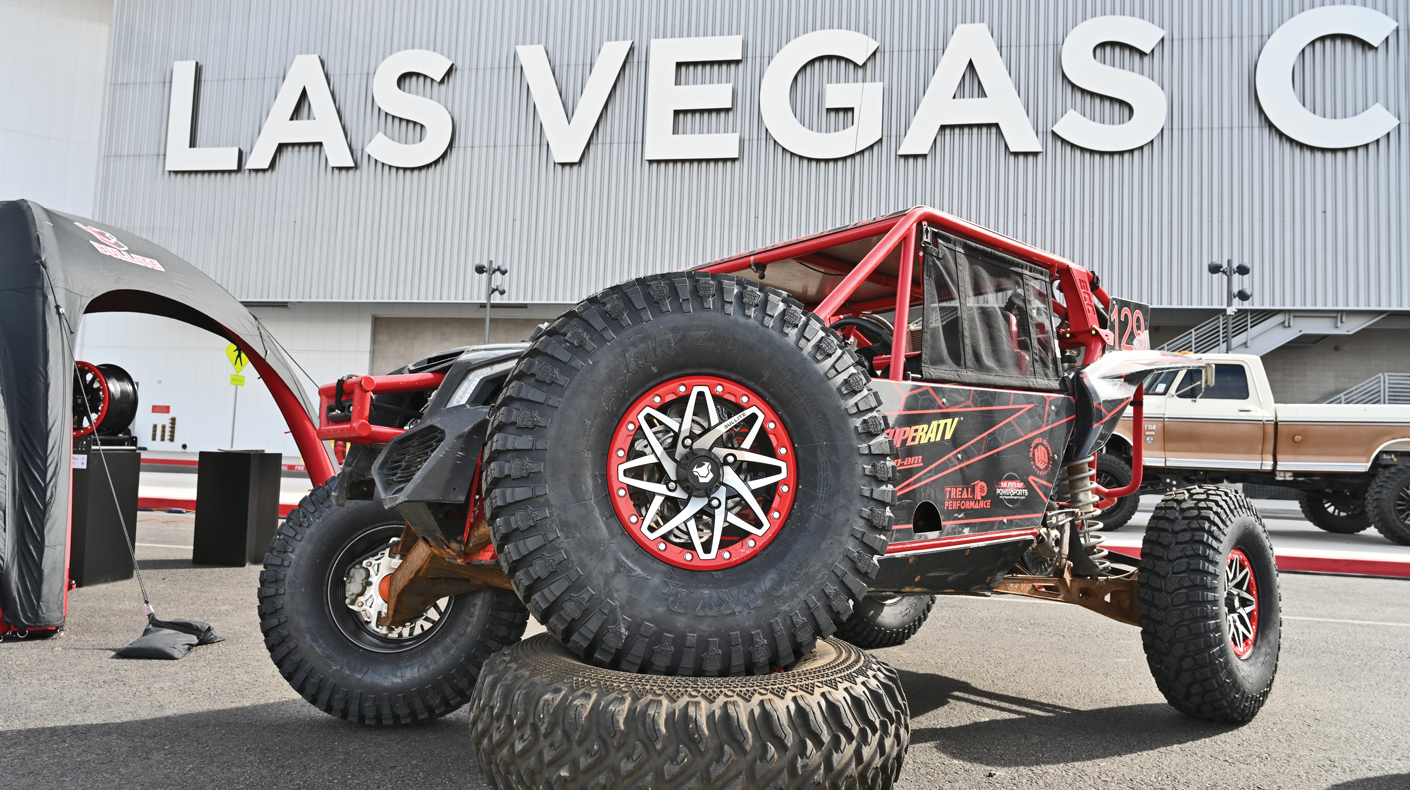
If you have attended any recent SEMA Shows, then you have probably already noticed a growing number of UTVs proudly displayed in booths and lots across the Las Vegas Convention Center, all heavily modified to accent the automotive aftermarket space. With new trends, new partnerships and evolving technology, UTVs now comprise a space that is more than an accessory to the specialty-equipment market. Today, they form a healthy market category in their own right.
EVOLVING
Legacy side-by-sides like the Polaris RZR have been around since the mid-'00s and have slowly evolved from their early golf-cart-like qualities, with ATV-sized wheels and 6-in. travel, to the variants seen today racing across destinations like Glamis, Baja and Moab.
Initially, side-by-sides were developed for utility usage around the ranch or farm or as auxiliary hunting rigs. They were not made to get through the toughest terrain at extreme speeds. They were designed to get around places an SUV or truck could not.
In 2007, Polaris introduced the Ranger RZR, a sportier model to juxtapose the utility-styled Ranger. While not the fastest or most powerful side-by-side at the time, it sparked a new demand for sport UTVs. Powersports enthusiasts loved their look and saw their potential.
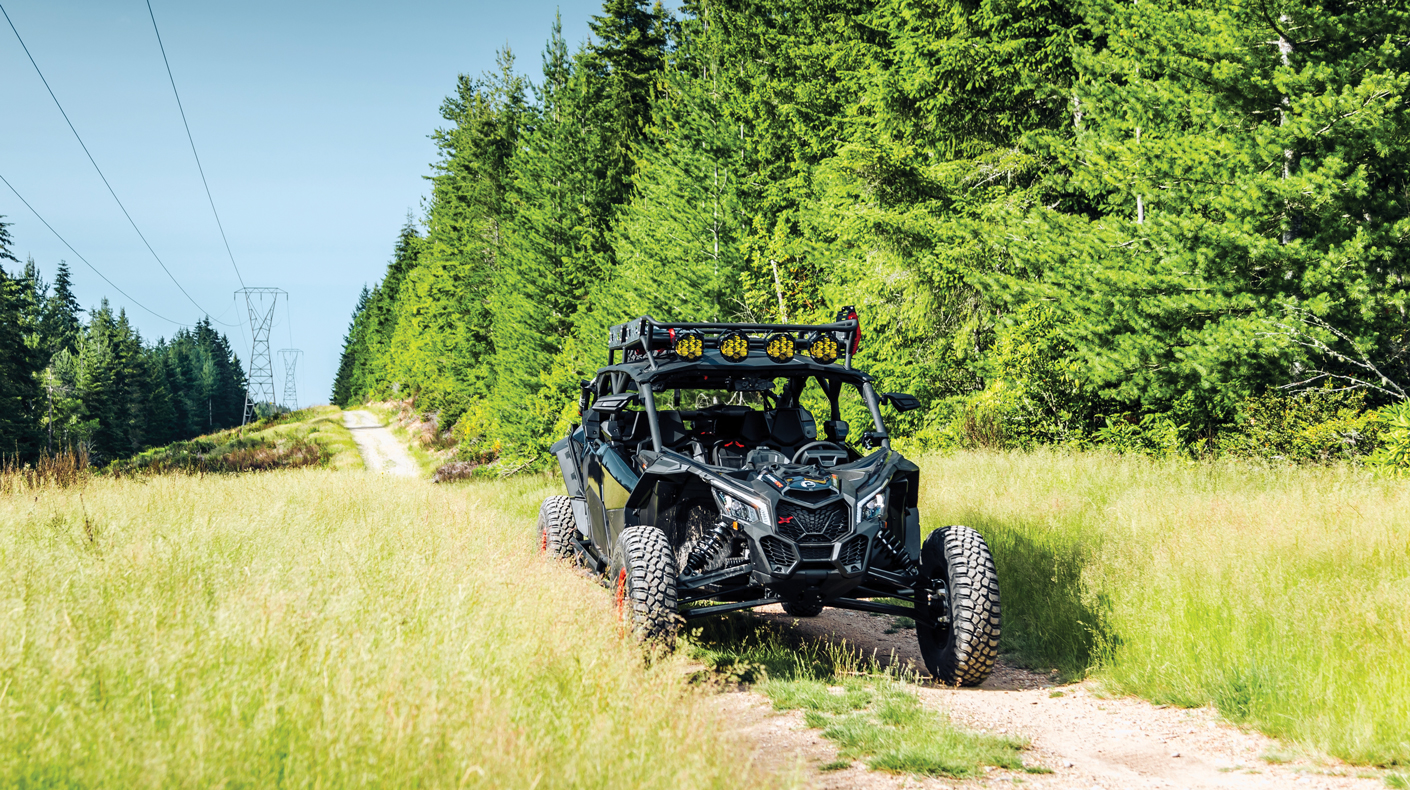
Everything from suspensions to powertrains has vastly improved over the past decade, with a strong accompanying aftermarket following suit. Specialty automotive companies, such as Holley, are now looking to enter and leverage that growing sector, with Landon Phillips, head of powersports and truck and off-road, leading the effort. Phillips has been involved in the powersports arena, racing UTVs across the United States for years. Holley brought him in to help expand the company’s efforts in the UTV aftermarket.
"At Holley, we have recognized that UTVs are an extremely large and growing market, so much so that we have seen a decline in traditional automotive off-road as far as Jeeps and trucks go," says Phillips, observing that more traditional off-road vehicle enthusiasts are transitioning to the UTV platform.
Phillips offers himself as a prime example. He spent years and thousands of dollars modifying a Jeep specifically to tackle Moab trails. Over the course of four years, Phillips witnessed UTV presence in Moab go from near zero to prevalent. By 2017, he had seen enough to overwhelm his curiosity and bought himself a side-by-side, leaving his fully built Jeep to sit in his garage for two years. He realized the capabilities and potential performance these machines possessed, making him and a growing number of off-road enthusiasts true aficionados.
Holley owns roughly 67 brands, potentially more by the time this goes to print, many of which cater to consumers with trucks and trailers hauling UTVs. If enthusiasts trust Holley products on their tow rigs and other vehicles, why would they not look to the same brands for their UTVs? From exhaust systems and brakes to suspension, entertainment and tires, numerous categories offer automotive aftermarket companies the means to seamlessly extend into the UTV market.
"You have a sales opportunity through the diesel truck that customers tow with, the Raptor that they play with and now the side-by-side that they recreate with. It opens a gigantic market to a lot of these parts manufacturers and people that are trying to sell into the off-road vehicle realm," says Phillips.
THE CURRENT STATE OF UTVs
As the demand for UTVs has evolved, so has their engineering prowess. Their builds are now more comparable to trucks or SUVs than golf carts. Competition between the big powersports OEMs like Polaris, Can-Am and others has taken them from 9 in. of travel in '07 to more than 20 in. today.
Moreover, the segment is seeing competition for more power.
"It really has come down to a horsepower war. Features and benefits kind of come second," says Dane Garvik, FOX Power Vehicle Group marketing manager. "I liken it to the heavy-duty truck market where it is all about who tows the most this year." According to Garvik, Polaris, Can-Am and Kawasaki, the three major OEMs in the UTV space, are separated by no more than about 10 hp when comparing similar models.
These vehicles also offer optional accessories from the dealer, such as GPS, audio systems, Bluetooth and navigation, providing more avenues for consumers to modify and upgrade their UTVs. If you attended the SEMA Show this year or in previous years, you might have already seen heavily modified UTVs showcasing the unique aftermarket potential they offer, whether in terms of utility, performance or style.
"You can absolutely customize these things into the six figures if you have the desire, the will and the need," says Garvik. "I have seen quite a few $100,000 non-race-ready UTVs because of the powdercoat, chrome, lights, accent lights, stereo systems, wheels, tires, vinyl and custom interiors. It definitely is in line with the Jeep and Bronco spectrum of customization."
TURNKEY ACCESSIBILITY
Garvik and Phillips agree that more consumers interested in entering the off-road space are opting for a side-by-side over a Jeep or pre-runner-style truck build, and the primary reasons for this are accessibility and cost. To better understand why, consider FOX’s three pillars used to categorize customers: DIY, do-it-for-me and turnkey.
Folks in the DIY pillar are the ones who will buy a Wrangler or F-150 and modify it themselves with bolt-on parts and fabrication. This saves money on labor, but costs more in time that some may not want to invest. Do-it-for-me consumers will take their rig to an aftermarket shop to be outfitted and modified for outdoor adventure, which delivers a capable vehicle with no personal labor, but significantly raises expenses. "That is the Raptor owner," jokes Garvik.
Turnkey users typify most UTV owners. For the price of a new car, someone without the means or knowledge to build a fast, off-road-capable vehicle can have something just as competitive, complete with a confidence-inspiring roll cage.
Phillips explains, "You really have the best of both worlds with a UTV for rock crawling and also desert racing or trail riding. You are able to drop it into low gear and crawl over something at 2 mph. Then once you get past that obstacle, you put it into high gear, floor it and now you are doing 100 mph. It is just a lot more fun in a UTV, and it is more accessible and more affordable. Whenever you start talking about a Jeep versus a UTV, you start talking about parts, lift kits, tires and more. A 40-in. tire for a Jeep compared to a 33- or 35-in. tire for your UTV, that tire alone is several hundred dollars more expensive, so it is a lot more economical for most people."
Even though these machines can reach extreme speeds, consumers are still modifying and improving where they can. "Power is never enough," Phillips continues. "And these guys are always thirsty for more. There is always a bigger dune to climb, and you always want to beat your buddy up that hill."
RACING POTENTIAL AND ACCESS
Human nature is to take anything with a motor and race it, and for many, UTVs are their entry point. Side-by-sides have made grassroots-level off-road racing more accessible than ever while also making waves in professional competition.
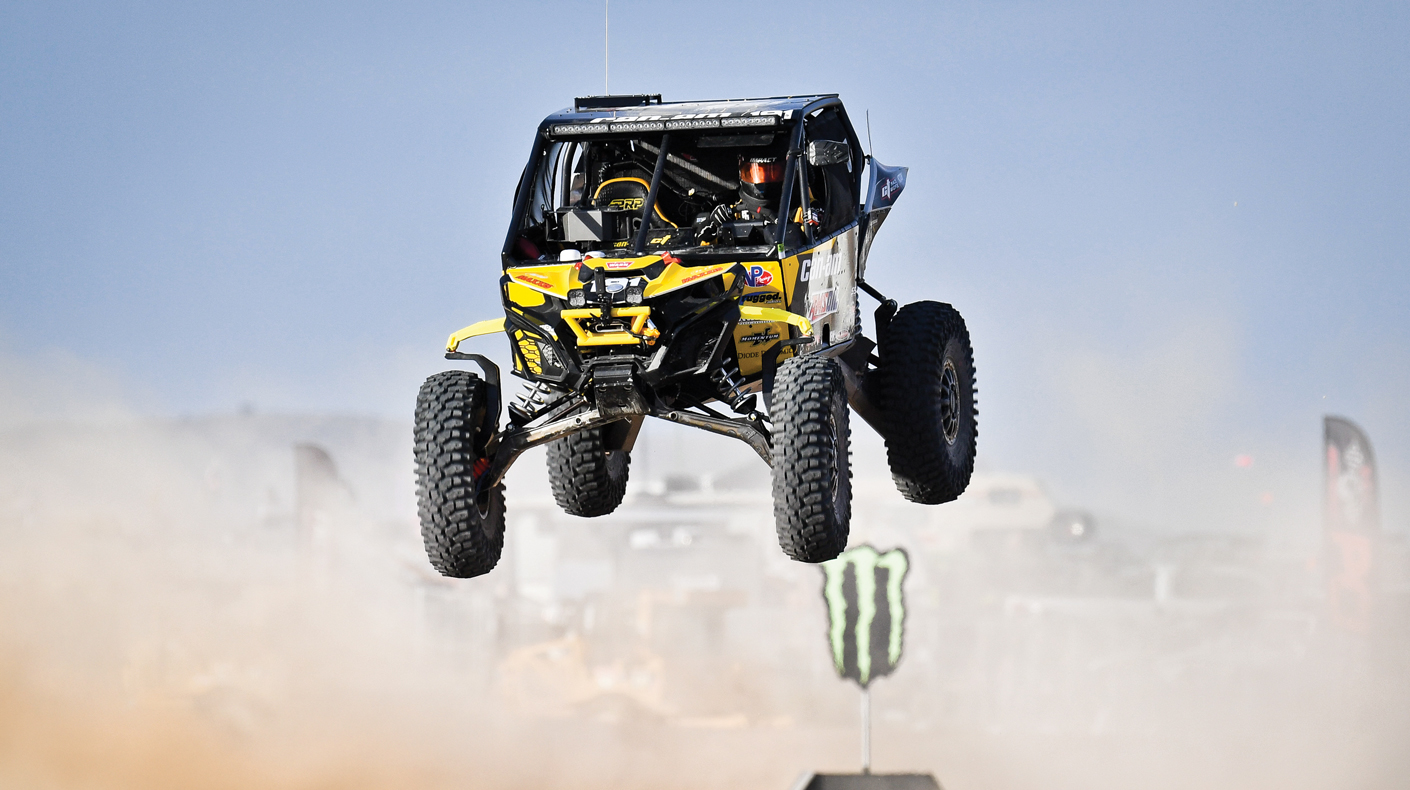
With 20 in. of suspension travel, 35-in. tires, more than 220 hp and 85-in.-wide stances, race-ready UTVs are not only participating, they are dominating the off-road racing scene. Earlier this year, Kyle Chaney, driving a Can-Am Maverick R, became the first person to win the King of the Hammers overall with a UTV against purpose-built buggies and trucks. These are not entry-level vehicles struggling to finish. These UTVs are competing and winning, giving drivers a competitive edge.
"I would love to race a trophy truck," admits Garvik. "In the off-road community, the trophy truck is the pinnacle of off-road racing. The reality is it can cost upward of $1,000,000. Very few people can obtain that. But I get trophy truck feelings in a UTV, and then I have to remind myself it is not a trophy truck. The barrier to entry now is much lower in off-road racing."
A competitive racing UTV can cost upward of $100,000. Polaris even sells a turnkey race-only RZR for $140,000, the RZR Pro R Factory. Still expensive, but far more attainable than a million-dollar race vehicle.
There is also a safety aspect that appeals to many motocross racers. "With age comes a cage," says Garvik, noting that many freestyle motocross and professional motocross racers once transitioned to rally racing later in their careers. Now, more are turning to UTVs to continue competing while improving safety.
UTILITY
Despite their sporty evolution, side-by-sides still deliver on the "utility" in UTV. As the vehicles have grown in size, and as Western-state municipalities expand laws to allow UTVs for street use, they are becoming more SUV-like.
Take Polaris’ new Xpedition. "It is a five-seat, four-door UTV with air conditioning, heating, a sound system and 13 in. of wheel travel. It is a $45,000 vehicle that is fairly large in size. It is about the size of a Jeep Wrangler and not street legal everywhere, but it is something where you can go out there and meet many of your needs," says Garvik.
These new enclosed-cab UTVs serve a multifaceted purpose, combining utility and adventure. "You see the explosion of the enclosed-cab UTV, where it has heat and air conditioning. You can bring your family in it year-round. Where I live in a state like Arizona, we have license plates on our UTVs and we drive them like cars. I tow my jet skis to the lake with it. They are becoming utilitarian vehicles, not just for farmers, but for people who live in the city also," says Phillips.
All of this means that as capability and utility evolve, and as public road accessibility expands, consumers will have more justification to choose a side-by-side as their recreation or adventure vehicle. In turn, the growing UTV fleet will provide specialty-equipment brands like Holley, FOX and others with more opportunities to enter the space and create products and solutions for enthusiasts who love to drive and modify whatever is in their garage with four wheels, a motor and potential.
Lead image courtesy of FOX
Second image courtesy of Shutterstock