By Michael Imlay
How SEMA Won the Fight to Overturn California's EV Mandates
In an East Room ceremony at the White House, a remarkable milestone took place on June 12, 2025. President Trump signed a Congressional Review Act resolution revoking three EPA waivers that would have enabled California to ban internal combustion vehicles.
By SEMA's estimate, that stroke of the pen instantly protected more than 333,000 American jobs, preserved $100 billion in annual economic impact for the U.S. economy and saved the specialty aftermarket industry from certain catastrophe.
And among the officials and observers in attendance for that historic event were SEMA CEO Mike Spagnola, SEMA Senior Director for Federal Government Affairs Eric Snyder and SEMA Senior Vice President for Public and Government Affairs Karen Bailey-Chapman, together representing the association that played a catalyzing role in the legislation.
"Just walking up to the White House… The grandeur of it all, the people in uniform, the buzz you could feel and then getting to walk around all the rooms of the East Wing––you felt so honored to be able to represent SEMA," recalls Spagnola.
"We were among 100 non-elected officials present for the signing," adds Bailey-Chapman, describing the pomp. "The Marine Corps band playing, the string quartet and the freedom to explore the East Wing were all incredible experiences. But more than that, this was probably the biggest piece of energy and vehicle technology legislation in 20 years, and SEMA earned a seat at the table in passing it."
For President Trump, the signing represented delivery on a key campaign pledge to preserve vehicle choice for Americans. For SEMA, it was the culmination of a hard-fought battle and a watershed moment for industry businesses and their consumers. So how did this victory come about?
THE ROAD TO THE WHITE HOUSE
Anyone familiar with the old Schoolhouse Rock "I'm Just a Bill" cartoon generally gets how proposed legislation moves through Congress, passes both houses and then lands on the President's desk for signature.
Well… "If only it were that easy," quips Bailey-Chapman.
In fact, the complicated backstory of this particular legislation dates to 1970 and the implementation of the federal Clean Air Act.
"Back then, California had already set up some of its own emissions standards and programs because of that state's unique pollution issues––especially in Southern California," Bailey-Chapman explains. "Because of that, the federal Clean Air Act gave California certain exemptions to set stricter standards and regulations unique to California."
Only California's standards didn't remain so unique. Automakers don't build 49-state vehicles. Rather, to maintain cost-effective production, they must build one-type-fits-all vehicles for the entire U.S. market. In addition, 17 other states began tying their emissions standards to California's, creating the so-called "California Effect." By the '00s, the Golden State was gaining an outsized voice in regulating the nation's automobiles.
Then, in 2022, the California Air Resources Board (CARB) promulgated the Advanced Clean Cars II (ACC-II) regulation calling for 100% zero emissions vehicles (ZEVs) by 2035. The regulation also set strict intermediate targets for automakers to meet in the years leading up to the 2035 goal. However, because state new-vehicle emissions standards are preempted by the federal Clean Air Act, California required a U.S. Environmental Protection Agency (EPA) waiver to implement its tighter regulations.
In December 2024, the EPA awarded CARB three specific waivers:
- A waiver permitting CARB to implement the ACC-II regulation.
- A waiver allowing CARB to implement the Advanced Clean Trucks (ACT) rule, which would introduce a mandatory schedule for the sales of ZEV Class 2b-Class 8 trucks.
- A waiver permitting CARB to implement a Heavy-Duty Low NOx Omnibus Regulation, which would require a further 90% reduction of NOx emissions from heavy-duty on-road engines.
"This was the line in the sand for us––a backdoor to the complete elimination of the internal combustion engine [ICE] across the United States," says Bailey-Chapman.
AN EXISTENTIAL THREAT
In SEMA's view, the mandates would lay waste to the automotive aftermarket, an industry composed of small businesses, an estimated 33% of which are ICE-dependent. More than 500 engine product manufacturers alone could be wiped out within a few short years. That blow to the aftermarket ecosystem could cripple other businesses as well, ultimately threatening some 330,000 American jobs.
"ACC-II raised a lot of questions for us," Spagnola recalls. "How long would it take for aftermarket manufacturers to switch to an EV-driven market? Could they even do that? And what would that look like and what would it do to the industry? Plus, the rule completely ignored all the technological evolution taking place around ICE, alternative fuels and propulsion systems."
Spagnola is quick to point out that SEMA is not––and never has been––"anti-EV." Rather, it champions a technology-neutral, consumer-first approach fostering innovation and ingenuity.
"We've had a section for EVs and alternative platforms at the SEMA Show for some time now and we embrace these technologies," he notes. "But government shouldn't put its thumb on the scale or pick winners and losers. We support allowing Americans to continue innovating and letting consumers decide which innovations best meet their needs."
Based on the threat that ACC-II represented, coupled with SEMA's tech-neutral philosophy, there was no question that the association would stand in opposition to California setting national emissions policy. But how would SEMA defang ACC-II? And how successful might SEMA be?
"Fortunately, the SEMA Board of Directors has staunchly supported industry advocacy and governmental engagement, and has allocated the considerable resources needed to accomplish our mission over the years," says Spagnola.
That support has enabled SEMA to transform its industry advocacy, shifting from a reactive stance in public policy debates to a proactive one. The association has steadily built alliances with local, state and federal officials.
Meanwhile, it has also broadened its outreach to automotive consumer-enthusiasts through its SEMA+ initiatives, created the Driving Force Action SuperPAC and expanded the fundraising efforts of SEMA's traditional federal political action committee (PAC) to pool and channel resources toward candidates, ballot initiatives and legislation favorable to the industry. In addition, SEMA's recent nationwide economic impact study was another major step in educating lawmakers on the aftermarket's sizable contributions to the American economy and jobs.
"If we just sit here and kind of throw up our hands and wait to see what cards we’re dealt, it may not be good. We had to at least try to impact the make-up of the political landscape in Congress and the White House," explains Bailey-Chapman. "That's why we've been so involved in Congressional races and, more recently, the presidential election."
THE BREAKTHROUGH MOMENT
As it turns out, recent years of organizing and political action perfectly positioned SEMA to take advantage of a political sea change that emerged on Election Night 2024. While SEMA remains nonpartisan, GOP wins in Congress and the White House completely "flipped the script" for rolling back EV mandates, according to Bailey-Chapman.
"There was that moment of, 'Oh… It's not just about managing a stalemate anymore… Now there's a real window of opportunity,'" she recalls. "I called an administrative law expert and said, 'Let's throw spaghetti at the wall and put all options on the table.'" After exploring several legal pathways, a Congressional Review Act (CRA) resolution quickly emerged as the clearest and strongest option for repealing the EPA's California waivers and killing the EV mandates.
The CRA is a special type of legislation adopted in 1996 to allow Congress to review and overturn federal regulations issued by government agencies. Any representative or senator can trigger a CRA resolution. Once introduced, Congress has a limited, specified number of legislative days to review and repeal a regulation through a joint resolution. Simple majority votes in each house are enough to secure passage––CRA resolutions cannot be filibustered in the Senate. If Congress repeals the regulation, and the president signs the bill (or Congress overrides a veto), the agency rule is nullified and the agency is prohibited from reissuing it without Congressional authorization.
The SEMA Board of Directors fully backed the plan. "We provided strategic direction, offered feedback and contributed resources wherever possible," says SEMA Chair of the Board Melanie White. "This was a critical issue for our industry, and the Board worked closely with staff to ensure alignment and momentum."
With the course of action decided, the association's grassroots and legislative coalitions swung into action. SEMA networked with other industries affected by the EPA waivers, creating a focused coalition. Early on, the coalition agreed on a single, disciplined strategy: There would be no "Christmas-treeing" the legislation with extra demands or goodies.
"An overloaded Christmas tree falls over. We wanted to keep it clean and concise," observes Bailey-Chapman.
In Spagnola's view, the messaging surrounding the CRA required equal precision: "Our voice had to be 'let America continue to innovate.' We also had to be bipartisan. You have to have your voice heard, so we work on both sides of the aisle. When we walked in, there were people already on our side. Others, we were able to flip when they understood the whole story. People recognized it was good for the economy and good for business."
So much so that SEMA was able to secure House Representative John Joyce (R-PA) and Sen. Shelley Moore Capito (R-WV) as lead sponsors for the CRA. The sponsor list quickly grew from there with Reps. Doug LaMalfa (R-CA), John James (R-MI), Russ Fulcher (R-ID), Jay Obernolte (R-CA), Kevin Kiley (R-CA) and Lisa C. McClain (R-MI); and Sens. Deb Fischer (R-NE), Markwayne Mullin (R-OK), Pete Ricketts (R-NE), Ted Cruz (R-TX), Mike Crapo (R-ID), Bernie Moreno (R-OH) and John Barrasso (R-WY). In time, the co-sponsorship list further grew to 41 House members and 21 senators
in all.
GOING FULL THROTTLE
With the legislative push on, SEMA next deployed a media action plan encompassing op-ed articles and earned media in key publications. By April 2024, the campaign was in full swing, supported with countdown reminders and coordinated letters from industry leaders and automotive enthusiasts. House and Senate lawmakers ultimately received more than 56,000 letters urging a CRA vote.
In the past, SEMA's political tone had always been sober and formal. Now, its communications adopted a punchier, personality-driven style in keeping with the "authentic" zeitgeist of today's social and political climates.
"It was more 'let's go full throttle,'" says Bailey-Chapman. "I really credit [SEMA Director of Communications for Government Affairs] Matt Daigle, [SEMA Political Director] Will Townsend, and the comms team for creating a narrative and voice that cut through the typical Washington chatter. Thankfully, we also have a community with that same style of communication. Frankly, that directness reflects our industry's personality, and that of the current White House, so it was pitch-perfect."
Meanwhile, Spagnola and Bailey-Chapman made the rounds to more than 30 podcasts and media outlets to build public support. SEMA also ran targeted digital ads and phone campaigns, generating more than 2,000 constituent calls to key Congressional offices.
Moreover, this was no scattershot approach; rather, the blitz was strategic and precise. "We placed op-eds and letters to the editor from our members in key Congressional and Senate locations," Bailey-Chapman notes. "We didn't need to hit all 50 states; we only needed a handful of representatives and senators who were on the fence."
A series of legislative fly-ins and coordinated in-person visits to Capitol Hill further drove home SEMA's point with legal analysis and economic impact data. SEMA also circulated the coalition letter signed by 300-plus SEMA small businesses.
"The coalition essentially said, 'Hey, don't forget this. You promised us this, it's what people voted on,' and so forth. The letter got a ton of attention. Within the Beltway, we were actually credited with lighting a fire with that letter."
Along the way, states beyond California began seeing the harms of EV mandates. Virginia, Maryland, Delaware and Vermont each backed off policies echoing California’s emissions regulations, while North Carolina, Texas, Ohio, West Virginia and eight other states passed SEMA-supported "ban the ban" legislation to ensure such mandates never take effect again. This effort was led by SEMA Senior Director of State Government Affairs Christian Robinson, starting in late 2022.
Back on Capitol Hill, the intense lobbying was paying off, too. As Spagnola underscores, "We wanted these bills to have a bipartisan vote, and they did. Eventually, 35 House Democrats and one Democratic Senator crossed party lines" to support the CRA resolution, demonstrating that economic arguments can unite lawmakers around industry issues.
The House of Representatives took up the CRA resolution in April, ultimately voting to revoke the California waivers on April 30, 2025. The Senate, however, proved more nail-biting when it opened its CRA debate on May 21.
"It was an entire day of debate. We kept thinking, well, they wouldn’t bring it to the floor if it didn’t have the votes, but the debate continued late into the evening. Sen. Capito actually quoted our economic and jobs impact numbers in her closing argument for the bill. Then they adjourned for the night."
The cliffhanger ended the next day, May 22, when the Senate finally voted to revoke the California waivers.
"The best night's sleep I've had in the past decade was probably the night after that Senate vote," confides Bailey-Chapman.
A SEAT AT THE TABLE
During his 2024 election campaign, President Trump had pledged to preserve vehicle choice for Americans. Soon after the CRA legislation passed Congress, he signaled he would sign it. The only question was exactly which day and how.
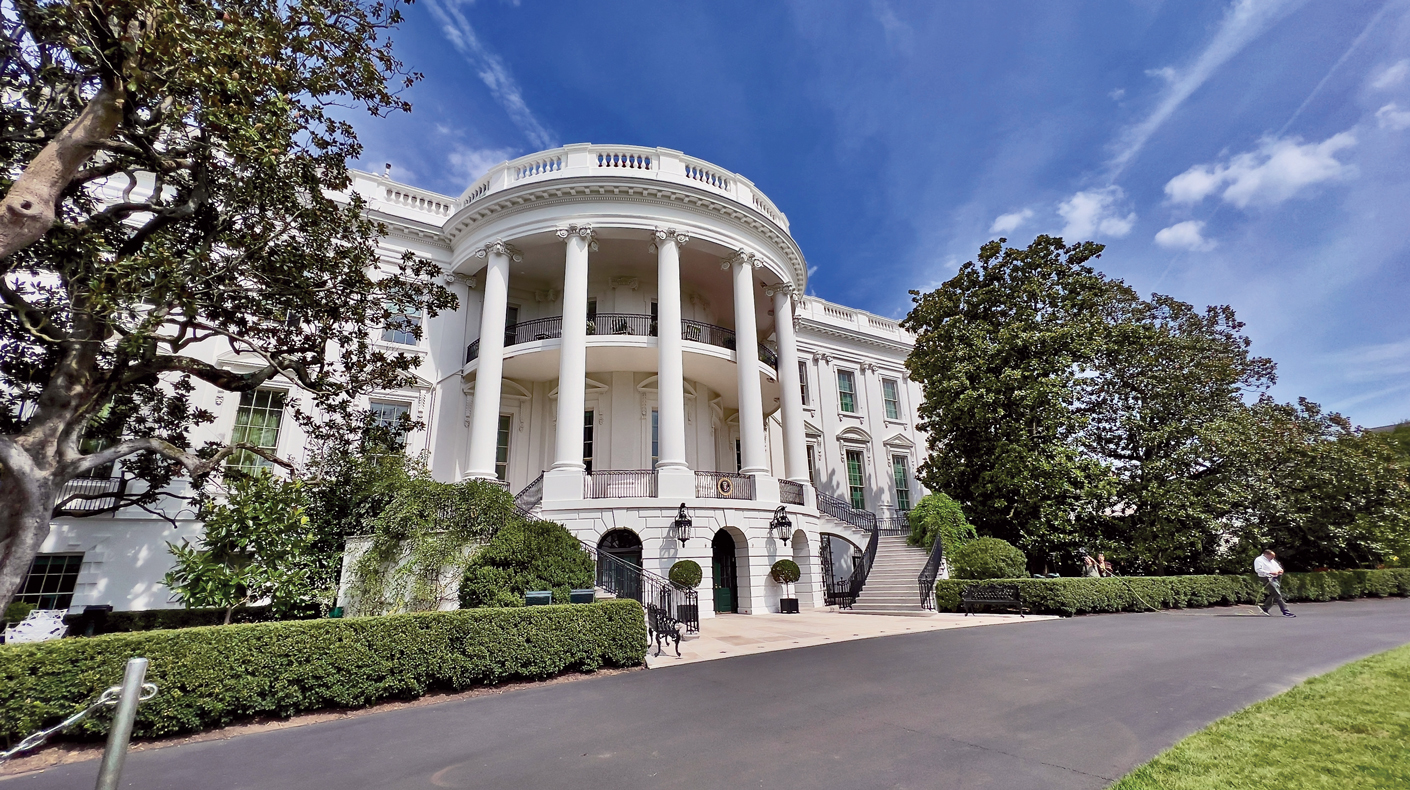
SEMA was invited to the White House for the President's signing of the joint CRA resolution, symbolizing the association's hard-earned seat at the table in public policy debates.
"It's rare for a president to do public signings; it’s usually only on major initiatives that a president really cares about,” explains Bailey-Chapman. Nevertheless, SEMA began working with its White House contacts for a high-profile public signing. "I also called Mike [Spagnola] up and said, 'I don't know if it's going to happen, but if it does, we may only have 24 hours' notice for you to come to Washington.'"
Spagnola got the word as he was driving to the airport for SEMA's annual Sacramento Rally. He quickly canceled that trip and changed flights to the nation's capital, arriving Wednesday night, June 11––just in time for the public signing in the East Room of the White House the following morning.
The rest is literally history. Awed as they were by their White House experience, both Spagnola and Bailey-Chapman say the red carpet wasn't rolled out for them, but for SEMA and its coalition partners.
"We brought American manufacturing muscle. We brought American automotive muscle. We brought American small-business muscle," Bailey-Chapman says. "It was unlike anything I've seen in my career."
As Board chair, White views the accomplishment as a powerful validation of SEMA's ability to influence meaningful outcomes for our industry. "It reinforces the strength of our collective voice and the effectiveness of our strategic advocacy efforts," she says. "More importantly, it sets a precedent and builds momentum for future initiatives. With continued collaboration, focus and persistence, we're well-positioned to drive lasting change. The industry is watching, and we've demonstrated that we’re prepared to lead with purpose and impact."
"Whether you called it an EV mandate or an ICE ban, the industry and enthusiasts really rallied behind our efforts, and we all pulled together for the common good," adds Kyle Fickler, immediate past chairman of the SEMA Board. "And let's not forget the public at large. They are now more aware of SEMA's advocacy... Whether you're a performance enthusiast or not, we were fighting to protect your freedom to buy the powertrain of your choice."
"The task was daunting, and I was probably one of those who worried it might never happen," sums up Spagnola. "But to be one of the only automotive groups represented at the White House, let alone being 'little SEMA' among other major automotive companies… It proves these things can be done. We've won a seat at the table, and we can continue to make a difference."
Images courtesy of Shutterstock