Off Goes the Roof: Bentley Supersports Convertible
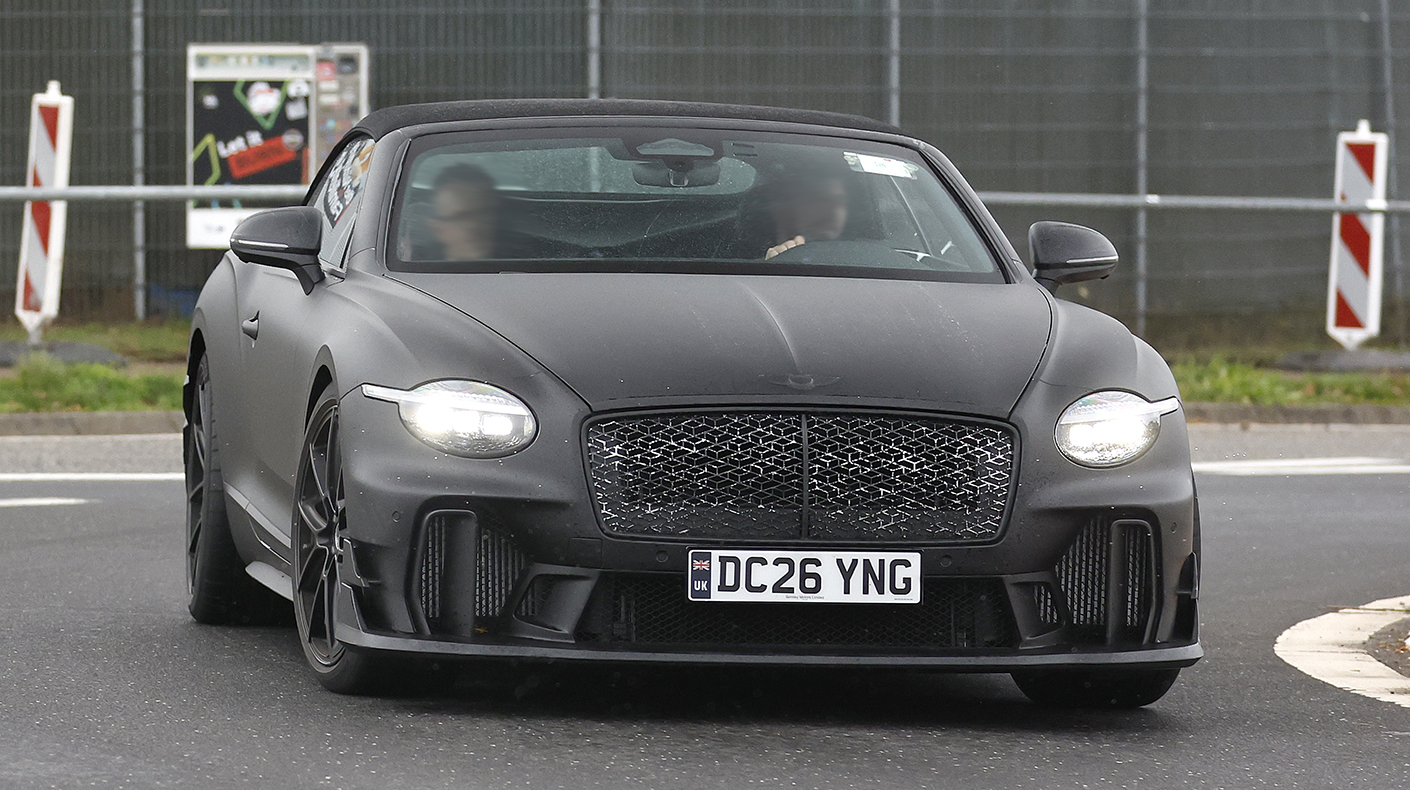
Following the introduction of the Supersports coupe for the 2027 model year, the go-faster Continental story will continue in 2027 with a convertible. Likely scheduled for production as a 2028 model, the open-top derivative was caught at the Nürburgring in Germany with little in the way of camouflage. Dressed in matte black and carrying similar aerodynamic updates, the Supersports Convertible is anything but a Continental GTC with a bad attitude. Starting from its rear end, a very telling decklid spoiler is joined by a serious-looking aerodynamic diffuser. Being a V8, it should come as no surprise that four exhaust outlets are on the menu.
From the rear end alone, there is little attempt to soften the high-performance treatment for someone who merely wants to enjoy open-top driving. Its matte-finish body panels are complemented by Pirelli-equipped black wheels, keeping the prototype's look consistent. Sill extensions and purposeful side bumper sculpting also indicate how different the Supersports is from the Continental.
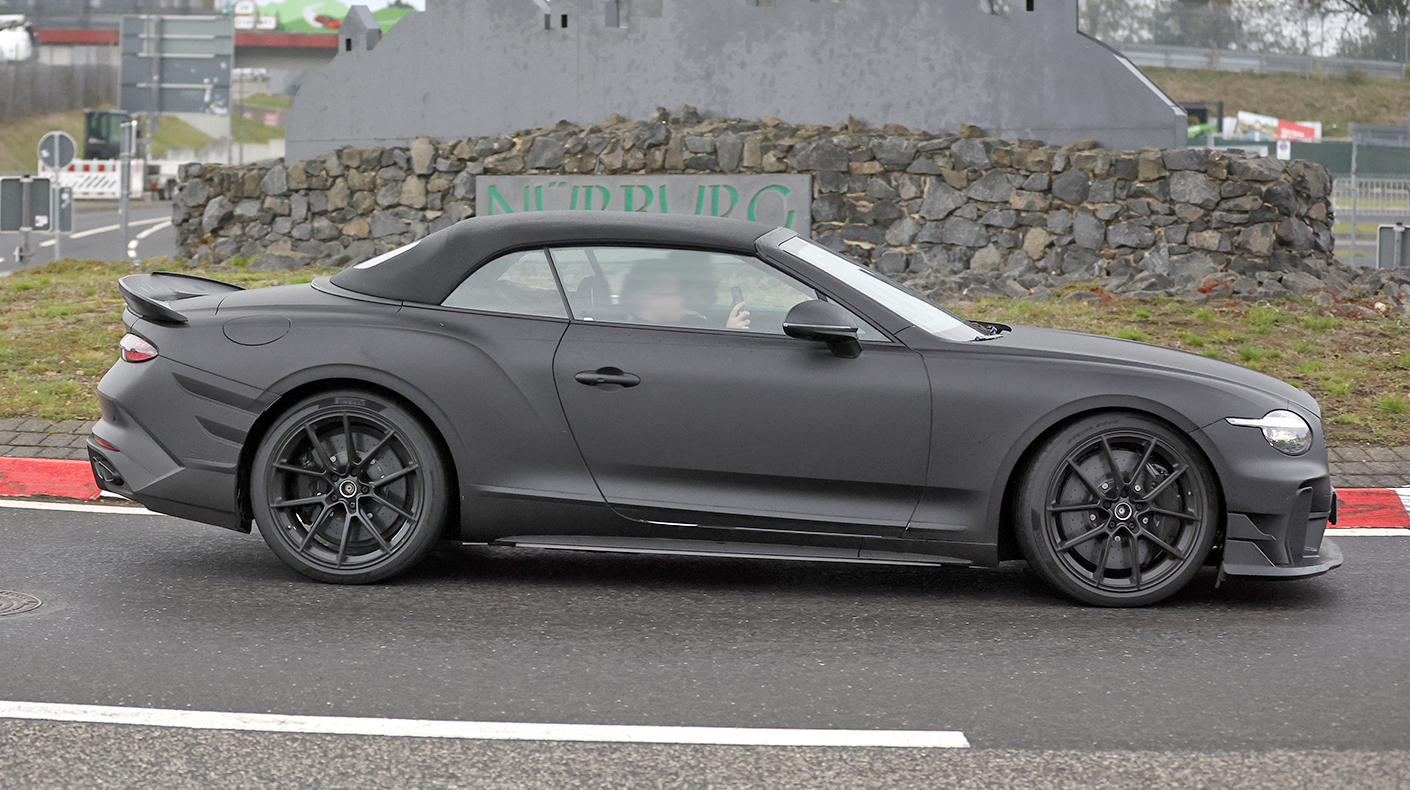
As far as width is concerned, the coupe had its rear track widened by 16 millimeters because the Supersports drops all-wheel drive and plug-in hybrid technology in favor of a purer drivetrain. The rear-drive special edition also benefits from rear-wheel steering and an electronically controlled limited-slip rear differential, a recipe that carries over to the convertible.
A distinctive grille, bumper and a quartet of dive planes dominate the front end. Those small blades at the sides of the front bumper are designed to reduce front lift, whereas the outer front bumper intakes satisfy engine and brake cooling requirements. Compared to the far more discreet Continental GTC, that's a whole lot of front-end furniture.
While it's not clear if Bentley can mirror the coupe's downforce levels, stability at speed is the name of the game here. Carrying more than a token lip beneath its nose, the prototype also prides itself on carbon-ceramic brakes. Don't expect anything other than a familiar V8 under the hood, namely the 4.0-liter unit we already know from the Conti. In this gasoline-only application, it produces a devilish 666 metric horsepower and 800 Newton-meters of torque, with most of that power channeled to the rear axle by a dual-clutch transmission.
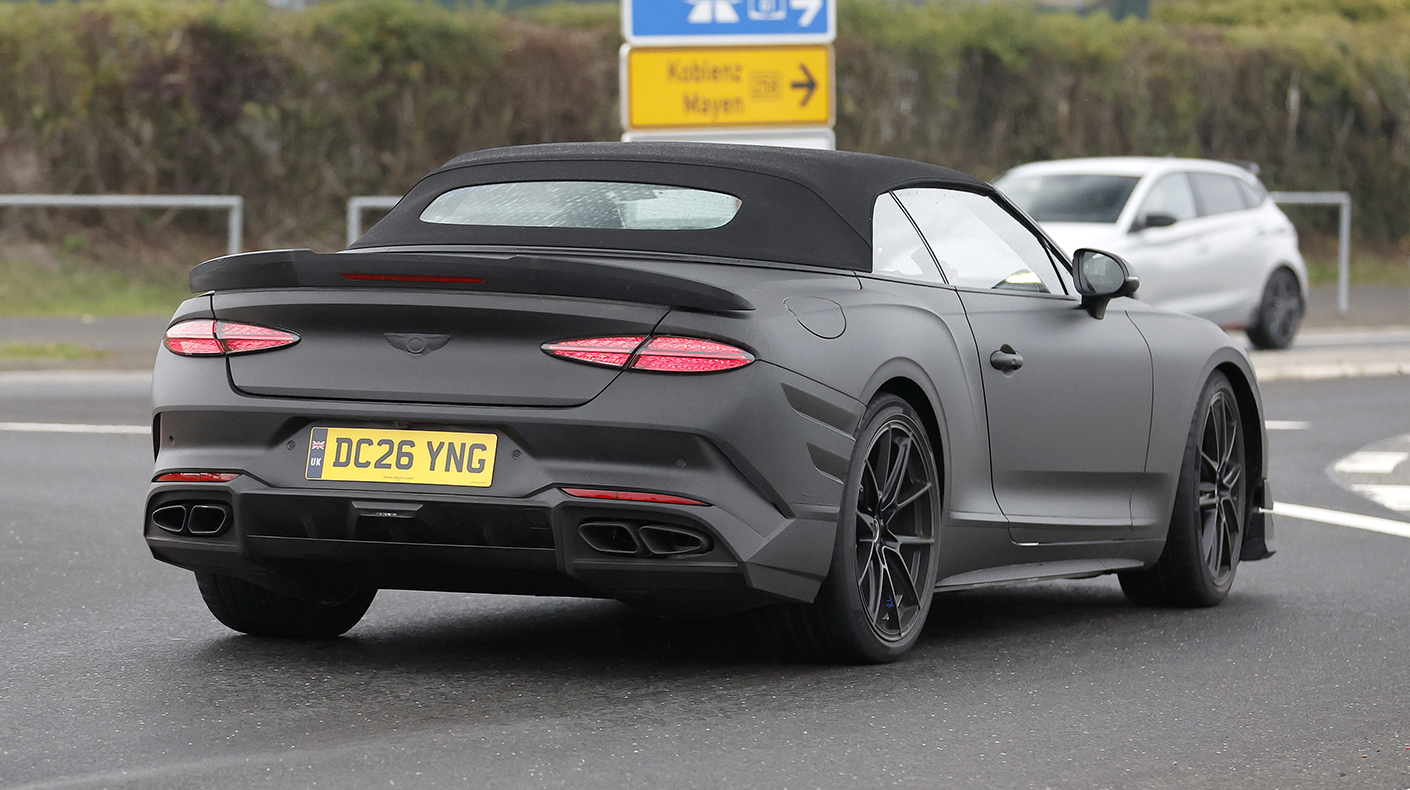
Breathing out through an Akrapovic lightweight exhaust system, the Supersports coupe weighs 1,998 kilograms in European trim. Bentley achieved this by deleting a lot of equipment, creating a more purist driving experience in the process. With the convertible's roof arrangement, matching that figure would be a substantial undertaking.
Whether it is similar in weight or heavier, the Supersports Convertible will undoubtedly hit 100 km/h (62 mph) in less than four seconds when equipped with the stickiest of tires. As long as the roof is up, expect no more than 199 mph.
With the coupe's 500-unit production run already spoken for, it's only a matter of time until the convertible goes live. Given the mostly nonexistent camouflage, fingers crossed Bentley will debut at the 2026 Los Angeles Auto Show in November.
New Workhorse: Next-Generation Hyundai Porter Spotted
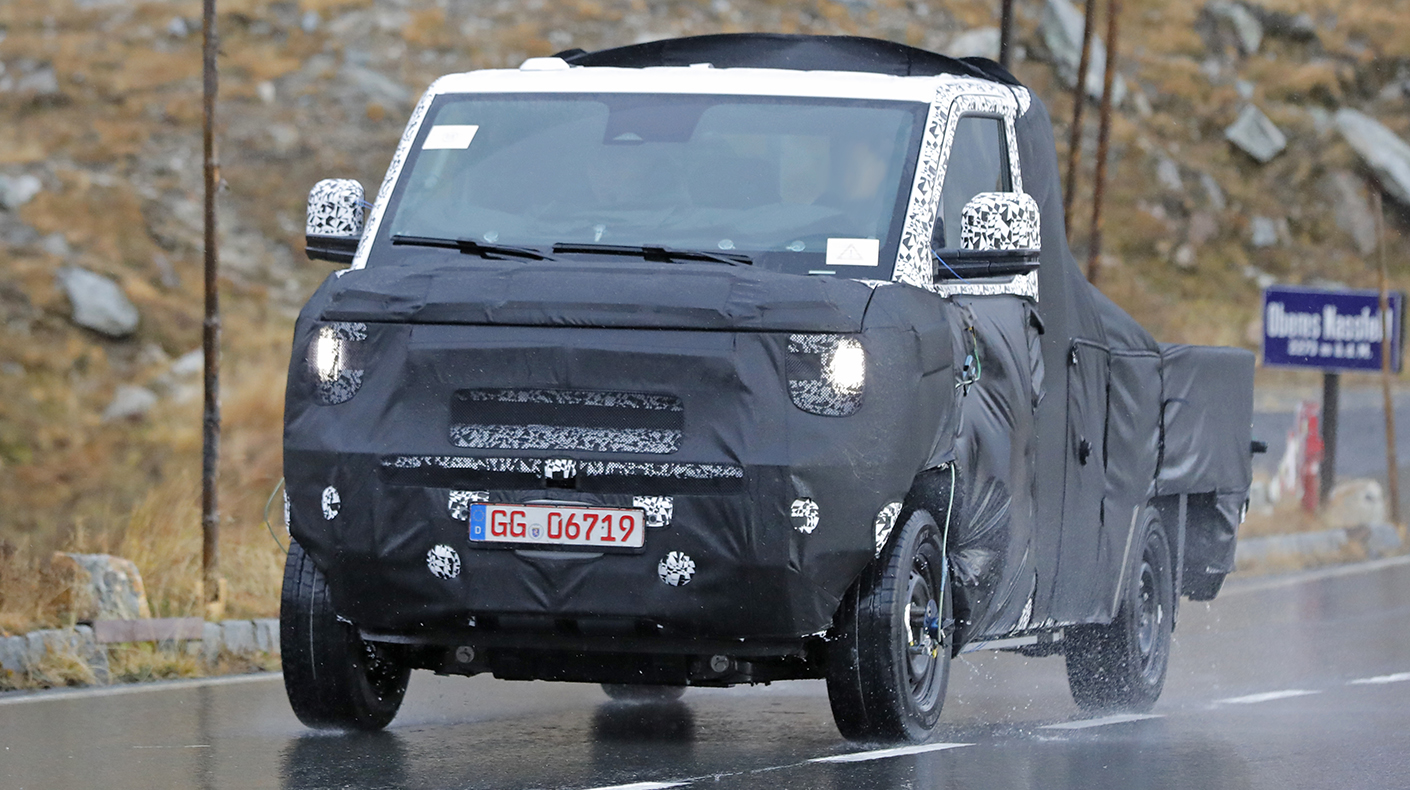
Known as the H-100 in certain markets, the fourth-generation Hyundai Porter is a very old truck. The Korean company launched it 22 years ago with a distinctive cab-over design. For 2027, however, the cab-over-front-axle format is going the way of the dodo in favor of a longer front end, resulting in a completely different profile.
Spotted in super-cab guise testing at high altitude in Europe, this all-electric prototype stops short of a conventional pickup truck hood. Now sitting at a shallower angle, the windshield is joined by tall and upright side windows. The roof also runs almost flat, and each front corner features rectangular headlamp clusters. With the 2027 redesign, Hyundai favors a boxier aesthetic in lieu of the short and more curvaceous fascia of the outgoing model.
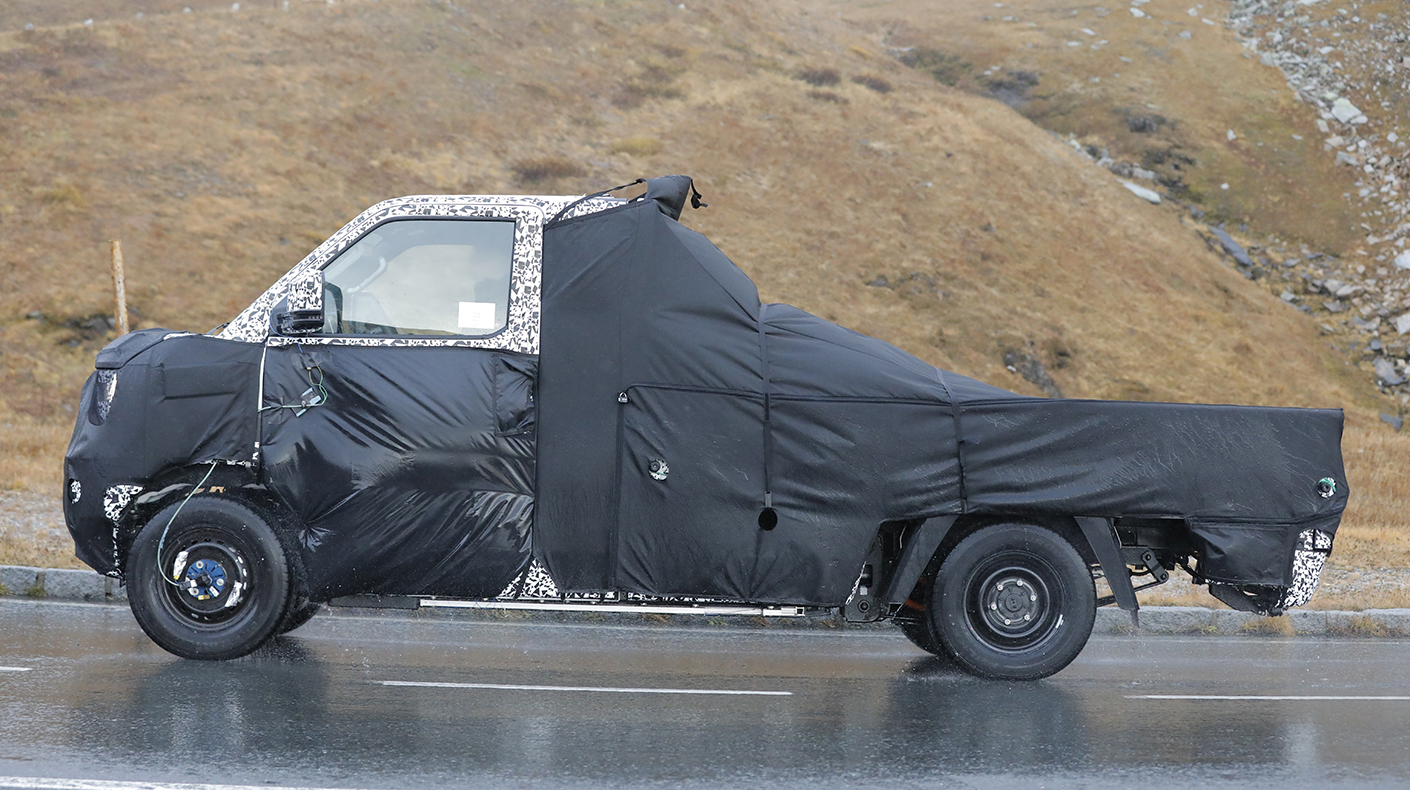
Adding a noticeable step between the cabin and front of the vehicle, the nose is complemented by a long bed. While a conventional pickup spreads the front structure and cab over a longer body, light commercial vehicles like this one have to balance occupant protection without giving away too much of the space its owner gets paid to use.
With the longer nose, the front corners shift farther away from the driver. Making the nose longer also means the front axle can be moved forward, leaving the cab slightly behind the axle without eating into the cargo area. This redesign clearly is a balancing act, and Hyundai appears to have balanced it perfectly.
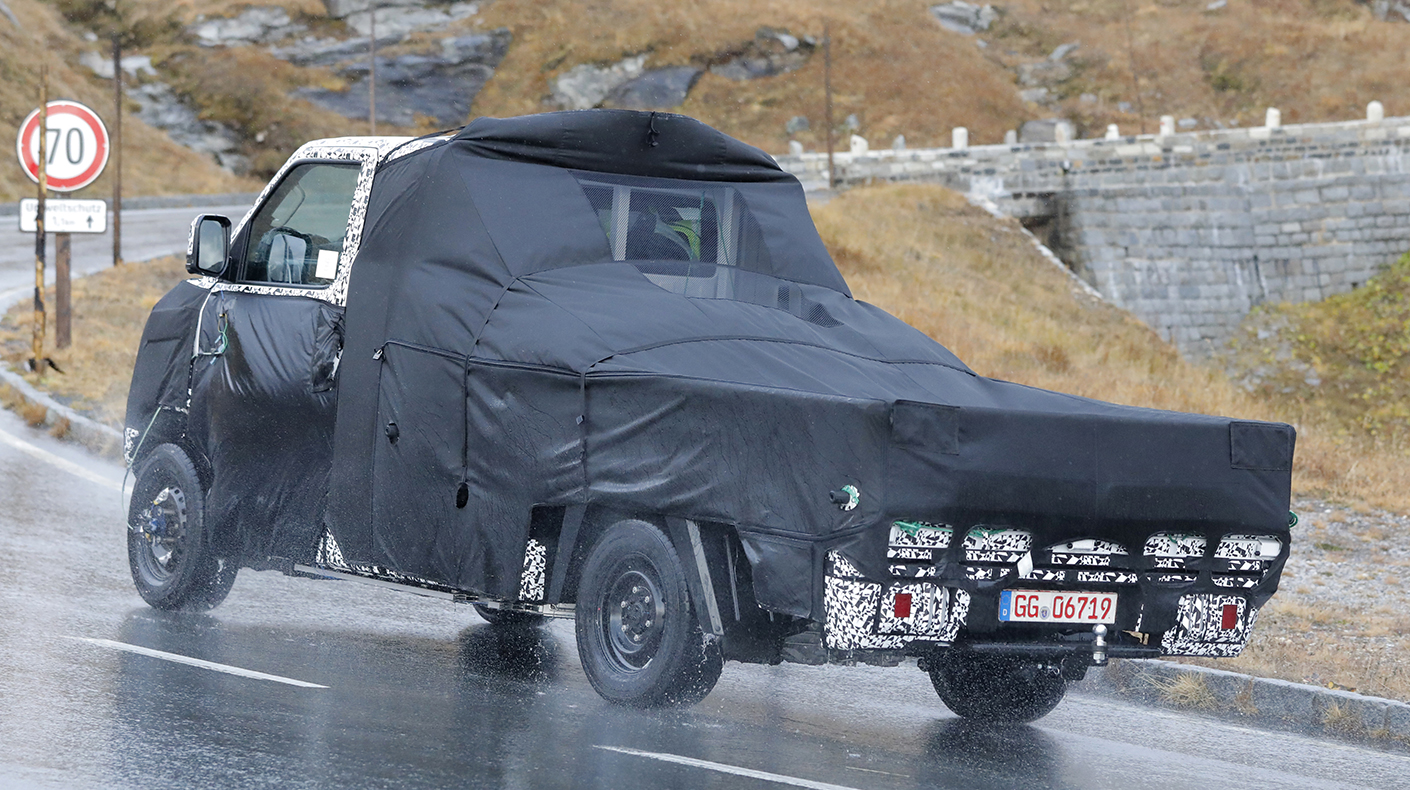
The semi-hood profile of the 2027 model gives Hyundai engineers more room to package an energy-absorbing structure, which is vital if the South Korean automaker wants to sell the next-gen Porter in Europe. As with its predecessor, the biggest focus here is the bed's footprint. Such vehicles also have to work on narrow streets, and the Porter does look a lot narrower than a van-derived flatbed such as the Euro-centric Ford Transit Dropside.
As far as this prototype is concerned, the work-first priorities are especially obvious from the very plain-looking bedsides and tailgate. Its cargo area is visually separated from the passenger cell, indicating a body-on-frame design engineered to handle commercial payloads. Alongside the redesigned exterior, Hyundai is also giving the Porter a techy interior and new powertrain options.
The charging connection on the super-cabbed prototype confirms full electrification, yet combustion options are clearly in the works as well. Its frame reads "4WD" as well, meaning Hyundai is considering at least one dual-motor electric powertrain.
Story and photos by Andreas Conradt, Automedia