Story and photos by Andreas Conradt, Automedia
On the Edge to Euro 7: Facelift for Porsche Panamera
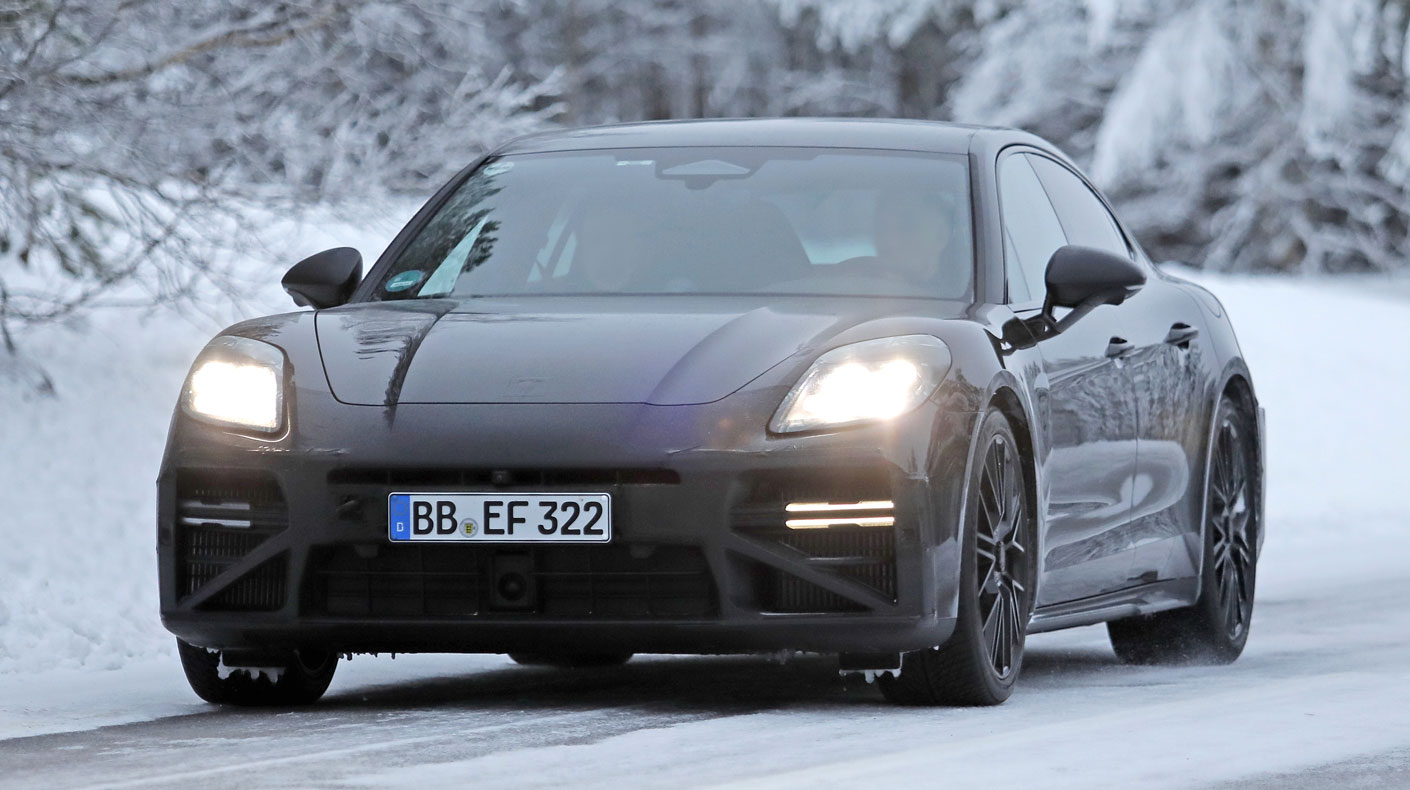
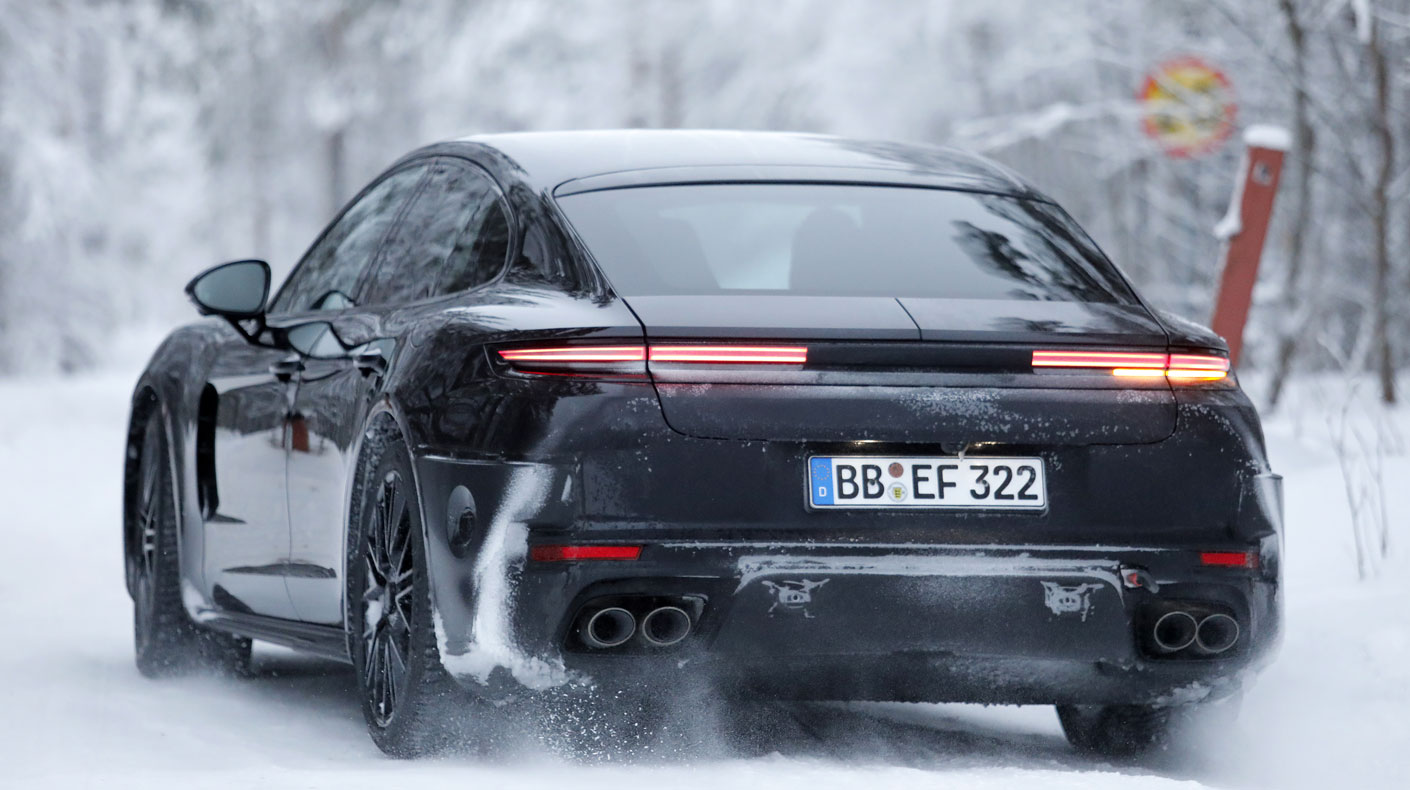
Our man in the cold has successfully captured the first images of what will become the facelifted third-generation Porsche Panamera. Yes, "third-generation"--that is how Porsche has named the current model.
Featuring new bumpers front and rear, exterior changes will be moderate. There is no word yet on what will change beneath the skin, but it is a safe bet that a modernized interior with an updated digital cockpit layout and refreshed tech features will be part of the update. Time will tell whether Porsche intends to adapt its engines to meet the stricter Euro 7 exhaust regulations. For now, the focus remains on highly efficient V8 biturbo engines combined with electric motors (e-hybrids), capable of system outputs well north of 700 hp. It is also likely that Porsche will further develop its active chassis system (PARS).
Turbocharged at Last: The Porsche 911 GT3 RS Facelift Could Get a Mild Turbo
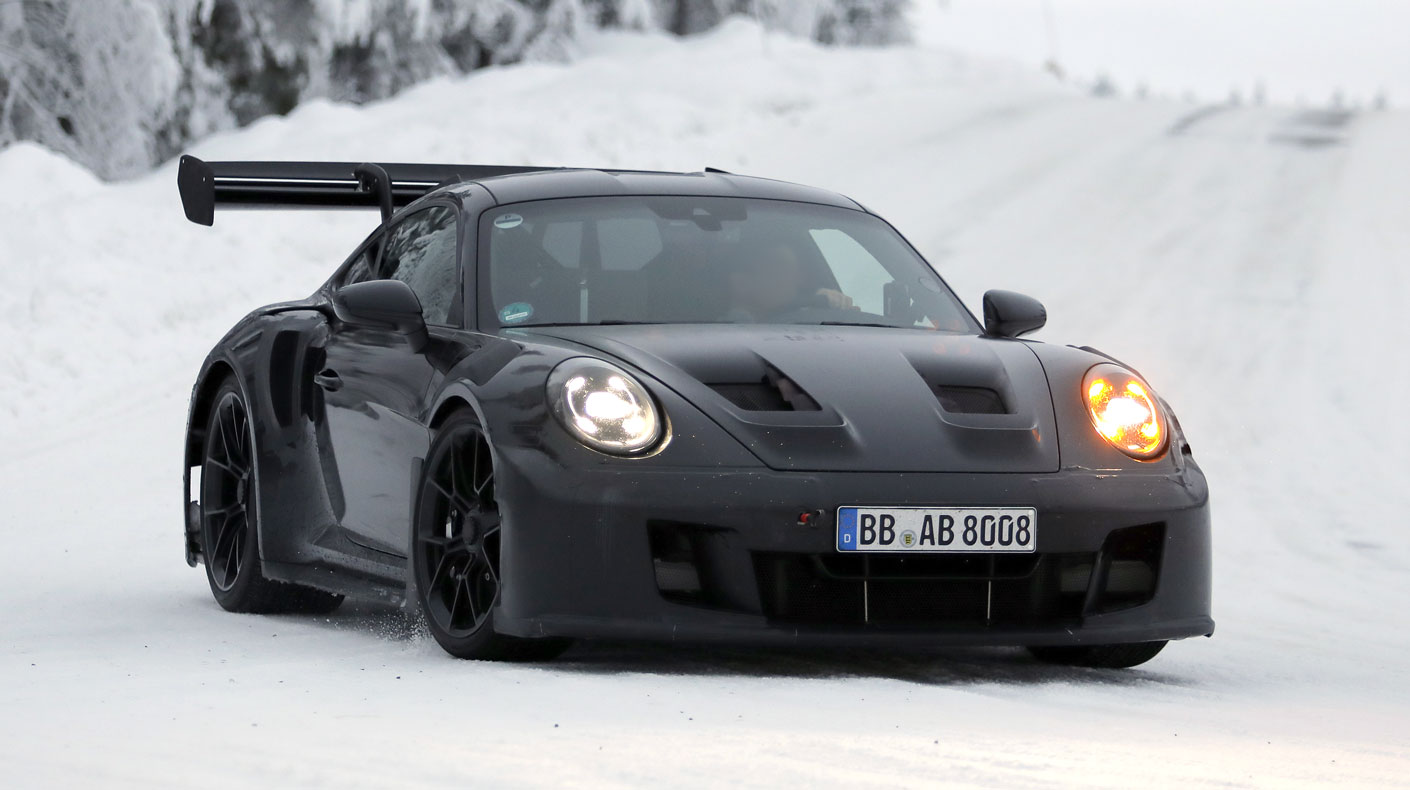
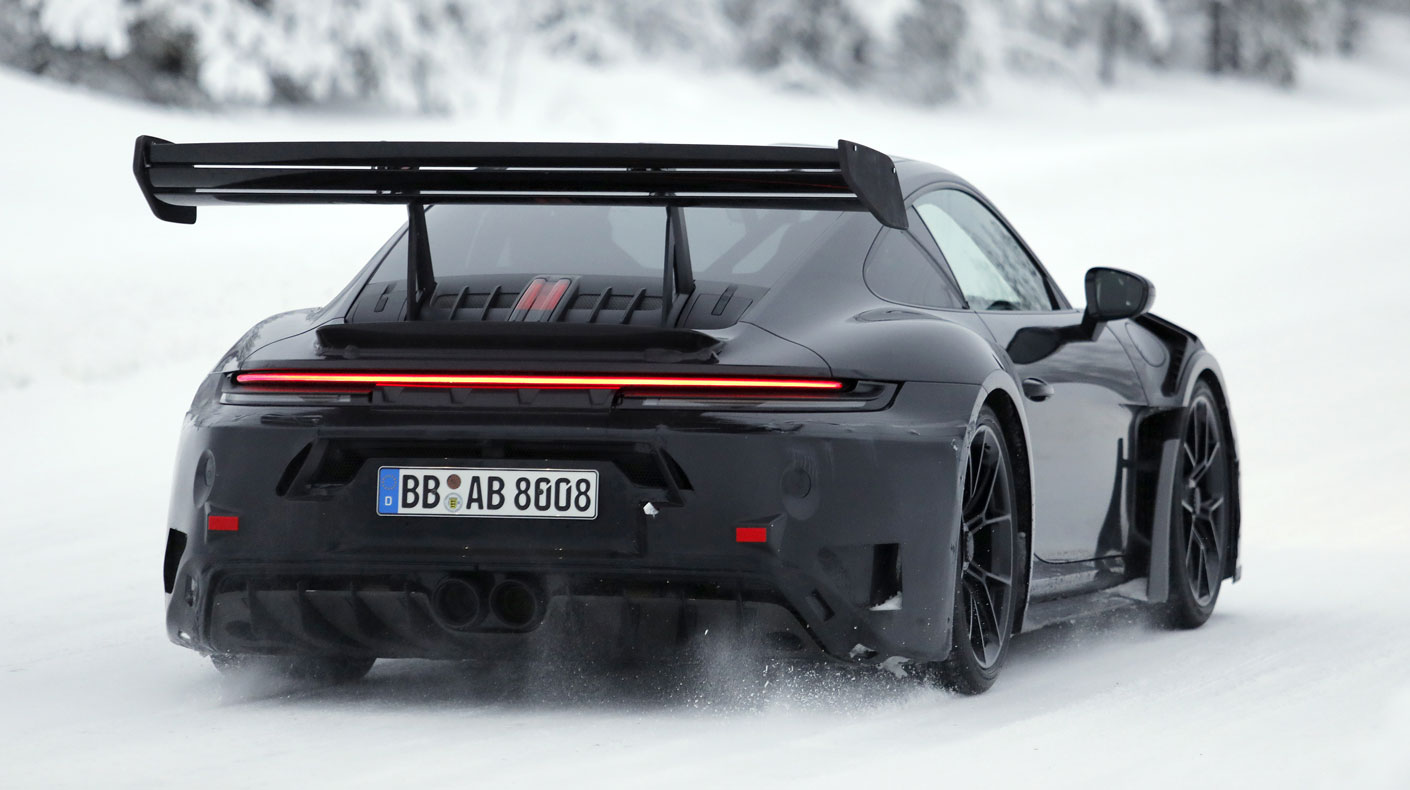
A heavily camouflaged prototype of the revised 992.2 GT3 RS was spotted during cold-weather testing in northern Scandinavia--and the details are revealing. While the front appears virtually unchanged, most of the updates are concentrated at the rear, fueling speculation about what lies beneath.
At the back, the prototype shows clear departures from the current model. The bumper has been redesigned, as has the diffuser, which now features four vertical fins--one more than before. Particularly striking are two additional openings to the left and right of the central pair of tailpipes.
These extra outlets could be functional or decorative, but modified exhaust routing or additional cooling appears more likely. Below the continuous light strip, a previously hidden area suggests another potential air outlet. Taken together, these clues point to significantly increased cooling and exhaust demands--hallmarks of a turbocharged powertrain.
Euro 7 regulations are placing Porsche in a difficult position. GT boss Andreas Preuninger made it clear in October 2024 that without turbocharging or electrification, a future GT3 would not meet the standard in Europe. His timeline: roughly "in two years"--precisely when the 992.2 GT3 RS is expected to reach the market.
In an interview, Preuninger hinted that Porsche has been weighing both hybridization and turbocharging internally--with a clear lean toward the latter. That admission is significant and lends credibility to the current wave of speculation.
For Porsche, this presents a delicate balancing act: preserving GT3 DNA while satisfying increasingly strict regulations. The answer may lie in "gentle" turbocharging--a sharp contrast to the heavy hybridization that has caused market friction for Ferrari.
The rumor mill is now in full swing, with several technically plausible scenarios under discussion. Attention is focused on a version of the new 3.6-liter turbocharged six-cylinder already used in the Carrera GTS t-hybrid.
Realistically, there is strong support for this direction. The added cooling vents, acoustic hints from testing, and Preuninger's own statements form a coherent picture. A lightly electrified, turbocharged six-cylinder could square the circle: Euro 7-compliant, powerful, and lighter than a full hybrid setup.
If the GT3 RS does adopt turbocharging, it would represent more than a technical update--it would mark a conceptual shift. Until now, the dividing line has been clear: GT3 for naturally aspirated purists, GT2 for turbocharged performance.
A turbocharged GT3 RS would blur that distinction and bring the model closer to the future GT2 RS, which is expected to debut with an even more potent plug-in hybrid system based on a 4.0-liter twin-turbo boxer engine producing more than 1,000 hp.
While the powertrain debate continues to stir emotions, the visual updates are less controversial but equally important. The 992.2 GT3 RS will receive further aerodynamic refinement--classic Porsche continuous improvement. Confirmed changes include a redesigned rear bumper with new air ducts, an enlarged diffuser with four vertical fins instead of three, and additional air outlets flanking the tailpipes. Larger tailpipes will add visual muscle, along with new rear lights in the 992.2 design. Reprofiled hood vents and small leading edges at the front complete the update.
Individually, the changes may seem subtle, but they are functionally deliberate. Each serve to improve aerodynamics, cooling, or exhaust management--all signs pointing toward a technically advanced, and potentially turbocharged, future for the GT3 RS.