From the SEMA Washington, D.C., office

President Donald Trump recently announced the United States–Japan trade agreement, which places a 15% reciprocal tariff on Japanese imports. The deal reportedly includes a $550 billion investment in the United States and expands access for United States exports to Japan in exchange for reducing tariffs from the 25% rate that was previously scheduled to take effect on August 1. The agreement provides stability in a turbulent trade environment.
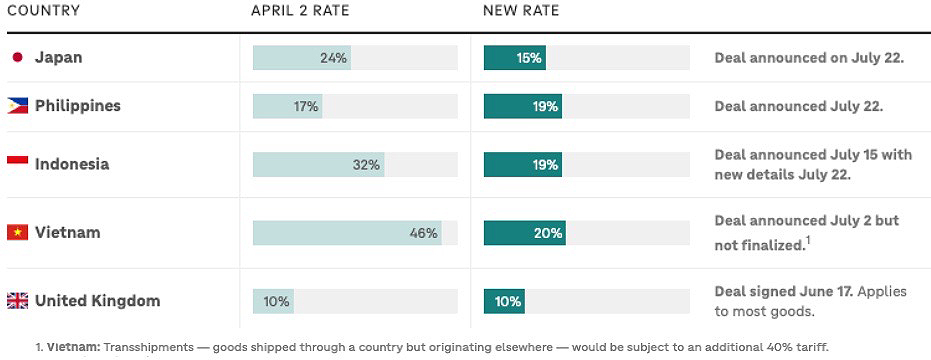
Image courtesy of NPR
In 2024, United States trade with Japan totaled $227.9 billion, with the United States exporting $79.7 billion worth of goods to Japan and Japanese imports totaling $148.2 billion. According to the International Trade Administration, top United States imports from Japan include automobiles, automotive parts and electronics.
Read the full White House fact sheet here.
Key points for the aftermarket industry:
- Reduced costs for auto parts: The 15% rate still exceeds pre-tariff levels but SEMA believes this is far more manageable than the proposed 25%, helping companies by maintaining supply chain consistency.
- Competitive landscape adjustments: Part of the agreement includes $550 billion from Japan to "rebuild and expand core American industries." It appears that the dollars will be directed by President Trump to invest in energy infrastructure and production, semiconductor manufacturing and research, critical minerals, pharmaceutical production and shipbuilding. According to the White House, America will keep 90% of the profits from this investment.
- Important Exclusions and Compliance: Japan's trade negotiator, Ryosei Akazawa, notes that the deal does not cover Japanese exports of steel or aluminum. Currently, they are set to 50% barring future negotiations. As part of the agreement, Japan will eliminate additional safety testing requirements currently applied to imported American cars and trucks, Akazawa said--rules that Trump has argued restrict the sale of American-made vehicles in the Japanese market.
- New Automotive Regulations: As part of the agreement, Japan will eliminate "longstanding restrictions" such as additional safety testing requirements currently applied to imported American cars and trucks. Accordingly, Japan will accept United States automotive standards for the first time, introducing millions of consumers to American brands.
Conclusion:
This agreement provides clarity regarding Japanese automotive products and directly reduces some cost pressure for specialty aftermarket distributors. Looking ahead, stability in imports, new United States investment and evolving supply‑chain alignments could strengthen market resilience--though the landscape remains uncertain amid broader trade tensions. The looming August 1 deadline still puts many suppliers under intense pressure to finalize deals before the end of the month.
This article was originally published on Thursday, July 24, 2025.