

 Project Underdog, a highly customized ’72 Ford Maverick originally conceived by actor Sung Kang, is finished, fine-tuned, revved and ready for auction. Sponsored by Shell and featuring Pennzoil, and supported by Ford Motor Co., Samsung, Nitto, GReddy, Rocket Bunny and Facebook, the unique vehicle build was completed at the SEMA Garage in Diamond Bar, California, with specialized tuning provided by Cobb Tuning, headquartered in Austin, Texas.
 The term restyling covers a broad range of automotive upgrades. While the biggest portion of the segment is made up of accessory and appearance products for both interiors and exteriors, it can also include certain performance parts, wheels, tires and suspension systems that don’t fit neatly into another category. Since the Great Recession, the restyling market has seen steady growth, according to the “2016 SEMA Market Report,” and annual retail sales in the segment are now more than $5.22 billion.
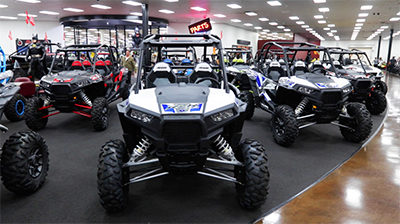 Still riding the wave of a recent marketplace shift, the utility task vehicle, better known as the UTV or side-by-side, is at a major crossroads. Intensive growth in product development and surging sales have helped the side-by-side to become a new staple in the off-road community.
 Often thrown about in today’s trendy business and marketing circles, “rich data” can be a confusing buzz term. Nevertheless, it’s become an essential component in the aftermarket supply chain for everyone from manufacturers to warehouse-distributors to retailers. Consequently, manufacturers can obtain a real advantage in mainstream markets if they grasp and follow the latest rich-data best practices.
 The SEMA Garage’s Tech Transfer program was originally conceived as a way to help member companies acquire original-equipment manufacturer (OEM) computer-aided design (CAD) data, making it possible to quickly produce parts that fit the latest models. By logging into the Tech Transfer online portal, a member has access to OEM CAD data and the opportunity to request specific data for one or more vehicles.
Although cyber threats on Fortune 500 companies make headlines, victims come in all shapes and sizes. Ponemon Institute, a Michigan-based research center dedicated to research on privacy, data protection and information security, found that 51% of surveyed CEOs reported experiencing a data breach not just daily but hourly.
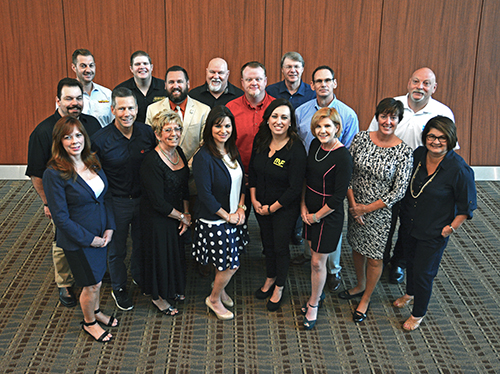 SEMA News spoke with SEMA’s council and network leaders to find out what’s in the pipeline for the coming year and to get their thoughts about the emerging trends and the challenges they can expect to face based on what their organizations are seeing in their respective marketplaces. Not surprisingly, many council and network chairs viewed the Recognizing the Protection of Motorsports (RPM) Act as essential to the continued viability of the automotive aftermarket industry.
 Performance products drive innovation and consumer enthusiasm, guaranteeing the continued health and growth of every business in the distribution chain, from manufacturers to retailers and marketers to media. And because clean-air regulations govern so much of the manufacturing, sale and use of products in this category, SEMA has long emphasized the need for emissions compliance on the part of its member manufacturers while simultaneously striving to protect them from overly burdensome regulation.
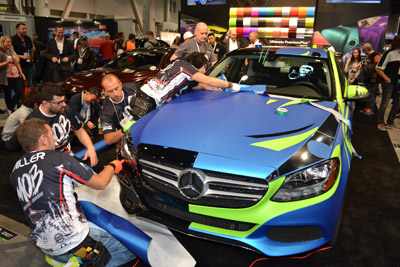 There are literally hundreds of car-care products on the market today, each aimed at making cars look good. According to a SEMA market report, the market for wax, cleaning products and other chemicals was worth $1.49 billion in 2015. The majority of the products, roughly 61%, are sold in brick-and-mortar auto-parts chains and retail chains.
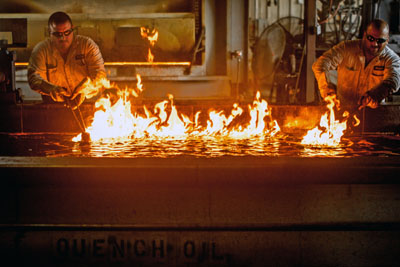 Efficiency is paramount to manufacturing companies. Exploiting the full capacity of available tooling and resources maximizes bottom-line profits. For some companies, peak efficiency is derived from adding a private-labeling operation to their product offerings.