Thu, 03/11/2021 - 08:53

By Matt Kennedy

Market Research
In the new “Classic Cars, Modern Markets” report, SEMA Market
Research digs into how modern consumers feel about, work on
and engage with fellow enthusiasts about classic vehicles.

Classic cars and trucks have been a key part of the specialty automotive aftermarket since it began. For many people who own older vehicles, fixing them up or modifying them into something new is a passion project that can span decades. With an estimated 9.4 million or more pre-’90 vehicles on the road, there are plenty of vehicles being restored, hot-rodded or restomodded by people who intend to keep working on their baby for years to come.

In the new “Classic Cars, Modern Markets” report, SEMA Market Research digs into how modern consumers feel about, work on and engage with fellow enthusiasts about classic vehicles. Businesses can download this report today to help understand this unique customer base and how to reach them.

Additional insights from the report include:

  • 50% of the new generation of owners (those under age 45) first got interested in classic vehicles through a friend or relative.
  • 67% of classic vehicle owners have a more modern vehicle in addition to their classic.
  • 80% of classic owners are comfortable doing at least some of the work on their vehicle on their own.
  • 71% of classic owners like to consult with professionals when researching parts or ideas for their vehicle.

Want to learn more about the current state of the classic vehicle market? Download the new “Classic Cars, Modern Markets” report today at  www.sema.org/research.
Thu, 03/11/2021 - 08:43

By SEMA Washington, D.C., Staff

SEMA’s top federal legislative priority is passing the “Recognizing the Protection of Motorsports Act” (RPM Act), which clarifies that it is legal to make emissions-related changes to a street vehicle for the purpose of converting it into a dedicated racecar. The RPM Act also confirms that it is legal to manufacture, sell and install race parts. SEMA is currently working with the RPM Act’s strongest supporters in Congress to identify the best strategy for reintroducing the bill in a way that maximizes its chances of becoming law, either as a stand-alone bill or part of a larger legislative package. In recent days Congress has been overwhelmed with messages of support for this legislation. Please keep up the momentum; tell Congress to Save Our Racecars.

The RPM Act, first introduced in 2016, reverses the U.S. Environmental Protection Agency’s (EPA) interpretation that the Clean Air Act (CAA) does not allow a motor vehicle designed for street use—including a car, truck or motorcycle—to be converted into a dedicated racecar. This American tradition was unquestioned for nearly 50 years until 2015, when the EPA took the position that converted vehicles must remain emissions-compliant, even though they are no longer driven on public streets or highways. A version of the RPM Act was included as part of the energy bill that passed the House in 2020, but the Senate never took it up.  

SEMA is fighting this battle both in Congress and in federal court. The association recently filed an amicus brief in a lawsuit between the EPA and Gear Box Z. Inc. (GBZ) arguing against EPA’s contention that the CAA does not allow a motor vehicle to be converted into a racing vehicle used solely for competition. In its brief, SEMA asserts that “the agency’s interpretation breaks from the plain language of the CAA, the legislative history, and EPA’s regulations and guidance.” SEMA’s brief also notes that the EPA’s position contradicts its longstanding guidance and regulations and the agency previously stated that it “has no interest in vehicles that begin their existence as normal, EPA-certified production vehicles used on public roads and are then permanently converted to sanctioned competition-use only vehicles.”

The EPA’s unwillingness to pull back from its regulatory overreach emphasizes the need to pass the RPM Act in this Congress.

The GBZ case is before the U.S. District Court for the District of Arizona. SEMA will continue to fight the EPA’s flawed interpretation in court while urging the U.S. Congress to end the debate by enacting the RPM Act.

For details, contact Eric Snyder at erics@sema.org.

Thu, 03/11/2021 - 08:31

By SEMA Washington, D.C., Staff

Product WarningThe California Office of Environmental Health Hazard Assessment (OEHHA) has proposed significant revisions to Proposition 65’s short-form warning. The SEMA-opposed changes would restrict use of the short-form warning implemented in 2018. The current short-form warning does not identify a specific chemical. The long-form warning requires identification of a specific chemical(s):
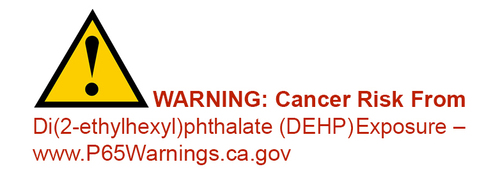
  • Short-Form: WARNING: Cancer and Reproductive Harm—www.P65Warnings.ca.gov.
  • Long-Form:  WARNING: This product can expose you to chemicals, including [name one or more chemicals], which is (are) known to the State of California to cause cancer or birth defects or other reproductive harm. For more information, visit www.P65Warnings.ca.gov.

Prop 65Under the rulemaking:

  • Companies could only use the short-form warning if the product label was 5 sq. in. or less.
  • Companies would be required to list at least one chemical on the short form.
  • Companies would be required to use the long-form warning on their website or in a catalog, even if the short-form warning can still be used on the product label.

SEMA has submitted comments in opposition to the proposal and participated in a March 11 OEHHA hearing. SEMA members impacted by Prop 65 are encouraged to submit comments on how they will be impacted if the rule is finalized. Comments are due by March 29, 2021.

SEMA has joined forces with many other organizations, including the California Chamber of Commerce, to voice opposition to the measure. The coalition has reminded OEHHA that the business community worked with the agency for several years to develop the Prop 65 regulations that took full effect in September 2018. Companies subsequently invested significant resources in updating product labels, websites and catalogs, and instructing others in the product chain about their obligations. OEHHA’s proposed short-form warning changes would negate those efforts for many companies.

Prop 65 was a ballot initiative enacted by California voters in 1986. It requires warning labels on products containing chemicals listed as known to cause cancer, birth defects or reproductive harm. There are more than 1,100 chemicals currently on the list. Prop 65 doesn't stop anyone from selling their products no matter what chemicals they contain. It is simply a law that requires consumer warning labels under certain circumstances.  

Prop 65 is not limited to businesses with a presence in California but applies to all businesses with 10 or more employees that sell products in California. It impacts the entire distribution chain from manufacturers to distributors and retailers, though the law tries to put the burden as high on the distribution chain as possible—meaning manufacturers are a frequent target of enforcement.

The law permits private parties (meaning trial attorneys) to pursue enforcement and receive a portion of the fine or settlement ultimately assessed. These lawsuits, which are known as “bounty hunter” suits, are becoming more and more common, and are essentially lawyers shaking down small businesses for quick settlements.

The law requires a product warning label if it contains a chemical that is on OEHHA’s list as “known to cause cancer or birth defects or other reproductive harm” and the product exposes the consumer to the chemical in excess of the “safe harbor” amount of exposure. Even if the product has a significant concentration of the listed chemical (parts per million), it may create very little exposure to the consumer because the part is “under the hood” and rarely handled after installation. Aftermarket auto parts often fall into this category. There are 12 chemicals that make up the vast majority of Prop 65 enforcement, and aftermarket auto parts notices of violation have been focused almost entirely on DEHP and lead.

The 2018 regulation provides the short-form warning option as an acceptable alternative to the revised requirements for consumer product exposure warnings. Many companies use this option since the warning fits more easily on product packaging and in advertising materials and the company does not have to identify at least one chemical listed under Prop 65 that triggers the warning. In proposing the change, OEHHA expressed concerns about an overuse of the short-form warning label.

If OEHHA seeks to implement the rule, the agency has proposed a one-year phase in period for companies to make any necessary labeling changes.

For additional Prop 65 information, click here: www.sema.org/prop65.

Wed, 03/10/2021 - 13:20

By SEMA Editors

Platinum status represents SDC manufacturers that have achieved the pinnacle of product data by putting in the extra effort to provide resellers with the most complete data sets available.

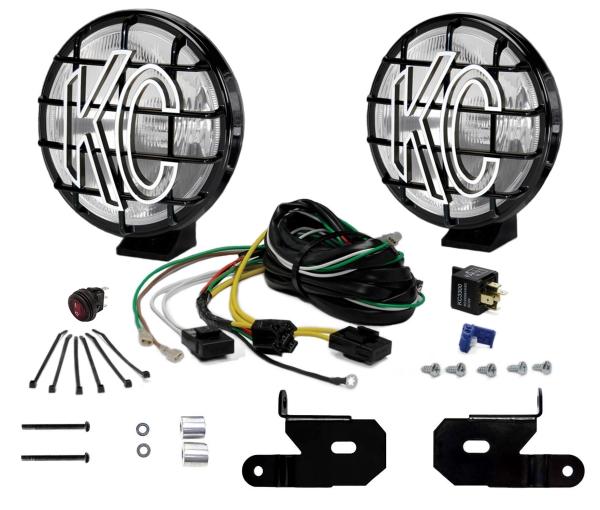
KC HiLiTES
Apollo Pro Halogen 5-in. and 6-in. Round Lights/Kits

Halogen lights are an excellent and affordable starting point for customers looking to add auxiliary lighting to their vehicles. The KC Apollo Pro Halogen line is available in 5-inch and 6-inch round lights in fog, spot, and combo beam patterns. They feature a slim, black polymax housing and glass lens, and include built-in stone guards ready to take on the harshest off-road terrains or debris from city freeways. Sold individually, in pair packs or in 6-light overhead bar configurations. Also available in kits with A-pillar and overhead mounting brackets to fit Jeep JK, JL and JT models.

Website: www.kchilites.com
PN: 97141

Oracle Lighting
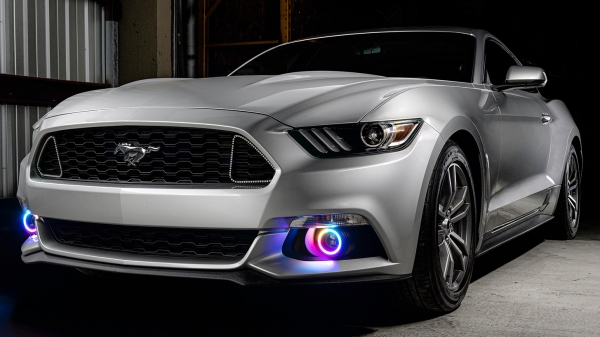
Dynamic ColorSHIFT Projector Fog Halo Kit

ORACLE Lighting is proud to announce its new Dynamic ColorSHIFT RGB+A Projector Fog Halo Kit for ’15-’17 Ford Mustangs. The dynamic features allow the user to run multiple moving-color patterns through these halo rings, creating vivid eye-catching lighting effects. The integrated RGB+A turn signal features dynamic “Motion Flow” sequential effect. The LEDs on the ring illuminate sequentially for a unique turn-signal effect.

Website: www.oraclelights.com
’15–’17 Ford Mustang
PN: 1235-332

Tuffy Security Products
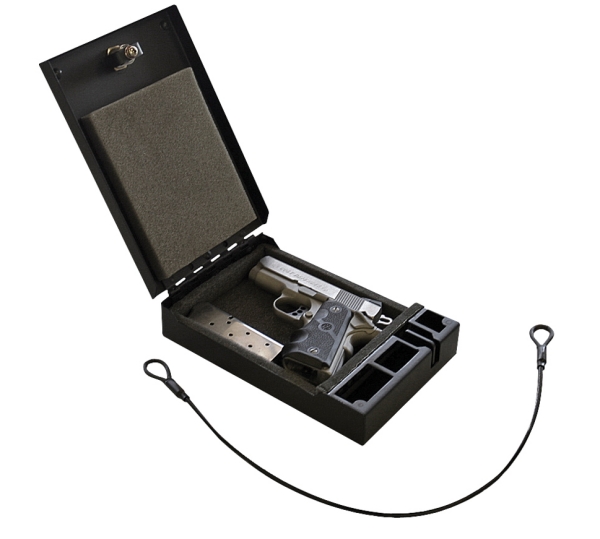
Large Portable Safe
Large Portable Safe

Tuffy Security Products’ Large Portable Safe is a lockable security box manufactured with heavy-duty welded steel construction and has a durable texture powdercoat finish that measures 10”L x 6 ½” W x 2” T.  It is perfect for securing and transporting firearms and is foam-lined to protect its contents.  

A 2-ft. long, 2,000-lb. test security cable with a 1/8-in. steel security-cable-anchor point allows it to be secured inside a vehicle or elsewhere. Weighing less than 4 lbs. empty, it has compression bumpers for a vibration-free, easy-to-access lid.  

Website: www.tuffyproducts.com
PN: 303

Wed, 03/10/2021 - 12:15

By Ashley Reyes

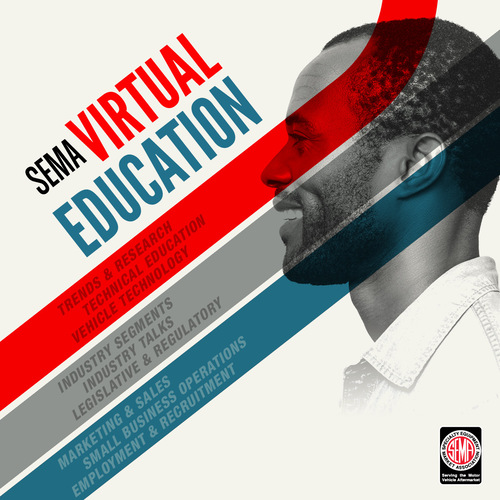
SEMA EducationSEMA Education remains committed to empowering industry professionals by sharing innovative strategies, information and learnings through new and engaging webinars.
Mark your calendars for the following upcoming webinars and stay tuned to SEMA eNews as additional sessions are announced throughout the year. For a comprehensive library of on-demand sessions that members can access anytime, visit www.sema.org/virtual-education.

Wednesday, March 17—Facebook Live Chat featuring Donna Wagner, presented by SEMA PRO

Track: Industry Talks

With 30 years' aftermarket experience in various roles from association executive to supplier marketing and educator, Donna Wagner will discuss and answer questions live on “Filling Your Technician Pipeline: What Your Company Can Do to Help Fill Open Positions.” While skilled technician jobs are at an all-time low, Wagner will explain why it’s important to actively engage with local automotive tech programs and share tips on how to connect easily and productively.

Location: SEMA Association Facebook page

Thursday, March 18—4 Tips To Double Your Company’s Annual Sales

Track: Marketing & Sales

Whether you’re a CEO, manufacturer or in sales and marketing, knowing how to increase your customer base, the total number of purchases per customer, as well as their average order value through data-driven decisions are vital for growing a business. You’ll walk away from this session with strategies that will change the way you think about your business along with effective methods to double your annual sales. This seminar will guide you to bring maximum value to your company and your customers.

Register here.

Tuesday, March 23—Asserting Yourself in the Workplace  

Track: Industry Segments, powered by SEMA Councils and Networks

Series: Sharpen Your Soft Skills, powered by SBN

Learn how to be assertive in difficult work situations, best practices for dealing with situations in public, and how to follow up after an uncomfortable encounter. You’ll hear from a panel of industry professionals as they share personal stories, and you will have an opportunity to participate in a breakout that will allow you to put what you learned into action.

Register here.

Wednesday, March 24—Turning Great Ideas Into Strategies to Produce Real Results

Track: Business Management

Ideas are great, but without a well thought-out strategy and plan, the results will be dismal. A comprehensive strategy, however, can be time-consuming. Find out what the 30-Minute Strategy is all about and how it can turn your ideas into real results during this webinar.

Register here.

Thu, 03/04/2021 - 16:01

By Ashley Reyes

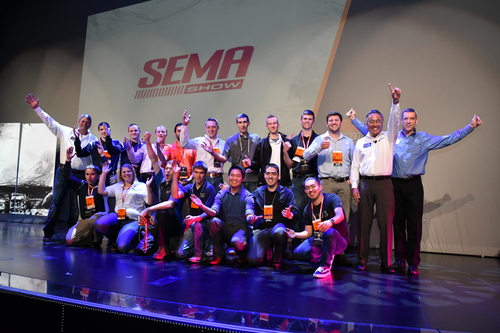
Matthew BoiceThe pandemic seems to have accelerated the online streaming market, with videos available on demand and catering to any lifestyle or interest group. Get a firsthand perspective about the changing landscape of media and trends in direct-to-consumer, subscription-based media streaming services during the SEMA Facebook Live Chat featuring Matthew Boice, vice president of sales for the automotive aftermarket, at MotorTrend Group—a Discovery Communications Company—March 10, at 12:00 p.m. (PST). Live Chats are open Q&As that make it possible for the industry to tap into knowledge and communicate directly with the featured guest.
Boice, who brings 15 years of experience in print and digital media, has a unique perspective, and has seen firsthand how the media landscape has evolved. He will discuss and field questions on trends in streaming services, including how the cable distribution model continues to be disrupted by the pandemic, and how consumers are offered choices to platforms that cater to their specific interests. As these offerings continue to increase, understanding this trend can help individuals make better business decisions.

Boice was named the SEMA Young Executives Network Vanguard Award recipient in 2019, served as co-chair of the SEMA Emerging Trends & Technology Network (ETTN), was President’s Club member of the SEMA Political Action Committee and participated as a member of the SEMA Show Committee.

Location: SEMA Association Facebook page.

Thu, 03/04/2021 - 14:02

By SEMA Editors

Scholarship
Students from all academic and technical disciplines who lead to
careers in the automotive industry are invited to apply for a SEMA
scholarship. Similarly, all individuals who work for a SEMA-member
company (with more than $2,000 outstanding student loans) are
eligible to apply for loan forgiveness.

Every year, SEMA helps students pay for their college tuition through the SEMA Scholarship Program, and SEMA members pay off their student loans through the SEMA Loan Forgiveness Program. Students from all academic and technical disciplines who lead to careers in the automotive industry are invited to apply for a SEMA scholarship. Similarly, all individuals who work for a SEMA-member company (with more than $2,000 outstanding student loans) are eligible to apply for loan forgiveness. This year, the SEMA Scholarship and Loan Forgiveness applications officially closed March 1, with another great collection of aspiring young automotive professionals.

SEMA believes that it is important to include the automotive aftermarket industry in the application review and selection process to help foster the next generation. Becoming a SEMA scholarship judge is a fantastic volunteer opportunity to give back to the industry and connect to the next generation of up-and-coming automotive talent. The entire evaluation process is online and easy to use, and a variety of time commitment options are available to fit the schedule that works best for you.

Judging will begin April 5, and continue until May 14. To learn more, visit SEMA Scholarship Judge Application, or contact Byron Bergmann, SEMA project manager, member services at 909-378-4859, or byronb@sema.org.

Click here to begin your SEMA Scholarship Judge application.

To learn more about the SEMA Scholarship and Loan Forgiveness program, visit www.sema.org/scholarships.

Thu, 03/04/2021 - 13:35

By SEMA Washington, D.C., Staff

SEMA and the Performance Racing Industry (PRI) have formed a coalition in partnership with 17 organizations that represent recreation, sports and amusement live venues that have experienced significant revenue declines during the COVID-19 pandemic. The coalition is focused on creating a federal program to provide grants to racetracks and other live entertainment businesses impacted by state and local attendance restrictions during the pandemic. The coalition has formally submitted a letter to the U.S. House and Senate Small Business Committee to request the creation of a $15 billion grant program that would provide a lifeline to racetracks and other live entertainment businesses.

It is important that members of Congress hear from SEMA members about providing financial support to racetracks. To send a letter to your lawmakers in Washington, D.C., please click here.

For details, contact Eric Snyder at erics@sema.org.

Thu, 03/04/2021 - 13:31

By SEMA Washington, D.C., Staff

SEMA-supported legislation was recently introduced in Congress that would provide tax credits to cover 50% of the expenses associated with exhibiting or attending a trade show. The Hospitality and Commerce Job Recovery Act of 2021 (H.R.1346/S.477) is significant to businesses that participate in trade shows and the millions of men and women employed in the tourism industry. The legislation would also provide comprehensive relief and recovery measures for the entertainment, travel, and hospitality industries and convention centers.

It is important that members of Congress hear from SEMA members about providing tax credits to businesses that participate in trade shows. To send a letter to your lawmakers in Washington, D.C., please click here.

Key provisions of the Hospitality and Commerce Job Recovery Act of 2021:

  • Establish a tax credit for 50% of the cost of attending or exhibiting at a convention, business meeting, or trade show in the United States between January 1, 2021, and December 31, 2024.
  • Create a tax credit equal to 100% of the qualified restart costs paid or incurred to reopen facilities designed for conventions, business meetings, or trade shows if the facility was forced to temporarily close or reduce operations due to the COVID-19 pandemic. Costs may include any renovation, remediation, personal protective equipment, cleaning, testing or labor to prevent the spread of COVID-19.
  • Extends the Employee Retention Tax Credit from July 1, 2021, through January 1, 2022.
  • Restores the Entertainment Business Expense Deduction by repealing for 2021 and 2022.
  • Establishes a tax credit for restaurants or food service businesses that would cover any cost associated with reopening or increasing service at an establishment forced to temporarily close or reduce operations due to the COVID-19 pandemic. The credit would be effective between the date of enactment and December 31, 2022.
  • Creates a tax credit for 50% of qualified travel expenses for individuals up to a maximum of $1,500 per household plus $500 for each qualifying child (maximum benefit of $3,000 for a family of five). The credit begins phasing out for individuals making more than $75,000 per year ($150,000 for married couples).
  • Provides a temporary credit for unmerchantable inventory costs for small businesses that were lost due to necessary precautions to halt public gatherings.

For details, contact Eric Snyder at erics@sema.org.

Thu, 03/04/2021 - 13:24

By SEMA Washington, D.C., Staff

SEMA filed an amicus brief in a lawsuit between the U.S. Environmental Protection Agency (EPA) and Gear Box Z. Inc. (GBZ) arguing against EPA’s contention that the Clean Air Act (CAA) does not allow a motor vehicle to be converted into a racing vehicle used solely for competition. The EPA first pursued this controversial interpretation of the CAA as part of a 2015 draft rulemaking, but it quickly withdrew the provision following a huge, SEMA-led public outcry. In the GBZ litigation, however, the EPA again maintains that once a vehicle has been certified as a street vehicle, it cannot be converted into a racing vehicle even if that vehicle is trailered to the track and is never driven on public roads.

In its brief, SEMA argues that the Clean Air Act does not apply to certified vehicles used exclusively on the track. SEMA states that “the agency’s interpretation breaks from the plain language of the CAA, the legislative history, and EPA’s regulations and guidance.” SEMA notes that the EPA’s position contradicts its longstanding guidance and regulations and has previously stated that it “has no interest in vehicles that begin their existence as normal, EPA-certified production vehicles used on public roads and are then permanently converted to sanctioned competition-use only vehicles.”

In response to the EPA’s efforts to regulate race parts, members of Congress introduced SEMA-sponsored legislation to confirm what had already been understood for the previous 45 years, that the Clean Air Act did not apply to vehicles modified for racing use only. The “Recognizing the Protection of Motorsports Act” (RPM Act) is bipartisan legislation to clarify that it is legal to make emissions-related changes to a street vehicle for the purpose of converting it into a dedicated race car. It also confirms that it is legal to produce, market and install racing equipment. SEMA continues to work tirelessly to pass this important legislation to counter EPA overreach.

The GBZ case is before the U.S. District Court for the District of Arizona. The Court has agreed to take up the issue after the EPA has responded to SEMA’s amicus brief. SEMA will continue to fight the EPA’s flawed interpretation in court while urging the U.S. Congress to end the debate by enacting the RPM Act.

Ask Congress to pass the RPM Act.

Click here for a copy of SEMA’s amicus brief.