Tue, 07/01/2025 - 19:01

By SEMA News Editors

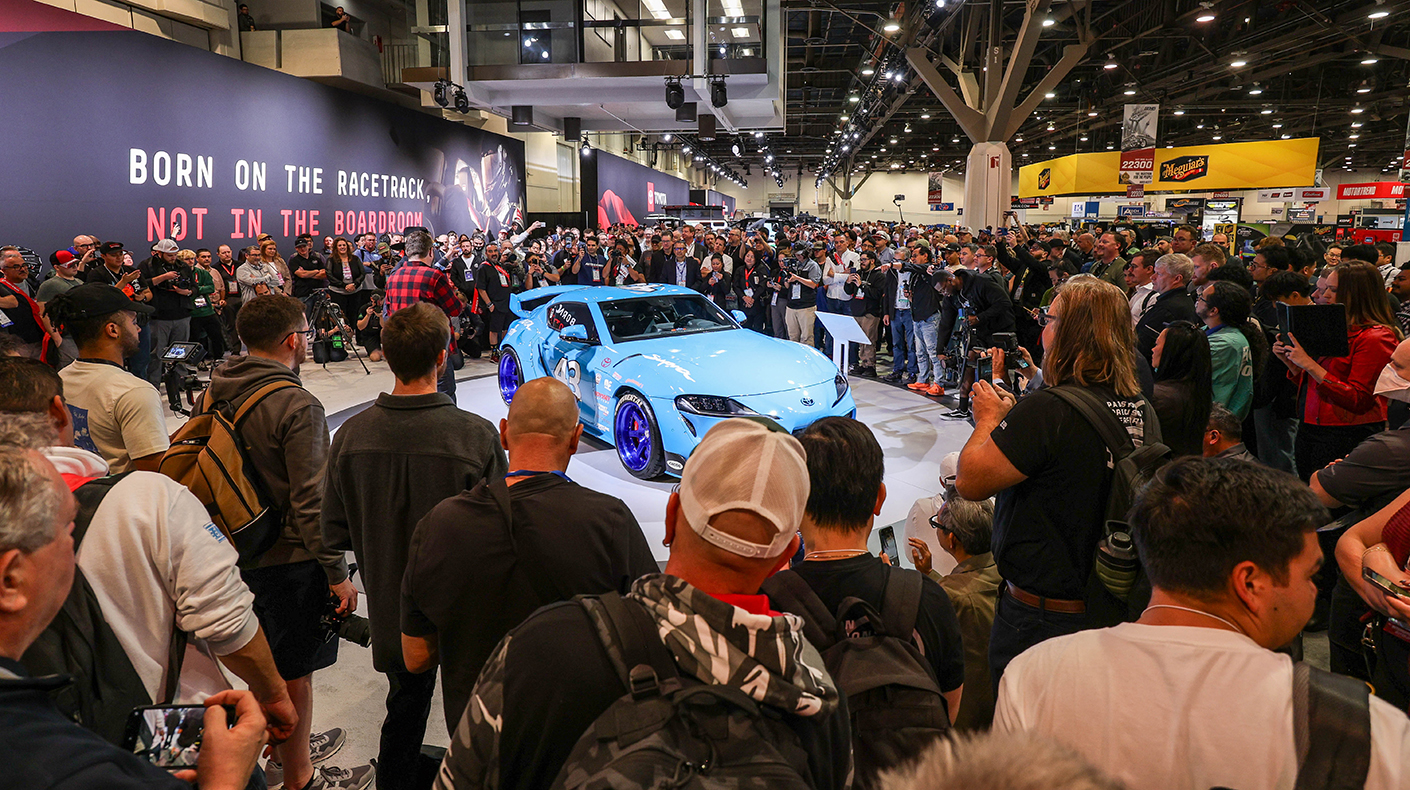
Toyota SEMA Show


The 2025 SEMA Showtaking place from November 4–7 in Las Vegas, offers an attendee experience like no other automotive trade show on the planet. Attending is a no-brainer for automotive professionals, enthusiasts, media members, influencers and related industry members.

With more than 2,000 exhibitors, the SEMA Show continues to be the place where business gets done. From groundbreaking technology and next-generation tools and products to expert-led education and face-to-face networking, the Show offers everything automotive aftermarket professionals need to stay competitive in today's fast-changing landscape. It's where relationships are built, products are evaluated, strategies are sharpened and opportunities come to life.

Don't wait to secure your 2025 SEMA Show badge. Qualified individuals can register for their place at the Show right now at semashow.com/register for just $75. And you don't want to wait—prices will go up.

Below are seven reasons why you need to secure their registration (available online here and at the bottom of this article) for this year's SEMA Show:

  • Exhibitors: Discover the latest product and vehicle trends across dozens of product categories: Trucks, SUVs & Off-Road; Restyling & Car Care Accessories; Powersports & Utility Vehicles; Business Services; Mobile Electronics & Technology; Racing & Performance; Hot Rod Alley; Restoration Marketplace; Collision Repair & Refinish; Tools & Equipment; Global Tire Expo--Powered by TIA (tires) and Wheels & Accessories; and First-Time and Featured Exhibitors.
  • New Products Showcase: Visit the New Products Showcase to discover thousands of the latest exhibitor products displayed in one location of the Las Vegas Convention Center. Use the SEMA Show mobile app's "Product Scanner" feature to scan and download product photos and exhibitor information that will remain on your app long after the SEMA Show has ended.
  • Education: SEMA Show Education is the single most crucial week of the year to power a professional development plan for your business and career. Through sessions and unique, immersive programs that explore the industry's most significant challenges and offer immediate takeaways, there is something for every automotive professional.
  • Networking: The SEMA Show is where connections are built—network with exhibitors, industry leaders and VIPs/celebrities from more than 140 countries and regions. Use the Show's mobile app to view lists of all events, seminars, conferences, celebrity appearances, and speakers, including date, time, and location. In addition, this year's program includes SEMA Council & Networks receptions, happy hours and meetings--all designed to help you advance your business and grow your network. You'll also have the opportunity to meet face-to-face with others in the industry and build meaningful relationships that'll lead to real results and high-quality connections.
  • Show Features: The SEMA Show is teeming with the latest innovations and trends, showcased in several dedicated areas like the SEMA Battle of the Builders; the SEMA FutureTech Studio; the outdoors Optima Village; feature vehicle displays; SEMA Garage: ADAS, Emissions and Product Development; the Collision Repair & Refinish Stage; the Overland Experience; the SEMA Show Art Walk, the new-for-2025 International Pavilion at the Westgate Las Vegas and more to be announced.
  • Show Events: Unique events and activations, such as the SEMA Show Kickoff Breakfast, the SEMA Industry Honors now at the iconic Fontainebleau, and vehicle demonstrations, will provide ample opportunities for the industry to unite.
  • And much more: Of course, attending the SEMA Show in Las Vegas is the best way to boost an automotive professional's business and career path, but be sure to make the most of your time in Vegas with ancillary events like after-hours networking and SEMA Fest, a celebration of motorsports, music and car culture. Note: Your SEMA Show badge does not provide access to SEMA Fest. Visit SEMAFest.com to stay up-to-date and discover when tickets will be available.

Online registration for qualified professional attendees is $75 per person through September 27. After September 27, registration online or on-site will be $100. A SEMA Show badge includes access to both the SEMA Show and AAPEX. Deadlines and fees for other registration categories can be found at semashow.com/register

Hotel reservations, including for several new properties in Las Vegas, are available at the guaranteed lowest rates exclusively for Show attendees through SEMA's official hotel provider, onPeak.

For more information about the 2025 SEMA Show, visit semashow.com. Sign up for updates on SEMA Fest at semafest.com.

Tue, 07/01/2025 - 18:39

By SEMA News Editors

SEMA Show Bin Program ad exchange


The 2025 SEMA Show is now accepting submissions to participate in the 2025 Bin Program, which offers automotive publications a simple way to gain mass exposure for their magazine.

Showcase your magazine where it matters--the aftermarket's premier event--and make sure you take advantage of the opportunity to get your magazine in front of the SEMA Show's 160,000-plus attendees and exhibitors.

In exchange for one standard full-page color ad in your publication, participants will get to display and distribute their publication at the 2025 SEMA Show.

Get your magazine seen by thousands of potential subscribers and advertisers; act now and submit your details here.


Editor's Note: This story was originally published on July 1, 2025. Submissions for the Bin Program at the 2025 SEMA Show are now closed. Questions? Contact Lynne Johnson, SEMA Marketing Director, Agency and Creative Services, at lynnej@sema.org.

Tue, 07/01/2025 - 14:50

By SEMA News Editors

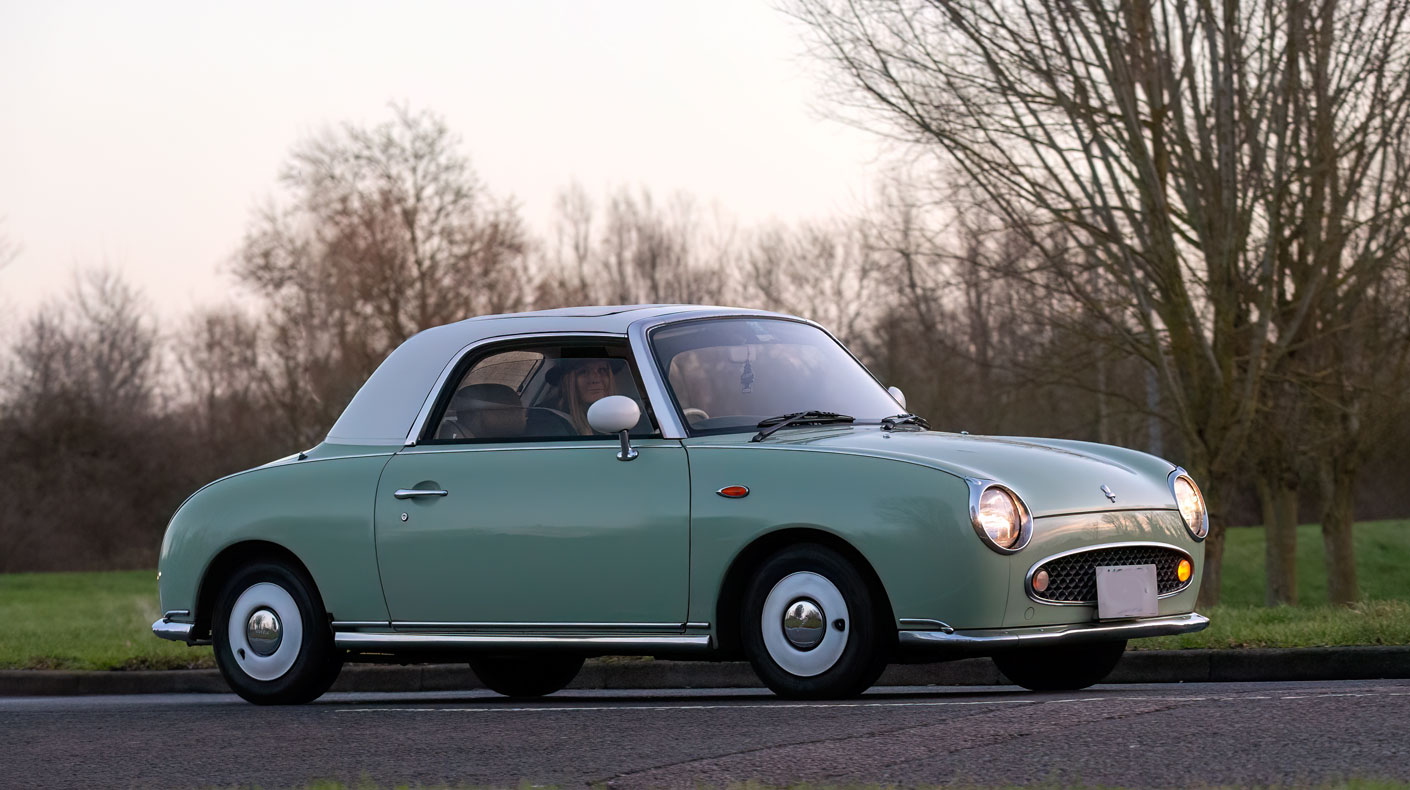
Nissan Figaro


The Antique Automobile Club of America (AACA), one of America's premier resources for the collective vehicle community, has established a new judging class that specifically recognizes Japanese domestic market (JDM) vehicles.

JDM has proven to be a fast-growing segment of the antique automobile hobby, particularly appealing to younger hobbyists. These vehicles were designed and built exclusively for Japan and never officially imported and sold in America. They are small, reasonably affordable and include unique performance and styling features of interest.  

Examples of JDM cars include the Nissan Figaro, Honda Acty, Subaru Sambar, Mazda Autozam AZ-1, Mitsuoka Le-Seyde and many others.

"We're pleased to welcome members with unmodified Japanese domestic vehicles to our national show fields and have already featured them in Antique Automobile magazine. We encourage the new crop of JDM owners to join AACA and enjoy the myriad of membership benefits and camaraderie," said AACA Vice President of Judging Dave Bowman.

AACA defines an "antique" as any 25-year-old-or-older self-propelled vehicle that is intended for passenger use. The non-profit organization based in Hershey, Pennsylvania, is dedicated to the history, maintenance, restoration, judging and enjoyment of any and all such automobiles in the inclusive spirit of sportsmanship and good fellowship.

For more information or to join the AACA, visit aaca.org.


Image courtesy of Shutterstock

Tue, 07/01/2025 - 13:58

By Cristian Gonzalez

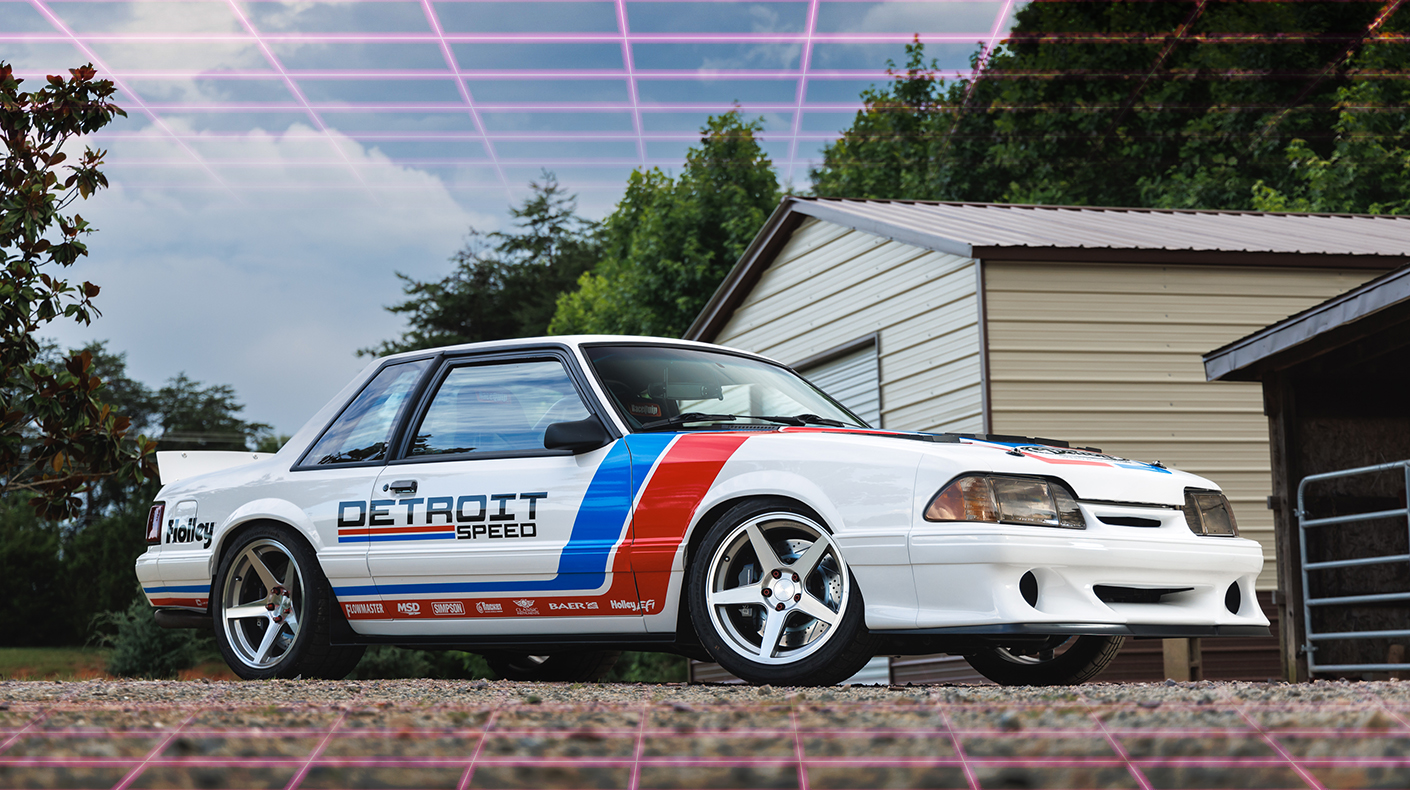
A Ford Fox Body Mustang.


Over the Past Few Years, Fox Bodies Have Made a Comeback––and the Aftermarket Is Responding With Increasing Ingenuity


They are so back!
 

And who would have thought? The iconic Fox-Body Mustangs of the '80s and early '90s are making a comeback in the restomod arena as well as increasing inroads into pro-touring motorsports.
 

If you attended the 2024 SEMA Show in Las Vegas or the PRI Show in Indianapolis, you might have noticed a more significant Fox-Body presence, signaling a return of these vehicles to the automotive spotlight amid the cultural zeitgeist for all things retro. They are popular once more—but why, and why now?
 

A RETURN TO GLORY DAYS


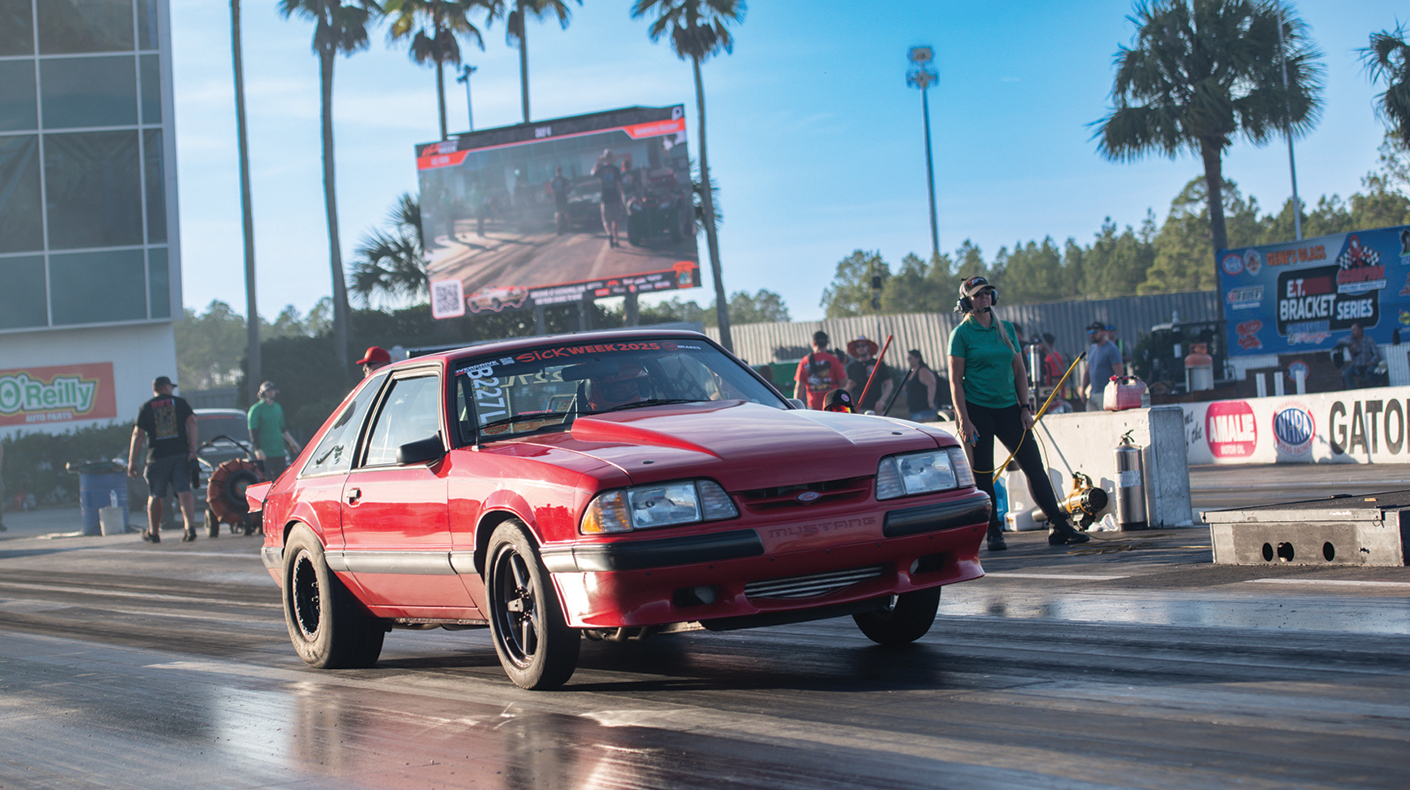
A Fox Body Mustang racing on a drag strip.

Fox Bodies have always had a presence in grassroots drag racing. Growing aftermarket interest in the platform is expanding applications to other motorsports. Courtesy of Damon At E3XTREME.


The Fox-Body Mustang is the third generation in the Ford Mustang lineage, following the uncelebrated run of the Mustang II. Its manufacturing years were from '79–'93, with a significant change to the front end from a "four-eye" design to the more popular and recognizable aeronose in '87. Rear-end styles encompassed the notchback, hatchback or the less popular convertible. Ford offered such powertrain options as the 2.3L inline-4 Lima and the 3.8L Essex V6; however, it was the 5.0L High Output 302ci V8 that became synonymous with the platform.
 

To better understand the current market and find out what demographic is restomodding Fox Bodies, we contacted Manir Karim, owner of Our Dream Resto Mod, out of Salsbury, North Carolina. The hot-rod shop never labeled itself a Fox-Body specialty shop, but Karim considers himself a fan of the platform. Owning a few in his lifetime gave him the eye and creativity for some pristine builds. Word of the shop's work got around, and now Fox Bodies are their bread and butter.
 

"I would say we've been messing with them on a business level for the last 13 years or so," says Karim. "And definitely from when I first started to now, I'd say the last five years have been crazy as far as popularity."
 

Karim believes nostalgia plays a significant role in the platform's current revival. Most customers bringing in their Fox Bodies are in their 50s and 60s—either original owners or enthusiasts who recently bought the same model they drove in the '80s or '90s to relive the good times with modern upgrades.
 

The extent of vehicle modification has also paralleled the platform's popularity. Fox Bodies have always been easily modifiable cars with strong aftermarket support. But where modifiers were previously apprehensive about putting big money into restomodding them, Karim says that's not the case anymore.
 

"We've done many no-budget Fox-Body builds, which was unheard of because it was almost like you're throwing your money away. People would do it on fastback Mustangs or 'Cudas. Whatever it took, they would fix them, make them nice, but no one would do that with a Fox Body. But we have done quite a few six-figure builds, which in the grand scheme of things in the restoration world isn't much, but for Fox Bodies, it's a lot."
 

Karim, along with every other source for this article, sees the original targeted demographic for this vehicle now at an age where they are monetarily stable enough to invest in their high-school dream cars.
 

With more premium Fox-Body builds making waves, like Holley's pro-touring notchback at the recent SEMA Show, it's a green light for others to follow suit and take it further.
 

THE AFTERMARKET


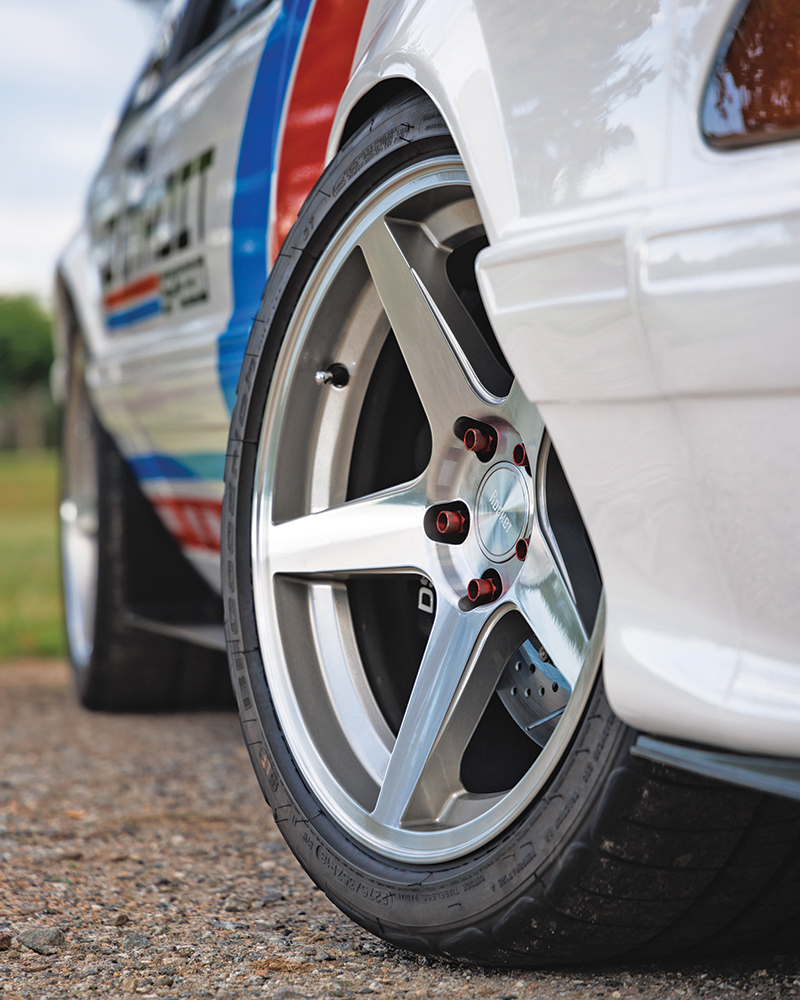
A Fox Body Mustang

Originally coming with a four-lug wheel pattern, five-lug conversions were among the first mods to be installed for more wheel options and performance benefits. Courtesy of QA1. 


Several factors make third-gen Mustangs so popular within their restomod circles: their abundance in the secondhand market, their low market cost, aftermarket support, and how relatively simple they are to work on.


Modifiers typically start with five-lug conversions, permitting a wider wheel selection, followed by upgrades that enhance stance and handling, such as suspension and brake improvements. "Getting the stance right and putting a nice set of wheels goes a long way on these cars," expresses Karim.
 

Detroit Speed and Engineering made serious strides in the Fox-Body suspension market at the 2024 SEMA Show as the architect behind Holley Performance's Fox-Body build. (At that time Detroit Speed was under the Holley umbrella, but since has been acquired by QA1.) The performance notchback was Holley's booth vehicle promoting domestic muscle products and garnering favorable attention from attendees. Nathan Peterman, senior product design engineer at Detroit Speed, says with the rise in Fox-Body interest, the company wanted a project vehicle for use as a research and development canvas—a way to test new suspension systems.
 

"They're extremely well supported on a lot of the driveline stuff," says Peterman. "But we saw a hole for high-end-racing and pro-touring-type suspension. There's a lot of suspensions that have been on the market for a long time, but of course, with time you learn new things, and there's ways to improve upon it."
 

Companies like Detroit Speed are making third-gen Mustangs more prevalent in motorsports. While the vehicles have always been present in the drag-racing world, their unibody flex has hindered their cornering performance in other types of racing. But the aftermarket has been catching up to alleviate that trouble, and Detroit Speed has demonstrated the platform is far more capable than previously noticed.
 

The company has different levels of suspension conversions for the front and rear systems, but its notchback project utilizes Detroit Speed's Short Long Arm (SLA) conversion system that incorporates upper and lower control arms with coilovers. According to Peterman, track testing has demonstrated a significant drop in lap times when the front strut setup is exchanged for the new SLA system.

"We got a good chance to do back-to-back, similar weather, fresh tires for both runs on the same racetrack to see how advantageous it is to go to an SLA compared to a max effort strut suspension. We headed up the local track that we use and went from a minute 45 lap to a minute 43, just from the front suspension change."
 

In racing, 2 seconds can feel like an eternity, and when you add a Ford Performance 363 crate engine with a Holley 4150 intake and a Sniper throttle body, you show the performance world that Fox Bodies can hold their own beyond the dragstrip.
 

Peterman and the Detroit team "took it on Power Tour and probably put 8,000 to 10,000 miles on it last year, just driving it on the road to different events. We autocrossed it, we drag-raced it, drove on road courses, and all around it turned out to be a good everything vehicle… We saw a big uptick in road racing and autocross and the street pro touring scene. We wanted to jump on that and ride that wave of popularity on those."
 

When a Fox Body grabs a spotlight in a Holley booth, it's clear the platform isn't just back. It's building prominence. But Holley and Detroit Speed weren't the only ones making a buzz at SEMA with a Fox Body.
 

A NEW FRAMEWORK


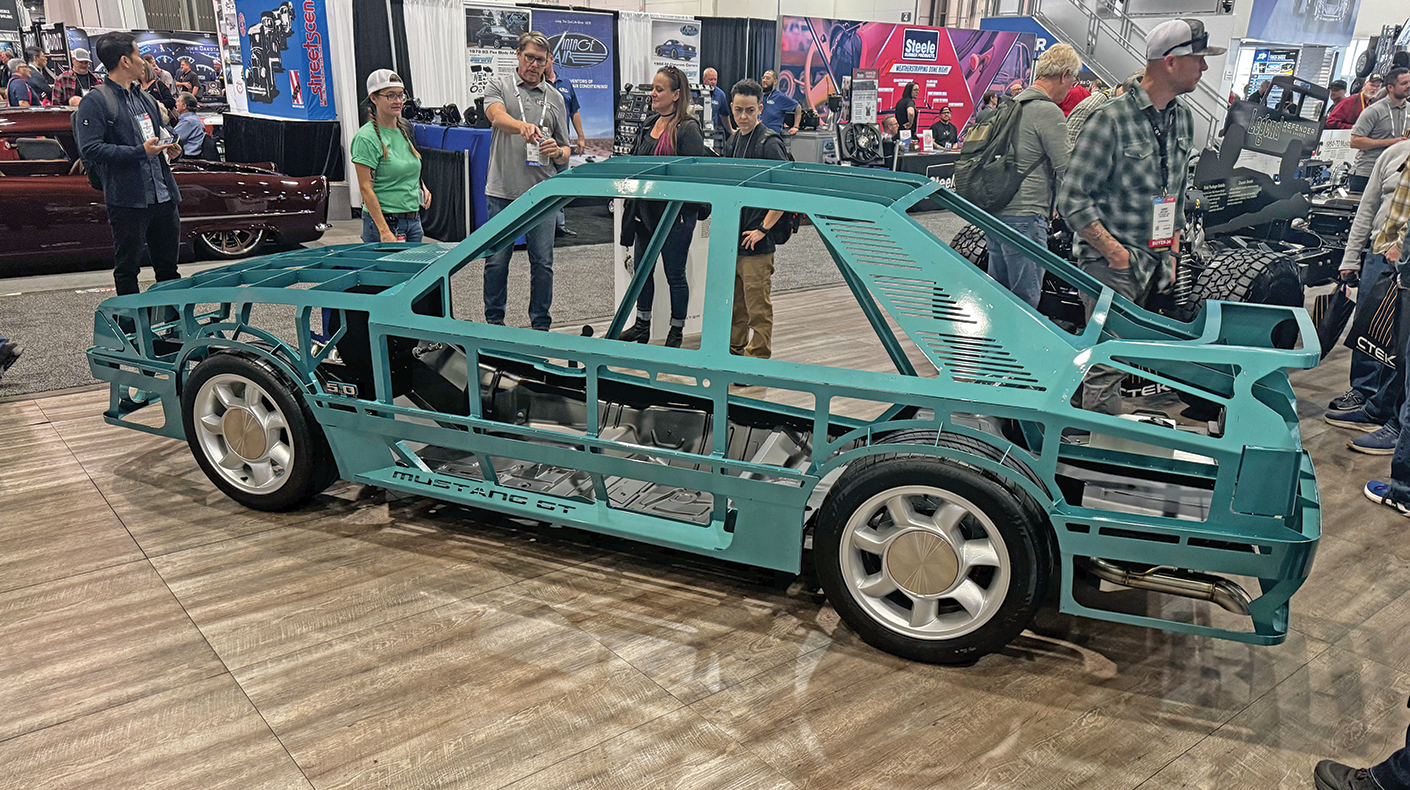
A Fox Body SPEC Chassis at the SEMA Show from Roadster Shop.

Roadster Shop had a unique eye-capturing display at the 2024 SEMA Show to debut their SPEC Chassis for the Fox Body. Courtesy of Eastwood Garage. 


More Fox and a little less Body, Roadster Shop's booth featured a remarkable display debuting their new SPEC Chassis for third-gen Mustangs. The display featured the new chassis bolted to a half-skeletonized body to mock up how their new frame would interact and bolt up to the original subframe.
 

Roadster Shop specializes in aftermarket chassis for both body-on-frame and unibody vehicles, and the SPEC chassis give the unibody cars body-on-frame handling while eliminating the shock towers, allowing more engine bay room and compatibility with popular powertrains.
 

The display certainly grabbed attention and widened some eyes, but just how responsive was the public to the release? Was there much demand for aftermarket products starting at $15,000 for this platform? According to Roadster Shop Co-Founder Jeremy Gerber, demand has indeed made the chassis a hot commodity.
 

Gerber explains that when they unveil a new product, it's typically a slow rollout. It's never a floodgate of overwhelming demand. However, "This particular product was the closest thing I could say we've experienced [to instant demand]. Honestly, I was shocked by the reaction and by how many initial sales we got… Right out of the gate, it's a pretty damn good performing product."
 

Roadster Shop didn't time the market for this release, but Gerber believes this phase in the platform's aftermarket growth was bound to explode based on its history. "It's not like it just came out of nowhere," he says. "It's been a popular car that people modify ever since its inception. It has a huge fan base… So I don't think we necessarily timed it to when the car became popular. I think we timed it so the right demographics are now getting to the point that they're willing to spend a little bit more money than in years past."
 

A GROWING FUTURE


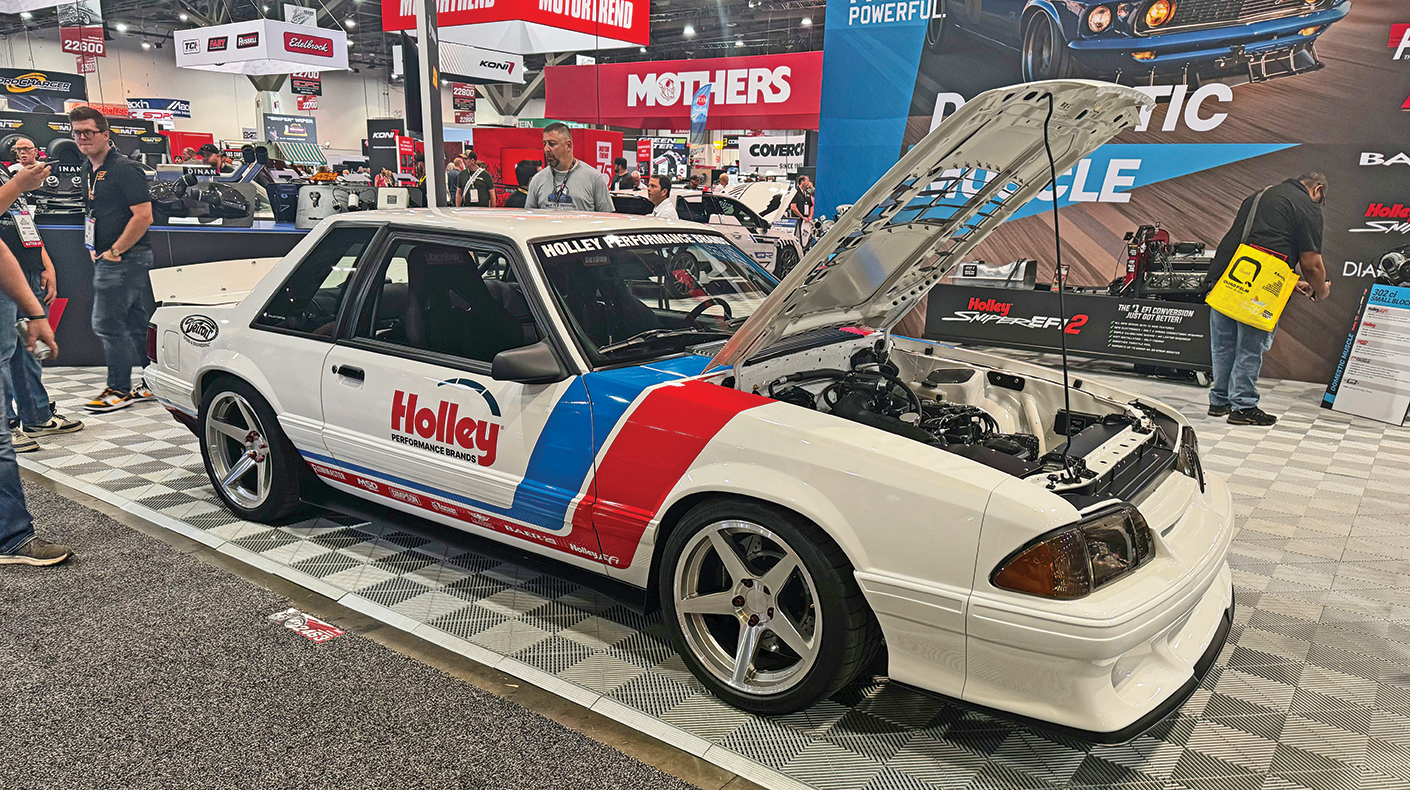
A Fox Body mustang.

Detroit Speed and Engineering's notchback Fox Body received prominent display in Holley's booth at the 2024 SEMA Show. Courtesy of Eastwood Garage.


The aftermarket future looks bright for Fox Bodies. "I think it's just getting started," asserts Gerber, noting that the demand for higher-end level builds will increase. Shops like Our Dream are already making great strides with his new frame.
 

Karim had ordered the SPEC chassis for a client with an '81 T-top coupe and has big plans for the project. He hopes to show more consumers that a high-end Fox Body build is worth pursuing. "We're going to flush fit all the glass… And then we're going to [build] a pretty wild coyote. Hopefully, [we'll get] a four-digit car with more than 1,000 hp. We have some ideas on the body. We might do some unique engine bay stuff since the Roadster Shop chassis gives us a blank canvas for the engine compartment."
 

New products like the SPEC Chassis and Detroit's SLA system are opening new opportunities for Fox-Body builders and, as Karim expressed, offering a new slate for higher-end builds in a market seeking more from the platform. So, what's next?
 

Having built numerous Fox-Body Mustangs and being familiar with their stock and modified architecture, Karim hopes to see more support in exhaust systems. "There's tons of exhaust systems for these cars," he says, "but there's not an exhaust system that goes from the headers back that fits. Usually, this company will make a great header. That company will make a great mid-pipe, and then this company will make a great cat-back. But when you try to put it all together, you have to modify something to get it to fit nicely."


For Gerber, higher-end bodywork is a gap that has yet to be filled in these builds. That could very well change in the coming years as more products are released for the platform, encouraging top-tier, SEMA Battle of the Builders-level vehicles.
 

Josh Stamper, vice president of marketing and new product development for SS Tubes, is familiar with the platform, having developed a two-piece fuel-line system that works around aftermarket subframe connectors for the third-gen. Stamper agrees we'll see significant movement with the body of these Mustangs in the coming years and predicts the Fox-Body aftermarket will soon mirror that of the first-generation Mustangs in some aspect.
 

He explained that with companies like Roadster Shop now offering complete chassis, a growing market for reproduction body panels—similar to what exists for late-'60s Mustangs—is likely to follow. Stamper concludes, "I think with Fox Bodies, in the next 10 years, we'll be able to purchase a brand-new shell and custom panels. I think they'll be that popular." 


Tue, 07/01/2025 - 13:58

By Cristian Gonzalez

A Ford Fox Body Mustang.


Over the Past Few Years, Fox Bodies Have Made a Comeback––and the Aftermarket Is Responding With Increasing Ingenuity


They are so back!
 

And who would have thought? The iconic Fox-Body Mustangs of the '80s and early '90s are making a comeback in the restomod arena as well as increasing inroads into pro-touring motorsports.
 

If you attended the 2024 SEMA Show in Las Vegas or the PRI Show in Indianapolis, you might have noticed a more significant Fox-Body presence, signaling a return of these vehicles to the automotive spotlight amid the cultural zeitgeist for all things retro. They are popular once more—but why, and why now?
 

A RETURN TO GLORY DAYS


A Fox Body Mustang racing on a drag strip.

Fox Bodies have always had a presence in grassroots drag racing. Growing aftermarket interest in the platform is expanding applications to other motorsports. Courtesy of Damon At E3XTREME.


The Fox-Body Mustang is the third generation in the Ford Mustang lineage, following the uncelebrated run of the Mustang II. Its manufacturing years were from '79–'93, with a significant change to the front end from a "four-eye" design to the more popular and recognizable aeronose in '87. Rear-end styles encompassed the notchback, hatchback or the less popular convertible. Ford offered such powertrain options as the 2.3L inline-4 Lima and the 3.8L Essex V6; however, it was the 5.0L High Output 302ci V8 that became synonymous with the platform.
 

To better understand the current market and find out what demographic is restomodding Fox Bodies, we contacted Manir Karim, owner of Our Dream Resto Mod, out of Salsbury, North Carolina. The hot-rod shop never labeled itself a Fox-Body specialty shop, but Karim considers himself a fan of the platform. Owning a few in his lifetime gave him the eye and creativity for some pristine builds. Word of the shop's work got around, and now Fox Bodies are their bread and butter.
 

"I would say we've been messing with them on a business level for the last 13 years or so," says Karim. "And definitely from when I first started to now, I'd say the last five years have been crazy as far as popularity."
 

Karim believes nostalgia plays a significant role in the platform's current revival. Most customers bringing in their Fox Bodies are in their 50s and 60s—either original owners or enthusiasts who recently bought the same model they drove in the '80s or '90s to relive the good times with modern upgrades.
 

The extent of vehicle modification has also paralleled the platform's popularity. Fox Bodies have always been easily modifiable cars with strong aftermarket support. But where modifiers were previously apprehensive about putting big money into restomodding them, Karim says that's not the case anymore.
 

"We've done many no-budget Fox-Body builds, which was unheard of because it was almost like you're throwing your money away. People would do it on fastback Mustangs or 'Cudas. Whatever it took, they would fix them, make them nice, but no one would do that with a Fox Body. But we have done quite a few six-figure builds, which in the grand scheme of things in the restoration world isn't much, but for Fox Bodies, it's a lot."
 

Karim, along with every other source for this article, sees the original targeted demographic for this vehicle now at an age where they are monetarily stable enough to invest in their high-school dream cars.
 

With more premium Fox-Body builds making waves, like Holley's pro-touring notchback at the recent SEMA Show, it's a green light for others to follow suit and take it further.
 

THE AFTERMARKET


A Fox Body Mustang

Originally coming with a four-lug wheel pattern, five-lug conversions were among the first mods to be installed for more wheel options and performance benefits. Courtesy of QA1. 


Several factors make third-gen Mustangs so popular within their restomod circles: their abundance in the secondhand market, their low market cost, aftermarket support, and how relatively simple they are to work on.


Modifiers typically start with five-lug conversions, permitting a wider wheel selection, followed by upgrades that enhance stance and handling, such as suspension and brake improvements. "Getting the stance right and putting a nice set of wheels goes a long way on these cars," expresses Karim.
 

Detroit Speed and Engineering made serious strides in the Fox-Body suspension market at the 2024 SEMA Show as the architect behind Holley Performance's Fox-Body build. (At that time Detroit Speed was under the Holley umbrella, but since has been acquired by QA1.) The performance notchback was Holley's booth vehicle promoting domestic muscle products and garnering favorable attention from attendees. Nathan Peterman, senior product design engineer at Detroit Speed, says with the rise in Fox-Body interest, the company wanted a project vehicle for use as a research and development canvas—a way to test new suspension systems.
 

"They're extremely well supported on a lot of the driveline stuff," says Peterman. "But we saw a hole for high-end-racing and pro-touring-type suspension. There's a lot of suspensions that have been on the market for a long time, but of course, with time you learn new things, and there's ways to improve upon it."
 

Companies like Detroit Speed are making third-gen Mustangs more prevalent in motorsports. While the vehicles have always been present in the drag-racing world, their unibody flex has hindered their cornering performance in other types of racing. But the aftermarket has been catching up to alleviate that trouble, and Detroit Speed has demonstrated the platform is far more capable than previously noticed.
 

The company has different levels of suspension conversions for the front and rear systems, but its notchback project utilizes Detroit Speed's Short Long Arm (SLA) conversion system that incorporates upper and lower control arms with coilovers. According to Peterman, track testing has demonstrated a significant drop in lap times when the front strut setup is exchanged for the new SLA system.

"We got a good chance to do back-to-back, similar weather, fresh tires for both runs on the same racetrack to see how advantageous it is to go to an SLA compared to a max effort strut suspension. We headed up the local track that we use and went from a minute 45 lap to a minute 43, just from the front suspension change."
 

In racing, 2 seconds can feel like an eternity, and when you add a Ford Performance 363 crate engine with a Holley 4150 intake and a Sniper throttle body, you show the performance world that Fox Bodies can hold their own beyond the dragstrip.
 

Peterman and the Detroit team "took it on Power Tour and probably put 8,000 to 10,000 miles on it last year, just driving it on the road to different events. We autocrossed it, we drag-raced it, drove on road courses, and all around it turned out to be a good everything vehicle… We saw a big uptick in road racing and autocross and the street pro touring scene. We wanted to jump on that and ride that wave of popularity on those."
 

When a Fox Body grabs a spotlight in a Holley booth, it's clear the platform isn't just back. It's building prominence. But Holley and Detroit Speed weren't the only ones making a buzz at SEMA with a Fox Body.
 

A NEW FRAMEWORK


A Fox Body SPEC Chassis at the SEMA Show from Roadster Shop.

Roadster Shop had a unique eye-capturing display at the 2024 SEMA Show to debut their SPEC Chassis for the Fox Body. Courtesy of Eastwood Garage. 


More Fox and a little less Body, Roadster Shop's booth featured a remarkable display debuting their new SPEC Chassis for third-gen Mustangs. The display featured the new chassis bolted to a half-skeletonized body to mock up how their new frame would interact and bolt up to the original subframe.
 

Roadster Shop specializes in aftermarket chassis for both body-on-frame and unibody vehicles, and the SPEC chassis give the unibody cars body-on-frame handling while eliminating the shock towers, allowing more engine bay room and compatibility with popular powertrains.
 

The display certainly grabbed attention and widened some eyes, but just how responsive was the public to the release? Was there much demand for aftermarket products starting at $15,000 for this platform? According to Roadster Shop Co-Founder Jeremy Gerber, demand has indeed made the chassis a hot commodity.
 

Gerber explains that when they unveil a new product, it's typically a slow rollout. It's never a floodgate of overwhelming demand. However, "This particular product was the closest thing I could say we've experienced [to instant demand]. Honestly, I was shocked by the reaction and by how many initial sales we got… Right out of the gate, it's a pretty damn good performing product."
 

Roadster Shop didn't time the market for this release, but Gerber believes this phase in the platform's aftermarket growth was bound to explode based on its history. "It's not like it just came out of nowhere," he says. "It's been a popular car that people modify ever since its inception. It has a huge fan base… So I don't think we necessarily timed it to when the car became popular. I think we timed it so the right demographics are now getting to the point that they're willing to spend a little bit more money than in years past."
 

A GROWING FUTURE


A Fox Body mustang.

Detroit Speed and Engineering's notchback Fox Body received prominent display in Holley's booth at the 2024 SEMA Show. Courtesy of Eastwood Garage.


The aftermarket future looks bright for Fox Bodies. "I think it's just getting started," asserts Gerber, noting that the demand for higher-end level builds will increase. Shops like Our Dream are already making great strides with his new frame.
 

Karim had ordered the SPEC chassis for a client with an '81 T-top coupe and has big plans for the project. He hopes to show more consumers that a high-end Fox Body build is worth pursuing. "We're going to flush fit all the glass… And then we're going to [build] a pretty wild coyote. Hopefully, [we'll get] a four-digit car with more than 1,000 hp. We have some ideas on the body. We might do some unique engine bay stuff since the Roadster Shop chassis gives us a blank canvas for the engine compartment."
 

New products like the SPEC Chassis and Detroit's SLA system are opening new opportunities for Fox-Body builders and, as Karim expressed, offering a new slate for higher-end builds in a market seeking more from the platform. So, what's next?
 

Having built numerous Fox-Body Mustangs and being familiar with their stock and modified architecture, Karim hopes to see more support in exhaust systems. "There's tons of exhaust systems for these cars," he says, "but there's not an exhaust system that goes from the headers back that fits. Usually, this company will make a great header. That company will make a great mid-pipe, and then this company will make a great cat-back. But when you try to put it all together, you have to modify something to get it to fit nicely."


For Gerber, higher-end bodywork is a gap that has yet to be filled in these builds. That could very well change in the coming years as more products are released for the platform, encouraging top-tier, SEMA Battle of the Builders-level vehicles.
 

Josh Stamper, vice president of marketing and new product development for SS Tubes, is familiar with the platform, having developed a two-piece fuel-line system that works around aftermarket subframe connectors for the third-gen. Stamper agrees we'll see significant movement with the body of these Mustangs in the coming years and predicts the Fox-Body aftermarket will soon mirror that of the first-generation Mustangs in some aspect.
 

He explained that with companies like Roadster Shop now offering complete chassis, a growing market for reproduction body panels—similar to what exists for late-'60s Mustangs—is likely to follow. Stamper concludes, "I think with Fox Bodies, in the next 10 years, we'll be able to purchase a brand-new shell and custom panels. I think they'll be that popular." 


Tue, 07/01/2025 - 13:23

By Ashley Reyes

FLN Patent Webinar


Releasing a new product into the market is an exciting endeavor. After months--or even years--of development, finally getting to share your innovation with the world marks a pivotal moment for your brand. Equally important, however, is protecting your innovation, and patents can help. 

SEMA members are invited to a new webinar on Thursday, July 31, at 10:30 a.m. PDT/1:30 p.m. EDT. that will cover essential information on how companies can protect and monetize their intellectual property. Presented by the SEMA Future Leaders Network (FLN), the webinar will help attendees learn how to utilize patents to protect their brand, inventions and innovations, strengthening their ability to compete and grow in the automotive aftermarket industry. 

About the Speakers  

This webinar will feature speakers Jeffrey Banyas, manager of legal production at Sisson & Banyas Attorneys at Law, and Ifti Zaim, counsel at Irwin IP LLP (now a part of Miller Johnson). 

Banyas is a licensed United States patent attorney who advises his clients on all aspects of intellectual property law. His practice encompasses licensing negotiations, enforcement, patent drafting and prosecution, trademark filing and prosecution, e-commerce, trade secret documentation and copyrights. Zaim directs his practice towards utility and design patent litigation, patent validity challenges before the Patent Trial and Appeal board, intellectual property-related customs disputes and trade-secret litigation. 

The first 20 members to register for the webinar will receive a $20 Uber Eats Voucher to use the day of the webinar--so don't wait. Register here. 


Tue, 07/01/2025 - 13:12

From the SEMA Washington, D.C., office

Kei Trucks


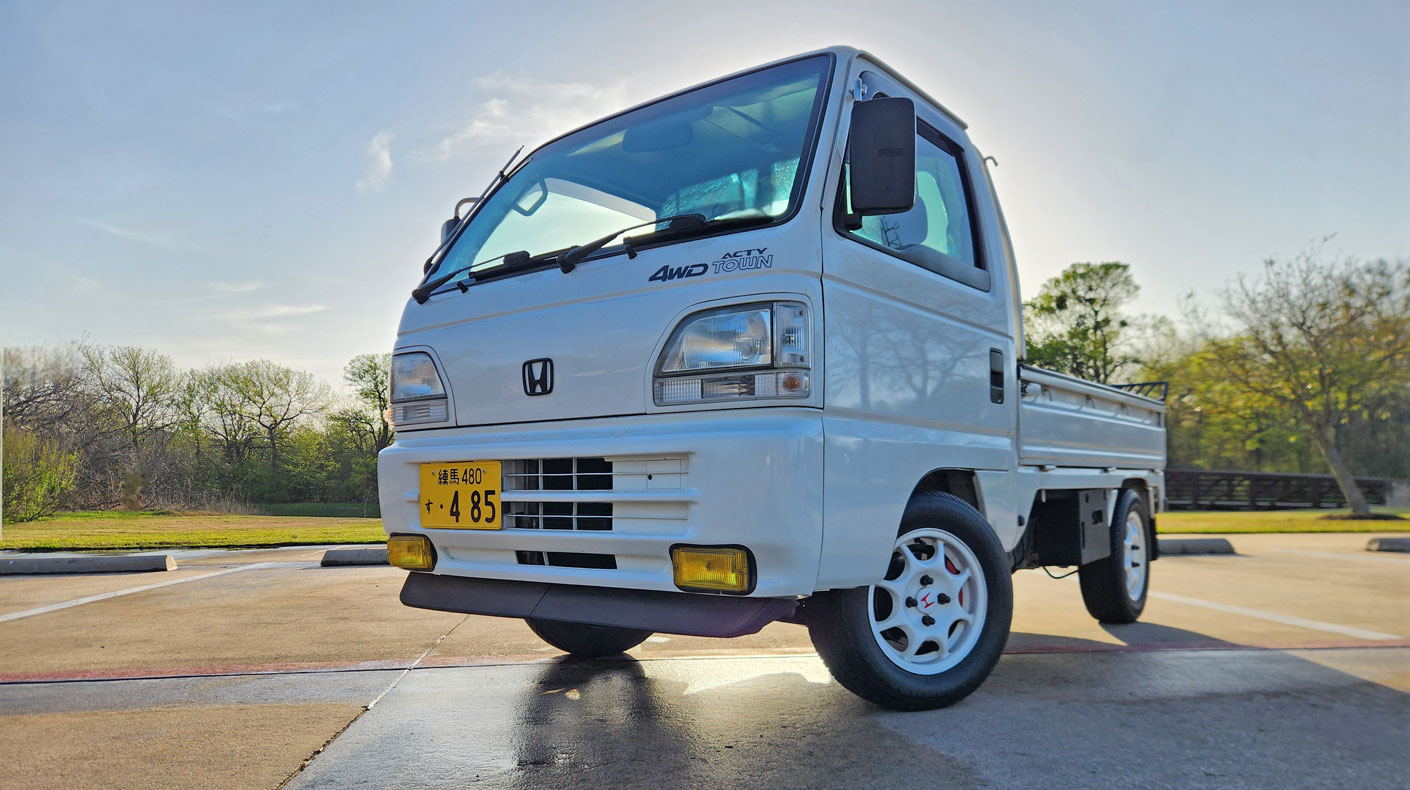
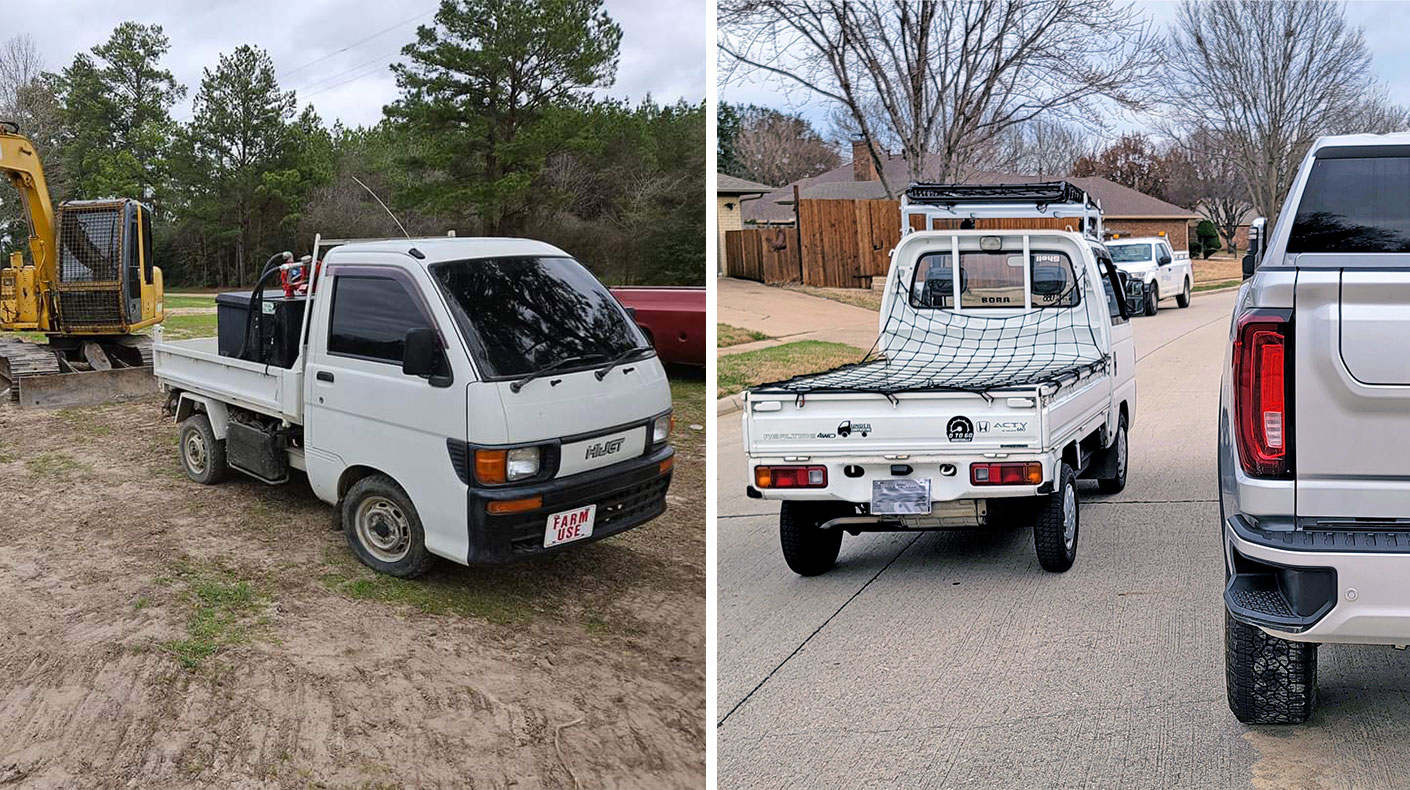
In a significant victory for automotive enthusiasts and the specialty-equipment industry, Colorado and Texas have enacted two SEMA-supported bills--Colorado House Bill (HB) 1281 and Texas Senate Bill (SB) 1816--that legalize the titling, registration and on-road use of Japanese-manufactured miniature vehicles, commonly known as kei trucks

Originally developed in Japan for efficient, affordable transport, kei trucks are compact utility vehicles with engines under 660cc. Despite their size, they offer surprising capability and charm--earning a loyal following among American enthusiasts. Across the United States, owners are customizing their trucks, hosting meetups and building communities around these cultural icons. 

Signed by Colorado Governor Jared Polis, HB 1281 reduces regulatory ambiguity by allowing kei vehicles to be titled and registered without being disqualified based on their original design. The law eliminates unnecessary inspections and affirms the rights of owners, sellers and restoration professionals--bolstering a $3.9-billion specialty equipment industry that supports more than 17,000 jobs statewide. 

Kei trucks


Texas Governor Greg Abbott signed SB 1816 into law, officially recognizing kei trucks as motor vehicles under Texas law. The bill mandates essential safety features and aligns with federal import standards by requiring vehicles to be at least 25 years old. It also formalizes the state’s 2024 decision to lift its registration ban, reinforcing support for Texas’ $24.7-billion aftermarket economy and nearly 100,000 industry jobs. 

Kei trucks are more than a trend--they represent a growing movement rooted in creativity, sustainability and cultural appreciation. These legislative wins reflect that momentum and set a precedent for other states to follow. 

SEMA remains committed to protecting the rights of enthusiasts and supporting the businesses that serve them. For more information on these bills or to get involved in kei truck advocacy, contact Victor Muñoz, SEMA senior manager of state government affairs, at victorm@sema.org.


Photos courtesy of Lone Star Kei and Texas Import Society

Tue, 07/01/2025 - 13:12

From the SEMA Washington, D.C., office

Kei Trucks


In a significant victory for automotive enthusiasts and the specialty-equipment industry, Colorado and Texas have enacted two SEMA-supported bills--Colorado House Bill (HB) 1281 and Texas Senate Bill (SB) 1816--that legalize the titling, registration and on-road use of Japanese-manufactured miniature vehicles, commonly known as kei trucks

Originally developed in Japan for efficient, affordable transport, kei trucks are compact utility vehicles with engines under 660cc. Despite their size, they offer surprising capability and charm--earning a loyal following among American enthusiasts. Across the United States, owners are customizing their trucks, hosting meetups and building communities around these cultural icons. 

Signed by Colorado Governor Jared Polis, HB 1281 reduces regulatory ambiguity by allowing kei vehicles to be titled and registered without being disqualified based on their original design. The law eliminates unnecessary inspections and affirms the rights of owners, sellers and restoration professionals--bolstering a $3.9-billion specialty equipment industry that supports more than 17,000 jobs statewide. 

Kei trucks


Texas Governor Greg Abbott signed SB 1816 into law, officially recognizing kei trucks as motor vehicles under Texas law. The bill mandates essential safety features and aligns with federal import standards by requiring vehicles to be at least 25 years old. It also formalizes the state’s 2024 decision to lift its registration ban, reinforcing support for Texas’ $24.7-billion aftermarket economy and nearly 100,000 industry jobs. 

Kei trucks are more than a trend--they represent a growing movement rooted in creativity, sustainability and cultural appreciation. These legislative wins reflect that momentum and set a precedent for other states to follow. 

SEMA remains committed to protecting the rights of enthusiasts and supporting the businesses that serve them. For more information on these bills or to get involved in kei truck advocacy, contact Victor Muñoz, SEMA senior manager of state government affairs, at victorm@sema.org.


Photos courtesy of Lone Star Kei and Texas Import Society

Tue, 07/01/2025 - 12:15

By Ashley Reyes

TORA Feature Vehicle Program


Calling all truck and off-road builders: Are you ready to showcase your talents and creativity on the aftermarket industry's biggest stage?  

The SEMA Truck & Off-Road Alliance (TORA) is accepting applications for its TORA Feature Vehicle Showcase at the 2025 SEMA Show, November 4-7, in Las Vegas

What is the TORA Feature Vehicle Showcase?  

The TORA Feature Vehicle Showcase is a popular feature of the SEMA Show that highlights up to 10 unique truck and off-road builds on the outside walkway between North and West Halls of the Las Vegas Convention Center--known as the TORA Feature Vehicle Trail. The Showcase spotlights the latest trends and products driving the light-truck and accessory industry and gives builders a rare opportunity to promote their skills to a global audience.   

What types of vehicles qualify?   

Applications are accepted in the areas of SUV, side-by-side, lifted truck, lowered truck, overland, off-road, electric vehicle/hybrid and CUV/crossover. Each vehicle should demonstrate superior design, craftsmanship and quality. 

TORA Feature Vehicle Program


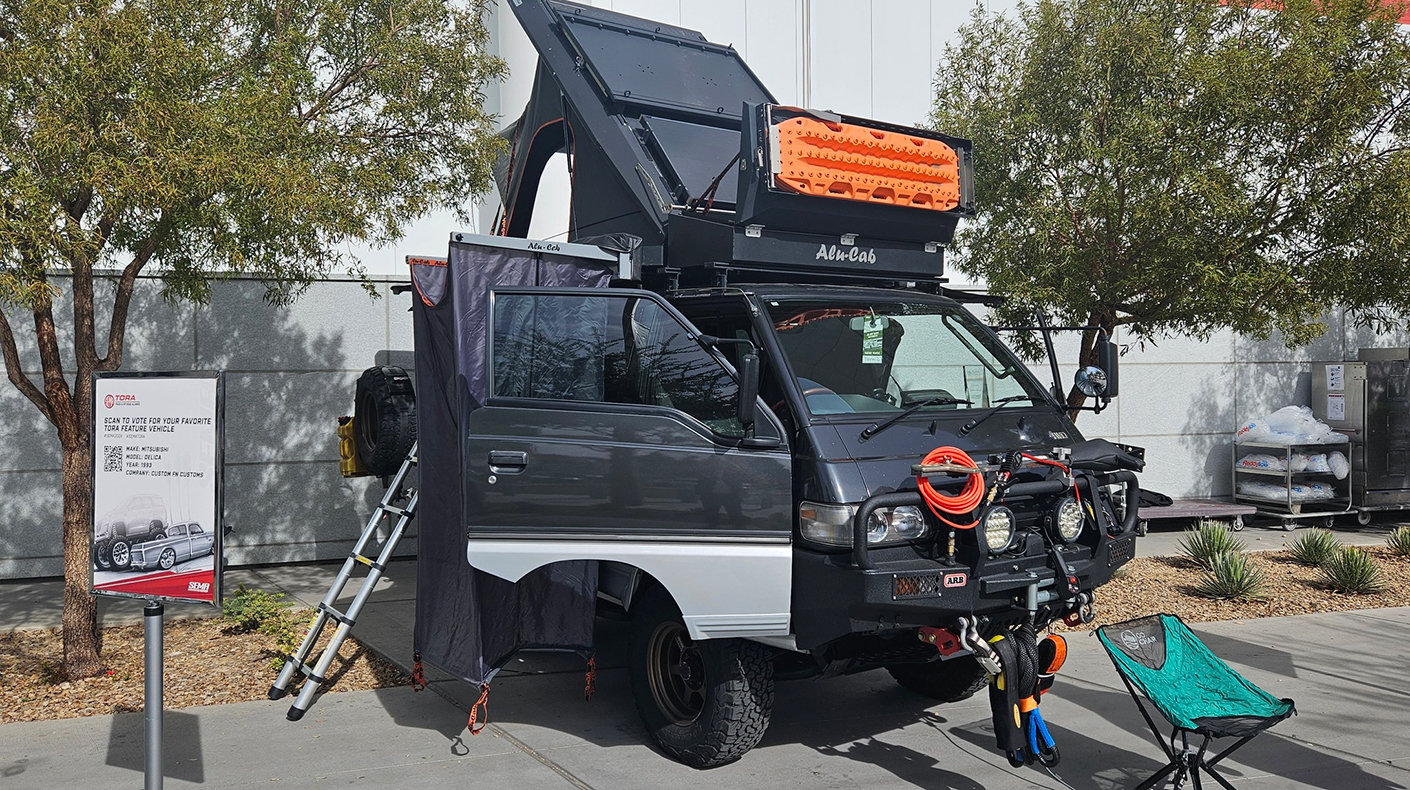
Custom FN Customs' spotlights its customized '93 Mitsubishi Delica Overland in the 2024 TORA Feature Vehicle Showcase. Upfitted with more than 50 aftermarket products, the truck earned the TORA Best in Show Award voted on by SEMA Showgoers.  

What are the benefits?  

The SEMA Show is the best-attended trade event in the specialty-equipment industry. Having a vehicle included in the Showcase brings invaluable exposure for TORA member companies and puts their work in front of thousands of industry professionals, buyers and the media. It also increases awareness of the builders and manufacturers whose parts are on their vehicle. 

All selected vehicles are eligible to win the TORA Feature Vehicle Best in Show Award voted on by SEMA Showgoers. The winner will be announced in front of industry peers during the TORA SEMA Show Reception. Also, all vehicles are promoted on TORA's social-media channels and SEMA News up to and during the SEMA Show. 

TORA Feature Vehicle Program


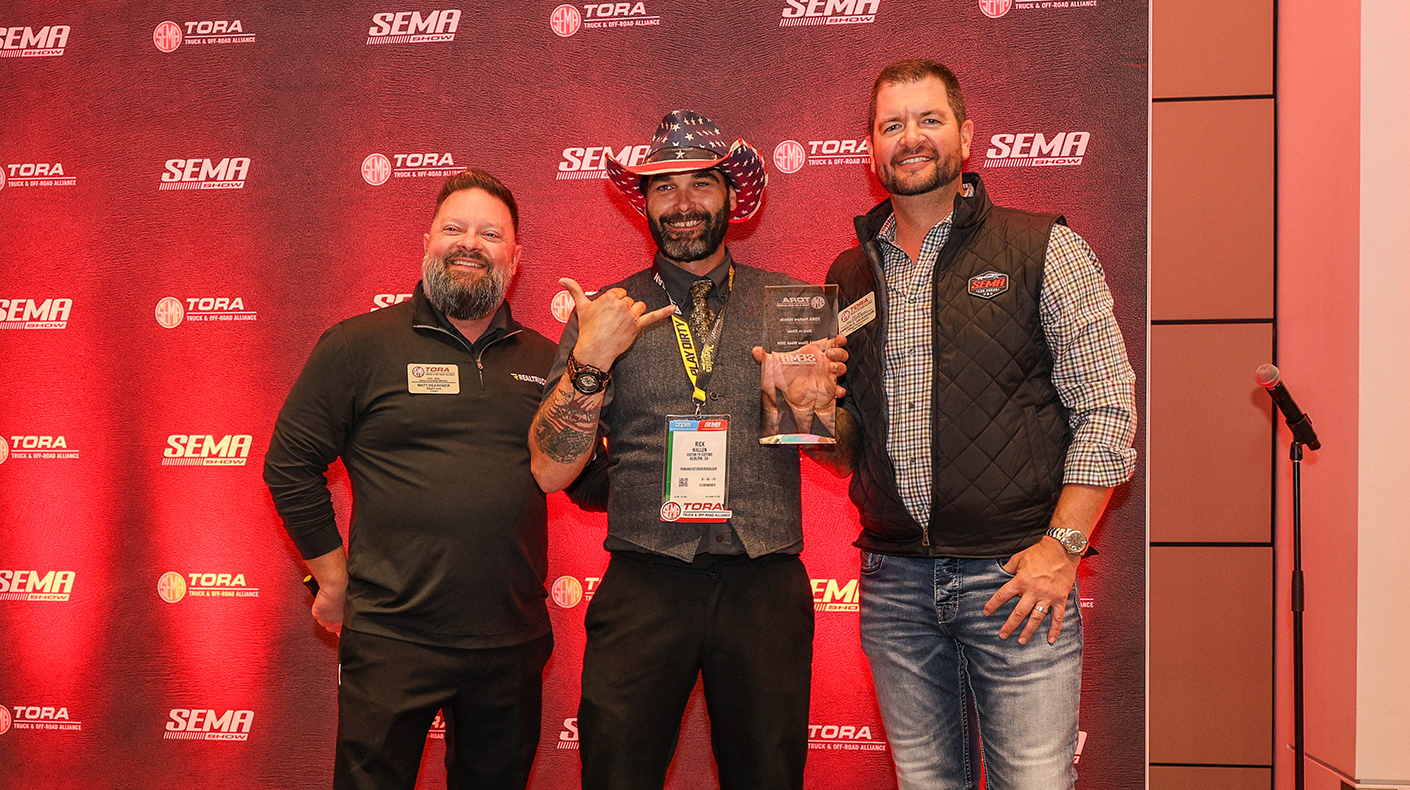
Rick Wallen, owner of Custom FN Customs, accepts the TORA Feature Vehicle Best in Show Award at the 2024 SEMA Show  

Who qualifies to apply?  

Qualifying companies must be a current SEMA and TORA member, and manufacturers must be exhibiting at the SEMA Show. The cost to participate is $1,500, with $500 of that amount benefiting SEMA Cares-- the fundraising arm of SEMA that supports a variety of children's charities.  

Submit your application today.

Tue, 07/01/2025 - 11:52

By Michael Imlay

Cars on the SEMA Show floor.


Now's the Time to Build Your Plan for Growth at the Industry's Preeminent Trade Event


Economic fluctuations, supply-chain realignments, changing buyer habits—at times the market can feel like a confusing swirl of crosscurrents. For specialty-automotive manufacturers and suppliers, however, one steady constant remains: the annual SEMA Show, where the industry comes to do business.
 

"For businesses navigating a rapidly changing market, the SEMA Show offers more than inspiration; it offers stability and an unmatched environment to future-proof your business," says SEMA Vice President of Events Tom Gattuso. "In times of uncertainty, SEMA delivers clarity, confidence and opportunity, fueling connections that matter and growth that lasts."
 

In other words, if you're already a registered exhibitor for the 2025 SEMA Show, set to return to Las Vegas this November 4–7, you've made perhaps the single best investment for growth that a business can make, no matter the market. And if your company hasn't yet signed on to exhibit, there's still time to do so at semashow.com/exhibitor.
 

A UNIQUE VALUE PROPOSITION
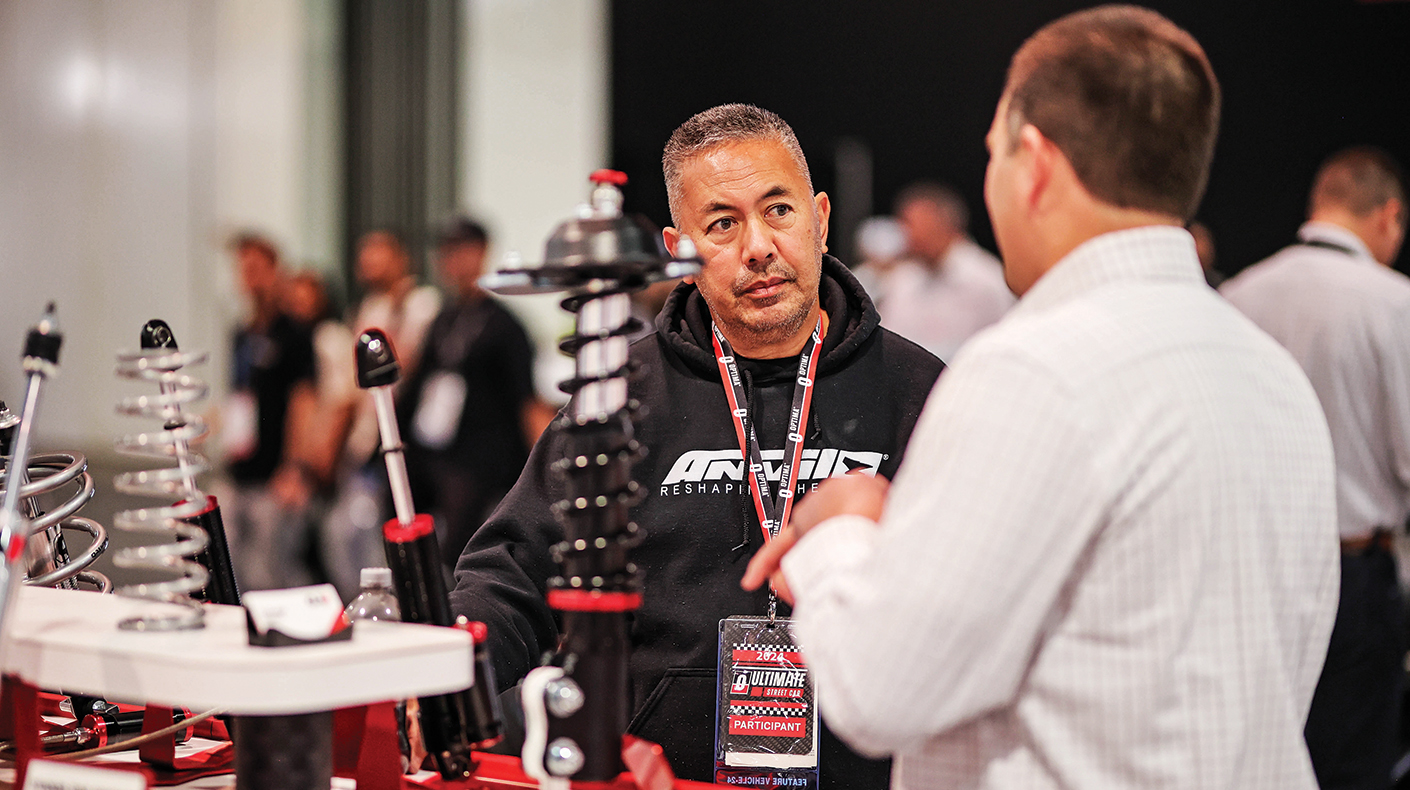
 

An exhibitor speaking with a SEMA Show attendee in a booth.

No matter the economic climate, exhibiting at the SEMA Show is perhaps the single best investment a company can make for gaining exposure, finding new buyers and growing business.


Having committed to the event, now is also the time to hone your Show plan to maximize ROI. According to SEMA Show Director Andy Tompkins, it all starts with recognizing and leveraging the Show's unique value proposition.
 

"There may be some external factors we're all concerned about right this moment, but the competitive landscape still exists—and you can seize a competitive edge when you demonstrate that you have new and innovative products at the SEMA Show. Our attendee surveys continue to find that discovering new products is top of mind for buyers and media alike," he says.
 

In addition, Tompkins believes the SEMA Show offers exhibitors unique opportunities to explore the industry's latest trends, introduce and brainstorm new product lines, grab industry and media attention, forge new relationships and future-proof their businesses.
 

Moreover, Gattuso notes that industry-wide enthusiasm for the Show plays to an exhibitor's advantage. "It just keeps growing," he says. "This year, we'll be building on the momentum of 2024, which saw the largest SEMA Show we've ever had with more than 2,000 exhibitors in an event covering more than a million square feet at the Las Vegas Convention Center. But the Show isn't just big—it's the best-qualified audience in the world for specialty-equipment brands."
 

"It's definitely a pure, qualified audience," agrees Tompkins. "Our 160,000-plus attendees are enthusiasts, influencers and decision-makers all rolled into one—everyone at the Show is dialed into the energy and passion on display throughout the week. As an exhibitor, you put your brand in front of an incredible amount of buying power that can propel you forward in the automotive space."
 

A FIRST-TIMER FINDS SUCCESS
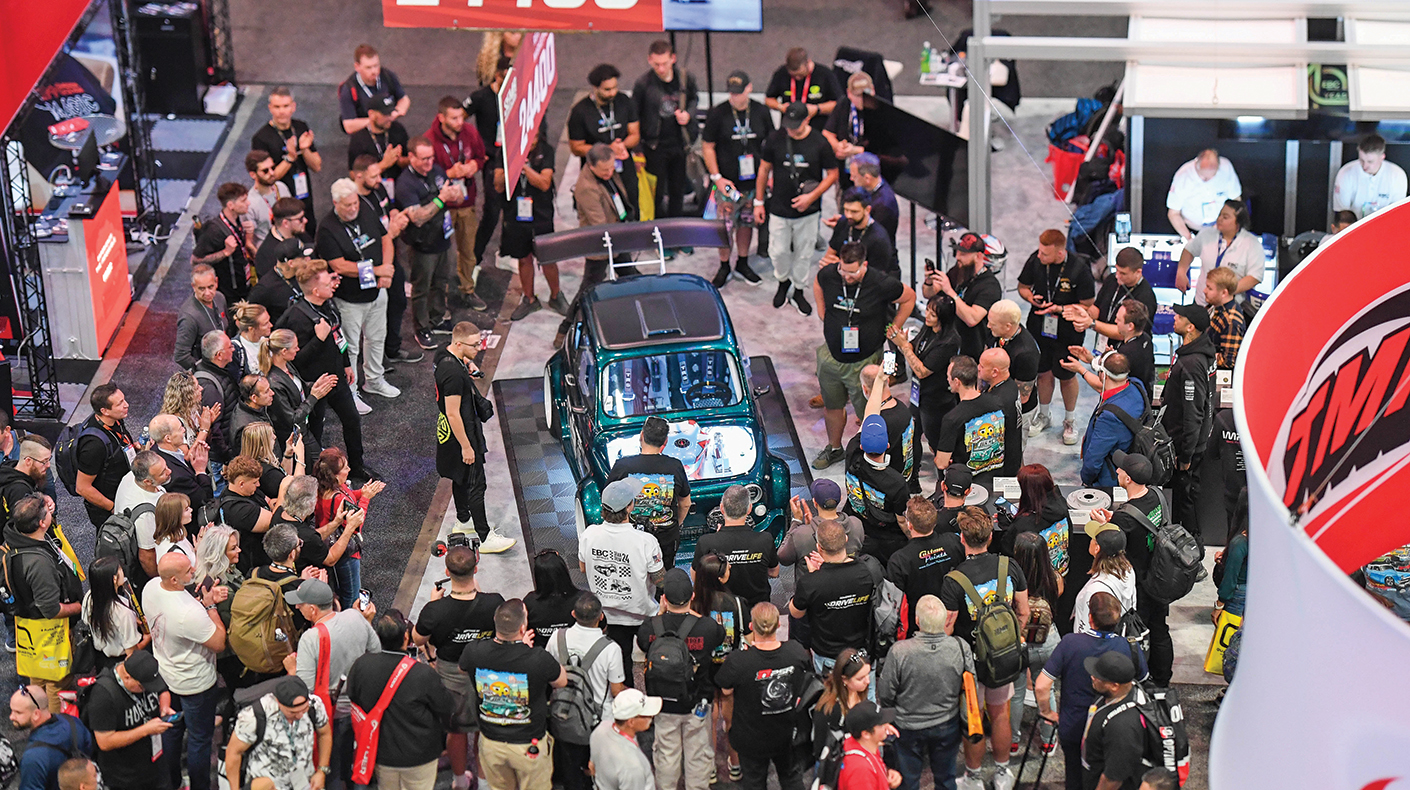
 

An overhead shot of a crowd gathering around a vehicle reveal at the SEMA Show.

Booth vehicles and unveilings draw crowds and create media opportunities that can generate content that lives far beyond the Show.


Tyler Green, founder and CEO of Cache Inc., can attest to the Show's power firsthand. Headquartered in Sandy, Utah, his homegrown company is the developer of the Basecamp System, a modular tailgate system for trucks. Easily fitted to a tailgate, the padded unit acts as a secure carrying hub for bikes, chairs, coolers and other gear. Last year, Cache became a first-time exhibitor—yet admittedly with some trepidation.
 

"After seven years in business, we knew that the SEMA Show could be a great opportunity to grow our OEM business through new automotive partnerships," says Green. "But it was quite the internal debate whether 'SEMA would be worth it' for our company."
 

Ultimately, the Cache team decided that landing just one new partnership would validate the time and money spent on the Show, so they made that their official goal. The strategy paid off.
 

"The response was amazing," Green relates. "With no preconceived expectations and surrounded by the large brands we continually look up to, we were shocked by the amazing traffic we produced with our team's DIY setup. Within a few hours the first day, we were approached by almost every auto manufacturer's accessory buyer and their teams. I'm proud to say we now will be launching four-plus new OEM partnerships that are set to go live in the coming months."
 

Based on Cache's success in 2024, Green strongly encourages first-time exhibitors to come up with at least one objective for the Show, then "sculpt" a plan around that objective to reach their key performance indicator (KPI). Additionally, don't underestimate the tremendous impact that an interactive, professional-looking booth can have on buyers and customers.
 

"This doesn't mean you have to go spend thousands on professionals," he explains. "But dedicate time and resources to building out a booth that is welcoming, have product information [ready] and be prepared with business cards galore. Lots of opportunities will come up that lead to other doors you wouldn't know were possible."
 

Green's ultimate piece of advice? "Begin reaching out to those you want to speak with months ahead of the Show—we learned that the hard way!"
 

From Tompkins' perspective, Cache is a prime example of an exhibitor smartly leveraging the Show. The brand set a clear, attainable goal for return on investment; next it developed and properly executed a Show strategy tailored to that goal; and then, post-event, the brand diligently followed up on leads.
 

"This is the proven advice we regularly give all our exhibitors," emphasizes Tompkins. "It may sound simple, but time and again, it works for all types of exhibitors, regardless of their size or what they hope to get from the Show."
 

Of course, SEMA Show planners realize exhibitors arrive in Las Vegas with a wide range of goals. Some mainly seek distributors or leads. Others aim to make a splash with a single new product, service or innovation. Larger businesses might have several items to showcase. Still others—especially legacy companies—focus more on strengthening their brand, attracting media coverage and connecting with content creators. Consequently, the Show has developed key features to deliver on all these fronts.
 

"Regardless of where you are in your company's lifecycle, there's no other place that can match everything our Show can do to take your business to the next level," asserts Gattuso. "Whether you want to fill a pipeline or raise your profile, this Show meets you where you are and provides you with the essential avenues for growth."
 

TOP TIPS FOR SUCCESS

 

Two cars drifting outside the front of the SEMA Show.

Outdoor activations present opportunities to see products put through their paces. Aligning your brand with these and other vehicular displays also grabs attention.


Whatever a brand's specific objectives, Gattuso and Tompkins say that the most successful exhibitor strategies will typically include the following:
 

• Taking full advantage of the SEMA Show New Products Showcase (see sidebar p. 29), a top attendee destination. In fact, buyers and media routinely build their day-to-day Show itineraries around the innovations they encounter at this Show feature, so having one or more products in the Showcase significantly boosts your chances of making their destination lists.
 

• Designing an interactive booth. Think carefully about what you can reasonably showcase in the space you have to grab attention. Perhaps it's your most eye-catching product or a top seller. Maybe it's several. Either way, match staffing, signage, collateral and furnishings to your needs while considering visitor engagement and traffic flow. Live demos and/or immersive media are popular ways to draw in passersby, and even a simple video loop can spark conversations. (Bonus hint: Many successful exhibitors say they mock up a booth at their headquarters and practice their Show pitches months ahead of time.)
 

• Alerting partners and potential new customers well in advance of the Show. Share what you'll introduce there and/or any booth promotions, presentations and activities. While you're at it, inform the media by uploading a press release to the SEMA Show media site (semashow.com/press-release). An explicit invitation to attendees can go a long way toward drawing visitors to your exhibit.
 

• Considering a booth vehicle. Attendees are enthusiasts at heart and naturally gravitate to exciting builds. If a vehicle of your own is out of reach, consider supplying product to one or more of the Show's hundreds of feature vehicles. (QR codes at feature builds lead attendees to exhibitors on the Show floor.)
 

• Scheduling time for Show networking events, educational seminars and activations. For an industry manufacturer or service provider, these Show features can be valuable in trendspotting, surveying what the competition is up to, staff training and enrichment, and exchanging fresh ideas and insights for growth with peers.
 

• Regularly consulting the Exhibitor Services Manual (ESM). The ESM contains detailed answers to virtually every question that can arise about exhibiting, deadlines, policies and procedures––making it an essential tool for success and cost savings. Access it online at exhibitor.semashow.com.


EVOLVING WITH THE MARKET
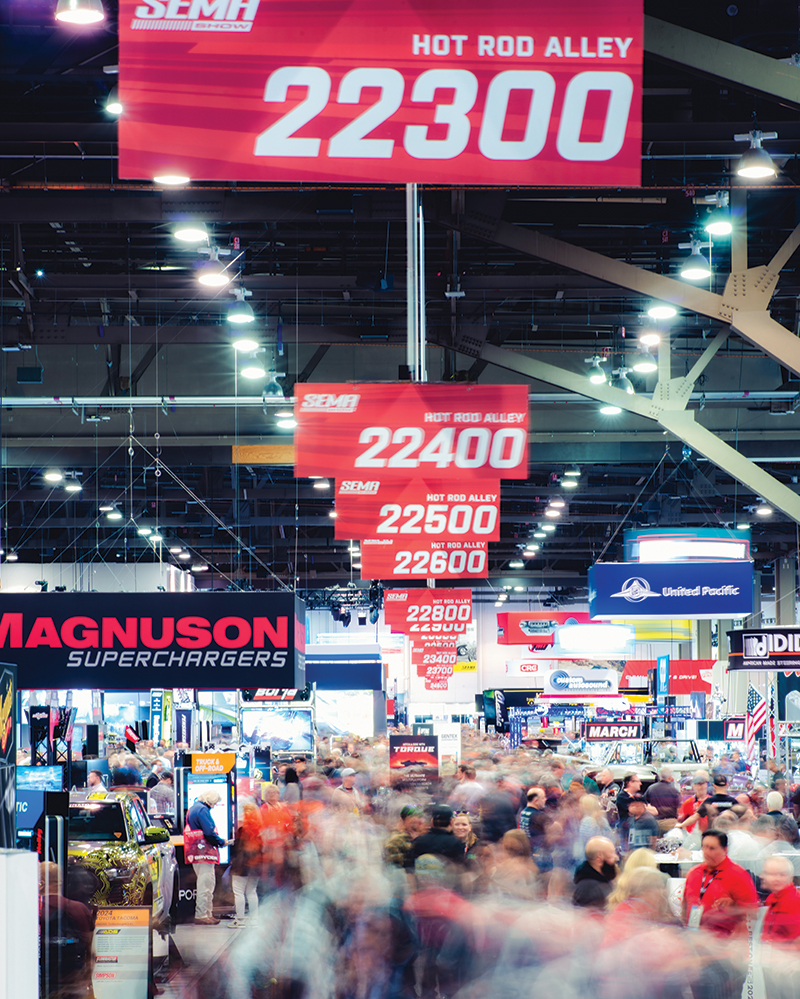
 

A timelapse photo of a crowded aisle on the SEMA Show floor.

The SEMA Show's 160,000-plus attendees are enthusiasts, influencers and decision-makers all rolled into one-making them a qualified, ready audience for whatever your brand has to offer.


Along with the above "traditional" Show strategies, exhibitors will want to keep in mind the changing nature of trade shows in general, and the SEMA Show specifically. In today's trade-event landscape, attendees are often younger, more connected and more interaction-oriented than ever before. That shift is fueling a wave of innovation in how the SEMA Show engages and entertains Showgoers, simultaneously bringing new opportunities for exhibitors to excite attendees and market to a wider audience.
 

"From live builds in SEMA Central to experiential features and drifting exhibitions, this isn't your father's trade show," Gattuso quips. "Younger attendees don't want a B2B-only model. They want involvement, and we're increasingly bringing that to them through interactive experiences, SEMA Live, SEMA Show Friday––Open to the Public and other features."


"This interactivity is a vital business opportunity," adds Tompkins. "And it's pulling in a new class of storytellers and content creators who can extend your reach beyond your booth if you know how to tap into them and speak with an authentic voice."
 

A growing number of companies are learning to do just that, seeing the Show as a one-of-a-kind opportunity to generate both real-world buzz and digital impact around their booth activities. Many now time their product launches or vehicle unveilings for the Show, capitalizing on the massive reach the event delivers through social and traditional media. Content-creator (AKA "influencer") collaborations have also become a regular aspect of SEMA, along with brands doing their own live streams and sharing of announcements, reels, clips and photos on social media.
 

"If you do it right, content gets created for you exponentially," observes Tompkins. "But whether you produce it yourself or let the Show do it for you, there's no better place to gather a year's worth of media assets."
 

"It's easy to think that digital campaigns are enough––and yes, you can invest in a paid media campaign with impressive reach––but it won't get you this audience," adds Gattuso. "SEMA attendees aren't passive scrollers. They're industry buyers, builders, creators and business owners who live and breathe automotive culture and eagerly share it online."


In other words, the SEMA Show remains a trade event where every exhibitor can easily stand out and grow their business. As Tompkins sums up, "The Show is a community that reflects the many facets and businesses of the aftermarket––including yours. If you come with well-set goals and a clear game plan for meeting them, people will find you, and all will fall into place. And why wouldn't you want to be a part of that?"