Tue, 05/07/2024 - 11:57
Automatic Emergency Braking

By the SEMA Washington, D.C., office

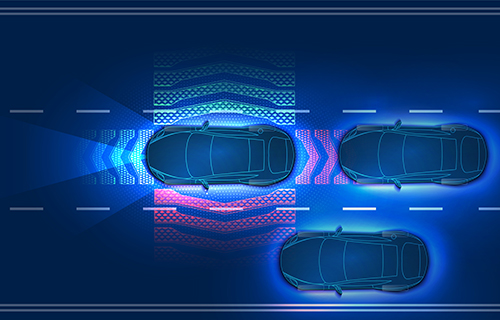
The National Highway Traffic Safety Administration (NHTSA) has finalized a Federal Motor Vehicle Safety Standard, FMVSS127, that makes automatic emergency braking (AEB), including pedestrian AEB, standard on all passenger cars and light trucks weighing up to 10,000 lbs. by September 2029.  

According to NHTSA, "The new standard requires all cars be able to stop and avoid contact with a vehicle in front of them up to 62 miles per hour and that the systems must detect pedestrians in both daylight and darkness. In addition, the standard requires that the system apply the brakes automatically up to 90 mph when a collision with a lead vehicle is imminent, and up to 45 mph when a pedestrian is detected." Under the rule, vehicles will be required to have an AEB system that applies the brakes automatically at any forward speed greater than 6.2 mph when a collision with a lead vehicle or a pedestrian is imminent.

SEMA provided extensive comments to NHTSA in response to the agency's proposed rulemaking in August 2023. The finalized rule includes a SEMA-specific section focused on aftermarket modifications and references SEMA members (alterers) and repair businesses.  

Although the final rulemaking focuses on vehicle manufacturers, NHTSA concluded that alterers and repair businesses are obligated to prevent a noncompliance with FMVSS 127 created by this final rule. The rule provides some flexibility in terms of compliance for law enforcement vehicles.

Other significant elements of the new federal safety standard for AEB include:

  • Deactivation of AEB will not be permitted, except in very limited law enforcement circumstances. 
  • Adoption of the full collision avoidance (e.g. no contact), which requires the subject vehicles to not make contact with the lead vehicle in all AEB performance tests listed in the regulation.

The final rule did not adopt SEMA's recommendation that the rule should require automakers to share specific information, such as diagnostic codes, with consumers. 

SEMA Garage and Government Affairs staff are reviewing the final rule to better understand how it will impact our members. Once that review is complete, SEMA will be in contact with its membership to explain the details of the rule and the impact it will have on their businesses.

In the meantime, those who may be affected by this ruling or have questions may contact ADAS@SEMA.org.

A link to the NHTSA announcement and full rule can be found here: NHTSA Finalizes Rule on Automatic Emergency Braking.

Tue, 05/07/2024 - 10:43

By SEMA News Editors 

Check out this week's episode of the "Car Stories" podcast featuring SEMA President and CEO Mike Spagnola! You can listen on iHeartRadio and wherever you listen to your podcasts--or watch the full episode on the "Car Stories" YouTube channel, embedded below. 

In this episode, Spagnola discusses the future of the car community and SEMA's important role in supporting an ever-evolving industry. He also shares his thoughts on the ongoing debate surrounding electric vehicles. Life advice was also covered as Spagnola delves into the key elements of a successful marriage. Podcast hosts Fast & Furious star Sung Kang and car builder and driver Emelia Hartford join in on the fun, sharing their scariest ghost stories.  

Don't miss out on the full episode, now available on YouTube below: 

Tue, 05/07/2024 - 10:03
Alaska ICE

By the SEMA Washington, D.C., office

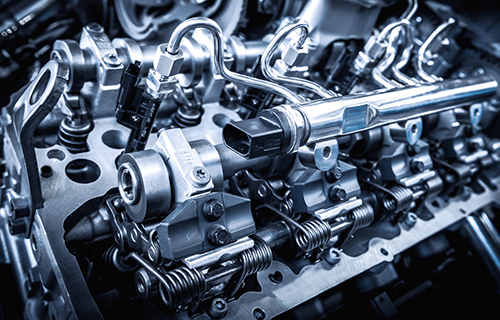
The Alaska House of Representatives approved SEMA-supported legislation (HB 375) to ensure consumers' choice of vehicle powerplants and fuel technology by preventing a state agency, county, or city from limiting access to internal-combustion engines.   

The bill is scheduled for a Senate Committee on Transportation hearing on Tuesday, May 7, 2024.

"HB 375 is a pro-consumer, pro-innovation and pro-business piece of legislation," said Colby Martin, SEMA’s director of state government affairs, during the hearing. "SEMA urges the senate to support this bill and allow the automotive industry to continue delivering the freedom and choice that Alaskans deserve." 

Alaska is the latest of several states seeking similar proposals. SEMA believes that Alaskans, not the government, should decide what vehicles are best for them and their families. This effort promotes consumer choice, fosters innovation and protects jobs. 

Use this link to send a letter to lawmakers supporting this pro-industry legislation. 

For more information, contact Colby Martin at SAN@sema.org

Tue, 05/07/2024 - 10:03
Alaska ICE

By the SEMA Washington, D.C., office

The Alaska House of Representatives approved SEMA-supported legislation (HB 375) to ensure consumers' choice of vehicle powerplants and fuel technology by preventing a state agency, county, or city from limiting access to internal-combustion engines.   

The bill is scheduled for a Senate Committee on Transportation hearing on Tuesday, May 7, 2024.

"HB 375 is a pro-consumer, pro-innovation and pro-business piece of legislation," said Colby Martin, SEMA’s director of state government affairs, during the hearing. "SEMA urges the senate to support this bill and allow the automotive industry to continue delivering the freedom and choice that Alaskans deserve." 

Alaska is the latest of several states seeking similar proposals. SEMA believes that Alaskans, not the government, should decide what vehicles are best for them and their families. This effort promotes consumer choice, fosters innovation and protects jobs. 

Use this link to send a letter to lawmakers supporting this pro-industry legislation. 

For more information, contact Colby Martin at SAN@sema.org

Tue, 05/07/2024 - 09:09

By Ashley Reyes

The SEMA Professional Restylers Organization (PRO) named Jesse Stoddard, CEO of AutoStyle Marketing, as the council's newest spotlight volunteer.  

Watch the video below to learn more about Stoddard's career and passion for the industry.


SEMA News: What inspired you to pursue a career in automotive restyling?  

Jesse Stoddard: To help my friend whose husband owned a restyling business and passed away. I wanted to help her build the business to help create a legacy. 

SN: Why did you decide to volunteer for PRO? 

JS: I like the idea of helping the members who are small-business owners like me and helping the industry even in a small way. I've met great people by being a part of things. 

SN: What advice do you have for someone pursuing a career in the automotive aftermarket? 

JS: Network, get to know people and show an interest. Be a sincere learner. 

SN: What is your dream vehicle?  

JS: My dream vehicle is one that comfortably takes me to a five-star resort on a beach. 

SN: What is the best advice you have ever received? 

JS: Find something you love and are passionate about and go all in. 

SN: What keeps you in the industry? 

JS: The people. 

SN: Where can you be found on a Saturday?  

JS: With my family, exploring a new place or doing a new activity. 


Fill out a PRO member spotlight form to highlight how you or your company are contributing to the automotive restyling industry. Selected candidates are eligible to be featured on PRO's social media, SEMA News and future PRO-member updates. 

Tue, 05/07/2024 - 09:03

By SEMA News Editors

SCCA Runoffs Returns to Road America

The Sports Car Club of America (SCCA) National Championship Runoffs are returning to Road America in Elkhart Lake, Wisconsin, for 2024 and 2025.

Additionally, the preliminary 2024 qualifying and race schedule has also been released. Scheduled for September 27 to October 6, several practice days will precede qualifying sessions, which will begin on October 1. All 26 Runoffs classes will feature single-class races from October 4-6. 

For more information or to see the full schedule, visit scca.com

INDYCAR Adds to Medical Team

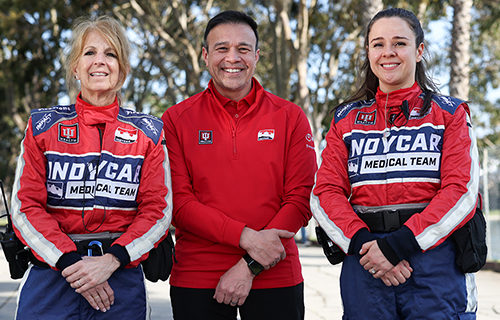
INDYCAR and Indiana University (IU) Health have appointed Angela Fiege, MD to director of medical services for INDY NXT by Firestone and added sports neurologist Bert Vargas, MD to the INDYCAR Medical Team.

IndyCar medical team

Angela Fiege (left), Bert Vargas (middle) and Julia Vaizer (right).

IU Health is the official healthcare provider for the Indianapolis Motor Speedway and the INDYCAR Medical Team is comprised of IU Health physicians and nurses who are experts in motorsports medicine.

Fiege is a veteran critical care and emergency medicine physician at IU Health and is also a longtime motorsports physician. She has served in various roles in motorsports, including the INDYCAR Medical team since 2010 and the AMR motorsports physicians' team for NASCAR. She has also worked at Indianapolis Motor Speedway as a track physician since 2007. She will continue her role as deputy director of medical services for the NTT INDYCAR SERIES and the Indianapolis Motor Speedway, alongside Medical Director Julia Vaizer, MD. 

Vargas is the first neurologist dedicated to the INDYCAR Medical team, and his position is funded by Rev proceeds. Rev is the IU Health Foundation's annual fundraising event which takes place each May at IMS. Working in medical affairs for Eli Lilly and Company in Indianapolis, Vargas is a sports neurologist and who has led the AMR neurotrauma team for NASCAR since 2017, serves as a member of the NFL Head, Neck and Spine Committee and is also a sideline unaffiliated neurotrauma consultant for the NFL.

For more information, visit indycar.com.

Beth Paretta Joins Formula E as VP of Sporting

The ABB FIA Formula E has appointed Beth Paretta, a distinguished leader in motorsports, as the new vice president of sporting, effective May 1, 2024.

Paretta will oversee all sporting and championship activities at Formula E, driving key stakeholder relationships and cultivating new business opportunities--working closely with the FIA, existing teams and manufacturers while attracting new participants to the series' ecosystem.

"Beth's extensive background in motorsport management and her commitment to innovation and inclusivity are invaluable assets for Formula E. As we advance into a new era with our GEN3 Evo cars and look towards the GEN4, Beth's leadership will be pivotal in steering our sporting operations to new heights and enhancing our global fan engagement," said Jeff Dodds, CEO of Formula E.

As owner of Paretta Autosport and a trailblazer for gender equality in racing, Paretta brings more than two decades of experience in the automotive and motorsport industries to the role.

Paretta has left a significant mark on the industry, leading the women-forward Paretta Autosport team to compete in the Indianapolis 500 and serving in executive roles at major automotive firms, including Volkswagen Group, Aston Martin Lagonda and Fiat Chrysler Automobiles (now Stellantis). Her pioneering work also includes being the first woman to lead a performance brand and motorsport for a global automaker as director of marketing and operations for street and racing technology (SRT). In addition, Paretta co-founded the Women in Motorsports North America, the community of professionals devoted to supporting opportunities for women across all motorsports disciplines.

"I am thrilled to join Formula E, a pioneer at the forefront of motorsport innovation and sustainability. This role presents an exciting opportunity to influence the future of electric racing and extend the series' impact on global [electric vehicle] development and sustainable practices. I am particularly excited to continue my advocacy for gender diversity within the industry under Formula E's progressive platform."

Read the full announcement on the FIA Formula E website.

David Sanchez Joins BWT Alpine F1 Team

BWT Alpine F1 Team has appointed David Sanchez as executive technical director.

In the newly created role, Sanchez will oversee the technical department based at the team's Enstone, England, headquarters and will have overall responsibility of the performance, engineering, and aerodynamic areas of the team.  

He will manage the three key areas that fall under the recently announced three-pillared technical structure, with technical directors Ciaron Pilbeam (performance), Joe Burnell (engineering) and David Wheater (aerodynamics) all reporting to Sanchez.

Sanchez will report directly to Bruno Famin, team principal and VP, Alpine Motorsports.

For more information, visit alpine-cars.co.uk.

Tue, 05/07/2024 - 08:53

By SEMA News Editors

Dayco Announces New Headquarters, Appointments to Leadership Positions

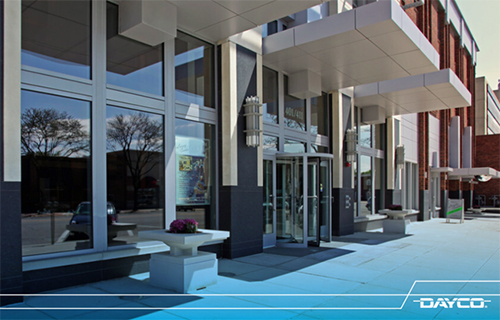
Dayco, an engine products and drive systems supplier, is relocating its corporate and North American headquarters to Birmingham, Michigan, and has made several appointments to strategic leadership positions.

Dayco Headquarters

Joining Dayco are Michael Widgren as chief financial and administrative officer, RJ Corning as chief human resources officer, Clifton Levack as chief supply officer, Audrey Harling as vice president and managing director of North American aftermarket and global strategy and planning and Thomas Jauch, vice president and managing director of global belts OE.

The new executive leadership team will work collaboratively with Craig Frohock, CEO, to spearhead Dayco's vision and ongoing transformation, the company said. 

For more information, visit dayco.com

Bryan LaFlam Secures Ownership Stake in BIGSTUFF Total Power Management

Bryan LaFlam, a business development specialist and Top Sportsman racer, has acquired an ownership stake in BIGSTUFF Total Power Management, a Newark, California-based provider of electronic engine and powertrain controllers.

LaFlam will work alongside Ben Davidow, who acquired the company in 2021, as co-owner and director of operations. He will be responsible for enhancing the overall business, optimizing operations, streamlining manufacturing and strengthening the company's supply chain, the company said, while Davidow will continue to focus on product development and enhancing technical support.

For more information, visit bigstuff3efi.com

Tue, 05/07/2024 - 07:12

By SEMA News Editors

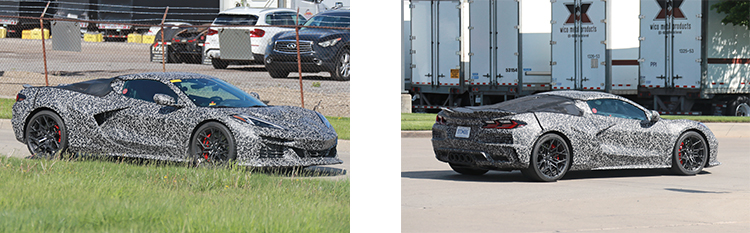
Chevrolet has already unveiled three versions of the eight-generation Corvette, but one anticipated model yet to debut is the next Corvette ZR1. While the manufacturer has not confirmed any details, SEMA News sources recently caught new images of a convertible option for the upcoming ZR1. 

The upcoming ZR1 is rumored to be the most powerful iteration in its history, according to insiders, and is expected to feature a twin-turbocharged V8 engine with higher output compared to the standard C8, as well as more aggressive bodywork and styling than the base model Corvette.

Corvette C8 ZR1

Insiders also suggest that the ZR1 will be equipped with a new, upgraded LT7 V8 engine, surpassing the current LT6 found in the C8 Z06. This new engine is rumored to be a 5.5L twin-turbocharged DOHC V8, making it the most powerful production V8 ever produced by General Motors. Power output is estimated to be between 800-850 hp, a significant increase over the 755 hp of the C8 ZR1.

The new ZR1 is also unlikely to feature a hybrid powertrain, according to sources, potentially making the C8 ZR1 the last powered solely by an internal combustion engine. Additionally, the performance model is likely to feature aerodynamic upgrades, including a front lip spoiler and rear wing. 

Mon, 05/06/2024 - 14:11


As the Off-road Market Ramps Up From Its Annual Winter Lull, Expect to See a Broader Range of Enthusiasts Hitting the Trails

By John Stewart


Most businesses serving off-road enthusiasts and outdoor recreationalists will recognize the core characteristics of the current marketplace as consistent with the past years, even decades. That said, evolutionary variations, a few headwinds and emerging trends will shape the off-road marketplace later in 2024 and beyond.
The big picture is largely positive. Andy Morgan, senior director of marketing for
Keystone’s specialty automotive division, notes that, “Specifically in the truck and off-road space, what we’re hearing from the market is that business is good. There continues to be some concern about if that will continue—inflation, election year and all the normal year-to-year type stuff. But overall, business is pretty healthy.”
Keystone is a specialty distributor that services a wide range of resellers, including independent jobbers.
“We’re seeing very good results, and we’re hearing very good feedback about customers being busy,” Morgan continued. “There does tend to be some difference in the different product types, where there are some puts and some takes. But the suspension business is very healthy for us, wheels and tires—all those customers report very healthy traffic and business so far. We’re hopeful and optimistic that remains in place.”
Manufacturers are reporting that overall demand trends remain consistent with patterns seen in the past, in which the off-road market takes a breather in the winter months and ramps up in the spring. “We’ve seen a little softening from Q4 that has carried over into early Q1, which is not uncharacteristic,” said Matt Reasoner, regional sales manager for RealTruck, a manufacturer with a dealer network of more than 12,000 businesses and OEM partners. “We are now emerging from the winter lull, and show season is in full swing. Early indicators are that things are picking back up.“
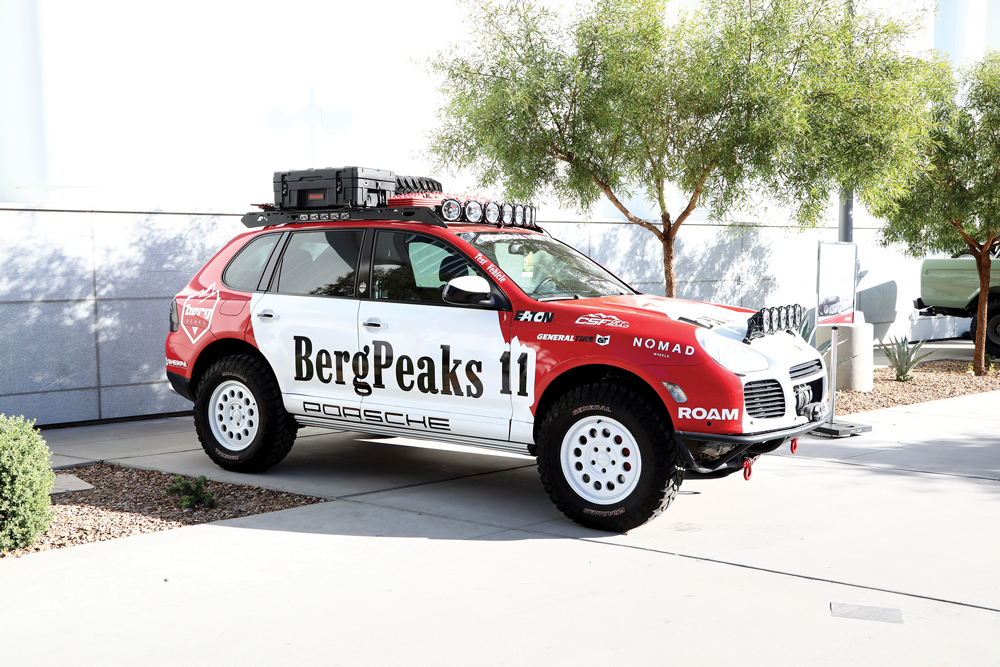
image 2


On the retail front, coming out of the COVID pandemic the business seems to have settled into a new normal.
“I feel like the pandemic, overall, for our specific market was huge. The only reason you weren’t seeing growth was because you didn’t have the volume because of the availability of the parts,” said Tara Thompson, general manager of Dixie Offroad, a brick-and-mortar retailer located in St. George, Utah, since 1994. “Now I’m seeing a little bit more of a shift where we’re not seeing as many big builds, full builds—maybe just a lift and tires, keeping an older vehicle and doing some upgrades. It’s been like that for about the past year,” she said.
These days, the consensus is that supply issues are diminishing.
“I think generally supply chains are much better,” Morgan at Keystone said. “And that’s what we’re hearing from our [manufacturer] suppliers. Supply is a bit more reliable, costs are a bit more stable, and they continue to introduce new products, innovate and release new things that they think the market is looking for. So for the most part, generally positive feedback from the supply base.“
New-vehicle sales rates are a factor in the off-road market—some vehicles more than others. It’s Jeep and Toyota, particularly the Tacoma, that are driving the market. But there are other players starting to pop up, including CUVs and off-road-ready pickups. Bronco is a growing factor, but it’s still early in the cycle.
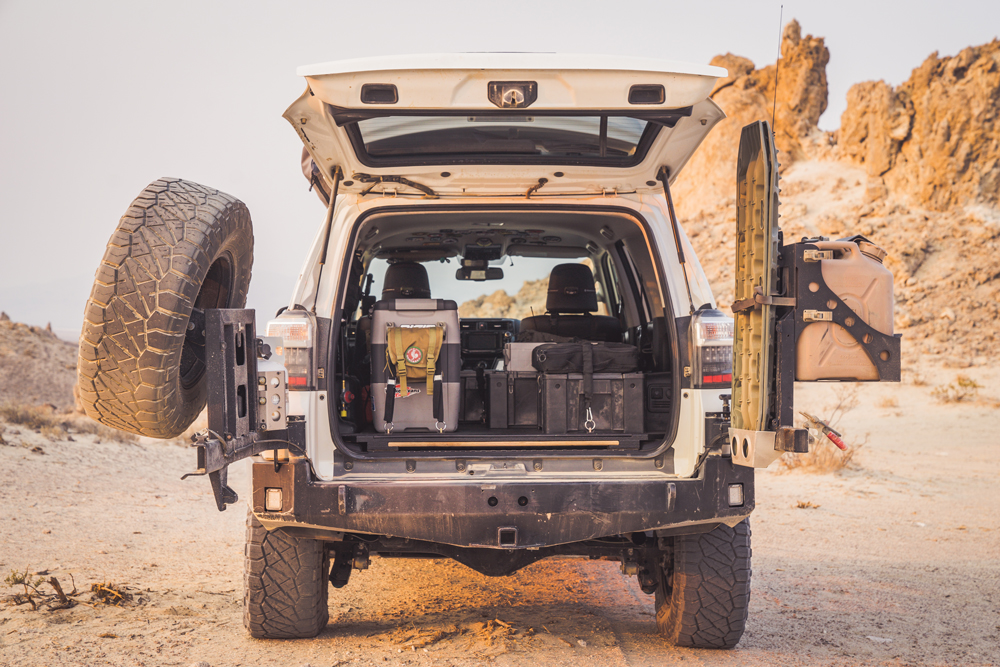
image 3


“Jeep Wranglers are still by far the most accessorized vehicles on the road,” Reasoner at RealTruck told us. “We also see that Wranglers continue to be accessorized over the lifetime of the vehicle as owners opt to update/refresh the look, or the second owner—or third, fourth—adds new modifications. We don’t see this trend nearly as much in the truck market,” he said.
On the truck side, “With the growing popularity of overlanding, we’ve seen the Tacoma emerge as a key player in that space,” Reasoner continued. “They are relatively affordable, offer decent off-road capability right from the factory and their midsized footprint makes accessing trails less cumbersome than a fullsized rig.”
Vehicles in Operation (VIO) registration data supplied by SEMA Research shows that, as of early 2024, there were more than 3.5 million Jeep Wranglers and more than 4 million Toyota Tacoma pickups on the road. At that time, there were just over 241,000 Ford Broncos registered.
“We’re not seeing the Bronco trend carry over regarding accessories,” reported Reasoner. “I think the Bronco market will come into its own, but will take some time as more product options become available. The industry expected it to follow the trajectory of the Jeep Wrangler—and that hasn’t been the case so far.”
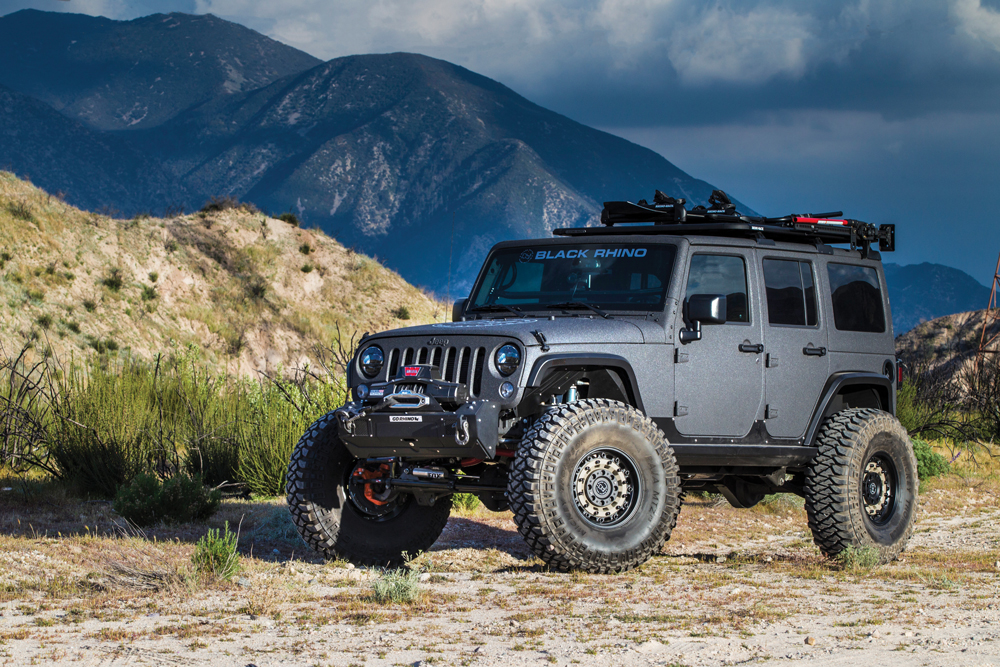
image 4


While it may be early for Bronco to have a big impact, overall the Ford product is still a promising development that may be bring in new types of customers. Regarding Bronco, Morgan told us, “It feels pretty similar to Jeep, as far as percentage of ones that have modifications. But with the suspension and the way they have that set up, they drive so nice and that has drawn a more non-enthusiast-type owner that just likes a cool, rugged vehicle. So we’ve seen quite a bit of business there.”
SEMA Research has noted that crossover utility vehicle (CUV) sales are increasing, and that opportunities for accessorization could grow there. Indications are that as time goes on, more CUVs are turning up on the trails and campgrounds.
“You see them a lot more on the trail, where people really like this idea of a Tacoma, but don’t need this much payload, don’t need true four-wheel-drive, but want better fuel economy,” said Sean Holman, OVR Magazine editor-at-large. “And now some of the accessory manufacturers are starting to listen. “We used to call them ‘softroaders’ but they’re becoming a meaningful part of it.” He puts the Jeep Renegade, Jeep Trailhawk, Rav4 Adventure, the Subaru Crosstrek and Outback among the CUVs relevant to the off-road market, with more to come. “Hyundai and Kia are now flirting with that at the auto shows,” he said. “Everybody wants a piece of that space; everybody wants to be Jeep.”
Although not all that many CUV owners are showing up at off-road shops and stores as yet, it appears that these vehicles may bring the benefit of a new type of customer to the industry.
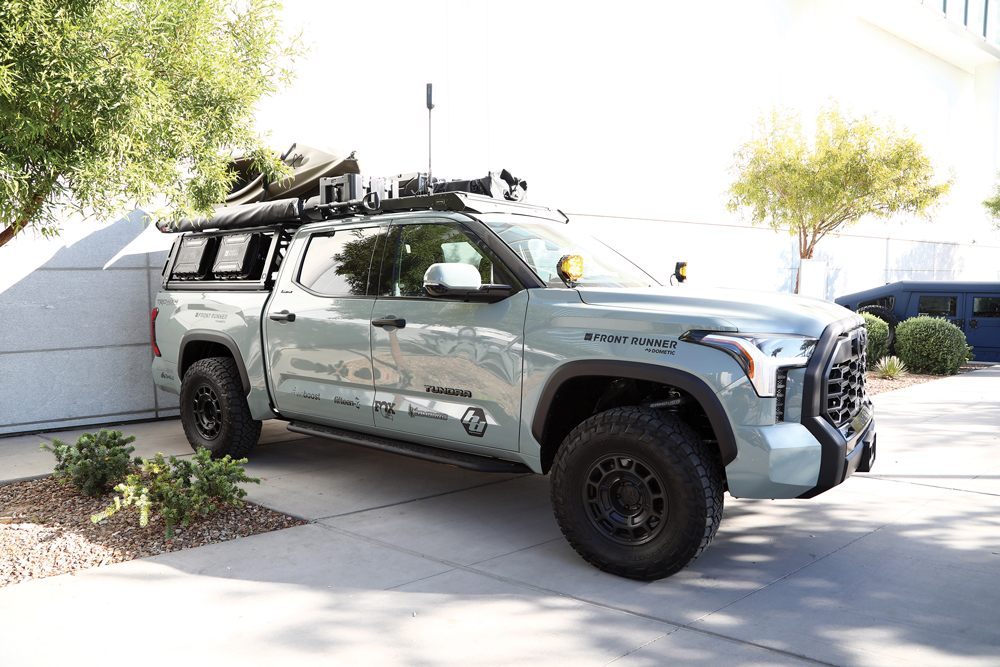
image 5


The CUV owner, Thompson noted, is “Definitely more of a road-trip-type person, likely to head off on a weekend,” Thompson mused. “The car is an avenue for other recreation; for the Jeep owner, the drive is the recreation.”
Another variation on the classic off-road customer is the long-range, adventure travel enthusiast now known as “overlander.” While enthusiast 4x4 owners have long been camping and sleeping in their trucks to attend off-road races in Mexico or at favorite campgrounds, the overlanding trend has taken self-contained off-road travel to a higher level. Sources cite the popularity of the Toyota Tacoma, and Toyota products in general, in tandem with the growth of the overlanding trend.
“With the growing popularity of overlanding, we’ve seen the Tacoma emerge as a key player in that space, noted Reasoner. “They are relatively affordable, offer decent off-road capability right from the factory and their midsized footprint makes accessing trails less cumbersome than a fullsized rig.”
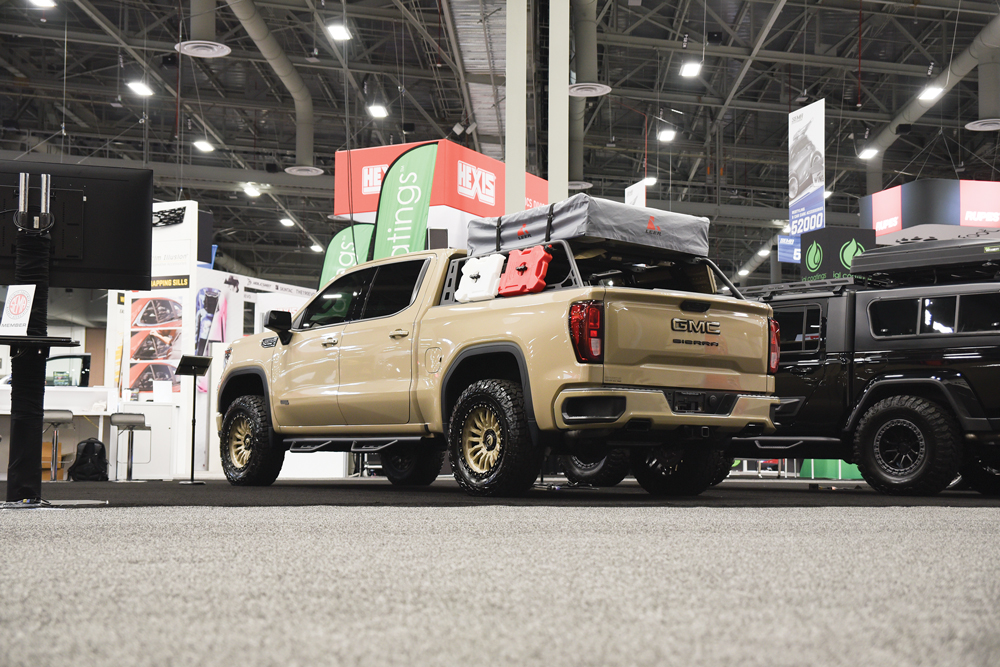
image 6


Considering why Tacoma has conspicuously benefitted from the overlanding phenomenon, Holman said, “Obviously, the pandemic gave people the inclination to look at new ways to go recreate with the family and get out of the house. And Toyota didn’t have as much of a [pandemic supply] shutdown as the others,” he said. “So the fact that Toyota moved into that higher, off-road-centric off-road package before anybody else was in that space, they commanded it.”
From a manufacturer point of view, the trend is positive. “The overlanding segment has proven that it is not a fad and is indeed here to stay,” Reasoner told us. “What once was somewhat of a niche market has now found its way to the mainstream. More and more manufacturers are making racking systems for the rooftop or above the truck bed, but that’s just the start. Functional storage and mounting options are a huge focus for manufacturers as consumers continue to look to get the most out of every bit of space their vehicle has to offer.”
Morgan at Keystone agrees, while noting that the growth curve may be leveling off. “We still see some holdover from the COVID era, where there might be a little bit of a hangover,” he said. “With some of the overlander [customers], I’d say there is a little bit of hesitation, where dealers are not stocking at the same rates. They’re servicing that market and they think that demand is there—but there is maybe a little bit more hesitation that maybe that space, which was such a big growth space for a couple years, has slowed down to some extent,” he said.
Another factor in the off-road market is the growing presence of factory off-road packages available at dealerships as OE manufacturers increasingly offer trail-ready versions of their new models. It’s a trend that retailers have begun to feel. “The hard part is with the Jeep market, it’s changed so much, where you don’t have to do
nearly as much to fit the tires on it anymore,” Thompson said. “So we’re seeing people not do as much to them to get them to the point that they want. And that cut a lot out of our bread and butter.”
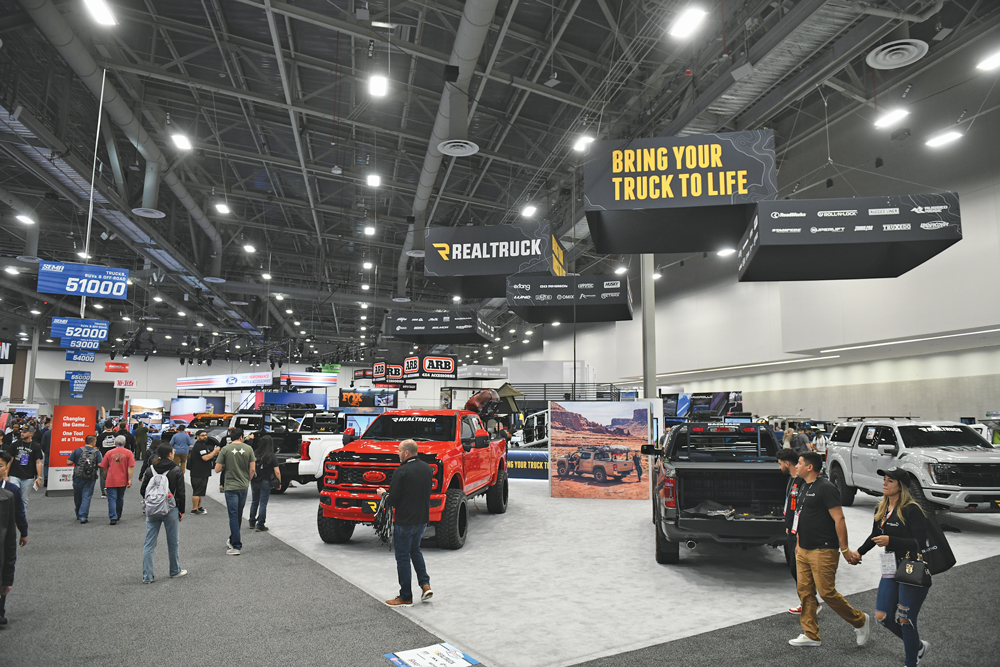
image 7


But it’s not just Jeep offering trail-ready performance packages. “Off-road packages,” Holman noted, “obviously led by [Wrangler] Rubicon when it came out—you’ve got Ford F-150 Tremor and Raptor, Ram TRX, Colorado Bison and Chevrolet Silverado ZR2, that all have quite a high level of capability.”
For some OEM companies, the foray into off-road performance represents a dramatic change in brand strategy.
“Look at GM,” Holman said. Historically, “GM never co-brands with anybody. At Ford, you’ve got Harley-Davidson, Eddie Bauer, Bill Blass—whatever. But look at Chevy, they never really did that. So for them to partner up with AEV, to go after TRD Pro, or what will become the Trail Hunter, is a pretty big move for a company of that scale and size. Their brand
is actually better served in partnership with another brand.”
Concern about OEM off-road-packages, according to Morgan at Keystone, “comes up a lot. I do think that has some impact, and I do think from the customer side there is concern, because it feels like they are taking business away from them.“ But the effect is not necessarily negative overall. “We feel like that helps grow the world of what’s out there, and helps get those brand names in front of consumers that might otherwise see them. So we think it helps the overall sales and that the more people that want to customize their vehicle, the better it is for everybody.”
Not to be ignored in the off-road market is the effect of consolidation, which can create headaches for retailers and wholesalers.  
“At the shop my biggest X-factor right now is the amount of companies buying companies,” noted Thompson. “It’s not knowing who is going to be around, what brands you’re going to be loyal to, who you can count on to be there. Good or bad, I don’t know, right or wrong, I don’t know—but it’s a shock.”
Morgan told us, “We hear the same thing from a lot of customers. They say there is a lot of uncertainty—if their favorite brand is going to be supported the same way, or if it is going to come out with innovation and the new and improved features they are looking for. There can be some concern over that.”
In the long run, the consensus is that the consolidation trend is not all bad. “Generally, I don’t think it has a hugely negative impact on the business,” Morgan said. “Certainly you’re going to lose some things that were very promising and helpful, but it’s a fact of life. We have to try to do the best we can to make sure that we understand where the products and where the brands are headed and what the vision for the brands might be post-acquisition so we have a way to manage appropriately.“ 


THE GROWING REACH OF OFF-ROAD RACING

Off-road racing is alive and well in 2024, with sanctioning bodies geared to engage the top professional race teams and sportsman racers alike. Most recently, multi-level marketing and live streaming of major events has been a big factor in bringing off-road racing to broader, often international, audiences.
“It’s just different times,” said Jim Ryan, vice president of marketing and sales for SCORE International. Back in the day, Ryan said, “The racing organizations, their job was to put on the race and the story. And it was then for the media and the sponsors to promote it,” he said. “And now there are the social-media channels, the television packages, and we also produce the monthly magazine SCORE Journal. But now the live stream thing is the big, big deal,” he continued. With social media and live streaming, “we have a global audience, global racer base, global media coverage—all of that.”
According to Ryan, the 2023 SCORE Baja 1000 generated “media coverage from about 18 countries and racers from 30-something states, it just blew off the charts this year, probably the biggest we’ve ever had.”
While there are numerous opportunities for sportsman racers to participate in desert racing, and sometimes dice with the professionals, these days the SCORE series attracts mostly professional racers from around the world. The SCORE organization has more than 50 classes on the books, and for any given race, 28 to 30 classes are staged. The top classes require well-organized teams with deep pockets able to field pit crews and chase teams along the entire length of Baja.
“The trophy trucks are million-dollar-plus entities now,” Ryan said. “Not 100 grand. So it’s a totally different dynamic. We’ve had teams from the WRC, F1, NASCAR, IndyCar guys—you name it. They show up from time to time because this is the last thing that they want to do, and it is so unlimited.“
Sponsors are attracted to off-road racing for a variety of reasons. Brand recognition among enthusiasts is primary, but there are other compelling reasons to be involved. “They’re using us for product development,” Ryan explained. “We’re a technology development center. I mean, if they can get through us, they know their products are good, whether it’s trucks, buggies, bikes, the ATVs.”
Companies like Can-Am, Polaris and Yamaha are now highly visible at SCORE races. “There’s still factory teams being supported, and it grows,” Ryan said. There are now six classes for UTV racers at SCORE, when originally there was just one.
Another highly visible race event, King of the Hammers, has developed into a multi-week off-road racing festival, spawning new classes of race cars, even new race series, such as Ultra4.
“King of the Hammers is a real deal,“ said Ryan. “It’s not our market, but it’s become like race week. For set up and tear down for those guys out there, it’s almost three weeks now… And it definitely has crowds. It definitely gets some numbers,” he said.
Sportsman racing in the Southwest is complicated by permitting in Western states, but legacy race routes are still in use, and sanctioning bodies tailored to vintage and entry-level racing are still successfully providing a path for driver advancement and enthusiast recreation.

Mon, 05/06/2024 - 14:11


As the Off-road Market Ramps Up From Its Annual Winter Lull, Expect to See a Broader Range of Enthusiasts Hitting the Trails

By John Stewart


Most businesses serving off-road enthusiasts and outdoor recreationalists will recognize the core characteristics of the current marketplace as consistent with the past years, even decades. That said, evolutionary variations, a few headwinds and emerging trends will shape the off-road marketplace later in 2024 and beyond.
The big picture is largely positive. Andy Morgan, senior director of marketing for
Keystone’s specialty automotive division, notes that, “Specifically in the truck and off-road space, what we’re hearing from the market is that business is good. There continues to be some concern about if that will continue—inflation, election year and all the normal year-to-year type stuff. But overall, business is pretty healthy.”
Keystone is a specialty distributor that services a wide range of resellers, including independent jobbers.
“We’re seeing very good results, and we’re hearing very good feedback about customers being busy,” Morgan continued. “There does tend to be some difference in the different product types, where there are some puts and some takes. But the suspension business is very healthy for us, wheels and tires—all those customers report very healthy traffic and business so far. We’re hopeful and optimistic that remains in place.”
Manufacturers are reporting that overall demand trends remain consistent with patterns seen in the past, in which the off-road market takes a breather in the winter months and ramps up in the spring. “We’ve seen a little softening from Q4 that has carried over into early Q1, which is not uncharacteristic,” said Matt Reasoner, regional sales manager for RealTruck, a manufacturer with a dealer network of more than 12,000 businesses and OEM partners. “We are now emerging from the winter lull, and show season is in full swing. Early indicators are that things are picking back up.“

image 2


On the retail front, coming out of the COVID pandemic the business seems to have settled into a new normal.
“I feel like the pandemic, overall, for our specific market was huge. The only reason you weren’t seeing growth was because you didn’t have the volume because of the availability of the parts,” said Tara Thompson, general manager of Dixie Offroad, a brick-and-mortar retailer located in St. George, Utah, since 1994. “Now I’m seeing a little bit more of a shift where we’re not seeing as many big builds, full builds—maybe just a lift and tires, keeping an older vehicle and doing some upgrades. It’s been like that for about the past year,” she said.
These days, the consensus is that supply issues are diminishing.
“I think generally supply chains are much better,” Morgan at Keystone said. “And that’s what we’re hearing from our [manufacturer] suppliers. Supply is a bit more reliable, costs are a bit more stable, and they continue to introduce new products, innovate and release new things that they think the market is looking for. So for the most part, generally positive feedback from the supply base.“
New-vehicle sales rates are a factor in the off-road market—some vehicles more than others. It’s Jeep and Toyota, particularly the Tacoma, that are driving the market. But there are other players starting to pop up, including CUVs and off-road-ready pickups. Bronco is a growing factor, but it’s still early in the cycle.

image 3


“Jeep Wranglers are still by far the most accessorized vehicles on the road,” Reasoner at RealTruck told us. “We also see that Wranglers continue to be accessorized over the lifetime of the vehicle as owners opt to update/refresh the look, or the second owner—or third, fourth—adds new modifications. We don’t see this trend nearly as much in the truck market,” he said.
On the truck side, “With the growing popularity of overlanding, we’ve seen the Tacoma emerge as a key player in that space,” Reasoner continued. “They are relatively affordable, offer decent off-road capability right from the factory and their midsized footprint makes accessing trails less cumbersome than a fullsized rig.”
Vehicles in Operation (VIO) registration data supplied by SEMA Research shows that, as of early 2024, there were more than 3.5 million Jeep Wranglers and more than 4 million Toyota Tacoma pickups on the road. At that time, there were just over 241,000 Ford Broncos registered.
“We’re not seeing the Bronco trend carry over regarding accessories,” reported Reasoner. “I think the Bronco market will come into its own, but will take some time as more product options become available. The industry expected it to follow the trajectory of the Jeep Wrangler—and that hasn’t been the case so far.”

image 4


While it may be early for Bronco to have a big impact, overall the Ford product is still a promising development that may be bring in new types of customers. Regarding Bronco, Morgan told us, “It feels pretty similar to Jeep, as far as percentage of ones that have modifications. But with the suspension and the way they have that set up, they drive so nice and that has drawn a more non-enthusiast-type owner that just likes a cool, rugged vehicle. So we’ve seen quite a bit of business there.”
SEMA Research has noted that crossover utility vehicle (CUV) sales are increasing, and that opportunities for accessorization could grow there. Indications are that as time goes on, more CUVs are turning up on the trails and campgrounds.
“You see them a lot more on the trail, where people really like this idea of a Tacoma, but don’t need this much payload, don’t need true four-wheel-drive, but want better fuel economy,” said Sean Holman, OVR Magazine editor-at-large. “And now some of the accessory manufacturers are starting to listen. “We used to call them ‘softroaders’ but they’re becoming a meaningful part of it.” He puts the Jeep Renegade, Jeep Trailhawk, Rav4 Adventure, the Subaru Crosstrek and Outback among the CUVs relevant to the off-road market, with more to come. “Hyundai and Kia are now flirting with that at the auto shows,” he said. “Everybody wants a piece of that space; everybody wants to be Jeep.”
Although not all that many CUV owners are showing up at off-road shops and stores as yet, it appears that these vehicles may bring the benefit of a new type of customer to the industry.

image 5


The CUV owner, Thompson noted, is “Definitely more of a road-trip-type person, likely to head off on a weekend,” Thompson mused. “The car is an avenue for other recreation; for the Jeep owner, the drive is the recreation.”
Another variation on the classic off-road customer is the long-range, adventure travel enthusiast now known as “overlander.” While enthusiast 4x4 owners have long been camping and sleeping in their trucks to attend off-road races in Mexico or at favorite campgrounds, the overlanding trend has taken self-contained off-road travel to a higher level. Sources cite the popularity of the Toyota Tacoma, and Toyota products in general, in tandem with the growth of the overlanding trend.
“With the growing popularity of overlanding, we’ve seen the Tacoma emerge as a key player in that space, noted Reasoner. “They are relatively affordable, offer decent off-road capability right from the factory and their midsized footprint makes accessing trails less cumbersome than a fullsized rig.”

image 6


Considering why Tacoma has conspicuously benefitted from the overlanding phenomenon, Holman said, “Obviously, the pandemic gave people the inclination to look at new ways to go recreate with the family and get out of the house. And Toyota didn’t have as much of a [pandemic supply] shutdown as the others,” he said. “So the fact that Toyota moved into that higher, off-road-centric off-road package before anybody else was in that space, they commanded it.”
From a manufacturer point of view, the trend is positive. “The overlanding segment has proven that it is not a fad and is indeed here to stay,” Reasoner told us. “What once was somewhat of a niche market has now found its way to the mainstream. More and more manufacturers are making racking systems for the rooftop or above the truck bed, but that’s just the start. Functional storage and mounting options are a huge focus for manufacturers as consumers continue to look to get the most out of every bit of space their vehicle has to offer.”
Morgan at Keystone agrees, while noting that the growth curve may be leveling off. “We still see some holdover from the COVID era, where there might be a little bit of a hangover,” he said. “With some of the overlander [customers], I’d say there is a little bit of hesitation, where dealers are not stocking at the same rates. They’re servicing that market and they think that demand is there—but there is maybe a little bit more hesitation that maybe that space, which was such a big growth space for a couple years, has slowed down to some extent,” he said.
Another factor in the off-road market is the growing presence of factory off-road packages available at dealerships as OE manufacturers increasingly offer trail-ready versions of their new models. It’s a trend that retailers have begun to feel. “The hard part is with the Jeep market, it’s changed so much, where you don’t have to do
nearly as much to fit the tires on it anymore,” Thompson said. “So we’re seeing people not do as much to them to get them to the point that they want. And that cut a lot out of our bread and butter.”

image 7


But it’s not just Jeep offering trail-ready performance packages. “Off-road packages,” Holman noted, “obviously led by [Wrangler] Rubicon when it came out—you’ve got Ford F-150 Tremor and Raptor, Ram TRX, Colorado Bison and Chevrolet Silverado ZR2, that all have quite a high level of capability.”
For some OEM companies, the foray into off-road performance represents a dramatic change in brand strategy.
“Look at GM,” Holman said. Historically, “GM never co-brands with anybody. At Ford, you’ve got Harley-Davidson, Eddie Bauer, Bill Blass—whatever. But look at Chevy, they never really did that. So for them to partner up with AEV, to go after TRD Pro, or what will become the Trail Hunter, is a pretty big move for a company of that scale and size. Their brand
is actually better served in partnership with another brand.”
Concern about OEM off-road-packages, according to Morgan at Keystone, “comes up a lot. I do think that has some impact, and I do think from the customer side there is concern, because it feels like they are taking business away from them.“ But the effect is not necessarily negative overall. “We feel like that helps grow the world of what’s out there, and helps get those brand names in front of consumers that might otherwise see them. So we think it helps the overall sales and that the more people that want to customize their vehicle, the better it is for everybody.”
Not to be ignored in the off-road market is the effect of consolidation, which can create headaches for retailers and wholesalers.  
“At the shop my biggest X-factor right now is the amount of companies buying companies,” noted Thompson. “It’s not knowing who is going to be around, what brands you’re going to be loyal to, who you can count on to be there. Good or bad, I don’t know, right or wrong, I don’t know—but it’s a shock.”
Morgan told us, “We hear the same thing from a lot of customers. They say there is a lot of uncertainty—if their favorite brand is going to be supported the same way, or if it is going to come out with innovation and the new and improved features they are looking for. There can be some concern over that.”
In the long run, the consensus is that the consolidation trend is not all bad. “Generally, I don’t think it has a hugely negative impact on the business,” Morgan said. “Certainly you’re going to lose some things that were very promising and helpful, but it’s a fact of life. We have to try to do the best we can to make sure that we understand where the products and where the brands are headed and what the vision for the brands might be post-acquisition so we have a way to manage appropriately.“ 


THE GROWING REACH OF OFF-ROAD RACING

Off-road racing is alive and well in 2024, with sanctioning bodies geared to engage the top professional race teams and sportsman racers alike. Most recently, multi-level marketing and live streaming of major events has been a big factor in bringing off-road racing to broader, often international, audiences.
“It’s just different times,” said Jim Ryan, vice president of marketing and sales for SCORE International. Back in the day, Ryan said, “The racing organizations, their job was to put on the race and the story. And it was then for the media and the sponsors to promote it,” he said. “And now there are the social-media channels, the television packages, and we also produce the monthly magazine SCORE Journal. But now the live stream thing is the big, big deal,” he continued. With social media and live streaming, “we have a global audience, global racer base, global media coverage—all of that.”
According to Ryan, the 2023 SCORE Baja 1000 generated “media coverage from about 18 countries and racers from 30-something states, it just blew off the charts this year, probably the biggest we’ve ever had.”
While there are numerous opportunities for sportsman racers to participate in desert racing, and sometimes dice with the professionals, these days the SCORE series attracts mostly professional racers from around the world. The SCORE organization has more than 50 classes on the books, and for any given race, 28 to 30 classes are staged. The top classes require well-organized teams with deep pockets able to field pit crews and chase teams along the entire length of Baja.
“The trophy trucks are million-dollar-plus entities now,” Ryan said. “Not 100 grand. So it’s a totally different dynamic. We’ve had teams from the WRC, F1, NASCAR, IndyCar guys—you name it. They show up from time to time because this is the last thing that they want to do, and it is so unlimited.“
Sponsors are attracted to off-road racing for a variety of reasons. Brand recognition among enthusiasts is primary, but there are other compelling reasons to be involved. “They’re using us for product development,” Ryan explained. “We’re a technology development center. I mean, if they can get through us, they know their products are good, whether it’s trucks, buggies, bikes, the ATVs.”
Companies like Can-Am, Polaris and Yamaha are now highly visible at SCORE races. “There’s still factory teams being supported, and it grows,” Ryan said. There are now six classes for UTV racers at SCORE, when originally there was just one.
Another highly visible race event, King of the Hammers, has developed into a multi-week off-road racing festival, spawning new classes of race cars, even new race series, such as Ultra4.
“King of the Hammers is a real deal,“ said Ryan. “It’s not our market, but it’s become like race week. For set up and tear down for those guys out there, it’s almost three weeks now… And it definitely has crowds. It definitely gets some numbers,” he said.
Sportsman racing in the Southwest is complicated by permitting in Western states, but legacy race routes are still in use, and sanctioning bodies tailored to vintage and entry-level racing are still successfully providing a path for driver advancement and enthusiast recreation.