Wed, 06/01/2022 - 11:48

SEMA News—June 2022

BUSINESS

2022 Mobile-Electronics Trends

Hard Hit by COVID, the Industry Bounces Back

By Douglas McColloch
North Hall

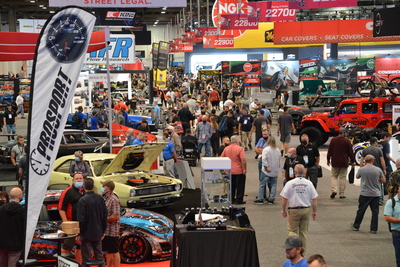
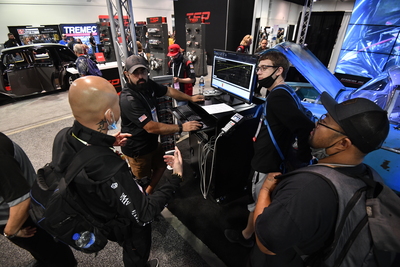
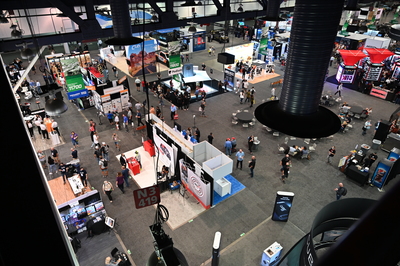
North Hall at the Las Vegas Convention Center was the center of activity for the mobile electronics market at the 2021 SEMA Show. More than 100,000 industry professionals attended the weeklong event last November.

It’s no secret that the electronic age has influenced every segment of the automotive aftermarket—and will continue to do so for as far into the future as we can see. Whether it’s the adoption of computer-aided design and 3-D printing by builders and fabricators or consumers demanding full integration of their cars and their devices, computer-driven electronics are here to stay. The proliferation of advanced driver-assistance systems across OE vehicle platforms and increased vehicle connectivity with the Internet of Things have created enormous technical and logistical challenges for the aftermarket—and boundless opportunities for entrepreneurs looking to establish a brand presence in a rapidly evolving marketplace.

As a whole, the mobile-electronics industry did not fare well during the initial stages of the COVID-19 pandemic. Severely impacted by COVID-related manufacturing disruptions, the industry took a hard hit, with a 5% decline in sales worldwide in 2020, according to Fortune Business Insights. Still, new players enter the market on a near-weekly basis, and the increase in the number of homebound consumers in search of alternative forms of entertainment during the pandemic provided additional opportunities for recovery and growth. As supply-chain issues are resolved over time, the global automotive electronics market is projected to reach $382 billion by 2026, with a 7.3% compound annual growth rate over the 2020–2026 time period, according to a recent study from Allied Global Insights.

For this article, we consulted more than a dozen industry leaders. What follows is a summation of their insights, edited for clarity and length.

The State of the Market: Healthy, With Headwinds

Mobile

Demand for vehicle safety products continues to remain steady, both from Tier-1 suppliers and the aftermarket. This EchoMaster analog high-density backup camera from AAMP Global offers standard 720p resolution.

Overall, our panel of experts agreed that the market has returned to a relatively normal condition, though challenges loom for the near future.

“Challenging, ever-changing and rewarding,” said Darryl Miya, brand manager for Scosche Industries. Miya cited inflation, the end of stimulus funding and further COVID disruptions to the supply chain as near-term concerns, adding that “hopefully things will start to smooth out by the third quarter.”

“The supply chain is what’s hurting most companies, and now it’s twice as difficult because of the increase in consumer demand,” said Dennis Hopper, executive vice president at VAIS Technology. “COVID shut down workplaces, and people had extra money to spend. That helped feed the extra demand.”

Recent geopolitical unrest is also likely to weigh on the industry for the near term.

“We’re a global economy now, so when something happens such as what’s going on in Ukraine, it can send everything into a tailspin,” said Robin McNeal, national sales manager for Nakamichi Car Audio. “For us, Russia is a huge customer, and I suspect that side of the business may soon come to a grinding halt.”

Still, some companies have managed to weather the storm with continued strong sales.

“Business the last two years has been very strong, with unprecedented growth,” said Brian Sherman, vice president of product and marketing for Maxxsonics USA. “We feel that it’s starting to level off, but we still see certain opportunities for growth.”

Major Trends and Developments
Mobile

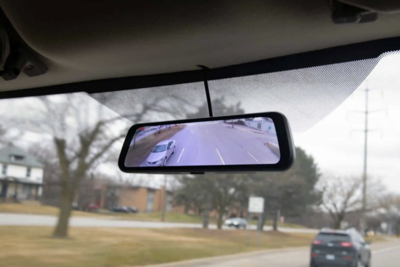
Vehicle owners looking to upgrade their vehicles to include blind-spot monitoring have options available via the aftermarket. This Brandmotion radar-based RDBS camera system includes cross-traffic detection.

The mobile-electronics industry serves a number of diverse customer bases. Not surprisingly, our panel of experts saw growth in different markets.

“A lot of the manufacturers on the mobile side have been turning their attention to the marine and powersports markets,” Hopper said. “It seems like just about everyone has product now for side-by-sides. Motorcycle audio has been steady for a few years, and while car audio still exists, the new niche segments such as powersports have been growing the most rapidly.”

McNeal also cited the marine market as a strong sales driver: “That’s an up-and-coming market for us.”

Marine electronics alone comprise a $5.25 global market, according to a recent survey from Maximize Market Research Ltd.

“And don’t forget golf carts and three wheelers,” Hopper continued. “Across the country, you have a lot of gated communities where people drive them all over the place, and some of them have massive audio systems in them.”

McNeal saw strong consumer demand for software installations.

“It’s all about Apple Car Play and Android Auto—and, of course, those are the two biggest users of the microchips that everyone’s struggling to get,” he said. “Now, unless you’re just looking to fill a hole in your dash, that’s what everyone is after. With the cost of new and used vehicles so high, people are holding onto their vehicles longer, and eventually they’ll want to bring that new technology into the current vehicle.”

Sherman pointed to the powersports market as a rapidly expanding sector, and to increasing consumer interest in high-powered, high-end mobile audio systems. But Sherman and McNeal both pointed to a shortage of skilled labor as an issue that has forced the market to adapt.

“The complexity of new vehicles and access to a pool of qualified installers has certainly presented challenges,” Sherman said. “We’ve responded by developing products that are easier to install for people with even basic mechanical knowledge. Products like our MB Quart Jeep audio kits are just one example.”

The pandemic and its related disruptions forced many companies to ramp up their investments in digital marketing and social media, in particular.

“We’ve always been very pro-digital,” Hopper said. “We have a very active Facebook page with a lot of users, and we do our own email blasts based off information we capture from dealers that buy from us. Add Google SEO, and that would be the top three digital marketing platforms for us.”

Sherman said that social media is a key part of his company’s marketing strategy.

“It still represents the most cost-effective and efficient way to get info on new products out to our distributors, dealers and consumers,” he said.

A mobile-friendly website that’s capable of conducting transactions is an increasingly important tool in the digital toolbox as well.

“Purchases made from smartphones increase each year,” Miya noted.

Challenges and Opportunities

Mobile

App-based connectivity is another fast-growing mobile electronics segment. Voyo’s Scan Pro diagnostic scan tool can monitor a car’s activity in real time and forward the information to the owner’s mechanic.

Most of our experts agreed that the overall economy and consumer demand were likely to slow down later in the year. Citing unstable geopolitical issues, Hopper felt that the market “might get a little wavy” in the near term, though supply-chain problems may gradually resolve themselves by the third quarter of 2022.

Advances in OE electronics systems will also pose challenges to certain elements of the market.

“The radio segment of the 12-volt category will suffer because the OE manufacturers are really pushing to put bigger screens in cars,” Hopper said. “You have to integrate a lot more of the car into that bigger screen, so I think you’re going to see more dealers on the aftermarket side say, ‘Let’s just leave the head unit alone, go with DSP, and put the emphasis on better amps and better speakers.’”

McNeal also mentioned rising fuel prices as a near-term concern.

“When the price at the pump goes up, it has never been kind to our industry,” he said.

Still, opportunities abound, particularly among newer OE platforms that appeal to enthusiasts and modifiers.

“The expansion of enthusiast-owned vehicles presents a great deal of opportunity,” Sherman said. “Newer platforms like the Bronco, along with existing platforms from Jeep, will create a lot of opportunity for audio upgrades to customers who will readily embrace the chance to improve their vehicles.” On the other hand, “significant challenges remain on the supply chain and logistics side, with freight costs at an all-time high.”

Miya additionally pointed to the growth in used-vehicle sales as an opportunity for the aftermarket as consumers look to retrofit and/or upgrade their vehicles’ factory electronics packages.

“I don’t think we’ll see big growth this year, but as we get into 2023, I think we’ll see business returning to pre-COVID levels,” Hopper concluded.
Wed, 06/01/2022 - 11:36

SEMA News—June 2022

BUSINESS

Going Carbon-Neutral

Why the Race Is on to Achieve Ever-More-Ambitious Standards

By Mike Imlay

Carbon Neutral

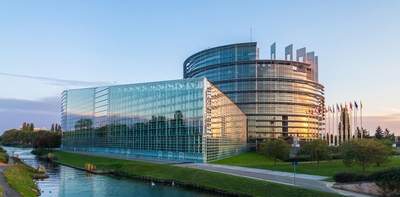
In July 2021, the European Union (EU) published its European Climate Law, setting a goal of full carbon neutrality by 2050 and a more immediate 55%-reduction target for greenhouse gases by 2030. The legislation has broad implications for any company with a presence in an EU-member state. Photo courtesy: Leonid Andronov/Shutterstock.com

Carbon neutrality is a hot-button issue laden with political overtones and media hype—a true third rail if there ever was one for many in the automotive industry. Yet a growing number of brands are announcing green-friendly initiatives aimed at sustainability and carbon reduction. What’s driving this trend? And more importantly, how are industry businesses future-proofing themselves against what may be an unstoppable seismic shift?

First, understanding the decarbonization movement entails unjumbling the jargon. Carbon neutrality or “net-zero carbon dioxide (CO2) emissions” is defined as striking a balance between human-caused CO2 emissions and their removal from the global environment. This can involve “carbon offsets,” which represent greenhouse gas (GHG) reductions, or “carbon storage” increases through such practices as land preservation or tree-planting initiatives. These offsets compensate for emissions generated elsewhere.

Then, of course, there are offset credits—transferable instruments representing a single metric ton of CO2 or other GHGs. They can be sold and traded between businesses to reach decarbonization goals.

Finally, there’s sustainability—a concept that the United Nations World Commission on Environment and Development defines as actions that maintain natural resources so that future generations can “live an equal, if not better, way of life.” This is where renewable energy and materials sources factor into the environmental equation.

Such concepts may sound like PR catchwords, but they reflect global economic realities that—all arguments about climate change aside—may soon impact businesses at every level.

Global Forces

Carbon Neutral

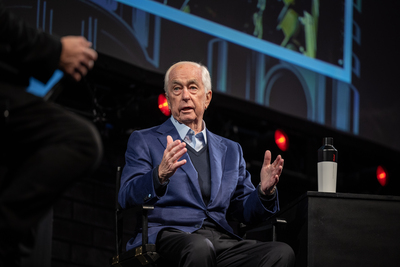
Interviewed by Speed Sport’s Ralph Sheheen at the 2022 Performance Racing Industry Trade Show opening breakfast, Indianapolis Motor Speedway owner Roger Penske (pictured) reaffirmed Penske Corporation’s commitment to carbon neutrality, an issue gaining serious traction in the racing and performance community. Photo courtesy: Performance Racing Industry

In July 2021, the European Union (EU) promulgated Regulation 2021/1119 of the European Parliament and Council. The rule established a framework for achieving “climate neutrality” throughout the EU by 2050, with intermediate carbon neutrality targets in 2030 and 2040. The legislation calls for aggressive measures to reduce GHG emissions and balance any remaining emissions through offsetting measures to achieve a net-zero emissions balance.

Although the United States has not enacted similar legislation, the Biden Administration launched a “whole-of-government process” in April 2021 through the president’s National Climate Task Force to establish a 50% to 52% GHG reduction from 2005 emissions levels throughout the American economy. (Of course, states such as California continue to enact variously stringent measures to regulate carbon emissions on their own.)

In the automotive realm, these initiatives have become market drivers for new research and development, supply-chain decisions, and even venture capital investments. Decarbonization measures are now sweeping the industry, from OEMs to specialty-equipment suppliers. Consider a few recent news items:

In June 2020, Ford Motor Company released its annual “Sustainability Report” highlighting its efforts to achieve carbon neutrality by 2050. At the time, Ford claimed to be “the only full line U.S. automaker committed to doing its part to reduce CO2 emissions in line with the Paris Climate Agreement and working with California for stronger greenhouse gas standards.”

To meet its goals, the automaker promised sweeping changes to its vehicles, supply base and company facilities. Ford additionally touted its then-$11.5 billion investment in vehicle electrification as well as its progress toward powering all of its manufacturing plants via “100% locally sourced renewable energy” by 2035.

Not to be outdone, General Motors (GM) announced the following year that it would become carbon-neutral in its global products and operations by 2040, centered on what it called “science-based targets.” While much of the media focused on the automaker’s vehicle electrification goals, the company also announced a major initiative for powering all of its U.S. facilities with renewable energy by 2030, heavy investments in carbon offsets and credits, and a commitment to emissions reductions throughout its supply chains.

Further underscoring the industry race toward decarbonization through vehicle electrification, Nissan has partnered with NASA to develop a new electric vehicle (EV) battery that will be safer, lighter and quicker to charge than today’s versions. The all-solid-state units will replace lithium-ion batteries, avoiding the use of rare metals. Toyota, Volkswagen, GM and Ford are also reportedly working on similar projects.

Perhaps due to their world-wide nature and close alignments with major OEMs, motorsports organizations and brands also appear to be racing alongside automakers to embrace carbon neutrality. Two years ago, when famed Penske Corporation Chairman and CEO Roger Penske acquired the Indianapolis Motor Speedway, he personally toured the facilities looking to improve the fan experience. But he had an equal eye out for reducing the speedway’s carbon footprint.

“I think we spent the next two weeks walking every restroom, every refreshment stand, up in every stand,” he related onstage to Speed Sport’s Ralph Sheheen during the 2021 Performance Racing Industry (PRI) Trade Show opening breakfast in Indianapolis. “When you look at the whole footprint, we have 1,000 acres, and we’re looking at sustainability. We’re certainly looking at decarbonization, and I think that has really popped to the top of the list when you look at a 10-year plan. We’d like to be carbon-neutral at the track as we go forward for the next several years.”

Penske added that Penske Corporation is scrutinizing everything from the use of paper towels in restrooms to the environmentally safe disposal of tires. The corporation and Team Penske also announced last year that they would enter a “strategic collaboration” with Shell Oil to address emissions across supply chains, including warehouse facilities, vehicle and fleet technologies, and transportation routes. In addition, the two companies are aiming to reduce the carbon footprint of the NTT IndyCar series.

Motorsports suppliers are following suit. VP Racing Fuels is one of several fuel and lubrication brands adding synthetic biofuels to its race-fuel portfolio. The company also continues to test new formulations to meet oncoming renewable fuel requirements set by multiple race series, including Formula 1 and the International Motor Sports Association.

“Many race series, mainly from Europe, require carbon-friendly fuels to help reduce the overall CO2 footprint that race events bring,” explained Mike Saeger, VP Racing Fuel’s senior marketing coordinator. “As a world leader in fuel tech, our OEM and race series partners look to VP to deliver solutions with sustainable components to meet their environmental goals while maintaining performance.”

Saeger added that supplying these types of fuels has its own set of challenges: Biofuels can cost up to four times the amount of fossil fuels. Developing fuels that are chemically equivalent to their fossil counterparts in terms of power and performance also requires much R&D. Moreover, the fuels’ advanced renewable components aren’t easily sourced, especially in the United States.

“Long term, VP is working with other technology groups to produce its own advanced renewable feedstocks to further reduce our CO2 footprint,” Saeger said.

While they may not always tout a green message, numerous specialty-automotive companies are also innovating solutions that can drastically cut or eliminate vehicle emissions. Sometimes the carbon reduction is an intentional goal, and sometimes it’s a happy byproduct of increasing a vehicle’s efficiency and performance. More often, however, it’s a combination of all the above.

Saving the ICE

Carbon NeutralCarbon Neutral

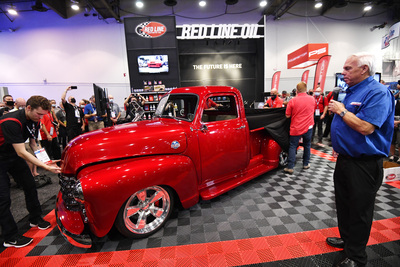
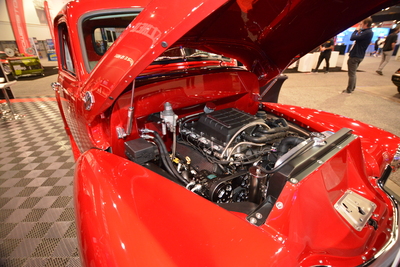
At the 2021 SEMA Show, Arrington Performance CEO Mike Copeland revealed a stunning full-custom ‘48 Chevrolet pickup with a twist: The vehicle runs on an internal-combustion engine (inset) fueled by green hydrogen. Copeland envisions the technology as a viable, scalable alternative to electrification.

Amid the rising demands for EVs and synthetic fuels, Arrington Performance CEO Mike Copeland believes that the industry may be overlooking something more elemental—namely hydrogen. At the 2021 SEMA Show, Copeland unveiled a fully custom, hydrogen-powered ’48 Chevrolet pickup with a twist. The vehicle utilized a 6.2L Chevrolet LS engine adapted for green hydrogen—an internal-
combustion engine (ICE) technology that he believes offers a viable alternative to other emerging technologies.

“I think we’re the only people that are making a true carbon-neutral package, because electricity is not always clean to generate,” Copeland said. “In our case, we take green hydrogen, use it in our truck, extract the energy, and create transportation with zero carbon footprint.”

Green hydrogen is produced using solar power and other zero-GHG processes and can be manufactured on-site virtually anywhere. Unlike fuel cells, which pass hydrogen through a membrane to create the electricity to propel a vehicle, Arrington’s method follows a traditional ICE design.

Copeland added that the Chevy’s 3kg tank fills in 3 min.—a fraction of the time it takes an EV to charge. Moreover, his engine’s range and towing capacity are more akin to those of a gasoline engine.

Although it’s a pricey alternative now, Copeland believes that scaling production will drop costs exponentially. Arrington’s immediate goal is to supply vehicle, taxi, bus and governmental fleets to bring this about. That will allow Arrington to offer affordable “hydrogen crate engine” solutions to builders. The company is presently working toward California Air Resources Board certification and is in negotiation with a fleet owner who’s considering the conversion of up to 200 buses.

“Today, there are around 280 million registered internal-combustion, gasoline-powered vehicles in the United States,” Copeland said. “None of those can be converted to a hybrid, an electric, a fuel cell or any of that without basically scrapping the vehicle and starting over. With our process, we save those 90 million vehicles. All of those can be converted to run on hydrogen and save the scrapping of many millions of vehicles.”

Copeland knows that hydrogen has its naysayers—many people mistakenly think “Hindenburg” when they think hydrogen. However, he says that the technology is a safe alternative for preserving older and classic ICE vehicles in the face of ever-stricter emissions laws.

“I’m a hot rodder,” he explained. “I’ve got a bunch of hot rods. I’ve got a number of classic cars. I want those to be around for the next generation.”

Increasingly, specialty-equipment companies are proving that decarbonization doesn’t mean sacrificing performance or vehicle efficiency. Just the opposite. Still, a green message can be a hard sell with the aftermarket audience.

Pareto Point Industries CEO Bob Hammer and President Adan Reinosa, P.E., formed their company in 1999 to develop and market the Mini Bypass Oil Filter Booster system, which filters oil at the superfine level of 2 microns. The system bolts on to an existing filter, diverting a small oil flow through a denser filter. By saving wear and tear while extending engine longevity, the unit helps reduce a vehicle’s carbon emissions over a prolonged lifecycle.
The invention even garnered a SEMA Show New Product Award and multiple SEMA Show Global Media Awards in the early ’00s.

Pareto has since introduced the TopDog-V 5-micron fiber. However, said Hammer, “It turns out that the market is a little bit more niche than we would have liked. It seems that a lot of the people with an environmental mindset are not necessarily SEMA or automotive-aftermarket people.”

Pareto has seen some success with off-road consumers, who appreciate the system’s benefits in a harsh and gritty environment. But Hammer believes that governmental fleets striving to meet stringent carbon-reduction goals may prove more lucrative. Pareto now has an agreement with the Donaldson Company to further develop its technologies and pursue new applications and markets.

Future-Proofing

Carbon Neutral

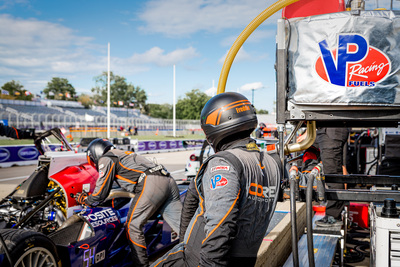
VP Racing Fuels is among the many motorsports suppliers helping racing organizations and teams hit their environmental targets. The company continues to test and develop new synthetic biofuels to conform to upcoming race series requirements, including for Formula 1 and the International Motor Sports Association. Photo courtesy: VP Racing Fuels

Aside from environmental concerns, sheer market forces will likely move industry businesses large and small toward carbon-neutral operations, despite the perceived cost and disruption.

“For sure, changes in energy infrastructure or energy production require investment, but they will pay off, especially in areas with high energy prices, rising CO2 costs or high volatility,” said Rainer Berghausen, head of Trumpf Group communications. An industrial machine manufacturer headquartered in Ditzingen, Germany, the company has joined the Science Based Targets Initiative, committing to carbon reductions in accordance with the Paris 1.5C-degree target.

This goal, which Berghausen conceded is “very ambitious,” means that Trumpf will, among other things, improve the energy efficiency of its buildings, produce its own green energy through solar power, and electrify its car fleet.

“Emissions that we can’t yet avoid are being compensated with high-quality projects,” he added. “These measures already make our own production carbon neutral today. In parallel, we have started to tackle emissions in our up- and downstream value chain as well.

“Additionally, these investments will prevent losing orders. Demands from customers and society in that area are increasing, so even the smallest companies in industrial supply chains will have to deal with their emissions sooner or later. We expect that companies that ignore this transition will face some challenges in keeping up their customer relations.”

Trumpf is equally committed to refining its machine products to help its customers meet their own decarbonization goals, putting more effort into decreasing machine energy consumption while making more efficient use of materials. The company also offers alternative machine technologies such as additive manufacturing.

“This directly benefits the emissions in our customers’ production,” Berghausen said. “The demand for this is definitely growing.” He further noted that even small operations can begin now to future-proof against the inevitable market realities to come.

“First, gain an overview of where the energy—the power, gas, oil, air—in your company actually goes,” he advised. “Identify the largest energy user and start with that. A lot of energy efficiency measures require just a little more attention, like turning off machines when they are not needed, fixing leakages, keeping doors closed, or fully utilizing metal sheets, etc. Also, switching the energy supply to renewables instead of energy from fossil fuels is quick and relatively easy to implement.”

Wed, 06/01/2022 - 11:04

SEMA News—June 2022

EVENTS

The 2022 SEMA Show

With Industry Expectations Running High, What Can We Look Forward to in Las Vegas?

By Mike Imlay

Show

For the specialty aftermarket, the annual SEMA Show remains the number-one trade event in the world. After a highly successful return to Las Vegas in 2021, plans are underway for the 2022 Show, slated for November 1–4 at the Las Vegas Convention Center.

After a year’s hiatus in 2020 due to COVID-19 restrictions, the annual SEMA Show made a much-heralded return to Las Vegas in 2021. Despite the challenges of putting on a trade event amid the pandemic’s waning months, the 2021 SEMA Show proved incredibly successful. It ended up ranking among the top U.S. trade shows held last year.

With that achievement, expectations are again running high for the upcoming 2022 SEMA Show, slated for November 1–4, at the Las Vegas Convention Center (LVCC). For an insider glimpse at the planning and growing momentum for this year’s event, SEMA News turned to SEMA Vice President of Events Tom Gattuso. The following is our interview, edited for clarity and conciseness.

SEMA News: The 2021 SEMA Show was historic in many ways, including a return to Las Vegas after COVID-19, an expansion into the LVCC’s new West Hall, and many other milestones. How does that set the stage or even raise expectations for the 2022 Show?

Tom Gattuso: I think the key takeaway is the great industry support we saw in 2021. We anticipate that the momentum created during that unique year is going to continue and really propel the Show forward this November. That goes across the board, ranging from the attendance of the buyer participants to the attendance of the exhibitor participants, the amount and level of feature vehicle builds, and all the Show features that are going to be in and around the LVCC. There’s not one aspect of the 2022 Show that isn’t going to benefit from the momentum that was created in 2021.

SN: From even casual observances, it seemed that a lot of business got done on the Show floor last year.

TG: We can say that for sure. Although the number of participants was down compared to previous years, the ratio of qualified buyers to exhibitors was at an all-time high. That resulted in a lot of really good interactions on the Show floor, which really helped those who attended to forge new business opportunities for 2022.

We have also heard from a lot of businesses that could not attend due to COVID last year. They said that the success of last year’s event has definitely added to their enthusiasm for this year. They don’t want to miss it.

This underscores the benefit of live trade events. We were fortunate in that last year’s SEMA Show was one of the largest trade shows to take place since the pandemic started in March 2020. People need to interact. Plus, from a business standpoint, there’s an instantaneous return on investment in terms of the conversations, networking and camaraderie that take place. At the end of the day, we saw firsthand that there’s no substitute for gathering the industry together to experience new products and innovations while also sharing the knowledge and passion that will propel the industry into the future.

SN: How is the Show floor shaping up for 2022? And how will the Show build on its growth into the new West Hall and its expanded footprint throughout the LVCC?

Tom G
Tom Gattuso

TG: There’s no doubt that the pandemic left us with some rebuilding to do. However, we’re now coming off a very successful space allocation in which almost 2,000 companies picked their 2022 exhibit spaces. Our floorplan is really coming together for probably one of the best Shows we’ve ever had.

I would say that last year’s expansion was also an investment in improved traffic flow and moving people throughout the campus. There’s now a more logical flow between different Show sections and features as well as room for further growth.

We also got to observe a lot about where people are going on the convention center campus, how they’re getting there, and what their user experiences are like. We’re learning from those observations and making changes for the future. For example, our wider aisles and buyer lounges were new and successful Show aspects last year that we now expect to be around for years to come.

SN: With the Show’s exhibitor base now congealing, what’s your message to potential attendees? What is the Show’s value proposition for buyers?

TG: We recognize that there has been a huge shift in our marketplace’s work paradigm. A lot of buyers who attend our Show will be in new or expanded roles within their organizations. The business and networking conversations that take place on the 2022 Show floor will likely be extremely beneficial for both their business and career development. As our industry gets back to its full capacity, there’s a higher-than-ever need to meet in person to make your upcoming year truly productive and profitable.

Meanwhile, we continue to refine our education offerings. We have an expanded lineup this year that will address many facets of business growth and career advancement, and our annual Battle of the Builders competition will have some new surprises too. We’re proud of the recognition, development and business opportunities which that program has brought to our industry’s builder community.

Last year, we also had a number of motorsports features and vehicle-capability demonstrations that really resonated with attendees. The brands and people involved in those features were impressed with the response and want to return and even evolve those features. We have new companies promising to bring similar excitement as well.

As Show organizers, it’s our job to mirror the trends taking place within the industry. You’ll see this in our growing electrification and overlanding features. Incidentally, while the media is especially excited about vehicle electrification, we aren’t ignoring other alternative-energy solutions coming onto the scene. For example, hydrogen platforms were, and will continue to be, represented as well.

Of course, the industry is still bringing significant developments to the internal-combustion engine to refine and improve its performance, so it goes without saying that the excitement around current, mainstream platforms and products is a key focus. We’re presenting all of these trends to our industry so that Show participants can start to think about the new solutions that these advances can evoke.

Show

If anything, the recent pandemic proved that the need for live, in-person trade events is stronger than ever. At the 2021 SEMA Show, the ratio of qualified buyers to exhibitors was at an all-time high, building anticipation for even more quality Show-floor interactions in 2022.

SN: Along those lines, what can we expect to see from the big vehicle manufacturers this year?

TG: Without giving away too much, I can say that we’ve got great support from our OEM participants, and we’re working closely with them to continue to develop new event opportunities. We’re aware that future trends will require close alignment between vehicle manufacturers and aftermarket parts manufacturers in developing specialty products for their vehicles.

Our Show isn’t simply about seeing new products and trends—it’s also about forming relationships. In the OEM realm, these relationships have put the industry in a really good place.

The SEMA Show’s OEM relationships also tie into the association’s many other vehicle technology initiatives, such as the new SEMA Garage in Detroit with its ADAS [advanced driver-assistance systems] Research Center and vehicle measuring sessions and our Tech Transfer programs at both the SEMA Garage in Diamond Bar, California, and the new Detroit facility.

SN: Finally, speaking of trends and relationships, the New Products Showcase is always a popular attendee stop. Would you like to touch on that Show feature?

TG: Definitely. Whether pre- or post-COVID, the main reason most people attend the SEMA Show is to find new products and identify new trends. Product research and development didn’t end during COVID. For example, we saw more ADAS products in 2021 than ever before in our New Products Showcase, and we expect that trend to continue, along with many other pushes toward modernization.

We’re going to continue to make it very easy for companies to showcase their products this year. We want to celebrate their innovation and provide a format for the continuation of that R&D.

Ultimately, the SEMA Show is the number-one place to see the mix of the latest and emerging technologies and meet and talk with the people advancing them. We’re connecting the dots between the brands, buyers, media and the innovations that are reshaping our industry. The next two decades are going to be transformational for the industry, and we’re happy to help foster and showcase the breadth of that change.

Don’t Miss Out!

For the specialty aftermarket, the SEMA Show offers an experience like no other trade show on the planet. Slated for November 1–4, in Las Vegas, it’s the best place to see thousands of the newest automotive performance products from 1,800 new and iconic exhibitors, discover the latest product and vehicle trends, and develop essential skills by attending any one of the more than 70 free education sessions led by top industry professionals. To register, go to www.SEMAShow.com.

Wed, 06/01/2022 - 10:47

SEMA News—June 2022

INDUSTRY INSIDER

10 Questions for Dayton Jacobson

By Douglas McColloch

Dayton

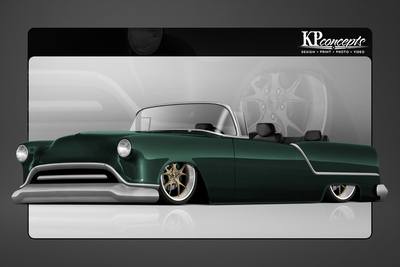
Fresh off his win at the 2021 SEMA Show Young Guns competition, Dayton Jacobson is preparing the build of a ‘54 Olds 88 (rendering pictured below) for the 2022 SEMA Show.

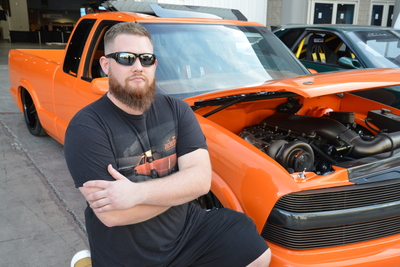
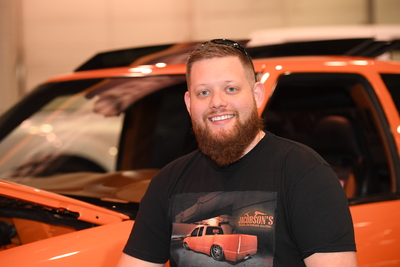
“Custom, with a little bit of class.” That’s how builder/fabricator Dayton Jacobson described his building style at last year’s SEMA Show. We might also add “award-winning,” since Jacobson’s 2021 SEMA Show build (an ’00 Chevy S-10) captured top honors at the Battle of the Builders Young Guns competition, which culminated SEMA Show week last November. When not working on custom builds, he takes care of business as the owner of Jacobson’s Welding and Powder Coating in Burnsville, Minnesota.

SEMA News caught up with Jacobson recently and asked him to reflect on his experiences at the Show, how they’ve affected his business, and what he’s working on right now.

SEMA News: What’s on your playlist now? What are you listening to?

Dayton Jacobson: Right now, a lot of Pop Smoke.

SN: What are you driving these days, and why?

DJ: Since I live in Minnesota, I drive a lowered, cammed Escalade in the winter. In the summer, I either drive my CTS-V coupe or the truck I brought to the SEMA Show in 2021.

SN: How has winning the Battle of the Builders Young Guns competition affected your everyday life?

DJ: It has shown many new customers the quality of my work. I also get to talk to many companies about partnering for my SEMA 2022 build. Before now, I’ve never had a sponsor.

SN: What got you started in the business?

DJ: I grew up with my dad, Gordy Jacobson, and my grandpa, Jerry Jacobson, always working on cars, and I got sucked right into it.

SN: What’s the best piece of advice anyone ever gave you?

DaytonDJ: The best advice I got I haven’t used yet, but it was to build a vehicle for a customer to bring to the Show. I just finished the truck for SEMA 2021 that took a lot of my personal funds, and now that I’m building my ’54 Oldsmobile 88 convertible for 2022, it’s very hard to come up with the money to build it and keep working on the car. Balancing between work [in my shop] and working on my car gets difficult.
SN: Describe your memories of your first SEMA Show.

DJ: I had many great memories at SEMA. Talking to Chip Foose and walking around my truck and showing him everything was amazing. Also, every time they announced who made it into the Top 40, the Top 12 and the Top 3, my heart was pumping!

SN: When building a vehicle, how much goes according to plan, and how many times do you need to work up a Plan B?

DJ: When I build a car, nothing goes to plan. Things change every day, and normally it’s because I think of something else that would be really cool with the build.

DaytonSN: Where would you like to be 10 years from now?
DJ: I would like my welding and powdercoating business to be in a much larger shop so I can have a bigger oven so I can do full frames.

SN: When you’re not working, where can we find you?

DJ: Riding my motorcycles, driving my car or in the garage.

SN: What’s your next project? Will we see it at the SEMA Show this November?

DJ: I’m building my ’54 Oldsmobile 88 convertible. The car is body dropped, with many customizations to the exterior, a full custom interior out of a Cadillac CTS-V, and a twin-turbo LS engine. This is the last year I get to compete in Young Guns, so I need to go out with a bang!

Tue, 05/31/2022 - 19:01

By Ashley Reyes

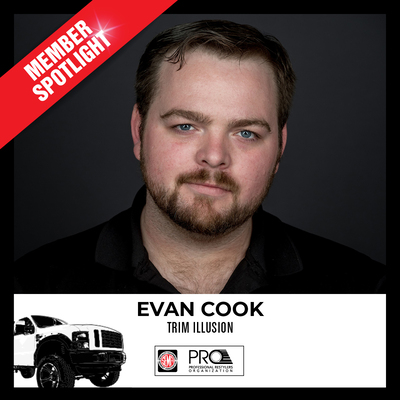
PROEvan Cook is the SEMA Professional Restylers Organization’s (PRO) newest spotlight volunteer. Cook is the COO at Trim Illusion—an aftermarket company that specializes in overlay automotive accessories.

Get to know Cook in his interview with SEMA below.

SEMA: What inspired you to pursue a career in restyling/manufacturing?

Evan Cook: Honestly, this was a career I sort of fell into. I always was interested in cars but didn’t necessarily think I would make a career out of it. Like many others, coming out of high school I struggled to find my career path and decide what I wanted to do. I realized in this industry there were so many different career paths you could take. Whether it be in sales, operations, technology, logistics, engineering, design, photography/videography, this career gave me the opportunity to find my niche while continuing my education.

SEMA: Why did you decide to volunteer for PRO?

EC: I decided to volunteer for PRO to gain knowledge and insight from some of the leaders in our industry. Being a part of PRO has put me closer to our customers and has personally given me so much insight on the challenges our customers face. It has also given my company the ability work side by side with our customers, other manufacturers and distributors to improve the automotive aftermarket industry.

SEMA: What advice do you have for someone pursuing a career in the automotive aftermarket?

EC: Work hard and you will not be disappointed! I found that if you work hard and put yourself in the best position to succeed, this industry can be very rewarding. While sometimes it can be challenging, being a part of the automotive aftermarket industry gives you the opportunity to learn from and build lasting relationships with a lot of great people, attend different networking events and shows in different places and be a part of the best industry in the world.

SEMA: What is your dream vehicle? Where would we find you in it on any weekend?

EC: I would say my dream car is a Shelby GT500. You would find me pulled over for speeding, ha! No, I would take this car for a nice cruise on beautiful Skyline Drive.

SEMA: What is the best advice you have ever received?

EC: “Work Hard.” First and best advice I’ve ever received. Never fails in work or life.

SEMA: What keeps you in the industry?

EC: It’s a great industry to work in. I constantly get to challenge myself every day and it never becomes mundane. This is an ever-evolving industry if you get complacent you fall behind. Our team is constantly exploring new opportunities, new ideas and working on initiatives that have a direct impact on our company.

SEMA: Where can you be found on a Saturday?

EC: Hanging out with my family, watching sports or playing some golf!

Fill out a PRO member spotlight form to highlight how you or your company are contributing to the automotive restyling industry. Selected candidates are eligible to be featured on PRO’s social media, SEMA News and future PRO-member updates.

Tue, 05/31/2022 - 13:01

By Juan Torres

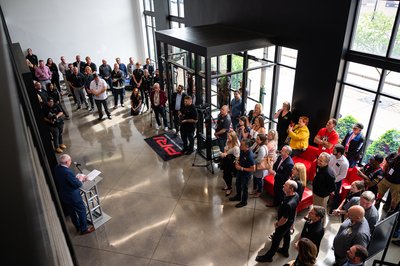
Racers and dignitaries joined hundreds of motorsports professionals for the grand opening and ribbon cutting ceremony of the new Performance Racing Industry (PRI) Membership Headquarters in Speedway, Indiana, on May 26.

PRI

Racers and dignitaries joined hundreds of motorsports professionals for the grand opening and ribbon cutting ceremony of the new Performance Racing Industry (PRI) Membership Headquarters in Speedway, Indiana, on May 26.

Located at 1255 Main St. along the pathway directly to the Indianapolis Motor Speedway, the new 42,500-sq.-ft. facility is among the recent attractions added to the revitalized town. The facility, which includes event space, a 25,000-sq.-ft. garage, and office space for race-related businesses and organizations, will continue to evolve and become a one-of-a-kind gathering area for the motorsports community. Dedicated to building, promoting, and protecting the racing industry, the PRI Membership Headquarters will include a content creation and podcast studio, as well as a Members Lounge, in the near future.

“We’re excited to provide the racing industry with a place to call home,” said Dr. Jamie Meyer, PRI President. “For years, the industry has gathered at the PRI Trade Show to conduct business and celebrate all things motorsports. For the first time, the racing industry has a dedicated place where they can connect all year long.”

Invited guests at the Grand Opening were treated to an IndyCar helmet display, silent auction, current and historic racecars, driver appearances, live paintings and private tours of the newly renovated building, including the Bryan Herta Autosport race shop and Bell Helmets workshop.  

Cars on display included Antron Brown’s 2022 Matco Tools Top Fuel Dragster, John Force’s Camaro SS Nitro Funny Car, Graham Rahal’s 1990 March Porsche IndyCar, and more. Amongst those in attendance were U.S. Rep. Greg Pence, three-time Indy 500 winner Johnny Rutherford, ACCUS-FIA President George Silbermann, and Speedway Council President Vince Noblet.

“PRI plays such a critical role in the motorsports industry, and the opening of the Membership Headquarters is both significant and historic,” said Antron Brown, owner/driver of the AB Motorsports Matco Tools Top Fuel team. “Being able to connect in a centralized location will strengthen our advocacy efforts. I look forward to visiting the PRI Membership Headquarters whenever I am in town.”

PRI Membership debuted over a year ago to give businesses and individuals a way to support the motorsports industry while gaining exclusive benefits. As members of PRI, all attendees of the 2022 PRI Trade Show will be able to visit the PRI Membership Headquarters during the event December 8–10, 2022. Qualified existing members will be able to expedite the approval process for the trade show when registration opens in July.

To learn more about PRI Membership, or to join, visit PerformanceRacing.com/Membership. To learn more about PRI, visit PerformanceRacing.com.

Tue, 05/31/2022 - 12:46

By SEMA Washington, D.C., Staff

The California Assembly unanimously passed SEMA-supported legislation (AB 1951) that would provide a full sales and use tax exemption for the purchase of manufacturing and research and development (R&D) equipment not exceeding $200 million. The bill currently awaits consideration in the Senate. SEMA members are encouraged to register their support for the bill by clicking here.

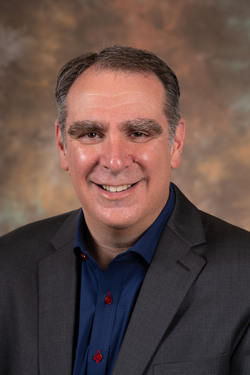
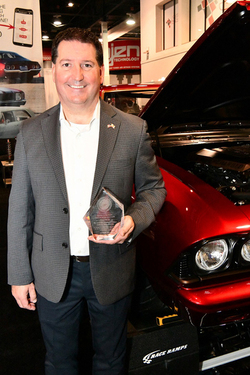
Timothy Grayson

California Assembly Member Timothy Grayson was introduced as the winner of the Stephen B. McDonald Legislator of the Year award at the 2019 SEMA Show.

If enacted, the exemption would change the current, narrowly applied exemption, and focuses on improving cost competitiveness to spur investment in California. Accounting for both local and state taxes, California’s ranks among the highest tax rates in the country.

AB 1951 is authored by Assembly Member Tim Grayson (D-Concord). Asm. Grayson is a member of the SEMA State Automotive Enthusiast Leadership Caucus and was the 2019 winner of SEMA’s Stephen B. McDonald Legislator of the Year award. In addition to being a lawmaker, Assembly Member Grayson, along with his wife Tammy, is also an enthusiast. Included in the Grayson’s collection are two classic Ford Mustangs.

For more information, please contact Christian Robinson at christianr@sema.org.

Tue, 05/31/2022 - 12:42

By SEMA Washington, D.C., Staff

Lawmakers in the California Assembly unanimously passed bipartisan SEMA-sponsored legislation (A.B. 2350) that would incentivize consumers to convert gasoline- and diesel-powered motor vehicles into zero-emissions vehicles (ZEV). If enacted, A.B. 2350 would provide eligible motorists who convert their vehicle with a $2,000 rebate. The bill currently awaits consideration in the Senate.

In recent years, California has implemented various programs, including the Clean Vehicle Rebate Program and the Clean Cars for All Program, to promote the purchase of new zero-emission vehicles (ZEVs). However, none of the programs currently offer benefits for vehicles that started their life with an internal-combustion engine and can be converted to a ZEV via an aftermarket motor package. A.B. 2350 helps preserve California’s rich car culture while creating new ways to make ZEV ownership more accessible.

SEMA encourages its members and enthusiasts in California to contact their lawmakers in support of A.B. 2350 by clicking here.

For further details, contact Christian Robinson at stateleg@sema.org.

Tue, 05/31/2022 - 12:21
Raptor

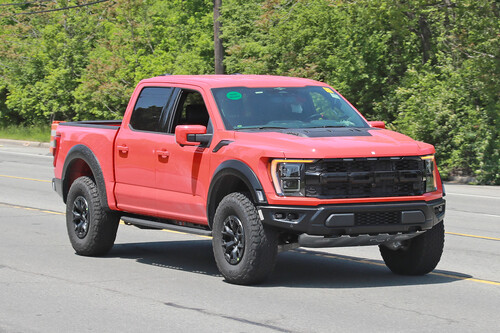
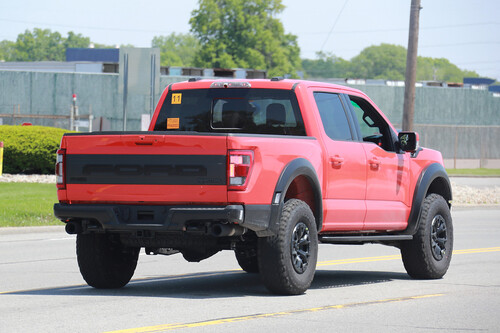
This is the production version of the F-150 Raptor R before its upcoming debut.

Ford just debuted the third-generation Raptor back in February 2021, but only showed the tamer version with the 3.5L EcoBoost. The Raptor R should have a unique grille (the addition of an R), beefier trailing arms, exclusive rims, and as everyone knows by now, it’ll have the heart and soul of the GT500—the Predator 5.2L supercharged V8.

According to sources, the R will pump out around 725hp to 750hp, leaning more toward 750hp, especially since the GT500 puts out 760hp. One source said “Honestly, we had to counter RAM once we knew they installed the HellCat in the TRX.” The team is allegedly looking to beat the RAM TRX in every facet of the Raptor R.

The ’23 F-150 Raptor R will be assembled at Ford’s Dearborn Truck Plant and will be available to order by this fall.

Raptor

Photo credit: Brian Williams, SpiedBilde

Tue, 05/31/2022 - 12:01

SEMA Show exhibitors and attendees preparing for the 2022 SEMA Show can lock in the guaranteed lowest hotel rate now by booking in the SEMA Show Block.

Making hotel reservations in the Block provides you with the most affordable and convenient options for a wide range of hotels located on and off the Strip.

Hotels

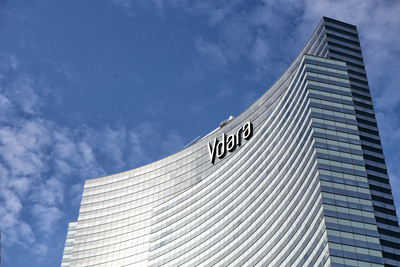
Showgoers can save more than $100 per night at several Las Vegas hotels, including Vdara, by booking in the SEMA Show Block.

All of the hotels available through the SEMA Show Block come with a low-price guarantee. To help ensure that your price remains the lowest, SEMA will price-match lower advertised rates, even after your reservations are set. Whether you're looking for your favorite place to stay, or for a hotel within close proximity to the Show, you can book with confidence knowing you will get the rooms you need at the the most affordable price available.

The SEMA Show also provides shuttle service to and from the Show for the hotels listed that are not within walking distance to the Las Vegas Convention Center.

There are more than 45 hotels available in the block. For more information on the hotels listed below, including rating, price per night and distance from the Las Vegas Convention Center, visit www.SEMAShow.com.

Save more than $100 a night at these hotels:

  • ARIA
  • Bellagio
  • Caesars Palace
  • Cosmopolitan Of Las Vegas
  • Encore
  • Luxor
  • Las Vegas Hilton at Resorts World
  • MGM Grand
  • Mirage
  • SpringHill Suites
  • The Signature at MGM Grand
  • The Venetian Resort Las Vegas
  • Tropicana
  • Vdara
  • Wynn

Save more than 50% per night at these hotels:

  • Aria
  • Encore
  • Las Vegas Hilton at Resorts World
  • MGM Grand
  • The Venetian
  • Tropicana
  • Wynn

Book your hotel now!

To reserve your booth for the 2022 SEMA Show, visit www.SEMAShow.com/buyabooth.