Sun, 12/01/2019 - 12:47

SEMA News—December 2019

LEGISLATIVE AND TECHNICAL AFFAIRS

By Stuart Gosswein
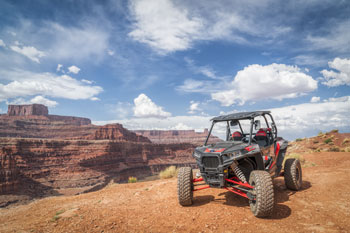
Moab
Outdoor Recreation: For the second consecutive year, federal government statistics demonstrated that outdoor recreation is a key driver of the national economy and communities around the country. A U.S. Bureau of Economic Analysis report found that outdoor recreation in 2017 supported 5.2 million jobs and accounted for $778 billion in annual economic impact, which represents 2.2% of the country’s gross domestic product. Some of the largest outdoor recreation activities include motorized recreation, boating and fishing, RVing, biking, hunting, camping and skiing. Courtesy Shutterstock.com

2019: The Year in Review

The laws and regulations that govern how SEMA members do business have a continuous impact on the way automotive specialty-equipment products are made, distributed and marketed. The charge of the SEMA government affairs office is to stay on top of all relevant state and federal legislation and regulations and advocate for industry positions to ensure the best possible outcome for SEMA’s membership. The following are a few examples of critical legislative/regulatory issues addressed by the SEMA government affairs team over the past year.

FEDERAL UPDATE

Collector Car Appreciation Day: The 10th annual Collector Car Appreciation Day (CCAD) took place on Friday, July 12, 2019. Both the U.S. Senate and the House of Representatives introduced resolutions (H. Res. 108/S. Res. 271) to focus attention on the vital role automotive restoration and collection plays in American society. Thousands of Americans gathered at car cruises, parades and other events to celebrate the nation’s automotive heritage. The day is also international in scope, as many Canadian Provinces passed resolutions and hosted events. The next CCAD is set for July 10, 2020.

RPM Act: The Recognizing the Protection of Motorsports (RPM) Act is being considered by the U.S. Congress. The bill clarifies that the Clean Air Act allows motor vehicles to be converted into dedicated race cars and that it is legal to produce, sell and install race parts for those vehicles. Passage of the RPM Act will protect sales beyond emissions-related parts, including racing tires, wheels, brakes, suspension equipment and rollcages. Customers won’t be buying and installing those products if a car or motorcycle cannot be converted into a dedicated race vehicle. The bill has been subject to previous Congressional hearings, and SEMA is working with lawmakers to approve the legislation in the current Congress. To contact your lawmakers, visit www.sema.org/rpm.

Tariffs: SEMA is working with several coalitions of industry associations to oppose the imposition of tariffs on a variety of worldwide products and materials. While SEMA supports the Trump administration’s efforts to create fair and reciprocal trade and to protect intellectual property rights, the association remains concerned that tariffs are not accomplishing that shared objective.

  • Steel/Aluminum: The U.S. government has imposed global tariffs on steel (25%) and aluminum (10%). Most of the tariffs began on June 1, 2018, with Argentina, Australia, Brazil and South Korea being exempted based on trade agreements. Mexico and Canada were exempted on May 20, 2019. The tariffs apply to processed raw materials (steel/aluminum plate, sheets, bars, etc.) but not finished products (e.g., wheels, exhaust systems, etc.). U.S.-based companies are eligible for one-year tariff exclusions if they can demonstrate that the foreign-produced material is not made in the United States in reasonably available quantity or satisfactory quality. More than 120,000 company exclusion requests have been received to date.
  • Chinese Products: The United States has imposed tariffs on nearly all products from China. The imposition has been staggered with an intent to remove the tariffs if a trade agreement is secured. Trade negotiations are still ongoing.
  • $34 billion: July 6, 2018: 25% tariffs imposed on 818 Harmonized Tariff Code (HTC) listings, including miscellaneous metal and rubber parts for auto equipment. Tariffs raised to 30% on October 15, 2019.
  • $16 billion: August 23, 2018: 25% tariffs imposed on 279 HTC listings, including many types of plastics. Tariffs raised to 30% on October 15, 2019.
  • $200 billion: September 24, 2018: 10% tariffs imposed on 5,745 HTC listings, including most auto parts. Tariffs raised to 25% on May 10, 2019. Tariffs raised to 30% on October 15, 2019.
  • $300 billion: September 1, 2019: 15% tariffs imposed on more than 3,000 HTC listings. December 15, 2019: 15% tariffs on virtually all other Chinese products, including cell phones, computer monitors and clothing.
  • Imported Autos/Auto Parts: President Trump directed the U.S. Department of Commerce (DOC) to investigate whether to impose tariffs on imported automobiles and auto parts if it is found that they pose a threat to America’s national security (manufacturing base). The DOC completed its report last February, but President Trump has postponed a decision on whether to pursue tariffs until at least November. The DOC report notes concerns about increases in the volume of automobile and auto part imports over the past three decades, along with unease about foreign markets such as the E.U. and Japan that have imposed significant barriers to U.S. automotive exports. A focus of concern is innovations in engine and powertrain technology, electrification, lighter-weight materials, advanced connectivity and autonomous driving. In response to threatened tariffs, SEMA and seven other major trade associations representing the broad scope of the auto industry formed the Driving American Jobs Coalition. The coalition opposes the tariffs as being counterproductive and threatening American companies, workers and consumers.

NAFTA/USMCA: Ratification of the United States-Mexico-Canada Agreement (USMCA) to replace NAFTA is pending before the U.S. Congress. Major provisions include a requirement that vehicles have at least 75% North American content, compared with 62.5% currently. At least 40%–45% of the vehicle content must be made by workers earning at least $16 an hour, which will lead to higher wages in Mexico.

Replica Vehicle Law: A SEMA-supported law enacted in 2015 will allow small auto manufacturers to sell completed replica cars. Those vehicles resemble cars manufactured at least 25 years ago. Companies will be able to produce up to 325 turnkey replica vehicles (per company) in the United States and 5,000 worldwide under a simplified regulatory system. Until now, the federal government’s regulatory system did not differentiate between a company producing millions of vehicles and a business producing a few custom cars. The National Highway Traffic Safety Administration (NHTSA) has yet to take regulatory action to implement the law. The industry is calling on NHTSA to allow production to commence in 2020.

Internet Sales Tax: In 2018, the U.S. Supreme Court issued a decision allowing states to require internet retailers to collect sales taxes even when they have no physical presence in the state. The court overturned the 1992 Quill decision, which required physical presence (nexus) in a state before a retailer could be forced to collect taxes. The state of South Dakota successfully argued that the 1992 decision was obsolete in the e-commerce era. The court upheld a South Dakota law that requires an out-of-state retailer to collect sales taxes if it has an economic presence of $100,000 or more in annual sales or 200 or more transactions. Nearly all other states that collect sales tax now require collection. They have adopted the $100,000 threshold or set higher limits.

E15 Gasoline: The U.S. Environmental Protection Agency (EPA) issued a rule to allow gas stations around the country to sell E15 (gasoline that’s 15% ethanol) year-round. Previously, the EPA prohibited the sale of E15 between June 1 and September 15 due to fuel-volatility concerns that higher blends of ethanol combined with warmer temperatures may lead to increased ground-level ozone formation and smog. SEMA opposes an expansion of E15 sales, which the EPA is pursuing in order to achieve the Renewable Fuel Standard’s artificial mandates to blend large volumes of ethanol into gasoline sold in the United States. Ethanol, especially in higher concentrations such as E15, can cause damage to high-performance parts and vehicles manufactured prior to 2001.

Greenhouse Gases: The EPA is seeking to revoke a waiver issued previously to California to set greenhouse gas emission rules that are tougher than federal standards. The EPA action is being challenged in court, a battle that could last beyond the 2020 elections. The EPA has issued many Clean Air Act waivers over decades, but this will be the first time it has rescinded a waiver. The EPA’s greenhouse gas rule is tied to NHTSA’s Corporate Average Fuel Economy (CAFE) standards, since both rules are based on the amount of carbon emitted as fuel is burned. The Trump administration is arguing that the law governing the CAFE standards does not authorize issuance of a waiver to California. The administration wants to freeze the CAFE standards at 2020 levels (around 37 mpg) rather than reaching the current federally mandated level of 54.5 mpg by model year ’25. Some car companies have signed an agreement with California for a reduced standard of 50 mpg by model-year ’26.

Electronic Tire IDs: NHTSA has concluded that it is technologically possible to provide tire identification number (TIN) data in an electronic format for all tires. The TIN contains information about the tire, including the plant where the tire was manufactured, the tire size and the week/year of manufacture. The electronic data would be a marking or tag within or on the tire sidewall that could be read with a handheld scanning tool. The two electronic TIN candidates are radio frequency identification tags and two-dimensional barcodes. Electronic technology could provide the industry with an easier and more accurate method to scan data as tires are sold rather than relying on paper registrations. The TIN could then be linked to the vehicle identification number, making it a more reliable way to contact the current registered owner in case of a recall. There is no timeframe for pursuing the technology.

Warranty Restrictions: The Federal Trade Commission (FTC) held a one-day workshop to examine ways in which manufacturers may limit third-party automotive replacement and repairs, including limitations on consumer rights under the Magnuson-Moss Warranty Act. Issues covered included the current prevalence of repair restrictions, reasons provided by manufacturers for such restrictions, and whether consumers are aware of their right to install aftermarket products. The workshop also explored the technological and financial impact repair restrictions have on small businesses and consumers. The workshop was a fact-finding effort as the FTC seeks to better understand challenges faced in enforcing the law.

Retirement Plan Legislation: The U.S. House of Representatives passed a bipartisan bill to expand retirement savings programs. The bill would make it easier for small businesses to join multiple employer plans by not requiring businesses to be affiliated. It also increases tax credits for small businesses adopting retirement plans and permits part-time employees to enroll in 401(k) plans. The U.S. Senate is considering a similar bill.

Overtime Pay: The U.S. Department of Labor issued a final rule to raise the cap from $23,660 to $35,568 a year ($455 to $684 a week) for management, administrative and professional employees who are exempt from receiving overtime pay when they work more than 40 hours a week. The pay threshold is frequently called the Fair Labor Standards Act’s “white collar” exemption. In 2016, the Obama administration raised the cap to $47,476 per year, but it was struck down by a federal court. The new rule takes effect on January 1, 2020.

Public Lands Bill: President Trump signed into law a massive public lands bill. It included elements supported by SEMA, such as the California Desert Protection and Recreation Act co-authored by Rep. Paul Cook (R-CA) and Sen. Dianne Feinstein (D-CA) to permanently designate six existing OHV areas. Those areas include Johnson Valley (expanded by 11,000 acres), Spangler Hills, El Mirage, Rasor, Dumont Dunes and Stoddard Valley. The bill also included a provision to permanently designate federal lands within Emery County, Utah. While the provision protects most existing OHV routes within the San Raphael Swell, several trails were lost.
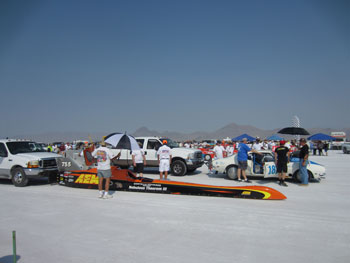
Bonneville
Bonneville Salt Flats: Utah lawmakers have appropriated $5 million toward a program to restore the Bonneville Salt Flats, contingent upon securing federal funds. The monies will be used to create a 10-year, $50 million program to dramatically increase the amount of salt pumped onto Bonneville. The bulk of the monies will come from the federal government, with contributions as well from the motorsports community. Beginning in the ’60s, the salt crust diminished due to historic and current potash mining activities under existing leases from the U.S. Bureau of Land Management. The mine owner has been pumping salt since 1997, but infrastructure renovation and upgrades would increase the volume. As a result, the racing venue should gradually expand from its current 8-mi. length, with a goal of reaching the original 13-mi. length. SEMA, along with other organizations and companies comprising the Save the Salt Coalition, is working with state and federal officials to implement the program.

STATE UPDATE

Arizona—Emissions Exemption: A SEMA-supported law to exempt qualified collectible vehicles from the state’s emissions inspection and maintenance program went into effect June 1. While the bill was signed into law in 2005, the state’s regulatory process delayed implementation. In order to qualify, a vehicle must be either 15 model years old or older or a unique or rare design of limited production and an object of curiosity. In addition, the vehicle must be maintained primarily for use in car club activities, exhibitions, parades or other functions of public interest, or for a private collection and used infrequently. Additionally, the vehicle must have collectible or classic automobile insurance coverage that restricts the vehicle’s mileage or use, or both, and requires the owner to have another vehicle for personal use. The current exemptions for pre-’67 vehicles also remain in effect.

California—Exhaust Noise: California Governor Gavin Newsom signed into law SEMA-supported legislation that immediately restored fix-it tickets for cars suspected of violating the state’s exhaust noise limit. The bill amended a 2018 law, which removed fix-it tickets for such violations and which generated significant concern within the specialty automotive aftermarket industry and enthusiast community. Since 2003, exhaust systems installed on motor vehicles in California with a manufacturer’s gross vehicle weight rating of less than 6,000 lbs., other than motorcycles, may not exceed a sound level of 95 dB when tested under a Society of Automotive Engineers (SAE) procedure.

California—OHV Access: The California Coastal Commission voted to continue permitting off-highway vehicle (OHV) use at the Oceano Dunes State Vehicular Recreation Area (SVRA). During its July 11 meeting in San Luis Obispo, the Commission rejected staff recommendations to further restrict motorized recreational access, with the eventual goal of prohibiting OHV and motorized vehicles at Oceano Dunes SVRA.

Delaware—Street Rods: Delaware Governor John Carney signed into law a bill easing the process of registering a street rod, by favorably changing the existing age and equipment requirements. The new law amends the definition of street rod from a vehicle manufactured before 1970 to one 25 years old or older. The law also removes the requirement that a street rod’s tires be covered by fenders.

Maine—Ethanol: Maine Governor Janet Mills signed a bill into law allowing the sale of ethanol-free gasoline statewide. Previously, only the counties of York, Sagadahoc, Androscoggin, Kennebec, Knox and Lincoln banned the sale of ethanol-free gasoline.

Nebraska—Military Vehicles: Nebraska Governor Pete Ricketts signed into law legislation allowing for the titling and registration of former military vehicles. The new law defines a former military vehicle as “a vehicle that was manufactured for use in any country’s military forces and is maintained to accurately represent its military design and markings, regardless of its size or weight, but is no longer used, or never was used by a military force.” Previously, those vehicles were not allowed to be titled or registered for on-road use in the state.

Nevada—Military Vehicles: Nevada Governor Steve Sisolak signed into law legislation that allows for the titling and registration of retired military vehicles. The new law also authorizes the design and production of a specialty plate for those vehicles. Previously, such vehicles could not be titled or registered for use on highways in the state.

New Brunswick—License Plates: Beginning July 15, 2019, motorists in New Brunswick were no longer required to display a front license plate on passenger vehicles and light trucks. The change removed the requirement to display two license plates on vehicles weighing less than 4,500 kg.

New Mexico—License Plates: Legislation to require registration plates on the front and back of all motor vehicles died when the legislature adjourned. Under current law, all motor vehicles in the state are issued only a single plate. Because of strong opposition, the bill failed to receive a vote on the House floor.

Ohio—License Plates: Ohio Governor Mike DeWine signed into law legislation to allow for the issuance of a single, rear-mounted license plate for motor vehicles. Previously, Ohio required vehicles to display two plates.

Rhode Island—License Plates: Legislation to allow vehicles with “year of manufacture” (YOM) tags to display a single license plate on the rear of the vehicle, passed the deadline for the governor’s signature or veto and thus became law without being signed. All motor vehicles 25 model years old and older, are currently eligible for courtesy YOM plates in Rhode Island. Previously, those vehicles were required to display both front and rear YOM plates.

Tennessee—Military Vehicles: Tennessee Governor Bill Lee, signed into law legislation that exempts historic military vehicles from the requirement to display license plates. An historic military vehicle is currently defined as being 25 years old or older, manufactured for use in any country’s military, and maintained to represent the vehicle’s military design and markings.

Texas—Assembled Vehicles: Texas Governor Greg Abbott signed into law SEMA-supported legislation creating a specific registration and titling class for former military vehicles and assembled vehicles, including kit cars and dune buggies. The new law provides guidance to the Texas Department of Motor Vehicles on how to treat such vehicles. Previously, there was no specific registration and titling class for certain assembled vehicles, such as
dune buggies.

West Virginia—Motorsports Committee: Governor Jim Justice signed into law legislation to create the West Virginia Motorsports Committee. The committee is tasked with aiding in the development of racing events and facilities throughout the state. The committee will also seek opportunities to promote economic growth and manufacturing jobs related to motorsports.


Sun, 12/01/2019 - 12:47

SEMA News—December 2019

LEGISLATIVE AND TECHNICAL AFFAIRS

By Stuart Gosswein

Moab
Outdoor Recreation: For the second consecutive year, federal government statistics demonstrated that outdoor recreation is a key driver of the national economy and communities around the country. A U.S. Bureau of Economic Analysis report found that outdoor recreation in 2017 supported 5.2 million jobs and accounted for $778 billion in annual economic impact, which represents 2.2% of the country’s gross domestic product. Some of the largest outdoor recreation activities include motorized recreation, boating and fishing, RVing, biking, hunting, camping and skiing. Courtesy Shutterstock.com

2019: The Year in Review

The laws and regulations that govern how SEMA members do business have a continuous impact on the way automotive specialty-equipment products are made, distributed and marketed. The charge of the SEMA government affairs office is to stay on top of all relevant state and federal legislation and regulations and advocate for industry positions to ensure the best possible outcome for SEMA’s membership. The following are a few examples of critical legislative/regulatory issues addressed by the SEMA government affairs team over the past year.

FEDERAL UPDATE

Collector Car Appreciation Day: The 10th annual Collector Car Appreciation Day (CCAD) took place on Friday, July 12, 2019. Both the U.S. Senate and the House of Representatives introduced resolutions (H. Res. 108/S. Res. 271) to focus attention on the vital role automotive restoration and collection plays in American society. Thousands of Americans gathered at car cruises, parades and other events to celebrate the nation’s automotive heritage. The day is also international in scope, as many Canadian Provinces passed resolutions and hosted events. The next CCAD is set for July 10, 2020.

RPM Act: The Recognizing the Protection of Motorsports (RPM) Act is being considered by the U.S. Congress. The bill clarifies that the Clean Air Act allows motor vehicles to be converted into dedicated race cars and that it is legal to produce, sell and install race parts for those vehicles. Passage of the RPM Act will protect sales beyond emissions-related parts, including racing tires, wheels, brakes, suspension equipment and rollcages. Customers won’t be buying and installing those products if a car or motorcycle cannot be converted into a dedicated race vehicle. The bill has been subject to previous Congressional hearings, and SEMA is working with lawmakers to approve the legislation in the current Congress. To contact your lawmakers, visit www.sema.org/rpm.

Tariffs: SEMA is working with several coalitions of industry associations to oppose the imposition of tariffs on a variety of worldwide products and materials. While SEMA supports the Trump administration’s efforts to create fair and reciprocal trade and to protect intellectual property rights, the association remains concerned that tariffs are not accomplishing that shared objective.

  • Steel/Aluminum: The U.S. government has imposed global tariffs on steel (25%) and aluminum (10%). Most of the tariffs began on June 1, 2018, with Argentina, Australia, Brazil and South Korea being exempted based on trade agreements. Mexico and Canada were exempted on May 20, 2019. The tariffs apply to processed raw materials (steel/aluminum plate, sheets, bars, etc.) but not finished products (e.g., wheels, exhaust systems, etc.). U.S.-based companies are eligible for one-year tariff exclusions if they can demonstrate that the foreign-produced material is not made in the United States in reasonably available quantity or satisfactory quality. More than 120,000 company exclusion requests have been received to date.
  • Chinese Products: The United States has imposed tariffs on nearly all products from China. The imposition has been staggered with an intent to remove the tariffs if a trade agreement is secured. Trade negotiations are still ongoing.
  • $34 billion: July 6, 2018: 25% tariffs imposed on 818 Harmonized Tariff Code (HTC) listings, including miscellaneous metal and rubber parts for auto equipment. Tariffs raised to 30% on October 15, 2019.
  • $16 billion: August 23, 2018: 25% tariffs imposed on 279 HTC listings, including many types of plastics. Tariffs raised to 30% on October 15, 2019.
  • $200 billion: September 24, 2018: 10% tariffs imposed on 5,745 HTC listings, including most auto parts. Tariffs raised to 25% on May 10, 2019. Tariffs raised to 30% on October 15, 2019.
  • $300 billion: September 1, 2019: 15% tariffs imposed on more than 3,000 HTC listings. December 15, 2019: 15% tariffs on virtually all other Chinese products, including cell phones, computer monitors and clothing.
  • Imported Autos/Auto Parts: President Trump directed the U.S. Department of Commerce (DOC) to investigate whether to impose tariffs on imported automobiles and auto parts if it is found that they pose a threat to America’s national security (manufacturing base). The DOC completed its report last February, but President Trump has postponed a decision on whether to pursue tariffs until at least November. The DOC report notes concerns about increases in the volume of automobile and auto part imports over the past three decades, along with unease about foreign markets such as the E.U. and Japan that have imposed significant barriers to U.S. automotive exports. A focus of concern is innovations in engine and powertrain technology, electrification, lighter-weight materials, advanced connectivity and autonomous driving. In response to threatened tariffs, SEMA and seven other major trade associations representing the broad scope of the auto industry formed the Driving American Jobs Coalition. The coalition opposes the tariffs as being counterproductive and threatening American companies, workers and consumers.

NAFTA/USMCA: Ratification of the United States-Mexico-Canada Agreement (USMCA) to replace NAFTA is pending before the U.S. Congress. Major provisions include a requirement that vehicles have at least 75% North American content, compared with 62.5% currently. At least 40%–45% of the vehicle content must be made by workers earning at least $16 an hour, which will lead to higher wages in Mexico.

Replica Vehicle Law: A SEMA-supported law enacted in 2015 will allow small auto manufacturers to sell completed replica cars. Those vehicles resemble cars manufactured at least 25 years ago. Companies will be able to produce up to 325 turnkey replica vehicles (per company) in the United States and 5,000 worldwide under a simplified regulatory system. Until now, the federal government’s regulatory system did not differentiate between a company producing millions of vehicles and a business producing a few custom cars. The National Highway Traffic Safety Administration (NHTSA) has yet to take regulatory action to implement the law. The industry is calling on NHTSA to allow production to commence in 2020.

Internet Sales Tax: In 2018, the U.S. Supreme Court issued a decision allowing states to require internet retailers to collect sales taxes even when they have no physical presence in the state. The court overturned the 1992 Quill decision, which required physical presence (nexus) in a state before a retailer could be forced to collect taxes. The state of South Dakota successfully argued that the 1992 decision was obsolete in the e-commerce era. The court upheld a South Dakota law that requires an out-of-state retailer to collect sales taxes if it has an economic presence of $100,000 or more in annual sales or 200 or more transactions. Nearly all other states that collect sales tax now require collection. They have adopted the $100,000 threshold or set higher limits.

E15 Gasoline: The U.S. Environmental Protection Agency (EPA) issued a rule to allow gas stations around the country to sell E15 (gasoline that’s 15% ethanol) year-round. Previously, the EPA prohibited the sale of E15 between June 1 and September 15 due to fuel-volatility concerns that higher blends of ethanol combined with warmer temperatures may lead to increased ground-level ozone formation and smog. SEMA opposes an expansion of E15 sales, which the EPA is pursuing in order to achieve the Renewable Fuel Standard’s artificial mandates to blend large volumes of ethanol into gasoline sold in the United States. Ethanol, especially in higher concentrations such as E15, can cause damage to high-performance parts and vehicles manufactured prior to 2001.

Greenhouse Gases: The EPA is seeking to revoke a waiver issued previously to California to set greenhouse gas emission rules that are tougher than federal standards. The EPA action is being challenged in court, a battle that could last beyond the 2020 elections. The EPA has issued many Clean Air Act waivers over decades, but this will be the first time it has rescinded a waiver. The EPA’s greenhouse gas rule is tied to NHTSA’s Corporate Average Fuel Economy (CAFE) standards, since both rules are based on the amount of carbon emitted as fuel is burned. The Trump administration is arguing that the law governing the CAFE standards does not authorize issuance of a waiver to California. The administration wants to freeze the CAFE standards at 2020 levels (around 37 mpg) rather than reaching the current federally mandated level of 54.5 mpg by model year ’25. Some car companies have signed an agreement with California for a reduced standard of 50 mpg by model-year ’26.

Electronic Tire IDs: NHTSA has concluded that it is technologically possible to provide tire identification number (TIN) data in an electronic format for all tires. The TIN contains information about the tire, including the plant where the tire was manufactured, the tire size and the week/year of manufacture. The electronic data would be a marking or tag within or on the tire sidewall that could be read with a handheld scanning tool. The two electronic TIN candidates are radio frequency identification tags and two-dimensional barcodes. Electronic technology could provide the industry with an easier and more accurate method to scan data as tires are sold rather than relying on paper registrations. The TIN could then be linked to the vehicle identification number, making it a more reliable way to contact the current registered owner in case of a recall. There is no timeframe for pursuing the technology.

Warranty Restrictions: The Federal Trade Commission (FTC) held a one-day workshop to examine ways in which manufacturers may limit third-party automotive replacement and repairs, including limitations on consumer rights under the Magnuson-Moss Warranty Act. Issues covered included the current prevalence of repair restrictions, reasons provided by manufacturers for such restrictions, and whether consumers are aware of their right to install aftermarket products. The workshop also explored the technological and financial impact repair restrictions have on small businesses and consumers. The workshop was a fact-finding effort as the FTC seeks to better understand challenges faced in enforcing the law.

Retirement Plan Legislation: The U.S. House of Representatives passed a bipartisan bill to expand retirement savings programs. The bill would make it easier for small businesses to join multiple employer plans by not requiring businesses to be affiliated. It also increases tax credits for small businesses adopting retirement plans and permits part-time employees to enroll in 401(k) plans. The U.S. Senate is considering a similar bill.

Overtime Pay: The U.S. Department of Labor issued a final rule to raise the cap from $23,660 to $35,568 a year ($455 to $684 a week) for management, administrative and professional employees who are exempt from receiving overtime pay when they work more than 40 hours a week. The pay threshold is frequently called the Fair Labor Standards Act’s “white collar” exemption. In 2016, the Obama administration raised the cap to $47,476 per year, but it was struck down by a federal court. The new rule takes effect on January 1, 2020.

Public Lands Bill: President Trump signed into law a massive public lands bill. It included elements supported by SEMA, such as the California Desert Protection and Recreation Act co-authored by Rep. Paul Cook (R-CA) and Sen. Dianne Feinstein (D-CA) to permanently designate six existing OHV areas. Those areas include Johnson Valley (expanded by 11,000 acres), Spangler Hills, El Mirage, Rasor, Dumont Dunes and Stoddard Valley. The bill also included a provision to permanently designate federal lands within Emery County, Utah. While the provision protects most existing OHV routes within the San Raphael Swell, several trails were lost.

Bonneville
Bonneville Salt Flats: Utah lawmakers have appropriated $5 million toward a program to restore the Bonneville Salt Flats, contingent upon securing federal funds. The monies will be used to create a 10-year, $50 million program to dramatically increase the amount of salt pumped onto Bonneville. The bulk of the monies will come from the federal government, with contributions as well from the motorsports community. Beginning in the ’60s, the salt crust diminished due to historic and current potash mining activities under existing leases from the U.S. Bureau of Land Management. The mine owner has been pumping salt since 1997, but infrastructure renovation and upgrades would increase the volume. As a result, the racing venue should gradually expand from its current 8-mi. length, with a goal of reaching the original 13-mi. length. SEMA, along with other organizations and companies comprising the Save the Salt Coalition, is working with state and federal officials to implement the program.

STATE UPDATE

Arizona—Emissions Exemption: A SEMA-supported law to exempt qualified collectible vehicles from the state’s emissions inspection and maintenance program went into effect June 1. While the bill was signed into law in 2005, the state’s regulatory process delayed implementation. In order to qualify, a vehicle must be either 15 model years old or older or a unique or rare design of limited production and an object of curiosity. In addition, the vehicle must be maintained primarily for use in car club activities, exhibitions, parades or other functions of public interest, or for a private collection and used infrequently. Additionally, the vehicle must have collectible or classic automobile insurance coverage that restricts the vehicle’s mileage or use, or both, and requires the owner to have another vehicle for personal use. The current exemptions for pre-’67 vehicles also remain in effect.

California—Exhaust Noise: California Governor Gavin Newsom signed into law SEMA-supported legislation that immediately restored fix-it tickets for cars suspected of violating the state’s exhaust noise limit. The bill amended a 2018 law, which removed fix-it tickets for such violations and which generated significant concern within the specialty automotive aftermarket industry and enthusiast community. Since 2003, exhaust systems installed on motor vehicles in California with a manufacturer’s gross vehicle weight rating of less than 6,000 lbs., other than motorcycles, may not exceed a sound level of 95 dB when tested under a Society of Automotive Engineers (SAE) procedure.

California—OHV Access: The California Coastal Commission voted to continue permitting off-highway vehicle (OHV) use at the Oceano Dunes State Vehicular Recreation Area (SVRA). During its July 11 meeting in San Luis Obispo, the Commission rejected staff recommendations to further restrict motorized recreational access, with the eventual goal of prohibiting OHV and motorized vehicles at Oceano Dunes SVRA.

Delaware—Street Rods: Delaware Governor John Carney signed into law a bill easing the process of registering a street rod, by favorably changing the existing age and equipment requirements. The new law amends the definition of street rod from a vehicle manufactured before 1970 to one 25 years old or older. The law also removes the requirement that a street rod’s tires be covered by fenders.

Maine—Ethanol: Maine Governor Janet Mills signed a bill into law allowing the sale of ethanol-free gasoline statewide. Previously, only the counties of York, Sagadahoc, Androscoggin, Kennebec, Knox and Lincoln banned the sale of ethanol-free gasoline.

Nebraska—Military Vehicles: Nebraska Governor Pete Ricketts signed into law legislation allowing for the titling and registration of former military vehicles. The new law defines a former military vehicle as “a vehicle that was manufactured for use in any country’s military forces and is maintained to accurately represent its military design and markings, regardless of its size or weight, but is no longer used, or never was used by a military force.” Previously, those vehicles were not allowed to be titled or registered for on-road use in the state.

Nevada—Military Vehicles: Nevada Governor Steve Sisolak signed into law legislation that allows for the titling and registration of retired military vehicles. The new law also authorizes the design and production of a specialty plate for those vehicles. Previously, such vehicles could not be titled or registered for use on highways in the state.

New Brunswick—License Plates: Beginning July 15, 2019, motorists in New Brunswick were no longer required to display a front license plate on passenger vehicles and light trucks. The change removed the requirement to display two license plates on vehicles weighing less than 4,500 kg.

New Mexico—License Plates: Legislation to require registration plates on the front and back of all motor vehicles died when the legislature adjourned. Under current law, all motor vehicles in the state are issued only a single plate. Because of strong opposition, the bill failed to receive a vote on the House floor.

Ohio—License Plates: Ohio Governor Mike DeWine signed into law legislation to allow for the issuance of a single, rear-mounted license plate for motor vehicles. Previously, Ohio required vehicles to display two plates.

Rhode Island—License Plates: Legislation to allow vehicles with “year of manufacture” (YOM) tags to display a single license plate on the rear of the vehicle, passed the deadline for the governor’s signature or veto and thus became law without being signed. All motor vehicles 25 model years old and older, are currently eligible for courtesy YOM plates in Rhode Island. Previously, those vehicles were required to display both front and rear YOM plates.

Tennessee—Military Vehicles: Tennessee Governor Bill Lee, signed into law legislation that exempts historic military vehicles from the requirement to display license plates. An historic military vehicle is currently defined as being 25 years old or older, manufactured for use in any country’s military, and maintained to represent the vehicle’s military design and markings.

Texas—Assembled Vehicles: Texas Governor Greg Abbott signed into law SEMA-supported legislation creating a specific registration and titling class for former military vehicles and assembled vehicles, including kit cars and dune buggies. The new law provides guidance to the Texas Department of Motor Vehicles on how to treat such vehicles. Previously, there was no specific registration and titling class for certain assembled vehicles, such as
dune buggies.

West Virginia—Motorsports Committee: Governor Jim Justice signed into law legislation to create the West Virginia Motorsports Committee. The committee is tasked with aiding in the development of racing events and facilities throughout the state. The committee will also seek opportunities to promote economic growth and manufacturing jobs related to motorsports.

Sun, 12/01/2019 - 12:22

SEMA News—December 2019

REQUIRED READING

By Juan Torres

The primary focus of SEMA’s dedicated market research department is to develop reports throughout the year that provide insights on the automotive aftermarket industry and consumers. From its annual “SEMA Market Report,” which provides an overview on the state of the U.S. specialty-equipment market, to the monthly “Industry Indicators Report” and the “Modern Muscle Car Accessorizer Report,” the market research department’s work helps industry members stay informed and make better business decisions. The articles below mention some of the data highlighted in these reports.

PASMAGPasmag

When SEMA released its “Modern Muscle Car Accessorizer Report,” the PASMAG staff reported on some of its findings, including that 44% of modern musclecar owners have accessorized their cars, 76% of these owners are always looking for their next modification, and 75% of upgrade parts are bought in-store.


Fuel

Fuel

Author Joe Witt used the annual SEMA “Market Research Report” to show readers how knowing your buyer is very important in sales. He stated that a sales pitch for non-enthusiasts would be different from one used on enthusiasts when it comes to selling accessories.


Street TrucksStreet Trucks

Chris Hamilton was among the journalists who quickly informed readers about SEMA’s “Young Accessorizers Report,” which provides details on how 16–24-year-olds drive, accessorize their vehicles, shop for accessories, where they buy, and how they modify their cars.


Heard on Social Media

“2019 #SEMA Market Report: Pickup Upgrades Remain Largest Industry Sector.”Automotive Business Review, via Twitter

“SEMA research reveals that 26% of pre-1974 vehicles are ‘non-operational.’” ClassicCars.com, via Facebook

“Download the “SEMA Industry Perspectives Report” to learn more about our industry’s areas for growth and new opportunities”—Metra Electronics, via Twitter

“SEMA Report: Almost Half of Modern Musclecars Are Modified.”OffTheJacks, via Twitter


Sun, 12/01/2019 - 11:16

SEMA News—December 2019

INTERNET

By Joe Dysart

Company Reports That Write Themselves

With Artificial Intelligence, It’s a Snap

Web
A number of artificial intelligence firms offer tools that automatically generate text reports from company databases.

Businesses looking to automatically generate written reports from their databases now have a raft of choices available, thanks to the emergence of writing software that uses artificial intelligence (AI). Such AI-generated writing solutions can drill down into company databases and automatically produce easy-to-understand written reports, unearthing insights about trends and company performance that might otherwise never see the light of day.

“Any time a business can automate administrative and mundane tasks, it’s useful to the enterprise, reduces human error and boosts productivity,” said Brian Everett, senior partner at marketing firm MindShare Strategies.

In a phrase, any data report your business currently produces or may be looking to produce in coming years can be enhanced with AI-generated writing. Fortunately, a number of new toolmakers offering this tech (also referred to as Natural Language Generation or NLG) have emerged during the past few years to help businesses unearth insights trapped in database columns and tables.

More recently, many of the same AI toolmakers are also ensuring that their AI-generated writing solutions integrate tightly with commonly used business intelligence software such as Microsoft Excel, Microsoft Power BI, Microstrategy, Qlik, Spotfire SAP and Tableau. The result is that businesses can auto-generate rich, colorful visualizations of their data—accompanied by easy-to-understand text descriptions of what they’re viewing—by blending AI-generated writing with already existing business intelligence software.

“NLG-driven, multi-dimensional narratives are the breakthrough that [data-generated] visuals were years ago,” said Sharon Daniels, CEO of AI-generated writing toolmaker Arria. “The ‘big data’ problem was partially addressed with the evolution of business intelligence dashboards, but while visuals paint a picture, they’re not the complete picture. With the addition of NLG, business intelligence dashboards are transformed. The ability to access key information in near real time, communicated as if written by the company’s top analyst, without bias and at an NLG writing speed, is truly astonishing. It’s what users are demanding: complete information, faster conclusions and better decision making.”

Added Ann Schnena, a senior product manager at Narrative Science, another AI-generated writing toolmaker: “Instead of forcing people to learn how to analyze spreadsheets or explore dashboards, data storytelling uses simple, easy-to-understand language and one-click collaboration features to ensure that everyone in your company actually understands data, all the time. With ‘data storytelling,’ your team can read a personalized story that tells them what they need to know about their business—tailored specifically to their needs automatically. Data storytelling technology is intelligent. It naturally articulates the most important and interesting information to each employee every day. And it allows employees to share that information with each other.”

The added insights from easy-to-understand prose makes a business intelligence system more accessible to more people, given that not everyone is comfortable making business decisions based on graphics alone, Schnena said.

Moreover, by customizing the kind of text reports that are generated, business users and others are able to zero in on just the kind of information and just the kinds of insights they’re looking for instead of wading through torrents of data. And having an automated report writer in-house also offers businesses the opportunity to generate more reports more often. For example, why be satisfied with a performance report each month when you can auto-produce a performance report each week—or even each day?

Some seasoned users of AI-generated business reports even program their systems to offer an updated report every time a staffer opens a copy of the company’s business intelligence software on a PC.

One caveat, however: Businesses looking to bring AI-generated writing tools in-house should know up front that their ability to fully optimize their use of AI report-generating tools will need some ramp-up time.

“People must invest a significant amount of time and resources to set up and perfect NLG software on the front end,” said Mindshare’s Everett. “After reports and articles are generated, people still need to review and tweak the text to ensure that it makes sense and is error-free.”

One of the best ways to shop for AI-generated writing software is to check out market leaders in the space and then scout around for other solutions that go for less and have fewer bells and whistles but may be just fine for the reports you want. The top three players in AI-generated writing currently are Automated Insights, Narrative Science and Arria, according to a market research report released last year by highly respected market research firm Forrester.

Those three AI-generated writing toolmakers offer solutions that demonstrate the greatest ability to auto-generate richly worded text from data, according to Forrester. The top three also offer the most customization in terms of the kinds of reports that can be generated as well as the number of writing styles that can be used to generate the reports. They also offer solutions in more languages than other market players.

The second tier—also strong performers—are two business intelligence software makers that added AI-generated writing to their existing offerings: SAP and Salesforce, according to Forrester. And on the third tier are “contenders” AX Semantics, Yseop, IBM and Marlabs.

(A free copy of the normally $1,295 Forrester report is available at a link on Yseop’s website: www.resources.yseop.com/nlg-market-guide).

Gartner Group, another highly respected market research firm, came up with a similar list of key players in AI-generated writing in a report (www.gartner.com/en/documents/3942031) released in June 2019. The leaders were Arria, Automated Insights, AX Semantics and Yseop.

Overall, given the great value AI-generated writing does—and will—offer businesses, look for a number of new AI-generated writing providers to emerge during the next few years that will offer ever more powerful and ever more versatile systems. Such solutions will come in the form of standalone solutions such as Automated Insights and Arria NLG, and others will emerge as add-on tools to comprehensive business software suites offered by SAP and Salesforce.

Even if you’re not in the market for AI-generated writing right now, you’re going to want to track this technology closely in coming years, given that it’s poised to dramatically alter the way businesses glean insights from company databases.

Data reports auto-created with AI-generated writing make insight and decision-making at a company much easier because “everyone knows the same story,” said Pooja Parthasarathy, senior product manager at Narrative Science. “There’s no interpretation and there’s no element of guesswork or [alternative] perspective that goes into to it. Everyone is looking at and understanding the same story. Together.”

Joe Dysart is an internet speaker and business consultant based in Manhattan.

646-233-4089

joe@joedysart.com

www.joedysart.com

Sun, 12/01/2019 - 11:05

SEMA News—December 2019

INTERNET

By Joe Dysart

Your Virtual Lawyer Will See You Now

Web
Fed up with high attorney fees, many businesses are turning to less-expensive virtual online legal services.

Businesses are realizing significant savings by securing their legal advice virtually—over the web—rather than meeting with attorneys who charge expensive fees by the hour.

In practice, getting virtual legal services often translates into working with online service providers who provide legal templates designed for basic business agreements. Some of those basic agreements have an extremely reasonable price: free. Others run $7 and up.

Instead of paying for a pricey lawyer, for example, you can establish an LLC for your company online, formalize a business license or register a trademark—for a song. Those kinds of savings can be especially attractive to cash-strapped small businesses.

“Small-business owners now have unprecedented access to affordable technology-enabled solutions that are better suited for their most common legal needs,” said John Suh, CEO of LegalZoom (www.legalzoom.com), another provider of virtual legal services.

Granted, there’s less peace of mind snagging the proper forms for a legal agreement off a website as opposed to sitting down with a lawyer who is willing to put his or her reputation behind your business agreement, but more than a few businesses are willing to live with that risk, apparently. For example, a December 2018 Harris Poll of 2,000 U.S. adults found that 76% of respondents aged 18–44 were willing to use online legal services if that meant they could save money on their legal needs (www.tinyurl.com/prweb-com-releases). And 65% of those age 55 and older surveyed said that they’d consider online legal services if they were less expensive than a traditional lawyer.

There’s also some big money behind virtual lawyering. In July 2018, for example, LegalZoom secured $500 million in venture capital from Francisco Partners and GPI Capital to expand its already significant presence in the online legal services market. That’s a lot of clams in anyone’s world.

Given all the frothy interest, you’ll at least want to take a look at what the online virtual legal services have to offer. Below is a representative sampling.

RocketLawyer (www.rocketlawyer.com; costs vary): RocketLawyer is the kind of one-stop legal shopping service that makes traditional lawyers gulp. You can choose from hundreds of legal documents to formalize basic business agreements without the help of a lawyer.

Technically, the service bills itself as an information and software service online and flatly states that it does not offer legal advice or representation with distribution of its legal forms, but businesses looking for more peace of mind can instead connect via the site to ask a simple question of a lawyer or schedule a 30-min.consultation on a specific matter for an
additional charge.

RocketLawyer also offers service discounts for users who become “premium members” at $39.99 per month. With premium membership, users can create an unlimited amount of legal documents, get answers to legal questions from an attorney, and have an attorney review documents. There is also a discount for members looking to hire an attorney.

LegalZoom (www.legalzoom.com; starts at $29): LegalZoom is another online legal documents service. It offers 35 services specifically geared for businesses, including basic legal agreements, incorporation and trademark registration. You can try out LegalZoom for free by completing a questionnaire for a specific legal service and then decide whether or not you want to purchase the legal documents LegalZoom generates for you.

Nolo (www.nolo.com; prices vary): A clearinghouse for all things do-it-yourself legal, Nolo is a great stop for getting a legal problem solved for free or nearly free. All told, the Nolo network of websites consists of more than 50 web properties offering advice, apps and downloadable legal forms on specific legal topics.

You can find plenty of documents there that you can use for legal agreements, and the firm offers its Nolo’s Plain English Law Dictionary for free. The dictionary features nearly 4,000 legal terms defined in plain English. You can also find pointers to lawyers on Nolo who specialize in specific facets of business law, and there are free articles on the site offering legal advice as well as e-books for purchase that delve into very detailed and specific topics, such as Chapter 7 and 13 bankruptcy.

Shake (www.shakelaw.com/shake-apps; free): Shake is perfect for businesses looking to quickly finalize a basic agreement. The app offers a number of common business agreements in template form. Deals are made after both parties sign a personalized template agreement using their smartphones. You can also get your agreement confirmed using conventional digital signatures.

All of the templates on Shake are created by licensed attorneys and are specially designed to capture important agreement terms concisely and in plain English. Shake also enables you to add your own wording to agreements—although that could be risky, given that not everyone thinks like an attorney when writing their own contract terms.

LawDepot (www.lawdepot.com; $24 per month): This is another purveyor of do-it-yourself legal documents and templates with more than 10 years of experience. You can try out LawDepot free for seven days.

Still other services of this kind include BizFilings (www.bizfilings.com) and USLegalForms (www.uslegalforms.com).

LawZam (www.lawzam.com; free): Instead of offering legal forms online, LawZam pairs businesses looking for lawyers. LawZam invites businesses with legal problems to visit its site and post legal questions, which its lawyers answer with a free initial consultation. For additional services, you negotiate with an attorney who appeals to you. The app comes complete with video conferencing, so both parties can get a good look at one another before they agree to do business.

The best part is that LawZam is absolutely free for both lawyers and consumers to use, since the app is designed to make money from advertising.

“We are now in a world where people can consult by video conference with attorneys on their mobile devices for free, virtually anywhere,” said Claudio Dunkelman, LawZam co-founder.

Ask a Lawyer: Legal Help (www.askalawyer.com): This is another brokerage that offers businesses the ability to get preliminary legal advice from attorneys free of charge. Users initially message attorneys via the application and also chat live. If they like what they hear, they negotiate with the attorney for more in-depth service.

For attorneys, the app represents an opportunity to screen potential clients, and essentially replaces the “free consultation” many lawyers have often offered prospective clients for centuries.

Priori Legal (www.priorilegal.com): Priori Legal is also a brokerage that pairs businesses with lawyers. There, users answer basic questions about the legal service they need and are then paired with a number of lawyers best suited to handle the task—which includes the fees they charge. Users then pick the attorney who works best for them and schedule a free 30-min. consultation.

PhoneView (www.ecamm.com/mac/phoneview; $29.95): This is an extremely specialized app for Mac products that enables businesses involved in legal disputes to unearth printouts of relevant texts that are buried in their iPhones. PhoneView essentially allows you to view, save and print out all of your iPhone and iPad messages and WhatsApp messages onto a Mac computer. Messages are exported as PDF files, and voicemails and videos on your phone can also be exported to your PC.

Joe Dysart is an internet speaker and business consultant based in Manhattan.

646-233-4089

joe@joedysart.com

www.joedysart.com


Sun, 12/01/2019 - 10:56

SEMA News—December 2019

INDUSTRY NEWS

Photos courtesy SpiedBilde, Brian Williams. Reuse or reproduction without the copyright holder’s consent is prohibited.

McLaren 750LT Long Tail Mule

McLaren is understood to be readying a faster, lighter Long Tail version of the 720S for launch next year, and a prototype caught testing appears to confirm it.

Although this mule appears to be a standard 720S with some modifications, telltale cues include Gurney flaps and a substantially larger front splitter. Although the traditional Long Tail extended rear end doesn’t feature in this early mule, the extended spoiler plastered in tape suggests engineers are testing for such bodywork modifications prior to completing them.

McLaren has yet to confirm whether it will use the 750LT name for the Long Tail model, but a 750hp figure is expected.

McLaren
McLaren

’21 Jeep Grand Wagoneer Mule

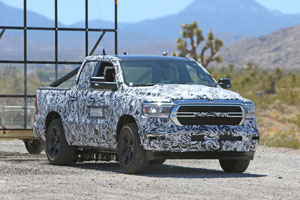
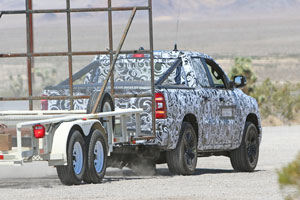
This is a mule for the ’21 Jeep Wagoneer, caught flexing in Death Valley, California. The Wagoneer and larger Grand Wagoneer will be based off the ’19 RAM 1500 platform.

Wagoneer models will get independent rear suspension for better ride as well as interior packaging to fit in a third-row seat. Adjustable ride height is also expected to be lifted from the RAM. It’s predicted that V6 and V8 engines will be offered, while a new inline-six with a turbo and 48-volt mild hybrid system is also expected to be introduced on the Jeep models. A plug-in hybrid variant is also projected after initial launch.

Expect to see the Wagoneer and Grand Wagoneer as early as spring 2020, likely at the New York Auto Show.


Jeep
Jeep

’20 C8 Corvette in Rapid Blue

Here’s the ’20 Chevy Corvette Stingray in Rapid Blue, providing a more complete look at the new color. The bright-blue hue is notably lighter than the Elkhart Lake Blue Metallic shared earlier.

The prototype seen here is wearing the optional Z51 performance package, has a body-color rear spoiler and the optional carbon-flash double five-spoke wheels. It was caught around the Milford Proving Grounds undergoing testing.

Corvette
Corvette
Sun, 12/01/2019 - 10:56

SEMA News—December 2019

INDUSTRY NEWS

Photos courtesy SpiedBilde, Brian Williams. Reuse or reproduction without the copyright holder’s consent is prohibited.

McLaren 750LT Long Tail Mule

McLaren is understood to be readying a faster, lighter Long Tail version of the 720S for launch next year, and a prototype caught testing appears to confirm it.

Although this mule appears to be a standard 720S with some modifications, telltale cues include Gurney flaps and a substantially larger front splitter. Although the traditional Long Tail extended rear end doesn’t feature in this early mule, the extended spoiler plastered in tape suggests engineers are testing for such bodywork modifications prior to completing them.

McLaren has yet to confirm whether it will use the 750LT name for the Long Tail model, but a 750hp figure is expected.

McLaren
McLaren

’21 Jeep Grand Wagoneer Mule

This is a mule for the ’21 Jeep Wagoneer, caught flexing in Death Valley, California. The Wagoneer and larger Grand Wagoneer will be based off the ’19 RAM 1500 platform.

Wagoneer models will get independent rear suspension for better ride as well as interior packaging to fit in a third-row seat. Adjustable ride height is also expected to be lifted from the RAM. It’s predicted that V6 and V8 engines will be offered, while a new inline-six with a turbo and 48-volt mild hybrid system is also expected to be introduced on the Jeep models. A plug-in hybrid variant is also projected after initial launch.

Expect to see the Wagoneer and Grand Wagoneer as early as spring 2020, likely at the New York Auto Show.


Jeep
Jeep

’20 C8 Corvette in Rapid Blue

Here’s the ’20 Chevy Corvette Stingray in Rapid Blue, providing a more complete look at the new color. The bright-blue hue is notably lighter than the Elkhart Lake Blue Metallic shared earlier.

The prototype seen here is wearing the optional Z51 performance package, has a body-color rear spoiler and the optional carbon-flash double five-spoke wheels. It was caught around the Milford Proving Grounds undergoing testing.

Corvette
Corvette
Sun, 12/01/2019 - 10:56

SEMA News—December 2019

INDUSTRY NEWS

Photos courtesy SpiedBilde, Brian Williams. Reuse or reproduction without the copyright holder’s consent is prohibited.

McLaren 750LT Long Tail Mule

McLaren is understood to be readying a faster, lighter Long Tail version of the 720S for launch next year, and a prototype caught testing appears to confirm it.

Although this mule appears to be a standard 720S with some modifications, telltale cues include Gurney flaps and a substantially larger front splitter. Although the traditional Long Tail extended rear end doesn’t feature in this early mule, the extended spoiler plastered in tape suggests engineers are testing for such bodywork modifications prior to completing them.

McLaren has yet to confirm whether it will use the 750LT name for the Long Tail model, but a 750hp figure is expected.

McLaren
McLaren

’21 Jeep Grand Wagoneer Mule

This is a mule for the ’21 Jeep Wagoneer, caught flexing in Death Valley, California. The Wagoneer and larger Grand Wagoneer will be based off the ’19 RAM 1500 platform.

Wagoneer models will get independent rear suspension for better ride as well as interior packaging to fit in a third-row seat. Adjustable ride height is also expected to be lifted from the RAM. It’s predicted that V6 and V8 engines will be offered, while a new inline-six with a turbo and 48-volt mild hybrid system is also expected to be introduced on the Jeep models. A plug-in hybrid variant is also projected after initial launch.

Expect to see the Wagoneer and Grand Wagoneer as early as spring 2020, likely at the New York Auto Show.


Jeep
Jeep

’20 C8 Corvette in Rapid Blue

Here’s the ’20 Chevy Corvette Stingray in Rapid Blue, providing a more complete look at the new color. The bright-blue hue is notably lighter than the Elkhart Lake Blue Metallic shared earlier.

The prototype seen here is wearing the optional Z51 performance package, has a body-color rear spoiler and the optional carbon-flash double five-spoke wheels. It was caught around the Milford Proving Grounds undergoing testing.

Corvette
Corvette
Sun, 12/01/2019 - 10:56

SEMA News—December 2019

INDUSTRY NEWS

Photos courtesy SpiedBilde, Brian Williams. Reuse or reproduction without the copyright holder’s consent is prohibited.

McLaren 750LT Long Tail Mule

McLaren is understood to be readying a faster, lighter Long Tail version of the 720S for launch next year, and a prototype caught testing appears to confirm it.

Although this mule appears to be a standard 720S with some modifications, telltale cues include Gurney flaps and a substantially larger front splitter. Although the traditional Long Tail extended rear end doesn’t feature in this early mule, the extended spoiler plastered in tape suggests engineers are testing for such bodywork modifications prior to completing them.

McLaren has yet to confirm whether it will use the 750LT name for the Long Tail model, but a 750hp figure is expected.

McLaren
McLaren

’21 Jeep Grand Wagoneer Mule

This is a mule for the ’21 Jeep Wagoneer, caught flexing in Death Valley, California. The Wagoneer and larger Grand Wagoneer will be based off the ’19 RAM 1500 platform.

Wagoneer models will get independent rear suspension for better ride as well as interior packaging to fit in a third-row seat. Adjustable ride height is also expected to be lifted from the RAM. It’s predicted that V6 and V8 engines will be offered, while a new inline-six with a turbo and 48-volt mild hybrid system is also expected to be introduced on the Jeep models. A plug-in hybrid variant is also projected after initial launch.

Expect to see the Wagoneer and Grand Wagoneer as early as spring 2020, likely at the New York Auto Show.


Jeep
Jeep

’20 C8 Corvette in Rapid Blue

Here’s the ’20 Chevy Corvette Stingray in Rapid Blue, providing a more complete look at the new color. The bright-blue hue is notably lighter than the Elkhart Lake Blue Metallic shared earlier.

The prototype seen here is wearing the optional Z51 performance package, has a body-color rear spoiler and the optional carbon-flash double five-spoke wheels. It was caught around the Milford Proving Grounds undergoing testing.

Corvette
Corvette
Sun, 12/01/2019 - 10:51

SEMA News—December 2019

INTERNET

By Joe Dysart

Hackers’ New Trick: Stealing Your Computing Processing Power

Hacker
Hackers have a new trick: stealing your computing processing power when you’re not looking.

In a marked shift from previous years, hackers are much more likely these days to be bent on stealing your computing processing power than embedding ransomware or other malware in your network, according to a March 2019 report from IBM (www.ibm.com/security/data-breach/threat-intelligence). That’s because it’s much safer for hackers to simply steal your computing processing power over the internet—and use it for mining crypto currencies such as Bitcoin—than to get involved in planting other criminal software on business and corporate networks, according to the report’s authors.

“One of the hottest commodities is computing power tied to the emergence of crypto currencies,” said Wendi Whitmore, global lead for IBM X-Force Incident Response and Intelligence Services. “That has led to corporate networks and consumer devices being secretly hijacked to mine for those digital currencies.”

Added Kevin Haley, director of Symantec Security Response: “Now you could be fighting for resources on your phone, computer or Internet of Things device as attackers use them for profit.”

All told, the number of computer users reportedly impacted by “Black Hat” mining was more than five million in 2018 (up from 2.7 million the prior year), according to a report from IT security firm Kapersky Lab (www.tinyurl.com/securelist-com-kaspersky). The number is most likely much higher, given that it’s often very difficult to detect when a Black Hat miner has actually infiltrated a network or computer.

The reports from IBM and Kapersky are an eye-opening shift in hacker tactics, given that so many corporations and individuals are currently fixated on preventing ransomware and other malware attacks and so few realize that hackers have now moved on to stealing computing processing power. One of the most vexing aspects of that theft—also known as crypto-jacking—is that it can be so clandestine.

Many hackers running the scam are often careful to steal computer-processing power only when a computer or smartphone is not in use. The most careful of them steal power during the off hours, when computers are on but people are most likely sleeping.

Other hackers are especially crafty in camouflaging mining programs as legitimate software. For example, Kapersky Labs has uncovered a mining program that looks like an Adobe product installed on your computing device—complete with a fake Adobe icon, a fake Adobe executable file and a fake Adobe digital signature, according to Evgeny Lopatin, a security expert at the IT firm.

“Malware, especially cryptominers, continually evolves to avoid detection, often hiding in memory or delivering malicious code directly into the memory of a system,” added Intel Security General Manager Jim Gordon.

The impact on individuals and companies overall can be significant. Computer power theft generally results in a slowdown in computing performance while the theft is underway, making it more difficult to work on your device and decreasing your overall productivity. Computers can also become unstable during a theft, and hackers hijacking computers for mining often have no qualms about driving computer processors and supporting systems at maximum speed, which often results in shortening the life of the devices or overheating their batteries.

That is why computers hijacked by Black Hat miners often have their fans running at full speed: The fans are trying to cool computer processors running hot at maximum speed.

In addition, the results of the thievery also show up in inflated electricity bills, and added costs show up for companies using cloud connections that are compromised by the thieves. Bills for CPU usage can be much higher.

“The massive profit incentive puts people, devices and organizations at risk,” said Mike Fey, president and COO of Symantec.

Unfortunately, the problem of computer processing theft will most likely be with us as long as crypto currencies such as Bitcoin, Ethereum and Monero remain popular, Haley added. That’s especially true when the values of crypto currencies soar.

While the early value of a Bitcoin was at times less than a penny in 2010, for example, the price of a single Bitcoin soared in value to $20,000 by 2018 (www.coindesk.com/price/bitcoin). The value has since dropped significantly, but the “coins” are still apparently worth thieving for even at that rate.

Hackers discovered the market for Black Hat mining as crypto currencies burgeoned and grew to rely on thousands of computers across the world to maintain their systems. Essentially, the currency systems need those networks to verify all the transactions associated with digital coin transactions and to perform overall auditing of their systems.

Scores of legitimate computer networks regularly perform that work and are paid in new digital crypto-currency “coins” after they complete a pre-agreed amount of auditing. That’s why the computer networks are called “miners.” They “mine” new crypto-currency coins by working as auditors for the crypto-currency systems.

Black Hat miners do the same work as their legitimate counterparts, with one major difference: Instead of using their own computer networks, Black Hat miners unleash malware onto the web that transforms thousands of computers, smartphones and other computer devices into a mining zombie network. Together, that stolen processing power is used to mine crypto currency.

IT security experts say that companies should currently be on the lookout for two types of Black Hat crypto-mining. The first comes in the same format as our old friend, malware. It’s generally secretly downloaded to a computerized device via a rogue link and executes as a working mining program at the hacker’s whim.

The second major form of Black Hat mining occurs while users surf the web. Surfers get hit when they visit a webpage that has been reprogrammed by a Black Hat miner. The thieving script injected into the page steals computer processing power as long as the user remains at the website.

In fact, millions of Android users were afflicted with this form of Black Hat mining in 2018, according to IT security firm Malwarebytes (www.tinyurl.com/malwarebytes-com-threat).

Fortunately, best practices for combating computer-processing power theft generally mirror those used by companies for protecting against other kinds of malware. Companies best prepared are those that have:

  • Gold-plated firewall systems.
  • IT network security software.
  • Regularly installed security updates for all software.
  • Employee education programs that train staff to beware of suspicious emails, suspicious websites and suspicious phone callers asking for passwords and other network access information.

“People need to expand their defenses or they will pay the price for someone else using their devices,” said Symantec’s Haley.

Individual computer users can further protect themselves by installing browser extensions that help protect against Black Hat mining, such as the following:

And they can also test to see if their web browsers have been corrupted by Black Hat miners with a free service from Opera Browser (www.cryptojackingtest.com).

Meanwhile, network administrators can use tools such as WhatsUp Gold, by Ipswitch (www.tinyurl.com/ipswitch-network). WhatsUp enables them to monitor for CPU usage spikes over time and set up alerts for when CPU usage exceeds a threshold. The app can also be specially tuned to monitor a network’s CPU usage during off hours—the witching hour for many Black Hat miners.

In some ways, this latest sleight of hand from hackers seems like so many others they’ve used to take advantage of everyday computer users. The only real difference this time is that it’s so insidious. With Black Hat mining, it could take months or even years for a company to discover that a hacker is taking small sips of its network computer-processing power when no one is looking.

Joe Dysart is an internet speaker and business consultant based in Manhattan.

646-233-4089

joe@joedysart.com

www.joedysart.com