Tue, 01/31/2023 - 11:57


SEMA Show management has announced that the 2023 Exhibitor Space Rental Agreement (ESRA) is now live.

The deadline to submit ESRAs and deposits is Monday April 3, 2023. SEMA Show Priority Space Selection is scheduled for Monday, May 1–May 17, 2023. Companies that reserve space by the deadline are eligible for the year’s early space selection, where exhibitors select their booth location at the Show.

The 2023 SEMA Show will take place October 31–November 3, at the Las Vegas Convention Center. For complete Show information, visit www.SEMAShow.com.

For additional information about exhibiting at the SEMA Show, visit www.SEMAShow.com/exhibitor.

Tue, 01/31/2023 - 11:48

CorvetteChevrolet has debuted the new Corvette Z06 GT3.R racecar, a year before it makes its competition debut at the 2024 Rolex 24 at Daytona.

Making its public debut at Daytona International Speedway ahead of last Saturday’s Rolex 24, the Corvette Z06 GT3.R is Chevrolet’s first racecar that fully meets FIA technical regulations for GT3 cars.

Design and development of the mid-engine Z06 GT3.R is a collaboration between GM’s Competition Motorsports Engineering division and Pratt Miller Engineering. With an eye specifically toward customer racing, the Z06 GT3.R will be eligible for multiple championships in North America and around the world with a high level of parts and technical support available for its customers.

The Corvette Z06 GT3.R will race for the first time as part of the GT Daytona (GTD) PRO category at the 2024 Rolex 24 At Daytona to open next year’s IMSA WeatherTech SportsCar Championship.

“The Corvette Z06 GT3.R breaks new ground for Chevrolet and the Corvette Racing program,” said Mark Stielow, director, GM Motorsports Engineering Competition. “This customer-focused racecar leverages learnings from throughout Corvette Racing’s lengthy and successful history, plus the expertise of our Corvette production design, engineering and powertrain teams.”

The Z06 GT3.R begins its life as an aluminum chassis frame from Chevrolet’s Bowling Green Assembly plant in Kentucky. The frame provides a lightweight yet strong and durable underpinning for both Z06 and Z06 GT3.R. Once in Michigan at Pratt Miller, a purpose-built steel roll cage is welded onto a base plate, which is secured to the chassis.

A double-wishbone suspension at the front and rear promotes a higher level of adjustability and fitment of racing-specific tire sizes. This is the same front and rear suspension configuration as on the Z06 production vehicle.

The motorsports engineering team added race springs and dampers, competition-specific rotors, calipers and pads. The Z06 GT3.R rides on 18-in. front and rear wheels—the same as on the C8.R.

Advanced aerodynamic strategies also link the road-going Corvette and its GT3 counterpart. Motorsports engineers worked with the GM Design Studio to develop an aero package specific to the Z06 GT3.R to optimize levels of downforce, stability, drag reduction and cooling.

According to Chevrolet, the goal was to design a GT3-spec Corvette that is suitable across different tire specifications, balance-of-performance settings and other customer preferences while not sacrificing performance or drivability on a variety of tracks and racing surfaces.

In order to enhance performance of the Z06 and Z06 GT3.R, each uses similar carbon-fiber splitters which provide optimal downforce at the front of the vehicles. On the underside of the Z06 GT3.R, a new and purpose-designed carbon fiber diffuser routes air from the front of the car toward the rear in order to create an optimal level of overall stability.

The underbody aerodynamic devices work together in complementing the functionality of a new-for-2024 wing that aids in airflow at the rear of the Z06 GT3.R and the creation of downforce for enhanced cornering ability.

Intakes at the front of the Z06 GT3.R draw in air to cool the front brakes. A single, large opening on the hood—a new design philosophy from the C8.R—extracts out air after it moves over the radiator.

From the top of the windshield to the rear of the car, the surface elements of the Z06 stayed intact for the Z06 GT3.R, accentuating the tie between production and racing. Most notable are side air ducts behind the doors—directly inspired by Z06 production road car—that help to cool the engine, transaxle and rear brakes.

The Corvette Z06 GT3.R will feature a 5.5L, flat-plane crankshaft DOHC V8 engine derived from the production Z06. This engine began on-track development in 2019 with the initial testing of the C8.R, ahead of its use in the production Z06.

The LT6 engine for the GT3.R originates from the Performance Build Center in Bowling Green, Kentucky, the same line on which all production Corvette Z06 engines are built.

The 5.5L powerplant shares more than 70% of its parts with the production Z06 engine, including the crankshaft, connecting rods, cylinder heads, fuel injectors, coils, gaskets and a variety of other sensors.

Chevrolet and Pratt Miller have worked together to incorporate a number of features into the GT3.R, building on safety construction from the C8.R. The Z06 GT3 features a side-impact crash structure between the driver’s side door and roll cage. Pioneered in the C7.R, the box features an outer casing of carbon fiber and Kevlar, and is filled with an aluminum honeycomb construction. The GT3 Corvette’s integrated steel roll cage is slightly modified from the current racing Corvette to provide easier ingress and egress.

For 2024, Chevrolet and Corvette Racing will continue targeting key sports-car racing championships with North American and global entries. The IMSA WeatherTech SportsCar Championship will see up to four Corvette Z06 GT3.R entries with a mix of GTD PRO and GTD teams starting with the 2024 Rolex 24.

Two Corvette chassis will be bound for FIA WEC in hopes of a double entry in the yet-to-be-named GT category, which would include the 24 Hours of Le Mans. Chevrolet Motorsports will also be evaluating opportunities to be represented in SRO Motorsports including SRO America and the Intercontinental GT Challenge.

Specific team announcements including drivers will be announced at a later date.

For more information, visit www.chevrolet.com.

Tue, 01/31/2023 - 11:20

SEMA News—March 2023

EVENTS

By SEMA News Editors

Observations From the 2022 PRI Show

Manufacturers and Buyers Share Their Takes on the Key Racing and Performance Trends Likely to Drive This Year’s Market

PRI

The recent PRI Trade Show in Indianapolis was among the most successful on record. The booths and aisles bustled with attendees eager to see the latest trends and business opportunities to be found in a fast-paced industry.

When it comes to the racing and performance category, there’s perhaps no better glimpse into the market’s top trends than the annual Performance Racing Industry (PRI) Trade Show in Indianapolis. Billed as the three biggest business days in motorsports, the 2022 Show roared back to the Indiana Convention Center this past December 8–10, its aisles bustling with exhibitors and attendees eager to gain a competitive edge in 2023. For readers who may have missed the event, the following are some key PRI Trade Show takeaways.

Fire-Breathing Power

“As if there wasn’t already enough interest in Ford’s Godzilla engine platform, son of Godzilla will ensure the fire-breathing monster is in the forefront of aftermarket product development heading into the 2023 season,” wrote automotive journalist Mike Magda, reporting on the trends he picked up on for the February 2023 issue of PRI Magazine.

Engine

Expect to see Megazilla, Ford’s new 7.3L crate engine, high on racer wish lists. It will offer 615 hp and 640 lb.-ft. of peak torque.

Magda added that other priorities for performance and racing companies include improved fuel-delivery products to keep up with the ever-increasing demands of new power-adder engine combinations, as well as more use of sophisticated simulators to expedite driver development and preparation before races.

“With the horsepower level that we’re seeing these days, the racers need a real fuel system in the car,” confirmed Phillip VanBuskirk, national sales manager of Aeromotive, Lenexa, Kansas, which is developing high-performance fuel components for race cars and late-model production cars like the Ford Mustang. “We’re really stepping up the game for stock fuel tanks. They want a high-horsepower pump that can go into a stock tank, and they want brushless with a speed controller that can be tied to the ECU.”

“Driving simulators will be the wave of the future to help drive down costs,” promised David Smith driver for Shockwave Motorsports, Sidney, British Columbia, Canada, which manufactures race-car simulators suitable for NASCAR, ARCA, Trans-Am, late models and Sprint Car training. A typical setup includes body, roll cage, window net, dash, steering and seating similar to the desired race car. On-track realism is achieved through three 75-in. high-def TVs, fully programmable travel vibrations, adjustable torque steering and even in-helmet sound. “It’s one more tool for developing drivers,” added Smith.

Sharp-eyed Show observers also honed in on several more trends that race-equipment manufacturers say will be key to a successful 2023, and addressing high-horsepower demands is high among them. Transmissions will have to be more robust to handle the power that bigger turbos and superchargers will deliver. Hub dynos that measure that horsepower will be essential to some teams. Innovations that save time in the garage or pits will also be embraced, and even companies that simply help racers get the race cars from the shop to the track are promising more comfort and utility.

Simulator

Increasingly, driving simulators are seen as the wave of the future as teams look for more cost-effective means to train drivers and hone their skills.

What’s more, if new-product releases are an indication of the most popular engine in the country right now, then many of those race trailers will have cars powered by the Ford Godzilla engine. And very soon, a more powerful relative will be on many wish lists.

Dubbed the Megazilla, the new 7.3L crate engine will offer 615 hp and 640 lb.-ft. of peak torque, with 500 lb.-ft. or more reportedly available from 2,500–6,000 rpm, Ford said. The original headliner, Ford’s Godzilla crate engine, is also 7.3L and is rated at 430 hp with 475 lb.-ft. of peak torque.

A sampling of other leading aftermarket companies reveals significant Godzilla development programs. In fact, companies are developing improved versions of every component in a fuel system, including fuel tanks, pumps, hoses, fittings, regulators, injectors, and carburetors—all to keep up with the power demands of the engine.

Meanwhile, demand for “late-model stuff,” including newer Ford and LS platform products, as well as lighter-weight billet parts, and even kits for big-wheel drag cars is expected to intensify in the coming year.

Manufacturers’ Assessments

Across the show floor, various manufacturing exhibitors also noted some interesting trends. “The big trend we’ve started to see as we exit the pandemic is that there’s still a lot of demand for Ford FE and early Chrysler product—the Cs and Ds,” said Bryan Barlow, Canadian sales manager for The Edelbrock Group, based in Olive Branch, Mississippi. “During the height of it all, everyone focused on getting their orders out on A and B movers. Along the way, a lot of C and D movers got depleted or discontinued. So we’re starting to see a big push right now as everyone’s getting caught up.”

Pleasantly unexpected, Edelbrock’s new VRS carb also continues to resonate with racers following its introduction last year, Barlow added. “About June we started to ship it, and we’re already overwhelmed with orders,” he said. “With the market shifting so greatly toward EFI, we were a little nervous on the introduction of a new carburetor, but carburetor sales have been through the roof.”

For the team at Valencia, California-based Air Flow Research and Scat Enterprises, flat-plane crankshafts that deliver “the sound and performance of the Ferraris and Lamborghinis” are expected to remain atop racers’ 2023 wish lists, according to Danny Cerny, inside sales lead, Scat Enterprises. However, “for strength and a lot of the drag racing and performance sports, it’s the billet crankshafts,” he noted. “While manufacturing and producing the billets, we are also expanding a lot of our lightweight forgings that hold up to the industry’s punishing demands.”

Cerny also predicted that, somewhat ironically, the push for vehicle electrification could bode well for his segment. “People are going to want to rebuild a lot of the modern vehicles because the mileage is going to be coming around,” he said, “and they’re not going to want to upgrade or go into an electric vehicle. So for us, it creates a whole new avenue in providing crankshafts, pistons, cylinder heads and connecting rods.”

From the viewpoint of Lakeville, Minnesota-based manufacturer QA1, buyers are eyeing rear suspensions for such classic trucks as the ’73–’79 Ford F-150, as well as full-handling kits for ’71–’76 Impalas/Caprices that are popular among Donk racers and other big-wheel enthusiasts.

Along with products designed for older vehicles, QA1 also is utilizing advanced technologies and materials to meet customer demand. “They’re looking at new things like our carbon-fiber driveshafts,” said Steve Smith, QA1 representative. “There are still some folks out there who just can’t believe that a carbon-fiber driveshaft can actually be stronger, lighter, and safer than any other driveshaft there is. They’re intrigued by things with innovation in the parts.”

Based in Glendale, Arizona, Pro EFI noted its wiring harnesses for the Ford Coyote engine as top attention-getters; at King Engine Bearings, meantime, much of the focus was on the company’s first-to-market Can-Am race bearings, which were displayed at PRI in a Brian Crower specially crafted Can-Am engine block.

Aside from the hard parts, other new and often unexpected business opportunities were found throughout the Show, as Edward Cooper, president of Nu-Ice Age, a dry-ice blasting operation in Jackson, Michigan, discovered at the Miles Ahead booth. Based in Carmel, Indiana, Miles Ahead brings turnkey open-wheel electric kart racing competitions to fundraising and company team-building events. And that presented Cooper with a potentially new application for his product.

“When [blasted] dry ice hits, there’s no water in it,” Cooper explained. “Tiny explosions take place that lift dirt off walls or off a vehicle. They’re perfectly cleaned off, without hurting the finish.”

This waterless technology could be an ideal solution for cleaning e-karts and their specialized components, he surmised. “It’s cold and takes the dirt down to the ground. You just sweep it up and you’re done,” he said. “We’ve been doing this, but we also race cars, so this is kind of what we’re looking to as a next step.”

Breakthroughs for Buyers

While many buyers arrived at the Show with a wide-ranging list of needs, they also learned of many new ideas and solutions they could tap into. Indianapolis-based racer Nick Taylor was among those examining the aforementioned QA1 setup for big-wheel vehicles. Although he doesn’t race Donks or big-wheel cars, “I do no-prep racing and we like long-travel suspensions,” he said. “So I’m trying to gauge how this [product] could work out for what we do, not just the application they’ve produced it for.”

Fellow attendee Ryne Moonshower, with Moon’s Fabrication in Fort Wayne, Indiana, agreed. “There’s crossover between a lot of different sports here,” he added. “New products for Circle Track may also be useful in another area like drag racing, and you would never know that unless you came to PRI. There were some circle track twin-tube shocks that really piqued our interest, even though we do drag racing and a lot of backtrack stuff.”

For many buyers, Machinery Row always ranks among the Show’s top attractions—and Daniel Adams, with CT Race Worx in Monroe, North Carolina, was on a mission there. A welder and fabricator specializing in side-by-sides and powersports vehicles, he was looking for new and upcoming welders, CNC tube benders, and air-driven and cordless power tools.

“Those are big things in our industry now, and every time I turn around [here], I’m finding something that I need and want,” he said. A seven-year veteran of the PRI Trade Show, Adams noted that Machinery Row consistently proves valuable to his business. “We’re able to increase production times and also the quality of our end products because we’re able to find the tools and equipment that help us produce better product in the end,” he said.

Tony Hatfield, owner of Modco Racing Engines in Joplin, Missouri, was in the market for CNC machines, and he found several by Howard, Pennsylvania-based Centroid that merited closer examination. Hatfield, who’s considering updating his equipment for cylinder heads and other engine-building tasks, noted improved efficiencies of the industry’s latest tooling; he was able to visualize the possibilities thanks to “hands-on” demonstrations provided by Centroid and others on Machinery Row.

“It’s more impressive to see it live than on paper,” he noted. “Seeing it in working mode tells us if it’s something we really need for where we want to be at. We get an idea of what’s new out there [and] make sure we’re not missing anything. The whole drive is to move forward.”

With motorsports broadening its appeal, especially among younger demographics, experts say the market for racing apparel, helmets, and safety gear is expected to continue expanding through at least 2026. Of course, comfort, lighter weight, and fire protection remain key factors for buyers, with manufacturers jockeying to differentiate themselves in the areas of quality, regulatory compliance, aesthetics and innovation.

Will Wattanwongkiri, owner of Chino, California-based WRTeknica, was examining helmets and other safety equipment by Scala Gear. Wattanwongkiri’s performance motorsports-oriented shop also fields TeamWWR, which has raced in NASA Super Touring, SRO GT4 World Challenge, and various other series.

“We resell, distribute, car build, support, transport—we’re a one-stop shop for customers with high-performance cars,” he said. “We’re here to buy helmets [and] also here to buy suspension parts and brake parts, wheels—just all kinds of things. Our business is focused on vehicle dynamics… We build a lot of race and track cars, and we’re focused on meeting all these vendors here.”

Like scores of other buyers flooding the aisles, Wattanwongkiri found it difficult to single out any one product trend that especially captured his attention. There were so many innovations across so many categories, making them impossible to list. However, he did agree with other attendees we spoke with that the relationships forged at the Show stood out.

“Coming to PRI, for me, is about connecting with all the motorsports industry people, a lot of whom I’ve been talking to on the phone and now am putting a face to the name,” he said. “There are also a lot of old industry friends [here] who we just don’t get to see often,” he added. “I’m meeting other people through my current connections and then also introducing new connections to them—it’s a really good networking opportunity.

Editor’s Note: This story is adapted from reporting by Mike Magda and Mike Imlay for the February 2023 issue of PRI Magazine.


Tue, 01/31/2023 - 10:53

SEMA News—March 2023

LAW AND ORDER

LEGISLATIVE AND TECHNICAL AFFAIRS

By Daniel Ingber

FEDERAL UPDATE

RPM ACT: Despite strong Congressional backing and extraordinary support from the racing community, the 2021–2022 Congressional session ended without passage of the RPM Act. During the final days of 2022, key negotiators in Congress could not reach an agreement on bill language that balanced the need for federal law to protect racers and motorsports parts businesses from U.S. Environmental Protection Agency (EPA) enforcement with reasonable measures to ensure that race parts are not used on vehicles driven on roads and public highways. The RPM Act made incredible progress in the 2021–2022 session of Congress. In addition to more than 1.5 million letters advocating for the RPM Act from the motorsports community to Congress, SEMA worked with Richard Petty to meet personally with key lawmakers in Washington, D.C., and NHRA Top Fuel driver Antron Brown testified in support of the bill before the U.S. Senate Environment and Public Works Committee. SEMA will continue its advocacy efforts to bring certainty to the racing community that is needed to protect a great American pastime and hundreds of thousands of jobs in communities throughout the country. For updates and information, visit
www.saveourracecars.com.

Trail RidingA Booming Outdoor Recreation Industry: New data released by the U.S. Department of Commerce’s Bureau of Economic Analysis (BEA) shows that outdoor recreation generated $862 billion in economic output and 4.5 million jobs in 2021. This equates to 1.9% of GDP in the U.S. economy and highlights the record-setting growth that the outdoor recreation industry has seen over the past few years. “From the creation of jobs and increased profit for small businesses in local economies, to larger boons to our national economy, this sector is a consistent driver, even in times of economic uncertainty,” said Jessica Turner, president of the Outdoor Recreation Roundtable (ORR), of which SEMA is a member. ORR is America’s leading coalition of U.S. outdoor recreation trade associations. It represents more than 50,000 businesses that produce vehicles, apparel, equipment and services enjoyed in our nation’s parks, waterways, trails and outdoor spaces. SEMA’s focus within ORR is on motorized recreation (four-wheel, ATVs, UTVs, etc.) along with all the equipment that makes it possible to tow RVs, trailers, boats and off-road vehicles (suspension, wheels, tires, increased horsepower, etc.).

INFORM Consumers Act: The SEMA-supported INFORM Consumers Act became law as part of the fiscal-year 2023 omnibus spending package. This bipartisan law is critical in helping law enforcement, manufacturers, retailers and online marketplaces of all sizes work together to protect consumers from bad actors peddling counterfeit and stolen goods. The INFORM Consumers Act increases transparency and accountability by requiring sensible verification and disclosure requirements designed to disrupt the sale of illicit goods. Below are key provisions of the INFORM Consumers Act:

  • Requires online marketplaces to verify certain information about high-volume third-party sellers of consumer products, which is defined as sellers who make 200 or more discrete sales or transactions totaling at least $5,000 during any continuous 12-month period in the last 24 months, including the seller’s bank account number, business tax identification number or a taxpayer identification number, and contact information.
  • High-volume third-party sellers with $20,000 in annual gross revenue through an online marketplace will have to disclose to consumers the full name of the seller or company, business address, and contact information (current working email address, phone number or other direct electronic messaging for the seller) after each sale.
  • Empowers online marketplaces to suspend high-volume third-party sellers of consumer products who do not provide the required information within 10 days of the request from the online marketplace.

E15 Ethanol: The EPA is proposing to expand the amount of biofuels blended into gasoline by oil refiners during the next three years to 20.82 billion gal. in 2023, 21.87 billion gal. in 2024, and 22.68 billion gal. in 2025. More than 15 billion gal. per year would be derived from corn-based ethanol with the remainder coming from switchgrass, animal fats, or methane from dairy farms and landfills. Under the EPA program, oil refiners are required to meet the biofuel blend volumes or buy tradeable credits from refiners that do. In order to meet the biofuel volumes, the EPA agreed in 2011 to allow the amount of ethanol in gasoline to increase from 10% to 15% (E15) for model-year ’01 or newer vehicles. Ethanol, especially in higher concentrations such as E15, can cause metal corrosion and dissolve certain plastics and rubbers in older automobiles that were not constructed with ethanol-resistant materials and certain specialty high-performance equipment installed on newer vehicles. Although the EPA requires E15 gas pumps to include a warning label about fueling restrictions, SEMA continues to believe this is insufficient to guard against misfuelling.

Steel and Aluminum Tariffs: The World Trade Organization (WTO) ruled that the Section 232 tariffs imposed in 2018 by President Trump did not qualify under the claim of U.S. national security. The ruling applies to steel and aluminum imported from China, Turkey, Norway and Switzerland. The tariffs were global in scope when first imposed, but the United States has subsequently entered into agreements with many other countries to set metal import quotas and not challenge tariffs previously imposed. These countries include Argentina, Australia, Brazil, Canada, the European Union, Great Britain, Japan, Mexico and South Korea. SEMA has opposed the tariffs since they hurt U.S. companies and consumers and have failed to address global metal overproduction, primarily by China. Despite the WTO ruling, the issue remains unsettled. The U.S. Trade Representative disagrees and responded that the WTO does not have the authority to question the claim of a national security threat. There will be no immediate action on a U.S. appeal of the ruling. The WTO’s Appellate Body is not hearing cases since the United States has blocked new nominations to fill vacancies on the board. The United States contends that the WTO must first make reforms to its dispute settlement system.

FTC Crackdown on Fake Reviews: The Federal Trade Commission (FTC) has requested public comment on the potential harms stemming from deceptive or unfair review and endorsement practices used by businesses. Although fake reviews are illegal, the agency is exploring whether stiffer civil penalties for violations would make the marketplace fairer for consumers and honest businesses. As it considers a rulemaking, the FTC is seeking feedback on the pervasiveness and potential harms to consumers and competition caused by fake reviews, paid reviews, fake review websites and similar practices.

Right to Repair & Modify: The fiscal-year 2023 Omnibus Appropriations law includes language that directs the Federal Trade Commission (FTC) to prioritize investigations and enforcement to protect consumers from unfair control over vehicle data, including telematics information, which is wirelessly sent from a motor vehicle to the vehicle manufacturer. The law recognizes the FTC’s ongoing work examining how manufacturers, particularly mobile phone and car manufacturers, may limit repairs by consumers and repair shops, and how those limitations may increase costs, limit choice and impact consumers’ rights under the Magnuson-Moss Warranty Act. SEMA supports this provision and is also working to protect the right to modify by advocating for Congress to pass the REPAIR Act (Right to Equitable and Professional Auto Industry Repair), a bipartisan bill that would prohibit vehicle manufacturers from employing any technological or legal barriers that block aftermarket parts manufacturers or vehicle repair facilities from accessing critical repair information and tools. The bill also requires companies producing vehicles equipped with telematics to make available to aftermarket manufacturers and repair facilities any critical repair information and tools at a fair and reasonable cost.

Tue, 01/31/2023 - 10:42

SEMA News—March 2023

HERITAGE

By Drew Hardin
Photography Courtesy Pat Brollier, Petersen Publishing Company Archive

The Tales Your Tire Treads Tell

Heritage“The study of tread wear is as important to a mechanic as the study of fingerprints to a detective.” So wrote SAE engineer Ed Packer to open a February 1959 Hot Rod technical article about interpreting tire tread wear. By “watching your treads,” Packer stated, “you can keep your roadster or family sedan safer and more comfortable. As a bonus, you will cut operating costs.”

On six pages, Packer took a deep dive into the conditions that could be recognized with a close examination of the tire’s treads, from simple things like over- and under-inflation to the effects of improper alignment, worn ball joints, and wheels that are not true. “Many cars are delivered with wheels that are not round!” he exclaimed. “The situation seems unbelievable.”

Packer even touched on the detrimental effects of a rowdy hot rodder: “A very conservative old gentleman with a fine big car was complaining bitterly to a factory representative of one of the tire manufacturers. His tires were wearing…and he had his entire running gear checked for alignment. It was reported perfect. Inflation was correct. But the wear persisted. Finally the truth came out. The old man’s son used the car regularly, and he apparently enjoyed its high performance.

“So if that’s the way you want to enjoy your car, cornering wear is the bill you’ll pay.”

The photo the editors chose as the opening image for this story showed Packer examining a tire from what looks like a ’52 Mercury two-door and comparing its tread to the front tire still mounted on the car. The tire on the car had even wear; the tire in his hands showed obvious wear on the inner tread. We chose an outtake from that photo shoot that showed less of the worn tire’s tread but more of the Mercury. It was fairly dinged up for what would have been a relatively new car—and one photographed for the magazine. Note the paint rubbed off the front fender lip, and the dents at the rear of the quarter-panel. Apparently, tires weren’t the only things that could tell tales to an observant mechanic.

Tue, 01/31/2023 - 10:14
Sierra

This is the upcoming GMC Sierra AT4X HD undergoing testing before its reveal. The heavy-duty off-road rig is wearing a healthy amount of camouflage front and back, disguising what is likely to be high-clearance front and rear fascias. The wheels are also camouflaged.

As reported by GM Authority earlier this month, the ’24 Sierra AT4X HD will feature 35-in. tires and DSSV dampers—both firsts for the Sierra HD. The model will slot above the existing Sierra AT4 HD as the most capable off-road-going Sierra HD. A debut should come in the next few weeks.

Sierra

Photo credit: Brian Williams, SpiedBilde

Tue, 01/31/2023 - 10:12

By Ashley Reyes

WTCThe SEMA Wheel and Tire Council (WTC) is launching a new virtual networking event that will bring together SEMA members from the wheel and tire industry. The online series, called WTC Coffee & Conversation, includes five events throughout 2023 and offers members an open forum to discuss the wheel and tire market’s hottest topics and issues. Participants will connect to share their expertise, grow their network, and create valuable business connections.  

“We created the Coffee & Conversation series as a way to give wheel and tire members the opportunity to grow and learn from each other,” said WTC Networking Committee Chair Brett Kinsfather, ShopMonkey. “Members will build their social capital, walk away with different points of view and build relationships that are founded on the common ground of WTC membership.”

A discussion topic will be introduced to start the conversation; however, attendees are encouraged to bring a topic of their own that impacts their business personally and encourages open conversation for the benefit of the group.  

SEMA-member manufacturers, service providers, distributors, dealers, installers and media are all invited to attend as the event will a great opportunity to tap into new and undiscovered networks.    

The first WTC Coffee & Conversation networking event will take place March 2, at 9:00 a.m. (PST). View all dates in the series and sign up now to start growing your network.

Tue, 01/31/2023 - 10:11

By SEMA Editors

HotelsPart of the SEMA Show planning process is securing a hotel that will fit your needs. Location, low price, amenities and ratings are all factors in determining the right place to stay for November.

To make the process quick and affordable, the SEMA Show Block website lists all the hotels available, the prices, distance from Show and more. Hotels booked in the Block are backed by a low-price guarantee. To ensure that your price remains the lowest, SEMA will price-match lower advertised rates, even after your reservations are set.

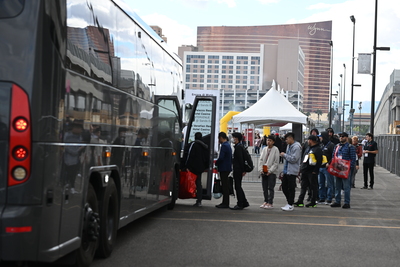
There are more than 30 properties to choose from in the Show Block. As an added benefit, SEMA provides shuttle service to and from the Show for hotels that are not within walking distance to the Las Vegas Convention Center.

The 2023 SEMA Show takes place October 31–November 3, at the Las Vegas Convention Center.

Exhibitors that would like to be part of the 2023 SEMA Show can get started at www.SEMAShow.com/buyabooth.

Registration for the Show is available www.SEMAShow.com/register.

Tue, 01/31/2023 - 10:03

By Douglas McColloch

Dick GustWhen the subject of conversation turns to tires, few industry experts can speak with as much authority as Dick Gust. The current CEO of the Tire Industry Association (TIA), Gust started his decades-long career while still in college, and upon graduation was hired as a design engineer with Uniroyal. He subsequently spent time in a variety of managerial roles with Sears Roebuck, Lakin Environmental and Liberty Tire Recycling, where he served as director of government affairs. He has worked with a number of industry associations, including the National Tire Dealers & Retreaders Association, American Retreaders Association and International Tire & Rubber Association. He has also served on the U.S. Department of Commerce’s Environmental Technologies Trade Advisory Committee.

For our annual tire and wheel issue, we spent some time with Gust to “talk tire.” What follows has been edited for clarity and length.

SEMA News: What’s your latest project? What are you working on these days?

Dick Gust: We’re working on gaining more membership, and we’re working on increasing our training programs that are our bread and butter. We really are a safety association, and it’s time that we updated a few of our training programs, so that’s our big push right now. To give two examples, we’re working on an earth-mover program, and we’re translating our commercial tire training materials into Spanish.

SN: What was your first job in the industry, and what did you learn from it?

DG: It was a summer job working at a Uniroyal tire plant in Eau Claire, Wisconsin, to pay for my college. I was a tire builder, so I learned the business from the drum up. After I graduated, Uniroyal offered me a job in their product development department. So that job gave me the best background in knowing how a tire comes together.

SN: What has pleased you most about this industry during the time you’ve spent in it?

DG: I think it always comes down to the people. It’s a very close-knit industry. People may move around from one company to another, but their enthusiasm for tires always goes with them. I haven’t worked in other industries, but I know this one’s pretty special in terms of
camaraderie.

SN: Tire manufacturers are starting to look at domestic tire production using non-rubber agricultural products, such as dandelions, to address supply-chain and sustainability issues. What potential impact do you think this could have on the industry and on the
consumers?

DG: Manufacturers are looking long-term at less reliance on overseas rubber plantations and more on various sustainable products that they can incorporate domestically into the construction of a tire. When the materials don’t have to be transported overseas, that’s going to positively impact the supply chain, but certainly not in the next few years.

SN: The retread industry has faced challenges in recent years. What do they have to do to stay competitive?

DG: A lot of the retread companies have been purchased by major tire manufacturers, and they’re recognizing that it’s a great sustainable product. One of the challenges they’ve had, though, is with tires that are coming in from the Far Eastern countries—China, for example—and some of those tire casings are not suitable to be retreaded. Additionally, the price for a new tire in China is so inexpensive that it makes selling retreads into that market difficult. But I think over time this problem will work itself out.

SN: What’s your daily driver and what do you like best about it?

DG: I drive a Jeep Grand Cherokee. I’ve owned four of them previously, and I just think it’s a terrific car.

SN: Let’s talk about electric vehicles (EVs) for a moment. They pose unique challenges on tires. How is the industry responding? And what can consumers expect down the road?

DG: We’ve created an electric-vehicle advisory council, and we’ve pulled together some experts within the industry to look at a lot of different things. EVs have a lot more weight than ICE vehicles, so from the tire perspective, tires for EVs are going to wear out faster. So, the manufacturers are looking at materials for these tires that make them longer-wearing and with better rolling resistance.

SN: As you mentioned, TIA is all about safety. Could you talk a bit about what you think the industry in general could do to improve safety protocols?

DG: Right now, we’re looking to emphasize the commercial tire industry a lot more. Many people who handle commercial truck tires don’t realize that it’s an OSHA requirement to be trained to do so. If you touch a commercial truck tire, you are required by OSHA to be trained. So we’re trying to aim our training programs more toward the commercial side of the business.

SN: If you went back to school, what would you study?

DG: I have a degree in chemistry, and at one point I thought about becoming a doctor. So I’d probably go back into some kind of medical field.

SN: When you’re away from work, where will you be, and what will you be doing?

DG: My wife and I are new to the East Coast now, so we spend time venturing out on weekends looking at historic sites in the Washington, D.C., area. We have a vast array of museums here, so you might find us at a museum on the weekend.

Tue, 01/31/2023 - 10:00

Are you hunting for a new job? The SEMA Career Center has a comprehensive listing of automotive-related job openings around the country. Here are some of the latest jobs posted to the website.

Latest Jobs Added to SEMA Career Center

Client Success Manager
MyRacePass

MyRacePass is hiring a drag-racing client success manager responsible for generating revenue by developing lead generation, qualification and closing sales; recommending any potential products and services that would benefit the client while keeping an ongoing relationship with current and potential clients; training promoters on MyRacePass services and day-to-day client relations; and handling the process of a new client onboarding while working with developers and designers throughout the process.

Project Manager
Transworld Products Inc.

Transworld Products Inc. is hiring a project manager to work directly with staff and factories in Asia and targeting small to mid-sized U.S. manufacturers for sales opportunities. The candidate will be an articulate, detail-oriented, mechanically minded, creative, self-motivated professional with a minimum of three years’ global sourcing and/or project management experience.

Salesperson
Wheel-1

Wheel-1 is hiring an aftermarket wheel and tire salesperson responsible for selling company products in accordance with company requirements and customer needs; delivering sales presentations to customers in coordination with company marketing and sales strategy; and providing information regarding products, account inquiries and order status via phone or email. Candidates must be bilingual, Spanish/English is preferred, and be willing to travel. Prior sales experience is required.