Thu, 07/24/2025 - 17:02

From the SEMA Washington, D.C., office

Counterfeit Goods Ahead street sign image, courtesy of Shutterstock


In the digital age, the internet has revolutionized global commerce, enabling businesses of all sizes to reach consumers across borders. However, this convenience does not come without a dark side: online counterfeiting. Counterfeiting, in general, refers to the act of producing and selling counterfeit products that imitate genuine brands. Online counterfeiting occurs when these fakes are sold through websites, social-media posts, livestreams and online marketplaces, often tricking buyers into thinking they're purchasing real parts from trusted sources.

Online counterfeiting is becoming increasingly sophisticated and widespread, and unlike traditional counterfeit markets, online platforms allow sellers to operate anonymously, making detection and enforcement much more challenging. 

Even worse, counterfeit goods are widely available on e-commerce platforms such as Amazon, eBay, Shopify, and Alibaba, as well as on social media, and on rogue websites, creating a multi-billion-dollar black market that threatens consumers, legitimate businesses, and economies alike. 

Unfortunately, numerous SEMA members have been impacted by online counterfeiting after finding evidence of fake products and fake websites that imitate the real things.

SEMA has compiled the information below to help industry members learn more about how they can protect their trademarks and patents as well as how to report online counterfeiting of your brands and products. 

To combat the issue of online counterfeiting, brand owners can turn to several practical and legal solutions, in particular:  

1. Policing and AI-Powered Brand Monitoring

  • Brand owners should monitor and police the use of their trademarks in the online space. There are automated software tools available (e.g. Red Points, BrandShield, SmartProtection, Zero Fox) to scan product images, text, behavior patterns and new listings across online and underground channels.
  • Businesses can also maintain Google Alerts, social‑media monitoring and dark‑web surveillance to detect early infringement and take appropriate enforcement action.


2. Intellectual Property Enforcement

  • Brand owners can register their trademarks, copyrights and patents in every major market (For registration of trademarks and patents in the United States, see uspto.gov/. For registration of copyrights, see copyright.gov/registration/). While trademark registration is not required in the United States to have enforceable trademark rights (though it is extremely helpful in enforcement efforts), in most countries around the world registration is generally required to have enforceable trademark rights. International trademark registration systems like the Madrid Protocol (wipo.int/en/web/madrid-system) and global enforcement treaties for copyright infringement like the Berne Convention are available for brand owners to maintain and enforce rights in other countries, especially jurisdictions where counterfeiting is prevalent. If you are in need of legal expertise to help you with your trademark, copyright or patent registrations, a list of SEMA business services members is available in the SEMA business member portal.
  • Brand and patent owners also have the ability to file complaints and seek exclusion orders from the International Trade Commission (usitc.gov/intellectual_property/about_section_337.htm). Upon receipt of a complaint, the ITC investigates and determines whether the importation of products into the United States infringes a U.S. patent, copyright, registered trademark in violation of Section 337 of the U.S. Tariff Act.  If the ITC determines that an imported product stands in violation, they can issue exclusion orders preventing such products from entry into the United States.
  • If infringement of copyrighted materials is detected in online marketplaces, the Digital Millennium Copyright Act (DMCA) provides copyright owners the ability to demand the takedown of infringing content from online platforms. For further information on filing DMCA takedown notices, see copyright.gov/512/
  • Owners of U.S. trademark registrations can record their trademarks with U.S. Customs and Border Protection (CBP) to prevent the importation of counterfeit goods into the United States (iprr.cbp.gov/s/). CBP has the authority to detain, seize, forfeit, and ultimately destroy merchandise seeking entry into the United States if it bears an infringing trademark or copyright and that trademark or copyright has been federally registered and subsequently recorded with CBP.
  • Brand owners can also collaborate with law enforcement agencies such as the FBI and Interpol, both of which investigate criminal counterfeiting and piracy. To report instances of counterfeiting and piracy with the FBI or Interpol, see ic3.gov/ and interpol.int/en/Contacts/Contact-INTERPOL
  • Brand owners have rights. When infringements are detected, brand owners can send cease and desist letters to infringers to demand that the infringing activity be immediately stopped. This is certainly harder to enforce if the violator is located overseas. Brand owners can rely on legal frameworks such as: (1) the U.S. Lanham Act which enables brand owners to secure injunctions, damages, impoundment and forced destruction of counterfeit goods and attorney's fees in certain cases; (2) the Trademark Counterfeiting Act which makes it a federal crime to traffic in counterfeit goods or services imposing prison sentences of up to five years and fines up to $250,000 for individuals, and $1,000,000 for corporations; and (3) the PRO‑IP Act which enhances criminal penalties and statutory damages up to $1–2 million per violation.


3. Platform and Marketplace Enforcement

  • Brand owners can demand the removal of counterfeit goods made available in online marketplaces through a notice and takedown procedure. E-commerce platforms often provide tools for reporting counterfeit listings and a process to have those listings removed. Takedown demands can be generated by the brand owner themselves or through third-party service providers that specialize in the takedown process. Brand owners should also consider paying for brand verification (the little blue checkmarks on your profile name) with social-media platforms as it will help eliminate false ad purchasing on these platforms.
  • Take Down Demands for Major Online Marketplaces (click for more):
  • Brand owners can join platform protection programs like Amazon Brand Registry, Project Zero, Transparency, Shopify's IP Protection, eBay's VeRO and Alibaba's IP Protection Platform. When brand owners are properly registered and accepted for such programs, platforms will proactively block counterfeit listings.
  • In addition, platforms are starting to deploy AI machine learning to detect suspicious listings.


4. Deployment of Authentication Tech

  • Brand owners can embed unique identifiers and authentication technologies like QR codes, NFC tags, holograms, serialization, hidden markers or digital watermarks on their packaging and products so that genuine product can easily be verified.
  • Brand owners can use advanced methods to track product provenance such as blockchain or certified traceability systems.


5. Consumer Education

  • In the fight against counterfeiters, knowledge is power. Brand owners should educate customers on how to identify authentic items: quality cues, packaging, serial numbers, and purchasing genuine products from authorized sources. The clearest message to consumers is: if the price discounts advertised sound too good to be true, they probably are.


Fake Websites

While many online counterfeiters operate through social media and online e-commerce marketplaces, one of the most sinister tools in the counterfeiter's toolbox is the fake or clone website. These fraudulent websites are designed to mimic the websites of legitimate brand owners, and many times use the brand owner's logo, images, website "look and feel," and product descriptions to trick unsuspecting customers into buying substandard and even dangerous counterfeit products. Many times, consumers find themselves on these websites by clicking links in online advertisements for what they believe will take them to the brand owner's website. The link will instead direct the consumer to the counterfeiter's fake "lookalike" website, which mimics the legitimate website.

Red flags for spotting these fake websites include the use misspelled brand names (e.g., "nkie.com" instead of "nike.com"), the use of generic top level domains rarely used by companies (e.g., ".xyz" as opposed to ".com"), poor grammar or spelling errors, generic or incomplete pages (e.g., the About Us, Contact, or Privacy Policy pages are missing or copied from other sites) or the offering of steep discounts to lure buyers. Many of these websites are short-lived, often popping up, scamming victims and then disappearing before law enforcement can respond. Another flag is that many false websites require PayPal as the only form of payment.

When a fake website is detected or reported, there are several actions the brand owner can take to shut the website down:

  • Cease and Desist Letters: Brand owners can start by sending a cease and desist letter to the website owner demanding that they take down the website and stop infringing trademark and copyright rights. Most counterfeiters often operate anonymously and take steps to hide their identities and whereabouts. It may be necessary to conduct a forensic investigation to obtain identifying information such as names, addresses or e-mail information to send such letters and even if letters are sent, there is a chance that the demand to cease and desist is ignored.
  • Domain Takedowns: If a cease and desist letter is ineffective, brand owners can file a complaint with the website's domain registrar or hosting provider. The brand owner can locate the web hosting provider or domain name registrar by conducting a WHOis search in ICANN records (lookup.icann.org/en) or other domain name registrar websites (most if all have a WHOis search function). Filing such complaints may involve providing proof of intellectual property ownership (for example, federal trademark registration certificates) evidence of the infringing activities and demonstrating that the fake website violates the registrar's or hosting provider's terms of service. Major domain name registrars and hosting companies may suspend, disable or delete infringing domains once a valid complaint is verified.
  • DMCA Takedowns: If a web host is located in the United States or otherwise subject to U.S. laws, brand owners can submit a take-down notice under the Digital Millennium Copyright Act to have websites containing stolen images and textual content taken down. Hosts and platforms are legally required to respond and take appropriate action or they risk liability as a contributory infringer.
  • UDRP Domain Name Complaints – If the domain name being used by the counterfeiter contains the brand owner's trademark or confusingly similar wording, the brand owner can file a Uniform Dispute Resolution Policy (UDRP) complaint with an ICANN-approved dispute resolution service provider like the World Intellectual Property Organization (wipo.int/domains/en/filing/complaint) or the ADR Forum (adrforum.com/domain-dispute/udrp). The complaint is reviewed by a panel of arbitrators who have the power to order the infringing domain name to be cancelled or transferred to the brand owner.
  • Notify Law Enforcement: Brand owners can lodge complaints with the National Intellectual Property Rights Coordination Center (IPR Center) managed by United States Immigration and Customs Enforcement's Homeland Security Investigations (iprcenter.gov/). Under its Operation in Our Sites initiative, the IPR Center is leading the U.S. government's response to intellectual property theft. The Operation In Our Sites program specifically targets websites and their operators that distribute counterfeit and pirated items over the Internet. The IPR Center works with the U.S. Department of Justice to prosecute, convict, and punish counterfeiters as well as seize website domain names, profits, and other property from IP thieves.
  • Search Engine and Ad Network Complaints: Brand owners can submit infringement notices to the major search engines like Google and Bing to have fake websites de-indexed or blocked from ad networks. This dramatically reduces discovered traffic and monetization.
  • Fake Website Complaint Submission for Major Search Engines:
  • Legal Action in U.S. Courts: In more serious cases, brand owners can seek a court injunction to force internet service providers, registrars or search engines to block access to fake websites.        

The battle with counterfeiters is not a one-time effort, but an ongoing battle. As long as there are producers of quality aftermarket specialty automotive parts, there are going to be counterfeiters looking to freeload off that success. As counterfeiters grow more sophisticated, brands, law enforcement agencies and internet infrastructure providers must collaborate, leveraging both legal mechanisms and advanced technology. With coordinated action and public awareness, it is possible to significantly disrupt the counterfeit networks that operate in the dark corners of the digital landscape.


Image courtesy of Shutterstock

Thu, 07/24/2025 - 17:02

From the SEMA Washington, D.C., office

Counterfeit Goods Ahead street sign image, courtesy of Shutterstock


In the digital age, the internet has revolutionized global commerce, enabling businesses of all sizes to reach consumers across borders. However, this convenience does not come without a dark side: online counterfeiting. Counterfeiting, in general, refers to the act of producing and selling counterfeit products that imitate genuine brands. Online counterfeiting occurs when these fakes are sold through websites, social-media posts, livestreams and online marketplaces, often tricking buyers into thinking they're purchasing real parts from trusted sources.

Online counterfeiting is becoming increasingly sophisticated and widespread, and unlike traditional counterfeit markets, online platforms allow sellers to operate anonymously, making detection and enforcement much more challenging. 

Even worse, counterfeit goods are widely available on e-commerce platforms such as Amazon, eBay, Shopify, and Alibaba, as well as on social media, and on rogue websites, creating a multi-billion-dollar black market that threatens consumers, legitimate businesses, and economies alike. 

Unfortunately, numerous SEMA members have been impacted by online counterfeiting after finding evidence of fake products and fake websites that imitate the real things.

SEMA has compiled the information below to help industry members learn more about how they can protect their trademarks and patents as well as how to report online counterfeiting of your brands and products. 

To combat the issue of online counterfeiting, brand owners can turn to several practical and legal solutions, in particular:  

1. Policing and AI-Powered Brand Monitoring

  • Brand owners should monitor and police the use of their trademarks in the online space. There are automated software tools available (e.g. Red Points, BrandShield, SmartProtection, Zero Fox) to scan product images, text, behavior patterns and new listings across online and underground channels.
  • Businesses can also maintain Google Alerts, social‑media monitoring and dark‑web surveillance to detect early infringement and take appropriate enforcement action.


2. Intellectual Property Enforcement

  • Brand owners can register their trademarks, copyrights and patents in every major market (For registration of trademarks and patents in the United States, see uspto.gov/. For registration of copyrights, see copyright.gov/registration/). While trademark registration is not required in the United States to have enforceable trademark rights (though it is extremely helpful in enforcement efforts), in most countries around the world registration is generally required to have enforceable trademark rights. International trademark registration systems like the Madrid Protocol (wipo.int/en/web/madrid-system) and global enforcement treaties for copyright infringement like the Berne Convention are available for brand owners to maintain and enforce rights in other countries, especially jurisdictions where counterfeiting is prevalent. If you are in need of legal expertise to help you with your trademark, copyright or patent registrations, a list of SEMA business services members is available in the SEMA business member portal.
  • Brand and patent owners also have the ability to file complaints and seek exclusion orders from the International Trade Commission (usitc.gov/intellectual_property/about_section_337.htm). Upon receipt of a complaint, the ITC investigates and determines whether the importation of products into the United States infringes a U.S. patent, copyright, registered trademark in violation of Section 337 of the U.S. Tariff Act.  If the ITC determines that an imported product stands in violation, they can issue exclusion orders preventing such products from entry into the United States.
  • If infringement of copyrighted materials is detected in online marketplaces, the Digital Millennium Copyright Act (DMCA) provides copyright owners the ability to demand the takedown of infringing content from online platforms. For further information on filing DMCA takedown notices, see copyright.gov/512/
  • Owners of U.S. trademark registrations can record their trademarks with U.S. Customs and Border Protection (CBP) to prevent the importation of counterfeit goods into the United States (iprr.cbp.gov/s/). CBP has the authority to detain, seize, forfeit, and ultimately destroy merchandise seeking entry into the United States if it bears an infringing trademark or copyright and that trademark or copyright has been federally registered and subsequently recorded with CBP.
  • Brand owners can also collaborate with law enforcement agencies such as the FBI and Interpol, both of which investigate criminal counterfeiting and piracy. To report instances of counterfeiting and piracy with the FBI or Interpol, see ic3.gov/ and interpol.int/en/Contacts/Contact-INTERPOL
  • Brand owners have rights. When infringements are detected, brand owners can send cease and desist letters to infringers to demand that the infringing activity be immediately stopped. This is certainly harder to enforce if the violator is located overseas. Brand owners can rely on legal frameworks such as: (1) the U.S. Lanham Act which enables brand owners to secure injunctions, damages, impoundment and forced destruction of counterfeit goods and attorney's fees in certain cases; (2) the Trademark Counterfeiting Act which makes it a federal crime to traffic in counterfeit goods or services imposing prison sentences of up to five years and fines up to $250,000 for individuals, and $1,000,000 for corporations; and (3) the PRO‑IP Act which enhances criminal penalties and statutory damages up to $1–2 million per violation.


3. Platform and Marketplace Enforcement

  • Brand owners can demand the removal of counterfeit goods made available in online marketplaces through a notice and takedown procedure. E-commerce platforms often provide tools for reporting counterfeit listings and a process to have those listings removed. Takedown demands can be generated by the brand owner themselves or through third-party service providers that specialize in the takedown process. Brand owners should also consider paying for brand verification (the little blue checkmarks on your profile name) with social-media platforms as it will help eliminate false ad purchasing on these platforms.
  • Take Down Demands for Major Online Marketplaces (click for more):
  • Brand owners can join platform protection programs like Amazon Brand Registry, Project Zero, Transparency, Shopify's IP Protection, eBay's VeRO and Alibaba's IP Protection Platform. When brand owners are properly registered and accepted for such programs, platforms will proactively block counterfeit listings.
  • In addition, platforms are starting to deploy AI machine learning to detect suspicious listings.


4. Deployment of Authentication Tech

  • Brand owners can embed unique identifiers and authentication technologies like QR codes, NFC tags, holograms, serialization, hidden markers or digital watermarks on their packaging and products so that genuine product can easily be verified.
  • Brand owners can use advanced methods to track product provenance such as blockchain or certified traceability systems.


5. Consumer Education

  • In the fight against counterfeiters, knowledge is power. Brand owners should educate customers on how to identify authentic items: quality cues, packaging, serial numbers, and purchasing genuine products from authorized sources. The clearest message to consumers is: if the price discounts advertised sound too good to be true, they probably are.


Fake Websites

While many online counterfeiters operate through social media and online e-commerce marketplaces, one of the most sinister tools in the counterfeiter's toolbox is the fake or clone website. These fraudulent websites are designed to mimic the websites of legitimate brand owners, and many times use the brand owner's logo, images, website "look and feel," and product descriptions to trick unsuspecting customers into buying substandard and even dangerous counterfeit products. Many times, consumers find themselves on these websites by clicking links in online advertisements for what they believe will take them to the brand owner's website. The link will instead direct the consumer to the counterfeiter's fake "lookalike" website, which mimics the legitimate website.

Red flags for spotting these fake websites include the use misspelled brand names (e.g., "nkie.com" instead of "nike.com"), the use of generic top level domains rarely used by companies (e.g., ".xyz" as opposed to ".com"), poor grammar or spelling errors, generic or incomplete pages (e.g., the About Us, Contact, or Privacy Policy pages are missing or copied from other sites) or the offering of steep discounts to lure buyers. Many of these websites are short-lived, often popping up, scamming victims and then disappearing before law enforcement can respond. Another flag is that many false websites require PayPal as the only form of payment.

When a fake website is detected or reported, there are several actions the brand owner can take to shut the website down:

  • Cease and Desist Letters: Brand owners can start by sending a cease and desist letter to the website owner demanding that they take down the website and stop infringing trademark and copyright rights. Most counterfeiters often operate anonymously and take steps to hide their identities and whereabouts. It may be necessary to conduct a forensic investigation to obtain identifying information such as names, addresses or e-mail information to send such letters and even if letters are sent, there is a chance that the demand to cease and desist is ignored.
  • Domain Takedowns: If a cease and desist letter is ineffective, brand owners can file a complaint with the website's domain registrar or hosting provider. The brand owner can locate the web hosting provider or domain name registrar by conducting a WHOis search in ICANN records (lookup.icann.org/en) or other domain name registrar websites (most if all have a WHOis search function). Filing such complaints may involve providing proof of intellectual property ownership (for example, federal trademark registration certificates) evidence of the infringing activities and demonstrating that the fake website violates the registrar's or hosting provider's terms of service. Major domain name registrars and hosting companies may suspend, disable or delete infringing domains once a valid complaint is verified.
  • DMCA Takedowns: If a web host is located in the United States or otherwise subject to U.S. laws, brand owners can submit a take-down notice under the Digital Millennium Copyright Act to have websites containing stolen images and textual content taken down. Hosts and platforms are legally required to respond and take appropriate action or they risk liability as a contributory infringer.
  • UDRP Domain Name Complaints – If the domain name being used by the counterfeiter contains the brand owner's trademark or confusingly similar wording, the brand owner can file a Uniform Dispute Resolution Policy (UDRP) complaint with an ICANN-approved dispute resolution service provider like the World Intellectual Property Organization (wipo.int/domains/en/filing/complaint) or the ADR Forum (adrforum.com/domain-dispute/udrp). The complaint is reviewed by a panel of arbitrators who have the power to order the infringing domain name to be cancelled or transferred to the brand owner.
  • Notify Law Enforcement: Brand owners can lodge complaints with the National Intellectual Property Rights Coordination Center (IPR Center) managed by United States Immigration and Customs Enforcement's Homeland Security Investigations (iprcenter.gov/). Under its Operation in Our Sites initiative, the IPR Center is leading the U.S. government's response to intellectual property theft. The Operation In Our Sites program specifically targets websites and their operators that distribute counterfeit and pirated items over the Internet. The IPR Center works with the U.S. Department of Justice to prosecute, convict, and punish counterfeiters as well as seize website domain names, profits, and other property from IP thieves.
  • Search Engine and Ad Network Complaints: Brand owners can submit infringement notices to the major search engines like Google and Bing to have fake websites de-indexed or blocked from ad networks. This dramatically reduces discovered traffic and monetization.
  • Fake Website Complaint Submission for Major Search Engines:
  • Legal Action in U.S. Courts: In more serious cases, brand owners can seek a court injunction to force internet service providers, registrars or search engines to block access to fake websites.        

The battle with counterfeiters is not a one-time effort, but an ongoing battle. As long as there are producers of quality aftermarket specialty automotive parts, there are going to be counterfeiters looking to freeload off that success. As counterfeiters grow more sophisticated, brands, law enforcement agencies and internet infrastructure providers must collaborate, leveraging both legal mechanisms and advanced technology. With coordinated action and public awareness, it is possible to significantly disrupt the counterfeit networks that operate in the dark corners of the digital landscape.


Image courtesy of Shutterstock

Thu, 07/24/2025 - 10:39

By Ashley Reyes

FLN Spotlight Andrew Gubler


The SEMA Future Leaders Network (FLN) has named Andrew Gubler, sales director at Seal Skin Covers, as the network's newest spotlight member. 

Get to know Gubler in his interview with SEMA News below. 

SEMA News: What is the best advice you have ever received? 

AG: Only spend energy on things you can control. It applies personally and professionally to an incredibly deep level, because if something is outside of your control or influence, why give it your precious energy or mental resources? 

SN: What keeps you in the industry? 

AG: The constant evolution and variety. It seems like every week something new and exciting is happening. 

SN: Where can you be found on a Saturday? 

AG: The golf course. Definitely. And maybe a nice restaurant at night.  

SN: How do you prepare for an important meeting? 

AG: By getting my mind right. A bit of research and a bit of preparation, but a bigger bit of clarity, calm and purpose. Embracing the right state of mind.  

SN: If you could go to lunch with one industry leader, living or dead, who would it be? 

AG: Nicolaus Otto. I mean come on, auto? And the first internal combustion engine? [Have to]

pick that guy's brain! 

Fill out an FLN member spotlight form to be eligible to be featured on FLN's social media, SEMA News and FLN member updates. 


Thu, 07/24/2025 - 10:10

By SEMA News Editors

SEMA Garage ADAS Training


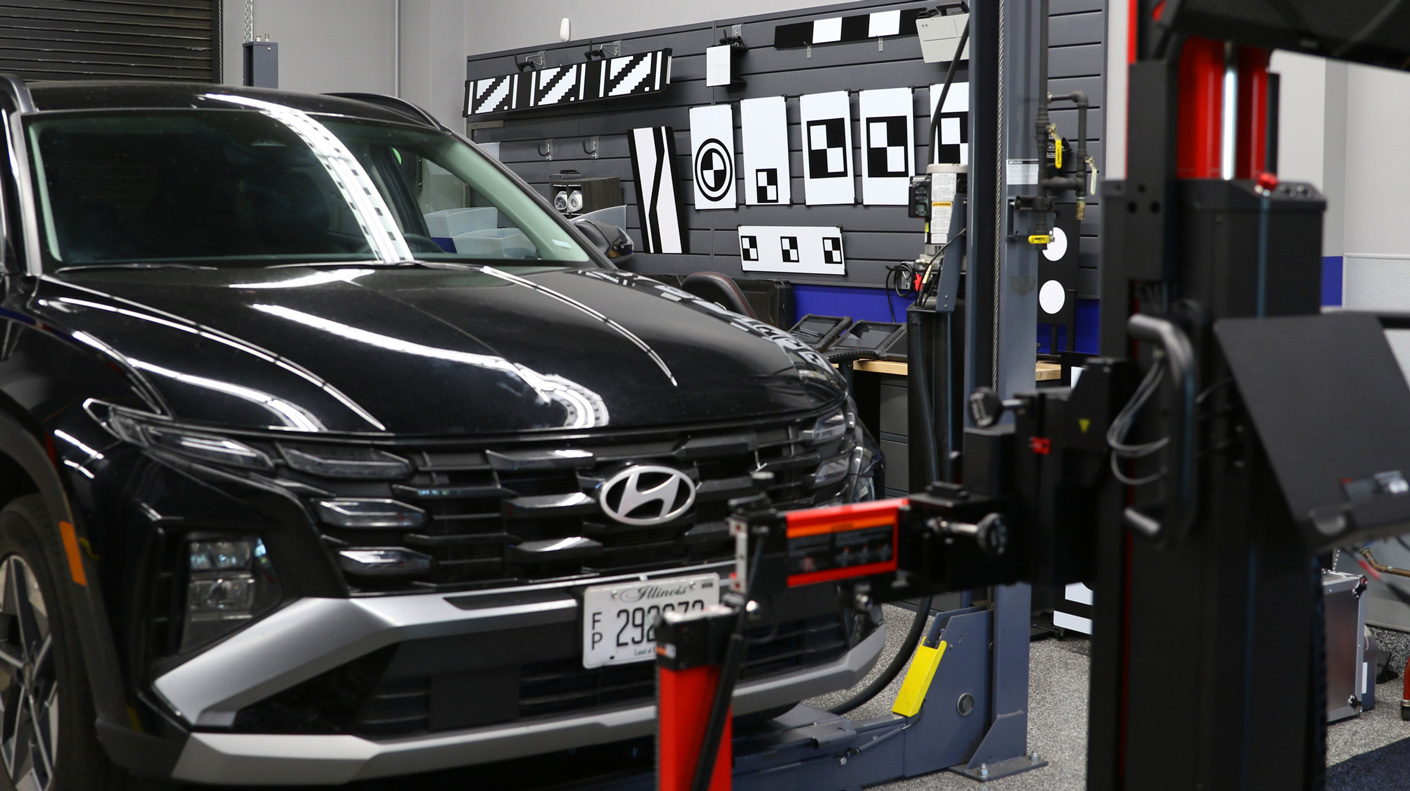
SEMA Garage has expanded its partnership with AUTEL by bringing its highly acclaimed, hands-on advanced driver assistance systems (ADAS) training to its Diamond Bar, California, location.

These in-depth, two-day sessions are designed to equip participants with critical knowledge in ADAS fundamentals, calibration procedures and reporting best practices.

As ADAS technology becomes increasingly common in today's vehicles, the need for proper calibration expertise is more important than ever. This expansion marks a major step in making high-quality ADAS training more accessible to industry professionals across the country.

📍 SEMA Garage Diamond Bar ADAS Training: 1577 S. Valley Vista Dr. Diamond Bar, California, 91765. View on Google Maps.

📅 Tuesday, August 5 and Wednesday, August 6 

👉 Reserve your spot now at the Autel Academy website: autel.us/autel-academy (select ADAS TRAINING, then click the "California" tab). Can't make it in June? Stay tuned as more training opportunities are on the horizon for later this year.

🔗 Questions? Reach out via email to academy@autel.com or visit autel.us/autel-academy for details.

Thu, 07/24/2025 - 09:32

From the SEMA Washington, D.C., office

SB80 SEMA Show


SEMA is dispelling misinformation surrounding a forthcoming law in Nevada, SB 80, pertaining to local enforcement of state and federal vehicle emissions laws. The organization specifically wants to reaffirm that SB 80, which takes effect on October 1, will not impact the 2025 SEMA Show, Las Vegas' largest annual trade show, which will be held November 4-7 at the Las Vegas Convention Center.

  • Nevada Gov. Joe Lombardo on June 10 signed into law SB 80, legislation that provides a new framework for local law enforcement to, in tandem with existing inspection authority, enforce against bad actors who are breaking existing state and federal emissions laws, establishing new penalties for illegal behavior.
Statement 

"SEMA has always been aware of Nevada's SB  80 and provided feedback on the bill on behalf of the automotive community as it was developed. SB 80 is common-sense legislation that maintains the status quo as it pertains to existing state and federal law. SEMA was, and is, comfortable with this bill, which reinforces existing state and federal bans on emissions system tampering. The law is still the law as it pertains to emissions systems.

"SEMA is once again proud to welcome our exhibitors, members, partners, and industry stakeholders to Las Vegas this November for the industry's most anticipated annual gathering. For 58 years, the SEMA Show has remained a cornerstone of innovation, collaboration, and progress in the automotive aftermarket industry. This year will be no different. Whether you're exhibiting your brand, debuting a custom build, or exploring the latest products and trends, the SEMA Show continues to deliver the trusted platform that drives business and fuels industry growth."

Background 

SB 80 amends existing Nevada state law (NRS 480.610) to identify the following unlawful activities: 

(e) Except as otherwise provided in subsection 2, tamper with a device for the control of emissions of a motor vehicle or remove such a device from a motor vehicle, including, without limitation, exchanging the engine of a motor vehicle for a different engine; or  

(f) Possess an electronic device capable of tampering with a device for the control of emissions of a motor vehicle.  

Additionally, SB 80 provides the following clarification on legality: 

2. A person does not violate paragraph (e) of subsection 1 by exchanging the engine of a motor vehicle for:  

(a) An electric motor; or  

(b) A different engine if any device for the control of emissions of a motor vehicle that is included with the engine being inserted into the motor vehicle is operational. 

Resource 

To educate SEMA members, SEMA Show attendees, and the public at large, SEMA released an FAQ document HERE that explains what SB 80 does and does not do. 

Thu, 07/24/2025 - 09:32

From the SEMA Washington, D.C., office

SB80 SEMA Show


SEMA is dispelling misinformation surrounding a forthcoming law in Nevada, SB 80, pertaining to local enforcement of state and federal vehicle emissions laws. The organization specifically wants to reaffirm that SB 80, which takes effect on October 1, will not impact the 2025 SEMA Show, Las Vegas' largest annual trade show, which will be held November 4-7 at the Las Vegas Convention Center.

  • Nevada Gov. Joe Lombardo on June 10 signed into law SB 80, legislation that provides a new framework for local law enforcement to, in tandem with existing inspection authority, enforce against bad actors who are breaking existing state and federal emissions laws, establishing new penalties for illegal behavior.
Statement 

"SEMA has always been aware of Nevada's SB  80 and provided feedback on the bill on behalf of the automotive community as it was developed. SB 80 is common-sense legislation that maintains the status quo as it pertains to existing state and federal law. SEMA was, and is, comfortable with this bill, which reinforces existing state and federal bans on emissions system tampering. The law is still the law as it pertains to emissions systems.

"SEMA is once again proud to welcome our exhibitors, members, partners, and industry stakeholders to Las Vegas this November for the industry's most anticipated annual gathering. For 58 years, the SEMA Show has remained a cornerstone of innovation, collaboration, and progress in the automotive aftermarket industry. This year will be no different. Whether you're exhibiting your brand, debuting a custom build, or exploring the latest products and trends, the SEMA Show continues to deliver the trusted platform that drives business and fuels industry growth."

Background 

SB 80 amends existing Nevada state law (NRS 480.610) to identify the following unlawful activities: 

(e) Except as otherwise provided in subsection 2, tamper with a device for the control of emissions of a motor vehicle or remove such a device from a motor vehicle, including, without limitation, exchanging the engine of a motor vehicle for a different engine; or  

(f) Possess an electronic device capable of tampering with a device for the control of emissions of a motor vehicle.  

Additionally, SB 80 provides the following clarification on legality: 

2. A person does not violate paragraph (e) of subsection 1 by exchanging the engine of a motor vehicle for:  

(a) An electric motor; or  

(b) A different engine if any device for the control of emissions of a motor vehicle that is included with the engine being inserted into the motor vehicle is operational. 

Resource 

To educate SEMA members, SEMA Show attendees, and the public at large, SEMA released an FAQ document HERE that explains what SB 80 does and does not do. 

Thu, 07/24/2025 - 09:26

By SEMA News Editors

SEMA Fest 2025 lineup announces Queens of the Stone Age The Black Crowes Neon Trees


The 2025 SEMA Fest lineup was announced, and tickets are selling fast. Don't miss your chance to see rock icons Queens of the Stone Age, legendary hitmakers The Black Crowes and alt-pop favorites Neon Trees at this year's high-octane festival of music, motorsports and car culture.

It all comes to life Friday, November 7, at the SEMA Show's Bronze Lot, immediately following the close of the 2025 SEMA Show. Ticket sales are officially open at semafest.com and currently available at the lowest possible price. Don't wait to snag your tickets--prices will go up! 

This is your chance to lock in your spot at one of the most unforgettable nights of the year. From full-throttle drifting demos and fan-favorite activations to a powerhouse concert lineup, SEMA Fest 2025 is the soundtrack to your adrenaline addiction.

2025 SEMA Fest tickets start at $70 (including taxes and fees). SEMA Fest ticket provider Tixr offers payment plans, where guests will pay the full ticket price in recurring payments until a final date, which is determined when purchasing the tickets. Tickets must be paid by the final payment date set for them to be valid at the event. Complete payment plan details and an agreement are available on SEMAFEST.com when purchasing tickets.

🎟️ General Admission and VIP tickets are available for SEMA Fest, which is fully open to the public--no industry credentials required! SEMA and SEMA Fest are also offering package options for the "SEMA Show Friday - Open to the Public" pass for your friends who aren't industry professionals who also want to attend the aftermarket's premier industry event.

So, whether you're here for the riffs, the rides—or both—get ready as tickets might sell out.

🔗 Visit semafest.com for tickets, updates and full event details.
📩 Have questions? Email info@semafest.com
🤝 For sponsorship or partnership inquiries, contact partnership@semafest.com.


This story was originally published on Thursday, July 17.

Thu, 07/24/2025 - 09:15

By Ashley Reyes

SBN Webinar Career Advancement


Knowing how to position yourself for success is essential for career advancement and professional growth. Regardless of your career stage, building a strong personal brand can help you stand out, demonstrate your value, and secure advancement opportunities. 

During the SEMA Businesswomen's Network (SBN) webinar on Tuesday, August 12 at 12:00 p.m. PDT, a panel of automotive aftermarket industry leaders will break down key elements that will allow you to strategically position yourself in a competitive job market, build meaningful relationships and create a path for long-term career success. 

You’ll learn: 

  • How to communicate your skills, experiences and achievements clearly and confidently through a standout resume, impactful cover letter and preparing for interviews.  
  • Why networking is essential for expanding your reach in the industry and opening doors to new opportunities.  
  • Tips for using body language to project confidence and professionalism in interviews, meetings and beyond. 

Panelists include Jacki Lutz, content director at Auto Care Association; Jerid Suchy, director of sales and marketing at BuiltRight Industries; and Kathryn Reinhardt, senior vice president of marketing and events at Hemmings. Moderating the discussion will be Maru Trevino, human resources director at Sumitomo Rubber North America. 

Ready to take charge of your professional journey? Register for the webinar here. 

Thu, 07/24/2025 - 08:12

By SEMA News Editors

Cameron Carraway
 
Content Creator Spotlight: Cameron Carraway
Instagram: @cammanraces
Facebook: @cammanraces
YouTube: @cammanraces
Follower counts: 7.5k on Instagram; 1.4k on Facebook; 130 on YouTube
Focus: Motorsports, NASCAR, pursuing personal racing career


Cameron Carraway is a rising content creator and aspiring NASCAR driver who's already making waves in motorsports through his racing, storytelling, and advocacy. With a growing online presence and a racing career that began at just five years old, Carraway is on a mission to inspire the next generation while championing industry causes that matter. He recently shared that passion with SEMA News in the interview below.

SEMA News: How did you get into the automotive industry?

Cameron Carraway: I got into the automotive industry through racing. I started in quarter midgets when I was just five years old, and it sparked my love for motorsports, cars and everything automotive. Since then, it's been all about finding ways to be behind the wheel, learning about the mechanics of racecars and connecting with people in the industry who share that same passion.

Cameron Carraway


SN: What's been your biggest motivator?

CC: My biggest motivator is knowing that each time I get on track or share something about my journey, I'm representing kids like me, showing them it's possible to chase big dreams no matter where you start. My family also motivates me daily; they've made huge sacrifices to support my racing and media goals.

SN: What's been your favorite part of being apart of the automotive community?

CC: My favorite part is the relationships. Whether it's fans, other racers, mechanics or brands, everyone has a unique story, and there's always something to learn. The community lifts each other up, and it feels like an extended family wherever I go.

SN: As a content creator in the industry, how do you hope to make an impact on your audience? 

CC: I hope to inspire young people to believe in themselves and go after what they want, even if it seems out of reach. I want to show the real behind-the-scenes of racing--the wins, losses and work it takes--and help people see that motorsports can be for everyone.

Cameron Carraway


SN: Why is advocacy important to you?

CC: Advocacy is important to me because I've seen how decisions in the industry and government can impact the future of racing and car culture. I want to use my platform to help protect the industry and also make it more inclusive for the next generation coming up.

SN: What's been the biggest moment of your career thus far?

CC: On track, it's been winning races in my Late Model. Off-track, I got a full media credential with NASCAR-sanctioned tracks and was selected to be a youth media correspondent for Championship Weekend in 2024.


SN: What is on the horizon for you in 2025? Anything you're looking forward to?

CC: In 2025, I'm excited to make my NASCAR ARCA West debut once I turn 15 and keep racing Late Models and micros, continue building my media presence and work with brands that align with my goals. I'm also looking forward to using my platform to advocate more within motorsports and expand my reach as a content creator and speaker.

SN: What are you hoping to see from the industry in the next few years?

CC: I hope to see the industry keep growing in ways that make motorsports more accessible to young drivers and all communities. Also, I'd love to see brands and organizations continue to invest in youth development and content creation that tells authentic stories.

Thu, 07/24/2025 - 08:12

By SEMA News Editors

Cameron Carraway
 
Content Creator Spotlight: Cameron Carraway
Instagram: @cammanraces
Facebook: @cammanraces
YouTube: @cammanraces
Follower counts: 7.5k on Instagram; 1.4k on Facebook; 130 on YouTube
Focus: Motorsports, NASCAR, pursuing personal racing career


Cameron Carraway is a rising content creator and aspiring NASCAR driver who's already making waves in motorsports through his racing, storytelling, and advocacy. With a growing online presence and a racing career that began at just five years old, Carraway is on a mission to inspire the next generation while championing industry causes that matter. He recently shared that passion with SEMA News in the interview below.

SEMA News: How did you get into the automotive industry?

Cameron Carraway: I got into the automotive industry through racing. I started in quarter midgets when I was just five years old, and it sparked my love for motorsports, cars and everything automotive. Since then, it's been all about finding ways to be behind the wheel, learning about the mechanics of racecars and connecting with people in the industry who share that same passion.

Cameron Carraway


SN: What's been your biggest motivator?

CC: My biggest motivator is knowing that each time I get on track or share something about my journey, I'm representing kids like me, showing them it's possible to chase big dreams no matter where you start. My family also motivates me daily; they've made huge sacrifices to support my racing and media goals.

SN: What's been your favorite part of being apart of the automotive community?

CC: My favorite part is the relationships. Whether it's fans, other racers, mechanics or brands, everyone has a unique story, and there's always something to learn. The community lifts each other up, and it feels like an extended family wherever I go.

SN: As a content creator in the industry, how do you hope to make an impact on your audience? 

CC: I hope to inspire young people to believe in themselves and go after what they want, even if it seems out of reach. I want to show the real behind-the-scenes of racing--the wins, losses and work it takes--and help people see that motorsports can be for everyone.

Cameron Carraway


SN: Why is advocacy important to you?

CC: Advocacy is important to me because I've seen how decisions in the industry and government can impact the future of racing and car culture. I want to use my platform to help protect the industry and also make it more inclusive for the next generation coming up.

SN: What's been the biggest moment of your career thus far?

CC: On track, it's been winning races in my Late Model. Off-track, I got a full media credential with NASCAR-sanctioned tracks and was selected to be a youth media correspondent for Championship Weekend in 2024.


SN: What is on the horizon for you in 2025? Anything you're looking forward to?

CC: In 2025, I'm excited to make my NASCAR ARCA West debut once I turn 15 and keep racing Late Models and micros, continue building my media presence and work with brands that align with my goals. I'm also looking forward to using my platform to advocate more within motorsports and expand my reach as a content creator and speaker.

SN: What are you hoping to see from the industry in the next few years?

CC: I hope to see the industry keep growing in ways that make motorsports more accessible to young drivers and all communities. Also, I'd love to see brands and organizations continue to invest in youth development and content creation that tells authentic stories.