The U.S. Department of Labor (DOL) has issued a proposed rule to clarify whether a worker is deemed an independent contractor under the Fair Labor Standards Act’s (FLSA) definition of employee. The rule would seek to streamline and clarify the federal government’s test for identifying independent contractors, but it would not override laws enacted by California or any other states or local jurisdictions.
The DOL rule would:
Adopt an “economic reality” test to consider whether workers are in business for themselves (independent contractors) or are economically dependent on a presumed employer for work (employee).
Identify two “core factors” for making decisions: 1) the nature and degree of the worker’s control over the work, and 2) the worker’s opportunity for profit or loss.
Identify three other factors that may serve as further guidance: 1) the amount of skill required for the work; 2) the degree of permanence of the working relationship between the worker and the potential employer; and 3) whether the work is part of an integrated unit of production.
Warn a company that the actual day-to-day relationship between the worker and employer is more relevant than what has been stated in a contract or in theory.
The definition of independent contractor has received enormous attention in recent years with an expanding gig economy—a labor market based on the hiring of freelance, temporary or contract workers rather than permanent workers. In 2019, California enacted a law that creates a three-prong test for determining how to classify a worker. The test assumes the worker is an employee unless the company can prove:
The worker is free to perform services without the company’s direction or control.
The services performed are outside the usual course of the company’s business activities.
The worker is customarily engaged in an independently established trade, occupation, or business of the same nature as that involved in the work performed.
Connecticut, Massachusetts, and New Jersey have similar laws as California, and other states may consider adopting the same approach. On November 3, 2020, California voters passed a ballot initiative to modify its state law to provide an exemption for app-based drivers (Uber, Lyft, etc.).
The DOL rule takes effect on March 8, 2021. For more information, contact Stuart Gosswein at stuartg@sema.org.
The $900 billion federal stimulus law enacted in late December includes $284 billion for first and second Paycheck Protection Program (PPP) loans and a simpler one-page loan forgiveness application form. SEMA members are invited to learn more about the new law during a webinar on Tuesday, January 19, at 10:00 a.m. (PST).
Presented by national columnist and CPA Gene Marks, the webinar will focus on the new stimulus law and other big changes that impact your business.
Details:
New Stimulus Law: More PPP Loans, an Easier Loan Forgiveness Application, and Other Big Changes That Impact Your Business
There is another round of PPP, but are you eligible?
If you have an existing PPP loan, can you request an increase?
The definition of "forgivable" expenses has been expanded.
Forgiveness of PPP loans was made a lot easier.
Why Certain SBA Loans just became much more attractive.
The Employee Retention Tax Credit has been expanded.
"Carr Parts" is dedicated to builders. It's about quick tips and tricks and the newest must-have products. It's about visiting with a fellow builder, walking around their project and getting an up-close look at their handy work. It's also about our industry sharing their passion for turning a wrench and taking time to give advice to fellow gearheads. The pilot episode features an extremely talented Young Gun, Keenen LaCour with some suspension tips for drag racers.
For more information about Keenen and all the Young Guns visit www.semayoungguns.com.
SEMA's video team is currently in production on future episodes of "Carr Parts" and we'd love to hear from you. Do you have a tip, trick or advice you can share with our audience? Drop us a note at marketing@semaignited.com and we'll connect with you.
We can't wait to find the next guest for "Carr Parts." And finally...keep building.
In 2019, Kovacs received a Wheel & Tire Council service
award from Select Committee Chair Tyson Boyer (right).
Kovacs has been a key volunteer on numerous association
initiatives and is a frequent presenter on business and
entrepreneurial topics.
Among the many honors announced each year at the SEMA Industry Awards Ceremony, the Person of the Year award is perhaps the most prestigious. Beyond any personal or professional achievements, the award recognizes an individual who embodies service and dedication to the specialty-equipment industry for the benefit of the entire aftermarket. For 2020, the association named DUB Magazine Co-founder Myles Kovacs recipient of this honor.
The Person of the Year Award typically is presented during the SEMA Week industry banquet in Las Vegas. However, 2020 being an unconventional year, the ceremonies moved online as part of the SEMA360 trade event, premiering on the SEMA YouTube Channel on Thursday evening, November 5. During the video production, Kovacs accepted the award from the DUB headquarters in Santa Fe Springs, California, surrounded by family, friends and team members.
“SEMA is proud to recognize Myles Kovacs as our 2020 Person of the Year,” said SEMA President and CEO Chris Kersting. “The goal of our association is to help SEMA businesses succeed and prosper, and Myles’ ongoing volunteerism on behalf of SEMA and our members has done much to accomplish that goal. His career within the industry, on the SEMA Board of Directors and in a variety of other roles has been one of passion and leadership. Just as importantly, he has been generous in giving back to others and sharing what he has learned while pursuing his dreams.”
Accepting the award, Kovacs was visibly moved.
“I’m proud of my team, proud of myself,” he said. “We’ve worked really hard and went through a lot to get here. It’s just a really humbling experience. I’m so honored and blessed.”
Since first arriving on the automotive scene nearly 30 years ago, Kovacs has forged an impressive list of accomplishments. In 2000, he and his business partners founded DUB Magazine, an automotive lifestyle publication named for the 20-plus-in. wheels then popular in the hip-hop scene. The magazine made an instant splash with its fusion of urban custom-car culture and celebrity rides. The publishing effort created a brand that spawned the nationwide DUB Magazine Custom Auto Show and Concert, touring 16 U.S. cities, along with Jada Toys’ DUB City die-cast and radio-controlled vehicles, a DUB Edition line of car accessories, the Rockstar Games’ Midnight Club 3: DUB Edition video game, and the DUB Online Network.
In 2010, Kovacs was elected to the SEMA Board of Directors, serving a three-year volunteer term. In addition to his Board service, Kovacs has worked on several industry task forces, including the SEMA Show Committee; the Gen-III Innovator of the Year Task Force, which he chaired; and the association’s Scholarships Committee, where he served as a judge. In addition, he has been recognized for his involvement with the SEMA Wheel & Tire Council and has been a frequent presenter for SEMA Education, in recent years hosting “The Stage” at the annual SEMA Show and SEMA360, where he interviews industry experts on a variety of business topics.
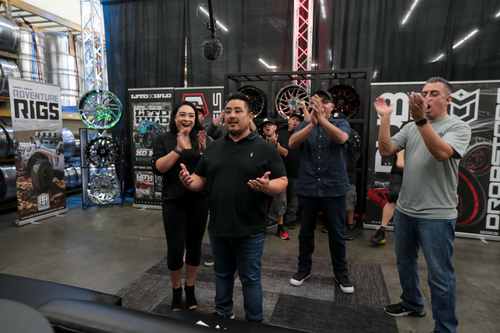
DUB Magazine Co-founder and President Myles Kovacs
(second left) received his SEMA Person of the Year honors
from the DUB headquarters in Santa Fe Springs, California,
during the November 2020 SEMA360 event. His wife,
Cynthia (left), as well as business partners and teammates
were on hand to cheer his achievement.
Ironically, Kovacs began his career feeling somewhat of an outsider. Growing up in a tough East Los Angeles neighborhood, he lacked a firm goal in life. In his senior year, he found himself kicked out of high school but fortunate enough to land a job delivering car rims. Soon he was learning everything he could about wheels. That ultimately led to him to start DUB Magazine when he was 24 with a $20,000 investment secured from his friend Clay York, who has since passed away.
“My first SEMA Show was when I was 17 years old,” he recalled. “I remember going through a hotel casino to a Show event, and I couldn’t even walk the floor. They had to make me stand in the aisle because I was too young. Just seeing that whole thing, I was like, this is larger than life, something I can never dream of.”
During DUB’s early years, Kovacs and his team set up rival events across from the SEMA Show and “suitcased” the Las Vegas Convention Center.
“We were public enemy number one for SEMA,” he said. “We were aggressive. It was really bad. It’s funny that now, I’m personally here.”
So what transformed him from an outsider to a dedicated SEMA volunteer? Kovacs credited coming into contact with association members who encouraged and mentored him, starting with former SEMA Chairman of the Board Wade Kawasaki, whom he met by chance during an automotive photo shoot. On the lengthy drive back from the shoot, he and Kawasaki got to talking.
“That was my first Business 101,” Kovacs said. “I remember Wade telling me you have to be less like a bull and more like a tiger. You’re still strong, but you have to kind of blend in with the bushes. You can’t just be doing everything because that’s what you want to do.”
That conversation helped nudge Kovacs toward deeper involvement with SEMA. The more he engaged with industry peers, the more he discovered camaraderie and support for his own growth as a young entrepreneur. He came to understand the business world and how he fit into that picture. His personal development in turn helped him deal with several challenges over the ensuing years, including two temporary incidents of blindness that ultimately required two separate cornea transplants to save his sight. Those experiences are behind his volunteerism on behalf of the industry and others today.
Myles Kovacs, SEMA’s 2020 Person of the Year.
“If you actually get the proper tools, you’re going to excel greatly, so I’ve focused on dedicating my life to basically sharing tools,” he explained. “That’s how I look at it. I’m giving my time and basically saying my toolbox is pretty good because of all the experiences that I’ve gone through. I’m going to give people the right tools, teach people how to use them, and then it’s up to them to do it.”
Asked if he had anyone special to thank for his award, Kovacs expressed appreciation for a number of people, beginning with his wife, Cynthia, and their children, Andy and Michaela. Additionally, he thanked Kawasaki and his wife Rose; SEMA Chairman of the Board Tim Martin and his wife Kristen; and Kersting and his wife Lisa. (“They’ve been actually mentoring me and Cynthia for the last 20 years—you can’t do it alone,” he said.) Also high on his list were business partners Haythem Haddad, Haytham Elzayn and John Ramos as well as the entire DUB team, who, he added, “make me look really good and really make it all happen.”
“The SEMA Industry Awards Ceremony is always a high point of SEMA Week,” Kersting said. “This year, the awards took on special significance as the aftermarket rose to meet the unprecedented challenges of 2020. Myles and our other honorees stood out as examples of the unique sort of excellence, volunteerism and determination we find throughout our SEMA-member businesses. We again congratulate Myles and all our 2020 award recipients.”
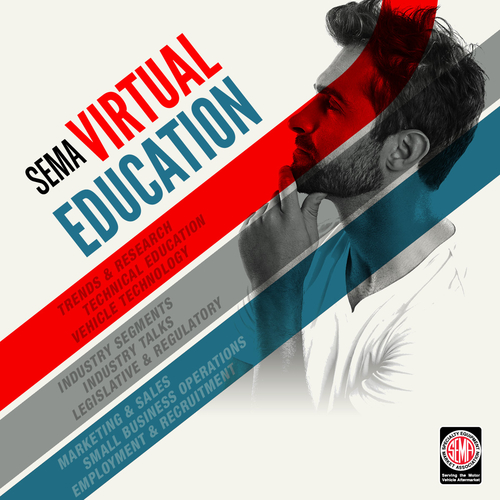
SEMA Virtual Education includes live, simu-live and debut recordings that provide SEMA members with an opportunity to hear from and engage with leading experts, as well as learn about the most current hot topics and trends.
Upcoming sessions are listed below, with new sessions announced throughout the year. Stay tuned to SEMA eNews as new events are announced weekly:
SEMA Virtual Education Upcoming Events
*Stay tuned to SEMA eNews as new events are announced weekly.
Tuesday, January 19, 2021 - Everything You Need to Know About the New PPP Program
Track:Legislative & Regulatory
Last month, the $900 billion federal stimulus law that was enacted included $284 billion for first and second Paycheck Protection Program (PPP) loans and a simpler one-page loan forgiveness application form. Learn more about the new law during this informational webinar presented by national columnist and CPA Gene Marks.
Wednesday, January 20, 2021 – Tire Knowledge 201: Standards for Determining Rim Width and Load Capacity
Series:Wheel and Tire Industry Insights, powered by WTC
Track:Industry Segments, powered by SEMA Councils and Networks
Wheel and tire professionals are strongly encouraged to tune in to this webinar, where leading tire technical experts will address the specifics of load index and load ranges, when and where they apply, and how to calculate the correct air pressure for certain applications. This 40-minute session will answer all the basic questions and empower sales staff to be able to communicate and effectively sell to consumers.
Tuesday, January 26, 2021 – Navigating Career Advancement Conversations
Series:Sharpen Your Soft Skills Series, powered by SBN
Track:Industry Segments, powered by SEMA Councils and Networks
As the new year begins, it’s time to think about your career. Promotions and job advancements are likely top of mind, but asking for a raise or promotion is not always easy. In “Navigating Career Advancement Conversations," owner of HR Culture Geek Elizabeth Jacobs will help attendees understand the best methods to connect with management to successfully attain salaries, raises and promotions. The one-hour session will address how to avoid what can potentially be an uncomfortable conversation, and how to focus the discussion on their work and not the finances.
Wednesday, January 27, 2021 – What Now? Industry Path in the Wake of Disruption
Series:SEMA Industry Insights Series
Track:Trends & Research
As aftermarket businesses enter the new year, the state of the industry will be closely watched for new sales trends and market planning. Join SEMA Market Research as they introduce potential scenarios for 2021 and explore the industry’s path in the wake of disruption, the economy, and changes in vehicle segment sales and market size.
Larry Henry passed away January 4. He had been experiencing health issues, which developed into an aggressive cancer.
Henry was born October 31, 1942, in East Liverpool, Ohio. He enjoyed a lifetime in the world of automotive performance and racing. His first job was working the counter of a NAPA parts store in California, which lasted only a short time, until he jumped at the opportunity to join Keith Black Racing as the parts manager. In 1969, he moved to Detroit and joined Chrysler’s budding performance and race parts group, where he stayed for 30 years.
Henry helped develop the first Chrysler Performance Parts catalog in 1970. It was an eight-page typed black-and-white brochure for hardcore racing parts. MOPAR Performance had separately introduced a performance parts program of its own called “Hustle Stuff” in 1968, and the two programs were soon combined.
Henry was part of the new combined group, and became a key contributor to every performance and race parts catalog from then on. The group’s first catalog was titled “1971 Drag Racing Parts Catalog.” In 1981, the program was titled Direct Connection, and eventually became MOPAR Performance with Henry as a mainstay.
In 1975, the Chrysler Kit Car parts program came about. It was the industry’s first “over-the-counter” complete race car kit from an automobile manufacturer. Henry was an integral part of the development team and he managed the end result.
Over the years, Larry had many specific titles at Direct Connection and MOPAR Performance. He was a racer and enthusiast liaison and manager for all forms of motorsports and a drag-racing manager for all corporate-sponsored teams.
Henry’s technical and historical knowledge of Chrysler products, trim, colors and accessories was widely recognized. That background led him to be included in Chrysler’s Historical Group, which planned the Chrysler Museum. He received honors from clubs, organizations and the industry. In 2017, he was inducted into the MOPAR Collector's Guide “MOPAR Hall of Fame.”
Retirement took the Henrys to Buckeye, Arizona, in 1999. He is survived by his wife Glenda, four children, six grandchildren and his brother Hiram. The family has created a virtual memorial. Henry requested that donations in his name be made to Brad Keselowski’s Checkered Flag Foundation.
Submissions are now being accepted for SEMA-member companies to participate in the 2021 Ford Project Vehicle Program.
Open to SEMA member company manufacturers, designers and/or retailers dedicated to supporting new product development, companies must be willing to actively promote the vehicle with their products through an established marketing plan and be financially capable of spending promotional dollars.
Ford Aftermarket Project Vehicle Program Criteria:
Feature the vehicle in a booth at the 2021 SEMA Show in Las Vegas.
Use Ford accessory products as specified and provided by Ford Motor Company.
Register and keep the vehicle in your company name during the entire contract period.
Purchase and maintain $3 million in General Liability Insurance, $3 million in Automotive Liability Insurance, $1 million in Employers Liability and demonstrate Workers Compensation coverage; an Umbrella Policy may be used to achieve coverage limits.
Commit to feature the vehicle with the Ford logo intact and visible.
Order a California-certified vehicle if you intend to register or use the vehicle primarily in California or any other state that has adopted California emissions standards. Failure to do so may subject you to a state fine.
Make vehicles available to Ford or its Dealers for display, at the owner’s discretion.
Submit written quarterly status reports for a period of 18 months, as specified in the contract, stating:
Product development.
Modifications to the vehicle
Events (including dates, location and type of event).
Media exposure (originals or color copies).
Company advertising featuring the vehicle.
Social media exposure
A copy of your current vehicle registration
To request a project vehicle:
1. E-mail a one-page project summary with the following information to semainfo@ford.com.
Vehicle/theme
Vehicle modifications
New product development
Promotional plan
Vehicle display location at the 2021 SEMA Show
2. Mail and/or E-mail a detailed project proposal to the following:
Ford Motor Company
21175 Oakwood Blvd., PDCDC MD579
Dearborn, MI 48124
Attn: Kyle Ebner semainfo@ford.com
Include detail supporting the one-page project summary on company letterhead, a color rendering and past project vehicles examples.
Information on Ford vehicles is available at www.ford.com.
Proposal submission deadline, vehicle lineup and award recipient notification date will be announced in an upcoming SEMA eNews Ford Project Vehicle announcement.
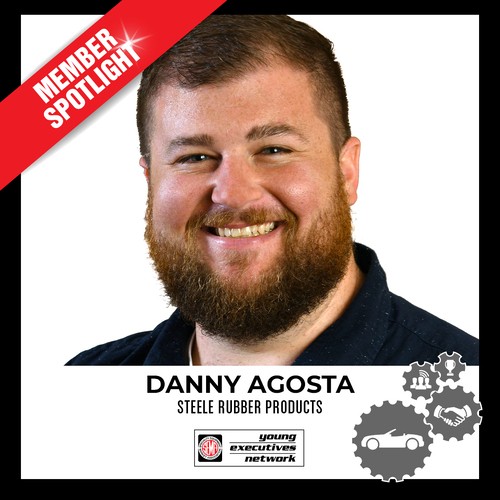
Danny Agosta is the SEMA Young Executives Network’s (YEN) newest Spotlight member. Agosta is the marketing manager at Steele Rubber Products, a leading manufacturer of rubber parts for the specialty equipment aftermarket.
Read about his typical weekend plans, and listen in to his video on the importance of getting involved and making connections in the industry.
SEMA: What is the best advice you have ever received?
Danny Agosta: Fish where the fish are.
SEMA: What keeps you in the industry?
DA: Cars and friends. I don’t think I’ll ever leave.
SEMA: Where can you be found on a Saturday?
DA: Out and about with my wife and two kids. Nowadays we’ll take any reason to get out of the house!
SEMA: How do you prepare for an important meeting?
DA: Excited for the end! What I mean is I’m anxious to get to whatever action items come out of it.
SEMA: If you could go to lunch with one industry leader, living or dead, who it would be?
DA: John Menzler. I've heard so many wonderful stories from so many people (including many in my company), and I unfortunately never had the chance to meet him. But to leave that kind of impression on such a variety of people, he must know a thing or two about life.
Motorhead Digital is the latest SEMA Hot Rod Industry Alliance (HRIA) Member Spotlight company. In this week’s feature, company founder Barry Alt shares how Motorhead Digital is helping to bring awareness to aftermarket restoration, performance and restyling shops and how he utilizes his expertise in website design and marketing to fuel an industry he is passionate about.
SEMA: Tell us the story of your company. How did you start?
Barry Alt: I'm the founder of Motorhead Digital, a digital marketing agency that provides our signature Marketing Maximizer programs specifically developed for auto restoration, performance and restyling shops. These programs are geared towards customer acquisition and conversion.
With more than 23 years of experience in digital marketing and website development helping any number of businesses with their marketing and website development needs in 2017, we shifted our focus on a goal to help our clients market and grow their shops through strategic marketing practices. You can read my helpful articles in The Shop magazine and on the Motorhead Digital website.
To fuel my passion I also own a classic ’69 427 and a ’13 427 Corvette and spend my spare time at shows like SEMA and PRI, as well as attending numerous car shows and drag racing events. I'm also a USPSA-certified range officer and competitive shooter.
Barry Alt
SEMA: What was your breakthrough moment?
BA: After being in the website design and marketing business for more than 20 years, I realized in 2017 that I could focus on a niche that I was already passionate about. I created Motorhead Digital to focus on supporting and helping auto restoration, performance and restyling shops with their marketing and websites. Since I already knew and loved this space, it was a no brainier to take my business in this direction. So far, it’s been great, as I love working with shop owners and really love seeing what they’re creating and helping them move their businesses to the next level.
SEMA: Tell us about your business now in 2020 and what projects are you working on?
BA: Our big project for 2020 was the roll out of our signature Marketing Maximizer programs specifically developed for auto restoration, performance and restyling shops. We’re also focused on helping one of our current clients, RJ Cars Inc., and others in the industry up their marketing game as well as writing a shop profile article for RJ Cars that will appear in a publication in the automotive industry.
SEMA: Tell us about a build you are proud of.
BA: Since we’re not a shop, we really don't build cars but we’re super proud of our ’69 427 Tri-Power Corvette that we tinker with and take to local car shows.
SEMA: What advice do you have for young professionals contemplating a career in the automotive aftermarket?
BA: After 23-plus years of experience running a business, you need to have a solid business plan and processes, and understand the basics of running a business, niche down if you can (be the expert on that one thing) and pay your bills and taxes. Don’t try to do everything yourself. Focus on what you know best and when you can bring in the experts, especially in the bookkeeping, accounting and marketing fields.
Moss Motors/Moss Miata is the first company to be recognized by the SEMA Automotive Restoration Market Organization (ARMO) new-member spotlight program. Coined for servicing customers that drive and maintain vehicles that reflect the golden days of British motoring and sports cars, the company’s history is one which dates back to 1948. SEMA spoke to the company’s director of sales and marketing Kevin Kastner for the story and an update on their business in 2021.
SEMA: Tell us the story of your business. How did you start?
Kevin Kastner: Moss Motors started in 1948 by Al Moss to support the genesis of the sports car market when soldiers started importing MG TCs from England. Moss Motors continued to provide parts and accessories for British sports cars for more than 70 years, and expanded into another great sports car, the Miata, in 1994.
SEMA: What was your breakthrough moment?
KK: Moss Motors made some strategic decisions to purchase large supplies of spare parts and tooling during the era when little British sports cars like the MG and Triumph were going out of production. By building a large store of parts and moving more into the development, remanufacturing and sourcing of replacement parts was critical to keeping these unique and fun sports cars on the road for decades to come.
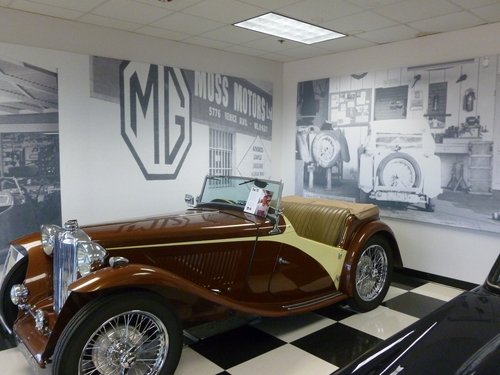
Al Moss’ ’48 MG TC.
SEMA: Tell us about your business now in 2021 and what projects are you working on?
KK: Moss Motors continues to invest in its capabilities to develop restoration parts and upgrade components for British sports cars and the MX-5 Miata. Having recently acquired a Jaguar parts business, our plans include the expansion of products and availability on the East Coast from our Virginia facility and finding creative ways to house more in our California warehouses. Beyond 2020, our goals include the evolution of our sales, marketing and distribution to better serve current and future sports car owners and restoration shops with more selection and better service.
SEMA: Tell us about a particular project, product or build you are proud of.
KK: Despite the pandemic interruptions, Moss is proud to have kept our employees healthy and employed while still doing our very best to keep our customers fulfilled as they restore, repair and upgrade their cars.
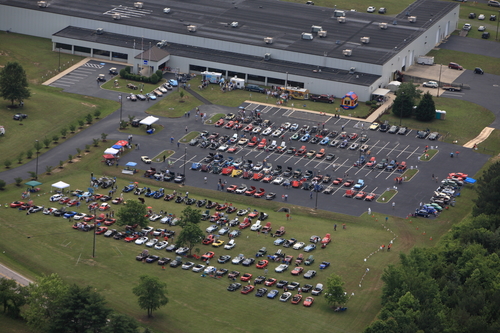
Moss Virginia distribution center, present day.
SEMA: What advice do you have for young professionals contemplating a career in the automotive aftermarket, particularly in the restoration segment?
KK: There's no replacement for enthusiasm and having a sincere interest in learning about the cars, culture and communities that keep the automotive aftermarket thriving. Be authentic, have some core mechanical skills and be prepared to reinvent yourself over and over.



 SEMA Virtual Education includes live, simu-live and debut recordings that provide SEMA members with an opportunity to hear from and engage with leading experts, as well as learn about the most current hot topics and trends.
 Submissions are now being accepted for SEMA-member companies to participate in the 2021 Ford Project Vehicle Program.
 Danny Agosta is the SEMA
  Motorhead Digital is the latest SEMA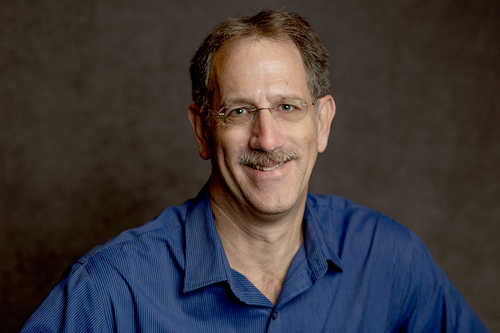
 Moss Motors/Moss Miata is the first company to be recognized by the SEMA