As industry requirements for emissions compliance evolve, manufacturers will need to prepare and adapt to new testing procedures. Stephen Ruiz, ACS, Automotive Consulting Services, will share firsthand experience on emissions calibration and compliance during a webinar on Tuesday, February 15, at 1:00 p.m. (PST).
Participants will learn practical experience about how to go through the process of emissions calibration and compliance as they learn from Ruiz’s extensive experience with powertrain calibration for internal combustion engines and transmissions to meet specific engineering requirements.
Register here to join the webinar, “A Practical Approach to Emissions Calibration and Compliance.”
Members of the Truck and Off-Road Alliance (TORA), Emerging Trends & Technology Network (ETTN) and SEMA Businesswoman’s Network (SBN) are invited to a cross-council mixer on Thursday, February 3, from 6:00 p.m.–8:00 p.m. at King of the Hammers.
Participants will get updated on resources and volunteer opportunities available in the industry, watch the short-course race and learn about land use and stewardship from the Off-Road Business Association (ORBA).
The event is located inside the VIP tent and will provide the ideal opportunity for attendees to meet new contacts and strengthen existing connections. Participants will get updated on resources and volunteer opportunities available in the industry, watch the short-course race and learn about land use and stewardship from the Off-Road Business Association (ORBA).
King of the Hammers attendees who are not current TORA, ETTN or SBN members but are interested in getting more involved are invited to attend, as it is a great way to introduce yourself and learn about what SEMA Councils and Networks have to offer.
Registration is required if not already attending King of the Hammers and are attending the mixer only. Drinks and light refreshments will be provided.
The 2022 SEMA Scholarship application period for students preparing for careers in the automotive or performance parts industries is now open and will run through March 1, 2022.
What does winning a SEMA Scholarship mean? Watch the video below to hear firsthand from recent recipients Jennifer Allen, Almon Evans, Zach Griggs and Stephen Redlack.
The SEMA Scholarship and Loan Forgiveness program represents more than just financial aid; it is amongst the best opportunities for students who have a passion for automobiles and are pursuing careers in the automotive industry.
Scholarship winners have access to resources through SEMA Education and the SEMA Career Center, and in-person networking opportunities at the SEMA Show. Industry professionals who have children, friends or know someone who may qualify are encouraged to share this opportunity with them.
Interested applicants can review and complete the scholarship application at www.sema.org/scholarships.
Influencer Sana Dadabhoy (@Ladyzla_) was invited to join Toyota at the SEMA Garage for a ’22 GR86 measuring session. With complete access to the new GR86 in both standard and premium trim levels, Dadabhoy joined members as they explored this exciting new platform. SEMA Mechanical Engineer Luis Morales also provided a hands-on demonstration of how SEMA members can utilize Garage services to get a jumpstart on R&D.
According to the OEM, “With two grades and a choice of manual or automatic transmission, the ’22 GR86 is ready to thrill at every turn.” In support of that claim, Toyota boasts that the powerplant on the GR86 boasts 228hp, up from 205 and 184 lb.-ft. of torque, up from 156 and peak torque arrives far earlier in the powerband at 3,700 RPM, versus 6,600 RPM.
To learn more about the Toyota GR86, visit www.toyota.com/gr86. If you have questions about the recent measuring session, or want to join fellow SEMA members for the next event visit www.semagarage.com.
SEMA Wheel and Tire Council (WC) members are invited to join the council’s first-ever Virtual Happy Hour on Wednesday, February 2, at 4:00 p.m. (PST).
The event will connect wheel and tire professionals from throughout the United States and offer them a chance to learn how one key player in modern marketing advanced bringing custom wheels to the aftermarket. Participants will hear from special guest Brad Fanshaw, who revolutionized the go-to marketing strategy for custom wheels as the president and COO of Boyds Wheels and Hot Rods by Boyd, as he discusses:
The role of cross promotion and endorsements in growing a wheel brand.
Tips on staying relevant in a changing marketplace.
Integrating media with your core business.
Getting started in wheels after coming from a completely different industry (action sports).
Innovating field marketing for aftermarket wheels while running Boyds.
Attendees will then compete in a fun trivia challenge for a chance to win bragging rights and prizes!
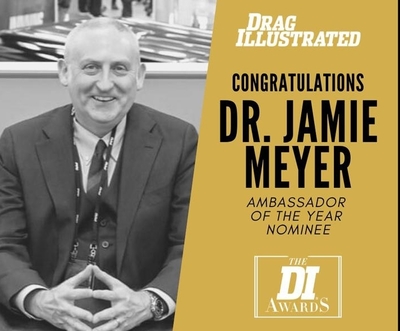
PRI President Dr. Jamie Meyer Among Inaugural Drag Illustrated Awards Nominees
Drag Illustrated, the drag-racing magazine and content producer, has announced the nominees for the inaugural Drag Illustrated Awards. PRI President Dr. Jamie Meyer has been nominated in the “Special Award for Ambassadors to the Sport of Drag Racing” category for PRI’s advocacy and membership efforts to support the sport of drag racing. He appears alongside Brian Lohnes, Clay Millican, Ron Capps and Jim Hughes.
Street Outlaws: No Prep Kings champion Ryan Martin, NHRA Pro Stock world champion Greg Anderson, PDRA Pro Boost driver and tuner Todd Tutterow, NHRA Top Fuel world champion Steve Torrence, and NHRA Pro Stock Motorcycle world champion Matt Smith were nominated for the Racer of the Year.
“Our editorial team spent a lot of time narrowing down these categories and choosing the most deserving nominees,” said Wes Buck, founder, and editorial director, Drag Illustrated. “We tried to cover as many bases as possible by highlighting the people, places, and experiences that made 2021 such an incredible year for the sport of drag racing.”
A selection committee will determine the winners, which will be announced during Drag Illustrated’s DI Awards Show live streamed on Thursday, February 3, at 6:30 p.m. (CST) on its Facebook and YouTube pages. The winners will also be featured in the new Racer of the Year Issue launching in early February. For more information, visit dragillustrated.com.
BOOST Products USA Announces Pricing Updates for 2022
BOOST Products USA has experienced many changes throughout its supply chain, most notably, an increase in the cost of raw materials and shipping and logistics. Despite these changes, the company has been able to keep its prices the same, or at worst, up to 15%. All price updates are effective January 1, and have been updated throughout the SEMA Data channels. The company has also implemented steps to ensure even higher-quality product data available through SEMA Data, including more robust descriptions and product images. For more information, contact Tim Trampedach at tim@boostproductsusa.com.
Horizon Brands’ ‘PROJECT X’ Off-Road Solutions Organization Announces New Leadership
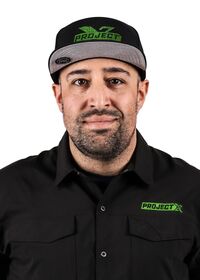
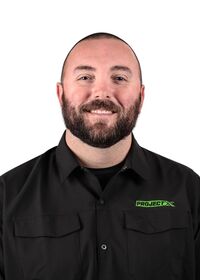
PROJECT X, a new innovator in the off-road lighting solutions space, has announced the promotion of Jared Chavez to director of brand development and the addition of two industry veterans, Matt Moghaddam and Shawn Bell, to the marketing and sales leadership teams.
Jared Chavez
Chavez, a 16-year industry veteran, spent the last two years leading the charge on developing the TYPE S brand (a division of Horizon Brands) through events, sponsorships, product development and relationship building. Chavez’s new role signifies Horizon’s investment in the future of the off-road industry.
Matt Moghaddam
Moghaddam brings years of industry marketing experience, working for brands including MagnaFlow, Nitto Driving Line and Automotive Performance Group (APG) Offroad. His expertise in content development, event activation and marketing strategy will be crucial to the high-growth expectations of the PROJECT X brand.
Shawn Bell
Leading the sales charge for PROJECT X is Bell, who has spent more than a decade in the aftermarket automotive industry, as both a salesman and an enthusiast. His wealth of experience, relationships and enthusiasm for the off-road industry help round out the 2022 Q1 PROJECT X leadership team.
The Jessi Combs Foundation Announces 2022 Partnership With Warn Industries
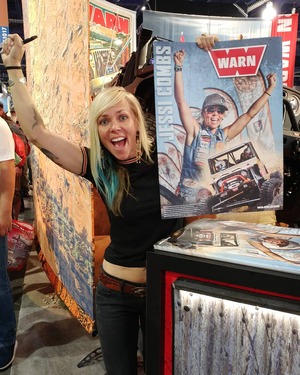
The Jessi Combs Foundation (JCF) has announced its first corporate partnership with Warn Industries—one of Combs’ longest running partners. Warn, in addition to making a direct financial commitment to help grow the JCF Scholarship program, is also contributing significant logistical and in-kind resources to The Jessi Combs Foundation for 2022. In total, $70,000 worth of scholarships have been awarded to 14 women since the foundation’s inception in 2019, and with Warn’s support, the JCF hopes to make greater contributions in 2022.
Warn, in addition to making a direct financial commitment to help grow the JCF Scholarship program, is also contributing significant logistical and in-kind resources to The Jessi Combs Foundation for 2022.
“To have Warn commit to support the JCF is an absolute win for all and we know Jessi is smiling down, giddy with joy” said Kelly Combs, Jessi’s brother and JCF Board member. “Warn was one of Jessi’s biggest and longest-running partners, and as they did with her, they have quietly stood behind us since day one. We’re thrilled to have them on board as our first official corporate sponsor!”
“The Warn team is proud to support the Jessi Combs Foundation. Working closely with Jessi for a number of years, she had a profound effect on many members of our team. We believe in the work the foundation is doing and are honored to be part of it” said Jake Petersen, Warn’s vice president of product and marketing.
The mission of The Jessi Combs Foundation is to Educate, Inspire and Empower the next generation of trailblazing and stereotype-breaking women. A guiding principle to this mission is a simple question “What Would Jessi Do?”
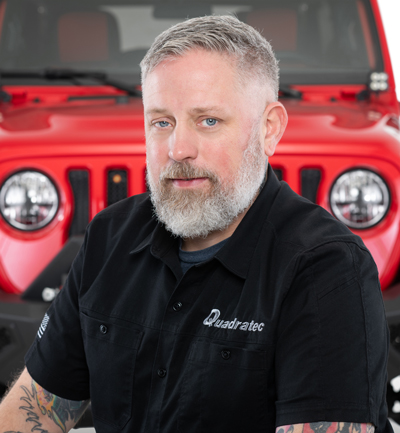
Eric Ammerman
Quadratec Appoints Director of Content to Lead New Creative Department
Quadratec Inc. promoted Eric Ammerman to director of creative content, effective immediately. Ammerman will oversee Quadratec’s print catalog, as well as its digital product pages, YouTube channel and Torque editorial section.
Ammerman recently celebrated his 10-year anniversary at Quadratec and formerly helmed the company’s video department and YouTube channel. Additionally, he headed Quadratec’s YJL project vehicle build that was a ‘Battle of the Builders’ nominee at the 2021 SEMA show. He will be responsible for designing, framing and driving Quadratec’s creative efforts to ensure a consistent end-to-end brand experience on the company’s digital and print platforms.
BorgWarner Invests in Battery Management Software Company
BorgWarner has announced its investment in Qnovo, a privately held, Silicon Valley-based software and controls company.
“With Qnovo’s focus on battery health measurement and fast charging, the investment deepens BorgWarner’s capacity to further its battery solutions portfolio,” a company release said.
“BorgWarner sees a great opportunity with our strategic investment to collaborate with Qnovo, allowing us to leverage its advanced battery management software in our electrification portfolio,” said Harry Husted, chief technology officer of BorgWarner. “We look forward to partnering with Qnovo as they enter the automotive industry to provide battery solutions to the electric vehicle market.”
BorgWarner is the lead investor for Qnovo’s multi-million-dollar, Series-C capital raise.
ProMedia Launches Three New Websites for NMRA, NMCA and Race Pages
ProMedia Events & Publishing has introduced three new websites for the NMRA Ford Nationals (www.NMRAdigital.com), NMCA Muscle Car Nationals (www.NMCAdigital.com), and its drag racing/street performance media property, Race Pages Magazine (www.RacePagesDigital.com). ProMedia worked with renowned website and advertising agency Admark to develop the new websites.
“We’re constantly working on improving the customer experience with all of our brands from our live events to their experiences in the digital space. By upgrading our websites we’re focusing on bringing NMRA and NMCA events to an even higher level of exposure, making it easier for racers and fans to find information and relevant news about our events, and give our sponsors and advertisers the best digital package,” said Steve Wolcott, ProMedia’s founder and CEO. “For more than 20 years, our company’s digital strategy has always included strong websites featuring compelling content and valuable event information. We think you’ll you be impressed as we continue to push harder into the latest design, improving the customer experience even more.”
The three brands—NMRAdigital, NMCAdigital and Race Pages—reach hundreds of thousands of unique visitors yearly through exclusive content including news, features, videos and the latest racing/performance technology. The NMRAdigital and NMCAdigital sites serve as the official landing pages for national events and include all information a racer or fan needs from special features to daily schedules, rules, payouts/contingency, directions and ticketing information. The event coverage includes daily news from each stop on tour, photo galleries and complete qualifying and elimination results.
Bonnier Corp. Hires Olsewski to Fuel Motorsports Media
Bonnier Corp. has hired Steven Olsewski as the editorial lead for its motorsports brands. Olsewski, who has a long history of content creation within the market, will oversee editorial-content creation as Bonnier expands its offerings within key motorsports segments. He previously served as editor of Power Automedia’s leading brands, Off Road Xtreme and Diesel Army, and more recently was the driving force behind Off-Road Assassin.
Beginning with Off-Road Expo and Sand Sports Super Show, Olsewski will develop the editorial plans for motorsports content, work to develop content partnerships with key stakeholders, build out new editorial offerings, and leverage Bonnier’s market-leading events as year-round content engines.
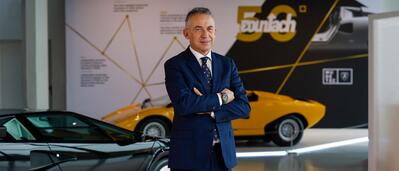
Lamborghini Appoints Maurizio Reggiani as Vice President of Motorsports
Maurizio Reggiani. Photo courtesy: Lamborghini
Lamborghini has announced Maurizio Reggiani as vice president of motorsports. Reggiani will be responsible for the strategic direction of Lamborghini’s entire motorsports division, which secured victories in GT championships in recent years. Lamborghini has also appointed Rouven Mohr as the chief technical officer.
SRX Announces Don Hawk as CEO
Longtime Speedway Motorsports executive Don Hawk has been announced as the new CEO for the Superstar Racing Experience (SRX), the racing series launched by three-time NASCAR Cup Series champion Tony Stewart and fellow NASCAR Hall of Famer Ray Evernham in 2021. In his new role, Hawk will be responsible for the strategy, operations and business development, including media, sales and marketing, personnel, track relationships, rules, safety, international expansion and more, as reported by AP News. Hawk began his tenure with Speedway Motorsports in 2007 and held positions including chief racing development officer and vice president of business affairs. Prior, he served as a consultant and director of regional racing development for NASCAR.
SRX hosted six events televised on CBS in 2021 and included visits to Stafford Motor Speedway (Stafford, Connecticut), Knoxville Raceway (Knoxville, Iowa), Eldora Speedway (Rossburg, Ohio), Lucas Oil Indianapolis Raceway Park (Brownsburg, Indiana), Slinger Speedway (Slinger, Wisconsin), and Nashville Fairgrounds Speedway (Nashville, Tennessee). The 2022 SRX schedule has yet to be announced. For more information, visit srxracing.com.
NPW Miami Acquires Jim’s Auto Parts of Ft. Lauderdale
NPW continues to expand with their acquisition of Jim’s Auto Parts. Jim’s, owned by Jim Arpin has been in business since 1962 and is the last of the Broward Group of stores that is now under NPW management. The Broward Group was the largest independent group of auto parts stores in South Florida. Jim’s Auto will continue to fly the Bumper to Bumper banner.
Have some company news you would like to share? Let us know and the news may appear in an upcoming issue of SEMA eNews. Send your items for consideration to editors@sema.org.
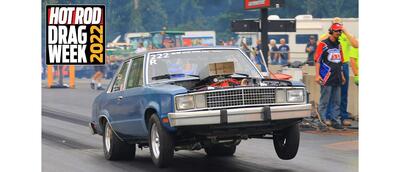
2022 Dates, Stops for HOT ROD Drag Week, Power Tour Announced
MotorTrend has announced two of its annual events are returning in 2022: the HOT ROD Power Tour (June 13–17) and HOT ROD Drag Week (September 18–23). The 28th Annual HOT ROD Power Tour Driven by Continental Tire is “going South” for 2022. The 1,000-mile traveling car show is set to take place Monday, June 13, through Friday, June 17, and will visit motorsports venues in Tennessee, Alabama, Florida and Georgia.
HOT ROD Drag Week will be held September 18–23. Image courtesy: MotorTrend
Meanwhile, the “Fastest Street Car in America” will be crowned during the 18th annual HOT ROD Drag Week presented by Gear Vendors Overdrive, Sunday, September 18, through Friday, September 23. The endurance drag racing event will visit four classic drag strips: Memphis International Raceway (Millington, Tennessee), World Wide Technology Raceway (Madison, Illinois), Beech Bend Raceway (Bowling Green, Kentucky) and Alabama International Dragway (Steele, Alabama).
Day 1: Monday, June 13—Memphis International Raceway, Millington, Tennessee
Day 2: Tuesday, June 14—Nashville Superspeedway, Lebanon, Tennessee
Day 3: Wednesday, June 15—Hoover Met Complex, Hoover, Alabama
Day 4: Thursday, June 16—Pensacola Fairgrounds, Pensacola, Florida
Day 5: Friday, June 17—Atlanta Motor Speedway, Hampton, Georgia
HOT ROD Drag Week 2022 Dates and Locations:
Registration, Tech Day, and Test’ n’ Tune: Sunday, September 18—Memphis International Raceway, Millington, Tennessee
Day 1: Monday, September 19—Memphis International Raceway, Millington, Tennessee
Day 2: Tuesday, September 20—World Wide Technology Raceway, Madison, Illinois
Day 3: Wednesday, September 21—Beech Bend Raceway, Bowling Green, Kentucky
Day 4: Thursday, September 22—Alabama International Dragway, Steele, Alabama
Day 5: Friday, September 23—Memphis International Raceway, Millington, Tennessee
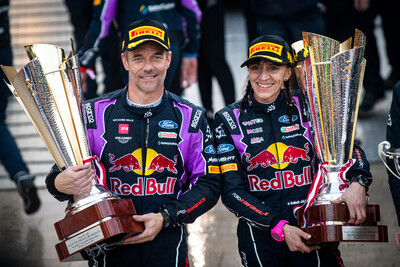
Record-Breaking Loeb Snatches Win at FIA World Rally Championship
Sébastien Loeb and Isabelle Galmiche grabbed a Rallye Monte-Carlo victory last weekend.
Sébastien Loeb became the oldest winner of an FIA World Rally Championship round after grabbing a Rallye Monte-Carlo victory from the under the nose of old foe Sébastien Ogier last Sunday. The 47-year-old Frenchman trailed Ogier by almost half a minute heading into the penultimate speed test of the four-day event in the French Alps. But when Ogier limped to the finish with a front left puncture, Loeb reclaimed a lead he had conceded to his compatriot on Saturday. He stayed calm through the final test to seal his eighth Monte-Carlo success in a Ford Puma by 10.5 seconds.
Loeb, starting his first WRC event for more than a year, was competing for the British M-Sport Ford squad in a one-off appearance. He joins Ogier at the top of the Monte-Carlo roll of honor with eight wins. His victory means he has topped the WRC podium in three different decades. Co-driver Isabelle Galmiche, a 50-year-old schoolteacher who was making her first top-tier start, became the first female winner of a WRC fixture since 1997.
Craig Breen finished almost 90 seconds further back in third in another Puma, giving the British-based M-Sport Ford squad an early lead in the manufacturers' championship. Kalle Rovanperä languished outside the top 10 after the opening night, but after set-up changes improved the balance of his GR Yaris, he soared up the order to secure fourth. Despite losing time with engine issues on Saturday, Gus Greensmith claimed fifth in another Puma after winning his first special stage at WRC level. Thierry Neuville was sixth in a Hyundai i20 N.
The championship switches to Scandinavia next month for the only pure winter round of the season. Rally Sweden takes place in Umeå on February 24–27.
NMCA Muscle Car Nationals Announces Red Line Oil as Title Sponsor
Red Line Oil has signed a two-year agreement to become the title sponsor of the NMCA Muscle Car Nationals. The Red Line Oil NMCA Muscle Car Nationals offers six national events catering to grassroots drag racing, street performance and the restoration and customization segments. The Red Line Oil NMCA Muscle Car Nationals is prepared to launch at Bradenton Motorsports Park on March 17–20 for the NMCA Muscle Car Mayhem Presented by Holbrook Racing Engines. For the complete 2022 season schedule, visit here. For more information, visit nmcadigital.com.
Forrest Lucas, Founder of Lucas Oil, Named to the Missouri Sports Hall of Fame Class of 2022
Lucas Oil Products Inc. has announced the induction of Forrest Lucas, founder of Lucas Oil and namesake of Lucas Oil Speedway and Lucas Oil Stadium, into the Missouri Sports Hall of Fame. He is recognized worldwide as a generous supporter of motorsports and the innovative pioneer of problem-solving oils and fuel treatments. Lucas and his fellow inductees will be honored in ceremonies on Sunday, February 6, in Springfield, Missouri.
Lucas founded the company in 1989 alongside his wife Charlotte in an effort to create oil and fuel treatments for the trucking industry that would reduce mechanical failures and increase mileage. Since the company’s realization, Lucas has created engine oils and fuel treatments for just about any machine with an engine or moving parts. Beyond being a self-made businessman, he is also a generous philanthropist and sports marketing legend—famous for strategic sponsorships spanning amateur and professional sports of all kinds.
Lucas’ numerous contributions to the automotive industry and sports nationwide are traceable over decades. He has made significant investments in sports across the Midwest and around the country. From the Lucas Oil Speedway, known as “The Diamond of the Dirt Tracks” in Wheatland, Missouri, to high-profile sponsorships like Lucas Oil Stadium, Home of the Indianapolis Colts, as well as exclusive oil of Monster Jam and the Dallas Cowboys.
He is accompanied into the 2022 Hall of Fame Class by St. Louis Cardinals outfielder Matt Holliday and Ken Morrow from the “Miracle on Ice” 1980 USA Olympic Gold Medal hockey team. Missouri Sports Hall of Fame’s CEO & Executive Director Jerald Andrews will introduce Lucas and the Class of 2022 Enshrinement at the Highland Springs Country Club with a reception presented by Reliable Toyota to follow.
NHRA Announces Hot Rod Heritage Series Schedule
NHRA has announced the eight-race schedule for the 2022 NHRA Hot Rod Heritage Racing Series, featuring two Wally Parks NHRA Motorsports Museum’s Hot Rod Reunions. The series will feature nitro-burning Nostalgia Top Fuel dragsters and Nostalgia Funny Cars. The 2022 season will begin at the Good Vibrations Motorsports March Meet, March 3–6, at Famoso Dragstrip. The California Hot Rod Reunion will close the season at Famoso Dragstrip on October 21–23. Nostalgia Top Fuel will compete for points at five events during the season, and Nostalgia Funny Car will compete for points at six events.
In addition to Nostalgia Top Fuel dragster and Nostalgia Funny Car, there are two groups of additional classes. Group 1 includes A/Fuel, Jr. Fuel, and 7.0 Eliminator, while Group 2 includes Nostalgia Eliminator l, Nostalgia Eliminator ll, Nostalgia Eliminator lll, A/Gas, B/Gas, C/Gas, D/Gas, and Hot Rod Eliminator. Drivers in each class will be able to run a combination of events that will award them points toward their respective championships. For the complete schedule, visit here.
Nominations for the 2022 SEMA Hall of Fame class are open at www.sema.org/hof.
Induction to the Hall of Fame is the most prestigious award presented to an individual by the association and honors the pioneers who have contributed to the growth of the automotive aftermarket over a long period of time.
“Our industry is fueled by nothing short of passionate and hard-working individuals. The SEMA Hall of Fame honors those whom without, our industry would not be what it is today,” said Nathan Ridnouer, SEMA vice president of councils and membership.
“The industry’s input in the selection process is an invaluable asset to the association in identifying deserving hall of fame inductees.”
Since its inception in 1969, 165 individuals have been inducted into the SEMA Hall of Fame, including:
Agosta, Matt (Steele Rubber Products)
Airheart, Bob (Bob Airheart Sales)
Alderson, Don (Muldoon Engineering)
Amato, Joe (Keystone Automotive Warehouse)
Appelgate, Brian (B&M Racing & Performance)
Arias Jr., Nick (Arias Pistons)
Arkus-Duntov, Zora (Chevorlet Motor Division)
Ayres, Joel (Automtoive Aftermarket Charitable Foundation)
Babcox, Tom (Babcox Publications)
Baney, Lou (SEMA)
Barnett, Don (Speed Warehouse)
Barris, George (Barris Kustom Industries)
Barsamian, Rich (Advanced Clutch Technology Inc.)
Bartlett, John (Grant Piston Rings)
Baskerville, Gray (Hot Rod Magazine)
Belond, Sandy (Belond Mufflers)
Bingham, Jim (Winners Circle Speed & Custom Inc.)
Black, Keith (Keith Black Racing Engines)
Bleiweis, Raymond (Rocket Industries)
Blum, Charles R. (SEMA)
Bobins, Chuck (CB Sales)
Bolio, Steve (Scafidi-Bolio & Associates)
Borick, Louis (Superior Industries)
Borré, Dan (Keith Black Performance Inc.)
Borré, Jim (Manik Motors)
Brock, Ray (Petersen Publishing)
Brothers, Paul "Scooter" (Competition Cams, Inc.)
Brown, Ray (Superior Industries)
Cahill, Robert (Chrysler Corp., Mopar Division)
Campbell, Ben, Nighthorse (Senator)
Card, Charley (Honest Charley's)
Carleton, GiGi (Robert E. Petersen Foundation)
Cepek, Dick (Dick Cepek Inc.)
Chandler, Bob (Bigfoot 4x4 Inc.)
Chapouris, Pete (SO-CAL Speed Shop)
Chrisman, Art (Chrisman’s Auto Rod Specialist – CARS)
Coddington, Boyd (Boyds Wheels)
Coker, Corky (Coker Tires)
Coleman, Ron (Competition Cams)
Cook, Bob (Book Cook Sales)
Cornelison, Nile (Direct Communications Inc.)
Cozzie, Jim (Brenton Productions Inc.)
Crane, Harvey J. (Crane Cams)
Crower, Bruce (Crower Cams)
Day, Dick (Petersen Publishing Co.)
Deane, Russ (SEMA General Counsel)
Deist, Jim (Deist Safety Equipment)
Diamond, Murray (Plasticolor Molded Products)
Douglass, Howard (Douglass Mufflers)
Eatherly, Donnie (P&E Distributors Inc.)
Economaki, Chris (National Speed Sport News)
Edelbrock Jr., Vic (Edelbrock Corp.)
Edelbrock Sr., Vic (Edelbrock Corp.)
Elliott, Ed (Elliott-McMullen Advertising)
Elliott, George (Argus Publishers)
Evans, Doug (Bonnier Corporation)
Faulk, Amy (Hypertech Inc.)
Fishel, Herb (The Business of Motorsports)
Foose, Chip (Foose Design)
Foote, George (Karbelt Speed & Custom)
Foulger, Donna Imrie (SEMA)
France Sr., Bill (NASCAR)
Funfar, Run (Hedman Manufacturing)
Gage, Dennis (MadStache Inc.)
Gaines, John (G&M Performance Parts)
Garlits, Don (Don Garlits Museum of Drag Racing)
Garner, Willie (Trans-Dapt)
Giampetroni, Angelo (Ford Motor Company)
Goldberg, Harvey (Goldberg Marketing Inc.)
Goldstein, Jack (Jack Goldstein & Associates)
Granatelli, Andy (Consultant)
Grant, Eric
Halibrand, Ted (Halibrand Engineering)
Harman, Kenny (Harman Collins Inc.)
Harris, Jack (Rush Sales)
Hart, C.J. (Lion's Drag Strip)
Hart, Jack (NHRA)
Hays, Bill (Centerforce Clutches)
Hedman, Bob (Hedman Manufacturing)
Heffington, Mark (Hypertech Inc.)
Hibler, Harry (Nanotech Fuel Corp.)
Hilborn, Stuart (Fuel Injection Engineering Co.)
Hiltz, Stan (Thrush Mufflers)
Holding, Dennis (Direct Parts Inc.)
Hooker, Gary (Hooker Headers)
Hrudka, Joe (Mr. Gasket Co.)
Hurst, George (Hurst Shifters)
Iskenderian, Ed (Isky Racing Cams)
Kagan, Leo (Amco Manufacturing)
Kawasaki, Wade (Coker Group)
Keller, Bob (Turbonetics, Inc.)
Kerr, Jim (Jim Kerr & Associates)
Konblett, Sheldon (SC Performance)
Kuhns, Arnold (SFI Foundation Inc.)
Lahmann, Butch (American Specialty Equipment)
Larivee Sr., Bob (Promotions Inc.)
LeSage, Burke
Leslie, Roy (Kenz & Leslie Accessories Ltd.)
Light, Jerry (Speed Warehouse)
Lipper, Ray (Center Line Wheel Corp.)
Lohn, Els (Ansen Enterprises)
Mallory, Boots (Mallory Ignition)
Martin, Dick
Maxwell, Dick (Chrysler Corporation)
McClelland, Dave (Diamond P Sports)
McFarland, Jim (AutoCom)
McJannett, Bob (Performance Improvements)
McMullen, Richard
Meguiar, Barry (Meguiar’s)
Menzler, John (COMP Performance Group)
Moon, Dean (Moon Equipment Co.)
Moore, Marla (Coker Tire)
Moroso, Dick (Moroso Performance Products)
Offenhauser, Fred (Offenhauser Equipment Corp.)
Olson, Carl (SFI Foundation Inc.)
Parks, Wally (NHRA)
Patteri, Robert (Patteri Sales)
Perry, Bill (Bill Perry and Associates)
Petersen, Robert E. (Petersen Publishing)
Piggins, Vince (Chevorlet Motor Division)
Pink, Ed (Ed Pink Racing Engines)
Pisano, Joe (Venolia Pistons)
Prudhomme, Don (Don Prudhomme Racing)
Raleigh, Don (Don's Speed Shop)
Reed, Alan (IMARC)
Richter, Roy (Cragar Industries)
Rifchin, Marvin (M&H Tires)
Roberts, Red (McLeod Industries)
Rollins, Rick (Superchips, Inc.)
Scafidi, John (Hurst Shifters)
Schiefer, Paul (Schiefer Equipment Co.)
Schubeck, Joe
Schwartz, Chuck (ConvExx)
Senter, Louis (Senter Engineering Corp.)
Shedden, Tom (Cragar Industries)
Shelby, Carroll (Shelby Automotives)
Shelton, Nate (B&M Automotive Group)
Sigman, Ben (Sigman-Pittman)
Simmons, John (SECO Performance Centers)
Simpson, Bill (Simpson Racing Products)
Smith, Bill (Speedway Motors)
Smith, Don (High Performance Distributors)
Spar, Bob (B&M Automotive)
St. Lawrence, Joe (RTM Studios)
Stroppe, Bill (Bill Stroppe & Son)
Thompson, Mickey (Mickey Thompson Enterprises)
Thomson, Chris (TMG Performance Group)
Towle, John (Performance Warehouse Association)
Van Cleve, Charlie (Hedman/TD Performance)
Van Cleve, Dick (Van Cleve & Associates)
Vandergriff, Robert (Hedman/TD Performance)
Vaughn, Jim (Mr. Phone)
Vaughn, Linda (Hurst Performance Products)
Warn, Thurston (Warn Industries)
Weber, Harry (Weber Cams)
Weiand, Joan (Weiand Industries)
Weiand, Phil (Weiand Automotive Industries)
Wells, Dick (SEMA)
Winfield, Ed (Winfield Carburetors)
Wirth, Jim (Wirth & Wirth Advertising)
Woodell, Van (Weathers Auto Supply)
Woomer, Steve (Competition Specialties)
Worthan, Rolan “Jeep” (Auto Meter Products, Inc.)
Xydias, Alex (SO-CAL Speed Shop)
Yunick, Henry “Smokey”
In any given year, it’s not unusual for three or four people to earn induction. Nominations are open until March 18, 2022, and can be submitted here.
Questions can be directed to Chris Standifer, Project Manager-Recognition Programs, at chriss@sema.org, 909-978-6692.
The following important exhibitor milestones have been set in preparation for the in-person 2022 SEMA Show.
Exhibit Space Reservation Application Deadline: Monday, April 4
Early Space Selection: Monday, May 2–Wednesday, May 18
Show Dates: Tuesday, November 1–Friday, November 4
The SEMA Show is the only place in the world that brings together every segment of the automotive industry to connect the people, products, vehicles and ideas that drive the passion for automobiles. Don’t miss out on this opportunity to meet in person with customers, new buyers, media and colleagues.
More than 100,000 industry exhibitors, buyers and media reconnected to do business for the first time in two years at the 2021 SEMA Show.
The SEMA Data Excellence designation recognizes the companies that have worked with SEMA Data to recreate and relaunch industry-leading product data sets. Here are products from current SEMA Data members that have achieved data excellence.
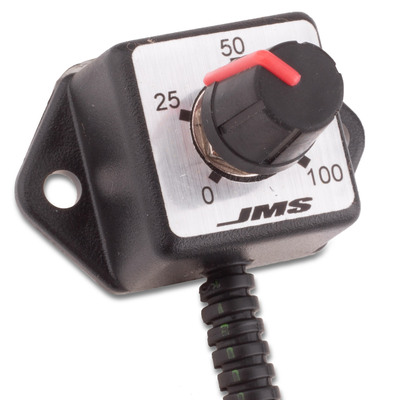
JMS PedalMAX
JMS PedalMAX was designed to improve the throttle response and driving characteristics of modern vehicles equipped with electronic throttle control systems. Throttle response and acceleration are improved, turbo applications see a big lag reduction, all leading to more power and torque. Taking only minutes to install, the unit plugs in-line between your vehicle's pedal position sensor and vehicle harness, utilizing OEM connectors with a control knob making performance adjustable on-the-fly! PedalMAX units are fully waterproof, backed by a lifetime warranty, designed and assembled in the USA.
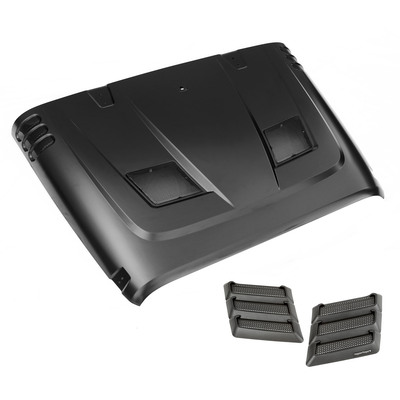
Remove the heat, maximize your engine performance and add a little flair to your Jeep exterior with this Performance Vented Hood kit from Rugged Ridge that combines the function of the Performance Vented Hood (PN: 17759.01) and the aggressive off-road style of the hood vents (PN: 17759.09) Made of stamped steel and a factory inner core, the Performance Vented Hood fits like the original yet allows more heat to escape from the engine compartment than other hoods on the market today. The SRT-inspired design gives a great aggressive look. Vents are removable to make it easier to paint. Uses factory attachment points and more aftermarket accessories will simply bolt into place. Got heat? You need this kit!
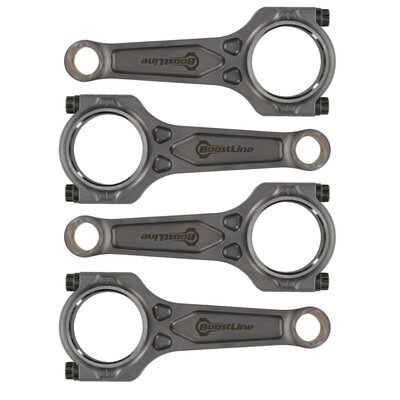
Boostline Ford Ecoboost 2.3L, 149.00 mm, ARP 625+, Set of 4
BoostLine connecting rods are designed from the ground up for high-power forced induction and nitrous applications. A patented, three-pocket design, forged from premium 4340 steel, maximizes strength while minimizing rotating weight. This revolutionary design dramatically improves the rod’s big-end stability under tensile loads and provides a 60% improvement in bending strength and 20% stress reduction in tension compared to H-beam designs. All of these benefits make BoostLine rods ideal for high-cylinder pressure engine combinations.
Features:
Purpose-built for boost
Forged from ultra-strong 4340 steel
Patented three-pocket design
Industry-leading ARP 2000 fasteners (Available in 625+ for sport compact and European applications)
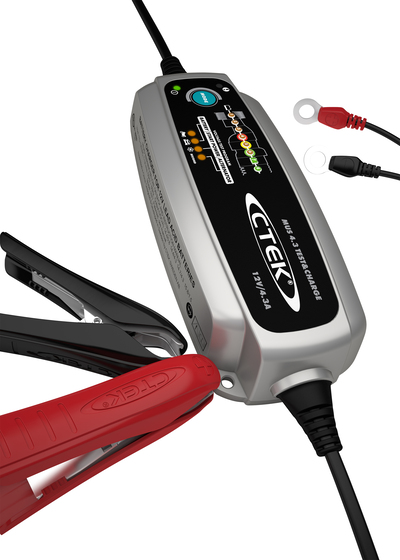
CTEK’s MUS 4.3 TEST & CHARGE battery charger and maintainer has three unique and easy-to-use test programs that check the condition and performance of the battery, the alternator and the vehicle’s charging system. It also has a patented desulphation function and reconditioning mode that analyzes the state of the battery to recover its health and restore stratified and deeply discharged batteries. The MUS 4.3 TEST & CHARGE uses CTEK’s patented float/pulse system, which makes it ideal for long-term battery maintenance. The MUS 4.3 TEST & CHARGE provides excellent performance on 12V lead-acid batteries (Wet, MF, AGM, GEL) from 1.2Ah up to 110Ah. The MUS 4.3 TEST & CHARGE protects vehicle electronics, is spark-free and reverse polarity protected and short-circuit proof.
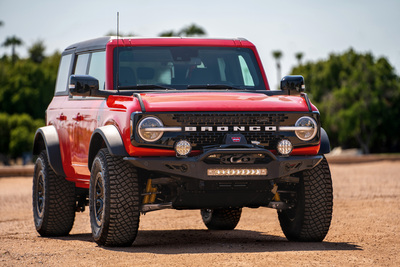
Designed with heavy trail use in mind, this bumper feature high clearance and approach angles. At the center of the bumper is a universal light mount ready for up to a 20-in. radius light bar, or five cube lights. There are two light mounts for round lights on top, on either side of the low-profile top hoop and standard winch mount. This bumper retains OEM parking sensor locations, and there is an adaptive cruise control relocation bracket available. The Rock Fighter has an integrated bumper skid plate featuring louvers to allow airflow to the intercooler. Additionally, we offer an optional 3/16-in. aluminum alloy front skid plate to provide superior protection to the underbelly, as opposed to the OEM plastic skid. As always, this is fully bolt-on and made in America.


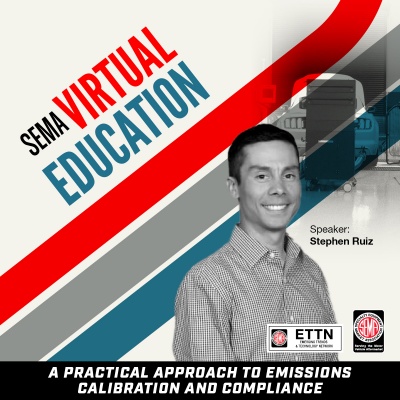 As industry requirements for emissions compliance evolve, manufacturers will need to prepare and adapt to new testing procedures. Stephen Ruiz, ACS, Automotive Consulting Services, will share firsthand experience on emissions calibration and compliance during a webinar on Tuesday, February 15, at 1:00 p.m. (PST).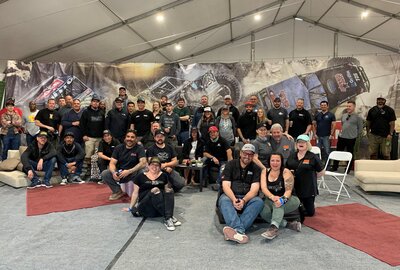
 PRI President Dr. Jamie Meyer Among Inaugural Drag Illustrated Awards Nominees
 BOOST Products USA Announces Pricing Updates for 2022
 NMCA Muscle Car Nationals Announces Red Line Oil as Title Sponsor