Compiled by SEMA Editors

Perry Lease |
|
Perry Lease Named Vice President of Sales for Mickey Thompson Tires & Wheels
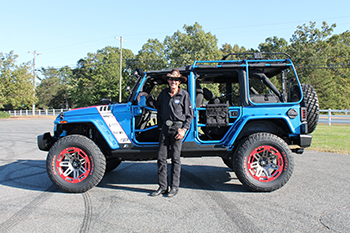
Mickey Thompson Tires & Wheels has named Perry Lease vice president of sales. Lease, who previously served as director of national retail sales, North America Tire Operations for Cooper Tire & Rubber Co., will be responsible for driving profitable sales and growing global market share for Mickey Thompson across all segments, including street, strip, racing, off-road and others. Lease reports to Mickey Thompson President Dominick Wycoff. Lease joined Cooper in 1996 as a management trainee and has held a number of positions with the company, including in roles in operations, finance and sales.
Tire Dealers Association of Canada Joins Automotive Social Portal
The Automotive Marketing Foundation (AMF) has announced that the Tire Dealers Association of Canada (TDAC) has joined its United States counterpart, the Tire Industry Association (TIA), as the latest association to join the Automotive Social Portal (ASP). The ASP, powered by Rallio, provides a cloud-based infrastructure that allows associations, manufacturers and other content providers to create and distribute consumer educational content, national, provincial, state and regional governmental issues through the dealer network to consumers. The ASP is free to all associations and independent dealers in North America. The ASP has multiple levels of participation that populate dealer social network sites, Facebook, Twitter and LinkedIn, with pertinent content all from a single dashboard. Tire Dealers can request to join the portal by completing the online sign-up form.

Steven Levine |
|
ITW Automotive Aftermarket Names Steven Levine as Vice President and General Manager of ITW Evercoat
ITW Evercoat has announced Steven Levine as the new vice president and general manager. In his role, Levine will have global responsibilities that include the Evercoat and Auto Magic businesses. Most recently, he was a vice president at The Chamberlain Group. He also held senior leadership roles at Newell Rubbermaid and The Stanley Works.
SuperTurbo Technologies, formerly VanDyne SuperTurbo, Announces New Board of Directors
VanDyne SuperTurbo Inc. has announced its corporate name change to SuperTurbo Technologies Inc. The company has also named Dan Hancock, Frans Westenbrink and Andy Savarie to the board of directors. Hancock is president of DMH Consulting LLC. He retired from General Motors after 43 years in powertrain engineering and general management. His most recent positions included vice president of global strategic product alliances, vice president of global powertrain engineering, CEO of Fiat-GM Powertrain and president of Allison Transmission. He was President of SAE International in 2014 and a member of the National Academy of Engineering.
Westenbrink is vice president and general manager for the Aftermarket, Power, Steam and Compressor (APSCS) business unit at Woodward Inc. He began his career with Woodward in Europe, where he was responsible for the European sales and engineering operations before moving to the United States in 1999. Before taking on his current role, he was responsible for the development of Woodward’s GT fuel-injection business with GE and Siemens.
Savarie has more than 25 years of investment banking and entrepreneurial business experience. He has led the automotive investment banking practices at Morgan Stanley, Banc of America Securities and Bear Stearns, where he advised clients on more than 100 M&A and financing transactions. He also spent four years as a co-founder and head of corporate development and strategy for Carbon Motors Corp., an early-stage automotive company.
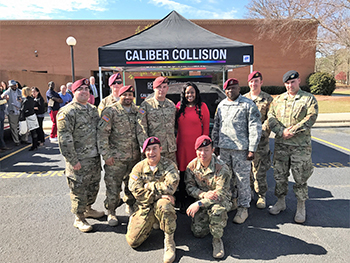
The first graduating cohort of Caliber Collision’s Changing Lanes program with Monique Martin (center), recipient of the Recycled Rides vehicle the soldiers repaired. |
|
Transitioning Soldiers in Caliber Collision’s Changing Lanes Program Graduate With New Collision Repair Career
Nine soldiers at Ft. Bragg will complete their military services and return to civilian life fully armed with a $2,500 toolbox, employment offer and a new career in the fast-growing collision industry. Developed in partnership with Fayetteville Technical Community College (FTCC) and Ft. Bragg’s Career Skills program, the Caliber Collision “Changing Lanes” program provides active-duty service members with training and employment opportunities in the collision-repair industry prior to transitioning out of the U.S. Armed Forces. Graduation ceremonies were held for the first cohort class of Changing Lanes on March 17 at FTCC. All nine members of this first graduating class have accepted employment offers at Caliber Collision locations in North Carolina, California and Florida. The 18-week hands-on-training course is offered free to transitioning soldiers. Participants earn industry accreditation I-CAR points through a combination of instruction at FTCC’s automotive collision-repair facility, along with an internship at one of the Caliber Collision’s Fayetteville production centers.
A highlight of the graduation ceremonies was the presentation of a ’10 Chevrolet Cobolt, donated by State Farm, which Changing Lanes participants repaired and refurbished for a military veteran. The vehicle donation is part of the National Auto Body Council Recycled Rides program, in which collision repairers, insurance agents and partners team up to donate and repair vehicles to individuals in need of reliable transportation. The Caliber Recycled Rides recipient was Monique Martin, an honorably discharged Air Force reservist.
Fayetteville Technical Community College has donated a 2,100-sq.-ft. building for the program’s exclusive use as a training facility. Caliber is also building a 10,000 sq.- ft. permanent Changing Lanes training center. A second cohort is underway in Fayetteville with an early May graduation. Caliber’s Changing Lanes will also launch at Ft. Hood in Killeen, Texas, with the first cohort training beginning in mid-April.
Tenneco’s Walker Spring Rewards Gives Prepaid Cards to Service Professionals for Installation of Premium Emissions Control Products
This spring, Tenneco is offering automotive service professionals an opportunity to earn a $15 Visa Prepaid card mail-in rebate for each installation of qualifying Walker brand emissions-control products during the Walker Spring Rewards promotion, running from March 1–April 30. Service professionals can earn up to $500 through the promotion, delivered via Visa Prepaid cards after the promotion period. Products that qualify under the promotion include Walker direct-fit catalytic converters, Walker CalCat direct-fit catalytic converters and Walker Quiet-Flow SS mufflers or welded assemblies. Completed scorecards and copies of sales invoices must be postmarked by May 31, 2017.
Design Engineering Inc. Parts Now Searchable on CatalogRack.com
Design Engineering Inc. (DEI) has joined DCi—a leading source for connecting sellers and buyers with comprehensive electronic cataloging services. Effective immediately, all DEI-branded products, including DEI protective thermal and insulating products, Boom Mat acoustic and sound-deadening products, CryO2 cryogenic intake systems and accessories, and the company’s full line of performance coolant additives are featured on CatalogRack.com. CatalogRack works as a password-protected website that allows qualified automotive aftermarket resellers to search and source top automotive aftermarket brands.

Robert Struble |
|
Robert Struble Named CEO of Directed
The Board of Directors of DEI Holdings Inc., parent Company to Directed, has announced the appointment of Robert J. Struble as CEO of Directed, effective immediately. Most recently the CEO and founder of iBiquity Digital, Struble’s appointment was the culmination of an extensive national search by DEI. Struble will sit on and report directly to the DEI Board and will be based at the company’s Vista, California, headquarters. He will lead a team of more than 200 associates in the United States and Canada. Prior to leading iBiquity, Struble managed several technology businesses at Westinghouse and was a strategy consultant at McKinsey and Company.
Eibach is celebrating its 30th U.S. anniversary with factory tours on April 6. |
|
Eibach Celebrates 30th U.S. Anniversary
To celebrate its 30th anniversary in the United States, Eibach will host an open house, Thursday, April 6, at its facility located at 264 Mariah Circle, Corona, CA 92879. Factory tours and refreshments will be available from 9:00 a.m.–6:00 p.m. RSVP with expected time of attendance to jsilva@eibach.com.
Lear Corp. Selected by Wyoming Department of Transportation for Connected Vehicle Pilot Program
Lear Corp., a global supplier of automotive seating and electrical systems, has announced that it has been selected by the Wyoming Department of Transportation (WYDOT) as its exclusive partner to supply advanced vehicle-to-vehicle and vehicle-to-infrastructure road-side units and on-board units. In addition to supplying all related safety applications to this pilot program, Lear’s E-Systems will supply its Locomate Roadstar product with features such as dedicated short-range communications, high-precision GPS, Wi-Fi, security and more.

ididit’s new logo. |
|
ididit Launches New Logo, Branding and Website
ididit has launched both a fresh, modern logo and an all-new website, providing resources for dealers, installers and drivers. The new ididit tech center, one click away from any page, features nearly 50 useful tech tips covering both general and model-specific topics, a growing library of video tutorials and exclusive content, downloadable instructions for every ididit product, custom column diagrams and FAQs. Additionally, the new site features dedicated product pages for ididit’s catalog while providing a complete spec list, special notes plus recommended and applicable accessories for each product.
Turn 14 Distribution Adds Advanced Clutch Technology to Line Card
Turn 14 Distribution has added Advanced Clutch Technology’s (ACT) lineup of clutch and driveline products to its line card. The products manufactured by ACT are proven on the street by its customers, and at the track by a wide range of champions in many forms of racing competition.
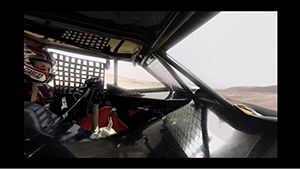
Off-road racing professional Corry Weller is featured in Optima’s “The Power of Legends” video series. |
|
Optima Batteries’ Virtual Reality Series Named a Cynopsis Sports Media Awards Finalist
OPTIMA Batteries is among the finalists at the 2017 Cynopsis Sports Media Awards in the Virtual Reality category for its 360-video series, “The Power of Legends.” The annual awards series celebrates the best of the best in the sports industry, specifically focusing on companies, professionals or organizations who inspired audiences and turned viewers into fans in the past year. Finalists in this category were judged on their ability to create a game or sports virtual reality video that allowed users to experience the sports world in an up-close and immersive way. The five “Power of Legends” videos debuted at the 2016 SEMA Show in the OPTIMA Batteries booth and featured five OPTIMA PowerPro Ambassadors:
- James Clay, founder/owner of BimmerWorld
- Edwin Evers, 2016 Bassmaster Classic champion
- Lucas Murphy, competitive rock crawler
- Mark Stielow, GM program engineer and Camaro expert
- Corry Weller, off-road racing pro
The winners will be announced at the final awards ceremony in New York City, April 13, 2017. For more information, visit www.cynopsis.com. To view the “Power of Legends” videos and also access more exclusive video content from The Ultimate Power Source, visit www.optimabatteries.com.
Have some company news you would like to share? Let us know and the news may appear in an upcoming issue of SEMA eNews. Send your items for consideration to editors@sema.org.