Tue, 01/01/2019 - 13:19

SEMA News—January 2020

LEGISLATIVE AND TECHNICAL AFFAIRS

By Stuart Gosswein

FEDERAL UPDATE

Icon
Replica Cars: SEMA has sued the U.S. Department of Transportation’s National Highway Traffic Safety Administration (NHTSA) for failure to implement a 2015 law that permitted low-volume automakers to sell up to 325 replica cars each year. Replicas are cars that resemble production vehicles manufactured at least 25 years ago. The law provided NHTSA until December 2016 to issue any regulation needed to implement its provisions. The agency missed the deadline and has yet to issue a regulation. Alternatively, NHTSA has not pursued other options that would allow replica car manufacturers to immediately begin production, such as issuing a guidance document. Companies have not hired workers, businesses have lost money, and consumers have been denied their rights to purchase replica cars as a result of NHTSA’s inaction. SEMA has asked a federal appellate court to compel NHTSA to act.

Recognizing the Protection of Motorsports (RPM) Act: U.S. Senators Richard Burr (R-NC) and Joe Manchin (D-WV), along with 24 original cosponsors, reintroduced the RPM Act (S. 2602). The bipartisan bill protects Americans’ right to convert street vehicles into dedicated race cars and the motorsports parts industry’s right to sell products that enable racers to compete. The RPM Act confirms that transforming motor vehicles into race cars used exclusively for competition does not violate the Clean Air Act. This American tradition was unquestioned for 45 years until 2015, when the U.S. Environmental Protection Agency (EPA) took the position that converted street vehicles that compete on the track must remain emissions-compliant even though they are not driven on public streets or highways. The EPA also maintains that the equipment used to transform a street vehicle into a race car is prohibited. The RPM Act cleared several major legislative hurdles in the previous Congress, including passage by the U.S. House Energy and Commerce Committee. The bill also received hearings in both the House and Senate, which underscored the importance of motorsports as a great American pastime and economic stimulus in communities across the country. For more information, visit www.sema.org/rpm.

Chinese Tariffs: President Trump agreed to postpone a tariff increase from 25%–30% scheduled to take effect last October on $250 billion worth of Chinese imports in exchange for a U.S./China agreement on agriculture purchases, intellectual property, forced technology transfer, currency and financial services. The deal does not address structural reforms being sought by the United States, including specific steps China will take to enforce intellectual property protections for U.S. companies, enforcement mechanisms to ensure compliance with a final agreement, and eventual removal of the tariffs already in place on $360 billion of Chinese imports. As the U.S./China negotiations continue, the U.S. Trade Representative is still reviewing thousands of company requests to be excluded from the tariffs, frequently on the basis that China is currently a sole source for the product.

Small-Business Transparency Bill: The U.S. House of Representatives passed the “Corporate Transparency Act of 2019,” a bill that would impose new reporting requirements on small businesses in an effort to gather information about the beneficial owners of small companies and prevent bad actors from using shell companies to break the law. The bill defines a beneficial owner to mean anyone who exercises substantial control over a company, owns at least 25% of a business’ equity interests, or receives substantial economic benefits from the business (as determined by implementing regulations). SEMA opposes the bill, which would impose duplicative and problematic reporting burdens on millions of U.S. small businesses with 20 or fewer employees and $5 million or less in gross receipts or sales.

Rearview Mirrors: NHTSA is seeking public comment on whether to give automakers the option of installing camera monitoring systems in place of outside and inside rearview mirrors. The mirrors are required under Federal Motor Vehicle Safety Standard No. 111, Rear Visibility. The automakers have requested the change on the premise that new camera and visual display technology provides an equivalent level of safety. Such systems are now permitted in many countries in Europe and Asia.

STATE UPDATE

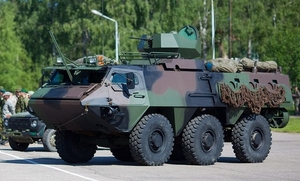
Michigan—Military Vehicles: A package of bills introduced in Michigan to allow for the titling and registration of surplus and historic military vehicles was approved by the Senate Transportation and Infrastructure Committee and awaits consideration by the full Senate. Then-Governor Rick Snyder vetoed similar legislation in 2018. Currently, surplus and historic military vehicles are unable to be titled or registered for use on Michigan highways.

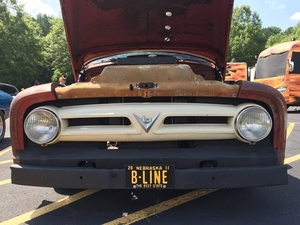
North Carolina—Antique Vehicles: North Carolina Governor Roy Cooper signed into law legislation to lower the age of vehicles eligible for an antique license plate to 30 years old. Previously, only vehicles that were at least 35 years from the date of manufacture were eligible for antique tags.

Ohio—License Plates: Legislation has been introduced in Ohio to require license plates on the front and rear of all motor vehicles. The bill currently awaits consideration in the Senate Transportation, Commerce and Workforce Committee. Earlier this year, the Ohio legislature passed legislation removing the front plate requirement beginning July 1, 2020.

Pennsylvania—License Plates: Legislation in Pennsylvania to allow the sale of limited-edition ’50s- and ’60s-style heritage license plates passed the House Transportation Committee and awaits consideration on the house floor. The heritage plates would be available for an additional $50 fee for all passenger cars or trucks with a gross weight of less than 14,000 lbs. as well as motorcycles and motor homes. If passed, the plates would be available to purchase for a five-year period.

Tue, 01/01/2019 - 08:40

SEMA News—January 2019

INTERNATIONAL

By Linda Spencer

Exhibitors Connect With International Buyers at the SEMA Show

International
Exhibitors seeking to grow their international presence spent the Monday before the opening of the 2018 SEMA Show participating in one or more international roundtables—with a sizable number participating in all four sessions.

This is the first of a two-part series focused on international activities at the SEMA Show. New this year was the addition of a fourth networking roundtable on Latin America, bringing together exhibitors and trade buyers from the region.

With more than one in five buyers at the SEMA Show residing outside the United States, networking with international resellers is a priority for many SEMA Show exhibitors.

“SEMA has become very important for international business at Fox,” said Dan Moser, international sales manager for Fox’s truck and off-road vehicles division. “In addition to a trade show, it has become a place where Fox can sit with multiple current and potentially new customers in very high volume over a four-day span. It’s a unique opportunity to discuss current and future business face-to-face and put aside the emails and phone calls for a week.”

Sally Goldberg, Truck Hero’s director of international sales, talked about why she and her staff set aside the time to participate in the international networking sessions. “The networking events SEMA offers its members who are exporting or would like to begin exporting is invaluable,” said Goldberg. “During the four networking roundtables events held pre-Show, we have the opportunity to learn about each market and the expectations directly from the buyers as well as being able to meet and personally invite the buyers to visit our booths. Truck Hero had a record attendance of international buyers this year.”

International
Kevin Floody (center), international sales manager with Kooks Headers & Exhaust, spoke at the session on the Middle East. “The SEMA Show attracts buyers from across the globe, and it gives us the chance to interact with them and find out if our products are a good fit for their markets,” he said.

David Alari, Mickey Thompson’s international sales manager, spoke at the first SEMA Latin America Roundtable. In addition to Alari, Erica Martinez from Warn and Anthony Caputo from BOOSTane provided insights into their experiences developing business in the region. Buyers from Brazil, Argentina, Mexico, Costa Rica and others talked about the opportunities and challenges of selling in the region.

“The international customers have come a long way to meet us, and at great expense,” Alari said. “We have invested a lot of money to make sure we are there to take those meetings. We consider the SEMA Show to be the best international meeting in the world. We actually think it is more international than domestic because of all of the meetings we have every year.”

Alari noted that there are definitely challenges to doing business in a region where English is not the primary language. But U.S. companies should not let that deter them.

International
Eduardo Bernasconi (center, holding microphone) of Brazilian-based Fullpower magazine was one of more than 50 buyers and media from 10 Latin American countries who participated in the first SEMA Latin American session.

“The first [challenge] might be the language,” Alari said. “That is probably the biggest one that seems insurmountable. Finding someone inside your organization who speaks Spanish is more than possible. If not, there are employees at most companies in South America and Central America who speak English as a second language. You won’t know until you try. But if two people want to do business, they will find a way.”

Alari said that distance is also sometimes considered a challenge. For instance, a customer might be in Chile, while your factory or offices are in Sturgis, South Dakota. No problem. That’s why they have telephones, airplanes and airports.

Alari also noted the role that your customers can play in helping make your first trip to the region more successful. “Once you have vetted the customer and are in agreement on price and programs, you board an airplane and go meet them in their market. They can help you make arrangements, coordinate lodging and show you around their country. They are always gracious and hospitable. You, of course, are their new business partner.”

International
A walk through the 2018 SEMA Show highlighted the growing number of exhibitors prominently displaying “We Export” signs, signaling to international buyers that they would be welcomed into the booth and that the company is eager to grow its international sales.

Alari urged companies to not forgo the opportunities due to fear over venturing into new markets. “New business opportunities are exciting and challenging,” Alari noted. “The question is, if you aren’t growing your business around the world, who is?”

He pointed out that establishing the first customer in a new country or region might be time-consuming and difficult, but it gets easier.

“Once you have created an international customer, you are better at it for the next one,” he said. “You may have learned a few things to avoid or questions to ask in advance as you go through the process. All that experience begins to build, and after a while, the perception of how difficult it is gets reduced.”

International
During the Australia/New Zealand international session, exhibitors met with representatives from a number of different business categories. The panel included (from left) Alastair Ritchie, representing New Zealand Hot Rod magazine; Matt Raudonikis, 4x4 Australia; Bill Barbas, owner of Australia-based Double Black Off-Road; Ziggy Sadler, car builder and designer; and Rob Herrod, owner of Melbourne, Australia-based Herrod Motorsports.

Roberto Schliesser, international projects representative for Borla Performance Industries, also provided a few tips to those new to the region. He noted that he looks for countries that have free trade agreements with the United States, such as Chile, Colombia, Costa Rica, Dominican Republic and Mexico. He said that Mexico has the added benefit of ease of shipping at very affordable costs and a long tradition of trading with and buying from the United States.

Eduardo Bernasconi of Brazilian-based Fullpower magazine was one of more than 50 buyers and media from 10 Latin American countries who participated in the first SEMA Latin American session. As a SEMA Show Global Media judge, Bernasconi selected 10 products from the New Products Showcase that he thought would best resonate with his home market, and he encouraged U.S. suppliers to consider the Brazilian market despite challenges such as high tariffs. He noted, however, that the right distributor can assist with getting U.S. products into the market and with servicing that market of passionate car enthusiasts.

There were also three other international sessions at the 2018 SEMA Show—one each for the Middle East, Australia/New Zealand and China. This was the sixth year that those roundtables were held on the Monday before the Show opened, allowing exhibitors to meet international buyers and media and invite them to visit their booths.

During the session on the Australia/New Zealand market, exhibitors were given the opportunity to meet with journalists and buyers from that region who were involved in the off-road, performance, hot-rod and racing sectors.

International
David Alari, Mickey Thompson’s international sales manager, spoke at the first SEMA Latin America Roundtable.

Rob Herrod, founder of Herrod Motorsports noted that the popularity of the Ford Mustang and demand for customization has been good for business. “The Mustang has energized the aftermarket like we have never seen before in Australia and teaming up with the right American suppliers is the key to success, and I would urge U.S. manufacturers of Mustang components to come to the SEMA overseas Business Development Program in Melbourne in May 2019.”

Kevin Floody, international sales manager for Kooks Headers & Exhaust, spoke at the session on the Middle East. He commented on the central role that meeting with international buyers has played for established companies such as Kooks Headers & Exhaust.

“The SEMA Show has become an important part of Kooks’ development of international business,” Floody said. “The SEMA Show attracts buyers from across the globe, and it gives exhibitors the chance to interact with them and find out if our products are a good fit for their markets. We also can gain intelligence on what is hot in other markets, so we know where to focus our product development. In addition, the Show allows us time to interact with current international customers and have better face-to-face interactions.”

The second installment of this 2019 two-part series will cover the Global Media Awards. SEMA News talked with a number of the 30 leading journalists who each selected 10 products from the 3,000 entries in the New Products Showcase which they believe will sell best in their home market. We also talk with some of the 170 winners, including 23 of these winners who were first-time SEMA Show exhibitors.

Thu, 12/27/2018 - 16:57

By SEMA Editors

Audi Q7

All new for the 2019 model year, the Q8 is the flagship of the utility vehicle lineup. But Audi hasn’t forgotten about the Q7, which will roll out the mid-cycle refresh for the 2020 model year. Because both ride on the MLB Evo vehicle architecture, the full-size SUV will adopt the dual-screen setup from the Q8.

The Q7 adopts the crossover utility vehicle’s headlamps and bumper design. It appears this prototype is equipped with HD Matrix light-emitting diodes, which are optional in the case of the Q8.

Just like the outgoing model, the facelift comes with seating for seven and a varied choice of engine options. The 2.0 TFSI kicks-off the range with four cylinders, then come the 3.0 TFSI and 3.0 TDI with or without ultra-technology. Then there’s the SQ7 TDI with the 4.0L twin-turbo V8 turbo diesel.

Audi Q7

The Q7 e-tron should soldier on with minimal changes, and chances are Audi might treat us to the RS Q7 because the Q8 will receive the RS treatment as well, using the plug-in hybrid setup from the Porsche Panamera Turbo S E-Hybrid, which has been proved to 670 horsepower and 625 ft.-lbs. of torque in the sports sedan.

Thu, 12/27/2018 - 16:57

By SEMA Editors

Audi Q7

All new for the 2019 model year, the Q8 is the flagship of the utility vehicle lineup. But Audi hasn’t forgotten about the Q7, which will roll out the mid-cycle refresh for the 2020 model year. Because both ride on the MLB Evo vehicle architecture, the full-size SUV will adopt the dual-screen setup from the Q8.

The Q7 adopts the crossover utility vehicle’s headlamps and bumper design. It appears this prototype is equipped with HD Matrix light-emitting diodes, which are optional in the case of the Q8.

Just like the outgoing model, the facelift comes with seating for seven and a varied choice of engine options. The 2.0 TFSI kicks-off the range with four cylinders, then come the 3.0 TFSI and 3.0 TDI with or without ultra-technology. Then there’s the SQ7 TDI with the 4.0L twin-turbo V8 turbo diesel.

Audi Q7

The Q7 e-tron should soldier on with minimal changes, and chances are Audi might treat us to the RS Q7 because the Q8 will receive the RS treatment as well, using the plug-in hybrid setup from the Porsche Panamera Turbo S E-Hybrid, which has been proved to 670 horsepower and 625 ft.-lbs. of torque in the sports sedan.

Thu, 12/27/2018 - 16:57

By SEMA Editors

Audi Q7

All new for the 2019 model year, the Q8 is the flagship of the utility vehicle lineup. But Audi hasn’t forgotten about the Q7, which will roll out the mid-cycle refresh for the 2020 model year. Because both ride on the MLB Evo vehicle architecture, the full-size SUV will adopt the dual-screen setup from the Q8.

The Q7 adopts the crossover utility vehicle’s headlamps and bumper design. It appears this prototype is equipped with HD Matrix light-emitting diodes, which are optional in the case of the Q8.

Just like the outgoing model, the facelift comes with seating for seven and a varied choice of engine options. The 2.0 TFSI kicks-off the range with four cylinders, then come the 3.0 TFSI and 3.0 TDI with or without ultra-technology. Then there’s the SQ7 TDI with the 4.0L twin-turbo V8 turbo diesel.

Audi Q7

The Q7 e-tron should soldier on with minimal changes, and chances are Audi might treat us to the RS Q7 because the Q8 will receive the RS treatment as well, using the plug-in hybrid setup from the Porsche Panamera Turbo S E-Hybrid, which has been proved to 670 horsepower and 625 ft.-lbs. of torque in the sports sedan.

Thu, 12/27/2018 - 16:49

Printing in Metal: The Next Step for Additive Manufacturing?

The range of materials for 3-D printing has exploded dramatically in recent years.

https://www.sema.org/sema-news/2018/12/3-d-printing-in-metal

Thu, 12/27/2018 - 16:49

Printing in Metal: The Next Step for Additive Manufacturing?

The range of materials for 3-D printing has exploded dramatically in recent years.

https://www.sema.org/sema-news/2018/12/3-d-printing-in-metal

Thu, 12/27/2018 - 16:49

Printing in Metal: The Next Step for Additive Manufacturing?

The range of materials for 3-D printing has exploded dramatically in recent years.

https://www.sema.org/sema-news/2018/12/3-d-printing-in-metal

Thu, 12/27/2018 - 16:40

SEMA Members Highlight Trends and Challenges for 2019

SEMA News recently interviewed council and network leaders to discuss what they expect for the future of their respective markets.

https://www.sema.org/sema-news/2018/12/trends-and-challenges-for-2019

Thu, 12/27/2018 - 16:40

SEMA Members Highlight Trends and Challenges for 2019

SEMA News recently interviewed council and network leaders to discuss what they expect for the future of their respective markets.

https://www.sema.org/sema-news/2018/12/trends-and-challenges-for-2019