

Has your business felt the impact of the rapidly increasing number of advanced driver assistance systems (ADAS) coming into the market? If not, it’s just a matter of time, since the OEMs are racing to add a wide range of the safety-performance technologies to their latest platforms.
Thu, 05/02/2019 - 15:20
Thu, 05/02/2019 - 15:20
Has your business felt the impact of the rapidly increasing number of advanced driver assistance systems (ADAS) coming into the market? If not, it’s just a matter of time, since the OEMs are racing to add a wide range of the safety-performance technologies to their latest platforms.
Thu, 05/02/2019 - 14:25
By Douglas McColloch
The SEMA Data Co-op (SDC) is “data central” for hundreds of specialty parts brands, representing millions of part numbers and tens of millions of vehicle applications. Created by SEMA, the SDC is the definitive, industry-owned and -operated centralized data repository, complete with a comprehensive set of online data management tools.
The product releases below are from SEMA members who are also part of the SDC at the the Bronze, Silver, Gold or Platinum level. Learn more about the SDC at www.semadatacoop.org.
Holley EFI Pump Module for GM G-Bodies Holley has announced the expansion of its line of EFI Pump Modules to include the '78–'87 GM G-body (Malibu, Regal, Cutlass et al). The module is said to be capable of supporting up to 550 hp and simplifies upgrading the car's carbureted fuel system to EFI. As a direct-replacement pick-up and sending unit, the module comes with a 255-.lbs/hr. in-tank fuel pump and a HydraMat fuel reservoir, which keeps fuel available at the pick-up and reduces "starvation" during cornering, acceleration, stopping, and whenever fuel levels are low. Fuel pressure is preset at 58 psi and regulated internally, which is said to eliminate the added expense of an external pressure regulator. 866-464-6553 | 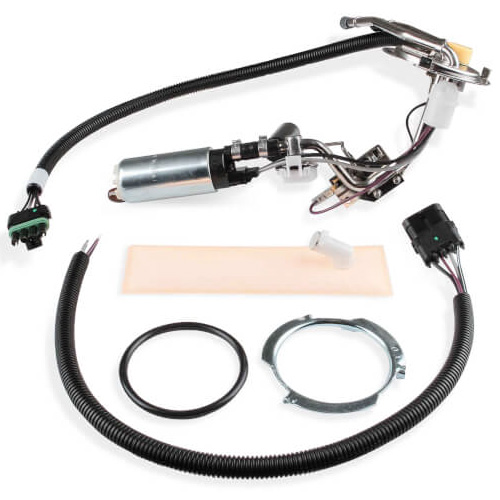 |
Pro Comp Halo Ring LED Fog Lights for Wrangler JK Pro Comp’s announces the release of its new 3.5-in. Halo Ring LED Fog Lights for the ’06–’17 Jeep Wrangler JK. The DOT, SAE, E-Mark-compliant halo ring is said to increase safety and reduces the risk of accidents while acting as a direct replacement for the factory fog lights. The lights' solid-state design is impact-, vibration- and corrosion-resistant and is said to be able to endure the harshest off-road conditions. Pro Comp cube and fog lights are sold in pairs and include wiring harnesses; shock-resistant, waterproof, cast aluminum housings; a powdercoated finish; and 100% optically clear polycarbonate lenses. 800-776-0767 | 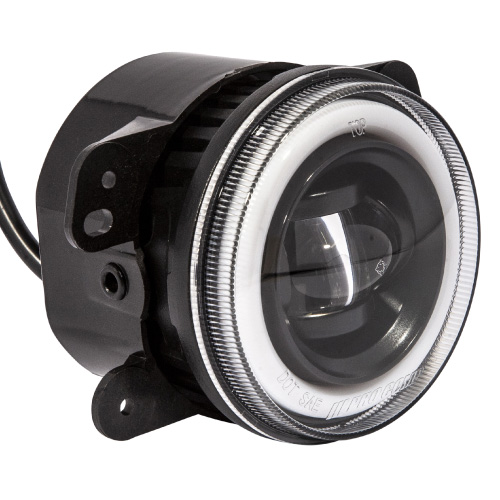 |
Centerforce DYAD XDS Twin-Disc Clutch for the Camaro and Corvette Centerforce has announced the release of its new DYAD XDS Twin-Disc Clutch for the ’16–’17 Chevrolet Camaro SS equipped with the six-speed manual, and for the ’14–’16 Chevrolet Corvette equipped with the 6.2L LT1 V8 engine. The clutch features a 10.4-in. pressure plate and a 168-tooth, 8-bolt billet steel flywheel, and utilizes the company’s patented Centrifugal Weight System that is said to enable it to withstand up to 1,600 lb.-ft. of torque in operation. The clutch discs feature paddle/button-style cerametallic coating, which is said to prolong component life. 800-932-5882 | 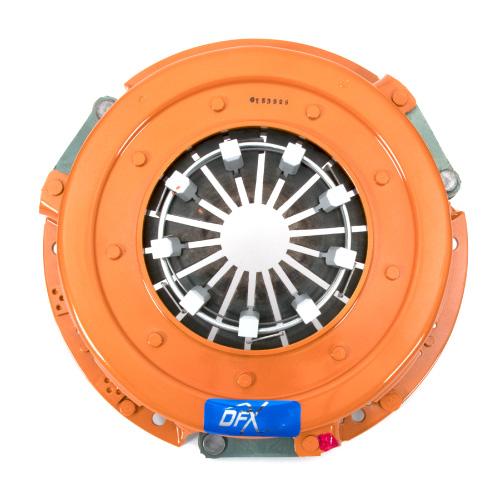 |
Edge Products EAS Shift-on-the-Fly for GM Duramax Edge Products has released its all-new EAS Shift-On-the-Fly (SOTF) Tuning Accessory, which allows users to change custom tunes “on the fly” utilizing Edge’s Insight CS2 or CTS2 handheld tuners, for the ’01–’10 GM Duramax 6.6L diesel V8. Tuning switches occur from voltage changes ranging between 1 and 5 volts, affording five tuning levels. Users need only to wire or plug in the EAS SOTF into the vehicle’s ECU, and it allows the user to control custom tuning while the vehicle is operating. 888-360-3343 | 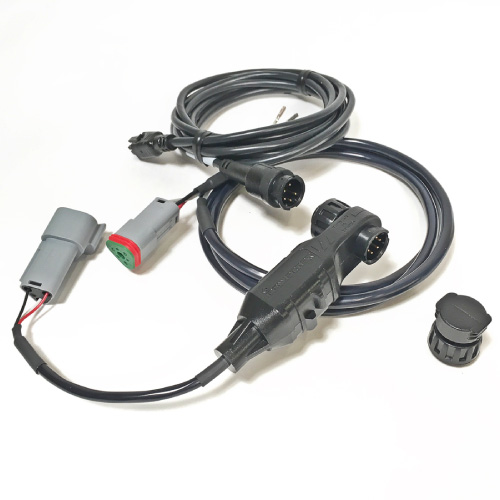 |
MagnaFlow Cat-Back Exhaust for 2019 Silverado/Sierra 800-990-0905 | 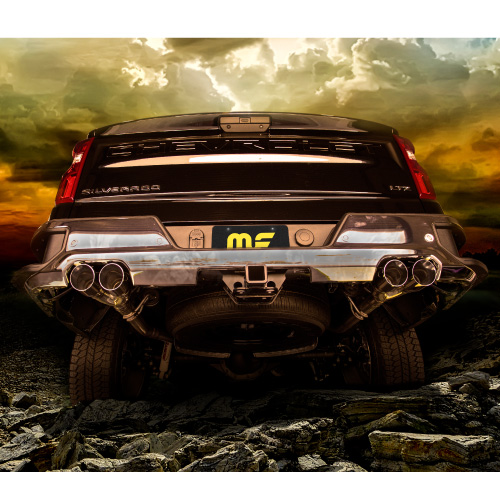 |
Coverking CargoShield Cargo Liner Coverking's New CargoShield Custom Cargo Liner is manufactured from waterproof vinyl and designed using a state-of-the-art 3-D scanning process, creating patterns customized for each vehicle make and model application. The CargoShield, which comes in a black textured finish and is made to order, is said to protect the factory rear seatbacks and folds flat with the seats for additional cargo space. The custom liner also features a built-in rear flap that folds out to cover the vehicle’s bumper, helping to protect it from scratches while inserting or removing heavy cargo from the area. 800-COVERKING | 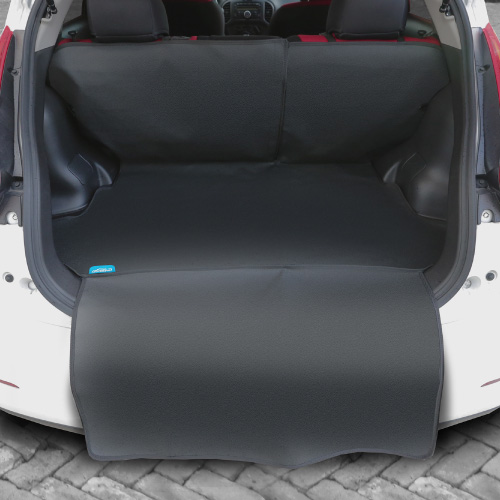 |
Icon Vehicle Dynamics Releases Bumper for the Next-Generation Raptor ICON Vehicle Dynamics released its Impact Off-Road Armor Bumper and Skid Plate for the ’17–’19 Ford F-150 Raptor. The bumper's modular design offers a customizable front that is intended to handle extreme off-roading and fits the look and ruggedness of the second-generation Raptor. The Off-Road Armor is designed for off-road enthusiasts seeking a higher level of performance and protection, while retaining OE styling cues and body lines. The “wings” on either side of the bumper can be removed and 3-in. square pod lights can be added, while the center section of the bumper is designed to accommodate a 40-in. curved lightbar. 951-689-4266 | 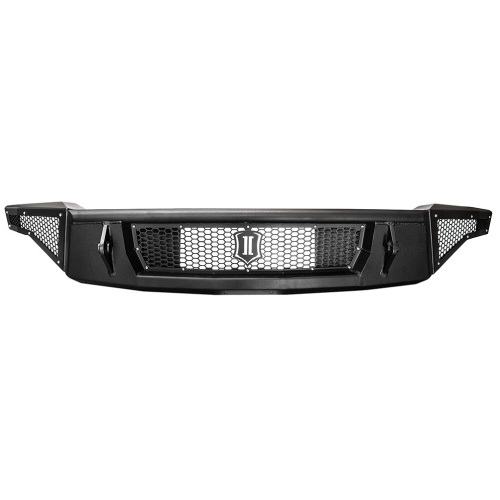 |
Thu, 05/02/2019 - 14:25
By Douglas McColloch
The SEMA Data Co-op (SDC) is “data central” for hundreds of specialty parts brands, representing millions of part numbers and tens of millions of vehicle applications. Created by SEMA, the SDC is the definitive, industry-owned and -operated centralized data repository, complete with a comprehensive set of online data management tools.
The product releases below are from SEMA members who are also part of the SDC at the the Bronze, Silver, Gold or Platinum level. Learn more about the SDC at www.semadatacoop.org.
Holley EFI Pump Module for GM G-Bodies Holley has announced the expansion of its line of EFI Pump Modules to include the '78–'87 GM G-body (Malibu, Regal, Cutlass et al). The module is said to be capable of supporting up to 550 hp and simplifies upgrading the car's carbureted fuel system to EFI. As a direct-replacement pick-up and sending unit, the module comes with a 255-.lbs/hr. in-tank fuel pump and a HydraMat fuel reservoir, which keeps fuel available at the pick-up and reduces "starvation" during cornering, acceleration, stopping, and whenever fuel levels are low. Fuel pressure is preset at 58 psi and regulated internally, which is said to eliminate the added expense of an external pressure regulator. 866-464-6553 | |
Pro Comp Halo Ring LED Fog Lights for Wrangler JK Pro Comp’s announces the release of its new 3.5-in. Halo Ring LED Fog Lights for the ’06–’17 Jeep Wrangler JK. The DOT, SAE, E-Mark-compliant halo ring is said to increase safety and reduces the risk of accidents while acting as a direct replacement for the factory fog lights. The lights' solid-state design is impact-, vibration- and corrosion-resistant and is said to be able to endure the harshest off-road conditions. Pro Comp cube and fog lights are sold in pairs and include wiring harnesses; shock-resistant, waterproof, cast aluminum housings; a powdercoated finish; and 100% optically clear polycarbonate lenses. 800-776-0767 | |
Centerforce DYAD XDS Twin-Disc Clutch for the Camaro and Corvette Centerforce has announced the release of its new DYAD XDS Twin-Disc Clutch for the ’16–’17 Chevrolet Camaro SS equipped with the six-speed manual, and for the ’14–’16 Chevrolet Corvette equipped with the 6.2L LT1 V8 engine. The clutch features a 10.4-in. pressure plate and a 168-tooth, 8-bolt billet steel flywheel, and utilizes the company’s patented Centrifugal Weight System that is said to enable it to withstand up to 1,600 lb.-ft. of torque in operation. The clutch discs feature paddle/button-style cerametallic coating, which is said to prolong component life. 800-932-5882 | |
Edge Products EAS Shift-on-the-Fly for GM Duramax Edge Products has released its all-new EAS Shift-On-the-Fly (SOTF) Tuning Accessory, which allows users to change custom tunes “on the fly” utilizing Edge’s Insight CS2 or CTS2 handheld tuners, for the ’01–’10 GM Duramax 6.6L diesel V8. Tuning switches occur from voltage changes ranging between 1 and 5 volts, affording five tuning levels. Users need only to wire or plug in the EAS SOTF into the vehicle’s ECU, and it allows the user to control custom tuning while the vehicle is operating. 888-360-3343 | |
MagnaFlow Cat-Back Exhaust for 2019 Silverado/Sierra 800-990-0905 | |
Coverking CargoShield Cargo Liner Coverking's New CargoShield Custom Cargo Liner is manufactured from waterproof vinyl and designed using a state-of-the-art 3-D scanning process, creating patterns customized for each vehicle make and model application. The CargoShield, which comes in a black textured finish and is made to order, is said to protect the factory rear seatbacks and folds flat with the seats for additional cargo space. The custom liner also features a built-in rear flap that folds out to cover the vehicle’s bumper, helping to protect it from scratches while inserting or removing heavy cargo from the area. 800-COVERKING | |
Icon Vehicle Dynamics Releases Bumper for the Next-Generation Raptor ICON Vehicle Dynamics released its Impact Off-Road Armor Bumper and Skid Plate for the ’17–’19 Ford F-150 Raptor. The bumper's modular design offers a customizable front that is intended to handle extreme off-roading and fits the look and ruggedness of the second-generation Raptor. The Off-Road Armor is designed for off-road enthusiasts seeking a higher level of performance and protection, while retaining OE styling cues and body lines. The “wings” on either side of the bumper can be removed and 3-in. square pod lights can be added, while the center section of the bumper is designed to accommodate a 40-in. curved lightbar. 951-689-4266 | |
Thu, 05/02/2019 - 11:50
By SEMA Editors
 Gigi Ho |
Gigi Ho has joined the SEMA Data Co-op (SDC) as director of operations. She will be based in the SEMA headquarters building in Diamond Bar, California, and will report directly to Mike Spagnola, SEMA vice president of OEM and product development programs.
Ho has more than 18 years’ experience in the automotive aftermarket, and more than 25 years’ experience in technology, developing and launching leading-edge SaaS-based data solutions for the automotive aftermarket. She started Digital Performance Inc. in 2001, joined DCi in 2014 and has recently been with PartsHub.
“Gigi has a great affinity for the industry and believes that the advancement of technology and education can prepare and drive the industry well into the future,” said Spagnola. “She has also participated with many of the SEMA committees and initiatives, as well as speaking to the industry on topics of data, e-commerce and marketing, so she understands both the industry and SEMA exceptionally well.”
Ho grew up in Southern California and has a love of classic and vintage cars. She lives in Mission Viejo, California, has two sons, and is an avid tennis and volleyball player.
Thu, 05/02/2019 - 11:50
By SEMA Editors
Gigi Ho |
Gigi Ho has joined the SEMA Data Co-op (SDC) as director of operations. She will be based in the SEMA headquarters building in Diamond Bar, California, and will report directly to Mike Spagnola, SEMA vice president of OEM and product development programs.
Ho has more than 18 years’ experience in the automotive aftermarket, and more than 25 years’ experience in technology, developing and launching leading-edge SaaS-based data solutions for the automotive aftermarket. She started Digital Performance Inc. in 2001, joined DCi in 2014 and has recently been with PartsHub.
“Gigi has a great affinity for the industry and believes that the advancement of technology and education can prepare and drive the industry well into the future,” said Spagnola. “She has also participated with many of the SEMA committees and initiatives, as well as speaking to the industry on topics of data, e-commerce and marketing, so she understands both the industry and SEMA exceptionally well.”
Ho grew up in Southern California and has a love of classic and vintage cars. She lives in Mission Viejo, California, has two sons, and is an avid tennis and volleyball player.
Thu, 05/02/2019 - 11:16
By SEMA Washington, D.C., Staff
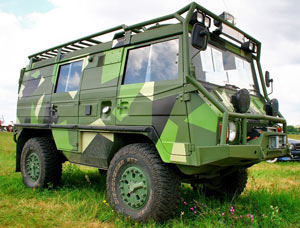 Legislation (H.B. 323) to allow for the titling and registration of former military vehicles passed the Hawaii legislature and now goes to Governor David Ige for enactment into law. |
Legislation (H.B. 323) to allow for the titling and registration of former military vehicles passed the Hawaii legislature and now goes to Governor David Ige for enactment into law. Currently, former military vehicles are not allowed to be registered or titled for on-road use in the state.
For more information, visit the SEMA Action Network website.
For details, contact Christian Robinson at stateleg@sema.org.
Thu, 05/02/2019 - 11:16
By SEMA Washington, D.C., Staff
Legislation (H.B. 323) to allow for the titling and registration of former military vehicles passed the Hawaii legislature and now goes to Governor David Ige for enactment into law. |
Legislation (H.B. 323) to allow for the titling and registration of former military vehicles passed the Hawaii legislature and now goes to Governor David Ige for enactment into law. Currently, former military vehicles are not allowed to be registered or titled for on-road use in the state.
For more information, visit the SEMA Action Network website.
For details, contact Christian Robinson at stateleg@sema.org.
Thu, 05/02/2019 - 11:16
By SEMA Washington, D.C., Staff
Legislation (H.B. 323) to allow for the titling and registration of former military vehicles passed the Hawaii legislature and now goes to Governor David Ige for enactment into law. |
Legislation (H.B. 323) to allow for the titling and registration of former military vehicles passed the Hawaii legislature and now goes to Governor David Ige for enactment into law. Currently, former military vehicles are not allowed to be registered or titled for on-road use in the state.
For more information, visit the SEMA Action Network website.
For details, contact Christian Robinson at stateleg@sema.org.
Thu, 05/02/2019 - 11:16
By SEMA Washington, D.C., Staff
Legislation (H.B. 323) to allow for the titling and registration of former military vehicles passed the Hawaii legislature and now goes to Governor David Ige for enactment into law. |
Legislation (H.B. 323) to allow for the titling and registration of former military vehicles passed the Hawaii legislature and now goes to Governor David Ige for enactment into law. Currently, former military vehicles are not allowed to be registered or titled for on-road use in the state.
For more information, visit the SEMA Action Network website.
For details, contact Christian Robinson at stateleg@sema.org.