Tue, 06/06/2023 - 15:15

By SEMA Editors

"The Smoking Tire" podcast--the weekly 90-minute radio show covering the car industry with behind-the-scenes experiences--recently invited SEMA CEO and President Mike Spagnola to sit down with hosts Matt Farah and Zack Klapman. 

"We had a compelling discussion on all things automotive, from industry trends to the explosion of new market segments, including electric vehicle (EV) technology. We also covered topics like how the U.S. Environmental Protection Agency (EPA) is impacting the car hobby; how SEMA's Garages are helping small businesses build and test new parts that the California Air Resources Board can approve; and how this year's SEMA Show is bigger and better with the addition of new programs like SEMA Fest," Spagnola told SEMA News.

"The Smoking Tire" podcast episode featuring Spagnola is available on YouTube (below) and on all podcast platforms, including Apple and Spotify.


Tue, 06/06/2023 - 14:57
FLN

By Ashley Reyes

The SEMA Future Leaders Network (FLN) invites its members to a virtual general membership meeting on Thursday, June 8, at 10:00 a.m. PDT.  

Taking place online, the meeting will provide updates on events and resources available to help young aftermarket leaders succeed in their careers.

Participants will learn about new volunteer opportunities, discover networking events to get involved in the industry and discover benefits offered exclusively to FLN members.

Aftermarket professionals aged 39 and under who are not current FLN members are encouraged to attend, as the meeting is also a great way to learn about the FLN and the many available resources.

Join fellow FLN members and connect with the FLN select committee on Thursday, June 8Register here.

Tue, 06/06/2023 - 14:39

By SEMA Editors

In partnership with General Motors, SEMA Garage Detroit has announced an all-new measuring session for the newly designed '23 and '24 Chevrolet and GMC trucks.

The event, June 13-June 15, will allow companies to measure, 3D scan, test-fit prototypes, and have a close-up experience with the trucks.

The session will feature a combination of '23 and '24 Chevrolet and GMC midsize, light-duty and heavy-duty platforms with the most popular options, including different bed, cab and powertrain configurations.

Chevrolet: 

  • Colorado Trail Boss 
  • Silverado 1500 
  • Silverado 2500HD 

GMC: 

  • Canyon AT4X Edition 1 
  • Sierra 1500 AT4 
  • Sierra 3500HD Denali Ultimate Dually

Event Dates: June 13-June 152023

This will be an in-person event at the SEMA Garage Detroit, 14655 Jib St., Plymouth, MI 48170. Sessions will require scheduled appointments. Due to high demand, all appointments will be time limited. Please only register two attendees per company, and keep an eye out for a follow-up email to confirm your time slot.

Visit the link below for event registration details.

Click here to register.

Measuring
Tue, 06/06/2023 - 13:58

By the SEMA D.C. office

Join the SEMA Political Action Committee (PAC) for cocktails and late-night snacksSEMA PAC following the SEMA Leaders & Legends Gala, Friday, July 21 in Anaheim, California. While SEMA provides valuable industry resources and services, the PAC adds a critical dimension to public and government affairs by actively engaging with lawmakers, lobbying for favorable legislation, and safeguarding our future through political involvement. 

By law, SEMA is not allowed to use association funds to impact the electoral process. This is where SEMA PAC comes in. The PAC is a resource allowing SEMA members to pool their personal funds to contribute to candidates and lawmakers supporting our industry.

Interested in the event or have questions? Contact PAC Manager Alicia Steger at alicias@sema.org or 202-796-2252 for more information. Attendance is limited and requires a purchase to attend; RSVP today! 

Tue, 06/06/2023 - 13:51

By the SEMA D.C. Office

The National Highway Traffic Safety Administration (NHTSA) has issued a proposed rule to require automatic emergency braking (AEB) and pedestrian AEB systems on new passenger cars and light trucks weighing up to 10,000 lbs. Once finalized, the rule would be phased in over three years, with an additional year for small-volume manufacturers, final-stage manufacturers and alterers to comply.  

Recognizing its potential to help save lives and reduce injuries, most automakers voluntarily agreed in 2016 to begin installing AEB systems. About 95% of all model-year '23 light-duty cars and trucks have such equipment. The systems use sensors and software to identify dangers and apply brakes if the driver hasn't responded quickly enough or with sufficient braking force.

NHTSA added AEB systems to its five-star New Car Assessment Program (NCAP) starting in model-year '18. The agency is now considering including pedestrian protection in the consumer information program. Under the 2021 Infrastructure Investment and Jobs Act, Congress directed NHTSA to pursue a safety standard for AEB and pedestrian detection. NHTSA's proposed rule would require a vehicle traveling as fast as 62 miles an hour to stop to avoid colliding with a vehicle or pedestrian. Testing conditions would include daylight and darkness with both lower beam and upper beam headlamps activated.

SEMA is reviewing the rule to understand its potential impact on the industry. Comments will be due 60 days after publication in the Federal Register. For more information, contact Eric Snyder at erics@sema.org.

Tue, 06/06/2023 - 13:51

By the SEMA D.C. Office

The National Highway Traffic Safety Administration (NHTSA) has issued a proposed rule to require automatic emergency braking (AEB) and pedestrian AEB systems on new passenger cars and light trucks weighing up to 10,000 lbs. Once finalized, the rule would be phased in over three years, with an additional year for small-volume manufacturers, final-stage manufacturers and alterers to comply.  

Recognizing its potential to help save lives and reduce injuries, most automakers voluntarily agreed in 2016 to begin installing AEB systems. About 95% of all model-year '23 light-duty cars and trucks have such equipment. The systems use sensors and software to identify dangers and apply brakes if the driver hasn't responded quickly enough or with sufficient braking force.

NHTSA added AEB systems to its five-star New Car Assessment Program (NCAP) starting in model-year '18. The agency is now considering including pedestrian protection in the consumer information program. Under the 2021 Infrastructure Investment and Jobs Act, Congress directed NHTSA to pursue a safety standard for AEB and pedestrian detection. NHTSA's proposed rule would require a vehicle traveling as fast as 62 miles an hour to stop to avoid colliding with a vehicle or pedestrian. Testing conditions would include daylight and darkness with both lower beam and upper beam headlamps activated.

SEMA is reviewing the rule to understand its potential impact on the industry. Comments will be due 60 days after publication in the Federal Register. For more information, contact Eric Snyder at erics@sema.org.

Tue, 06/06/2023 - 13:38

By Ashley Reyes

SEMA members are invited to a liveMarket webinar on Wednesday, June 21, at 11:00 a.m. PDT to connect with the SEMA Market Research team and discuss the "2023 SEMA Market Report." The latest annual study, available for download Thursday, June 15, will give members an in-depth look at market changes from the past year and help them identify the greatest business opportunities in various aftermarket segments.

During the webinar, attendees will be able to ask questions as they learn about the report's critical findings, like how much consumers spent on parts in 2022, how they used the vehicles they modified, how economic and industry factors are affecting the market, new data on market sizing, changes in the vehicle population and relevant trends.

Register for the webinar here and download the report when it becomes available Thursday, June 15, at sema.org/research.

Tue, 06/06/2023 - 13:06

By Ashley Reyes

The SEMA Truck & Off-Road Alliance (TORA) has namedMatt Matt Caldwell as the council's newest spotlight volunteer. Caldwell is the executive director of Tread Lightly!, a non-profit organization that promotes the responsible use of motorized vehicles when recreating outdoors. Get to know Caldwell in his interview with SEMA News below. 

SEMA News: What inspired you to pursue a career in the truck and off-road industry? 

Matt Caldwell: A passion to see so many of the great places that our country has to offer. 

SN: Why did you decide to volunteer for TORA?  

MC: The need to continue to expand the need for the off-road community to "do your part" to protect the adventures that we are able to have on public lands. With TORA wanting to focus on that, it was a natural fit. 

SN: What advice do you have for someone pursuing a career in the automotive aftermarket? 

MC: Use every day as a learning experience. I'm always amazed at how the things, small and large, that I've learned throughout my career continue to benefit me in my current role. 

SN: What is your dream truck or off-road vehicle? 

MC: Bronco Raptor. I'd love to say you'd find me off-roading in the desert, but most likely, you'd find me out doing a trail project somewhere. 

Fill out a TORA-member spotlight form to highlight how you or your company are contributing to the truck and off-road specialty-equipment industry. Selected candidates are eligible to be featured on TORA's social media, SEMA News and future TORA member updates.

Tue, 06/06/2023 - 12:09

By SEMA Editors

Registration for the 2023 SEMA Show, October 31-November 3 in Las Vegas, is nowSEMA Show open at SEMAShow.com/register, and there's no better time than the present for attendees to start planning their custom SEMA Show experience.

For those that still need to, maximize your savings and register at SEMAShow.com/register by June 30 for just $40. Registration is $60 through September 29 and $120 after that date. Early registration ensures that attendees receive their badges in the mail prior to the Show.

Below are some ways attendees can maximize their 2023 SEMA Show experience:

  • Check out the floorplan at SEMAShow.com/floorplan and discover new and returning features, including:
    • The New Products Showcase is now in the North Hall, where attendees can see innovation and a vision of the future on full display. The North Hall also features the Battle of the Builders and the Art Walk, where attendees can immerse themselves in the lifestyle of automotive car culture; first-time and featured exhibitors; plus expanded Business Services and Mobile Electronics & Technology areas.
    • The evolution of electric vehicles (EV) and the future of propulsion will be on display in the EV & Future Propulsion showcase in Central Hall, which also features the Racing and PerformanceHot Rod Alley and the Restoration Marketplace.
    • SEMA Central will remain in the Grand Lobby with new content and networking opportunities available for all automotive professionals. 
    • The world-class SEMA Show Education program and learning areas will be showcased throughout the Las Vegas Convention Center, including the SEMA Collision Repair Stage in the Upper South Hall. Stay tuned for the complete schedule in the coming weeks.
    • The world's largest collection of collision repair and refinish products and tools and equipment will be displayed in the Upper South Hall.
    • The Global Tire Expo, Powered by TIA, will fill the Lower South Hall alongside Wheels & Wheel Accessories.
    • Buyer lounges, networking areas, outdoor exhibits and soon-to-be-announced Show features and activations will be located across the campus.
    • The future of trucks, SUVs and off-road, restyling and car care services, and powersports and utility vehicles will be the hallmarks of West Hall.
  • Book your favorite hotel at the guaranteed lowest rate in Las Vegas through SEMA's only official housing provider at SEMAShow.com/hotel.
  • Review travel discounts available to attendees and save on flights with several major carriers, including Alaska Airlines, Delta Airlines and United Airlines, at SEMAShow.com/attendee
  • With the easing of travel restrictions, SEMA Show organizers are seeing an increase in international travelers and expect the SEMA Show to be a global meet-up. International attendees can use the U.S. Department of State's Visa Wizard to determine their visa needs. In addition, many countries are eligible for the U.S. Visa Waiver Program. If you are traveling from any eligible country, register for your Electronic System for Travel Authorization (ESTA) approval before your travel. If you have questions or need assistance, contact customer service at 866-229-3687. International callers dial direct +1-224-563-3154 or email aapexsema@csreg.zohodesk.com. Service is available Monday through Friday, 9:00 a.m.-6:00 p.m. CDT.

Visit SEMAShow.com/register to start your journey to the 2023 SEMA Show today!

Thu, 06/01/2023 - 16:32

SEMA News—June 2023

REQUIRED READING

The Future of ICE

By Mike Imlay

Can internal-combustion engines stay relevant in an EV world? (Hint: the answer is yes).

To paraphrase Mark Twain, reports of the internal-combustion engine's imminent demise have been greatly exaggerated. Sure, we've all seen the headlines. For the past several years, all major automakers have announced ambitious electric vehicle (EV) goals to do their part in warding off climate change. Plus, stung by rising fuel costs, more and more consumers are opting for battery-electric vehicles (BEVs). But let's look at the facts.

It's certainly true that from the European Union (EU) to the United States, the race to curtail and even phase out ICE vehicles is on. The Biden Administration has made no secret that it sees full vehicle electrification as an essential step in carbon reduction. As of press time, the Environmental Protection Agency (EPA) was said to be finalizing even more stringent limits on light-vehicle tailpipe emissions.

The internal-combustion engine is far from dead, and motorsports and aftermarket performance companies will play a key role in making ICE vehicles environmentally sound for decades to come. Photo courtesy of Motul

The internal-combustion engine is far from dead, and motorsports and aftermarket performance companies will play a key role in making ICE vehicles environmentally sound for decades to come.  
Photo courtesy of Motul.

Of course, in America, politics are also local. California and 16 other states have either banned or are moving to ban some or all ICE-powered vehicles. (California's ICE ban, which takes full effect in 2035, applies to new-vehicle sales only.) A few U.S. cities and counties are even weighing limits or total bans on gas stations, although other states and localities are pushing back and severing themselves from California's zero-emissions targets.

Apart from legislation, market incentives also play a major role in the OEM drive toward an electrified future. For one, EV programs attract capital investors. Plus, EVs require fewer parts, meaning manufacturers can streamline sourcing, production, labor forces and their associated costs. But despite this and all the media hype, there are signs that a new realism is setting in.

Reality Check

In December 2022, Toyota Motor Corp. President Akio Toyoda caused a stir when he openly questioned an EV-only strategy in the quest for carbon-neutral automobiles. In remarks made to reporters in Thailand, Toyoda argued that a sound strategy should include hybrids and hydrogen-powered vehicles. Identifying himself as among a "silent majority" within the auto industry, Toyoda was quoted by The Wall Street Journal as saying, "That silent majority is wondering whether EVs are really OK to have as a single option. But they think it's the trend so they can't speak out loudly."

Other automakers appear to share this viewpoint. Porsche recently announced that it had powered a 911 with a new e-fuel developed from air and water. Produced in Chile by the Highly Innovative Fuels company, the fuel is made by capturing atmospheric carbon and combining it with hydrogen taken from water to create methane. The fuel can be used in virtually any ICE vehicle, and Porsche plans to continue experimenting with such alternatives.

Meanwhile, while remaining committed to its growing EV program, General Motors has tempered its sales targets, citing challenges with battery production. And earlier this year, Ford disclosed that it expected to lose $3 billion on its EV program in 2023—news that The Wall Street Journal called "a reminder of how far traditional auto makers have to go in turning their EV portfolios profitable."

Amid their stated commitment to electrification, automakers continue to roll out IC engines. Hydrogen, propane, hybrid applications and e-fuel alternatives will help ensure an ICE future for motorsports, long-distance drivers, farmers and commercial truckers.

Amid their stated commitment to electrification, automakers continue to roll out IC engines. Hydrogen, propane, hybrid applications and e-fuel alternatives will help ensure an ICE future for motorsports, long-distance drivers, farmers and commercial truckers.

Even the environmentally hardline EU seems to be rethinking its stance. Responding to resistance from member-states Germany, Italy and Poland, the EU recently modified a total ban on ICE vehicles by 2035 to allow for those running on synthetic fuels.

According to SEMA Market Research Director Gavin Knapp, the simple truth is that ICE-powered vehicles will be with us for a long time to come. "The thing to keep in mind about EVs is when people talk about them being 50%-100% of the market, they're talking about new-vehicle sales, which will still be a small portion of the vehicles on the road," he observed. "Even if production were to ramp up really fast in 2030, EVs would still only represent 15% to maybe 20% of vehicles in operation."

Moreover, major obstacles remain to widespread EV adoption, including building the required infrastructure and, more importantly, gaining consumer acceptance. Lately, mainstream publications have been rife with stories of consumer frustrations with EV range and towing capacities, not to mention charging options. For these and other reasons, SEMA Market Research projects that by 2035, EVs will account for a mere 39% of OEM new-vehicle sales.

Aftermarket Opportunities

Given all the above, many specialty-equipment manufacturers say their long-term plans call for continued investment in ICE applications. They envision further refinements in engine performance, efficiency and emissions reduction. In fact, some futurists believe that by 2035 the total carbon footprint of an ICE vehicle may nearly match that of an EV—especially when you factor in the rare-earth mining, spent battery disposal and other not-so-eco-friendly activities associated with electrification.

"The automotive aftermarket, for as long as it's been around, has driven innovation—specifically towards efficiency around the internal-combustion engine," said Ian Lehn, Boostane owner and former chair of the SEMA Emerging Trends and Technology Network (ETTN). "I look at vehicle technology as a spectrum, and no one technology is going to be the silver bullet for our transportation demands."

Lehn's specific interest is in developing e-fuels, which he believes offer an ideal carbon-reducing solution for the millions of ICE vehicles that will remain in operation for decades to come. "I enjoy synthetic fuels because I think they're a fresh perspective on the internal combustion engine, which still has a lot of capability for gains and efficiency, offsetting its carbon footprint, and being a continued option for long-haul trucking and driving and more," he said.

The problem, he said, is that the current focus on EVs discourages the investment needed to make e-fuels viable. "A lot of the advancement and innovation has come from private industry," he explained. "There haven't been any huge, sweeping subsidies from the government. You know, just use this credit card when you go to pay at the gas station, and you'll get $3 back. I mean, it's expensive, but so were electric vehicles when they first came out. But the government subsidized them to make them affordable. E-fuels haven't been able to enjoy that type of favorable treatment, so adoption has been slow."

Ultimately, Lehn believes an electrification-only stance inhibits real progress toward carbon reduction. "If people put blinders on and say we need to just grind ahead on only EVs, and we leave all of these internal-combustion engines to continue to operate at current efficiencies, it's going to be a bigger issue down the road," he asserts.

Equally frustrating, he adds, is that those working to refine ICE vehicles are often painted as anti-EV and anti-environment. But that stereotype doesn't fit many like Lehn, who loves performance and technology across the board. "I think that EVs have a prominent place in our future," he observed. "I also think hybrid vehicles are an incredibly sustainable solution versus plug-ins or pure battery electric vehicles. I think the BEV is going to be an incredibly wonderful solution for urban and metropolitan scenarios for lowering noise pollution, smog and things like that."

Taking the Long View

In fact, many of the aftermarket's biggest players have programs for a variety of propulsion systems.

"From MAHLE's perspective, having the dual strategy that we do allows us to be on the cutting edge of everything that's going on with electric," said Joe Maylish, sales and program manager for the MAHLE Motorsports North American division. "We are a transportation company, and we're on the cutting edge of ICE, and we're right there learning and being on the cutting edge of electric."

 Higher efficiency means cleaner performance, so perfecting every ICE component will be critical to sustainability. Pictured is a modern MAHLE small-block Chevy 23-degree piston dome, complete with gas ports and a GRAFAL skirt coating for cushioning.

Higher efficiency means cleaner performance, so perfecting every ICE component will be critical to sustainability. Pictured is a modern MAHLE small-block Chevy 23-degree piston dome, complete with gas ports and a GRAFAL skirt coating for cushioning.

Maylish points to the recent GM introduction of a new small-block Chevrolet engine as a sign of ICE viability. "You know, that takes a lot of commitment and a lot of belief. And they have a lot of very smart people working over there that are looking ahead in the future of what's going to be the best mobility out there for the customer."

Moreover, he sees motorsports as the ideal proving ground for engineering innovations that can make ICE vehicles leaner and greener--and there are plenty of ICE components to work on.

"Within motorsports, [MAHLE is] still actively working with OEs to manufacture pistons and rings for their programs," he noted. "It seems that [work] has been maintaining and not decreasing in volume—so we're very happy to see that.

Nor should anyone underestimate the industry's ability to rise to environmental challenges. "Just think about a diesel engine in the 1970s and its efficiency compared to what we have today, with so many more of them in operation, and just how much cleaner they are and how much more efficient they are," he remarked.

According to Jack Roush Jr., ROUSH Performance vice president of marketing, his company has also taken a diversified approach to vehicle propulsion for some time now. While ROUSH is well known for its performance division, its biggest business is the engineering services it provides to major automotive brands, the military and other industries.

"Along with our IC engine development, which we're very well known for, we've been in the EV space for 20 plus years, and alternative fuels as well," he explained.

In the latter category, the ROUSH Cleantech product division produces propane conversion kits to help fleets lower their emissions." Those are primarily for school buses and delivery vehicles," he said, noting that there is a new propane fuel coming out for such ICE applications. "It's cleaner, that is, even when comparing it to EV, it does an even better job."

On the performance side, Roush said the company continues to refine supercharging and other technologies requiring California Air Resources Board (CARB) certification. "Thinking about the future for automotive, things are becoming more difficult because of certification and the complexity of vehicles," he conceded. "We could look at that and think there's not much opportunity. But I think there's tremendous opportunity for bringing performance to vehicles."

"I'm very passionate about the gas engine myself," Roush declared. "There's a certain life that a breathing engine that gets its power from explosions has—it's almost like a living animal… It will be interesting to see how the enthusiast culture changes over time. Will they adapt more? I think it's a little premature to say which way it's going to go."

SEMA Director of Vehicle Technology Luis Morales closely monitors trends across various automotive segments. He said the trucking industry is increasingly exploring hydrogen technologies as more viable alternatives to electrification.

"They understand that you can't run multiple applications in their industry with batteries," he observed. "When you talk about the amount of battery power that they would require, the storage for those batteries, and then the payloads placed on top of that, it just doesn't make sense. And you would need so much infrastructure for their routes to make it happen."

He added that hydrogen technologies can be found in both EV and ICE applications. "In terms of a fuel cell, it's really using hydrogen to power an electric motor. And then you look at other work that's being done on the hydrogen front, like internal-combustion engines run by hydrogen. Your output there is only water with some NOx due to heat. But nonetheless, we could still progress into the future with internal-combustion engines, making them cleaner."

"For shorter routes, EV makes sense for passenger vehicles," Morales predicted, agreeing with the other sources that SEMA News interviewed for this story. "But for other needs you have to look at other options, like hydrogen technology, that can take you across the country and not have to rely so much on infrastructure. I think at the end of the day, it's going to be a really nice balance between all of the different options that are out there."

If you're in a heavily urbanized and regulated region like California, it's easy to get the impression the automotive landscape is rapidly electrifying, mused Nolan Browning, Motul North American marketing manager. "But I think once you branch outside of the big cities, it's pretty apparent that while growing for sure, EVs are a small percentage. Combustion is still being used pretty heavily."

"In motorsports too, which has always been our background and focus, I think there's always going to be a demand for [ICE] racing," he continued. "I think there will be a world, obviously, with electrification and testing that technology in motorsports. But especially in the vintage races which we're all involved with, the hobby is not going to go away. There's still going to be gasoline certainly for the next several decades."

In the quest for carbon neutrality, even the oils and chemicals used make a difference, so lubricant companies like Motul continue to advance technologies for both ICE vehicles and EVs, which have differing requirements.

In the quest for carbon neutrality, even the oils and chemicals used make a difference, so lubricant companies like Motul continue to advance technologies for both ICE vehicles and EVs, which have differing requirements.

The question, said his colleague, Motul Technical Manager Nicolas Demaria, is how to make existing engines cleaner: "That's the big challenge for fuel suppliers, but also for us as a lubricant manufacturer."

Motul specializes in engineering and blending oils and lubricants, not drilling and refining them, which gives the company a leg up in research and reducing its overall carbon footprint. Like other brands, Motul is diversifying into the EV space but by no means abandoning ICE.

"We're looking into battery coolants and doing our part to develop more renewable materials in our oil because we can source from different partners," explained Browning. "We're also pivoting really hard in general for the distant future. We're looking at dielectric coolants for batteries, working with some racing teams that do hydrogen fuel, and even EVs within rallycross."

Demaria meanwhile emphasized that lubricants will also be a major factor in sustaining ICE powerplants. "The very first tool that the manufacturers have to diminish fuel consumption, to diminish pollutants and emissions, is through the lubricant [and] transitioning over to a low-friction lubricant based on first lower viscosity," he said. "And second, more advanced additive technologies will give them the best percentage of fuel consumption reduction per dollar invested."

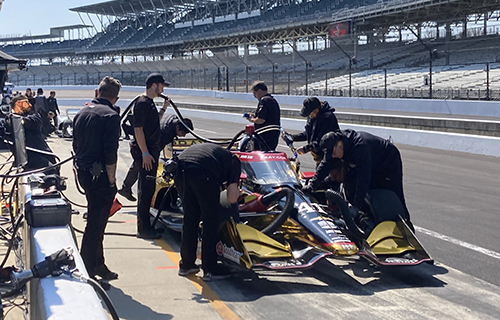
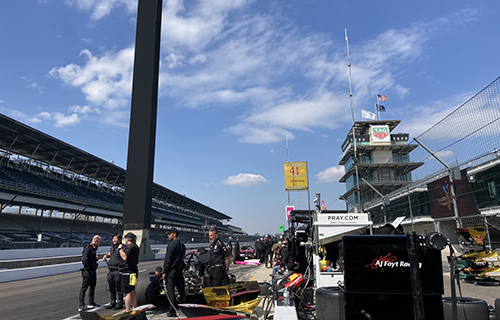
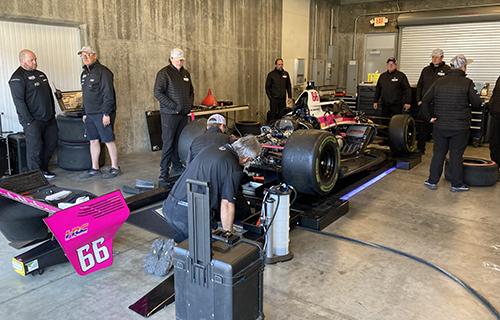
The bottom line is that racing and performance brands aren't viewing electrification as a death knell, but rather an opportunity to diversify, placing one foot in the growing EV market, and keeping the other firmly planted in new and emerging ICE technologies for virtually every engine component. With the right shift in mindset, equipment, products and investments, aftermarket shops, builders and retailers can do the same to future-proof their businesses for decades to come.

ICE technologies will certainly evolve, but they won't vanish. And if history teaches us anything, it's that while regulators often have brave new visions for the future, technology and markets seldom march in lock step. Instead, they have a way of charting their own, often unpredictable paths. And that has many of the specialty-equipment industry's biggest players envisioning a future ripe with possibilities.

Future-Proofing With the SEMA Garage

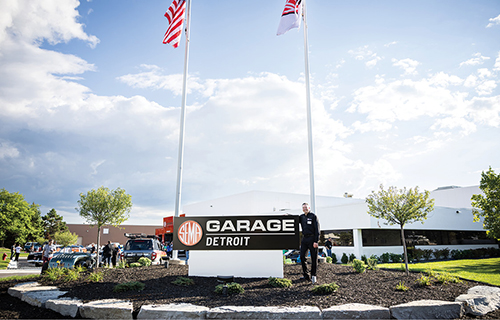
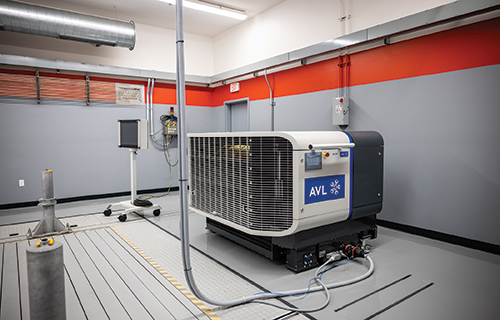
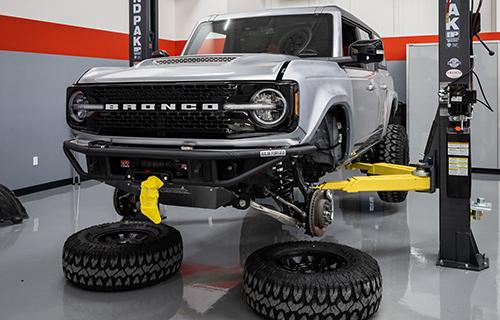
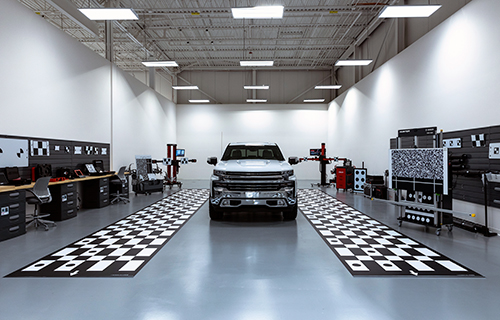
Amid rapidly advancing technologies and regulations, the SEMA Garage is a tremendous resource in helping association members future-proof their businesses. With locations in Diamond Bar, California and Detroit, the SEMA Garages give members access to special high tech-tools and equipment they need to get innovations off the drawing board and into customer hands.  

Offering services like 3D scanning and printing, ADAS testing, vehicle measuring sessions, fully equipped bays, emissions testing and certification, as well as educational programs, the SEMA Garages are the only known facilities of their kind in the U.S. For more information visit semagarage.com.