Compiled by SEMA Editors
Bill Nunnery | 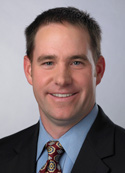
Dan Griffin |
|
Dana Names New Aftermarket Sales, Strategy Leaders
Dana Inc. has appointed Dan Griffin senior director of strategy, product planning and program management for commercial vehicles and the aftermarket. Griffin will be responsible for executing growth initiatives for Dana’s commercial vehicle and aftermarket businesses, including expanding Dana’s global e-commerce platform, enhancing the company’s product portfolio and identifying opportunities to further global market presence.
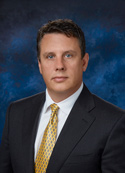
The company also named Bill Nunnery senior director of aftermarket sales, customer service and marketing. Nunnery assumes responsibility for driving the global aftermarket sales and marketing strategies while leading the global integration of the customer operations teams. Nunnery joined Dana’s aftermarket team in 2017 from Federal Mogul, where he held various senior sales leadership roles for the aftermarket.
Trend Performance Expands Further Into Valetrain With X2
Race Winning Brands Inc. has acquired the assets of X2 Valvetrain from the Xceldyne, expanding its catalog of high-performance valvetrain components. X2 will become a part of its Trend Performance division.
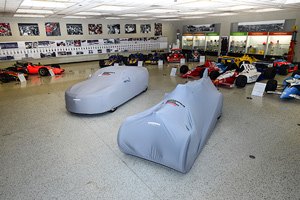
Covercraft has been named the official car cover of the Indianapolis Motor Speedway (IMS) Museum. |
|
Covercraft Named Official Car Cover of Indianapolis Motor Speedway Museum
Covercraft has been named the official car cover of the Indianapolis Motor Speedway (IMS) Museum in a partnership that includes car care products company SONAX USA. The IMS Museum has approximately 350 vehicles in its collection, including some of the most significant and rare race cars and passenger cars in existence, and protecting the vehicles is the highest priority. The IMS Museum-Covercraft-SONAX USA partnership started in late February, when nine custom auto detailers from around the United States converged on the IMS Museum and spent three days detailing 10 cars in the collection. The detailers worked in the Museum’s basement on cars chosen specifically for their historical value, and each car was placed under a custom Covercraft cover when finished.
AirPro Expands into New Corporate Office and Training Center
AirPro Diagnostics has announced the opening of its new corporate office and training facility in Jacksonville, Florida. The new 13,500-sq.-ft. location provides space for AirPro’s growing operations. In addition to this new state-of-the-art facility, AirPro Diagnostics operates a diagnostic service center in Tamarac, Florida, its ADAS calibrations laboratory and sister company and module experts programming business in two other Jacksonville locations.

Andrea Muscato |
|
CRP Industries Promotes Andrea Muscato to Marketing Communications Manager
CRP Industries has announced the promotion of Andrea Muscato to the position of marketing communications manager. Muscato has been with CRP Industries since 2015, serving as the company’s marketing communications specialist. She will manage a wide range of marketing communication activities for both the CRP Automotive and Industrial groups. Muscato will be responsible for overseeing tradeshow planning and logistics, managing CRP Automotive’s “Inside the Brands” and CRP Industrial’s “GO-TO Videos,” as well as general marketing activities, social media programs, in-house graphics, and direct marketing programs and content management of the CRP websites. Prior to joining CRP Automotive, Muscato worked for four years at Altran North America.
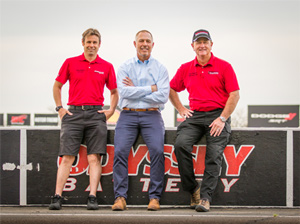
Stig Investments Inc. is purchasing the Bob Bondurant School of High Performance Driving Inc. |
|
Bob Bondurant School of High Performance Driving to Be Purchased by Private Investment Group
The Bob Bondurant School of High Performance Driving Inc. is being purchased by Stig Investments Inc.—a select assembly of entrepreneurs who are also graduates of the Bondurant school, racing enthusiasts and automobile collectors. One member of the investor group, Bruce Belser, will serve as CEO of Bondurant, effective upon the close of the transaction, which is expected in the coming weeks. Belser is a successful entrepreneur, having founded several businesses, and has served as a corporate pilot, Delta Airlines commercial pilot, fighter pilot and U.S. commander in the U.S. Air Force. Belser has attended Bondurant school twice as a student. The new owners plan to ensure current and incoming students at the school continue without interruption; the company is currently operating and school is in session. They also plan to stabilize the financial foundation of the organization and infuse significant capital into the business to enhance the guest experience for individuals and groups, and provide ROI for sponsorship partners and a best-in-class work environment for employees. Head instructor Mike McGovern, who has been with the company for 36 years, and assistant instructor Danny Bullock, a 22-year employee, will continue to teach with all current instructors.
APC Automotive Technologies Enhances National Sales Organization with Key Promotions and Assignments
APC Automotive Technologies LLC (APC) has just announced key promotions and personnel assignments to enhance the overall organization and impact of its national sales force. Tony Edwards was promoted to vice president of sales for the retail market. Edwards has been the strategic account executive for the company since 2016. He is also in charge of the category management office in Memphis, Tennessee. Jayme Farina, vice president of sales, will continue to lead a the traditional markets program for all APC brands. Since September 2015, Farina has been responsible for APC’s traditional markets, including wholesale distributor and manufacturing representative relationships. Pat Balbo has been promoted to strategic account executive covering the Northeast territory. He has been with AP Emissions for more than 12 years. David Young, strategic account executive, has taken on all sales-related responsibility for APC in the Canadian market, and will report directly to Farina. Several new key sales executives have also joined APC’s traditional sales team, including:
- Greg DelGozzo, sales director for the Eastern region.
- Ryan Bomaster, regional sales manager for the Northeast region.
- John Schommer, territory sales manager for the Central region.
- Anthony Flow, territory sales manager covering the Western New York and Pennsylvania areas.
- Ted Radomski, territory sales manager for the New Jersey, Pennsylvania and New York areas.
- David Wolsky, territory sales manager, will spearhead sales efforts across the New England area.
Henry Hippert, vice president of sales, will continue to lead the sales teams in the APC heavy-duty, feeders and specialty markets. Don Orrell has been promoted to director of heavy-duty sales. Roger Blaschke was promoted to the position of strategic account executive for the feeder segment. He has been with AP Emissions for more than five years. Mark Cornwell, vice president of sales (StopTech), will continue to lead the sales team in the APC high-performance and racing market.
Have some company news you would like to share? Let us know and the news may appear in an upcoming issue of SEMA eNews. Send your items for consideration to editors@sema.org.