Sat, 08/01/2020 - 14:01

SEMA News—August 2020

BUSINESS

SEMA Survey

As Government Restrictions Begin to Lift, Which of the Following Steps Does Your Company Plan to Take Over the Next Few Months?

By Kyle Cheng

From May 20-29, SEMA conducted a survey of more than 1,800 professionals within the specialty-equipment industry to check in on how they were doing. Overall, our industry continues to maintain a positive outlook and is beginning to move past the disruption.

SEMA also created a Coronavirus Updates and Resources page (www.sema.org/coronavirus) and collected links to key information from federal and state government agencies that may impact businesses in the specialty-equipment market.

Visit SEMA eNews (www.sema.org/sema-enews) for daily updates.

Covid Survey
The number of companies that are “mostly business as usual” jumped from 17% in early April to 28% at the end of May. Overall, almost 90% of companies said they are “mostly business as usual” or “impacted short term, but will get through it.” As restrictions start to lift, businesses are beginning to return to more normalcy.


Covid Survey
In the coming months, businesses that experienced setbacks will undertake a variety of plans to return to full operations. Approximately 42% plan on taking measures to increase customer and employee safety, and 30% are allowing employees to work remotely. Few businesses chose to close facilities or lay off staff during the pandemic, and most plan to completely re-open or re-hire some staff in the coming months.


Covid Survey
Despite the disruption over the past few months, industry businesses remain optimistic about their ability to push through. Three-fourths of those surveyed said they are confident in their company’s plan moving forward.


Covid 19
By the end of 2020, 69% of companies anticipate having the same or more staff as they had before the virus outbreak started.
Covid Survey
About half of all companies surveyed applied for financial assistance over the last few months, particularly the Payment Protection Program (PPP) and Economic Injury Disaster Loans (EIDL) from the Small Business Administration. More than 70% of companies applying for aid report that they have received at least some of the funding.


Covid 19
Companies primarily turned to banks to apply for financial assistance, with nearly half using small local banks or credit unions.


Sat, 08/01/2020 - 14:01

SEMA News—August 2020

BUSINESS

SEMA Survey

As Government Restrictions Begin to Lift, Which of the Following Steps Does Your Company Plan to Take Over the Next Few Months?

By Kyle Cheng

From May 20-29, SEMA conducted a survey of more than 1,800 professionals within the specialty-equipment industry to check in on how they were doing. Overall, our industry continues to maintain a positive outlook and is beginning to move past the disruption.

SEMA also created a Coronavirus Updates and Resources page (www.sema.org/coronavirus) and collected links to key information from federal and state government agencies that may impact businesses in the specialty-equipment market.

Visit SEMA eNews (www.sema.org/sema-enews) for daily updates.

Covid Survey
The number of companies that are “mostly business as usual” jumped from 17% in early April to 28% at the end of May. Overall, almost 90% of companies said they are “mostly business as usual” or “impacted short term, but will get through it.” As restrictions start to lift, businesses are beginning to return to more normalcy.


Covid Survey
In the coming months, businesses that experienced setbacks will undertake a variety of plans to return to full operations. Approximately 42% plan on taking measures to increase customer and employee safety, and 30% are allowing employees to work remotely. Few businesses chose to close facilities or lay off staff during the pandemic, and most plan to completely re-open or re-hire some staff in the coming months.


Covid Survey
Despite the disruption over the past few months, industry businesses remain optimistic about their ability to push through. Three-fourths of those surveyed said they are confident in their company’s plan moving forward.


Covid 19
By the end of 2020, 69% of companies anticipate having the same or more staff as they had before the virus outbreak started.
Covid Survey
About half of all companies surveyed applied for financial assistance over the last few months, particularly the Payment Protection Program (PPP) and Economic Injury Disaster Loans (EIDL) from the Small Business Administration. More than 70% of companies applying for aid report that they have received at least some of the funding.


Covid 19
Companies primarily turned to banks to apply for financial assistance, with nearly half using small local banks or credit unions.


Sat, 08/01/2020 - 14:00

SEMA News—August 2020

HERITAGE

Run Against the Clock

By Drew Hardin

Photography Courtesy Eric Rickman, Petersen Publishing Company Archive

Heritage

The ’49 Ford convertible ready to leave is typical of the mildly modified cars taking part—in this case, with a lowered suspension, shaved door handles and other body trim, and spinner hubcaps. Most of the cars were just a few years old. We spotted just two ’32 Ford coupes among the ’50s Chevys, Buicks, Fords, Oldsmobiles and even a pickup or two at the run.

Note the number written in poster paint on the Ford’s rear side window. Each entry got a number, and it was prominently displayed because the 10 checkpoints along this 150-mile Reliability Run were kept secret from the participants. Spotters at those hidden checks would record the car number and the time it passed, but the drivers and their navigators could only guess at how well they were doing until the end of the day, when the judging sheets were tallied. Making it even more challenging was the fact that the Road Knights didn’t set an average speed for the run.

“The speeds were left to the discretion of the state; highway road signs setting the pace,” wrote Rickman. “Starting the drive with 100 points each, individuals were docked points for each infraction of the highway code and for failing to be punctual at checkpoints. This interesting variation by the Road Knights called for an even more alert driver familiar with all speed zones and local restrictions.”

In addition to individual members earning points, clubs were also able to increase their scores by being chosen as the Best Appearing Club (one point per member) or Best Cooperating Club (10 points to the club), or by finishing among the top 10.

More than club bragging rights were on the line here. Several area merchants—gas stations, auto parts stores, repair shops, even a men’s store—donated prizes in the form of gift certificates for services and merchandise. The club with the highest score would take home an Olds V8 engine donated by a local wrecking yard, A Auto Salvage.

Of course, run participants proudly wore their club jackets. Rickman lined up a handful, backs to the camera, so readers could see the club names: Jacks, Lifters, Road Kings, Throttle Merchants, Syndicate, Chancellors, Stockers, and the host Road Knights.

The Stockers came away with both the Best Appearing and Best Cooperating club awards, “but they had no men in the first 10,” Rickman noted. Instead, the Jacks club scored enough points to win the Olds engine.

In December 1956, Hot Rod’s Eric Rickman joined more than 100 members of 15 Southern California car clubs as they took part in a Reliability Run put on by the Road Knights car club. This photo, which ran with Rickman’s story in the March 1957 issue, shows Road Knights vice president Jack Hendricks (in the white shirt and pants at lower right) checking the time as he prepares to send off a participant in the rally.

Sat, 08/01/2020 - 13:44

SEMA News—August 2020

LEGISLATIVE AND TECHNICAL AFFAIRS

By Stuart Gosswein

FEDERAL UPDATE

RPM Act
RPM Act: The Recognizing the Protection of Motorsports (RPM) Act clarifies that the Clean Air Act allows motor vehicles to be converted into dedicated race cars and that it is legal to produce, sell and install race parts for those vehicles. As Congress prepares to come back into session in September, the RPM Act enters a critical period. The legislation has strong bipartisan support, including 60 co-sponsors for the House bill (H.R. 5434) and 29 co-sponsors for the Senate bill (S. 2602), but lawmakers in Congress need to hear from SEMA members about why the bill is important to motorsports parts businesses in order to enact the bill into law in 2020. To contact your lawmakers and request their support, visit www.sema.org/rpm. Photo courtesy: Divin Serhiy/Shutterstock.com

Tariffs: SEMA continues to call for tariff relief during COVID-19 as part of the Americans for Free Trade (AFT) coalition. The AFT first requested a temporary suspension of tariff collections so that companies could preserve cash and pay other bills. When the administration rejected the request, the coalition then sought an extended deferral of collections on all tariffs. To date, no decision has been made on the second request. In related news, the U.S. Trade Representative (USTR) continues to process requests by companies to be excluded from the Section 301 tariffs on Chinese imports. The requests are based on economic hardship and lack of product availability from other supply sources. The USTR has denied many requests, but exclusions that are granted are not company-specific. Rather, the exclusion applies to all imports under the Harmonized Tariff Schedule listing number, although the benefit may be narrowly applied to products with similar technical specifications and uses.

STATE UPDATE

Oklahoma—License Plates: The Oklahoma House of Representatives failed to pass SEMA-opposed legislation that would have required front and rear license plates on all vehicles prior to a required legislative deadline. Vehicles are currently required to display only a single, rear-mounted license plate.

Pennsylvania—Motorsports: The Pennsylvania House Committee on State Government passed SEMA-supported legislation that would allow outdoor recreational activities, including motorsports, to resume immediately under certain conditions. The bill now awaits consideration by the entire House of Representatives. Pennsylvania’s emergency business closure order currently does not allow any recreational activity businesses, such as spectator sports, to operate.

COVID-19 Updates

SEMA Website Provides Guidance on Business Reopenings

SEMA is reviewing daily the resources available to members for addressing COVID-19 to ensure that they are up to date, accurate, and address current business challenges. The focus and goal of the Coronavirus Updates & Resources webpage (www.sema.org/coronavirus) has shifted toward reopening and making plans to move forward. The resources include the latest information on which businesses can reopen state by state, guidance and best practices for businesses to safely reopen, and keeping members informed on the latest federal relief programs.

One of the first features the website provided was a guide to how each state defined “essential” businesses that would be allowed to remain open as the pandemic began and most other “nonessential” businesses were told to close their doors. Beginning in late April, governors began to release their plans for how and when their states would allow businesses to reopen.

Utah
Maintenance Backlog on Federal Land: The U.S. Senate has announced plans to hold a vote on S. 3422, the Great American Outdoors Act (GAOA), a bill that is critically important to revitalizing America’s outdoor recreation industry. The GAOA would dedicate $9.5 billion over five years to address the maintenance backlog on federally owned lands by creating a national parks and public land legacy restoration fund. The bill would also appropriate $900 million annually to the Land and Water Conservation Fund (LWCF) and allocate 70% of the funds to the National Park Service, 10% to the Forest Service, 10% to the Fish and Wildlife Service, 5% to the Bureau of Land Management, and 5% to the Bureau of Indian Education. Full funding of the LWCF will help to address the infrastructure needs facing public lands and waters, such as improving trails, roads, docks, campgrounds and more. Addressing deferred maintenance on public lands will create jobs, revitalize communities, and provide Americans with access to open spaces. SEMA and 30 other national associations that comprise the Outdoor Recreation Roundtable (ORR) are calling on the U.S. Congress to pass the bill. ORR is also working with the U.S. Department of the Interior, the U.S. Forest Service and state agencies to underscore the importance of reopening lands for recreation while making reasonable modifications to protect public health, such as opening trails while keeping visitor centers closed.

The SEMA state-by-state resource was updated to reflect this shift, and it now provides each state’s “Roadmap to Reopening” plan set forth by the governor as well as a specific list of the current businesses allowed to reopen in each state. While many SEMA-member companies were considered essential and allowed to remain in operation, the updated resource also provided state-specific links and information such as mask-wearing requirements for open businesses.

SEMA staff members have been closely monitoring government and industry guidance for reopening safely. SEMA created a section on the website with links to those documents. The published guidelines and best practices compiled for the website include the Alliance for Automotive Innovation and Original Equipment Suppliers Association “Health and Safety Resources,” Lear Corp.’s “Safe Work Playbook,” the White House “Guidelines for Opening America,” the Center for Health Security’s “Guidance for Governors: Principles for a Phased Reopening,” and the EPA and CDC “Guidance for Cleaning and Disinfecting Workplaces.”

SEMA continues to track the federal government’s response to the pandemic and provide the most current information on loan programs such as the U.S. Small Business Administration’s Paycheck Protection Program (PPP) and emergency loan initiative. SEMA has provided free webinars that can be downloaded at any time to explain the programs. SEMA also provided a webinar on understanding federal regulations governing sick and family leave, unemployment benefits and other key
labor laws.

SEMA has conducted regular surveys that provide the association with valuable information on how each company is being affected by COVID-19. This input has been invaluable in helping SEMA identify ways to help its members.

The last few months have brought new challenges to many in the business community, and SEMA members are no exception. However, as the world adapts to the new normal, businesses reopen, and people go back to work, SEMA will continue to provide updated and current resources to help our members navigate these unprecedented times. Please do not hesitate to contact the SEMA team if you have specific questions or if there is anything we can do to help.

Sat, 08/01/2020 - 13:44

SEMA News—August 2020

LEGISLATIVE AND TECHNICAL AFFAIRS

By Stuart Gosswein

FEDERAL UPDATE

RPM Act
RPM Act: The Recognizing the Protection of Motorsports (RPM) Act clarifies that the Clean Air Act allows motor vehicles to be converted into dedicated race cars and that it is legal to produce, sell and install race parts for those vehicles. As Congress prepares to come back into session in September, the RPM Act enters a critical period. The legislation has strong bipartisan support, including 60 co-sponsors for the House bill (H.R. 5434) and 29 co-sponsors for the Senate bill (S. 2602), but lawmakers in Congress need to hear from SEMA members about why the bill is important to motorsports parts businesses in order to enact the bill into law in 2020. To contact your lawmakers and request their support, visit www.sema.org/rpm. Photo courtesy: Divin Serhiy/Shutterstock.com

Tariffs: SEMA continues to call for tariff relief during COVID-19 as part of the Americans for Free Trade (AFT) coalition. The AFT first requested a temporary suspension of tariff collections so that companies could preserve cash and pay other bills. When the administration rejected the request, the coalition then sought an extended deferral of collections on all tariffs. To date, no decision has been made on the second request. In related news, the U.S. Trade Representative (USTR) continues to process requests by companies to be excluded from the Section 301 tariffs on Chinese imports. The requests are based on economic hardship and lack of product availability from other supply sources. The USTR has denied many requests, but exclusions that are granted are not company-specific. Rather, the exclusion applies to all imports under the Harmonized Tariff Schedule listing number, although the benefit may be narrowly applied to products with similar technical specifications and uses.

STATE UPDATE

Oklahoma—License Plates: The Oklahoma House of Representatives failed to pass SEMA-opposed legislation that would have required front and rear license plates on all vehicles prior to a required legislative deadline. Vehicles are currently required to display only a single, rear-mounted license plate.

Pennsylvania—Motorsports: The Pennsylvania House Committee on State Government passed SEMA-supported legislation that would allow outdoor recreational activities, including motorsports, to resume immediately under certain conditions. The bill now awaits consideration by the entire House of Representatives. Pennsylvania’s emergency business closure order currently does not allow any recreational activity businesses, such as spectator sports, to operate.

COVID-19 Updates

SEMA Website Provides Guidance on Business Reopenings

SEMA is reviewing daily the resources available to members for addressing COVID-19 to ensure that they are up to date, accurate, and address current business challenges. The focus and goal of the Coronavirus Updates & Resources webpage (www.sema.org/coronavirus) has shifted toward reopening and making plans to move forward. The resources include the latest information on which businesses can reopen state by state, guidance and best practices for businesses to safely reopen, and keeping members informed on the latest federal relief programs.

One of the first features the website provided was a guide to how each state defined “essential” businesses that would be allowed to remain open as the pandemic began and most other “nonessential” businesses were told to close their doors. Beginning in late April, governors began to release their plans for how and when their states would allow businesses to reopen.

Utah
Maintenance Backlog on Federal Land: The U.S. Senate has announced plans to hold a vote on S. 3422, the Great American Outdoors Act (GAOA), a bill that is critically important to revitalizing America’s outdoor recreation industry. The GAOA would dedicate $9.5 billion over five years to address the maintenance backlog on federally owned lands by creating a national parks and public land legacy restoration fund. The bill would also appropriate $900 million annually to the Land and Water Conservation Fund (LWCF) and allocate 70% of the funds to the National Park Service, 10% to the Forest Service, 10% to the Fish and Wildlife Service, 5% to the Bureau of Land Management, and 5% to the Bureau of Indian Education. Full funding of the LWCF will help to address the infrastructure needs facing public lands and waters, such as improving trails, roads, docks, campgrounds and more. Addressing deferred maintenance on public lands will create jobs, revitalize communities, and provide Americans with access to open spaces. SEMA and 30 other national associations that comprise the Outdoor Recreation Roundtable (ORR) are calling on the U.S. Congress to pass the bill. ORR is also working with the U.S. Department of the Interior, the U.S. Forest Service and state agencies to underscore the importance of reopening lands for recreation while making reasonable modifications to protect public health, such as opening trails while keeping visitor centers closed.

The SEMA state-by-state resource was updated to reflect this shift, and it now provides each state’s “Roadmap to Reopening” plan set forth by the governor as well as a specific list of the current businesses allowed to reopen in each state. While many SEMA-member companies were considered essential and allowed to remain in operation, the updated resource also provided state-specific links and information such as mask-wearing requirements for open businesses.

SEMA staff members have been closely monitoring government and industry guidance for reopening safely. SEMA created a section on the website with links to those documents. The published guidelines and best practices compiled for the website include the Alliance for Automotive Innovation and Original Equipment Suppliers Association “Health and Safety Resources,” Lear Corp.’s “Safe Work Playbook,” the White House “Guidelines for Opening America,” the Center for Health Security’s “Guidance for Governors: Principles for a Phased Reopening,” and the EPA and CDC “Guidance for Cleaning and Disinfecting Workplaces.”

SEMA continues to track the federal government’s response to the pandemic and provide the most current information on loan programs such as the U.S. Small Business Administration’s Paycheck Protection Program (PPP) and emergency loan initiative. SEMA has provided free webinars that can be downloaded at any time to explain the programs. SEMA also provided a webinar on understanding federal regulations governing sick and family leave, unemployment benefits and other key
labor laws.

SEMA has conducted regular surveys that provide the association with valuable information on how each company is being affected by COVID-19. This input has been invaluable in helping SEMA identify ways to help its members.

The last few months have brought new challenges to many in the business community, and SEMA members are no exception. However, as the world adapts to the new normal, businesses reopen, and people go back to work, SEMA will continue to provide updated and current resources to help our members navigate these unprecedented times. Please do not hesitate to contact the SEMA team if you have specific questions or if there is anything we can do to help.

Sat, 08/01/2020 - 13:44

SEMA News—August 2020

LEGISLATIVE AND TECHNICAL AFFAIRS

By Stuart Gosswein

FEDERAL UPDATE

RPM Act
RPM Act: The Recognizing the Protection of Motorsports (RPM) Act clarifies that the Clean Air Act allows motor vehicles to be converted into dedicated race cars and that it is legal to produce, sell and install race parts for those vehicles. As Congress prepares to come back into session in September, the RPM Act enters a critical period. The legislation has strong bipartisan support, including 60 co-sponsors for the House bill (H.R. 5434) and 29 co-sponsors for the Senate bill (S. 2602), but lawmakers in Congress need to hear from SEMA members about why the bill is important to motorsports parts businesses in order to enact the bill into law in 2020. To contact your lawmakers and request their support, visit www.sema.org/rpm. Photo courtesy: Divin Serhiy/Shutterstock.com

Tariffs: SEMA continues to call for tariff relief during COVID-19 as part of the Americans for Free Trade (AFT) coalition. The AFT first requested a temporary suspension of tariff collections so that companies could preserve cash and pay other bills. When the administration rejected the request, the coalition then sought an extended deferral of collections on all tariffs. To date, no decision has been made on the second request. In related news, the U.S. Trade Representative (USTR) continues to process requests by companies to be excluded from the Section 301 tariffs on Chinese imports. The requests are based on economic hardship and lack of product availability from other supply sources. The USTR has denied many requests, but exclusions that are granted are not company-specific. Rather, the exclusion applies to all imports under the Harmonized Tariff Schedule listing number, although the benefit may be narrowly applied to products with similar technical specifications and uses.

STATE UPDATE

Oklahoma—License Plates: The Oklahoma House of Representatives failed to pass SEMA-opposed legislation that would have required front and rear license plates on all vehicles prior to a required legislative deadline. Vehicles are currently required to display only a single, rear-mounted license plate.

Pennsylvania—Motorsports: The Pennsylvania House Committee on State Government passed SEMA-supported legislation that would allow outdoor recreational activities, including motorsports, to resume immediately under certain conditions. The bill now awaits consideration by the entire House of Representatives. Pennsylvania’s emergency business closure order currently does not allow any recreational activity businesses, such as spectator sports, to operate.

COVID-19 Updates

SEMA Website Provides Guidance on Business Reopenings

SEMA is reviewing daily the resources available to members for addressing COVID-19 to ensure that they are up to date, accurate, and address current business challenges. The focus and goal of the Coronavirus Updates & Resources webpage (www.sema.org/coronavirus) has shifted toward reopening and making plans to move forward. The resources include the latest information on which businesses can reopen state by state, guidance and best practices for businesses to safely reopen, and keeping members informed on the latest federal relief programs.

One of the first features the website provided was a guide to how each state defined “essential” businesses that would be allowed to remain open as the pandemic began and most other “nonessential” businesses were told to close their doors. Beginning in late April, governors began to release their plans for how and when their states would allow businesses to reopen.

Utah
Maintenance Backlog on Federal Land: The U.S. Senate has announced plans to hold a vote on S. 3422, the Great American Outdoors Act (GAOA), a bill that is critically important to revitalizing America’s outdoor recreation industry. The GAOA would dedicate $9.5 billion over five years to address the maintenance backlog on federally owned lands by creating a national parks and public land legacy restoration fund. The bill would also appropriate $900 million annually to the Land and Water Conservation Fund (LWCF) and allocate 70% of the funds to the National Park Service, 10% to the Forest Service, 10% to the Fish and Wildlife Service, 5% to the Bureau of Land Management, and 5% to the Bureau of Indian Education. Full funding of the LWCF will help to address the infrastructure needs facing public lands and waters, such as improving trails, roads, docks, campgrounds and more. Addressing deferred maintenance on public lands will create jobs, revitalize communities, and provide Americans with access to open spaces. SEMA and 30 other national associations that comprise the Outdoor Recreation Roundtable (ORR) are calling on the U.S. Congress to pass the bill. ORR is also working with the U.S. Department of the Interior, the U.S. Forest Service and state agencies to underscore the importance of reopening lands for recreation while making reasonable modifications to protect public health, such as opening trails while keeping visitor centers closed.

The SEMA state-by-state resource was updated to reflect this shift, and it now provides each state’s “Roadmap to Reopening” plan set forth by the governor as well as a specific list of the current businesses allowed to reopen in each state. While many SEMA-member companies were considered essential and allowed to remain in operation, the updated resource also provided state-specific links and information such as mask-wearing requirements for open businesses.

SEMA staff members have been closely monitoring government and industry guidance for reopening safely. SEMA created a section on the website with links to those documents. The published guidelines and best practices compiled for the website include the Alliance for Automotive Innovation and Original Equipment Suppliers Association “Health and Safety Resources,” Lear Corp.’s “Safe Work Playbook,” the White House “Guidelines for Opening America,” the Center for Health Security’s “Guidance for Governors: Principles for a Phased Reopening,” and the EPA and CDC “Guidance for Cleaning and Disinfecting Workplaces.”

SEMA continues to track the federal government’s response to the pandemic and provide the most current information on loan programs such as the U.S. Small Business Administration’s Paycheck Protection Program (PPP) and emergency loan initiative. SEMA has provided free webinars that can be downloaded at any time to explain the programs. SEMA also provided a webinar on understanding federal regulations governing sick and family leave, unemployment benefits and other key
labor laws.

SEMA has conducted regular surveys that provide the association with valuable information on how each company is being affected by COVID-19. This input has been invaluable in helping SEMA identify ways to help its members.

The last few months have brought new challenges to many in the business community, and SEMA members are no exception. However, as the world adapts to the new normal, businesses reopen, and people go back to work, SEMA will continue to provide updated and current resources to help our members navigate these unprecedented times. Please do not hesitate to contact the SEMA team if you have specific questions or if there is anything we can do to help.

Sat, 08/01/2020 - 13:44

SEMA News—August 2020

LEGISLATIVE AND TECHNICAL AFFAIRS

By Stuart Gosswein

FEDERAL UPDATE

RPM Act
RPM Act: The Recognizing the Protection of Motorsports (RPM) Act clarifies that the Clean Air Act allows motor vehicles to be converted into dedicated race cars and that it is legal to produce, sell and install race parts for those vehicles. As Congress prepares to come back into session in September, the RPM Act enters a critical period. The legislation has strong bipartisan support, including 60 co-sponsors for the House bill (H.R. 5434) and 29 co-sponsors for the Senate bill (S. 2602), but lawmakers in Congress need to hear from SEMA members about why the bill is important to motorsports parts businesses in order to enact the bill into law in 2020. To contact your lawmakers and request their support, visit www.sema.org/rpm. Photo courtesy: Divin Serhiy/Shutterstock.com

Tariffs: SEMA continues to call for tariff relief during COVID-19 as part of the Americans for Free Trade (AFT) coalition. The AFT first requested a temporary suspension of tariff collections so that companies could preserve cash and pay other bills. When the administration rejected the request, the coalition then sought an extended deferral of collections on all tariffs. To date, no decision has been made on the second request. In related news, the U.S. Trade Representative (USTR) continues to process requests by companies to be excluded from the Section 301 tariffs on Chinese imports. The requests are based on economic hardship and lack of product availability from other supply sources. The USTR has denied many requests, but exclusions that are granted are not company-specific. Rather, the exclusion applies to all imports under the Harmonized Tariff Schedule listing number, although the benefit may be narrowly applied to products with similar technical specifications and uses.

STATE UPDATE

Oklahoma—License Plates: The Oklahoma House of Representatives failed to pass SEMA-opposed legislation that would have required front and rear license plates on all vehicles prior to a required legislative deadline. Vehicles are currently required to display only a single, rear-mounted license plate.

Pennsylvania—Motorsports: The Pennsylvania House Committee on State Government passed SEMA-supported legislation that would allow outdoor recreational activities, including motorsports, to resume immediately under certain conditions. The bill now awaits consideration by the entire House of Representatives. Pennsylvania’s emergency business closure order currently does not allow any recreational activity businesses, such as spectator sports, to operate.

COVID-19 Updates

SEMA Website Provides Guidance on Business Reopenings

SEMA is reviewing daily the resources available to members for addressing COVID-19 to ensure that they are up to date, accurate, and address current business challenges. The focus and goal of the Coronavirus Updates & Resources webpage (www.sema.org/coronavirus) has shifted toward reopening and making plans to move forward. The resources include the latest information on which businesses can reopen state by state, guidance and best practices for businesses to safely reopen, and keeping members informed on the latest federal relief programs.

One of the first features the website provided was a guide to how each state defined “essential” businesses that would be allowed to remain open as the pandemic began and most other “nonessential” businesses were told to close their doors. Beginning in late April, governors began to release their plans for how and when their states would allow businesses to reopen.

Utah
Maintenance Backlog on Federal Land: The U.S. Senate has announced plans to hold a vote on S. 3422, the Great American Outdoors Act (GAOA), a bill that is critically important to revitalizing America’s outdoor recreation industry. The GAOA would dedicate $9.5 billion over five years to address the maintenance backlog on federally owned lands by creating a national parks and public land legacy restoration fund. The bill would also appropriate $900 million annually to the Land and Water Conservation Fund (LWCF) and allocate 70% of the funds to the National Park Service, 10% to the Forest Service, 10% to the Fish and Wildlife Service, 5% to the Bureau of Land Management, and 5% to the Bureau of Indian Education. Full funding of the LWCF will help to address the infrastructure needs facing public lands and waters, such as improving trails, roads, docks, campgrounds and more. Addressing deferred maintenance on public lands will create jobs, revitalize communities, and provide Americans with access to open spaces. SEMA and 30 other national associations that comprise the Outdoor Recreation Roundtable (ORR) are calling on the U.S. Congress to pass the bill. ORR is also working with the U.S. Department of the Interior, the U.S. Forest Service and state agencies to underscore the importance of reopening lands for recreation while making reasonable modifications to protect public health, such as opening trails while keeping visitor centers closed.

The SEMA state-by-state resource was updated to reflect this shift, and it now provides each state’s “Roadmap to Reopening” plan set forth by the governor as well as a specific list of the current businesses allowed to reopen in each state. While many SEMA-member companies were considered essential and allowed to remain in operation, the updated resource also provided state-specific links and information such as mask-wearing requirements for open businesses.

SEMA staff members have been closely monitoring government and industry guidance for reopening safely. SEMA created a section on the website with links to those documents. The published guidelines and best practices compiled for the website include the Alliance for Automotive Innovation and Original Equipment Suppliers Association “Health and Safety Resources,” Lear Corp.’s “Safe Work Playbook,” the White House “Guidelines for Opening America,” the Center for Health Security’s “Guidance for Governors: Principles for a Phased Reopening,” and the EPA and CDC “Guidance for Cleaning and Disinfecting Workplaces.”

SEMA continues to track the federal government’s response to the pandemic and provide the most current information on loan programs such as the U.S. Small Business Administration’s Paycheck Protection Program (PPP) and emergency loan initiative. SEMA has provided free webinars that can be downloaded at any time to explain the programs. SEMA also provided a webinar on understanding federal regulations governing sick and family leave, unemployment benefits and other key
labor laws.

SEMA has conducted regular surveys that provide the association with valuable information on how each company is being affected by COVID-19. This input has been invaluable in helping SEMA identify ways to help its members.

The last few months have brought new challenges to many in the business community, and SEMA members are no exception. However, as the world adapts to the new normal, businesses reopen, and people go back to work, SEMA will continue to provide updated and current resources to help our members navigate these unprecedented times. Please do not hesitate to contact the SEMA team if you have specific questions or if there is anything we can do to help.

Sat, 08/01/2020 - 12:49

SEMA News—August 2020

INDUSTRY NEWS

Photos courtesy SpiedBilde, Brian Williams. Reuse or reproduction without the copyright holder’s consent is prohibited.

’21 Chevy Suburban RST

Here’s the upcoming ’21 Chevy Suburban RST, completely undisguised on the street and providing a first look.

The Suburban RST adds a street-inspired exterior design to the fullsize SUV, featuring a unique front and rear treatment. Inside, it is finished with RST-specific seats, which feature contrast-color stitching.

Standard power comes from the 5.3L V8, which packs 355 hp and 383 lb.-ft. of torque. The RST can also be equipped with the 3.0L I6 turbodiesel Duramax engine, which has 277 hp and 460 lb.-ft. of torque. Both engines will be mated to a 10-speed automatic.

GM originally planned to launch the ’21 Suburban in mid-2020, but it’s possible that the coronavirus pandemic could delay that timeline.
Chevy Suburban
Suburban

Porsche 911 GT3

The upcoming Porsche 911 GT3 builds on the grownup image of the 992 but packs more noticeable aerodynamic elements.

New air intakes adorn the nose of the supercar, along with a heavily revised front end. Visible at the rear are über-wide hips, whose eye-catching nature is surpassed only by the complex rear wing and, for the first time, the diffusor below the rear bumper.

The sole transmission should be an eight-speed dual-clutch unit, though Porsche may make a stick available at some point in the successor to the current GT3 Touring, which features a six-speed manual. Also available at some point will be a GT3 Cup racing variant and a hardcore GT3 RS.


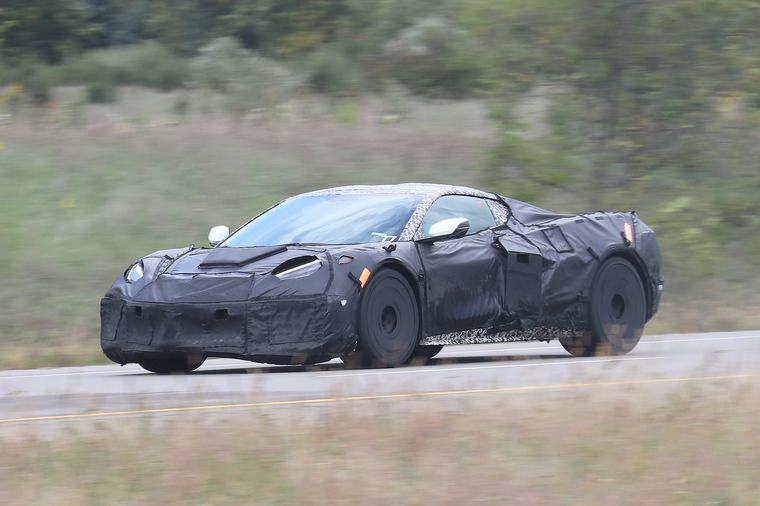
Corvette
Bronco

Ferrari Portofino

A prototype for the facelifted Ferrari Portofino has been spied undergoing tests in Germany. The model saw the light of day in 2017, so 2021 could be just the right time for a makeover.

While the rear of the car appears to be unchanged so far, the front is definitely different from the latest model. It comes with a new bumper, a new grille and new “bandit” headlights (the latter resembling those of the Ferrari Roma).

Under the hood will be a new 620hp V8 turbo engine equipped with a new Euro 6.2d temp approval, thanks to the introduction of the particulate filter and many other details already seen in the Roma. A new fully digital interior and a new dual-clutch gearbox (transaxle) with eight gears instead of the previous seven should also be part of the game.
Ferrari
Ferrari


Sat, 08/01/2020 - 12:49

SEMA News—August 2020

INDUSTRY NEWS

Photos courtesy SpiedBilde, Brian Williams. Reuse or reproduction without the copyright holder’s consent is prohibited.

’21 Chevy Suburban RST

Here’s the upcoming ’21 Chevy Suburban RST, completely undisguised on the street and providing a first look.

The Suburban RST adds a street-inspired exterior design to the fullsize SUV, featuring a unique front and rear treatment. Inside, it is finished with RST-specific seats, which feature contrast-color stitching.

Standard power comes from the 5.3L V8, which packs 355 hp and 383 lb.-ft. of torque. The RST can also be equipped with the 3.0L I6 turbodiesel Duramax engine, which has 277 hp and 460 lb.-ft. of torque. Both engines will be mated to a 10-speed automatic.

GM originally planned to launch the ’21 Suburban in mid-2020, but it’s possible that the coronavirus pandemic could delay that timeline.
Chevy Suburban
Suburban

Porsche 911 GT3

The upcoming Porsche 911 GT3 builds on the grownup image of the 992 but packs more noticeable aerodynamic elements.

New air intakes adorn the nose of the supercar, along with a heavily revised front end. Visible at the rear are über-wide hips, whose eye-catching nature is surpassed only by the complex rear wing and, for the first time, the diffusor below the rear bumper.

The sole transmission should be an eight-speed dual-clutch unit, though Porsche may make a stick available at some point in the successor to the current GT3 Touring, which features a six-speed manual. Also available at some point will be a GT3 Cup racing variant and a hardcore GT3 RS.


Corvette
Bronco

Ferrari Portofino

A prototype for the facelifted Ferrari Portofino has been spied undergoing tests in Germany. The model saw the light of day in 2017, so 2021 could be just the right time for a makeover.

While the rear of the car appears to be unchanged so far, the front is definitely different from the latest model. It comes with a new bumper, a new grille and new “bandit” headlights (the latter resembling those of the Ferrari Roma).

Under the hood will be a new 620hp V8 turbo engine equipped with a new Euro 6.2d temp approval, thanks to the introduction of the particulate filter and many other details already seen in the Roma. A new fully digital interior and a new dual-clutch gearbox (transaxle) with eight gears instead of the previous seven should also be part of the game.
Ferrari
Ferrari


Sat, 08/01/2020 - 12:49

SEMA News—August 2020

INDUSTRY NEWS

Photos courtesy SpiedBilde, Brian Williams. Reuse or reproduction without the copyright holder’s consent is prohibited.

’21 Chevy Suburban RST

Here’s the upcoming ’21 Chevy Suburban RST, completely undisguised on the street and providing a first look.

The Suburban RST adds a street-inspired exterior design to the fullsize SUV, featuring a unique front and rear treatment. Inside, it is finished with RST-specific seats, which feature contrast-color stitching.

Standard power comes from the 5.3L V8, which packs 355 hp and 383 lb.-ft. of torque. The RST can also be equipped with the 3.0L I6 turbodiesel Duramax engine, which has 277 hp and 460 lb.-ft. of torque. Both engines will be mated to a 10-speed automatic.

GM originally planned to launch the ’21 Suburban in mid-2020, but it’s possible that the coronavirus pandemic could delay that timeline.
Chevy Suburban
Suburban

Porsche 911 GT3

The upcoming Porsche 911 GT3 builds on the grownup image of the 992 but packs more noticeable aerodynamic elements.

New air intakes adorn the nose of the supercar, along with a heavily revised front end. Visible at the rear are über-wide hips, whose eye-catching nature is surpassed only by the complex rear wing and, for the first time, the diffusor below the rear bumper.

The sole transmission should be an eight-speed dual-clutch unit, though Porsche may make a stick available at some point in the successor to the current GT3 Touring, which features a six-speed manual. Also available at some point will be a GT3 Cup racing variant and a hardcore GT3 RS.


Corvette
Bronco

Ferrari Portofino

A prototype for the facelifted Ferrari Portofino has been spied undergoing tests in Germany. The model saw the light of day in 2017, so 2021 could be just the right time for a makeover.

While the rear of the car appears to be unchanged so far, the front is definitely different from the latest model. It comes with a new bumper, a new grille and new “bandit” headlights (the latter resembling those of the Ferrari Roma).

Under the hood will be a new 620hp V8 turbo engine equipped with a new Euro 6.2d temp approval, thanks to the introduction of the particulate filter and many other details already seen in the Roma. A new fully digital interior and a new dual-clutch gearbox (transaxle) with eight gears instead of the previous seven should also be part of the game.
Ferrari
Ferrari