Thu, 12/10/2015 - 09:40

By SEMA Editors

pri
More than 2,500 international attendees have been credentialed for this year’s PRI Show in Indianapolis.

Exhibitors and attendees from more than 70 nations around the world are expected to attend the 2015 Performance Racing Industry (PRI) Trade Show, December 10–12, at the Indiana Convention Center in Indianapolis.

“The PRI Trade Show continues to be the world’s largest racing trade show,” said John Kilroy, PRI Trade Show producer. “And with that comes along a large international presence. That’s a huge plus for our domestic exhibitors and attendees as we’ve found international attendees come to the show as serious buyers with every intention of doing business. You’re not going to find many who are going to spend the money to travel internationally in December just to kick the tires!”

More than 2,500 international attendees have been credentialed for this year’s show, but many more will be in attendance with credentials secured through their U.S. offices. Indiana-based Hoosier Tires is one example of a company that has brought numerous international distributors to the show with credentials going through their Lakeville home office with attendees last year from Japan, Thailand, Germany and the United Kingdom.

The International Council of Motorsports Sciences will feature some of the world’s most brilliant minds addressing medical and safety issues in the motorsports world at their annual Congress run in conjunction with the show. Featured speakers from no less than six different nations will address the congress.

In addition, the Race Track Business Conference will feature FIA Formula One Race Director Charlie Whiting as its keynote speaker, as well as speakers from the United Kingdom and Italy. The conference also has played host to attendees from around the world, including Mexico, Australia, New Zealand, Germany, Brazil, Hong Kong, Canada, the United Kingdom and China.

The United Kingdom-based Motorsport Industry Association will host an all-new International Business Sales and Trade Workshop at the 2015 PRI Trade Show, while the Swedish-based Speedgroup will put on the “European Drag Racing As A Market” seminar.

Overall, approximately 1,200 racing industry suppliers will occupy 3,200 booths, while exhibiting the latest developments in auto-racing technology. Buyers from throughout the United States and 70 countries from around the globe are expected to attend.

For additional information on the 2015 PRI Trade Show, visit www.pri2015.com.

Thu, 12/10/2015 - 09:30

By SEMA Washington, D.C., Staff

The highway transportation bill signed into law by the president includes several provisions covering tires. The National Highway Traffic Safety Administration (NHTSA) is directed to issue a rule requiring independent tire sellers to register tires at the point of sale. The provision is intended to increase tire registration rates that should then assist tire manufacturers in notifying consumers in the event of a tire recall. Independent tire dealers will be required to maintain records, including the name, address and information identifying the tire purchased, and electronically transmit this information to the tire manufacturer.  

The NHTSA will consider the feasibility of developing universal bar-code scanner technologies that capture the Tire Identification Number (TIN), which could then be placed in an electronic database that unites the tire numbers with the vehicle identification number (VIN). The NHTSA is required to create a website allowing the public to search for tire recalls based on the TIN. The NHTSA is also required to issue regulations establishing minimum tire performance standards for tire fuel efficiency and wet traction.  

The NHTSA is required to update the tire-pressure monitoring system (TPMS) rule, Federal Motor Vehicle Safety Standard No. 138, to ensure that a system installed on a new motor vehicle cannot be overridden, reset or recalibrated in a way that would no longer detect when the inflation pressure in one or more of the vehicle’s tires has fallen below a safe pressure level. The rule cannot have the effect of prohibiting indirect TPMS or the ability to reset or recalibrate when replacing tires/wheels of a different size than the original-equipment tires/wheels.  

For more information, contact Stuart Gosswein at stuartg@sema.org.

Thu, 12/10/2015 - 09:30

By SEMA Washington, D.C., Staff

The highway transportation bill signed into law by the president includes several provisions covering tires. The National Highway Traffic Safety Administration (NHTSA) is directed to issue a rule requiring independent tire sellers to register tires at the point of sale. The provision is intended to increase tire registration rates that should then assist tire manufacturers in notifying consumers in the event of a tire recall. Independent tire dealers will be required to maintain records, including the name, address and information identifying the tire purchased, and electronically transmit this information to the tire manufacturer.  

The NHTSA will consider the feasibility of developing universal bar-code scanner technologies that capture the Tire Identification Number (TIN), which could then be placed in an electronic database that unites the tire numbers with the vehicle identification number (VIN). The NHTSA is required to create a website allowing the public to search for tire recalls based on the TIN. The NHTSA is also required to issue regulations establishing minimum tire performance standards for tire fuel efficiency and wet traction.  

The NHTSA is required to update the tire-pressure monitoring system (TPMS) rule, Federal Motor Vehicle Safety Standard No. 138, to ensure that a system installed on a new motor vehicle cannot be overridden, reset or recalibrated in a way that would no longer detect when the inflation pressure in one or more of the vehicle’s tires has fallen below a safe pressure level. The rule cannot have the effect of prohibiting indirect TPMS or the ability to reset or recalibrate when replacing tires/wheels of a different size than the original-equipment tires/wheels.  

For more information, contact Stuart Gosswein at stuartg@sema.org.

Thu, 12/10/2015 - 09:30

By SEMA Washington, D.C., Staff

The highway transportation bill signed into law by the president includes several provisions covering tires. The National Highway Traffic Safety Administration (NHTSA) is directed to issue a rule requiring independent tire sellers to register tires at the point of sale. The provision is intended to increase tire registration rates that should then assist tire manufacturers in notifying consumers in the event of a tire recall. Independent tire dealers will be required to maintain records, including the name, address and information identifying the tire purchased, and electronically transmit this information to the tire manufacturer.  

The NHTSA will consider the feasibility of developing universal bar-code scanner technologies that capture the Tire Identification Number (TIN), which could then be placed in an electronic database that unites the tire numbers with the vehicle identification number (VIN). The NHTSA is required to create a website allowing the public to search for tire recalls based on the TIN. The NHTSA is also required to issue regulations establishing minimum tire performance standards for tire fuel efficiency and wet traction.  

The NHTSA is required to update the tire-pressure monitoring system (TPMS) rule, Federal Motor Vehicle Safety Standard No. 138, to ensure that a system installed on a new motor vehicle cannot be overridden, reset or recalibrated in a way that would no longer detect when the inflation pressure in one or more of the vehicle’s tires has fallen below a safe pressure level. The rule cannot have the effect of prohibiting indirect TPMS or the ability to reset or recalibrate when replacing tires/wheels of a different size than the original-equipment tires/wheels.  

For more information, contact Stuart Gosswein at stuartg@sema.org.

Thu, 12/10/2015 - 09:15

By Monika Earle

mpmc
The Media Trade Conference is designed specifically for media members and allows reporters to sit down with manufacturers in private, uninterrupted meetings.

Priority registration deadline for the 2016 MPMC Media Trade Conference is Monday, December 14. Media representatives are encouraged to register at www.sema.org/mtcreg before this date to obtain the best schedule possible.

Unlike other trade shows, this event—to be held January 26–28, 2016, at the Embassy Suites Orange County Airport North in Santa Ana, California—is designed specifically for media members and allows reporters to sit down with manufacturers in private, uninterrupted meetings. The event is ideal for all journalists, including magazine editors, freelance writers, bloggers and TV producers. Media are advised to register before the early deadline for the best chances of meeting with the companies selected.

For questions about media participation, contact Della Domingo at dellad@sema.org, 909-978-6723. For exhibitor information, contact Jim Skelly at jimsk@sema.org, 909-978-6690.


Thu, 12/10/2015 - 09:15

By Monika Earle

mpmc
The Media Trade Conference is designed specifically for media members and allows reporters to sit down with manufacturers in private, uninterrupted meetings.

Priority registration deadline for the 2016 MPMC Media Trade Conference is Monday, December 14. Media representatives are encouraged to register at www.sema.org/mtcreg before this date to obtain the best schedule possible.

Unlike other trade shows, this event—to be held January 26–28, 2016, at the Embassy Suites Orange County Airport North in Santa Ana, California—is designed specifically for media members and allows reporters to sit down with manufacturers in private, uninterrupted meetings. The event is ideal for all journalists, including magazine editors, freelance writers, bloggers and TV producers. Media are advised to register before the early deadline for the best chances of meeting with the companies selected.

For questions about media participation, contact Della Domingo at dellad@sema.org, 909-978-6723. For exhibitor information, contact Jim Skelly at jimsk@sema.org, 909-978-6690.


Thu, 12/10/2015 - 09:15

By Monika Earle

mpmc
The Media Trade Conference is designed specifically for media members and allows reporters to sit down with manufacturers in private, uninterrupted meetings.

Priority registration deadline for the 2016 MPMC Media Trade Conference is Monday, December 14. Media representatives are encouraged to register at www.sema.org/mtcreg before this date to obtain the best schedule possible.

Unlike other trade shows, this event—to be held January 26–28, 2016, at the Embassy Suites Orange County Airport North in Santa Ana, California—is designed specifically for media members and allows reporters to sit down with manufacturers in private, uninterrupted meetings. The event is ideal for all journalists, including magazine editors, freelance writers, bloggers and TV producers. Media are advised to register before the early deadline for the best chances of meeting with the companies selected.

For questions about media participation, contact Della Domingo at dellad@sema.org, 909-978-6723. For exhibitor information, contact Jim Skelly at jimsk@sema.org, 909-978-6690.


Thu, 12/10/2015 - 09:12
Low-Volume Manufacturers
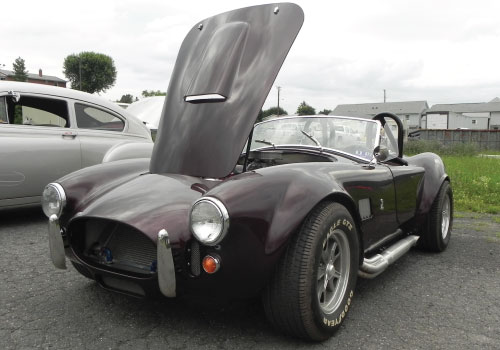
President Obama signed into law legislation that will permit low-volume car manufacturers to produce turn-key replica vehicles for customers nationwide. The low-volume provision allows small automakers to construct up to 325 such replica cars per year subject to federal regulatory oversight.

By SEMA Washington, D.C., Staff

It’s a new era for the kit-car industry. President Obama signed into law legislation that will permit low-volume car manufacturers to produce turn-key replica vehicles for customers nationwide. The SEMA-supported provision is part of a larger highway construction bill. Rep. Markwayne Mullin (R-OK) and Rep. Gene Green (D-TX) introduced the “Low-Volume Motor Vehicle Manufacturers Act of 2015” in June—legislation that SEMA has pursued since 2011. It received strong bipartisan support and was inserted into the highway bill.

“With this new law, Congress has demonstrated that it understands the importance of enabling U.S. companies to produce classic-themed vehicles that are virtually impossible to build under the current one-size-fits-all regulatory framework,” said SEMA President and CEO Chris Kersting. “This program will create auto-sector jobs and meet consumer demand for cars that help preserve our American heritage.”

The low-volume provision allows small automakers to construct up to 325 such replica cars per year subject to federal regulatory oversight. Replica cars resemble production vehicles manufactured at least 25 years ago. The United States currently has just one system for regulating automobiles, which was established in the ’60s and designed for companies that mass produce millions of vehicles. The law recognizes the unique challenges faced by companies that produce a small number of custom cars.

The measure establishes a separate regulatory structure within the National Highway Traffic Safety Administration (NHTSA) and the U.S. Environmental Protection Agency (EPA) for replica car manufacturers. The companies are required to register with NHTSA and EPA and submit annual reports on the vehicles they produce. The vehicles are required to meet current model-year emissions standards, although companies are permitted to install engines from other EPA-certified vehicles to help achieve that requirement.

“This law gives enthusiasts the opportunity to buy turn-key replica cars while preserving their option to build one from a kit,” said SEMA Chairman of the Board Doug Evans. “It recognizes the unique circumstances associated with limited-production replica vehicles, such as the ’32 Roadster and ’65 Cobra, which are primarily used in exhibitions, parades and occasional transportation. With enactment of this new law, kit-car companies and SEMA-member companies that supply equipment and components can take advantage of this unique opportunity.”

For more information, contact Stuart Gosswein at stuart@sema.org.

Thu, 12/10/2015 - 09:12
Low-Volume Manufacturers
President Obama signed into law legislation that will permit low-volume car manufacturers to produce turn-key replica vehicles for customers nationwide. The low-volume provision allows small automakers to construct up to 325 such replica cars per year subject to federal regulatory oversight.

By SEMA Washington, D.C., Staff

It’s a new era for the kit-car industry. President Obama signed into law legislation that will permit low-volume car manufacturers to produce turn-key replica vehicles for customers nationwide. The SEMA-supported provision is part of a larger highway construction bill. Rep. Markwayne Mullin (R-OK) and Rep. Gene Green (D-TX) introduced the “Low-Volume Motor Vehicle Manufacturers Act of 2015” in June—legislation that SEMA has pursued since 2011. It received strong bipartisan support and was inserted into the highway bill.

“With this new law, Congress has demonstrated that it understands the importance of enabling U.S. companies to produce classic-themed vehicles that are virtually impossible to build under the current one-size-fits-all regulatory framework,” said SEMA President and CEO Chris Kersting. “This program will create auto-sector jobs and meet consumer demand for cars that help preserve our American heritage.”

The low-volume provision allows small automakers to construct up to 325 such replica cars per year subject to federal regulatory oversight. Replica cars resemble production vehicles manufactured at least 25 years ago. The United States currently has just one system for regulating automobiles, which was established in the ’60s and designed for companies that mass produce millions of vehicles. The law recognizes the unique challenges faced by companies that produce a small number of custom cars.

The measure establishes a separate regulatory structure within the National Highway Traffic Safety Administration (NHTSA) and the U.S. Environmental Protection Agency (EPA) for replica car manufacturers. The companies are required to register with NHTSA and EPA and submit annual reports on the vehicles they produce. The vehicles are required to meet current model-year emissions standards, although companies are permitted to install engines from other EPA-certified vehicles to help achieve that requirement.

“This law gives enthusiasts the opportunity to buy turn-key replica cars while preserving their option to build one from a kit,” said SEMA Chairman of the Board Doug Evans. “It recognizes the unique circumstances associated with limited-production replica vehicles, such as the ’32 Roadster and ’65 Cobra, which are primarily used in exhibitions, parades and occasional transportation. With enactment of this new law, kit-car companies and SEMA-member companies that supply equipment and components can take advantage of this unique opportunity.”

For more information, contact Stuart Gosswein at stuart@sema.org.

Thu, 12/10/2015 - 09:12
Low-Volume Manufacturers
President Obama signed into law legislation that will permit low-volume car manufacturers to produce turn-key replica vehicles for customers nationwide. The low-volume provision allows small automakers to construct up to 325 such replica cars per year subject to federal regulatory oversight.

By SEMA Washington, D.C., Staff

It’s a new era for the kit-car industry. President Obama signed into law legislation that will permit low-volume car manufacturers to produce turn-key replica vehicles for customers nationwide. The SEMA-supported provision is part of a larger highway construction bill. Rep. Markwayne Mullin (R-OK) and Rep. Gene Green (D-TX) introduced the “Low-Volume Motor Vehicle Manufacturers Act of 2015” in June—legislation that SEMA has pursued since 2011. It received strong bipartisan support and was inserted into the highway bill.

“With this new law, Congress has demonstrated that it understands the importance of enabling U.S. companies to produce classic-themed vehicles that are virtually impossible to build under the current one-size-fits-all regulatory framework,” said SEMA President and CEO Chris Kersting. “This program will create auto-sector jobs and meet consumer demand for cars that help preserve our American heritage.”

The low-volume provision allows small automakers to construct up to 325 such replica cars per year subject to federal regulatory oversight. Replica cars resemble production vehicles manufactured at least 25 years ago. The United States currently has just one system for regulating automobiles, which was established in the ’60s and designed for companies that mass produce millions of vehicles. The law recognizes the unique challenges faced by companies that produce a small number of custom cars.

The measure establishes a separate regulatory structure within the National Highway Traffic Safety Administration (NHTSA) and the U.S. Environmental Protection Agency (EPA) for replica car manufacturers. The companies are required to register with NHTSA and EPA and submit annual reports on the vehicles they produce. The vehicles are required to meet current model-year emissions standards, although companies are permitted to install engines from other EPA-certified vehicles to help achieve that requirement.

“This law gives enthusiasts the opportunity to buy turn-key replica cars while preserving their option to build one from a kit,” said SEMA Chairman of the Board Doug Evans. “It recognizes the unique circumstances associated with limited-production replica vehicles, such as the ’32 Roadster and ’65 Cobra, which are primarily used in exhibitions, parades and occasional transportation. With enactment of this new law, kit-car companies and SEMA-member companies that supply equipment and components can take advantage of this unique opportunity.”

For more information, contact Stuart Gosswein at stuart@sema.org.