Thu, 07/06/2017 - 09:47

Compiled by SEMA Editors

bonnevilleThe Save the Salt Coalition and Utah Alliance are working with government officials and adjoining mine owners to replenish the Bonneville Salt Flats through a comprehensive salt-brine pumping program.

Bonneville Racers Launch Clean-Up Campaign

The Save the Salt Coalition and Utah Alliance have begun a volunteer salt clean-up program called “Saving Bonneville One Wheel at a Time.” As vehicles exit the Bonneville Salt Flats, drivers will have a chance to stop and scrape-off salt from wheel wells, bumpers and undercarriages. The clean-off area will be located where the access road ends at the salt crust. The Bonneville Salt Flats is a unique land formation in northwestern Utah with a hard salt crust that is perfect for both speed and safety. However, the once-13-mile race track is now less than eight miles due to salt erosion. The Coalition/Alliance is working with government officials and adjoining mine owners to replenish the Salt Flats through a comprehensive salt-brine pumping program. The Save the Salt Coalition, of which SEMA is a founding member, is comprised of automotive and motorsports companies and organizations with a vested interest in restoring the Bonneville Salt Flats. It is a collaborative effort with the Utah Alliance—a volunteer Utah-based advocacy group with expertise and contacts at the local level. The “One Wheel at a Time” program allows racing enthusiasts to do their part in helping protect Bonneville. The program will be sponsored by the venue’s four sanctioning bodies, the Southern California Timing Association, Utah Salt Flats Racing Association, Bonneville Motorcycle Speed Trials and Land Speed Events. For more information, contact Stuart Gosswein at stuartg@sema.org. For the latest information on Bonneville, go to www.savethesalt.org.

RPM Foundation “Off to the Races with RPM” Program to Return for 2018

The RPM Foundation has finished its inaugural “Off to the Races with RPM” program. Aimed at inspiring young adults to pursue careers in the automotive restoration industry by introducing them to the world of vintage racecars, the initiative brought students to world-renowned tracks, including Road America Wisconsin and Indianapolis Motor Speedway. At the tracks, students passionate about vintage automobiles met vehicle owners, racers and their teams. Participants also received guided tours of the pit and paddocks, viewed the work of the teams between sessions and connected with sanctioning organizations and track management. Off to the Races with RPM was inspired by the Sportscar Vintage Racing Association, and launched by two iconic racing legends, Lyn St. James and Bobby Rahal. Together, they are major proponents of getting young adults to fill the employment void in the automotive restoration/preservation industry being created as existing master craftsmen enter retirement. The RPM Foundation is a member entity of America’s Automotive Trust (AAT), which is at the center of the movement to secure America’s automotive heritage and to promote the continued enjoyment of the automobile.

champion
The overall winner of The Great Race was car #66, driven and navigated by Jody Knowles and Beth Gentry from Tyrone, Georgia, in their ’32 Ford Cabriolet. 

Champion Racing Oil Team Wins Top Honors at 2017 Great Race 

Champion Oil has announced that the overall winner of The Great Race was car #66, driven and navigated by Jody Knowles and Beth Gentry from Tyrone, Georgia, in their ’32 Ford Cabriolet. The team won the top honors for the lowest accumulative score over the 2,500 miles on the 2017 professional road rally. The team, which ran Champion Racing Oil in their classic race car, won the 2017 Champion Motor Oil Top Performer Trophy and also won the Expert Class and $50,000 in the competition. In all, their prizes included trophies, cash and a garage full of Champion Motor Oil. The Great Race, presented by Hemmings Motor News, Hagerty Insurance and Coker Tire, is an automotive competition based on precision driving and navigational skills in classic, antique and vintage automobiles. This year, the race went from Jacksonville, Florida, to Traverse City, Michigan.

Riccardo Agostini and Trent Hindman Win From Pole in Second Lamborghini Super Trofeo North America Race

Riccardo Agostini and Trent Hindman finally claimed their first victory of the season in last weekend’s second Super Trofeo North America race at Watkins Glen International. Hindman brought the No. 1 Prestige Performance entry, representing Lamborghini Paramus, home to the checkered flag, holding off a late-race charge from Austin Versteeg, who closed to finish just .541 seconds behind the race winner. Versteeg’s second-place finish overall also netted him his second ProAm class victory. Ashley Freiberg finished in third place overall, becoming the first woman to stand on the overall podium of any of the worldwide Lamborghini Super Trofeo series. The next Lamborghini Super Trofeo North America event will be August 4–6, at Road America as part of the Continental Tire Road Race Showcase in conjunction with the IMSA Weathertech SportsCar Championship.

Thu, 07/06/2017 - 09:47

Compiled by SEMA Editors

bonnevilleThe Save the Salt Coalition and Utah Alliance are working with government officials and adjoining mine owners to replenish the Bonneville Salt Flats through a comprehensive salt-brine pumping program.

Bonneville Racers Launch Clean-Up Campaign

The Save the Salt Coalition and Utah Alliance have begun a volunteer salt clean-up program called “Saving Bonneville One Wheel at a Time.” As vehicles exit the Bonneville Salt Flats, drivers will have a chance to stop and scrape-off salt from wheel wells, bumpers and undercarriages. The clean-off area will be located where the access road ends at the salt crust. The Bonneville Salt Flats is a unique land formation in northwestern Utah with a hard salt crust that is perfect for both speed and safety. However, the once-13-mile race track is now less than eight miles due to salt erosion. The Coalition/Alliance is working with government officials and adjoining mine owners to replenish the Salt Flats through a comprehensive salt-brine pumping program. The Save the Salt Coalition, of which SEMA is a founding member, is comprised of automotive and motorsports companies and organizations with a vested interest in restoring the Bonneville Salt Flats. It is a collaborative effort with the Utah Alliance—a volunteer Utah-based advocacy group with expertise and contacts at the local level. The “One Wheel at a Time” program allows racing enthusiasts to do their part in helping protect Bonneville. The program will be sponsored by the venue’s four sanctioning bodies, the Southern California Timing Association, Utah Salt Flats Racing Association, Bonneville Motorcycle Speed Trials and Land Speed Events. For more information, contact Stuart Gosswein at stuartg@sema.org. For the latest information on Bonneville, go to www.savethesalt.org.

RPM Foundation “Off to the Races with RPM” Program to Return for 2018

The RPM Foundation has finished its inaugural “Off to the Races with RPM” program. Aimed at inspiring young adults to pursue careers in the automotive restoration industry by introducing them to the world of vintage racecars, the initiative brought students to world-renowned tracks, including Road America Wisconsin and Indianapolis Motor Speedway. At the tracks, students passionate about vintage automobiles met vehicle owners, racers and their teams. Participants also received guided tours of the pit and paddocks, viewed the work of the teams between sessions and connected with sanctioning organizations and track management. Off to the Races with RPM was inspired by the Sportscar Vintage Racing Association, and launched by two iconic racing legends, Lyn St. James and Bobby Rahal. Together, they are major proponents of getting young adults to fill the employment void in the automotive restoration/preservation industry being created as existing master craftsmen enter retirement. The RPM Foundation is a member entity of America’s Automotive Trust (AAT), which is at the center of the movement to secure America’s automotive heritage and to promote the continued enjoyment of the automobile.

champion
The overall winner of The Great Race was car #66, driven and navigated by Jody Knowles and Beth Gentry from Tyrone, Georgia, in their ’32 Ford Cabriolet. 

Champion Racing Oil Team Wins Top Honors at 2017 Great Race 

Champion Oil has announced that the overall winner of The Great Race was car #66, driven and navigated by Jody Knowles and Beth Gentry from Tyrone, Georgia, in their ’32 Ford Cabriolet. The team won the top honors for the lowest accumulative score over the 2,500 miles on the 2017 professional road rally. The team, which ran Champion Racing Oil in their classic race car, won the 2017 Champion Motor Oil Top Performer Trophy and also won the Expert Class and $50,000 in the competition. In all, their prizes included trophies, cash and a garage full of Champion Motor Oil. The Great Race, presented by Hemmings Motor News, Hagerty Insurance and Coker Tire, is an automotive competition based on precision driving and navigational skills in classic, antique and vintage automobiles. This year, the race went from Jacksonville, Florida, to Traverse City, Michigan.

Riccardo Agostini and Trent Hindman Win From Pole in Second Lamborghini Super Trofeo North America Race

Riccardo Agostini and Trent Hindman finally claimed their first victory of the season in last weekend’s second Super Trofeo North America race at Watkins Glen International. Hindman brought the No. 1 Prestige Performance entry, representing Lamborghini Paramus, home to the checkered flag, holding off a late-race charge from Austin Versteeg, who closed to finish just .541 seconds behind the race winner. Versteeg’s second-place finish overall also netted him his second ProAm class victory. Ashley Freiberg finished in third place overall, becoming the first woman to stand on the overall podium of any of the worldwide Lamborghini Super Trofeo series. The next Lamborghini Super Trofeo North America event will be August 4–6, at Road America as part of the Continental Tire Road Race Showcase in conjunction with the IMSA Weathertech SportsCar Championship.

Sat, 07/01/2017 - 13:17

SEMA News—July 2017

BUSINESS

By Amanda Gubbins

Automotive Upgrades and How to Maintain Them

Restyling and Car-Care Market Indicators for 2017

car care
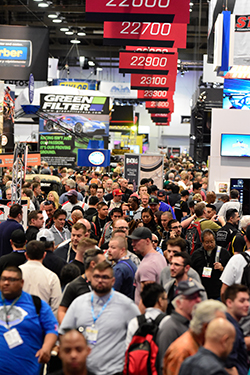
The North Hall of the Las Vegas Convention Center is home to SEMA Show exhibitors in the restyling and car-care categories.
The term restyling covers a broad range of automotive upgrades. While the biggest portion of the segment is made up of accessory and appearance products for both interiors and exteriors, it can also include certain performance parts, wheels, tires and suspension systems that don’t fit neatly into another category. Since the Great Recession, the restyling market has seen steady growth, according to the “2016 SEMA Market Report,” and annual retail sales in the segment are now more than $5.22 billion.

At the annual SEMA Show, the restyling category is grouped with car care in the North Hall of the Las Vegas Convention Center, where the growth trends can be clearly seen. Car care includes maintenance and cleaning products that help keep vehicles looking like new. SEMA research indicated that manufacturer revenue from appearance chemicals is $144.10 million. The market size for wax and cleaning products was estimated at $1.17 billion, while paint and body finishing products (including decals, wraps and window tint films) was thought to be $1.13 billion. At the 2016 SEMA Show, the total exhibit space sprawled across more than 90,000 net sq. ft.

Josh Poulson, principal of restyling company Auto Additions, noted a few popular upgrades for both the exteriors and interiors of vehicles.

“For a little while, we have been doing a lot of lifted truck and Jeep packages,” he said. “Those have been extremely popular over the last two years and probably will be for another year or so. And when I say packages, I’m talking about usually a 4- to 6-in. lift, new wheels, new tires, fender flares, step bars, grilles and leather. We also do a lot of blackout packages—meaning we’re blacking out the emblems and parts of the vehicle that are chrome or body painted.”

Electronic accessories are commonly requested by customers inside. Although backup cameras are highly regulated and will be mandatory as standard in all vehicles in 2019, fewer than half of the new cars on dealer lots today include the technology, according to Poulson. That has created an opportunity for installers as owners of new and older cars look to add the feature. And Poulson said that dash cams and DVRs that have been popular in Europe are also taking off in the U.S. market.

“When you look up close calls [near collisions] on YouTube videos and wonder where the pictures are from, well, they’re coming from people’s video recorders in their cars,” he said. “It’s kind of a safety thing: If you get in an accident, now you have proof of whose fault it was. But dash cams have become a lot less expensive, and they’re starting to become popular.”

Some other popular restyling choices require more careful consideration for upkeep.

Wrap Films

Wraps
Vinyl wraps allow for a temporary color change to a vehicle and can be custom printed with designs or marketing messages.

“There’s a personalization megatrend happening in the world, and print wrap film fits right into that,” said Tim Boxeth, marketing manager for 3M’s Commercial Solutions Division. “Design options are infinite due to the wide range of films and laminates available. Between white, clear, metallic and reflective films, you can have a unique vehicle that doesn’t look like anything else on the road. A design can be changed any time, and you can remove a wrap without damaging your vehicle.”

Among 3M’s most popular wrap colors and finishes are shade-shifting colors, which appear to change colors from different angles and lighting environments. Additionally, 3M offers overlaminate films that can be layered over top solid colors to give different depths and finishes such as metallic, brushed or carbon fiber.

“While all of our wrap films are highly durable, there are steps you can take to keep them looking their best,” added Janelle Pizzi, U.S. product marketer for 3M Commercial Solutions.

“For example, when washing your vehicle, we recommend using a wet, non-abrasive detergent such as 3M Car Wash Soap 39000 or Meguiar’s NXT Generation Car Wash or Deep Crystal Car Wash and a soft, clean cloth or sponge.”

While one of the benefits of using a wrap film is the ability to temporarily change the color of a vehicle, it also comes with a few challenges. It’s a time-consuming installation process, and intricate details can be quite difficult, if not impossible, to wrap. Autodip, a new type of wrap in a liquid form, is designed to alleviate those limitations. The product is applied like paint, but it cures into a vinyl that is peelable when the time comes for removal. The finish also incorporates self-healing technology to guard against scratches and minor damage. The product is available in 32 colors and three finishes: high gloss, frozen (a satin finish) and metallic. A clear coat is laid over top of the color layer.

“The vinyl wrap industry is massive, and it keeps getting bigger and bigger,” said Alex Hamilton, vice president of marketing for Autodip. “Our product shifts the market from people who have expertise in tinting and in doing details and lettering on cars to paint shops.”

The product works with any regular spray gun, and the company asserts that there’s little to no learning curve for painters.

Autodip is available in an aerosol line for DIYers, which is intended for wheels and other small parts of the vehicle. Hamilton said that a set of wheels can be color-changed for under $100. There is also a professional line of Autodip, which painters can use on the whole vehicle, and it lasts for three to five years. The consumer base for the professional line goes all the way to the other end of the spectrum—enthusiasts who have purchased an exotic or luxury car and want to change the look without compromising resale value.

“They can go to a body shop and just change the color of the car for a price that is typically $2,000–$4,000, depending on the car and the finish and the shop that you go to, but that isn’t much when you look at the value of the new car,” Hamilton said. “Because it lasts three to five years, it really does make sense.”

The company offers its own line of care products to go along with the wraps, and the gloss finishes can be wet-sanded and polished. The company will also soon be releasing Auto Guard, a paint-protection film that is basically a clear version of Autodip. Auto Guard can be used on the whole vehicle or only part of it, and it features the self-healing technology of Autodip that corrects itself when exposed
to heat.

Paint Protection

Cleaner
The “WTC Wheel Care Guide” outlines what types of cleaners to use with each of the common wheel finishes.

Auto Additions fields a high request volume for clear mask installations, particularly for new and high-end vehicles. Like Autodip, other manufacturers are making use of self-healing technology for paint-protection films (PPF).

“That’s becoming more of a consumer-awareness product, where people are understanding what it is,” said Poulson. “When we show people the self-healing feature, it’s amazing how excited they get to see the new technology behind it.”

According to Mike Beaver, 3M’s national sales manager for paint-protection film, it’s a care trend that first became popular among luxury vehicle owners but is now growing in other segments. Vehicle owners are also beginning to cover more surface area with PPFs.

“Customers are opting to wrap whole panels, like whole hoods and fenders, as the price gap between partial and whole panels shrinks,” Beaver said. “In addition, customers are becoming more aware of new film technologies that offer features such as non-yellowing, self-healing and maintaining high clarity (low orange peel). We see that trend in shops as well as in our wider sales.”

Wayne Loomis, owner of car-care retailer Dr. Detail, also made some recommendations about protective films, saying that he uses them on his own show car.

“Chip guard usually needs to be changed once every three to five years, which can be an expensive process,” he said. “But if the appearance of the car is everything—like it’s a show car—it can be well worth the money. You definitely want to protect an expensive paint job that is hard to rematch, such as pearls or special effects, because matching that again is probably going to be as bad as a chip.”

Loomis said that he’s seeing a lot of cars coming from the dealership with the film already installed behind the wheels. In his opinion, covering the entire vehicle isn’t necessary, but it’s a smart investment for high-impact areas such as fenders and front bumpers.

Poulson added that care for the films is easy. “We just tell people soap and water, and part of the reason that they are so popular is that it’s pretty much user friendly,” he said. “There isn’t anything special that they have to buy to maintain it, so that helps with the sales process.”

Window Tint Films

Tint
It’s important to consider the finish of a vehicle before selecting care products. Paint, wraps, polished metal and other special finishes may require special care.

Window tinting is another popular upgrade among consumers.

“We’re seeing more and more of the ceramic film to keep the heat out,” Poulson said. “Instead of just looking better, the film cuts UV rays, so that actually
cuts heat.”

He added that those types of new features and designs make accessorization more attractive to consumers.

“It seems that a lot of the manufacturers have improved quite a lot of their products,” he said. “They’ve made them quite a bit better, such as the clear masks, which are now self-healing, or the window tint, which now is heat rejecting. All those things have revitalized a lot of the products that we’re already selling, and that’s led to a boost in sales.”

Sheng Lee Tomar, 3M’s U.S. channel and digital marketing manager for window films, concurred that heat-blocking technologies such as infrared (IR) rejection are currently hot in the segment.

“We find that more and more consumers are looking for performance films that will reject a significant amount of heat to keep their cars cool,” she said. “Typical films reject heat by blocking visible light, which means that the darker the film, the more heat it will block. Films with IR-rejection technology will block infrared light in addition to visible light. Specifically, 3M’s Automotive Window Film Crystalline Series features a proprietary, multilayer optical film technology that combines more than 200 layers in a film that is thinner than a Post-it note.”

According to 3M, the layered design allows even lighter shades of the company’s Crystalline series to reject more heat than darker films in its other lines. Building on consumer demand, 3M recently added Crystalline 20, the darkest shade of window film with the highest level of heat rejection in the product line. The films typically last throughout the lifetime of a vehicle operated in normal conditions and do not require special care, Lee Tomar said.

Dr. Detail’s Loomis recommended that his customers watch out for window cleaners that contain ammonia, which can harm some window films. Most automotive and alcohol-based glass cleaners should be fine for cleaning tinted windows, he said.

Washes, Waxes, Sealants and Coatings

Naturally, the retail side of car care provides insights into consumer demands.

“You see more and more dealerships offering [detail] services to their customers as well,” Loomis said. “I think we’re in a robust industry, and with the advent in the industry of the mobile detailer, as new as that is, I think we’ve got a long growth period coming up.”

Roger Chartier, sales manager at DetailBest.com, likened his customers’ car-care buying habits to the way music is now purchased by the song instead of by the album. “They are curating their detail collection with products they like or wish to try from different vendors,” he said.

In the last couple of years, Chartier has noticed the usage of sealant becoming more common among his customer base. It’s a type of man-made wax that typically lasts a year or two. He explained that there is a difference in appearance between sealant and traditional waxes and said that there’s a growing trend of consumers using both types of products together for a different look.

“One thing people will do if they’re going to a car show is get the best of both worlds,” he said. “We’re seeing people using sealants where they can get the longevity, but they’ll top it with a wax so that they can also get the wet look too. That’s an approach that we have found customers have figured out for themselves by experimenting. We’ve been reading that more professionals are getting into that technique, but it seems that customers were ahead of these gurus and had figured out that approach themselves.”

Regardless of whether consumers choose a sealant, a wax or both, Chartier always advises them to spend some time on preparation. Cleaning the finish and correcting the paintwork is a vital step to getting the desired end result, and so is making sure that you have enough supplies to finish the job.

Loomis also pointed to ceramic coatings as a new advance in appearance chemicals and said they typically last two to five years. Ceramic coatings contain powdered silicon dioxide—better known as sand. The coating gives the vehicle a clarity along with durable protection.

“You usually follow up with a sealant over the top of that for extra gloss and water repellency,” Loomis explained. “And that gets renewed normally, like a sealant would, but the coating under it perfectly protects the paint except for hard impact.”

As with ceramic window tints, many ceramic paint coatings protect against UV rays as well as chemicals. Vehicles treated with a matte finish or vinyl wrap require a different approach. If users aren’t careful, they can ruin specialized finishes with the care products they select. Because of that, some manufacturers such as McKee’s 37 are adapting new products.

“Matte finishes are more prevalent than ever, and they have unique cleaning requirements,” said Nick Rutter, general manager and surface enhancement expert for McKee’s 37. “You cannot use conventional cleaners and waxes on them. That’s why McKee’s 37 Matte Finish Cleaner and Protectant was developed.”

McKee’s 37 said that its matte product is safe for matte vinyl, matte paint, decals, PPFs and clear bras, and it is designed to help prolong the appearance of the finish with a shell of UVA and UVB light absorbers. The spray-and-wipe formula is clear in order to avoid making the vehicle finish appear blotchy or hazy.

Custom Wheel Care

Wheel
An electronic version of the “WTC Wheel Care Guide” can be downloaded now at www.sema.org/wtc.

Along the same lines, there are a number of customization options for wheels, each requiring its own special touch. Over the last year, SEMA’s Wheel and Tire Council (WTC) developed the “WTC Wheel Care Guide,” intended to educate consumers and industry members about proper care techniques for various wheel
surface finishes.

Joe Findeis, president of Wheel Consultants Inc. and the Wheel & Tire Council’s chair, explained that the main goal is to help consumers avoid damaging their new or existing wheels by accidentally using an incorrect cleaning product or method.

“Our goal is to help eliminate a bad experience, which will in turn eliminate dissatisfied customers,” Findeis said. “Happy customers will continue to buy more wheels. When a consumer makes a purchase, it’s a really, really big investment, whether it’s just a standard set of wheels or a complete, hand-built custom set. The main purpose of their purchase of a wheel-and-tire package is usually to enhance the appearance of the vehicle—it’s a fashion industry. In other words, they want to make the car look cool. A damaged, discolored wheel is not cool.”

Inside the “WTC Wheel Care Guide” is a listing of the most common wheel finishes, along with information about appropriate cleaners for each as well as care tips and frequently asked questions. The guide specifically addresses chrome, painted, anodized, plastic and clad, multi-finish and polished or uncoated wheels. The content was compiled by the WTC select committee, comprised of manufacturers, distributors and retailers specializing in the wheel and tire markets. The group also sought the advice of colleagues in the automotive chemical and
cleaning niches.

The “WTC Wheel Care Guide” is not only aimed at consumers but is also designed to educate sales staffs as they field questions from their customers. Ultimately, the WTC hopes that the resource will be available to consumers at the retail counter while they are browsing and will also be provided with their wheels at the time of purchase.

Manufacturers, retailers, distributors, installers, detailers and other wheel-industry professionals can download the free electronic version of the “WTC Wheel Care Guide” online now at www.sema.org/wtc.

Sat, 07/01/2017 - 13:17

SEMA News—July 2017

BUSINESS

By Amanda Gubbins

Automotive Upgrades and How to Maintain Them

Restyling and Car-Care Market Indicators for 2017

car care
The North Hall of the Las Vegas Convention Center is home to SEMA Show exhibitors in the restyling and car-care categories.
The term restyling covers a broad range of automotive upgrades. While the biggest portion of the segment is made up of accessory and appearance products for both interiors and exteriors, it can also include certain performance parts, wheels, tires and suspension systems that don’t fit neatly into another category. Since the Great Recession, the restyling market has seen steady growth, according to the “2016 SEMA Market Report,” and annual retail sales in the segment are now more than $5.22 billion.

At the annual SEMA Show, the restyling category is grouped with car care in the North Hall of the Las Vegas Convention Center, where the growth trends can be clearly seen. Car care includes maintenance and cleaning products that help keep vehicles looking like new. SEMA research indicated that manufacturer revenue from appearance chemicals is $144.10 million. The market size for wax and cleaning products was estimated at $1.17 billion, while paint and body finishing products (including decals, wraps and window tint films) was thought to be $1.13 billion. At the 2016 SEMA Show, the total exhibit space sprawled across more than 90,000 net sq. ft.

Josh Poulson, principal of restyling company Auto Additions, noted a few popular upgrades for both the exteriors and interiors of vehicles.

“For a little while, we have been doing a lot of lifted truck and Jeep packages,” he said. “Those have been extremely popular over the last two years and probably will be for another year or so. And when I say packages, I’m talking about usually a 4- to 6-in. lift, new wheels, new tires, fender flares, step bars, grilles and leather. We also do a lot of blackout packages—meaning we’re blacking out the emblems and parts of the vehicle that are chrome or body painted.”

Electronic accessories are commonly requested by customers inside. Although backup cameras are highly regulated and will be mandatory as standard in all vehicles in 2019, fewer than half of the new cars on dealer lots today include the technology, according to Poulson. That has created an opportunity for installers as owners of new and older cars look to add the feature. And Poulson said that dash cams and DVRs that have been popular in Europe are also taking off in the U.S. market.

“When you look up close calls [near collisions] on YouTube videos and wonder where the pictures are from, well, they’re coming from people’s video recorders in their cars,” he said. “It’s kind of a safety thing: If you get in an accident, now you have proof of whose fault it was. But dash cams have become a lot less expensive, and they’re starting to become popular.”

Some other popular restyling choices require more careful consideration for upkeep.

Wrap Films

Wraps
Vinyl wraps allow for a temporary color change to a vehicle and can be custom printed with designs or marketing messages.

“There’s a personalization megatrend happening in the world, and print wrap film fits right into that,” said Tim Boxeth, marketing manager for 3M’s Commercial Solutions Division. “Design options are infinite due to the wide range of films and laminates available. Between white, clear, metallic and reflective films, you can have a unique vehicle that doesn’t look like anything else on the road. A design can be changed any time, and you can remove a wrap without damaging your vehicle.”

Among 3M’s most popular wrap colors and finishes are shade-shifting colors, which appear to change colors from different angles and lighting environments. Additionally, 3M offers overlaminate films that can be layered over top solid colors to give different depths and finishes such as metallic, brushed or carbon fiber.

“While all of our wrap films are highly durable, there are steps you can take to keep them looking their best,” added Janelle Pizzi, U.S. product marketer for 3M Commercial Solutions.

“For example, when washing your vehicle, we recommend using a wet, non-abrasive detergent such as 3M Car Wash Soap 39000 or Meguiar’s NXT Generation Car Wash or Deep Crystal Car Wash and a soft, clean cloth or sponge.”

While one of the benefits of using a wrap film is the ability to temporarily change the color of a vehicle, it also comes with a few challenges. It’s a time-consuming installation process, and intricate details can be quite difficult, if not impossible, to wrap. Autodip, a new type of wrap in a liquid form, is designed to alleviate those limitations. The product is applied like paint, but it cures into a vinyl that is peelable when the time comes for removal. The finish also incorporates self-healing technology to guard against scratches and minor damage. The product is available in 32 colors and three finishes: high gloss, frozen (a satin finish) and metallic. A clear coat is laid over top of the color layer.

“The vinyl wrap industry is massive, and it keeps getting bigger and bigger,” said Alex Hamilton, vice president of marketing for Autodip. “Our product shifts the market from people who have expertise in tinting and in doing details and lettering on cars to paint shops.”

The product works with any regular spray gun, and the company asserts that there’s little to no learning curve for painters.

Autodip is available in an aerosol line for DIYers, which is intended for wheels and other small parts of the vehicle. Hamilton said that a set of wheels can be color-changed for under $100. There is also a professional line of Autodip, which painters can use on the whole vehicle, and it lasts for three to five years. The consumer base for the professional line goes all the way to the other end of the spectrum—enthusiasts who have purchased an exotic or luxury car and want to change the look without compromising resale value.

“They can go to a body shop and just change the color of the car for a price that is typically $2,000–$4,000, depending on the car and the finish and the shop that you go to, but that isn’t much when you look at the value of the new car,” Hamilton said. “Because it lasts three to five years, it really does make sense.”

The company offers its own line of care products to go along with the wraps, and the gloss finishes can be wet-sanded and polished. The company will also soon be releasing Auto Guard, a paint-protection film that is basically a clear version of Autodip. Auto Guard can be used on the whole vehicle or only part of it, and it features the self-healing technology of Autodip that corrects itself when exposed
to heat.

Paint Protection

Cleaner
The “WTC Wheel Care Guide” outlines what types of cleaners to use with each of the common wheel finishes.

Auto Additions fields a high request volume for clear mask installations, particularly for new and high-end vehicles. Like Autodip, other manufacturers are making use of self-healing technology for paint-protection films (PPF).

“That’s becoming more of a consumer-awareness product, where people are understanding what it is,” said Poulson. “When we show people the self-healing feature, it’s amazing how excited they get to see the new technology behind it.”

According to Mike Beaver, 3M’s national sales manager for paint-protection film, it’s a care trend that first became popular among luxury vehicle owners but is now growing in other segments. Vehicle owners are also beginning to cover more surface area with PPFs.

“Customers are opting to wrap whole panels, like whole hoods and fenders, as the price gap between partial and whole panels shrinks,” Beaver said. “In addition, customers are becoming more aware of new film technologies that offer features such as non-yellowing, self-healing and maintaining high clarity (low orange peel). We see that trend in shops as well as in our wider sales.”

Wayne Loomis, owner of car-care retailer Dr. Detail, also made some recommendations about protective films, saying that he uses them on his own show car.

“Chip guard usually needs to be changed once every three to five years, which can be an expensive process,” he said. “But if the appearance of the car is everything—like it’s a show car—it can be well worth the money. You definitely want to protect an expensive paint job that is hard to rematch, such as pearls or special effects, because matching that again is probably going to be as bad as a chip.”

Loomis said that he’s seeing a lot of cars coming from the dealership with the film already installed behind the wheels. In his opinion, covering the entire vehicle isn’t necessary, but it’s a smart investment for high-impact areas such as fenders and front bumpers.

Poulson added that care for the films is easy. “We just tell people soap and water, and part of the reason that they are so popular is that it’s pretty much user friendly,” he said. “There isn’t anything special that they have to buy to maintain it, so that helps with the sales process.”

Window Tint Films

Tint
It’s important to consider the finish of a vehicle before selecting care products. Paint, wraps, polished metal and other special finishes may require special care.

Window tinting is another popular upgrade among consumers.

“We’re seeing more and more of the ceramic film to keep the heat out,” Poulson said. “Instead of just looking better, the film cuts UV rays, so that actually
cuts heat.”

He added that those types of new features and designs make accessorization more attractive to consumers.

“It seems that a lot of the manufacturers have improved quite a lot of their products,” he said. “They’ve made them quite a bit better, such as the clear masks, which are now self-healing, or the window tint, which now is heat rejecting. All those things have revitalized a lot of the products that we’re already selling, and that’s led to a boost in sales.”

Sheng Lee Tomar, 3M’s U.S. channel and digital marketing manager for window films, concurred that heat-blocking technologies such as infrared (IR) rejection are currently hot in the segment.

“We find that more and more consumers are looking for performance films that will reject a significant amount of heat to keep their cars cool,” she said. “Typical films reject heat by blocking visible light, which means that the darker the film, the more heat it will block. Films with IR-rejection technology will block infrared light in addition to visible light. Specifically, 3M’s Automotive Window Film Crystalline Series features a proprietary, multilayer optical film technology that combines more than 200 layers in a film that is thinner than a Post-it note.”

According to 3M, the layered design allows even lighter shades of the company’s Crystalline series to reject more heat than darker films in its other lines. Building on consumer demand, 3M recently added Crystalline 20, the darkest shade of window film with the highest level of heat rejection in the product line. The films typically last throughout the lifetime of a vehicle operated in normal conditions and do not require special care, Lee Tomar said.

Dr. Detail’s Loomis recommended that his customers watch out for window cleaners that contain ammonia, which can harm some window films. Most automotive and alcohol-based glass cleaners should be fine for cleaning tinted windows, he said.

Washes, Waxes, Sealants and Coatings

Naturally, the retail side of car care provides insights into consumer demands.

“You see more and more dealerships offering [detail] services to their customers as well,” Loomis said. “I think we’re in a robust industry, and with the advent in the industry of the mobile detailer, as new as that is, I think we’ve got a long growth period coming up.”

Roger Chartier, sales manager at DetailBest.com, likened his customers’ car-care buying habits to the way music is now purchased by the song instead of by the album. “They are curating their detail collection with products they like or wish to try from different vendors,” he said.

In the last couple of years, Chartier has noticed the usage of sealant becoming more common among his customer base. It’s a type of man-made wax that typically lasts a year or two. He explained that there is a difference in appearance between sealant and traditional waxes and said that there’s a growing trend of consumers using both types of products together for a different look.

“One thing people will do if they’re going to a car show is get the best of both worlds,” he said. “We’re seeing people using sealants where they can get the longevity, but they’ll top it with a wax so that they can also get the wet look too. That’s an approach that we have found customers have figured out for themselves by experimenting. We’ve been reading that more professionals are getting into that technique, but it seems that customers were ahead of these gurus and had figured out that approach themselves.”

Regardless of whether consumers choose a sealant, a wax or both, Chartier always advises them to spend some time on preparation. Cleaning the finish and correcting the paintwork is a vital step to getting the desired end result, and so is making sure that you have enough supplies to finish the job.

Loomis also pointed to ceramic coatings as a new advance in appearance chemicals and said they typically last two to five years. Ceramic coatings contain powdered silicon dioxide—better known as sand. The coating gives the vehicle a clarity along with durable protection.

“You usually follow up with a sealant over the top of that for extra gloss and water repellency,” Loomis explained. “And that gets renewed normally, like a sealant would, but the coating under it perfectly protects the paint except for hard impact.”

As with ceramic window tints, many ceramic paint coatings protect against UV rays as well as chemicals. Vehicles treated with a matte finish or vinyl wrap require a different approach. If users aren’t careful, they can ruin specialized finishes with the care products they select. Because of that, some manufacturers such as McKee’s 37 are adapting new products.

“Matte finishes are more prevalent than ever, and they have unique cleaning requirements,” said Nick Rutter, general manager and surface enhancement expert for McKee’s 37. “You cannot use conventional cleaners and waxes on them. That’s why McKee’s 37 Matte Finish Cleaner and Protectant was developed.”

McKee’s 37 said that its matte product is safe for matte vinyl, matte paint, decals, PPFs and clear bras, and it is designed to help prolong the appearance of the finish with a shell of UVA and UVB light absorbers. The spray-and-wipe formula is clear in order to avoid making the vehicle finish appear blotchy or hazy.

Custom Wheel Care

Wheel
An electronic version of the “WTC Wheel Care Guide” can be downloaded now at www.sema.org/wtc.

Along the same lines, there are a number of customization options for wheels, each requiring its own special touch. Over the last year, SEMA’s Wheel and Tire Council (WTC) developed the “WTC Wheel Care Guide,” intended to educate consumers and industry members about proper care techniques for various wheel
surface finishes.

Joe Findeis, president of Wheel Consultants Inc. and the Wheel & Tire Council’s chair, explained that the main goal is to help consumers avoid damaging their new or existing wheels by accidentally using an incorrect cleaning product or method.

“Our goal is to help eliminate a bad experience, which will in turn eliminate dissatisfied customers,” Findeis said. “Happy customers will continue to buy more wheels. When a consumer makes a purchase, it’s a really, really big investment, whether it’s just a standard set of wheels or a complete, hand-built custom set. The main purpose of their purchase of a wheel-and-tire package is usually to enhance the appearance of the vehicle—it’s a fashion industry. In other words, they want to make the car look cool. A damaged, discolored wheel is not cool.”

Inside the “WTC Wheel Care Guide” is a listing of the most common wheel finishes, along with information about appropriate cleaners for each as well as care tips and frequently asked questions. The guide specifically addresses chrome, painted, anodized, plastic and clad, multi-finish and polished or uncoated wheels. The content was compiled by the WTC select committee, comprised of manufacturers, distributors and retailers specializing in the wheel and tire markets. The group also sought the advice of colleagues in the automotive chemical and
cleaning niches.

The “WTC Wheel Care Guide” is not only aimed at consumers but is also designed to educate sales staffs as they field questions from their customers. Ultimately, the WTC hopes that the resource will be available to consumers at the retail counter while they are browsing and will also be provided with their wheels at the time of purchase.

Manufacturers, retailers, distributors, installers, detailers and other wheel-industry professionals can download the free electronic version of the “WTC Wheel Care Guide” online now at www.sema.org/wtc.

Sat, 07/01/2017 - 13:17

SEMA News—July 2017

BUSINESS

By Amanda Gubbins

Automotive Upgrades and How to Maintain Them

Restyling and Car-Care Market Indicators for 2017

car care
The North Hall of the Las Vegas Convention Center is home to SEMA Show exhibitors in the restyling and car-care categories.
The term restyling covers a broad range of automotive upgrades. While the biggest portion of the segment is made up of accessory and appearance products for both interiors and exteriors, it can also include certain performance parts, wheels, tires and suspension systems that don’t fit neatly into another category. Since the Great Recession, the restyling market has seen steady growth, according to the “2016 SEMA Market Report,” and annual retail sales in the segment are now more than $5.22 billion.

At the annual SEMA Show, the restyling category is grouped with car care in the North Hall of the Las Vegas Convention Center, where the growth trends can be clearly seen. Car care includes maintenance and cleaning products that help keep vehicles looking like new. SEMA research indicated that manufacturer revenue from appearance chemicals is $144.10 million. The market size for wax and cleaning products was estimated at $1.17 billion, while paint and body finishing products (including decals, wraps and window tint films) was thought to be $1.13 billion. At the 2016 SEMA Show, the total exhibit space sprawled across more than 90,000 net sq. ft.

Josh Poulson, principal of restyling company Auto Additions, noted a few popular upgrades for both the exteriors and interiors of vehicles.

“For a little while, we have been doing a lot of lifted truck and Jeep packages,” he said. “Those have been extremely popular over the last two years and probably will be for another year or so. And when I say packages, I’m talking about usually a 4- to 6-in. lift, new wheels, new tires, fender flares, step bars, grilles and leather. We also do a lot of blackout packages—meaning we’re blacking out the emblems and parts of the vehicle that are chrome or body painted.”

Electronic accessories are commonly requested by customers inside. Although backup cameras are highly regulated and will be mandatory as standard in all vehicles in 2019, fewer than half of the new cars on dealer lots today include the technology, according to Poulson. That has created an opportunity for installers as owners of new and older cars look to add the feature. And Poulson said that dash cams and DVRs that have been popular in Europe are also taking off in the U.S. market.

“When you look up close calls [near collisions] on YouTube videos and wonder where the pictures are from, well, they’re coming from people’s video recorders in their cars,” he said. “It’s kind of a safety thing: If you get in an accident, now you have proof of whose fault it was. But dash cams have become a lot less expensive, and they’re starting to become popular.”

Some other popular restyling choices require more careful consideration for upkeep.

Wrap Films

Wraps
Vinyl wraps allow for a temporary color change to a vehicle and can be custom printed with designs or marketing messages.

“There’s a personalization megatrend happening in the world, and print wrap film fits right into that,” said Tim Boxeth, marketing manager for 3M’s Commercial Solutions Division. “Design options are infinite due to the wide range of films and laminates available. Between white, clear, metallic and reflective films, you can have a unique vehicle that doesn’t look like anything else on the road. A design can be changed any time, and you can remove a wrap without damaging your vehicle.”

Among 3M’s most popular wrap colors and finishes are shade-shifting colors, which appear to change colors from different angles and lighting environments. Additionally, 3M offers overlaminate films that can be layered over top solid colors to give different depths and finishes such as metallic, brushed or carbon fiber.

“While all of our wrap films are highly durable, there are steps you can take to keep them looking their best,” added Janelle Pizzi, U.S. product marketer for 3M Commercial Solutions.

“For example, when washing your vehicle, we recommend using a wet, non-abrasive detergent such as 3M Car Wash Soap 39000 or Meguiar’s NXT Generation Car Wash or Deep Crystal Car Wash and a soft, clean cloth or sponge.”

While one of the benefits of using a wrap film is the ability to temporarily change the color of a vehicle, it also comes with a few challenges. It’s a time-consuming installation process, and intricate details can be quite difficult, if not impossible, to wrap. Autodip, a new type of wrap in a liquid form, is designed to alleviate those limitations. The product is applied like paint, but it cures into a vinyl that is peelable when the time comes for removal. The finish also incorporates self-healing technology to guard against scratches and minor damage. The product is available in 32 colors and three finishes: high gloss, frozen (a satin finish) and metallic. A clear coat is laid over top of the color layer.

“The vinyl wrap industry is massive, and it keeps getting bigger and bigger,” said Alex Hamilton, vice president of marketing for Autodip. “Our product shifts the market from people who have expertise in tinting and in doing details and lettering on cars to paint shops.”

The product works with any regular spray gun, and the company asserts that there’s little to no learning curve for painters.

Autodip is available in an aerosol line for DIYers, which is intended for wheels and other small parts of the vehicle. Hamilton said that a set of wheels can be color-changed for under $100. There is also a professional line of Autodip, which painters can use on the whole vehicle, and it lasts for three to five years. The consumer base for the professional line goes all the way to the other end of the spectrum—enthusiasts who have purchased an exotic or luxury car and want to change the look without compromising resale value.

“They can go to a body shop and just change the color of the car for a price that is typically $2,000–$4,000, depending on the car and the finish and the shop that you go to, but that isn’t much when you look at the value of the new car,” Hamilton said. “Because it lasts three to five years, it really does make sense.”

The company offers its own line of care products to go along with the wraps, and the gloss finishes can be wet-sanded and polished. The company will also soon be releasing Auto Guard, a paint-protection film that is basically a clear version of Autodip. Auto Guard can be used on the whole vehicle or only part of it, and it features the self-healing technology of Autodip that corrects itself when exposed
to heat.

Paint Protection

Cleaner
The “WTC Wheel Care Guide” outlines what types of cleaners to use with each of the common wheel finishes.

Auto Additions fields a high request volume for clear mask installations, particularly for new and high-end vehicles. Like Autodip, other manufacturers are making use of self-healing technology for paint-protection films (PPF).

“That’s becoming more of a consumer-awareness product, where people are understanding what it is,” said Poulson. “When we show people the self-healing feature, it’s amazing how excited they get to see the new technology behind it.”

According to Mike Beaver, 3M’s national sales manager for paint-protection film, it’s a care trend that first became popular among luxury vehicle owners but is now growing in other segments. Vehicle owners are also beginning to cover more surface area with PPFs.

“Customers are opting to wrap whole panels, like whole hoods and fenders, as the price gap between partial and whole panels shrinks,” Beaver said. “In addition, customers are becoming more aware of new film technologies that offer features such as non-yellowing, self-healing and maintaining high clarity (low orange peel). We see that trend in shops as well as in our wider sales.”

Wayne Loomis, owner of car-care retailer Dr. Detail, also made some recommendations about protective films, saying that he uses them on his own show car.

“Chip guard usually needs to be changed once every three to five years, which can be an expensive process,” he said. “But if the appearance of the car is everything—like it’s a show car—it can be well worth the money. You definitely want to protect an expensive paint job that is hard to rematch, such as pearls or special effects, because matching that again is probably going to be as bad as a chip.”

Loomis said that he’s seeing a lot of cars coming from the dealership with the film already installed behind the wheels. In his opinion, covering the entire vehicle isn’t necessary, but it’s a smart investment for high-impact areas such as fenders and front bumpers.

Poulson added that care for the films is easy. “We just tell people soap and water, and part of the reason that they are so popular is that it’s pretty much user friendly,” he said. “There isn’t anything special that they have to buy to maintain it, so that helps with the sales process.”

Window Tint Films

Tint
It’s important to consider the finish of a vehicle before selecting care products. Paint, wraps, polished metal and other special finishes may require special care.

Window tinting is another popular upgrade among consumers.

“We’re seeing more and more of the ceramic film to keep the heat out,” Poulson said. “Instead of just looking better, the film cuts UV rays, so that actually
cuts heat.”

He added that those types of new features and designs make accessorization more attractive to consumers.

“It seems that a lot of the manufacturers have improved quite a lot of their products,” he said. “They’ve made them quite a bit better, such as the clear masks, which are now self-healing, or the window tint, which now is heat rejecting. All those things have revitalized a lot of the products that we’re already selling, and that’s led to a boost in sales.”

Sheng Lee Tomar, 3M’s U.S. channel and digital marketing manager for window films, concurred that heat-blocking technologies such as infrared (IR) rejection are currently hot in the segment.

“We find that more and more consumers are looking for performance films that will reject a significant amount of heat to keep their cars cool,” she said. “Typical films reject heat by blocking visible light, which means that the darker the film, the more heat it will block. Films with IR-rejection technology will block infrared light in addition to visible light. Specifically, 3M’s Automotive Window Film Crystalline Series features a proprietary, multilayer optical film technology that combines more than 200 layers in a film that is thinner than a Post-it note.”

According to 3M, the layered design allows even lighter shades of the company’s Crystalline series to reject more heat than darker films in its other lines. Building on consumer demand, 3M recently added Crystalline 20, the darkest shade of window film with the highest level of heat rejection in the product line. The films typically last throughout the lifetime of a vehicle operated in normal conditions and do not require special care, Lee Tomar said.

Dr. Detail’s Loomis recommended that his customers watch out for window cleaners that contain ammonia, which can harm some window films. Most automotive and alcohol-based glass cleaners should be fine for cleaning tinted windows, he said.

Washes, Waxes, Sealants and Coatings

Naturally, the retail side of car care provides insights into consumer demands.

“You see more and more dealerships offering [detail] services to their customers as well,” Loomis said. “I think we’re in a robust industry, and with the advent in the industry of the mobile detailer, as new as that is, I think we’ve got a long growth period coming up.”

Roger Chartier, sales manager at DetailBest.com, likened his customers’ car-care buying habits to the way music is now purchased by the song instead of by the album. “They are curating their detail collection with products they like or wish to try from different vendors,” he said.

In the last couple of years, Chartier has noticed the usage of sealant becoming more common among his customer base. It’s a type of man-made wax that typically lasts a year or two. He explained that there is a difference in appearance between sealant and traditional waxes and said that there’s a growing trend of consumers using both types of products together for a different look.

“One thing people will do if they’re going to a car show is get the best of both worlds,” he said. “We’re seeing people using sealants where they can get the longevity, but they’ll top it with a wax so that they can also get the wet look too. That’s an approach that we have found customers have figured out for themselves by experimenting. We’ve been reading that more professionals are getting into that technique, but it seems that customers were ahead of these gurus and had figured out that approach themselves.”

Regardless of whether consumers choose a sealant, a wax or both, Chartier always advises them to spend some time on preparation. Cleaning the finish and correcting the paintwork is a vital step to getting the desired end result, and so is making sure that you have enough supplies to finish the job.

Loomis also pointed to ceramic coatings as a new advance in appearance chemicals and said they typically last two to five years. Ceramic coatings contain powdered silicon dioxide—better known as sand. The coating gives the vehicle a clarity along with durable protection.

“You usually follow up with a sealant over the top of that for extra gloss and water repellency,” Loomis explained. “And that gets renewed normally, like a sealant would, but the coating under it perfectly protects the paint except for hard impact.”

As with ceramic window tints, many ceramic paint coatings protect against UV rays as well as chemicals. Vehicles treated with a matte finish or vinyl wrap require a different approach. If users aren’t careful, they can ruin specialized finishes with the care products they select. Because of that, some manufacturers such as McKee’s 37 are adapting new products.

“Matte finishes are more prevalent than ever, and they have unique cleaning requirements,” said Nick Rutter, general manager and surface enhancement expert for McKee’s 37. “You cannot use conventional cleaners and waxes on them. That’s why McKee’s 37 Matte Finish Cleaner and Protectant was developed.”

McKee’s 37 said that its matte product is safe for matte vinyl, matte paint, decals, PPFs and clear bras, and it is designed to help prolong the appearance of the finish with a shell of UVA and UVB light absorbers. The spray-and-wipe formula is clear in order to avoid making the vehicle finish appear blotchy or hazy.

Custom Wheel Care

Wheel
An electronic version of the “WTC Wheel Care Guide” can be downloaded now at www.sema.org/wtc.

Along the same lines, there are a number of customization options for wheels, each requiring its own special touch. Over the last year, SEMA’s Wheel and Tire Council (WTC) developed the “WTC Wheel Care Guide,” intended to educate consumers and industry members about proper care techniques for various wheel
surface finishes.

Joe Findeis, president of Wheel Consultants Inc. and the Wheel & Tire Council’s chair, explained that the main goal is to help consumers avoid damaging their new or existing wheels by accidentally using an incorrect cleaning product or method.

“Our goal is to help eliminate a bad experience, which will in turn eliminate dissatisfied customers,” Findeis said. “Happy customers will continue to buy more wheels. When a consumer makes a purchase, it’s a really, really big investment, whether it’s just a standard set of wheels or a complete, hand-built custom set. The main purpose of their purchase of a wheel-and-tire package is usually to enhance the appearance of the vehicle—it’s a fashion industry. In other words, they want to make the car look cool. A damaged, discolored wheel is not cool.”

Inside the “WTC Wheel Care Guide” is a listing of the most common wheel finishes, along with information about appropriate cleaners for each as well as care tips and frequently asked questions. The guide specifically addresses chrome, painted, anodized, plastic and clad, multi-finish and polished or uncoated wheels. The content was compiled by the WTC select committee, comprised of manufacturers, distributors and retailers specializing in the wheel and tire markets. The group also sought the advice of colleagues in the automotive chemical and
cleaning niches.

The “WTC Wheel Care Guide” is not only aimed at consumers but is also designed to educate sales staffs as they field questions from their customers. Ultimately, the WTC hopes that the resource will be available to consumers at the retail counter while they are browsing and will also be provided with their wheels at the time of purchase.

Manufacturers, retailers, distributors, installers, detailers and other wheel-industry professionals can download the free electronic version of the “WTC Wheel Care Guide” online now at www.sema.org/wtc.

Sat, 07/01/2017 - 10:29

SEMA News—July 2017

BUSINESS

By Clint Simone

UTV Market Update

New Products and New Customers Drive UTV Market Growth

Still riding the wave of a recent marketplace shift, the utility task vehicle, better known as the UTV or side-by-side, is at a major crossroads. Intensive growth in product development and surging sales have helped the side-by-side to become a new staple in the off-road community.

The Long (Dirt) Road to Today

The term UTV covers several different types of vehicles, but generally, all are designed for off-road activity. The mainstream use for a UTV has been more commercial than recreational. The original UTVs were vehicles that were not necessarily fast or fun to drive but were handy enough to get the job done and versatile enough to tackle a variety of tasks.

Since the early ’00s, products such as the John Deere Gator, Kawasaki Mule and Polaris Ranger have been used on job sites, moving heavy objects and transporting crew. Once their durability and overall effectiveness became apparent, UTVs began to make their way into consumers’ hands—mostly for use on farms and other functional pieces of property. According to Greg Boeder of Power Products Marketing, a website aimed primarily at powersports dealers, the utility-focused side-by-sides served as a foundation for the UTV market to grow.

“The pure utility market has always been there, without much exception,” he said.

Even in today’s market, utility-focused vehicles outsell recreational ones by a wide margin. It is only more recently that consumers have embraced UTVs aimed at sport riding in off-road terrain, especially in western states such as California.

That transition came once UTV manufacturers saw that consumers were interested in a more versatile machine that was both able to complete a job and still be suitable for recreational use. Out of those desires came the Yamaha Rhino, which entered the market in 2004. Boeder noted that the Rhino was a breakthrough in terms of being multi-purpose.

“The Rhino was the first machine that was more focused on the recreational market; it refocused what UTVs could do and how they were perceived,” he said.

UTV
In markets such as California, sport-focused UTVs like the Polaris RZR shown here make up the majority of sales.

That notion resonated with consumers and furthered demand for a machine that was equal parts capable and fun—evolving toward a sports UTV. Hearing that cry from the market, Polaris introduced the RZR in 2007. It became a wildly successful side-by-side that brought to the market an entirely new generation of UTV enthusiasts that was focused primarily on off-road motorsports.

“The RZR was the first side-by-side to offer a 50-in. width, which made it trail legal across the vast majority of the country,” said Boeder. “It was the first UTV that met this requirement, making it an obvious standout pick for consumers. The dimensions, paired with a larger and lower-mounted engine, meant that the RZR was a pleasure to drive off-road and could be driven fast for long durations.”

From its first year of sale, the RZR sat atop the sports UTV market and is still largely the go-to choice for many off-roaders. As the RZR’s prominent stake in the off-road market grew, traditional vehicles—such as sandrails—lost market share.

Matt Emery, editor of Dirt Sports & Off-Road magazine, has spent years in the UTV market, focusing specifically on the sport-focused vehicles.

“If you went to any major off-road show even five years ago, everything was a race-spec sandrail,” he said. “Those huge machines cost sometimes hundreds of thousands of dollars and were purpose-built to race with massive Chevy LS motors. Now what you see at shows has completely switched over to UTVs. The market has shifted—and it has done so dramatically and quickly.”

The Aftermarket Gets Involved

UTV
The parts and service area of Bert’s Mega Mall in Covina, California, is filled with aftermarket products to enhance newly purchased UTVs.

According to Power Products Marketing, the market has grown each year by tens of thousands of units sold—the only exception being 2008–2009, when the recession caused a slight decline. In 2000, the UTV niche sold approximately 100,000 units across the board. Fifteen years later, that number quadrupled, with more growth anticipated in the future.

It is clear that the market is healthy and viable, especially in looking at class leaders such as the Polaris RZR, which tripled its sales between its first year on the market in 2007 and 2015. As enthusiasm for side-by-sides grew, so did interest in quality parts and accessories.

To find out more about the UTV customer base, we talked to Ron Seidner, owner of Bert’s Mega Mall in Covina, California. The powersports dealer is said to be the single largest in the world by volume and has served the California market for decades. Seidner maintains a large inventory and generally has no fewer than 100 vehicles on the showroom floor at any given time.

“UTV is absolutely huge for us,” he said. “It is one of the ‘big three’ highest-selling categories—the other two being watercraft and motorcycles.”

Bert’s moves thousands of UTVs each year and has watched its customer base become more and more loyal to the niche.

“There really is a family component to this,” he said. “Especially here in California, the UTV market is almost entirely sports based. You have these guys come in who want to take the family out to the desert on the weekend and keep them safe in the process. UTVs are perfect for that because they are largely super reliable and capable of almost any off-road terrain.”

One of the key factors in the success of Bert’s Mega Mall is catering to customers’ desire to make their UTV bespoke. Two years ago, Seidner opened BMM customs, Bert’s in-house UTV customization department, which is capable of making just about any stock UTV into a one-off special.

arctic cat
The Arctic Cat UTV Experience at the 2016 SEMA Show provided attendees with an opportunity to see firsthand how a UTV behaves in off-road terrain.

“Sometimes it really is just simple tweaks here and there,” Seidner said. “A customer will want an aftermarket four-point harness installed or a lowered, reinforced cage with a light bar added—just easy additions. On the other hand, some people go completely over the top and customize their ride with everything imaginable, from new paint to bigger wheels and tires, even custom interior work. Regardless, we saw customers wanting aftermarket additions, and keeping the purchase and installation process completely in-house makes things easier on everyone.”

Emery echoed Seidner’s observations about consumers’ desire to add aftermarket componentry.

“These things are still being bought by racing enthusiasts who want their machines to look and perform as well as possible,” Emery said. “In many cases, they are ordering the cars to the spec they desire, even if that involves aftermarket work.”

Emery specifically cited the UTV racing community as one of the biggest catalysts for modification.

“Racers are adding forced induction to the motors, although that isn’t necessarily mandatory because the cars are so powerful on their own,” he said. “More often, they are adding bigger wheels and tires and swapping out suspension components
as needed.”

He concluded by stating that the need for quality aftermarket parts is abundant, and aftermarket manufacturers are meeting that demand with an array of products to choose from.

Recent Changes Create a Highly Anticipated Future

UTV
Growth in the UTV marketplace has provided opportunities for automotive specialty-equipment manufacturers, with many new products displayed on the SEMA Show floor.

Consistently rising since the early ’00s, the UTV market still seems to be gaining momentum. In October of 2016, Polaris, maker of the segment-leading RZR side-by-side, announced that it would be acquiring retail giant Transamerican Auto Parts, owner of off-road retail chain 4Wheel Parts.

Asked why the acquisition would make sense, Transamerican Auto Parts President and CEO Greg Adler said, “Our focus is off-road performance aftermarket products and accessories, while Polaris’ core business is as a manufacturer. There are many areas where our customers intersect, such as an RZR owner who is likely to use a truck for towing or transporting the vehicle.”

Meanwhile, in March, multi-industry powerhouse Textron announced the acquisition of Arctic Cat, viewing it as an opportunity to add side-by-sides and related off-road vehicles to such well-known Textron brands as Cessna, Beechcraft and Bell. In May, Textron underscored its commitment to its new acquisition by moving Arctic Cat engine production, and adding 50–100 jobs, to its St. Cloud, Minnesota, engine plant.

“Arctic Cat is an ideal fit with our growing range of off-road recreational vehicles,” said Textron President and CEO Scott Donnelly. “The addition [instantly] gives us a deeper product line for customers, greater potential for innovation, and introduces new sales opportunities for our combined worldwide dealer network.”

For market watchers such as Emery, it is difficult to predict what may happen next.

“It will be interesting to see how the manufacturers combat increased productivity from others,” he said.

Emery’s thoughts seem to represent the consensus within the UTV industry when considering the future. Perhaps for the first time ever, industry leaders such as Polaris and its RZR are being challenged by newly designed vehicles from Can-Am, Yamaha, Arctic Cat and others. In fact, Arctic Cat used the SEMA Show as an opportunity to operate a demo track that showcased the upcoming Arctic Cat Wildcat X model.

“It’s a product we developed through a partnership with Robby Gordon,” said Greg Williamson, Arctic Cat’s chief marketing officer. “He helped us with our suspension and performance, and we put it on our new Wildcat X. The product itself is very high engagement and super experiential, so there is no better way to convert someone to our brand than to put them behind the wheel of one of our machines.”

Whether this stiffening competition will shift sales away from the Polaris brand or perhaps add to total market volume remains to be seen. That said, optimism is high across the board, and the UTV niche looks to be growing healthier in almost every measurable aspect.

“The UTV market is really just getting started,” Seidner summed up. “Much like everyone else, we are very excited to be part of its future.”

Emery agreed: “I think it is safe to say we are all eagerly anticipating what is to come.”

Sat, 07/01/2017 - 10:29

SEMA News—July 2017

BUSINESS

By Clint Simone

UTV Market Update

New Products and New Customers Drive UTV Market Growth

Still riding the wave of a recent marketplace shift, the utility task vehicle, better known as the UTV or side-by-side, is at a major crossroads. Intensive growth in product development and surging sales have helped the side-by-side to become a new staple in the off-road community.

The Long (Dirt) Road to Today

The term UTV covers several different types of vehicles, but generally, all are designed for off-road activity. The mainstream use for a UTV has been more commercial than recreational. The original UTVs were vehicles that were not necessarily fast or fun to drive but were handy enough to get the job done and versatile enough to tackle a variety of tasks.

Since the early ’00s, products such as the John Deere Gator, Kawasaki Mule and Polaris Ranger have been used on job sites, moving heavy objects and transporting crew. Once their durability and overall effectiveness became apparent, UTVs began to make their way into consumers’ hands—mostly for use on farms and other functional pieces of property. According to Greg Boeder of Power Products Marketing, a website aimed primarily at powersports dealers, the utility-focused side-by-sides served as a foundation for the UTV market to grow.

“The pure utility market has always been there, without much exception,” he said.

Even in today’s market, utility-focused vehicles outsell recreational ones by a wide margin. It is only more recently that consumers have embraced UTVs aimed at sport riding in off-road terrain, especially in western states such as California.

That transition came once UTV manufacturers saw that consumers were interested in a more versatile machine that was both able to complete a job and still be suitable for recreational use. Out of those desires came the Yamaha Rhino, which entered the market in 2004. Boeder noted that the Rhino was a breakthrough in terms of being multi-purpose.

“The Rhino was the first machine that was more focused on the recreational market; it refocused what UTVs could do and how they were perceived,” he said.

UTV
In markets such as California, sport-focused UTVs like the Polaris RZR shown here make up the majority of sales.

That notion resonated with consumers and furthered demand for a machine that was equal parts capable and fun—evolving toward a sports UTV. Hearing that cry from the market, Polaris introduced the RZR in 2007. It became a wildly successful side-by-side that brought to the market an entirely new generation of UTV enthusiasts that was focused primarily on off-road motorsports.

“The RZR was the first side-by-side to offer a 50-in. width, which made it trail legal across the vast majority of the country,” said Boeder. “It was the first UTV that met this requirement, making it an obvious standout pick for consumers. The dimensions, paired with a larger and lower-mounted engine, meant that the RZR was a pleasure to drive off-road and could be driven fast for long durations.”

From its first year of sale, the RZR sat atop the sports UTV market and is still largely the go-to choice for many off-roaders. As the RZR’s prominent stake in the off-road market grew, traditional vehicles—such as sandrails—lost market share.

Matt Emery, editor of Dirt Sports & Off-Road magazine, has spent years in the UTV market, focusing specifically on the sport-focused vehicles.

“If you went to any major off-road show even five years ago, everything was a race-spec sandrail,” he said. “Those huge machines cost sometimes hundreds of thousands of dollars and were purpose-built to race with massive Chevy LS motors. Now what you see at shows has completely switched over to UTVs. The market has shifted—and it has done so dramatically and quickly.”

The Aftermarket Gets Involved

UTV
The parts and service area of Bert’s Mega Mall in Covina, California, is filled with aftermarket products to enhance newly purchased UTVs.

According to Power Products Marketing, the market has grown each year by tens of thousands of units sold—the only exception being 2008–2009, when the recession caused a slight decline. In 2000, the UTV niche sold approximately 100,000 units across the board. Fifteen years later, that number quadrupled, with more growth anticipated in the future.

It is clear that the market is healthy and viable, especially in looking at class leaders such as the Polaris RZR, which tripled its sales between its first year on the market in 2007 and 2015. As enthusiasm for side-by-sides grew, so did interest in quality parts and accessories.

To find out more about the UTV customer base, we talked to Ron Seidner, owner of Bert’s Mega Mall in Covina, California. The powersports dealer is said to be the single largest in the world by volume and has served the California market for decades. Seidner maintains a large inventory and generally has no fewer than 100 vehicles on the showroom floor at any given time.

“UTV is absolutely huge for us,” he said. “It is one of the ‘big three’ highest-selling categories—the other two being watercraft and motorcycles.”

Bert’s moves thousands of UTVs each year and has watched its customer base become more and more loyal to the niche.

“There really is a family component to this,” he said. “Especially here in California, the UTV market is almost entirely sports based. You have these guys come in who want to take the family out to the desert on the weekend and keep them safe in the process. UTVs are perfect for that because they are largely super reliable and capable of almost any off-road terrain.”

One of the key factors in the success of Bert’s Mega Mall is catering to customers’ desire to make their UTV bespoke. Two years ago, Seidner opened BMM customs, Bert’s in-house UTV customization department, which is capable of making just about any stock UTV into a one-off special.

arctic cat
The Arctic Cat UTV Experience at the 2016 SEMA Show provided attendees with an opportunity to see firsthand how a UTV behaves in off-road terrain.

“Sometimes it really is just simple tweaks here and there,” Seidner said. “A customer will want an aftermarket four-point harness installed or a lowered, reinforced cage with a light bar added—just easy additions. On the other hand, some people go completely over the top and customize their ride with everything imaginable, from new paint to bigger wheels and tires, even custom interior work. Regardless, we saw customers wanting aftermarket additions, and keeping the purchase and installation process completely in-house makes things easier on everyone.”

Emery echoed Seidner’s observations about consumers’ desire to add aftermarket componentry.

“These things are still being bought by racing enthusiasts who want their machines to look and perform as well as possible,” Emery said. “In many cases, they are ordering the cars to the spec they desire, even if that involves aftermarket work.”

Emery specifically cited the UTV racing community as one of the biggest catalysts for modification.

“Racers are adding forced induction to the motors, although that isn’t necessarily mandatory because the cars are so powerful on their own,” he said. “More often, they are adding bigger wheels and tires and swapping out suspension components
as needed.”

He concluded by stating that the need for quality aftermarket parts is abundant, and aftermarket manufacturers are meeting that demand with an array of products to choose from.

Recent Changes Create a Highly Anticipated Future

UTV
Growth in the UTV marketplace has provided opportunities for automotive specialty-equipment manufacturers, with many new products displayed on the SEMA Show floor.

Consistently rising since the early ’00s, the UTV market still seems to be gaining momentum. In October of 2016, Polaris, maker of the segment-leading RZR side-by-side, announced that it would be acquiring retail giant Transamerican Auto Parts, owner of off-road retail chain 4Wheel Parts.

Asked why the acquisition would make sense, Transamerican Auto Parts President and CEO Greg Adler said, “Our focus is off-road performance aftermarket products and accessories, while Polaris’ core business is as a manufacturer. There are many areas where our customers intersect, such as an RZR owner who is likely to use a truck for towing or transporting the vehicle.”

Meanwhile, in March, multi-industry powerhouse Textron announced the acquisition of Arctic Cat, viewing it as an opportunity to add side-by-sides and related off-road vehicles to such well-known Textron brands as Cessna, Beechcraft and Bell. In May, Textron underscored its commitment to its new acquisition by moving Arctic Cat engine production, and adding 50–100 jobs, to its St. Cloud, Minnesota, engine plant.

“Arctic Cat is an ideal fit with our growing range of off-road recreational vehicles,” said Textron President and CEO Scott Donnelly. “The addition [instantly] gives us a deeper product line for customers, greater potential for innovation, and introduces new sales opportunities for our combined worldwide dealer network.”

For market watchers such as Emery, it is difficult to predict what may happen next.

“It will be interesting to see how the manufacturers combat increased productivity from others,” he said.

Emery’s thoughts seem to represent the consensus within the UTV industry when considering the future. Perhaps for the first time ever, industry leaders such as Polaris and its RZR are being challenged by newly designed vehicles from Can-Am, Yamaha, Arctic Cat and others. In fact, Arctic Cat used the SEMA Show as an opportunity to operate a demo track that showcased the upcoming Arctic Cat Wildcat X model.

“It’s a product we developed through a partnership with Robby Gordon,” said Greg Williamson, Arctic Cat’s chief marketing officer. “He helped us with our suspension and performance, and we put it on our new Wildcat X. The product itself is very high engagement and super experiential, so there is no better way to convert someone to our brand than to put them behind the wheel of one of our machines.”

Whether this stiffening competition will shift sales away from the Polaris brand or perhaps add to total market volume remains to be seen. That said, optimism is high across the board, and the UTV niche looks to be growing healthier in almost every measurable aspect.

“The UTV market is really just getting started,” Seidner summed up. “Much like everyone else, we are very excited to be part of its future.”

Emery agreed: “I think it is safe to say we are all eagerly anticipating what is to come.”

Sat, 07/01/2017 - 10:29

SEMA News—July 2017

BUSINESS

By Clint Simone

UTV Market Update

New Products and New Customers Drive UTV Market Growth

Still riding the wave of a recent marketplace shift, the utility task vehicle, better known as the UTV or side-by-side, is at a major crossroads. Intensive growth in product development and surging sales have helped the side-by-side to become a new staple in the off-road community.

The Long (Dirt) Road to Today

The term UTV covers several different types of vehicles, but generally, all are designed for off-road activity. The mainstream use for a UTV has been more commercial than recreational. The original UTVs were vehicles that were not necessarily fast or fun to drive but were handy enough to get the job done and versatile enough to tackle a variety of tasks.

Since the early ’00s, products such as the John Deere Gator, Kawasaki Mule and Polaris Ranger have been used on job sites, moving heavy objects and transporting crew. Once their durability and overall effectiveness became apparent, UTVs began to make their way into consumers’ hands—mostly for use on farms and other functional pieces of property. According to Greg Boeder of Power Products Marketing, a website aimed primarily at powersports dealers, the utility-focused side-by-sides served as a foundation for the UTV market to grow.

“The pure utility market has always been there, without much exception,” he said.

Even in today’s market, utility-focused vehicles outsell recreational ones by a wide margin. It is only more recently that consumers have embraced UTVs aimed at sport riding in off-road terrain, especially in western states such as California.

That transition came once UTV manufacturers saw that consumers were interested in a more versatile machine that was both able to complete a job and still be suitable for recreational use. Out of those desires came the Yamaha Rhino, which entered the market in 2004. Boeder noted that the Rhino was a breakthrough in terms of being multi-purpose.

“The Rhino was the first machine that was more focused on the recreational market; it refocused what UTVs could do and how they were perceived,” he said.

UTV
In markets such as California, sport-focused UTVs like the Polaris RZR shown here make up the majority of sales.

That notion resonated with consumers and furthered demand for a machine that was equal parts capable and fun—evolving toward a sports UTV. Hearing that cry from the market, Polaris introduced the RZR in 2007. It became a wildly successful side-by-side that brought to the market an entirely new generation of UTV enthusiasts that was focused primarily on off-road motorsports.

“The RZR was the first side-by-side to offer a 50-in. width, which made it trail legal across the vast majority of the country,” said Boeder. “It was the first UTV that met this requirement, making it an obvious standout pick for consumers. The dimensions, paired with a larger and lower-mounted engine, meant that the RZR was a pleasure to drive off-road and could be driven fast for long durations.”

From its first year of sale, the RZR sat atop the sports UTV market and is still largely the go-to choice for many off-roaders. As the RZR’s prominent stake in the off-road market grew, traditional vehicles—such as sandrails—lost market share.

Matt Emery, editor of Dirt Sports & Off-Road magazine, has spent years in the UTV market, focusing specifically on the sport-focused vehicles.

“If you went to any major off-road show even five years ago, everything was a race-spec sandrail,” he said. “Those huge machines cost sometimes hundreds of thousands of dollars and were purpose-built to race with massive Chevy LS motors. Now what you see at shows has completely switched over to UTVs. The market has shifted—and it has done so dramatically and quickly.”

The Aftermarket Gets Involved

UTV
The parts and service area of Bert’s Mega Mall in Covina, California, is filled with aftermarket products to enhance newly purchased UTVs.

According to Power Products Marketing, the market has grown each year by tens of thousands of units sold—the only exception being 2008–2009, when the recession caused a slight decline. In 2000, the UTV niche sold approximately 100,000 units across the board. Fifteen years later, that number quadrupled, with more growth anticipated in the future.

It is clear that the market is healthy and viable, especially in looking at class leaders such as the Polaris RZR, which tripled its sales between its first year on the market in 2007 and 2015. As enthusiasm for side-by-sides grew, so did interest in quality parts and accessories.

To find out more about the UTV customer base, we talked to Ron Seidner, owner of Bert’s Mega Mall in Covina, California. The powersports dealer is said to be the single largest in the world by volume and has served the California market for decades. Seidner maintains a large inventory and generally has no fewer than 100 vehicles on the showroom floor at any given time.

“UTV is absolutely huge for us,” he said. “It is one of the ‘big three’ highest-selling categories—the other two being watercraft and motorcycles.”

Bert’s moves thousands of UTVs each year and has watched its customer base become more and more loyal to the niche.

“There really is a family component to this,” he said. “Especially here in California, the UTV market is almost entirely sports based. You have these guys come in who want to take the family out to the desert on the weekend and keep them safe in the process. UTVs are perfect for that because they are largely super reliable and capable of almost any off-road terrain.”

One of the key factors in the success of Bert’s Mega Mall is catering to customers’ desire to make their UTV bespoke. Two years ago, Seidner opened BMM customs, Bert’s in-house UTV customization department, which is capable of making just about any stock UTV into a one-off special.

arctic cat
The Arctic Cat UTV Experience at the 2016 SEMA Show provided attendees with an opportunity to see firsthand how a UTV behaves in off-road terrain.

“Sometimes it really is just simple tweaks here and there,” Seidner said. “A customer will want an aftermarket four-point harness installed or a lowered, reinforced cage with a light bar added—just easy additions. On the other hand, some people go completely over the top and customize their ride with everything imaginable, from new paint to bigger wheels and tires, even custom interior work. Regardless, we saw customers wanting aftermarket additions, and keeping the purchase and installation process completely in-house makes things easier on everyone.”

Emery echoed Seidner’s observations about consumers’ desire to add aftermarket componentry.

“These things are still being bought by racing enthusiasts who want their machines to look and perform as well as possible,” Emery said. “In many cases, they are ordering the cars to the spec they desire, even if that involves aftermarket work.”

Emery specifically cited the UTV racing community as one of the biggest catalysts for modification.

“Racers are adding forced induction to the motors, although that isn’t necessarily mandatory because the cars are so powerful on their own,” he said. “More often, they are adding bigger wheels and tires and swapping out suspension components
as needed.”

He concluded by stating that the need for quality aftermarket parts is abundant, and aftermarket manufacturers are meeting that demand with an array of products to choose from.

Recent Changes Create a Highly Anticipated Future

UTV
Growth in the UTV marketplace has provided opportunities for automotive specialty-equipment manufacturers, with many new products displayed on the SEMA Show floor.

Consistently rising since the early ’00s, the UTV market still seems to be gaining momentum. In October of 2016, Polaris, maker of the segment-leading RZR side-by-side, announced that it would be acquiring retail giant Transamerican Auto Parts, owner of off-road retail chain 4Wheel Parts.

Asked why the acquisition would make sense, Transamerican Auto Parts President and CEO Greg Adler said, “Our focus is off-road performance aftermarket products and accessories, while Polaris’ core business is as a manufacturer. There are many areas where our customers intersect, such as an RZR owner who is likely to use a truck for towing or transporting the vehicle.”

Meanwhile, in March, multi-industry powerhouse Textron announced the acquisition of Arctic Cat, viewing it as an opportunity to add side-by-sides and related off-road vehicles to such well-known Textron brands as Cessna, Beechcraft and Bell. In May, Textron underscored its commitment to its new acquisition by moving Arctic Cat engine production, and adding 50–100 jobs, to its St. Cloud, Minnesota, engine plant.

“Arctic Cat is an ideal fit with our growing range of off-road recreational vehicles,” said Textron President and CEO Scott Donnelly. “The addition [instantly] gives us a deeper product line for customers, greater potential for innovation, and introduces new sales opportunities for our combined worldwide dealer network.”

For market watchers such as Emery, it is difficult to predict what may happen next.

“It will be interesting to see how the manufacturers combat increased productivity from others,” he said.

Emery’s thoughts seem to represent the consensus within the UTV industry when considering the future. Perhaps for the first time ever, industry leaders such as Polaris and its RZR are being challenged by newly designed vehicles from Can-Am, Yamaha, Arctic Cat and others. In fact, Arctic Cat used the SEMA Show as an opportunity to operate a demo track that showcased the upcoming Arctic Cat Wildcat X model.

“It’s a product we developed through a partnership with Robby Gordon,” said Greg Williamson, Arctic Cat’s chief marketing officer. “He helped us with our suspension and performance, and we put it on our new Wildcat X. The product itself is very high engagement and super experiential, so there is no better way to convert someone to our brand than to put them behind the wheel of one of our machines.”

Whether this stiffening competition will shift sales away from the Polaris brand or perhaps add to total market volume remains to be seen. That said, optimism is high across the board, and the UTV niche looks to be growing healthier in almost every measurable aspect.

“The UTV market is really just getting started,” Seidner summed up. “Much like everyone else, we are very excited to be part of its future.”

Emery agreed: “I think it is safe to say we are all eagerly anticipating what is to come.”

Sat, 07/01/2017 - 10:13

10 Reasons Why Email Marketing Is Still the Killer App

marketing
Optimizing for mobile phones is a key component of a best-in-class email marketing strategy.

While many businesses are guilty of chasing the latest digital marketing craze, good old email marketing is still the killer app to beat when it comes to return on investment (ROI) for businesses. Indeed, a 2016 study released by marketing consulting firm Clutch found that email marketing still has the highest ROI of any marketing channel (https://clutch.co/marketing/email#survey).

Of the companies Clutch surveyed, 83% said they were using e-newsletters to make new sales. And more than 70% were using standalone emails and follow-up emails to nurture nibbles of interest from customers. Moreover, email marketing firm Campaign Monitor released a similar study last year and found that businesses can look forward to a $38 return for every dollar they invest in email marketing.

Henry Hyder-Smith, CEO of Adestra (www.adestra.com), an email marketing service provider, confirmed the trend yet again in a study his company conducted with Econsultancy (http://content.adestra.com/hubfs/2016_Reports_and_eGuides/2016-Email-Marketing-Industry-Census.pdf). Those researchers found that 73% of more than 1,100 marketers interviewed said email was their number-one marketing channel in terms of ROI.

The study “points out that companies investing at least a fifth of their marketing budgets on email are eight times more likely to see sales attributable to it in excess of 50%,” Hyder-Smith said.

The reason behind email’s potency? Despite all the buzz over social media, 58% of internet users said the first thing they check on their computerized device each morning is email, according to a study by Exact Target (http://image.exct.net/lib/fe641570776d02757515/m/1/SFF1-TheDigitalMorning.pdf).

“When you have someone’s email, you’re allowed to communicate with them when you want, how you want,” said Derek Halpern, owner of online marketing consultancy Social Triggers (http://socialtriggers.com).

Halpern said he conducted his own informal test recently, pitting email against Twitter. He sent out a post on Twitter with a link he wanted prospective customers to click on. Then he sent out the same post and link via email. The result? Fifty of his Twitter followers clicked on the link, while 1,200 of his email subscribers clicked on the same link.

“Yes, my email list might be twice as large as my social-media following, but it generated about 24 times more clicks,” Halpern said. “That’s the power of email.”

Also helping email’s cause has been all the work IT departments have been doing to block spam from getting to company email boxes. Overall, those safeguards have significantly decreased the amount of spam business users get as compared to just a few years ago. Consequently, email open rates are looking healthy. On average, 17.6% of emails are now being opened by recipients, according to IBM’s 2016 Email Marketing Metrics Benchmark Study (www.silverpop.com/marketing-resources/white-papers/all/2016/email-metrics-benchmark-study-2016).

Of course, getting email marketing right involves more than simply knowing it works. Here are the 10 most popular best practices for email marketing, based on insights from the Econsultancy/Adestra survey:

Engage in Basic Segmentation: Seventy-eight percent of companies said they’re doing basic segmentation with their email marketing. Essentially, that means they’re creating slightly different versions of the same email-marketing message to cater to different segments of a company’s customer base. For example, some customers in the Southeast might get a slightly different message than customers in the Northwest.

Optimize for Mobile: Sixty-four percent of companies said they’re ensuring that their emails are optimized for mobile. In practice, this translates into using single-column email designs that allow for easier resizing; using responsive design that automatically resizes an email based on screen size; and eliminating content in mobile emails that is ordinarily displayed on fullsize computers.

Clean Your List Regularly: Fifty-four percent of companies surveyed said their email marketing success also hinged on ensuring that they cleaned their mailing lists regularly of emails that were bouncing back as no longer valid. They also were quickly removing email addresses from the list when customers requested it.

Encourage Sharing of Your Email on Social Networks: Forty-seven percent of customers surveyed said they got more mileage from their marketing emails after asking their customers to share those emails on Facebook, Twitter, Instagram and other social-media networks.

Use Your Transaction Emails for Marketing: Forty-three percent of companies said they had a standard practice of inserting marketing messages into transaction emails. In practice, that meant they might pitch another product when confirming a purchase by email. Or they might offer a coupon via email when confirming a sign-up for the company’s e-newsletter.

Include Video Content: Forty-two percent of companies said adding video content to their emails was critical to the potency of their marketing messages. Given that online video-sharing service YouTube is the number-two most popular site on the web, the move sounds like a no-brainer.


Joe Dysart is an internet speaker and business consultant based in Manhattan.

646-233-4089

joe@joedysart.com

www.joedysart.com

Do Remarketing: Forty-one percent of companies surveyed said they regularly use emails to remarket to customers. For example, a customer who abandons a shopping cart might be remarketed with another offer for the product. Or a web visitor who failed to confirm a new subscription to the company e-newsletter might be prodded again by email to confirm that sign-up.

Personalize Your Email: Thirty-seven percent of companies surveyed said personalization of emails was also key to their marketing success. The personalization of emails went beyond simply addressing a person by first name. Instead, other personalized data was included in the email, such as the person’s birthday, acknowledgement of previous goods and services purchased by the recipient, and similar qualifiers which send the message that the company truly knew who it was emailing.

Use Emails for Lead Nurturing: Thirty-five percent of companies said they regularly followed up with additional emails to try to close the deal once they received a nibble on an offer by email.

Combine Email With Multichannel Triggers: Thirty-one percent of companies said they followed up by reaching out to the customer via other channels once contact was made by email. The other channels included Facebook, Twitter, telephone and old-fashioned snail mail. 

Sat, 07/01/2017 - 10:13

10 Reasons Why Email Marketing Is Still the Killer App

marketing
Optimizing for mobile phones is a key component of a best-in-class email marketing strategy.

While many businesses are guilty of chasing the latest digital marketing craze, good old email marketing is still the killer app to beat when it comes to return on investment (ROI) for businesses. Indeed, a 2016 study released by marketing consulting firm Clutch found that email marketing still has the highest ROI of any marketing channel (https://clutch.co/marketing/email#survey).

Of the companies Clutch surveyed, 83% said they were using e-newsletters to make new sales. And more than 70% were using standalone emails and follow-up emails to nurture nibbles of interest from customers. Moreover, email marketing firm Campaign Monitor released a similar study last year and found that businesses can look forward to a $38 return for every dollar they invest in email marketing.

Henry Hyder-Smith, CEO of Adestra (www.adestra.com), an email marketing service provider, confirmed the trend yet again in a study his company conducted with Econsultancy (http://content.adestra.com/hubfs/2016_Reports_and_eGuides/2016-Email-Marketing-Industry-Census.pdf). Those researchers found that 73% of more than 1,100 marketers interviewed said email was their number-one marketing channel in terms of ROI.

The study “points out that companies investing at least a fifth of their marketing budgets on email are eight times more likely to see sales attributable to it in excess of 50%,” Hyder-Smith said.

The reason behind email’s potency? Despite all the buzz over social media, 58% of internet users said the first thing they check on their computerized device each morning is email, according to a study by Exact Target (http://image.exct.net/lib/fe641570776d02757515/m/1/SFF1-TheDigitalMorning.pdf).

“When you have someone’s email, you’re allowed to communicate with them when you want, how you want,” said Derek Halpern, owner of online marketing consultancy Social Triggers (http://socialtriggers.com).

Halpern said he conducted his own informal test recently, pitting email against Twitter. He sent out a post on Twitter with a link he wanted prospective customers to click on. Then he sent out the same post and link via email. The result? Fifty of his Twitter followers clicked on the link, while 1,200 of his email subscribers clicked on the same link.

“Yes, my email list might be twice as large as my social-media following, but it generated about 24 times more clicks,” Halpern said. “That’s the power of email.”

Also helping email’s cause has been all the work IT departments have been doing to block spam from getting to company email boxes. Overall, those safeguards have significantly decreased the amount of spam business users get as compared to just a few years ago. Consequently, email open rates are looking healthy. On average, 17.6% of emails are now being opened by recipients, according to IBM’s 2016 Email Marketing Metrics Benchmark Study (www.silverpop.com/marketing-resources/white-papers/all/2016/email-metrics-benchmark-study-2016).

Of course, getting email marketing right involves more than simply knowing it works. Here are the 10 most popular best practices for email marketing, based on insights from the Econsultancy/Adestra survey:

Engage in Basic Segmentation: Seventy-eight percent of companies said they’re doing basic segmentation with their email marketing. Essentially, that means they’re creating slightly different versions of the same email-marketing message to cater to different segments of a company’s customer base. For example, some customers in the Southeast might get a slightly different message than customers in the Northwest.

Optimize for Mobile: Sixty-four percent of companies said they’re ensuring that their emails are optimized for mobile. In practice, this translates into using single-column email designs that allow for easier resizing; using responsive design that automatically resizes an email based on screen size; and eliminating content in mobile emails that is ordinarily displayed on fullsize computers.

Clean Your List Regularly: Fifty-four percent of companies surveyed said their email marketing success also hinged on ensuring that they cleaned their mailing lists regularly of emails that were bouncing back as no longer valid. They also were quickly removing email addresses from the list when customers requested it.

Encourage Sharing of Your Email on Social Networks: Forty-seven percent of customers surveyed said they got more mileage from their marketing emails after asking their customers to share those emails on Facebook, Twitter, Instagram and other social-media networks.

Use Your Transaction Emails for Marketing: Forty-three percent of companies said they had a standard practice of inserting marketing messages into transaction emails. In practice, that meant they might pitch another product when confirming a purchase by email. Or they might offer a coupon via email when confirming a sign-up for the company’s e-newsletter.

Include Video Content: Forty-two percent of companies said adding video content to their emails was critical to the potency of their marketing messages. Given that online video-sharing service YouTube is the number-two most popular site on the web, the move sounds like a no-brainer.


Joe Dysart is an internet speaker and business consultant based in Manhattan.

646-233-4089

joe@joedysart.com

www.joedysart.com

Do Remarketing: Forty-one percent of companies surveyed said they regularly use emails to remarket to customers. For example, a customer who abandons a shopping cart might be remarketed with another offer for the product. Or a web visitor who failed to confirm a new subscription to the company e-newsletter might be prodded again by email to confirm that sign-up.

Personalize Your Email: Thirty-seven percent of companies surveyed said personalization of emails was also key to their marketing success. The personalization of emails went beyond simply addressing a person by first name. Instead, other personalized data was included in the email, such as the person’s birthday, acknowledgement of previous goods and services purchased by the recipient, and similar qualifiers which send the message that the company truly knew who it was emailing.

Use Emails for Lead Nurturing: Thirty-five percent of companies said they regularly followed up with additional emails to try to close the deal once they received a nibble on an offer by email.

Combine Email With Multichannel Triggers: Thirty-one percent of companies said they followed up by reaching out to the customer via other channels once contact was made by email. The other channels included Facebook, Twitter, telephone and old-fashioned snail mail.