Sun, 05/01/2022 - 12:42

SEMA News—May 2022

SEMA DATA

By Gigi Ho

SEMA Data Product News

The products featured below are from SEMA Data member companies that have attained Gold- or Platinum-level data, which means that their product data is robust and complete—likely to drive customer purchase decisions. SEMA Data members meeting data scorecard requirements are invited to submit product releases for consideration to enews@semadatacoop.org.

Hi-Lift Jacks
StopTech
Radium Engineering
Hi-Lift Jacks

48-in. Cast and Steel Jack

The Cast and Steel Jack is exactly the same as the all-cast jack except that it has four stamped high-strength steel parts. We stamp and form the parts in-house; that allows us to offer the jack at a lower price, yet we still maintain the rigid quality standards that every Hi-Lift product must meet. Made of cast and stamped steel parts. It has a 7,000-lb. (3175.14kg) tested capacity. Available in 36-, 42-, 48- and 60-in. heights (91-, 107-, 122- and 152-cm). Tested and certified to meet applicable requirements of ASME B30.1-2015.

Information: www.hi-lift.com

PN: HL-484PC

STOPTECH

355MM ST40 Big-Brake Kit

These balanced brake upgrades maintain factory bias while providing shorter stopping distances and have better modulation and less brake fade. They include stiffer StopTech calipers; larger-than-stock two-piece StopTech AeroRotors; StopTech Street Performance Pads and StopTech Stainless Steel Lines.

A complete brake upgrade package designed to exceed stock performance. Larger-
diameter rotors for increased heat capacity and improved stopping power without fading.

Information: www.centricparts.com

PN: 83.895.4300.71

Radium Engineering

Fuel Cell Surge Tank and Lift Pump, Walbro F90000274 E85

To simplify plumbing and packaging, in 2013 Radium Engineering introduced the first-generation Fuel Cell Surge Tank (FCST) to the competition vehicle market. It quickly became the preferred fuel system for professional racing. Merged single 10AN ORB female threaded outlet. All pumps use check valves that prevent back-flow for multi-pump applications. One-way fill valve located on the bottom of the canister that allows fuel in, but not out, keeping the surge tank full.

Information: www.radiumauto.com

PN: 20-0692-01FCST

Sun, 05/01/2022 - 12:30

SEMA News—May 2022

EVENTS

Ford, Fox and Fun-Havers

The 2022 King of the Hammers

By Jay Carpio, Fredy Ramirez and Carr Winn

KOH

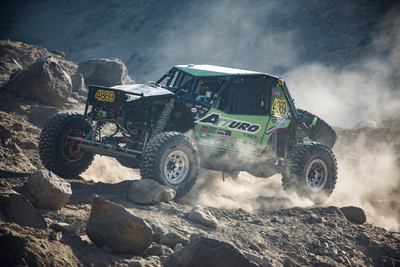
In the 2022 4WP Everyman Challenge (EMC) Spidertrax 4600 Stock Class, the Ford Bronco swept the podium with Vaughn Gittin Jr. and Loren Healy on top, followed by Brad Lovell/Roger Lovell and Bailey Cole/Jason Scherer.

As the SEMA News Team’s SUV hit Boone Rd. from Highway 247, you could feel the energy and the excitement that comes to Johnson Valley just once a year. The King of the Hammers (KOH) is an off-road Mecca, and everyone who loves leaving the pavement comes to this event. For these passionate pilots nothing compares to opening up the throttle across the dessert, or navigating surgically through rock obstacles. The SEMA News Team spent four days looking to connect with drivers, manufacturers and enthusiasts. And for 2022 one word sums up KOH—biblical.

Tens of thousands of attendees (north of 80,000) brought out their off-road toys, their lawn chairs and their winter gear. A literal town formed on site, affectionately known as Hammertown. Food trucks tossed pizzas and dished up poke bowls, while young enthusiasts let their RC cars roam free. The streets of Hammertown are also filled with manufacturers showing off their newest products, as well as pit crews turning wrenches to prepare rigs for their next race.

Next to a stage for bands and DJs, there was a Ford activation area, and a red Bronco that was drawing a huge crowd. The red color was bold, and it was sitting on 37-inch tires. A closer look behind the 17-inch alloy wheels revealed the newest line of Fox shocks, featuring Live Valve technology. There was no mistake about it, this was our first look at the new 2022 Bronco Raptor in real life.

Shelby Hall, professional driver for Ford Performance and granddaughter to off-road racing legend Rod Hall, gave SEMA News a tour around the new model. In fact, she happens to be one of a chosen few with seat time in the new Raptor. She beamed as she talked about driving it for a recent commercial.

“We came out to Johnson Valley and we filmed for three days, and I cannot wait to get more seat time in Bronco Raptor,” said Hall. “It is next level. It’s huge. I parked my Bronco next to it and I was like, man...okay, I’ve got to have two now.”

Hall along with her teammate Penny Dale was actually the first to bring home a victory in the next generation Bronco during the 2020 Rebelle Rally. And up next, Hall is helping develop some training programs geared towards women.

“We want to teach women how to work on their vehicles. We want to teach them how to change a tire on the trail,” Hall explained. “We want to teach them these skills so that they can jump in their Bronco and have an awesome time out on the trail.”

After snapping some pictures and capturing video, the SEMA News team walked into the pit area of another professional driver, Bailey Cole. King of the Hammers was actually founded by Jeff Knoll and Bailey Cole’s father, Dave Cole back in 2007. Bailey says his first attempt at a rock obstacle was probably when he was about six years old. And yet the course changes every year, and this year there was a new twist within the first few miles. He was excited, but admitted it would be stressful from a driver’s perspective.

KOH

Shelby Hall, professional driver for Ford Performance, gave SEMA News a tour around the new Bronco Raptor, including a peek at its Fox shocks with Live Valve technology.

“It’s a really big unknown. The first rock trail is two miles into the race,” said Cole. “Turkey Claw right over the hill. And it’s exciting because we get to see how the cars will work in the rocks right from the jump.” Cole continued, “But, if there’s a traffic jam...now we’re in traffic from race mile two. Exciting and a little bit scary all at the same time.”

For this year’s 4WP Everyman Challenge (EMC) Spidertrax 4600 Stock Class, Cole teamed up with three-time King Jason Scherer. Cole was feeling good about the duo and looking forward to opening up their Ford Bronco on the racecourse.

“I’m sure if I make him get out and winch one too many times, he’ll be like, ‘okay,’ your turn to winch and then I’ll hop in the passenger seat,” said Cole. Smiling he added, “You know...it’s going to be a good time.”

Cole couldn’t have been more spot on about the actual race. As this year’s EMC was coming to the end horns began to blare. Sirens filled the air, as the announcer alerted the crowd that an unofficial first place contender was cresting over the hill and barreling towards Hammertown. It was also a Bronco, driven by a different duo that absolutely knows something about having fun. Two-time King, and five-time Ultra 4 champion Loren Healy and Vaughn Gittin Jr. took the checkered flag. Next across the line was Brad Lovell and Roger Lovell, both familiar with standing on the podium at the EMC. And then radios began to blare, Dave Cole’s arms shot into the air, as he watched his son Bailey and Jason Scherer cross the line in third place.

A complete sweep in the EMC by Ford Bronco. The SEMA News team was looking for trends, and this certainly checked that box. Gittin Jr. and Healy took their last obstacle for the day as they drove onto the stage. Monster Energy cans cracked open as Gittin Jr. explained that his job was to run the dessert lap and hand over a clean truck for Healy to get in the rocks.

KOH

Raul Gomez of Gomez Brothers Racing was crowned King of the 2022 Nitto Race of Kings 4400 class.

Smiling like only the creator of Fun-Haver can, Gittin pointed at Healy. “He’s amazing. He’s just amazing.” The announcer handed the mic to Loren who was also grinning ear-to-ear.

“All we did was pour VP race fuel into this truck,” said Healy. “I just want to thank each and every one of you guys. All our partners. Two years ago, when we started talking about this. It’s just. It’s just unreal.” The crowd began to cheer and the celebration was just beginning. Gittin Jr. and Healy eased down the stage ramp and were surrounded by media, fans and raised cell phones. All three Bronco teams posed for historic photos and Bailey was more than right, it wasn’t just a good time it was a dream come true on so many levels.

As the sun began to fade, the stage for entertainment came to life. Small bond fires started, beanies replaced baseball hats, and live music all combined to help keep spectators warm. Attendees moved with the beat and some even shared memories about the band closing out this year’s KOH, Pennywise. While the party continued late into the evening, there was still one more race, the 2022 Nitto Race of Kings 4400 class.

The sun started to rise, with the thermometer a little south of 40 degrees. Racing suits were zipped, velcroed and secured. Helmets and safety gear were locked in place. And it was time. The line of 4400 rigs waited their turn at the starting line. In groups of two, they roared out of Hammertown and headed straight for Turkey Claw.

Attendees bundled in blankets and sipped coffee, catching all the race action on the big Jumbotron. Cole was also right about traffic. Drivers fought for good lines to survive the first rock trail at mile two. And multiple vehicles definitely got scratched by the Turkey Claw.

Taking a break from the race action, the SEMA News team went to visit with representatives from Fox shocks. The new Live Valve system had been seen on countless vehicles including the Bronco Raptor. It absolutely checked the box as another trend. Fox Factory Product Marketing Manager Andy Volk demonstrated key features of the new product line.

KOH

Three-time King Jason Scherer was only about 15 minutes behind Raul Gomez, taking second at the 2022 KOH. The MC for the event had a microphone that doubled as a wrench, catching drivers fresh from the course.

“What these guys are running is semi-active shocks, the shocks have electronics in them that can actually react to the terrain that they’re running on,” explained Volk. “This is the Live Valve X2 platform. You’ve got two solenoid controllers here that actually control compression and rebound. So as this shock is moving up and down, you’re forcing oil into the reservoir and back again, and we’re able to control that through some solenoids opening and closing.”

As both drivers and manufacturers have continued to experience, the King of the Hammers is a grueling course but also the ideal proving ground for new innovations. To that end, Ford and Fox shocks had enjoyed lots of success this year.

After the product demo, the SEMA News team heard familiar horns, sirens, and even cowbells. A King was about to be crowned. There were many bets about whether a returning champion would take the hardware home again. In a thrilling victory, Raul Gomez took the checkered flag with Jason Scherer on his bumper. The Gomez family had been so close to the crown several times. Many wondered who from the family would take it all the way, Raul, his brothers Marcos and JP, or his son Darian. In the end, Raul was the first in the family to raise the Silver Hammer.

“It hasn’t really sunk in yet,” said Gomez. “We got second and third last year and we came here to get first place. I put a lot of work in...my heart and soul to make sure we won today.” Gomez laughed, “If I would have got second, I would have just turned around and gone back to my tent.”

KOH

Spectators enjoyed watching these Suzuki Samuraies get caught in a rock crawling traffic jam.

The 2022 KOH was surprising in many ways, whether it’s the Bronco takeover of the podium, the newest products on display or the new King, Raul Gomez. Above it all, this was truly an event designed to thrill attendees. The King of the Hammers has certainly grown from its humble beginnings as a sketch on a napkin back in 2007. It’s absolutely the place all off-road enthusiasts gather to share their passion. Further, OEMs and manufacturers have accepted that if your products survive the course, you can expect customers to respond with their wallets.

After four days, it was time for the SEMA News team to head out on Boone Rd. and rejoin the world of pavement. The tires took hold of the asphalt and there was an audible sigh. One member of the team asked the question, “We’re coming back next year, yeah?” Dust trailed off the doors of the SUV and the team all nodded. It would be a sin not to be back in 2023.

Source

The SEMA News team would like to thank Ultra 4 Racing and all the staff, volunteers, manufacturers and attendees for making this year’s KOH historic. Here’s a quick list of contact info if you’d like more information.

On Instagram:

  • Bailey Cole @bailey_cole_racing
  • Vaughn Gittin Jr. @Vaughn Gittin Jr.
  • Shelby Hall @shelbyhalloffroad
  • Loren Healy @loren_healy
  • Brad Lovell@bradlovell44
  • Roger Lovell@rlovell32
  • Jason Scherer @jasonscherer76
  • Fox Shocks @#foxshocks
Sun, 05/01/2022 - 12:27

SEMA News—May 2022

LEGISLATIVE AND TECHNICAL AFFAIRS

Law and Order

By Daniel Ingber

KansasKansas—Restoration: The Kansas House of Representatives Transportation Committee passed SEMA-supported legislation to allow the full restoration of antique vehicles, including temporary removal of the vehicle identification number (VIN) when necessary. This bill changes existing law to allow for the removal and reinstallation of a VIN if the removal and reinstallation is reasonably necessary for repair or restoration. Currently, restorers who intentionally remove or alter a VIN, regardless of reason, are guilty of a felony, and the vehicle is subject to seizure and destruction by law enforcement. The bill awaits consideration on the House floor.

FEDERAL UPDATE

RPM Act: SEMA and the Performance Racing Industry (PRI) continue to work closely with key lawmakers in Congress, SEMA members and the racing community to enact the Recognizing the Protection of Motorsports Act (RPM Act), H.R. 3281 and S. 2736. The RPM Act clarifies that it is legal to make emissions-related changes to convert a street vehicle into a dedicated race car under the Clean Air Act (CAA). The bill would also confirm that producing, marketing and installing racing equipment on track vehicles does not violate the CAA.

The RPM Act enjoys strong bipartisan support in the 2021–2022 session of Congress, which is the byproduct of unprecedented grassroots advocacy by SEMA members and the motorsports parts industry as well as targeted outreach to key lawmakers through congressional site visits and meetings. However, it is imperative that we continue to keep the pressure on lawmakers to pass the bill before this session of Congress ends on January 3, 2023.

Below are four things you can do right now to help to pass the RPM Act:

  • Call and send a letter to your lawmakers at: saveourracecars.com. A letter has already been drafted. It takes less than a minute.
  • Sign a letter to your lawmakers on company letterhead. Email erics@sema.org for a template and more information.
  • Post about the RPM Act on your company’s social-media accounts using the digital assets toolkit at www.sema.org/rpmtools.
  • Learn more about SEMA’s Political Action Committee (SEMA PAC) at www.semapac.com. SEMA PAC allows SEMA members to support the lawmakers that stand up for our industry in Washington, D.C.

Right to Repair: U.S. Rep. Bobby Rush (D-IL) introduced the “Right to Equitable and Professional Auto Industry Repair (REPAIR) Act.” The SEMA-supported legislation (H.R. 6570) aims to ensure the preservation of consumer choice, a fair marketplace, and the continued safe operation of the nation’s 288 million registered passenger and commercial motor vehicles.

As vehicle technology continues to advance, new barriers to a competitive auto servicing marketplace are emerging. These barriers limit consumer choice in where to service, repair and modify motor vehicles and increase servicing costs. The REPAIR Act, if enacted into law, will reduce these barriers, putting consumers’ interests first. The bill is backed by SEMA, the Auto Care Association, the Automotive Aftermarket Suppliers Association and the CAR Coalition.

Steel and Aluminum Tariffs: U.S. and Japanese officials agreed to a tariff-rate quota deal to end the 25% tariff on steel imports from Japan levied since 2018. The 25% tariffs will be suspended on up to 1.25 million metric tons per year of steel imports from Japan, effective April 1, 2022. (The United States imported 1.1 million metric tons of steel from Japan in 2019 but 1.7 million tons in 2017 before the tariffs were imposed.) The agreement does not cover aluminum imports, which are subject to 10% tariffs.

The metal tariffs were initially imposed in 2018 under Section 232 of the Trade Expansion Act of 1962 on national security grounds. The United States and the European Union agreed to a quota system for ending the steel and aluminum tariffs as of January 1, 2022. Negotiations are underway to end the metal tariff disputes between the United States and the United Kingdom.

Combatting Counterfeit Goods: The SEMA-supported “INFORM Consumers Act,” H.R. 5502, passed the U.S. House of Representatives as part of the “America Creating Opportunities for Manufacturing, Pre-Eminence in Technology, and Economic Strength Act of 2022” (America COMPETES Act), H.R. 4521. The INFORM Consumers Act is designed to protect Americans from criminals who sell counterfeit and stolen goods through online marketplaces. The legislation would require high-volume third-party sellers to disclose the full name of the seller or company, its business address and its contact information, among other requirements.

SEMA is part of the Buy Safe America Coalition, a diverse group of retailers, consumer groups, manufacturers, intellectual property advocates and law enforcement officials who support efforts at all levels of government to protect consumers and communities from the sale of counterfeit and stolen goods. The U.S. Senate did not include the INFORM Consumers language in its version of the COMPETES Act. As the House and Senate seek to reconcile the differences in the two bills, SEMA and its coalition partners are urging the inclusion of the INFORM Consumers Act in the final consensus bill.

Federal Headlight Standard: The National Highway Traffic Safety Administration (NHTSA) issued a final rule amending the federal motor vehicle safety standard regulating lighting equipment (FMVSS No. 108) to include performance-based standards for adaptive driving beam (ADB) headlights. ADB headlights or “smart headlights,” which have been permitted on vehicles in Europe since 2006, operate as high-beam headlights and automatically dim portions of the beam when oncoming vehicles are detected by sensors. The bipartisan infrastructure bill that was signed into law last year mandated that NHTSA update FMVSS No. 108 to allow for this technology. The final rule permits the use of ADB headlights on new vehicles as well as aftermarket installation of these systems, both for replacing original equipment and replacing a non-ADB headlight.

STATE UPDATE

Arizona—Restoration: The Arizona House of Representatives passed SEMA-supported legislation to allow the full restoration of pre-’81 vehicles, including temporary removal of the vehicle identification number (VIN) when necessary. This bill changes existing law to allow for the removal and reinstallation of a VIN if the vehicle was manufactured before 1981 and if the removal and reinstallation is reasonably necessary for repair or restoration. The bill awaits consideration in the Senate.

Arizona—Motorsports: The Arizona legislature introduced a SEMA-supported memorial urging the U.S. Congress to pass the Recognizing the Protection of Motorsports (RPM) Act. The memorial awaits consideration in the House Commerce Committee.

California—Manufacturers: The California legislature introduced SEMA-supported legislation to create the California Manufacturing Attraction and Development Exemption (CA MADE). If passed, the CA MADE exemption would eliminate the sales tax on most manufacturing equipment purchases. This bill is pending in the Assembly.

Idaho—Single License Plate: The Idaho Senate introduced SEMA-supported legislation to allow the display of only a single, rear-mounted license plate for all passenger vehicles. Current law only permits the display of a single rear-mounted plate for motor vehicles registered as classics, old timers or street rods. The bill awaits consideration in the Senate Transportation Committee.

Iowa—Antique Vehicles: The Iowa House of Representatives introduced SEMA-supported legislation to reduce the registration fee/tax for older antique vehicles. This bill applies to vehicles 30 years old or older registered as antiques and whose primary value is as collectors’ items and are not used for general transportation. The bill awaits consideration in the House Transportation Committee.

Iowa—Year-of-Manufacture Plates: The Iowa House of Representatives introduced SEMA-supported legislation to allow the state to issue newly created year-of-manufacture license plates for antique vehicles. The House Transportation Committee passed the bill, and it currently awaits consideration in the House Ways and Means Committee.

Kansas—Antique Vehicles: The Kansas House of Representatives introduced SEMA-supported legislation to allow vehicles registered as antiques with model years of ’60 or earlier to use bills of sale as proof of ownership. The bill awaits consideration by the House Transportation Committee.

Maryland—Emissions: Maryland introduced SEMA-opposed legislation to enact a biennial $14 fee on motor vehicles that are exempt from the state’s Vehicle Emissions Inspection Program, including historic vehicles and street rods. These bills currently await consideration in the House Environment and Transportation Committee and the Senate Judicial Proceedings Committee.

New Jersey—License Plates: The New Jersey Assembly introduced SEMA-supported legislation to allow the New Jersey Motor Vehicle Commission to issue newly created classic license plates for display on all vehicles. The new plates will resemble those issued between ’79 and ’91, featuring sand-yellow text on a blue background. The legislation awaits consideration in the Assembly Transportation and Independent Authorities Committee.

NJNew Jersey—Street Rods and Customs: New Jersey introduced SEMA-model legislation that creates vehicle registration classifications for street rods and custom vehicles. This bill defines a street rod as an altered vehicle manufactured before ’48 and a custom as an altered vehicle at least 25 years old and manufactured after ’48. This bill is pending before the Assembly Transportation and Independent Authorities Committee.

New York—Inspections: The New York Assembly introduced SEMA-supported legislation to exempt historical and antique vehicles that are at least 50 years old from the state’s annual safety inspection requirement. The bill is pending before the Assembly Transportation Committee.

Oklahoma—Antique Plates: The Oklahoma House of Representatives introduced SEMA-supported legislation to create a new antique license plate specifically for vehicles at least 45 years old. This bill would add the new plate offering while continuing to allow the current classic vehicle license plate option for vehicles 25–44 years of age. This bill awaits consideration in the House Transportation Committee.

Oklahoma—Military Vehicles: The Oklahoma House of Representatives introduced SEMA-supported legislation to allow the registration and titling of former military surplus vehicles. Under the bill, a military surplus vehicle is defined as a vehicle less than 35 years old that was manufactured for use in either the United States Armed Forces or the armed forces of any country that was a member of the North Atlantic Treaty Organization at the time the vehicle was manufactured. The bill awaits consideration in the House Public Safety Committee.

Virginia—Year-of-Manufacture Plates: The Virginia Senate introduced SEMA-supported legislation to expand year-of-manufacture (YOM) license plates for vehicles registered as antiques to include plates manufactured in ’73 or thereafter. Currently, only vehicles manufactured in ’72 or earlier may display YOM plates with DMV approval. The Senate Transportation Committee passed the bill, and it now awaits consideration by the full Senate.

Virginia—Exhaust Noise: The Virginia legislature introduced several proposals to reform enforcement of its exhaust noise laws. Under one proposal, vehicles would be limited to 85 dB of sound when measured at 50 ft. Under the other proposal, vehicles would be limited to their standard factory-equipment exhaust system. Both bills have passed the full House and currently await consideration in the Senate.

Utah—Military Vehicles: The Utah Senate passed SEMA-supported legislation to exempt military vehicles from displaying a license plate. The bill would require a license plate to be carried inside the vehicle and ready for inspection by law enforcement upon request. The House Transportation Committee passed the bill, and it now awaits consideration by the
full House.

West Virginia—Motorsports Incentives: The West Virginia House of Delegates introduced SEMA-supported legislation to aid and incentivize the construction of motorsports complexes. The bill is pending before the Senate Economic Development Committee.

West Virginia—Antique Fleet: The West Virginia House of Delegates introduced a SEMA-supported bill to create an antique fleet program. Under the proposal, the owner of five or more antique vehicles would be able to use a single registration plate. The House Technology and Infrastructure Committee passed the bill, and it now awaits consideration by the House Government Organization Committee.

West Virginia—Antique Plates: The West Virginia House of Delegates introduced SEMA-supported legislation to allow antique vehicle license plates for vehicles weighing more than 10,000 lbs. The House Technology and Infrastructure Committee passed the bill, and it now awaits consideration by the House Government Organization Committee.

West Virginia—Foreign-Market Vehicles: The West Virginia House of Delegates introduced SEMA-supported legislation to exempt any foreign-market vehicle that is 25 years old or older from the state’s annual safety inspection if the vehicle has liability insurance. The bill is pending before the House Technology and Infrastructure Committee.

West Virginia—Motorsports Protection: The West Virginia House of Delegates introduced SEMA-supported legislation to protect motorsports venues that have been in operation for more than one year from nuisance claims. The bill awaits consideration in the Senate Judiciary Committee.

Sun, 05/01/2022 - 12:03

SEMA News—May 2022

BUSINESS

ADAS and the Art of Vehicle Modification

Tips For Working With Digital-Age Vehicles

By Douglas McColloch

How ADAS and Automated Vehicles Sense Their Environment

ADAS

All ADAS sensors are not alike, and understanding how each type “sees” its surroundings is crucial for proper recalibration and test protocols. Given that automatic emergency braking with forward-looking radar will be a standard feature on all vehicles sold in the United States by 2025, it’s never been more crucial for parts manufacturers and shop technicians alike to take ADAS requirements into account when designing products and/or reviewing installation procedures.

The advent of advanced driver-assistance systems (ADAS) on original-equipment manufacturer (OEM) vehicles has posed numerous challenges to the automotive industry—none more so than the automotive aftermarket, where customization and accessorization are the name of the game. On the other hand, ADAS also presents numerous opportunities for the manufacturer or shop owner who understands how these systems can work in tandem with aftermarket parts and accessories.

A SEMA Education seminar, “Safely Modifying Vehicles With ADAS—Powered by WTC [Wheel & Tire Council],” featured a panel of industry experts who explored this topic in detail, with a review of issues that are common to technicians working with ADAS. Moderated by Mike Spagnola, SEMA CEO, the panel consisted of Brian Daugherty, chief technology officer for the Motor & Equipment Manufacturers Association (MEMA); Scott Brown, founder of Diagnostic Network; and Nick Dominato, senior vice president of product for asTech.

New Technology, New Challenges

ESR Installation

4.1 External Mechanical Interfaces

4.1.1 Mounting Height

For base ACC-only applications, the mounting height of the center of the ESR on the vehicle should be 300 mm to 860 mm from the road surface. For ACC with Stop-and-Go applications, the mounting height of the center of the ESR on the vehicle should be mm to 860 mm from the road surface. The illustration below shows the allowable mounting zones in green. The zones in yellow indicate potential zones with extensive radar and vehicle testing required. The zones in red indicate zones that are not allowed.

ADAS

Sensors sometimes need to be relocated to accommodate a change to the vehicle, and the OE manufacturers allow for a certain amount of leeway in that regard. In this example from Delphi, the suitable areas for relocating sensors for Ford’s adaptive cruise control are highlighted in green. The yellow-shaded areas indicate placement where proper ADAS functioning could be problematic. The red zones are areas where the sensors simply won’t work properly.

An amalgam of new and rapidly evolving technologies, ADAS presents the would-be modifier with a considerable learning curve. First, the processes of repairing, replacing or recalibrating can be a difficult and time-consuming task. Second, there are numerous suppliers and varieties of technologies, sensors and systems on the market, and there is very little industry standardization at present. Third, OE manufacturers rely on multiple suppliers for ADAS sensors—sometimes within one vehicle model—and suppliers for a given sensor can change within a single model year. Also, there are constant software updates that the builder or installer must stay aware of.

All of this results in hundreds of discrete ADAS repair, replacement and calibration procedures across the vehicle market.

One other thing: Calibration processes—often the most crucial step in ADAS componentry on modified vehicles—can often be “spoofed,” resulting in inaccurate readings. This can happen purely by accident when a smaller target is positioned too closely to a vehicle sensor due to a lack of usable shop space. Proper calibration also requires a near-level floor surface, and that can also pose
a challenge.

“You have hundreds of camera targets and dozens of radar targets,” Daugherty observed. “If you’re running a full-service shop that works on all makes and all models, you should theoretically have all of these [targets] in your inventory to handle everything that comes in for service, and that can get to be very expensive.”

All of this assumes an even greater importance when one considers that virtually every new passenger car sold in the United States by the end of this year (for trucks and SUVs, it’s 2025) will come standard with automatic emergency braking, which utilizes forward-looking radar. Bottom line: Customizers of newer-model vehicles will have no choice but to learn how to work with ADAS technologies if they intend to modify a vehicle while keeping all of its onboard safety systems working within factory spec.

Case Study: Lifted Pickups

Suspension components, wheels and oversize tires for pickups and SUVs are perennially among the most popular parts in the specialty-equipment aftermarket, and vehicles equipped with those products are among the most likely to need repositioning and/or recalibrating of OE ADAS sensors. Any change in tire diameter, wheel offset, backspacing or vehicle ride height will likely throw off sensor readings and necessitate reworking of the ADAS system.

A 2-in.-lifted Ford pickup was studied as an example that shops and installers are likely to encounter, and it’s one that provides a platform for reviewing best practices. (Much of the following advice applies to lowered vehicles as well.)

“The aftermarket isn’t a stranger to resets and calibrations following a vehicle modification,” Dominato noted, mentioning speedometer recalibrations, wheel realignments or headlight adjustments that shop techs typically make after installing a suspension lift or oversize tires. “ADAS is just one more thing we have to think about.”

Dominato explained that a vehicle’s radar system must be set at a specified level, often +/- 0.1 to 0.3 degrees, or to bubble level.

“It’s got to be at a very specific level to function,” he said, and the floor must also be level—in this case, within +/- 7 millimeters, which equates to changing the angle of the radar sensor 0.4 degree. “When we think about installing a leveling kit and lifting the front of a vehicle two inches, you’re going to knock off that sensor by half a degree. What does that mean when we install a lift kit on that vehicle? It means we’re going to knock that radar sensor way off its specification.”

Another thing to remember: Radar height/angle affects the effective range of the radar. For instance, a sensor that’s off by 1 degree subtracts approximately 10% of the radar’s effective range; a 2-degree misalignment increases that number to 25%; and a 3-degree misalignment subtracts 50% off the radar’s effective range. “So when we lift a vehicle, we’re affecting both its effective distance and its signal strength,” Dominato said.

Onboard cameras are also impacted by lifting and lowering. A camera’s distance estimation (the distance it reads between it and other objects) is heavily dependent on the camera’s height and pitch angle. That’s because the camera uses the horizon line to calculate distance, and changes in its angularity will affect its ability to read the horizon line correctly.

Even the smallest variation in camera pitch can lead to some dangerously inaccurate readings. A camera pitch error of only 2 degrees can result in an inaccurate reading of up to 16 meters; a pitch error of -2 degrees can lead to wrong reading of up to 90 meters—the length of a football field.

Often, ADAS sensors will need to be relocated, such as after installing a set of auxiliary lights, a winch bumper or other accessories that can impede a sensor’s ability to monitor road conditions. Fortunately, most OE manufacturers provide some measure of accommodation in their vehicle designs, and consulting the OE or supplier installation manuals can provide guidance.

Finally, different OE manufacturers will mandate different ADAS test and calibration procedures.

“There is no one-size-fits-all answer,” Dominato noted. “Each OE manufacturer must be approached separately, and do not assume that what works for one OE manufacturer is going to be suitable for others.”

Elevation Misalignment (deg)

ADAS

Setting the proper pitch angle (i.e., horizon line setting) is also essential in order for a sensor to calculate the correct distances between itself and other objects, particularly on lifted vehicles. A pitch error of only 2 degrees above the actual horizon—the “green line” in this photo—can cause the sensor’s distance reading to be off by as much as the length of a football field.

GarageAbout SEMA Garage Detroit and ADAS

Located in Plymouth, Michigan, SEMA Garage Detroit will offer manufacturers access to advanced product-development tools and equipment, a state-of-the-art emissions testing lab, an ADAS research and development center, and expert technicians who will help bring products to market. The 45,000-sq.-ft. facility will give aftermarket parts manufacturers access to sophisticated resources that are typically accessible only to large-scale manufacturers.

“Our research goal with the ADAS Center is to find out what happens when we modify a vehicle,” SEMA CEO Mike Spagnola said. “Right now, we really don’t know exactly what’s going to happen when we lift a vehicle three inches to five inches, or when we install a larger tire. We have a feel, but we really want to better understand and research what happens when we raise or lower vehicles and the proper procedures to recalibrate them. The goal is to create a series of best practices, working with the collision industry, so we can educate everyone on the proper ways to modify vehicles so that the sensors all work.”

The new ADAS Center will include a 5,000-sq.-ft. tech area equipped with state-of-the-art tools, and both static and dynamic (track) testing will be offered. Full-time ADAS engineering staff will be available to provide assistance to member companies.

In addition to the ADAS Center, SEMA Garage Detroit will also offer exclusive OEM measuring sessions, scanning services, advanced tools and equipment, a CARB-recognized emissions lab and a modern training center.

SEMA Garage Detroit is scheduled to open in two phases. The first, in mid-spring, will herald the opening of the ADAS R&D center. The second, sometime in mid to late summer, will include the SEMA emissions test lab. For the latest updates on the Detroit facility, visit www.SEMAgarage.com.

WTCAbout the Wheel & Tire Council

Membership in the SEMA Wheel & Tire Council (WTC) is open to all companies whose businesses focus on the wheel and tire industry, including manufacturers, importers, distributors, tire and wheel dealers, or service providers. WTC directs its efforts toward providing its members with a forum in which to address industry-related issues; offer networking and educational opportunities; and create a database of technical information designed to aid member companies in creating new wheel designs and preparing application guides. WTC also works with SEMA’s legislative and technical staff to address those matters that may affect the custom wheel industry. To learn more about WTC and other SEMA councils, visit www.sema.org/get-involved.

Sun, 05/01/2022 - 11:57

SEMA News—May 2022

BUSINESS

Ripe for Opportunity

Fueled by Record Demand, the Powersports Market Explodes, Crossing Into the Mainstream

By Chad Simon

Toyo

By moving to a more capable tire such as the Toyo Open Country SxS, users can feel more comfortable in handling whatever terrain they come across.

Powersports sales have been on fire, dramatically increasing across the board since 2020, but resulting in part of the supply-chain woes we’re constantly reading about in the news. The culprit: enthusiasts and even ordinary people desperately seeking adventure to distract themselves or reemerge from the COVID-19 doldrums.

These have been two of the better years in recent times for motorcycle, ATV and UTV (aka side-by-side) dealers, manufacturers and even the aftermarket. Because consumers haven’t been traveling as much, have extra money to spend and, in many cases, work from home, they’ve had more time to spend outdoors.

Breaking the Chain

However, the supply-chain conundrum has limited the number of vehicles being manufactured, which has required dealerships to turn to preordering, according to Dave McMahon, content director for PowerSports Business magazine. In the past, dealers may have had stacks of ATVs sitting in the parking lot waiting to get into the showroom. With a gap in dealer inventory, demand is far outpacing supply. Now, every unit is often already presold and out the door. Dealers have had to adapt to a whole new way of doing business.

The supply-chain meltdown is also preventing manufacturers from getting parts to finish their products, and everybody in the powersports industry is feeling the heat.

“Shock absorber manufacturers are missing a couple of pieces, and they can’t get product off the shelves because they’re not completed yet,” said Jim Ryan, marketing and sales director for SCORE International. “It’s little things that are causing tremendous wait orders.”

Not to be outdone by UTVs, motorcycle sales have increased almost 22%, thanks in large part to economic stimulus money and low interest rates, according to Carl Parker, owner/publisher of ADVMoto magazine.

“Dealers are selling out of all kinds of vehicles, from two to four wheels,” Parker said. “They’re selling at retail-plus and sometimes even retail-plus-plus. In the motorcycle industry, we’ve found a heavy emphasis on smaller, beginner-oriented bikes. Many people are buying them—not just new riders but also experienced riders who are shifting to smaller models.”

The COVID-19 Factor

Motorcycle

Whether you’re camping on a motorcycle or sleeping in a van, exploring the world doesn’t require a lot of money if you’re willing to live without some comfort and
convenience. Photo credit: Shutterstock.com

COVID-19 forced people to get outside to spend time with their families, so the pandemic has been a boon to business for motorcycle, ATV and side-by-side manufacturers and dealers.

“Dealerships have had their best couple of years ever because people are just looking for something to do,” McMahon said. “That might mean buying a first motorcycle and learning how to ride. Or maybe you have an ATV and now you buy a side-by-side to take the family out. A lot of that has changed now, but at the onset of the pandemic, dealers told us that’s what drove much of the sales.”

According to Ryan, the pandemic blew everything up in a positive way. Dirt-bike sales—which had been in decline for years—suddenly took off, so the demand caused by COVID led to orders being placed at record levels not only with racing but also lifestyle usage. Trophy Truck teams have a number of UTVs that are used extensively throughout racing and enthusiast-based activities.

Parker added that for aftermarket accessories, there’s been more of a shift to internet purchasing because some stores either were not open during the early days of the pandemic or people who sold at events and expos were shut down, forcing consumers to go online.

“It was positive in a sense, but it was a double-edged sword,” he said. “Many providers didn’t know how the pandemic would affect them, so some of them went shy on inventory, thinking there was going to be an economic collapse. The recreational markets then blew up because people began to realize that life was short and there was no better time to be happy than right now. The market surge left a lot of people out of supply. They ended up having to turn away customers, which you never want
to do.”

What’s Trending

From SCORE’s perspective, Ryan said that UTVs have assumed more duties than the first utility vehicles built many years ago. Today they’re found in top-level motorsports and enthusiast programs, and they’re even used for agricultural applications and have overlanding capabilities. In terms of trends, their usage just keeps growing into other lifestyle categories; it’s not just racing.

McMahon estimated that approximately two out of three side-by-sides are used for work, recreation or utility. A small ranch owner might use one to mend fences because it’s more maneuverable than a pickup. Folks are also hitting the trails in UTVs, and some counties even consider them suitable for on-road use. However, the lack of nationwide laws allowing on-road usage is among the UTVs’ biggest limitations.

The other third of UTV users is the performance and aftermarket crowd—the go-fast machines that are found out on the dunes and in wide-open spaces. The creature comforts that side-by-side manufacturers offer are a big hit among enthusiasts.

“You hop into your side-by-side when you go ice fishing in Minnesota, and it’s a fully enclosed cab with automatic windows, full heat and air conditioning,” McMahon said. “The comfort level that some of these manufacturers are providing goes beyond what a customer would have expected they’d be able to get coming into the market for the first time during the pandemic. There are so many different accessories and features that can make their outdoor experience more enjoyable.”

The vehicles also get bigger and stronger every year, pushing the limits of what the machines can do, according to Larry Gray, sales manager for IMMI—a safety restraint supplier of three-point and multi-point harnesses to both OEMs and the aftermarket. Side-by-sides have hit their power threshold, Gray said, and because of that, the focus will trend toward upgrading the vehicle’s interior.

Especially among older enthusiasts, there tends to be a large crossover demographic between off-road riding, motorcycling and off-road four-wheeling with UTVs.

“Because of the cost of the new UTVs, you’re generally looking at a slightly older demographic, closer to retirement age,” Parker said. “They have the money, and many of them have both motorcycles and side-by-sides in their garages. It’s not like they’re giving up on one and going to the other or vice versa. These types of vehicles actually complement each other, and there’s a buyer’s market for both of them. Consumers want to be able to explore the world off-road, and both have their own merits. I’d be willing to bet that many of the off-road side-by-side enthusiasts also have dirt bikes in their garages.”

The bottom line is that powersports enthusiasts just want to get dirty and explore, whether on a side-by-side or motorcycle. Both new and used adventure dual-sport bikes are doing extremely well, and so are the aftermarket parts and accessories for them, Parker said. Items such as clothing and hard parts are in short supply, including helmets, armor and gear.

“We expect this trend to continue as people move away from a traditional employment environment to more flexible work duties and conditions,” Parker said. “More people are working from home now, and some have left jobs that they were fundamentally unhappy with. They’ve rearranged their lives to make due with fewer resources and focus more on doing things they want to do.”

Aftermarket Opportunities

Market Report

According to the 2021 SEMA Market Report, 34% of U.S. consumers own at least one powersports vehicle, of which nearly half will accessorize.

With the advent of UTVs, especially in the last half-dozen years or more, there’s an entire aftermarket specifically focused on that space because it’s lucrative.

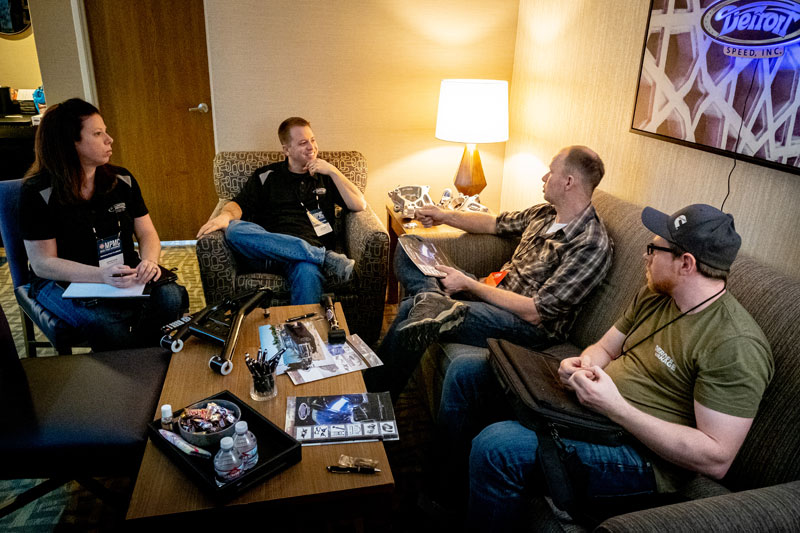
“At the MPMC [Motorsports Parts Manufacturing Council] Media Trade Conference, we’re having many first-time conversations with manufacturers in terms of the UTV market, what they’re targeting for 2022, what they’ve developed and what they’re releasing this year to get involved in that market,” Ryan said.

The traditional side-by-side aftermarket parts companies are ramping up their product lines, continuing to innovate and building products that are cooler-looking, faster and lighter, McMahon stated.

“Over the last couple of years, we’ve seen companies that started out in motorcycle aftermarket parts and accessories,” McMahon said. “They’re seeing the growth and wanting a piece of the pie, so they’ve gotten into the side-by-side aftermarket space also. They’re not at the same volume as some of the established players, but they’re also side-by-side enthusiasts, which has allowed them to broaden their businesses.”

The side-by-side market quickly jumped from what could be described as glorified off-road go-karts to extremely capable and highly equipped off-road machines, according to Cameron Parsons, product engineer and field analyst for competition and specialty tires at Toyo Tire U.S.A. Corp. The market has blown up not only among enthusiasts but also in the mainstream. Many customers now look for convenience and comfort to complement their fun. They demand features that make their expeditions easier and more comfortable, because they don’t want to get stuck in the middle of nowhere with their spouses and kids.

According to Parker, anyone who can deliver a competent product can do well, but some aspects are worth considering.

“My number-one tip is to look at developing and innovating cross-purpose or universal products,” he said. “There’s a motorcycle luggage company that also started making fuel bags, which have massive applications across all segments. Forward thinking like that is important.

“Also, keep an eye on developing a product that allows the application of other gear on similar or slightly different platforms. For example, many people might have a motorcycle that has luggage. How about having crossbar members on a UTV or side-by-side that simply allow you to use that same luggage? The size is really not all that different. It doesn’t matter what vehicle you put it on insofar as you are able to install it in a safe and secure manner. Focusing on those things will add a little bit of promise. I don’t see these types of products being over-emphasized.”

Common Upgrades

UTV

Harnesses such as the IMMI Click6 are popular upgrades among UTV enthusiasts.

What the Jeep is for the on-highway vehicle, ATVs and UTVs are for the off-highway vehicle in terms of how easy they are to customize. Rooftops, winches, bumpers, sound systems and engine performance components are among the first modifications consumers make. Restraint systems (including harnesses and rollcages) are also popular upgrades, Gray observed.

Parsons said that most side-by-side customers intend to take full advantage of their new vehicles’ capabilities, so many early upgrades revolve around comfort, durability and performance. Popular comfort items include seats, lighting and windshields.

On the function and durability side, it’s common for users to install bolt-on components that are available off the shelf and are easily installed. That includes suspension upgrades related to springs, dampers and anti-roll bars. Basic drivetrain and power add-ons such as intakes and exhaust are also on the list, plus stronger clutch components and a few spare belts, since that is a common point of failure across the board.

“Protection is a big deal to many new owners who want to take care of their equipment, so you’ll find lots of new side-by-sides carrying skidplates, bumpers and nerf bars,” Parsons said. “Finally, wheels and tires serve as style items that also improve vehicle performance. By moving to a more capable and often taller tire, users can feel more comfortable in handling whatever terrain they come across. They want confidence in exploring new paths and playing harder in the dirt, because a part failure can make for a major damper on a fun trip. A capable and reliable tire is one of the most important components to not cheap out on.”

From the two-wheel, dual-sport and adventure side, crash bars, armor, luggage and electronics are common upgrades, according to Parker. Performance-wise, many motorcycle enthusiasts go for exhaust (mostly for the improved sound and weight reduction), followed by comfort products such as saddles, bar risers and lowering pegs.

While more people stick with stock wheels on their motorcycles, side-by-side consumers like to buy extra wheels, and side-by-sides also offer more options than motorcycles because they can be outfitted with four-speaker sound systems that normally aren’t found on off-road bikes.

Vehicle Evolution

Between chassis designs, suspension packages and engines and drivetrains, UTVs are becoming more robust in every way. On the racing side, manufacturers continue to introduce new products. For example, the next-generation Polaris has a larger-size engine, and all of the OEMs are following suit, Ryan claimed.

“For our world, this is the factory wars—Polaris, Can-Am and Robby Gordon Speed units,” Ryan said. “They’re full-race production models, and that’s where the money is. It’s not Ford, Chevy, Dodge or Toyota anymore. It’s now come down to the UTV class. They’re still racing vehicles you can buy in the showroom.”

The spectrum is widening for motorcycles, and it’s not just about size and power, according to Parker.

“The adventure dual-sport models have evolved over the past 10 years,” he said. “Most of the basic dual-sport models that have been around since the ’90s have been updated, while others have been replaced with newer models. There are also smaller bikes available on the market, such as the KTM 390, Himalayan, 300cc or 500cc adventure bikes, and they all sell out. They’re more like companions and are good for multi-use riding, whether on- or off-road.”

Midsize bikes—anywhere from around 450cc up to 1,000cc—have seen more emphasis because people who ride larger bikes are finding that lighter ones perform better off-road, according to Parker. They’ll come from a 1,200 down to a 600, 700 or 800.

“The Yamaha Ténéré 700 is fantastic, but you can’t get one because they’re in short supply,” he said. “Kawasaki just reintroduced a heavily revised KLR650, which is doing well. Many people are still into the large bikes, which have really evolved. They have all the bells and whistles that you can hope for. KTM, Triumph, BMW, Honda, Yamaha and Suzuki all have good options in the 1,000cc-plus category.

“You can change your ABS front and rear balancing, add heated seats, heated grips, an electronic windscreen, fullsize TFT displays and different levels of traction control. Harley-Davidson has shocks that can raise and lower the bike. They are technologically advanced and push the limits of motorcycle technology, both in fun and safety, and not just in off-road. Many of the sport-touring riders have been buying large adventure bikes because they’re also more comfortable.”

Appealing to New Consumers

UTV

The performance and aftermarket crowd comprises about a third of the overall UTV market. These are the go-fast machines that are found out on the dunes and in wide-open spaces. Photo credit: Shutterstock.com

Riding is a ticket for people to get outside and see things they haven’t seen before. They can go out and explore nature from a different perspective than by bicycle or foot, according to Gray.

Women are increasingly becoming involved in powersports. In fact, one out of every five motorcycle riders is a female, McMahon said. The base-level UTVs are ideal for families because they can carry between four to six passengers, and the vehicles are safer because occupants are enclosed in a cage.

“UTVs are pretty well set up from the factory,” Ryan said. “There are great training grounds, and that’s where many people get their first taste of off-roading now. It’s not dirt bikes like we all grew up with. The UTV market has definitely cannibalized the dirt-bike side of the powersports market, because that’s where families have gone.”

The number of UTV models to choose from range from very low-key to high end, and there are many variations in between. There’s also price point—$30,000 for a full turnkey vehicle versus an $80,000 truck.

“From a side-by-side standpoint, it’s easy to not do it alone,” McMahon said. “If the guys are going out and want to bring the wife or girlfriend, the four-seat configurations allow more friends and family to get involved. If you’ve ever driven a car, you’re going to be familiar with the steering wheel and the gas and brake pedals; it’s not a situation where you’re getting on a motorcycle and you’re less familiar with it. We’re hearing from dealers that people who might have bought at the onset of COVID are coming back in and looking to get an aftermarket part or accessory—something different to spice things up on the ride by adding a little more comfort and speed.”

Meanwhile, the adventure dual-sport segment is appealing for several reasons. First, they’re practical, and people of all ages are focusing more on having cool life experiences.

“You can do many things on these bikes, whether for fun, commuting or world travel,” Parker said. “If you just want to explore the back roads around your area, you can do that. If you want to go to work on it or get groceries, you can do that. If you want to set off and go around the planet on it, you can do that, too. A lot of motorcycles, except for some of the street bikes, weren’t as practical as they were fun. Adventure is exciting and even romantic, and these bikes can do it all.”

Whether you’re camping on a motorcycle or sleeping in a van, exploring the world doesn’t require a lot of money if you’re willing to live without some comfort and convenience.

“The socioeconomic spectrum for this has widened,” Parker said. “Much of it has been bolstered by do-it-yourself or minimalist thinking. If you want to buy a motorcycle or a side-by-side and throw a lot of cash at it, you can do that. You can get some sick rides and nice gear that’s going to make your navigation easier and your life more comfortable, safer and fun. But if you have a shoestring budget, you can buy a used bike and test your ingenuity. People who become interested in the hobby and enter the secondhand market often end up upgrading and moving through the market, and that’s
important.”

Future Outlook

The powersports market has a bright future with plenty of opportunities for continued growth. Side-by-sides in particular offer an exciting and adventurous way for people to spend time with their families and friends outdoors. The hobby has become a lifestyle, and as young kids grow up with UTVs, they will continue to participate in the lifestyle.

“This is a good spot to be in, whether you’re a vehicle manufacturer, a dealer, or are in aftermarket parts and accessories,” McMahon said. “If I was one of those players, I’d be confident in the next couple of years. That experience and adventure is going to be around, and as more people become aware of it, they’re going to want to experience it, too.”

According to Ryan, some new manufacturers are starting to push the bar a little higher in terms of turnkey race products. The used UTV market is already booming because the new models are slower to come out due to COVID-19-related supply-chain issues.

The outlook for the adventure dual-sport market also looks bright for now; however, Parker believes we’re headed for another economic downturn.

“We’ve got high inflation, sky-high real estate values and a Fed that will likely raise interest rates several times in 2022,” he said. “If you look back at 2008, the powersports industry got hit pretty hard by economic changes. Notably, banks got tight on issuing loans, which put a serious dent in new-vehicle sales. But unlike 2008, our current dilemma comes on the back of COVID-19, which created many societal changes.”

For instance, those who bought more affordable vehicles and had a shoestring mentality have already trimmed down on many of their excessive needs, Parker added. They’ve already been pushed to a certain limit and are unlikely to be willing to go any further.

“Ten years ago, there was a custom chopper craze,” he said. “That was kind of a fad. It was cool while it happened, but it didn’t last forever, so we saw a market reversal on those. When you have a bad economy and a $25,000 vehicle sitting in the garage that’s not being used, the mortgage, food and kids usually win. It’s possible that there may be a reversal on market demand for some of the more expensive vehicles over the next few years, but that doesn’t mean that it’s bad news for the aftermarket.

“People often buy these vehicles secondhand, and they want to do their own thing to them. It’s been used a bit, but they’re getting a great price on it. They’re going to need shocks and so on and so forth, but all of that depends on how well we handle any upcoming market and economic changes as a unified industry and also how well the feds navigate what really looks to be like a rough couple of years coming down the road.”

SOURCES

ADVMoto
4000 Legato Rd., Ste. 1100
Fairfax, VA 22033
571-485-2910
https://adventuremotorcycle.com

IMMI
18881 IMMI Way
Westfield, IN 46074
317-896-9531
www.imminet.com

PowerSports Business
10405 6th Ave. North, Ste. 210
Minneapolis, MN 55441
763-383-4492
https://powersportsbusiness.com

SCORE International
465 S. Meadows Pkwy. #6
Reno, NV 89521
775-453-4971
https://score-international.com

Toyo Tire U.S.A. Corp.
5665 Plaza Dr. #300
Cypress, CA 90630
714-236-2080
www.toyotires.com

Sun, 05/01/2022 - 11:53


SEMA News—May 2022

INDUSTRY NEWS

Photos courtesy SpiedBilde, Brian Williams. Reuse or reproduction without the copyright holder’s consent is prohibited.

’23 Hyundai Ioniq 6
Hyundai

Hyundai’s Prophecy concept car will morph into the Ioniq 6 when it finally hits dealers in production form in 2023. As expected, spy shots now prove that the radical design of the Prophecy has been toned down for the production model.

Hyundai

The images clearly show that the suicide doors of the concept will not make their way to production and that both the front and rear overhangs have increased in size, presumably because a production car needs more space for things such as battery packs and trunk space. These changes likely mean the production version won’t have the same svelte curves as the concept.

 
’23 Jeep Wagoneer LWB
Jeep

This Wagoneer long-wheelbase model was caught on Michigan public roads, showing us that Jeep is serious about competing with the likes of Cadillac’s Escalade, Lincoln’s Navigator and GMC’s Yukon Denali.


Jeep

This Wagoneer appears to be a Series III model with the available Advanced All-
Terrain Group, which features Falken Wildpeak A/T tires, a 3.92-ratio rear axle, chrome tow hooks, an electronic limited-slip rear differential, a front axle skidplate, a fuel tank skidplate shield, a removable rear tow hook, and a transfer case skidplate shield.

Expect the Wagoneer and Grand Wagoneer LWB models to join the short-wheelbase models sometime in Q3 2022.


’23 Range Rover Sport
Range Rover

Spies in Germany caught shots of the Range Rover Sport wearing a lot less camouflage than ever before. The new Range Rover Sport could arrive about a year after the standard Range Rover, with the grand unveiling around the end of this year.

Range Rover

The Sport will be underpinned by the new Modular Longitudinal Architecture (MLA) platform. The MLA platform supports full electrification, so a Range Rover EV/Range Rover Sport EV should follow in a few years. At launch, partial electrification should be standard across the range, with mild-hybrid and plug-in hybrid technologies.

The next-generation Range Rover Sport will arrive as the ’23 model, likely in the second half of this year.

Sun, 05/01/2022 - 11:39

SEMA News—May 2022

BUSINESS

Protecting the Freedom to Customize

SEMA Board Member Kim Pendergast Explains the Association’s New Individual Membership Program

By Mike Imlay

Protect Freedom

From the earliest days, the automobile and its surrounding lifestyle have been about freedom. However, recent years have seen a growing assault on many of the freedoms consumers, hobbyists and recreational enthusiasts have come to enjoy.

Twelve states have signaled an intent to ban gas-powered engines, and the Environmental Protection Agency (EPA) is stepping up emissions enforcement in all 50 states. Legislation has placed hundreds of thousands of acres off limits to off-roading. Meanwhile, OEMs are locking consumers and the aftermarket out of vehicle computers, limiting the ability to customize.

SEMA has always been an industry advocate, but its founding purpose was to facilitate business between members. Now there are external forces shaking the industry’s core that can’t be stopped by SEMA alone. Consequently, the association amended its bylaws to launch the SEMA Individual Membership (SIM) program. Designed for the car lover, the overlander, the restorer, the adrenaline junkie and even the weekend warrior, the program seeks to build an enthusiast network, expand political action committee [PAC] fundraising, and grow the industry’s voice at local, state and federal levels.

“This isn’t just your standard networking initiative being created by any old organization,” said Nathan Ridnouer, SEMA vice president of councils and membership. “We’re creating something fun, educational and impactful. In the automotive world, it’s easy to be a car or truck hobbyist without knowing all the different small to large issues out there threatening your right to modify, customize and enjoy your vehicle.

“We don’t want our enthusiasts to face a day where they encounter roadblocks to those freedoms. In addition, we want to instill knowledge and confidence about the many ways they can safely enhance their rides, from lifts to wheels to styling and comfort features.”

Magnuson Superchargers CEO Kim Pendergast, who serves on the SEMA Board of Directors, helped spearhead the SIM initiative. To better understand the program’s origins and goals, SEMA News reached out to Pendergast with several key questions. The following is our interview, edited for clarity and conciseness.

Individual Membership

SEMA individual members receive gearhead-inspired “Freedom to Customize” decals to apply to their favorite vehicles. SEMA hopes the decals will quickly become ubiquitous sightings on the nation’s roadways.

SEMA News: Can you give our readers some background on why the SEMA Board of Directors greenlit this program?

Kim Pendergast: The history of how the program unfolded is very pertinent to where SEMA is going. Being involved with the SEMA Political Action Committee [SEMA PAC] for SEMA-member businesses, I and other Board members felt that we would never get our message across to legislators through the PAC alone. We needed the government to realize that our approximately 6,000 business owners and their people represent a much wider demographic.

There are eight million hardcore performance consumers who modify their cars every year, so I’ve always said we represent eight million people. But in reality, about one-third of all consumers who drive also modify their cars in some way. That means our potential audience is actually about 60 million people.

When legislators are concerned about issues such as zero emissions, noise or whatever else, they need to understand that there is an extremely large constituency their legislation affects. The number of automotive enthusiasts is far greater than just our businesses, and the only way legislators will understand is when voters call and tell them.

We’ve always had the SEMA Action Network for car-hobby enthusiasts, but we need to build on that and mobilize a group that’s more representative of the large number of people touched by legislation. I don’t think Washington, D.C., understands the size and importance of the audience.

SN: What are some of the things at stake for SEMA and our consumers?

Pendergast

SEMA Board member and Magnuson Superchargers CEO Kim Pendergast.

KP: SEMA began as a business-to-business trade association. We’ve done an amazing job of building that side of our industry, and that’s really important. But now legislation and other outside forces are impinging on our industry and our customers. For example, there’s recreational areas such as Oceano Dunes, California, where they’re trying to take away off-road activities. Then there’s also the right to modify vehicles for dedicated racing. We’ve become the whipping boy for the EPA and climate activism.

At the same time, OEMs are safety-conscious, which is good. However, in being so, they are locking us out of their platforms. The fact is, OEMs can separate out the modification and calibration ranges that are safe for us, but it’s going to cost them a little bit of money, so why should they do that? That’s another area where we must keep our eye on the ball.

We need external support for our industry as much as internal, because the world has changed. Those changes could also limit consumer choices and drive up vehicle prices. They could lose their freedom of modifying their vehicles because of legislation and regulation, and the OEMs could also very quietly take back this $47-billion industry and make it impossible for us to modify powertrains, wheels and tires and everything down to your fuzzy dice.

People need to hear our community’s voice. SEMA Individual Memberships give enthusiasts—our customers—the opportunity to protect their right to modify, their hobby, their industry, their family outings and their love of the automobile and the ability to enjoy it with their families.

SN: How does the individual membership program accomplish those things?

KP: We’re empowering consumers, enthusiasts and others with a stake in our industry to link with their legislators. There are many hobbyists and people who may not identify themselves as performance consumers but still enjoy what our industry does. There are also many individuals at all levels of our industry whose livelihoods depend on a thriving aftermarket. Those and many others are going to be impacted by the issues we’re discussing.

Maybe they see what’s happening through the media or maybe they’re not even aware, but let’s say an individual is aware. What can that individual do? They may think, “I’m just one person, right?”

The SIM program will educate them and connect them to decision-makers. We’re bringing them into our community in a way we never could before because the technology just wasn’t there. Now, with the internet and social media, we can welcome our enthusiast-consumers into our very cool industry and make them a part of something special.

They’ll get emails, marketing information and alerts as to what’s happening and who to call or contact and when. Now, instead of having a few hundred or even a thousand people engaged, we can have three million contacting their representatives. Numbers matter. There is a large community that knows we’re not out to harm the environment, limit safety or hinder technology, but they’re afraid to speak up or don’t know how. We’ll help them do it.

SN: Let’s talk a little more about the membership benefits. What do new members get for joining?

KP: Currently, when charter members sign up, they get a recognition letter, a member identification card, an exclusive SIM baseball cap and a “Right to Customize” decal they can place prominently on their vehicles. Individual membership also allows them to support SEMA PAC. Of course, they also begin receiving the member communications I’ve mentioned.

Other benefits are still in development and not yet ready for announcement, but they’ll be tangible and valuable for our enthusiast base. I should add that we’ve made a conscious decision to pilot this program and listen and learn what our consumers want. SEMA has a lot of business-to-business experience, so we know what trade professionals want and how to communicate with them. Consumers, of course, are a very different audience for a trade association like ours.

SN: So there are already plans to continue growing this program over time?

KP: Yes. A gradual rollout of the program allows us to begin talking with our individual membership and obtain feedback. The more people we get involved, the more we’ll be able to do for them.

We’re already exploring a number of potential new benefits, including ways to deliver special promotions, such as discounts and participation in exclusive SEMA events and programs. The possibilities are endless. Ultimately, we’re forming a vast club—a grassroots organization of people with a common goal, a common purpose and a common hobby.

It’s interesting to note that about 70% of our charter members tell us their motivation is to protect the hobby. Another 20% or so say they just want to be a part of the SEMA name. We have a great, untapped following that supports what we do and is excited by the SEMA brand.

SN: In a nutshell, what’s the chief difference between the traditional SEMA business membership and the new individual membership?

KP: They address two different goals. The business membership is about supporting the history of SEMA, its B2B relationships and all the things that SEMA has always been. A business joins for itself and for all of its employees. Every employee gets access to the research, the councils, the business resources and all the things that the association offers.

The individual membership is very much about supporting the industry. Individual membership money is not going to SEMA in support of the trade members to sell to each other, our standard model. Instead, these membership dollars are specifically for building awareness, understanding and connections to the legislators and OEMs who will decide our future. It’s aimed at educating them and ensuring that they have all the information to make the best impact for us all.

SN: What is the relationship between an individual membership and SEMA PAC?

KP: There is a tremendous amount of legislation around a political action committee [PAC] to ensure that people are appropriately donating money. Because of that, there are a lot of necessary obstacles to sign up as a SEMA PAC member and make donations. For a business, you are not just signing yourself up; you are really signing your whole business up when you join a PAC.

For SEMA that means company owners who donate to our PAC rarely have employees or other stakeholders also making donations. Maybe there are 500 people who work for an organization. We don’t get to those 500 people. We don’t get to 30 people or even five people in an organization. It usually ends up being just one person signing up and writing a fairly large check, usually $1,500. That’s a significant hurdle for other potential donors, so we’re not really accessing all the people we could for fundraising.

Opening SEMA to individual members changes all that. What if we have eight million people sign up for individual memberships and donate $10 each to our efforts? That’s $80 million. Even more important than the money is letting Congress know there are those eight million voters. That’s a larger voice saying how important our issues are and presenting a balanced view that legislators certainly aren’t getting from the other side. That’s why the SIM program is so critical.

SN: We understand that the SIM program also has an Ambassador component. Can you talk about that?

KP: When we launched our SIM initiative, we began seeing industry companies asking how they can join in promoting the program and recruiting individual members, so we built this Ambassador program to help our companies reach out to their consumers as SEMA Ambassadors. The program is looking at different digital tools to help them spread the word through social media as well as customized materials they can hand out at events or include with the products they ship to customers. We’re also encouraging them to get their employees involved. So far, we have 50 Ambassadors, but we’re aiming for 1,000 or more.

We know that SEMA can’t do this alone, and we very much appreciate the support our Ambassadors are providing.

SN: Finally, the Performance Racing Industry (PRI) has a similar individual membership program. Some people might ask why they should choose between the two or perhaps consider signing up for both. How would you answer them?

KP: I like to credit [PRI President] Dr. Jamie Meyer with the idea for both programs. I had a conversation with him when he first became a SEMA Board member, and he mentioned the idea. It just stuck with me. When he became president of PRI and I assumed his place on the SEMA Board, I saw an opportunity to push his vision forward.

To answer the question, though, SEMA serves many different audiences, among which are racers. We represent the broad spectrum of the specialty equipment that consumers can choose for their vehicles. PRI is motorsports- and racing-
centric, with very engaged professional and semi-professional racing elements. Each association has its own special needs, and each membership program is tailored to its audience and the specific issues they care about. From time to time, SEMA and PRI priorities overlap, and our programs will work in tandem in those cases to the benefit of all our enthusiasts.

QRProtect Your Automotive Passions!

EPA overreach. Electric-vehicle mandates. The right to modify a vehicle. Those are just a few examples of how automotive enthusiast rights are being threatened around the United States. For the first time ever, individuals can now officially join SEMA and help win the fiercest battles for their right to enjoy their automotive passions. For further information or to sign up with the SEMA Individual Membership program, go to www.sema.org/individual-membership.

Sun, 05/01/2022 - 11:36

SEMA News—May 2022

INDUSTRY NEWS

Mike SpagnolaThe Automotive Aftermarket Charitable Foundation announced the election of Mike Spagnola to its board of trustees. Formerly SEMA vice president of OEM and product development programs with oversight of the Government Affairs, SEMA Data, human resources and accounting departments, Spagnola currently serves as interim CEO for the association until a new CEO is hired.

Belinda TschornAWE appointed Belinda Tschorn its new head of human resources to support the growth of the organization. As human resources director, Tschorn will oversee all areas of organizational development, training, employee relations, benefits, recruiting and HRIS as well as building out the HR department at AWE to support future growth. Prior to joining AWE, Tschorn held executive and management positions at Piramal Pharma Solutions, Omni Cable and Scala.

RNR Tire Express officially announced the appointment of three new executives to the brand’s national leadership team, including the promotions of Tracy Cintron to the role of franchise director, Candace Lovett to national marketing director, and the recent addition of Susan Vice as the company’s new financial controller. Cintron will continue helping franchisees in their store development efforts and play a more central role in their onboarding, training and overall success. Lovett will oversee strategic planning and initiatives for the company’s 160-plus locations nationwide. Vice’s position with the franchisor puts her in control of the daily operations of the accounting department.

Leed BrakesLeed Brakes is growing its sales team by adding 30-plus-year industry veteran and Buffalo native Pat Infantino to the position of wholesale sales manager. Infantino’s longtime industry experience includes 15 years as a manufacturer’s rep, three and a half years as national sales manager at Castle Chemical, followed by eight and a half years as sales manager at Stainless Steel Brakes. Most recently, he spent six and a half years with Covercraft Industries as eastern director of sales.

CRPCRP Automotive named Brian Banks its 2021 Canadian Sales Representative of the Year. Banks is the president of BRB Sales and Marketing Inc. and represents CRP Automotive’s AAE, Ajusa, Pentosin and Rein brands in the Ontario province. Banks served his first full year as a sales representative for CRP Automotive in 2021. The award was presented by CRP Automotive Canadian National Sales Manager Patrick Hébert.

MAVTV Motorsports Network, the U.S.-based TV network owned by Lucas Oil Products, appointed Mark Carter director of sales and marketing. Carter will be responsible for MAVTV brand strategy and implementation in growing sales and advancing the entire MAVTV platform to a larger and more engaged audience.

ContinentalContinental named Peter Dobrowolski the new product manager for diagnostics and services for North America. In his new role, Dobrowolski will be responsible for managing the portfolio of diagnostics products that include the Autodiagnos Pro Automotive Diagnostic System, Autodiagnos TPMS Tools and the Autodiagnos Drive Connected Vehicle Data Solution. Dobrowolski is a long-time employee of Continental, serving in several capacities during the past 10 years.

HopkinsHopkins Manufacturing Corp. announced the addition of Barrie C. Green as vice president for human resources and chief human resources officer. Barrie brings to Hopkins an extensive background in human resources, most recently serving as the vice president of human resources for CFS Brands LLC. Prior to that, Barrie served as vice president of human resources for Horton Automatics, a division of Overhead
Door Corp.

RWBRace Winning Brands (RWB), a leading manufacturer of high-performance engine components for the automotive and powersports aftermarkets, added Cary Redman to the RWB family as vice president of sales for automotive. Redman has more than 25 years of experience in the performance manufacturing and retail sectors, working in sales leadership roles with veteran organizations such as Holley Performance, Mr. Gasket Co. and Edelbrock.

Live Fast Motorsports announced that former general manager Jessica McLeod was appointed CEO. McLeod will be working directly with company team owner Matt Tifft and her husband, co-owner and driver B.J. McLeod. The McLeods have had many business ventures within NASCAR’s K&N, Trucks, Xfinity, and Cup Series. McLeod and her husband co-own the Xfinity Series B.J. McLeod Motorsports (BJMMS), which fields three full-time stock cars (numbers 5, 78 and 99).

Stertil-KoniStertil-Koni announced that Michael Tillbery joined the company as service manager. In his new post, Tillbery brings more than three decades of experience specializing in customer care, technical service and support, service management and heavy-duty equipment operation. Most recently, Tillbery worked for the Maryland Queen Anne’s County government as a heavy-equipment operator.

CRPCRP Automotive announced that Director of Engineering P.T. Muldoon was named chairman of the Technology & Operations Council of MERA—The Association for Sustainable Manufacturing. Founded in 2021, the Technology & Operations Council is a peer group network that provides a forum for MERA-member companies to discuss the latest techniques, developments and equipment that are advancing the remanufacturing industry.

Sun, 05/01/2022 - 11:21

SEMA News—May 2022

INDUSTRY INSIDERS

10 Questions for Christopher Polvoorde

By Jay Carpio, Fredy Ramirez and Carr Winn

KOH

Christopher Polvoorde (right) after winning 1st place in the 2022 King of the Hammers Toyo Tires Desert Challenge in the T2 class with co-driver Bryce Romine. Photo Courtesy Christopher Polvoorde.

At just 21 years old, Christopher Polvoorde added some new hardware to an amazing trophy case. He passed by friends, competitors, and some of his heroes on his way to taking first place in the 2022 King of the Hammers Toyo Tires Desert Challenge in the T2 class. SEMA News caught up to Polvoorde to talk about his experience.

SN: Tell us a little bit about your backstory and how you came to be standing in front of that award-winning truck.

CP: My name is Christopher Polvoorde. I’m 21 years old. I grew up in Southern California racing in short-course off-road. Racing in a stadium in these miniature carts—they’re called trophy carts—was tons of fun. I did that for years. I still continue to race short course, and now I’ve worked my way into the desert and spent a lot of time down in Baja racing SCORE.

SN: We heard that your trophy case got new hardware. Tell us about that day a little bit and the emotions associated with it. What do you remember?

CP: We just wrapped up the Toyo Tires Desert Challenge in my T2 truck. It was pretty much a perfect day. It was amazing. We went out there, qualified first, and then ran up front all day and ended up winning the thing and then also finishing second overall, right behind some Trophy Trucks. I have 500 hp, and they have 1,000 hp, so it’s really getting up there with the big dogs. I was passing some of my heroes. It was a pretty cool thing. It still doesn’t seem real.

SN: After you stepped off the stage with your trophy, any special moments with family and friends?

CP: Just the post-race, being able to spend it with my family. And my crew chief—he’s family now, too! He was out in a remote pit, so he didn’t get to celebrate with the team and everything. By the time he got here, everything had died down. Everyone went home and he came up and gave me a big hug; he was teared up. It was just one of those moments that I’ll never forget. We put a lot of time into this and a lot of long hours and, you know, to make it all pay off. I’ll never forget that hug.

SN: Your T2 Ford Raptor would be a great daily driver, though maybe not in Southern California. What is your daily driver?

CP: I drive an F-150 PowerBoost. Pretty standard, bought right off the lot. It’s a fun little truck and gets great gas mileage, so
I love it—because I do a lot of miles.

SN: Has there been a moment as you started your professional racing career that you wish you could relive?

CP: The first time I won a professional championship in Crandon, Wisconsin. I was on an eight-win streak, and I kind of forgot that entire day because it was all like just a blur. It’s definitely one of those moments that I’d really love to relive.

SN: What’s next on the bucket list?

CP: My next big thing—I’d like to win a Baja 1000. That’s a really big thing that I’ve always dreamed of. Also, to get up into a Trophy Truck, that’s definitely next on the list, too. And just go win more races and see where it takes me. I just love driving race cars.

SN: Is there any particular development in technology right now that is literally a game changer?

CP: The new suspension these trucks run. Some of them are fully electronic, and the capabilities of these new Fox shocks is just mind blowing—the live valve. I’ve got to play with it a little, and I think it’s going to absolutely change the game, because you can adjust and tune the suspension on the fly, and you really never would have even dreamed of being able to do that. In the past, you started with a car and that’s what you got, and you hoped it worked. Now you have the ability to tune on the fly, and there’s an artificial intelligence computer doing it for you.

KOH

Follow Christopher Polvoorde on social media @Christopher Polvoorde.

SN: What’s a perfect day at work for you?

CP: On a perfect day for me at work, I wake up in the morning down in Baja and drive a race car for 10 to 12 hours. It’s just a feeling that you can’t even—it’s hard to grasp. It’s one of those things you just dream about and chase after, and being down in Baja and that vibe, that’s truly a perfect day. Then we go get some fish tacos on the beach to wrap it up.

SN: Who do you want to thank for helping you have such an amazing week at the 2022 King of the Hammers?

CP: I’m extremely lucky to be out here racing. It takes an army, and I’m extremely fortunate to have Optima Batteries and Ford Performance—all these guys allow me to come out here and chase my dream. It’s really been a lot of fun, and there’s a lot that goes into this truck behind the scenes and all the companies that support me and allow me to live my dream.

SN: How can people follow you online?

CP: Just follow me on all my social media. It’s all @Christopher Polvoorde—YouTube, Facebook, Instagram—we do it all. I do weekly vlogs, and we have a lot of fun. Watch the vlogs if you want to see the behind-the-scenes of what goes into racing a Trophy Truck when you’re 21 years old. It’s a little chaotic and fun.

Sun, 05/01/2022 - 11:18

SEMA News—May 2022

INDUSTRY NEWS

SEMA Future Trends: 74% of Industry Companies Expect Sales Growth in 2022

Future Trends

According to the “SEMA Future Trends—January 2022” report, nearly three-quarters (74%) of industry companies expect sales growth in 2022.

Overall, 2021 was a strong year for the industry amid high demand, with many companies reporting record growth, according to “SEMA Future Trends—January 2022.” The specialty-equipment market should continue to grow through this year at more muted levels before returning to more normal (pre-pandemic) growth for 2023 and beyond. In fact, nearly three-quarters (74%) of industry companies expect sales growth in 2022. Key impacts to keep an eye on include rising fuel costs, supply-chain disruptions and geopolitical instability in eastern Europe.

Want to see the latest economic and supply-chain projections for 2022 and beyond? Download the new “SEMA Future Trends—January 2022” report. In it, you’ll find:

  • The outlook for the specialty-equipment industry in 2022 and beyond.
  • Projections for the U.S. economy, including consumer spending, inflation and employment.
  • The outlook on the global supply chain and input prices.
  • A look at changing demographics of consumers and what it means for the industry in the future.

Download the report free today at www.sema.org/research.

NHTSA Approves Manufacture of Low-Volume Turnkey Replica Cars

NHTSA

Thanks to a final ruling issued by NHTSA, low-volume manufacturers of turnkey replica cars may now legally build up to 325 vehicles per year based on designs that are at least 25 years old.

Small-volume motor-vehicle manufacturers may begin selling replica cars that resemble vehicles produced at least 25 years ago now that the National Highway Traffic Safety Administration (NHTSA) has finalized a regulation to implement the SEMA-led Low Volume Motor Vehicle Manufacturers Act. SEMA worked with Congress to pass this federal policy change, which became law in 2015 as part of the Fixing America’s Surface Transportation Act.

“SEMA applauds NHTSA’s final rule allowing companies to market classic-themed cars,” said Daniel Ingber, SEMA vice president of government and legal affairs. “Regulatory barriers have previously prevented small automakers from producing heritage cars that are coveted by consumers. The roadblocks have been eliminated. This is a hard-fought victory for enthusiasts, small-volume manufacturers, their suppliers and all the men and women who will be hired to fill new jobs created by this law.”

The replica car law and implementing regulations allow a low-volume manufacturer to construct up to 325 such replica cars a year, and the vehicles are required to meet current model-year emissions standards. Low-volume vehicle manufacturers must first register with NHTSA, EPA and CARB before selling vehicles, and thereafter submit annual reports on vehicle production. Enthusiasts will still have the option to build a car from a kit, but now they may also purchase a turnkey replica car.

City of Calistoga Announces Plans to Purchase Famed Speedway

Calistoga

Officials have announced that the City of Calistoga is preparing to purchase the Napa County Fairgrounds in Napa, California.

Officials have announced that the city of Calistoga is preparing to purchase the Napa County Fairgrounds in Napa, California—
a move that would reopen the famed Calistoga Speedway half-mile dirt oval, best known for the annual “Louie Vermeil Classic.”

“Whether it’s saving a local track or voicing support for the RPM Act, it’s critical that the racing industry engages with elected officials,” said SEMA Director or State Government Affairs and SEMA PAC Christian Robinson. “We’ve all heard the phrase ‘the squeaky wheel gets the grease,’ right? The more people who get involved, the more likely we are to affect change.”

Calistoga Speedway is one of a few half-mile dirt tracks in the state, first opening in 1938. The track’s “Louie Vermeil Classic” honors Calistoga resident Louie Vermeil, the driving force behind auto racing at the Speedway located on the Napa County Fairgrounds. The track has not hosted the event since 2018. After a two-year absence due to COVID-related restrictions, it was moved to Silver Dollar Speedway in Chico, California, for 2021.

SEMA encourages contacting Napa County and city officials to voice support of the transfer of ownership and the reopening of the speedway.

SEMA Newsletter Launches New Look, Goes to Twice a Week

SEMA News

SEMA News email is now being delivered to readers and members twice a week—each Tuesday and Thursday.

SEMA’s longtime member- and industry-focused newsletter, SEMA eNews, has been updated and upgraded to bring you the membership information you want and the news you need in a colorful, easy-to-navigate layout.

Renamed “SEMA News,” the redesigned newsletter features the latest updates from the association, including SEMA Show exhibitor and attendee news, developments from SEMA’s Washington, D.C., office, the latest on emissions compliance, and SEMA Garage measuring sessions. The newsletter will also remain a key source for specialty-equipment market updates, including vehicle previews, tech news, new products, job openings, new hires and promotions, member and industry announcements and more.

In addition to the new name and look, the SEMA News email is now being delivered to readers and members twice a week—each Tuesday and Thursday. Originally sent on Thursdays only, the additional Tuesday SEMA News delivery will offer editorial flexibility to provide more timely news, and the opportunity to produce a “front-page” treatment to help readers quickly locate the majority of the news included throughout the week.

For more information on SEMA News, or to submit company announcements, contact editors@sema.org.

To sign up for the SEMA News email, visit www.sema.org/enews.