Thu, 06/27/2019 - 10:16

By SEMA Editors

Brad Deberti, who stars on Discovery Network’s “Twin Turbos” with his father, competed in the 2018 SEMA Battle of the Builders, placing among the Top 10 in the Young Guns category with the Ford F-150 that he modified for the Hot Wheels 50th anniversary.

Built from the ground up, he took an off-road race truck and turned it into a pre-runner. Get an up-close look at the truck by watching the video.

For even more top vehicles from the 2018 SEMA Show, watch the “SEMA Battle of the Builders” television special airing on MotorTrend TV on Friday, July 5. Check your local satellite or cable providers for times and details, or visit www.semashow.com/botb.

Thu, 06/27/2019 - 10:16

By SEMA Editors

Brad Deberti, who stars on Discovery Network’s “Twin Turbos” with his father, competed in the 2018 SEMA Battle of the Builders, placing among the Top 10 in the Young Guns category with the Ford F-150 that he modified for the Hot Wheels 50th anniversary.

Built from the ground up, he took an off-road race truck and turned it into a pre-runner. Get an up-close look at the truck by watching the video.

For even more top vehicles from the 2018 SEMA Show, watch the “SEMA Battle of the Builders” television special airing on MotorTrend TV on Friday, July 5. Check your local satellite or cable providers for times and details, or visit www.semashow.com/botb.

Thu, 06/27/2019 - 09:53

By Rachel Tatum

Exhibitor Summit
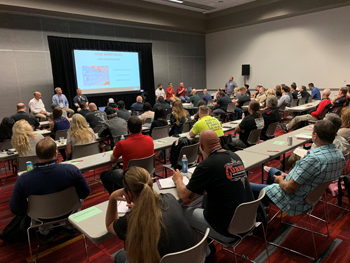
Journalists sat down with exhibitors during last week’s Exhibitor Summit in Las Vegas, sharing proven tips and personal insight on how exhibitors can obtain additional media coverage before, during and after the SEMA Show.

Journalists sat down with exhibitors during last week’s Exhibitor Summit in Las Vegas, sharing proven tips and personal insight on how exhibitors can obtain additional media coverage before, during and after the SEMA Show. While the media panel offered dozens of valuable suggestions, there were common themes that resonated from all six journalists who were on the panel. Among the suggestions:

Provide Information Electronically: One of the panelists said that “paper doesn’t really help us a great deal,” while another panelist simply said, “reporters are lazy.” Either way, a common suggestion from the journalists was to provide press materials electronically, whether on a USB drive or on your company website. The idea is to make it easy for journalists to easily copy and paste the text.

Post Releases Online: Journalist confirmed that they refer to the Online Media Center for content before, during and even after the SEMA Show. The Online Media Center is a portal where all SEMA Show exhibitors are able to upload press releases. Exhibitors can attach photos and select the market segments that are relevant to their news.

Focus on the Benefits: Highlight the key benefits of your product in the beginning of your press release. Reporters receive countless press releases announcing new products, so having a new product isn’t news to them. What will interest them is what makes your product different. “Tell me what problem your product is solving.”

Include High-Res Images and Videos: While many media outlets post news stories online, many also have printed publications and need high-res images. Some reporters also suggested including links to short videos. “If all you have is a still, it’s not as exciting. Video tells a story.” Panelists unanimously agreed that the video does not need to be professionally produced and most cell phones are capable of generating acceptable videos for their needs.

Consider Offering Embargos: Journalists understand that exhibitors oftentimes break announcements on the first day of the SEMA Show, but if the information is not ready and prepared to release, then it’s more likely that stories won’t run at all. Giving a reporter advance information and photos under embargo can be a great strategy to get the reporter to cover your story.

Bonus Tip for First-Time Exhibitors: Many journalists have been attending the SEMA Show for multiple years and have established relationships with exhibitors. However, all reporters are always looking for new content and suggested that first-time exhibitors highlight in their press materials that they are exhibiting at the SEMA Show for the first time. “Tell me you’re brand new to the SEMA Show and tell me a little something about your company.”

To receive additional tips or for assistance with media outreach during the SEMA Show, contact Rachel Tatum at rachelt@sema.org or 909-978-6669.

Thu, 06/27/2019 - 09:53

By Rachel Tatum

Exhibitor Summit
Journalists sat down with exhibitors during last week’s Exhibitor Summit in Las Vegas, sharing proven tips and personal insight on how exhibitors can obtain additional media coverage before, during and after the SEMA Show.

Journalists sat down with exhibitors during last week’s Exhibitor Summit in Las Vegas, sharing proven tips and personal insight on how exhibitors can obtain additional media coverage before, during and after the SEMA Show. While the media panel offered dozens of valuable suggestions, there were common themes that resonated from all six journalists who were on the panel. Among the suggestions:

Provide Information Electronically: One of the panelists said that “paper doesn’t really help us a great deal,” while another panelist simply said, “reporters are lazy.” Either way, a common suggestion from the journalists was to provide press materials electronically, whether on a USB drive or on your company website. The idea is to make it easy for journalists to easily copy and paste the text.

Post Releases Online: Journalist confirmed that they refer to the Online Media Center for content before, during and even after the SEMA Show. The Online Media Center is a portal where all SEMA Show exhibitors are able to upload press releases. Exhibitors can attach photos and select the market segments that are relevant to their news.

Focus on the Benefits: Highlight the key benefits of your product in the beginning of your press release. Reporters receive countless press releases announcing new products, so having a new product isn’t news to them. What will interest them is what makes your product different. “Tell me what problem your product is solving.”

Include High-Res Images and Videos: While many media outlets post news stories online, many also have printed publications and need high-res images. Some reporters also suggested including links to short videos. “If all you have is a still, it’s not as exciting. Video tells a story.” Panelists unanimously agreed that the video does not need to be professionally produced and most cell phones are capable of generating acceptable videos for their needs.

Consider Offering Embargos: Journalists understand that exhibitors oftentimes break announcements on the first day of the SEMA Show, but if the information is not ready and prepared to release, then it’s more likely that stories won’t run at all. Giving a reporter advance information and photos under embargo can be a great strategy to get the reporter to cover your story.

Bonus Tip for First-Time Exhibitors: Many journalists have been attending the SEMA Show for multiple years and have established relationships with exhibitors. However, all reporters are always looking for new content and suggested that first-time exhibitors highlight in their press materials that they are exhibiting at the SEMA Show for the first time. “Tell me you’re brand new to the SEMA Show and tell me a little something about your company.”

To receive additional tips or for assistance with media outreach during the SEMA Show, contact Rachel Tatum at rachelt@sema.org or 909-978-6669.

Thu, 06/27/2019 - 09:53

By Rachel Tatum

Exhibitor Summit
Journalists sat down with exhibitors during last week’s Exhibitor Summit in Las Vegas, sharing proven tips and personal insight on how exhibitors can obtain additional media coverage before, during and after the SEMA Show.

Journalists sat down with exhibitors during last week’s Exhibitor Summit in Las Vegas, sharing proven tips and personal insight on how exhibitors can obtain additional media coverage before, during and after the SEMA Show. While the media panel offered dozens of valuable suggestions, there were common themes that resonated from all six journalists who were on the panel. Among the suggestions:

Provide Information Electronically: One of the panelists said that “paper doesn’t really help us a great deal,” while another panelist simply said, “reporters are lazy.” Either way, a common suggestion from the journalists was to provide press materials electronically, whether on a USB drive or on your company website. The idea is to make it easy for journalists to easily copy and paste the text.

Post Releases Online: Journalist confirmed that they refer to the Online Media Center for content before, during and even after the SEMA Show. The Online Media Center is a portal where all SEMA Show exhibitors are able to upload press releases. Exhibitors can attach photos and select the market segments that are relevant to their news.

Focus on the Benefits: Highlight the key benefits of your product in the beginning of your press release. Reporters receive countless press releases announcing new products, so having a new product isn’t news to them. What will interest them is what makes your product different. “Tell me what problem your product is solving.”

Include High-Res Images and Videos: While many media outlets post news stories online, many also have printed publications and need high-res images. Some reporters also suggested including links to short videos. “If all you have is a still, it’s not as exciting. Video tells a story.” Panelists unanimously agreed that the video does not need to be professionally produced and most cell phones are capable of generating acceptable videos for their needs.

Consider Offering Embargos: Journalists understand that exhibitors oftentimes break announcements on the first day of the SEMA Show, but if the information is not ready and prepared to release, then it’s more likely that stories won’t run at all. Giving a reporter advance information and photos under embargo can be a great strategy to get the reporter to cover your story.

Bonus Tip for First-Time Exhibitors: Many journalists have been attending the SEMA Show for multiple years and have established relationships with exhibitors. However, all reporters are always looking for new content and suggested that first-time exhibitors highlight in their press materials that they are exhibiting at the SEMA Show for the first time. “Tell me you’re brand new to the SEMA Show and tell me a little something about your company.”

To receive additional tips or for assistance with media outreach during the SEMA Show, contact Rachel Tatum at rachelt@sema.org or 909-978-6669.

Thu, 06/27/2019 - 09:53

By Rachel Tatum

Exhibitor Summit
Journalists sat down with exhibitors during last week’s Exhibitor Summit in Las Vegas, sharing proven tips and personal insight on how exhibitors can obtain additional media coverage before, during and after the SEMA Show.

Journalists sat down with exhibitors during last week’s Exhibitor Summit in Las Vegas, sharing proven tips and personal insight on how exhibitors can obtain additional media coverage before, during and after the SEMA Show. While the media panel offered dozens of valuable suggestions, there were common themes that resonated from all six journalists who were on the panel. Among the suggestions:

Provide Information Electronically: One of the panelists said that “paper doesn’t really help us a great deal,” while another panelist simply said, “reporters are lazy.” Either way, a common suggestion from the journalists was to provide press materials electronically, whether on a USB drive or on your company website. The idea is to make it easy for journalists to easily copy and paste the text.

Post Releases Online: Journalist confirmed that they refer to the Online Media Center for content before, during and even after the SEMA Show. The Online Media Center is a portal where all SEMA Show exhibitors are able to upload press releases. Exhibitors can attach photos and select the market segments that are relevant to their news.

Focus on the Benefits: Highlight the key benefits of your product in the beginning of your press release. Reporters receive countless press releases announcing new products, so having a new product isn’t news to them. What will interest them is what makes your product different. “Tell me what problem your product is solving.”

Include High-Res Images and Videos: While many media outlets post news stories online, many also have printed publications and need high-res images. Some reporters also suggested including links to short videos. “If all you have is a still, it’s not as exciting. Video tells a story.” Panelists unanimously agreed that the video does not need to be professionally produced and most cell phones are capable of generating acceptable videos for their needs.

Consider Offering Embargos: Journalists understand that exhibitors oftentimes break announcements on the first day of the SEMA Show, but if the information is not ready and prepared to release, then it’s more likely that stories won’t run at all. Giving a reporter advance information and photos under embargo can be a great strategy to get the reporter to cover your story.

Bonus Tip for First-Time Exhibitors: Many journalists have been attending the SEMA Show for multiple years and have established relationships with exhibitors. However, all reporters are always looking for new content and suggested that first-time exhibitors highlight in their press materials that they are exhibiting at the SEMA Show for the first time. “Tell me you’re brand new to the SEMA Show and tell me a little something about your company.”

To receive additional tips or for assistance with media outreach during the SEMA Show, contact Rachel Tatum at rachelt@sema.org or 909-978-6669.

Thu, 06/27/2019 - 09:25

By SEMA Washington, D.C., Staff

The U.S. House Natural Resources Committee passed SEMA-supported legislation that would dedicate much-needed funding to address the more than $16 billion maintenance backlog on America’s public lands. The “Restore Our Parks and Public Lands Act” would create a national park service and public lands fund for Fiscal Years 2020 through 2024, using unallocated revenue from energy produced on federal government-owned lands and waters. The amount of money that could be allocated to the fund would be capped at $1.3 billion annually during the five-year program.   

The bill is also strongly supported by the Outdoor Recreation Roundtable (ORR), which is comprised of 27 top industry associations, including SEMA, representing off-roading, camping, fishing, boating, hiking, archery and other sports. This legislation recognizes the significant economic contributions that the outdoor recreation industry generates ($887 billion per year in economic activity and provides an estimated 7.6 million direct jobs) and is consistent with ORR’s efforts to support rebuilding and expanding the nation’s recreation-related infrastructure. The “Restore Our Parks and Public Lands Act” now goes to the House floor for consideration.  

The deferred maintenance backlog has received considerable attention recently, as Vice President Pence and U.S. Department of Interior Secretary David Bernhardt recently traveled to Yellowstone National Park to discuss the matter. The Senate Energy and Natural Resources Committee held a hearing last week on a bill to address the maintenance backlog on National Park Service lands. Jessica Wall, executive director of ORR, testified in support of the bill.  

“Visitation to our public lands and waters has continued to increase. However, insufficient appropriations have contributed to a growing deferred maintenance backlog, negatively impacting visitor experiences and affecting the local communities that rely on them,” said Wall. “When domestic and international visitors recreate on our public lands, they should be awed by the natural beauty of the great outdoors, not disappointed with the recreation infrastructure that supports runners, hikers, bikers, climbers, anglers, paddlers, campers, boaters, RV'ers, snowmobilers, off-road vehicle users and more.”

For more information, contact Eric Snyder at erics@sema.org.

Thu, 06/27/2019 - 09:25

By SEMA Washington, D.C., Staff

The U.S. House Natural Resources Committee passed SEMA-supported legislation that would dedicate much-needed funding to address the more than $16 billion maintenance backlog on America’s public lands. The “Restore Our Parks and Public Lands Act” would create a national park service and public lands fund for Fiscal Years 2020 through 2024, using unallocated revenue from energy produced on federal government-owned lands and waters. The amount of money that could be allocated to the fund would be capped at $1.3 billion annually during the five-year program.   

The bill is also strongly supported by the Outdoor Recreation Roundtable (ORR), which is comprised of 27 top industry associations, including SEMA, representing off-roading, camping, fishing, boating, hiking, archery and other sports. This legislation recognizes the significant economic contributions that the outdoor recreation industry generates ($887 billion per year in economic activity and provides an estimated 7.6 million direct jobs) and is consistent with ORR’s efforts to support rebuilding and expanding the nation’s recreation-related infrastructure. The “Restore Our Parks and Public Lands Act” now goes to the House floor for consideration.  

The deferred maintenance backlog has received considerable attention recently, as Vice President Pence and U.S. Department of Interior Secretary David Bernhardt recently traveled to Yellowstone National Park to discuss the matter. The Senate Energy and Natural Resources Committee held a hearing last week on a bill to address the maintenance backlog on National Park Service lands. Jessica Wall, executive director of ORR, testified in support of the bill.  

“Visitation to our public lands and waters has continued to increase. However, insufficient appropriations have contributed to a growing deferred maintenance backlog, negatively impacting visitor experiences and affecting the local communities that rely on them,” said Wall. “When domestic and international visitors recreate on our public lands, they should be awed by the natural beauty of the great outdoors, not disappointed with the recreation infrastructure that supports runners, hikers, bikers, climbers, anglers, paddlers, campers, boaters, RV'ers, snowmobilers, off-road vehicle users and more.”

For more information, contact Eric Snyder at erics@sema.org.

Thu, 06/27/2019 - 09:25

By SEMA Washington, D.C., Staff

The U.S. House Natural Resources Committee passed SEMA-supported legislation that would dedicate much-needed funding to address the more than $16 billion maintenance backlog on America’s public lands. The “Restore Our Parks and Public Lands Act” would create a national park service and public lands fund for Fiscal Years 2020 through 2024, using unallocated revenue from energy produced on federal government-owned lands and waters. The amount of money that could be allocated to the fund would be capped at $1.3 billion annually during the five-year program.   

The bill is also strongly supported by the Outdoor Recreation Roundtable (ORR), which is comprised of 27 top industry associations, including SEMA, representing off-roading, camping, fishing, boating, hiking, archery and other sports. This legislation recognizes the significant economic contributions that the outdoor recreation industry generates ($887 billion per year in economic activity and provides an estimated 7.6 million direct jobs) and is consistent with ORR’s efforts to support rebuilding and expanding the nation’s recreation-related infrastructure. The “Restore Our Parks and Public Lands Act” now goes to the House floor for consideration.  

The deferred maintenance backlog has received considerable attention recently, as Vice President Pence and U.S. Department of Interior Secretary David Bernhardt recently traveled to Yellowstone National Park to discuss the matter. The Senate Energy and Natural Resources Committee held a hearing last week on a bill to address the maintenance backlog on National Park Service lands. Jessica Wall, executive director of ORR, testified in support of the bill.  

“Visitation to our public lands and waters has continued to increase. However, insufficient appropriations have contributed to a growing deferred maintenance backlog, negatively impacting visitor experiences and affecting the local communities that rely on them,” said Wall. “When domestic and international visitors recreate on our public lands, they should be awed by the natural beauty of the great outdoors, not disappointed with the recreation infrastructure that supports runners, hikers, bikers, climbers, anglers, paddlers, campers, boaters, RV'ers, snowmobilers, off-road vehicle users and more.”

For more information, contact Eric Snyder at erics@sema.org.
Thu, 06/27/2019 - 09:20

By SEMA Washington, D.C., Staff

The U.S. Trade Representative (USTR) will accept exclusion requests for “List 3” products imported from China, beginning June 30 and ending September 30, 2019. Any exclusions granted will be retroactive to September 24, 2018, when the duties were first put in place. The exclusion will last for a period of one year after it has been granted.

The List 3 group of Chinese imports covers nearly $200 billion worth of products, including many auto parts, from engines and metal fasteners to tires, transmission belts, brake pads and suspension springs. The deadline for submitting exclusion requests for about $50 billion worth of Chinese products covered under Lists 1 and 2 has already closed. The USTR is still reviewing Lists 1 and 2 requests, which include some miscellaneous metal, rubber and plastic parts for auto equipment.

View more information on submitting a List 3 exclusion requests.

Companies seeking requests will be asked to demonstrate that the product is available only from China, that the tariff will cause severe economic harm and that the good is strategically important. If a request is granted, it will apply to all imported products within the tariff subheading, not just the company making the request. 

For more information, contact Stuart Gosswein at stuartg@sema.org.