Thu, 06/28/2018 - 12:16

By Richard Barsamian

Industry Cup
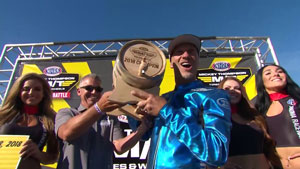
Team Allied Exhaust was the winner of last year’s inaugural Industry Cup Challenge.

The second SEMA Cares Industry Cup Challenge (ICC) will be held during the 2018 SEMA Installation & Gala, Friday, July 20, at the Hilton Los Angeles/Universal City in Los Angeles. Team Allied Exhaust was the winner of last year’s inaugural ICC.

Sponsoring companies will be divided into five divisions, in which they will race high-quality, child-built pinewood cars. Each division crowns a winning company, which then goes on to represent that division in an all-out industry race to No. 1.

SEMA is challenging companies to compete in the following divisions:

  • Warehouse Distributors
  • Manufacturers
  • Media Groups
  • Rep Agencies
  • Service Providers

The champion will have its company’s name engraved on the trophy and display it for one year. It must then be returned, in a Stanley Cup-style tradition, as it will be up for grabs again at the next Pinewood Drags, when the company will have a chance to defend its title.

The donation cost is $1,000 per sponsoring company. The standard pinewood build rules apply to all competing vehicles. The race is officiated by SEMA Cares volunteers.

Visit the SEMA Cares website and sign up today!

Thu, 06/28/2018 - 12:15

By SEMA Washington, D.C., Staff

The U.S. House of Representatives passed SEMA-supported legislation from Rep. Paul Cook (R-CA) that would permanently designate six existing OHV areas comprising 300,000 acres in San Bernardino County: Johnson Valley (expanded by 11,000 acres), Spangler Hills, El Mirage, Rasor, Dumont Dunes and Stoddard Valley.

While HR 857, the “California Off-Road Recreation and Conservation Act,” expands wilderness designations in the California desert, the bill prohibits the Secretary of the Interior from closing any roads or trails that are currently open for motorized recreational access.

The bill now awaits consideration in the U.S. Senate Committee on Energy and Natural Resources. 

For more information, contact Eric Snyder at erics@sema.org.

Thu, 06/28/2018 - 12:15

By SEMA Washington, D.C., Staff

The U.S. House of Representatives passed SEMA-supported legislation from Rep. Paul Cook (R-CA) that would permanently designate six existing OHV areas comprising 300,000 acres in San Bernardino County: Johnson Valley (expanded by 11,000 acres), Spangler Hills, El Mirage, Rasor, Dumont Dunes and Stoddard Valley.

While HR 857, the “California Off-Road Recreation and Conservation Act,” expands wilderness designations in the California desert, the bill prohibits the Secretary of the Interior from closing any roads or trails that are currently open for motorized recreational access.

The bill now awaits consideration in the U.S. Senate Committee on Energy and Natural Resources. 

For more information, contact Eric Snyder at erics@sema.org.

Thu, 06/28/2018 - 12:15

By SEMA Washington, D.C., Staff

The U.S. House of Representatives passed SEMA-supported legislation from Rep. Paul Cook (R-CA) that would permanently designate six existing OHV areas comprising 300,000 acres in San Bernardino County: Johnson Valley (expanded by 11,000 acres), Spangler Hills, El Mirage, Rasor, Dumont Dunes and Stoddard Valley.

While HR 857, the “California Off-Road Recreation and Conservation Act,” expands wilderness designations in the California desert, the bill prohibits the Secretary of the Interior from closing any roads or trails that are currently open for motorized recreational access.

The bill now awaits consideration in the U.S. Senate Committee on Energy and Natural Resources. 

For more information, contact Eric Snyder at erics@sema.org.

Thu, 06/28/2018 - 11:09

By SEMA Washington, D.C., Staff

On August 30, 2016, California amended its Proposition 65 regulations for warning labels on products containing chemicals associated with cancer and birth defects. The new rule takes effect August 30, 2018. SEMA invites members to take advantage of a July 12, 2018, webinar presented by Anne Marie Ellis of the law firm Buchalter. SEMA has also put together a guide, which highlights the major changes to the regulations.

Buchalter Proposition 65 Webinar

Webinar: What Every Business Needs to Know About Significant Changes to Proposition 65

When: July 12, 2018, 12:00 p.m.–1:00 p.m. (PDT)

Register now!

The webinar will address Prop 65 changes to warnings on consumer products, methods of transmitting warnings, tailored warnings for certain industries, and will highlight the realigned obligations of retailers and manufacturers. If your company does business in California or distributes products in California, you must be aware of and implement these changes immediately to ensure compliance.

Anne Marie Ellis’ practice focuses on product liability and commercial litigation. She regularly consults on regulatory matters, including Prop 65, and helps counsel companies on compliance with nationwide laws and regulations. Ellis has significant experience defending motor vehicle, motorcycle, off-road vehicle, sporting goods equipment, pharmaceutical and medical device manufacturers, as well as amusement park venues.

SEMA Guide to Complying with California Proposition 65’s New Regulations

Proposition 65 (Prop 65) is a California law that gives consumers and their attorneys the ability to sue businesses that do not include warning labels on products containing chemicals associated with cancer and birth defects. If you are already familiar with the labeling requirements of Prop 65, you know it can be difficult to comply with the law, and that compliance can be costly. It’s about to become worse. Products manufactured after August 30, 2018, will be subjected to updated regulations with more onerous labeling requirements. This article outlines what you need to know about the new requirements.  

Prop 65 became law in 1986 with the stated purpose to “provide warnings to Californians about significant exposures to chemicals that cause cancer, birth defects or other reproductive harm.” Because the law allows for a private cause of action, it has spawned an industry of aggressive plaintiff-side law firms that misuse the law to net large settlements. The specialty auto-parts industry has been a frequent target of Prop 65 lawsuits.

The law requires warning labels on products containing chemicals listed by the California Office of Environmental Health and Hazard Assessment (OEHHA) as known to cause cancer, birth defects or reproductive harm. There are more than 800 chemicals currently on the list.  

Prop 65 doesn’t stop anyone from selling their products no matter what chemicals they contain—it is simply a law that requires consumer warning labels under certain circumstances. The warning requirement applies to any business with 10 or more employees in the chain of distribution, including manufacturers, distributors and retailers, and out-of-state companies selling product in California. Under the law, fines can run up to $2,500 per day per violation.

The Prop 65 regulations are very specific. If it is determined that a product meets the criteria for labeling, a warning currently must contain the following language:

WARNING: This product contains a chemical known to the State of California to cause [cancer] [and/or birth defects or other reproductive harm].

Products manufactured after August 30, 2018, however, will be subject to new, more detailed labeling requirements. Under the new rules, a warning must contain:

  • A graphic depiction of a yellow triangle containing an exclamation point.
  • Specify at least one chemical for which the warning is being provided if the label is not included on the product or packaging.
  • Include the website www.P65Warnings.ca.gov.

The new requirement to list at least one chemical for which the warning is being provided makes it more difficult to comply with the law because companies can no longer put a generic label on all products. The new regulations, however, do allow one very useful out from listing specific chemicals on product-warning labels—a short form or “truncated” on-product label can be used when the label is placed directly on the product or product packaging. Examples of all four types of warnings are:  

Prop 65

If a truncated warning is placed directly on the product, a truncated warning can also be used on the company website or catalog. Many companies find that the placement of truncated warnings directly on the product is the most efficient means of complying with Prop 65 as there is no need to list a specific chemical.

All internet purchases, whether using the truncated warning or full warning, must include the warning on the product display page or a clearly marked hyperlink using the word “WARNING” on the product display page, or otherwise prominently displaying the warning to the purchaser prior to completing the purchase.

For catalog purchases, the warning must be provided in the catalog in a manner that clearly associates it with the item being purchased. In the specialty auto parts industry, it is often impractical to list a warning next to every line item in the catalog. Many companies will place a symbol next to items requiring a warning and print the full warning on the bottom of the catalog page. While the OEHHA has not provided more specific guidance on catalog warnings of this sort, this may be sufficient to comply with the requirement that the warning is clearly associated with the item being purchased.

The new requirements apply to products manufactured after August 30, 2018—so there is no need to recall products or change the labels on products that have already been manufactured.

The labeling requirements of Prop 65 are very detailed and above is simply an overview of the new requirements. We urge you to consult the resources available at www.sema.org/prop65, which contains additional information and links to statutes, regulations, information provided by OEHHA and the California Attorney General. No part of this article constitutes legal advice and you should consult with legal counsel prior to using this guidance. 

If you have questions or need further information, please contact Daniel Ingber, SEMA’s Chief Corporate Counsel: danieli@sema.org.

Thu, 06/28/2018 - 11:09

By SEMA Washington, D.C., Staff

On August 30, 2016, California amended its Proposition 65 regulations for warning labels on products containing chemicals associated with cancer and birth defects. The new rule takes effect August 30, 2018. SEMA invites members to take advantage of a July 12, 2018, webinar presented by Anne Marie Ellis of the law firm Buchalter. SEMA has also put together a guide, which highlights the major changes to the regulations.

Buchalter Proposition 65 Webinar

Webinar: What Every Business Needs to Know About Significant Changes to Proposition 65

When: July 12, 2018, 12:00 p.m.–1:00 p.m. (PDT)

Register now!

The webinar will address Prop 65 changes to warnings on consumer products, methods of transmitting warnings, tailored warnings for certain industries, and will highlight the realigned obligations of retailers and manufacturers. If your company does business in California or distributes products in California, you must be aware of and implement these changes immediately to ensure compliance.

Anne Marie Ellis’ practice focuses on product liability and commercial litigation. She regularly consults on regulatory matters, including Prop 65, and helps counsel companies on compliance with nationwide laws and regulations. Ellis has significant experience defending motor vehicle, motorcycle, off-road vehicle, sporting goods equipment, pharmaceutical and medical device manufacturers, as well as amusement park venues.

SEMA Guide to Complying with California Proposition 65’s New Regulations

Proposition 65 (Prop 65) is a California law that gives consumers and their attorneys the ability to sue businesses that do not include warning labels on products containing chemicals associated with cancer and birth defects. If you are already familiar with the labeling requirements of Prop 65, you know it can be difficult to comply with the law, and that compliance can be costly. It’s about to become worse. Products manufactured after August 30, 2018, will be subjected to updated regulations with more onerous labeling requirements. This article outlines what you need to know about the new requirements.  

Prop 65 became law in 1986 with the stated purpose to “provide warnings to Californians about significant exposures to chemicals that cause cancer, birth defects or other reproductive harm.” Because the law allows for a private cause of action, it has spawned an industry of aggressive plaintiff-side law firms that misuse the law to net large settlements. The specialty auto-parts industry has been a frequent target of Prop 65 lawsuits.

The law requires warning labels on products containing chemicals listed by the California Office of Environmental Health and Hazard Assessment (OEHHA) as known to cause cancer, birth defects or reproductive harm. There are more than 800 chemicals currently on the list.  

Prop 65 doesn’t stop anyone from selling their products no matter what chemicals they contain—it is simply a law that requires consumer warning labels under certain circumstances. The warning requirement applies to any business with 10 or more employees in the chain of distribution, including manufacturers, distributors and retailers, and out-of-state companies selling product in California. Under the law, fines can run up to $2,500 per day per violation.

The Prop 65 regulations are very specific. If it is determined that a product meets the criteria for labeling, a warning currently must contain the following language:

WARNING: This product contains a chemical known to the State of California to cause [cancer] [and/or birth defects or other reproductive harm].

Products manufactured after August 30, 2018, however, will be subject to new, more detailed labeling requirements. Under the new rules, a warning must contain:

  • A graphic depiction of a yellow triangle containing an exclamation point.
  • Specify at least one chemical for which the warning is being provided if the label is not included on the product or packaging.
  • Include the website www.P65Warnings.ca.gov.

The new requirement to list at least one chemical for which the warning is being provided makes it more difficult to comply with the law because companies can no longer put a generic label on all products. The new regulations, however, do allow one very useful out from listing specific chemicals on product-warning labels—a short form or “truncated” on-product label can be used when the label is placed directly on the product or product packaging. Examples of all four types of warnings are:  

Prop 65

If a truncated warning is placed directly on the product, a truncated warning can also be used on the company website or catalog. Many companies find that the placement of truncated warnings directly on the product is the most efficient means of complying with Prop 65 as there is no need to list a specific chemical.

All internet purchases, whether using the truncated warning or full warning, must include the warning on the product display page or a clearly marked hyperlink using the word “WARNING” on the product display page, or otherwise prominently displaying the warning to the purchaser prior to completing the purchase.

For catalog purchases, the warning must be provided in the catalog in a manner that clearly associates it with the item being purchased. In the specialty auto parts industry, it is often impractical to list a warning next to every line item in the catalog. Many companies will place a symbol next to items requiring a warning and print the full warning on the bottom of the catalog page. While the OEHHA has not provided more specific guidance on catalog warnings of this sort, this may be sufficient to comply with the requirement that the warning is clearly associated with the item being purchased.

The new requirements apply to products manufactured after August 30, 2018—so there is no need to recall products or change the labels on products that have already been manufactured.

The labeling requirements of Prop 65 are very detailed and above is simply an overview of the new requirements. We urge you to consult the resources available at www.sema.org/prop65, which contains additional information and links to statutes, regulations, information provided by OEHHA and the California Attorney General. No part of this article constitutes legal advice and you should consult with legal counsel prior to using this guidance. 

If you have questions or need further information, please contact Daniel Ingber, SEMA’s Chief Corporate Counsel: danieli@sema.org.

Thu, 06/28/2018 - 11:09

By SEMA Washington, D.C., Staff

On August 30, 2016, California amended its Proposition 65 regulations for warning labels on products containing chemicals associated with cancer and birth defects. The new rule takes effect August 30, 2018. SEMA invites members to take advantage of a July 12, 2018, webinar presented by Anne Marie Ellis of the law firm Buchalter. SEMA has also put together a guide, which highlights the major changes to the regulations.

Buchalter Proposition 65 Webinar

Webinar: What Every Business Needs to Know About Significant Changes to Proposition 65

When: July 12, 2018, 12:00 p.m.–1:00 p.m. (PDT)

Register now!

The webinar will address Prop 65 changes to warnings on consumer products, methods of transmitting warnings, tailored warnings for certain industries, and will highlight the realigned obligations of retailers and manufacturers. If your company does business in California or distributes products in California, you must be aware of and implement these changes immediately to ensure compliance.

Anne Marie Ellis’ practice focuses on product liability and commercial litigation. She regularly consults on regulatory matters, including Prop 65, and helps counsel companies on compliance with nationwide laws and regulations. Ellis has significant experience defending motor vehicle, motorcycle, off-road vehicle, sporting goods equipment, pharmaceutical and medical device manufacturers, as well as amusement park venues.

SEMA Guide to Complying with California Proposition 65’s New Regulations

Proposition 65 (Prop 65) is a California law that gives consumers and their attorneys the ability to sue businesses that do not include warning labels on products containing chemicals associated with cancer and birth defects. If you are already familiar with the labeling requirements of Prop 65, you know it can be difficult to comply with the law, and that compliance can be costly. It’s about to become worse. Products manufactured after August 30, 2018, will be subjected to updated regulations with more onerous labeling requirements. This article outlines what you need to know about the new requirements.  

Prop 65 became law in 1986 with the stated purpose to “provide warnings to Californians about significant exposures to chemicals that cause cancer, birth defects or other reproductive harm.” Because the law allows for a private cause of action, it has spawned an industry of aggressive plaintiff-side law firms that misuse the law to net large settlements. The specialty auto-parts industry has been a frequent target of Prop 65 lawsuits.

The law requires warning labels on products containing chemicals listed by the California Office of Environmental Health and Hazard Assessment (OEHHA) as known to cause cancer, birth defects or reproductive harm. There are more than 800 chemicals currently on the list.  

Prop 65 doesn’t stop anyone from selling their products no matter what chemicals they contain—it is simply a law that requires consumer warning labels under certain circumstances. The warning requirement applies to any business with 10 or more employees in the chain of distribution, including manufacturers, distributors and retailers, and out-of-state companies selling product in California. Under the law, fines can run up to $2,500 per day per violation.

The Prop 65 regulations are very specific. If it is determined that a product meets the criteria for labeling, a warning currently must contain the following language:

WARNING: This product contains a chemical known to the State of California to cause [cancer] [and/or birth defects or other reproductive harm].

Products manufactured after August 30, 2018, however, will be subject to new, more detailed labeling requirements. Under the new rules, a warning must contain:

  • A graphic depiction of a yellow triangle containing an exclamation point.
  • Specify at least one chemical for which the warning is being provided if the label is not included on the product or packaging.
  • Include the website www.P65Warnings.ca.gov.

The new requirement to list at least one chemical for which the warning is being provided makes it more difficult to comply with the law because companies can no longer put a generic label on all products. The new regulations, however, do allow one very useful out from listing specific chemicals on product-warning labels—a short form or “truncated” on-product label can be used when the label is placed directly on the product or product packaging. Examples of all four types of warnings are:  

Prop 65

If a truncated warning is placed directly on the product, a truncated warning can also be used on the company website or catalog. Many companies find that the placement of truncated warnings directly on the product is the most efficient means of complying with Prop 65 as there is no need to list a specific chemical.

All internet purchases, whether using the truncated warning or full warning, must include the warning on the product display page or a clearly marked hyperlink using the word “WARNING” on the product display page, or otherwise prominently displaying the warning to the purchaser prior to completing the purchase.

For catalog purchases, the warning must be provided in the catalog in a manner that clearly associates it with the item being purchased. In the specialty auto parts industry, it is often impractical to list a warning next to every line item in the catalog. Many companies will place a symbol next to items requiring a warning and print the full warning on the bottom of the catalog page. While the OEHHA has not provided more specific guidance on catalog warnings of this sort, this may be sufficient to comply with the requirement that the warning is clearly associated with the item being purchased.

The new requirements apply to products manufactured after August 30, 2018—so there is no need to recall products or change the labels on products that have already been manufactured.

The labeling requirements of Prop 65 are very detailed and above is simply an overview of the new requirements. We urge you to consult the resources available at www.sema.org/prop65, which contains additional information and links to statutes, regulations, information provided by OEHHA and the California Attorney General. No part of this article constitutes legal advice and you should consult with legal counsel prior to using this guidance. 

If you have questions or need further information, please contact Daniel Ingber, SEMA’s Chief Corporate Counsel: danieli@sema.org.

Thu, 06/28/2018 - 10:08

Mike Anderson with Textron joins SEMA Central to discuss their latest utility vehicle.

Thu, 06/28/2018 - 10:08

Mike Anderson with Textron joins SEMA Central to discuss their latest utility vehicle.

Thu, 06/28/2018 - 09:34

Compiled by SEMA Editors

Pikes Peak
David Donohue, driving a ’17 Porsche GT3R, won the Time Attack 1 class in 9:37.152. 

Travis Pastrana and David Donohue Climb to Victory in the “Race to the Clouds”

Yokohama Tire’s return to the Broadmoor Pikes Peak International Hill Climb was highlighted by the inaugural running of the Porsche Cayman GT4 Clubsport Pikes Peak Hill Climb Trophy by Yokohama and victory in the Time Attack 1 class. Travis Pastrana took the win in the Porsche Cayman GT4 Clubsport class, while David Donohue captured the win in Time Attack 1. Pastrana’s “Race to the Clouds” victory clocked in at 10:33.897, which bested a field of seven other competitors in the new class. Donohue, driving a ’17 Porsche GT3R, won the Time Attack 1 class in 9:37.152. His performance placed him sixth overall and gave him a new class record in the process.

Pikes Peak
Romain Dumas bettered Sébastien Loeb’s record by 16 seconds at the Pikes Peak International Hill Climb.

Volkswagen Makes History With the I.D. R Pikes Peak

Volkswagen and the I.D. R Pikes Peak have made history at the Pikes Peak International Hill Climb. Driving the 500-kW (680 PS) I.D. R Pikes Peak, Romain Dumas defeated a field, including cars with conventional drivetrain technology. In doing so, he not only broke the previous record for electric vehicles, but also bettered Sébastien Loeb’s all-time record from 2013 by a full 16 seconds. Dumas’ new record of 7m 57.148s minutes is now top of the list of Pikes Peak champions, which includes such acclaimed drivers as Loeb, Walter Röhrl, Michèle Mouton, Stig Blomqvist, Nobuhiro Tajima and also Rod Millen and his son Rhys.

NHRA
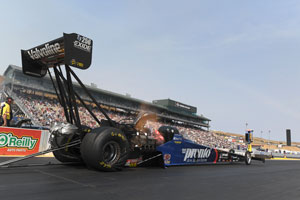
Blake Alexander’s 4.011-second pass at 297.81 mph in his Pronto Auto Service dragster took down Terry McMillen and secured his first Top Fuel career victory.

Alexander, Hagan, Gray and Krawiec Victorious at Summit Racing Equipment NHRA Nationals

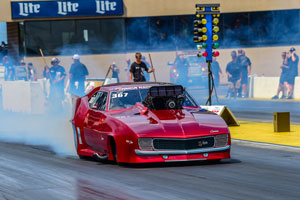
Blake Alexander became the 105th different Top Fuel winner in NHRA history last Sunday afternoon at the Summit Racing Equipment NHRA Nationals at Summit Motorsports Park. Matt Hagan (Funny Car), Tanner Gray (Pro Stock) and Eddie Krawiec (Pro Stock Motorcycle) were also winners in their respective categories at the 12th of 24 events on the 2018 NHRA Mello Yello Drag Racing Series schedule. Alexander’s 4.011-second pass at 297.81 mph in his Pronto Auto Service dragster took down Terry McMillen and secured his first Top Fuel career victory. Hagan powered to the Funny Car win with a run of 4.094 at 288.21 in his Mopar Express Lane Dodge Charger R/T to take down points leader Courtney Force in the finals. Force secured her first runner-up finish of the season after qualifying in the No. 1 position. Gray took down two-time world champion Erica Enders in the final round for his eighth career victory and third of the season. Krawiec secured his third Pro Stock Motorcycle victory at Summit Motorsports Park with his pass of 6.923 at 195.05 on his Screamin’ Eagle Vance & Hines Harley-Davidson to defeat Jerry Savoie. The 2018 NHRA Mello Yello Drag Racing Series season continues at New England Dragway in Epping, New Hampshire, July 6–8.

For more racing news, visit Performance Racing Industry’s (PRI) website.