Mon, 03/23/2026 - 14:55

By SEMA News Editors

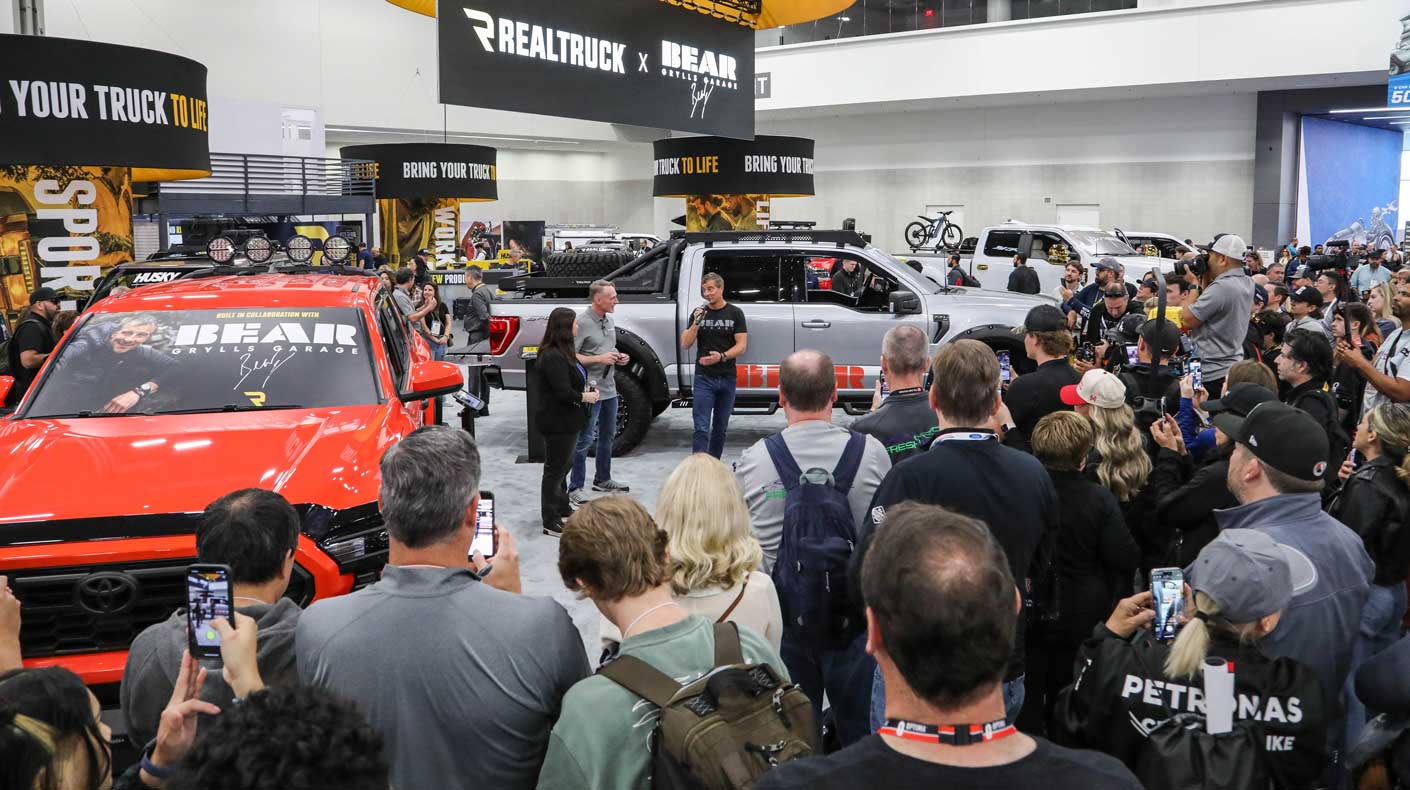
SEMA Live presented by AutoZone studio at the 2025 SEMA Show


SEMA Live Presented by AutoZone wrapped another standout year at the 2025 SEMA Show (November 4–7 in Las Vegas), drawing record online engagement and giving fans unprecedented access to the Show floor, outdoor activations, and industry icons. With 31 hours of live programming streamed across YouTube and Meta, the broadcast captured the best of the SEMA Show--from the latest builds and trending products to can't-miss interviews and high-energy demos.

Returning host Chris Jacobs led the on-site team alongside Alliyah Becerra, JC Fernandez, and 14-year-old newcomer Elija Isra, whose debut added fresh energy and perspective to the coverage.

Highlights from the 2025 Broadcast
  • Battle of the Builders, Up Close: Viewers followed the competitors from concept to reveal, with behind-the-scenes access to their stories and craftsmanship.
  • Outdoor Action Like Never Before: New all-access cameras brought every burnout, drift, and stunt to life from Hoonigan Burnyard, HorsePower Rodeo, Nitro Circus, OPTIMA Unleashed, and SPARQ Slide City.
  • High-Impact Segments: Fast-paced coverage matched the energy of the Show, spotlighting more vehicles, tech, and trends in real time.
  • Legends Live On Air: Industry icons, including Antron Brown, Chip Foose, Dave Kindig, Jay Leno, Gabriel "Fluffy" Iglesias, and the Ringbrothers, among countless others, headlined this year's lineup.
  • Record Reveal Count: More manufacturers than ever chose SEMA Live for their global debuts.
  • First-Ever SEMA Cruise Broadcast: The full Friday SEMA Cruise aired live from 4:00 - 6:00 p.m. PST, closing out the week with thousands of custom builds parading before fans as they traverse Las Vegas roads.

From in-depth storytelling to unscripted moments, SEMA Live presented by AutoZone once again proved to be the ultimate way to experience the SEMA Show, whether on-site or streaming from around the world. Catch the highlights for yourself: here are the four SEMA Live segments from this year's broadcast, featuring unforgettable reveals, on-site action, and interviews straight from the Show floor.

2025 SEMA Show: Tuesday, November 4


2025 SEMA Show: Wednesday, November 5


2025 SEMA Show: Thursday, November 6


2025 SEMA Show: Friday, November 7


2025 SEMA Show - SEMA Cruise: Friday, November 7


Subscribe to SEMA News using the "Stay tuned" widget at the bottom of the webpage for more 2025 SEMA Show coverage, or visit semashow.com.


This story was originally published on November 11, 2025.

Mon, 03/23/2026 - 14:55

By SEMA News Editors

SEMA Live presented by AutoZone studio at the 2025 SEMA Show


SEMA Live Presented by AutoZone wrapped another standout year at the 2025 SEMA Show (November 4–7 in Las Vegas), drawing record online engagement and giving fans unprecedented access to the Show floor, outdoor activations, and industry icons. With 31 hours of live programming streamed across YouTube and Meta, the broadcast captured the best of the SEMA Show--from the latest builds and trending products to can't-miss interviews and high-energy demos.

Returning host Chris Jacobs led the on-site team alongside Alliyah Becerra, JC Fernandez, and 14-year-old newcomer Elija Isra, whose debut added fresh energy and perspective to the coverage.

Highlights from the 2025 Broadcast
  • Battle of the Builders, Up Close: Viewers followed the competitors from concept to reveal, with behind-the-scenes access to their stories and craftsmanship.
  • Outdoor Action Like Never Before: New all-access cameras brought every burnout, drift, and stunt to life from Hoonigan Burnyard, HorsePower Rodeo, Nitro Circus, OPTIMA Unleashed, and SPARQ Slide City.
  • High-Impact Segments: Fast-paced coverage matched the energy of the Show, spotlighting more vehicles, tech, and trends in real time.
  • Legends Live On Air: Industry icons, including Antron Brown, Chip Foose, Dave Kindig, Jay Leno, Gabriel "Fluffy" Iglesias, and the Ringbrothers, among countless others, headlined this year's lineup.
  • Record Reveal Count: More manufacturers than ever chose SEMA Live for their global debuts.
  • First-Ever SEMA Cruise Broadcast: The full Friday SEMA Cruise aired live from 4:00 - 6:00 p.m. PST, closing out the week with thousands of custom builds parading before fans as they traverse Las Vegas roads.

From in-depth storytelling to unscripted moments, SEMA Live presented by AutoZone once again proved to be the ultimate way to experience the SEMA Show, whether on-site or streaming from around the world. Catch the highlights for yourself: here are the four SEMA Live segments from this year's broadcast, featuring unforgettable reveals, on-site action, and interviews straight from the Show floor.

2025 SEMA Show: Tuesday, November 4


2025 SEMA Show: Wednesday, November 5


2025 SEMA Show: Thursday, November 6


2025 SEMA Show: Friday, November 7


2025 SEMA Show - SEMA Cruise: Friday, November 7


Subscribe to SEMA News using the "Stay tuned" widget at the bottom of the webpage for more 2025 SEMA Show coverage, or visit semashow.com.


This story was originally published on November 11, 2025.

Mon, 03/23/2026 - 10:31

By SEMA News Editors 

A photo of Toyota revealing a side-by-side vehicle at the 2025 SEMA Show.


SEMA is expanding the SEMA Show's powersports presence by launching a dedicated Powersports/Side-by-Side (SxS)/Lifestyle section at the 2026 SEMA Show, held November 3-6 in Las Vegas. This strategic expansion creates a unified home for the rapidly growing intersection of the automotive and powersports communities.
 

The initiative is a direct response to clear market demand and the evolving habits of the modern enthusiast. SEMA research confirms that the crossover between these worlds is seamless: the vast majority of enthusiasts do not limit themselves to a single vehicle type, often owning a combination of modified trucks, SUVs and various recreational powersports vehicles.
 

"This expansion is a bold step forward in SEMA's mission to serve the entire enthusiast ecosystem," said SEMA Vice President of Events Tom Gattuso. "Powersports has always been an integral part of SEMA's DNA, and we are now providing this community with the dedicated platform it deserves. By integrating powersports and related lifestyle products into our Show floor, we are creating a more powerful, unified resource for the aftermarket. This move celebrates the natural synergy between automotive and outdoor recreation, ensuring our members have the advocacy, resources and product discovery platform they need to thrive in a modern, evolving market."


A Dynamic Activation in the West Hall 


The Powersports/SxS/Lifestyle section will be anchored in the West Hall, utilizing a layout designed for long-term growth. The location offers unique access to adjacent parking lots for dynamic outdoor activations and vehicle demonstrations.
 

The Show floor will undergo an evolution to group Trucks, Off-Road and Powersports together, reflecting the "total package" approach enthusiasts take toward their adventure builds. The section will highlight a diverse range of categories, including:
 

  • Motorcycles and dirt bikes
  • Side-by-Sides
  • Trailers and tow vehicles
  • Related adventure lifestyle gear and accessories


New and returning manufacturers are already showing excitement for the expanded section.


"We're proud to represent KYT Helmets at SEMA 2026," said TJ Jira, CEO of KYT Americas. "We believe it's an opportunity to elevate powersports and bring more visibility to our brand in the market."
 

An Integrated Attendee Experience
 

Powersports vehicles driving along the exterior of the Las Vegas Convention Center during the 2025 SEMA Cruise.


For attendees, the new layout enhances business opportunities by placing complementary products in a single, high-energy destination.
 

"Attendees can expect an immersive and highly interactive experience that mirrors how they actually live and work," said SEMA Trade Show Director Andy Tompkins. "By grouping powersports and lifestyle gear alongside our world-class truck and off-road sections, we are providing an unmatched opportunity to see the latest in the adventure market."


Market-Aligned Synergy


SEMA's membership is already a powerhouse in the powersports sector. According to SEMA Research, 60% of specialty-equipment manufacturers already produce products for at least one type of powersports or recreational vehicle, while 47% of retailers and installers sell to these segments.


Beyond the Show floor, SEMA offers members tools to modernize their businesses, including data resources, technical services and a powerful unified voice to protect the industry's future. Through the acquisition of the Off-Road Business Association (ORBA), SEMA has strengthened its presence in Washington, D.C., and Sacramento, California, to fight for land-use protection and motorized recreation access--issues that are critical to the survival of the powersports industry.


The new section allows the entire ecosystem to gather, learn about the latest products, take part in cutting-edge education to grow businesses and careers, and unite to solve opportunities and challenges facing the powersports marketplace.
 

Important Deadlines


Interested exhibitors can learn more and reserve a booth at www.semashow.com/powersports, or by contacting Mike Ausec, industry sales director, powersports and lifestyle, at mikea@sema.org or 714-213-1584.
 

The 2026 SEMA Show is set for November 3-6, in Las Vegas. Interested exhibitors can buy a booth and learn more at semashow.com/exhibitor. Attendee and buyer registration opens in Spring 2026; to sign up for notifications, visit here. For more information, visit semashow.com

Sun, 03/22/2026 - 16:41

By the SEMA Washington, D.C., office

REPAIR Act auto mechanic Shutterstock image


SEMA, on behalf of the specialty automotive aftermarket industry and community of automotive enthusiasts nationwide, believes that individuals' right to repair and modify the vehicles they own is essential to a free nation and the future of the industry.  
 

New barriers, whether legal or technological, hinder vehicle owners' ability to work on their vehicles, seek repairs at independent automotive shops, and manufacture and install replacement and specialty parts, software and services to enhance their vehicles' safety, performance and comfort each year.
 

These barriers represent an ever-evolving challenge to vehicle owners and the thousands of businesses that make up the specialty automotive aftermarket industry, whose $337 billion annual economic impact is a core driver of the nation's economy.  
 

Historically, aftermarket modifications have been largely mechanical. However, modifying newer vehicles to improve performance, safety, reliability and appearance requires aftermarket businesses to access a vehicle's electronic control unit (ECU), on-board diagnostics systems (OBD) and advanced driver assistance systems (ADAS) to ensure it understands how the parts and products installed interact with OEM systems. Accordingly, it is imperative that OEM data from testing and system calibration is available and able to accommodate vehicle modifications to maintain the integrity and performance of safety systems after a vehicle has been modified.  
 

While many new ADAS features, such as lane-departure warning, lane-keep assist, forward-collision warning, and automatic emergency braking, come standard in the latest models of vehicles, the technology automakers employ to support these systems varies greatly by model and OEM. Currently, vehicle manufacturers are not required to provide full-vehicle lifecycle support, including instructions, application guides, proper mounting or functionality windows, or access to make changes outside of the original sensor location and configuration.  
 

This presents a challenge to correctly and safely calibrate ADAS and ensure optimal performance after basic modifications, such as installing larger tires and wheels, lift kits, lowering kits, bumpers, grilles, push bars, light bars, bike racks and winches.  
 

SEMA is committed to protecting the rights of vehicle owners and millions of automotive enthusiasts to choose where and with what parts and software their vehicles are repaired, customized and modified.  
 

It is imperative that any legislative, regulatory or industry standards or agreements adhere to the principles outlined below. While the REPAIR Act is designed to provide vehicle information and data to protect the future of the independent repair industry, the bill does not extend similar protections to individuals and businesses that modify and customize vehicles, nor does it provide access to the information needed to properly recalibrate ADAS systems after a vehicle has been modified.  
 

SEMA is neutral on the REPAIR Act and will advocate for expanding the legislation to protect the right to modify and customize vehicles. 
 

SEMA's support for any "right to repair" legislation is contingent upon meeting the aftermarket industry's needs in the following areas: 

  • Access: As automotive technology continues to evolve, vehicle owners and the specialty automotive aftermarket industry, including businesses that manufacture and install specialty parts and software, must have access to the tools, repair procedures and information, configurable vehicle parameters, customization settings, software, technical and compatibility information, and wiring diagrams. Automakers must provide this access at fair and reasonable prices and subject to the same cryptographic or technological protections as their authorized dealers and service providers. 
  • Calibration and recalibration: Specialty aftermarket businesses must have access to the information needed to calibrate and recalibrate vehicle systems, including ADAS, to ensure safe operation after a vehicle's ride height and profile is modified, or if the vehicle has been customized.  
  • Elimination of barriers: Motor vehicle manufacturers must be prevented from using technological and legal barriers to limit aftermarket parts manufacturers, vehicle repairers, and businesses that modify or customize vehicles to manufacture or install aftermarket parts, services, and software needed to repair, customize, or modify a vehicle. 
  • A level playing field: Vehicle owners, aftermarket parts manufacturers, diagnostic tool manufacturers, and motor-vehicle service businesses must have access to the same information and tools as OEM's authorized vehicle service providers. Along these lines, such access must be provided in the same manner, time, method, cost (must be fair and reasonable), content set, and subject to the same cryptographic or technological protections, as vehicle manufacturers' authorized vehicle service providers. 
  • Owners' data rights: Vehicle owners must have the right to access their vehicle's safety and performance data and be able to share this information with the repairer or vehicle service provider of their choice. 
     

For more information, contact Eric Snyder at erics@sema.org. 


This story was originally published on February 25, 2025.


Image courtesy of Shutterstock | mpohodzhay
Image courtesy of Shutterstock | Tualek Photographer


Sun, 03/22/2026 - 16:41

By the SEMA Washington, D.C., office

REPAIR Act auto mechanic Shutterstock image


SEMA, on behalf of the specialty automotive aftermarket industry and community of automotive enthusiasts nationwide, believes that individuals' right to repair and modify the vehicles they own is essential to a free nation and the future of the industry.  
 

New barriers, whether legal or technological, hinder vehicle owners' ability to work on their vehicles, seek repairs at independent automotive shops, and manufacture and install replacement and specialty parts, software and services to enhance their vehicles' safety, performance and comfort each year.
 

These barriers represent an ever-evolving challenge to vehicle owners and the thousands of businesses that make up the specialty automotive aftermarket industry, whose $337 billion annual economic impact is a core driver of the nation's economy.  
 

Historically, aftermarket modifications have been largely mechanical. However, modifying newer vehicles to improve performance, safety, reliability and appearance requires aftermarket businesses to access a vehicle's electronic control unit (ECU), on-board diagnostics systems (OBD) and advanced driver assistance systems (ADAS) to ensure it understands how the parts and products installed interact with OEM systems. Accordingly, it is imperative that OEM data from testing and system calibration is available and able to accommodate vehicle modifications to maintain the integrity and performance of safety systems after a vehicle has been modified.  
 

While many new ADAS features, such as lane-departure warning, lane-keep assist, forward-collision warning, and automatic emergency braking, come standard in the latest models of vehicles, the technology automakers employ to support these systems varies greatly by model and OEM. Currently, vehicle manufacturers are not required to provide full-vehicle lifecycle support, including instructions, application guides, proper mounting or functionality windows, or access to make changes outside of the original sensor location and configuration.  
 

This presents a challenge to correctly and safely calibrate ADAS and ensure optimal performance after basic modifications, such as installing larger tires and wheels, lift kits, lowering kits, bumpers, grilles, push bars, light bars, bike racks and winches.  
 

SEMA is committed to protecting the rights of vehicle owners and millions of automotive enthusiasts to choose where and with what parts and software their vehicles are repaired, customized and modified.  
 

It is imperative that any legislative, regulatory or industry standards or agreements adhere to the principles outlined below. While the REPAIR Act is designed to provide vehicle information and data to protect the future of the independent repair industry, the bill does not extend similar protections to individuals and businesses that modify and customize vehicles, nor does it provide access to the information needed to properly recalibrate ADAS systems after a vehicle has been modified.  
 

SEMA is neutral on the REPAIR Act and will advocate for expanding the legislation to protect the right to modify and customize vehicles. 
 

SEMA's support for any "right to repair" legislation is contingent upon meeting the aftermarket industry's needs in the following areas: 

  • Access: As automotive technology continues to evolve, vehicle owners and the specialty automotive aftermarket industry, including businesses that manufacture and install specialty parts and software, must have access to the tools, repair procedures and information, configurable vehicle parameters, customization settings, software, technical and compatibility information, and wiring diagrams. Automakers must provide this access at fair and reasonable prices and subject to the same cryptographic or technological protections as their authorized dealers and service providers. 
  • Calibration and recalibration: Specialty aftermarket businesses must have access to the information needed to calibrate and recalibrate vehicle systems, including ADAS, to ensure safe operation after a vehicle's ride height and profile is modified, or if the vehicle has been customized.  
  • Elimination of barriers: Motor vehicle manufacturers must be prevented from using technological and legal barriers to limit aftermarket parts manufacturers, vehicle repairers, and businesses that modify or customize vehicles to manufacture or install aftermarket parts, services, and software needed to repair, customize, or modify a vehicle. 
  • A level playing field: Vehicle owners, aftermarket parts manufacturers, diagnostic tool manufacturers, and motor-vehicle service businesses must have access to the same information and tools as OEM's authorized vehicle service providers. Along these lines, such access must be provided in the same manner, time, method, cost (must be fair and reasonable), content set, and subject to the same cryptographic or technological protections, as vehicle manufacturers' authorized vehicle service providers. 
  • Owners' data rights: Vehicle owners must have the right to access their vehicle's safety and performance data and be able to share this information with the repairer or vehicle service provider of their choice. 
     

For more information, contact Eric Snyder at erics@sema.org. 


This story was originally published on February 25, 2025.


Image courtesy of Shutterstock | mpohodzhay
Image courtesy of Shutterstock | Tualek Photographer


Sun, 03/22/2026 - 16:41

By the SEMA Washington, D.C., office

REPAIR Act auto mechanic Shutterstock image


SEMA, on behalf of the specialty automotive aftermarket industry and community of automotive enthusiasts nationwide, believes that individuals' right to repair and modify the vehicles they own is essential to a free nation and the future of the industry.  
 

New barriers, whether legal or technological, hinder vehicle owners' ability to work on their vehicles, seek repairs at independent automotive shops, and manufacture and install replacement and specialty parts, software and services to enhance their vehicles' safety, performance and comfort each year.
 

These barriers represent an ever-evolving challenge to vehicle owners and the thousands of businesses that make up the specialty automotive aftermarket industry, whose $337 billion annual economic impact is a core driver of the nation's economy.  
 

Historically, aftermarket modifications have been largely mechanical. However, modifying newer vehicles to improve performance, safety, reliability and appearance requires aftermarket businesses to access a vehicle's electronic control unit (ECU), on-board diagnostics systems (OBD) and advanced driver assistance systems (ADAS) to ensure it understands how the parts and products installed interact with OEM systems. Accordingly, it is imperative that OEM data from testing and system calibration is available and able to accommodate vehicle modifications to maintain the integrity and performance of safety systems after a vehicle has been modified.  
 

While many new ADAS features, such as lane-departure warning, lane-keep assist, forward-collision warning, and automatic emergency braking, come standard in the latest models of vehicles, the technology automakers employ to support these systems varies greatly by model and OEM. Currently, vehicle manufacturers are not required to provide full-vehicle lifecycle support, including instructions, application guides, proper mounting or functionality windows, or access to make changes outside of the original sensor location and configuration.  
 

This presents a challenge to correctly and safely calibrate ADAS and ensure optimal performance after basic modifications, such as installing larger tires and wheels, lift kits, lowering kits, bumpers, grilles, push bars, light bars, bike racks and winches.  
 

SEMA is committed to protecting the rights of vehicle owners and millions of automotive enthusiasts to choose where and with what parts and software their vehicles are repaired, customized and modified.  
 

It is imperative that any legislative, regulatory or industry standards or agreements adhere to the principles outlined below. While the REPAIR Act is designed to provide vehicle information and data to protect the future of the independent repair industry, the bill does not extend similar protections to individuals and businesses that modify and customize vehicles, nor does it provide access to the information needed to properly recalibrate ADAS systems after a vehicle has been modified.  
 

SEMA is neutral on the REPAIR Act and will advocate for expanding the legislation to protect the right to modify and customize vehicles. 
 

SEMA's support for any "right to repair" legislation is contingent upon meeting the aftermarket industry's needs in the following areas: 

  • Access: As automotive technology continues to evolve, vehicle owners and the specialty automotive aftermarket industry, including businesses that manufacture and install specialty parts and software, must have access to the tools, repair procedures and information, configurable vehicle parameters, customization settings, software, technical and compatibility information, and wiring diagrams. Automakers must provide this access at fair and reasonable prices and subject to the same cryptographic or technological protections as their authorized dealers and service providers. 
  • Calibration and recalibration: Specialty aftermarket businesses must have access to the information needed to calibrate and recalibrate vehicle systems, including ADAS, to ensure safe operation after a vehicle's ride height and profile is modified, or if the vehicle has been customized.  
  • Elimination of barriers: Motor vehicle manufacturers must be prevented from using technological and legal barriers to limit aftermarket parts manufacturers, vehicle repairers, and businesses that modify or customize vehicles to manufacture or install aftermarket parts, services, and software needed to repair, customize, or modify a vehicle. 
  • A level playing field: Vehicle owners, aftermarket parts manufacturers, diagnostic tool manufacturers, and motor-vehicle service businesses must have access to the same information and tools as OEM's authorized vehicle service providers. Along these lines, such access must be provided in the same manner, time, method, cost (must be fair and reasonable), content set, and subject to the same cryptographic or technological protections, as vehicle manufacturers' authorized vehicle service providers. 
  • Owners' data rights: Vehicle owners must have the right to access their vehicle's safety and performance data and be able to share this information with the repairer or vehicle service provider of their choice. 
     

For more information, contact Eric Snyder at erics@sema.org. 


This story was originally published on February 25, 2025.


Image courtesy of Shutterstock | mpohodzhay
Image courtesy of Shutterstock | Tualek Photographer


Thu, 03/19/2026 - 13:17

By SEMA News Editors

An image of a Jeep Wrangler Rubicon crossing the Mojave Desert. Courtesy of Shutterstock.

Mojave Desert, Nevada.


Last year, SEMA announced its acquisition of the Off-Road Business Association (ORBA), an organization dedicated to representing businesses and professionals in the off-road and powersports industries, including motorcycles, ATVs, side-by-sides and snowmobiles. Ever since, SEMA and ORBA have been working harmoniously to advocate for policies that protect motorized access to roads and trails on government-owned lands. Below are the latest policy updates on areas of key interest to the motorized recreation community.


Western Mojave Faces 2,200-Mile OHV Closure; Off-Road Community Pushes Back

Off-road advocates push back hard on possible closures with the help of SEMA and ORBA.


SEMA and ORBA, along with a broad coalition of stakeholders, issued a statement decrying a federal court ruling that will result in the closure of approximately 2,200 miles of designated OHV routes across the Western Mohave planning area. Click here to read it. This is a ruling that, if upheld, would result in a significant loss of motorized access for families, recreationists, and public lands enthusiasts from across California and throughout the United States.


The letter, sent under the Ecologic Partners Coalition banner, highlights not only the consequences of the closures but also the order's reliance on flawed assumptions about desert tortoise mortality. The coalition, which is comprised of SEMA, ORBA, American Sand Association and AMA District 37, points to decades of scientific evidence that the court failed to take into account, specifically how predator subsidy effects, disease dynamics, and landscape-scale habitat pressures from utility-scale renewable energy projects and other industrial development are the primary and most significant contributors to desert tortoise population trends.


The letter also reaffirms the significant role the off-road community plays in environmental stewardship and protection through volunteer trail maintenance, habitat restoration projects, educational programs and conservation initiatives designed to protect sensitive species while maintaining responsible public access. 


The Fight for Moab's Trails: Interior to Review ORBA-led Appeal for Reopening Trails

BLM previously closed 300+ miles; 150 miles could reopen with SEMA and ORBA support.
 

In a positive development, the Secretary of the U.S. Department of the Interior (DOI) has formally taken jurisdiction over ORBA's appeal of the U.S. Bureau of Land Management's (BLM) 2023 Labyrinth Rims/Gemini Bridges Travel Management Plan, which closed down more than 300 miles of trails to motorized vehicles near Moab, Utah.

  • In 2025, the BLM proposed to reopen nearly 150 miles of trails in Labyrinth Rims/Gemini Bridges. SEMA and ORBA supported this action (read SEMA's official comment here).

Previously, ORBA's appeal of the plan was assigned to the IBLA. This is an important step forward and is consistent with the Interior Department's efforts to restore trail access at Labyrinth/Gemini Bridges. 


Image courtesy of Shutterstock | WildSnap


Thu, 03/19/2026 - 13:17

By SEMA News Editors

An image of a Jeep Wrangler Rubicon crossing the Mojave Desert. Courtesy of Shutterstock.

Mojave Desert, Nevada.


Last year, SEMA announced its acquisition of the Off-Road Business Association (ORBA), an organization dedicated to representing businesses and professionals in the off-road and powersports industries, including motorcycles, ATVs, side-by-sides and snowmobiles. Ever since, SEMA and ORBA have been working harmoniously to advocate for policies that protect motorized access to roads and trails on government-owned lands. Below are the latest policy updates on areas of key interest to the motorized recreation community.


Western Mojave Faces 2,200-Mile OHV Closure; Off-Road Community Pushes Back

Off-road advocates push back hard on possible closures with the help of SEMA and ORBA.


SEMA and ORBA, along with a broad coalition of stakeholders, issued a statement decrying a federal court ruling that will result in the closure of approximately 2,200 miles of designated OHV routes across the Western Mohave planning area. Click here to read it. This is a ruling that, if upheld, would result in a significant loss of motorized access for families, recreationists, and public lands enthusiasts from across California and throughout the United States.


The letter, sent under the Ecologic Partners Coalition banner, highlights not only the consequences of the closures but also the order's reliance on flawed assumptions about desert tortoise mortality. The coalition, which is comprised of SEMA, ORBA, American Sand Association and AMA District 37, points to decades of scientific evidence that the court failed to take into account, specifically how predator subsidy effects, disease dynamics, and landscape-scale habitat pressures from utility-scale renewable energy projects and other industrial development are the primary and most significant contributors to desert tortoise population trends.


The letter also reaffirms the significant role the off-road community plays in environmental stewardship and protection through volunteer trail maintenance, habitat restoration projects, educational programs and conservation initiatives designed to protect sensitive species while maintaining responsible public access. 


The Fight for Moab's Trails: Interior to Review ORBA-led Appeal for Reopening Trails

BLM previously closed 300+ miles; 150 miles could reopen with SEMA and ORBA support.
 

In a positive development, the Secretary of the U.S. Department of the Interior (DOI) has formally taken jurisdiction over ORBA's appeal of the U.S. Bureau of Land Management's (BLM) 2023 Labyrinth Rims/Gemini Bridges Travel Management Plan, which closed down more than 300 miles of trails to motorized vehicles near Moab, Utah.

  • In 2025, the BLM proposed to reopen nearly 150 miles of trails in Labyrinth Rims/Gemini Bridges. SEMA and ORBA supported this action (read SEMA's official comment here).

Previously, ORBA's appeal of the plan was assigned to the IBLA. This is an important step forward and is consistent with the Interior Department's efforts to restore trail access at Labyrinth/Gemini Bridges. 


Image courtesy of Shutterstock | WildSnap


Thu, 03/19/2026 - 10:40

By SEMA News Editors

RANDYS Worldwide logo and a headshot of CEO David Buckley.


RANDYS Worldwide (RANDYS) has appointed David Buckley as its new CEO, the company announced.
 

Effective March 9, 2026, Buckley succeeds Kevin Kaestner, who is retiring after leading RANDYS for 18 years. Kaestner will remain involved with RANDYS in an advisory capacity, supporting the company's ongoing merger and acquisition strategy. 
 

Founded in 1982, RANDYS is a national supplier of drivetrain, suspension, towing and undercar products for the vehicle aftermarket and offers broad vehicle fitment coverage, supporting drivetrain, suspension and towing components across light trucks, pickup trucks, SUVs and CUVs. Through its family of brands--including Yukon Gear & Axle, USA Standard Gear, Zumbrota Drivetrain, ICON Vehicle Dynamics, Carli Suspension, Cognito Motorsports, Dynatrac, Van Compass, Adams Drivetrain, North America Powertrain and BulletProof Hitches--the company serves customers across all major aftermarket channels.  
 

Buckley brings nearly 40 years of leadership experience across manufacturing, distribution and engineering in the automotive, energy and aerospace and defense sectors. Most recently, he served as CEO of Race Winning Brands and has led a number of successful organizations throughout his career, the company said.
 

"RANDYS Worldwide has built a remarkable 40-plus-year legacy grounded in engineering excellence, strong customer relationships and a genuine passion for the automotive world," Buckley said. "I am honored to join the company and build on the strength of its brands and its team. I look forward to working closely with Greenbriar, our employees and our customers as we continue to grow the business." 
 

"RANDYS has built an exceptional platform through sustained investment in its market-leading brands, distinctive omnichannel model and talented team. We are grateful for Kevin's years of leadership and role in positioning the company for continued success," said Matt Burke, managing director of Greenbriar Equity Group, parent company of RANDYS. "David brings deep industry expertise, a strong track record of operational leadership and a commitment to the values that define RANDYS.  We look forward to partnering with him as the company enters its next phase of growth."
 

"It has been a privilege to lead RANDYS through a period of meaningful growth and transformation. Together, we expanded our capabilities, strengthened our brands and positioned the company as a leader in the vehicle aftermarket," said Kaestner. I am especially proud of the team and culture we have built. David brings tremendous experience and leadership, and I am confident he will continue advancing the Company's strategy while honoring its legacy." 
 

For more information, visit randysworldwide.com.

Thu, 03/19/2026 - 10:10

By Ashley Reyes

A graphic for the SEMA Loan Forgiveness program that shows a mechanic working on a car.


SEMA-member company employees have an exclusive opportunity to reduce their student debt through the SEMA Loan Forgiveness Program. Applications are open now and close Friday, April 3, at sema.org/loan-forgiveness

Button to apply for the SEMA loan forgiveness program.


What is the SEMA Loan Forgiveness Program?


The Loan Forgiveness Program is a benefit of SEMA membership that issues financial awards up to $2,000 to help employees of SEMA-member businesses pay off their education loans from a college, university or career technical/trade school.
 

What are the eligibility requirements?
 

  • Currently employed by a SEMA-member business.
  • Demonstrate passion for the automotive hobby and career.
  • Possess a degree or certificate from a college, university or career technical/trade school in the United States or Canada.
  • Have a minimum of $2,000 in outstanding student loans.
     

What are the benefits of being selected?
 

The SEMA Loan Forgiveness Program presents individuals with the opportunity to focus more on excelling in their careers, rather than be burdened by financial strain. It also empowers them to pursue their passions more freely, while saving money out-of-pocket in the long run.
 

How to Apply
 

Interested applicants can review and complete the loan forgiveness application at www.sema.org/loan-forgiveness before the April 3 deadline. Use program key "SEMA" to access the application. If you know someone who may qualify, SEMA encourages you to share this opportunity with them.