Tue, 03/31/2026 - 08:22

By SEMA News Editors

Graphic for spotlight subject Guillermo Moeller.


Content Creator Spotlight: Guillermo Moeller

Instagram: @guillermomoellerhq | @performanecustomsmx | @alcortenews

TikTok: @guillermomoellerhq | @performancecustomsmx | @alcortenews

YouTube: @guillermomoellerhq | @performancecustomsmx | @alcortenews

Facebook: @guillermomoellerhq | @performancecustomsmx | @alcortenews

Follower count: 8 million

Focus/interest: High-performance builds and automotive education, bridging American automotive culture with the Hispanic enthusiast market.


SEMA News: How did you get into the automotive industry?

Guillermo Moeller: It all started with a deep-down obsession for all kinds of cars and bringing classics back to life. I founded Performance Customs down in Mexico, focusing on high-end restorations and pushing the limits of what these machines could do. What started as a shop grew into a massive media platform once I realized that sharing the technical "how-to" and the soul behind every build was just as important as the build itself. Now, I'm proud to be that bridge between top-tier American engineering and the Hispanic community.
 

SN: What's been your biggest motivator?

GM: My main drive is proving that being a "car guy" isn't just a hobby, it's a high-level professional career. I'm motivated by the challenge of building rigs that break the mold and bridging the gap between American automotive culture and the Hispanic community. It's not just about translating words; it's about sharing that raw passion for wrenching and making sure our automotive culture stays alive and kicking for the next generation.

Guillermo Moeller headshot.


SN: What's been your favorite part of being a part of the automotive community?

GM: Man, it has to be the brotherhood and the constant exchange of knowledge. Whether I'm turning wrenches with friends or hanging with fans at a massive event, I've learned that it doesn't matter what language you speak; the respect for a job well done is universal. Getting to collaborate with the industry's best is a privilege I don't take for granted.
 

SN: As a content creator in the industry, how do you hope to make an impact on your audience?

GM: I'm out to raise the bar for bilingual automotive content. My goal is to teach my audience not just how to bolt on a part, but the engineering 'why' behind it. I want to be the bridge that brings the best of car culture to Hispanic enthusiasts, empowering our community with the technical excellence and shop safety needed to show the world that our passion means business.
 

Guillermo Moeller standing on pit lane at a race.


SN: Why is advocacy important to you?

GM: The Right to Modify is the hill I'm willing to die on. If we lose the right to tinker with and improve our own vehicles, we lose the innovation and freedom that make this whole industry possible. Advocacy is about making sure the kids coming up today have the same access to tools and tech that we used to build our dreams and our businesses. (Editor's Note: More information on the Right to Modify.)
 

SN: What is on the horizon for you in 2026? Anything you're looking forward to?

GM: 2026 is all about going big here in Texas. I'm fired up to finish 'The Mexican GT-R,' my Supercharged F-150, which to me is the perfect tribute to how our two cultures push the limits of performance. I'm also wrapping up my Durango SRT Hellcat replica and can't wait to go wide-open throttle with my Corvette Z06 at the track. All this while delivering great content that brings a professional spotlight to our community. It's going to be a hell of a year for us and for everyone following the journey.
 

Guillermo Moeller working on a car.


SN: What are you hoping to see from the industry in the next few years?

GM: I want to see cutting-edge tech play nice with our traditional enthusiast roots. I'm looking for an industry that keeps fighting for customization and opens the doors for new talent. At the end of the day, I just want to make sure the roar of a high-performance engine and the thrill of the drive never go out of style.


Are you a passionate automotive or racing content creator? Do you want to get involved with SEMA/PRI and spread the word about important advocacy initiatives? Contact Lauren Wilbor from the SEMA Washington, D.C., office at laurenpw@sema.org.

Tue, 03/31/2026 - 08:22

By SEMA News Editors

Graphic for spotlight subject Guillermo Moeller.


Content Creator Spotlight: Guillermo Moeller

Instagram: @guillermomoellerhq | @performanecustomsmx | @alcortenews

TikTok: @guillermomoellerhq | @performancecustomsmx | @alcortenews

YouTube: @guillermomoellerhq | @performancecustomsmx | @alcortenews

Facebook: @guillermomoellerhq | @performancecustomsmx | @alcortenews

Follower count: 8 million

Focus/interest: High-performance builds and automotive education, bridging American automotive culture with the Hispanic enthusiast market.


SEMA News: How did you get into the automotive industry?

Guillermo Moeller: It all started with a deep-down obsession for all kinds of cars and bringing classics back to life. I founded Performance Customs down in Mexico, focusing on high-end restorations and pushing the limits of what these machines could do. What started as a shop grew into a massive media platform once I realized that sharing the technical "how-to" and the soul behind every build was just as important as the build itself. Now, I'm proud to be that bridge between top-tier American engineering and the Hispanic community.
 

SN: What's been your biggest motivator?

GM: My main drive is proving that being a "car guy" isn't just a hobby, it's a high-level professional career. I'm motivated by the challenge of building rigs that break the mold and bridging the gap between American automotive culture and the Hispanic community. It's not just about translating words; it's about sharing that raw passion for wrenching and making sure our automotive culture stays alive and kicking for the next generation.

Guillermo Moeller headshot.


SN: What's been your favorite part of being a part of the automotive community?

GM: Man, it has to be the brotherhood and the constant exchange of knowledge. Whether I'm turning wrenches with friends or hanging with fans at a massive event, I've learned that it doesn't matter what language you speak; the respect for a job well done is universal. Getting to collaborate with the industry's best is a privilege I don't take for granted.
 

SN: As a content creator in the industry, how do you hope to make an impact on your audience?

GM: I'm out to raise the bar for bilingual automotive content. My goal is to teach my audience not just how to bolt on a part, but the engineering 'why' behind it. I want to be the bridge that brings the best of car culture to Hispanic enthusiasts, empowering our community with the technical excellence and shop safety needed to show the world that our passion means business.
 

Guillermo Moeller standing on pit lane at a race.


SN: Why is advocacy important to you?

GM: The Right to Modify is the hill I'm willing to die on. If we lose the right to tinker with and improve our own vehicles, we lose the innovation and freedom that make this whole industry possible. Advocacy is about making sure the kids coming up today have the same access to tools and tech that we used to build our dreams and our businesses. (Editor's Note: More information on the Right to Modify.)
 

SN: What is on the horizon for you in 2026? Anything you're looking forward to?

GM: 2026 is all about going big here in Texas. I'm fired up to finish 'The Mexican GT-R,' my Supercharged F-150, which to me is the perfect tribute to how our two cultures push the limits of performance. I'm also wrapping up my Durango SRT Hellcat replica and can't wait to go wide-open throttle with my Corvette Z06 at the track. All this while delivering great content that brings a professional spotlight to our community. It's going to be a hell of a year for us and for everyone following the journey.
 

Guillermo Moeller working on a car.


SN: What are you hoping to see from the industry in the next few years?

GM: I want to see cutting-edge tech play nice with our traditional enthusiast roots. I'm looking for an industry that keeps fighting for customization and opens the doors for new talent. At the end of the day, I just want to make sure the roar of a high-performance engine and the thrill of the drive never go out of style.


Are you a passionate automotive or racing content creator? Do you want to get involved with SEMA/PRI and spread the word about important advocacy initiatives? Contact Lauren Wilbor from the SEMA Washington, D.C., office at laurenpw@sema.org.

Tue, 03/31/2026 - 06:50

By Ashley Reyes

Graphic seeking applications to join council and network select committees.


SEMA is known for its world-class trade show, but year-round, it provides the essential programs and services that help foster the success of the entire automotive aftermarket, including SEMA's nine market-specific groups and professional communities known as councils and networks. 
 

For SEMA members who want to take a more active role in the industry, applications are open now to join a council and network select committee--small groups of volunteers who dedicate their time, passion and expertise year-round to develop valuable programs for members.  
 

"I volunteer because I believe the aftermarket is at its best when experienced leaders actively give back, not just comment from the sidelines," said Emerging Trends and Technology Network (ETTN) select committee member Kelleigh Shankel of Limelight Logic. "Volunteering allows me to help shape direction, remove friction and make sure decisions reflect how the industry actually operates, not how it looks on paper. It reinforces how collaborative the aftermarket truly is when the right people are in the room, and how much progress can be made when competition steps aside in favor of shared growth."
 

Kelleigh Shankel presented the ETTN Engineer of the Year Award to Mike Black.


Shankel presented the ETTN Engineer of the Year Award to Mike Black of The Tuning School.
 

While SEMA staff manage the association's day-to-day operations, select committee volunteers provide boots-on-the-ground guidance to ensure industry needs are met. Successful initiatives spearheaded by select committee members include everything from professional development programs, career fairs, networking mixers, panel discussions and webinars that address timely industry trends, opportunities and challenges.   
 

Beyond advancing their segment, volunteers benefit from new industry connections, early insight into trends and hands-on leadership experience.
 

"Volunteering helps me grow and be a better business owner," said Jay Ehret, select committee volunteer for the Wheel, Tire, Suspension and Brake Council (WTSBC). "The connections and knowledge I have gained have been invaluable and a major factor in the growth of Pickup Outfitters over the past nine years."
 

Prior to volunteering for WTSBC, Ehret served on the select committee for the SEMA Professional Restylers Organization (PRO). 
 

Ehret receives the PRO Nat Danas Person of the Year Award.


Ehret receives the PRO Nat Danas Person of the Year Award at the 2024 SEMA Show.
 

For Aliceje Keyburn of AJK Design/Yamaha Financial Services, volunteering on the SEMA Businesswomen's Network (SBN) select committee connected her with a community of female leaders who share her passion for the industry.
 

"I really wanted to find a network of women that I can learn from, grow from, and find mentorship from," said Keyburn "I've found that and more from SBN's virtual education, Women's Leadership Forum and even getting my hands dirty with the All-Female Bronco Build, which was really special."
 

Aliceje Keyburn represents SBN at the 2025 SEMA Show.


Keyburn represents SBN at the 2025 SEMA Show.
 

Ready to Step Up for Your Industry?
 

Whether you possess strong aftermarket knowledge, thrive as a collaborator, or have ideas for enhancing SEMA's current programs, your help is needed. Volunteering doesn't require you to be an industry veteran--only a passion for making a real difference.  
 

As a select committee volunteer, you'll volunteer five to 10 hours per month and be required to serve a two-year term. You'll also take part in an annual long-range planning meeting and attend a Council Summit every other year--a great opportunity to learn the 'behind-the-scenes' of SEMA while having fun with like-minded peers.
 

Learn more and apply.

Fri, 03/27/2026 - 10:23

By Jason Mulroney

2026 SEMA Person of the Year Dean Case.


2025 SEMA Person of the Year Dean Case Talks Mentorship, Collaboration and Engineering the Industry's Future.


If you don't know Dean Case personally, it's safe to bet that you know someone who does. A respected automotive engineer and communications strategist, Case is known for his deep involvement with the Society of Automotive Engineers (SAE) International and his ability to connect people across the industry. A two-time author of SAE technical papers and recipient of the SAE International Contributor of the Year Award (2020), Case has played a leading role in advancing industry collaboration, mentoring young professionals and supporting collegiate engineering programs nationwide.
 

He managed the inaugural Formula SAE West Collegiate Design Competition, recruiting more than 250 industry volunteers and coordinating vendors and logistics to deliver one of SAE's most impactful student events. As a featured speaker at more than 60 engineering universities, Case has helped bridge the gap between OEMs, suppliers and the next generation of automotive engineers.
 

In addition to his technical leadership, Case's career includes key roles in motorsports and OEM communications—serving as Mazda Motorsports' communications officer for more than eight years, leading Nissan's largest global media ride-and-drive event—as well as its North American launches of both the 350Z and Nismo product line and managing the Ford Mustang Trans-Am team's undefeated championship season.
 

For all this and more, Case was named the SEMA Emerging Trends & Technology Network (ETTN) 2025 Engineer of the Year and SEMA Person of the Year at the 2025 SEMA Show's Industry Honors event. We sat down with him to learn what fuels his passion and remarkable list of industry achievements.
 

SEMA Magazine: You're obviously very passionate about the aftermarket industry, where does that come from and how did you get started?

Dean Case: From a hands-on standpoint, my first car was a '67 MINI Cooper that I bought when I was in high school. I paid $1,300 for it, and it was rough. I immediately discovered that things like OEM replacement trim parts were crazy expensive, so my dad and brother taught me how to fabricate alternatives. Why buy overpriced vinyl-wrapped cardboard when you can use much nicer materials for the door liners and such? I guess it was an '81 restomod!
 

I autocrossed the car at Cal Poly San Luis Obispo where I joined the SAE student chapter that was competing in both the Baja SAE and Baja 1000 at the time. We raced a Toyota in SCORE class 7S, and
 

I crewed for both the Baja 1000 and Mint 400.


SM: When did you first attend the SEMA Show?

DC: 1987, and I was overwhelmed by the Show. I still am.
 

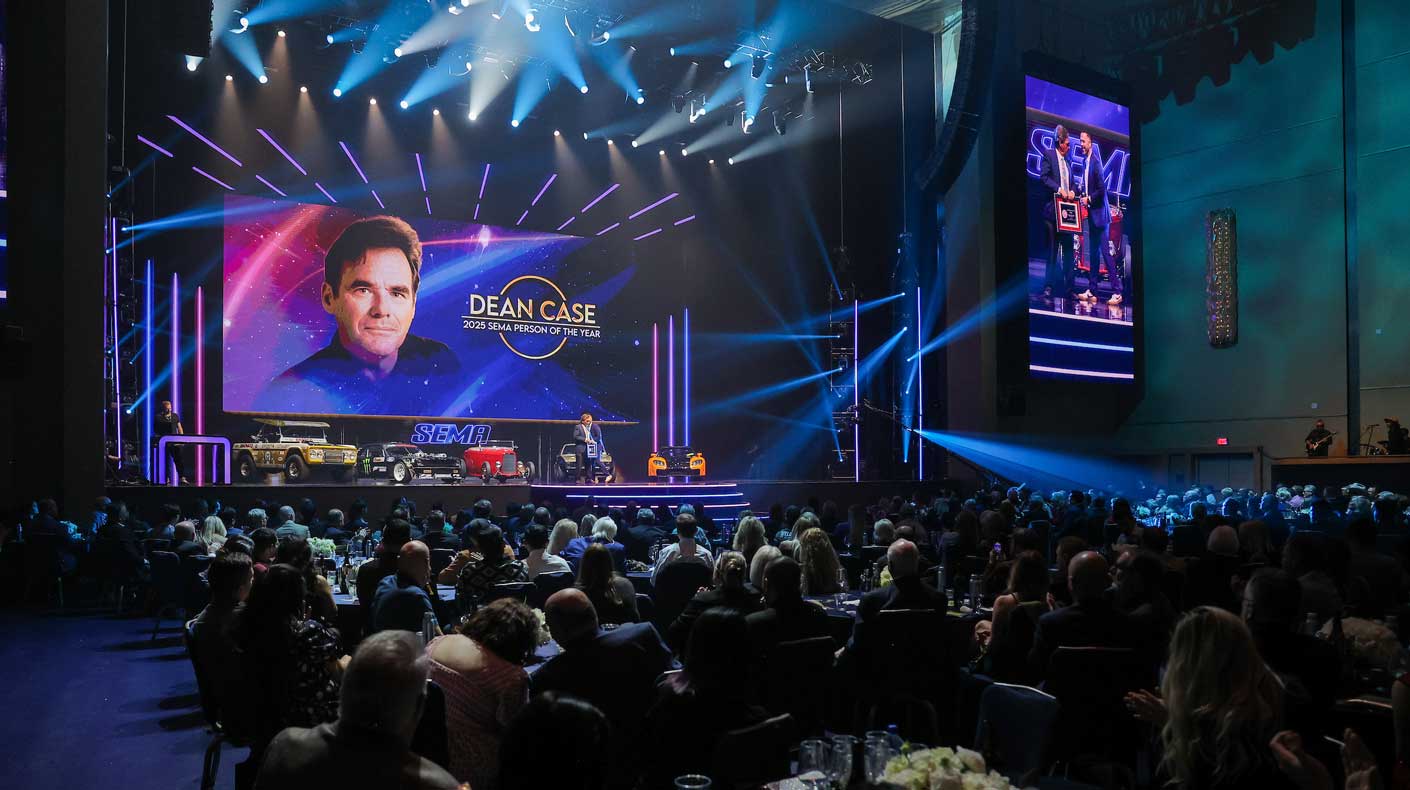
Dean Case accepting the 2025 SEMA Person of the Year award on stage at the 2025 SEMA Show


SM: You've spent a significant part of your career working with students and young enthusiasts looking for ways to get into the industry. What is it about these youth that drives you so much?

DC: I think back to when I was their age. My family had no industry connections, or so I thought, and I was amazed at how many people were willing to help me. I figured the best way to repay them was to help others. While working in motorsports, I noticed a parallel between aspiring race drivers and aspiring race engineers—great technical skills but lacking the bigger picture that you only acquire through experience.


SM: So what are key bits of advice you give to the students?

DC: I emphasize communications. A brilliant engineering idea means nothing if you can't explain it. I stress the importance of follow-through and making meaningful connections. I explain the value of finding, joining and becoming active with key organizations. I urge them to invest in their career by joining SAE International and not just their school Formula or Baja team. I now get to mention the newly created SEMA+ and PRI student memberships. I also give a shout out to my friends behind CADIA.org, aaaassoc.com and womeninmotorsportsna.com as there is no one perfect organization, and we all need great partners. My final slide of my presentation simply says "Work Hard. Be Nice. Find Partners. Volunteer." Those are the things that have made my career.


SM: You took a rather long path to the most recent SEMA Show. What can you tell us about the road trip and the schools you visited?

DC: I am a part of the SAE Industrial Lecture Program. If an SAE Student Chapter invites me to speak, the travel costs are covered by the SAE Foundation. I've been doing a lot of these over the years but sometimes the requests back up. With the full support of my wife, who is an excellent driver, we covered 7,300 miles and 15 presentations on the way to the SEMA Show. Toyota, who is a big SAE supporter, loaned us a car and away we went.
 

The common thread was great students who have a passion for the industry and sport. The key differences were the shop facilities and faculty/admin support which varies wildly. There were two standout visits for me on this trip. The University of New Mexico has an 8,000-sq.-ft. shop designed by a former IndyCar crew chief. It's spectacular. The other is an extremely small, but extremely strong engineering program at Smith College in Northampton, Massachusetts. The students at Smith are completing the paperwork to become the first-ever all-women SAE student chapter. They already have an alumna working on the McLaren IndyCar team.
 

Dean Case pictured with musicians Billy Gibbons and James Austin.


In the late '90s, Dean, seen here with Billy Gibbons (right), worked with James Austin (left) on the Rhino Records four-CD box set of hot-rod songs.


SM: Let's talk about Formula SAE. It's kind of an obscure college program that many people in the industry may not be familiar with. Why do you love it?

DC: It's obscure for a reason. It's meant to showcase student talent in front of a very focused audience, companies seeking talent. It's not meant to be a spectator event. You can't talk about Formula SAE without Baja SAE, which predates it and just celebrated its 50th anniversary. These programs teach three critical skills: to be able to produce a product on time, on budget, as a team. We remind students that this is not a motorsports competition. It is an engineering and project-management showcase wrapped in motorsports. The competitions really took off in the '90s when the automakers discovered they were a better place to recruit than visiting dozens of schools.


SM: You also co-created the SEMA-SAE SoCal Student Career Fair Program. How is that going?

DC: Amazing. This never would have happened without the combined efforts of people like Luis Morales, Ian Lehn, Karen Salvaggio, the entire ETTN, and strong support from Mike Spagnola, Melanie White, Nicole Bradle and many others. I share the honor with my fellow SAE SoCal board members Chris Bachman, Mike Moyer, John Steiner, Ben Highfill, Emily Sharp and Vanessa Belk. It was the strength of both organizations that made this a success. Last year, we attracted 425 students from 30 schools with 13 companies coming to recruit. We hope to break those records this year. Thanks to TJ Keon we have some great videos from all four of our career fairs on the SAE SoCal YouTube channel.


SM: How does your work at Motivo interact with SAE or SEMA?

DC: It does in multiple ways. Back in 2006 I met Praveen Penmetsa when he was working for Rod Millen at Millenworks. We met at the Formula SAE competition. Six years later, after he co-founded Motivo, he reached out to me for some PR support. I've been part-time at Motivo ever since and they are very active with both SAE and SEMA. Many of the engineers at Motivo are Baja SAE and Formula SAE alums, and Motivo is a big supporter of the SEMA FutureTech program. We made a perfect Venn diagram intersection by featuring a Motivo focused SEMA FutureTech panel discussion at a recent SAE SoCal meeting. You can find it on the SAE SoCal YouTube channel. I tell people that Motivo is the poster child for SAE as they have worked on one-wheel, two-wheel, three-wheel, four-wheel and 18-wheel vehicles. Plus, some that fly, float or farm. All projects are approached with a motorsports mindset that deadlines are firm—the green flag will drop whether you are ready or not.


SM: What are the key advantages that both platforms present companies within the automotive aftermarket?

DC: If you go to work for an OEM, you are likely to be a design engineer, test engineer or manufacturing engineer. At most aftermarket companies the same engineer is involved in every facet from concept, design, testing, manufacturing to helping create the training or installation materials. Students who worked on a Baja SAE or Formula SAE team, especially on the smaller teams, likely did everything, so they are ideal candidates for companies that need one person to be able to manage multiple areas of the business.
 

A photo of Dean Case being announced as the 2025 SEMA Person of the Year at the 2025 SEMA Show.


SM: Do you have advice for aftermarket companies that want to get involved with an SAE student group?

DC: This is very much location dependent. Here in Southern California, we now have 21 schools with SAE programs. If you are in more remote parts of the country there may only be one or two schools nearby. A key to success is making sure the faculty advisor is in the loop. Any group of students is capable of capturing magic for one year, but a strong faculty advisor will ensure continuity over many years.


SM: What if a company doesn't hire engineers?

DC: Great question. The best SAE teams have a wide variety of majors. We've seen business majors, graphic designers, video production students and much more.


SM: You've spent a good portion of your career working with OEMs. What can aftermarket businesses learn from the big automakers and vice versa?

DC: When attending the SEMA Show wearing my OEM hat, we were always looking for trends. The aftermarket is often the catalyst for trends which the OEMs then adopt. I think the OEMs often struggle with the aftermarket from simple fear of warranty issues. Great aftermarket parts can improve a car. Bad aftermarket parts or good parts poorly installed can cause a wide assortment of problems for the OEM. When an OEM can work closely with a high-quality aftermarket company, those parts can become sought-after OEM-supplied additions. I recently had a tour of Fox Factory and learned about how they work with OEMs like Ford.


SM: Being also heavily involved with automotive media, how do you think that media landscape has changed in recent years? And what should today's journalists understand about the changing automotive sector?

DC: I guess I'll show my age on this one, but I miss old-school magazines where an editor had to decide what was worth including. The internet and video have changed everything—much of it good—but there is a lot of slop out there. Trying to sort out the value of a content creator can be more challenging than working with the toughest magazine editor. I always loved working with the editors at magazines like Grassroots Motorsports, Import Tuner and Sport Compact Car. I'm happy that Grassroots Motorsports continues to thrive.


SM: Doing a SWOT (Strength, Weakness, Opportunities, Threats) analysis with emerging vehicle technologies, what tech offers the greatest new/untapped opportunities for the aftermarket? Conversely, what emerging tech presents the greatest challenge or threat to the aftermarket?

DC: While the electric vehicle (EV) future draws strong opinions for and against, this will be a growing market that should not be ignored. For me the inherent quietness of an EV means that you can enjoy audio more than in an internal-combustion engine (ICE) vehicle. That could be an opportunity for better audio systems from the aftermarket. A real challenge will be in making certain that vehicle modifications do not interfere safety wise with advanced driver assistance systems (ADAS) systems.


SM: How different do you think vehicles and the automotive industry will be in 25–50 years? Do you have any future predictions?

DC: There will always be people that love cars. But we also need to understand that for many people, a car is no different than a washing machine or refrigerator. Autonomous cars are coming, but there are many technical and legal challenges ahead. I still prefer a manual transmission whenever possible.
 

A headshot photo of Dean Case.


SM: You were a key part of both the Mazda Miata and Nissan 350Z launches in North America. Which one did you enjoy more and why?

DC: That's like asking a parent which kid they like best. I was fresh out of school when I joined Mazda. Bob Hall, the real catalyst behind the Miata, became a friend and mentor, so that car is a favorite. My role years later at Nissan was quite different, but the 350Z launch was a blast. A highlight there was loaning a pre-production Z to Jay Leno and taking Mr. K [Yutaka Katayama], who was about 95 years old at the time, to a taping of the The Tonight Show and Jay's Garage.


SM: Having an interest in automotive history, if you could go back in time to witness any one event or period in that history, what would it be?

DC: For racing, the '60s were simply amazing. I love the radical changes that took place in F1, the Indy 500 and the mind-blowing cars of the original unlimited CanAm series. From a production car standpoint, going even further back to 1900 when it was gasoline versus electric versus steam would be fascinating.


SM: Your résumé includes an extensive list of impressive career achievements. Which one or ones are you most proud of?

DC: Helping launch careers gives me great enjoyment. It's great to run into someone at a race, SAE meeting or the SEMA Show and remember that I mentored them years or decades in the past. I've also done fun things like using motorsports to promote shelter animal adoptions with the SPCA for Monterey County, across the highway from Laguna Seca, and a distracted-driver awareness program with Project Yellow Light. Combining my love of cars and music I worked on a four-CD box set of hot-rod songs with Rhino Records.


SM: How does SEMA Person of the Year rank among them and what does it mean for you?

DC: My LinkedIn page blew up the day after the SEMA Show announcement! I'm humbled to be on the list of amazing people who have helped build our industry, sport and community. To be recognized by my peers like that was amazing.


SM: Outside of work, where would we find you and what would you be doing?

DC: I'm a person of deep but limited interests. We can talk about cars and racing, music or animals. That's about it. Most every vacation includes at least one car museum visit, a used CD store and a stop at a cat cafe.


SM: What's next for Dean Case?

DC: Having recently moved to Carlsbad [California] I have a lot of San Diego to explore. I still love working with the brilliant folks at Motivo and want that to continue. I also want to continue connecting great SEMA companies with great SAE students. 

Fri, 03/27/2026 - 10:23

By Jason Mulroney

2026 SEMA Person of the Year Dean Case.


2025 SEMA Person of the Year Dean Case Talks Mentorship, Collaboration and Engineering the Industry's Future.


If you don't know Dean Case personally, it's safe to bet that you know someone who does. A respected automotive engineer and communications strategist, Case is known for his deep involvement with the Society of Automotive Engineers (SAE) International and his ability to connect people across the industry. A two-time author of SAE technical papers and recipient of the SAE International Contributor of the Year Award (2020), Case has played a leading role in advancing industry collaboration, mentoring young professionals and supporting collegiate engineering programs nationwide.
 

He managed the inaugural Formula SAE West Collegiate Design Competition, recruiting more than 250 industry volunteers and coordinating vendors and logistics to deliver one of SAE's most impactful student events. As a featured speaker at more than 60 engineering universities, Case has helped bridge the gap between OEMs, suppliers and the next generation of automotive engineers.
 

In addition to his technical leadership, Case's career includes key roles in motorsports and OEM communications—serving as Mazda Motorsports' communications officer for more than eight years, leading Nissan's largest global media ride-and-drive event—as well as its North American launches of both the 350Z and Nismo product line and managing the Ford Mustang Trans-Am team's undefeated championship season.
 

For all this and more, Case was named the SEMA Emerging Trends & Technology Network (ETTN) 2025 Engineer of the Year and SEMA Person of the Year at the 2025 SEMA Show's Industry Honors event. We sat down with him to learn what fuels his passion and remarkable list of industry achievements.
 

SEMA Magazine: You're obviously very passionate about the aftermarket industry, where does that come from and how did you get started?

Dean Case: From a hands-on standpoint, my first car was a '67 MINI Cooper that I bought when I was in high school. I paid $1,300 for it, and it was rough. I immediately discovered that things like OEM replacement trim parts were crazy expensive, so my dad and brother taught me how to fabricate alternatives. Why buy overpriced vinyl-wrapped cardboard when you can use much nicer materials for the door liners and such? I guess it was an '81 restomod!
 

I autocrossed the car at Cal Poly San Luis Obispo where I joined the SAE student chapter that was competing in both the Baja SAE and Baja 1000 at the time. We raced a Toyota in SCORE class 7S, and
 

I crewed for both the Baja 1000 and Mint 400.


SM: When did you first attend the SEMA Show?

DC: 1987, and I was overwhelmed by the Show. I still am.
 

Dean Case accepting the 2025 SEMA Person of the Year award on stage at the 2025 SEMA Show


SM: You've spent a significant part of your career working with students and young enthusiasts looking for ways to get into the industry. What is it about these youth that drives you so much?

DC: I think back to when I was their age. My family had no industry connections, or so I thought, and I was amazed at how many people were willing to help me. I figured the best way to repay them was to help others. While working in motorsports, I noticed a parallel between aspiring race drivers and aspiring race engineers—great technical skills but lacking the bigger picture that you only acquire through experience.


SM: So what are key bits of advice you give to the students?

DC: I emphasize communications. A brilliant engineering idea means nothing if you can't explain it. I stress the importance of follow-through and making meaningful connections. I explain the value of finding, joining and becoming active with key organizations. I urge them to invest in their career by joining SAE International and not just their school Formula or Baja team. I now get to mention the newly created SEMA+ and PRI student memberships. I also give a shout out to my friends behind CADIA.org, aaaassoc.com and womeninmotorsportsna.com as there is no one perfect organization, and we all need great partners. My final slide of my presentation simply says "Work Hard. Be Nice. Find Partners. Volunteer." Those are the things that have made my career.


SM: You took a rather long path to the most recent SEMA Show. What can you tell us about the road trip and the schools you visited?

DC: I am a part of the SAE Industrial Lecture Program. If an SAE Student Chapter invites me to speak, the travel costs are covered by the SAE Foundation. I've been doing a lot of these over the years but sometimes the requests back up. With the full support of my wife, who is an excellent driver, we covered 7,300 miles and 15 presentations on the way to the SEMA Show. Toyota, who is a big SAE supporter, loaned us a car and away we went.
 

The common thread was great students who have a passion for the industry and sport. The key differences were the shop facilities and faculty/admin support which varies wildly. There were two standout visits for me on this trip. The University of New Mexico has an 8,000-sq.-ft. shop designed by a former IndyCar crew chief. It's spectacular. The other is an extremely small, but extremely strong engineering program at Smith College in Northampton, Massachusetts. The students at Smith are completing the paperwork to become the first-ever all-women SAE student chapter. They already have an alumna working on the McLaren IndyCar team.
 

Dean Case pictured with musicians Billy Gibbons and James Austin.


In the late '90s, Dean, seen here with Billy Gibbons (right), worked with James Austin (left) on the Rhino Records four-CD box set of hot-rod songs.


SM: Let's talk about Formula SAE. It's kind of an obscure college program that many people in the industry may not be familiar with. Why do you love it?

DC: It's obscure for a reason. It's meant to showcase student talent in front of a very focused audience, companies seeking talent. It's not meant to be a spectator event. You can't talk about Formula SAE without Baja SAE, which predates it and just celebrated its 50th anniversary. These programs teach three critical skills: to be able to produce a product on time, on budget, as a team. We remind students that this is not a motorsports competition. It is an engineering and project-management showcase wrapped in motorsports. The competitions really took off in the '90s when the automakers discovered they were a better place to recruit than visiting dozens of schools.


SM: You also co-created the SEMA-SAE SoCal Student Career Fair Program. How is that going?

DC: Amazing. This never would have happened without the combined efforts of people like Luis Morales, Ian Lehn, Karen Salvaggio, the entire ETTN, and strong support from Mike Spagnola, Melanie White, Nicole Bradle and many others. I share the honor with my fellow SAE SoCal board members Chris Bachman, Mike Moyer, John Steiner, Ben Highfill, Emily Sharp and Vanessa Belk. It was the strength of both organizations that made this a success. Last year, we attracted 425 students from 30 schools with 13 companies coming to recruit. We hope to break those records this year. Thanks to TJ Keon we have some great videos from all four of our career fairs on the SAE SoCal YouTube channel.


SM: How does your work at Motivo interact with SAE or SEMA?

DC: It does in multiple ways. Back in 2006 I met Praveen Penmetsa when he was working for Rod Millen at Millenworks. We met at the Formula SAE competition. Six years later, after he co-founded Motivo, he reached out to me for some PR support. I've been part-time at Motivo ever since and they are very active with both SAE and SEMA. Many of the engineers at Motivo are Baja SAE and Formula SAE alums, and Motivo is a big supporter of the SEMA FutureTech program. We made a perfect Venn diagram intersection by featuring a Motivo focused SEMA FutureTech panel discussion at a recent SAE SoCal meeting. You can find it on the SAE SoCal YouTube channel. I tell people that Motivo is the poster child for SAE as they have worked on one-wheel, two-wheel, three-wheel, four-wheel and 18-wheel vehicles. Plus, some that fly, float or farm. All projects are approached with a motorsports mindset that deadlines are firm—the green flag will drop whether you are ready or not.


SM: What are the key advantages that both platforms present companies within the automotive aftermarket?

DC: If you go to work for an OEM, you are likely to be a design engineer, test engineer or manufacturing engineer. At most aftermarket companies the same engineer is involved in every facet from concept, design, testing, manufacturing to helping create the training or installation materials. Students who worked on a Baja SAE or Formula SAE team, especially on the smaller teams, likely did everything, so they are ideal candidates for companies that need one person to be able to manage multiple areas of the business.
 

A photo of Dean Case being announced as the 2025 SEMA Person of the Year at the 2025 SEMA Show.


SM: Do you have advice for aftermarket companies that want to get involved with an SAE student group?

DC: This is very much location dependent. Here in Southern California, we now have 21 schools with SAE programs. If you are in more remote parts of the country there may only be one or two schools nearby. A key to success is making sure the faculty advisor is in the loop. Any group of students is capable of capturing magic for one year, but a strong faculty advisor will ensure continuity over many years.


SM: What if a company doesn't hire engineers?

DC: Great question. The best SAE teams have a wide variety of majors. We've seen business majors, graphic designers, video production students and much more.


SM: You've spent a good portion of your career working with OEMs. What can aftermarket businesses learn from the big automakers and vice versa?

DC: When attending the SEMA Show wearing my OEM hat, we were always looking for trends. The aftermarket is often the catalyst for trends which the OEMs then adopt. I think the OEMs often struggle with the aftermarket from simple fear of warranty issues. Great aftermarket parts can improve a car. Bad aftermarket parts or good parts poorly installed can cause a wide assortment of problems for the OEM. When an OEM can work closely with a high-quality aftermarket company, those parts can become sought-after OEM-supplied additions. I recently had a tour of Fox Factory and learned about how they work with OEMs like Ford.


SM: Being also heavily involved with automotive media, how do you think that media landscape has changed in recent years? And what should today's journalists understand about the changing automotive sector?

DC: I guess I'll show my age on this one, but I miss old-school magazines where an editor had to decide what was worth including. The internet and video have changed everything—much of it good—but there is a lot of slop out there. Trying to sort out the value of a content creator can be more challenging than working with the toughest magazine editor. I always loved working with the editors at magazines like Grassroots Motorsports, Import Tuner and Sport Compact Car. I'm happy that Grassroots Motorsports continues to thrive.


SM: Doing a SWOT (Strength, Weakness, Opportunities, Threats) analysis with emerging vehicle technologies, what tech offers the greatest new/untapped opportunities for the aftermarket? Conversely, what emerging tech presents the greatest challenge or threat to the aftermarket?

DC: While the electric vehicle (EV) future draws strong opinions for and against, this will be a growing market that should not be ignored. For me the inherent quietness of an EV means that you can enjoy audio more than in an internal-combustion engine (ICE) vehicle. That could be an opportunity for better audio systems from the aftermarket. A real challenge will be in making certain that vehicle modifications do not interfere safety wise with advanced driver assistance systems (ADAS) systems.


SM: How different do you think vehicles and the automotive industry will be in 25–50 years? Do you have any future predictions?

DC: There will always be people that love cars. But we also need to understand that for many people, a car is no different than a washing machine or refrigerator. Autonomous cars are coming, but there are many technical and legal challenges ahead. I still prefer a manual transmission whenever possible.
 

A headshot photo of Dean Case.


SM: You were a key part of both the Mazda Miata and Nissan 350Z launches in North America. Which one did you enjoy more and why?

DC: That's like asking a parent which kid they like best. I was fresh out of school when I joined Mazda. Bob Hall, the real catalyst behind the Miata, became a friend and mentor, so that car is a favorite. My role years later at Nissan was quite different, but the 350Z launch was a blast. A highlight there was loaning a pre-production Z to Jay Leno and taking Mr. K [Yutaka Katayama], who was about 95 years old at the time, to a taping of the The Tonight Show and Jay's Garage.


SM: Having an interest in automotive history, if you could go back in time to witness any one event or period in that history, what would it be?

DC: For racing, the '60s were simply amazing. I love the radical changes that took place in F1, the Indy 500 and the mind-blowing cars of the original unlimited CanAm series. From a production car standpoint, going even further back to 1900 when it was gasoline versus electric versus steam would be fascinating.


SM: Your résumé includes an extensive list of impressive career achievements. Which one or ones are you most proud of?

DC: Helping launch careers gives me great enjoyment. It's great to run into someone at a race, SAE meeting or the SEMA Show and remember that I mentored them years or decades in the past. I've also done fun things like using motorsports to promote shelter animal adoptions with the SPCA for Monterey County, across the highway from Laguna Seca, and a distracted-driver awareness program with Project Yellow Light. Combining my love of cars and music I worked on a four-CD box set of hot-rod songs with Rhino Records.


SM: How does SEMA Person of the Year rank among them and what does it mean for you?

DC: My LinkedIn page blew up the day after the SEMA Show announcement! I'm humbled to be on the list of amazing people who have helped build our industry, sport and community. To be recognized by my peers like that was amazing.


SM: Outside of work, where would we find you and what would you be doing?

DC: I'm a person of deep but limited interests. We can talk about cars and racing, music or animals. That's about it. Most every vacation includes at least one car museum visit, a used CD store and a stop at a cat cafe.


SM: What's next for Dean Case?

DC: Having recently moved to Carlsbad [California] I have a lot of San Diego to explore. I still love working with the brilliant folks at Motivo and want that to continue. I also want to continue connecting great SEMA companies with great SAE students. 

Thu, 03/26/2026 - 19:23

By SEMA News Editors


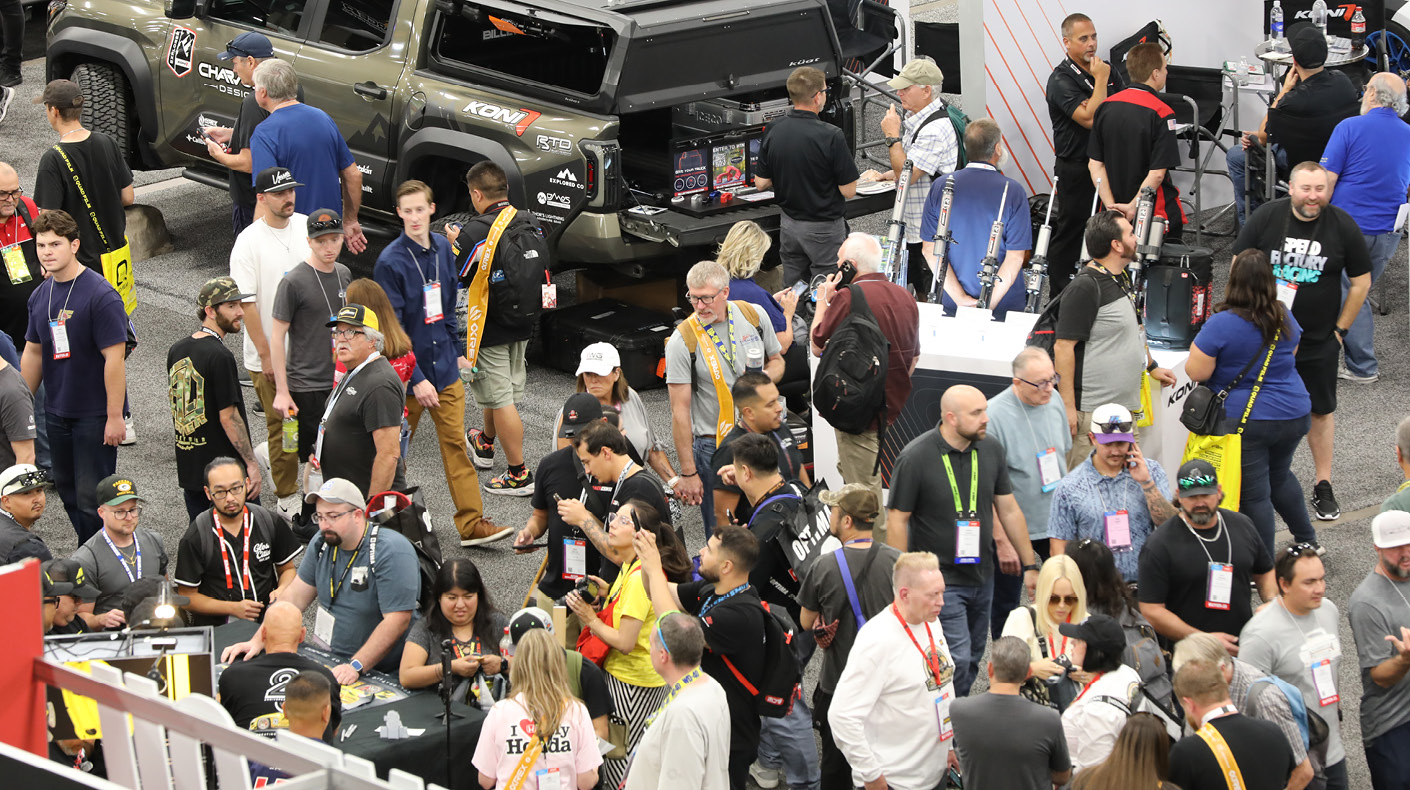
An image of a packed SEMA Show booth with three car displays.


The exhibitor space rental agreement (ESRA) for the 2026 SEMA Show, November 3-6 in Las Vegas, is open.

Red button with the words RESERVE A BOOTH.

Exhibitors may still apply, but priority booth selection has concluded.


Securing booth space early is the first step toward maximizing ROI at the SEMA Show--an unrivaled opportunity for aftermarket companies to drive sales, meet new customers and elevate brand visibility.


"When we first started coming [to the SEMA Show], we were a small company. It's helped get us in front of buyers that we would not have had that face-to-face opportunity and connection with otherwise," said Tiffanie Hartenstein, Oracle Lighting.


Exhibiting at the SEMA Show delivers measurable value for businesses:


Increase Brand Awareness

Whether established or emerging, exhibiting at SEMA is a high-impact investment that accelerates brand growth.


Connect With Customers

Meet face-to-face with existing customers and build stronger relationships with new buyers on the Show floor.


Expand Sales Channels

Open doors to new markets through connections with retailers, distributors and partners across the globe.

"From the international standpoint, we are able to get to people that we can't get to by ourselves. Everyone is coming here. That's a really unique value proposition for what SEMA is," said Dane Garvik, Fox Factory.


Launch New Products

Exhibitors display their latest innovations in front of a massive, engaged audience ready to discover what's next.


Secure booth space and drive real results at the 2026 SEMA Show.


The booth plotting process is a little different this year. Questions? Read this article or contact SEMA at 240-ASK-SEMA (240-275-7362) or via email at customercare@sema.org.  


The 2026 SEMA Show is set for November 3-6, in Las Vegas. Interested exhibitors can buy a booth and learn more at semashow.com/exhibitor. Attendee and buyer registration opens in Spring 2026; to sign up for notifications, visit here. For more information, visit semashow.com

Thu, 03/26/2026 - 17:28


Holley Performance Brands Acquires HRX, an Italian Racewear Brand
 

Holley Performance Brands, the automotive aftermarket performance solution brand, has announced it has acquired HRX, an Italian motorsports racewear brand serving drivers and teams across karting and competitive racing categories. The terms of the transaction were not disclosed.


HRX has established a presence across European racing circuits and select international markets, focusing on technical racewear, customization and customer relationships within the motorsports community.


The acquisition adds complementary racewear capabilities to Holley's safety & racing portfolio and expands the company's presence in European motorsports. HRX's product offering aligns with Holley's existing safety brands, including Simpson, Stilo, HANS and RaceQuip.


"HRX is a strong strategic addition to our safety and racing portfolio," said Matthew Stevenson, president and CEO of Holley Performance Brands. "The brand expands our presence in European motorsports, enhances our product capabilities in racewear and supports our vision of being the undisputed leader in automotive performance solutions."


"Joining Holley Performance Brands allows us to scale our capabilities and bring HRX's tailored solutions to a broader global customer base," said Ago Alberghino, Managing Director of HRX. "We look forward to leveraging Holley's resources and distribution network to accelerate our growth."


For more information, read the release or visit Holley.com.


Dynamat Welcomes New Sales Director

A headshot of Pat Johnson in front of Dynamat products.


Dynamat, the car sound and heat insulation brand, has announced the appointment of Pat Johnson as its national sales director.


Johnson brings extensive experience in sales leadership, channel development and strategic growth, as well as retail consumer experience within the automotive and aftermarket industries, according to a company release.


In this new role, Johnson will work closely with Dynamat's dealers, distributors, independent sales representatives and internal team to strengthen its sales efforts, support growth and continue building the Dynamat brand across markets.


"Joining Dynamat is an exciting opportunity to grow an iconic brand with new ideas and technology. I'm grateful for the opportunity to join the leadership team and share the Dynamat product experience with B2B and consumer customers," said Johnson in a release.


Visit the Dynamat website for more.

Thu, 03/26/2026 - 15:00

Story and photos by Andreas Conradt, Automedia


A front-facing Volkswagen Tiguan R drives on the road.


It may look like another Tiguan R-Line, but these spy shots suggest something more. Volkswagen is already developing the sportiest version of the lineup -- a Tiguan R expected in 2027 -- that will retain a powerful 2.0L TSI engine under the hood.


Up front, subtle changes set it apart from the current R-Line model. Open air intakes appear at the edges of the bumper, and the model on the right reveals a clearly visible intercooler. A gloss-black crossbar above the slim lower grille replaces the typical satin chrome finish, signaling a more aggressive design direction.


Additional details confirm this is no ordinary Tiguan. Up front, perforated brake discs sit behind conventional 19-in. alloy wheels wrapped in 235/50R tires. Out back, a quad-exhaust setup -- split into two pairs -- adds to the SUV's performance-focused look.


A close-up of the front of the VW Tiguan R.


The interior has not yet been revealed but is expected to closely follow the R-Line trim. Anticipated upgrades include leather and Alcantara upholstery, R logos embossed on the seats, enhanced bolstering for improved support, gloss-black trim, a multifunction steering wheel with aluminum accents and a digital instrument cluster with a sportier display mode.


Testing near the Nürburgring points to ongoing chassis development. The Tiguan R is expected to feature DCC Pro adaptive suspension and 4MOTION all-wheel drive. However, it will not adopt a plug-in hybrid system, as Volkswagen considers it too heavy. Instead, the SUV will retain a 2.0L TSI engine producing more than 300 hp, paired with 48V mild-hybrid technology and a seven-speed DSG automatic transmission.


An image of a VW Tiguan R towards the back of the vehicle at the gas pump.


Thu, 03/26/2026 - 10:21

By Ashley Reyes

Graphic with photo of Melissa Wahe.


The SEMA Businesswomen's Network (SBN) has named Melissa Wahe, CEO and founder of CarmaCare California, as the network's newest #SheIsSEMA spotlight member. 
 

Wahe was nominated by her peer, Jennifer Daggolu. Get to know Wahe through Daggolu's interview with SEMA News below. 
 

SEMA News: How has Melissa contributed to her company?  

Jennifer Daggolu: She founded CarmaCare California on a mission to impact communities, specifically towards safety and empowerment for female drivers. She is the initiator and generator for every move made by Carmacare California.
 

SN: How has Melissa shown leadership in the industry or business? 

JD: Melissa leads with accessibility, compassion and action--qualities that make her not only a founder, but a true community leader.
 

Melissa shows leadership by meeting people where they are. When a group of young women purchased a workshop but couldn't attend, she didn't just refund them--she offered to bring the class to them, teaching privately in their own driveways.
 

That choice reflects her leadership philosophy: true leaders remove barriers, make education accessible and ensure no one is left behind. Melissa leads not only with vision, but with action, proving that leadership in business is about lifting others up, one driver at a time.


This is why Melissa stands out: her leadership isn't about position or title, it's about creating real change in people's lives.


SN: Tell us a success story that you can share about Melissa.    

JD: Melissa's success is best measured by the confidence she instills in others.


One powerful example came on Christmas Eve, when a participant's car suddenly showed dangerously low tire pressure. Instead of panicking, she used the tools and confidence gained from Melissa's workshop to safely check and fill all four tires--getting her family home without incident.
 

Her words say it best: "I wouldn't have been able to do that had I not taken your class. Your class was a game changer."


That story captures Melissa's success: transforming everyday drivers into capable, confident people who turn potential emergencies into moments of strength. This is why Melissa is deserving of recognition: her success is measured not only in workshops taught, but in lives made safer.
 

SN: How many years has Melissa been in the industry? 

JD: More than five years.
 

SN: What quality do you admire most about Melissa and why? 

JD: The quality I admire most about Melissa is her visionary energy. In human design, people like Melissa are known as manifesting generators--remarkable individuals who combine big-picture vision with the ability to act quickly and effectively. They don't just imagine change; they create it, often turning challenges into opportunities at a pace that inspires everyone around them.


Melissa embodies this quality through the creation of CarmaCare California. She saw that drivers--especially women and mothers--lacked access to practical, hands-on car safety education. Instead of waiting for change, she built a program to fill that gap and rapidly expanded it, partnering with community leaders and law enforcement to increase reach and impact.


Her visionary drive also shows up in small, personal ways. When a group of young women couldn't attend a workshop, Melissa didn't let them miss out--she offered to bring the class directly to their homes and driveways. That flexibility and dedication reflect her natural ability to generate solutions and manifest possibilities that others wouldn't even consider.
 

Melissa's ability to envision, create and deliver solutions at scale is what sets her apart as a leader. She exemplifies the rare combination of vision and execution--qualities that define the most impactful innovators in any industry.
 

SN: Why do you think Melissa is a role model in the industry? 

JD: Melissa is a role model because she has redefined what leadership in automotive education looks like. In a male-dominated industry, she created CarmaCare California to make car safety accessible, practical and empowering, especially for women and families. By leading with vision and compassion, she shows that real role models don't just excel themselves, but also inspire confidence, safety and strength in everyone around them.


Fill out a #SheIsSEMA spotlight form to submit a self-nomination or nominate a colleague and highlight how you or she is contributing to the specialty-equipment industry. Selected candidates are automatically eligible to be considered for SBN's #SheIsSEMA Woman of the Year award, featured on SBN's social media, SEMA News and recognized on the sema.org/she-is-sema website. 

Thu, 03/26/2026 - 08:48

By Ashley Reyes

ARMO Auto Metal Direct The ARMO Product Spotlight image of the Auto Metal Direct Premium Grille for Chevy C/K Trucks, SUVs


The SEMA Automotive Restoration Market Organization (ARMO) has introduced a new Product Spotlight program highlighting innovative products from its member companies that support the restoration market.
 

The latest spotlight features an offering from Auto Metal Direct (AMD): The Ultimate OE-Correct Old Body Style (OBS) Grille Shell engineered for Chevrolet C/K trucks and SUVs.
 

Learn more about the product in the following SEMA News interview with Auto Metal Direct marketing director Jason Chandler.
 

SEMA News: What is the story behind the product?  

Jason Chandler: The OBS Chevrolet and GMC trucks--including the legendary Silverado and Sierra, as well as the C1500, C2500, C3500, K1500, K2500 and K3500--have become some of the most desirable classic trucks on the road today.
 

Built on GM's GMT-400 platform, these trucks and SUVs combine classic styling with modern drivability, making them ideal for restorations, restomods and daily drivers alike.
 

One of the most defining visual elements of any '94–'98 OBS Chevy truck is the front grille shell. Unfortunately, it's also one of the most commonly incorrect parts in the aftermarket.
 

That's where Auto Metal Direct (AMD) steps in.
 

AMD is proud to introduce the most accurate OE-correct grille shell ever produced for late-model OBS Chevrolet C/K pickup trucks, Suburban and Tahoe models--engineered to restore the exact factory look GM intended.


SN: What inspired the product's creation?

JC: Many reproduction grilles on the market attempt to fit Silverado, C1500, K1500 and Tahoe applications but fall short in key areas. Common issues include incorrect grain texture, wrong chrome/gray color separation, poor mounting alignment and add-on bowtie surrounds instead of molded designs.


SN: What makes this product stand out compared to others in the market?

JC: AMD's Premium Grille Shell--Chrome/Gray--Dual Headlight is a GM Licensed reproduction designed to replace GM OE PN 15981106. It is the only aftermarket grille shell built exactly like the factory original, including the fully integrated bowtie surround molded directly into the shell.
 

This grille is not a multi-piece workaround. It mirrors how GM originally produced the grille for Silverado-equipped C/K trucks and SUVs, delivering superior fit, finish and authenticity.


SN: Is there anything else you want to share about your product?

JC: Whether you're restoring a factory-correct '96 Silverado C1500, refreshing a daily-driven K1500 or updating the front end on a Tahoe or Suburban, the grille defines the entire look of the truck.
 

AMD's grille shell delivers the correct OBS chrome/gray color break; factory-style grain and texture; OEM-accurate mounting points, proper spacing for headlights, markers and emblems; and durable ABS construction for long-term use. This grille doesn't just bolt on--it looks right, even next to original GM parts.


Fill out an ARMO-member spotlight form to highlight how your company, employees, or products benefit the specialty-equipment industry. Selected candidates will be featured on ARMO's social media, SEMA News and future ARMO-member updates.