Even though the deadline to participate in the 2021 SEMA Show Space Selection process has passed, it’s never too late to register to exhibit.
Exhibiting at the 2021 SEMA Show puts your latest products in front of thousands of qualified buyers from every segment of the specialty-equipment industry, including buyers looking for your products. The 2021 SEMA Show already has more than 1,500 companies confirmed to exhibit and many more expected before the event takes place in November.
Registration for the 2021 SEMA Show is offered in three categories—attendee, exhibitor, and media—and everyone must qualify to receive a badge and attend.
Registration for the 2021 SEMA Show, scheduled for November 2-5, at the Las Vegas Convention Center in Las Vegas, is available here.
The premier gathering for the automotive specialty-equipment industry, the 2021 SEMA Show already has more than 1,500 companies confirmed to exhibit and many more expected before the event takes place in November. Exhibitors include major automakers and small businesses, as well as iconic aftermarket manufacturers who are enhancing their booths to heighten their presence at what will be the first industry-wide in-person gathering for the $46.2 billion automotive specialty-equipment industry in nearly two years.
“Given the restrictions our industry has endured the last year, pent-up demand for the SEMA Show is at an all-time high,” said Tom Gattuso, SEMA vice president of events. “More so than other years, the 2021 SEMA Show will be fundamental in helping industry professionals grow existing relationships, create new ones, and push their businesses forward.”
Attendees at the 2021 SEMA Show will witness firsthand nearly two year's worth of innovation, technology and new products from manufacturers, as they showcase products, debut vehicles, conduct demonstrations and prepare to do business throughout all four halls of the 3.2-million-sq.-ft. Las Vegas Convention Center.
“We are ready to get back to SEMA and connect with our customers this fall,” said Michael Hamrick, Wilwood Disc Brakes events and promotions manager. “Everyone at Wilwood Disc Brakes is putting their best foot forward to have a great event and catch up with our customers. We have quite a few new products to unveil, and SEMA is the place to do it.”
With the entire Convention Center in use, the SEMA Show floor will be designed to improve traffic flow and make navigating the event simple and easy. The 2021 SEMA Show floorplan will begin to take shape during the annual Priority Space Selection process, June 7–23. Companies that submit booth space applications before May 7 will participate in the weeks-long process to determine their booth location in the Las Vegas Convention Center. Attendees will also be able to sign up for educational seminars featuring industry experts and networking events that bring market niches together.
“We’re excited to already be working with the more than 1,500 companies that have committed to exhibit at this year’s SEMA Show, and we expect hundreds more to reserve booth space before May 7,” said Gattuso. “We encourage attendees to register early so they can secure their credentials and receive updates on breaking news from what will be an amazing event.”
Registration for the 2021 SEMA Show is offered in three categories—attendee, exhibitor and media—and everyone must qualify to receive a badge and attend.
For more information about qualifying documents and the 2021 SEMA Show, log on to www.semashow.com.
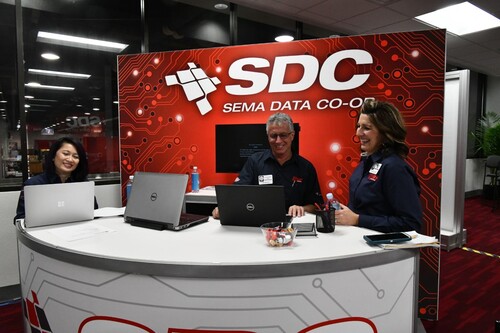
The SEMA Data Excellence designation recognizes the companies that have worked with SEMA Data to recreate and relaunch industry-leading product data sets. Here are products from current SEMA Data members that have achieved data excellence.
AutoMeter
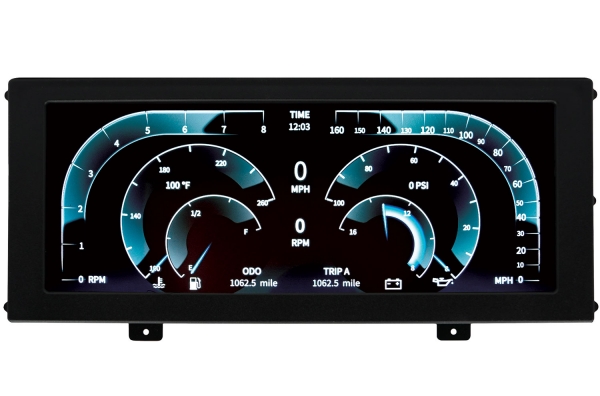
InVision Direct Fit Digital Dash System
The new InVision Direct Fit Digital Dash System is a universal solution for your entire dash. Monitor the speedometer, tachometer, fuel level, oil pressure, water temperature and volts all in one place.
The InVision Digital Dash features a 12.3-in. LCD with three user selectable screens. All kits include a wiring harness and sending units for water temperature and oil pressure. This dash features an adjustable RPM range and displays in imperial or metric units. An integrated joystick allows for easy programming.
The InVision Digital Dash will help protect your car with visual or audible alarms for low fuel level, low oil pressure, high water temperature and low voltage. Upgrade your dash with the latest, modern LCD offering from AutoMeter.
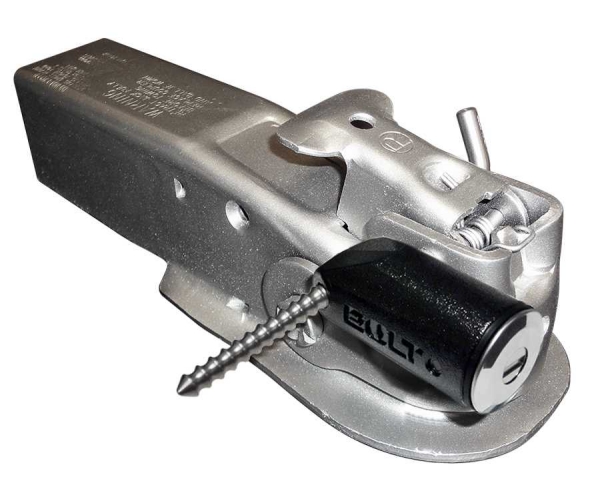
Unlock it all with BOLT “Breakthrough One-Key Lock Technology”, a series of locks that open with your vehicle ignition key. This eliminates the need to carry around all of those extra keys. The BOLT Coupler Pin Lock is great for locking up your trailer. It fits couplers from 1/2-in. to 3 3/8-in. and any size in between.
BOLT Locks are made specific, and are compatible with Ford, GM, Chrysler, Jeep, Dodge, Ram, Toyota and Nissan. Simply insert your key, turn it once and the lock memorizes your key code.
The line of locks is waterproof to withstand harsh weather, made of automotive-grade materials and come with a limited lifetime warranty.
Tuffy Security Products
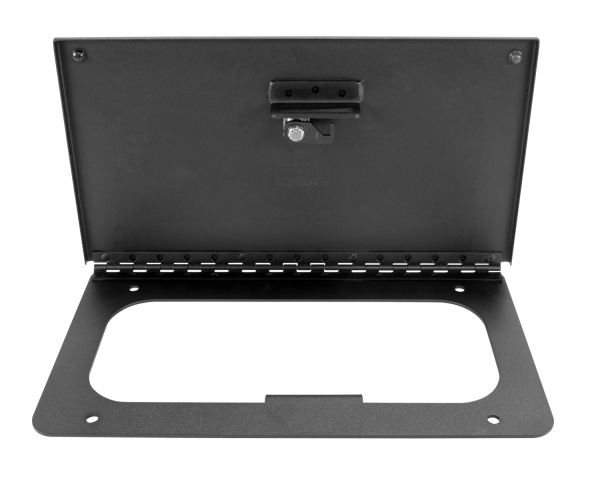
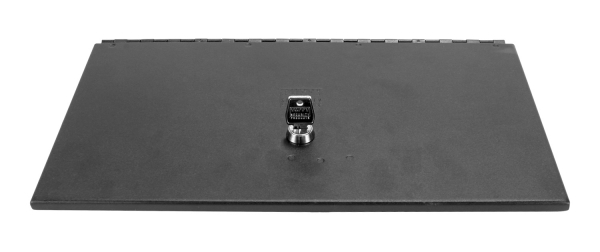
RAM Truck In-Floor Locking Lid
Tuffy Security Products offers an In-Floor Locking Lid (PN: 311) for ’09–’18 model RAM trucks that replaces the plastic in-floor lid. Four screws mount the powder coated low-profile plate to the floor for a quick and easy no-drill installation. It can be installed with or without the OEM plastic liner.
A 16-gauge steel-flanged lid with a continuous welded steel hinge is affixed to a heavy-duty steel mount plate that has an integral lock bracket. Tuffy’s exclusive Pry-Guard locking system has 1/8-in. steel components with a 10-tumbler double bitted security lock to keep contents secure.
Exhibitors of the 2021 SEMA Show will select booth space for November's event through the Space Allocation process, beginning Monday, June 7.
With the opening of the Las Vegas Convention Center's new West Hall, and the high-speed underground transportation system ready to connect the entire campus—combined with a nearly two-year gap since the industry last connected at the 2019 SEMA Show—anticipation for the Show is greater than ever.
SEMA Show management and OnPeak have partnered to secure discounted rates at a selection of Las Vegas hotels. As the only official hotel provider for SEMA Show, OnPeak offers convenient hotel options with flexible change and cancellation policies.
There are currently more than 40 hotels available in the SEMA Show Official Hotel Block. Here is a quick look at three of the hotels.
ARIA Resort & Casino
Location: 3730 Las Vegas Blvd., Las Vegas, NV 89158
Distance to Show: 2.57 miles
Price per night: $203
Resort fee: $35 per day, plus tax.
Fee includes:
Property-wide internet access (public spaces and in-room)
Cardio room access for guests 18+ (does not include the spa)
Amenities include: The Salon at ARIA, one of the largest Forbes Five-Star Spa and Salon in the United States; boutiques featuring clothes, jewelry, fine art and more; and entertainment at ARIA, featuring world-class entertainment, such as the four Cirque du Soleil shows that run year-round.
MGM Grand
Location: 3799 S. Las Vegas Blvd., Las Vegas, NV 89109
Distance to Show: 2.93 miles
Price per night: $72
Resort fee: $35 per day, plus tax.
Fee Includes:
Property-wide internet access (public spaces and in-room)
Cardio room access for guests 18+ (does not include the spa)
Amenities include: Live entertainment with acts featuring comedy, magic, music and more; Level Up sports lounges; and restaurants showcasing the foods and delicacies of celebrity chefs.
The Venetian Resort
Location: 3355 S. Las Vegas Blvd., Las Vegas, NV 89109
Distance to Show: 1.48 miles
Price per night: $314
Resort fee: $27 per night, plus tax.
Fee includes:
In-room wireless Internet
Local and toll free calls
Daily newspaper
Access for two to the fitness facility
One (1) regular coffee or tea at Café Presse per stay
It All Starts With Product Education and Providing Accurate Data
By Chad Simon
In any economy, trying to double your customer base can be a
daunting task. To achieve the goal of expanding your company’s
annual sales, focus on different ways to attract new customers and
increase your closing ratio.
Most people work as hard as they possibly can to try to increase their sales, and that can lead to burnout and extremely disappointing results, according to Rich Barsamian, vice president of sales and marketing for Advanced Clutch Technology. In any economy, trying to double your customer base can be a daunting task. To achieve that goal, focus on different ways to attract new customers.
In a recent SEMA360 webinar entitled “Four Tips to Double Your Company’s Annual Sales,” Barsamian outlined four strategies. They include growing your customer base, increasing your average order value, boosting the number of purchases by the customer, and looking at data-driven decisions.
“Prospecting is important,” Barsamian said. “The late John Wooden once said, ‘Never mistake activity for achievement.’ This speaks to the fact that oftentimes people act busy but they’re not getting anything done. In order to increase your closing ratio, prospect with integrity and qualified background checks.”
In a SEMA360 webinar, Rich
Barsamian of Advanced Clutch
Technology outlined four
strategies to increase annual sales.
They include growing your
customer base, increasing your
average order value, boosting the
number of purchases by customer,
and looking at data-driven
decisions.
Grow Your Customer Base
Sell it right; sell it once. It all starts with product education, according to Barsamian. Educate your employees about the product they’re selling and what it can do so that they can turn around and have the confidence and knowledge to sell it to the customer.
Stay in constant contact. With potential and existing customers, the best value you can offer is yourself. Continually work with them. Find out their challenges and what they need. Make sure they know who you are, but don’t overkill it. You’ll know the rhythm by your relationship with your partners.
Develop a social selling strategy. Two-thirds of companies don’t have a social selling strategy, according to Barsamian. “If you’re a manufacturer, repost anybody’s social-media post that featured your product. When you go shopping, look at what other people are using and what they’re saying about it. You’ll be shocked at the results of how people view your brand. It will help you increase customer base, both directly and indirectly.”
Increase Your Average Order Value
In theory, increasing your average order value can be achieved by raising your prices, but is that really going to help? The life stream of your company and its growth are dependent on product. Therefore, the number-one way to increase average order value is to continually introduce new and dynamic products, according to Barsamian.
Ensure that your customers are listing all your SKUs, whether they stock them or not. That will drive more sales and increase average order value. Also look at resellers’ websites.
“If they’re dedicated to Ford F-150, they should list every F-150 part you sell,” Barsamian said. “Many consumers are loyal to certain websites. If they don’t know you offer a certain application, more than likely they won’t buy it—or worse, they’ll buy a competitive product. Create an internal team and ensure that your online resellers have your latest logo, images and data. Show more than one product image at different angles.”
Boost Purchase Frequency
Barsamian suggested implementing a quarterly rebate program to help determine your customers’ average buying frequency. That way, you will be in the face of your customers every month talking about their targets, where they are, their struggles and successes.
“Let’s say they make quarter one but miss quarter two,” Barsamian said. “They can still make quarter three. You’re not going to penalize them for that. Use promotions such as giveaways when they purchase a product. Run a sale. New products will increase the frequency of purchases.”
Look at Data-Driven Decisions
There’s nothing more frustrating than having inaccurate data on your own site when you’re trying to educate customers. To avoid that, load all of your data in your operating system and ensure that everything is updated at one time when you make a change.
According to Barsamian, you are shortening your opportunities if you map only to the applications for which you make product.
“You have a golden opportunity to see what people browse for and don’t find,” he said. “This is another way to grow your sales. Ensure that your application lookup is showing everything ACES can give you. When someone researches a product on your website, you need to track that. Look up the year, make and model they looked up and grab their IP address. You want to be able to sort out how many people are searching for that product.”
For instance, you can see the IP address for someone who looks up a ’21 Ford Mustang. Let’s say they don’t get any results and they seek it again the following week. You’re going to strip out that vote for that month. If that same IP address researches a ’21 Camaro SS, they get to keep their vote because they browsed for something different. When you do this, it will give you the broadest view of what people are searching for, according to Barsamian, who also suggested offering consumers what they want, not just the company favorites.
“When there’s a new application out, there are seven people behind that first request who want that part,” Barsamian said. “Then there are seven people behind that person and another seven behind that person. Over a period of time, it may drop down to five or six and then three. That’s fine; you’re still perpetuating and selling product. However, when the product gets older and more affordable, people start to work on them again. So that number might go back up. It’ll never be a seven again, but it will absolutely continue to grow
in sales.”
Vehicles-in-Operation Reports. These reports are free to SEMA members. If you’re trying to decide between making product for the new Hyundai 2.0 Turbo or new Hyundai Genesis, the reports will give you the registered number of vehicles by state.
“It’s a trickle-down theory,” Barsamian said. “Now your customers know what to stock and where to stock it. Imagine [thinking that] all the Toyota Tundras are in Texas, and you find out that they’re actually in California. You’ll be able to find those results by looking at vehicles in operation. Now your customers will know where to stock product, how to advertise and market it, and what training they need to give their customers to sell it right the first time.”
Data sells product, and SEMA Data is an excellent source for
obtaining product data. Before SEMA Data came about, more than
50% of SEMA members didn’t have product data, according to
Barsamian.
SEMA Data. Data sells product, and the SEMA Data is an excellent source for obtaining product data. Before SEMA Data came about, more than 50% of SEMA members didn’t have product data, according to Barsamian. “If you make race products and don’t have year, make and model applications, how would you describe that product over the phone to somebody? You would give them the attributes—how long is it, how wide, what finishes it comes in.
“If you’re not partnering with a great data company to make sure your data is clean and pure, get on that immediately, because you’re hurting yourself and your customers from being able to sell your product,”
Barsamian suggested.
Just Do the Math
The Formula:
Customers x Average Sale x Transactions
You have 300 customers and your average order value is $3,500. Of those 300 customers, the average sale is once a year they buy from you.
300 x $3,500 x 1 = 1,050,000.
Increase your customer base by 26%.
300 x 26% = 378.
Your average order value is $3,500, and we need to increase that by 26%.
Photography Courtesy: Eric Rickman, Petersen Publishing Company Archive
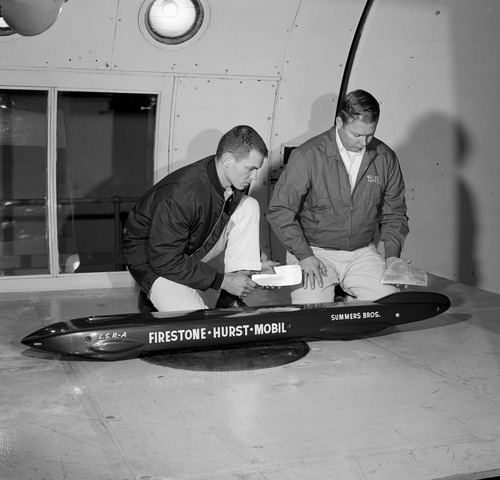
In November 1964, Bob (left) and Bill Summers brought a scale model of their new land-speed-racing streamliner to the Caltech wind tunnel in Pasadena to experiment with the aerodynamics of different tailfin shapes. While sponsors were lettered on the model’s sides, once it was rendered in 1:1 scale, the ‘liner would wear the name Goldenrod.
As modern as it looked, the Goldenrod was something of a throwback. The early ’60s saw the dawn of the jet age in land-speed racing, with pioneers such as Dr. Nathan Ostich, Art Arfons, his brother Walt, and Craig Breedlove hitching jet aircraft engines to a variety of chassis to chase ever-increasing speeds.
Bucking the turbine trend, the Goldenrod had four Chrysler Hemi engines under its sleek aluminum and fiberglass skin to drive its front and rear wheels. Four years before, Mickey Thompson had also used piston-driven power—four supercharged Pontiac engines—to push his Challenger to 406.60 mph, making him the first American to breach the magic 400-mph mark.
Thompson’s accomplishment didn’t set an official record, though, as he wasn’t able to back up that one-way pass. Before he could, the jet jockeys got there first, though not without controversy. Sanctioning rules governing the land-speed records took a while to solidify around the new jet cars, and purists had a hard time accepting what to them were rockets on wheels, their output measured in pounds of thrust rather than horsepower.
The Summers brothers, though, were “undaunted by all the furor and hassle,” wrote Eric Rickman in the March 1965 issue of Hot Rod. Their new car “should settle the entire dispute for a year or so as far as reciprocating engines driving through the wheels is concerned. Bill and Bob are taking the stand that ‘if Mickey went “over four” with a car two engines wide and two engines long, we should be able to go faster with a car only one engine wide and four long.’”
Mounting the four Hemis in a row cut down on the streamliner’s frontal area and helped it achieve a very slippery .117 coefficient of drag. Dyno tests on the injected Hemis showed them making 600 hp on gas “and at least 750 on alky and ‘pop,’” Rickman wrote. “Multiply these ratings by four and the results are some rather impressive power figures.”
Putting that power to the salt was an engineering puzzle that the brothers solved by linking the four engines with a common driveshaft that ran through transfer cases mounted between the two pairs of engines and ahead of fore and aft transmissions. George Hurst and Hurst Performance helped engineer the transmissions’ shift linkage and crafted the Goldenrod’s forged billet wheels, which mounted Firestone tires. Mobil Oil provided the Goldenrod’s fuel and lubricants.
As luck would have it, rainstorms and wet salt hampered the 1965 Bonneville meet, testing hardware and patience alike, but the brothers’ efforts were finally rewarded in mid-November of that year when they clocked a two-way average of 409.277 mph—a wheel-driven record that stood until Al Teague reset it in 1991 at 409.986.
The chase for the piston-driven speed record continues to this day. In 2018, Danny Thompson (Mickey Thompson’s son) resurrected his father’s ancient Challenger 2 streamliner and set the record at 448.757 mph. In 2020, George Poteet’s Speed Demon streamliner, using a Ken Duttweiler-built, 3,156hp, twin-turbocharged, big-block Chevy engine, upped the record to 470.015 mph. It was clocked one-way at over 481 mph. “That’s the fastest a piston-engine, wheel-driven ground vehicle has ever gone in one direction,” wrote Hot Rod’s Marlan Davis, covering the record run. Poteet’s new record, Davis said, was “closing the gap on turbine-powered cars.”
Earlier this year, the SEMA Board of Directors met for the purpose of reviewing and updating the organization’s strategic priorities. Consensus was achieved regarding a range of important challenges and opportunities facing the industry.
Leading off the future challenges is complex automotive technology. SEMA members are going to require access to a broad range of information, tools and testing capabilities to properly design and integrate modification equipment on the vehicles of today and tomorrow. The SEMA Board has authorized investment in personnel, equipment and testing capabilities so that our industry will have what it takes to develop and offer products that are compatible with new vehicle safety and powertrain systems. Better still, we are locating those resources in Michigan in the form of the recently announced SEMA Garage & Emissions Compliance Center—Detroit.
The Detroit Garage will provide members with comprehensive information about advanced driver-assistance systems and other new vehicle technologies and provide a means to test and confirm compatibility of modification parts with this technology. The SEMA Garage Detroit location will put expert personnel in the midst of car makers and their suppliers, testing facilities and a wealth of engineering expertise—all as opportunities for establishing relationships, tools, information sharing and partnerships that will help SEMA members bridge the gap.
A second area of strategic concern is the need for stepped-up government affairs capabilities. With the change of control in Washington, D.C., supporting a more aggressive focus on climate change and new automotive technologies, the association needs to step up its support for the American love affair with the automobile—in all its lifestyle and hobby forms—and ensure that it is not ploughed under in the rush toward innovation.
The Board’s strategic priorities include adding expert government affairs staff, providing new and easier ways to generate political action committee contributions, and undertaking broad grassroots organization and information campaigns to inform legislators and policy makers of the importance of the automotive hobbies and the industry behind them.
One matter of especially high priority in the government affairs arena is emissions regulation and enforcement. SEMA is increasing resources and efforts to assist the industry. The association staff is working intensively with both the federal U.S. Environmental Protection Agency (EPA) and the California Air Resources Board to modernize compliance regulations and reduce impediments to industry compliance. One recent breakthrough was the issuance of the EPA’s updated emissions compliance policy—a simplified approach for performance manufacturers to demonstrate compliance with the law. SEMA Garage staff is on hand to help members understand this change in the law and how to take advantage of it (www.semagarage.com/
services/emissionslab).
In response to stepped-up EPA enforcement, the SEMA Board recently authorized funds to join litigation efforts and fight the EPA’s position against converting street cars for racing and the sale and use of necessary performance equipment. On this same issue, funds have also been authorized to increase SEMA’s resources and tools to help pass the RPM Act.
This issue of SEMA News includes a feature section to help members understand the emissions-related laws and regulations and to learn about the people, tools and testing facilities SEMA offers to help our members. The SEMA Garage Emissions Lab is the heart of the operation, and soon we will have additional emissions testing facilities at the new Detroit SEMA Garage.
These initiatives are by no means all that the Board has included in its strategic planning, but they are an important slice of the overall vision to protect and further future opportunities for the industry and enthusiasts alike.
As always, SEMA will continue to evolve the annual SEMA Show and PRI Trade Show to be indispensable industry gatherings that are responsive to the members’ needs. We’ll have more on this as the months roll forward, but for now, we can be optimistic that once again these industry events will power business momentum toward a growth year in 2022.
As the only parts on a car that actually touch the road on which it travels, tires are essential components of every vehicle. Manufacturers produce tires that are made of many different compounds and designs to meet market needs, and the importance of the rubber component is evident by the more than $4 billion in sales it generates in the aftermarket industry, per the “2020 SEMA Market Report” (www.sema.org/market-research). Below are some of the publications that have kept track of the new tires that were introduced into the market at recent SEMA events.
Traction News
Editor Daniel Hatch reported on the three new tires that Coker Tire debuted during SEMA360: two completely new classic tires and a new size in its Silvertown radial series. The new tires are ideal for classic trucks, hot rods, vintage sports cars and luxury sedans that require precise original equipment fitment.
Tire Review
Atturo Tires has participated in the SEMA Show to showcase existing and new products, including its Trail Blade series. Tire Review editors helped spread the word about the company’s new Trail Blade MTS (Mud-
Terrain Sport) and Trail Blade ATS (All-Terrain Sport) tires by interviewing Atturo staff members at their SEMA Show booth.
Tire Business
Yokohama used the 2019 SEMA Show to introduce several new tires into the market. Its effort to bring more awareness to the tires by entering them into the New Products Showcase paid off when the company was presented with the award for Best New Product–Tire as well as both runner-up honors.
Heard on Social Media
“Coker has brought new life to the cherished 5/20 tire, and at the 2019 SEMA Show, they had quite a number of wheels wrapped in this iconic tire.”—Lowrider Magazine, via Facebook
“We’re talking to Sonny from Toyo Tires. Hear all about the current tyres, as well as a few that might be making it to Australia in 2020.”—Tyre Review, via YouTube
“Atturo Debuts Their New Trail Blade MTS Tires on a Mean-Looking Jeep Gladiator SEMA Build.”—Off-Road.com, via Twitter
“Cooper Tire introduces Discoverer EnduraMax tire at SEMA.”—Rubber World, via Twitter
New Research to Help You Stay Ahead of a Fast-Changing Vehicle Market
By Mike Imlay
The recently released “SEMA Vehicle Landscape Report”
surveys the rapidly changing character of America’s
passenger-vehicle fleet and offers vital information to help
target new opportunities for product-development and sales.
Just about any vehicle can be outfitted with all sorts of aftermarket products. However, with more than 281 million cars and trucks currently on the road in the United States, knowing where the greatest opportunities lay can be challenging. Specialty-equipment businesses will find help in the latest “SEMA Vehicle Landscape Report,” recently released by the SEMA Market Research team. The report examines what’s changing, what categories and vehicle types currently hold the most potential for the aftermarket, and the trends brewing on the horizon.
“There are hundreds of millions of vehicles on the road in the United States, and those cars and trucks are the canvas for our industry and its creativity,” explained SEMA Market Research Director Gavin Knapp. “The focus of this report is to help SEMA members understand what car, truck and other types of vehicle models are selling well, which ones are found most on the road, and which ones therefore offer the most opportunity for our industry.”
“The purpose of this report is also to give our members and the general industry a sense of what vehicles look like right now,” added SEMA Market Research Manager Kyle Cheng, who compiled the report. “We look at key trends, OEM sales, the current makeup of vehicles on the road and so forth. We also build off of original research that we’ve previously done—for example, our annual market report, vehicles-in-operation (VIO) data and future-trends research—to identify what vehicles are really hot for our industry right now, what’s new, and what’s coming down the line.”
The comprehensive report includes sections devoted to a VIO overview; new light-vehicle sales and powertrain projections; the hottest models for specialty-equipment upgrades, modifications and accessories; and the latest vehicle trends and emerging technologies. The report also breaks down trend information by vehicle category, from traditional and sports cars to trucks, SUVs, crossovers and vans. There’s even a section focusing on classics. So what are some key takeaways?
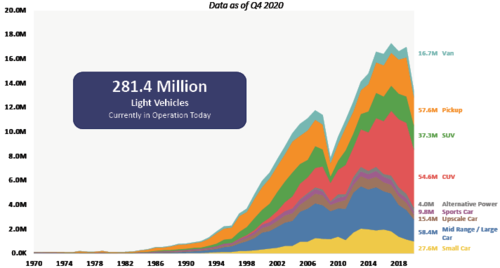
SEMA Market Research currently estimates that there are more
than 281 million vehicles in operation on America’s roadways.
The report charts them by vehicle types and model years to
help provide aftermarket businesses with a picture of where
parts and modification opportunities continue to be found.
OEM Sales are Recovering
“I’d say one of the one of the takeaways, now that we’re in 2021, is that 2020 was a rough year for a lot of sectors in our economy, and COVID-19 definitely affected new-car sales,” Knapp said. “But, luckily, the impact was not as bad as we would have thought in April 2020, when new-car sales virtually shut down to nothing.
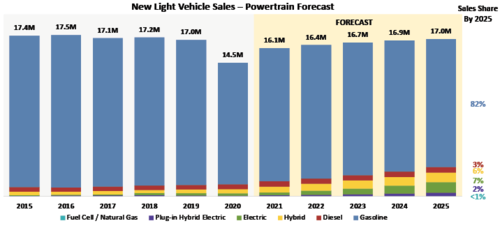
“The year did end in lower sales—down from about 17 million to just above 14 million—but we now see the trend of sales quickly moving back over the next few years toward that 17-million mark that we’ve been running at for the last half decade. In those terms, while there definitely was disruption, it’s pretty short term.”
According to Cheng, the effects of COVID-19 also differed from past recessions in another interesting aspect. In a typical recession, larger vehicles usually take the biggest sales hit as consumers curtail spending and look for less-expensive options. However, the opposite was true during the 2020 downturn: CUVs and pickups kept light-vehicle sales on track.
Trucks Still Dominate the Marketplace
The report notes that pickups did more than buoy OEM sales during the bleak months of 2020. They also continued to command the lion’s share of specialty-equipment sales, accounting for nearly a third of all retail dollars spent in the industry. With overall market sizing estimated at $14.28 billion, they represent the aftermarket’s number-one niche.
“Looking over the last few years, pickup trucks have been a hotspot for our industry and will continue to be hot sellers going forward,” Knapp observed. “In fact, the top-selling models on U.S. roads are all fullsize pickup trucks.”
Among the bigger pickups, the Chevrolet Silverado 1500 and the Ford F-150 stand out as accessorization favorites among consumers. Also topping the aftermarket opportunity list is the Jeep Wrangler, which enthusiasts continue to make one of the most accessorized vehicles on the road today. Top purchases in the truck category include trailer and towing packages; exterior appearance; fender, hood and body upgrades; suspension products; and truck bed liners, among others.
In addition, the category is growing. Among other popular and emerging pickups, the “SEMA Vehicle Landscape Report” cites the Toyota Tacoma, the Chevrolet Colorado and GMC Canyon and the Jeep Gladiator as holding special potential for the aftermarket. The Tacoma, the Colorado and the Canyon are all due for redesigns for 2024, with the Tacoma expected to roll out a hybrid version. The buzz around the Gladiator is a plug-in hybrid version on its way for 2022. In the full-electric realm, the Rivian R1T and the GMC Hummer pickup EV are set to debut this year, with the Tesla Cybertruck expected in 2022.
CUVs Are on the Rise
There are currently 54.6 million registered CUVs in the United States, comprising 19% of the nation’s vehicle fleet. By 2028, CUVs are projected to jump to half of all new-vehicle sales. That makes them America’s fastest-growing vehicle segment—and with good reason. Consumers enjoy the combination of efficiency and function that CUVs embody, even if their styling is at times lackluster.
“When the category first started, it leaned more utilitarian and occupied the lower end of the market,” Knapp said. “But now all of the more high-end, premium brands are moving into the market and creating more upscale models. We’re also seeing a lot of companies positioning their crossovers very much as outdoor lifestyle vehicles, even going off-road.”
Virtually every automaker now offers at least one crossover model, meaning that OEM competition is contentious. It’s therefore difficult to cull even a few hot platforms that the aftermarket can latch onto.
Current top sellers include the Honda CR-V and Toyota RAV4, which have historically done well and are expected to maintain their market positions over the next seven years. However, the Nissan Rogue, Chevrolet Equinox and Traverse, and Toyota Highlander remain strong contenders. Also on the “vehicles to watch” list are the Ford Escape, Subaru Forester and Crosstrek, and Mazda CX-5.
“There are some questions about whether our industry is embracing this crossover market,” Knapp said. “It represents a big opportunity, but there are a lot of models out there, so finding out where the specific opportunities are will be one of the more interesting things to watch in our industry over the next few years.”
Because they’re meant to appeal to a broad audience, CUVs have been less enthusiast-focused than other vehicle types. Up to now, their owners haven’t exactly been clamoring for modifications, either. The overall CUV aftermarket is currently valued at $5.90 billion, a share equaling only 13% of specialty-equipment retail sales. A few of the top aftermarket buys include navigation and driver-assistance systems, floor mats and interior appearance items, racks and carriers, and exterior appearance upgrades.
“Most people wouldn’t consider CUVs to be performance vehicles, but what we’ve noticed in our research and data is that there are more sporty CUVs coming out, such as the BMW X-series,” Cheng explained. “A lot of companies are investing in sleeker, more stylish models. If we’re talking electric, even the Ford Mach-E is technically a CUV with the Mustang badge.
“There are 140 CUV models currently on the road. By the time we get to 2028, there will be more than 175 models being offered. In terms of sheer number of availability, compared to every other segment, crossovers will outpace everything.”
According to Knapp, all those trends create somewhat of a challenge for the aftermarket.
“We know that trucks and SUVs are great platforms for our industry,” he said. “There are a lot of things you can do with them, from off-road to utility-type modifications, racks and towing and so forth. So the question becomes, as these buyers move from traditional sedans into the CUVs, which have the shape and potential to function like SUVs, will they treat them that way? Will they think of them as truck-like and accessorize them that way? Or will they continue to just think of them as a differently shaped car that’s purely functional?”
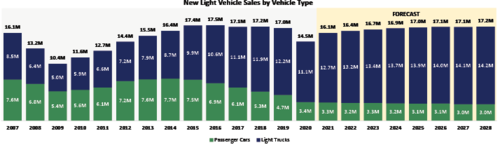
Light-vehicle sales trends show a pronounced decrease in passenger cars over the past several years. The accompanying rise in light-truck sales is fueled in part by a growing consumer interest in CUVs. SEMA currently predicts further increases in truck sales through 2028.
Sports Cars and Classics Are Popular as Ever
Although not as high-volume as other segments, sports cars also command significant enthusiast audiences, making them industry mainstays. In that niche, it should be little surprise that musclecars rank highly.
“If you look at the traditional cars that are still being made, some of the best-
performing of those really are the sports cars and sporty models,” Knapp said. “While we talk a lot about the shift toward trucks in our report, there’s still a great opportunity in our traditional performance and ‘sporty car’ segments as well—especially with the Mustang, Camaro, Charger and Challenger.”
In fact, as OEMs trim their model lines, SEMA forecasts increased aftermarket opportunities for the remaining performance models with iconic histories. Lesser-volume sporty vehicles—notably the Subaru WRX, Porsche 911 and Mazda MX-5 Miata, to name a few—are also expected to carry on as popular platforms for accessorization.
The icons of yesteryear will also endure, although the definition of a “classic vehicle” is changing. SEMA Market Research applies the term to pre-’74 vehicle models, but by anyone’s definition, the classic-enthusiast base is healthy, growing and filled with loyal aftermarket consumers.
Although classic cars and trucks comprise just a 2% share of aftermarket sales, their owners spend significant time and investment on their vehicles. What’s more, they often prefer enthusiast parts and specialized accessories for their restoration or restomod projects.
Speaking of classics, the report also examines the ratio of older versus newer vehicles found in consumer garages. Most of America’s 280-million-plus cars are less than 20 years old, with about 90% being model-year ’00 or newer and 50% being model-year ’11 or newer. After 10 years or so, the number of vehicles for any given model year begins to drop exponentially as scrappage
rates go up.
Nevertheless, changes in ownership over a vehicle’s lifespan drive consumer engagement with the aftermarket. Whether the models are new or used, most car owners upgrade or modify their vehicles within the first few months after a purchase. The more cars change hands, the better the opportunities for accessorization.
Recessions typically spur consumers to hold onto their vehicles, raising used-car values and putting a strain on supply. Again, however, the COVID-19 downturn was a different story. Although used-car values did hit record highs, sales transactions suffered only a slight dip. That bodes well for the aftermarket as the pandemic subsides.
While vehicle electrification is coming, it’s not coming as quickly as some might expect. Gasoline engines continue to dominate the landscape (82%) while a variety of technologies compete for consumers’ alternative-powertrain dollars.
Electrification Is Coming—Eventually
Vehicle electrification, advanced driver-assistance systems (ADAS) and vehicle autonomy have become hot-button issues for the specialty-equipment industry. It’s no exaggeration to say that such emerging technologies promise to reshape the aftermarket in unprecedented ways, but how quickly they will do so is an open question. (See “Artificial Intelligence, Electric Vehicles...and Flying Cars?” on p. 162.)
“There’s a lot discussion of a big shift toward electrics in the media, but it’s going to take a long time for the gasoline-powered cars currently on the road to cycle off,” Cheng explained. “It typically takes a decade before vehicles go out of operation, so there will still be a lot of vehicles for our industry to interact with. The traditional cars that enthusiasts like to modify and work on aren’t going away anytime soon.”
Today there are nearly 4 million registered alternative-power vehicles in the United States, accounting for just 1% of vehicles on the road. States with the highest take-up rate for those platforms include California, Florida, Texas, Washington and New York. Among automakers, Tesla is driving most of the segment’s growth, although other automakers are quickly jumping in. SEMA projects that the top models to watch through ’28 will include the Tesla Model Y, Model 3, Model X and Cybertruck; Toyota Prius; Ford Mustang Mach-E; Chevrolet Bolt EV and E-Van; Honda Insight; and Nissan Ariya.
“There are actually some very interesting electric vehicles coming that should grab our industry’s attention, especially the electric pickups,” Knapp said. “A lot of the electrics are also moving away from the econo-box, early-adopter types of cars and really pushing toward the performance space, but frankly, they’re going to be small in number for awhile, with steady growth over time.”
Cheng added that infrastructure, charging times and costs, along with vehicle range, remain hindrances for consumers.
“Right now, electrics are just more expensive,” he said. “The expectation is that their costs will go down as time goes by, to the point where they’re potentially cheaper than internal-combustion cars. We’re just not there yet.”
Neither are we close to fully autonomous vehicles, which the report also delves into with a look at not only the state of current technologies but also consumer attitudes toward a future of driverless cars. ADAS technologies are here, however, and OEMs are deploying them at a rapid rate. Per NHTSA guidelines, all new vehicles now have rearview cameras. Installation rates for such features as collision warning, advanced cruise control, adaptive pedestrian detection and lane-departure alerts are each close to 70% or more.
“Ultimately, this report will help SEMA members understand what vehicles and technologies are out there now or are coming in the near future so they can better choose what products to make or sell,” Knapp concluded. “We have other resources to help members with their decisions, including our member VIO program, which can provide the number of vehicles on the road by specific models and years. We can also help them with new-vehicle model sales numbers as well as other research, so we encourage members to visit our website.”
For more information on ADAS systems and aftermarket opportunity for them, download the “SEMA Advanced Technology Opportunity Report–2017” at www.sema.org/research.
Get the Full Report
To download your copy of the 2021 “SEMA Vehicle Landscape Report,” along with other free SEMA Market Research studies that can help your business, go to www.sema.org/market-research. While there, SEMA members can also access more comprehensive vehicle sales and vehicles-in-operation (VIO) information through SEMA Market Research partnership programs.




 Location: 3355 S. Las Vegas Blvd., Las Vegas, NV 89109



 Get the Full Report