BUSINESS
Manufacturer Spotlight
Q&A With Dennis Grau, Energy Suspension Sales and Marketing Manager
By Mike Imlay
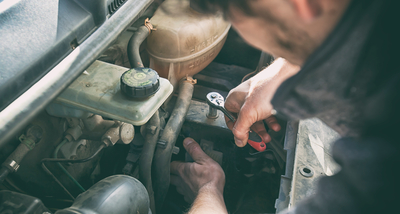
If there has been a silver lining in the recent business climate, it’s the amazing number of car owners tackling much-neglected DIY and vehicle-restoration projects. This trend has opened new opportunities for suppliers such as Energy Suspension and its resellers. |
|
There has been much concern about the economic ramifications for the aftermarket since the beginning of the COVID-19 pandemic in March, but ongoing SEMA market research indicates that an increasing percentage of industry manufacturers and retailers have been busy innovating, adapting, meeting and overcoming the challenges the situation presents. In fact, automotive specialty-equipment suppliers and resellers continue to express general optimism about their prospects going into 2021. (See “The SEMA 2020 Market Report,” p. 86.)
Energy Suspension is a case in point. Based in San Clemente, California, the well-known manufacturer of polyurethane suspension and engine-mounting parts is now among the SEMA-member companies reporting significant growth, thanks to tactics adopted early in the pandemic.
As part of SEMA News’ efforts to highlight and share successful business strategies, we conducted a brief Q&A with Dennis Grau, the national sales and marketing manager for Energy Suspension. The following are key takeaways from our interview, edited for clarity and brevity.
SEMA News: A good number of aftermarket companies are reporting steady and even growing business despite the COVID-19 interruptions. How would you characterize Energy Suspension’s situation since March?
Dennis Grau: Business has been robust, and I don’t know how to say it any other way. We’ve had to add a second production shift. Our sales took a dip in March when COVID-19 was first announced and [the country was] shut down and there was a lot of uncertainty. But ever since April, it’s really taken off. We’ve had to add to our customer-service team just to meet the demand and the phone calls. It’s all just short of record-breaking.
Nobody wants to be in the middle of a pandemic, [but] I believe that this has created a new awakening or a renaissance of former pending projects, or just going back to working on our own cars. We don’t sell direct to consumers; we respect the channels. And just based on customer volume, I believe that the fact that people are working on their vehicles again is a trend that we’re going to enjoy for a while.
SN: Can you also tell us about Energy Suspension’s customer mix and what’s selling right now?
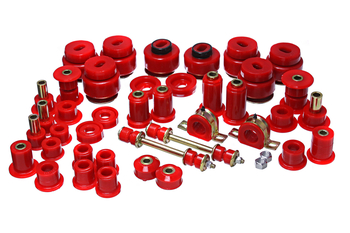
Energy Suspension reports that its late-model Chevrolet Silverado master bushing set counts among its top applications. The kit includes control-arm and leaf-spring bushings, along with body mounts and sway-bar and end-link bushings. |
|
DG: I’m going to say classic-car restoration, no matter what part of the line, and that’s based on the customer focus right now. That is doing very, very well. It seems to be where we’re getting the most lift in our sales increase. I think this company is fortunate in that we have a really live mix here. We certainly sell to the enthusiast, restoration, off-road and, with certain customers of ours, yes, we love to brag about our racer customers.
SN: In regard to your facilities, have you had to change anything in your processes and procedures over the past several months?
DG: Yes. We closed for a day to plan, and everybody is taking every precaution that the state requires on social distancing. Every employee has to wear a mask, [use] hand-sanitizing stations, and we take everybody’s temperature three times a day, at beginning of shift, then lunch and after lunch.
SN: How have those changes been received by the employees and staff?
DG: I think it was well received. I mean, like anyone else, I don’t want to stand in line and have my temperature taken, but we are working, and we’re at full capacity. For the production folks and the hourly employees, there’s as much overtime as they want, so I think it’s a minor inconvenience compared to being able to work.
SN: In terms of sales and marketing, even though you don’t sell direct to consumers, have you had to change your messaging or how you market with your sales channels?
DG: We haven’t. I can only assume, based on the volume of orders, that our customers—at least within our categories—are having similar growth. So we haven’t had to change other than to add people, but the messaging is the same.
Other things we’re doing are a little different because we believe it isn’t going to be short term now that people are back turning wrenches on their cars. This is going to be a longer-term opportunity, so our R&D team is working extra hard to identify new SKUs that we can add to the line. The production team is expanding, and we have a second shift now. But it’s identifying where we can grow in the marketplace.
SN: Has anything particularly surprised you as you’ve adjusted to the changing business climate?
DG: Certainly the sales growth was not expected, so that was the biggest surprise, but I spent a lot of years over on the traditional side of the business, and what we’re experiencing now is that people are using Energy Suspension parts on general repair, so we’re starting to see some new interest from over on the traditional side of the business with our polyurethane components. That’s been a really pleasant surprise.
SN: Looking back on the last several months, is there anything that maybe you would like to have done differently? Any interesting lessons learned?
DG: We ran a Facebook promotion that really was just a video contest—send us video of your build. I would like to have planned that better, and I would like to have had several promotions targeting different segments of the market. So now we’re going to split our Facebook efforts into two. One, go after the performance, musclecar crowd, and the other, go after the off-road crowd. Again, for promotions, I think [now] most people have some free time and a little more time to look at Facebook and social media, and we’re going to try to help educate and motivate people using those tools.
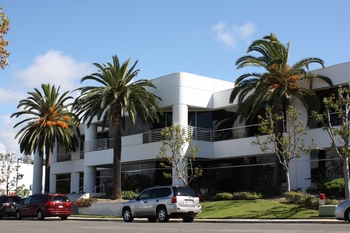
Energy Suspension took measures early on in the COVID-19 pandemic to enhance employee safety at its San Clemente, California, headquarters. Best practices have included social distancing, mandatory masks, regular employee temperature checks throughout the day, and compliance with all applicable government pandemic guidelines. |
|
SN: You also mentioned earlier that this situation has been a game-changer for the company. What business changes are likely to become permanent as the company moves forward?
DG: Traditionally, Energy Suspension has been viewed as a classic-car line [for those doing] some serious restoration work putting on a body mount, but I think what we’re going to be forced to do is look at new applications and do a lot more research into replacement rates and percentages of the overall vehicles in operation and then see how we can plan our research and development needs accordingly.
SN: On the industry side, with the SEMA Show no longer an option for 2020, how do you plan to promote your brand in 2021?
DG: The SEMA Show provides us with the perfect venue to display our product line, meet with our customers and catch up with old friends. While we’re disappointed the 2020 Show has been canceled, we understand the health and safety of our employees and the entire aftermarket community must come first. While we speak with our customers on a daily basis, it’s important to address the missed communication opportunity, so we’re implementing several actions to clearly connect our brand and products with the aftermarket.
We’re redesigning our website as an education tool to demonstrate the advantages of polyurethane performance products relative to vehicle performance. Our redesign will include video and robust “About Us” and “Where to Buy” sections. Energy Suspension supports the channels of distribution and doesn’t offer direct-to-consumer sales. Our “Where to Buy” section will include our brick-and-mortar customers and e-commerce customers, and since the installation of some of our products may appear intimidating for some DIY customers, we’re adding a “Where to Install” section, which we will populate with our installer customers.
| Executive Summary | |
Energy Suspension
1131 Via Callejon
San Clemente, CA 92673-6230
949-361-3935
www.energysuspension.com
A well-known manufacturer of polyurethane suspension and engine-mounting components, Energy Suspension has adopted a number of best practices and business changes since the COVID-19 situation emerged in March. In so doing, it is among the SEMA-member companies currently reporting steady gains. The company’s best practices include: - Enhancing employee safety through social distancing, mandatory masks, regular temperature checks and compliance with all applicable government pandemic guidelines.
- Stepping up the company’s presence on Facebook and other social media.
- Launching education initiatives for its resellers and their end consumers through a new website, along with videos promoting the benefits and proper installation of Energy Suspension products.
Going forward, the company is also reviewing its lines, performing market research and refocusing R&D to identify and leverage new applications opportunities.
| |
In addition to our website improvements, we’re planning a series of social-media communications and promotions combined with joint promotions with our warehouse distributor and retail customers.
SN: We also like to ask manufacturers about any advice they may have for retailers. Do you have any tips or best practices that can help the retail side of the industry?
DG: I can tell you, just based on experience—and this is going to be as old as retailing is—it’s what we can do to help educate the retailers and ultimately the consumers.
For example, when doing engine work, have you thought about replacing the motor mounts? If you’re going to be in there, is it something that you’ve overlooked? Just as a reminder, go back and do some selling: If you’re doing some chassis work, are you going to replace the bushings? Because that car is 50 years old and she probably at least needs an inspection.
It’s about [the jobber] suggesting the very best product for a significant job like that and then leaving it up to the consumer to make the decision. But if we don’t provide them with those tools and that margin-building opportunity, shame on us.
It’s just part of the overall education process at the counter level and ultimately the consumer, and that’s going to be a big focus of ours. We’re going to be doing the training videos and again going back to the website. That will be a repository for all kinds of information.





 As a 100% online event, SEMA360 will be available from any computer with internet access. Join the industry on November 2-6, as the industry connects and conducts business.