

Join the SEMA Businesswomen’s Network as they host a Facebook Live Chat with Melanie Hellwig White, president of Hellwig Products, on December 2, 2020 at 12:00 p.m. PST.
Wed, 11/25/2020 - 16:27
Wed, 11/25/2020 - 16:27
Join the SEMA Businesswomen’s Network as they host a Facebook Live Chat with Melanie Hellwig White, president of Hellwig Products, on December 2, 2020 at 12:00 p.m. PST.
Wed, 11/25/2020 - 16:23
By Ashley Reyes
 |
The SEMA Businesswomen’s Network (SBN) named Jennifer Petraitis as this week’s #SheIsSEMA Spotlight Member. Petraitis works in Wholesale Support at The Retrofit Source LLC—an automotive aftermarket supplier of high-performance lighting upgrades for cars and trucks. The ability to keep learning is what keeps Petraitis in the industry. Find out why in her Q&A with SEMA.
SEMA: What is the best advice you have ever received?
Jennifer Petraitis: No matter where you go in this life, you're going to meet people who are going to provide you with the necessary tools for you to succeed in this life. Learn to use those tools when necessary; Nothing worth having comes easy.
SEMA: What keeps you involved in this industry?
JP: The ability to learn. The industry is constantly changing as we evolve. It keeps me on my toes.
SEMA: On a Saturday, where can you be found?
JP: You can find me running or traveling.
SEMA: How do you prepare for an important meeting?
JP: Early. It’s always good to be early and prepared.
SEMA: If you could go to lunch with one industry leader, living or dead, who would it be?
JP: Mary Barra.
Fill out this form to be a part of the #SheIsSEMA family. You will have the opportunity to be featured on SBN’s social media, SEMA eNews and be recognized on the www.sema.org/sheissema website. While there, check out other inspirational women who are leading the industry and are paving the path for future success.
Not an SBN member? Fill out this form to join today.
Wed, 11/25/2020 - 16:23
By Ashley Reyes
|
The SEMA Businesswomen’s Network (SBN) named Jennifer Petraitis as this week’s #SheIsSEMA Spotlight Member. Petraitis works in Wholesale Support at The Retrofit Source LLC—an automotive aftermarket supplier of high-performance lighting upgrades for cars and trucks. The ability to keep learning is what keeps Petraitis in the industry. Find out why in her Q&A with SEMA.
SEMA: What is the best advice you have ever received?
Jennifer Petraitis: No matter where you go in this life, you're going to meet people who are going to provide you with the necessary tools for you to succeed in this life. Learn to use those tools when necessary; Nothing worth having comes easy.
SEMA: What keeps you involved in this industry?
JP: The ability to learn. The industry is constantly changing as we evolve. It keeps me on my toes.
SEMA: On a Saturday, where can you be found?
JP: You can find me running or traveling.
SEMA: How do you prepare for an important meeting?
JP: Early. It’s always good to be early and prepared.
SEMA: If you could go to lunch with one industry leader, living or dead, who would it be?
JP: Mary Barra.
Fill out this form to be a part of the #SheIsSEMA family. You will have the opportunity to be featured on SBN’s social media, SEMA eNews and be recognized on the www.sema.org/sheissema website. While there, check out other inspirational women who are leading the industry and are paving the path for future success.
Not an SBN member? Fill out this form to join today.
Wed, 11/25/2020 - 15:33
The following is a message from SEMA President and CEO Chris Kersting:
 Seats in four different categories are open for this year’s SEMA Board of Directors election. |
As a member of the Association, we need your recommendation of industry leaders to serve on the SEMA Board of Directors.
The following seats are open for this year’s election:
- Chairman-elect (1 open seat)
- Manufacturers (2 open seats)
- Distributors/Retailers (2 open seats)
- Services (1 open seat)
Please take a moment and tell us whom you would recommend as a potential nominee for a board member position by completing and submitting a nomination form. To help the vetting process, include information about the nominee’s qualifications, such as background, experience and achievements that would make that nominee an outstanding board candidate.
Nominations for the SEMA Board of Directors are due on Wednesday, January 6, 2021. Please complete and submit the nomination form.
A strong board means wise leadership and an association that serves its members well. We urge you to take part in the nominations process—our industry has many individuals who would be an asset to the Board, but we need you to help bring them to the attention of the Nominating Committee.
Thank you for your attention to this important request.
Sincerely,
Chris Kersting, CAE
SEMA President & CEO
Wed, 11/25/2020 - 15:33
The following is a message from SEMA President and CEO Chris Kersting:
Seats in four different categories are open for this year’s SEMA Board of Directors election. |
As a member of the Association, we need your recommendation of industry leaders to serve on the SEMA Board of Directors.
The following seats are open for this year’s election:
- Chairman-elect (1 open seat)
- Manufacturers (2 open seats)
- Distributors/Retailers (2 open seats)
- Services (1 open seat)
Please take a moment and tell us whom you would recommend as a potential nominee for a board member position by completing and submitting a nomination form. To help the vetting process, include information about the nominee’s qualifications, such as background, experience and achievements that would make that nominee an outstanding board candidate.
Nominations for the SEMA Board of Directors are due on Wednesday, January 6, 2021. Please complete and submit the nomination form.
A strong board means wise leadership and an association that serves its members well. We urge you to take part in the nominations process—our industry has many individuals who would be an asset to the Board, but we need you to help bring them to the attention of the Nominating Committee.
Thank you for your attention to this important request.
Sincerely,
Chris Kersting, CAE
SEMA President & CEO
Wed, 11/25/2020 - 15:29
SEMA-member companies have posted several new listings for job opportunities in the Classifieds page of SEMA.org.
Wed, 11/25/2020 - 13:05
By SEMA Editors
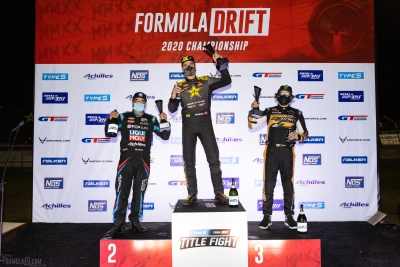 Fredric Aasbo (Norway) ,driving the Rockstar Energy Drink / Nitto Tire GR Supra, won Formula Drift PRO Round Seven at Irwindale Speedway. Fredric Aasbo (Norway) ,driving the Rockstar Energy Drink / Nitto Tire GR Supra, won Formula Drift PRO Round Seven at Irwindale Speedway. |
Formula Drift PRO Championships Are Decided
After months of speculation about whether there would even be a 2020 Formula DRIFT season, the teams arrived at The House of Drift – Irwindale Speedway – for the traditional season finale. With eight PRO and four Link ECU PRO2 Championship rounds squeezed into a compressed calendar of double-header events, the TYPE S Title Fight Weekend would be the ultimate test of resilience and consistency. The high-speed course used for the previous two rounds at Texas Motor Speedway had exacted a heavy toll on minds and machinery, and Irwindale would provide no relief. With its high-speed banking and unforgiving walls, both metal and egos would be dented or demolished before the PRO and PRO2 Champions were crowned.
In the end, Vaughn Gittin Jr claimed the 2020 FD PRO Championship, Fredric Aasbo won FD PRO Round Seven, Aurimas Bakchis won FD PRO Round Eight, Dmitriy Brutskiy is the 2020 Link ECU PRO2 Champion, and Mike Power won FD PRO2 Round Four.
Round Seven
Whether it was the cumulative effect of an intense 2020 season, or because so many teams needed a good result for a shot at the Championship title, Round Seven of the Formula DRIFT PRO Championship at Irwindale Speedway – the TYPE S Title Fight Weekend – saw many of the contenders stumble. The overall effect would be to keep the Championship chase alive, with five drivers heading into the Final Round with a mathematical chance of glory.
The top drivers tumbled as early as the first heats, with both Justin Pawlak (USA) in the Roush Performance / Falken Tire Ford Mustang and Aurimas “Odi” Bakchis (Lithuania) in the Falken Tire / Feal Suspension Nissan S15 losing to lower seeded drivers in the Top 32. Pawlak was placed seventh and would fall to eighth, while Bakchis in sixth also dropped one position. This would be enough to remove them from the title chase.
Second-placed Ryan Tuerck (USA) reported engine problems after his Top 32 heat, triggering a frantic rush to swap powerplants in the Gumout / Nitto Tire / Mobil 1 Toyota Corolla. The Papadakis team achieved what seemed to be the impossible but Tuerck would hit the wall in Outside Zone 1 shortly after initiating during his Top 16 run. Raising his hand, Tuerck admitted the cooling track conditions had caught him out as the sun was setting. He would maintain his second place in the Championship standings but the points difference increased from eight to 40 points.
Third-placed Chris Forsberg (USA) advanced to the Top 16 courtesy of a bye round in the Top 32 heats. However, he’d go no further. Forsberg withdrew his NOS Energy Drink Nissan 370Z on Nexen Tires with engine problems and sought a fix for the Final Round. He would drop from third to fifth place in the Championship but retain a slim chance of claiming his fourth FD title with a 96-point gap to the lead.
Championship leader Vaughn Gittin Jr (USA) was a favorite for the 2020 title arriving in Irwindale. He manhandled his Monster Energy / Nitto Tire / Ford Performance Mustang RTR
Spec 5-D into the Top 4, but would spin out chasing nemesis Fredric Aasbo (Norway) driving the Rockstar Energy Drink / Nitto Tire GR Supra during an epic battle that went “One More Time.”
Relegated to the third-place run-off against teammate Chelsea DeNofa (USA) in the BC Racing / Nitto Tire Ford Mustang RTR, Gittin Jr hit the wall in Outside Zone 1, robbing the fans of another Mustang brawl and promoting DeNofa to third. But with his opponents falling around him, Gittin Jr looked ahead to the Final Round in first place with an extended points lead over Tuerck.
Knocking out Adam LZ (USA) in the Top 8 before moving on to Gittin Jr and then beating Michael Essa (USA) in the Final, Aasbo had rediscovered the form that took him to victory in the opening round. Driving the brand new Supra, the 2015 FD Champion followed up with a second place in Seattle but otherwise failed to fulfill the early promise. Arriving at Irwindale in fifth place, he leapfrogged to third after this Round Seven win but with a 60-point deficit to make up.
For Essa, it was a welcome return to form, backing up a third place in Seattle, but the 2013 FD Champion wasn’t playing on a level field in Irwindale. He mounted a valiant defense against Aasbo in the Final but his FCP Euro / LiquiMoly / Achilles Tires BMW M3 was badly wounded. Essa reported a coolant leak, failing head gasket, misfire and more, yet continued to drift with his signature precision. Unfortunately, he didn’t have the machinery to beat the Norwegian, but climbed to sixth overall.
With several titles to be decided in the Final Round, Nitto Tire clinched the 2020 Formula DRIFT Tire Cup in Round Seven thanks to an unbeatable points lead over its competitors.
2020 FORMULA DRIFT CHAMPIONSHIP RESULTS
Round Seven Top 16 Pro Driver Points
| Position | Driver | Points |
| 1 | Aasbo | 100 |
| 2 | Essa | 88 |
| 3 | DeNofa | 76 |
| 4 | Gittin Jr. | 64 |
| 5 | LZ | 48 |
| 6 | Taguchi | 48 |
| 7 | Hull | 48 |
| 8 | Reeder | 48 |
| 9 | Forsberg | 32 |
| 10 | Tuerck | 32 |
| 11 | Yoshihara | 32 |
| 12 | Jones | 32 |
| 13 | Kearney | 32 |
| 14 | Field | 32 |
| 15 | Castro | 32 |
| 16 | Burkett | 32 |
Round Eight Top 16 Pro Driver Points
| Position | Driver | Points |
| 1 | Bakchis | 100 |
| 2 | DeNofa | 88 |
| 3 | Pawlak | 76 |
| 4 | Jones | 64 |
| 5 | Hull | 48 |
| 6 | Gittin | 48 |
| 7 | Nerren | 48 |
| 8 | Gushi | 48 |
| 9 | Tuerck | 32 |
| 10 | Forsberg | 32 |
| 11 | Reeder | 32 |
| 12 | Taguchi | 32 |
| 13 | LZ | 32 |
| 14 | Essa | 32 |
| 15 | Hughes | 32 |
| 16 | Litteral | 32 |
Final 2020 Pro Champsionship Driver Standings
| Position | Driver | Points | Tires |
| 1 | Vaughn Gittin Jr | 540 | Nitto |
| 2 | Chelsea DeNofa | 500 | Nitto |
| 3 | Ryan Tuerck | 484 | Nitto |
| 4 | Fredric Aasbo | 448 | Nitto |
| 5 | Chris Forsberg | 428 | Nexen |
Final 2020 Auto Cup Standings
| Ford: 1140 | Toyota: 980 | Nissan: 716 | BMW: 356 | Chevrolet: 352 |
Final 2020 Tire Cup Standings
| Nitto: 1380 | Falken: 892 | Achilles: 820 | Nexen: 732 | GT Radial: 640 |
Link ECU Pro2 Championship Results From Round Four
| Position | Driver | Points |
| 1 | Power | 100 |
| 2 | Noback | 88 |
| 3 | Hoffman | 76 |
| 4 | Misko | 64 |
| 5 | Rowlings | 48 |
| 6 | Brutskiy | 48 |
| 7 | Madison | 48 |
| 8 | Olsen | 48 |
| 9 | Hateley | 32 |
| 10 | Matta | 32 |
| 11 | Love | 32 |
| 12 | Reynolds | 32 |
| 13 | Diaz | 32 |
| 14 | Stuke | 32 |
Final 2020 Link ECU Pro2 Championship Standings
| 1 | Dmitriy Brutskiy | 260 |
| 2 | Jonathan Hurst | 252 |
| 3 | Joshua Love | 228 |
| 4 | Blake Olsen | 216 |
| 5 | Austin Matta | 216 |
L. McMillin/Roeseler Win BFGoodrich Tires 53rd SCORE Baja 1000
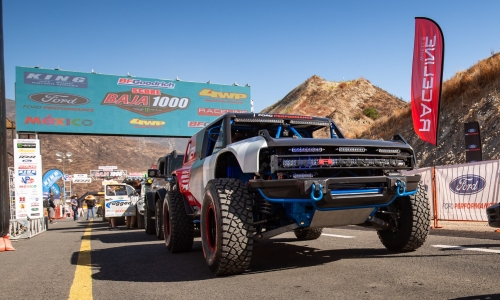 The Bronco R Race Prototype, piloted by Cameron Steele, Shelby Hall and a team of veteran Ford off-road racers, finished the 53rd SCORE-International Baja 1000 in Class 2 in just over 32 hours. The Bronco R Race Prototype, piloted by Cameron Steele, Shelby Hall and a team of veteran Ford off-road racers, finished the 53rd SCORE-International Baja 1000 in Class 2 in just over 32 hours. |
Combining the enthusiasm and rare talent of youth with the experience and wisdom of a Hall of Famer, San Diego’s Luke McMillin joined forces with Off-Road Motorsports Hall of Famer Larry Roeseler, Boulevard, Calif. to etch their names afresh in the lasting legacy of the BFGoodrich Tires 53rd SCORE Baja 1000, presented by 4 Wheel Parts Sunday, capturing the overall and SCORE Trophy Truck victory in the iconic Granddaddy of All Desert Races.
The pair defeated a field of 185 starters as well as outlasting the viciously rugged 898.40-mile race course that was the longest in the history of SCORE long loop races.
This year’s epic BFGoodrich Tires SCORE Baja 1000 was held on an extremely rugged loop-race record 898.40-mile race course over the Northern part of Mexico’s Baja California peninsula, starting and finishing on the outskirts of Ensenada. It was the finale of the two-race pandemic-abbreviated two-race 2020 SCORE World Desert Championship.
When the final checkered flag fell, a total of 185 vehicles left the starting line early Friday morning in the elapsed time race. When the course officially closed at 3:30:28 a.m. PT on Sunday there were 111 official finishers for a 60.00 finishing percentage on the extremely challenging course.The results were made official following complete data tracking review of the devices on each vehicle in the event early on Sunday.
Besides podium finishers L. McMillin/Roeseler, MacCachren/Daniel, Menzies/A. McMillin and the Ampudia brothers, six of 10 the top 10 overall four-wheel vehicles were SCORE Trophy Trucks. SCORE Trophy Truck is the marquee racing division in the sports for high-tech, 950-horsepower unlimited custom trucks. The class was created by Sal Fish, who owned SCORE for 38 years and created the ‘Monsters of the Desert’ in 1994.
Finishing fourth overall and in SCORE Trophy Truck was Cameron Steele, 52, of San Clemente, Calif. (No. 16 Ford Raptor-Geiser), fifth overall and in SCORE Trophy Truck was Las Vegas’ Tim Herbst (No. 19 Ford F-150-Herbst/Smith). Seventh overall and winning the Trophy Truck Spec class was Jeff Bader, 39, Ladera Ranch, Calif. (No. 261 Brenthel-Chevy), eighth was Tim Herbst’s son Pierce Herbst, 18, of Las Vegas (second in Trophy Truck Spec, No. 264 Herbst/Smith-Chevy). Ninth overall was Class 1 winner Cody Parkhouse, while 10th was Elijah Kiger, 20, of Kirby, Pa. (third in Trophy Truck Spec, No. 238 TSCO-Chevy).
The race will be televised on a delayed basis as a one-hour special on the ABC TV Network’s World of X Games programming. First airing is set for Jan. 3, 2021 on ESPN2. It is being produced by SCORE in association with award-winning BCII TV of Los Angeles. Announcer was Hall of Fame racer Cameron Steele.
TOP OVERALL FINISHERS
Top 20 Overall Trucks, Cars & UTVs
1. 83 Luke McMillin, 27, San Diego/Larry Roeseler, 63, Boulevard, Calif., Ford F-150 (Racer), 19:10:25 (46.86 mph) (SCORE Trophy Truck)
2. 11 Rob MacCachren, 55, Las Vegas/Josh Daniel, Vista, Calif., Ford F-150 (Geiser), 19:21:30 (46.41 mph) (SCORE Trophy Truck)
3. 7 Bryce Menzies, 33, Las Vegas/Andy McMillin, 33, San Diego, Calif., Ford Raptor (Mason), 19:42:40 (45.58 mph) (SCORE Trophy Truck)
4. 16 Cameron Steele, 52, San Clemente, Calif./Bobby Pecoy, 55, Yorba Linda, Calif./Rene Brugger, San Diego, Ford Raptor (Geiser). 20:30:23(43.81 mph) (SCORE Trophy Truck)
5. 19 Tim Herbst, 57, Las Vegas/Pat Dean, 51, Las Vegas, Ford F-150 (Herbst-Smith), 20:40:02 (43.47 mph) (SCORE Trophy Truck)
6. 10 Alan Ampudia, 29, Ensenada, Mexico/Aaron Ampudia, 27, Ensenada, Mexico, Ford Raptor (ID), 20:53:46 (42.99 mph) (SCORE Trophy Truck)
7. 261 Jeff Bader, 39, Ladera Ranch, Calif./Dan Fresh, 52, Dana Point, Calif., Brenthel-Chevy, 21:44:55 (41.31 mph) (Trophy Truck Spec)
8. 264 Pierce Herbst, 18, Las Vegas/Ryan Millen, 36, Huntington Beach, Calif. (New Zealand)/Thor Herbst, 20, Las Vegas, Herbst/Smith-Chevy, 22:00:30 (40.82 mph) (Trophy Truck Spec)
9. 127 Cody Parkhouse, 33, Long Beach, Calif./Brian Parkhouse, 60, Long Beach, Calif./Roger Starkey 36, Scottsdale, Ariz., Jimco-Chevy, 22:31:08 (39.90 mph) (Class 1) 10. 238 Elijah Kiger, 20, Kirby, Pa./Brock Heger, 20, El Centro, Calif./Sean Bogdan, 28, Kirby, Pa./Christopher King, 26, Kirby, Pa., TSCO-Chevy, 22:58:14 (39.11 mph) (Trophy Truck Spec)
11. 77 Robby Gordon, 51, Charlotte, N.C./Damen Jefferies, 47, Apple Valley, Calif., Chevy Silverado (Custom), 23:18:48 (38.54 mph) (SCORE Trophy Truck)
12. 97 B.J. Baldwin, 41, Las Vegas/Ray Griffith, Toyota Tundra (ID), 23:41:09 (37.93 mph) (SCORE Trophy Truck)
13. 295 William Hedrick Jr, 24, Vicente Guerrero, Mexico/William Hedrick, 54, Vicente Guerrero, Mexico, ID-Chevy, 23:45:36 (37.81mph) (Trophy Truck Spec)
14. 273 Jordan Brenthel, 33, Temecula, Calif./Jonathan Brenthel, 41, La Cresta, Calif./Chuck Dempsie, 52, Oak Hills, Calif./Greg Adler, 51, Temecula, Calif., Brenthel-Chevy, 23:45:47 (37.81 mph) (Trophy Truck Spec)
15. 89 Mike Walser, 53, Comfort, Texas/Luke Johnson, 27, Sun City, Calif./Rod Walser, 44, Canadian, Texas, Chevy Silverado (Mason), 23:53:47 (37.60 mph) (SCORE Trophy Truck)
16. 1085 Jeremy Davis, 20, Chino Hills, Calif./Justin Davis, 27, Chino Hills, Calif./Tyler Peterson, 30, Apple Valley, Calif., Jimco-Chevy, 24:16:11 (37.02 mph) (Class 10) 17. 40 Chris Miller, 46, Rancho Santa Fe, Calif./Christian Sourapas, 24, Rancho Santa Fe, Calif., Chevy Silverado (Mason), 24:23:59 (36.82 mph) (SCORE Trophy Truck)
18. 103 Gabriel Torres, 27, San Luis Potosi, Mexico/Esteban Cruz, Ensenada, Mexico/J. David Ruvalcaba, 47, Ensenada, Mexico, Alumi Craft-Chevy, 24:24:12 (36.81 mph) (Class 1)
19. 1022 Rafael Aguirre, 41, Monterrey, Mexico/Adrian Saucedo, 28, Monterrey, Mexico/Cesar Fiscal, 35, Monterrey, Mexico, Jefferies-Chevy, 24:31:39 (36.63 mph) (Class 10)
20. 4419 Paul Horschel, 44, Park City, Utah/Loren Healy/Mitchell Sweatt/Zig DeGroot/Josh Markham, Custom-Chevy, 24:44:00 (36.32 mph) (Hammer Truck Unlimited)
Wed, 11/25/2020 - 12:18
By SEMA Editors
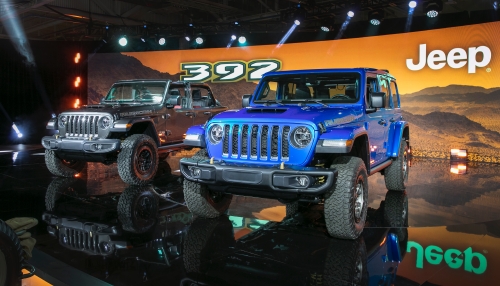 Mated to the TorqueFlite eight-speed automatic transmission and Selec-Trac full-time active transfer case, the powertrain powers the Jeep Wrangler Rubicon 392 from 0-60 mph in 4.5 seconds and the quarter-mile in 13.0 seconds, and comes with a factory-backed warranty. Mated to the TorqueFlite eight-speed automatic transmission and Selec-Trac full-time active transfer case, the powertrain powers the Jeep Wrangler Rubicon 392 from 0-60 mph in 4.5 seconds and the quarter-mile in 13.0 seconds, and comes with a factory-backed warranty. |
The most capable, quickest, most powerful Wrangler ever carries the 6.4L V8, rated at 470 horsepower and 470 lb-ft of torque. Mated to the TorqueFlite eight-speed automatic transmission and Selec-Trac full-time active transfer case, the powertrain powers the Jeep Wrangler Rubicon 392 from 0-60 mph in 4.5 seconds and the quarter-mile in 13.0 seconds, and comes with a factory-backed warranty.
Away from the pavement, the Trail Rated Wrangler Rubicon 392’s potent powertrain meshes with heavy-duty wide track Dana 44 axles, a 3.73 final drive ratio, transmission torque converter lockup control, a 2-inch lift and standard 33-inch tires on 17-inch beadlock-capable wheels. The result is the most capable Jeep Wrangler ever, with 10.3 inches of ground clearance; improved suspension articulation and maneuverability; approach, breakover and departure angles of 44.5, 22.6 and 37.5 degrees, respectively; and the ability to traverse up to 32.5 inches of water. The Mopar brand will deliver a variety of factory-engineered, quality-tested performance parts and accessories for the new 2021 Jeep Wrangler Rubicon 392 in order to further enhance and personalize the most powerful Wrangler yet.
The 2021 Jeep Wrangler Rubicon 392 goes on sale in the first quarter of 2021. The 2021 Jeep Wrangler Rubicon 392 includes 11 premium features, normally options on Jeep Wrangler, including Leather interior, Infotainment Group; HD electrical switch bank; Body-color hard top; Body-color flares; Steel Bumper Group; LED Lighting Group; Cold Weather Group; Remote proximity entry; Safety Group and Advanced Safety Group.
Wed, 11/25/2020 - 11:54
By SEMA Editors
 Kia Sorento Yosemite Edition. Kia Sorento Yosemite Edition. |
Kia Unveils Two Rugged XLine Sorento Concepts
As the next step in Kia’s capability-focused product strategy, the all-new 2021 Sorento is poised to bring customers a new level of trailready toughness not yet seen from the brand. To celebrate this rugged personality, Kia Motors America (KMA) unveiled a pair of custom-built Sorento SUVs – the Yosemite Edition and the Zion Edition – during the brand’s virtual national dealer meeting last week. The two wilderness-themed SUVs build upon the production Sorento XLine model, a variant that highlights offroad prowess with unique 20-inch wheels, increased ride height to 8.3in., improved approach/departure angles, more advanced AWD with snow-mode, and a more robust roof rack than the outgoing Sorento.
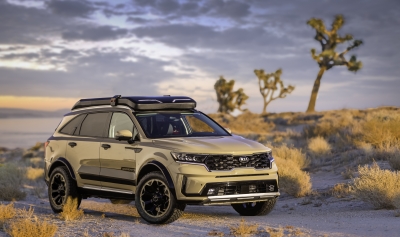 Kia Sorento Zion Edition. |
Customized by LGECTE Motorsports of San Dimas, CA, each vehicle receives its namesake and inspiration from the outdoor environments found in America’s great national parks. The Sorento Yosemite Edition is a dream build for high elevation adventuring and mountain living, painted in “Pine Green” in a matte finish with gloss and matte black accents. The Sorento Zion Edition is a desert escape vehicle made for stomping dunes, painted in “Desert Sand” in a gloss finish with gloss black accents.
Both feature custom fender flares that sit atop 20-inch wheels and 32-inch all-terrain tires. Body armor includes custom skid plates and brush guards in a satin chrome finish. For packing gear, the Yosemite edition wears a brawny roof rack, while the Zion Edition comes equipped with a full-length cargo top.
The 2021 Kia Sorento will arrive in showrooms beginning in November. Customers can tailor their Sorento to their lifestyle and needs with attachments such as roof rack crossbars, tow hitches for trailers, and side steps for easier load-in of toys.
GM EV Plant to Employ 5G Technology
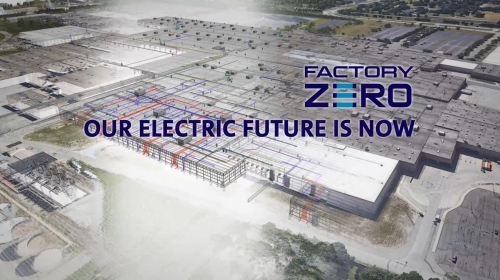 GM's all-electric vehicle assembly plant is the first automotive plant in the U.S. to install dedicated 5G fixed mobile network technology. GM's all-electric vehicle assembly plant is the first automotive plant in the U.S. to install dedicated 5G fixed mobile network technology. |
General Motors announced that Factory ZERO, Detroit-Hamtramck Assembly Center, the company’s all-electric vehicle assembly plant, is the first automotive plant in the U.S. to install dedicated 5G fixed mobile network technology. Verizon’s 5G Ultra Wideband service is operating now at Factory ZERO, with its exponential increases in both bandwidth and speed supporting the ongoing transformation of the plant as it prepares to begin producing EVs in 2021.
Factory ZERO is being completely retooled with a $2.2 billion investment, the largest ever for a GM manufacturing facility. Once fully operational, the plant will create more than 2,200 good-paying U.S. manufacturing jobs. Both the upcoming GMC HUMMER EV and the Cruise Origin will be built at Factory ZERO on GM’s Ultium battery platform. Ultium is flexible enough to build a wide range of EVs —cars, trucks and more — and is the heart of GM’s future EV lineup.
Key benefits of 5G in a manufacturing plant include reliability, speed and sheer scale. 5G’s massive bandwidth offers scalability to manage thousands of devices across Factory ZERO’s more than 4 million square feet of space, with ample capacity to support emerging technologies.
“Factory ZERO will be GM’s flagship assembly plant in our journey to an all-electric future,” said Phil Kienle, GM vice president of North America Manufacturing and Labor Relations. “Installing 5G at Factory ZERO is an essential step in the transformation of this plant, and signals how important advanced manufacturing is in the ongoing race to an EV future.”
Today, the Internet of Things is transforming manufacturing plants, enabling connected devices to deliver important benefits to quality and safety. Countless systems and equipment rely on connectivity, such as robotics, sensors and the Automated Guided Vehicles that deliver materials across the factory floor.
E.C.D. Shows Off One-of-a-Kind Defender D90 Resto-mod
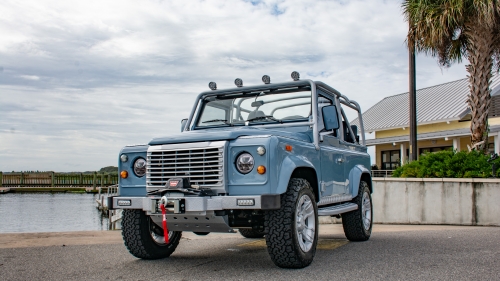 Each vehicle produced by E.C.D. is fully bespoke, a one-off that is fully designed by the client and hand-built from the ground up in 2,200 hours by master-certified A.S.E. craftsmen. Each vehicle produced by E.C.D. is fully bespoke, a one-off that is fully designed by the client and hand-built from the ground up in 2,200 hours by master-certified A.S.E. craftsmen. |
E.C.D. Automotive Design, known for custom lifestyle vehicles, has delivered a one-of-a-kind convertible D90 with a baby-blue hue and a custom teak bed. Each vehicle produced by E.C.D. is fully bespoke, a one-off that is fully designed by the client and hand-built from the ground up in 2,200 hours by master-certified A.S.E. craftsmen.
Project Kutter may look baby blue in hue, but the soft-top D90 is actually painted in a Cool Grav Khaki gloss paint with all-silver accents. Powered by a 6.2L V8, Project Kutter has a 6-speed automatic transmission, upgraded Ashcroft axles, and an upgraded suspension setup with Performance Bilstein shock absorbers. This D90 rides on 18" Hawke Design in silver wheels with a handmade Badger Coachworks Light Oak canvas top and a convertible style wheel carrier also in silver.
One of Project Kutter’s most stunning features in the Brazilian Teak rear bed. Inside, Project Kutter’s stake bed is complemented with Relicate Mineral Blue leather with custom detailed diagonal weave "Tuxedo" inserts in each of its classic Puma seats and matching door cards. The build has a Nardi Classic steering wheel wrapped in Navy Leather, White Hot Gauges with navy numbers and pointers, navy seatbelts, and Wilton Wool Blue Carpet in its front area. This D90 has its share of modern touches with an Alpine radio, JL Audio speakers, rear ac, built-in wifi, a Ravelco Anti-Theft system, and a battery charger plug-in point at the rear of the vehicle.