By Cristian Gonzalez
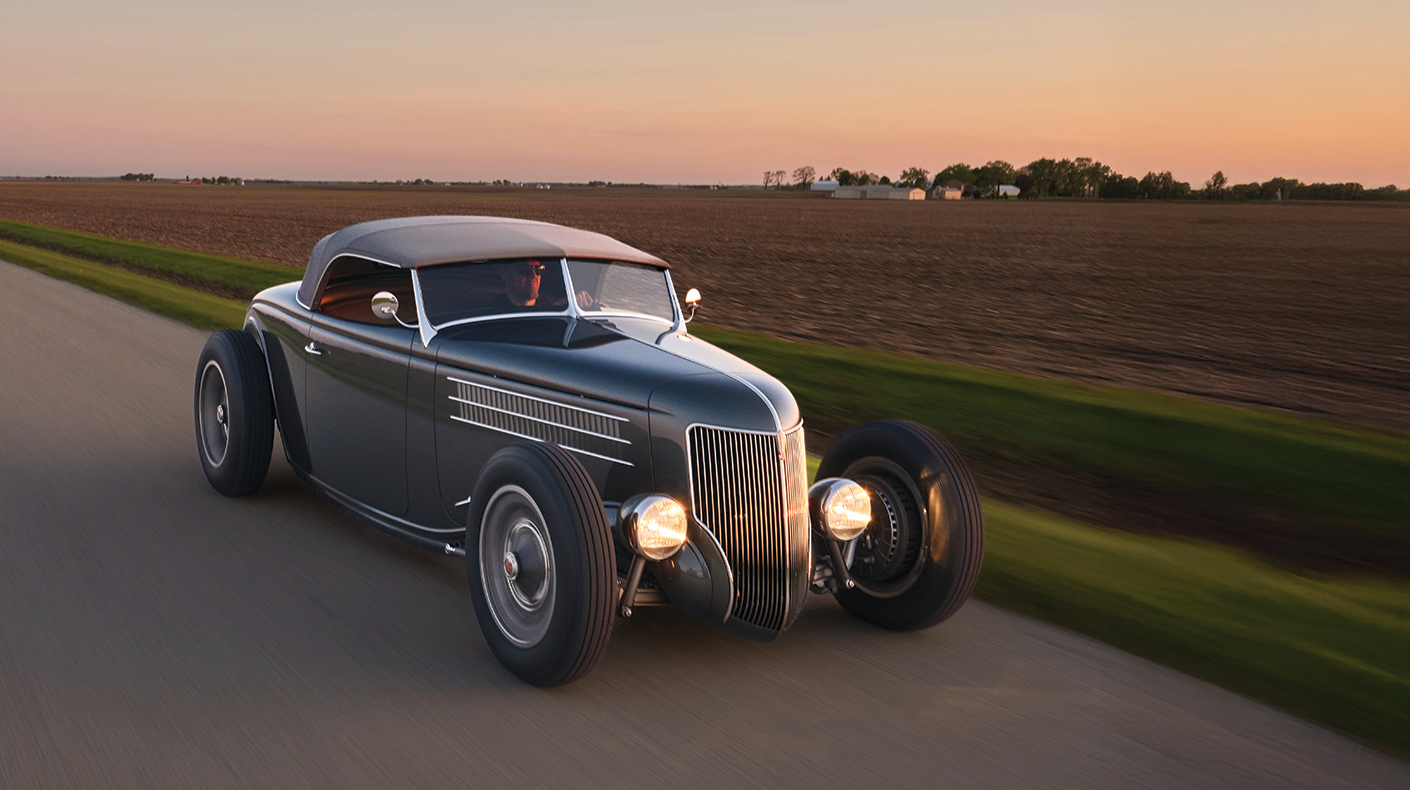
Troy Trepanier secures his second win at the 2025 Battle of the Builders Presented by Mothers Polish.
There's something to say about those who keep winning, but what is it? Is it that they are that skilled in their trade? Or is it that they know themselves? Do they know their product and the market well enough to know when it's time to shine? For Troy Trepanier and his exceptionally talented team at Rad Rides by Troy, the answer is yes to all the above.
Trepanier started his custom shop in 1995 in partnership with his now late father. Since then, his shop has risen to industry fame through seamless fabrication and land-speed performance, garnering massive accolades and awards, including now two overall wins with the SEMA Battle of the Builders (BOTB) Presented by Mothers Polish—SEMA's custom-vehicle competition that takes place at the SEMA Show.
Builders can compete in one of the contest's four categories: 4 Wheel Drive & Off-Road; Hot Rod & Hot Rod Truck; Sport Compact, Import Performance, Luxury & Exotic; and BFGoodrich Young Guns (builders 29 and under). Industry judges narrow down the field each day until there are four categorical winners crowned as class champions.
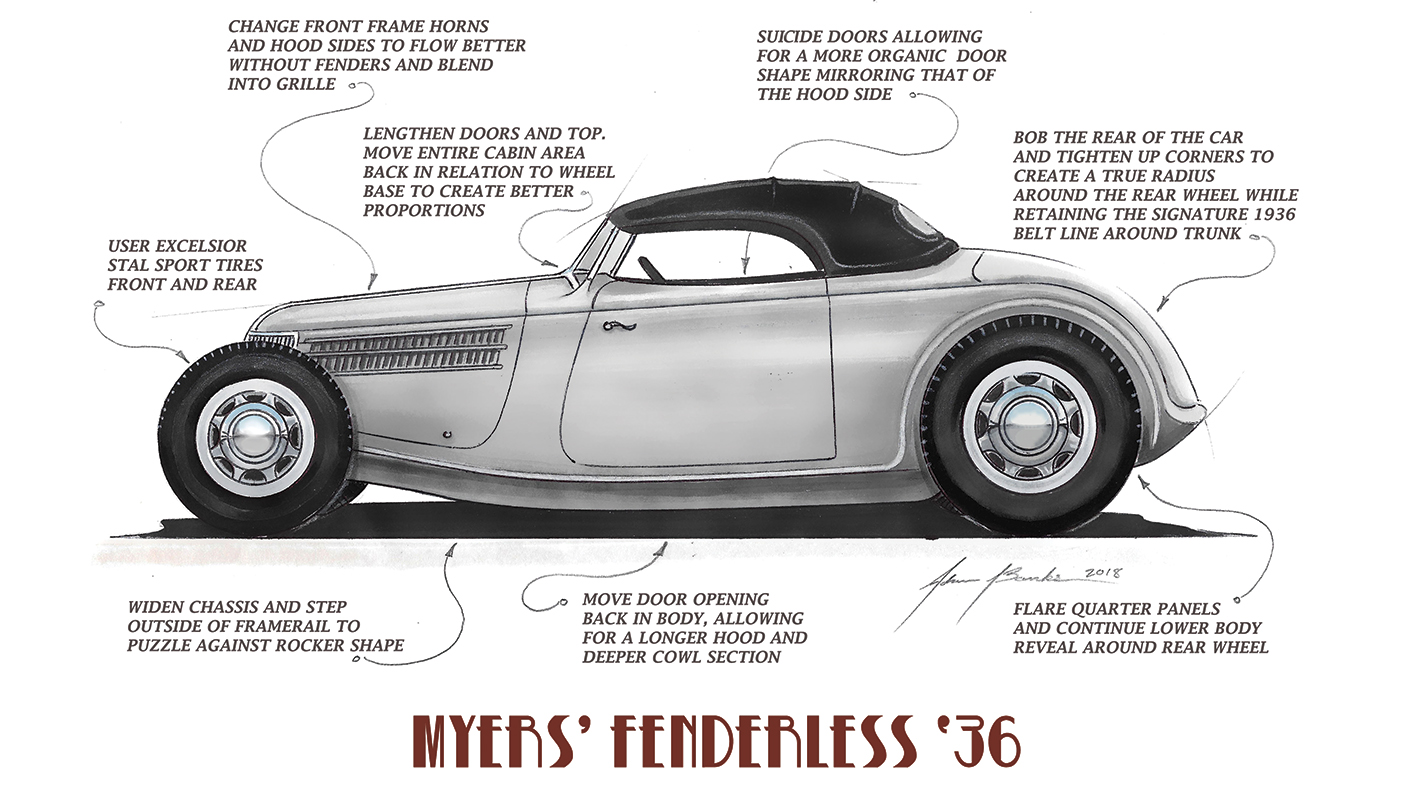
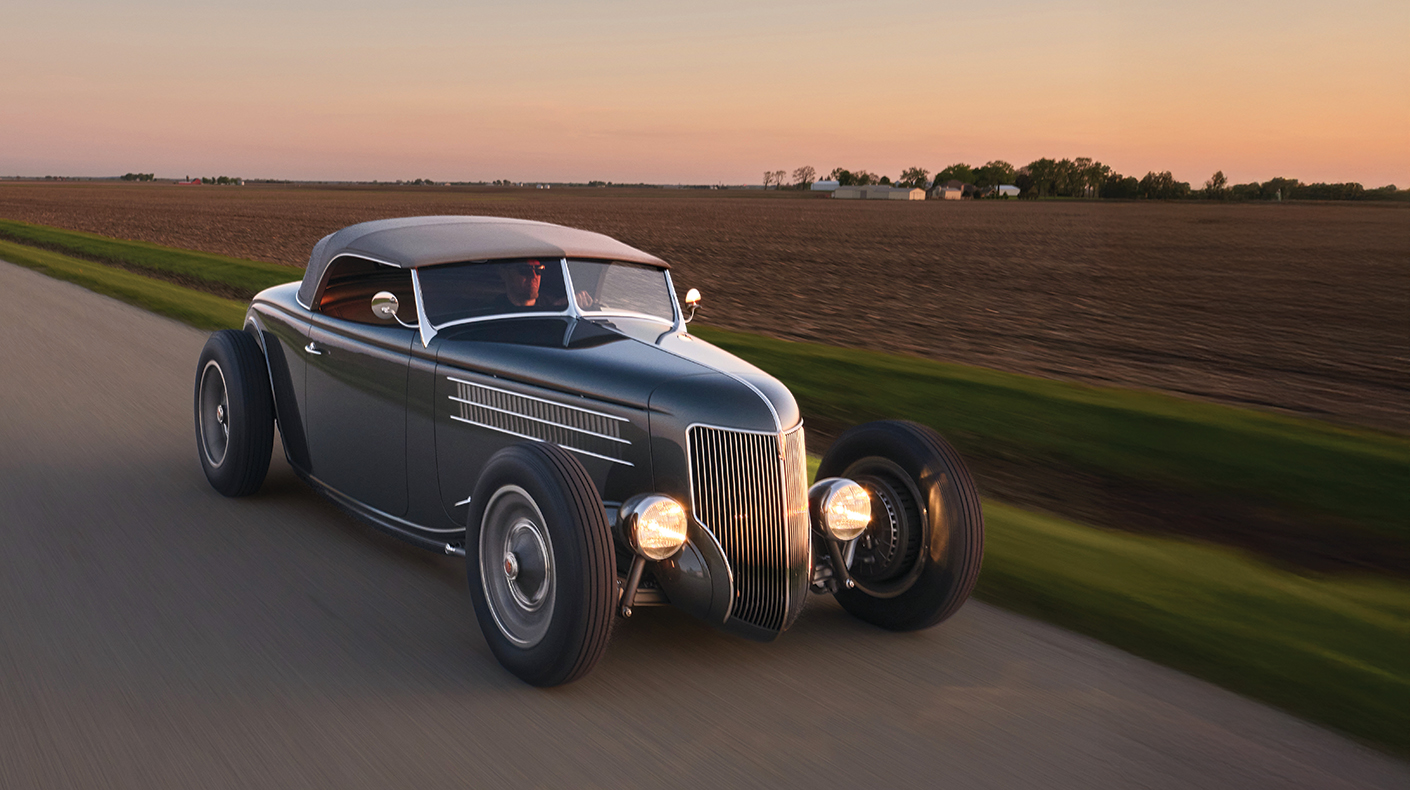
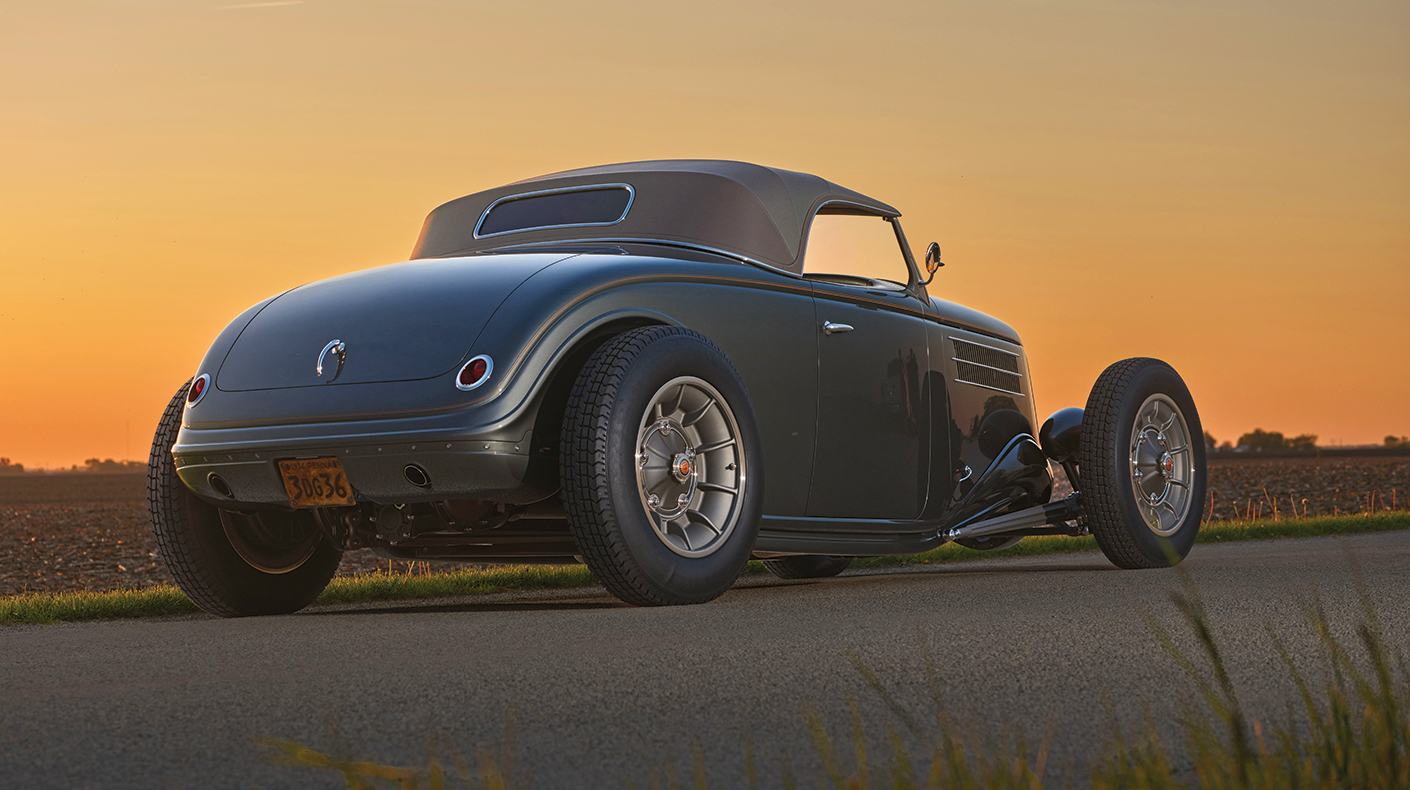
For the 2025 iteration of BOTB, Rad Rides brought a coach-built '36 roadster coined Fenderless that was commissioned by collector and hot-rod historian Ross Myers. Trepanier and company rolled into Las Vegas for the SEMA Show to compete against 39 other top-shelf builds. Day by day, the competition whittled down to 12 builders, three from each class. The 12 finalists judged each other, and their votes not only determined the four class champions, but also the overall BOTB winner which went to Trepanier and his '36 roadster.
In true SEMA fashion, we had to break down and study the anatomy of this success. We reached out to Trepanier and Adam Banks—designer and lead fabricator for Fenderless—to better understand the inspiration behind the build, the details that make this roadster special and what they think the future of custom car-building holds.
STAYING TRUE TO TIME
Like most builds, Fenderless began with an idea and a relationship between the owner and the shop. Myers had entrusted Trepanier with previous projects before and came to him and Banks on the possibility of building a roadster around the '36 Ford.
Myers proposed a fender-less style and Trepanier thought it would be a hot idea. "If [Ford] would have made a fender-less roadster in '36, it'd have been awesome. The '36 is one of the prettiest cars that Ford had done back then. So the challenge was then 'game on,'" says Trepanier; that challenge being making the fender-less look work.
Banks had some concerns with the initial idea. "They're beautiful cars, but doing one as sort of a highboy style, it's very difficult because when you take the fenders off, it doesn't lend itself to that look very well. I always describe it as sort of looking like a bumblebee," he explains.
But Banks was confident he could bring Myers' vision to life, and Trepanier had equal confidence in Banks' design. "The way that Adam designed and reproportioned everything. I felt it was spot-on, and it really just came to fruition. It's our best work by a mile," says Trepanier.
OEM QUALITY, AFTERMARKET FASHION
While nearly everything on this vehicle would be built in-house from the frame up, the philosophy behind Fenderless was to aesthetically build a car that could look like it came off Ford's 1936 assembly line.
"We spent a lot of time trying to make things look like they were appropriate for this car. And while it's not necessarily a themed car or a traditional hot rod, we wanted all the pieces we made for it manufactured to look like they belonged with this car and were possibly manufactured at some point by Ford. So there's a lot of nuances to that and how we designed wheels, suspension components, steering and everything else," says Banks.
Trepanier would get admirers who, upon seeing the custom hot rod, would take it for a lightly fabricated Ford. While some might take such remarks as an insult, Trepanier took them as compliments—signals that they achieved what they were after.
Trepanier believes a simpler, more fitted look will always move more people than something more extravagant or eccentric. "If it blends in and looks natural when looking at it, then I believe you've done it right," he says.
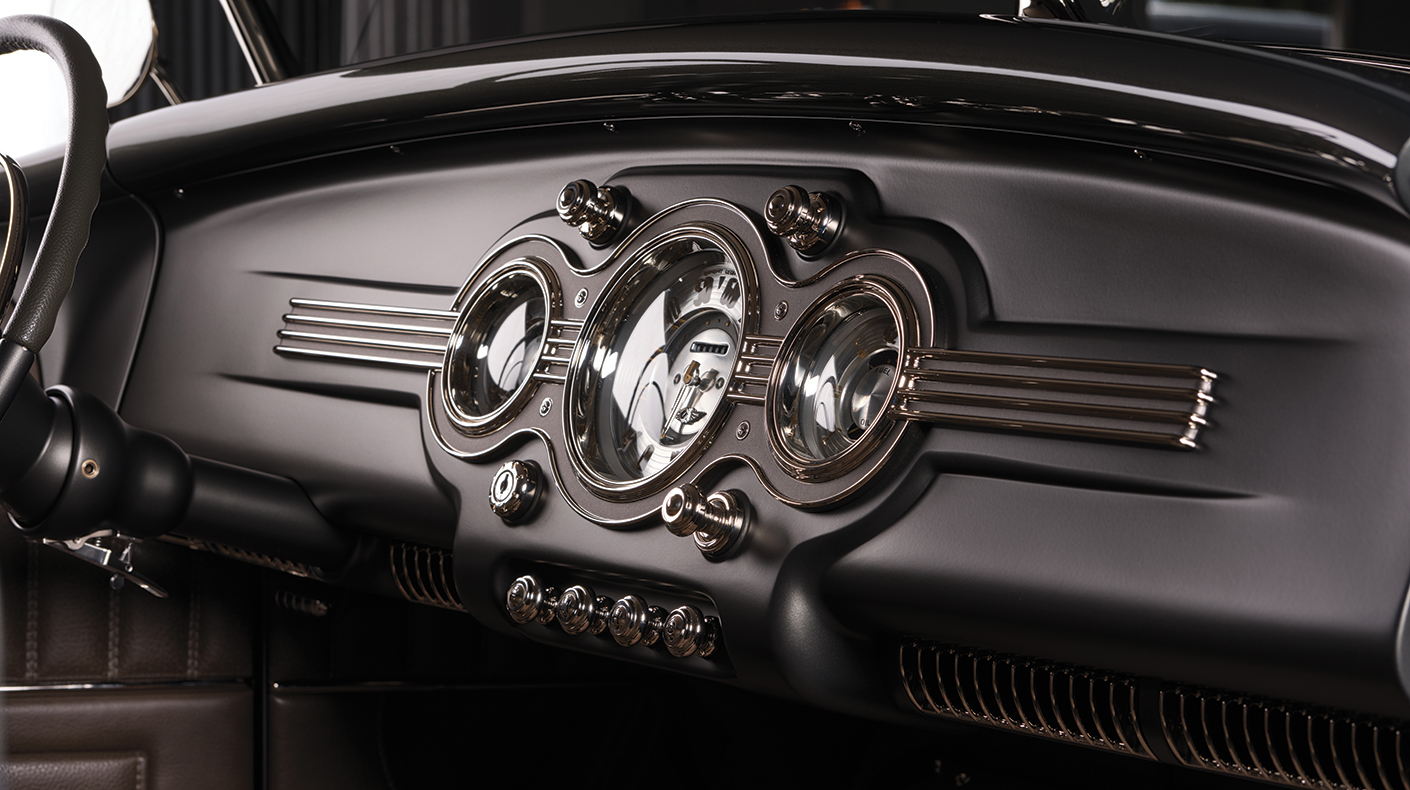
The build shines in its simplicity and elegance, but its construction was far from simple, as the Rad team designed and constructed everything in-house: the frame, the dash, the upholstery, the wheels and suspension components. Short of molding their own tires and chrome plating, Trepanier kept nearly everything under his roof.
"We do everything right here. We don't rely on anybody," he explains. "And I always say there's guys that build car bodies. They might say, 'We built the body.' And that's cool, right? There's not very many that do it [all under one shop]. We did all the machining on all the suspension, all the wheels. We made the door hinges, the door handles, the steering column, the radiator tanks, and we made a lot of other parts."
He continues, "As I've done this for 30 years, each time maybe we didn't do a certain part of [the build]. The next time we're like, 'Alright, what's the equipment we need to do that? And we [need] people that can do it.' We try to control our own destiny that way—by doing everything here."
HELLO FROM THE UNDERSIDE
Among the many winning features, Trepanier thinks a large part of his win came from the unique perspectives the BOTB event offered to judges and the audience. With a vehicle lift as part of the stage, the builders were able to showcase the well-thought-out craftsmanship that went into the underside. "When we raised it, and the guys went under, it was, like, jaw-dropping for them… I think it caught them off guard," expresses Trepanier.
Lifting the vehicle allows the judges to get a full 360-degree view of it, and it lends the builders the chance to create something unique that only a few would be able to see and appreciate.
Fenderless' underside matched its roadside view—unique and simple. What caught everyone off guard was just how well every component complemented the other. The matching oil pans, the control arms, even the brake drums all pay homage to other components with familiar fin features. It's the kind of attention to detail that demands your gaze.
Once you study the vehicle's underside, you begin to better understand Troy's philosophy on building—less is more, and more can sometimes feel "like drinking out of a fire hose." Something simple like the fin design, coupled with artistic vision, can still draw eyes.
"Just try to keep it simple," asserts Trepanier. "When I look at the bottom of the car, everything looks like it's very in order and very simple, [almost] like it's missing something, but it's just the stuff you don't need. The stuff that it needs to work is there, and that's it."
OLD AND NEW ENGINEERING
While the body was made to stay close to a Ford '36 Roadster, the engine told a little different story, one of perfect synthesis between old and modern engineering.
The Rad team fitted a '57 Ford 312ci Y-block into the fabricated engine bay, and it boasts a few unique parts blending old and new technologies. Bringing power into the old motor is the McCullough VR57 supercharger. In the spirit of "from factory," the finned supercharger was an available add-on for the '57 Thunderbird, which according to Hemmings, brought the 312-equipped Thunderbird up to 300 hp.
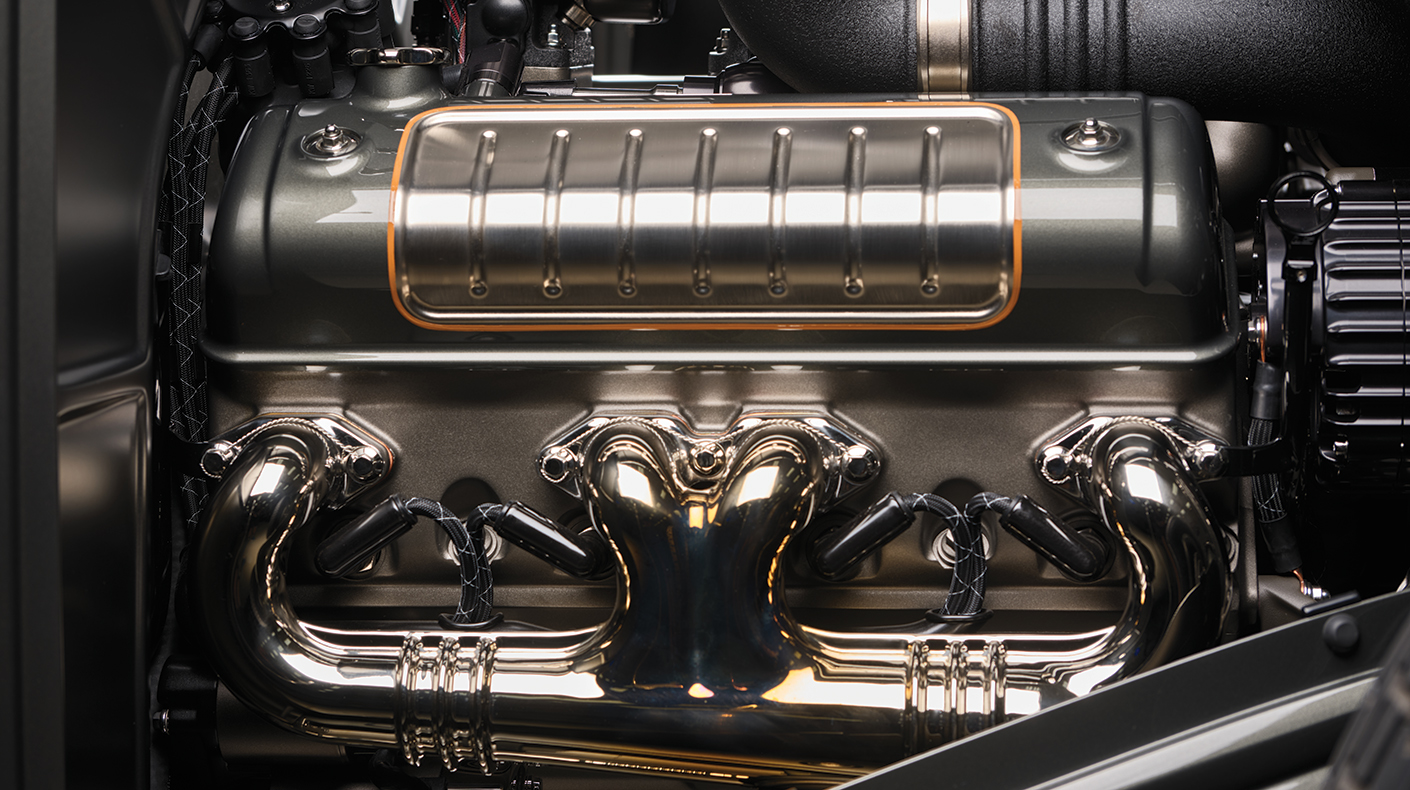
What really tied the engine together aesthetically was the in-house machined air plenum, which Banks said many believed the supercharger was machined around. "A lot of people think that we machined [the supercharger] case to match the air plenum and some of the other things on the car, but it was the other way around. We just cleaned it up, and then we made the air plenum look like it belonged with the supercharger," he explains.
Exhibiting the future of aftermarket building technology were the exhaust manifolds. Banks and Trepanier were approached by an old peer who jumped from the automotive industry into defense and aerospace. He came to them saying he now worked for Beehive Industries, manufacturing 3D-printed metal parts for jet and helicopter engines, and offered to build something unique for this project.
What came off the print bed were custom intake manifolds 3D printed from Inconel. Banks explains, "From what I understand, it [came from] the only printer in the United States, at least at the time, that was able to print those in one piece where you didn't have to weld multiple components together… Brian Ferguson, who works for us in the shop here, deburred and polished them. That's what we ended up with. The corrosion resistance is very similar to stainless steel, but Inconel has better heat characteristics as far as expansion than stainless steel. So it's used for a lot of high-performance applications and way overkill for this car."
A GOOD HAND TO PLAY
Rad Rides had previously won the BOTB back in 2017 with their '29 Ford Model A Tudor, but despite building incredible vehicles since, they've held back from throwing their hat in the ring, but why?
To put it simply, "I figured that eight-year span was a pretty good time frame to give it another shot and this was the right car," said Trepanier. But as he explored and divulged his answer, he became more esoteric in his reasoning.
"It was the right car," he said. He believed he and his team had built "top-shelf" builds—all capable of garnering accolades and all with the same quality as Fenderless. "But it's not the same feel. Maybe [because they were] more driven towards that customer? I call them artsy-fartsy builds sometimes, and they're a little more elegant, but it's just not the right feel."
Trepanier had forged a career around building some incredibly well-engineered cars, and with the full creative freedom that Myers had entrusted him, he and his team built something worthwhile that could create buzz and drop jaws onto the Show floor.
It's a skill and trade that he has spent more than 20 years developing. Trepanier has carried this philosophy of continually improving, striving to grow and build upon what's there. Twenty years of developing skills and purchasing tooling enabled the shop to build a vehicle from scratch, and it gave him the foresight to know when it was the right time to compete against the aftermarket's best builds. "We're constantly getting better. We're constantly pushing ourselves to get better each time and make it easier to work on and make it work better," says Trepanier.
WHAT THE FUTURE MAY HOLD
While we had Trepanier's and Banks' brains to pick, we asked the two industry pacesetters where they see the building trends headed from their positions in the industry.
Both mentioned that with the rise of accessible technology, we could see much more advanced builds on an elevated scale. "It just keeps elevating," says Trepanier. "There were, who knows, probably hundreds of cars there that were $1,000,000 or more—easy. Hundreds, maybe more? It's crazy where it's come to. But the money's out there. The industry is strong, and it just keeps getting better."
Trepanier's sentiments echoed those of SEMA Vice President of OEM and Product Development Jim Moore in our previous article "Trends Unboxed" (SEMA magazine January/February 2026), which evaluated trends seen at the SEMA Show. Moore argued that build quality is improving exponentially and will continue as access to advanced technologies increases.
Banks added that he also sees a rise in imported cars making their way into the building scene, a foreshadowing that aligns with the recent prevalence of Japanese imports showcased at the 2025 SEMA Show. But he also agreed with Trepanier that elevated builds on the level of OE quality are around the corner, enabled by improved scanning tools and 3D-printed components.
He says, "I personally think that all the technologies are going to help facilitate that we're going to get things closer and closer to OE quality, but as a one-off. And so I think there's a number of cars that were at SEMA this year that are pretty good representations of the next step in that sort of evolution."
While we wait for what's in store for this coming 2026 BOTB with a new line of skillfully crafted cars and trucks, we are left with Trepanier's notice for those patiently waiting to see what's brewing in the Rad Rides garage and their next BOTB entree, "It's going to be over the top… and just lights out."
BFGoodrich Young Guns Class Winner: Thomas Dickerson
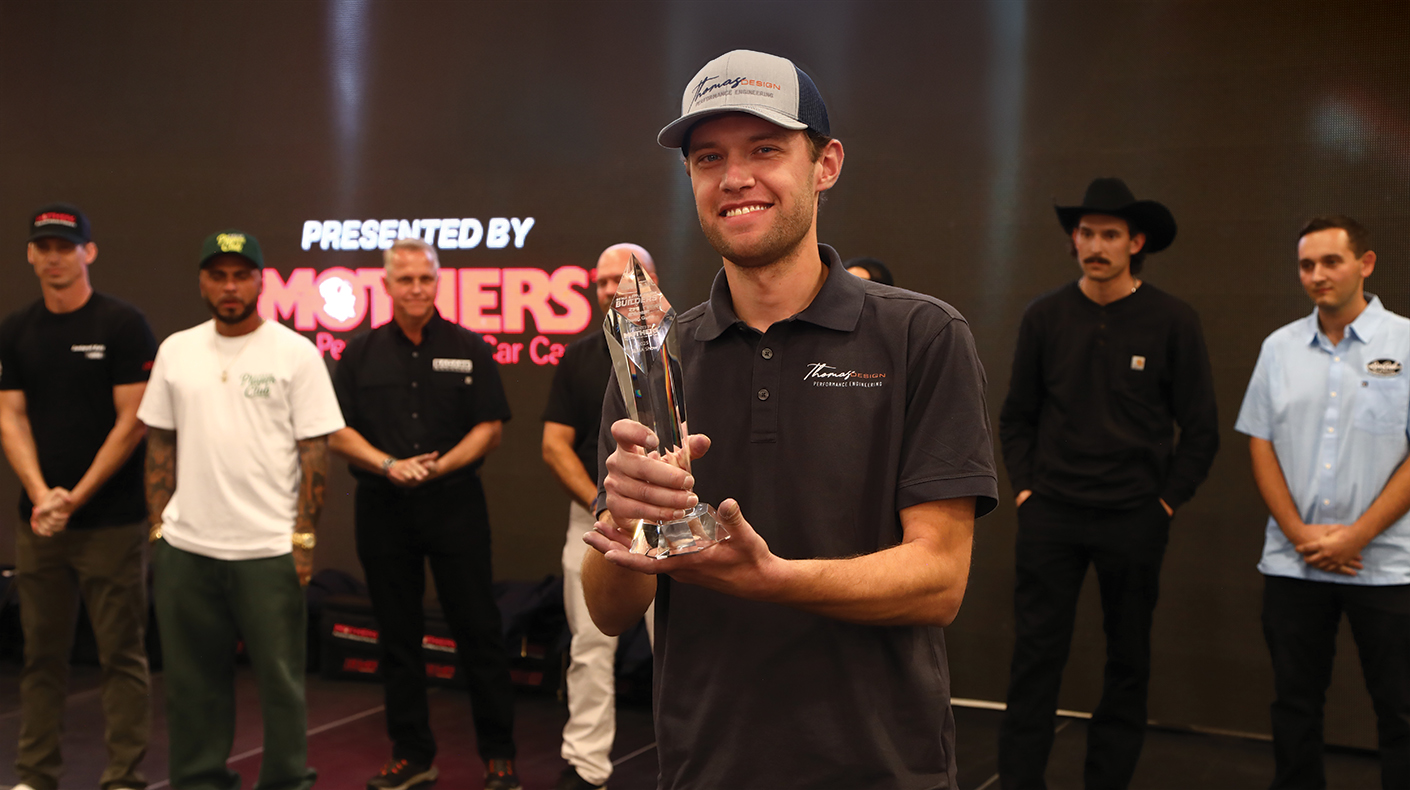
Each categorical winner of the Battle of the Builders (BOTB) Presented by Mothers is a champion in their own class. And while each has gone up against a fleet of stellar entries and has been crowned a category winner, there's something special to be said about the BFGoodrich Young Guns winner.
The BFGoodrich Young Guns class is for up-and-coming builders under age 29. Created to highlight the emerging generation of builders making headway in the industry, it encourages newcomers to show their talents in the competitive yet supportive environment that is BOTB.
While short on experience, the builds these young men and women produce are nothing short of extraordinary, and they cast a bright light on our industry's future.
Shining brightest was this year's winner of that category, Thomas Dickerson from Lexington, Georgia, and his refined '67 Chevy C10.
Dickerson is no stranger to the BOTB battlefield. In 2021, he entered the Young Guns division with his '67 Shelby GT350 Mustang. To his surprise at age 22, he made his way into the top 40. Following the competition, the experience ignited a new sense of inspiration in him.
Returning from Las Vegas, he decided to return to the BOTB stage with a truck platform, specifically his grandfather's old C10. "I got to see many builds from industry professionals and made it a target to hit. I wanted the truck to push me out of my boundaries and solidify my spot in the industry as I get my start," says Dickerson.
With this new fire in him, he got to work planning this C10 build. Dickerson was inspired by a pro-touring car he saw paired to a C10 truck. He wanted a performance-based build, yet still emanated the class of a C10. "I worked on a rendering with Tavis Highlander through Art Morrison and we came up with the perfect design to merge the performance aspects with a pro-touring look in a C10," explains Dickerson.
A METAL CANVAS
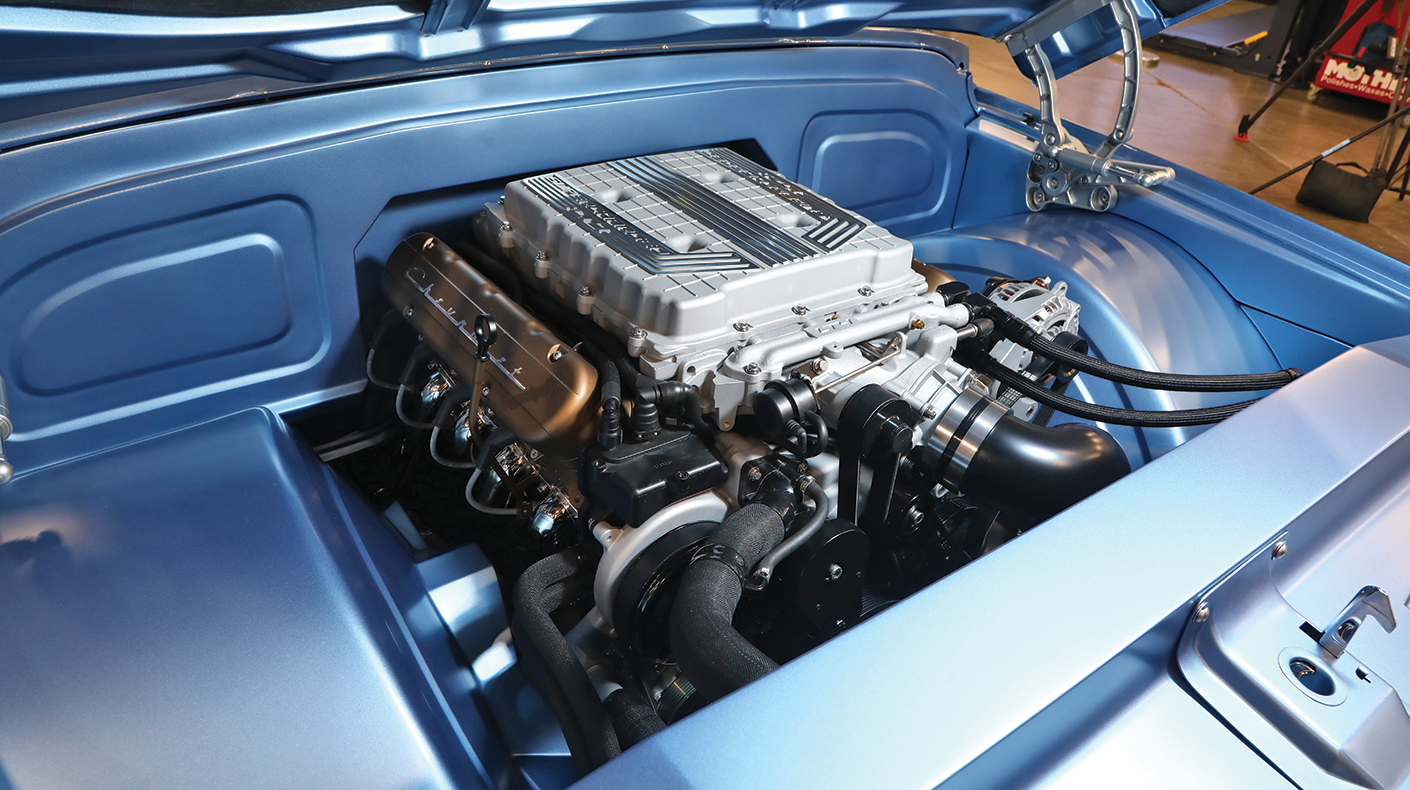
The C10 was Dickerson's canvas but also his training module. With no customer to work with, he was able to completely fabricate and mold the truck to his vision—from the new metal body to the fabricated, modernized dash and interior. But building the truck himself meant stepping out of his comfort zone and entering new territory, including interior design and upholstery.
Equally as impressive is the elegant wooden bed he constructed with an actuating lift, allowing eyes to spectate the bronze-painted and smoothed Art Morrison frame and differential. The bed was custom-fabricated and made with Brazilian ironwood. The best part—it automatically drops back down when the engine turns over.
Speaking of that engine, the Chevy's custom engine bay cradles a GM Performance LT4 motor—generating 650 hp—paired with a 10L90 10-speed transmission.
Dickerson regularly updated social-media followers on Facebook and Instagram, garnering significant anticipation and the final product put Dickerson at the head of the field—putting him in the same league with industry professionals for the overall winning title. While Troy Trepanier came out best in Show, Dickerson still carved his name in SEMA history. "Having received the top award for Battle of the Builders Young Guns is definitely surreal to me still. I definitely feel like the truck earned its spot every step through the competition and it was cool hearing the responses from industry professionals," says Dickerson.
OPENING DOORS
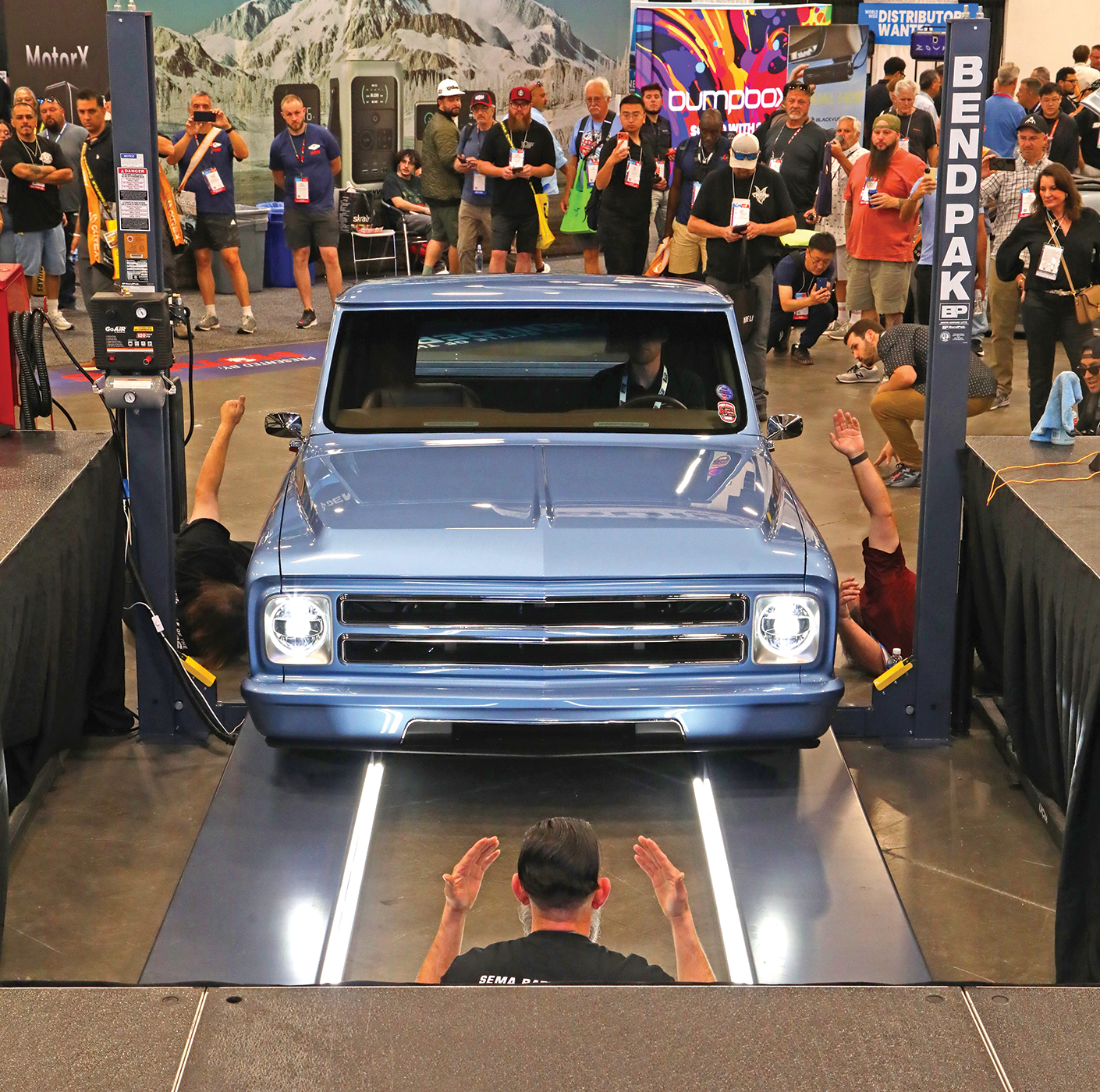
Dickerson is a true believer in the Young Guns portion of BOTB, having competed in the category twice now. He believes it instills inspiration to younger, greener industry hopefuls, showing them what is possible for someone at 25-years-old with passion and hard work.
Motivating the next generation to get involved in the industry has been a mission priority for SEMA, as it ensures the specialty-equipment market's future vitality. And it's why BFGoodrich has partnered with SEMA to help elevate the Young Guns division of the competition.
It's a move that even has Dickerson excited. As he puts it, "I believe with BFGoodrich joining the fight, I think [Young Guns] will only continue to grow with support like theirs as a proven name in our industry. Young Guns gives the chance for a young builder to be placed in the event and gives the builder the opportunity to network and connect."
With BFGoodrich now a proud sponsor of Young Guns, it brings a new lens of legitimacy to the platform as well as increased audience reach through their media channels. More companies and entities will see a tier-one name attached to the Young Guns competition, and pay attention to what these youngsters have to offer.
Getting these young builders and their vehicles out to the Las Vegas Show floor offers them incredible opportunities. Dickerson himself experienced this during his first BOTB run. According to an interview he did with ScottieDTV, many of the companies he networked with at the 2021 SEMA Show followed up and partnered with him on the C10 build. "These companies allowed me to push the boundaries as a young gun and it really shows," says Dickerson. "Their unwavering support allowed me to produce an extremely high-quality build and familiarize myself with professional high-quality products used by many industry [members]."
Dickerson feels the industry could always do more to showcase and promote career opportunities within the aftermarket, especially in schools. It's a matter that resonates deeply with him, and he is doing his part locally: "Personally, going through technical college is where I got my foot in the door, but I did not have a path to follow. I have been helping lay a path for those local to me to follow if they truly have a passion to get into this industry."
With a Young Guns trophy under his belt, Dickerson's mission remains relatively unchanged. With his new shop, Thomas Performance Engineering, he plans to continue building pre-'90s classic vehicles. Currently, he's working on a client's '63 split-window Corvette with an LT4. He also works closely with Art Morrison Enterprises, finessing and outfitting special-ordered chassis with drivetrain assemblies.
"This entire business endeavor has been the result of years of proper planning along with guidance from my industry mentors, who have made this industry what it is," says Dickerson.
Regarding future BOTB events, "I do plan to compete again one day soon," says Dickerson.
"I can't compete in Young Guns as I have won, but I do plan to compete in the Hot Rod Class as an up-and-coming professional."
Dickerson has proven his creative talent and has established himself as a top-tier builder, and the industry awaits to see how he'll fare next to the big dogs with his next project. "The future is bright, and Thomas Performance Engineering will continue to grow and leave a path for those who are interested in making a career in this amazing industry," he concludes.
To learn more about him, Dickerson recommends checking out his self-titled episode of the "Oil and Whiskey Podcast" where he sits down to talk about his business, his build and thoughts on the industry.