A LOOK AT THE YEAR'S KEY TRENDS AND DEVELOPMENTS THAT WILL CONTINUE TO CHALLENGE AND DRIVE THE AFTERMARKET IN 2026.
From economic and technological challenges to market shifts and major legislative wins, 2025 marked a momentous year for the specialty-equipment industry.
What's more, SEMA and PRI were often at the center of the year's events, both driving them and helping the industry identify and navigate emerging hurdles and opportunities.
For perspective on some of 2025's most impactful developments, we turned to SEMA and PRI staff experts across a variety of disciplines.
The following are their observations on the year's hot-button topics and how they might reverberate in 2026 and beyond.
THE LEGAL AND LEGISLATIVE FRONT
Karen Bailey-Chapman, SEMA Senior Vice President of Public and Government Affairs
One of the most disruptive legal issues in 2025 centered around President Trump's rapid and unpredictable imposition of tariffs beginning last February.
The tariffs were first imposed on Canada, China and Mexico, then on steel and aluminum, then on other markets, at times taking the form of reciprocal escalations.
"They were extensive, hit typically 'safe' trading spaces like Canada, and really created a lot of on-and-off-again disruption and chaos within our industry," recalls Karen Bailey-Chapman, SEMA senior vice president of public and government affairs.
"They weren't a complete surprise, since the President had been very clear about his position on tariffs and trade imbalances, but the swiftness and broad application was a bit of shock and awe from this administration."
The upheaval prompted SEMA's public and governmental affairs office to undertake an industry-wide survey of the effects on aftermarket businesses, followed by discussions with the Department of Commerce in Washington, D.C.
"The survey allowed us to go into our conversations with actual data, so it wasn't just chaos and emotions, it was the facts," says Bailey-Chapman.
Those exchanges led to several exceptions for auto parts, releasing some of the pressure on the industry.
But while the disruptions have somewhat calmed, they are not completely resolved, meaning many businesses face a still-uncertain climate as they enter 2026.
As of press time, the U.S. Supreme Court had agreed to review whether the International Emergency Economic Powers Act (IEEPA) authorizes the President to impose tariffs, meaning duties and taxes on imports, broadly, especially by claiming a "national emergency."
Oral arguments were set for November 5, 2025.
"We expect a decision by the end of the calendar year," Bailey-Chapman notes.
President Trump's stated tariff goals include equalizing trade imbalances and reshoring manufacturing.
Bailey-Chapman says the data shows general industry support for reshoring, even if there are mixed feelings about tariffs as a means to achieve it.
She also highlighted the growing call for "Made in America" enforcement as a related hot-button topic for 2026.
"There's been a rise in issues with companies marketing their products as 'Made in America,' where everybody knows those products aren't made here because you just see it in the pricing differential," she says.
Also related is the new administration's broad deregulation push, particularly at the EPA, which holds both potential opportunities and risks for the aftermarket.
"Two big reasons the industry left the United States were environmental regulations and labor costs," Bailey-Chapman explains.
She adds that the sooner such uncertainties are settled, the better, because "businesses don't invest in six-year increments."
"They invest on 20- or 30-year increments."
Of course, tariffs were not the only major story in 2025.
SEMA scored a major victory against U.S. Environmental Protection Agency waivers to the California Air Resources Board that could have banned internal combustion engines and decimated the industry.
Even so, Bailey-Chapman is quick to correct misinformation circulating online about federal emissions law.
The repeal of the California waivers does not change standing emissions regulations.
The law is still the law, and defeat devices, including diesel defeats, are still illegal.
Aftermarket manufacturers of products that impact vehicle emissions must still demonstrate emissions compliance through a CARB executive order for "50-state legality" or certification through the SEMA Certified Program for "49-state legality."
So what is on SEMA's legal and legislative docket for 2026.
Racing-related legislation, particularly protecting racetracks from nuisance claims and leaded fuel bans, dominated the association's state agendas in 2025 and will continue as priorities this year.
Also watch for a major "right to modify" legislative campaign timed to coincide with the current federal highway bill's reauthorization in Congress.
INDUSTRY MARKET TRENDS
Gavin Knapp, SEMA Director of Market Research
Since vehicle purchases are often trigger points for aftermarket modifications, it will come as good news that OEM sales continued to recover throughout 2025 from their post-COVID slump, albeit slowly.
"New-vehicle sales have remained down somewhat for the last few years, but they're beginning to ramp back up," says Gavin Knapp, SEMA director of market research.
This also bodes well for the used-car market.
"If people aren't buying new vehicles, then they aren't trading in old vehicles," Knapp points out.
While vehicle prices have skyrocketed over the last five years, OEMs may soon respond with more affordable models.
Nevertheless, what consumers will buy in 2026 will differ vastly from even a decade ago.
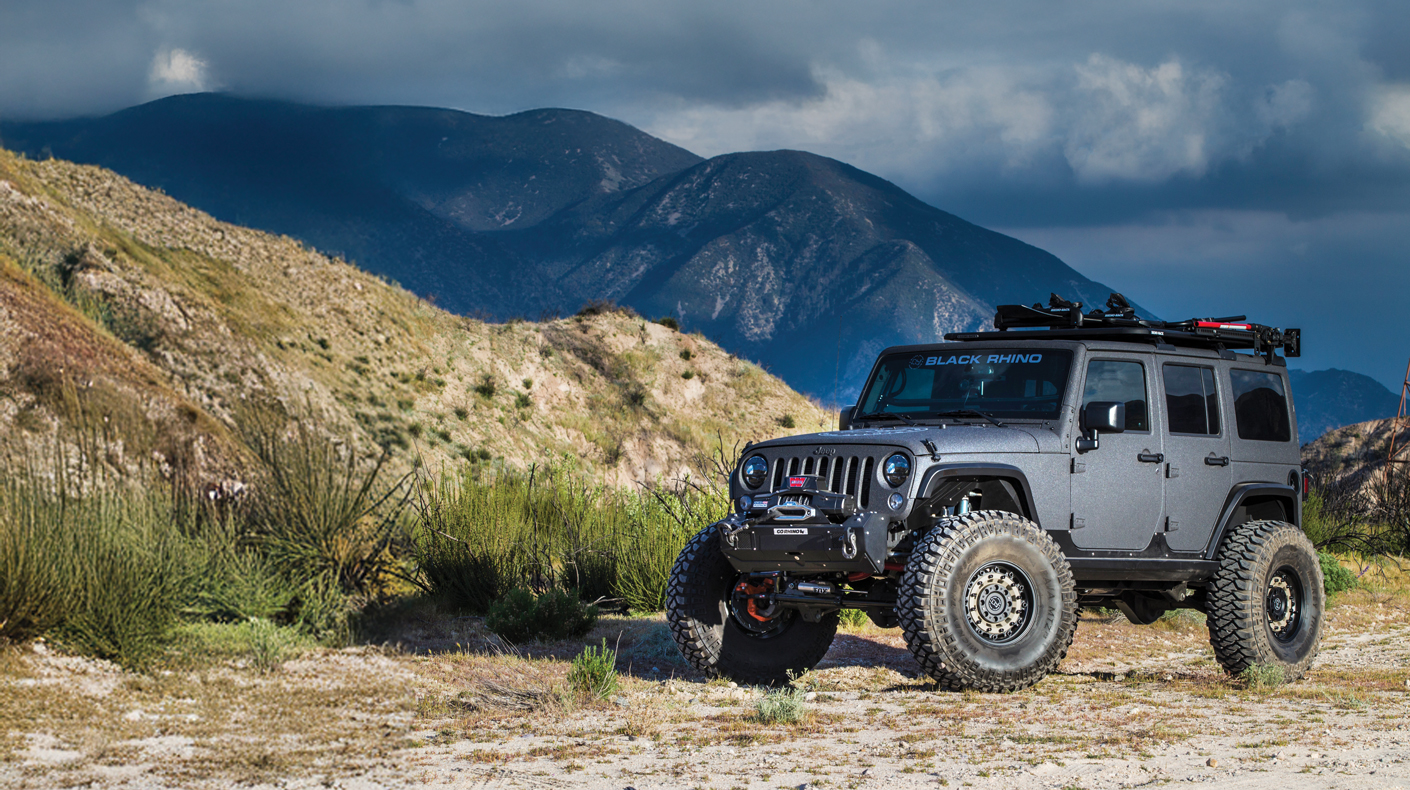
Pickups and SUVs remain as popular as ever.
Crossovers, or CUVs, are rapidly eclipsing sedans and coupes, so much so that automakers are paring the latter from their lineups.
Key for the aftermarket, says Knapp, will be the extent to which consumers "blur the lines" between SUVs and CUVs.
"When they buy these CUVs, do they think of them as trucks and SUVs, or do they just think of them as different-shaped cars," he asks.
If the answer is trucks and SUVs, it will deliver the aftermarket greater avenues for modifications and accessorization.
In other good news for the aftermarket, performance and musclecar variants also appear poised to survive the coming conventional-vehicle "mass extinction."
"Dodge announced it was bringing back a musclecar, but as an EV."
"Now the company has spun back on that, recommitting to Hemis and the V8," Knapp says.
"We're also seeing some of the performance interest that has shifted away from the Detroit Three move toward European and Asian platforms."
Another 2025 market development is the slowing of EV sales.
Despite heavy OEM investments, electrified platforms have failed to capture anticipated market share.
"At the end of the day, especially in the United States, consumers just aren't ready," observes Knapp.
Vehicle and charging costs, lack of infrastructure and range anxiety all factor into buyer hesitance.
"But you can't totally blame consumers because, frankly, the OEMs haven't really offered many great EV options either," Knapp argues.
Still, the EV market is predicted to grow over time, just not at the ambitious rate originally expected.
In the meantime, OEMs are already shifting back to hybrid engine technologies and other ICE research investments as a pragmatic bridge.
"A lot of companies, even those that were eager to bypass hybrids altogether, have now come back and said, 'No, we need to move into the hybrid space as well,'" says Knapp.
In addition, automakers will explore biofuels and other emerging clean ICE technologies.
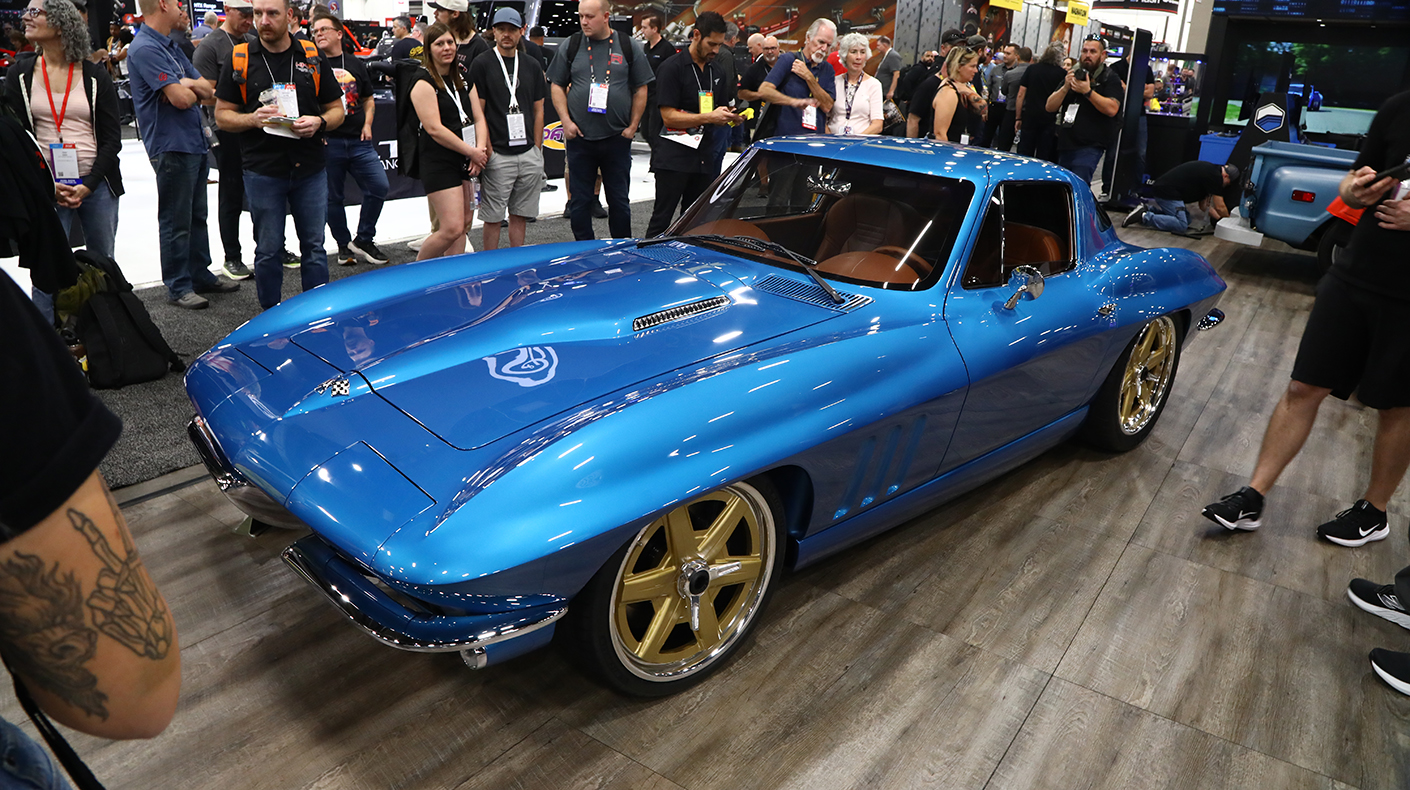
In terms of collector vehicles and build projects, "new classics" are gaining traction.
Knapp defines them as "that cool factor that I remember from my youth in a car that can perform and brake like a newer vehicle."
This includes growing interest in JDM, 70s and 80s vehicles and older BMWs, currently an especially hot market.
The pandemic also accelerated a shift in how manufacturers supply their enthusiast customers.
"We see more and more companies pushing direct-to-consumer sales in the digital space and on their websites," says Knapp.
He adds that current indicators point to another year of relatively level sales numbers for the overall aftermarket, with a return to a more typical upward trajectory thereafter.
VEHICLE AND PRODUCT TECHNOLOGIES
Jim Moore, SEMA Vice President of OEM and Product Development
Luis Morales, SEMA Director of Vehicle Technology and Product Development
Consumer preferences are not the only factors slowing electrification.
A global shift to EVs requires electrical grids that can deliver significantly more power.
According to Jim Moore, that capacity remains limited, in part due to the rise of artificial intelligence.
"One of the things that has become apparent is the need for tremendous energy resources to drive AI, and few were expecting the sudden energy hunger from data centers," he explains.
As a result, electrification momentum is slowing, with OEMs shifting back to ICE investment alongside EVs.
Meanwhile, ICE vehicles are expected to make gains in efficiency and emissions reduction.
"The industry will not abandon EVs but will reinvest in ensuring a balanced portfolio across multiple drivetrain technologies," Moore says.
Luis Morales notes that the automotive ecosystem is becoming increasingly multidisciplinary.
"You are not going to come to a solution with one single piece of technology," he explains.
"It requires a combination of systems working together."
Technologies such as AI, hybrids, hydrogen, EVs, autonomy and cybersecurity are all converging.
Manufacturing is also evolving through AI, robotics, 3D printing and new materials.
"Relatively small companies are already able to access high-tech tools," Moore says.
SEMA is also exploring its role within the broader concept of mobility.
This includes transportation systems, infrastructure and policy.
As part of that effort, SEMA became a full member of the Federation Internationale de l'Automobile.
The partnership strengthens global collaboration in mobility policy and innovation.
RACING INDUSTRY AND MOTORSPORTS
Michael Good, Performance Racing Industry President
The racing industry faced its own legislative challenges in 2025.
"I guess we are fortunate in that we do not have some of the battles that the automotive aftermarket faces, but that does not mean we do not have them," says Michael Good.
One of the most pressing issues is protecting grassroots tracks from development and urban encroachment.
"There are tracks that are multigenerationally owned where developers are offering life-changing money," he explains.
Noise complaints from nearby residential growth also present challenges.
Legislative threats emerged as well, including a proposed Oregon bill to ban leaded fuel at Portland International Raceway.
The bill failed after opposition from PRI and SEMA.
Another victory came in North Carolina, where legislation was passed to protect racetracks from nuisance complaints.
Looking ahead, hybrid and alternative fuels are shaping motorsports.
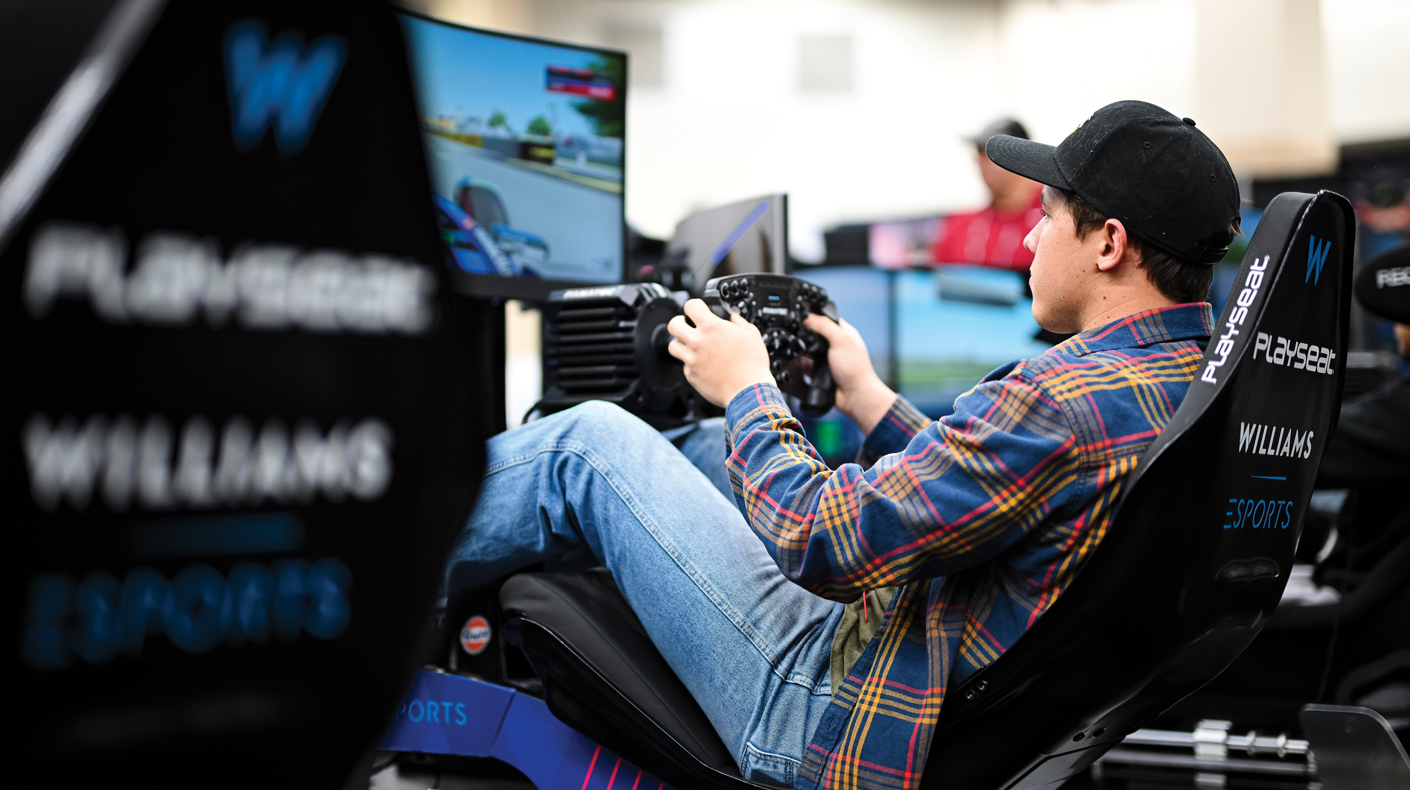
Simulation racing is also growing rapidly.
"There are now SIMs that are as realistic as driving a true F1 car," Good says.
Maintaining grassroots tracks and attracting young enthusiasts will be key to the industry's future.
CAR CULTURE
RJ de Vera, SEMA Vice President of Marketing
Car culture continues to expand across platforms and audiences.
"There are so many things going on in the car and truck ecosystems," says RJ de Vera. "It feels like every year there are more events and enthusiast trends happening globally."
Social media has played a major role in that growth.
"It has given many things a global spotlight," he says.
Video has become especially important.
"Photos can only deliver so much."
"Video adds sound and emotion, which are essential to car culture."
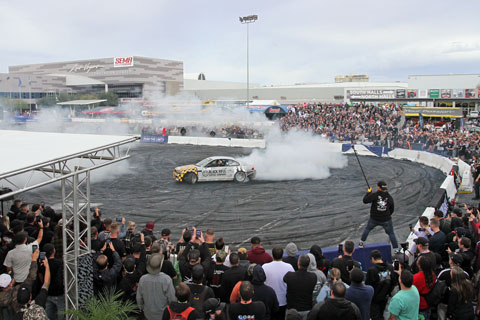
Events are evolving into festivals and hybrid experiences.
At the same time, smaller curated gatherings are gaining popularity.
The rise of content creators and gaming is also bringing in younger audiences.
"Kids are getting into car culture through games where they collect vehicles," de Vera says.
For businesses, these trends create new opportunities for engagement.
Pop-ups, events and digital content are all becoming key tools.
And do not forget to post the videos on social media.
Main image courtesy of Shutterstock