By Denise Aquino
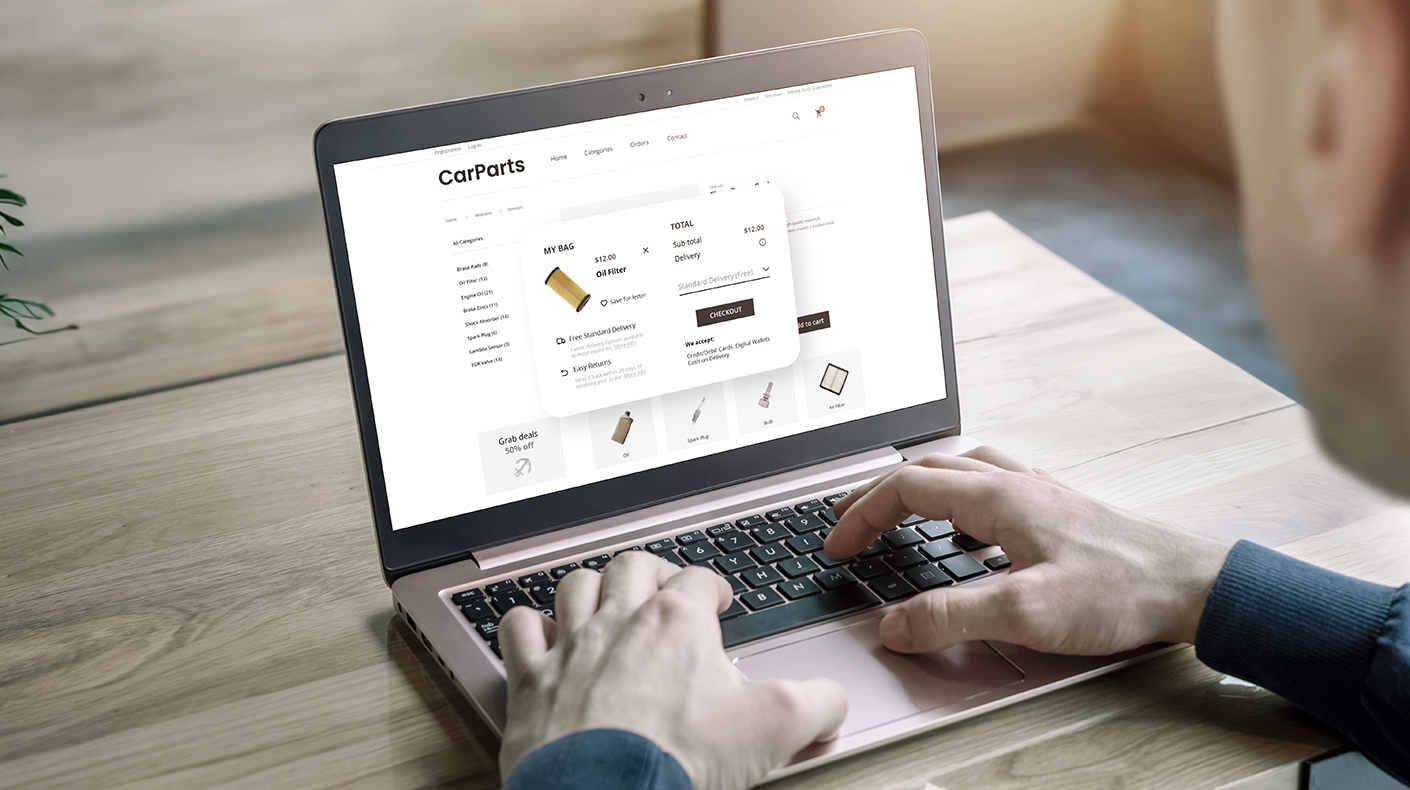
A shopping trip that once began in a store now may start with a search bar: This is reshaping retail, as e-commerce accounts for approximately 17% of all U.S. sales.
Amazon represents half of all U.S. e-commerce, while emerging platforms such as Shopify, Temu, TikTok Shop and Etsy are gaining popularity.
How Automotive Is Different
The specialty-equipment industry moved to online sales early, and as a result, our market has a more balanced split, with 48% of sales originating online.
The automotive category on Amazon generated an estimated $24B in revenue from September 2025 to September 2026, according to data from Jungle Scout, while the engine parts category generated $857M in revenue. Note: Amazon data combines specialty and replacement parts because there are no transparent rules defining what constitutes a specialty part versus a replacement part.
Physical stores, installers and specialty retailers remain essential to the specialty-equipment market. To support this with data, the number of auto parts accessories stores (NAICS 44131) increased by 3% between 2017 and 2022, according to the U.S. Census Bureau's most current statistics.
Bottom Line
Automotive e-commerce is growing, but the aftermarket is not becoming a one-channel business––the future is hybrid.
What's new with SEMA Market Research?
For more analysis of the automotive market and to download our latest reports, such as the "SEMA Market Report" and "SEMA Light-Truck Snapshot," visit www.sema.org/research.
We need your help. Please take the SEMA State of the Industry Survey to ensure your point of view is reflected in SEMA Market Research.