Story and photos by Andreas Conradt, Automedia
Turbocharged at Last: Porsche 911 GT3 RS Facelift Could Get a Mild Turbo
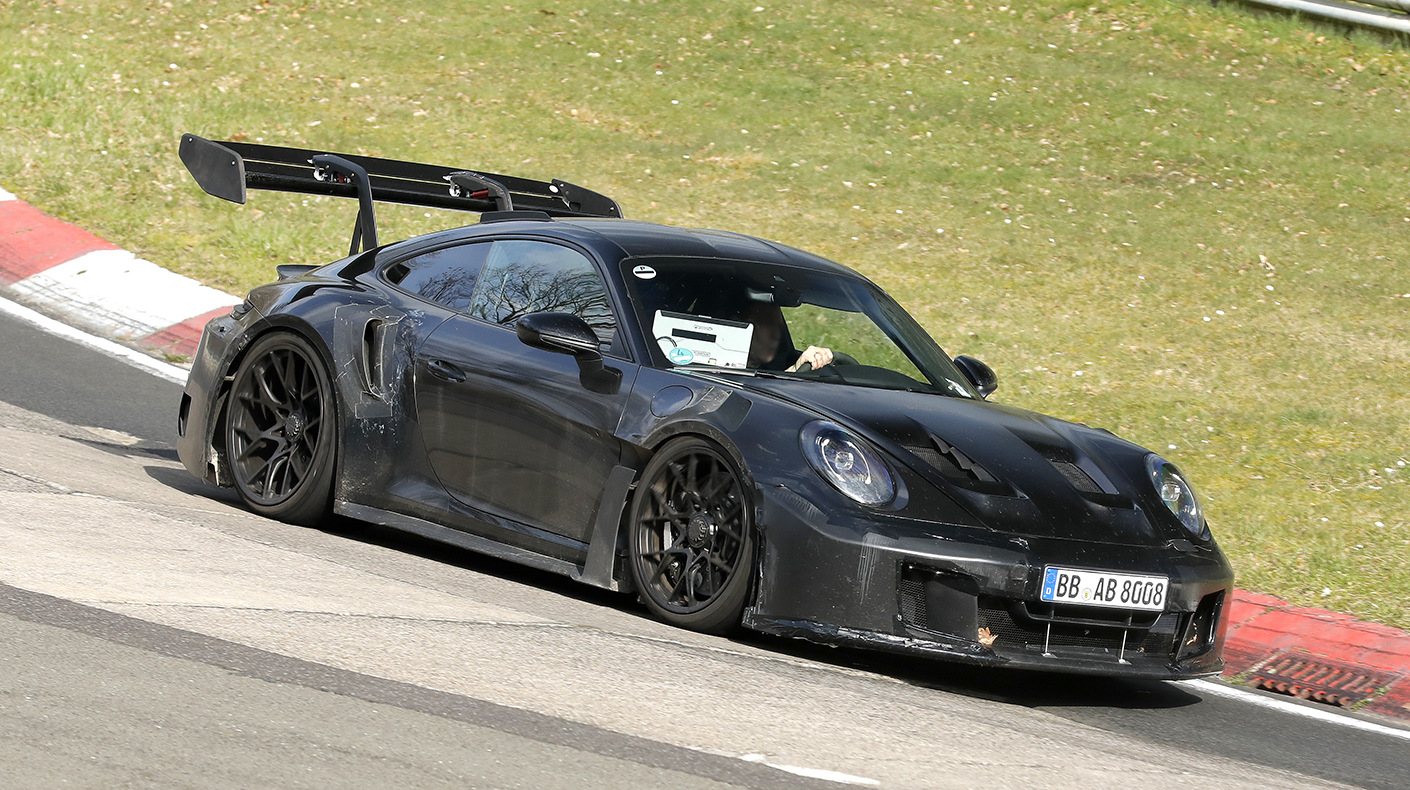
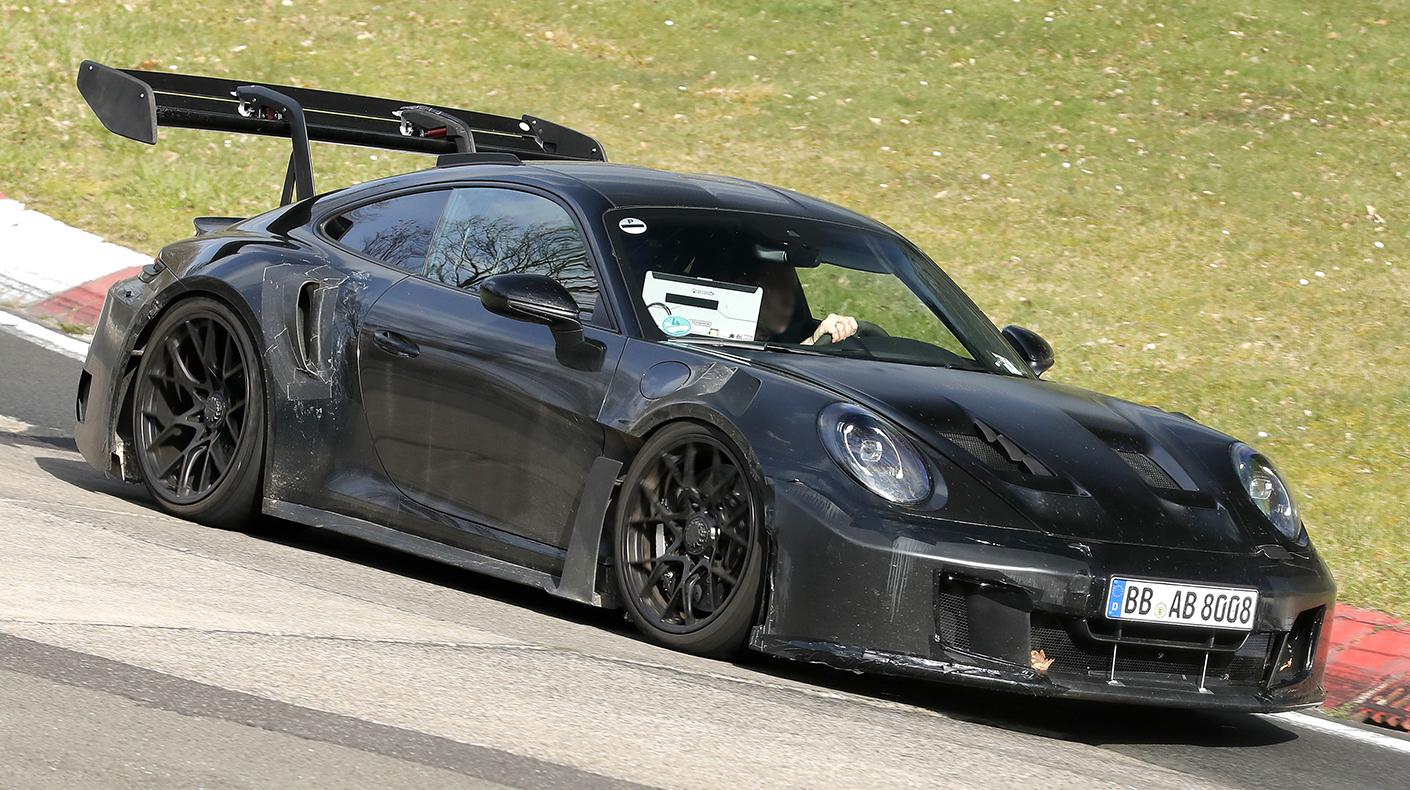
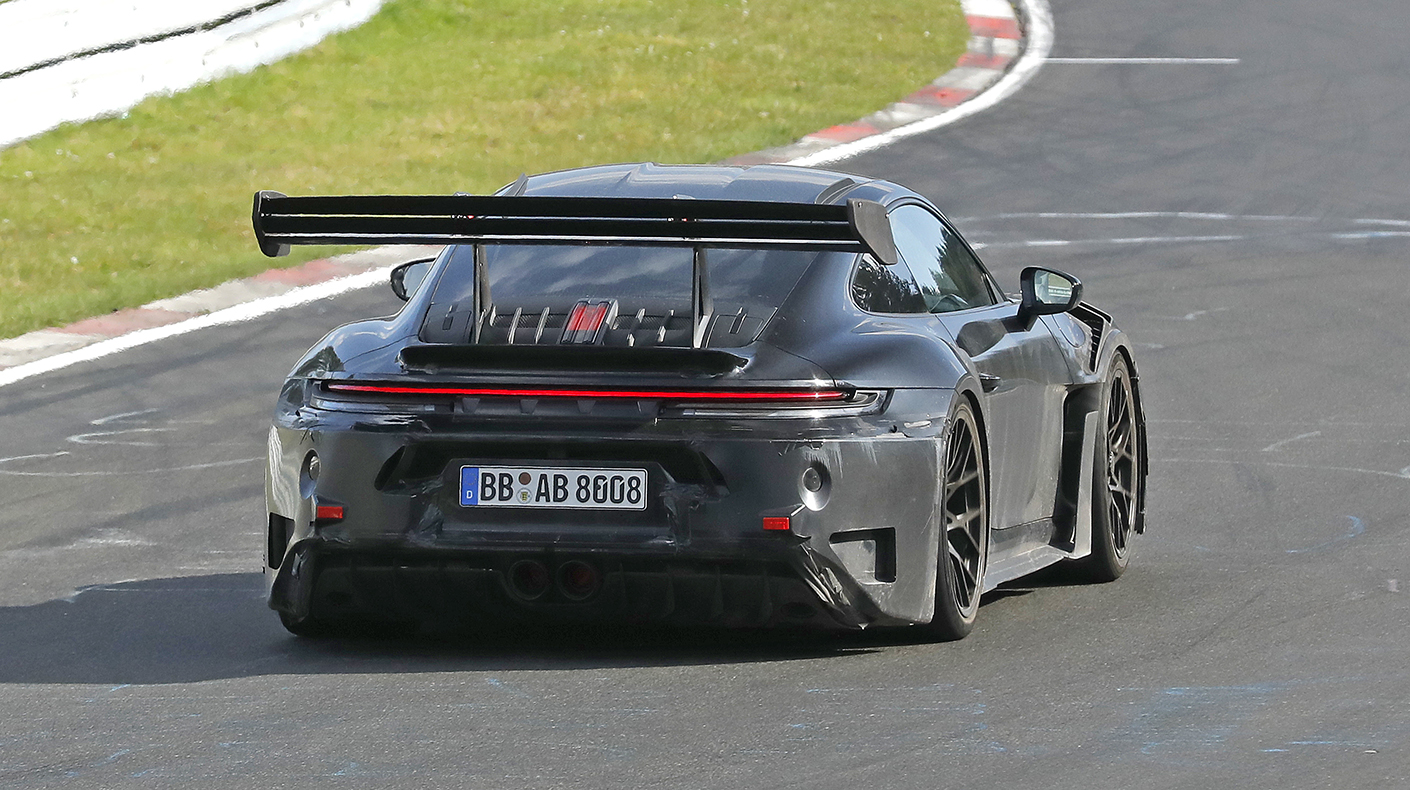
A lightly camouflaged prototype of the revised 992.2 GT3 RS was spotted during testing in its natural habitat--the Nürburgring racetrack in Germany--and the details are revealing. While the front appears virtually unchanged, the updates are concentrated at the rear and give rise to speculation.
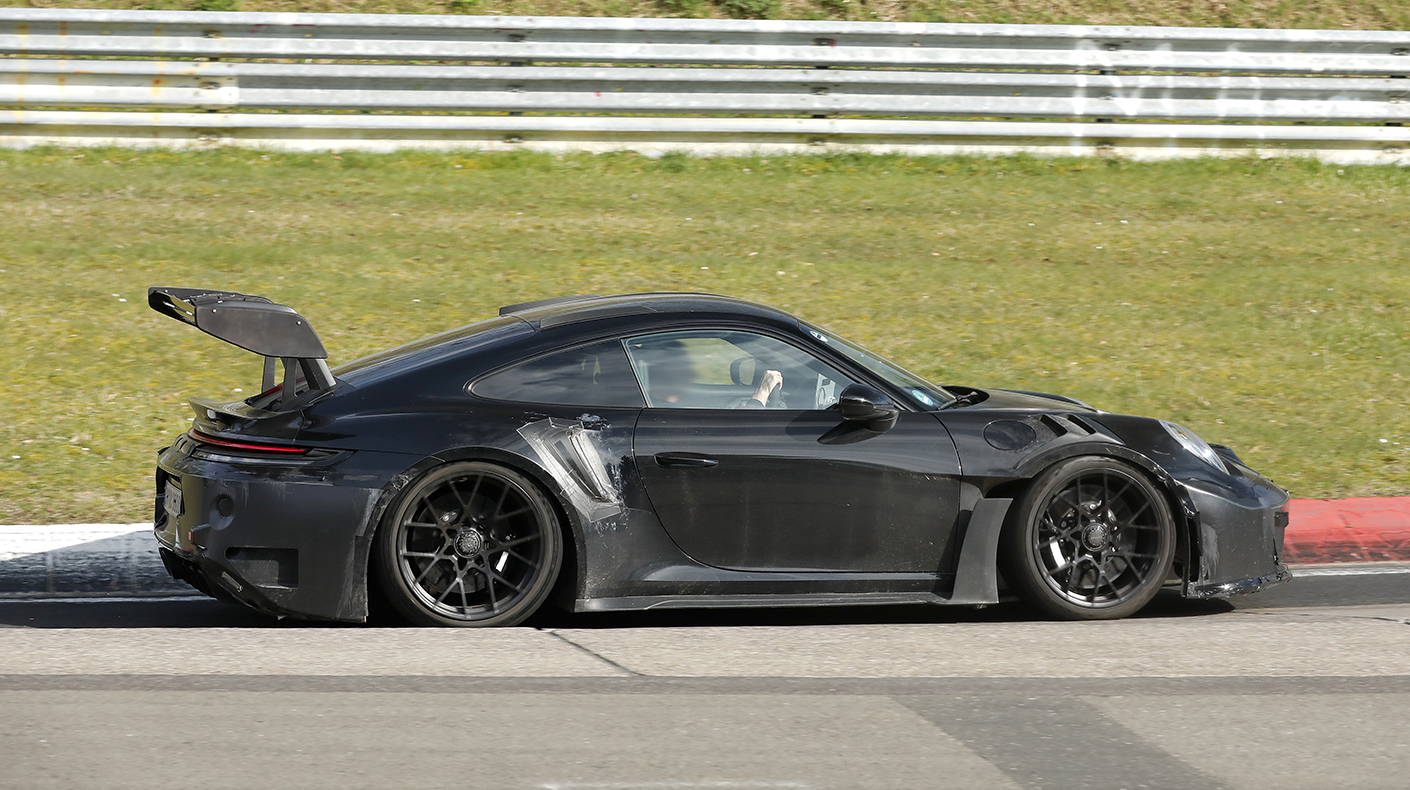
At the rear, the prototype shows clear differences from the current model. The bumper has been redesigned, as has the diffuser, which now features four vertical fins--one more than the current model. Particularly striking are two additional openings to the left and right of the central pair of tailpipes.
These additional outlets could be functional or purely decorative--but a modified exhaust system or additional cooling is more likely. Below the continuous light strip, there is also a previously hidden area that suggests another air outlet. All these clues point to significantly higher cooling and exhaust requirements--typical for a turbocharged engine.
Stricter Euro 7 regulations are putting Porsche in a difficult position. GT boss Andreas Preuninger made it clear in October 2024 that without turbocharging or electrification, a future GT3 will not meet the standard in Europe. The timeframe: roughly "in two years"--exactly when the 992.2 GT3 RS is expected to launch.
In an interview, Preuninger hinted that the company was weighing hybridization and turbocharging internally--with a clear tendency toward the latter. This statement is significant and provides a solid basis for current speculation.
For Porsche, this means walking a tightrope: how can it remain true to the GT3 DNA while meeting regulatory requirements? The answer could lie in "gentle" turbocharging--a far cry from the heavy hybridization that has led to market challenges for Ferrari.
The rumor mill is in full swing and the scenarios being discussed are technically plausible. The focus is on a variant of the new 3.6-liter turbo six-cylinder engine already used in the Carrera GTS T-Hybrid.
Realistically, there is much to be said for scenario 1. The additional cooling vents on the prototype, the acoustic evidence and Preuninger’s statements paint a coherent picture. A gently electrified turbocharged six-cylinder engine could be the solution: Euro 7-compliant, powerful and not as heavy as a full hybrid.
If the GT3 RS does come with turbocharging, it would be more than just a technical update--it would be a conceptual revolution. Until now, the dividing line has been clearly defined: GT3 for naturally aspirated engine purists, GT2 for turbo power.
With a turbocharged GT3 RS, Porsche would blur this line and bring the RS closer to the future GT2 RS. The latter is expected to launch with an even more powerful plug-in hybrid system based on a 4.0-liter twin-turbo boxer engine with more than 1,000 hp.
While the powertrain debate is heating up, the visual changes are less controversial but just as important. The 992.2 GT3 RS will be further refined aerodynamically--a typical Porsche approach to continuous improvement. Confirmed visual changes include a redesigned rear bumper with new air ducts, an enlarged diffuser with four instead of three vertical fins and additional air outlets to the left and right of the tailpipes. Larger tailpipes will also be added for a more muscular appearance, along with new rear lights in the 992.2 design. Reprofiled hood vents and small leading edges at the front round out the package.
These changes may seem subtle, but they are functionally well thought out. Each modification serves to improve aerodynamics, cooling or exhaust gas management--all indications of a technically advanced, possibly turbocharged power unit.
Electric AMG: The Mercedes-AMG E-Class EQ
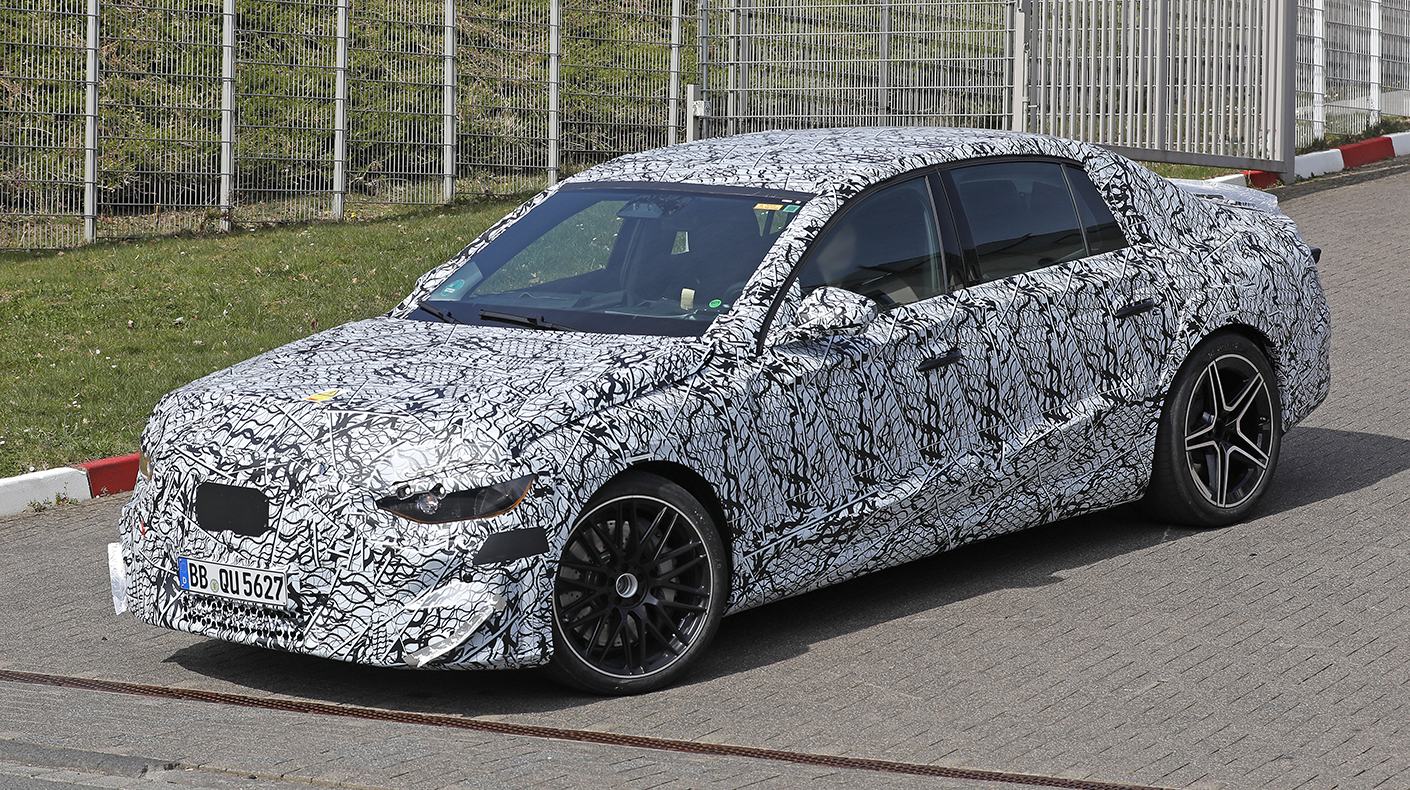
The next-generation Mercedes E-Class midsize premium sedan made its debut in front of spy cameras about six months ago, and our photographer at the German Nürburgring has now captured the first prototype of an AMG-powered variant of the E-Class EQ.
The next-generation Mercedes-Benz E-Class is also in the pipeline with EQ Technology, following the recently revealed Mercedes-Benz GLC and the upcoming C-Class, both featuring EQ Technology. The new E-Class EQ will also debut as an AMG--possibly based on the next-generation AMG GT 4-Door Coupe’s AMG.EA dedicated platform.
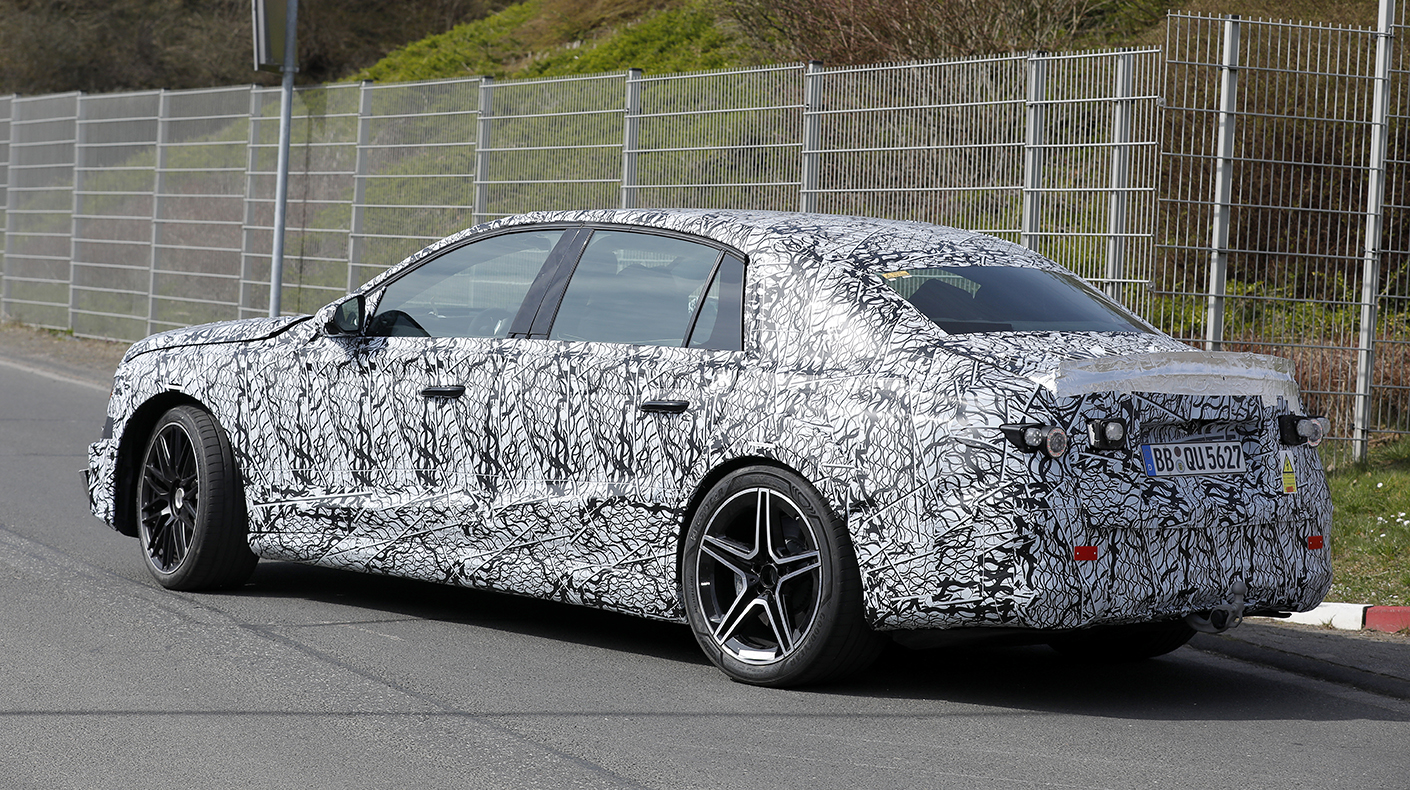
For now, all we know is that the all-new electric Mercedes E-Class has been undergoing testing since last year and is set to launch as a fully electric vehicle to replace the underperforming Mercedes EQE sedan. The AMG variant is recognizable by its distinctive AMG wheel designs, wider fender flares, revised lower front bumper and rear spoiler lip.
This is an early prototype that doesn’t even have production headlights or taillights, only placeholders. As for performance, the rumor mill suggests the new Mercedes-AMG E-Class EQ will use a detuned version of the AMG.EA platform and will produce 800 to 900 hp--though it will also be quite heavy due to the battery pack.