By SEMA News Editors
The automotive aftermarket is entering a new phase––less volatile than the pandemic years, but no less complex.
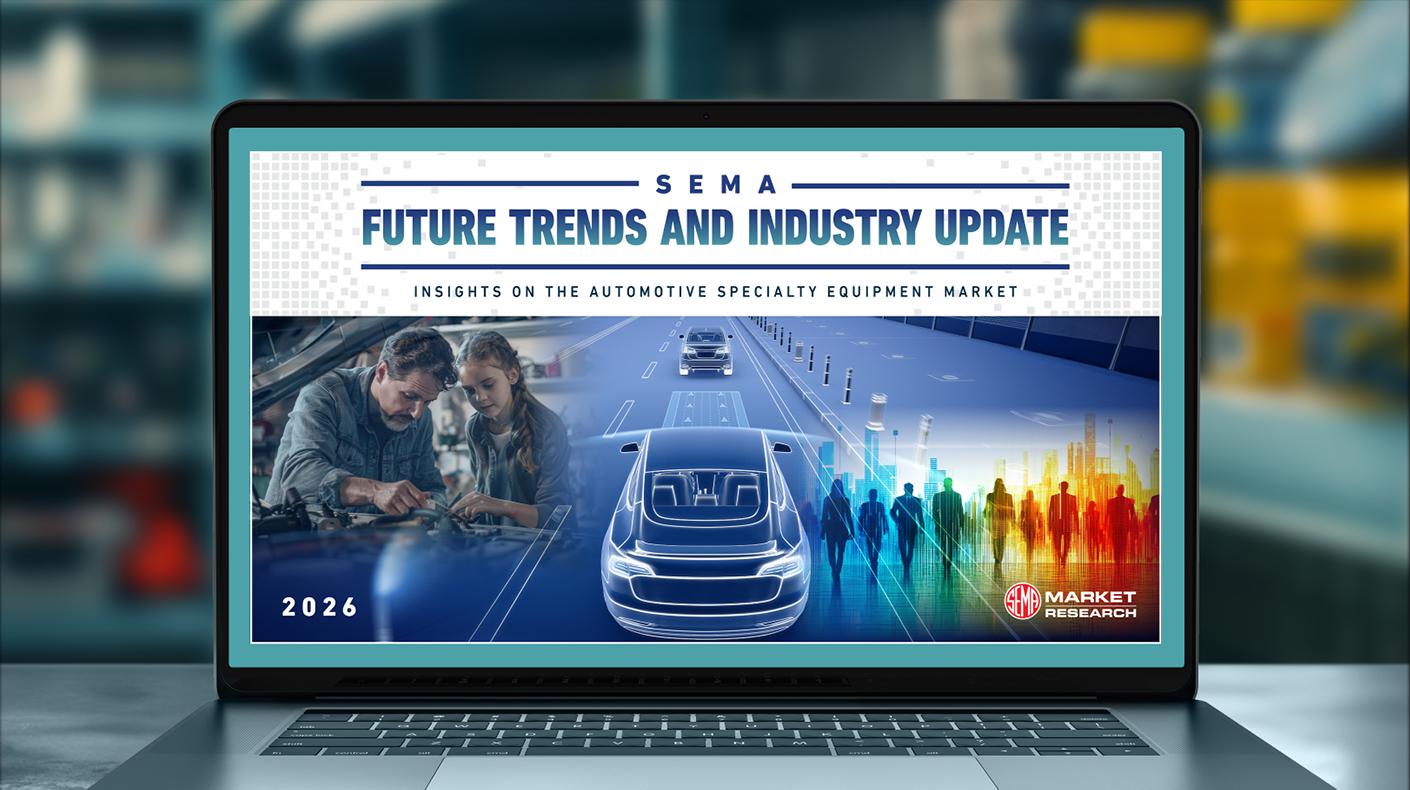
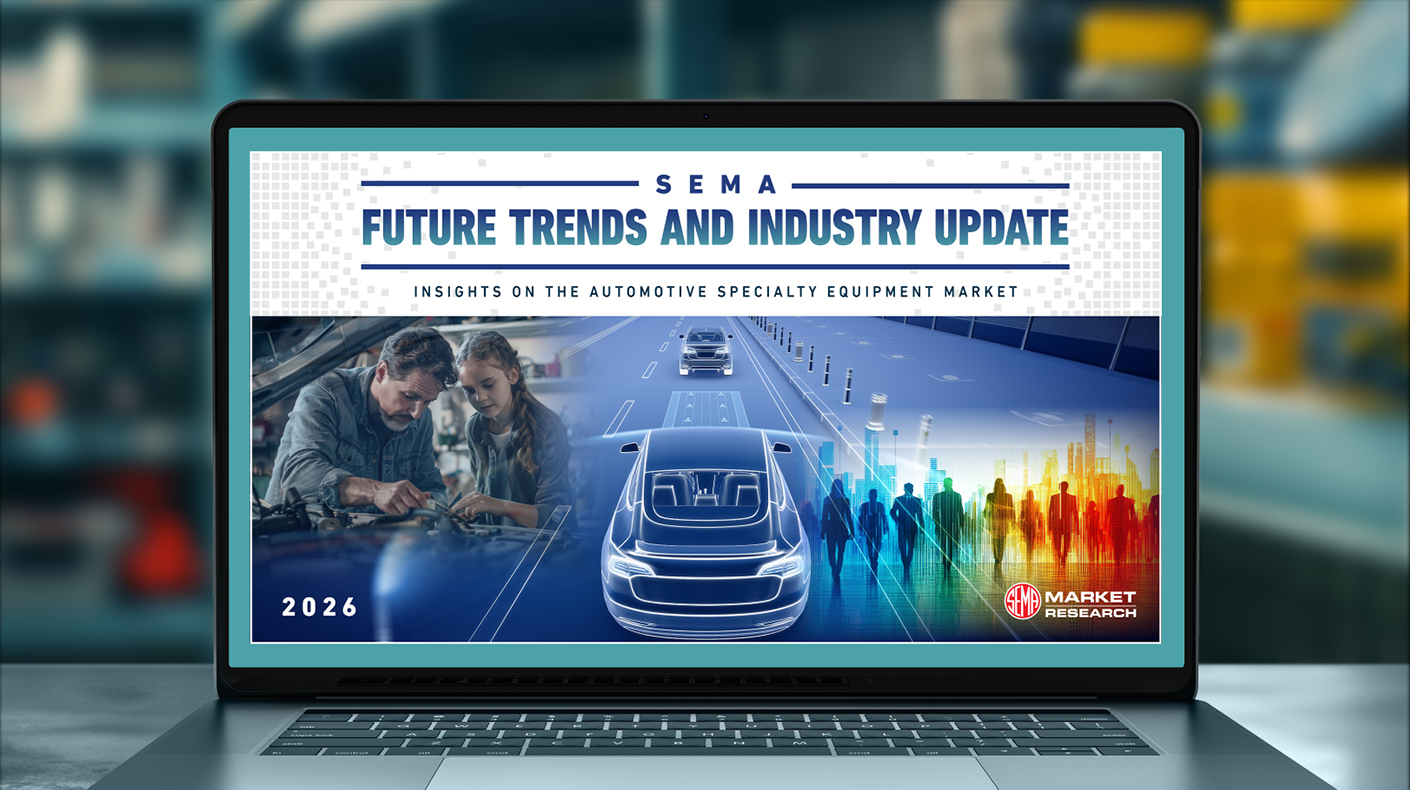
The "2026 SEMA Future Trends and Industry Update" offers a clear-eyed look at what's changing across the economy, vehicle landscape and consumer behavior––and what it all means for automotive aftermarket businesses.
This article highlights some key takeaways, but it only scratches the surface. The full report dives deeper with data, forecasts and analysis designed to help businesses plan what's next.

A Return to "Normal"––But a Different Normal
After years of disruption, the specialty-equipment industry is stabilizing. Sales have reached $52.65 billion, with growth expected to settle into a more typical 3%–4% annual pace.
That doesn’t mean things are going back to the way they were.
Consumer demand remains strong, but it's navigating higher prices, elevated borrowing costs and ongoing uncertainty around tariffs and inflation. For aftermarket businesses, this creates a more balanced––but more competitive––environment.
What it means: Companies that focus on value, differentiation and service will be better positioned as the market normalizes.
The Consumer Balancing Act
Today's consumers are still spending––but not evenly.
On one end, affluent buyers continue to invest in premium upgrades and personalization. On the other, cost-conscious consumers are prioritizing essential maintenance and lower-cost improvements.
What it means: Successful businesses will need to serve both sides––offering premium innovation alongside practical, value-driven solutions.
Trucks, CUVs and an Aging Fleet Drive Opportunity
The vehicles Americans drive continue to define the aftermarket.
- Light trucks and CUVs now account for more than 80% of new vehicle sales.
- The total vehicle on the road has surpassed 295 million vehicles––and continues to grow.
- Vehicles are staying on the road longer than ever.
That combination is powerful.
A larger, older fleet translates directly into increased demand for repair, maintenance and personalization––core strengths of the aftermarket.
What it means: Product development and fitment strategies that align with trucks, crossovers and aging vehicles will remain critical.
EVs Slow, Hybrids Surge, ICE Stays Relevant
Electrification is still evolving––but not as quickly or as predictably as once expected.
- Electric vehicle (EV) adoption is slowing amid cost concerns and infrastructure challenges.
- Automakers are recalibrating investments.
- Hybrids are gaining traction as a practical middle ground.
Meanwhile, internal combustion engine (ICE) vehicles will remain a dominant force for years to come.
What it means: The aftermarket doesn't need to pivot overnight. ICE products remain essential, hybrid opportunities are growing and EV strategies can be more measured.
Financing Is Changing Ownership Cycles
Higher interest rates are reshaping how––and whether––consumers buy vehicles.
- New-vehicle rates hover around 7.6%.
- Used-vehicle rates are even higher, around 11.4%.
- Monthly payments exceeding $1,000 are increasingly common.
At the same time, tighter lending standards are pushing more buyers out of the new-vehicle market.
What it means: Vehicle owners are holding onto vehicles longer—creating sustained demand for aftermarket parts, upgrades and services.
ADAS: Opportunity Meets Complexity
Advanced driver assistance systems (ADAS) are no longer optional––they’re becoming virtually standard.
From automatic emergency braking to lane-keeping systems, these technologies are rapidly expanding across the vehicle fleet, with additional regulations on the horizon.
But they also introduce new challenges.
Even small modifications––lift kits, bumpers, lighting––can affect sensor performance, and there's still no universal standard across OEMs.
What it means: Aftermarket companies must invest in understanding ADAS integration, calibration and testing. Resources like SEMA Garage in Diamond Bar and Detroit are becoming essential tools for navigating this complexity.
A Market Full of Opportunity––If You Know Where to Look
Despite economic pressures and industry shifts, the fundamentals remain strong. Key opportunities include:
- A growing truck and CUV market.
- An aging vehicle fleet.
- Continued enthusiast engagement––especially among younger consumers.
- Expanding hybrid adoption.
- New product categories shaped by ADAS.
At the same time, challenges––from tariffs to technician shortages––require strategic planning and adaptability.
Get the Full Picture
The "2026 SEMA Future Trends and Industry Update Report" delivers far more than high-level insights. Inside, you'll find:
- Detailed charts and forecasts.
- Consumer behavior analysis.
- Segment-specific data.
- Deeper dives into the trends shaping your business.
In a market defined by change, staying informed isn't optional––it's a competitive advantage.
Access the full report to see what's next for the automotive aftermarket––and how to prepare for it.

SEMA's Market Research team provides information and insight to help SEMA members and the specialty auto aftermarket industry make better business decisions. Its focus is on providing reports, data and consultation to help companies understand the current market and state of consumers. Learn more at sites.sema.org/market-research.