Story and photos by Andreas Conradt, Automedia
Spy photographers have once again caught several upcoming vehicles undergoing testing, giving an early glimpse at what's to come before they officially debut.
Porsche 911 Turbo Touring Cabrio Spotted in Germany
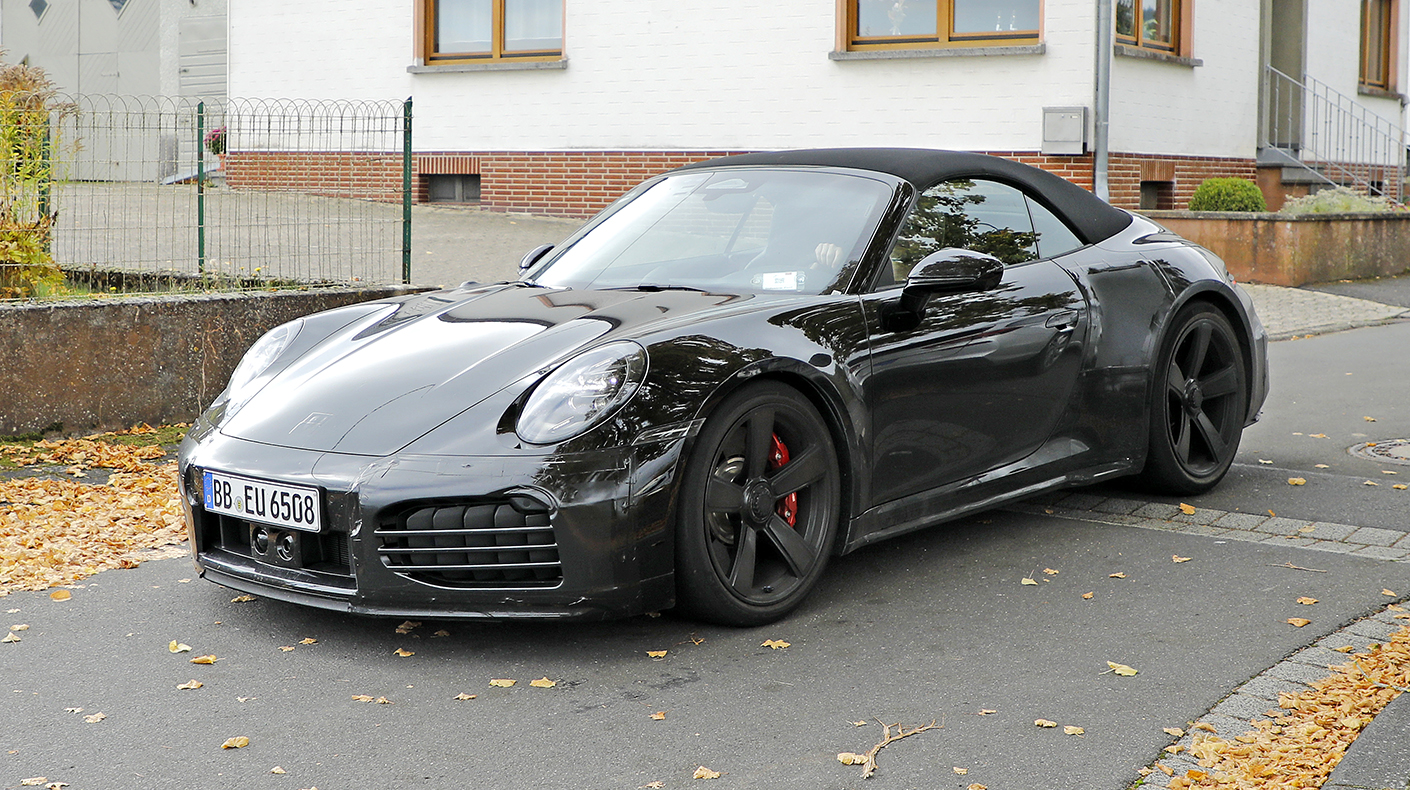
After the recent appearance of the tin-topped 911 Turbo Touring, another strange-looking prototype has been spotted outside the Nürburgring race circuit in Germany--and it appears to be the soft-top stablemate, likely called the Porsche 911 Turbo Touring Cabrio.
Closer inspection of the photos reveals that the car wears the wider body and fenders of the Turbo and seems to feature side air intakes in the rear fenders. They are, however, cleverly camouflaged to make the car look more like a standard 911 Cabrio. Also missing is Turbo's fixed rear wing.
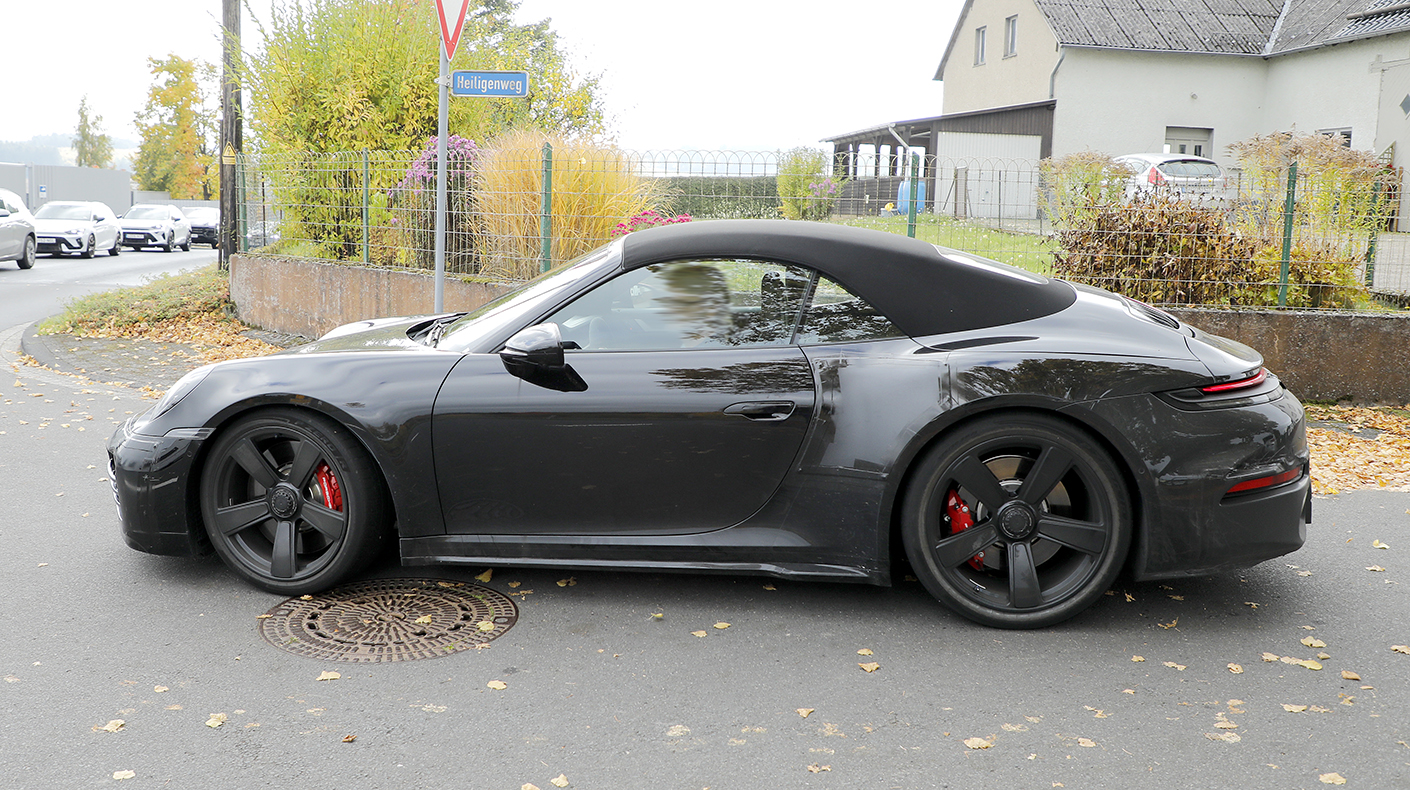
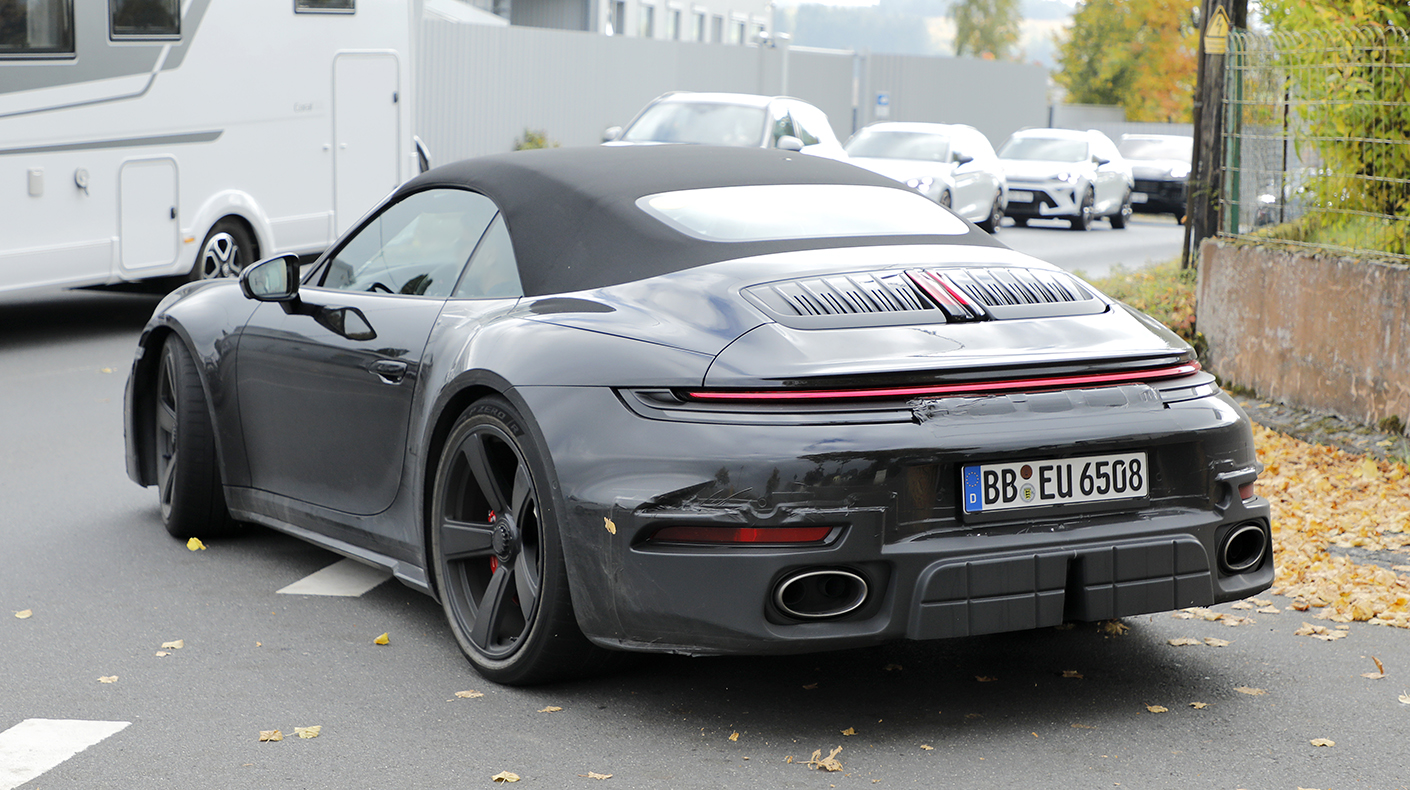
The "Turbo Touring Cabrio" also wears camouflage at the front and rear, suggesting it will receive the same facelift the standard Turbo will receive in '25. Despite the cladding at the front, however, SEMA News sources doubt it's the real new design that lurks beneath the camouflage. In fact, there are rumors that Porsche plans to drastically change the front bumper, sources said, and give it a design far beyond the current model.
Porsche is expected to give the Turbo and Turbo Touring--and their soft-top stablemates--one or two electric chargers, which will require more space. The German company was in need of more room under the rear bonnet and had to redesign the exhaust system to gain space for the additional components. Rumors suggest the electric charger(s) will lead to more power for the facelifted 911 Turbo but will also add extra weight and make the car even more tail-heavy.
Handling Tests on the Nürburgring for the Next-Gen Range Rover Velar
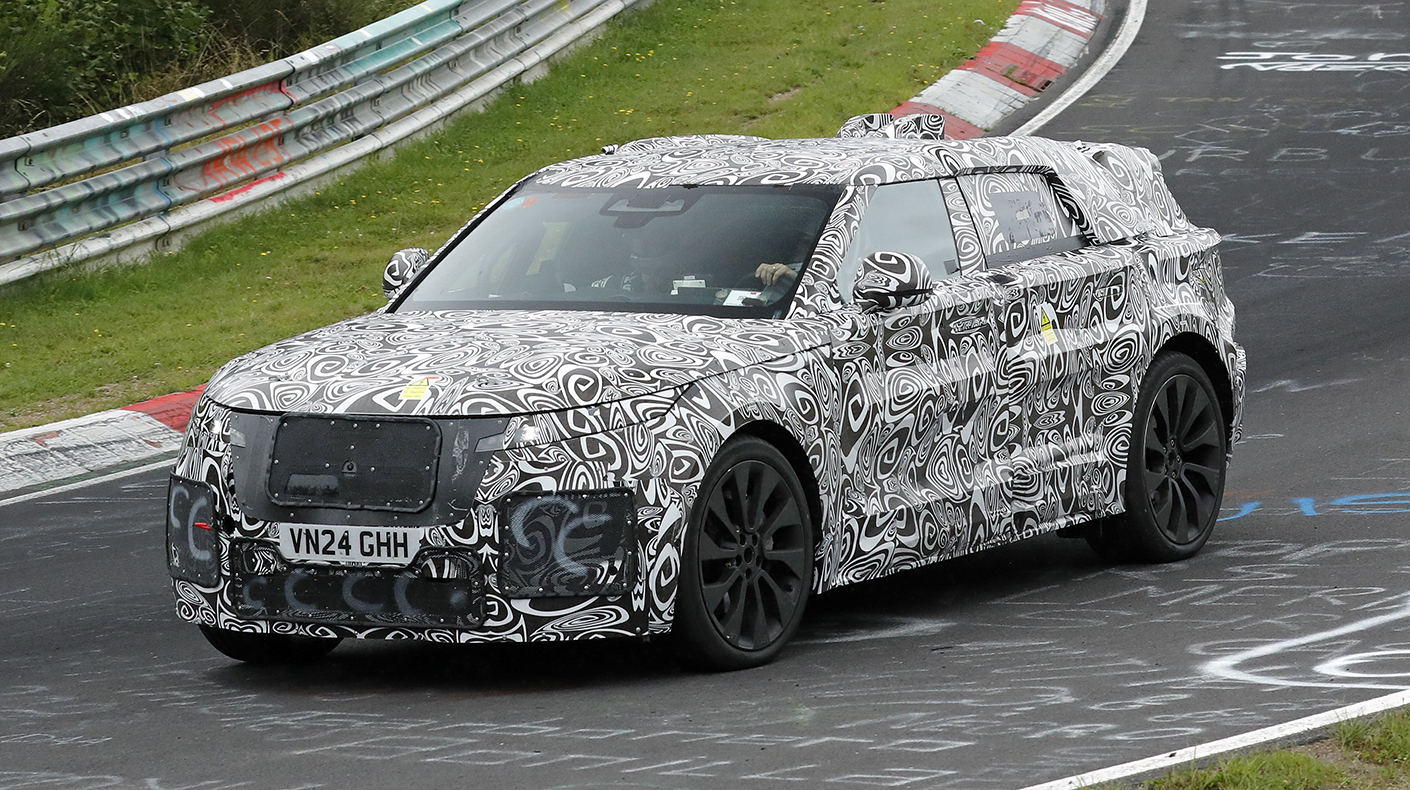
The first medium-sized all-electric Range Rover will be out in '26, and SEMA News sources have now managed to snap another batch of photos of the new model burning rubber on the Nürburgring in Germany. It's likely we're looking at the successor to today's Range Rover Velar. It is said to be reinvented as a slick, luxurious electric SUV, targeting the new Porsche Macan EV with vastly improved endurance, performance and practicality.
The new vehicle will be built using JLR's electrified modular architecture (EMA), which will power the company's upcoming slate of EVs. It will be the first of several new electric Land Rover models to run down the firm's revamped production line in Halewood, United Kingdom, followed soon after by EV successors to the Range Rover Evoque and Land Rover Discovery Sport. Work to convert the factory into an EV production facility is underway, and the electric Velar is expected to enter production later this year.
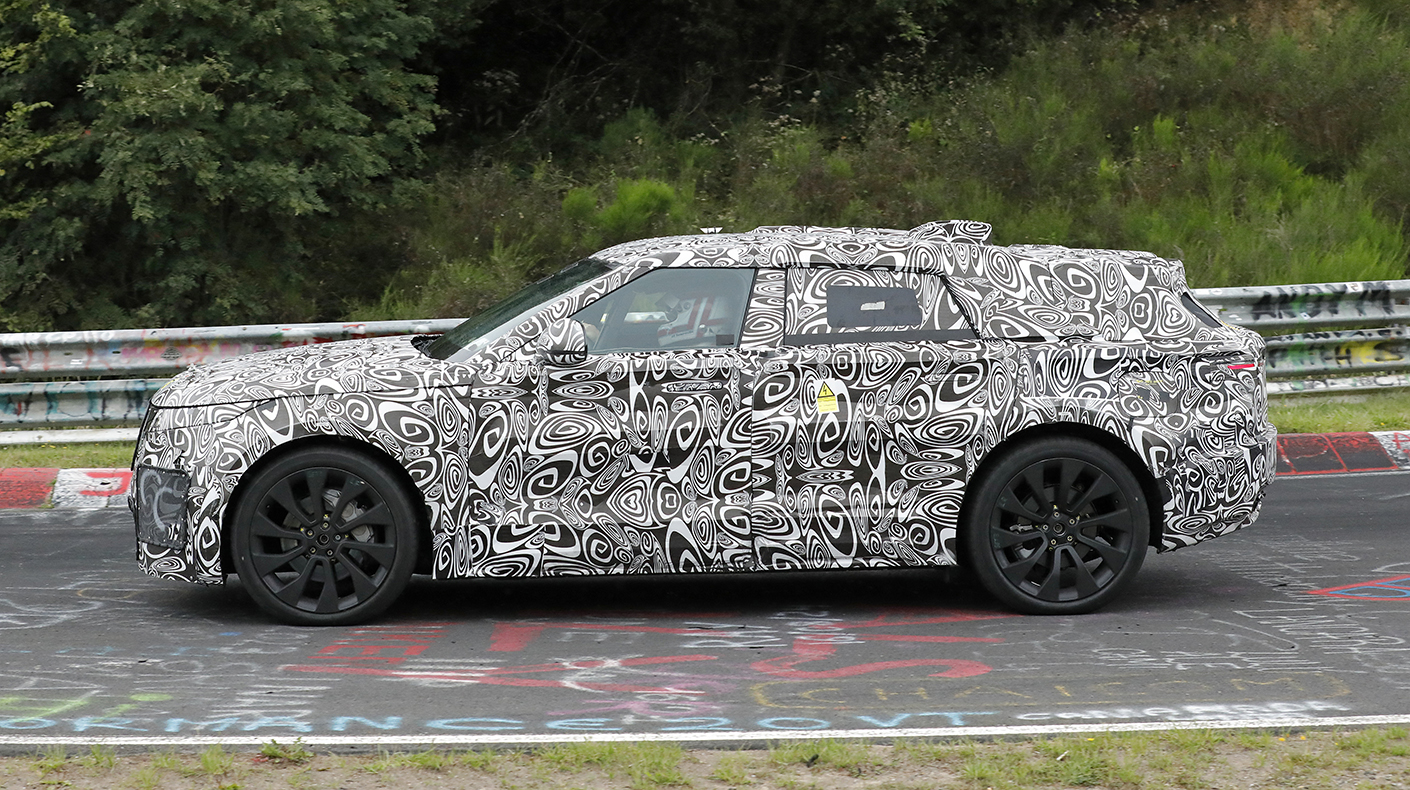
JLR's plans are ambitious, but the automaker has previously been slow to embrace electrification. Its only fully electric car to date has been the Jaguar I-Pace SUV, which has struggled to make inroads against more established electric carmakers, along with the fully electric variant of the Range Rover. Meanwhile, competitors such as Mercedes-Benz, BMW and Audi have been ramping up their switch to EVs and now offer a full range of plug-in model types.
Today's Velar is built in Solihull, United Kingdom. As well as being produced at a new location, its successor will swap from the familiar D7 architecture to a completely new platform called EMA. First announced in 2021, this new skateboard platform--conceived to accommodate the smaller Land Rover models--was originally set to be capable of hosting hybrid powertrains in addition to pure-electric systems, but it has now been confirmed that the Velar, Evoque and Discovery Sport successors will be electric only.
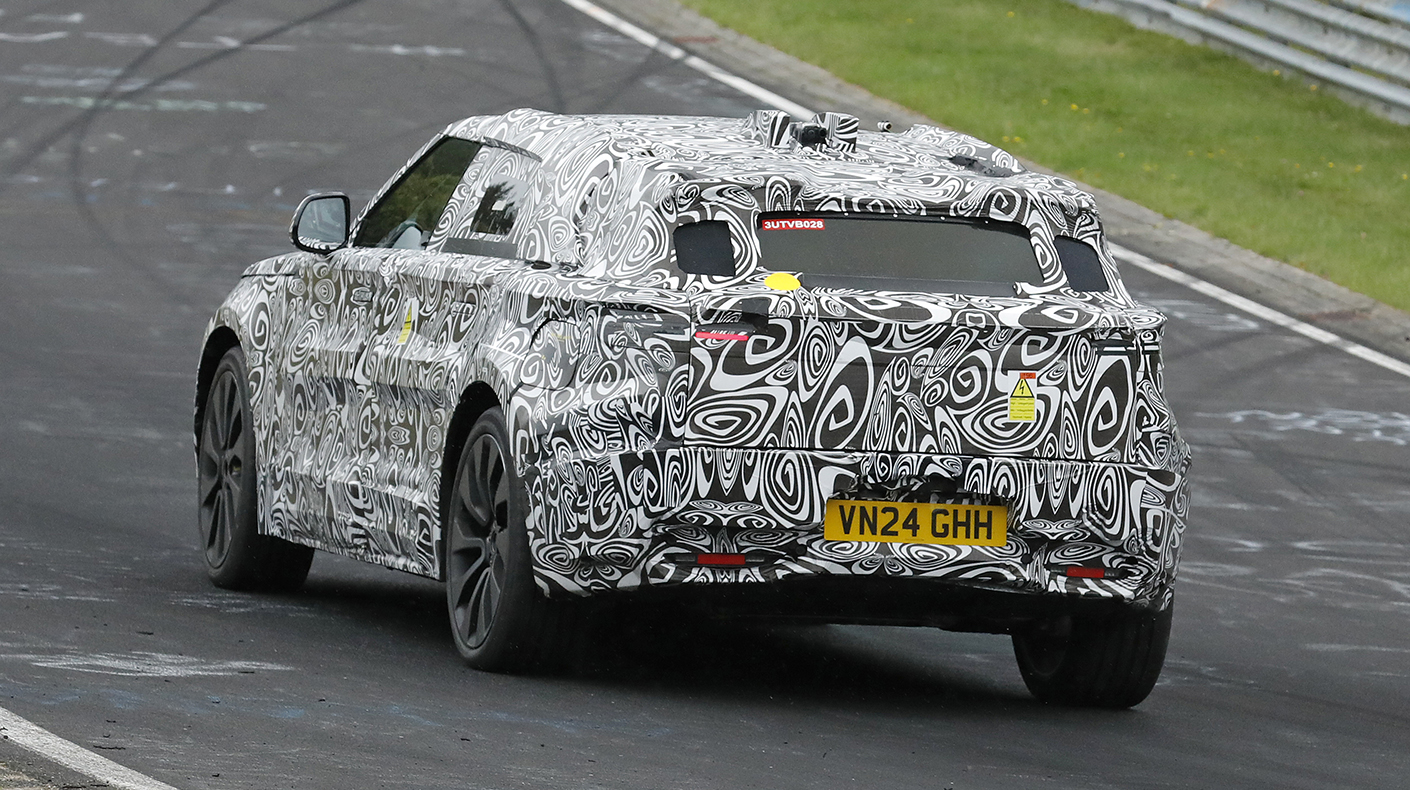
Details of its technical makeup and capabilities are closely guarded, but the EMA is likely to be a more overtly "road-focused" proposition than the MLA structure that will underpin electric derivatives of the full-sized Range Rover and Discovery.