By Eric Colby
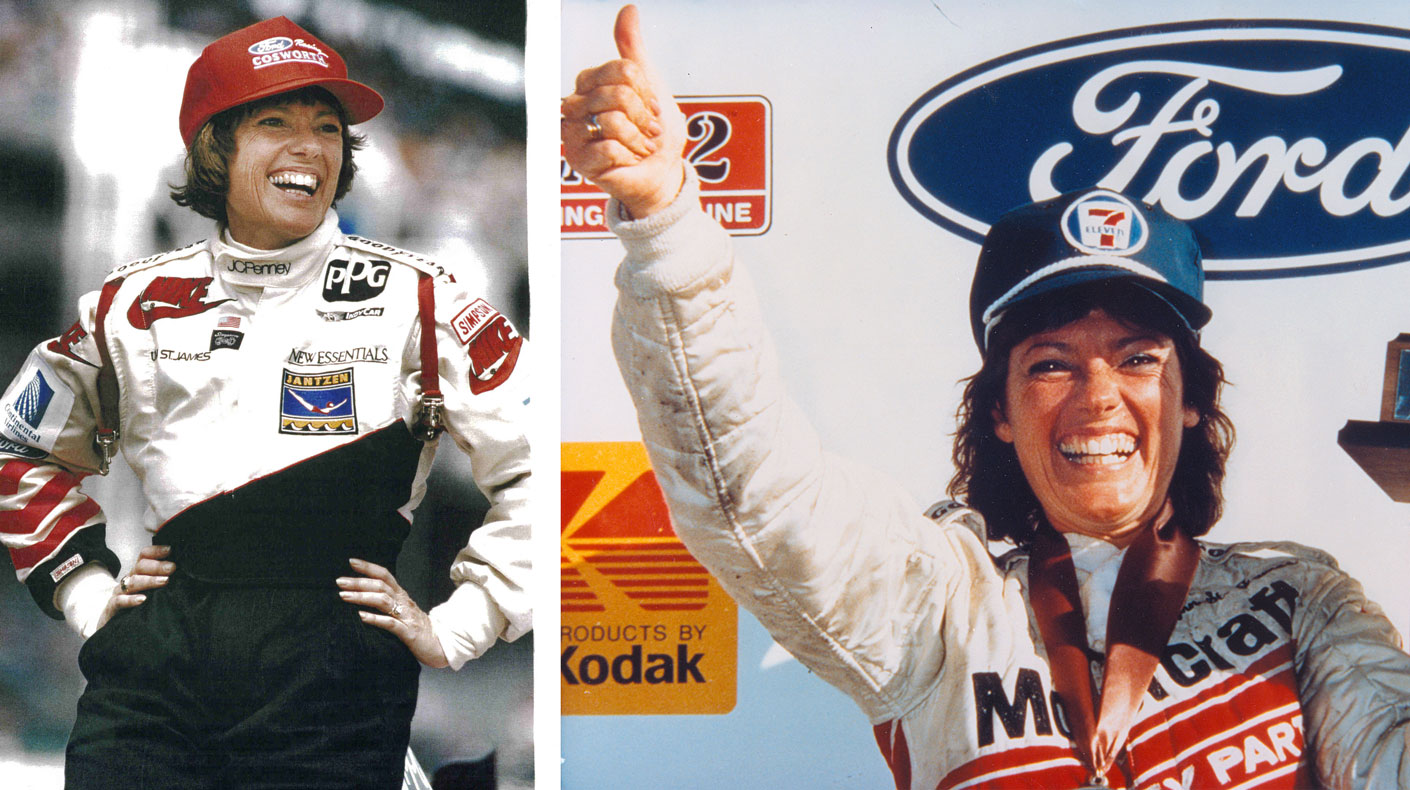
Lyn St. James wasn't born an auto-racing prodigy. Growing up in Ohio, she didn't have a father who put her in a go-kart before she could walk. Her mother had polio from the time she was an infant, so for her, a car was a necessity--not a hobby or something to soup up.
That changed the day St. James went to a sports-car race. "I always say I found racing and racing found me," St. James, now 77, says. "I was 27 and too old to be doing this career-wise. Back then, you didn't do this as a career."
That didn't matter. St. James decided she was going racing. She didn't do it to be a woman in a male-dominated sport, nor because she wanted to be a pioneer or someone breaking a glass ceiling.
"I just put my head down and raced," she says. "I'm a believer that if this is where I am and this is where I want to go, I'm going. If you're in my way, I'll go around you, over you, above or through you."
Growing up in the musclecar era, St. James hung out with street-racers and went to the local dragway. "I drag-raced a buddy's car and brought home a trophy," she says. "My mother wasn't particularly pleased about it. There was nowhere to go with it in that era."
Fast forwarding, St. James moved to Florida when she fell in love with a man, John Carosso, with whom she had started a business. They had gone to the Indy 500 on their second date and after they arrived in Florida, they attended the 24 Hours of Daytona sports-car race.
"It was so different from any other form of racing I ever saw," she explains. "You could walk up and down the pit lane, you could go into the garages. The back of the grid were the Porsches, the Corvettes and the Camaros, the real people."
Intrigued by the idea of racing what looked like a street car, St. James discovered the Sports Car Club of America (SCCA), became a member and earned her competition license. She bought a Ford Pinto and made her first start in 1973. "I've never looked back since," she says.
She had a few up-and-down years and in 1977, the International Motor Sports Association (IMSA) started the Kelly American Challenge Series. It was sponsored by Kelly Services, which was best known for providing secretaries known as "Kelly Girls" for businesses. The company was trying to expand its presence in light industrial and other businesses.
St. James showed up in 1978 at Road Atlanta in Georgia and missed the win by 0.79 seconds racing a Plymouth Volare. One of the biggest benefits of the series was the bonus it gave to the top female driver. "I could pay to be able to get to the next race," St. James explains.
Pursuing Opportunities
At the end of the 1978 season, she went to the SCCA Runoffs in Showroom Stock A class, but blew an engine and was out of competition. She came across an article in Car & Driver magazine about a Ford Mustang or a Capri. There was a sidebar piece in the article titled "Ford and Feminism." "It talked about Ford wanting to create equal employment opportunities for women in non-traditional areas like engineering," recalls St. James.
She started writing letters and her perseverance landed St. James an appointment with Ford. She wound up getting a corporate sponsorship in 1981. "Getting a factory to sponsor you gives you credibility; the media pays attention," she says. "You get good equipment."
She raced in 53 SCCA Trans Am races with seven top-five finishes and 62 IMSA GT races with six wins, 17 top fives and 37 top tens. A highlight was a solo win at the 1985 Serengetti 500 at New York's Watkins Glen racetrack. "I raced the whole race myself and I won," she says.
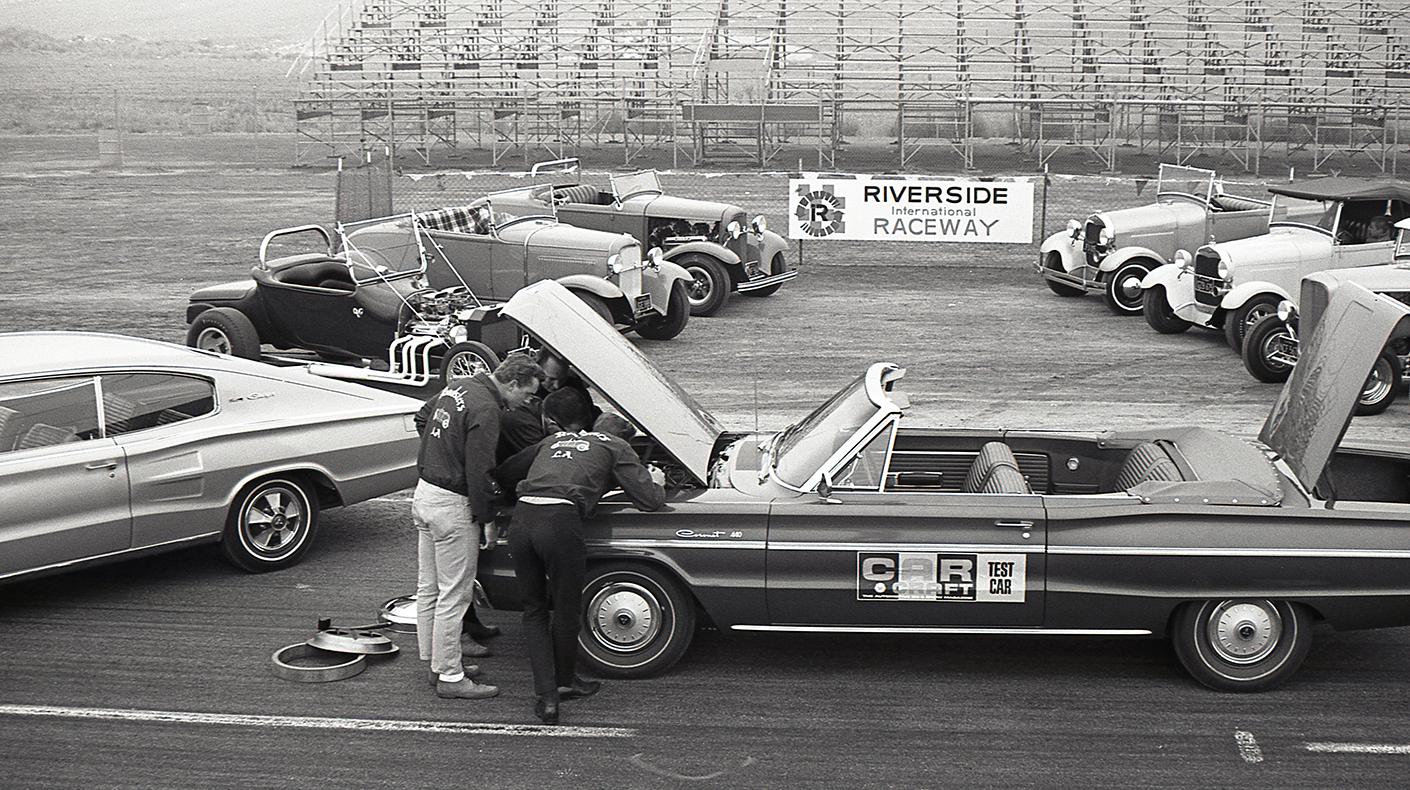
Ironically, a crash in a Ford Probe at Riverside Raceway in California in 1986 helped solidify St. James' career. "I walked away and there was a respect I gained from some executives because I was in the top-level equipment and I didn't crumble."
The next year, she was part of a team that won the 24 Hours of Daytona in the GTO class. "When I won that race, I was remembering that the first sportscar race I ever saw was the 24 Hours of Daytona," St. James recalls. "To finally stand on the podium, it was unreal." She repeated the feat in 1990.
Then she started looking at some bucket-list events and with the help of a sponsor was able to join the Spice Team to go race at the 24 Hours of Le Mans in 1989.
All told, St. James spent 14 years as part of Ford's factory team, getting her contract renewed annually. She didn't have an agent or a manager and negotiated all her own deals.
"That's one of the things I'm most proud of. I'm not under contract anymore but I have many wonderful memories like standing with Dan Gurney when Ford celebrated its 100th year in racing with the legends of racing and I was included in that."
She continues, "There's huge respect and benefits that have come with me being part of the tradition of Ford Racing. I would have not had a career if I didn't have Ford as a sponsor. I wouldn't have been able to figure that out on my own without having that leverage and that credibility and support."
The Big Leagues
In addition to driving, St. James was doing TV commentary for SCCA Trans-Am races, many of which were running the same weekend as Indy Cars in a supporting role. "Those are the neatest cars on earth and I wanted to know what it would be like to drive one," she remarks. "I spent about three years talking to team owners--basically begging--and Dick Simon was the guy."
Simon owned an Indy car team and after a 1988 race in Tamiami Park, Miami, he called St. James and said, "Hey kid, you said you want to drive an Indy Car, be at Memphis tomorrow."
"I didn't know there was a track in Memphis," St. James recalls. "There was a dragstrip and the Indy cars had tested there from time to time. He was doing a rookie test for another driver."
When she got to Memphis, Simon told his crew to put in 10 gallons of fuel and have St. James run 10 laps. Then she would come in and get 10 more gallons and some pointers from the crew.
"By the end of the day, Dick watched me and when I got out of the car, Dick looked at me and said, 'We can do this,'" declares St. James. "He didn't say, 'You can do this,' he said, 'We can do this' and that was the beginning of the dream to race Indy Car."
For four years, St. James courted potential sponsors, finally getting J.C. Penny to back her. "I didn't get the yes from them until March of 1992 and Dick put it all together," says St. James. The Indianapolis 500 is run annually on Memorial Day weekend and that meant they had two months to pull their program together.
St. James didn't have much open-wheel or oval track experience, but she had set two speed records on the biggest track in NASCAR, Talladega Speedway in Alabama, and she had spent lots of time at high speeds in Le Mans. Through her career, St. James held 21 international and national speed records.
Simon took her to the old Texas World Speedway to learn how to take high-speed corners on an oval full throttle. The Indianapolis Motor Speedway has only about 9 degrees of banking. Conversely, Daytona has 31 degrees and Talladega has 33.
"I've always liked high-speed corners and there's four of those at Indy," says St. James. "I've always been a smooth, fast driver, so my driving style was suited to that type of racing."
In her first attempt at the Indy 500, there were eight other rookies in the field and she finished 11th, earning Rookie of the Year honors. "The highlight was finishing the first year and winning Rookie of the Year," she says. "I never thought I would get that."
In the banquet after the race, when she was announced as rookie of the year, St. James received a standing ovation, something she was told was reserved for the race winner. "I was told that A.J. Foyt was the first guy to stand up," remarks St. James. "But I was facing the wrong way so I didn't see it."
In her first year at Indy, St. James was 45 years old. She was part of the race for the next nine years, but raced in seven because she was bumped from the field twice. In 1994, she had her best showing, starting on the outside of the second row, calling it "no small feat" and starting sixth.
Other Indy highlights include running in six consecutive races from 1992 to 1997. In 2000, she was the oldest racer in the field at age 53. St. James competed in a total of 15 Indy Car races, scoring two top-10 qualifying positions and an eighth place in Orlando in 1995.
A Leadership Role
In the '80s, St. James attended an event hosted by the Women's Sports Foundation. (Founded by Billie Jean King, the organization gathers in New York every year.) The event exposed St. James to other women athletes in other sports fighting for girls to have sporting opportunities in schools through equal equipment, equal training and equal resources. "I got to understand that responsibility because Billie Jean made it clear that this isn't about you, this is about the next generation," observes St. James. "It's every female athlete's responsibility to fight for equality for other women coming up."
Racing Indy cars brought St. James some notoriety. "I got so much fan mail and that was when the combination of the mindset change and the platform of being an Indy driver morphed into understanding my responsibility," declares St. James. "People didn't want an autograph. They wanted advice."
She went with the foundation when members were invited to the White House, and St. James met presidents Reagan, George H.W. Bush and Bill Clinton. She was honored the year before at the 26th Annual Amelia Island Concours d'Elegance in 2021 and inducted into the Automotive Hall of Fame the following year. Outside of racing, Sports Illustrated for Women included St. James on the list of "Top 100 Women Athletes of the 20th Century" and Working Woman Magazine included her on its list of "The 350 Women Who Changed the World Between 1976–96."
She says she's not a historian and doesn't consider herself a feminist. "I'm a believer in the power of the individual and that every individual has the right to display his or her power, to be able to take advantage of their power," she asserts.
When she was inducted into the Automotive Hall of Fame, St. James addressed the audience: "My message was when somebody comes to you for something, say 'Yes.' You don't say yes to everything they ask for, you say, 'Yes I'll try to help you' or 'Yes, show me what you've got.'"
To help young female drivers and those interested in motorsports to get involved, St. James started a female driver development program and trained more than 230 young racers over a 20-year period. The list of students includes former Indy Car star Sarah Fisher, Danica Patrick and current NHRA Pro Stock star Erica Enders.
At her final Indy 500, St. James was the oldest competitor while Fisher was the youngest. "She looked at me like, 'What are you doing here?' and I said, 'I'm racing girl,'" says St. James.
St. James was proud of the nine-year run that Fisher had, including owning a team.
"I think I showed others that it could be done," says St. James. "It's about having equal opportunities. These kids are starting when they're 5, 6 years old, but it's also about having the right equipment."
She also had to answer some difficult questions from young girls in the program when Patrick appeared in some racy ads and photoshoots in magazines.
"I had young teenage girls asking me if they had to do that to be successful," explains St. James. "I told them, 'You have to find your authentic self. Align yourself with things you believe in and that will open doors.'"
She continues, "[Danica] wanted to do that. Nobody forced her to do that. She speaks to that now. That was her brand."
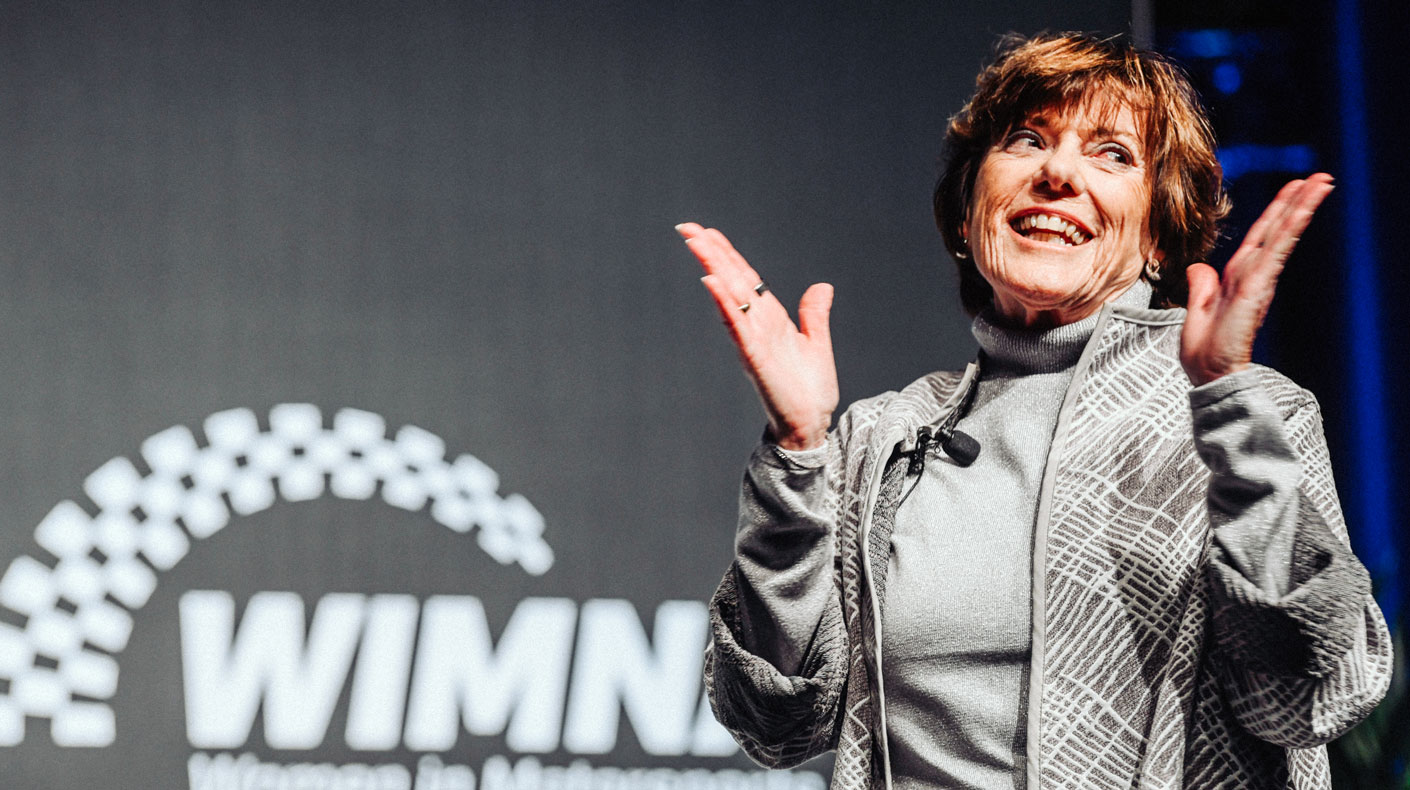
Today, Women in Motorsports in North America, which St. James co-founded with Beth Paretta, focuses on helping women build careers in motorsports beyond driving. For example, a woman was the lead engineer on Joseph Newgarden's team when he won the Indy 500 and Max Verstappen's team included a woman engineer.
As with many industries, St. James believes the automotive performance and racing industries need to get the message out to kids earlier about the opportunities they offer.
"If you can't see it, you can't be it," she emphasizes. "If you're a female and you're successful, I don't care what you do, you need to get out and talk about it."
St. James has a daughter and two grandchildren. She laughs that her daughter comes to a full stop at a stop sign, but hopes that her 4-year-old grandson Brooks will be interested in cars and performance.
She still shakes her head when she thinks about the accolades she's received through the years, but the hits keep coming. In February, St. James was inducted into the National Motorsports Press Association Hall of Fame in Charlotte, North Carolina.
"I thought it was just for media people," she reflects. "To me, a hall-of-famer has won championships and has a record of significance, and that's not me. One of my goals from the beginning was that I wanted to win the SCCA championship."
Don't count her out. She still might.
This article originally appeared in SEMA magazine. To read the complete issue for free, sign up for a digital subscription on Zinio here.
Once you download the Zinio mobile app or are logged into Zinio on a desktop browser, you will gain immediate access to more than a year's worth of content, including "Relentless Pursuit: Lyn St. James" and more automotive culture-related coverage in the July 2025 issue here.