Sun, 12/01/2019 - 10:42

SEMA News—December 2019

By Chad Simon

EVENTS

Recognizing Leaders and Legends

The Industry Celebrates Its Trailblazers and Raises Money for SEMA Cares at the 2019 SEMA Installation & Gala

Installation & GalaAbout 500 members of the automotive specialty-parts industry attended the 2019 SEMA Installation & Gala, themed “Recognizing Leaders and Legends,” at the Anaheim Marriott in Anaheim, California, on July 26, to pay tribute to the specialty-equipment industry’s pioneers and dedicated volunteers.

About 500 members of the automotive specialty-parts industry attended the 2019 SEMA Installation & Gala, themed “Recognizing Leaders and Legends,” at the Anaheim Marriott in Anaheim, California, on July 26, to pay tribute to the specialty-equipment industry’s pioneers and dedicated volunteers.

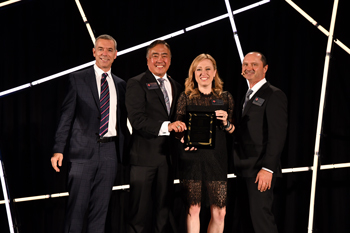
Jarod DeAnda and the late Jessi Combs served as the evening’s emcees. Honorees included the SEMA Hall of Fame class of 2019—Bob Chandler, Bigfoot 4x4; Bruce Crower, Crower Cams & Equipment Co.; and Marla Moore, Legendary Companies.

The festivities kicked off with the Pinewood Drag Races—an annual fundraiser for SEMA Cares charities, including Childhelp, Victory Junction and Austin Hatcher Foundation for Pediatric Cancer. In addition to the Build-It-For-Me (BIFM) class, the races included the Council Cup, People’s Choice, several different industry classes and Industry Cup Challenge. Children living at the Childhelp facilities and Victory Junction campers built the vehicles for the BIFM class and donors sponsored their racecars for $95. This year, SEMA Cares raised a total of $43,355 for its three partner charities.

Shortly after the races ended, SEMA President and CEO Chris Kersting and Chairman of the Board Tim Martin took the stage to personally recognize the efforts of outgoing Board of Directors officials and welcome the incoming Board. They included:

Immediate Past Chair/Secretary:

  • Doug Evans of Crower Cams & Equipment Co. Inc. (outgoing)

Treasurer:

  • Peter Lehman of Granite Creek Capital Partners LLC (outgoing)

Board Members:

  • Kyle Fickler, Aeromotive Inc. (outgoing)
  • James Lawrence, Power Automedia (outgoing)

Chair-Elect:

  • James Lawrence, Power Automedia (incoming)

Manufacturer’s Category:

  • Kathryn Reinhardt of Pilot Automotive (incoming)
  • Melanie White of Hellwig Products (incoming)

Treasurer:

  • Kyle Fickler of Aeromotive Inc. (incoming)

Here’s a look at the pinewood leaderboard:

Council Cup

First Place: ETTN
Second Place: ARMO
Third Place: SBN

Build It For Me Class (cars and trucks built by kids)

First Place: James Holmes. Holmes Enterprises
Second Place: James Holmes. Holmes Enterprises
Third Place: Gregg Ovist, Geezup

People’s Choice

Gregg Ovist, Geezup

Unlimited:

First Place: Comp Performance Group
Second Place: Comp Performance Group
Third Place: Wes Mills, Mills Crafts

Stock:

First Place: Rebeca Olavarrieta, Roco 4x4—Average lap time: 2.6327
Second Place: Elena Gurganian, Piston Driven LLC—Average lap time: 2.6466
Third Place: Gregg Ovist, Geezup—Average lap time: 2.6616
Fourth Place: Car #6, Kevin Tanaka—Average lap time: 2.6592

Industry Cup Challenge

First Place Champion: PSKB Rep Firm, Bob Knight
Second Place: Car #13 Hellwig Products, Melanie White
Third Place: Car #1 All Pro Distributing, Mandi Woodell

Media Class: Motor Trend Network
Service Provider’s Class: E Tool Developers
Rep Agency Class: PSKB
Warehouse Distributor Class: All Pro Distributing
Manufacturer’s Class: Hellwig Products

While the racing is over, it’s not too late to make a direct donation to Childhelp and Victory Junction via SEMA Cares.

The following photos showcase activities from the 2019 SEMA Installation & Gala:

Hosts StageThe Gala was emceed by industry personalities Jarod DeAnda (right) and the late Jessi Combs.Chris KerstingSEMA President and CEO Chris Kersting welcomed attendees to the Installation & Gala.
Tim MartinNew SEMA Board Chairman Tim Martin took the stage to personally recognize the efforts of outgoing Board of Directors officials and welcome the incoming Board.Bob Chandler2019 SEMA Hall of Fame inductee Bob Chandler.


Crower FamilyThe family of Bruce Crower, who had passed away, accepted the SEMA Hall of Fame honor on his behalf.Marla Moore2019 SEMA Hall of Fame inductee Marla Moore.


Melanie WhiteSEMA Cares Chair Melanie White encouraged guests to sponsor a Pinewood car to help raise money for children’s charities.
Doug EvansOutgoing Immediate Past Chair/Secretary Doug Evans (second from right) of Crower Cams was recognized for his contributions.
Peter LehmanOutgoing Treasurer Peter Lehman (second from right) of Granite Creek Capital Partners LLC was thanked for his service to the industry.James LawrenceIncoming Chair-Elect James Lawrence (second from right) of Power Automedia was welcomed to his new role on the SEMA Board of Directors.
Chris DouglasChris Douglas (second from right) of COMP Performance Group will continue his role on the SEMA Board of Directors.Kathryn Reinhardt
Kathryn Reinhardt (second from right) of Pilot Automotive was welcomed to the SEMA Board of Directors.
Les RuddLes Rudd (second from right) of Bob Cook Sales will continue his role on the SEMA Board of Directors.Melanie WhiteMelanie White (second from right) of Hellwig Products was welcomed to the SEMA Board of Directors.
Drag RaceThis year’s Pinewood Drag Races brought in a total of $43,355 for SEMA Cares charities.SEMA BoardThe 2019–2020 SEMA Board of Directors.


Sun, 12/01/2019 - 10:37

SEMA News—December 2019

INTERNET

By Joe Dysart

New Tools for Affiliate Marketing

Web
Affiliate marketing is a tried-and-true method for driving increased sales.

Long established as an easy way for businesses to generate referred sales from other websites, affiliate marketing has only gained in popularity in recent years, bringing in significant pay-for-performance sales. One of the primary reasons the marketing concept has remained so popular is its simplicity: Encourage websites to post links advertising your product or service, then pay them a small commission for each sale they generate.

“When done right, it cultivates mutually beneficial and authentic relationships between brands and publishers,” said Adam Weiss, general manager and senior vice president at Rakuten Affiliate Network (www.rakutenmarketing.com/affiliate).

In fact, more than 80% of advertisers spend 10% of their marketing budgets on affiliate marketing, according to a recent study by market research firm Forrester (https://go.forrester.com), and 84% of publishers run affiliate programs.

One of the greatest advantages of affiliate marketing is that it offers businesses the opportunity to seek a wide variety of websites that can sell for them. Essentially, you can partner with a traditional publisher, such as an online media company, but you’re also free to try out nontraditional websites for sales referrals, such as blogs, mailing lists and channels on YouTube.

For businesses, the best affiliate deals are usually pay-for-performance: You pay a commission only if a click on an affiliate’s link to your website results in a sale. Other deals offer affiliates payment simply for posting your advertisement and link on their sites.

Among the best ways to get a taste for how affiliate marketing works is to check out an affiliate brokerage service. Those vendors essentially pair businesses with affiliates looking to advertise products. One of the most established of such brokerages is CJ Affiliate (www.cj.com). It’s been around more than a decade and has a well-established reputation as a straight shooter.

To give CJ Affiliate a whirl, all you need to do is register with the brokerage and detail what you’ll pay affiliates who send business your way. CJ Affiliate then takes care of the rest, publicizing your offer, keeping records of affiliates that send you business and making sure those affiliates get paid by you.

Of course, you’ll have to pay CJ Affiliate a cut of every sale that you make through its service, but many beginners are willing to pay the fee to avoid setting up and managing their own affiliate marketing system. And going with CJ Affiliate offers potential affiliates peace of mind: They know they can rely on CJ Affiliate to pay their commissions, as opposed to relying on your business (which may be unknown to them) to pay.

Once you’re up and running and have decided that affiliate marketing is for you, you may want to opt for other tools that enable you to up your game. Here’s a representative sampling of what you’ll find:

ClickInc (www.clickinc.com): Businesses looking to take their affiliate programs in-house can use a service like ClickInc, which will manage the details of the affiliate marketing program while leaving the job of securing affiliates to you. While you’ll pay less of a cut of your sales than you would using a service like CJ Affiliates, you’ll need to convince potential affiliates that your business can be trusted and that you’ll actually pay the commission on each sale you’re promising.

One of the key advantages of ClickInc is its low cost of entry. You can get started at as little as $25 per month, which brings you 50,000 clicks per month on all affiliate links, unlimited impressions on your affiliate advertising, and an unlimited number of affiliates you can bring on to advertise your product/service. Similar affiliate management services include:

Wordpress Affiliate Management Plugins: Given that Wordpress is the most popular authoring system for websites and similar online properties, it’s no surprise that there are a number of plugins you can use to add an affiliate management program to your business’ website or similar online property. The plugins (software add-ons that can be installed to your Wordpress site in seconds) include:

  • Affiliate Manager (www.wpaffiliatemanager.com)
  • Affiliate Royale (www.affiliateroyale.com)
  • AffiliateWP (www.affiliatewp.com)
  • Magic Affiliate (www.magicaffiliateplugin.com)

Offer Vault (www.offervault.com): As one of tens of thousands of businesses seeking affiliates, you’ll need to be competitive in your commissions if you want to secure affiliates that are best in securing sales for your business sector. Offer Vault is a search engine that helps solve that challenge for you by unearthing all the commissions that are being offered by affiliates associated with the search terms you input. Once you know who’s paying what, you’ll be able to set your own commissions competitively.

BuzzSumo (www.buzzsumo.com): In an ideal world, your affiliate program will feature scores of affiliates known to be top performers in sending along sales in your business sector. BuzzSumo is designed to help you find those top influencers by scanning blogs, YouTube stars and the like for people who have the reach, authority and influence to deliver real results for you.

BuzzSumo also allows you to build outreach lists and engage with key influencers, and you can use the service to add influencers that you want to track to your Twitter account.

The service also enables you to see the kind of content candidate influencers are sharing, review the topics they share on most often, and monitor the domains they’re sharing. You can also use the app to export all that info into a .csv file for analysis in another program such as Excel.

Another tool similar to BuzzSumo is Followerwonk (www.followerwonk.com).

Adplexity (www.adplexity.com): This is a data analytics service that enables you to monitor competitors’ affiliate marketing ads to see what’s working for them and what’s not. Included in the service’s features is the ability to find ads promoting affiliate offers from 100 affiliate networks with a
single click.

Tipalti (www.tipalti.com/customers/affiliate-networks-tipalti): Once your affiliate marketing program takes off, you may want a tool that automates payments to your affiliates. Tipalti is designed for that purpose and integrates with affiliate management programs such as LinkTrust, HasOffers, HitPath and Cake.

With Tipalti, you can pay affiliates in their currency and with their desired payment method, make thousands of global affiliate payments in minutes, and communicate payment status to affiliates automatically. Tipalti also enables you to reconcile payments instantly and integrate the payment system with accounting programs such as QuickBooks.

You can also use Tipalti to perform risk checks that determine if a candidate affiliate may be a known fraudster. It does that by determining if the affiliate that wants to join your program has an association with blocked or suspended payees or if the affiliate candidate has multiple accounts with the same payment method details associated with a known fraudster, such as social security number, email address, company name or phone number.

Thirsty Affiliates (www.thirstyaffiliates.com): It turns out that our friends the hackers have also infiltrated affiliate marketing. One of their favorite tricks is to hijack affiliate links and redirect any money generated by those links back to their bank accounts. An honest affiliate with links compromised in that way could advertise your product/service for months only to see all the commissions for those sales be illegally redirected to the bank account of a hacker.

Thirsty Affiliates solves the problem by safeguarding affiliate links from such hijacking, so you’ll want to recommend this tool—or a similar one—for use by your affiliates to ensure that they’re protected. Other services offered by Thirsty Affiliates include affiliate link categorization, analytics on how affiliate links are performing, affiliate data export to Excel or Google Spreadsheets, integration of affiliate data with Google Analytics, and affiliate link health checking.

Flippa (www.blog.flippa.com): Designed for businesses with extremely aggressive affiliate programs, Flippa enables you to bid on and buy a website that you believe could bring in significant affiliate sales for you business. The concept: Why pay an affiliate piecemeal when you can simply own the website you think will bring you serious affiliate sales.

Joe Dysart is an internet speaker and business consultant based in Manhattan.

646-233-4089

joe@joedysart.com

www.joedysart.com

Sun, 12/01/2019 - 10:35

SEMA News—December 2019

INDUSTRY NEWS

Fast Facts

Jake Wegner

Jake Wegner was named vice president of sales for Brake Parts Inc. LLC (BPI). He joins BPI from Magid Safety, where he held multiple positions with increasing responsibility, including his most recent role as regional vice president of sales. At Magid, he developed and implemented sales strategies that helped increase sales across all product lines. Prior to Magid, Wegner served as regional account manager with Sonoco and spent time with Hayes Manufacturing.

Darin Morgan joined the Mast Motorsports team. Best known for his efforts in heading Reher-Morrison’s research-and-development department, Morgan built his career around developing advanced cylinder heads and induction systems for engine applications, including NHRA and IHRA Pro Stock, IndyCar, NASCAR Cup, powerboats, land-speed cars and high-end sportsman and bracket racing.

Daystar Products International announced that Steve Robinson was appointed the company’s sales manager. He will be responsible for B2B sales management duties in the United States and Canada for the Daystar family of brands. He has 30 years experience in sales management and 20 years in automotive wholesale manufacturing.

R&R Marketing Consultants Inc. (RRMCI) will offer product video and 360 photo production services through a partnership with Voko Video. The partnership is a part of RRMCI’s efforts to help clients increase sales and improve the shopping experience in the digital age. RRMCI and Voko Video will work together with clients to produce digital content, while RRMCI will distribute the content in the right places.

Robert Eichelberg

LC Power Tools announced the appointment of Robert Eichelberg as global sales director. In his new role, Eichelberg will oversee sales and marketing for the professional power tool manufacturer. He has more than 40 years of experience in the power tool market, most recently serving as president of Flex North America—a position he held from 2001–2019. His prior experience includes work for Black & Decker/DeWalt, Skil and Porter Cable power tool brands.

Aftermarket Analytics announced a new consulting agreement with DRiV, a Tenneco Inc. business and global aftermarket and OE ride performance supplier. Aftermarket Analytics will provide services to enhance the company’s demand forecasting and commercial processes. The current product suite offered by Aftermarket Analytics includes four components: replacement rates, vehicle input/output, inventory analyst and supply-chain commander.

Rack-it Truck Racks Inc. announced the opening of its new manufacturing facility in Albany, Kentucky. The 39,000-sq-ft. facility will house manufacturing and powdercoating operations and serve as the company’s Eastern United States distribution point. Rack-it currently operates its flagship manufacturing facility in Shingle Springs, California.

Kahn Media has announced it has been recognized as one of the fastest growing marketing agencies in the world on Adweek magazine’s inaugural Top 100 Fastest-Growing Agencies list. Citing rapid growth and an increasing presence in both transportation and luxury/lifestyle marketing from 2016–2018, Kahn Media earned its place at spot number 74. Kahn Media was also recently recognized on the 2019 Inc. 5000 list as one of the fastest-growing private companies in the United States for the second year in a row and was named the top public-relations firm in its area by the San Fernando Valley Business Journal.

The Power Automedia “Horsepower Wars” show announced a partnership with Dana Aftermarket’s Victor Reinz Sealing Products for its second season. To watch “Horsepower Wars” season two, visit www.horsepowerwars.com.

VP Racing Fuels Inc. has announced it has signed a new distribution agreement with California Fuels & Lubricants (CFL), of Garden Grove, California, servicing Los Angeles and Orange Counties. California Fuels & Lubricants will distribute the full line of VP products, including VP race fuels and racing lubricants, servicing tracks and drivers throughout Southern California. CFL will market VP’s Branded Retail programs, including VP-branded gas stations, VP FastLube oil-change centers and VP PowerWash carwashes.

Thermo-Tec is partnering with Hoonigan on two of its programs: Season 2 of the next-level build show, “Knuckle Busters” and Season 2 of the head-to-head contest, “Build & Battle.” Season 2 of “Knuckle Busters” will focus on a Duramax diesel conversion of a fifth-generation Chevrolet Camaro. Requiring a retrofit of the engine bay, the goal is to hit 200 mph in the standing mile. Thermo-Tec will provide products to manage heat during extended run times including exhaust wrap, heat shields, wiring wrap and covers for the Duramax’s twin turbos.

Firestone

Firestone Industrial Products Co. LLC (FSIP) has announced a significant investment to expand the company’s operations in Central Europe. The company is adding more than 20,000 sq. ft. to its existing Wolsztyn, Poland, plant, where the company has manufactured air suspensions for commercial vehicles and passenger cars since 2005. It will also open a new 100,000-sq.-ft. distribution center nearby in Chobienice, Poland. The new facility is planned to be fully operational by the second half of 2020.

Acme Manufacturing Co. has officially launched its Singapore office. Acme Singapore includes a standalone research and development center focused on creating new solutions and customized robotics systems for the company’s customers in Southeast Asia. Acme’s integrated automated solutions employ robot arms and a suite of digital technologies to perform finishing tasks, such as grinding, polishing, deburring and buffing on manufactured metal parts. The systems are applied for high-precision finishing of jet engine and aerospace structural components.

Old World Industries (OWI) is now the sole distributor and strategic partner of BASF Glysantin automotive coolant/antifreeze products in the North American market. Under the agreement, Old World Industries will offer BASF Glysantin automotive coolant/antifreeze products through the OWI portfolio of brands, including PEAK Coolant + Antifreeze, for the service and aftermarket. In addition to the partnership with BASF, OWI will continue to develop and leverage its own coolant and antifreeze technologies to cater to the needs of consumers and OEMs.

3M has announced a strategic collaboration with Wrapmate to help businesses improve their brand’s visibility through vehicle graphics and ultimately help graphic professionals find more customers. Wrapmate is an online platform where business owners can visualize their brand on a vehicle by using their business’ website address. Wrapmate uses the URL to scan the website for branded visuals, such as logos and imagery and within seconds, a vehicle wrap design is created. According to 3M, this service helps business owners understand what a vehicle wrap would look like in a 3D environment and builds excitement by offering tools for the user to better understand the impact that vehicle graphics have on the awareness of their business.

Sun, 12/01/2019 - 10:31

SEMA News—December 2019

FROM THE HILL

By Christian Robinson

California Muffler Battle Takes Checkered Flag

Bill to Amend 2018 Exhaust Noise Law Signed by Governor

California
Thanks to a SEMA-sponsored law enacted in 2003, drivers in the Golden State have been equipped with the tools needed to fight unfair exhaust noise citations.

You’ve just purchased the ride of your dreams and already have a list of upgrades in mind. If you’re like most enthusiasts, a new exhaust system is somewhere near the top of your list. Now imagine your surprise when you find out that your home state has passed an eleventh-hour piece of legislation that makes you question whether that modification is even legal. That’s exactly what happened to consumers in California earlier this year, but thanks to the efforts of SEMA and its allies in Sacramento, the problem has been solved.

For years, aftermarket exhaust systems have been stuck with an unfavorable stigma: an association with illegal street racing. That scarlet letter resulted in many states adopting laws and regulations banning the installation of aftermarket mufflers. However, it was the Golden State that sparked a new trend in the regulation of such parts in 2003.

Thanks to a SEMA-sponsored law enacted in 2003, drivers in the Golden State have been equipped with the tools needed to fight unfair exhaust noise citations. By rule, exhaust systems installed on cars in California with a manufacturer’s gross vehicle weight rating of less than 6,000 lbs. may not exceed a sound level of 95 dB. Because of the 2003 law, that measure is obtained using a Society of Automotive Engineers procedure, which is considered an objective standard. In other words, it’s based on a scientific test instead of the subjective human ear.

In fact, the law also went a step further and allowed police officers to issue fix-it tickets for mufflers suspected of being too loud. Put simply, drivers would be granted 30 days to have their mufflers tested and, if found too loud, brought into compliance in order to avoid paying a fine. That program is administered by the state’s Bureau of Automotive Repair and ran smoothly until last January, when the state began enforcing a new law—2018’s AB 1824.

AB 1824 was passed as part of California’s budget process in June of 2018 and removed law enforcement’s ability to issue fix-it tickets for suspected exhaust noise violations. The change in law was brought to the forefront when a video went viral claiming to show a motorist being issued a $1,000 fine for a loud muffler. As is often the case, widespread misinformation regarding the bill soon followed, including the belief that any aftermarket exhaust modification was now illegal. This was “fake news,” as some like to say, but the $3 billion exhaust-related marketplace was turned on its head as a result.

Exhaust
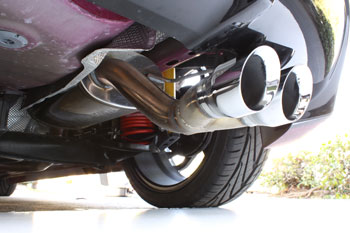
AB 1824 was passed as part of California’s budget process in June of 2018 and removed law enforcement’s ability to issue fix-it tickets for suspected exhaust noise violations.

In response to the new law, SEMA immediately began identifying ways to restore order to the market. After publishing a “Fact vs. Fiction” webpage seeking to clear up the confusion, SEMA’s allies in Sacramento were quickly tapped for legislative relief.

In February, California Assembly Members Jim Frazier and Tim Grayson introduced SEMA-sponsored legislation to reinstate fix-it tickets; the Assembly Transportation Committee quickly passed it without opposition. From there, language from the bill was included in a larger budget package and championed by Assembly Members Grayson, Tasha Boerner-Horvath, Phil Ting, Phil Chen and Senator Holly Mitchell, who shepherded it past the finish line. With Governor Gavin Newsom’s signature in October, fix-it tickets were again issued to motorists.

“SEMA thanks Assembly Members Grayson, Boerner-Horvath, Ting and Chen and Senator Mitchell for their tireless work on behalf of the more than 1,700 member companies based in the Golden State,” said Daniel Ingber, SEMA’s vice president for legal and government affairs. “Thanks to their efforts, enthusiasts in California will continue to be afforded due process under the law.”

California’s recent exhaust noise adventure is a cautionary tale. While 2019’s legislation provided clarity to the law for motorists, not all states share the same commonsense approach. In fact, several states have sought to limit or ban many aftermarket exhaust systems. For that reason, SEMA offers model legislation that implements a commonsense approach to regulating mufflers and the sound they produce. In recent years, versions of the model bill have been passed in Maine and Montana. To learn more, visit www.semasan.com/modelbills.

Sun, 12/01/2019 - 10:31

SEMA News—December 2019

FROM THE HILL

By Christian Robinson

California Muffler Battle Takes Checkered Flag

Bill to Amend 2018 Exhaust Noise Law Signed by Governor

California
Thanks to a SEMA-sponsored law enacted in 2003, drivers in the Golden State have been equipped with the tools needed to fight unfair exhaust noise citations.

You’ve just purchased the ride of your dreams and already have a list of upgrades in mind. If you’re like most enthusiasts, a new exhaust system is somewhere near the top of your list. Now imagine your surprise when you find out that your home state has passed an eleventh-hour piece of legislation that makes you question whether that modification is even legal. That’s exactly what happened to consumers in California earlier this year, but thanks to the efforts of SEMA and its allies in Sacramento, the problem has been solved.

For years, aftermarket exhaust systems have been stuck with an unfavorable stigma: an association with illegal street racing. That scarlet letter resulted in many states adopting laws and regulations banning the installation of aftermarket mufflers. However, it was the Golden State that sparked a new trend in the regulation of such parts in 2003.

Thanks to a SEMA-sponsored law enacted in 2003, drivers in the Golden State have been equipped with the tools needed to fight unfair exhaust noise citations. By rule, exhaust systems installed on cars in California with a manufacturer’s gross vehicle weight rating of less than 6,000 lbs. may not exceed a sound level of 95 dB. Because of the 2003 law, that measure is obtained using a Society of Automotive Engineers procedure, which is considered an objective standard. In other words, it’s based on a scientific test instead of the subjective human ear.

In fact, the law also went a step further and allowed police officers to issue fix-it tickets for mufflers suspected of being too loud. Put simply, drivers would be granted 30 days to have their mufflers tested and, if found too loud, brought into compliance in order to avoid paying a fine. That program is administered by the state’s Bureau of Automotive Repair and ran smoothly until last January, when the state began enforcing a new law—2018’s AB 1824.

AB 1824 was passed as part of California’s budget process in June of 2018 and removed law enforcement’s ability to issue fix-it tickets for suspected exhaust noise violations. The change in law was brought to the forefront when a video went viral claiming to show a motorist being issued a $1,000 fine for a loud muffler. As is often the case, widespread misinformation regarding the bill soon followed, including the belief that any aftermarket exhaust modification was now illegal. This was “fake news,” as some like to say, but the $3 billion exhaust-related marketplace was turned on its head as a result.

Exhaust
AB 1824 was passed as part of California’s budget process in June of 2018 and removed law enforcement’s ability to issue fix-it tickets for suspected exhaust noise violations.

In response to the new law, SEMA immediately began identifying ways to restore order to the market. After publishing a “Fact vs. Fiction” webpage seeking to clear up the confusion, SEMA’s allies in Sacramento were quickly tapped for legislative relief.

In February, California Assembly Members Jim Frazier and Tim Grayson introduced SEMA-sponsored legislation to reinstate fix-it tickets; the Assembly Transportation Committee quickly passed it without opposition. From there, language from the bill was included in a larger budget package and championed by Assembly Members Grayson, Tasha Boerner-Horvath, Phil Ting, Phil Chen and Senator Holly Mitchell, who shepherded it past the finish line. With Governor Gavin Newsom’s signature in October, fix-it tickets were again issued to motorists.

“SEMA thanks Assembly Members Grayson, Boerner-Horvath, Ting and Chen and Senator Mitchell for their tireless work on behalf of the more than 1,700 member companies based in the Golden State,” said Daniel Ingber, SEMA’s vice president for legal and government affairs. “Thanks to their efforts, enthusiasts in California will continue to be afforded due process under the law.”

California’s recent exhaust noise adventure is a cautionary tale. While 2019’s legislation provided clarity to the law for motorists, not all states share the same commonsense approach. In fact, several states have sought to limit or ban many aftermarket exhaust systems. For that reason, SEMA offers model legislation that implements a commonsense approach to regulating mufflers and the sound they produce. In recent years, versions of the model bill have been passed in Maine and Montana. To learn more, visit www.semasan.com/modelbills.

Sun, 12/01/2019 - 10:31

SEMA News—December 2019

FROM THE HILL

By Christian Robinson

California Muffler Battle Takes Checkered Flag

Bill to Amend 2018 Exhaust Noise Law Signed by Governor

California
Thanks to a SEMA-sponsored law enacted in 2003, drivers in the Golden State have been equipped with the tools needed to fight unfair exhaust noise citations.

You’ve just purchased the ride of your dreams and already have a list of upgrades in mind. If you’re like most enthusiasts, a new exhaust system is somewhere near the top of your list. Now imagine your surprise when you find out that your home state has passed an eleventh-hour piece of legislation that makes you question whether that modification is even legal. That’s exactly what happened to consumers in California earlier this year, but thanks to the efforts of SEMA and its allies in Sacramento, the problem has been solved.

For years, aftermarket exhaust systems have been stuck with an unfavorable stigma: an association with illegal street racing. That scarlet letter resulted in many states adopting laws and regulations banning the installation of aftermarket mufflers. However, it was the Golden State that sparked a new trend in the regulation of such parts in 2003.

Thanks to a SEMA-sponsored law enacted in 2003, drivers in the Golden State have been equipped with the tools needed to fight unfair exhaust noise citations. By rule, exhaust systems installed on cars in California with a manufacturer’s gross vehicle weight rating of less than 6,000 lbs. may not exceed a sound level of 95 dB. Because of the 2003 law, that measure is obtained using a Society of Automotive Engineers procedure, which is considered an objective standard. In other words, it’s based on a scientific test instead of the subjective human ear.

In fact, the law also went a step further and allowed police officers to issue fix-it tickets for mufflers suspected of being too loud. Put simply, drivers would be granted 30 days to have their mufflers tested and, if found too loud, brought into compliance in order to avoid paying a fine. That program is administered by the state’s Bureau of Automotive Repair and ran smoothly until last January, when the state began enforcing a new law—2018’s AB 1824.

AB 1824 was passed as part of California’s budget process in June of 2018 and removed law enforcement’s ability to issue fix-it tickets for suspected exhaust noise violations. The change in law was brought to the forefront when a video went viral claiming to show a motorist being issued a $1,000 fine for a loud muffler. As is often the case, widespread misinformation regarding the bill soon followed, including the belief that any aftermarket exhaust modification was now illegal. This was “fake news,” as some like to say, but the $3 billion exhaust-related marketplace was turned on its head as a result.

Exhaust
AB 1824 was passed as part of California’s budget process in June of 2018 and removed law enforcement’s ability to issue fix-it tickets for suspected exhaust noise violations.

In response to the new law, SEMA immediately began identifying ways to restore order to the market. After publishing a “Fact vs. Fiction” webpage seeking to clear up the confusion, SEMA’s allies in Sacramento were quickly tapped for legislative relief.

In February, California Assembly Members Jim Frazier and Tim Grayson introduced SEMA-sponsored legislation to reinstate fix-it tickets; the Assembly Transportation Committee quickly passed it without opposition. From there, language from the bill was included in a larger budget package and championed by Assembly Members Grayson, Tasha Boerner-Horvath, Phil Ting, Phil Chen and Senator Holly Mitchell, who shepherded it past the finish line. With Governor Gavin Newsom’s signature in October, fix-it tickets were again issued to motorists.

“SEMA thanks Assembly Members Grayson, Boerner-Horvath, Ting and Chen and Senator Mitchell for their tireless work on behalf of the more than 1,700 member companies based in the Golden State,” said Daniel Ingber, SEMA’s vice president for legal and government affairs. “Thanks to their efforts, enthusiasts in California will continue to be afforded due process under the law.”

California’s recent exhaust noise adventure is a cautionary tale. While 2019’s legislation provided clarity to the law for motorists, not all states share the same commonsense approach. In fact, several states have sought to limit or ban many aftermarket exhaust systems. For that reason, SEMA offers model legislation that implements a commonsense approach to regulating mufflers and the sound they produce. In recent years, versions of the model bill have been passed in Maine and Montana. To learn more, visit www.semasan.com/modelbills.

Sun, 12/01/2019 - 10:20

SEMA News—December 2019

By Fredy Ramirez

EVENTS

Hot Rodders of Tomorrow

Investing in the Future of the Automotive Industry

HROT
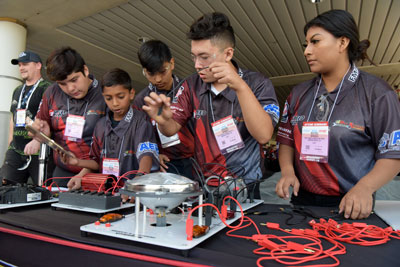
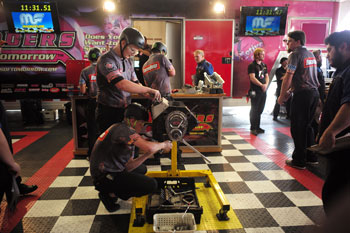
Teams of five competed in the Hot Rodders of Tomorrow’s new circuit challenge last year, where participating students must complete circuits, fix problems and pass a 10-question test.

The future seems bright for the 41 high-school teams competing to be a part of the Hot Rodders of Tomorrow (HROT) Engine Challenge Elite Eight playoff rounds. The finalists last year secured $3.78 million in scholarships. The competition gives students the opportunity to begin careers in the automotive industry; scholarships are just one of the benefits. During the competition, they are exposed to potential future employers and industry experts at a young age. That opens the door to various opportunities in the automotive trade.

Road to the Show

Over a period of four months starting in March, students from different high schools across the country competed for spots at the SEMA Show and the Performance Racing Industry (PRI) Trade Show, where the Dual National Championships are held. Some 13 qualifying events were held in more than 11 different states. A pool of 41 teams out of 154 qualified this year to go to the Dual National Championships. Some of those teams have competed at the SEMA Show, while the rest will compete at the PRI Trade Show in December. The top four from each competition then qualify to the six-round playoff of the Elite Eight, where the champion is crowned.

HROT
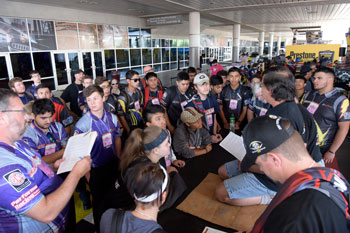
Students from 11 different states enter the competition, with some competing at the SEMA Show and the others at the PRI Trade Show.

The Competition

The objective for the qualifying rounds is to deconstruct and reconstruct a crate engine to factory specifications in under 120 min., with the fastest time being the winner. Teams of five work together to accomplish the goal, with four of the members working on the engine while the fifth captains the team from the bench. Each team is monitored by a group of judges to ensure that the engine is built properly and deduct points for improper build procedures. During the Elite Eight, teams’ times are averaged over the three times they assemble and disassemble the engine. They are also judged on a 50-question test on parts, tools and general identification knowledge.

Another competition is the HROT Junior Engine Challenge. Kids ages 5–15 are able to participate now, getting their hands on a Briggs & Stratton engine. This is a newly expanding area for HROT that seems to show great promise. The kids have a chance to get away from their phones and get their hands on real engines.

HROT
Teams of five construct and deconstruct a crate engine in a timed event. Only four of the five work on the engine; the fifth captains the team.

Sponsors

SAM Tech, Universal Technical Institute, the University of Northwestern Ohio and Ohio Technical College partner with HROT to offer scholarship opportunities to those who qualify for the Dual National Championships. Last year, those institutions offered more than $4.2 million in scholarship opportunities. Companies throughout the industry, including SEMA, sponsor the competition through multiple avenues. Whether they sponsor an event or a team, the investment is in the future of the industry.

The History

The first Hot Rodders of Tomorrow started in 2008 with five high-school teams competing. Over the years, participation and sponsorships have steadily increased, with about 1,000 teams entering and more than 60 different sponsors supporting the endeavor. Most importantly, more than $20 million in scholarship opportunities have been pledged to the future of the students, who may one day lead the automotive industry.

HROT clubs can now be found in high schools across the country. For more information about the organization and how to get involved, visit
www.hotroddersoftomorrow.com. You can also call or email Rodney Bingham, and he can help to get you started. Contact information can be found on the Hot Rodders of Tomorrow website’s “Contact Us” page.

Sun, 12/01/2019 - 10:20

SEMA News—December 2019

By Fredy Ramirez

EVENTS

Hot Rodders of Tomorrow

Investing in the Future of the Automotive Industry

HROT
Teams of five competed in the Hot Rodders of Tomorrow’s new circuit challenge last year, where participating students must complete circuits, fix problems and pass a 10-question test.

The future seems bright for the 41 high-school teams competing to be a part of the Hot Rodders of Tomorrow (HROT) Engine Challenge Elite Eight playoff rounds. The finalists last year secured $3.78 million in scholarships. The competition gives students the opportunity to begin careers in the automotive industry; scholarships are just one of the benefits. During the competition, they are exposed to potential future employers and industry experts at a young age. That opens the door to various opportunities in the automotive trade.

Road to the Show

Over a period of four months starting in March, students from different high schools across the country competed for spots at the SEMA Show and the Performance Racing Industry (PRI) Trade Show, where the Dual National Championships are held. Some 13 qualifying events were held in more than 11 different states. A pool of 41 teams out of 154 qualified this year to go to the Dual National Championships. Some of those teams have competed at the SEMA Show, while the rest will compete at the PRI Trade Show in December. The top four from each competition then qualify to the six-round playoff of the Elite Eight, where the champion is crowned.

HROT
Students from 11 different states enter the competition, with some competing at the SEMA Show and the others at the PRI Trade Show.

The Competition

The objective for the qualifying rounds is to deconstruct and reconstruct a crate engine to factory specifications in under 120 min., with the fastest time being the winner. Teams of five work together to accomplish the goal, with four of the members working on the engine while the fifth captains the team from the bench. Each team is monitored by a group of judges to ensure that the engine is built properly and deduct points for improper build procedures. During the Elite Eight, teams’ times are averaged over the three times they assemble and disassemble the engine. They are also judged on a 50-question test on parts, tools and general identification knowledge.

Another competition is the HROT Junior Engine Challenge. Kids ages 5–15 are able to participate now, getting their hands on a Briggs & Stratton engine. This is a newly expanding area for HROT that seems to show great promise. The kids have a chance to get away from their phones and get their hands on real engines.

HROT
Teams of five construct and deconstruct a crate engine in a timed event. Only four of the five work on the engine; the fifth captains the team.

Sponsors

SAM Tech, Universal Technical Institute, the University of Northwestern Ohio and Ohio Technical College partner with HROT to offer scholarship opportunities to those who qualify for the Dual National Championships. Last year, those institutions offered more than $4.2 million in scholarship opportunities. Companies throughout the industry, including SEMA, sponsor the competition through multiple avenues. Whether they sponsor an event or a team, the investment is in the future of the industry.

The History

The first Hot Rodders of Tomorrow started in 2008 with five high-school teams competing. Over the years, participation and sponsorships have steadily increased, with about 1,000 teams entering and more than 60 different sponsors supporting the endeavor. Most importantly, more than $20 million in scholarship opportunities have been pledged to the future of the students, who may one day lead the automotive industry.

HROT clubs can now be found in high schools across the country. For more information about the organization and how to get involved, visit
www.hotroddersoftomorrow.com. You can also call or email Rodney Bingham, and he can help to get you started. Contact information can be found on the Hot Rodders of Tomorrow website’s “Contact Us” page.

Sun, 12/01/2019 - 10:05

SEMA News—December 2019

BUSINESS

“Do It With Me”

How the SEMA Data Co-op Can Take the Hassle Out of Data Management and Streamline Manufacturer Operations

By Douglas McColloch

SDC
Created in 2012 to help members adapt to the rapidly evolving automotive marketplace, the SEMA Data Co-op (SDC) provides a full range of services, including “Do It With Me,” which allows members to have their product data tailored in any format to meet their particular requirements.

For SEMA members, the SEMA Data Co-op (SDC) is an indispensable resource for product data management and delivery. Not only is the SDC the largest aftermarket industry database—representing nearly 500 brands boasting more than 4.5 million parts—but its unique approach to data management and file transfer can make data exports available in whatever format a given member requires. Whether the need is for complete PIES and ACES XML files or a custom-designed spreadsheet, SDC can provide it.

For manufacturers, maintaining and regularly updating a high-quality data set is a crucial component of effective product communications. Incomplete, outdated or inaccurate data makes products more difficult to find online and increases the likelihood of costly returns and greater customer dissatisfaction. The SDC is an important ally in streamlining data-management processes to help generate sales, improve product delivery times, and streamline business operations overall.

“As a manufacturer, we would see our products listed all over the internet with incorrect info,” recalled Trevor Miller, senior account manager at Fastway Trailer. “Part numbers not matching descriptions, outdated info, old images, obsolete parts—this was a headache for our customer service team. SDC has been a great resource for us to control our content better, which has resulted in less confusion from our customers.”

Gigi Ho, SEMA Data Co-op director of operations, stressed the importance of accurate, up-to-date product data to drive sales.

“In this age, everything starts on the internet in terms of product acquisition,” she noted. “Research for parts begins 98% of the time online, and the only way customers can get information correctly in their research is by product data provided by the manufacturers. The consumer may eventually make the purchase at a traditional brick-and-mortar outlet, but the initial search almost always begins online.”

SDC
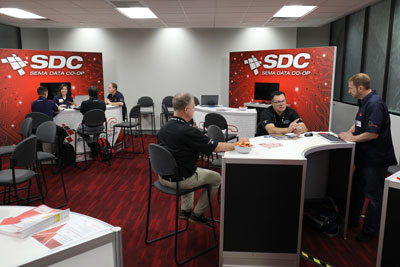
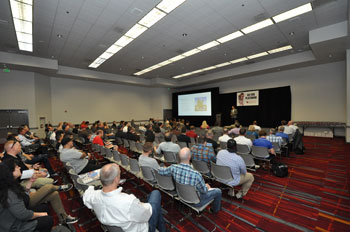
Each year at the SEMA Show, the SDC hosts educational sessions that can help attendees set up and manage their product data; learn how to export data in ACES, PIES or Excel formats; understand the SDC’s brand scorecard; and work efficiently in the SDC’s Product Information Management system, among other useful subjects.

Problems can arise for manufacturers that are unfamiliar with building and maintaining a content-rich product database. Given the complexity and cost in man-hours involved, many manufacturers—and smaller companies and startups in particular—can benefit from assistance in setting up and distributing their databases, updating product entries or onboarding content. To that end, the SDC’s “Do-It-With-Me” (DIWM) Data Service can assist members with any step in the data management process, whether it’s starting an online database from scratch or refining existing content to improve quality, accuracy and/or speed to market. Manufacturers can utilize SDC’s Product Information Management (PIM) system to continually monitor data quality, and SDC’s Direct Connect and Smart Content features can help to automate the data-loading process to save time and avoid redundancies.

To illustrate the procedures, Ho walked a prospective SDC member-manufacturer through the DIWM process: “Sign on with us. We’ll hold a kickoff call with our data team, and they’ll review with you the product information that you have in whatever format you currently have it—spreadsheets, images, your product and application information and so forth. “

Then the SDC data team will, Ho said, “template out the data and review it with you to see if it is correct. Once reviewed, we’ll load it into the PIM system, at which point it’s live to the industry. We announce it as an available product line at the SDC through our reseller network and also in our newsletter. If your product line is of interest to them, they’ll make a request to access your data. You’ll review who they are and approve the request. The resellers can then get your data transferred in the format they need in the time that they need it.”

That last remark is key, because the ability to receive data in a variety of formats is crucial in the internet age, as Ho explained.

“Years ago, it used to be, ‘We just need the standardized ACES and PIES data,’” she said.

“But now, as search-engine optimization and keywording become more important, the uniqueness of the data for the reseller and jobber becomes even more crucial, so now manufacturers need to review how to better augment their basic product descriptions and how to make that information more easily searchable and presentable online.”

Ho additionally pointed out the advantage of online marketing over older communications tools that many manufacturers have traditionally relied on.

SDC
Manufacturers—and smaller, less-well-known companies in particular—can utilize SDC’s DIWM services to build brand awareness in the marketplace via SDC’s “net change” feature, which notifies resellers whenever a manufacturer/supplier’s data is updated.

“Catalogs cost money and printing costs money,” she said. “But it doesn’t cost very much to send a few gigabytes of data over the internet, and there are some things that you can display online—such as video and 360-degree product views—that you can’t transmit in a paper catalog. The online platform is the sales tool for manufacturers today. It’s their ‘silent salesperson’ who’s always awake.”

The number of companies joining the SEMA Data Co-op has ramped up in recent months as more members of the industry—and resellers in particular—become aware of the advantages that membership conveys.

“The improvement of data completeness and quality has increased, and that has attracted more resellers wanting that data,” she said. “The increased interest of resellers in turn attracts more manufacturers who want to take advantage of our service.”

Besides the convenience afforded by the DIWM service, SDC membership provides a host of other benefits that can help manufacturers to optimize business operations, including:

  • Unlimited exports to approved resellers at no extra cost to the manufacturer, and the SDC’s permissions-based export protocol ensures that manufacturer data is shared only with approved resellers.
  • Full file refreshes or “net change” updates on a schedule members choose—daily, weekly, monthly or whenever a supplier makes changes to its product database. This can put buyers and suppliers closer together and enables greater speed to market. It can also help smaller, less-well-known manufacturers build greater brand awareness with resellers.
  • The SDC is a one-stop source for all manufacturer product information, new-product announcements, digital assets, fitment info and more. This can optimize manufacturer product communications and eliminate guesswork on the part of resellers and consumers alike.
  • Using the Bronze, Silver, Gold and Platinum scales, the SDC can show exactly where a data set is rated. The required fields to achieve each level are based on feedback from buyers and resellers, so manufacturers can know at a glance what information their client-customers need to maximize sales.

As the online marketplace continues to evolve, the SDC’s data scorecard will likewise adapt to the shifting requirements of the market. To that end, rating levels will be recalibrated within the next year “that more closely match the feedback we’re getting from buyers and resellers,” Ho said. “The scorecard is evolving in a way that moves in accordance with what the market demands, and our PIM system will evolve to reflect those changes.”

For more information on the SEMA Data Co-op and its range of services, visit www.semadatacoop.org.

Sun, 12/01/2019 - 10:05

SEMA News—December 2019

BUSINESS

“Do It With Me”

How the SEMA Data Co-op Can Take the Hassle Out of Data Management and Streamline Manufacturer Operations

By Douglas McColloch

SDC
Created in 2012 to help members adapt to the rapidly evolving automotive marketplace, the SEMA Data Co-op (SDC) provides a full range of services, including “Do It With Me,” which allows members to have their product data tailored in any format to meet their particular requirements.

For SEMA members, the SEMA Data Co-op (SDC) is an indispensable resource for product data management and delivery. Not only is the SDC the largest aftermarket industry database—representing nearly 500 brands boasting more than 4.5 million parts—but its unique approach to data management and file transfer can make data exports available in whatever format a given member requires. Whether the need is for complete PIES and ACES XML files or a custom-designed spreadsheet, SDC can provide it.

For manufacturers, maintaining and regularly updating a high-quality data set is a crucial component of effective product communications. Incomplete, outdated or inaccurate data makes products more difficult to find online and increases the likelihood of costly returns and greater customer dissatisfaction. The SDC is an important ally in streamlining data-management processes to help generate sales, improve product delivery times, and streamline business operations overall.

“As a manufacturer, we would see our products listed all over the internet with incorrect info,” recalled Trevor Miller, senior account manager at Fastway Trailer. “Part numbers not matching descriptions, outdated info, old images, obsolete parts—this was a headache for our customer service team. SDC has been a great resource for us to control our content better, which has resulted in less confusion from our customers.”

Gigi Ho, SEMA Data Co-op director of operations, stressed the importance of accurate, up-to-date product data to drive sales.

“In this age, everything starts on the internet in terms of product acquisition,” she noted. “Research for parts begins 98% of the time online, and the only way customers can get information correctly in their research is by product data provided by the manufacturers. The consumer may eventually make the purchase at a traditional brick-and-mortar outlet, but the initial search almost always begins online.”

SDC
Each year at the SEMA Show, the SDC hosts educational sessions that can help attendees set up and manage their product data; learn how to export data in ACES, PIES or Excel formats; understand the SDC’s brand scorecard; and work efficiently in the SDC’s Product Information Management system, among other useful subjects.

Problems can arise for manufacturers that are unfamiliar with building and maintaining a content-rich product database. Given the complexity and cost in man-hours involved, many manufacturers—and smaller companies and startups in particular—can benefit from assistance in setting up and distributing their databases, updating product entries or onboarding content. To that end, the SDC’s “Do-It-With-Me” (DIWM) Data Service can assist members with any step in the data management process, whether it’s starting an online database from scratch or refining existing content to improve quality, accuracy and/or speed to market. Manufacturers can utilize SDC’s Product Information Management (PIM) system to continually monitor data quality, and SDC’s Direct Connect and Smart Content features can help to automate the data-loading process to save time and avoid redundancies.

To illustrate the procedures, Ho walked a prospective SDC member-manufacturer through the DIWM process: “Sign on with us. We’ll hold a kickoff call with our data team, and they’ll review with you the product information that you have in whatever format you currently have it—spreadsheets, images, your product and application information and so forth. “

Then the SDC data team will, Ho said, “template out the data and review it with you to see if it is correct. Once reviewed, we’ll load it into the PIM system, at which point it’s live to the industry. We announce it as an available product line at the SDC through our reseller network and also in our newsletter. If your product line is of interest to them, they’ll make a request to access your data. You’ll review who they are and approve the request. The resellers can then get your data transferred in the format they need in the time that they need it.”

That last remark is key, because the ability to receive data in a variety of formats is crucial in the internet age, as Ho explained.

“Years ago, it used to be, ‘We just need the standardized ACES and PIES data,’” she said.

“But now, as search-engine optimization and keywording become more important, the uniqueness of the data for the reseller and jobber becomes even more crucial, so now manufacturers need to review how to better augment their basic product descriptions and how to make that information more easily searchable and presentable online.”

Ho additionally pointed out the advantage of online marketing over older communications tools that many manufacturers have traditionally relied on.

SDC
Manufacturers—and smaller, less-well-known companies in particular—can utilize SDC’s DIWM services to build brand awareness in the marketplace via SDC’s “net change” feature, which notifies resellers whenever a manufacturer/supplier’s data is updated.

“Catalogs cost money and printing costs money,” she said. “But it doesn’t cost very much to send a few gigabytes of data over the internet, and there are some things that you can display online—such as video and 360-degree product views—that you can’t transmit in a paper catalog. The online platform is the sales tool for manufacturers today. It’s their ‘silent salesperson’ who’s always awake.”

The number of companies joining the SEMA Data Co-op has ramped up in recent months as more members of the industry—and resellers in particular—become aware of the advantages that membership conveys.

“The improvement of data completeness and quality has increased, and that has attracted more resellers wanting that data,” she said. “The increased interest of resellers in turn attracts more manufacturers who want to take advantage of our service.”

Besides the convenience afforded by the DIWM service, SDC membership provides a host of other benefits that can help manufacturers to optimize business operations, including:

  • Unlimited exports to approved resellers at no extra cost to the manufacturer, and the SDC’s permissions-based export protocol ensures that manufacturer data is shared only with approved resellers.
  • Full file refreshes or “net change” updates on a schedule members choose—daily, weekly, monthly or whenever a supplier makes changes to its product database. This can put buyers and suppliers closer together and enables greater speed to market. It can also help smaller, less-well-known manufacturers build greater brand awareness with resellers.
  • The SDC is a one-stop source for all manufacturer product information, new-product announcements, digital assets, fitment info and more. This can optimize manufacturer product communications and eliminate guesswork on the part of resellers and consumers alike.
  • Using the Bronze, Silver, Gold and Platinum scales, the SDC can show exactly where a data set is rated. The required fields to achieve each level are based on feedback from buyers and resellers, so manufacturers can know at a glance what information their client-customers need to maximize sales.

As the online marketplace continues to evolve, the SDC’s data scorecard will likewise adapt to the shifting requirements of the market. To that end, rating levels will be recalibrated within the next year “that more closely match the feedback we’re getting from buyers and resellers,” Ho said. “The scorecard is evolving in a way that moves in accordance with what the market demands, and our PIM system will evolve to reflect those changes.”

For more information on the SEMA Data Co-op and its range of services, visit www.semadatacoop.org.