


Story and photos by Andreas Conradt, Automedia
'26 Porsche 718 Cayman EV: A New Era of Performance and Sustainability

Porsche is poised to make a significant impact with the upcoming '26 Porsche 718 Boxster and Cayman EV. This all-electric iteration of the iconic 718 promises to blend the brand's storied performance heritage with cutting-edge technology and sustainability, according to the manufacturer.
The Porsche 718 series, which includes the Boxster and Cayman, has long been celebrated for its exceptional handling, lightweight construction and thrilling driving dynamics. The '26 Porsche 718 EV aims to uphold this legacy while embracing the advantages of electric powertrains, according to SEMA News sources. While the open-top 718 Boxster has been photographed in prototype guise various times since 2023, these are the first shots of its tin-topped stable mate, the 718 Cayman.
The design of the '26 Porsche 718 EV appears to reflect modern interpretations of the classic 718 silhouettes. Expect to see sleek lines, a low stance and an aerodynamic profile that enhances efficiency and performance. While the overall shapes may remain familiar, the EVs will incorporate unique design elements that distinguish them from their gasoline-powered predecessors, such as a closed-off front grille and distinctive lighting signatures, sources said.

At the heart of the '26 Porsche 718 Boxster and Cayman will be an electric powertrain. While specific details are still under wraps, industry insiders anticipate a dual-motor setup that will provide all-wheel drive and instantaneous torque delivery. This configuration could enable Boxster and Cayman to achieve 0-60-mph times in the realm of 3 seconds or less.
Porsche is also expected to utilize advanced battery packs that offer a balance of high energy density and lightweight construction, ensuring that the vehicle remains agile and responsive. Additionally, fast-charging capabilities will likely be a priority, allowing drivers to recharge their vehicles quickly and efficiently during long journeys.
Inside, the cabin will likely feature high-quality materials, an ergonomic design and a driver-focused layout. A digital cockpit with a large infotainment display will provide access to a range of connectivity features, navigation and performance data, insiders said.
Porsche is also expected to integrate advanced driver-assistance systems (ADAS) to enhance safety and convenience. Features such as adaptive cruise control, lane-keeping assist and automated parking will likely be available.
As part of Porsche's stated commitment to sustainability, the '26 718 EV will likely include the use of sustainable materials in the interior, energy-efficient manufacturing processes and a focus on recyclability will all contribute to a more environmentally friendly vehicle.
Facelifts Coming for Mercedes-AMG GLE and GLS

Mercedes-AMG GLE
With updates already on the way for the Mercedes-Benz GLE and GLS, SEMA News sources recently caught a glimpse of the redesigned AMG variants of both models.
The Affalterbach manufacturer is working on a second facelift for their GLE midsize and GLS full-size SUVs to prolong the life span of the models, likely a result of the ongoing debate about the end or open end for internal-combustion engines in Europe and elsewhere, according to insiders.

Mercedes-AMG GLS
The new spy shots indicate that modifications will be limited to a few cosmetic changes. As seen in these new images, the inner graphics of the front and rear lamps are clearly visible and are reminiscent of parent company's Mercedes-Benz three-pointed star.
These minor changes could be paired with a small makeover of the interior, plus updated safety-assistance systems and a revised infotainment system, including bigger screens.
New exhaust regulations also suggest that there will be no changes under the hood, sources said.
By Ashley Reyes

Ultra4 racecars have undergone remarkable advancements over the years, evolving from dedicated rock crawlers struggling to reach 60 mph to high-performance racecars capable of exceeding 130 mph. These intricate machines are now known for their ability to dominate in some of the most thrilling desert races, short course competitions and high-stakes endurance challenges that exist today.
On Thursday, March 6, at 9:00 a.m. PST, the SEMA Wheel, Tire, Suspension & Brake Council (WTSBC) will host a Coffee and Conversation virtual event discussing the evolution of the Ultra4 racecar. Attendees will engage in open dialogue with featured guests who are experts in the Ultra4 racing field, providing a unique opportunity to exchange knowledge with others and gain new perspectives.
During the conversation, attendees will connect with:
- Matt Harris -- vice president and general manager, Method Race Wheels/Custom Wheelhouse
- Brian McCroskey -- senior manager-special projects, Bilstein/Thyssenkrup
- Mike Messina -- general manager-racing division, Brembo
- Jeremy Purick -- Rock Krawler Suspension
- Jason Weidman -- brand manager-wheels, Wheel Group
WTSBC Coffee and Conversations offer a great chance to network virtually with professionals in the wheel, tire, suspension and brake sectors. You'll be able to share your insights, discuss common challenges and build valuable relationships with industry peers.
From SEMA's Washington, D.C., office
SEMA is requesting that its members sign a letter to federal lawmakers explaining why Congress should pass a Congressional Review Act (CRA) resolution to overturn the United States Environmental Protection Agency's (EPA) Clean Air Act waiver for California's Advanced Clean Cars II (ACC II) regulation. Congress has an opportunity to stop California's disastrous regulation, which requires 100% of new cars, SUVs and small trucks sold in California and 11 other states to be zero-emissions vehicles (ZEV) by 2035.
Click below to act now and add your name to the list!
SIGN THE LETTER TO LAWMAKERS HERE.
Congress is owed the opportunity to determine whether a single state should be empowered to enact a heavy-handed policy that would have broad, national implications for the economy, the entire automotive-aftermarket industry and consumers.
If not stopped by Congress, the Clean Air Act waiver that the EPA granted in December would enable California to implement its EV mandates and ban internal-combustion-engine vehicles. Congress, though, can use the CRA to nullify the waivers, thus preserving vehicle choice for consumers and halting a policy that would have a disastrous effect on the automotive aftermarket industry.
To sign your name to this important cause, complete SEMA's quick form here.
From SEMA's Washington, D.C., office
SEMA is requesting that its members sign a letter to federal lawmakers explaining why Congress should pass a Congressional Review Act (CRA) resolution to overturn the United States Environmental Protection Agency's (EPA) Clean Air Act waiver for California's Advanced Clean Cars II (ACC II) regulation. Congress has an opportunity to stop California's disastrous regulation, which requires 100% of new cars, SUVs and small trucks sold in California and 11 other states to be zero-emissions vehicles (ZEV) by 2035.
Click below to act now and add your name to the list!
SIGN THE LETTER TO LAWMAKERS HERE.
Congress is owed the opportunity to determine whether a single state should be empowered to enact a heavy-handed policy that would have broad, national implications for the economy, the entire automotive-aftermarket industry and consumers.
If not stopped by Congress, the Clean Air Act waiver that the EPA granted in December would enable California to implement its EV mandates and ban internal-combustion-engine vehicles. Congress, though, can use the CRA to nullify the waivers, thus preserving vehicle choice for consumers and halting a policy that would have a disastrous effect on the automotive aftermarket industry.
To sign your name to this important cause, complete SEMA's quick form here.
By Ashley Reyes
SEMA member company employees have until March 1 to apply to reduce their student debt through the SEMA Loan Forgiveness Program. Awards of $2,000 are available to eligible individuals who apply at sema.org/loan-forgiveness.
"Student loans can be a heavy burden for recent graduates," said SEMA Manager of Recognition Programs Jose Escobar. "The SEMA Loan Forgiveness Program addresses this by giving our members an exclusive opportunity to ease the financial pressure tied to their college education, enabling them to focus more on their careers."
Eligibility requirements include:
- Be currently employed by a SEMA-member business
- Demonstrate a passion for the automotive hobby and career
- Possess a degree or certificate from a college, university or career technical/trade school in the United States or Canada
- Have a minimum of $2,000 in outstanding student loans
The SEMA Loan Forgiveness Program is offered as a benefit of SEMA membership. Learn more and apply at www.sema.org/loan-forgiveness. Questions can be directed to SEMA manager of recognition programs at josee@sema.org or 909-378-4860.
From the SEMA Washington, D.C., office
An update from the PRI Washington, D.C., office on March 25, 2025:
HB 2738 was not set for a hearing by the Oregon Legislature’s Working Session deadline on March 21, 2025. The next critical deadline is April 9, 2025, for the First Chamber deadline. If the bill misses this deadline, it is even less likely to move forward. SEMA and PRI thank industry members and the SEMA Action Network for their efforts supporting this important cause.
The following article was originally published on February 24, 2025:
A SEMA- and PRI-opposed bill in Oregon threatens to shutter an iconic local race track by regulating the use of certain fuels.
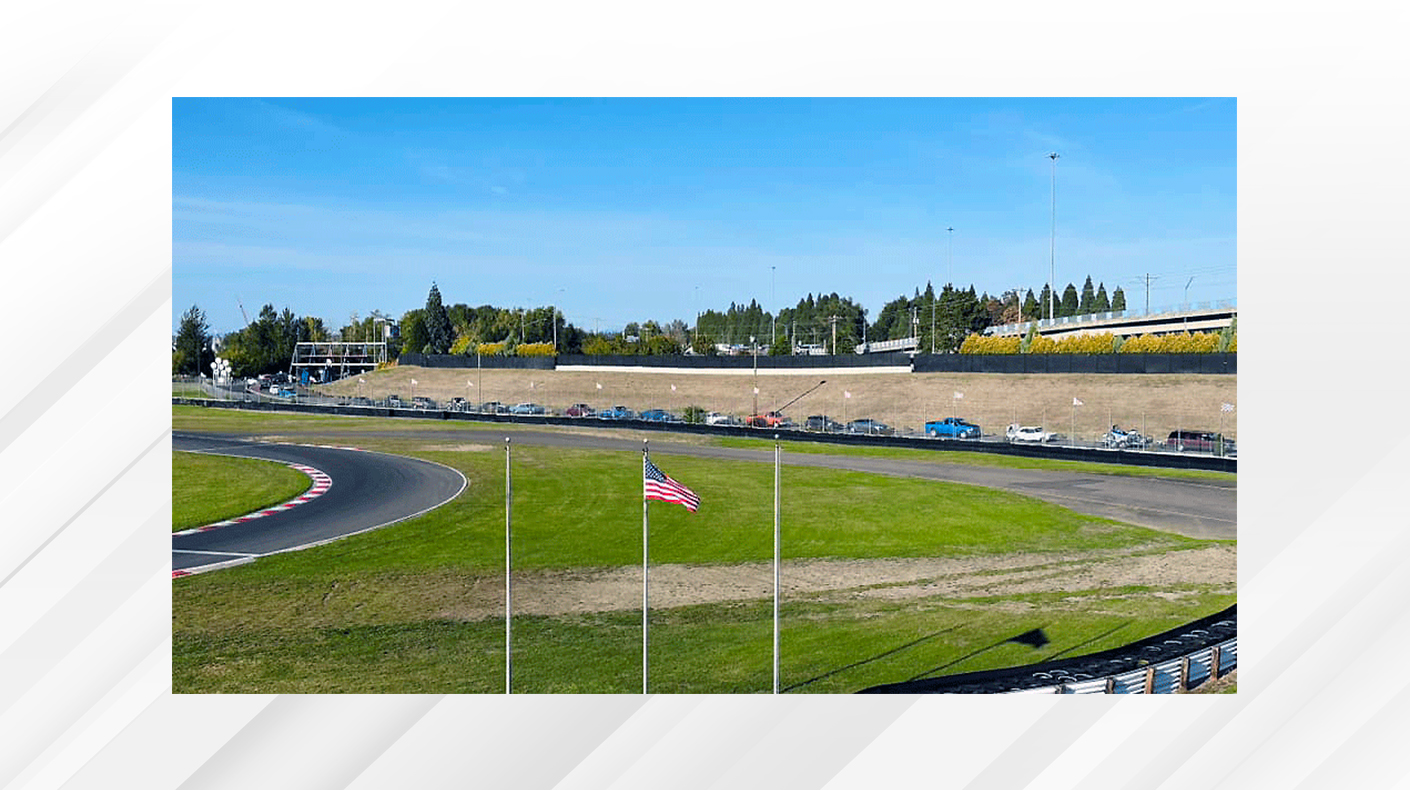
Oregon lawmakers are considering House Bill 2738, which aims to prohibit the use of leaded fuel at race tracks located within cities with populations of 500,000 or more, starting January 1, 2026. The only facility that would be impacted by the proposal is Portland International Raceway (PIR), the 63-year-old track that has hosted champions including Mario and Michael Andretti, Emerson Fittipaldi and Álex Palou. The bill, introduced by State Rep. Travis Nelson (D), sparked a heated debate among legislators, community members and racing enthusiasts, with SEMA/PRI testifying on the detrimental impact that closing the track would have on the local economy (more on this, below).
Misrepresented Health Concerns Drive Legislation
Rep. Nelson, who represents House District 44 in Northeast Portland, cited supposed health risks associated with leaded fuel emissions, relying on misrepresented data from a 2023 Guardian report and a Cornell University study, which showed that lead exposure could extend up to 25 miles from its source and significantly impact children's test scores and elderly mortality rates. However, these studies blatantly show that the presence of lead in ambient air has decreased so much that the U.S. Environmental Protection Agency (EPA) has waived the lead monitoring requirement for the Oregon Department of Environmental Quality since 2003.
Some lawmakers, specialists and advocates argue that emissions from leaded fuel at PIR are minimal at best. This includes Troy Abercrombie, a drag racer and natural resource conservationist.
"The amount of leaded fuel emissions from this activity would be minimal, even if every single vehicle used leaded race gas," Abercrombie testified, who also pointed out that many racers are already transitioning to alternative fuels like E85 and methanol.
Rep. Emerson Levy (D) similarly expressed concerns about the correlation between lead exposure and lower test scores. "The DEQ did a study in 2022 that showed no lead was above the ambient air quality standards... We need to be very careful with causation and correlation when making state laws," Rep. Levy stated.
Keith DiBrino, a board advisor for the Oregon Motorcycle Road Racing Association, echoed these sentiments. "There's already been a transition moving towards unleaded race gas. The last thing we need [in this industry] is more regulation," DiBrino said.
Economic Impact on Local Businesses
In a letter to the committee, Victor Muñoz, SEMA and PRI's senior manager for state government affairs, emphasized the substantial economic contributions of PIR operates with a $2 million budget and would face substantial revenue losses of more than $600,000 if the bill is enacted, risking its closure. Major racing events hosted at PIR, such as IndyCar, NASCAR, the Rose Cup and the Oregon Motorcycle Road Race Association's events, generate more than $32 million annually for Portland's economy. The potential loss of these events would impact local businesses, hotels, restaurants and tourism.
Muñoz also highlighted the economic impact of the automotive specialty-equipment industry, which supports grassroots racing enthusiasts in Oregon to the tune of more than $3 billion in economic impact and supports more than 14,000 jobs.
Lewis Fitzgerald Holland, a resident of the Portsmouth neighborhood, echoed the value of the track, which extends beyond dollars: "I believe that Rep. Nelson and some of the other backers of this bill are well-intentioned, but they have been led astray... PIR is woven into the fabric of North Portland, and this bill would be a poison pill for the future of the track."
Next Steps Hinge on Committee
Amendments to the bill were submitted in committee that extend the prohibition date to 2029, allowing PIR time to explore alternative events to offset lost revenue.
As the debate continues, the Oregon House Committee will consider the testimonies and data presented by both supporters and opponents of the bill prior to voting on the bill in a future working session. The outcome will determine whether PIR will need to phase out leaded fuel by the end of the decade, dealing a devastating blow to the local grassroots racing community.
For more information, please contact Muñoz at victorm@sema.org.
Photo courtesy of PIR, Facebook
From the SEMA Washington, D.C., office
An update from the PRI Washington, D.C., office on March 25, 2025:
HB 2738 was not set for a hearing by the Oregon Legislature’s Working Session deadline on March 21, 2025. The next critical deadline is April 9, 2025, for the First Chamber deadline. If the bill misses this deadline, it is even less likely to move forward. SEMA and PRI thank industry members and the SEMA Action Network for their efforts supporting this important cause.
The following article was originally published on February 24, 2025:
A SEMA- and PRI-opposed bill in Oregon threatens to shutter an iconic local race track by regulating the use of certain fuels.
Oregon lawmakers are considering House Bill 2738, which aims to prohibit the use of leaded fuel at race tracks located within cities with populations of 500,000 or more, starting January 1, 2026. The only facility that would be impacted by the proposal is Portland International Raceway (PIR), the 63-year-old track that has hosted champions including Mario and Michael Andretti, Emerson Fittipaldi and Álex Palou. The bill, introduced by State Rep. Travis Nelson (D), sparked a heated debate among legislators, community members and racing enthusiasts, with SEMA/PRI testifying on the detrimental impact that closing the track would have on the local economy (more on this, below).
Misrepresented Health Concerns Drive Legislation
Rep. Nelson, who represents House District 44 in Northeast Portland, cited supposed health risks associated with leaded fuel emissions, relying on misrepresented data from a 2023 Guardian report and a Cornell University study, which showed that lead exposure could extend up to 25 miles from its source and significantly impact children's test scores and elderly mortality rates. However, these studies blatantly show that the presence of lead in ambient air has decreased so much that the U.S. Environmental Protection Agency (EPA) has waived the lead monitoring requirement for the Oregon Department of Environmental Quality since 2003.
Some lawmakers, specialists and advocates argue that emissions from leaded fuel at PIR are minimal at best. This includes Troy Abercrombie, a drag racer and natural resource conservationist.
"The amount of leaded fuel emissions from this activity would be minimal, even if every single vehicle used leaded race gas," Abercrombie testified, who also pointed out that many racers are already transitioning to alternative fuels like E85 and methanol.
Rep. Emerson Levy (D) similarly expressed concerns about the correlation between lead exposure and lower test scores. "The DEQ did a study in 2022 that showed no lead was above the ambient air quality standards... We need to be very careful with causation and correlation when making state laws," Rep. Levy stated.
Keith DiBrino, a board advisor for the Oregon Motorcycle Road Racing Association, echoed these sentiments. "There's already been a transition moving towards unleaded race gas. The last thing we need [in this industry] is more regulation," DiBrino said.
Economic Impact on Local Businesses
In a letter to the committee, Victor Muñoz, SEMA and PRI's senior manager for state government affairs, emphasized the substantial economic contributions of PIR operates with a $2 million budget and would face substantial revenue losses of more than $600,000 if the bill is enacted, risking its closure. Major racing events hosted at PIR, such as IndyCar, NASCAR, the Rose Cup and the Oregon Motorcycle Road Race Association's events, generate more than $32 million annually for Portland's economy. The potential loss of these events would impact local businesses, hotels, restaurants and tourism.
Muñoz also highlighted the economic impact of the automotive specialty-equipment industry, which supports grassroots racing enthusiasts in Oregon to the tune of more than $3 billion in economic impact and supports more than 14,000 jobs.
Lewis Fitzgerald Holland, a resident of the Portsmouth neighborhood, echoed the value of the track, which extends beyond dollars: "I believe that Rep. Nelson and some of the other backers of this bill are well-intentioned, but they have been led astray... PIR is woven into the fabric of North Portland, and this bill would be a poison pill for the future of the track."
Next Steps Hinge on Committee
Amendments to the bill were submitted in committee that extend the prohibition date to 2029, allowing PIR time to explore alternative events to offset lost revenue.
As the debate continues, the Oregon House Committee will consider the testimonies and data presented by both supporters and opponents of the bill prior to voting on the bill in a future working session. The outcome will determine whether PIR will need to phase out leaded fuel by the end of the decade, dealing a devastating blow to the local grassroots racing community.
For more information, please contact Muñoz at victorm@sema.org.
Photo courtesy of PIR, Facebook
By Ashley Reyes
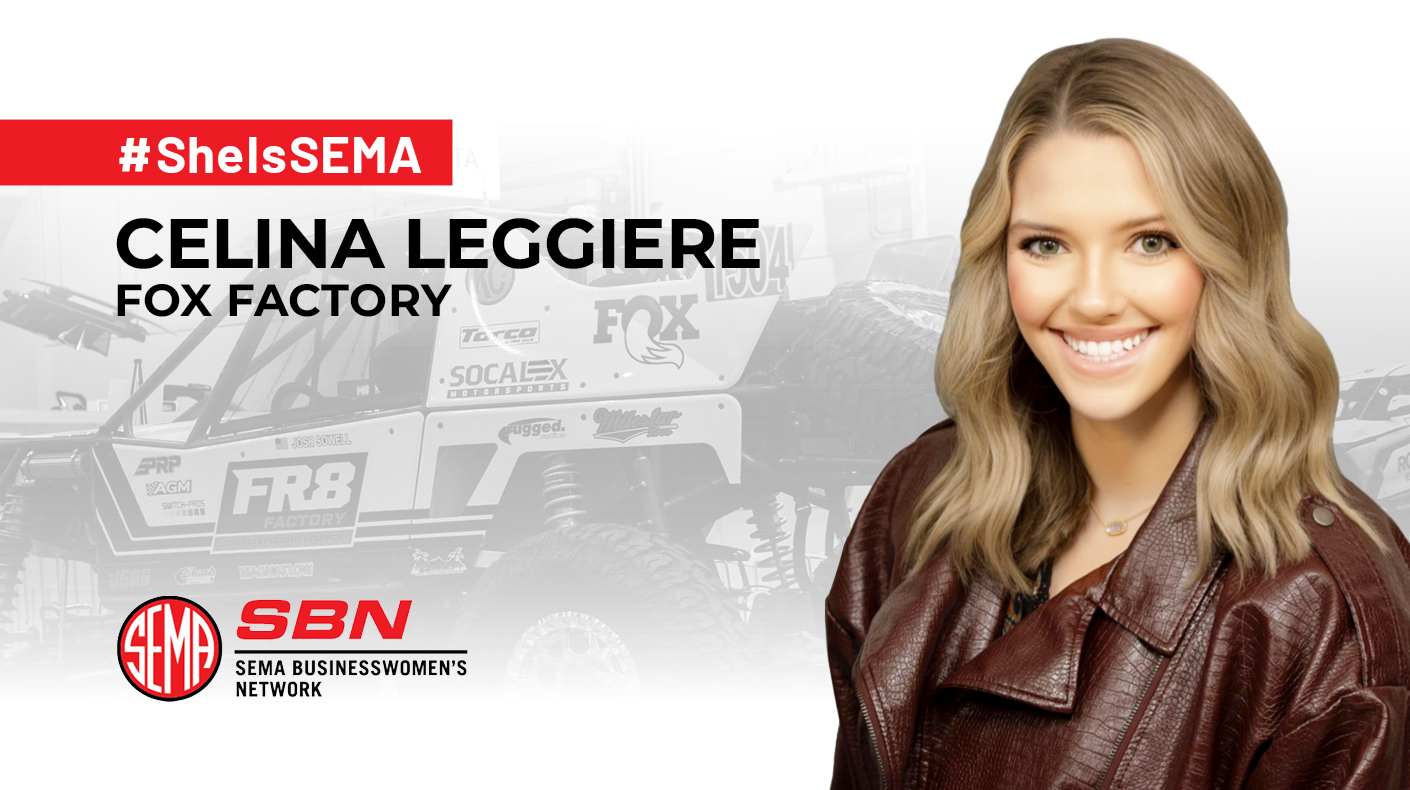
The SEMA Businesswomen's Network (SBN) has named Celina Leggiere, social media strategist at Fox Factory, as the network's newest #SheIsSEMA spotlight member.
Get to know Leggiere in her interview with SEMA News below.
SEMA News: How many years have you been with your current company and what do you enjoy most about working there?
Celina Leggiere: I've been with my current company for almost a year--I'll hit my one-year mark this February. Every day is definitely a challenge, especially with social media constantly evolving, but that's what makes it exciting. It pushes my knowledge and creativity to new limits, and I love that it keeps me on my toes. Fox Factory is the family I've been looking for. Some of my co-workers have become my favorite people to do life with and see every day. It has truly changed my perspective of "work" from just being a job into something I'm energized and excited to contribute to every day.
SEMA: What is the most challenging part of running your business or job?
CL: The most challenging part of my job is staying ahead of the ever-changing social media landscape. Platforms, algorithms and trends shift constantly, so it's crucial to adapt quickly while maintaining consistent and engaging content. It pushes me to always be on my toes, learning new strategies and finding creative ways to connect with our audience. But honestly, that's also one of the most exciting parts--it keeps things fresh and fuels my passion for what I do.
SEMA: How many years have you been in the industry and what was your first industry job?
CL: This is my fifth year in the industry. Social media has changed since 2019, let me tell you! My first-ever industry job was as a social media assistant at an advertising agency that focused on car dealerships. I was helping manage more than 100-plus social accounts for all of our clients, which were mostly dealerships. It was a wild start, but it taught me how to juggle multiple accounts, adapt quickly and understand the fast-paced nature of this space.
SEMA: What are three qualities that got you to where you are today?
CL: Three qualities that have gotten me to where I am today are adaptability, creativity and resilience. Adaptability has been essential, especially in social media, where things are constantly evolving. It's helped me stay ahead of trends and pivot strategies when needed.
Creativity keeps my content fresh and engaging, allowing me to think outside the box and connect with audiences in new ways. And resilience has been key in overcoming challenges and setbacks, allowing me to keep pushing forward when things get tough.
These qualities have helped me grow both professionally and personally, giving me the tools to thrive in a fast-paced, ever-changing industry.
SEMA: Being a woman in the industry, what have been your biggest challenges and accomplishments?
CL: As a woman in a male-dominated industry, one of my biggest challenges has been gaining respect and being taken seriously, especially as the "social media girl." There have been countless times when I've asked for participation in videos or engagement on our platforms, and instead of support, I've been met with laughter or dismissive attitudes. It can feel isolating at times, but I've learned that staying confident in my skills and vision is key.
One of my proudest accomplishments has been turning those doubts into results--when the content I create drives engagement, increases our brand's visibility or sparks a conversation, it speaks for itself. I've earned respect by consistently showing that social media is a powerful tool for our industry.
A specific situation that comes to mind was when I initially faced resistance from some of the team regarding a video series I pitched. They didn't see the value in it, but I pushed through, created the content, and when it performed beyond expectations, the same people started coming to me with ideas. That moment was a turning point--it reminded me that persistence and believing in your vision is everything. Being a woman in this space isn't always easy, but it's made me stronger, more determined and has given me a deeper sense of purpose.
SEMA: Who are your role models or mentors in the industry?
CL: I've been fortunate to have a few incredible role models and mentors in the industry who have played a huge role in my growth. One of my biggest inspirations is my former boss from my first social media job at an advertising agency. She was a powerhouse, and watching how she handled the fast-paced environment with grace and confidence gave me a clear picture of the kind of leader I wanted to be. She taught me the importance of staying calm under pressure and trusting in my own abilities.
Another major influence has been my faith in God. He's guided me through some of the toughest moments, helping me stay grounded and giving me the strength to push forward when I face challenges. Leaning on him has given me clarity and courage to take bigger risks and trust that everything happens in his perfect timing.
Both have shown me that resilience, creativity and faith are essential in this industry. Their guidance has shaped the way I approach my work and helped me trust my own voice and instincts.
SEMA: What is the best career advice you have received?
CL: The best career advice I've ever received is, "don't be afraid to take up space." Early on, I struggled with feeling like I needed to stay in the background or play small, especially in male-dominated environments. But this advice helped me realize that my voice, ideas and contributions are valuable.
Professionally, it has given me the confidence to speak up, share my perspective and push for projects I believe in. Personally, it has been a reminder to embrace who I am and trust that I have something important to offer. It has helped me show up authentically in every space I enter, and that's been key to both my growth and success.
SEMA: Have you always wanted to work in the automotive industry? What keeps you here?
CL: I wouldn't say I always envisioned myself in the automotive industry, but once I found my way here, it felt like the perfect fit. Growing up, I had a passion for cars and trucks, thanks to my family's love for them, but it wasn't until I started working in this field that I truly realized how exciting and dynamic it is.
What keeps me here is the incredible community and the constant innovation in the industry. I love being part of a space where I can combine my creativity with my passion for vehicles. Every day brings new challenges and opportunities to learn, and being surrounded by like-minded people who share the same enthusiasm is incredibly motivating. Plus, seeing the impact of our work on fellow enthusiasts and customers makes it all worthwhile.
SEMA: Who was the most influential person on your career/goals?
CL: The most influential person on my career and goals has been my former boss from my first job in the industry. She was a true trailblazer, and her leadership style inspired me to embrace my own potential. She taught me the importance of resilience, adaptability and the power of building strong relationships in the workplace.
Her belief in me pushed me to step outside my comfort zone and pursue opportunities I never thought possible. Watching her navigate challenges with confidence and grace made me realize that I could also carve out my own path in the automotive world. Her mentorship has left a lasting impact on my career, and I strive to embody those lessons in everything I do.
Fill out a #SheIsSEMA spotlight form to submit a self-nomination or nominate a colleague and highlight how you or she is contributing to the specialty-equipment industry. Selected candidates are automatically eligible to be considered for SBN's #SheIsSEMA Woman of the Year award, featured on SBN's social media, SEMA News and recognized on the sema.org/she-is-sema website.
By Ashley Reyes
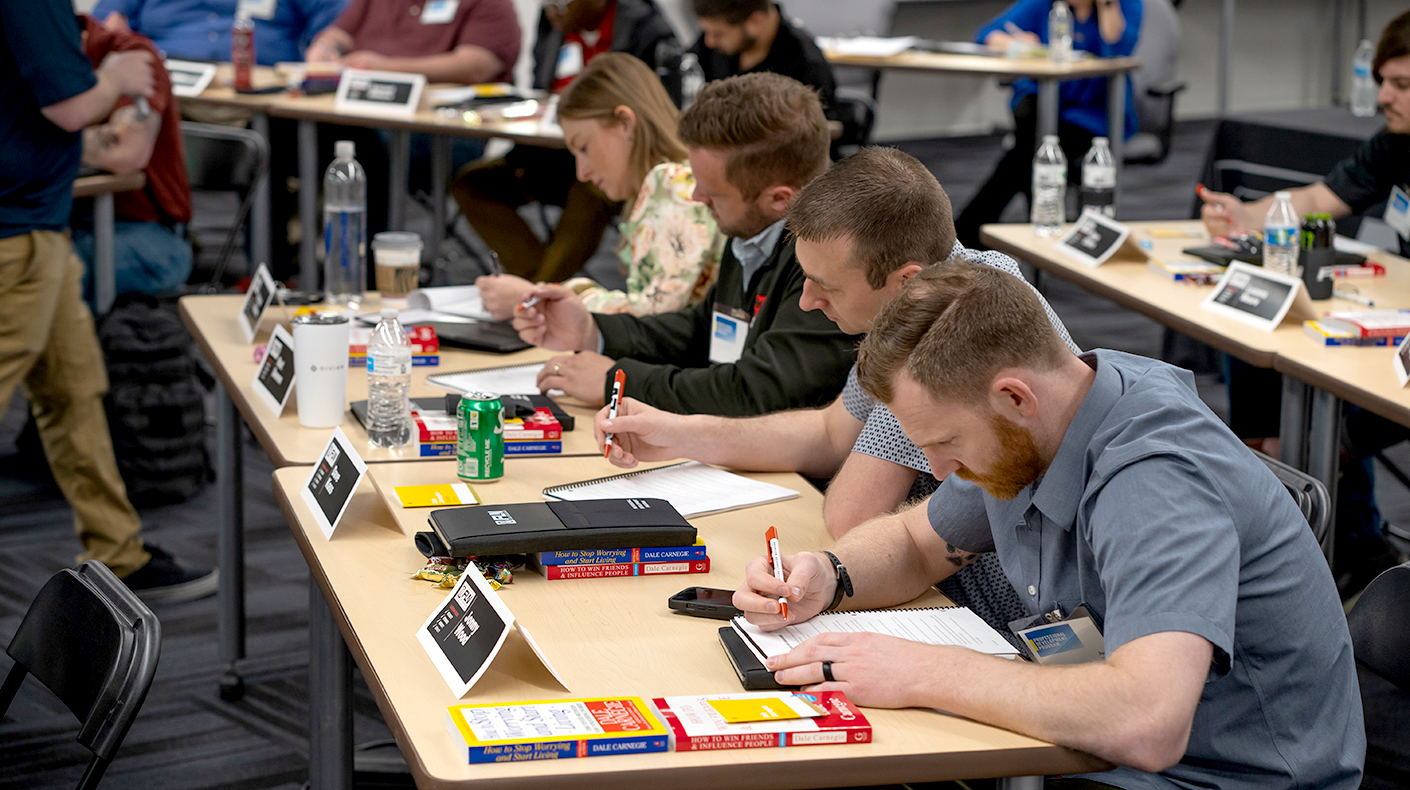
Young professionals in the aftermarket industry will have two unique opportunities to invest in their career growth through the SEMA Future Leaders Network (FLN) Professional Development Program (PDP), taking place this May at the SEMA Garage in Detroit, Michigan.
In partnership with Dale Carnegie Training, the PDP will include a course on individual communication development (May 5-6) and a course on team leadership development (May 7-9). Both courses are tailored to help young aftermarket professionals gain the attitudes and skills to take their performance to the next level.
Below are five reasons to apply for the PDP according to past participants:
1. Immediate Return on Investment
"Only a few days after the program, I started to see the difference it has made in me and improving communication with my team." -- Jonny Wood, Yakima Products, Inc.
2. Interactive and Engaging Lessons
"The instructors instilled excitement within the group with their teaching style, which in turn allowed all of us to be extremely open and vocal about our experiences." -- Kia Aghai, WARN Industries
3. Quality Peer-to-Peer Connections
"The training helped me see that I am not alone in my worries and concerns. I now have a group of people who I can rely on and bounce ideas off of when I run into hard times or challenges." -- Andrew Hodgson, Timbren Industries
4. Solutions to Career Challenges
"I learned a lot of different strategies on how to motivate my sales reps and move forward with my business." -- Dan LaRou, Chrome Enhancements/LKQ
5. Broader Perspective
"The FLN PDP provided me with insight and knowledge I am unable to receive in regular training at my job." -- Ryan Ehlers, Diode Dynamics.
Dale Carnegie has more than 100 years of proven success in helping thousands of organizations and millions of people create positive change and successful growth. This year's PDP will be led by Dale Carnegie Master Trainer Brett Campbell, who for the past four years has been praised by past participants for his energetic and impactful teaching approach.
This PDP is exclusive to FLN members and is available at a discounted rate off the standard Dale Carnegie Training fee. Learn more about each course and apply for one, or both, at sema.org/fln-pdp.
Contact FLN Council Director Denise Waddingham at DeniseLW@sema.org with any questions.