Thu, 12/05/2019 - 06:48

By Kristopher Porter

YEN Meetup

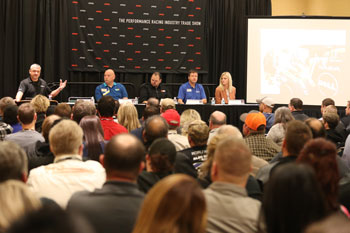
SEMA’s Young Executives Network (YEN) will host a networking event for local automotive professionals, Thursday, December 12, at the Westin - Nourish Bar during the 2019 PRI Trade Show in Indianapolis. After a day at the show, join YEN for free drinks and snacks from 5:00 p.m.–6:00 p.m., Thursday, December 12.

All YEN members and those interested in learning about opportunities to get involved with SEMA and build industry connections are encouraged to attend. YEN leadership will be present to discuss the network’s initiatives, volunteer opportunities and additional ways to get involved.

For more information, contact SEMA’s Director of Networks Bryan Harrison at 909-978-6691 or at bryanh@sema.org.

Reserve your tickets now!

Thu, 12/05/2019 - 06:46

By Kristopher Porter

PRI
The 2019 PRI Trade Show will feature a week full of exhibiting, customer meetings, networking and MPMC-sponsored events and education seminars.

Just weeks after the SEMA Show, MPMC members will pack their bags for Indianapolis for a week full of exhibiting, customer meetings, networking and MPMC-sponsored events and education seminars at the PRI Trade Show.

All MPMC members and those who are planning on attending PRI are encouraged to take part in these MPMC events during the week.

MPMC Happy Hour
Indiana Convention Center – LOS Exhibitor Hall
December 11, 2019, from 4:00 p.m.–5:00 p.m.

Join MPMC members and fellow industry leaders to wind down from a long day on the Show floor with free beverages and engaging conversations about the latest industry trends. Learn more about the benefits of MPMC membership and connect with select committee members who can help you get plugged in. The council offers many volunteer opportunities that lend a way to give back to the industry.

RSVP now.

MPMC Performance Industry Reception
Indiana Convention Center – Rooms 208–209
December 13, 2019, from 5:00 p.m.–7:00 p.m.

Open to all manufacturers and media, the MPMC Performance Industry Reception serves as a wonderful opportunity to close out day two of the PRI Trade Show with an evening of networking with industry friends and colleagues. A highlight of this year’s event is the induction of the newest three members into the MPMC Hall of Fame. Enjoy hot hors d’oeuvres and cold drinks while mingling with the MPMC Select Committee, fellow manufacturers and this year’s MPMC Hall of Fame inductees.

The MPMC Hall of Fame honors individuals who have made outstanding contributions to the motorsports industry through their life’s work. It is the most prestigious award the council presents. This year’s Hall of Fame inductees are being honored for their tireless contributions to the MPMC and industry.

RSVP now.

PRI MPMC Education Seminars

Sponsorship Proposals, Powered by SEMA’s Motorsports Council
Indiana Convention Center – Room 234
Thursday, December 12, from 2:30 p.m.–3:30 p.m.

The most common mistake in sponsorship sales is to rush into the marketplace before you’re ready to sell or buy. Successful motorsports sponsorships involve strong brands helping prepared sponsors create business value around racing. In this presentation, industry experts will share practical tips to help buyers and sellers prepare for sponsorship success.

RSVP now.

Opportunities for Women in Motorsports, Powered by SEMA’s Motorsports Council
Indiana Convention Center – Room 231
Friday, December 13, from 8:00 a.m.–9:00 a.m.

An all-female panel of industry professionals, led by Jeanette DesJardins of Car Chix and Crank It Media, discuss their achievements, aspirations, challenges, triumphs and efforts to engage and raise awareness among young women interested in pursuing motorsports as a career. Panelists include NASCAR Truck Series driver Natalie Decker, drag racer Lea Ochs and off-road racer Sarah Burgess (joined by her daughter and fellow racer Bridget Burgess).

RSVP now. 

Thu, 12/05/2019 - 06:46

By Kristopher Porter

PRI
The 2019 PRI Trade Show will feature a week full of exhibiting, customer meetings, networking and MPMC-sponsored events and education seminars.

Just weeks after the SEMA Show, MPMC members will pack their bags for Indianapolis for a week full of exhibiting, customer meetings, networking and MPMC-sponsored events and education seminars at the PRI Trade Show.

All MPMC members and those who are planning on attending PRI are encouraged to take part in these MPMC events during the week.

MPMC Happy Hour
Indiana Convention Center – LOS Exhibitor Hall
December 11, 2019, from 4:00 p.m.–5:00 p.m.

Join MPMC members and fellow industry leaders to wind down from a long day on the Show floor with free beverages and engaging conversations about the latest industry trends. Learn more about the benefits of MPMC membership and connect with select committee members who can help you get plugged in. The council offers many volunteer opportunities that lend a way to give back to the industry.

RSVP now.

MPMC Performance Industry Reception
Indiana Convention Center – Rooms 208–209
December 13, 2019, from 5:00 p.m.–7:00 p.m.

Open to all manufacturers and media, the MPMC Performance Industry Reception serves as a wonderful opportunity to close out day two of the PRI Trade Show with an evening of networking with industry friends and colleagues. A highlight of this year’s event is the induction of the newest three members into the MPMC Hall of Fame. Enjoy hot hors d’oeuvres and cold drinks while mingling with the MPMC Select Committee, fellow manufacturers and this year’s MPMC Hall of Fame inductees.

The MPMC Hall of Fame honors individuals who have made outstanding contributions to the motorsports industry through their life’s work. It is the most prestigious award the council presents. This year’s Hall of Fame inductees are being honored for their tireless contributions to the MPMC and industry.

RSVP now.

PRI MPMC Education Seminars

Sponsorship Proposals, Powered by SEMA’s Motorsports Council
Indiana Convention Center – Room 234
Thursday, December 12, from 2:30 p.m.–3:30 p.m.

The most common mistake in sponsorship sales is to rush into the marketplace before you’re ready to sell or buy. Successful motorsports sponsorships involve strong brands helping prepared sponsors create business value around racing. In this presentation, industry experts will share practical tips to help buyers and sellers prepare for sponsorship success.

RSVP now.

Opportunities for Women in Motorsports, Powered by SEMA’s Motorsports Council
Indiana Convention Center – Room 231
Friday, December 13, from 8:00 a.m.–9:00 a.m.

An all-female panel of industry professionals, led by Jeanette DesJardins of Car Chix and Crank It Media, discuss their achievements, aspirations, challenges, triumphs and efforts to engage and raise awareness among young women interested in pursuing motorsports as a career. Panelists include NASCAR Truck Series driver Natalie Decker, drag racer Lea Ochs and off-road racer Sarah Burgess (joined by her daughter and fellow racer Bridget Burgess).

RSVP now. 

Thu, 12/05/2019 - 06:46

By Kristopher Porter

PRI
The 2019 PRI Trade Show will feature a week full of exhibiting, customer meetings, networking and MPMC-sponsored events and education seminars.

Just weeks after the SEMA Show, MPMC members will pack their bags for Indianapolis for a week full of exhibiting, customer meetings, networking and MPMC-sponsored events and education seminars at the PRI Trade Show.

All MPMC members and those who are planning on attending PRI are encouraged to take part in these MPMC events during the week.

MPMC Happy Hour
Indiana Convention Center – LOS Exhibitor Hall
December 11, 2019, from 4:00 p.m.–5:00 p.m.

Join MPMC members and fellow industry leaders to wind down from a long day on the Show floor with free beverages and engaging conversations about the latest industry trends. Learn more about the benefits of MPMC membership and connect with select committee members who can help you get plugged in. The council offers many volunteer opportunities that lend a way to give back to the industry.

RSVP now.

MPMC Performance Industry Reception
Indiana Convention Center – Rooms 208–209
December 13, 2019, from 5:00 p.m.–7:00 p.m.

Open to all manufacturers and media, the MPMC Performance Industry Reception serves as a wonderful opportunity to close out day two of the PRI Trade Show with an evening of networking with industry friends and colleagues. A highlight of this year’s event is the induction of the newest three members into the MPMC Hall of Fame. Enjoy hot hors d’oeuvres and cold drinks while mingling with the MPMC Select Committee, fellow manufacturers and this year’s MPMC Hall of Fame inductees.

The MPMC Hall of Fame honors individuals who have made outstanding contributions to the motorsports industry through their life’s work. It is the most prestigious award the council presents. This year’s Hall of Fame inductees are being honored for their tireless contributions to the MPMC and industry.

RSVP now.

PRI MPMC Education Seminars

Sponsorship Proposals, Powered by SEMA’s Motorsports Council
Indiana Convention Center – Room 234
Thursday, December 12, from 2:30 p.m.–3:30 p.m.

The most common mistake in sponsorship sales is to rush into the marketplace before you’re ready to sell or buy. Successful motorsports sponsorships involve strong brands helping prepared sponsors create business value around racing. In this presentation, industry experts will share practical tips to help buyers and sellers prepare for sponsorship success.

RSVP now.

Opportunities for Women in Motorsports, Powered by SEMA’s Motorsports Council
Indiana Convention Center – Room 231
Friday, December 13, from 8:00 a.m.–9:00 a.m.

An all-female panel of industry professionals, led by Jeanette DesJardins of Car Chix and Crank It Media, discuss their achievements, aspirations, challenges, triumphs and efforts to engage and raise awareness among young women interested in pursuing motorsports as a career. Panelists include NASCAR Truck Series driver Natalie Decker, drag racer Lea Ochs and off-road racer Sarah Burgess (joined by her daughter and fellow racer Bridget Burgess).

RSVP now. 

Mon, 12/02/2019 - 13:18

By SEMA Washington, D.C., Staff

The U.S. Trade Representative (USTR) granted exclusion requests for 36 products from the List 3 Chinese imports subject to 25% tariffs. The products cover a wide variety of commodities, from lollipops to vacuum cleaners, including:

  • Starter motors for internal combustion gasoline engines designed for use in the lawn, automotive, watercraft, motorcycle, industrial and garden industries (described in statistical reporting number 8511.40.0000).

Find out more information online.

Questions? Contact Stuart Gosswein at stuartg@sema.org.

Mon, 12/02/2019 - 13:18

By SEMA Washington, D.C., Staff

The U.S. Trade Representative (USTR) granted exclusion requests for 36 products from the List 3 Chinese imports subject to 25% tariffs. The products cover a wide variety of commodities, from lollipops to vacuum cleaners, including:

  • Starter motors for internal combustion gasoline engines designed for use in the lawn, automotive, watercraft, motorcycle, industrial and garden industries (described in statistical reporting number 8511.40.0000).

Find out more information online.

Questions? Contact Stuart Gosswein at stuartg@sema.org.

Mon, 12/02/2019 - 13:18

By SEMA Washington, D.C., Staff

The U.S. Trade Representative (USTR) granted exclusion requests for 36 products from the List 3 Chinese imports subject to 25% tariffs. The products cover a wide variety of commodities, from lollipops to vacuum cleaners, including:

  • Starter motors for internal combustion gasoline engines designed for use in the lawn, automotive, watercraft, motorcycle, industrial and garden industries (described in statistical reporting number 8511.40.0000).

Find out more information online.

Questions? Contact Stuart Gosswein at stuartg@sema.org.

Sun, 12/01/2019 - 14:12

SEMA News—December 2019

RETAILER BEST PRACTICES

By Mike Imlay

Brand Selection:

Tapping the SEMA Data Co-op to Drive Retail Growth

SDC
By working with a data repository such as the SEMA Data Co-op retailers of any size or type can easily hone a strong product mix that reflects their brand and customer base for increased growth.

Basic to any retailing operation is identifying the right product mix to stock your store’s shelves or populate your website. Equally important is the ability to help consumers make sound purchasing decisions by supplying them with accurate, comprehensive information about those products. But with so many brands and application descriptions flooding the marketplace, where does a retailer begin?

With its free services to data receivers and a database of nearly 500 brands representing millions of part numbers, the SEMA Data Co-op (SDC) is an ideal tool to zero in on trusted brands and products for your customers and the comprehensive, accurate data needed to sell them.

Digital Drives Sales

Compelling reasons for resellers to tap into a robust database like the SDC include the fact that the “2019 SEMA Market Report” projected specialty-equipment sales to top $46 billion by 2020 in the U.S. market alone, with digital assets comprising a key driver.

“Consumers buy specialty-equipment products from a wide variety of retail locations,” the report noted. “The in-store experience continues to shine, as nearly 60% of all spending is done in brick-and-mortar channels, [but] digital channels are unquestionably important for both shopping and research.”

Today’s consumers are increasingly sophisticated with their online searches, checking everything from part numbers and fitments to price and even item availability. Satisfying their thirst for knowledge can give a retailer a leg up on the competition. Moreover, an online presence obviously widens a retailer’s geographical reach and opens up a 24/7 sales channel. So whether retailers are strictly brick and mortar, e-commerce or a combination of both, it behooves them to take advantage of the full range of digital assets available from parts suppliers.

“There are many types of resellers who join the SDC, and I wouldn’t say that there’s one type any more than another,” said SDC Director of Operations Gigi Ho. “We get a lot of solely e-commerce resellers, a lot of resellers who are actually buying parts online, installers and retailers who also have brick-and-mortar shops. You name it, there’s a pretty wide variety.”

According to SDC Customer Service Coordinator Sophia Cardona, the SDC offers a number of advantages to retailers, not the least of which is making sense of the marketplace.

“They’re coming to us for product information, and we have it on almost 500 brands,” she explained. “It’s mapped out very nicely for them in different types of formats. We’re talking about pricing, attribute information, ACES and PIES information—anything that you can think of that you would actually see on a website.

“We also offer a complimentary account if they sign up with the SDC, meaning they don’t pay, which is great, because most of our competitors do charge a fee. And another advantage to coming onboard with the SDC is the fact that our resellers get quick responses from our staff. That’s one of their biggest concerns. They don’t want to make a phone call or send an email and not hear anything back days or even a week later. The fact that they know they’re reaching real people who are responsive, who know the technology and care about them, makes a difference.”

Cardona further noted that the SDC is easily scalable for any size retail business, from mom-and-pop startups to larger, more established resellers looking to expand their offerings.

“We offer solutions for people at any stage,” she said. “Our data is helpful for those who are still in the development stages and not up and running yet, and our data is useful for those who may have had a website for a number of years.”

Once in the SDC system, retailers utilize online tools to quickly search and hone in on the suppliers and products that best meet their needs. They then send a request to the suppliers through the system for approval to begin receiving the datasets. Upon approval, the formats in which they receive that data are up to the retailer.

“If they’re used to looking at Excel files, they can receive it that way,” Ho explained. “If they want text, they can receive that. If they’re more sophisticated and want the direct-feed API or programmed-type feed, we can provide that, too. So really, we have a lot of technology services built in so that they can really get the information they want in the format that they need.

“And even in those exports, they can select certain product categories. So if they work with a carburetor supplier—even though that brand may manufacture many other products—they can select just to receive information on the carburetors, since they might get their injectors or their rockers from another source. They can be very specific as to their own experience and how they want to work with those different brands to suggest the products to
their customers.”

Data Best Practices

Once a retailer has joined the SDC, there are several best practices for utilizing the data they receive. First and foremost is the need to view product data as a communication stream from manufacturer to reseller to consumer. It’s like a business transaction in which all the industry parties must be mindful of how mishandled or poorly presented data can negatively impact everyone in the chain.

“It’s all about creating sales for both suppliers and resellers, so if the communication isn’t clear or the presentation of the data isn’t clear, it can cause issues,” Ho explained. “That’s why everyone is so careful about what they’re transmitting, what they’re receiving, and how it’s going to be communicated to the customer base.”

“One thing that I can specifically speak to is the sellers’ knowledge of data standards,” Cardona added. “They need to understand the differences between PIES and ACES and what they can expect when selling aftermarket products. They’re dealing with automotive aftermarket data and not just data that has to do with T-shirts or household items. Automotive aftermarket data is really complex, so they definitely want to be as knowledgeable as possible to help them sell those products. They should also train whoever is getting calls from their customers about the products.”

To help train new resellers in PIES, ACES and related aftermarket data standards, the SDC regularly directs them to the highly informative Autocare Association website (www.autocare.org). The SDC also has its own documentation useful to newer resellers as well as those desiring to further their expertise. In addition, Cardona conducts ongoing training for retailers through regular Go-To Meeting sessions. Those sessions cover everything they need to know to navigate the SDC system, request datasets, get exports and more.

“Another best practice in line with knowing the product data is actually knowing the products themselves,” Ho said. “It’s very tempting to think there are millions of products you could be selling, especially when you hear that the SDC has nearly 500 brands. That’s not a good strategy, because that level of product information requires a lot of upkeep. You want to have your pricing up-to-date, your digital assets up-to-date, and your descriptions tailored to your audience. Don’t drink from the fire hose; be very selective about the brands you’re requesting. You want to feel a comfort level with those brands because you are going to represent them. Your customers are going to look to you as a resource.”

Executive Summary 

Finding the right product mix to offer your customers is key to retailing. So is providing them with all the information required to make intelligent purchase decisions. The SEMA Data Co-op is an industry-owned product-data repository encompassing more than 500 brands.

Free to retailers, it is highly scalable to almost any business model and can help retailers choose products that match their store brand and/or populate e-commerce sites with data
and images.

Best practices for utilizing such digital assets include:

  • Learning ACES, PIES and other industry data standards to correctly convey product information to end-users.
  • Avoiding the temptation to populate an e-commerce site with an unwieldy number of products.
  • Being selective about the brands and products that best match your customer base.
  • Familiarizing yourself and your staff with those products to become a trusted resource for your customers.
  • Hiring a developer who understands the aftermarket to build your e-commerce site.
 

Ho further advises e-commerce retailers to pay extra attention to hiring the right people to build and manage their websites.

“You should definitely have a web developer who’s also familiar with automotive product data,” she said. “Many developers think data is data. When they finally realize that certain products only fit certain vehicles, it just blows their minds.

“We like to use the analogy that when you go to the REI website for a sleeping bag, you’ll be asked about the length of the bag, the fill and maybe the color and style. But at no time does REI ask you the year, make and model of your tent. Nor does your tent explode if you buy the wrong bag. An aftermarket e-commerce site is not REI. There’s so much more involved with parts selection and fitment.”

Remember also that websites featuring “rich data” are a hit with consumers. Rich assets include not only ACES and PIES information but also short and long product descriptions, specs and “rich media” encompassing multiple images and videos. The SDC designates manufacturers that offer such comprehensive data as Platinum suppliers, and e-commerce sites will especially benefit from seeking them out and utilizing their full range of digital assets.

In the end, Cardona said, skillful data management is an exercise in branding.

“Certainly, we want to help retailers take more ownership of their brand, their store and their online presence,” she noted. “The aftermarket isn’t a set-it-and-forget-it industry or a quick-buck proposition. Success requires involvement.”

Learn More

For more information about SDC services and membership, visit www.semadatacoop.org or email Sophia Cardona at sophiac@semadatacoop.
org.

 

Sun, 12/01/2019 - 14:12

SEMA News—December 2019

RETAILER BEST PRACTICES

By Mike Imlay

Brand Selection:

Tapping the SEMA Data Co-op to Drive Retail Growth

SDC
By working with a data repository such as the SEMA Data Co-op retailers of any size or type can easily hone a strong product mix that reflects their brand and customer base for increased growth.

Basic to any retailing operation is identifying the right product mix to stock your store’s shelves or populate your website. Equally important is the ability to help consumers make sound purchasing decisions by supplying them with accurate, comprehensive information about those products. But with so many brands and application descriptions flooding the marketplace, where does a retailer begin?

With its free services to data receivers and a database of nearly 500 brands representing millions of part numbers, the SEMA Data Co-op (SDC) is an ideal tool to zero in on trusted brands and products for your customers and the comprehensive, accurate data needed to sell them.

Digital Drives Sales

Compelling reasons for resellers to tap into a robust database like the SDC include the fact that the “2019 SEMA Market Report” projected specialty-equipment sales to top $46 billion by 2020 in the U.S. market alone, with digital assets comprising a key driver.

“Consumers buy specialty-equipment products from a wide variety of retail locations,” the report noted. “The in-store experience continues to shine, as nearly 60% of all spending is done in brick-and-mortar channels, [but] digital channels are unquestionably important for both shopping and research.”

Today’s consumers are increasingly sophisticated with their online searches, checking everything from part numbers and fitments to price and even item availability. Satisfying their thirst for knowledge can give a retailer a leg up on the competition. Moreover, an online presence obviously widens a retailer’s geographical reach and opens up a 24/7 sales channel. So whether retailers are strictly brick and mortar, e-commerce or a combination of both, it behooves them to take advantage of the full range of digital assets available from parts suppliers.

“There are many types of resellers who join the SDC, and I wouldn’t say that there’s one type any more than another,” said SDC Director of Operations Gigi Ho. “We get a lot of solely e-commerce resellers, a lot of resellers who are actually buying parts online, installers and retailers who also have brick-and-mortar shops. You name it, there’s a pretty wide variety.”

According to SDC Customer Service Coordinator Sophia Cardona, the SDC offers a number of advantages to retailers, not the least of which is making sense of the marketplace.

“They’re coming to us for product information, and we have it on almost 500 brands,” she explained. “It’s mapped out very nicely for them in different types of formats. We’re talking about pricing, attribute information, ACES and PIES information—anything that you can think of that you would actually see on a website.

“We also offer a complimentary account if they sign up with the SDC, meaning they don’t pay, which is great, because most of our competitors do charge a fee. And another advantage to coming onboard with the SDC is the fact that our resellers get quick responses from our staff. That’s one of their biggest concerns. They don’t want to make a phone call or send an email and not hear anything back days or even a week later. The fact that they know they’re reaching real people who are responsive, who know the technology and care about them, makes a difference.”

Cardona further noted that the SDC is easily scalable for any size retail business, from mom-and-pop startups to larger, more established resellers looking to expand their offerings.

“We offer solutions for people at any stage,” she said. “Our data is helpful for those who are still in the development stages and not up and running yet, and our data is useful for those who may have had a website for a number of years.”

Once in the SDC system, retailers utilize online tools to quickly search and hone in on the suppliers and products that best meet their needs. They then send a request to the suppliers through the system for approval to begin receiving the datasets. Upon approval, the formats in which they receive that data are up to the retailer.

“If they’re used to looking at Excel files, they can receive it that way,” Ho explained. “If they want text, they can receive that. If they’re more sophisticated and want the direct-feed API or programmed-type feed, we can provide that, too. So really, we have a lot of technology services built in so that they can really get the information they want in the format that they need.

“And even in those exports, they can select certain product categories. So if they work with a carburetor supplier—even though that brand may manufacture many other products—they can select just to receive information on the carburetors, since they might get their injectors or their rockers from another source. They can be very specific as to their own experience and how they want to work with those different brands to suggest the products to
their customers.”

Data Best Practices

Once a retailer has joined the SDC, there are several best practices for utilizing the data they receive. First and foremost is the need to view product data as a communication stream from manufacturer to reseller to consumer. It’s like a business transaction in which all the industry parties must be mindful of how mishandled or poorly presented data can negatively impact everyone in the chain.

“It’s all about creating sales for both suppliers and resellers, so if the communication isn’t clear or the presentation of the data isn’t clear, it can cause issues,” Ho explained. “That’s why everyone is so careful about what they’re transmitting, what they’re receiving, and how it’s going to be communicated to the customer base.”

“One thing that I can specifically speak to is the sellers’ knowledge of data standards,” Cardona added. “They need to understand the differences between PIES and ACES and what they can expect when selling aftermarket products. They’re dealing with automotive aftermarket data and not just data that has to do with T-shirts or household items. Automotive aftermarket data is really complex, so they definitely want to be as knowledgeable as possible to help them sell those products. They should also train whoever is getting calls from their customers about the products.”

To help train new resellers in PIES, ACES and related aftermarket data standards, the SDC regularly directs them to the highly informative Autocare Association website (www.autocare.org). The SDC also has its own documentation useful to newer resellers as well as those desiring to further their expertise. In addition, Cardona conducts ongoing training for retailers through regular Go-To Meeting sessions. Those sessions cover everything they need to know to navigate the SDC system, request datasets, get exports and more.

“Another best practice in line with knowing the product data is actually knowing the products themselves,” Ho said. “It’s very tempting to think there are millions of products you could be selling, especially when you hear that the SDC has nearly 500 brands. That’s not a good strategy, because that level of product information requires a lot of upkeep. You want to have your pricing up-to-date, your digital assets up-to-date, and your descriptions tailored to your audience. Don’t drink from the fire hose; be very selective about the brands you’re requesting. You want to feel a comfort level with those brands because you are going to represent them. Your customers are going to look to you as a resource.”

Executive Summary 

Finding the right product mix to offer your customers is key to retailing. So is providing them with all the information required to make intelligent purchase decisions. The SEMA Data Co-op is an industry-owned product-data repository encompassing more than 500 brands.

Free to retailers, it is highly scalable to almost any business model and can help retailers choose products that match their store brand and/or populate e-commerce sites with data
and images.

Best practices for utilizing such digital assets include:

  • Learning ACES, PIES and other industry data standards to correctly convey product information to end-users.
  • Avoiding the temptation to populate an e-commerce site with an unwieldy number of products.
  • Being selective about the brands and products that best match your customer base.
  • Familiarizing yourself and your staff with those products to become a trusted resource for your customers.
  • Hiring a developer who understands the aftermarket to build your e-commerce site.
 

Ho further advises e-commerce retailers to pay extra attention to hiring the right people to build and manage their websites.

“You should definitely have a web developer who’s also familiar with automotive product data,” she said. “Many developers think data is data. When they finally realize that certain products only fit certain vehicles, it just blows their minds.

“We like to use the analogy that when you go to the REI website for a sleeping bag, you’ll be asked about the length of the bag, the fill and maybe the color and style. But at no time does REI ask you the year, make and model of your tent. Nor does your tent explode if you buy the wrong bag. An aftermarket e-commerce site is not REI. There’s so much more involved with parts selection and fitment.”

Remember also that websites featuring “rich data” are a hit with consumers. Rich assets include not only ACES and PIES information but also short and long product descriptions, specs and “rich media” encompassing multiple images and videos. The SDC designates manufacturers that offer such comprehensive data as Platinum suppliers, and e-commerce sites will especially benefit from seeking them out and utilizing their full range of digital assets.

In the end, Cardona said, skillful data management is an exercise in branding.

“Certainly, we want to help retailers take more ownership of their brand, their store and their online presence,” she noted. “The aftermarket isn’t a set-it-and-forget-it industry or a quick-buck proposition. Success requires involvement.”

Learn More

For more information about SDC services and membership, visit www.semadatacoop.org or email Sophia Cardona at sophiac@semadatacoop.
org.

 

Sun, 12/01/2019 - 13:57

SEMA News—December 2019

RETAILER BEST PRACTICES

By Joe Dysart

Online Reputation Management for Retailers:

The Top 10 Solutions

Internet
Without an organized way to monitor and respond to online reviews, retailers face potential peril.

Given the ever-increasing influence of hundreds of business-review sites that have popped up on the web, retailers need an organized way to monitor and respond to trash talk and other comments about them that appear online—or face potential peril.

These days, 86% of customers read reviews for local businesses before they decide to order from them online or visit a brick-and-mortar store, according to a 2018 study from BrightLocal
(www.brightlocal.com/learn/local-consumer-review-survey). And more than half—57%—say that they’ll shop at your store only if it has a minimum overall rating of four out of five stars. In fact, review readers say that they need to see at least 10 online reviews before they’ll even consider doing business with you, according to BrightLocal.

“With the emergence of social media, information is generated, relayed and consumed almost instantaneously,” said Marshneil Pachori, a senior manager at IT service provider Cognizant (www.cognizant.com).

“Opinions are transmitted by scores of web users in real time—good, bad or ugly—and all points of view are shared and open for discussion,” added Pachori, who authored the 2018 Cognizant report, “Authoring a Brands Online Reputation” (www.cognizant.com/insightswhitepapers/authoring-a-brands-online-reputation-codex1232.pdf). “If your organization makes someone unhappy in the virtual world, chances are that it will be relayed to many others in no time.”

Fortunately, there are a number of online service providers with online reputation-management solutions that enable you to monitor and respond to the publication of reviews about your store in real time. Many will send you an email alert the moment a new review about your store posts on any of the major online review sites. Many are also equipped with artificial intelligence, which sifts through all the reviews of your business online to identify trends in consumer sentiment about your store.

Many solutions are also designed to integrate with other popular business software you may use, enabling you to handle a number of tasks from the same dashboard.

G2 Crowd (www.g2.com), an online business software review service, has identified the top 10 online reputation-management solutions currently available on the market today, based on reviews from businesses that are using those solutions. Below is a roundup on the packages, listed in order of popularity, according to G2.

BirdEye (www.birdeye.com/retail): A comprehensive reputation-management suite, BirdEye also offers a special version of its software just for retailers. The package’s retail features include leveraging reviews to enhance customer loyalty as well as a tool to collect feedback from every customer via smartphone text messaging.

BirdEye also sends alerts about new customer reviews to the appropriate staff at your store so they can put out customer satisfaction fires very quickly. Other features include customer surveys, social-media publishing and web chat.

Podium (www.podium.com): This is a team-focused reputation-management solution that is designed to make it easy for a team of people at your store to work together to track online reviews and respond when appropriate. Key to team management is Podium’s team chat messaging system, which enables workers at your store to communicate together about reviews and other consumer sentiment from within the application.

Podium also messages customers to solicit feedback and collects reviews on your store from customer smartphone messages.

ConsumerAffairs for Brands: (https://brands.consumeraffairs.com): ConsumerAffairs for Brands plays it both ways when it comes to online reviews. It solicits reviews from customers on its website and then offers businesses software to do damage control on those reviews if need be. The online service offers retailers a number of ways to collect customer reviews, and it also offers a call center that will collect reviews for your business via phone.

ReviewTrackers (www.reviewtrackers.com): This solution specializes in aggregating and analyzing online reviews from all major review sites. Included in the service are customizable notifications that reviews on your store have been published as well as tools enabling appropriate staff to respond to reviews.

Also featured is analysis of the text customers use in their reviews, including sentiment analysis. Essentially, the company promises that the artificial intelligence in its service will identify trends in your reports along with insights about how your customers really feel about your store, product and/or service.

Reputology (www.reputology.com): This solution bills itself as a reputation monitoring service for retailers with multiple locations. Like many solutions, it will auto-contact staff that you designate each time a review on your store is posted on any of the major review sites.

Reputology will also enable you to survey customers at key points of contact with your store in an effort to pick up on customer dissatisfaction before it becomes a problem—or a bad review. It also analyzes the text of positive and negative customer sentiment, the results of which are rendered as trend charts, word-cloud reports and statistics tables.

One interesting twist: Reputology also scans for employees’ names in all reviews, bringing up reports on the performance of each one of your employees as perceived
by customers.

Trustpilot (www.trustpilot.com): This solution enables retailers to automate collection of reviews on their websites and other web properties and gather overall feedback on their stores that is published on the web. Trustpilot also offers a template you can used to solicit reviews on your website or via email.

Executive Summary 

A number of online reputation-management solutions are available to monitor reviews posted about your store online. The solutions can:

  • Monitor all the online review sites for mentions of your store.
  • Send you an email the moment a review posts.
  • Often use artificial intelligence to identify trends in consumer sentiment about your store.

According to G2 Crowd, the top 10 solutions available to do that monitoring are:

  • Appbot
  • BirdEye
  • Chatmeter
  • ConsumerAffairs for Brands
  • Podium
  • Reputation.com
  • Reputology
  • Review Trackers
  • Trustpilot
  • Yext
 

Appbot (www.appbot.co): Appbot specializes in reputation-management tools that can be used easily on a smartphone or similar mobile device. Like many solutions, it features artificial intelligence that looks for trends in customer reviews, including trends in customer sentiment. You can also configure Appbot to scout for specific types of sentiment that concern you most.

The service is also designed to integrate with popular software such as Slack, Zendesk, UserVoice, Delighted and the like.

Chatmeter (www.chatmeter.com): Besides tracking sentiment in customer reviews of your store, Chatmeter also analyzes how your reviews stack up against those of your competitors. Are you doing better than your competition? Worse? Chatmeter will let you know.

Retailers with multiple locations will appreciate Chatmeter’s ability to analyze customer sentiment on a store-by-store basis. And like many solutions, it auto-notifies you by email the instant a review of your store appears on any of the major review sites.

In a nice bonus, Chatmeter offers a plug-in for your website that will enable you to share reviews from major review sites such as Yelp! on your website.

Reputation.com (www.reputation.com): Another solution specializing in retailers with multiple store locations,
Reputation.com enables you to monitor reviews from “hundreds” of review sites on a central dashboard. It also enables you to share reviews from major review sites such as Yelp! on your store’s website.

Yext (www.yext.com): Yext manages your store’s presence on the web in a fairly unique way. It ensures that your company’s basic contact information and description is clear and up-to-date on more than 150 web mapping services, apps, directories, search engines and social networks.

When a potential customer enters your business name in Google, Yext ensures that all the search-engine returns from all the web services that monitor your store feature correct information.

Joe Dysart is an internet speaker and business consultant based in Manhattan.

646-233-4089

joe@joedysart.com

www.joedysart.com