Thu, 04/16/2020 - 10:12

By Kyle Cheng

Market Research
In a recent survey conducted by SEMA, nearly 90% responded that they are “impacted short-term, but will get through it” or are “business as usual.”

The economic picture has weakened over the past month. However, the long-term effects of the situation remain unclear. Economists are debating the financial impact of the Coronavirus on the world's economy, but growth in the fourth quarter, while uncertain, is likely to be robust.

The final two weeks of March brought an unprecedented jump in unemployment numbers, with most of the job losses related to forced government closures and an extreme decline in travel. Consumers are worried by uncertainty about the future and the potential impact of the coronavirus, which is affecting spending for the short-term.

With that said, most companies within the specialty-equipment industry maintain a positive outlook. In a recent survey conducted by SEMA, nearly 90% responded that they are “impacted short-term, but will get through it” or are “business as usual.” Bottom line, the specialty-equipment industry is open for business.

To learn more, download the April “SEMA Industry Indicators Report,” now available for free at www.sema.org/research.


Thu, 04/16/2020 - 10:07

SEMA-member companies have posted several new listings for job opportunities in the Classifieds page of SEMA.org.

Thu, 04/16/2020 - 10:03

It’s not too late to apply for a 2020 SEMA Show booth. The online Exhibitor Services Manual contains all of the resources pertinent to a successful exhibit at the SEMA Show. To help you navigate efficiently, each section is broken down to the basics. Simply click the buttons to the left to see the products and services available. 

Thu, 04/16/2020 - 10:03

It’s not too late to apply for a 2020 SEMA Show booth. The online Exhibitor Services Manual contains all of the resources pertinent to a successful exhibit at the SEMA Show. To help you navigate efficiently, each section is broken down to the basics. Simply click the buttons to the left to see the products and services available. 

Thu, 04/16/2020 - 09:36

By Ashley Reyes

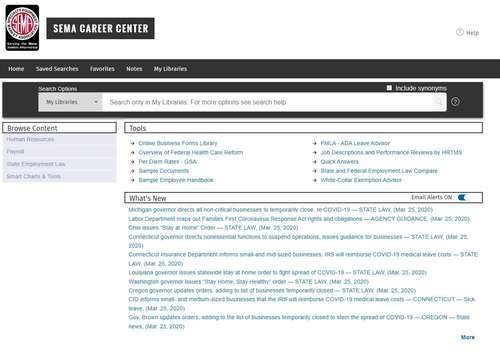
Human resource professionals in the automotive aftermarket are discovering the latest HR news and information related to the Coronavirus at the SEMA HR Hub, an online resource designed to help industry professionals stay up-to-date on the latest policies and information on human resource and employee matters.

HR HubAs updates on COVID-19 are released daily, the HR Hub is an essential tool that provides labor- and employment-related coverage of pandemics and emergency or changing Federal state laws.

As updates on COVID-19 are released daily, the HR Hub is an essential tool that provides labor- and employment-related coverage of pandemics and emergency or changing Federal state laws.

Written and organized by the expert Wolters Kluwer team of employment law editors, the SEMA HR Hub also includes a variety of business tools, new trends and best practices aimed to assist companies comply with HR federal and state requirements.

Policies, forms, bookmarks and e-mail alerts are just some of the features included that help guide users in the following areas:

  • Benefits and compensation
  • Discrimination and retaliation
  • Employee development and retention
  • Employee relations
  • Federal and state employment laws
  • HR management and strategy
  • Risk management and compliance
  • Talent acquisition and staffing
  • Workplace safety and security
  • And more…

Additional features include comprehensive state law summaries, custom job description and performance review modules, dynamic state law lookup, and a unique search process that looks for related industry terms.

SEMA members can access the HR Hub for free.

For questions or additional information, contact AJ Carney, senior manager of education, at andreac@sema.org.

Thu, 04/16/2020 - 09:36

By Ashley Reyes

Human resource professionals in the automotive aftermarket are discovering the latest HR news and information related to the Coronavirus at the SEMA HR Hub, an online resource designed to help industry professionals stay up-to-date on the latest policies and information on human resource and employee matters.

HR HubAs updates on COVID-19 are released daily, the HR Hub is an essential tool that provides labor- and employment-related coverage of pandemics and emergency or changing Federal state laws.

As updates on COVID-19 are released daily, the HR Hub is an essential tool that provides labor- and employment-related coverage of pandemics and emergency or changing Federal state laws.

Written and organized by the expert Wolters Kluwer team of employment law editors, the SEMA HR Hub also includes a variety of business tools, new trends and best practices aimed to assist companies comply with HR federal and state requirements.

Policies, forms, bookmarks and e-mail alerts are just some of the features included that help guide users in the following areas:

  • Benefits and compensation
  • Discrimination and retaliation
  • Employee development and retention
  • Employee relations
  • Federal and state employment laws
  • HR management and strategy
  • Risk management and compliance
  • Talent acquisition and staffing
  • Workplace safety and security
  • And more…

Additional features include comprehensive state law summaries, custom job description and performance review modules, dynamic state law lookup, and a unique search process that looks for related industry terms.

SEMA members can access the HR Hub for free.

For questions or additional information, contact AJ Carney, senior manager of education, at andreac@sema.org.

Thu, 04/16/2020 - 09:17

By Della Domingo

SDC
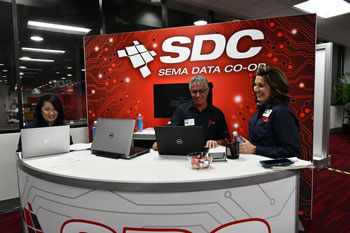
Free eCommerce plugins for platforms, such as WooCommerce (and soon Shopify), are available to resellers through the SDC, which includes product data from more than 500 brands.

As the country continues to shelter at home, consumers are spending more time shopping online. In addition to groceries and other essential purchases, the automotive aftermarket industry has seen an increase in interest and sales.

“Enthusiasts are turning to the automotive hobby as a release from the current situation, and they’re taking advantage of their time at home to work on projects that have sat idle in their garages,” said Gigi Ho, SEMA Data Co-op (SDC) director of operations. “Aftermarket resellers can mitigate downturns that may have resulted from the Coronavirus pandemic by focusing on online sales and product data.”

Updated and standardized product data gets resellers’ products in front of consumers, particularly as they search online for products designed for their specific vehicles. Free eCommerce plugins for platforms, such as WooCommerce (and soon Shopify), are available to resellers through the SDC, which includes product data from more than 500 brands.

To get more information on how to begin downloading and accessing product data from the SDC, fill out an inquiry form visit or contact Sophia Cardona at sophiac@semadatacoop.org or 909-978-6654.

Thu, 04/16/2020 - 09:17

By Della Domingo

SDC
Free eCommerce plugins for platforms, such as WooCommerce (and soon Shopify), are available to resellers through the SDC, which includes product data from more than 500 brands.

As the country continues to shelter at home, consumers are spending more time shopping online. In addition to groceries and other essential purchases, the automotive aftermarket industry has seen an increase in interest and sales.

“Enthusiasts are turning to the automotive hobby as a release from the current situation, and they’re taking advantage of their time at home to work on projects that have sat idle in their garages,” said Gigi Ho, SEMA Data Co-op (SDC) director of operations. “Aftermarket resellers can mitigate downturns that may have resulted from the Coronavirus pandemic by focusing on online sales and product data.”

Updated and standardized product data gets resellers’ products in front of consumers, particularly as they search online for products designed for their specific vehicles. Free eCommerce plugins for platforms, such as WooCommerce (and soon Shopify), are available to resellers through the SDC, which includes product data from more than 500 brands.

To get more information on how to begin downloading and accessing product data from the SDC, fill out an inquiry form visit or contact Sophia Cardona at sophiac@semadatacoop.org or 909-978-6654.

Thu, 04/16/2020 - 09:02

By SEMA Washington, D.C., Staff

Small businesses are anxiously awaiting passage of legislation by the U.S. Congress to add funds to the Paycheck Protection Program (PPP), which has spent the initial $349 billion authorized in late March. While there is bipartisan support to add $250 billion in additional funding for the PPP, there is disagreement over including additional funding for cash-strapped states and hospitals as well. Earlier this week, SEMA and more than 250 other organizations sent a joint letter to Congressional leadership requesting that Congress pass legislation to increase funding for PPP.

The PPP loan was a key component of the Coronavirus Aid, Relief, and Economic Security Act (CARES Act), which became law March 27, 2020. The CARES Act provided $349 billion for initial funding to guarantee PPP loans for small businesses through the U.S. Small Business Administration (SBA) that equal up to 250% of a company’s monthly payroll (capped at $10 million), which can be used to cover payroll, mortgage, rent and other specified expenses. Lawmakers are now seeking to increase the PPP funds to meet unmet demand. The SBA reported that it has approved more than 1.6 million applications for loans from nearly 5,000 lending institutions.

PPP loans offer favorable terms (1% interest rate, no collateral or personal guarantee requirements, no borrower or lender fees and no payments for six months), and the SBA will forgive that portion of the loans used to cover payroll, mortgage interest, rent payments and the cost of utilities for the first eight weeks if small businesses retain their employees and payroll levels (75% of the amount forgiven must be for payroll).

It is recommended that applicants work with a bank where they have an existing relationship, as there are reports that many banks are not providing loans to businesses they haven’t worked with previously. Borrowers may find eligible lenders through the SBA’s webpage, which brings up local financial institutions offering PPP loans.  

SEMA is also urging Congress to provide additional funding for the SBA’s Economic Injury Disaster Loan (EIDL) program for businesses that have been adversely impacted by the Coronavirus, as it is close to running out of its original $10 billion in funding. The EIDL provides loans of up to $2 million at 3.75% and is funded directly through the SBA rather than the bank. However, recent reports note that the SBA has limited initial loans under the EIDL program to $25,000 to $35,000 or less as a result of resource constraints. Loans may be used to retain employees, address interrupted supply chains, make rent or mortgage payments and pay other bills. The first $10,000 of the loan is a grant that does not need to be repaid. If a company later receives a PPP loan, the grant will be applied to amounts forgiven under the PPP loan.

For more information on PPP, EIDL, and other federal programs related to Covid-19, check out SEMA’s resources at www.sema.org/coronavirus.

For more information, contact Eric Snyder at erics@sema.org.

Thu, 04/16/2020 - 09:02

By SEMA Washington, D.C., Staff

Small businesses are anxiously awaiting passage of legislation by the U.S. Congress to add funds to the Paycheck Protection Program (PPP), which has spent the initial $349 billion authorized in late March. While there is bipartisan support to add $250 billion in additional funding for the PPP, there is disagreement over including additional funding for cash-strapped states and hospitals as well. Earlier this week, SEMA and more than 250 other organizations sent a joint letter to Congressional leadership requesting that Congress pass legislation to increase funding for PPP.

The PPP loan was a key component of the Coronavirus Aid, Relief, and Economic Security Act (CARES Act), which became law March 27, 2020. The CARES Act provided $349 billion for initial funding to guarantee PPP loans for small businesses through the U.S. Small Business Administration (SBA) that equal up to 250% of a company’s monthly payroll (capped at $10 million), which can be used to cover payroll, mortgage, rent and other specified expenses. Lawmakers are now seeking to increase the PPP funds to meet unmet demand. The SBA reported that it has approved more than 1.6 million applications for loans from nearly 5,000 lending institutions.

PPP loans offer favorable terms (1% interest rate, no collateral or personal guarantee requirements, no borrower or lender fees and no payments for six months), and the SBA will forgive that portion of the loans used to cover payroll, mortgage interest, rent payments and the cost of utilities for the first eight weeks if small businesses retain their employees and payroll levels (75% of the amount forgiven must be for payroll).

It is recommended that applicants work with a bank where they have an existing relationship, as there are reports that many banks are not providing loans to businesses they haven’t worked with previously. Borrowers may find eligible lenders through the SBA’s webpage, which brings up local financial institutions offering PPP loans.  

SEMA is also urging Congress to provide additional funding for the SBA’s Economic Injury Disaster Loan (EIDL) program for businesses that have been adversely impacted by the Coronavirus, as it is close to running out of its original $10 billion in funding. The EIDL provides loans of up to $2 million at 3.75% and is funded directly through the SBA rather than the bank. However, recent reports note that the SBA has limited initial loans under the EIDL program to $25,000 to $35,000 or less as a result of resource constraints. Loans may be used to retain employees, address interrupted supply chains, make rent or mortgage payments and pay other bills. The first $10,000 of the loan is a grant that does not need to be repaid. If a company later receives a PPP loan, the grant will be applied to amounts forgiven under the PPP loan.

For more information on PPP, EIDL, and other federal programs related to Covid-19, check out SEMA’s resources at www.sema.org/coronavirus.

For more information, contact Eric Snyder at erics@sema.org.