Mon, 07/01/2019 - 13:06

SEMA News—July 2019

HERITAGE

By Drew Hardin

Small Wonder

Photos Courtesy Eric Rickman, Petersen Publishing Company Archive
Heritage

Hot Rod—the bible of all-American, big-cube performance—allotted four pages of its July 1967 issue to a story on an import-car dealership in Riverside, California, that was on the cutting edge of a growing automotive phenomenon.

For anyone wondering why Feature Editor Eric Dahlquist was filling valuable real estate with a story about funny-looking German cars, his story’s subhead laid the groundwork: “There are three million VWs in this country. The marque is sixth nationally in sales, and Beetle accessories are coming out our ears. Very few in the Detroit establishment understand why. They can’t figure out the kids either.”

Burn!

Detroit was in the thick of ramping up its musclecar offerings to capture the “youth market,” while, Dahlquist pointed out, “everywhere we look, in high-school parking lots, in college parking lots or just parking lot parking lots, a swarm of Beetles engulfs ever shrinking islands of ‘regular’ vehicles. Then there’s the VW hop-up phenomenon that is blazing out of sight in mushrooming potential, as more and more 1,700-lb. weaklings take the pay-as-you-go muscle-building treatment.”

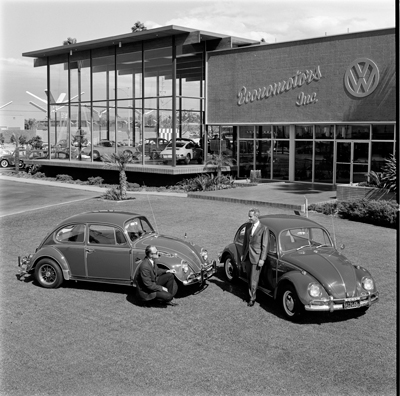
Leading the way was Joe Vittone, his Economotors Porsche-VW dealership, and his line of VW aftermarket parts sold under the EMPI (European Motor Products Inc.) brand. That’s Vittone at right in the photo, leaning against a stock VW while Dahlquist kneels beside an “EMPI-ized” GTV Mk 4.

Of the dealership, Dahlquist said: “There’s enough shining glass, steel and landscaping here to vie with the GM Tech Center back in Warren, Michigan, and when you see the cushiony customer lounge and patio, conference rooms, combination parts counter and speed center, work area with waxed, rubber-tiled floor, forested with 26 single-post hydraulic hoists, you can hear the gnashing of teeth in Detroit as the inevitable draws near. Any Chevy dealer would be green with envy at this setup, but the piece de resistance is the cars—the ever-lovin’ fantastically detailed Beetles! You can get anything from the prosaic humble bug to a pizazzy cold-air package street job that will scare the lederhosen off a GTO.”

While an illustration in the story showed all of the parts that went into the GTV conversion, Dahlquist described it this way: “Driven in the door of the EMPI telephone booth, a mild-mannered transporter becomes a glistening, pin-striped, wide-ovaled, mag-wheeled, wood-dashed, stereo-radio tape-decked, power-mad Mr. Terrific, who can foil mean old Porsches in a single bound, or something like that.”

Under the “power mad” umbrella, the VW’s 1,500cc engine could be improved with large-bore cylinders; an upgraded Zenith carburetor; a new intake manifold; ported, polished and milled heads; a new camshaft; a Bosch centrifugal-advance distributor; and an extractor exhaust system. For his article, Dahlquist requested a Bug with all the engine mods except the big-bore treatment for an “equal displacement comparison” with a stock engine.

“As delivered, the reworked engine yielded 84.2 hp maximum at 4,200 rpm on the dyno, where the unexpurgated Deutschlander can just manage 53 at 4,200 rpm,” he wrote.

Dahlquist took the stock VW to the dragstrip, ran 20.89 at 62.01 mph and, with a little tinkering (including “a velocity stack made from a plastic drinking glass”), got the car’s trap speed up to 65 mph. The GTV Mk 4 made quarter-mile passes in the low 19s at 70 mph; but with a few mods (a stinger exhaust, a valve-lash adjustment, fresh spark plugs, and the fan belt removed) dropped into the 17.20s at 76 mph.

“Ach du lieber!” Dahlquist exclaimed, comparing these e.t.’s to “what ’55 Fords and Chevys used to run before being cloaked in the hot setup.”

The “humble, unaffected Beetle is the wave of the future,” Dahlquist said. As it turned out, so was Economotors. Not only was Vittone pioneering the promotion and sale of VW aftermarket parts, but his dealership was also part of an innovative concept in auto retailing.

In the early ’60s, seven Riverside-area dealers bought a 55-acre parcel of land (a citrus orchard at the time) and built new facilities in what would become the Riverside Auto Center. Those first seven dealers were all domestic brands, but Vittone’s Economotors and a Toyota dealership were soon added to the mix. Economotors is gone now. Its space occupied by the Riverside Metro Auto Group—which does still include a VW showroom.
Mon, 07/01/2019 - 12:41

SEMA News—July 2019

FROM THE HILL

By Colby Martin

Country Road Homecoming

Mountain State Senator Named Legislator of the Year

Senator Maynard
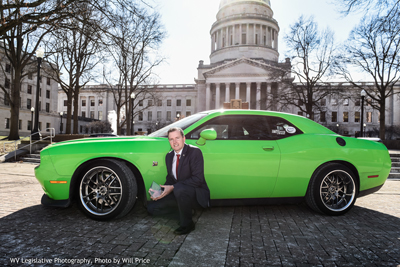
Senator Mark Maynard poses with his new Dodge Challenger Scat Pack at the West Virginia state capitol in Charleston.

At the 2018 SEMA Show, West Virginia State Senator Mark Maynard was introduced as the first-ever winner of the Stephen B. McDonald Legislator of the Year award. Representing the Sixth District, Senator Maynard was recognized for his efforts in the West Virginia Senate to promote policies and legislation that support the automotive hobby.

Senator Maynard is proudly counted among the hundreds of pro-hobby lawmakers comprising the SEMA-supported State Automotive Enthusiast Leadership Caucus and embodies the award’s spirit. The new award is bestowed on a state lawmaker who has gone above and beyond to support the hobby in his or her home state. It was named after SEMA’s late Vice President of Government Affairs Stephen B. McDonald, who was the driving force behind the founding and growth of
the caucus.

“I’m so honored to have been chosen to receive this award,” Senator Maynard said. “I’m a car guy through and through. Working to share that passion and create unique opportunities that will benefit our state through new business and visitors is a dream come true. West Virginia is a paradise for people who love both the outdoors and the automotive hobby. I’m proud of the work we’ve done in just a short time, and I look forward to helping grow this industry even more in the future.”

The State Automotive Enthusiast Leadership Caucus’ national chairman, West Virginia Delegate Gary Howell, was instrumental in both the award’s creation and attracting Senator Maynard’s involvement in the group.

“As West Virginia expands tourism, Mark has introduced and helped pass legislation that will allow our state to be at the forefront in automotive tourism,” Delegate Howell said. “This billion-dollar industry is continuing to expand and create high-paying jobs. Because of the efforts of our members like Mark, West Virginia will be a part of it.”

Courtney Hansen
West Virginia lawmakers Senator Mark Maynard (right) and Delegate Gary Howell (left) met automotive media personality Courtney Hansen at the 2015 SEMA Show in Las Vegas.

Senator Maynard is not only an industry champion but also a true enthusiast. His collection of vehicles is impressive. The stable includes a Dodge Charger “General Lee,” a Pontiac Trans Am “Bandit,” a new Dodge Challenger Scat Pack, and a trail-only Jeep, among others. His love for all things automotive doesn’t stop there. Before he heard the call to public service, he also served as a pit-crew member in professional NHRA drag-racing teams.

“Automobiles are truly a passion that probably started before I could crawl,” Senator Maynard explained. “Growing up in my dad’s full-service Union 76 station, I watched him turn wrenches and build and campaign his sand-drag Chevy truck. I immersed myself in everything automotive and internal combustion that I could find. I took over the family automotive business in 2001. For a fun—and serious—job in 2006, I joined Jim Head’s NHRA Nitro Funny Car crew. It lasted until the end of the 2010 season. I joined John Bojec’s team for a three-race run at the end of the 2014 season. At the same time, I was running for the Senate. I flew the redeye home from the Las Vegas race, campaigned one more day, and beat the longest-serving senator in the history of West Virginia. Then my legislative career began.”

Since his election to the West Virginia Senate, Senator Maynard has become a consummate defender of the hobby in Charleston and also a familiar face at the SEMA Show. During his state’s most recent legislative sessions, Senator Maynard was a busy man, authoring several pro-industry bills. Many of them focused on expanding access to off-highway vehicle (OHV) trails.

SEMA PAC Redline Club Spotlight: Sabra Johnson
Sabra JohnsonSabra Johnson is the owner of City Classic Cars, which is based in Spring, Texas. Johnson joined the SEMA PAC Redline Club in 2018.


“For me, building classic cars goes beyond a passion; it’s truly in my blood,” he said. “I am a member of the SEMA PAC Redline Club to help ensure that the aftermarket parts and restoration arena remains at the forefront of the automotive industry. At heart, I am a classic-car renaissance man. I champion the mission and vision of the SEMA PAC because it advocates for the mom-and-pop innovators across America and gives a voice to the voiceless.”

SEMA PAC helps members keep pace by supporting the candidates and lawmakers in Washington, D.C., who understand the importance of what SEMA members do. For more information on SEMA PAC, please contact Christian Robinson, at 202-794-8279 or by email at christianr@sema.org.

Senator Maynard’s 2018 victories include passing legislation that creates a digital map of public roads and trails available to OHV riders, and a bill that creates a two-year pilot program allowing for ATV and RV access to West Virginia’s Cabwaylingo State Forest. He pursued two other bills as well, which have not yet become law. One would have created a new State Trail Authority to oversee trail funding and maintenance. The other would have created license plates allowing off-road, self-assembled or modified vehicles the same limited access to roads as ATVs.

The 2019 legislative session has thus far been no different for Senator Maynard. Among the several pro-industry bills he introduced was legislation creating the West Virginia Motorsports Committee. That bill was enacted into law and will mark a major step toward the preservation and expansion of racing in West Virginia.

“I want to thank Gary Howell for recruiting me and allowing me to join the caucus and spurring me along to attend the SEMA Show for three years in a row,” Maynard added. “I look forward to continuing to fight for the hobby and industry that I love.”

The State Automotive Enthusiast Leadership Caucus is a non-partisan group of more than 650 state legislators whose common thread is a love and appreciation for automobiles. For more information, visit www.semasan.com.

Mon, 07/01/2019 - 12:38

SEMA News—July 2019

PEOPLE

A Few Words From the Chairman

By Tim Martin

Tim Martin
Promoting our industry is a core goal of SEMA programs. The SEMA Show and the PRI Show will continue to evolve, but we also should expand our marketing programs to provide more marketing tools for manufacturers, distributors, retailers and installers.

Editor’s Note: Tim Martin will transition from Chair-Elect to Chairman of the Board starting in July. He was recognized as SEMA Person of the Year in 2016, and his prior work on the SEMA Board of Directors and SEMA Data Co-op board, and involvement in numerous committees, task forces and working groups has given him the opportunity to contribute to the development of numerous SEMA programs. As his term approaches, he shares his perspective on the challenges and opportunities ahead.

On July 26, I begin a two-year term as SEMA Chairman. I am focused on improving SEMA and helping our association provide solutions to help our members solve problems. There are many SEMA programs that benefit our member businesses, and most of them are explained regularly in our magazines and newsletters.

SEMA must focus on the business of selling parts and services for automotive customization, restoration and motorsports. We should protect, promote and improve our industry. That includes helping members prepare for technology changes and regulatory threats, and promoting automotive customization and recreational motorsports. SEMA is a great organization, but it can do more.

SEMA is a non-profit corporation that exists solely to serve our members. The SEMA Board of Directors is not paid; its members volunteer their time to make SEMA better. The Board represents our member businesses and is responsible for governing and managing the business and concerns of SEMA. We focus on member benefits, but we need to make sure that we are seen as a partner to businesses across all segments of our industry.

The Board sets the strategic direction for all SEMA programs, employees and resources. We work to identify strategic opportunities and decide where we should apply additional resources. I began my service on the SEMA Board in 2011. I think we have done a lot of good work in the intervening time, but I hear from many people who think some things need to change. My focus as chairman will be to improve SEMA programs, improve dialog and engagement with members, and identify additional ways that SEMA can help our members.

Protecting our industry and the automotive lifestyle is our most important job. In the future, I think we can do more to protect and expand recreational spaces, racetracks, and the unique characteristics of custom cars and trucks. We can provide help when tracks and recreational spaces are threatened by legal actions, and we can develop best-practice guidelines to keep those facilities open. We need more tracks and trails for automotive recreation.

We can do more to aggressively advocate for the freedom to customize our cars and trucks and operate them on the road. It should always be legal to make a car better. Current regulations prohibit some changes that would improve the emissions of a vehicle. Some regulators want to lock out all changes, and we should fight that aggressively. The RPM Act was proposed in response to some of those threats, but we must do more.

As vehicle technology evolves, driver assistance systems will challenge our ability to continue to customize. It will get harder to sell and install parts for new vehicles. We can provide resources to help defend the right to customize our vehicles. We should make better use of the millions of automotive enthusiasts to advocate for those rights.

Promoting our industry is a core goal of SEMA programs. The SEMA Show and the PRI Show will continue to evolve, but we also should expand our marketing programs to provide more marketing tools for manufacturers, distributors, retailers and installers. We can do more to develop media contacts and promote positive public relations for our industry. There is more that we can do to help promote the automotive lifestyle to consumers.

Youth engagement is a relatively new strategic initiative at SEMA. We can expand the ways that we educate young people about the automotive lifestyle and career paths in our industry. We can expand technical training and competition programs in high schools and colleges. We can create more hands-on opportunities and experiences.

We can improve member businesses by offering solutions that address common member problems. We have seen several areas where education about a problem is not enough. SEMA can provide better technology tools, services and solutions to small businesses that solve specific problems and help them sell more products. The SEMA Data Co-op can offer a wider range of services. We can expand our SEMA Garage product-development programs to help manufacturers with regulatory compliance and testing and improve our relationships with vehicle manufacturers.

We will continue to provide many career-development, education, networking, charitable and business-development programs to promote growth. I think we can work with members to solve specific recruiting problems or training challenges. We can help manufacturers and installers manage risk through training and certification programs.

The SEMA Show is our biggest program. It will evolve over the next few years due to construction at the Las Vegas Convention Center. That will eventually give us the opportunity to expand and improve the Show. At the same time, we need to expand and improve other SEMA programs.

I hope that you will look for ways to share your problems, opportunities or ideas with SEMA. Please reach out to SEMA and PRI staff when you think things should change. Consider volunteering with a council, network or committee. If that doesn’t work, share your thoughts with council leaders or SEMA Board members, or email me directly at tim@aftermarketadvisors.com.

Thanks for your support.

Tim Martin is CEO of Aftermarket Advisors, where he provides strategic consulting to several SEMA member businesses. He has more than 30 years of experience in a wide variety of industries. He began his involvement with the specialty-equipment market in 1997 at K&N Engineering. During his time at K&N, he served as a vice president and COO, and had lead responsibility for sales, customer service, marketing, purchasing, manufacturing, distribution, product information and information technology. He holds two degrees in engineering from the University of Missouri, and a masters degree in management from the University of Southern California.

Mon, 07/01/2019 - 12:38

SEMA News—July 2019

PEOPLE

A Few Words From the Chairman

By Tim Martin

Tim Martin
Promoting our industry is a core goal of SEMA programs. The SEMA Show and the PRI Show will continue to evolve, but we also should expand our marketing programs to provide more marketing tools for manufacturers, distributors, retailers and installers.

Editor’s Note: Tim Martin will transition from Chair-Elect to Chairman of the Board starting in July. He was recognized as SEMA Person of the Year in 2016, and his prior work on the SEMA Board of Directors and SEMA Data Co-op board, and involvement in numerous committees, task forces and working groups has given him the opportunity to contribute to the development of numerous SEMA programs. As his term approaches, he shares his perspective on the challenges and opportunities ahead.

On July 26, I begin a two-year term as SEMA Chairman. I am focused on improving SEMA and helping our association provide solutions to help our members solve problems. There are many SEMA programs that benefit our member businesses, and most of them are explained regularly in our magazines and newsletters.

SEMA must focus on the business of selling parts and services for automotive customization, restoration and motorsports. We should protect, promote and improve our industry. That includes helping members prepare for technology changes and regulatory threats, and promoting automotive customization and recreational motorsports. SEMA is a great organization, but it can do more.

SEMA is a non-profit corporation that exists solely to serve our members. The SEMA Board of Directors is not paid; its members volunteer their time to make SEMA better. The Board represents our member businesses and is responsible for governing and managing the business and concerns of SEMA. We focus on member benefits, but we need to make sure that we are seen as a partner to businesses across all segments of our industry.

The Board sets the strategic direction for all SEMA programs, employees and resources. We work to identify strategic opportunities and decide where we should apply additional resources. I began my service on the SEMA Board in 2011. I think we have done a lot of good work in the intervening time, but I hear from many people who think some things need to change. My focus as chairman will be to improve SEMA programs, improve dialog and engagement with members, and identify additional ways that SEMA can help our members.

Protecting our industry and the automotive lifestyle is our most important job. In the future, I think we can do more to protect and expand recreational spaces, racetracks, and the unique characteristics of custom cars and trucks. We can provide help when tracks and recreational spaces are threatened by legal actions, and we can develop best-practice guidelines to keep those facilities open. We need more tracks and trails for automotive recreation.

We can do more to aggressively advocate for the freedom to customize our cars and trucks and operate them on the road. It should always be legal to make a car better. Current regulations prohibit some changes that would improve the emissions of a vehicle. Some regulators want to lock out all changes, and we should fight that aggressively. The RPM Act was proposed in response to some of those threats, but we must do more.

As vehicle technology evolves, driver assistance systems will challenge our ability to continue to customize. It will get harder to sell and install parts for new vehicles. We can provide resources to help defend the right to customize our vehicles. We should make better use of the millions of automotive enthusiasts to advocate for those rights.

Promoting our industry is a core goal of SEMA programs. The SEMA Show and the PRI Show will continue to evolve, but we also should expand our marketing programs to provide more marketing tools for manufacturers, distributors, retailers and installers. We can do more to develop media contacts and promote positive public relations for our industry. There is more that we can do to help promote the automotive lifestyle to consumers.

Youth engagement is a relatively new strategic initiative at SEMA. We can expand the ways that we educate young people about the automotive lifestyle and career paths in our industry. We can expand technical training and competition programs in high schools and colleges. We can create more hands-on opportunities and experiences.

We can improve member businesses by offering solutions that address common member problems. We have seen several areas where education about a problem is not enough. SEMA can provide better technology tools, services and solutions to small businesses that solve specific problems and help them sell more products. The SEMA Data Co-op can offer a wider range of services. We can expand our SEMA Garage product-development programs to help manufacturers with regulatory compliance and testing and improve our relationships with vehicle manufacturers.

We will continue to provide many career-development, education, networking, charitable and business-development programs to promote growth. I think we can work with members to solve specific recruiting problems or training challenges. We can help manufacturers and installers manage risk through training and certification programs.

The SEMA Show is our biggest program. It will evolve over the next few years due to construction at the Las Vegas Convention Center. That will eventually give us the opportunity to expand and improve the Show. At the same time, we need to expand and improve other SEMA programs.

I hope that you will look for ways to share your problems, opportunities or ideas with SEMA. Please reach out to SEMA and PRI staff when you think things should change. Consider volunteering with a council, network or committee. If that doesn’t work, share your thoughts with council leaders or SEMA Board members, or email me directly at tim@aftermarketadvisors.com.

Thanks for your support.

Tim Martin is CEO of Aftermarket Advisors, where he provides strategic consulting to several SEMA member businesses. He has more than 30 years of experience in a wide variety of industries. He began his involvement with the specialty-equipment market in 1997 at K&N Engineering. During his time at K&N, he served as a vice president and COO, and had lead responsibility for sales, customer service, marketing, purchasing, manufacturing, distribution, product information and information technology. He holds two degrees in engineering from the University of Missouri, and a masters degree in management from the University of Southern California.

Mon, 07/01/2019 - 12:38

SEMA News—July 2019

PEOPLE

A Few Words From the Chairman

By Tim Martin

Tim Martin
Promoting our industry is a core goal of SEMA programs. The SEMA Show and the PRI Show will continue to evolve, but we also should expand our marketing programs to provide more marketing tools for manufacturers, distributors, retailers and installers.

Editor’s Note: Tim Martin will transition from Chair-Elect to Chairman of the Board starting in July. He was recognized as SEMA Person of the Year in 2016, and his prior work on the SEMA Board of Directors and SEMA Data Co-op board, and involvement in numerous committees, task forces and working groups has given him the opportunity to contribute to the development of numerous SEMA programs. As his term approaches, he shares his perspective on the challenges and opportunities ahead.

On July 26, I begin a two-year term as SEMA Chairman. I am focused on improving SEMA and helping our association provide solutions to help our members solve problems. There are many SEMA programs that benefit our member businesses, and most of them are explained regularly in our magazines and newsletters.

SEMA must focus on the business of selling parts and services for automotive customization, restoration and motorsports. We should protect, promote and improve our industry. That includes helping members prepare for technology changes and regulatory threats, and promoting automotive customization and recreational motorsports. SEMA is a great organization, but it can do more.

SEMA is a non-profit corporation that exists solely to serve our members. The SEMA Board of Directors is not paid; its members volunteer their time to make SEMA better. The Board represents our member businesses and is responsible for governing and managing the business and concerns of SEMA. We focus on member benefits, but we need to make sure that we are seen as a partner to businesses across all segments of our industry.

The Board sets the strategic direction for all SEMA programs, employees and resources. We work to identify strategic opportunities and decide where we should apply additional resources. I began my service on the SEMA Board in 2011. I think we have done a lot of good work in the intervening time, but I hear from many people who think some things need to change. My focus as chairman will be to improve SEMA programs, improve dialog and engagement with members, and identify additional ways that SEMA can help our members.

Protecting our industry and the automotive lifestyle is our most important job. In the future, I think we can do more to protect and expand recreational spaces, racetracks, and the unique characteristics of custom cars and trucks. We can provide help when tracks and recreational spaces are threatened by legal actions, and we can develop best-practice guidelines to keep those facilities open. We need more tracks and trails for automotive recreation.

We can do more to aggressively advocate for the freedom to customize our cars and trucks and operate them on the road. It should always be legal to make a car better. Current regulations prohibit some changes that would improve the emissions of a vehicle. Some regulators want to lock out all changes, and we should fight that aggressively. The RPM Act was proposed in response to some of those threats, but we must do more.

As vehicle technology evolves, driver assistance systems will challenge our ability to continue to customize. It will get harder to sell and install parts for new vehicles. We can provide resources to help defend the right to customize our vehicles. We should make better use of the millions of automotive enthusiasts to advocate for those rights.

Promoting our industry is a core goal of SEMA programs. The SEMA Show and the PRI Show will continue to evolve, but we also should expand our marketing programs to provide more marketing tools for manufacturers, distributors, retailers and installers. We can do more to develop media contacts and promote positive public relations for our industry. There is more that we can do to help promote the automotive lifestyle to consumers.

Youth engagement is a relatively new strategic initiative at SEMA. We can expand the ways that we educate young people about the automotive lifestyle and career paths in our industry. We can expand technical training and competition programs in high schools and colleges. We can create more hands-on opportunities and experiences.

We can improve member businesses by offering solutions that address common member problems. We have seen several areas where education about a problem is not enough. SEMA can provide better technology tools, services and solutions to small businesses that solve specific problems and help them sell more products. The SEMA Data Co-op can offer a wider range of services. We can expand our SEMA Garage product-development programs to help manufacturers with regulatory compliance and testing and improve our relationships with vehicle manufacturers.

We will continue to provide many career-development, education, networking, charitable and business-development programs to promote growth. I think we can work with members to solve specific recruiting problems or training challenges. We can help manufacturers and installers manage risk through training and certification programs.

The SEMA Show is our biggest program. It will evolve over the next few years due to construction at the Las Vegas Convention Center. That will eventually give us the opportunity to expand and improve the Show. At the same time, we need to expand and improve other SEMA programs.

I hope that you will look for ways to share your problems, opportunities or ideas with SEMA. Please reach out to SEMA and PRI staff when you think things should change. Consider volunteering with a council, network or committee. If that doesn’t work, share your thoughts with council leaders or SEMA Board members, or email me directly at tim@aftermarketadvisors.com.

Thanks for your support.

Tim Martin is CEO of Aftermarket Advisors, where he provides strategic consulting to several SEMA member businesses. He has more than 30 years of experience in a wide variety of industries. He began his involvement with the specialty-equipment market in 1997 at K&N Engineering. During his time at K&N, he served as a vice president and COO, and had lead responsibility for sales, customer service, marketing, purchasing, manufacturing, distribution, product information and information technology. He holds two degrees in engineering from the University of Missouri, and a masters degree in management from the University of Southern California.

Mon, 07/01/2019 - 12:31

SEMA News—July 2019

ADAS Update: Ripe for Collaboration

Chris Kersting

Chris Kersting

We’ve written before about the industry-wide challenge posed by advanced driver assistance systems (ADAS) and how such systems present both opportunities and challenges for the specialty aftermarket. Consumer demand and the opportunity for car makers to distinguish their newest models is driving rapid deployment and, indeed, the systems are bringing significant real-world benefits by reducing injuries and accidents.

However, the diversity and complexity of these systems on new cars and trucks will test the ability of both the repair and specialty products industries to respond and adapt. Procedures for repairing a bumper equipped with lidar (light detection and ranging) sensors, for example, vary widely depending on make, model, supplier and even trim level. Customizing and new-product development are becoming more complex on cars with safety systems based on cameras, ultrasonics, radar and lidar contained in headlights, taillights, grilles, tailgates, mirrors, window glass, bumpers and body panels. More than 60 million ADAS-equipped vehicles are on U.S. roads today.

In an effort to help the industry size up the challenges ahead, SEMA recently conducted three industry gatherings (our ADAS forums) in Detroit, Michigan; Diamond Bar, California; and Dallas, Texas. Nearly 200 representatives of SEMA-member companies as well as industry experts from multiple market segments have participated. Those events were structured as active learning and listening opportunities for members to share concerns and experiences.

Our most recent event—hosted by repair industry provider asTech at its headquarters and calibration center in Dallas—brought a wide variety of aftermarket stakeholders into one room, yielded a broad inventory of specific needs, and provided an opportunity to compare notes and consider best practices.

One key conclusion from the forums is that ADAS affects nearly all aftermarket companies to some degree, and that realization has led to the development of collaborative relationships across the aftermarket industry.

To date, relationships and projects have been established with the Society of Collision Repair Specialists, the Automotive Aftermarket Suppliers Association/Motor & Equipment Manufacturers Association, the Equipment & Tool Institute, the Inter-Industry Conference on Auto Collision Repair, and the Auto Care Association.

The primary objective of this cross-association initiative is to combine our knowledge, resources and relationships and to develop a collective aftermarket industry voice to address the challenges and opportunities ADAS poses for our members.

With the input and information gathered through the ADAS forums, our industry collective is now equipped to support a variety of projects and workgroups. One such effort—SEMA’s ADAS Benchmarking Project—seeks to document sensor locations, sensor suppliers and operational details for some of the ’19 models that are key to the SEMA market. That kind of work is a first step that will grow to be a more comprehensive catalog over time. It will also generate the type of information that will help our cross-association efforts in providing needed resources for functional and regulatory compliance of aftermarket-modified vehicles.

Meetings have already been held in Detroit with chief engineers and vehicle line executives at Ford, GM and FCA to communicate the outcomes of the forums and request adding ADAS technology specifications to SEMA’s Tech Transfer service and vehicle measuring sessions.

We expect the work on ADAS to be a long journey. Important public-policy questions around vehicle technologies such as cyber security and information privacy are already being discussed. Staying ahead of the curve will require strong collaborative relationships between all of the aftermarket stakeholders.

A webpage has been created on the SEMA Garage website that contains the latest information on this topic and offers an opportunity to download the free SEMA Advanced Vehicle Technology Opportunity Study (www.semagarage.com/services/vehicleadas). It will be continuously updated as we gain more information.

Mon, 07/01/2019 - 12:00

SEMA News—July 2019

LEGISLATIVE AND TECHNICAL AFFAIRS

By Stuart Gosswein

FEDERAL UPDATE

Tires
Electronic Tire IDs: The National Highway Traffic Safety Administration (NHTSA) has concluded that it is technologically possible to provide tire identification number (TIN) data in an electronic format for all tires. The findings are included in a Congressional study required under the 2015 Fixing America’s Surface Transportation Act. The electronically readable data would be a marking or tag within or on the tire sidewall. The TIN could then be captured and transmitted electronically using a handheld scanning tool.

The TIN is a string of six to 13 letters and numbers marked on the sidewall of a tire. It contains information about the tire, including the plant where the tire was manufactured, the tire size, and the week/year of manufacture. This identifier assists in owner notification when there is a tire recall and is not unique to the individual tire but applies to all the same types of tires produced at a factory during a specific calendar week.

NHTSA identified two candidates for creating an electronic TIN: radio frequency identification (RFID) tags, and 2-D barcodes. RFID tags are small electronic components that consist of a small chip and an antenna. RFID tags are typically attached to or implanted within an item and contain electronic information used to identify that item.

Electronic technology could provide the industry with an easier and more accurate method to scan data as tires are sold rather than relying on paper registrations. The TIN could then be linked to the vehicle identification number, making it a more reliable way to contact the current registered owner in case of a recall.

E15 Gasoline: The U.S. Environmental Protection Agency (EPA) issued a proposed regulation to allow gas stations around the country to sell E15 (gasoline containing 15% ethanol) year-round. The EPA currently prohibits the sale of E15 between June 1 and September 15 due to concerns that higher blends of ethanol, combined with warmer temperatures, may lead to increased ground-level ozone formation and smog. The EPA’s rulemaking is an effort to increase the availability of E15, as ethanol supporters maintained that few gas stations sold the fuel since E15 could only be sold for part of the year. The EPA has turned to sales of E15 to achieve the Renewable Fuel Standard’s artificial mandates to blend large volumes of ethanol into gasoline sold in the United States each year. SEMA opposes this proposed rulemaking and the expansion of E15 sales. Ethanol, especially in higher concentrations such as E15, can cause damage to high-performance parts and vehicles manufactured prior to 2001.

Window Glazing Standard: NHTSA withdrew a 2012 proposal to revise Federal Motor Vehicle Safety Standard (FMVSS) No. 205, “Glazing Materials,” electing not to incorporate Global Technical Regulation (GTR) No. 6, “Safety Glazing Materials for Motor Vehicles and Motor Vehicle Equipment.” After reviewing public comments, NHTSA decided not to pursue a harmonized vehicle equipment regulation at this time, pending additional research and information.

FMVSS No. 205 sets performance requirements for all types of glazing that may be installed in cars, trucks, buses and motorcycles. The procedures for testing tempered glass, laminated glass, and glass-plastic glazing used in front windshields and rear and side windows would have been modified if GTR No. 6 was adopted. Specific upgrades would have included changes to the fragmentation test for curved tempered glass and a new procedure for testing an optical property of the windshield at the angle of installation to more accurately reflect real-world driving conditions.

NHTSA was unable to determine whether the proposed changes would improve or decrease safety, so it will monitor new developments, including the Society of Automotive Engineers (SAE) efforts to publish a revised Glazing Standard, SAE Standard J3097, “Standard for Safety Glazing Materials for Glazing Motor Vehicles and Motor Vehicle Equipment Operating on Land Highways.”

STATE UPDATE

Arizona—Emissions Exemption: A SEMA-supported law to exempt qualified collectible vehicles from the state’s emissions inspection and maintenance program went into effect June 1. While the bill was signed into law in 2005, the state’s regulatory process delayed implementation. In order to qualify, a vehicle must be either 15 model years old or older or be of a unique or rare design, of limited production, and an object of curiosity. In addition, the vehicle must be maintained primarily for use in car club activities, exhibitions, parades or other functions of public interest or for a private collection and used only infrequently. Additionally, the vehicle must have collectible or classic automobile insurance coverage that restricts the vehicle’s mileage or use, or both, and requires the owner to have another vehicle for personal use. The current exemptions for pre-’67 vehicles also remain in effect.

California—Registration Renewals: The California Senate Transportation Committee unanimously passed legislation to allow motor-vehicle owners the option of moving to a biennial registration period. The choice to register biennially would not be mandatory. The bill awaits consideration in the Appropriations
Committee.

Georgia—Lighting: Legislation introduced in the Georgia House of Representatives to allow for the installation and operation of bar-shaped auxiliary lighting on motor vehicles driven on public roads under certain conditions failed to be enacted before the legislature adjourned for the year. The use of such lighting is currently limited to off-road purposes only. The bill is eligible to be reconsidered during the 2020 legislative session.

Hawaii—Motorsports: The Hawaii Senate and the House Committee on Water, Land, and Hawaiian Affairs passed a resolution advocating for the construction of a new racetrack facility on the island of Oahu. The resolution currently awaits consideration in the House Judiciary Committee. The Hawaiian racing community lost motorsports facilities on Oahu more than a decade ago.

Maryland—Low-Mileage Vehicles: Legislation introduced in the Maryland House of Delegates to exempt vehicles driven under 5,000 mi. annually from inspection and testing requirements failed to be enacted before the legislature adjourned for the year. Low-mileage vehicle exemptions are currently available only to those with disabilities and to persons 70 years old or older.

West Virginia

West Virginia—Motorsports: West Virginia Governor Jim Justice signed into law legislation to create the West Virginia Motorsports Committee. The committee is tasked with aiding in the development of racing events and facilities throughout the state. It will also seek opportunities to promote economic growth and manufacturing jobs related to motorsports.

Minnesota—License Plates: Companion legislation was introduced in Minnesota to allow for the issuance of only a single, rear-mounted license plate for special-interest vehicles—defined as those owned for leisure purposes, driven less than 10,000 mi. per year, and not used for general transportation. The bills are currently awaiting consideration in the House and Senate Transportation Finance and Policy Divisions.

Nevada—Military Vehicles: The Nevada Senate passed legislation to allow for the titling and registration of retired military vehicles. The bill awaits consideration in the Assembly Committee on Growth and Infrastructure. Retired military vehicles are not currently able to be titled or registered for use on highways in Nevada.

South Carolina—Motorsports: Legislation was introduced in the South Carolina House of Representatives to create the South Carolina Racing Study Commission to examine how the state can encourage all forms of racing. The bill has been referred to the House Judiciary Committee.

Tennessee—Military Vehicles: Tennessee Governor Bill Lee signed into law legislation that exempts historic military vehicles from the requirement to display license plates. An historic military vehicle is currently defined as being 25 years old or older, manufactured for use in any country’s military, and maintained to represent the vehicle’s military design and markings.

Texas—Assembled Vehicles: The Texas House passed legislation to create a specific registration and titling class for assembled vehicles, including kit cars, dune buggies, and former military vehicles. The bill now awaits consideration in the Senate Transportation Committee. The bill will provide guidance to the Texas Department of Motor Vehicles on how to treat assembled vehicles. There is currently no specific registration and titling class for certain assembled vehicles such as dune buggies.

Mon, 07/01/2019 - 12:00

SEMA News—July 2019

LEGISLATIVE AND TECHNICAL AFFAIRS

By Stuart Gosswein

FEDERAL UPDATE

Tires
Electronic Tire IDs: The National Highway Traffic Safety Administration (NHTSA) has concluded that it is technologically possible to provide tire identification number (TIN) data in an electronic format for all tires. The findings are included in a Congressional study required under the 2015 Fixing America’s Surface Transportation Act. The electronically readable data would be a marking or tag within or on the tire sidewall. The TIN could then be captured and transmitted electronically using a handheld scanning tool.

The TIN is a string of six to 13 letters and numbers marked on the sidewall of a tire. It contains information about the tire, including the plant where the tire was manufactured, the tire size, and the week/year of manufacture. This identifier assists in owner notification when there is a tire recall and is not unique to the individual tire but applies to all the same types of tires produced at a factory during a specific calendar week.

NHTSA identified two candidates for creating an electronic TIN: radio frequency identification (RFID) tags, and 2-D barcodes. RFID tags are small electronic components that consist of a small chip and an antenna. RFID tags are typically attached to or implanted within an item and contain electronic information used to identify that item.

Electronic technology could provide the industry with an easier and more accurate method to scan data as tires are sold rather than relying on paper registrations. The TIN could then be linked to the vehicle identification number, making it a more reliable way to contact the current registered owner in case of a recall.

E15 Gasoline: The U.S. Environmental Protection Agency (EPA) issued a proposed regulation to allow gas stations around the country to sell E15 (gasoline containing 15% ethanol) year-round. The EPA currently prohibits the sale of E15 between June 1 and September 15 due to concerns that higher blends of ethanol, combined with warmer temperatures, may lead to increased ground-level ozone formation and smog. The EPA’s rulemaking is an effort to increase the availability of E15, as ethanol supporters maintained that few gas stations sold the fuel since E15 could only be sold for part of the year. The EPA has turned to sales of E15 to achieve the Renewable Fuel Standard’s artificial mandates to blend large volumes of ethanol into gasoline sold in the United States each year. SEMA opposes this proposed rulemaking and the expansion of E15 sales. Ethanol, especially in higher concentrations such as E15, can cause damage to high-performance parts and vehicles manufactured prior to 2001.

Window Glazing Standard: NHTSA withdrew a 2012 proposal to revise Federal Motor Vehicle Safety Standard (FMVSS) No. 205, “Glazing Materials,” electing not to incorporate Global Technical Regulation (GTR) No. 6, “Safety Glazing Materials for Motor Vehicles and Motor Vehicle Equipment.” After reviewing public comments, NHTSA decided not to pursue a harmonized vehicle equipment regulation at this time, pending additional research and information.

FMVSS No. 205 sets performance requirements for all types of glazing that may be installed in cars, trucks, buses and motorcycles. The procedures for testing tempered glass, laminated glass, and glass-plastic glazing used in front windshields and rear and side windows would have been modified if GTR No. 6 was adopted. Specific upgrades would have included changes to the fragmentation test for curved tempered glass and a new procedure for testing an optical property of the windshield at the angle of installation to more accurately reflect real-world driving conditions.

NHTSA was unable to determine whether the proposed changes would improve or decrease safety, so it will monitor new developments, including the Society of Automotive Engineers (SAE) efforts to publish a revised Glazing Standard, SAE Standard J3097, “Standard for Safety Glazing Materials for Glazing Motor Vehicles and Motor Vehicle Equipment Operating on Land Highways.”

STATE UPDATE

Arizona—Emissions Exemption: A SEMA-supported law to exempt qualified collectible vehicles from the state’s emissions inspection and maintenance program went into effect June 1. While the bill was signed into law in 2005, the state’s regulatory process delayed implementation. In order to qualify, a vehicle must be either 15 model years old or older or be of a unique or rare design, of limited production, and an object of curiosity. In addition, the vehicle must be maintained primarily for use in car club activities, exhibitions, parades or other functions of public interest or for a private collection and used only infrequently. Additionally, the vehicle must have collectible or classic automobile insurance coverage that restricts the vehicle’s mileage or use, or both, and requires the owner to have another vehicle for personal use. The current exemptions for pre-’67 vehicles also remain in effect.

California—Registration Renewals: The California Senate Transportation Committee unanimously passed legislation to allow motor-vehicle owners the option of moving to a biennial registration period. The choice to register biennially would not be mandatory. The bill awaits consideration in the Appropriations
Committee.

Georgia—Lighting: Legislation introduced in the Georgia House of Representatives to allow for the installation and operation of bar-shaped auxiliary lighting on motor vehicles driven on public roads under certain conditions failed to be enacted before the legislature adjourned for the year. The use of such lighting is currently limited to off-road purposes only. The bill is eligible to be reconsidered during the 2020 legislative session.

Hawaii—Motorsports: The Hawaii Senate and the House Committee on Water, Land, and Hawaiian Affairs passed a resolution advocating for the construction of a new racetrack facility on the island of Oahu. The resolution currently awaits consideration in the House Judiciary Committee. The Hawaiian racing community lost motorsports facilities on Oahu more than a decade ago.

Maryland—Low-Mileage Vehicles: Legislation introduced in the Maryland House of Delegates to exempt vehicles driven under 5,000 mi. annually from inspection and testing requirements failed to be enacted before the legislature adjourned for the year. Low-mileage vehicle exemptions are currently available only to those with disabilities and to persons 70 years old or older.

West Virginia

West Virginia—Motorsports: West Virginia Governor Jim Justice signed into law legislation to create the West Virginia Motorsports Committee. The committee is tasked with aiding in the development of racing events and facilities throughout the state. It will also seek opportunities to promote economic growth and manufacturing jobs related to motorsports.

Minnesota—License Plates: Companion legislation was introduced in Minnesota to allow for the issuance of only a single, rear-mounted license plate for special-interest vehicles—defined as those owned for leisure purposes, driven less than 10,000 mi. per year, and not used for general transportation. The bills are currently awaiting consideration in the House and Senate Transportation Finance and Policy Divisions.

Nevada—Military Vehicles: The Nevada Senate passed legislation to allow for the titling and registration of retired military vehicles. The bill awaits consideration in the Assembly Committee on Growth and Infrastructure. Retired military vehicles are not currently able to be titled or registered for use on highways in Nevada.

South Carolina—Motorsports: Legislation was introduced in the South Carolina House of Representatives to create the South Carolina Racing Study Commission to examine how the state can encourage all forms of racing. The bill has been referred to the House Judiciary Committee.

Tennessee—Military Vehicles: Tennessee Governor Bill Lee signed into law legislation that exempts historic military vehicles from the requirement to display license plates. An historic military vehicle is currently defined as being 25 years old or older, manufactured for use in any country’s military, and maintained to represent the vehicle’s military design and markings.

Texas—Assembled Vehicles: The Texas House passed legislation to create a specific registration and titling class for assembled vehicles, including kit cars, dune buggies, and former military vehicles. The bill now awaits consideration in the Senate Transportation Committee. The bill will provide guidance to the Texas Department of Motor Vehicles on how to treat assembled vehicles. There is currently no specific registration and titling class for certain assembled vehicles such as dune buggies.

Mon, 07/01/2019 - 12:00

SEMA News—July 2019

LEGISLATIVE AND TECHNICAL AFFAIRS

By Stuart Gosswein

FEDERAL UPDATE

Tires
Electronic Tire IDs: The National Highway Traffic Safety Administration (NHTSA) has concluded that it is technologically possible to provide tire identification number (TIN) data in an electronic format for all tires. The findings are included in a Congressional study required under the 2015 Fixing America’s Surface Transportation Act. The electronically readable data would be a marking or tag within or on the tire sidewall. The TIN could then be captured and transmitted electronically using a handheld scanning tool.

The TIN is a string of six to 13 letters and numbers marked on the sidewall of a tire. It contains information about the tire, including the plant where the tire was manufactured, the tire size, and the week/year of manufacture. This identifier assists in owner notification when there is a tire recall and is not unique to the individual tire but applies to all the same types of tires produced at a factory during a specific calendar week.

NHTSA identified two candidates for creating an electronic TIN: radio frequency identification (RFID) tags, and 2-D barcodes. RFID tags are small electronic components that consist of a small chip and an antenna. RFID tags are typically attached to or implanted within an item and contain electronic information used to identify that item.

Electronic technology could provide the industry with an easier and more accurate method to scan data as tires are sold rather than relying on paper registrations. The TIN could then be linked to the vehicle identification number, making it a more reliable way to contact the current registered owner in case of a recall.

E15 Gasoline: The U.S. Environmental Protection Agency (EPA) issued a proposed regulation to allow gas stations around the country to sell E15 (gasoline containing 15% ethanol) year-round. The EPA currently prohibits the sale of E15 between June 1 and September 15 due to concerns that higher blends of ethanol, combined with warmer temperatures, may lead to increased ground-level ozone formation and smog. The EPA’s rulemaking is an effort to increase the availability of E15, as ethanol supporters maintained that few gas stations sold the fuel since E15 could only be sold for part of the year. The EPA has turned to sales of E15 to achieve the Renewable Fuel Standard’s artificial mandates to blend large volumes of ethanol into gasoline sold in the United States each year. SEMA opposes this proposed rulemaking and the expansion of E15 sales. Ethanol, especially in higher concentrations such as E15, can cause damage to high-performance parts and vehicles manufactured prior to 2001.

Window Glazing Standard: NHTSA withdrew a 2012 proposal to revise Federal Motor Vehicle Safety Standard (FMVSS) No. 205, “Glazing Materials,” electing not to incorporate Global Technical Regulation (GTR) No. 6, “Safety Glazing Materials for Motor Vehicles and Motor Vehicle Equipment.” After reviewing public comments, NHTSA decided not to pursue a harmonized vehicle equipment regulation at this time, pending additional research and information.

FMVSS No. 205 sets performance requirements for all types of glazing that may be installed in cars, trucks, buses and motorcycles. The procedures for testing tempered glass, laminated glass, and glass-plastic glazing used in front windshields and rear and side windows would have been modified if GTR No. 6 was adopted. Specific upgrades would have included changes to the fragmentation test for curved tempered glass and a new procedure for testing an optical property of the windshield at the angle of installation to more accurately reflect real-world driving conditions.

NHTSA was unable to determine whether the proposed changes would improve or decrease safety, so it will monitor new developments, including the Society of Automotive Engineers (SAE) efforts to publish a revised Glazing Standard, SAE Standard J3097, “Standard for Safety Glazing Materials for Glazing Motor Vehicles and Motor Vehicle Equipment Operating on Land Highways.”

STATE UPDATE

Arizona—Emissions Exemption: A SEMA-supported law to exempt qualified collectible vehicles from the state’s emissions inspection and maintenance program went into effect June 1. While the bill was signed into law in 2005, the state’s regulatory process delayed implementation. In order to qualify, a vehicle must be either 15 model years old or older or be of a unique or rare design, of limited production, and an object of curiosity. In addition, the vehicle must be maintained primarily for use in car club activities, exhibitions, parades or other functions of public interest or for a private collection and used only infrequently. Additionally, the vehicle must have collectible or classic automobile insurance coverage that restricts the vehicle’s mileage or use, or both, and requires the owner to have another vehicle for personal use. The current exemptions for pre-’67 vehicles also remain in effect.

California—Registration Renewals: The California Senate Transportation Committee unanimously passed legislation to allow motor-vehicle owners the option of moving to a biennial registration period. The choice to register biennially would not be mandatory. The bill awaits consideration in the Appropriations
Committee.

Georgia—Lighting: Legislation introduced in the Georgia House of Representatives to allow for the installation and operation of bar-shaped auxiliary lighting on motor vehicles driven on public roads under certain conditions failed to be enacted before the legislature adjourned for the year. The use of such lighting is currently limited to off-road purposes only. The bill is eligible to be reconsidered during the 2020 legislative session.

Hawaii—Motorsports: The Hawaii Senate and the House Committee on Water, Land, and Hawaiian Affairs passed a resolution advocating for the construction of a new racetrack facility on the island of Oahu. The resolution currently awaits consideration in the House Judiciary Committee. The Hawaiian racing community lost motorsports facilities on Oahu more than a decade ago.

Maryland—Low-Mileage Vehicles: Legislation introduced in the Maryland House of Delegates to exempt vehicles driven under 5,000 mi. annually from inspection and testing requirements failed to be enacted before the legislature adjourned for the year. Low-mileage vehicle exemptions are currently available only to those with disabilities and to persons 70 years old or older.

West Virginia

West Virginia—Motorsports: West Virginia Governor Jim Justice signed into law legislation to create the West Virginia Motorsports Committee. The committee is tasked with aiding in the development of racing events and facilities throughout the state. It will also seek opportunities to promote economic growth and manufacturing jobs related to motorsports.

Minnesota—License Plates: Companion legislation was introduced in Minnesota to allow for the issuance of only a single, rear-mounted license plate for special-interest vehicles—defined as those owned for leisure purposes, driven less than 10,000 mi. per year, and not used for general transportation. The bills are currently awaiting consideration in the House and Senate Transportation Finance and Policy Divisions.

Nevada—Military Vehicles: The Nevada Senate passed legislation to allow for the titling and registration of retired military vehicles. The bill awaits consideration in the Assembly Committee on Growth and Infrastructure. Retired military vehicles are not currently able to be titled or registered for use on highways in Nevada.

South Carolina—Motorsports: Legislation was introduced in the South Carolina House of Representatives to create the South Carolina Racing Study Commission to examine how the state can encourage all forms of racing. The bill has been referred to the House Judiciary Committee.

Tennessee—Military Vehicles: Tennessee Governor Bill Lee signed into law legislation that exempts historic military vehicles from the requirement to display license plates. An historic military vehicle is currently defined as being 25 years old or older, manufactured for use in any country’s military, and maintained to represent the vehicle’s military design and markings.

Texas—Assembled Vehicles: The Texas House passed legislation to create a specific registration and titling class for assembled vehicles, including kit cars, dune buggies, and former military vehicles. The bill now awaits consideration in the Senate Transportation Committee. The bill will provide guidance to the Texas Department of Motor Vehicles on how to treat assembled vehicles. There is currently no specific registration and titling class for certain assembled vehicles such as dune buggies.

Mon, 07/01/2019 - 11:18

SEMA News—July 2019

REQUIRED READING

By Juan Torres

Plenty of International Flair

The SEMA Show’s worldwide appeal was again evident in 2018, with journalists from more than 40 different countries making the trek to Las Vegas to report on the latest trends, technology and products in the automotive aftermarket. Among the hundreds of international journalists who attended last year’s trade show were 30 from different parts of the world who helped present Global Media Awards to manufacturers whose products, unveiled at the SEMA Show, would have considerable appeal in their home countries. The international publications below were among the various media outlets that provided exhibitors with exposure abroad.

Race Tech
Motorsports EngineeringRace Tech

William Kimberly gave readers in the United Kingdom a detailed account of all the motorsports innovations unveiled at the 2018 SEMA Show. Fellow gearheads were informed of Chevrolet’s eCOPO Camaro and new products introduced by companies such as StopTech, Brembo and Racepak.


Tyre Trade

Tyre Trade

Reporter John Loughran informed his readers in Ireland about Cooper Tire’s latest product unveiling at the 2018 SEMA Show. The company’s Discoverer AT34S tire won a New Product Award in the Tire and Related Product category.

Car and TechCar Tech

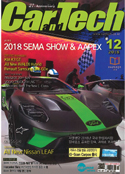
As it does every year, the South Korean magazine published many photos highlighting the various exhibitors, cars and events at the SEMA Show. Editor Young Jun Yu also reported on the products he selected as Global Media Award winners.

Heard on Social Media

“Chevrolet sorprendió a todos presentado su primer Camaro totalmente eléctrico y para carreras en el The SEMA Show. [Chevrolet surprised everyone by presenting its first full electric racing Camaro at the SEMA Show.]”—Alianza Automotriz (Mexico), via Facebook

“Congrats to Curt for winning a Global New Product Award for their groundbreaking Echo Mobile Brake Controller.”4WDrive (Canada), via Twitter

“SEMA Show starter i Las Vegas på tirsdag og en stor gruppe på AMCAR-tur er klar for messen. [The SEMA Show starts in Las Vegas on Tuesday, and our large AMCAR group is ready for the Show.]”—AMCAR (Norway), via Facebook