Thu, 08/01/2019 - 12:09

By SEMA Washington, D.C., Staff

President Trump announced that he will impose 10% tariffs on September 1 on the remaining $300 billion worth of Chinese goods not already subject to 25% tariffs. The so-called “List 4” products cover a wide range of finished consumer products such as electronics and clothes.

U.S. and Chinese officials are negotiating six separate trade documents covering agriculture, services, non-tariff barriers, currency, intellectual property rights and forced technology transfers, and cybersecurity. The most recent trade talks reportedly did not yield significant results. Additionally, President Trump maintains that China has not lived up to its commitment to increase its purchase of agricultural products from the U.S. in large quantities. The next round of U.S.-China negotiations are scheduled for September.

The U.S. has already imposed 25% tariffs on three separate groups of Chinese imports. The so-called “List 3” imports cover about $200 billion worth of goods, including most auto parts, from engines and metal fasteners to tires and brake pads. “List 1” and “List 2” goods are valued at $50 billion and include some miscellaneous metal and rubber parts for auto equipment, machinery, tools and measurement devices.

For more information, contact Stuart Gosswein at stuartg@sema.org.

Thu, 08/01/2019 - 12:08

SEMA-member companies have posted several new listings for job opportunities in the Classifieds page of SEMA.org.

Thu, 08/01/2019 - 12:06

Booth space is still available for the 2019 SEMA Show, November 5–8, in Las Vegas.

Thu, 08/01/2019 - 12:06

Booth space is still available for the 2019 SEMA Show, November 5–8, in Las Vegas.

Thu, 08/01/2019 - 12:03

Registration for the 2019 SEMA Show is open.

Thu, 08/01/2019 - 11:57

SEMA News—August 2019

LEGISLATIVE AND TECHNICAL AFFAIRS
 

Congress Resorts to Old-School Lawmaking

An Inside Look at How a Massive Public Lands Bill Became Law

Moab
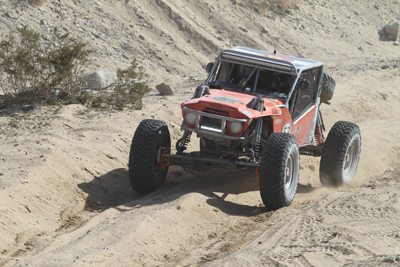
An Ultra4 racer competes in King of the Hammers at the Johnson Valley Off-Highway Vehicle (OHV) Recreational Area, which was expanded by 11,000 acres under the new law.

Those who say Congress never gets anything done and politicians are all talk and no action are frequently proven correct. The greatest obstacle to passing legislation in the 21st century in Washington, D.C., is the unwillingness to compromise. Every now and again, however, Congress comes together and embraces the philosophy of “a good compromise is when neither side is happy.”

Earlier this year, Congress passed a comprehensive public lands bill—the John D. Dingell, Jr. Conservation, Management and Recreation Act (S. 47), which contained more than 100 separate initiatives related to land use—and President Trump signed the bill into law in March. It reflected a delicate balance of providing recreational access to public lands, expanding wilderness protections, and authorizing federal lands to be transferred to state, local and private control to spur economic development in rural communities. The bill also designated six off-highway vehicle (OHV) areas in California while closing some trails to motorized recreation in Utah. It addressed priorities for a diverse group of public lands users.

Let’s take a deeper look at why compromise in Congress is so elusive and examine how this particular legislative sausage was made.

Our founding fathers intended for the legislative process to be deliberative and thoughtful, ensuring that public policies are well conceived. It’s hard to argue against that philosophy, although we now find ourselves in an era where Congress is unable to address even basic matters such as the country’s budget. The root cause of the stalemate is a fear that, by compromising, members of Congress will provide their political opponents with an opportunity to claim victory.

Moab
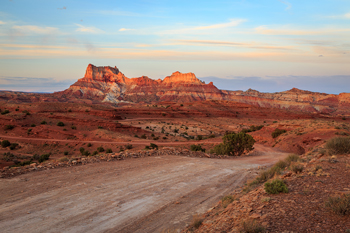
While most existing OHV routes within the San Rafael Swell Recreation Area in Emery County, Utah, were protected in the new law, several trails were lost.

Democrats and republicans alike have a strong desire to enact policies that are embraced by their supporters while making sure that the other side doesn’t chalk up too many victories. However, that philosophy wasn’t always pursued to the extent it is now, and compromise didn’t always have a negative connotation.

Considering the current dynamics, it was encouraging to see lawmakers return to a more old-school style of lawmaking, as members recognized that there was enough for their constituents to gain to make it worthwhile to accept provisions of the land-use bill that they didn’t fully support.

While S. 47 became law in early 2019—just two months into the new session of Congress—the bill was actually a combination of more than 120 different bills that had received scores of committee hearings and thousands of hours of debate in recent years. Lawmakers frantically tried to package and pass the bill at the end of the 2017–2018 session of Congress, but the government shutdown and subsequent battle over funding the federal government overshadowed and ultimately doomed the effort.

The momentum from the previous Congress to enact the lands package continued in early 2019. It was an extraordinary moment of rare agreement in time of equally astonishing partisan rancor, with lawmakers from each party determined to secure passage of the bill.

U.S. Senator Lisa Murkowski (R-AK), chairman of the Senate Committee on Energy and Natural Resources, and U.S. Senator Maria Cantwell (D-WA) introduced S. 47 in January 2019. The bill was comprised of legislation sponsored by more than half of the members of the U.S. Senate during the previous session of Congress.

S. 47 passed the U.S. Senate by a 92 to 8 vote on February 12. Two weeks later, the House of Representatives passed the bill by a vote of 363 to 62. President Trump signed it into law on March 12.

This legislative sausage had all the ingredients needed to ensure passage with enough to make lawmakers happy or at least willing to look past portions they found objectionable.

There is an important lesson to be learned: It sometimes takes years to enact legislation, and a bill covering a single issue may lack enough support to ever get passed. Nevertheless, lawmakers periodically combine multiple bills into a single measure in order to create a winning package. It has happened many times in the past with land-use bills, and it will happen again in the future.

Provisions in S. 47

S. 47 was problematic for the off-highway vehicle (OHV) community. It contained two major provisions to protect OHV roads and trails in California and Utah, but the latter provision allowed about 75 mi. of trails to be lost in Emery County, Utah, with more to potentially follow in the future.

SEMA and other national and local organizations representing the OHV community had worked with lawmakers on the California and Utah provisions for years. Each had been refined to address issues raised by the various stakeholders. However, the provision covering Emery County did not include all the protections sought by the OHV community. SEMA and the other activists launched a huge grassroots effort to amend the provision, but lawmakers refused to make any changes that would threaten passage of the larger bill.

S. 47 addresses the management and conservation of millions of acres of federal lands. It covers land acquisitions, exchanges and designations in national parks, monuments, wilderness, recreation and other areas. The following are a few highlights.

  • S. 47 permanently reauthorizes the Land and Water Conservation Fund, which uses funds collected from oil and gas leases for public lands projects, providing $900 million each year of funding.
  • S. 47 designates roughly 1.3 million acres of federal wilderness in California, Utah, Oregon and New Mexico. Most of the land had already been treated as wilderness, but another 168,000 acres were released and opened for multiple-use access.
  • S. 47 includes the California Desert Protection and Recreation Act, which permanently designates six existing OHV areas, including Johnson Valley (expanded by 11,000 acres), Spangler Hills, El Mirage, Rasor, Dumont Dunes and Stoddard Valley. The provision was sponsored by Rep. Paul Cook (R-CA) and Sen. Dianne Feinstein (D-CA) and protects more than 200,000 acres of OHV areas in San Bernardino County. It also expands wilderness designations in the California desert, although it prohibits the Secretary of the Interior from closing any roads or trails that are currently open for motorized recreational access.
  • S. 47 includes a provision to create the San Rafael Swell Recreation Area in Emery County, Utah. While it will protect most existing OHV routes within the 217,00-acre area, several trails were lost despite the efforts of SEMA and the off-road community. However, there is a benefit: S. 47 now precludes the San Rafael Swell from being designated as a National Monument, which could have threatened more trails. S. 47 also provides a permanent wilderness designation to 617,000 acres already managed as such, while releasing 17,420 acres for other uses.
Thu, 08/01/2019 - 11:19

By Zane Clark

SEMA Education
SEMA Show Education offers Showgoers a unique chance to learn from industry peers and personalities who fuel the collective passion and drive meaningful business change.

The SEMA Show is the premier automotive specialty products trade event in the world. It draws the industry’s brightest minds and hottest products to one place, the Las Vegas Convention Center (LVCC). SEMA Show Education offers Showgoers a unique chance to learn from industry peers and personalities who fuel the collective passion and drive meaningful business change. This diverse collection of highly successful, entrepreneurial people offers the ultimate opportunity for each participant to learn and be challenged. Find a few peer-led seminars below:

On Monday, November 4, Linda Spencer, SEMA’s senior director, international and government affairs, will lead three International seminars that will provide invaluable information on exporting to the Middle East, Australia/New Zealand and Latin American markets. Register for all three international seminars.

Dan Kahn, president and CEO of Kahn Media Inc., will host “EQ vs IQ: The Rise of Emotional Marketing & Branding,” Monday, November 4, from 1:00 p.m.–2:00 p.m., in LVCC room N256.

Myles Kovacs, DUB president and cofounder, will host “Life and Business,” Monday, November 4, from 1:30 p.m.–2:30 p.m., in LVCC room N258.

Megan Neal, vice president of content monetization for MotorTrend Group, will lead the panel “Platform-Specific Tips to Engage Your Social Audience,” Monday, November 4, from 2:30 p.m.–3:30 p.m., in LVCC room N256.

Sean Holman, content director, Truck & Off-Road Group at MotorTrend Group and co-creator/co-host of “The Truck Show Podcast” will host “Podcasting Do’s & Don’ts,” Tuesday, November 5, from 10:00 a.m.–11:00 a.m., in LVCC room N252.

Christina Kwan, owner, Kwan International Marketing & Media, will host “Business Is Poker—How to Gain the Mental Edge and Bet on Yourself,” Tuesday, November 5, from 11:15 a.m.–12:15 p.m., in LVCC room N256.

Max Grundy, artist at Fear is the New Beauty, will join the panel “Art, Design and Cars,” Wednesday, November 5, from 9:00 a.m.–10:00 a.m., in LVCC room N258.

Ellen McKoy, owner EMK Marketing, will lead the panel discussion “Up Your Game: Harness Your Marketing and Sales Skills, Powered by PRO,” Wednesday, November 6, from 2:15 p.m.–3:15 p.m., in LVCC room N254.

Zan Martin, president/CEO, Martin & Company Advertising, will lead a panel discussion on “Data-Driven Digital Marketing,” Wednesday, November 6, from 3:00 p.m.–4:00 p.m., in LVCC room N252.

Ed Iskenderian of Isky Racing Cams will host “The Camfather—Ed Iskenderian,” Thursday, November 7, from 9:00 a.m.–10:00 a.m., in LVCC room N258.

Sign Up. Show Up. Preview and register for the 2019 seminars.

Contact SEMA’s Senior Director of Education Zane Clark for additional information.

Thu, 08/01/2019 - 11:19

By Zane Clark

SEMA Education
SEMA Show Education offers Showgoers a unique chance to learn from industry peers and personalities who fuel the collective passion and drive meaningful business change.

The SEMA Show is the premier automotive specialty products trade event in the world. It draws the industry’s brightest minds and hottest products to one place, the Las Vegas Convention Center (LVCC). SEMA Show Education offers Showgoers a unique chance to learn from industry peers and personalities who fuel the collective passion and drive meaningful business change. This diverse collection of highly successful, entrepreneurial people offers the ultimate opportunity for each participant to learn and be challenged. Find a few peer-led seminars below:

On Monday, November 4, Linda Spencer, SEMA’s senior director, international and government affairs, will lead three International seminars that will provide invaluable information on exporting to the Middle East, Australia/New Zealand and Latin American markets. Register for all three international seminars.

Dan Kahn, president and CEO of Kahn Media Inc., will host “EQ vs IQ: The Rise of Emotional Marketing & Branding,” Monday, November 4, from 1:00 p.m.–2:00 p.m., in LVCC room N256.

Myles Kovacs, DUB president and cofounder, will host “Life and Business,” Monday, November 4, from 1:30 p.m.–2:30 p.m., in LVCC room N258.

Megan Neal, vice president of content monetization for MotorTrend Group, will lead the panel “Platform-Specific Tips to Engage Your Social Audience,” Monday, November 4, from 2:30 p.m.–3:30 p.m., in LVCC room N256.

Sean Holman, content director, Truck & Off-Road Group at MotorTrend Group and co-creator/co-host of “The Truck Show Podcast” will host “Podcasting Do’s & Don’ts,” Tuesday, November 5, from 10:00 a.m.–11:00 a.m., in LVCC room N252.

Christina Kwan, owner, Kwan International Marketing & Media, will host “Business Is Poker—How to Gain the Mental Edge and Bet on Yourself,” Tuesday, November 5, from 11:15 a.m.–12:15 p.m., in LVCC room N256.

Max Grundy, artist at Fear is the New Beauty, will join the panel “Art, Design and Cars,” Wednesday, November 5, from 9:00 a.m.–10:00 a.m., in LVCC room N258.

Ellen McKoy, owner EMK Marketing, will lead the panel discussion “Up Your Game: Harness Your Marketing and Sales Skills, Powered by PRO,” Wednesday, November 6, from 2:15 p.m.–3:15 p.m., in LVCC room N254.

Zan Martin, president/CEO, Martin & Company Advertising, will lead a panel discussion on “Data-Driven Digital Marketing,” Wednesday, November 6, from 3:00 p.m.–4:00 p.m., in LVCC room N252.

Ed Iskenderian of Isky Racing Cams will host “The Camfather—Ed Iskenderian,” Thursday, November 7, from 9:00 a.m.–10:00 a.m., in LVCC room N258.

Sign Up. Show Up. Preview and register for the 2019 seminars.

Contact SEMA’s Senior Director of Education Zane Clark for additional information.

Thu, 08/01/2019 - 11:19

By Zane Clark

SEMA Education
SEMA Show Education offers Showgoers a unique chance to learn from industry peers and personalities who fuel the collective passion and drive meaningful business change.

The SEMA Show is the premier automotive specialty products trade event in the world. It draws the industry’s brightest minds and hottest products to one place, the Las Vegas Convention Center (LVCC). SEMA Show Education offers Showgoers a unique chance to learn from industry peers and personalities who fuel the collective passion and drive meaningful business change. This diverse collection of highly successful, entrepreneurial people offers the ultimate opportunity for each participant to learn and be challenged. Find a few peer-led seminars below:

On Monday, November 4, Linda Spencer, SEMA’s senior director, international and government affairs, will lead three International seminars that will provide invaluable information on exporting to the Middle East, Australia/New Zealand and Latin American markets. Register for all three international seminars.

Dan Kahn, president and CEO of Kahn Media Inc., will host “EQ vs IQ: The Rise of Emotional Marketing & Branding,” Monday, November 4, from 1:00 p.m.–2:00 p.m., in LVCC room N256.

Myles Kovacs, DUB president and cofounder, will host “Life and Business,” Monday, November 4, from 1:30 p.m.–2:30 p.m., in LVCC room N258.

Megan Neal, vice president of content monetization for MotorTrend Group, will lead the panel “Platform-Specific Tips to Engage Your Social Audience,” Monday, November 4, from 2:30 p.m.–3:30 p.m., in LVCC room N256.

Sean Holman, content director, Truck & Off-Road Group at MotorTrend Group and co-creator/co-host of “The Truck Show Podcast” will host “Podcasting Do’s & Don’ts,” Tuesday, November 5, from 10:00 a.m.–11:00 a.m., in LVCC room N252.

Christina Kwan, owner, Kwan International Marketing & Media, will host “Business Is Poker—How to Gain the Mental Edge and Bet on Yourself,” Tuesday, November 5, from 11:15 a.m.–12:15 p.m., in LVCC room N256.

Max Grundy, artist at Fear is the New Beauty, will join the panel “Art, Design and Cars,” Wednesday, November 5, from 9:00 a.m.–10:00 a.m., in LVCC room N258.

Ellen McKoy, owner EMK Marketing, will lead the panel discussion “Up Your Game: Harness Your Marketing and Sales Skills, Powered by PRO,” Wednesday, November 6, from 2:15 p.m.–3:15 p.m., in LVCC room N254.

Zan Martin, president/CEO, Martin & Company Advertising, will lead a panel discussion on “Data-Driven Digital Marketing,” Wednesday, November 6, from 3:00 p.m.–4:00 p.m., in LVCC room N252.

Ed Iskenderian of Isky Racing Cams will host “The Camfather—Ed Iskenderian,” Thursday, November 7, from 9:00 a.m.–10:00 a.m., in LVCC room N258.

Sign Up. Show Up. Preview and register for the 2019 seminars.

Contact SEMA’s Senior Director of Education Zane Clark for additional information.

Thu, 08/01/2019 - 10:52

SEMA News—August 2019

RETAIL SPOTLIGHT

By Chad Simon

Spartan 4x4

How a 21-Year-Old Business Major Is Building a Name for Himself in the Youth Off-Road Market
Leonidas
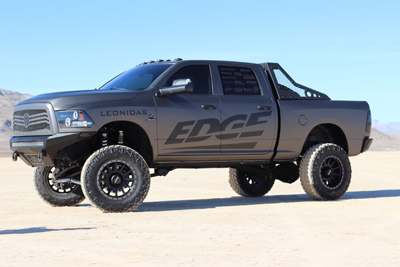
Spartan 4x4 built a RAM 2500 called “Leonidas” for Edge Products for the 2018 SEMA Show.

Spartan 4x4, which caters to the youth off-road market, was founded in 2015 by 17-year-old Robert Bowden III out of his parents’ garage in Atlanta. In 2017, Bowden relocated to a 600-sq.-ft. office in Bowling Green, Kentucky. Now 21 and an entrepreneurship major at Western Kentucky University, he expanded yet again in March to a 1,000-sq.-ft. facility with six employees and moved to a 6,000-sq.-ft. facility in July, which houses an office, a shop and a showroom—all under one roof. We recently interviewed Bowden about his progress.

SEMA News: How did you get started in the automotive aftermarket industry?

Robert Bowden III: In high school, I had a Jeep Wrangler that I wanted to modify, but I didn’t have the money to do it. So I started a social-media page where I promoted peoples’ builds from all over the country. Other companies started to reach out and told me they would send me free stuff if I promoted their products. Then I started moving products as a third-party drop shipper. I built my first website in fall 2015, and we had a handful of direct contracts with manufacturers whose products we installed and promoted on our website. They drop shipped, so we were just a third-party middleman.

I attended my first SEMA Show in 2016 and fell in love with the industry. When I saw how big the Show was and how much variety there was, it just blew me away. When I got back from the Show, I started working on vehicles out of my parents’ garage. When I moved the business up to Bowling Green in fall 2017, we opened our first official 600-sq.-ft. office with three employees. We were web-based only, selling apparel and our own privately labeled aftermarket off-road parts. We had about 20–30 contracts and we pushed out parts, but it hadn’t gotten to the point where we were installing parts for customers.
Spartan
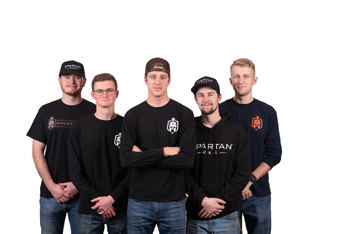
The Spartan 4x4 team includes (from left) Hunter Lee, Andrew Clark, Robert Bowden III, Alfredo Aubone and Hunter Cassity.

At the beginning of 2019, we opened our shop in Bowling Green, where we now do builds for customers. We did a handful of builds in the past year or two where we did what we were able to do before sending out the rest of the work to different shops, but now we’re at the point where we have our own equipment, bays and mechanics.

SN: How has your business grown?

RB: We are completely self-funded, and we more than doubled our growth in 2018. We went from an online business with two employees to having an office, a shop and five employees—all of whom are in their early 20s and are either college students or recent graduates of Western Kentucky University. We still do online retail, but now we have a physical shop where customers can come in and purchase parts directly, and we also do installations.

We also use resources offered by SEMA, whether it’s research, connections or the SEMA Data Co-op. We did a RAM 2500 build called “Leonidas” for Edge Products for the 2018 SEMA Show, which helped our credibility and gave us another level of prestige. We try to leverage that with customers and companies we work with as much as possible.

We probably do about 10–12 builds per month. We’ve done some high-profile builds as well, including for the son of Dr. Heavenly from “Married to Medicine.” We also built a truck for the son of one of the executives of Home Depot, and we consulted with the son of Big Boi Patton from OutKast for his Jeep.
Spartan
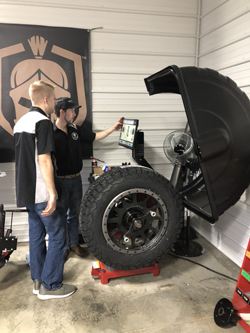
Providing optimal customer service should be any company’s number-one priority in order to gain repeated long-term business.

SN: How can the industry keep the younger generation engaged?

RB: Making products readily available and acceptable, whether it’s through different manufacturers or direct. When we started out, the industry consisted mostly of older hobbyists, and then it started to bleed down to 20- and 30-year-olds. I think it’s just one of those things where people are able to express themselves by taking their vehicles and designs and building them however they want.

Social-media pages and websites offer variety, and trends and fads come and go because new ideas are constantly coming to market. It’s about knowing that more is coming because people consume so fast, and all of a sudden that train is gone and they’re waiting for the next big thing. It’s also about not shunning the industry, saying, “Oh, this is too loud or too big.” We live in a country where people have the ability to think and act how they want. These kids aren’t out doing drugs and getting into trouble. They’re building vehicles that might be loud or go fast, but it’s not the worst thing in the world.

SN: What is the biggest challenge you have faced?

RB: Differentiating ourselves from other companies. When you have builders who are in their teens and 20s, they get a lot of attention from the younger crowd because they are the ones who utilize online content. When they see younger people doing stuff that they wish they could be doing, it kind of fuels them. I’m 21, and I’ve only been building for four years, so when you compare what I’ve done to someone who’s 35 or 40 with five times the experience that I have, I have to be able to differentiate myself from them and prove myself.

On the business side, it’s challenging to get an older customer to come to me to get work done, because I’m half his age. If he’s got a $75,000–$80,000 truck and he’s putting $10,000 into it, he’s going to want someone who knows what he’s doing. Even though we’re young, I’m confident in our ability, but we have to be able to sell that to our customers—especially the
older ones.
Spartan
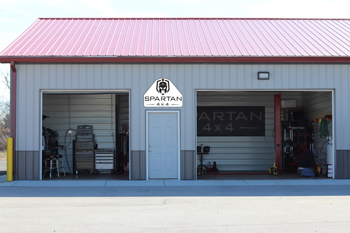
Spartan 4x4 was located in a 1,000-sq.-ft. facility in Bowling Green, Kentucky. Bowden relocated to a 6,000-sq.-ft. facility in July.

SN: What risks have you taken along the way?

RB: The biggest risks I’ve taken are knowing when to grow and when to add employees and also moving the business from Atlanta to Bowling Green. All my contacts and connections and everything I knew were in Atlanta. Opening the shop cost quite a bit of money just in equipment, the facility, mechanics and tools. We want to make sure we’re not biting off more than we can chew. We’re definitely biting off a lot, and we have to be sure we are able to come through at a high level
of expectation.

SN: What draws people to your store?

Robert Bowden
Robert Bowden III started Spartan 4x4 out of his parents’ garage in Atlanta when he was just 17 years old.

RB: The brand. Enthusiasts between the ages of 16 and 35 relate to us. People want to work with others when they can see themselves because they’re not too much older or younger than us. That level of relatability is something that we can leverage.

Everyone is in business to make money, but we never screw people over. The automotive and technological industries are where people can get absolutely taken advantage of because of their lack of knowledge. A customer can walk in and you know you can just sell him anything and double or triple your price, and he’s going to go for it because he doesn’t know any better. You see it happen a lot. That’s something that we just don’t do. It’s all about transparency, relatability and accountability.

SN: How do you market yourself?

RB: Social media is the most cost-effective form of marketing for us since we are targeting a younger crowd. We also host our own 4x4 event series called “Grits n’ Gravel.” The first event is a meet-and-greet, kind of like Cars and Coffee. The second and third events will have sponsors and vendors. We want to get our name and story out there any way we can, but we also want to be known locally.

In this industry, you’re either a lower-end mom-and-pop or a more expensive, high-end business that doesn’t offer much in the way of customer service unless you’re spending a lot of money. My philosophy is “Why not both?” Let’s have that affordable family feel while also offering a high-end experience.

We do something called personal build consulting, where we sit down with the customer and help them plan out their build. We’ll even come to their house, pick up their vehicle, bring it back to our shop, do all the work, and drop it back off at their door. It’s kind of a white-glove service we provide.

Executive Summary
 

Spartan 4x4
132 Chester Ct., Unit 2
Bowling Green, KY 42103
270-599-3029
www.spartan4x4.com

  • Owner/Founder: Robert Bowden III
  • Established in 2015 by then-17-year-old in his parent’s garage.
  • Has six employees in their early 20s.
  • Caters to the youth off-road market.
  • Built a RAM 2500 for Edge Products for the 2018 SEMA Show.
  • More than doubled in size in 2018.
  • Moved to a 6,000-sq.-ft. facility in July.
 

SN: What do you attribute your success to?

RB: Customer service needs to be your priority, because without customers, you’ve got no business. When I was younger, I always paid attention to how other companies treated me because I was young and didn’t know much. How is the initial contact? I tell my guys—and it’s stamped into their heads—the customer is always first. Even if you’ve been asked the question 100 times, answer it positively and be friendly. We want their business repeated and long-term, not just right now. It’s the initial interaction and the follow-up.

I tell my customers I’m available to them 24/7. Obviously, I might not always be able to offer that as we get bigger, but that’s one of the things that really stuck with me when I was younger. Be available to your customers to provide real information. Business ethics is important, because if you do that correctly you’re going to get more business. It’s a cycle. Growing but staying true to our roots I think is the biggest thing.

SN: What advice would you offer to a younger guy just getting started in the industry?

RB: Connections are everything, and don’t let the big fish intimidate you. People will tell you that you can’t do something, and a lot of times it’s because they don’t want you to do it. You have one life to live, and if you have a dream and you want to chase it, the only person stopping you is yourself. Pursue with passion. Things get hard sometimes, but don’t give up. Stay on course.