Thu, 08/01/2019 - 07:26

SEMA News—August 2019

LEGISLATIVE AND TECHNICAL AFFAIRS

By Stuart Gosswein

Are Tariffs Bargaining Chips or Permanent?

SEMA Welcomes Trade Negotiations, Opposes Tariffs

Tariffs
Legislation is being considered that would require congressional approval of tariffs imposed or, alternatively, provide Congress the option to overturn any imposed tariffs.

The global trading system has the potential to foster economic growth and support peaceful relations between nations. If it breaks down, it can lead to confrontation as countries seek to shield their domestic industries. Tariffs can be a powerful tool for leveling the playing field or, conversely, lead to trade wars and protectionism. The Trump Administration is using tariffs to strengthen its hand in trade negotiations with its trading partners. Is the strategy working?

First, a little background.

Following World War II, the United States led the effort to encourage international trade within a rules-based, open trading system. The 1948 General Agreement on Tariffs and Trade led to the present-day World Trade Organization, which produced widespread prosperity, lower prices, greater consumer choice and an easing of international tensions.

Nevertheless, globalization created significant problems. For example, it has been difficult for U.S.-based manufacturers to compete against lower wages found in other countries. China, in particular, has posed significant problems for U.S. manufacturers. China joined the World Trade Organization in 2001, and the hope was that it would open its markets and create opportunities for U.S. manufacturers as part of the world trading community. That hope, however, has been undermined by China’s use of currency manipulation, intellectual-property theft, and other unfair trade practices. Which brings us back to the current U.S. trade negotiations.

The Trump Administration began with a bold agenda: demand fair trade and renegotiate trade pacts. SEMA applauded the goal, especially with respect to securing structural reforms in the U.S./China trade relationship and protecting intellectual property rights.

Beyond unfair trade, the Trump Administration has pursued perceived threats to U.S. national security. The first concern was U.S. domestic production of steel and aluminum. By early 2018, U.S. steel mills were operating at 73% of capacity, and more than half of U.S. aluminum capacity lay dormant, with imports accounting for 90% of U.S. aluminum consumption. Since the tariffs were imposed in June 2018, U.S. domestic steel production is now above the 80% capacity goal, but aluminum production still lags.

Imposing 25% tariffs on steel and 10% on aluminum helped domestic metal producers, but that sector’s gains have taken place at an enormous cost to its downstream customers, including many SEMA members. Tariff side effects include stockpiling, hoarding and artificial price spikes.

Although the steel and aluminum tariffs were recently removed from Canada and Mexico, they were imposed globally rather than being targeted at the primary culprit: over-production in China and a few other countries. The tariffs were also imposed on raw materials only (rolled steel, bars, pipe, etc.), ironically making it more difficult for U.S. manufacturers to compete with imported finished products made with steel or aluminum.

The Trump Administration also questioned whether imported automobiles and auto parts pose a threat to America’s national security. The administration is concerned that a contraction of the “American-owned auto industry” will impede the country’s ability to develop technologically advanced products essential to our ability to maintain technological superiority to meet defense requirements. Examples include advances in engine and powertrain technology, electrification, lighter-weight materials, connectivity and autonomous driving.

President Trump has discussed imposing 20%–25% tariffs on all auto imports, a category that could include new cars, classic cars, OEM parts and specialty auto parts. A decision on whether to move forward with tariffs has been delayed until mid-November so that the United States can negotiate new trade treaties with the European Union, Japan and Korea.

Meanwhile, the threat of tariffs continues to loom large at a time when companies are facing higher costs of production, lower sales and profit margins, and retaliatory actions by other countries. SEMA is part of the Driving American Jobs Coalition, which is comprised of the leading automakers, parts suppliers, auto dealers, parts distributors, retailers and vehicle service providers and stands united in opposition to auto tariffs that would have damaging effects on consumers and the nation’s economy.

The negotiations with China are especially challenging. China has emerged as a major global economic player, with international supply chains becoming deeply rooted there. Rather than working collaboratively with the other Pacific Rim allies who have a shared interest in confronting China on trade violations, the United States has taken a unilateral approach.

As the U.S.-China negotiations commenced, the Trump Administration imposed tariffs as a bargaining tool. Many months later, $250 billion of Chinese goods are now subject to 25% tariffs, with threats to impose the same on all Chinese imports. China imposed retaliatory tariffs on about $60 billion worth of U.S. goods. Most of the levies are on agriculture products, but some motor-vehicle parts are also impacted.

Tariffs are a blunt instrument for dealing with trade disputes, and they often have unwelcome consequences, including retaliation by other countries. Tariffs are a tax paid by U.S. companies and consumers. They create downstream price spikes, marketplace confusion and supply-chain disruption. SEMA has urged administration officials to use other tools to enforce against unfair trade practices rather than using tariffs as a bargaining chip.

As the tariffs have escalated, lawmakers have begun discussing whether they should revisit presidential authority to impose tariffs without congressional input—a power ceded to the executive branch in recent decades. Legislation is being considered that would require congressional approval of tariffs imposed or, alternatively, provide Congress the option to overturn. The legislation would also clarify when tariffs could be imposed based on national security concerns, such as the steel/aluminum tariffs and the threatened imported automobile and auto parts tariffs.

SEMA looks forward to successful trade negotiations to resolve outstanding disputes. It also looks forward to the removal of tariffs that have been recently imposed or threatened.

Tariffs

TariffsSteel/Aluminum: The U.S. government has imposed global tariffs on steel (25%) and aluminum (10%) under authority of Section 232 of U.S. trade law (national security). The tariffs are intended to protect domestic metal producers from over-production in China and other countries. Most of the tariffs began on June 1, 2018. Argentina, Australia, Brazil and South Korea were exempted based on trade agreements. Mexico and Canada were exempted on May 20, 2019. The tariffs apply to processed raw materials (steel/aluminum plate, sheets, bars, etc.) but not finished products (wheels, exhausts, etc.).

U.S.-based companies are eligible for a one-year tariff exclusion if they can demonstrate that the foreign-produced material is not made in the United States in reasonably available quantity or satisfactory quality. More than 50,000 company exclusion requests have been received to date.

Chinese Products: The U.S. imposed 25% tariffs on $50 billion worth of Chinese imports and 10% tariffs on another $200 billion worth of goods, which rose to 25% on May 10, 2019. Tariffs on all other products imported from China may follow if trade talks are unsuccessful. The tariffs are an attempt to lower the U.S./China trade deficit, deter cyber theft of intellectual property by the Chinese government and companies, and eliminate forced technology transfers among other disputes. The U.S. Trade Representative imposed the tariffs under Section 301 of U.S. trade law (unfair trade). They have been imposed in three separate actions.

  • List 1 Tariffs: 25% on $34 billion in goods imposed on July 6, 2018. There are 818 Harmonized Tariff Code listings, including miscellaneous metal and rubber parts for auto equipment, machinery, tools, measurement and medical devices.
  • List 2 Tariffs: 25% on $16 billion in goods imposed on August 23, 2018. There are 279 Harmonized Tariff Code listings, including many types of plastics.
  • List 3 Tariffs: 10% on $200 billion in goods imposed on September 24, 2018, and increased to 25% on May 10, 2019. There are 5,745 Harmonized Tariff Code listings, including many auto parts ranging from engines and metal fasteners to tires, steering wheel components, rubber gaskets, transmission belts, brake pads, windshields and suspension springs.

Imported Automobiles and Auto Parts: On May 23, 2018, President Trump directed the U.S. Department of Commerce (DOC) to investigate whether imported autos and auto parts pose a threat to America’s national security based on Section 232 of U.S. trade law. The investigation applies to all types of cars and parts, including new cars, classic cars, and original and specialty auto parts. The DOC findings were sent to the President on February 17, 2019, but not made public. On May 18, President Trump delayed a decision on whether to impose tariffs until mid-November. The President has signaled a desire to impose 20%–25% tariffs as leverage in trade talks with the European Union, Japan and Korea.

SEMA and seven other trade associations representing the broad scope of the auto industry—from automakers and dealers to parts manufacturers, distributors, retailers and service providers—formed the Driving American Jobs Coalition. The coalition is united in opposing the referenced tariffs as being counterproductive and threatening American companies, workers and consumers. The message to the president and lawmakers has been to oppose tariffs and pursue trade infringements in a fashion that does not inflict unintended economic harm.

United States-Mexico-Canada Agreement: The United States-Mexico-Canada Agreement (USMCA) has been signed by the three nations, but the legislatures of each country must approve it before it replaces the North American Free Trade Agreement. The USMCA would require that vehicles have 75% North American content, compared with 62.5% currently. At least 40%–45% of the vehicle content must be made by workers earning at least $16 an hour.

Mexico and Canada would not be subject to national-security tariffs if such were imposed on imported automobiles and auto parts. In May, the three countries reached agreement allowing
for the removal of the steel and aluminum tariffs.

There is no timetable for submitting the treaty to the U.S. Congress, but passage will become more challenging the closer it gets to the 2020 elections.

Thu, 08/01/2019 - 07:15

In partnership with Ford, the SEMA Garage has announced the ’20 Ford Escape Measuring Session, Tuesday, August 13, 2019.

Thu, 08/01/2019 - 07:15

In partnership with Ford, the SEMA Garage has announced the ’20 Ford Escape Measuring Session, Tuesday, August 13, 2019.

Thu, 07/25/2019 - 14:10

By Rachel Tatum

Press
Journalists sat down with exhibitors during last month’s Exhibitor Summit in Las Vegas, sharing proven tips and personal insight on how exhibitors can obtain additional media coverage before, during and after the SEMA Show.

A press kit (sometimes referred to as a media kit) is the most effective way to communicate with journalists. Because reporters are running from one place to another during the SEMA Show, it’s especially important to have a comprehensive press kit during the event.

A press kit is a packet of information that includes key information about exhibiting companies, products or events, in a format that is easy for reporters to use. SEMA Show exhibitors are invited to display their media kits at the SEMA Show Media Center (Room S229), where reporters spend a great deal of time during the week. While the quantity will vary depending on an exhibitor’s market segment and news, most exhibitors find that 50–100 press kits in the Media Center is sufficient.

The contents of the press kit will also vary, depending on the exhibitor. Some things to consider include:

Press Releases: Editors love press releases. An effective press release allows editors to quickly and easily fill their publications (whether print or digital) with relevant content. Like many businesses, media outlets are often understaffed and editors are challenged with developing content to fill their news outlets in a short amount of time. Draft your press release in a standard news release format, with the “Five Ws” included in the first paragraph. Stick to the facts and avoid opinions, unless it is attributed to an individual in the form of a quote.  

Media Contact: Include contact information for the media contact. This should be someone who is available to work with journalists and prepared to accommodate their deadlines. This person does not need to be the product expert or spokesperson, but should be able to coordinate between the expert and the reporter.

Company Fact Sheet: A company fact sheet makes it easy for journalists to develop stories while ensuring key facts about your organization are accurate. Make it easy to read by using simple fonts, bullet points and categories.  

Photos, Logos, and Video: While many media outlets post news stories online, many also have printed publications and need high-res images and logos. Include three to five high-res images of your products from varying angles, in high-res for print and a lower-res version for web. You may also want to include a black-and-white version for print publications that do not include color. Consider offering online media links to short videos that capture how the product is used in the real world.

Provide Information Electronically: Provide press materials electronically, whether on a USB drive or via a URL to your company website. The idea is to make it easy for journalist to copy and paste the text. If a reporter only has room for one article, and they have the choice between a press release that is available electronically, versus one that they have to re-type manually, they will likely choose the electronic version.   

Presentation: Media kits are typically packaged in a simple two-pocket folder. If your company has wide brand awareness, your company name may be all you need on the folder. If you’re newer to the industry, you may want to include some graphics to grab the attention of journalists in your market segment. Consider including a few press kits in the Media Center as well as in your booth.

For additional tips to generate SEMA Show media coverage or for assistance with media outreach during the SEMA Show, contact Rachel Tatum at rachelt@sema.org or 909-978-6669.

Thu, 07/25/2019 - 14:10

By Rachel Tatum

Press
Journalists sat down with exhibitors during last month’s Exhibitor Summit in Las Vegas, sharing proven tips and personal insight on how exhibitors can obtain additional media coverage before, during and after the SEMA Show.

A press kit (sometimes referred to as a media kit) is the most effective way to communicate with journalists. Because reporters are running from one place to another during the SEMA Show, it’s especially important to have a comprehensive press kit during the event.

A press kit is a packet of information that includes key information about exhibiting companies, products or events, in a format that is easy for reporters to use. SEMA Show exhibitors are invited to display their media kits at the SEMA Show Media Center (Room S229), where reporters spend a great deal of time during the week. While the quantity will vary depending on an exhibitor’s market segment and news, most exhibitors find that 50–100 press kits in the Media Center is sufficient.

The contents of the press kit will also vary, depending on the exhibitor. Some things to consider include:

Press Releases: Editors love press releases. An effective press release allows editors to quickly and easily fill their publications (whether print or digital) with relevant content. Like many businesses, media outlets are often understaffed and editors are challenged with developing content to fill their news outlets in a short amount of time. Draft your press release in a standard news release format, with the “Five Ws” included in the first paragraph. Stick to the facts and avoid opinions, unless it is attributed to an individual in the form of a quote.  

Media Contact: Include contact information for the media contact. This should be someone who is available to work with journalists and prepared to accommodate their deadlines. This person does not need to be the product expert or spokesperson, but should be able to coordinate between the expert and the reporter.

Company Fact Sheet: A company fact sheet makes it easy for journalists to develop stories while ensuring key facts about your organization are accurate. Make it easy to read by using simple fonts, bullet points and categories.  

Photos, Logos, and Video: While many media outlets post news stories online, many also have printed publications and need high-res images and logos. Include three to five high-res images of your products from varying angles, in high-res for print and a lower-res version for web. You may also want to include a black-and-white version for print publications that do not include color. Consider offering online media links to short videos that capture how the product is used in the real world.

Provide Information Electronically: Provide press materials electronically, whether on a USB drive or via a URL to your company website. The idea is to make it easy for journalist to copy and paste the text. If a reporter only has room for one article, and they have the choice between a press release that is available electronically, versus one that they have to re-type manually, they will likely choose the electronic version.   

Presentation: Media kits are typically packaged in a simple two-pocket folder. If your company has wide brand awareness, your company name may be all you need on the folder. If you’re newer to the industry, you may want to include some graphics to grab the attention of journalists in your market segment. Consider including a few press kits in the Media Center as well as in your booth.

For additional tips to generate SEMA Show media coverage or for assistance with media outreach during the SEMA Show, contact Rachel Tatum at rachelt@sema.org or 909-978-6669.

Thu, 07/25/2019 - 14:10

By Rachel Tatum

Press
Journalists sat down with exhibitors during last month’s Exhibitor Summit in Las Vegas, sharing proven tips and personal insight on how exhibitors can obtain additional media coverage before, during and after the SEMA Show.

A press kit (sometimes referred to as a media kit) is the most effective way to communicate with journalists. Because reporters are running from one place to another during the SEMA Show, it’s especially important to have a comprehensive press kit during the event.

A press kit is a packet of information that includes key information about exhibiting companies, products or events, in a format that is easy for reporters to use. SEMA Show exhibitors are invited to display their media kits at the SEMA Show Media Center (Room S229), where reporters spend a great deal of time during the week. While the quantity will vary depending on an exhibitor’s market segment and news, most exhibitors find that 50–100 press kits in the Media Center is sufficient.

The contents of the press kit will also vary, depending on the exhibitor. Some things to consider include:

Press Releases: Editors love press releases. An effective press release allows editors to quickly and easily fill their publications (whether print or digital) with relevant content. Like many businesses, media outlets are often understaffed and editors are challenged with developing content to fill their news outlets in a short amount of time. Draft your press release in a standard news release format, with the “Five Ws” included in the first paragraph. Stick to the facts and avoid opinions, unless it is attributed to an individual in the form of a quote.  

Media Contact: Include contact information for the media contact. This should be someone who is available to work with journalists and prepared to accommodate their deadlines. This person does not need to be the product expert or spokesperson, but should be able to coordinate between the expert and the reporter.

Company Fact Sheet: A company fact sheet makes it easy for journalists to develop stories while ensuring key facts about your organization are accurate. Make it easy to read by using simple fonts, bullet points and categories.  

Photos, Logos, and Video: While many media outlets post news stories online, many also have printed publications and need high-res images and logos. Include three to five high-res images of your products from varying angles, in high-res for print and a lower-res version for web. You may also want to include a black-and-white version for print publications that do not include color. Consider offering online media links to short videos that capture how the product is used in the real world.

Provide Information Electronically: Provide press materials electronically, whether on a USB drive or via a URL to your company website. The idea is to make it easy for journalist to copy and paste the text. If a reporter only has room for one article, and they have the choice between a press release that is available electronically, versus one that they have to re-type manually, they will likely choose the electronic version.   

Presentation: Media kits are typically packaged in a simple two-pocket folder. If your company has wide brand awareness, your company name may be all you need on the folder. If you’re newer to the industry, you may want to include some graphics to grab the attention of journalists in your market segment. Consider including a few press kits in the Media Center as well as in your booth.

For additional tips to generate SEMA Show media coverage or for assistance with media outreach during the SEMA Show, contact Rachel Tatum at rachelt@sema.org or 909-978-6669.

Thu, 07/25/2019 - 13:42

Compiled by SEMA Editors

Wade Kawasaki
Wade Kawasaki

Coker Group Expands Opportunities Under New Name: Legendary Companies

Coker Group, which includes Coker Tire, Wheel Vintiques, Universal Vintage Tire, Phoenix Race Tires, Specialty Wheel and Roadster Wire Wheel, has announced a rebranding of the group name to reflect its forward-looking focus on the entirety of the automotive aftermarket including, but not limited to, the performance and restoration markets. The new name—Legendary Companies—is meant to represent the breadth and scope of its current market segments while providing Legendary Companies with greater opportunities for future expansion into new sectors.

“We’re proud to announce our rebranding of Coker Group as Legendary Companies,” said President and CEO Wade Kawasaki, “and excited for this chance to expand Legendary Companies into diverse markets while remaining true to our core consumers. The naming was very intentional; we chose the word ‘Legendary’ because we see our diverse, vibrant enthusiast customer base as the real legends in our industry. Now with this change, we will be positioned to bring our direct to consumer expertise and global distribution model to enhance the efforts of the performance brands we personally use and admire,” he added.

This rebrand represents a major expansion in potential scope for Legendary Companies, particularly in the fast-growing performance-vehicle and late-model aftermarket sectors. These sectors are expected to be major targets for Legendary Companies and its private equity firm partner Irving Place Capital in future acquisitions. This announcement comes after several months of expansion for Legendary Companies, including subsidiary Coker Tire’s acquisition and integration of German-based classic and vintage car tire distributor, MOR, which has already expanded global sales and distribution. In addition, subsidiary company Wheel Vintiques recently expanded its product line to include modern wheel fitments and high-performance alloy wheels following the purchase of two performance aluminum wheel companies. To learn more about Legendary Companies, visit www.legendarycompanies.com

UPMC
Aaron Shelby (right), co-president of the Carroll Shelby Foundation, presented a $15,000 check to Brian Feingold, M.D. (left), medical director of the Heart Failure and Transplantation Programs at UPMC Children’s Hospital of Pittsburgh. 

Carroll Shelby Foundation Donates $15,000 To UPMC Children’s Hospital Of Pittsburgh

Aaron Shelby, co-president of the Carroll Shelby Foundation, presented a $15,000 check to Brian Feingold, M.D., medical director of the Heart Failure and Transplantation Programs at UPMC Children’s Hospital of Pittsburgh, July 11. The donation was made on behalf of the charity’s board during the Team Shelby East Coast Nationals banquet in Pittsburgh. UPMC Children’s Hospital is a leader in the treatment of childhood conditions and diseases, a pioneer in the development of new and improved therapies and a top educator of the next generation of pediatricians and pediatric subspecialists. Over the past several years, the Carroll Shelby Foundation has donated money to pediatric hospitals and organ transplant wards. In 2018, it donated $5,000 to Loma Linda University Children’s Hospital in Loma Linda, California, and handed out gifts to kids in the pediatric cardiac intensive care unit. During the Mustang Club of America’s 2017 Grand National event in Kansas City, the Carroll Shelby Foundation surprised Children’s Mercy Hospital with a $10,000 check.

Al Liebmann
Al Liebmann
Yvonne Bowe
Yvonne Bowe

Internet Brands Auto Classifieds Welcomes Two Industry Experts to Sales Team

The Internet Brands Auto Classifieds group has welcomed race and performance industry veterans Yvonne Bowe and Al “Big Al” Liebmann to its sales team. IB Classifieds, led by flagship site RacingJunk.com, specializes in racing, performance, hot rods, classics and antique vehicle and parts classifieds. Bowe and Liebmann bring decades of experience in the race, performance and hot-rod spaces as both account representatives and hands-on enthusiasts. Known for championing the grassroots racing community in every aspect of the sport, RacingJunk seeks to connect its members to the people, parts and services they need with its online classifieds, business partnerships, social media channels and sales and customer service teams.

Bowe is a veteran of the aftermarket industry, having worked for both Steele Rubber Products and Kook’s Headers and Exhaust. She’s passionate about drag racing and classic cars, with knowledge, sales experience and connections in the aftermarket industry that IB Classifieds says will benefit both the classifieds verticals and new and continuing advertisers equally. Drag racer, crew member, promoter and enthusiast, Liebmann has 30-plus years of hands-on experience in the auto industry. As the promoter of Frantic Ford and Super Camaro Funny Cars, Liebmann has worked with HotRodHotLine since 2002. The new additions to the sales team will help the Auto Classifieds vertical continue to grow as RacingJunk marks its 20th anniversary. 

Josh McFarlin
Josh McFarlin

Josh McFarlin Joins AirPro Diagnostics

AirPro Diagnostics has announced the appointment of Josh McFarlin as vice president of strategic business operations. In his new position, McFarlin will be responsible for daily service operations, including multiple technician service centers and all field personnel. McFarlin joins AirPro Diagnostics from I-CAR, where he was director of curriculum and product development. He played a key role in the establishment of a five-year strategy that included an overhaul of the entire professional development program and also led the curriculum and product development team for I-CAR. 

Tim Kerr
Tim Kerr

Stertil-Koni Names Tim Kerr New Product Manager

Stertil-Koni has announced that Tim Kerr has joined the company as product manager. Kerr will be responsible for spearheading a range of initiatives, including Stertil-Koni’s new product concepts, advancing customer satisfaction and the training of Stertil-Koni’s North American distributor network. Kerr has a proven track record with complex electro-mechanical systems from concept and design to installation and commissioning of industrial equipment. He has extensive expertise in after-sales support, on-site training and system enhancements.

VP Racing Fuels Consumer Products Now Available at 4 Wheel Parts

VP Racing Fuels Inc., has announced the expanded distribution of its VP Consumer Products line through the 4 Wheel Parts nationwide chain and TransAmerican Wholesale distribution network.

Have some company news you would like to share? Let us know and the news may appear in an upcoming issue of SEMA eNews. Send your items for consideration to editors@sema.org.
Thu, 07/25/2019 - 13:38

By Rachel Tatum

Online Media Center
Members of the media can find exhibitor press releases in the SEMA Show Online Media Center.

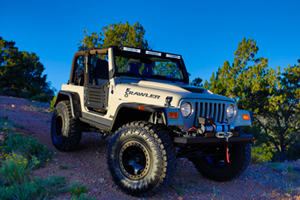
SEMA Show exhibitors are announcing plans for the event taking place November 5–8, in Las Vegas, with new-product debuts and innovations. Many announcements can be found in the SEMA Show Online Media Center.

Below are some of the latest announcements you will find in the Online Media Center:

To see more press releases from SEMA Show exhibitors, visit the SEMA Show Online Media Center. Find all SEMA Show News on the SEMA Show website.

Exhibitors can upload releases to be included in the Online Media Center. For information about PR opportunities for SEMA Show exhibitors, contact Rachel Tatum at rachelt@sema.org, 909-978-6669.

Thu, 07/25/2019 - 13:38

By Rachel Tatum

Online Media Center
Members of the media can find exhibitor press releases in the SEMA Show Online Media Center.

SEMA Show exhibitors are announcing plans for the event taking place November 5–8, in Las Vegas, with new-product debuts and innovations. Many announcements can be found in the SEMA Show Online Media Center.

Below are some of the latest announcements you will find in the Online Media Center:

To see more press releases from SEMA Show exhibitors, visit the SEMA Show Online Media Center. Find all SEMA Show News on the SEMA Show website.

Exhibitors can upload releases to be included in the Online Media Center. For information about PR opportunities for SEMA Show exhibitors, contact Rachel Tatum at rachelt@sema.org, 909-978-6669.

Thu, 07/25/2019 - 13:38

By Rachel Tatum

Online Media Center
Members of the media can find exhibitor press releases in the SEMA Show Online Media Center.

SEMA Show exhibitors are announcing plans for the event taking place November 5–8, in Las Vegas, with new-product debuts and innovations. Many announcements can be found in the SEMA Show Online Media Center.

Below are some of the latest announcements you will find in the Online Media Center:

To see more press releases from SEMA Show exhibitors, visit the SEMA Show Online Media Center. Find all SEMA Show News on the SEMA Show website.

Exhibitors can upload releases to be included in the Online Media Center. For information about PR opportunities for SEMA Show exhibitors, contact Rachel Tatum at rachelt@sema.org, 909-978-6669.