Sun, 11/01/2020 - 10:54

SEMA News—November 2020

LEGISLATIVE AND TECHNICAL AFFAIRS

By Stuart Gosswein

FEDERAL UPDATE

Law & Order
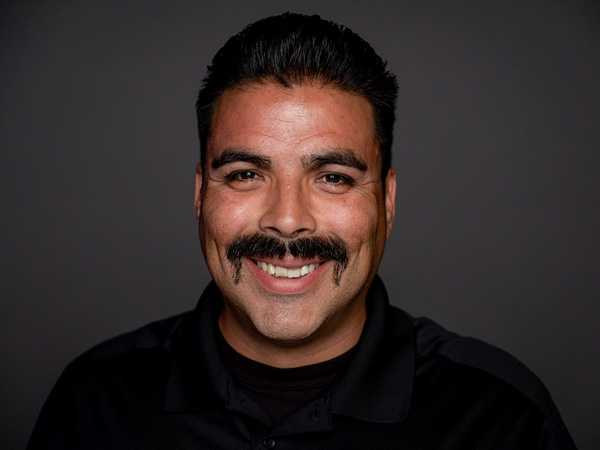
South Dakota—Collector Car Appreciation Day: The South Dakota State Legislature issued a resolution commemorating Thursday, August 27, as Collector Car Appreciation Day in the state. The resolution was introduced by State Automotive Enthusiast Leadership Caucus member Representative Larry Zikmund, pictured here.

COVID-Liability Protection: SEMA and countless other trade associations and companies continue to ask the U.S. Congress to pass temporary and targeted COVID-19 protection from the threat of frivolous liability lawsuits. While some states have enacted such legislation, efforts to enact a national standard have stalled. The liability protections would be granted to businesses operating under applicable public health guidelines for the duration of the pandemic.

Aluminum Tariffs: The Trump Administration reimposed 10% tariffs on most aluminum from Canada in mid-August. Tariffs on both steel and aluminum were first imposed in June 2018 but were removed in May 2019 as part of the United States-Mexico-Canada Agreement negotiations. The steel tariffs have not been reimposed, but the administration cited a surge of Canadian aluminum into the United States as a reason for the tariffs. Canada immediately imposed reciprocal tariffs on products from the United States. The Driving American Jobs Coalition, which represents SEMA and the wide breadth of the auto industry, objected to the tariffs, noting: “Given the threat of tariffs hanging over the auto industry, Driving American Jobs is troubled by the Trump Administration’s decision to reimpose aluminum tariffs against Canada—a close trading partner and military ally. While we support leveling the playing field, the auto industry strongly believes any Administration should only use Section 232’s unfair trade authorities for true national security threats. The Coalition stands with the members of Congress who agree national security tariffs should not be used in trade disputes between allies.”

Law & Order
Virginia—Vehicle Modifications: The Virginia Senate introduced SEMA-supported legislation that includes provisions which would change certain traffic infractions from primary to secondary offenses. A secondary offense is one for which a citation can be issued only if the driver is stopped for another, separate offense. If passed, the following traffic infractions would be changed to secondary offenses: operating a motor vehicle without an exhaust system that prevents excessive or unusual levels of noise, without a light-illuminated license plate, or with certain sun-shading materials and tinting films. The bill currently awaits consideration on the Senate floor.

China Tariffs: The U.S. Trade Representative (USTR) granted only 266 extension requests of the 960 exclusions previously granted for List 3 products imported from China and subject to 25% tariffs. List 3 covers more than 5,000 Harmonized Tariff System Code listings, valued at $200 billion worth of imports, which include most auto parts. Tariff collections began in September 2018 at 10% and were raised to 25% in May 2019. The granted exclusions expired on August 7, 2020, and the new extensions expire on December 31, 2020. There was no indication that the USTR would provide any additional extensions after December 31. In making its decision about exclusions, the USTR considered factors such as whether the product is available from other sources outside of China, efforts taken by the importer to alter its supply chain, whether Chinese suppliers had lowered their prices for products covered by the exclusion, and whether the U.S. importer would suffer severe economic harm.

Commemorating Route 66: The U.S. Senate unanimously passed a bill creating a commission to identify how best to commemorate the 100th anniversary of Route 66, which became the nation’s first all-paved U.S. highway in 1926. The 15-person commission will include appointees from the eight states that the so-called Main Street of America crossed on its journey from Chicago to Santa Monica, through Illinois, Missouri, Kansas, Oklahoma, Texas, New Mexico, Arizona, and California. To commemorate Route 66’s storied history, the commission may recommend the production of various written materials, films and documentaries, educational programs, artistic works, commemorative memorabilia, and celebrations. The U.S. House of Representatives passed a similar bill in 2019 by a bipartisan vote and will now consider the Senate-passed bill.

STATE UPDATE

Nevada—Liability Protection: Nevada Governor Steve Sisolak signed into law SEMA-supported legislation that provides liability protections for businesses, government agencies and nonprofits. Certain medical facilities are excluded from these protections.

Tennessee—Liability Protection: Tennessee Governor Bill Lee signed into law a SEMA-supported bill that limits liability for businesses, schools and nursing homes. Theses protections are retroactive to August 3.

Sun, 11/01/2020 - 10:54

SEMA News—November 2020

LEGISLATIVE AND TECHNICAL AFFAIRS

By Stuart Gosswein

FEDERAL UPDATE

Law & Order
South Dakota—Collector Car Appreciation Day: The South Dakota State Legislature issued a resolution commemorating Thursday, August 27, as Collector Car Appreciation Day in the state. The resolution was introduced by State Automotive Enthusiast Leadership Caucus member Representative Larry Zikmund, pictured here.

COVID-Liability Protection: SEMA and countless other trade associations and companies continue to ask the U.S. Congress to pass temporary and targeted COVID-19 protection from the threat of frivolous liability lawsuits. While some states have enacted such legislation, efforts to enact a national standard have stalled. The liability protections would be granted to businesses operating under applicable public health guidelines for the duration of the pandemic.

Aluminum Tariffs: The Trump Administration reimposed 10% tariffs on most aluminum from Canada in mid-August. Tariffs on both steel and aluminum were first imposed in June 2018 but were removed in May 2019 as part of the United States-Mexico-Canada Agreement negotiations. The steel tariffs have not been reimposed, but the administration cited a surge of Canadian aluminum into the United States as a reason for the tariffs. Canada immediately imposed reciprocal tariffs on products from the United States. The Driving American Jobs Coalition, which represents SEMA and the wide breadth of the auto industry, objected to the tariffs, noting: “Given the threat of tariffs hanging over the auto industry, Driving American Jobs is troubled by the Trump Administration’s decision to reimpose aluminum tariffs against Canada—a close trading partner and military ally. While we support leveling the playing field, the auto industry strongly believes any Administration should only use Section 232’s unfair trade authorities for true national security threats. The Coalition stands with the members of Congress who agree national security tariffs should not be used in trade disputes between allies.”

Law & Order
Virginia—Vehicle Modifications: The Virginia Senate introduced SEMA-supported legislation that includes provisions which would change certain traffic infractions from primary to secondary offenses. A secondary offense is one for which a citation can be issued only if the driver is stopped for another, separate offense. If passed, the following traffic infractions would be changed to secondary offenses: operating a motor vehicle without an exhaust system that prevents excessive or unusual levels of noise, without a light-illuminated license plate, or with certain sun-shading materials and tinting films. The bill currently awaits consideration on the Senate floor.

China Tariffs: The U.S. Trade Representative (USTR) granted only 266 extension requests of the 960 exclusions previously granted for List 3 products imported from China and subject to 25% tariffs. List 3 covers more than 5,000 Harmonized Tariff System Code listings, valued at $200 billion worth of imports, which include most auto parts. Tariff collections began in September 2018 at 10% and were raised to 25% in May 2019. The granted exclusions expired on August 7, 2020, and the new extensions expire on December 31, 2020. There was no indication that the USTR would provide any additional extensions after December 31. In making its decision about exclusions, the USTR considered factors such as whether the product is available from other sources outside of China, efforts taken by the importer to alter its supply chain, whether Chinese suppliers had lowered their prices for products covered by the exclusion, and whether the U.S. importer would suffer severe economic harm.

Commemorating Route 66: The U.S. Senate unanimously passed a bill creating a commission to identify how best to commemorate the 100th anniversary of Route 66, which became the nation’s first all-paved U.S. highway in 1926. The 15-person commission will include appointees from the eight states that the so-called Main Street of America crossed on its journey from Chicago to Santa Monica, through Illinois, Missouri, Kansas, Oklahoma, Texas, New Mexico, Arizona, and California. To commemorate Route 66’s storied history, the commission may recommend the production of various written materials, films and documentaries, educational programs, artistic works, commemorative memorabilia, and celebrations. The U.S. House of Representatives passed a similar bill in 2019 by a bipartisan vote and will now consider the Senate-passed bill.

STATE UPDATE

Nevada—Liability Protection: Nevada Governor Steve Sisolak signed into law SEMA-supported legislation that provides liability protections for businesses, government agencies and nonprofits. Certain medical facilities are excluded from these protections.

Tennessee—Liability Protection: Tennessee Governor Bill Lee signed into law a SEMA-supported bill that limits liability for businesses, schools and nursing homes. Theses protections are retroactive to August 3.

Sun, 11/01/2020 - 10:54

SEMA News—November 2020

LEGISLATIVE AND TECHNICAL AFFAIRS

By Stuart Gosswein

FEDERAL UPDATE

Law & Order
South Dakota—Collector Car Appreciation Day: The South Dakota State Legislature issued a resolution commemorating Thursday, August 27, as Collector Car Appreciation Day in the state. The resolution was introduced by State Automotive Enthusiast Leadership Caucus member Representative Larry Zikmund, pictured here.

COVID-Liability Protection: SEMA and countless other trade associations and companies continue to ask the U.S. Congress to pass temporary and targeted COVID-19 protection from the threat of frivolous liability lawsuits. While some states have enacted such legislation, efforts to enact a national standard have stalled. The liability protections would be granted to businesses operating under applicable public health guidelines for the duration of the pandemic.

Aluminum Tariffs: The Trump Administration reimposed 10% tariffs on most aluminum from Canada in mid-August. Tariffs on both steel and aluminum were first imposed in June 2018 but were removed in May 2019 as part of the United States-Mexico-Canada Agreement negotiations. The steel tariffs have not been reimposed, but the administration cited a surge of Canadian aluminum into the United States as a reason for the tariffs. Canada immediately imposed reciprocal tariffs on products from the United States. The Driving American Jobs Coalition, which represents SEMA and the wide breadth of the auto industry, objected to the tariffs, noting: “Given the threat of tariffs hanging over the auto industry, Driving American Jobs is troubled by the Trump Administration’s decision to reimpose aluminum tariffs against Canada—a close trading partner and military ally. While we support leveling the playing field, the auto industry strongly believes any Administration should only use Section 232’s unfair trade authorities for true national security threats. The Coalition stands with the members of Congress who agree national security tariffs should not be used in trade disputes between allies.”

Law & Order
Virginia—Vehicle Modifications: The Virginia Senate introduced SEMA-supported legislation that includes provisions which would change certain traffic infractions from primary to secondary offenses. A secondary offense is one for which a citation can be issued only if the driver is stopped for another, separate offense. If passed, the following traffic infractions would be changed to secondary offenses: operating a motor vehicle without an exhaust system that prevents excessive or unusual levels of noise, without a light-illuminated license plate, or with certain sun-shading materials and tinting films. The bill currently awaits consideration on the Senate floor.

China Tariffs: The U.S. Trade Representative (USTR) granted only 266 extension requests of the 960 exclusions previously granted for List 3 products imported from China and subject to 25% tariffs. List 3 covers more than 5,000 Harmonized Tariff System Code listings, valued at $200 billion worth of imports, which include most auto parts. Tariff collections began in September 2018 at 10% and were raised to 25% in May 2019. The granted exclusions expired on August 7, 2020, and the new extensions expire on December 31, 2020. There was no indication that the USTR would provide any additional extensions after December 31. In making its decision about exclusions, the USTR considered factors such as whether the product is available from other sources outside of China, efforts taken by the importer to alter its supply chain, whether Chinese suppliers had lowered their prices for products covered by the exclusion, and whether the U.S. importer would suffer severe economic harm.

Commemorating Route 66: The U.S. Senate unanimously passed a bill creating a commission to identify how best to commemorate the 100th anniversary of Route 66, which became the nation’s first all-paved U.S. highway in 1926. The 15-person commission will include appointees from the eight states that the so-called Main Street of America crossed on its journey from Chicago to Santa Monica, through Illinois, Missouri, Kansas, Oklahoma, Texas, New Mexico, Arizona, and California. To commemorate Route 66’s storied history, the commission may recommend the production of various written materials, films and documentaries, educational programs, artistic works, commemorative memorabilia, and celebrations. The U.S. House of Representatives passed a similar bill in 2019 by a bipartisan vote and will now consider the Senate-passed bill.

STATE UPDATE

Nevada—Liability Protection: Nevada Governor Steve Sisolak signed into law SEMA-supported legislation that provides liability protections for businesses, government agencies and nonprofits. Certain medical facilities are excluded from these protections.

Tennessee—Liability Protection: Tennessee Governor Bill Lee signed into law a SEMA-supported bill that limits liability for businesses, schools and nursing homes. Theses protections are retroactive to August 3.

Sun, 11/01/2020 - 10:26

SEMA News—November 2020

INTERNATIONAL

Japan: A Growing Market for Jeep

By Linda Spencer

Jeep
According to Bunyusha Sales Manager Nubuhiro Yanagihara, about 40% of the Let’s Go 4WD readers who own trucks have customized 4x4s that are typically upgraded with tires, wheels, exhaust systems, exterior upgrades and lift kits.

Jeep Wranglers are increasingly popular globally, and that translates into export opportunities for U.S. manufacturers of aftermarket products for the iconic 4x4s. This article (focused on the Jeep market in Japan) is the first in a series to look at the top export markets for popular U.S. models. Japan is an affluent island nation of 126 million and is the world’s third-largest passenger vehicle market. It is also the fourth-largest overseas Wrangler market for FCA.

We talked with Bunyusha media house, based in Tokyo, which publishes a series of vehicle enthusiast titles available both in print and online. Its offerings include Let’s Go 4WD and American Car magazines. Bunyusha Sales Manager Nubuhiro Yanagihara noted that the draw among the readers of his 4x4 title (averaging age 30) are fans of customized 4WDs or SUVs. Some of them already own 4x4s, and others hope to do so one day.

SEMA News was curious about the readership for publications about 4x4s and American vehicles in Japan, and it turns out that there are titles—and readers—for an unimaginable number of niche car magazines. One of the larger bookstores in Japan—Tsutaya—is famous for no less than 75 car titles available to enthusiasts at any one time.

Japan
Let’s Go 4WD covers lifted trucks, with articles ranging from new models and suspension equipment to the latest gatherings and 4WD shows.

There’s something for everyone, from Dekotora (which translates to “decorated truck”—in this case, heavy-duty trucks) to magazines about supercars, customized “kei” cars (mini cars designed to fit Japan’s narrow, crowded streets), drifting, and every make and style, including Bippu (modified Japanese luxury cars) and classic cars. So the presence of an off-road title, such as Let’s Go 4WD that regularly covers the Jeep Wrangler, may be a little less surprising even in a country dominated by Japanese makes (95% of all vehicles sold) and the popularity of the “kei” cars that capture 40% of annual passenger vehicle sales. It becomes just another niche title.

We inquired about Yanagihara’s typical reader, and he told us that about 40% of the readers who own trucks have customized 4x4s that are typically upgraded with tires, wheels, exhaust systems, exterior upgrades and lift kits. Let’s Go 4WD covers lifted trucks, with articles ranging from new models and suspension equipment to the latest gatherings and 4WD shows. The magazine covers models such as the Suzuki Jimny, the Toyota Land Cruiser and Jeep Wranglers. The latter, Yanagihara said, have become much more popular in recent years.

Jeep’s sales totaled 13,360 in 2019, and 5,000 of those were Jeep Wranglers. That’s not a huge number, but it represents steady growth over the past decade to become the fourth-largest global Wrangler market, trailing the United States, Canada and China. Overall Jeep sales in Japan last year grew 16%—in a passenger-vehicle market that was down 1.5% from the previous year.

Japan
Bunyusha media house publishes a series of vehicle enthusiast titles available both in print and online, including Let’s Go American Car magazine.

Olivier Francois, chief marketing officer for FCA, commented recently that one of the company’s key strategic goals is to find a way to resonate with a global audience—and it seems to be working, at least in Japan. Last year, the Wrangler was named one of the top 10 cars in that country by a panel of journalists at the Japan Car of the Year competition. The judging panel pointed out the special emotions evoked by the Wrangler, noting that “traveling in a Wrangler allows you to [step] into a place like a road without a path and see something that you have never seen before. It’s a great romance for many who want to experience extraordinary things. The uniqueness of a car that shapes the dreams that everyone holds in their hearts, big and small, has become even brighter. By riding in a Wrangler, you can broaden your life and enjoy variety, from city rides to mountain roads.”

But do most Japanese actually take their Wranglers off-road?

“Many of them enjoy leisure trips, so they drive a long distance if there’s any chance,” Yanagihara said. “However, they don’t typically take the vehicles off-road, although they’re interested in doing so.”

FCA has been growing its distribution network recently, opening its 80th outlet and planning 10 additional dealerships within the next several years.

SEMA News thanks the U.S. Commercial Service in Japan for assisting with this story. Yu Ohashi, commercial assistant with the U.S. Consulate General in Osaka, covers the automotive sector and is an excellent contact for U.S. companies interested in exploring export opportunities in Japan. He can be reached via email at yu.ohashi@trade.gov. For more information on SEMA’s international resources and programs visit www.sema.org/international or email lindas@sema.org.

Sun, 11/01/2020 - 10:18

SEMA News—November 2020

EVENTS

Compiled by SEMA News Editors

Battle of the Builders

A Survey of This Year’s Aspirants

Inaugurated in 2014, the SEMA Show’s annual Battle of The Builders (BOTB) event, a nationwide competition series that culminates at the Show each November, has become an essential element of the Show-week experience. Even though this year’s Show will not take place as planned, we wanted share some of the entries we’ve received as a way of providing recognition to the many builders and fabricators who spend thousands of shop-hours each year to transform their automotive dreams into reality. Many of these vehicles are among those you would have seen as an attendee of the 2020 SEMA Show.

As of press time, some of these vehicles were only renderings, while some were completed builds and others still were in various stages of progress. Some of our builders are young and still learning, and others are veteran professionals. Regardless, each vehicle showcases its builder’s unique vision, while offering a glimpse into the depth and breadth of automotive customization and the dedication builders have for their craft. We hope to update this review of builds once again as progress is made, but for now, here’s a peek at what builders are doing in the industry.


Jeff Jones, Monroe Center, Illinois, ’53 Ford Customline

With a chop of 5 in., a notched chassis and an Air Ride suspension, this Ford stands 50 in. tall. The canted quad ’59 Ford headlights and ’56 Olds 98 taillights have been incorporated with custom fabrication to the hood, quarters and fenders.

Also included in the build are ’56 Lincoln door buttons and a ’58 Packard rear bumper and front bumper highlighted with a custom clear Lexan tube grille. Inside is a ’53 Mercury dash, a ’56 Lincoln steering wheel, and bucket seats sourced from a ’65 T-Bird.

The interior is custom-dyed with square pleats and one-off buttons and knobs. Outside, the Customline is adorned with a coat of Tamco Paint Metallic Monroe’s Dress Pink, and the roof is a classic white with violet ice pearl accenting the custom 36x48-in. glass sunroof.


Aidan Stenkamp, Klamath Falls, Oregon, ’65 GMC C10

Riding on a fully bagged chassis, this home-garage-built Chevy sports its original bodywork with new floor pans. Under the hood sits a built 350ci small-block with a built TH350 transmission behind it. In back is a fully custom raised bed made of rustic alder, with numerous doors and compartments.

By Show week, the interior was set to be completely refurbished with a new dash, paint, stereo, carpet and seat. The entire truck has been built, in Stenkamp’s words, “with limited knowledge and tools and a whole lot of help and learning.”


Mike Norrbom, Sonoma, California, ’70 Chevrolet Camaro

This orange Chevy rides on a custom Hotchkis suspension to create a custom stance, Norrbom said. Inside, a one-off interior features six-way-adjustable seats, a Vintage Air A/C system and custom gauges. Outside, several body lines were deleted, and the bodywork was treated to custom paint.

Under the hood is a Holley-injected hand-built engine that utilizes a custom-fabricated serpentine system for the drive belt. Built to race, it has won an NHRA national championship as well as several local car show awards.


Christopher Varner, Manahawk, New Jersey, ’51 Ford F1

The list of modifications and custom touches applied to this classic Ford is long indeed, starting with a swapped-in 6.0L Power Stroke diesel with a Mishimoto intercooler, radiator and fans, as well as an upgraded turbo and a custom intercooler piping kit. An Exit74 Fab custom fuel cell rides in the back, and an SCS 12-in.-drop transfer case and Drivelines Plus driveshafts send power to the wheels.

The Varnbilt/Exit74 Fab custom sheetmetal frame sports a custom-triangulated 16-in.-travel four-link suspension equipped with King 3.0 coil-overs, all of which provide articulation for ’06 F-350 Dana 60 front and ’06 F-350 Sterling rear differentials.

The rolling stock is comprised of 30x16 TIS Forged black and gold forged wheels and 42x16.50R30 tires. PSC full hydro steering with a double-ended ram and a Wilwood big-brake kit help with handling and stopping, respectively.


Cole Hardman, Irwin, Pennsylvania, ’17 Ram 4500

This 11/4-ton Cummins is built for work as well as for show. The Cummins engine sports performance parts from ARP, EZ-Lynk, Glacier Diesel, FASS and Flo-Pro. A custom 21/2-in. leveling kit and adjustable track bar help to accommodate 37x13.50/22 Toyo Open Country M/Ts mounted on American Force dually wheels.

An aluminum flatbed hosts a custom gooseneck, and all of the ceramic-coated exterior’s badging, lights and grille were replaced with OE blackout trim.

A Road Armor Stealth front bumper mounts Rigid Midnight lights and Monster Hooks Reaper shackles. The running boards are ICI Magnum issue, and the rear flaps are from Duraflaps.


Eric Susa, Buffalo, Minnesota, ’52 GMC 3100

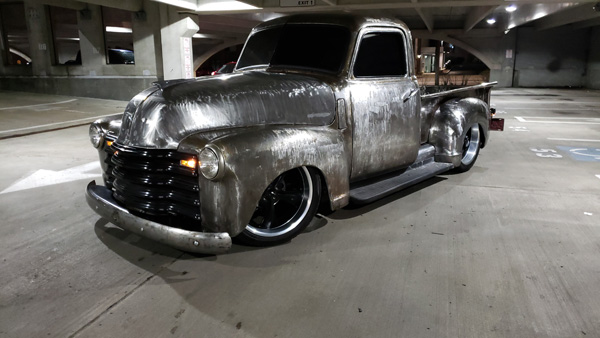
A three-year project undertaken when Susa was 15, the original truck was, he said, “pulled out of a tree line.” An S-10 frame was sourced as a foundation for the build and then chopped 5 in. to match the ’52’s wheelbase.

To achieve the desired ride height, the frame was then given a Z modification—2.5 in. in the front and 3 in. in the rear—and the fenders were widened 21/4 in. to accommodate a four-link/air suspension.

This build was fully self-funded, even if “that meant working three jobs to have the money to buy needed parts and supplies.”


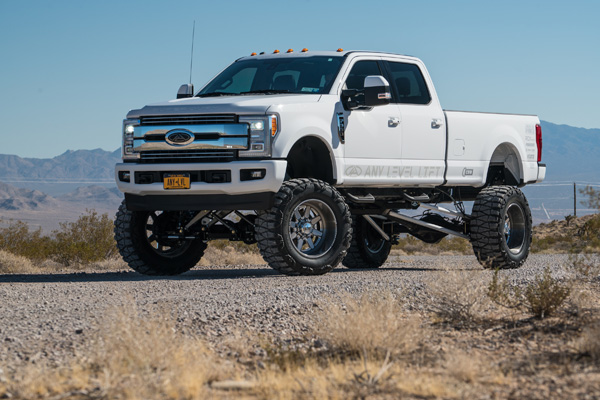
Kevin Cantu, Edinburg, Texas, ’12 Ford F-150

Riding on a 14-in. Bulletproof suspension, this Ford rolls on 28x16 RBP forged rims and 40-in. Dakar MT tires.

The exterior sports a ’17 Raptor widebody front-end swap, custom paint and a leather interior, and double spoiler sunroofs provide eye appeal and creature comforts.


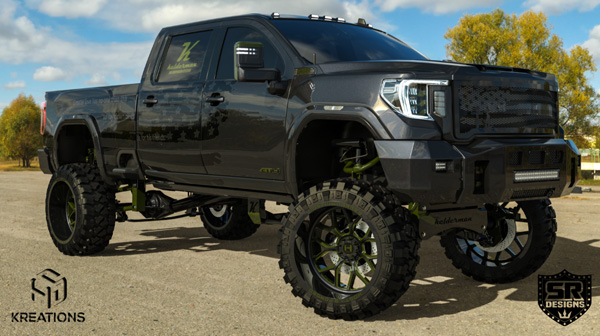
Jonas Neels, Harrison Hot Springs, British Columbia, Canada, ’08 GMC Sierra

This GM fullsize runs a fully custom, builder-fabricated, 24-in.-lift cantilevered suspension with hydraulic ride-height control that locates Ford axles with fabricated trusses.

The IFS frontend has received a straight-axle conversion, and King coil-overs have been added to the rear suspension.

The GMC sits on 40x15.50 Toyo MTs mounted to 24x14 American Force rims. The custom bumpers and grille were builder-fabricated, as were the rear hitch, turbo pipes and horn brackets housing HornBlasters horns.


Jonathan Michael, Dickson, Tennessee, ’94 Jeep Wrangler

According to Michael, who uses this Jeep as his daily driver, “Everything is aftermarket or custom from the frame down.” Swapped-in Ford axles ride on a custom suspension.

The transmission and transfer case have been rebuilt, and aftermarket body armor with custom paint has been applied to the exterior. A new custom fuel system, brake system and hydraulic-assist steering are all incorporated, as are the fabricated front bumper and side armor.

Metalcloak fenders finish the sides. All of that work has been done solely on weekends. “I’m a full-time engineering student,” the builder explained.


Tyler Merriman, Cleveland, Oklahoma, ’52 Ford F1

Begun when Merriman was 14 years old, this daily-driver F1 has never spent a day in a shop, “so I built it outside with what I had,” he said. Under the sheetmetal resides an ’83 S-10 frame that came equipped with power steering, and that allowed four-wheel power disc brakes.

The engine is a homebuilt 350 with a 72mm custom turbo and a TH400 transmission. The truck sits on 295/50 tires wrapped around 15x10 old-school Eagle Alloy Torque Thrust rims.

All paint and logos were applied by the builder, who described his creation as “a never-ending project.”


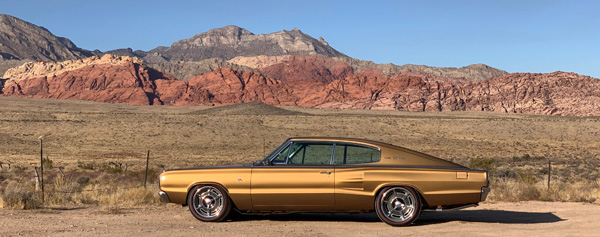
Darin Smith, Huntington Beach, California, ’70 AMC Javelin Trans Am Race Car

“A real race car as well as a badass show car” is how this AMC’s builder, a 2019 BOTB finalist, described his latest SEMA project—an SCCA-legal racer that rides on Goodyear bias-plies wrapped around old-school Superlite rims.

A built 401 V8 powers the Javelin, and a four-speed transmission sends the ponies to a narrowed Dutchman 9-in. axle located by a custom torque-arm rear suspension.

Inside, AutoMeter gauges reside in a custom aluminum dash, and a fiberglass Ram Air hood, fiberglass front and rear bumpers and a custom aluminum air dam help to reduce weight and improve aerodynamics.


Dylon DaSilva, Canton, Michigan, ’90 Nissan 300ZX 2+2

A college build project, this 300ZX 2+2 hosts an impressive array of underhood parts, starting with the swapped-in, twin-turbocharged Toyota Supra 2JZ VVTi engine with a built head, aftermarket cams, aftermarket intake and exhaust manifolds (the rear extended to accommodate the 2+2’s length), a 69mm Borg-Warner turbo, 2,000cc injectors, and a builder-tuned AEM Infinity 6 ECU.

Combined, they send an estimated 700 hp through a CD009 six-speed transmission actuated by a Collins 850-lb.-ft. clutch to the twin-turbo Z32 rear axle and Z33 differential.

The interior remains largely stock, but the exterior features a Stillen GTZ bumper, side skirts and rear bumper, an F40 wing, Volk Racing GT-7 wheels, and a custom Z33 paint scheme.


Aaron Ngo, Sacramento, California, ’95 Mazda Miata M-Edition

This rare ’95 M-Edition (only 3,500 were built) is powered by a Haag Performance-built NA 13b rotary engine running a Haltech Elite 1000 EDU and harness and cooled by a Davies Craig EWP 150 water pump. An EFI Hardware ITB intake and custom headers provide upgrades to the aspiration, and the setup is said to deliver 215 hp to the rear wheels on 91 octane. A Stop Tech big-brake kit helps slow the Workmeisters S1S 15x9 front and 15x10 rear wheels. Rocket Bunny fender flares enhance exterior styling, and an AIM MXP dash logger provides an upgrade from the stock dash display inside.

Photo: Sn_1120_BOTB_Vehicles_11

Bryan Escamilla, Live Oak, Texas, ’67 Ford Mustang

This Mustang, which is being built as a track/street car, is powered by a 302 small-block with a Lunati cam, roller rockers, SVO aluminum heads, stainless-steel headers, a high-rise intake, an aluminum pulley set and other bolt-ons. An AOD transmission with a B&M shifter backs the engine, and a disc-brake-converted 8.8 Explorer rearend turns Weld Racing wheels. A hydro-boost braking system stops it, an Aeromotive fuel system feeds it, and five-point harnesses protect its occupants.


Lonnie Bridges, Plant City, Florida, ’70 Ford Mustang

“Helleanor” is, Bridges said, “a ’70s Trans Am-inspired factory race car—if Ford had produced one.”

The car features extensive metal body modifications, including a ’68 Shelby-inspired rear wing and taillight panel with Aventador-style splitters; widened rear quarter panels; hand-formed steel fender flares at all four corners; a one-off hood with a custom power dome and heat extractors; and an oversized air intake to feed a 852hp Jon Kaase Racing Lamborghini-orange Boss Nine engine with Borla stacked injection.

The Art Morrison Max G chassis sports Boyd wheels, and custom paint and interior work are coming soon.


Brandon Hayward, Kelowna, British Columbia, Canada, ’28 Ford Model A

This Ford features a builder-fabricated and TIG-welded one-off 1/4-in.-wall aluminum Pro-/Street-style frame, which incorporates a fabricated steel bolt-in-style independent front suspension and crossmember.

In the center section, two side-by-side sections of aluminum tubing allow the running of 21/2-in. exhaust pipes clear to the back while maintaining a 5-in. ride height.

The Model A sports a built Chevy 454 bored .030 over, and it’s matched to a rebuilt Borg Warner T5 transmission. Other quality components utilized in the build come courtesy of Wilwood, Weld Racing and Mickey Thompson.


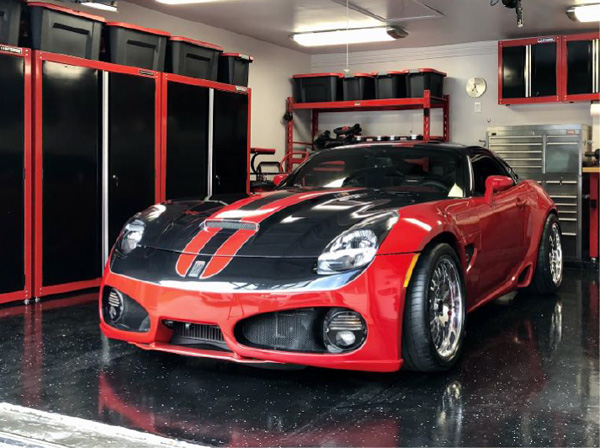
Kaylee Crayton, Parker, Arizona, ’13 Scion FR-S

Modified by its 19-year-old builder for drag racing, this Scion has logged five bracket wins and the title of Import Face Off West Coast Point Bracket Champion in addition to making a recent appearance on “All Girls Garage.”

The engine has been rebuilt to produce an estimated 600 hp, and a supercharger is said to be in the works. However, its builder’s favorite modification to date has been its candy purple FA20 paint.


Graham Adams, Monroe, Georgia, ’85 AM General Hummer

A Hummer rat rod? Seeing is believing. “This Hummer is a one-of-a-kind build,” Adams noted. “Defiant” will be powered by a high-performance diesel that rides in an open engine bay and on a custom-built frame and Air Ride suspension.

Plenty of new tech will be found on this build, including keyless entry and pushbutton start, digital gauges and an upgraded sound system.

Bedlining materials for both the exterior and interior are courtesy of Bullet Liner.


Garret Kitchen, Columbus, Ohio, ’33 Ford Speedstar

Penned by Bobby Alloway of Alloway’s Hot Rod Shop, this Speedstar coupe is, in its builder’s words, “a legendary and unique design.” The car was redesigned to sport the look of a World War II fighter plane.

The powerplant is an LS 376 producing 525 hp and featuring a warplane side-cutout exhaust. Plans for the car include British Racing Green paint.

Kitchen’s last SEMA Show build, a ’68 Hemi-0S Barracuda, was a BOTB Top 10 finalist in 2019, so a quality build should be expected upon the completion of the ’33.


Mike Norrbom, Sonoma, California, ’64 Pontiac Tempest

Built to race as well as to show, this Pontiac was in rough shape when Norrbom undertook the project, so he cut out the floor, the firewall, the frame and the rear quarter-panels and replaced them with one-off fabrications.

A fully fabricated suspension was installed, as were a fiberglass front clip mount, engine mounts, headers, transmission mounts, a steering column and linkage, a shifter, a wiring harness, brake components, a fuel system and a cooling system.

Because the car was built for racing, every component installed had to be planned and NHRA-approved. “Very few parts were just bolted on,” Norrbom noted. In a similar vein, all components were fabricated and installed to achieve proper weight distribution.


Mitchell Stapleton, Butler, Pennsylvania, ’13 Cadillac Escalade

A unique 4x4 drag racer, the “LSXcalade” was the builder’s daily driver in college for three years before he began customizing it. The stock GM 6.2L was replaced by a 2,000hp twin-turbo Dart 427 block backed by an Extreme Automatics-prepped 4L80 transmission sporting a stronger billet gear set. The engine is assisted by CP Carrillo internals and a set of Woolf Aircraft headers, and the setup is said to turn in 9.5-sec. quarter-mile times with the Hoosier racing slicks inflated to 20 psi.

A QA1 suspension locates the ride, Weld Racing wheels provide pizzazz and performance, and an 8.50 certified rollcage sports two main hoops designed around the Cadillac’s third-row seating. All in all, it’s an impressive effort from a self-taught wrench. “I didn’t go to tech school or come from a car family,” Stapleton noted. “I just had to learn as I went.”


Ryan Basseri, Huntington Beach, California, ’07 Honda S2000

Last year’s “SEMA Electrified” exhibit gave Showgoers a glimpse into the future of propulsion, and this S2000 follows up with a large-drive Tesla motor under the hood, along with a 36kW battery pack.

The Honda rides on Ohlins suspension, and the Tesla power drives a set of Toyo tires and Vikhari wheels equipped with Stoptech brakes.

Other manufacturers providing parts and support for the build include LIQUI MOLY, AEM, Driveshaft Shop, Sparco, CSF Radiators, Casale Designs and Turn 14 Distribution.


Ron Hinshaw, East Bethel, Minnesota, ’57 Chevrolet Pickup

Built to perform as an auto-crosser and a road-rally truck, this ’57 sports a custom four-wheel independent suspension along with a custom chassis.

ProCharger and Holley components provide the forced-induction LS with fuel, a hand-fabricated 3-in. stainless exhaust system exhales spent gases, and a Baer big-brake kit provides stoppage.

Vintage Air A/C keeps the cabin climate-controlled, and custom exterior work abounds, including smoothed and tucked bumpers, deleted rain gutters and wing windows, a custom front splitter, a custom bed floor, and a one-off paint scheme.


Arthur Ross, Carbondale, Illinois, ’94 Chevrolet Camaro

This Camaro has appeared on five Hot Rod Power Tours and sports a built 383 LT1 stroker with a custom GM P59 PCM, a custom fuel system and a hand-built exhaust.

A six-speed transmission powers a Ford 8.8 rear end equipped with 31-spline axles and 4.10 gears. Viking dual adjustable shocks and lowering springs are incorporated into a tubular adjustable suspension.

Outside, the front clip has been swapped out for a ’02 Camaro clip, and other components—from the bumpers and hood to the intake and brakes—are painted the original factory blue. The striping and vinyl work are custom one-offs.


Austin Phipps, Hermiston, Oregon, ’66 Chevrolet Nova

Homebuilt (“Not at a shop,” its builder said), this ’66 Nova runs a supercharged LS3 and a six-speed manual transmission. Also homebuilt were the custom front inner fenders and a matching core support.

Among the many mods on this ride are a firewall taken from an early Chevy pickup, a molded-in ’59 Impala dash, and a narrowed and raised rear suspension.

An AccuAir E-Level suspension system helps locate the custom Rushforth Prowler wheels. Bluetooth capabilities, including air suspension and A/C controls, will be plumbed into the vehicle’s electronics.


Jesmar Mangual, Hillside, New Jersey, ’95 Acura RS

This bright-red Acura is built to show and go. It’s powered by a K20A2 engine equipped with RDX 410cc injectors, a ported RCA 70mm intake manifold, a 70mm K-Tuned throttle body and PLM headers, which provide power to the Z3 transmission.

The car rides on Tune K2 coil-overs mounted to a Function 7 subframe and control arms and a host of Hardrace components, including ball joints, a traction bar, front lower control arms, a rear camber kit, a rear toe kit and bushings.

Porsche Boxster 986 front brakes are connected to Goodridge stainless brake lines and a K-Tuned clutch master cylinder. Inside, a Buddy Club driver seat uses an NRG six-point harness, and the ride rolls on bronze TE37 wheels.


Armen Sadegi, Sun Valley, California, ’69 Chevrolet Camaro

This ’69 hosts a broad array of one-off parts, including the grille, mirrors, hood, emblems, floorpan, body panels and fenders, with extensive use of carbon fiber and CNC machining throughout.

The car is powered by a Mercury Racing engine equipped with nitrous, and it powers a six-speed paddle-shift transmission located between the rails of a Roadster Shop IRS chassis fitted with custom ceramic brakes.

Sadegi estimates some 3,000 hours have already gone into the project.


John Wargo, Flanagan, Illinois, ’66 Chevrolet Nova

This ’66 Nova Pro Touring will sport a host of custom touches, including a channeled body with a narrowed rear end and custom air suspension, one-off carbon-fiber ground effects, a molded carbon-fiber rear spoiler, shaved Tesla door handles and drip rails, a flip-forward hood and a custom Procharger on an LSX engine with a stacked, injected blow-off valve system. (“Never been done!” its builder exclaimed.)

One-off custom wheels will be incorporated into the build, LED custom lighting will be molded into the body, and custom one-off grilles, carbon-fiber mirrors, and a dual-tone side-exit exhaust will all be included in the mix.

Custom-faded paint with detailed graphics and striping will finish the build, and all of the work will be done in-house at The Custom Shop in Flanagan, Illinois.


James Thomas, Chico, California, ’49 Ford F1

The builder describes this truck as a learning platform that taught him TIG welding, 3-D modeling and metal forming—“Basically, how to fabricate.”

A fair amount of mechanical skill was surely needed to build the 600hp 2JZ Supra turbo engine and mate it to the T56 transmission with a custom bellhousing.

That system sits between the framerails of the 70% custom chassis. The suspension is a 3-D-modeled four-wheel independent setup utilizing builder-modified Mercedes struts, and the interior makes use of CAN-bus electronics with a tablet dash and an ECU master controller.


Joe Wilder, Woodstock, Georgia, ’69 Chevrolet Camaro

Though it sports original SS 396 badging, this ’69 Camaro is powered by a built 502 big-block with a Comp Cams cam, FAST 2.0 fuel injection, a Concept 1 pulley system, and a TIG-welded stainless Borla exhaust.

All underhood wiring and hoses were rerouted through the frame or behind the fenders for a clean engine bay. Complete Hotchkis front and rear sport suspension systems have been installed, and Wilwood six-piston front and four-piston rear brakes equipped with stainless brake lines bring the Chevy to a halt.

Additional upgrades come courtesy of components from Ringbrothers, Ron Davis, Eddie Motorsports, Hydra-Tech, Vintage Air and Detroit Speed.


Len Boschman, MacGregor, Manitoba, Canada, ’61 Ford Econoline

One of two Canadian entries in this year’s International Ratical Rod Build Off/Drive Off, this ’61 Econoline (once owned by NASA and stationed in the Northwest Territories) is being transformed into a “Mystery Machine.”

The van will sport a custom frame with a swing-arm-style rear suspension and will host a mid-engine 6.0L Power Stroke diesel.

An 5R110 automatic transmission and narrowed Dana 80 rear differential will turn dual 50-series Toyo Tires. Performance parts from BD Diesel and refinishing products from Axalta and 3M will be incorporated into the build as well.


Sean Puz, Davenport, Florida, ’63 Jeep Replica

According to its creator, this Jeep will be completely hand-built from the ground up with a cab-over design fabricated from mirror-polished aluminum and a chassis and suspension made of two-tone polished stainless steel.

Power will be courtesy of an LS3 crate engine mounted aft of the cab to a 700-R4 transmission. A Frankland Racing Supply quick-change rearend will complete the drivetrain. The Jeep will also sport a custom hydraulic suspension to raise and lower the truck 8 in.

The Jeep will be an entry in the Ratical Rod Build Off/Drive Off competition, which commences in Lincoln, Nebraska.


Marcus Gibber, Vacaville, California, ’70 Chevrolet C10

This 3-in.-chopped ’70 C10 riding on a ’91 Nissan chassis runs a KA24E SOHC engine sourced from a Nissan Hardbody. The truck is bagged with Air Ride suspension incorporated with a custom four-link and a set of 20x12 Dropstar wheels.

The front bumper is a modified ’88/’98 Chevy unit that’s molded into the front fenders, and the side tilt hood with shaved cowl helps it stands out from the crowd.

In back, the sheetmetal houses a hand-bent hardline setup for the suspension. Inside, custom upholstery abounds, and a custom speaker box adorns the center console.


Reg Garnett, Huntsville, Ontario, Canada, ’36 Buick Century Coupe

Riding on a custom-fabricated frame with a dropout mid-engine powertrain assembly, this ’36 is powered by an LS3 backed by an upgraded Porsche six-speed transmission. The body has been treated to a 11/2-in. angle chop with a sectioned and angled grille, raised side-window openings to match the front glass, and widened rear fenders.

The front fenders from a ’36 Ford were incorporated into the build, and the running boards, hood and hood sides, floors and recessed lighting at all four corners are all hand-made items.

Other parts making their way into the build include components from Lokar, Stewart Warner, Amsoil and Racing Power Co.


Zaak Delbridge, Fontana, California, ’62 Chevrolet C10

In the words of its builder, this ride sports a “definitive old-school hot-rodder aesthetic blended with modern race-car and rat-rod qualities.” The longbed stepside’s chassis was shortened while the wheelbase was kept stock.

The rear fenders and hood were removed, the latter most likely to accommodate the 327 Corvette engine that’s been transformed into a 383 stroker. Dual 600-cfm Holleys sit on a tunnel ram, with a 69mm GT45 turbo providing further oomph.

A built TH350 transmission with a high-stall converter and a full manual valve body backs the engine. The custom suspension and steering were sourced from Custom Performance Products, and the truck features other custom touches such as the body paneling and aero kit, racing seats, fuel cell and gauges. A rollcage and rear half cage are being fabricated.


Shawn Dunn, Shawnee, Oklahoma, ’73 Volkswagen Beetle

This VW rides on a custom suspension with dual airbags front and rear. The narrowed front beam and narrowed rear suspension arms and axles enable proper fitment of custom-made wheels riding under ’66 fenders.

Four-wheel disc brakes bring the Bug to a stop, and a turbocharged EFI engine provides motive power.

The Beetle sports shaved drip rails and door hinges, a ’66 hood, deck lid and valances, a sliding ragtop with custom matching materials, and LED lighting.


Shannon Waltz, Colorado Springs, Colorado, ’77 Jeep Wagoneer

This custom-built Wagoneer is powered by a ’08 Hemi backed by an automatic transmission.

The custom chassis and suspension have been designed to suggest the proportions of a modern-day Grand Cherokee SRT8 package. The suspension has been chopped, and the vehicle was shortened three different ways.

A custom interior and custom paint are also incorporated into the build.


Andrew Barra, Fishkill, New York, ’69 Chevrolet Corvette

This sharp-looking ‘Vette is powered by a 410hp 454 big-block backed by a Tremec five-speed transmission. The suspension utilizes Vette Base Products rear shock towers and high-performance front and rear camber/toe adjustment arms.

Coil springs and Bilstein shocks damp the ride. Coys C-5 chrome 17-in. wheels and Diamondback Red Line Flame high-performance tires make up the rolling stock, and a Steeroids power rack-and-pinion setup points it in the right direction.

Inside is a custom stereo, and Dapper Lighting 575 30W LED halogen headlights provide illumination outside.


Cesar Leija, Pasadena, Texas, ’66 Ford Mustang

“Legion” is a ’66 Mustang that’s receiving a complete engine swap: a twin-turbocharged 3.5L EcoBoost V6 sourced from a Ford F-150. In order to fit the relatively big six-cylinder into the engine bay, the Mustang’s stock steering system was removed and replaced by a Mustang II rack-and-pinion setup.

The pony will ride on an air suspension—“giving it a bit of eye candy,” in its 16-year-old builder’s words—along with tucked rims and tires. It’ll be running some beefy tires that will necessitate a mini tub job.

Leija looks to incorporate modern tech into the ’60s musclecar, so a full interior swap that uses the dash, seats and center console from a ’15 Mustang is in the works.


Brandon Henness, Westport, Washington, ’72 Datsun 240Z

According to the builder, “every part of my car has been restored and/or modified.” The old inline-six engine was swapped out in favor of an LS1 and a T-56 transmission, and a rear disc-brake conversion was added.

Suspension comes courtesy of coil-overs and big swaybars, and drivetrain mods include chromoly axles, a CV shaft conversion, and a custom five-lug bolt pattern to accommodate custom 18-in. CCW wheels.

Carbon exterior components include the fender flares, bumpers and air dam, and they’ll all be treated to a coat of charcoal gray paint.


Bryan Escamilla, Live Oak, Texas, ’67 Ford Mustang

scamilla describes this project as “a simple retrofit of modern upgrades and mods packed into a classic body of the late ‘60s.”

It’s powered by a 302 small-block with aftermarket accessories and is backed by a T5 five-speed manual and a Ford 9-in. rearend. Inside the engine bay, cut and shaped aviation sheetmetal was hydrodipped to create a unique custom look.

The Mustang retains its classic leather interior design with modern accents such as carbon-fiber gauge pods and a retro sound system. The suspension utilizes lowering springs and traction bars, and a disc-brake conversion has been included.


Bradley Belcher, Jonesboro, Indiana, ’65 Ford Mustang

“Maxine” is a ’65 Fastback GT that, its builder said, “pays tribute to the original design.” The car runs a 289 V8 bored .030 over with an upgraded camshaft, a medium-rise intake, a Holley carburetor and ceramic-coated shorty headers.

Inside is a full custom UltraLeather interior with embroidered ponies incorporated into the scheme. The dash has been painted red and sports a chrome ididit steering column and a wood steering wheel.

The car sits on 17-in. front and 18-in. rear Foose rims.

Other features include a Flowmaster Delta Flow 40-series exhaust, coil-over front suspension, and various metal work to improve overall fit and finish.


Connor Chanter, Grayslake, Illinois, ’70 Mercury Cougar XR-7

This car belonged to Connor Chanter’s father, and the son started restoring it at age 11 by building a 408 stroker and rebuilding the transmission. The following year, a Wilwood big-brake kit, Eibach racing springs and a Hellwig sway bar were installed, and the 9-in. axle was rebuilt and equipped with a Positraction limited-slip.

Within the last year, sections of the floor pans were replaced, a Heidts rollcage was welded in, and a Nitrous Express wet shot NO2 system was plumbed.

Also finding their way into the build were Sparco seats, a wood custom dash, new Pro Comp gauges, and a booming sound system. “I’m always finding new ways to keep adding to it,” Chanter said.


Eli DeWitt, Cedar Rapids, Iowa, ’67 Pontiac LeMans

Purchased from its original owner in 2010 when Eli DeWitt was 14 years old, this LeMans underwent an eight-year frame-off restoration, culminating in 2018 when DeWitt was awarded a degree in automotive restoration and collision from Iowa Central Community College.

After the car was painted, 100 hours of wet sanding and buffing were applied for its mirror-like finish. Under the hood, the stock OHC six-cylinder was swapped out in favor of a Pontiac 408 backed by a manual four-speed, and the suspension was lowered 2 inches in front and 11/4 in. in the rear.

The interior is all original except for the headliner and carpet, and every piece of chrome and stainless trim was painted to match the U.S. Mag wheels.


Matteo Medoro, Edmonton, Alberta, Canada, ’47 Dodge 4x4

Built with a ’47 Dodge cab atop a ’91 4x4 12V Cummins chassis, this truck features a custom deck built from scratch. The entire drivetrain was pulled, rebuilt, repainted and reinstalled along with a custom radiator and intercooler brackets, a 5-in. exhaust and copper cooling lines.

It is now said to transfer some 580 hp and 1,000 lb.-ft. of torque to Toyo 38x15.5 tires and 20-in. rims riding on a Skyjacker suspension with custom air bags.

Inside rests a custom leather interior with custom logos, shifters, ’47 pedals and custom body step mounts. The installation took all of seven months and was 98% completed by its 19-year-old builder.


Kiesha Foulds, Trevorton, Pennsylvania, ’73 Ford Bronco

This hot-pink pearl Bronco is a full frame-off restomod. The original grille and radiator support are the only stock parts remaining, but the original sheetmetal was repurposed into the resto’s floor panels.

The electrical and fuel systems, brakes and glass are all new throughout. The original three-speed shifter is still on the column, and a 31/2-in. suspension lift fits 33-in. TSL Super Swampers.

The rear fenders were custom fabricated using flares off the front fenders, and tons of body work was performed by its builder in what turned out to be a six-year project.


Reagan Brandon, El Cajon, California, ’64 Ford Falcon

This home-garage-built Falcon Sprint rides on coil-overs at all four corners. It sits on custom three-piece RSV 18-in. forged wheels, and four-wheel Wilwood disc brakes stop it safely.

Under the hood is a homebuilt, self-machined 302 sporting AFR aluminum heads, a high-rise intake and custom one-off headers.

The factory trim was restored, “and resides right where Ford designed it to be,” Brandon noted. A hand-built rollcage is integrated inside the passenger compartment, and all electrical wiring is new and builder-installed.


Felipe Chavarria, Grand Junction, Colorado, ’53 Chevrolet 3100

This ’53 Chevy five-window truck was a full frame-off restoration. It’s powered by an LS3 engine and a 6L90E automatic transmission.

The truck rides on a Mustang II IFS and a four-link rear suspension with a Camaro rear axle. Four-wheel disc brakes have been incorporated into the build, along with Coys aluminum C-33 wheels.

Lexus Desert Sage Metallic PPG paint adorns the exterior, a custom oak bed rides in the back, and interior features include Dolphin gauges, custom A/C and power windows.


Maninder Vahra, Surrey, British Columbia, Canada, ’70 Plymouth Barracuda

This Plymouth was, Vahra said, “a full rotisserie restoration,” starting with the Air Ride suspension with tubular A-arms and a four-link rear.

The 465hp Magnum 408 stroker is paired with a TF 727 automatic, and spent gases are sent through a custom 3-in. stainless exhaust with electric exhaust cutouts.

Daytona Black-series rims provide performance and style, and the ride’s destroyer-gray paint, accented with a black satin wrap on the hood, spoiler and tail, is meant as an homage to the newer Chargers and Challengers.

Inside, Kenwood and Rockford-Fosgate components deliver audio upgrades.


Tierney Redford, Roseville, Michigan, ’79 Pontiac Trans Am

This restomodded Trans Am with unique deep-burgundy custom paint and a matte finish was purchased by Redford two years ago. A daily driver at first, it soon turned into “an obsession to restore the car to all its past glory, as fast as possible!”

To that end, the “Fire Chicken” has undergone a complete restoration of its interior, exterior and drivetrain.

Once powered by an Olds 403 (which Redford “loved dearly but didn’t provide enough horsepower, sadly”), the Pontiac has been upgraded to an Olds 455 featuring FAST fuel injection, a March serpentine conversion kit, a new Edelbrock intake and cam, and customized Hedman headers.


Brandon Melvin, West Orange, New Jersey, ’18 Ram 1500

“Color matching” are the magic words for this sharp-looking Ram. Among the components that have been custom matched are the Alpharex USA headlights, the Spyder LED taillights with flush-mounted Rigid Ignite pods, the Recon third brake light, the front and rear bumpers, the mesh grille, the mirrors, and even the rear axle.

A Wet Sounds sound bar resides in the bumper, and six Rigid Radiance LED pods and 24 pure-white rock lights are planned for the build. RBP power steps enable ingress and egress, and a gold powdercoated hitch receiver and gold vinyl wrap further dress up the exterior.


Andre Hunter, Las Vegas, Nevada, ’00 Honda Accord Euro R

A rare example of a Euro-spec Accord in the United States, this unique Honda was imported from Japan in 2017 and has received plenty of modifications stateside.

Among the upgrades are an Accuair E Level suspension system with D2 air struts, a full custom trunk setup with hard lines for the air suspension, Lock Smice 18-in. mesh aluminum wheels, and a custom sound system featuring an Alpine head unit, speakers and a new sub/amp combo.

The freshly shaved and painted engine bay sports a white/blue pearl color scheme.

A custom aluminum radiator/intake and retrofitted A2000 brake master cylinder can be found in the engine bay.


Cole Marten, Penticton, British Columbia, Canada, ’91 Nissan Skyline R32 GTR

Claimed by Marten to be the world’s first custom AWD-converted with a 2JZ-GTE Supra engine swap, this build incorporates a host of custom underhood work, including JE pistons and shotpeened rods for the engine, a custom front diff, a handmade oil pan, a custom trans adapter and axles, custom motor mounts, and a raised transmission tunnel.

Left-hand steering is also custom, as these cars were manufactured with only right-hand drive. The dual exhaust setup required removing the stock fuel tank, cutting out the spare tire space and running a fuel cell. Outside, a custom rear bumper and handmade lower splitters are among the many mods.


Jennifer D’Erasmo, Bronx, New York, ’65 Buick Riviera

This eye-catching Buick features a custom three-stage candy paint job with custom graphics.

Incorporated into the build are custom bumpers and a Kicker sound system.

Additional plans in the works include new wheels and numerous engine-bay modifications to accommodate Hilborn-style stack fuel injection.


James Schuck, Downey, California, ’13 Chevrolet Camaro SS

A six-year labor of love, this ’13 Camaro SS sports a Vortech V7 supercharger atop the 6.2 V8, which was equipped with a Texas Speed cam and an auxiliary fuel system with larger injectors and fuel pump. Carbon-fiber body panels are found on the hood, trunk, fenders, lips, diffuser and side skirts.

The wheels are HRE S101 three-piece units, and lurking inside them are R1 Concepts eight-piston front and six-piston rear bakes. The suspension is comprised of an entire Detroit Speed engineering kit, including toe links, tie rods, engine mounts, control arms, sway bars, end links and traction arms.

The interior features a custom rollcage with Sparco Ergo II seats. “I primarily track this car and take lots of pride in it,” Schuck said.


Joseph Guglielmo, Brookfield, Connecticut, ’06 Audi A4

This A4 started as a stock 2.0T Audi A4. It has since been repainted and equipped with DTM-option S4 bumpers, widened quarter-panel arches and numerous carbon-fiber accents.

Under the hood is a 2.7TT sourced from a B5 Audi S4 with upgraded turbos, injectors, plumbing and intercoolers.

The interior was reupholstered by NW Crafted Upholstery in Seattle. “Nearly every aspect of this car has been modified,” Guglielmo said.


Juan David Padilla, Goshen, Indiana, ’05 Subaru WRX

This WRX sports an impressive number of exterior modifications, including a custom mix of sunset candy gold paint and a custom hood scoop to accommodate the rotated Garrett GTX turbocharger in a .63A/R stainless housing that rests in the shaved and tucked engine bay.

Numerous Chase Bays components are incorporated, including the clutch line, the power steering and the ABS delete. Under the hood, the custom intercooler pipe was fabricated from bronze titanium.

Both the interior and the exterior are treated with lots of carbon-fiber parts. A one-off molded duckbill adorns the trunk, and a modified rollcage and sunroof are said to be in the works.


Tim Tannhauser, Norridge, Illinois, ’04 Subaru Forester

This custom-painted ’04 showcases Nardo gray paint with white crystal and teal pearl accents. The custom carbon-fiber wing, mid-wing and mirror covers enhance exterior appeal and improve aerodynamics.

Beneath the sheetmetal resides a full ’06 STI drivetrain, and the Forester rides on an Air Lift suspension with a custom trunk hard-line setup.

Workmeister S1 3P 18x11 rims with +20 offsets are shod with Toyo R888 315/30R18 tires. Inside, Recaro seats provide a performance upgrade.


Sabra Johnson, Spring, Texas, ’72 Chevrolet Chevelle

The list of performance parts awaiting this Chevelle are impressive and include an LS9 powertrain package with a Griffin BeCool radiator, RideTech front and rear air suspension with custom ’20 Fortiago rims, a Speedtech Performance chassis reinforcement kit, and a Moser Engineering Fab 9-in. rearend.

PPG DBC paint and DCU2021 urethane clear provide a sleek black mirror finish, and a custom Pro-Touring interior will feature custom front and rear bucket seats and a custom middle console.

Vintage Air A/C will keep the occupants cozy.

Sun, 11/01/2020 - 10:18

SEMA News—November 2020

EVENTS

Compiled by SEMA News Editors

Battle of the Builders

A Survey of This Year’s Aspirants

Inaugurated in 2014, the SEMA Show’s annual Battle of The Builders (BOTB) event, a nationwide competition series that culminates at the Show each November, has become an essential element of the Show-week experience. Even though this year’s Show will not take place as planned, we wanted share some of the entries we’ve received as a way of providing recognition to the many builders and fabricators who spend thousands of shop-hours each year to transform their automotive dreams into reality. Many of these vehicles are among those you would have seen as an attendee of the 2020 SEMA Show.

As of press time, some of these vehicles were only renderings, while some were completed builds and others still were in various stages of progress. Some of our builders are young and still learning, and others are veteran professionals. Regardless, each vehicle showcases its builder’s unique vision, while offering a glimpse into the depth and breadth of automotive customization and the dedication builders have for their craft. We hope to update this review of builds once again as progress is made, but for now, here’s a peek at what builders are doing in the industry.


Jeff Jones, Monroe Center, Illinois, ’53 Ford Customline

With a chop of 5 in., a notched chassis and an Air Ride suspension, this Ford stands 50 in. tall. The canted quad ’59 Ford headlights and ’56 Olds 98 taillights have been incorporated with custom fabrication to the hood, quarters and fenders.

Also included in the build are ’56 Lincoln door buttons and a ’58 Packard rear bumper and front bumper highlighted with a custom clear Lexan tube grille. Inside is a ’53 Mercury dash, a ’56 Lincoln steering wheel, and bucket seats sourced from a ’65 T-Bird.

The interior is custom-dyed with square pleats and one-off buttons and knobs. Outside, the Customline is adorned with a coat of Tamco Paint Metallic Monroe’s Dress Pink, and the roof is a classic white with violet ice pearl accenting the custom 36x48-in. glass sunroof.


Aidan Stenkamp, Klamath Falls, Oregon, ’65 GMC C10

Riding on a fully bagged chassis, this home-garage-built Chevy sports its original bodywork with new floor pans. Under the hood sits a built 350ci small-block with a built TH350 transmission behind it. In back is a fully custom raised bed made of rustic alder, with numerous doors and compartments.

By Show week, the interior was set to be completely refurbished with a new dash, paint, stereo, carpet and seat. The entire truck has been built, in Stenkamp’s words, “with limited knowledge and tools and a whole lot of help and learning.”


Mike Norrbom, Sonoma, California, ’70 Chevrolet Camaro

This orange Chevy rides on a custom Hotchkis suspension to create a custom stance, Norrbom said. Inside, a one-off interior features six-way-adjustable seats, a Vintage Air A/C system and custom gauges. Outside, several body lines were deleted, and the bodywork was treated to custom paint.

Under the hood is a Holley-injected hand-built engine that utilizes a custom-fabricated serpentine system for the drive belt. Built to race, it has won an NHRA national championship as well as several local car show awards.


Christopher Varner, Manahawk, New Jersey, ’51 Ford F1

The list of modifications and custom touches applied to this classic Ford is long indeed, starting with a swapped-in 6.0L Power Stroke diesel with a Mishimoto intercooler, radiator and fans, as well as an upgraded turbo and a custom intercooler piping kit. An Exit74 Fab custom fuel cell rides in the back, and an SCS 12-in.-drop transfer case and Drivelines Plus driveshafts send power to the wheels.

The Varnbilt/Exit74 Fab custom sheetmetal frame sports a custom-triangulated 16-in.-travel four-link suspension equipped with King 3.0 coil-overs, all of which provide articulation for ’06 F-350 Dana 60 front and ’06 F-350 Sterling rear differentials.

The rolling stock is comprised of 30x16 TIS Forged black and gold forged wheels and 42x16.50R30 tires. PSC full hydro steering with a double-ended ram and a Wilwood big-brake kit help with handling and stopping, respectively.


Cole Hardman, Irwin, Pennsylvania, ’17 Ram 4500

This 11/4-ton Cummins is built for work as well as for show. The Cummins engine sports performance parts from ARP, EZ-Lynk, Glacier Diesel, FASS and Flo-Pro. A custom 21/2-in. leveling kit and adjustable track bar help to accommodate 37x13.50/22 Toyo Open Country M/Ts mounted on American Force dually wheels.

An aluminum flatbed hosts a custom gooseneck, and all of the ceramic-coated exterior’s badging, lights and grille were replaced with OE blackout trim.

A Road Armor Stealth front bumper mounts Rigid Midnight lights and Monster Hooks Reaper shackles. The running boards are ICI Magnum issue, and the rear flaps are from Duraflaps.


Eric Susa, Buffalo, Minnesota, ’52 GMC 3100

A three-year project undertaken when Susa was 15, the original truck was, he said, “pulled out of a tree line.” An S-10 frame was sourced as a foundation for the build and then chopped 5 in. to match the ’52’s wheelbase.

To achieve the desired ride height, the frame was then given a Z modification—2.5 in. in the front and 3 in. in the rear—and the fenders were widened 21/4 in. to accommodate a four-link/air suspension.

This build was fully self-funded, even if “that meant working three jobs to have the money to buy needed parts and supplies.”


Kevin Cantu, Edinburg, Texas, ’12 Ford F-150

Riding on a 14-in. Bulletproof suspension, this Ford rolls on 28x16 RBP forged rims and 40-in. Dakar MT tires.

The exterior sports a ’17 Raptor widebody front-end swap, custom paint and a leather interior, and double spoiler sunroofs provide eye appeal and creature comforts.


Jonas Neels, Harrison Hot Springs, British Columbia, Canada, ’08 GMC Sierra

This GM fullsize runs a fully custom, builder-fabricated, 24-in.-lift cantilevered suspension with hydraulic ride-height control that locates Ford axles with fabricated trusses.

The IFS frontend has received a straight-axle conversion, and King coil-overs have been added to the rear suspension.

The GMC sits on 40x15.50 Toyo MTs mounted to 24x14 American Force rims. The custom bumpers and grille were builder-fabricated, as were the rear hitch, turbo pipes and horn brackets housing HornBlasters horns.


Jonathan Michael, Dickson, Tennessee, ’94 Jeep Wrangler

According to Michael, who uses this Jeep as his daily driver, “Everything is aftermarket or custom from the frame down.” Swapped-in Ford axles ride on a custom suspension.

The transmission and transfer case have been rebuilt, and aftermarket body armor with custom paint has been applied to the exterior. A new custom fuel system, brake system and hydraulic-assist steering are all incorporated, as are the fabricated front bumper and side armor.

Metalcloak fenders finish the sides. All of that work has been done solely on weekends. “I’m a full-time engineering student,” the builder explained.


Tyler Merriman, Cleveland, Oklahoma, ’52 Ford F1

Begun when Merriman was 14 years old, this daily-driver F1 has never spent a day in a shop, “so I built it outside with what I had,” he said. Under the sheetmetal resides an ’83 S-10 frame that came equipped with power steering, and that allowed four-wheel power disc brakes.

The engine is a homebuilt 350 with a 72mm custom turbo and a TH400 transmission. The truck sits on 295/50 tires wrapped around 15x10 old-school Eagle Alloy Torque Thrust rims.

All paint and logos were applied by the builder, who described his creation as “a never-ending project.”


Darin Smith, Huntington Beach, California, ’70 AMC Javelin Trans Am Race Car

“A real race car as well as a badass show car” is how this AMC’s builder, a 2019 BOTB finalist, described his latest SEMA project—an SCCA-legal racer that rides on Goodyear bias-plies wrapped around old-school Superlite rims.

A built 401 V8 powers the Javelin, and a four-speed transmission sends the ponies to a narrowed Dutchman 9-in. axle located by a custom torque-arm rear suspension.

Inside, AutoMeter gauges reside in a custom aluminum dash, and a fiberglass Ram Air hood, fiberglass front and rear bumpers and a custom aluminum air dam help to reduce weight and improve aerodynamics.


Dylon DaSilva, Canton, Michigan, ’90 Nissan 300ZX 2+2

A college build project, this 300ZX 2+2 hosts an impressive array of underhood parts, starting with the swapped-in, twin-turbocharged Toyota Supra 2JZ VVTi engine with a built head, aftermarket cams, aftermarket intake and exhaust manifolds (the rear extended to accommodate the 2+2’s length), a 69mm Borg-Warner turbo, 2,000cc injectors, and a builder-tuned AEM Infinity 6 ECU.

Combined, they send an estimated 700 hp through a CD009 six-speed transmission actuated by a Collins 850-lb.-ft. clutch to the twin-turbo Z32 rear axle and Z33 differential.

The interior remains largely stock, but the exterior features a Stillen GTZ bumper, side skirts and rear bumper, an F40 wing, Volk Racing GT-7 wheels, and a custom Z33 paint scheme.


Aaron Ngo, Sacramento, California, ’95 Mazda Miata M-Edition

This rare ’95 M-Edition (only 3,500 were built) is powered by a Haag Performance-built NA 13b rotary engine running a Haltech Elite 1000 EDU and harness and cooled by a Davies Craig EWP 150 water pump. An EFI Hardware ITB intake and custom headers provide upgrades to the aspiration, and the setup is said to deliver 215 hp to the rear wheels on 91 octane. A Stop Tech big-brake kit helps slow the Workmeisters S1S 15x9 front and 15x10 rear wheels. Rocket Bunny fender flares enhance exterior styling, and an AIM MXP dash logger provides an upgrade from the stock dash display inside.

Photo: Sn_1120_BOTB_Vehicles_11

Bryan Escamilla, Live Oak, Texas, ’67 Ford Mustang

This Mustang, which is being built as a track/street car, is powered by a 302 small-block with a Lunati cam, roller rockers, SVO aluminum heads, stainless-steel headers, a high-rise intake, an aluminum pulley set and other bolt-ons. An AOD transmission with a B&M shifter backs the engine, and a disc-brake-converted 8.8 Explorer rearend turns Weld Racing wheels. A hydro-boost braking system stops it, an Aeromotive fuel system feeds it, and five-point harnesses protect its occupants.


Lonnie Bridges, Plant City, Florida, ’70 Ford Mustang

“Helleanor” is, Bridges said, “a ’70s Trans Am-inspired factory race car—if Ford had produced one.”

The car features extensive metal body modifications, including a ’68 Shelby-inspired rear wing and taillight panel with Aventador-style splitters; widened rear quarter panels; hand-formed steel fender flares at all four corners; a one-off hood with a custom power dome and heat extractors; and an oversized air intake to feed a 852hp Jon Kaase Racing Lamborghini-orange Boss Nine engine with Borla stacked injection.

The Art Morrison Max G chassis sports Boyd wheels, and custom paint and interior work are coming soon.


Brandon Hayward, Kelowna, British Columbia, Canada, ’28 Ford Model A

This Ford features a builder-fabricated and TIG-welded one-off 1/4-in.-wall aluminum Pro-/Street-style frame, which incorporates a fabricated steel bolt-in-style independent front suspension and crossmember.

In the center section, two side-by-side sections of aluminum tubing allow the running of 21/2-in. exhaust pipes clear to the back while maintaining a 5-in. ride height.

The Model A sports a built Chevy 454 bored .030 over, and it’s matched to a rebuilt Borg Warner T5 transmission. Other quality components utilized in the build come courtesy of Wilwood, Weld Racing and Mickey Thompson.


Kaylee Crayton, Parker, Arizona, ’13 Scion FR-S

Modified by its 19-year-old builder for drag racing, this Scion has logged five bracket wins and the title of Import Face Off West Coast Point Bracket Champion in addition to making a recent appearance on “All Girls Garage.”

The engine has been rebuilt to produce an estimated 600 hp, and a supercharger is said to be in the works. However, its builder’s favorite modification to date has been its candy purple FA20 paint.


Graham Adams, Monroe, Georgia, ’85 AM General Hummer

A Hummer rat rod? Seeing is believing. “This Hummer is a one-of-a-kind build,” Adams noted. “Defiant” will be powered by a high-performance diesel that rides in an open engine bay and on a custom-built frame and Air Ride suspension.

Plenty of new tech will be found on this build, including keyless entry and pushbutton start, digital gauges and an upgraded sound system.

Bedlining materials for both the exterior and interior are courtesy of Bullet Liner.


Garret Kitchen, Columbus, Ohio, ’33 Ford Speedstar

Penned by Bobby Alloway of Alloway’s Hot Rod Shop, this Speedstar coupe is, in its builder’s words, “a legendary and unique design.” The car was redesigned to sport the look of a World War II fighter plane.

The powerplant is an LS 376 producing 525 hp and featuring a warplane side-cutout exhaust. Plans for the car include British Racing Green paint.

Kitchen’s last SEMA Show build, a ’68 Hemi-0S Barracuda, was a BOTB Top 10 finalist in 2019, so a quality build should be expected upon the completion of the ’33.


Mike Norrbom, Sonoma, California, ’64 Pontiac Tempest

Built to race as well as to show, this Pontiac was in rough shape when Norrbom undertook the project, so he cut out the floor, the firewall, the frame and the rear quarter-panels and replaced them with one-off fabrications.

A fully fabricated suspension was installed, as were a fiberglass front clip mount, engine mounts, headers, transmission mounts, a steering column and linkage, a shifter, a wiring harness, brake components, a fuel system and a cooling system.

Because the car was built for racing, every component installed had to be planned and NHRA-approved. “Very few parts were just bolted on,” Norrbom noted. In a similar vein, all components were fabricated and installed to achieve proper weight distribution.


Mitchell Stapleton, Butler, Pennsylvania, ’13 Cadillac Escalade

A unique 4x4 drag racer, the “LSXcalade” was the builder’s daily driver in college for three years before he began customizing it. The stock GM 6.2L was replaced by a 2,000hp twin-turbo Dart 427 block backed by an Extreme Automatics-prepped 4L80 transmission sporting a stronger billet gear set. The engine is assisted by CP Carrillo internals and a set of Woolf Aircraft headers, and the setup is said to turn in 9.5-sec. quarter-mile times with the Hoosier racing slicks inflated to 20 psi.

A QA1 suspension locates the ride, Weld Racing wheels provide pizzazz and performance, and an 8.50 certified rollcage sports two main hoops designed around the Cadillac’s third-row seating. All in all, it’s an impressive effort from a self-taught wrench. “I didn’t go to tech school or come from a car family,” Stapleton noted. “I just had to learn as I went.”


Ryan Basseri, Huntington Beach, California, ’07 Honda S2000

Last year’s “SEMA Electrified” exhibit gave Showgoers a glimpse into the future of propulsion, and this S2000 follows up with a large-drive Tesla motor under the hood, along with a 36kW battery pack.

The Honda rides on Ohlins suspension, and the Tesla power drives a set of Toyo tires and Vikhari wheels equipped with Stoptech brakes.

Other manufacturers providing parts and support for the build include LIQUI MOLY, AEM, Driveshaft Shop, Sparco, CSF Radiators, Casale Designs and Turn 14 Distribution.


Ron Hinshaw, East Bethel, Minnesota, ’57 Chevrolet Pickup

Built to perform as an auto-crosser and a road-rally truck, this ’57 sports a custom four-wheel independent suspension along with a custom chassis.

ProCharger and Holley components provide the forced-induction LS with fuel, a hand-fabricated 3-in. stainless exhaust system exhales spent gases, and a Baer big-brake kit provides stoppage.

Vintage Air A/C keeps the cabin climate-controlled, and custom exterior work abounds, including smoothed and tucked bumpers, deleted rain gutters and wing windows, a custom front splitter, a custom bed floor, and a one-off paint scheme.


Arthur Ross, Carbondale, Illinois, ’94 Chevrolet Camaro

This Camaro has appeared on five Hot Rod Power Tours and sports a built 383 LT1 stroker with a custom GM P59 PCM, a custom fuel system and a hand-built exhaust.

A six-speed transmission powers a Ford 8.8 rear end equipped with 31-spline axles and 4.10 gears. Viking dual adjustable shocks and lowering springs are incorporated into a tubular adjustable suspension.

Outside, the front clip has been swapped out for a ’02 Camaro clip, and other components—from the bumpers and hood to the intake and brakes—are painted the original factory blue. The striping and vinyl work are custom one-offs.


Austin Phipps, Hermiston, Oregon, ’66 Chevrolet Nova

Homebuilt (“Not at a shop,” its builder said), this ’66 Nova runs a supercharged LS3 and a six-speed manual transmission. Also homebuilt were the custom front inner fenders and a matching core support.

Among the many mods on this ride are a firewall taken from an early Chevy pickup, a molded-in ’59 Impala dash, and a narrowed and raised rear suspension.

An AccuAir E-Level suspension system helps locate the custom Rushforth Prowler wheels. Bluetooth capabilities, including air suspension and A/C controls, will be plumbed into the vehicle’s electronics.


Jesmar Mangual, Hillside, New Jersey, ’95 Acura RS

This bright-red Acura is built to show and go. It’s powered by a K20A2 engine equipped with RDX 410cc injectors, a ported RCA 70mm intake manifold, a 70mm K-Tuned throttle body and PLM headers, which provide power to the Z3 transmission.

The car rides on Tune K2 coil-overs mounted to a Function 7 subframe and control arms and a host of Hardrace components, including ball joints, a traction bar, front lower control arms, a rear camber kit, a rear toe kit and bushings.

Porsche Boxster 986 front brakes are connected to Goodridge stainless brake lines and a K-Tuned clutch master cylinder. Inside, a Buddy Club driver seat uses an NRG six-point harness, and the ride rolls on bronze TE37 wheels.


Armen Sadegi, Sun Valley, California, ’69 Chevrolet Camaro

This ’69 hosts a broad array of one-off parts, including the grille, mirrors, hood, emblems, floorpan, body panels and fenders, with extensive use of carbon fiber and CNC machining throughout.

The car is powered by a Mercury Racing engine equipped with nitrous, and it powers a six-speed paddle-shift transmission located between the rails of a Roadster Shop IRS chassis fitted with custom ceramic brakes.

Sadegi estimates some 3,000 hours have already gone into the project.


John Wargo, Flanagan, Illinois, ’66 Chevrolet Nova

This ’66 Nova Pro Touring will sport a host of custom touches, including a channeled body with a narrowed rear end and custom air suspension, one-off carbon-fiber ground effects, a molded carbon-fiber rear spoiler, shaved Tesla door handles and drip rails, a flip-forward hood and a custom Procharger on an LSX engine with a stacked, injected blow-off valve system. (“Never been done!” its builder exclaimed.)

One-off custom wheels will be incorporated into the build, LED custom lighting will be molded into the body, and custom one-off grilles, carbon-fiber mirrors, and a dual-tone side-exit exhaust will all be included in the mix.

Custom-faded paint with detailed graphics and striping will finish the build, and all of the work will be done in-house at The Custom Shop in Flanagan, Illinois.


James Thomas, Chico, California, ’49 Ford F1

The builder describes this truck as a learning platform that taught him TIG welding, 3-D modeling and metal forming—“Basically, how to fabricate.”

A fair amount of mechanical skill was surely needed to build the 600hp 2JZ Supra turbo engine and mate it to the T56 transmission with a custom bellhousing.

That system sits between the framerails of the 70% custom chassis. The suspension is a 3-D-modeled four-wheel independent setup utilizing builder-modified Mercedes struts, and the interior makes use of CAN-bus electronics with a tablet dash and an ECU master controller.


Joe Wilder, Woodstock, Georgia, ’69 Chevrolet Camaro

Though it sports original SS 396 badging, this ’69 Camaro is powered by a built 502 big-block with a Comp Cams cam, FAST 2.0 fuel injection, a Concept 1 pulley system, and a TIG-welded stainless Borla exhaust.

All underhood wiring and hoses were rerouted through the frame or behind the fenders for a clean engine bay. Complete Hotchkis front and rear sport suspension systems have been installed, and Wilwood six-piston front and four-piston rear brakes equipped with stainless brake lines bring the Chevy to a halt.

Additional upgrades come courtesy of components from Ringbrothers, Ron Davis, Eddie Motorsports, Hydra-Tech, Vintage Air and Detroit Speed.


Len Boschman, MacGregor, Manitoba, Canada, ’61 Ford Econoline

One of two Canadian entries in this year’s International Ratical Rod Build Off/Drive Off, this ’61 Econoline (once owned by NASA and stationed in the Northwest Territories) is being transformed into a “Mystery Machine.”

The van will sport a custom frame with a swing-arm-style rear suspension and will host a mid-engine 6.0L Power Stroke diesel.

An 5R110 automatic transmission and narrowed Dana 80 rear differential will turn dual 50-series Toyo Tires. Performance parts from BD Diesel and refinishing products from Axalta and 3M will be incorporated into the build as well.


Sean Puz, Davenport, Florida, ’63 Jeep Replica

According to its creator, this Jeep will be completely hand-built from the ground up with a cab-over design fabricated from mirror-polished aluminum and a chassis and suspension made of two-tone polished stainless steel.

Power will be courtesy of an LS3 crate engine mounted aft of the cab to a 700-R4 transmission. A Frankland Racing Supply quick-change rearend will complete the drivetrain. The Jeep will also sport a custom hydraulic suspension to raise and lower the truck 8 in.

The Jeep will be an entry in the Ratical Rod Build Off/Drive Off competition, which commences in Lincoln, Nebraska.


Marcus Gibber, Vacaville, California, ’70 Chevrolet C10

This 3-in.-chopped ’70 C10 riding on a ’91 Nissan chassis runs a KA24E SOHC engine sourced from a Nissan Hardbody. The truck is bagged with Air Ride suspension incorporated with a custom four-link and a set of 20x12 Dropstar wheels.

The front bumper is a modified ’88/’98 Chevy unit that’s molded into the front fenders, and the side tilt hood with shaved cowl helps it stands out from the crowd.

In back, the sheetmetal houses a hand-bent hardline setup for the suspension. Inside, custom upholstery abounds, and a custom speaker box adorns the center console.


Reg Garnett, Huntsville, Ontario, Canada, ’36 Buick Century Coupe

Riding on a custom-fabricated frame with a dropout mid-engine powertrain assembly, this ’36 is powered by an LS3 backed by an upgraded Porsche six-speed transmission. The body has been treated to a 11/2-in. angle chop with a sectioned and angled grille, raised side-window openings to match the front glass, and widened rear fenders.

The front fenders from a ’36 Ford were incorporated into the build, and the running boards, hood and hood sides, floors and recessed lighting at all four corners are all hand-made items.

Other parts making their way into the build include components from Lokar, Stewart Warner, Amsoil and Racing Power Co.


Zaak Delbridge, Fontana, California, ’62 Chevrolet C10

In the words of its builder, this ride sports a “definitive old-school hot-rodder aesthetic blended with modern race-car and rat-rod qualities.” The longbed stepside’s chassis was shortened while the wheelbase was kept stock.

The rear fenders and hood were removed, the latter most likely to accommodate the 327 Corvette engine that’s been transformed into a 383 stroker. Dual 600-cfm Holleys sit on a tunnel ram, with a 69mm GT45 turbo providing further oomph.

A built TH350 transmission with a high-stall converter and a full manual valve body backs the engine. The custom suspension and steering were sourced from Custom Performance Products, and the truck features other custom touches such as the body paneling and aero kit, racing seats, fuel cell and gauges. A rollcage and rear half cage are being fabricated.


Shawn Dunn, Shawnee, Oklahoma, ’73 Volkswagen Beetle

This VW rides on a custom suspension with dual airbags front and rear. The narrowed front beam and narrowed rear suspension arms and axles enable proper fitment of custom-made wheels riding under ’66 fenders.

Four-wheel disc brakes bring the Bug to a stop, and a turbocharged EFI engine provides motive power.

The Beetle sports shaved drip rails and door hinges, a ’66 hood, deck lid and valances, a sliding ragtop with custom matching materials, and LED lighting.


Shannon Waltz, Colorado Springs, Colorado, ’77 Jeep Wagoneer

This custom-built Wagoneer is powered by a ’08 Hemi backed by an automatic transmission.

The custom chassis and suspension have been designed to suggest the proportions of a modern-day Grand Cherokee SRT8 package. The suspension has been chopped, and the vehicle was shortened three different ways.

A custom interior and custom paint are also incorporated into the build.


Andrew Barra, Fishkill, New York, ’69 Chevrolet Corvette

This sharp-looking ‘Vette is powered by a 410hp 454 big-block backed by a Tremec five-speed transmission. The suspension utilizes Vette Base Products rear shock towers and high-performance front and rear camber/toe adjustment arms.

Coil springs and Bilstein shocks damp the ride. Coys C-5 chrome 17-in. wheels and Diamondback Red Line Flame high-performance tires make up the rolling stock, and a Steeroids power rack-and-pinion setup points it in the right direction.

Inside is a custom stereo, and Dapper Lighting 575 30W LED halogen headlights provide illumination outside.


Cesar Leija, Pasadena, Texas, ’66 Ford Mustang

“Legion” is a ’66 Mustang that’s receiving a complete engine swap: a twin-turbocharged 3.5L EcoBoost V6 sourced from a Ford F-150. In order to fit the relatively big six-cylinder into the engine bay, the Mustang’s stock steering system was removed and replaced by a Mustang II rack-and-pinion setup.

The pony will ride on an air suspension—“giving it a bit of eye candy,” in its 16-year-old builder’s words—along with tucked rims and tires. It’ll be running some beefy tires that will necessitate a mini tub job.

Leija looks to incorporate modern tech into the ’60s musclecar, so a full interior swap that uses the dash, seats and center console from a ’15 Mustang is in the works.


Brandon Henness, Westport, Washington, ’72 Datsun 240Z

According to the builder, “every part of my car has been restored and/or modified.” The old inline-six engine was swapped out in favor of an LS1 and a T-56 transmission, and a rear disc-brake conversion was added.

Suspension comes courtesy of coil-overs and big swaybars, and drivetrain mods include chromoly axles, a CV shaft conversion, and a custom five-lug bolt pattern to accommodate custom 18-in. CCW wheels.

Carbon exterior components include the fender flares, bumpers and air dam, and they’ll all be treated to a coat of charcoal gray paint.


Bryan Escamilla, Live Oak, Texas, ’67 Ford Mustang

scamilla describes this project as “a simple retrofit of modern upgrades and mods packed into a classic body of the late ‘60s.”

It’s powered by a 302 small-block with aftermarket accessories and is backed by a T5 five-speed manual and a Ford 9-in. rearend. Inside the engine bay, cut and shaped aviation sheetmetal was hydrodipped to create a unique custom look.

The Mustang retains its classic leather interior design with modern accents such as carbon-fiber gauge pods and a retro sound system. The suspension utilizes lowering springs and traction bars, and a disc-brake conversion has been included.


Bradley Belcher, Jonesboro, Indiana, ’65 Ford Mustang

“Maxine” is a ’65 Fastback GT that, its builder said, “pays tribute to the original design.” The car runs a 289 V8 bored .030 over with an upgraded camshaft, a medium-rise intake, a Holley carburetor and ceramic-coated shorty headers.

Inside is a full custom UltraLeather interior with embroidered ponies incorporated into the scheme. The dash has been painted red and sports a chrome ididit steering column and a wood steering wheel.

The car sits on 17-in. front and 18-in. rear Foose rims.

Other features include a Flowmaster Delta Flow 40-series exhaust, coil-over front suspension, and various metal work to improve overall fit and finish.


Connor Chanter, Grayslake, Illinois, ’70 Mercury Cougar XR-7

This car belonged to Connor Chanter’s father, and the son started restoring it at age 11 by building a 408 stroker and rebuilding the transmission. The following year, a Wilwood big-brake kit, Eibach racing springs and a Hellwig sway bar were installed, and the 9-in. axle was rebuilt and equipped with a Positraction limited-slip.

Within the last year, sections of the floor pans were replaced, a Heidts rollcage was welded in, and a Nitrous Express wet shot NO2 system was plumbed.

Also finding their way into the build were Sparco seats, a wood custom dash, new Pro Comp gauges, and a booming sound system. “I’m always finding new ways to keep adding to it,” Chanter said.


Eli DeWitt, Cedar Rapids, Iowa, ’67 Pontiac LeMans

Purchased from its original owner in 2010 when Eli DeWitt was 14 years old, this LeMans underwent an eight-year frame-off restoration, culminating in 2018 when DeWitt was awarded a degree in automotive restoration and collision from Iowa Central Community College.

After the car was painted, 100 hours of wet sanding and buffing were applied for its mirror-like finish. Under the hood, the stock OHC six-cylinder was swapped out in favor of a Pontiac 408 backed by a manual four-speed, and the suspension was lowered 2 inches in front and 11/4 in. in the rear.

The interior is all original except for the headliner and carpet, and every piece of chrome and stainless trim was painted to match the U.S. Mag wheels.


Matteo Medoro, Edmonton, Alberta, Canada, ’47 Dodge 4x4

Built with a ’47 Dodge cab atop a ’91 4x4 12V Cummins chassis, this truck features a custom deck built from scratch. The entire drivetrain was pulled, rebuilt, repainted and reinstalled along with a custom radiator and intercooler brackets, a 5-in. exhaust and copper cooling lines.

It is now said to transfer some 580 hp and 1,000 lb.-ft. of torque to Toyo 38x15.5 tires and 20-in. rims riding on a Skyjacker suspension with custom air bags.

Inside rests a custom leather interior with custom logos, shifters, ’47 pedals and custom body step mounts. The installation took all of seven months and was 98% completed by its 19-year-old builder.


Kiesha Foulds, Trevorton, Pennsylvania, ’73 Ford Bronco

This hot-pink pearl Bronco is a full frame-off restomod. The original grille and radiator support are the only stock parts remaining, but the original sheetmetal was repurposed into the resto’s floor panels.

The electrical and fuel systems, brakes and glass are all new throughout. The original three-speed shifter is still on the column, and a 31/2-in. suspension lift fits 33-in. TSL Super Swampers.

The rear fenders were custom fabricated using flares off the front fenders, and tons of body work was performed by its builder in what turned out to be a six-year project.


Reagan Brandon, El Cajon, California, ’64 Ford Falcon

This home-garage-built Falcon Sprint rides on coil-overs at all four corners. It sits on custom three-piece RSV 18-in. forged wheels, and four-wheel Wilwood disc brakes stop it safely.

Under the hood is a homebuilt, self-machined 302 sporting AFR aluminum heads, a high-rise intake and custom one-off headers.

The factory trim was restored, “and resides right where Ford designed it to be,” Brandon noted. A hand-built rollcage is integrated inside the passenger compartment, and all electrical wiring is new and builder-installed.


Felipe Chavarria, Grand Junction, Colorado, ’53 Chevrolet 3100

This ’53 Chevy five-window truck was a full frame-off restoration. It’s powered by an LS3 engine and a 6L90E automatic transmission.

The truck rides on a Mustang II IFS and a four-link rear suspension with a Camaro rear axle. Four-wheel disc brakes have been incorporated into the build, along with Coys aluminum C-33 wheels.

Lexus Desert Sage Metallic PPG paint adorns the exterior, a custom oak bed rides in the back, and interior features include Dolphin gauges, custom A/C and power windows.


Maninder Vahra, Surrey, British Columbia, Canada, ’70 Plymouth Barracuda

This Plymouth was, Vahra said, “a full rotisserie restoration,” starting with the Air Ride suspension with tubular A-arms and a four-link rear.

The 465hp Magnum 408 stroker is paired with a TF 727 automatic, and spent gases are sent through a custom 3-in. stainless exhaust with electric exhaust cutouts.

Daytona Black-series rims provide performance and style, and the ride’s destroyer-gray paint, accented with a black satin wrap on the hood, spoiler and tail, is meant as an homage to the newer Chargers and Challengers.

Inside, Kenwood and Rockford-Fosgate components deliver audio upgrades.


Tierney Redford, Roseville, Michigan, ’79 Pontiac Trans Am

This restomodded Trans Am with unique deep-burgundy custom paint and a matte finish was purchased by Redford two years ago. A daily driver at first, it soon turned into “an obsession to restore the car to all its past glory, as fast as possible!”

To that end, the “Fire Chicken” has undergone a complete restoration of its interior, exterior and drivetrain.

Once powered by an Olds 403 (which Redford “loved dearly but didn’t provide enough horsepower, sadly”), the Pontiac has been upgraded to an Olds 455 featuring FAST fuel injection, a March serpentine conversion kit, a new Edelbrock intake and cam, and customized Hedman headers.


Brandon Melvin, West Orange, New Jersey, ’18 Ram 1500

“Color matching” are the magic words for this sharp-looking Ram. Among the components that have been custom matched are the Alpharex USA headlights, the Spyder LED taillights with flush-mounted Rigid Ignite pods, the Recon third brake light, the front and rear bumpers, the mesh grille, the mirrors, and even the rear axle.

A Wet Sounds sound bar resides in the bumper, and six Rigid Radiance LED pods and 24 pure-white rock lights are planned for the build. RBP power steps enable ingress and egress, and a gold powdercoated hitch receiver and gold vinyl wrap further dress up the exterior.


Andre Hunter, Las Vegas, Nevada, ’00 Honda Accord Euro R

A rare example of a Euro-spec Accord in the United States, this unique Honda was imported from Japan in 2017 and has received plenty of modifications stateside.

Among the upgrades are an Accuair E Level suspension system with D2 air struts, a full custom trunk setup with hard lines for the air suspension, Lock Smice 18-in. mesh aluminum wheels, and a custom sound system featuring an Alpine head unit, speakers and a new sub/amp combo.

The freshly shaved and painted engine bay sports a white/blue pearl color scheme.

A custom aluminum radiator/intake and retrofitted A2000 brake master cylinder can be found in the engine bay.


Cole Marten, Penticton, British Columbia, Canada, ’91 Nissan Skyline R32 GTR

Claimed by Marten to be the world’s first custom AWD-converted with a 2JZ-GTE Supra engine swap, this build incorporates a host of custom underhood work, including JE pistons and shotpeened rods for the engine, a custom front diff, a handmade oil pan, a custom trans adapter and axles, custom motor mounts, and a raised transmission tunnel.

Left-hand steering is also custom, as these cars were manufactured with only right-hand drive. The dual exhaust setup required removing the stock fuel tank, cutting out the spare tire space and running a fuel cell. Outside, a custom rear bumper and handmade lower splitters are among the many mods.


Jennifer D’Erasmo, Bronx, New York, ’65 Buick Riviera

This eye-catching Buick features a custom three-stage candy paint job with custom graphics.

Incorporated into the build are custom bumpers and a Kicker sound system.

Additional plans in the works include new wheels and numerous engine-bay modifications to accommodate Hilborn-style stack fuel injection.


James Schuck, Downey, California, ’13 Chevrolet Camaro SS

A six-year labor of love, this ’13 Camaro SS sports a Vortech V7 supercharger atop the 6.2 V8, which was equipped with a Texas Speed cam and an auxiliary fuel system with larger injectors and fuel pump. Carbon-fiber body panels are found on the hood, trunk, fenders, lips, diffuser and side skirts.

The wheels are HRE S101 three-piece units, and lurking inside them are R1 Concepts eight-piston front and six-piston rear bakes. The suspension is comprised of an entire Detroit Speed engineering kit, including toe links, tie rods, engine mounts, control arms, sway bars, end links and traction arms.

The interior features a custom rollcage with Sparco Ergo II seats. “I primarily track this car and take lots of pride in it,” Schuck said.


Joseph Guglielmo, Brookfield, Connecticut, ’06 Audi A4

This A4 started as a stock 2.0T Audi A4. It has since been repainted and equipped with DTM-option S4 bumpers, widened quarter-panel arches and numerous carbon-fiber accents.

Under the hood is a 2.7TT sourced from a B5 Audi S4 with upgraded turbos, injectors, plumbing and intercoolers.

The interior was reupholstered by NW Crafted Upholstery in Seattle. “Nearly every aspect of this car has been modified,” Guglielmo said.


Juan David Padilla, Goshen, Indiana, ’05 Subaru WRX

This WRX sports an impressive number of exterior modifications, including a custom mix of sunset candy gold paint and a custom hood scoop to accommodate the rotated Garrett GTX turbocharger in a .63A/R stainless housing that rests in the shaved and tucked engine bay.

Numerous Chase Bays components are incorporated, including the clutch line, the power steering and the ABS delete. Under the hood, the custom intercooler pipe was fabricated from bronze titanium.

Both the interior and the exterior are treated with lots of carbon-fiber parts. A one-off molded duckbill adorns the trunk, and a modified rollcage and sunroof are said to be in the works.


Tim Tannhauser, Norridge, Illinois, ’04 Subaru Forester

This custom-painted ’04 showcases Nardo gray paint with white crystal and teal pearl accents. The custom carbon-fiber wing, mid-wing and mirror covers enhance exterior appeal and improve aerodynamics.

Beneath the sheetmetal resides a full ’06 STI drivetrain, and the Forester rides on an Air Lift suspension with a custom trunk hard-line setup.

Workmeister S1 3P 18x11 rims with +20 offsets are shod with Toyo R888 315/30R18 tires. Inside, Recaro seats provide a performance upgrade.


Sabra Johnson, Spring, Texas, ’72 Chevrolet Chevelle

The list of performance parts awaiting this Chevelle are impressive and include an LS9 powertrain package with a Griffin BeCool radiator, RideTech front and rear air suspension with custom ’20 Fortiago rims, a Speedtech Performance chassis reinforcement kit, and a Moser Engineering Fab 9-in. rearend.

PPG DBC paint and DCU2021 urethane clear provide a sleek black mirror finish, and a custom Pro-Touring interior will feature custom front and rear bucket seats and a custom middle console.

Vintage Air A/C will keep the occupants cozy.

Sun, 11/01/2020 - 10:15

SEMA News—November 2020

EVENTS

Inside SEMA360

An Exclusive Look at the Exciting New Industry e-Market Event, November 2–6

By Mike Imlay

SEMA360
Slated for November 2–6, SEMA360 is a trade-only e-marketing event designed to bring together aftermarket manufacturers, buyers and journalists. Its aim is to address the challenging 2020 business environment while positioning the industry for 2021 opportunities and growth.

To deliver a viable marketplace solution amid a challenging year, SEMA is launching SEMA360, a major e-marketplace event taking place this November 2–6. Helping to address a void created by the absence of a 2020 SEMA Show, the SEMA360 experience will focus on manufacturer/reseller relationships, new-product introductions, project-vehicle debuts and industry-leading education. The SEMA360 platform will also leverage the association’s exclusive buyer database and media partnerships to provide manufacturers with an extensive reach and return on investment as they build momentum toward 2021.

“Prior to creating SEMA360, we gathered industry members’ input and learned their concerns about typical virtual trade events, which can be complicated and cumbersome,” said SEMA Vice President of Events Tom Gattuso. “SEMA360 is straightforward and simple, with a focus on helping manufacturers to do real business and connect with the industry.”

In addition to Manufacturer Showcase pages, the platform includes dedicated areas for new products, vehicle builds, seminars and private forums. For a deeper understanding of how SEMA360 is taking shape and what participants can expect from the platform, SEMA News turned to Gattuso for an insider briefing. The following is our interview, edited for clarity and conciseness.

SEMA News: How did SEMA come up with SEMA360 as an alternative to a live trade show? What are the digital event’s goals?

Tom Gattuso: Even as we were moving forward with the SEMA Show, we were investigating a digital platform as an alternative scenario. During our planning, industry feedback made clear how much the industry has come to value the community exchange that happens at our live event, so we wanted to prepare a solution in case the live event couldn’t take place.

As we were going through our Show-planning process, the situation in Las Vegas suddenly changed, so in our due diligence, we stopped production of the live event and made an announcement as such—but we also saw how the industry reacted to the idea that this community exchange wasn’t going to happen.

Essentially we created a void by not having a live event, and we wanted to be able to fill that void. In developing a digital solution, we realized that the industry needs to do four major things: It needs to have a buyer-to-seller e-marketplace; it needs to introduce new products to the industry; it needs to showcase the many vehicle builds being created, along with their builders; and, finally, it needs world-class industry education.

We really wanted to supply a platform that would do those four things. It’s not a replica of the live-event trade show, and it’s not necessarily a direct overlay of the live-event trade show, but it’s a solution that helps fill those four major industry needs in the current environment.

SN: The association has repeatedly stressed that this is not a “virtual SEMA Show” but something very different. Can you explain the thinking behind that emphasis?

TG: The SEMA Show is an iconic event that is known worldwide. For us to try to say that we were going to take everything involved with that and turn it into a digital platform would be misleading. People would go into the digital event with a perception that it was going to be something that would be impossible to recreate, because you just can’t replace the live event.

Instead we wanted to pivot a little and really focus on the community exchange of ideas, innovation and passion that occur during that week of November and figure out a way to build all that into a digital solution. That led us to focusing on the four pillars of new products, education, vehicles and the buyer/seller marketplace. We’re really not focused on how that “replaces” the SEMA Show but more on providing a solution for the things that the industry normally would be doing in November.

SN: Along those lines, can we talk a little about what won’t change? For instance, the event dates.

TG: We wanted to make sure we emphasized the business-to-business importance of this community exchange for our industry. We looked at a number of different scenarios in terms of how long the event could go. We felt that if we set shorter parameters to it, people would be able to schedule their time more appropriately, so we mimic the dates of our live-event Show. We’re going to run November 2–6, and we really feel like that’s going to help create some energy that extending it further may not do.

Once we get into the environment and we see the marketplace interacting together, we still have the option to open it back up at other times or when there are significant announcements, so we’re going to keep that option available to us. In the short term, however, we want to focus on the set timeframe in November in which the industry traditionally comes together, so we’re all going to be coming together again this year, just in a different format.

SN: How about the qualifications for event participants? Is SEMA360 a trade-only event like all of SEMA’s prior live events?

TG: Yes. We have a robust registration process to be able to keep attendance and participation in our Show purely business-to-business. We wanted to keep that same registration process in place for this new format, so we’re going to have the same registration partners and the same qualifying processes. We’re going to work to ensure that everybody who’s in the environment is qualified to be there and is verified to have been participating in
this industry.

That’s not to say that some of the content we create won’t be appropriate for a consumer application, and we’re exploring that as well, but from the standpoint of what SEMA360 represents right now, it’s a qualified, verified attendance base with many of the most prominent manufacturer brands in the industry.

SEMA360
SEMA360 promises to connect industry companies with qualified buyers and colleagues worldwide. The virtual nature of the event opens it to professionals and staff who might not otherwise have been able to travel to a live trade show.

SN: What are some of the advantages offered by the SEMA360 experience? What excites you about this platform?

TG: I think it really comes down to the reach that our participants will be able to have, specifically on a manufacturer level. At the SEMA Show, we’ve found that many of the participating companies don’t send every single person who works for them. There are certainly people who wish they could go, but they’ve got to stay home and work on the business. The same thing holds true with international companies in which there are people who would like to come but can’t come every year.

Having a solution like this allows those people, within the convenience of their own schedules, to interact with participating brands and the event’s educational opportunities. They can also share in the new-product information that’s there and really spot some trends that are happening with vehicles, all within the comfort of their own schedules. We also think that there’s potential to increase the reach for years and years to come.

One thing that has been part of our planning from the very beginning is that SEMA360 will not be a mere short-run solution. This is something that’s going to be associated with our live event going forward. We’re confident that we can also double, triple or even quadruple our exhibitors’ brand exposures by incorporating a digital platform alongside a successful live event and open it up to a qualified base of buyers all around the world.

SN: Let’s turn our attention to some of the trade features of the platform. How will participants make connections, interact and do business?

TG: SEMA360 is designed around the user experience. The entire platform is based on connecting participants with manufacturers or industry colleagues, education tracks, or new-product offerings. From a manufacturer standpoint, companies will have a showcase area where they can feature videos, product brochures, their websites, downloadable information about their brands, or innovations that they’re working on. They also have the ability to hold private meetings and set up private meeting rooms for one-on-one and group interactions. It’s nice because we’re replicating a lot of the networking that happens during our industry week, and we’re delivering it via video conferencing, chat or telephone, so it does facilitate those connections, and a manufacturer can really showcase its company and have real-time group and individual conversations in this environment.

From a new-products standpoint, we’re going to host a new-products section that will connect to the many products that our manufacturers are introducing. You’ll be able to go in there, browse by category, and see the innovation that’s happening in the industry. You’ll then be able to connect directly with the manufacturers of those products, so it will streamline the process in a different way than a live event, because it literally is just a click away to have those conversations.

We also felt that it was important for the industry to see emerging trends, and there’s no better place to observe them than in vehicle builds, so we will also have feature vehicles as a “showcase” area. There will be 200–300 vehicles presented through photos and videos along with builder biographies, so people will be able to go look at the vehicles, learn about the builders and, specifically, the parts involved in the build. From there, they’ll be able to connect the parts directly to the manufacturers and, again, have those conversations about how the products can help their businesses down the road.

SN: How about the educational opportunities you’ve mentioned?

TG: The education that we do at the Show really serves the need to help our member companies build their businesses. We want to continue that, so we’re going to have a really good array of speakers who are focused on helping your business in these times but also how you can leverage what’s going on right now to help increase your business in 2021. We’re going through the speaker roster that we had planned for the 2020 SEMA Show, taking the best of them, and creating a SEMA360 online education track that will be second to none.

SN: SEMA360 also encompasses qualified media. What will the event have going for them?

TG: Same as buyers, it’s important for the media to be able to learn where the innovation and the trends are taking place and what’s happening in the industry. But secondarily, we’re going to be able to connect the media directly with our manufacturers. They will be able to go into an online pressroom and gather the press releases and media content that our industry is generating. In addition, they will be able to go into the SEMA360 environment and schedule specific meetings and interviews with industry people to learn more about the trends they’re seeing and gather more information for their wide audience of readers, viewers and content consumers.

SN: Although SEMA is steering away from the live-Show concept this year, it’s hard not to make a comparison. One of the big things about a live event is the attendees. They walk the Show floor, visit the New Products Showcase and attend events and seminars. What are the nuts and bolts of navigating the SEMA360 platform?

SEMA360
Staples of the automotive specialty-equipment industry, project vehicles will have their own dedicated section within SEMA360, with hotlinks back to the Manufacturer Showcase pages of the products and brands featured in these exciting builds.

TG: There are two ways that a SEMA360 participant can experience the platform. The first way, and the most basic, would be to just go in and start exploring on their own. They’ll be able to see areas for new products, feature vehicles, manufacturers showcases and education. As they go through the platform, they can make their schedules and set a course for what they specifically want to do.

However, one of the nice things that we’ve programmed into SEMA360 is the recommendation engines that operate much like you see with Netflix or Amazon or other digital marketplaces. Based on your preferences, SEMA360 can make recommendations on companies you may want to see, education programs applicable for your business, and people you may want to interact with. That will be a side-by-side companion as you’re experiencing the website. As you make your schedule, you’ll have suggestions for areas to check out that can expand your success.

So we’re excited on both fronts. We’re excited that people will be able to explore on their own, but we also really like the fact that there can be recommendations that can cater the environment to fit the specific needs of each individual participant.

SN: Are there any additional features that you think are exceptionally cool or that you’re really proud of with this platform?

TG: There are possible future features that we’re not yet turning on. It’s interesting because we didn’t just do an off-the-shelf networking application, and we’re still in the developmental stages of all the things it can be, but I would say that one of the really cool things is the ability for people to connect on a one-on-one basis and be able to look at websites, have video conferences or view online presentations—all within the platform. You’re able to do all these things without leaving SEMA360, and that really just makes it extremely convenient.

When we’re asked what the difference is between this and somebody just doing this on their own, it really comes down to the same thing as our live event. You could go visit 500 companies if you have the time, patience and money to travel around the country. The same thing holds true with this digital event.

Technically, you could do it over a period of time using the internet and the technology that you have available, but we make it really easy and bring it all together in a single, manageable space during a specific event period. Business calls, presentations, education sessions, website interactions—they all happen framed up within the one platform, so the experience is seamless.

Get in on SEMA360 
SEMA360 is designed to be affordable. SEMA-member manufacturers can secure their Manufacturer Showcase page at www.SEMAShow.com/360/manufacturer.html for $495 ($1,495 for nonmembers). Qualified SEMA-member buyers may register for free ($25 for nonmembers). Credentialed media may register for free. For details, visit www.SEMA360.com, call 909-396-0289, or email semashow@sema.org. 

SN: Every live trade show has deadlines for registration, entering products and securing feature vehicle displays. Will SEMA360 be different in that regard?

TG: Most of the deadlines and discounts associated with our live event have revolved around convenience, mailing materials and other physical logistics. Given the nature of SEMA360, we can extend deadlines quite a bit, so you’ll be able to register up to and during SEMA360. We also extended the signup deadline for a Manufacturer Showcase—what might be called a “booth space” in a live show—into mid October.

SN: In this interview, you’ve alluded to somehow merging SEMA360 with the annual SEMA Show. Going forward, what are your hopes for both properties in 2021?

TG: We truly feel that this will be a great companion platform for the live event. We see an ability to not only grow our live event for manufacturers and attendees but at the same time exponentially growing our worldwide reach through a digital platform, so we’re excited because we will be able to create content at our live event and directly upload it into a digital environment that people around the world can participate in. It’s a scenario where one plus one will equal three, because we’ll maintain the value, excitement and passion present in our live event and bring it to a broader base. That will mean increased exposure for aftermarket brands along with an even wider audience and market for the automotive specialty-equipment industry.

SEMA360 Advantages for Manufacturers 
Unrivaled Media Exposure: Qualified media are looking for products and trends along with their event coverage. SEMA360 allows manufacturer-participants to plug into SEMA’s vast network of media contacts to amplify news, brands, products and innovations to a worldwide audience.
    Highlighting New Products: Manufacturers can share their latest product innovations with tens of thousands of qualified buyers in a trade-only environment. The platform allows brands to post images, descriptions and videos of their newest, most popular, and specially priced products on a designated Manufacturer Showcase page. There’s also an option to add products to the SEMA360 New Products Showcase that hotlink back to the page.
    Adding Vehicles to the Experience: Manufacturers can showcase their brands and products on vehicle builds and share vehicle images and videos on their SEMA360 Manufacturer Showcase page. They may also add optional vehicles to the Feature Vehicle Gallery that hotlink back to their page.
    Global Connections: The SEMA360 platformed is designed to lock in sales orders for manufacturer brands and products by connecting them with buyers across the globe. The event platform allows one-on-one dialogue and group roundtables to connect company staff with qualified buyers and media.
    Industry-Leading Education: Participants can take advantage of more than 30 SEMA Education sessions focused on professional development and new strategies. Presented by industry experts, the sessions are designed to boost staff skill sets and practical knowledge of best practices, new technologies and latest automotive trends that can take a company to a whole new level of competitive strength.
    Virtual Networking: SEMA360 will deliver essential online connections with suppliers, buyers and media that will have a lasting impact on industry businesses in a private, trade-only environment. Connect, grab a table and move business forward with video meetings that allow screen sharing, chat and collaboration. Participants can video chat one-to-one or create a roundtable discussion for the best online networking experience available today.
 
Sun, 11/01/2020 - 10:15

SEMA News—November 2020

EVENTS

Inside SEMA360

An Exclusive Look at the Exciting New Industry e-Market Event, November 2–6

By Mike Imlay

SEMA360
Slated for November 2–6, SEMA360 is a trade-only e-marketing event designed to bring together aftermarket manufacturers, buyers and journalists. Its aim is to address the challenging 2020 business environment while positioning the industry for 2021 opportunities and growth.

To deliver a viable marketplace solution amid a challenging year, SEMA is launching SEMA360, a major e-marketplace event taking place this November 2–6. Helping to address a void created by the absence of a 2020 SEMA Show, the SEMA360 experience will focus on manufacturer/reseller relationships, new-product introductions, project-vehicle debuts and industry-leading education. The SEMA360 platform will also leverage the association’s exclusive buyer database and media partnerships to provide manufacturers with an extensive reach and return on investment as they build momentum toward 2021.

“Prior to creating SEMA360, we gathered industry members’ input and learned their concerns about typical virtual trade events, which can be complicated and cumbersome,” said SEMA Vice President of Events Tom Gattuso. “SEMA360 is straightforward and simple, with a focus on helping manufacturers to do real business and connect with the industry.”

In addition to Manufacturer Showcase pages, the platform includes dedicated areas for new products, vehicle builds, seminars and private forums. For a deeper understanding of how SEMA360 is taking shape and what participants can expect from the platform, SEMA News turned to Gattuso for an insider briefing. The following is our interview, edited for clarity and conciseness.

SEMA News: How did SEMA come up with SEMA360 as an alternative to a live trade show? What are the digital event’s goals?

Tom Gattuso: Even as we were moving forward with the SEMA Show, we were investigating a digital platform as an alternative scenario. During our planning, industry feedback made clear how much the industry has come to value the community exchange that happens at our live event, so we wanted to prepare a solution in case the live event couldn’t take place.

As we were going through our Show-planning process, the situation in Las Vegas suddenly changed, so in our due diligence, we stopped production of the live event and made an announcement as such—but we also saw how the industry reacted to the idea that this community exchange wasn’t going to happen.

Essentially we created a void by not having a live event, and we wanted to be able to fill that void. In developing a digital solution, we realized that the industry needs to do four major things: It needs to have a buyer-to-seller e-marketplace; it needs to introduce new products to the industry; it needs to showcase the many vehicle builds being created, along with their builders; and, finally, it needs world-class industry education.

We really wanted to supply a platform that would do those four things. It’s not a replica of the live-event trade show, and it’s not necessarily a direct overlay of the live-event trade show, but it’s a solution that helps fill those four major industry needs in the current environment.

SN: The association has repeatedly stressed that this is not a “virtual SEMA Show” but something very different. Can you explain the thinking behind that emphasis?

TG: The SEMA Show is an iconic event that is known worldwide. For us to try to say that we were going to take everything involved with that and turn it into a digital platform would be misleading. People would go into the digital event with a perception that it was going to be something that would be impossible to recreate, because you just can’t replace the live event.

Instead we wanted to pivot a little and really focus on the community exchange of ideas, innovation and passion that occur during that week of November and figure out a way to build all that into a digital solution. That led us to focusing on the four pillars of new products, education, vehicles and the buyer/seller marketplace. We’re really not focused on how that “replaces” the SEMA Show but more on providing a solution for the things that the industry normally would be doing in November.

SN: Along those lines, can we talk a little about what won’t change? For instance, the event dates.

TG: We wanted to make sure we emphasized the business-to-business importance of this community exchange for our industry. We looked at a number of different scenarios in terms of how long the event could go. We felt that if we set shorter parameters to it, people would be able to schedule their time more appropriately, so we mimic the dates of our live-event Show. We’re going to run November 2–6, and we really feel like that’s going to help create some energy that extending it further may not do.

Once we get into the environment and we see the marketplace interacting together, we still have the option to open it back up at other times or when there are significant announcements, so we’re going to keep that option available to us. In the short term, however, we want to focus on the set timeframe in November in which the industry traditionally comes together, so we’re all going to be coming together again this year, just in a different format.

SN: How about the qualifications for event participants? Is SEMA360 a trade-only event like all of SEMA’s prior live events?

TG: Yes. We have a robust registration process to be able to keep attendance and participation in our Show purely business-to-business. We wanted to keep that same registration process in place for this new format, so we’re going to have the same registration partners and the same qualifying processes. We’re going to work to ensure that everybody who’s in the environment is qualified to be there and is verified to have been participating in
this industry.

That’s not to say that some of the content we create won’t be appropriate for a consumer application, and we’re exploring that as well, but from the standpoint of what SEMA360 represents right now, it’s a qualified, verified attendance base with many of the most prominent manufacturer brands in the industry.

SEMA360
SEMA360 promises to connect industry companies with qualified buyers and colleagues worldwide. The virtual nature of the event opens it to professionals and staff who might not otherwise have been able to travel to a live trade show.

SN: What are some of the advantages offered by the SEMA360 experience? What excites you about this platform?

TG: I think it really comes down to the reach that our participants will be able to have, specifically on a manufacturer level. At the SEMA Show, we’ve found that many of the participating companies don’t send every single person who works for them. There are certainly people who wish they could go, but they’ve got to stay home and work on the business. The same thing holds true with international companies in which there are people who would like to come but can’t come every year.

Having a solution like this allows those people, within the convenience of their own schedules, to interact with participating brands and the event’s educational opportunities. They can also share in the new-product information that’s there and really spot some trends that are happening with vehicles, all within the comfort of their own schedules. We also think that there’s potential to increase the reach for years and years to come.

One thing that has been part of our planning from the very beginning is that SEMA360 will not be a mere short-run solution. This is something that’s going to be associated with our live event going forward. We’re confident that we can also double, triple or even quadruple our exhibitors’ brand exposures by incorporating a digital platform alongside a successful live event and open it up to a qualified base of buyers all around the world.

SN: Let’s turn our attention to some of the trade features of the platform. How will participants make connections, interact and do business?

TG: SEMA360 is designed around the user experience. The entire platform is based on connecting participants with manufacturers or industry colleagues, education tracks, or new-product offerings. From a manufacturer standpoint, companies will have a showcase area where they can feature videos, product brochures, their websites, downloadable information about their brands, or innovations that they’re working on. They also have the ability to hold private meetings and set up private meeting rooms for one-on-one and group interactions. It’s nice because we’re replicating a lot of the networking that happens during our industry week, and we’re delivering it via video conferencing, chat or telephone, so it does facilitate those connections, and a manufacturer can really showcase its company and have real-time group and individual conversations in this environment.

From a new-products standpoint, we’re going to host a new-products section that will connect to the many products that our manufacturers are introducing. You’ll be able to go in there, browse by category, and see the innovation that’s happening in the industry. You’ll then be able to connect directly with the manufacturers of those products, so it will streamline the process in a different way than a live event, because it literally is just a click away to have those conversations.

We also felt that it was important for the industry to see emerging trends, and there’s no better place to observe them than in vehicle builds, so we will also have feature vehicles as a “showcase” area. There will be 200–300 vehicles presented through photos and videos along with builder biographies, so people will be able to go look at the vehicles, learn about the builders and, specifically, the parts involved in the build. From there, they’ll be able to connect the parts directly to the manufacturers and, again, have those conversations about how the products can help their businesses down the road.

SN: How about the educational opportunities you’ve mentioned?

TG: The education that we do at the Show really serves the need to help our member companies build their businesses. We want to continue that, so we’re going to have a really good array of speakers who are focused on helping your business in these times but also how you can leverage what’s going on right now to help increase your business in 2021. We’re going through the speaker roster that we had planned for the 2020 SEMA Show, taking the best of them, and creating a SEMA360 online education track that will be second to none.

SN: SEMA360 also encompasses qualified media. What will the event have going for them?

TG: Same as buyers, it’s important for the media to be able to learn where the innovation and the trends are taking place and what’s happening in the industry. But secondarily, we’re going to be able to connect the media directly with our manufacturers. They will be able to go into an online pressroom and gather the press releases and media content that our industry is generating. In addition, they will be able to go into the SEMA360 environment and schedule specific meetings and interviews with industry people to learn more about the trends they’re seeing and gather more information for their wide audience of readers, viewers and content consumers.

SN: Although SEMA is steering away from the live-Show concept this year, it’s hard not to make a comparison. One of the big things about a live event is the attendees. They walk the Show floor, visit the New Products Showcase and attend events and seminars. What are the nuts and bolts of navigating the SEMA360 platform?

SEMA360
Staples of the automotive specialty-equipment industry, project vehicles will have their own dedicated section within SEMA360, with hotlinks back to the Manufacturer Showcase pages of the products and brands featured in these exciting builds.

TG: There are two ways that a SEMA360 participant can experience the platform. The first way, and the most basic, would be to just go in and start exploring on their own. They’ll be able to see areas for new products, feature vehicles, manufacturers showcases and education. As they go through the platform, they can make their schedules and set a course for what they specifically want to do.

However, one of the nice things that we’ve programmed into SEMA360 is the recommendation engines that operate much like you see with Netflix or Amazon or other digital marketplaces. Based on your preferences, SEMA360 can make recommendations on companies you may want to see, education programs applicable for your business, and people you may want to interact with. That will be a side-by-side companion as you’re experiencing the website. As you make your schedule, you’ll have suggestions for areas to check out that can expand your success.

So we’re excited on both fronts. We’re excited that people will be able to explore on their own, but we also really like the fact that there can be recommendations that can cater the environment to fit the specific needs of each individual participant.

SN: Are there any additional features that you think are exceptionally cool or that you’re really proud of with this platform?

TG: There are possible future features that we’re not yet turning on. It’s interesting because we didn’t just do an off-the-shelf networking application, and we’re still in the developmental stages of all the things it can be, but I would say that one of the really cool things is the ability for people to connect on a one-on-one basis and be able to look at websites, have video conferences or view online presentations—all within the platform. You’re able to do all these things without leaving SEMA360, and that really just makes it extremely convenient.

When we’re asked what the difference is between this and somebody just doing this on their own, it really comes down to the same thing as our live event. You could go visit 500 companies if you have the time, patience and money to travel around the country. The same thing holds true with this digital event.

Technically, you could do it over a period of time using the internet and the technology that you have available, but we make it really easy and bring it all together in a single, manageable space during a specific event period. Business calls, presentations, education sessions, website interactions—they all happen framed up within the one platform, so the experience is seamless.

Get in on SEMA360 
SEMA360 is designed to be affordable. SEMA-member manufacturers can secure their Manufacturer Showcase page at www.SEMAShow.com/360/manufacturer.html for $495 ($1,495 for nonmembers). Qualified SEMA-member buyers may register for free ($25 for nonmembers). Credentialed media may register for free. For details, visit www.SEMA360.com, call 909-396-0289, or email semashow@sema.org. 

SN: Every live trade show has deadlines for registration, entering products and securing feature vehicle displays. Will SEMA360 be different in that regard?

TG: Most of the deadlines and discounts associated with our live event have revolved around convenience, mailing materials and other physical logistics. Given the nature of SEMA360, we can extend deadlines quite a bit, so you’ll be able to register up to and during SEMA360. We also extended the signup deadline for a Manufacturer Showcase—what might be called a “booth space” in a live show—into mid October.

SN: In this interview, you’ve alluded to somehow merging SEMA360 with the annual SEMA Show. Going forward, what are your hopes for both properties in 2021?

TG: We truly feel that this will be a great companion platform for the live event. We see an ability to not only grow our live event for manufacturers and attendees but at the same time exponentially growing our worldwide reach through a digital platform, so we’re excited because we will be able to create content at our live event and directly upload it into a digital environment that people around the world can participate in. It’s a scenario where one plus one will equal three, because we’ll maintain the value, excitement and passion present in our live event and bring it to a broader base. That will mean increased exposure for aftermarket brands along with an even wider audience and market for the automotive specialty-equipment industry.

SEMA360 Advantages for Manufacturers 
Unrivaled Media Exposure: Qualified media are looking for products and trends along with their event coverage. SEMA360 allows manufacturer-participants to plug into SEMA’s vast network of media contacts to amplify news, brands, products and innovations to a worldwide audience.
    Highlighting New Products: Manufacturers can share their latest product innovations with tens of thousands of qualified buyers in a trade-only environment. The platform allows brands to post images, descriptions and videos of their newest, most popular, and specially priced products on a designated Manufacturer Showcase page. There’s also an option to add products to the SEMA360 New Products Showcase that hotlink back to the page.
    Adding Vehicles to the Experience: Manufacturers can showcase their brands and products on vehicle builds and share vehicle images and videos on their SEMA360 Manufacturer Showcase page. They may also add optional vehicles to the Feature Vehicle Gallery that hotlink back to their page.
    Global Connections: The SEMA360 platformed is designed to lock in sales orders for manufacturer brands and products by connecting them with buyers across the globe. The event platform allows one-on-one dialogue and group roundtables to connect company staff with qualified buyers and media.
    Industry-Leading Education: Participants can take advantage of more than 30 SEMA Education sessions focused on professional development and new strategies. Presented by industry experts, the sessions are designed to boost staff skill sets and practical knowledge of best practices, new technologies and latest automotive trends that can take a company to a whole new level of competitive strength.
    Virtual Networking: SEMA360 will deliver essential online connections with suppliers, buyers and media that will have a lasting impact on industry businesses in a private, trade-only environment. Connect, grab a table and move business forward with video meetings that allow screen sharing, chat and collaboration. Participants can video chat one-to-one or create a roundtable discussion for the best online networking experience available today.
 
Thu, 10/29/2020 - 19:06

By Richard Hail

'72 Datsun 240Z
Brandon Henness’ LS-swapped Z was more than seven years in the making and boasts custom-fabricated components, tons of metal fabrication and upgrades throughout.

Brandon Henness of Westport, Washington, and his ’72 Datsun 240Z took home the final Golden Ticket in the Young Guns Online Fan Vote. The 27-year-old Henness won by a mere 36 votes in the public competition (October 5-25).

The LS-swapped Z was more than seven years in the making and boasts custom-fabricated components, tons of metal fabrication and upgrades throughout. Henness rebuilt the entire powertrain, the suspension and the interior. This 240z is truly one-of-a-kind.

“We moved the regional qualifiers online this year which opened up the field to a broader group of young builders that typically wouldn’t be able to make it to an in-person event,” said Ira Gabriel, SEMA vice president of marketing, PR and communications. “This years’ SEMA360 platform allows us to host the Battle of the Builders competition in a virtual format where we can still recognize these Young Guns for their talent and creativity.”

Now in its third year, the Young Guns Online Fan Vote was assembled from 15 runner-up contestants that were selected from 12 regional automotive events. Henness and eleven other Regional winners will now take part in the Young Guns category at the SEMA Battle of the Builders competition that includes more than 330 entries from all over the globe.

The winner of the Young Guns category and the Battle of the Builders competition will be announced during SEMA360 which takes place November 2-6, 2020. The 12 Young Guns competitors will also have their vehicles displayed at the 2021 SEMA Show in Las Vegas.

For more information, visit www.semayoungguns.com and www.sema360.com.

Thu, 10/29/2020 - 19:06

By Richard Hail

'72 Datsun 240Z
Brandon Henness’ LS-swapped Z was more than seven years in the making and boasts custom-fabricated components, tons of metal fabrication and upgrades throughout.

Brandon Henness of Westport, Washington, and his ’72 Datsun 240Z took home the final Golden Ticket in the Young Guns Online Fan Vote. The 27-year-old Henness won by a mere 36 votes in the public competition (October 5-25).

The LS-swapped Z was more than seven years in the making and boasts custom-fabricated components, tons of metal fabrication and upgrades throughout. Henness rebuilt the entire powertrain, the suspension and the interior. This 240z is truly one-of-a-kind.

“We moved the regional qualifiers online this year which opened up the field to a broader group of young builders that typically wouldn’t be able to make it to an in-person event,” said Ira Gabriel, SEMA vice president of marketing, PR and communications. “This years’ SEMA360 platform allows us to host the Battle of the Builders competition in a virtual format where we can still recognize these Young Guns for their talent and creativity.”

Now in its third year, the Young Guns Online Fan Vote was assembled from 15 runner-up contestants that were selected from 12 regional automotive events. Henness and eleven other Regional winners will now take part in the Young Guns category at the SEMA Battle of the Builders competition that includes more than 330 entries from all over the globe.

The winner of the Young Guns category and the Battle of the Builders competition will be announced during SEMA360 which takes place November 2-6, 2020. The 12 Young Guns competitors will also have their vehicles displayed at the 2021 SEMA Show in Las Vegas.

For more information, visit www.semayoungguns.com and www.sema360.com.