Compiled by SEMA Editors
Mike Peace |
|
Automotive Aftermarket Charitable Foundation Appoints New Board Trustee
Lynn Parker, president of the Automotive Aftermarket Charitable Foundation (AACF), has announced the election of Mike Peace to its board of trustees. Peace is vice president, national accounts and business development, for the National Pronto Association, a $1.4 billion member-owned program distribution group. National Pronto is a longtime supporter of the AACF. Peace has been in the automotive sector for more than 35 years. Prior to joining National Pronto, he served in a prominent sales leadership role with Timken, which included the setting of strategic policy and the opening of a significant foreign market.
Westin Automotive in The Process of Acquiring Superwinch Group
Westin Automotive Products Inc. announced that the company is in the process of acquiring specific assets, IP rights and brand name of Superwinch Group, located in Portland, Oregon.
Superwinch has been a global market leader and manufacturer of electric and hydraulic winches and accessories for more than 40 years. Westin will expand on the current product offering and add additional value to customers with its winch-capable products, such as HDX grille guards and bumpers, MAX mount systems and Jeep products.

Jason DiFuccia |
|
Jason DiFuccia Joins Transamerican Auto Parts as Senior Marketing Director
Polaris Industries Inc. has announced that Jason DiFuccia has joined 4 Wheel Parts/TAP Worldwide LLC as senior marketing director. In his new position, DiFuccia will lead the TAP marketing department by establishing holistic marketing strategies for the organization and cultivating the 4 Wheel Parts (4WP) brand globally. In addition, DiFuccia will be responsible for driving collaborative cross-functional work across the TAP product design/manufacturing division to create proactive demand for new products and ensure effective launches for in-house brands Pro Comp, Smittybilt, Poison Spyder, Rubicon Express, G2 Axle & Gear and LRG Rims. Prior to joining TAP, DiFuccia spent 17 years in a variety of marketing leadership roles at Polaris, running marketing for Polaris’ largest division for 10 years. DiFuccia will lead a team comprised of TAP directors Brent Goegebuer (advertising and events), Joey DiGiovanni (creative marketing and partnerships) and Judd Kuehling (retention marketing). Additional support will be provided by Joy Aoki (communications/product Integration) and Thomas Rousseve (art director/creatives).
Truck Hero Inc. Hires Tom Goulet as Executive Vice President of Human Resources
Truck Hero Inc. has announced the appointment of Tom Goulet as executive vice president of human resources, reporting to the company’s president and CEO Bill Reminder. Goulet’s role will oversee all human-resource departments and activities for Truck Hero and its family of brands, and will be responsible for the development and implementation of the organization’s human-resource strategy. He joins Truck Hero with more than 20 years of experience leading complex human resources organizations and enterprise-wide initiatives. Goulet most recently was with Johnson Controls as the vice president of human resources, global service and solutions. His prior leadership positions include vice president of human resources, global integration supply chain, for Johnson Controls; vice president of human resources for Thermo Fisher Scientific, scientific instruments division; and vice president of human resources for PerkinElmer, optoelectronics.

John Lambert |
|
Hypertech Promotes John Lambert to GM
Hypertech has promoted John Lambert to general manager, lending his engineering background and management skills to re-energize the company as it moves forward with the introduction of its new throttle optimizer, REACT, along with new applications for its Max Energy power programmers and speedometer calibrators. Lambert has been a member of Hypertech’s executive leadership and tuning manager since 2006, developing new turning products, working with CARB and the EPA to ensure compliance with emission standards, in addition to a broad range of engineering and management tasks.
Hot Wheels Legends Tour Returns In Search Of Fan’s Custom Car Worthy Of Being Immortalized as a Hot Wheels Die-Cast Toy
Hot Wheels has announced the return of the Hot Wheels Legends Tour, a national traveling car show searching for a life-size custom car worthy of being made into a Hot Wheels toy car. This tour will kick-off in Miami, March 16, and make 18 stops looking for cars that embody the high standards of performance and design of Hot Wheels. Attracting more than 3,600 cars and 65,000 fans, the inaugural Hot Wheels Legends Tour—held in 2018 to celebrate the brand’s 50th anniversary—brought together car fans of all ages from across the country. Partnering with brands, including Mobil 1, Dickies, Honda, Microsoft Xbox and Mechanix, the second annual tour will expand with additional and new stops in the United States to give even more fans a shot at seeing their custom car become an iconic 1:64 die-cast toy car. The winning vehicle will also be inducted into the Hot Wheels Garage of Legends, a collection of one-of-a-kind cars that embodies the brand’s challenger spirit and legendary design.
Wiseco Performance Products Acquires CV4
Race Winning Brands Inc. acquired the assets of CV4, which will become a part of its Wiseco Performance Products division. CV4 is a brand in the powersports market, supplying thermal management products, such as high-temperature precision-fit silicone radiator hose kits, high-pressure radiator caps, fuel tank heat shields and components to race teams and enthusiasts worldwide.
Interactive Garage Software Joins CDK Global Partner Program
Interactive Garage Software, an accessory configurator program for the automotive OE and aftermarket, has announced it has become a participant in the CDK Global Partner Program. As a member, Interactive Garage is now part of a marketplace of applications and integration that CDK Global Inc., an enabler of end-to-end automotive commerce, developed to help automotive dealers succeed. The CDK Global Partner Program provides its partners with access to a diverse CDK ecosystem through the ability to integrate with a range of CDK applications and CDK dealer websites. Interactive Garage provides a seamless in-frame application to the CDK dealer website that instantly showcases more than 10,000 OE and aftermarket accessories.
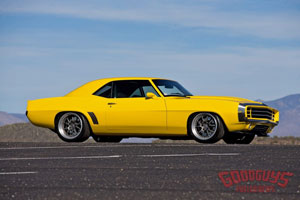
Goodguys Rod & Custom Association will celebrate the 50th anniversary of the ’69 Camaro, July 12, on National Collector Car Appreciation Day. |
|
Goodguys Celebration of the ’69 Camaro at the 22nd PPG Nationals Coincides with Collector Car Appreciation Day
On the 10th consecutive National Collector Car Appreciation Day, July 12, Goodguys Rod & Custom Association plans to celebrate the 50th anniversary of the ’69 Camaro. The Summer of ’69 Display presented by PPG will gather a collection of some of the most ground-breaking and historically significant Camaros for a special indoor display at the Goodguys Rod & Custom Association 22nd PPG Nationals, July 12–14. The Ohio Expo Center’s Kasich Hall will showcase this spectrum of ’69s from the ultra-rare COPO and Yenko examples, to some of the most influential custom builds to come from the hot-rodding community through the decades. The exhibit will host the last two Goodguys Street Machine of the Year winners—the Detroit Speed-built “Tux” and Roadster Shop crafted “Inferno.” Rare originals will also be on display. To have your ’69 Camaro considered for the display, submit a photo and contact information to Jamie Sa at Goodguys Rod & Custom Association.
JMPR Named Agency of Record for Edelbrock
JMPR, a division of imre, has announced that it has been named agency of record for Edelbrock LLC. JMPR will support Edelbrock by enhancing awareness for the brand’s product offerings in the late-model and classic musclecar, hot rod, off-road and JDM sectors, among others, while assisting the company with upcoming product launches and sponsorship announcements. The agency was selected by Edelbrock due to its more than 40 years of experience in the automotive aftermarket, business and lifestyle sectors.
Dr. Jonathan Rich Appointed as Lumileds Chief Executive Officer
Lumileds has announced the appointment of Dr. Jonathan Rich as CEO. Dr. Rich most recently served as chairman and CEO of Berry Global Inc., a Fortune 500 specialty materials and consumer packaging company, from 2010–2018. Dr. Rich succeeds Mark Adams, who is stepping down as CEO and from the board of directors, but will remain in an advisory role to the company. Before Dr. Rich held the position of chairman and CEO of Berry Global, he was president and CEO at Momentive, a specialty chemical company headquartered in Albany, New York. Prior to that, he held positions with Goodyear Tire & Rubber Co., first as president of the Global Chemicals business and subsequently as President of Goodyear’s North American Tire Division. Dr. Rich spent his formative years at General Electric, first as a research scientist at GE Global Research, and then in a series of management positions with GE Plastics.
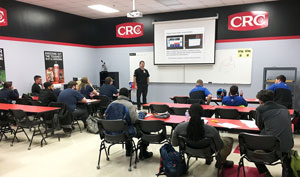
As part of a partnership with Universal Technical Institute (UTI), CRC Industries will provide product training materials and workshops to UTI students and instructors. |
|
CRC Industries Partners With Universal Technical Institute to Help Educate Future Technicians
As part of a partnership with Universal Technical Institute (UTI), CRC Industries will supply all UTI locations with a variety of products from its chemical brands, including CRC, SmartWasher, Sta-Lube, K&W and Weld-Aid. Additionally, CRC will provide product training materials and workshops to UTI students and instructors. In January, CRC launched its first sponsored classrooms at UTI’s Exton, Pennsylvania, campus and its NASCAR Tech campus in Mooresville, North Carolina. CRC plans to roll out three additional sponsored classrooms this year.
Bestop Purchases BullRing USA
Bestop has acquired BullRing USA, seller of retractable tie-down anchors designed for use on Ford, GM, RAM and Toyota trucks. BullRing will become a member of Bestop Premium Accessories Group. The brand’s operations will be overseen by fellow group member PRP Seats’ CEO and founder Aaron Wedeking. PRP Seats is the manufacturer of SpeedStrap. Business will continue to be conducted under BullRing USA.
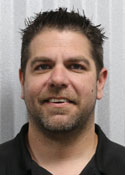
Chuck Whitney |
|
Chuck Whitney Joins RideTech
RideTech has announced the appointment of Chuck Whitney as production manager. In his new role, Whitney will be responsible for overseeing all manufacturing and order-fulfillment operations at RideTech’s Jasper, Indiana, factory. He brings a wealth of aerospace and racing experience to RideTech. Whitney has worked in manufacturing producing AS9100 parts for Boeing, Airbus, Honeywell, Raytheon and a host of other major manufacturers. His extensive racing career includes crew chief and operations manager roles on numerous Dirt Modified and Sprint Car race teams. Whitney manages his son Reed Whitney, who competes in national and regional USAC Quarter Midget tours.
DENSO Named to Fortune’s 2019 Most Admired Companies List
DENSO announced that the company was named to the list of World’s Most Admired Companies by Fortune for the fifth consecutive year. The company placed sixth in the Motor Vehicle Parts industry, advancing one spot from 2018. This recognition follows recent changes, such as investing in strategic startup partners, pushing into software-based solutions and expanding its North American R&D capabilities.
The World’s Most Admired Companies list is compiled by Fortune and Korn Ferry Hay Group through surveys of industry executives, directors and analysts who evaluate companies on nine criteria. DENSO received its highest scores in the innovation, social responsibility and product quality categories.
Have some company news you would like to share? Let us know and the news may appear in an upcoming issue of SEMA eNews. Send your items for consideration to editors@sema.org.