California Governor Gavin Newsom announced this week that some retail businesses will be allowed to reopen under the state’s previously announced plan to restart its economy.
Beginning Friday, May 8, clothing stores, bookstores, florists, sporting goods stores and other retailers—as well as the manufacturing and logistics companies that support them—may reopen for curbside pickup if safe social distancing is practiced and workers are protected.
Additionally, counties less impacted by the virus may begin to reopen at a faster pace than the rest of the state if local public health officials sign off on mandatory safety plans.
Further details regarding California’s plan to reopen may be found on SEMA’s state-by-state directory of COVID-19 closures and openings. The webpage also includes best practices for reopening published by government and industry.
For more information, please contact Christian Robinson at christianr@sema.org.
The U.S. Environmental Protection Agency (EPA) and the Center for Disease Control (CDC) have published comprehensive guidance to ensure cleanliness and safety as Americans reopen businesses, schools, homes and public spaces. The guidance walks through how companies should develop, implement and maintain a plan for cleaning and disinfecting workplaces. It includes an EPA list of disinfectant products that can be used against COVID-19, including ready-to-use sprays, concentrates and wipes, and alternative disinfectants that can be used when EPA-approved disinfectants are unavailable. The guidance reviews social distancing practices and ways to reduce the potential for exposure and includes links to many other related resources.
Visit the EPA website for EPA and CDC Guidance for Cleaning and Disinfecting Workplaces.
For additional information about government and industry best practices and state-by-state reopenings, visit the SEMA Coronavirus webpage.
The U.S. Environmental Protection Agency (EPA) and the Center for Disease Control (CDC) have published comprehensive guidance to ensure cleanliness and safety as Americans reopen businesses, schools, homes and public spaces. The guidance walks through how companies should develop, implement and maintain a plan for cleaning and disinfecting workplaces. It includes an EPA list of disinfectant products that can be used against COVID-19, including ready-to-use sprays, concentrates and wipes, and alternative disinfectants that can be used when EPA-approved disinfectants are unavailable. The guidance reviews social distancing practices and ways to reduce the potential for exposure and includes links to many other related resources.
Visit the EPA website for EPA and CDC Guidance for Cleaning and Disinfecting Workplaces.
For additional information about government and industry best practices and state-by-state reopenings, visit the SEMA Coronavirus webpage.
The U.S. Environmental Protection Agency (EPA) and the Center for Disease Control (CDC) have published comprehensive guidance to ensure cleanliness and safety as Americans reopen businesses, schools, homes and public spaces. The guidance walks through how companies should develop, implement and maintain a plan for cleaning and disinfecting workplaces. It includes an EPA list of disinfectant products that can be used against COVID-19, including ready-to-use sprays, concentrates and wipes, and alternative disinfectants that can be used when EPA-approved disinfectants are unavailable. The guidance reviews social distancing practices and ways to reduce the potential for exposure and includes links to many other related resources.
Visit the EPA website for EPA and CDC Guidance for Cleaning and Disinfecting Workplaces.
For additional information about government and industry best practices and state-by-state reopenings, visit the SEMA Coronavirus webpage.
SEMA eNews highlights products from member-companies each week. This week's submissions are listed below.
The companies included with the SEMA Data Co-op (SDC) logo are also members of the SDC, the definitive, industry-owned and -operated centralized data repository. Learn more about the SDC at www.semadatacoop.org.
Submit new-product press releases for consideration to editors@sema.org.
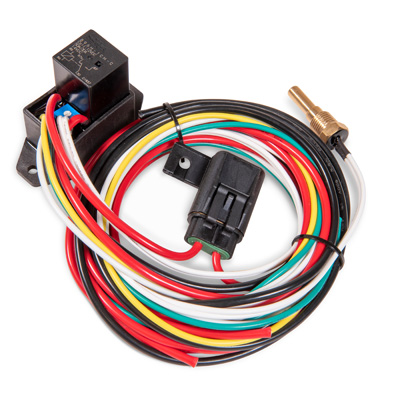
Flex-A-Lite Compact Adjustable Electric Fan Controllers
Flex-A-Lite announces the release of its Compact Adjustable Electric Fan Controller with Relay Kit. The kit includes optional connections to activate the electric fan whenever the air conditioning is on and also for a manual override switch. All wires used are engineered to withstand 221° F and are rated 105° C. The kit comes with everything needed for typical installations. The control module is constructed for water resistance and protection from vibration. It includes a 30-amp relay and inline fuse. All wires are permanently attached to the control module.
Sinister Diesel has released its Cold Air Intake System for the ’19–’20 Dodge Ram 6.7 Cummins application. The system is manufactured out of aluminum, and is mandrel bent and Tig welded. The intake is designed with a cleanable filter element constructed with silicone. The system is engineered to offer almost 50% more flow than the factory system.
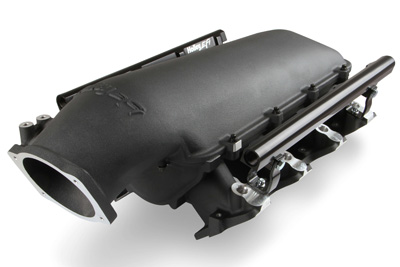
Holley announces the release of its LS1/2/6 Lo-Ram intake manifold kits designed for GM LS Gen III and IV engines equipped with GM LS1/2/6 (cathedral port) cylinder heads. The intake manifolds are engineered to work with OE or aftermarket cylinder heads. The Lo-Ram intake manifolds are designed for forced induction (supercharged or turbocharged) engine applications and a 105mm throttle body. The base intake manifold is constructed with a low height to aid in the packaging of a plenum-mounted air-to-water intercooler for top-feed configurations.
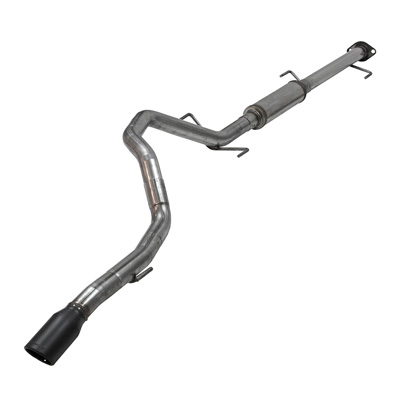
Flowmaster releases its FlowFX cat-back exhaust system for all ’10–’20 Toyota 4Runner models with the 4.0L engine. Features include a 409SS construction designed for added durability and 16-gauge mandrel-bent tubing engineered for free unrestricted flow. The system is manufactured to deliver a moderately deep, powerful sound while tucking up high in the undercarriage. The kit includes instructions and hardware necessary for installation. This system is constructed to pick up over 5 hp and 4.7 lb.-ft of torque over the OE exhaust system.
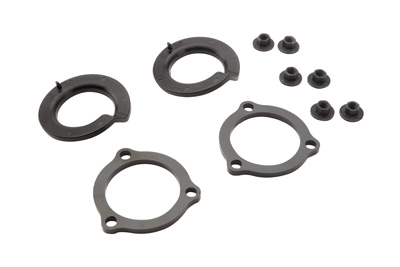
Chevrolet Performance/GMC Accessories 1-Inch Leveling Kit
Chevrolet Performance/GMC Accessories announces the release of its 1-in leveling kit for the ’15+ Chevrolet Colorado and GMC Canyon. The kit is designed to increase ride height by up to 1 in. to level the vehicle’s stance. The elevated stance provides a greater approach angle for increased clearance over off-road obstacles and enables the use of popular off-road tire combinations. This kit utilizes upper and lower spacers engineered to maintain optimal suspension geometry. The leveling kit will not void the New Vehicle Limited Warranty. It is not compatible with ZR2 or 2WD models, or 20-in. wheels
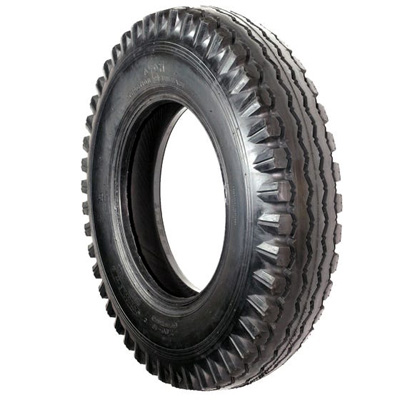
Coker introduces its Avon Traction Mileage tire. The tire is designed for Land Rover, classic Chevrolet, Ford and Dodge trucks. With widely-used sizing of 6.00-16 and 7.00-16, this series is manufactured to fit thousands of applications.
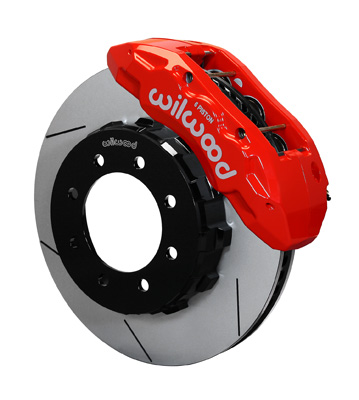
Wilwood Disc Brakes announces its Tactical Xtreme TX6R front and rear brake kit for the ’14–’18 RAM 2500/3500. Forged aluminum six-piston calipers wrap around 16-in.-diameter GT directional vane rotors. Combined with high-grip, long-wear and fade-resistant BP-20 compound SmartPads, the kit is engineered to provide improved braking capacity and durability for all types of high-demand highway, towing, commercial and heavy-load off-road applications. Kits are fully compatible with the OE master cylinder output, ABS system, all electronic controls and the rear OE parking brake. Each kit includes premium-grade hardware, stainless steel DOT-approved flexlines and a detailed installation guide.
SEMA eNews highlights products from member-companies each week. This week's submissions are listed below.
The companies included with the SEMA Data Co-op (SDC) logo are also members of the SDC, the definitive, industry-owned and -operated centralized data repository. Learn more about the SDC at www.semadatacoop.org.
Submit new-product press releases for consideration to editors@sema.org.
Flex-A-Lite Compact Adjustable Electric Fan Controllers
Flex-A-Lite announces the release of its Compact Adjustable Electric Fan Controller with Relay Kit. The kit includes optional connections to activate the electric fan whenever the air conditioning is on and also for a manual override switch. All wires used are engineered to withstand 221° F and are rated 105° C. The kit comes with everything needed for typical installations. The control module is constructed for water resistance and protection from vibration. It includes a 30-amp relay and inline fuse. All wires are permanently attached to the control module.
Sinister Diesel has released its Cold Air Intake System for the ’19–’20 Dodge Ram 6.7 Cummins application. The system is manufactured out of aluminum, and is mandrel bent and Tig welded. The intake is designed with a cleanable filter element constructed with silicone. The system is engineered to offer almost 50% more flow than the factory system.
Holley announces the release of its LS1/2/6 Lo-Ram intake manifold kits designed for GM LS Gen III and IV engines equipped with GM LS1/2/6 (cathedral port) cylinder heads. The intake manifolds are engineered to work with OE or aftermarket cylinder heads. The Lo-Ram intake manifolds are designed for forced induction (supercharged or turbocharged) engine applications and a 105mm throttle body. The base intake manifold is constructed with a low height to aid in the packaging of a plenum-mounted air-to-water intercooler for top-feed configurations.
Flowmaster releases its FlowFX cat-back exhaust system for all ’10–’20 Toyota 4Runner models with the 4.0L engine. Features include a 409SS construction designed for added durability and 16-gauge mandrel-bent tubing engineered for free unrestricted flow. The system is manufactured to deliver a moderately deep, powerful sound while tucking up high in the undercarriage. The kit includes instructions and hardware necessary for installation. This system is constructed to pick up over 5 hp and 4.7 lb.-ft of torque over the OE exhaust system.
Chevrolet Performance/GMC Accessories 1-Inch Leveling Kit
Chevrolet Performance/GMC Accessories announces the release of its 1-in leveling kit for the ’15+ Chevrolet Colorado and GMC Canyon. The kit is designed to increase ride height by up to 1 in. to level the vehicle’s stance. The elevated stance provides a greater approach angle for increased clearance over off-road obstacles and enables the use of popular off-road tire combinations. This kit utilizes upper and lower spacers engineered to maintain optimal suspension geometry. The leveling kit will not void the New Vehicle Limited Warranty. It is not compatible with ZR2 or 2WD models, or 20-in. wheels
Coker introduces its Avon Traction Mileage tire. The tire is designed for Land Rover, classic Chevrolet, Ford and Dodge trucks. With widely-used sizing of 6.00-16 and 7.00-16, this series is manufactured to fit thousands of applications.
Wilwood Disc Brakes announces its Tactical Xtreme TX6R front and rear brake kit for the ’14–’18 RAM 2500/3500. Forged aluminum six-piston calipers wrap around 16-in.-diameter GT directional vane rotors. Combined with high-grip, long-wear and fade-resistant BP-20 compound SmartPads, the kit is engineered to provide improved braking capacity and durability for all types of high-demand highway, towing, commercial and heavy-load off-road applications. Kits are fully compatible with the OE master cylinder output, ABS system, all electronic controls and the rear OE parking brake. Each kit includes premium-grade hardware, stainless steel DOT-approved flexlines and a detailed installation guide.
Go Rhino Director of Sales and Marketing Dave Williams recently spoke to SEMA News about staying safe, while still serving customers. GoRhino was declared an essential business because of their support of first responder customers. In a video conference, Williams explained how they are staying in touch with customers by creating virtual product demonstrations.
At the company, protocols have been implemented to limit group exposure by developing systems whereby office employees who are able, can work from home. All offices and facilities have been treated with special cleaning agents to ensure a safe working environment for those who work in the plant and warehouses. All precautions have been taken in accordance with Health Department directives to avoid the spread of the virus. For more information on Go Rhino visit GoRhino.com.
Matteo Agosta was born in Trapani, Sicily, Italy, before moving to a location in the United States that was a foreshadowing of his future: Detroit.
“As a kid, I was always interested in cars,” Agosta said. “You couldn’t help it, being in Detroit.”
He recalled that his paper route took him past a Jaguar dealership, “and I looked lovingly at the XKE.” As a teen, he made going to auto dealerships on October 1 a regular routine in order to see the new lines of cars. “But my dad was always a Packard lover, so up to 1961, we had only Packards.”
Agosta eventually bought a Fiat 850 Coupe as his first car, and since there was always something going wrong with it, he had to learn to do the repairs himself.
“I had wanted a 180-horsepower ’65 Corvair I saw for sale, but my dad had recently passed away, and my brother thought he had inherited Dad’s role, so he told me to get the Fiat,” Agosta said. “I called it my Fred Flintstone car, because in three short years, it had developed huge rust holes in the floorboard.”
In high school, Agosta took college-prep courses, “and was teetering between business or becoming a doctor.” But in senior year, they had career day at Wayne State University School of Medicine. “A roomful of cadavers changed my mind, and I didn’t want to be a doctor anymore, so I switched to business administration and marketing.”
As he was transferring to the University of Detroit—“I still didn’t know what exactly I was going to end up doing”—he met Carolyn, who would later become his wife. “When you meet a woman that you think you can have a future with, you start studying,“ Agosta joked.
At the time, Carolyn’s father, Lynn H. Steele, had a tool and die shop and was also making rubber parts for classic cars. When he went off to places such as Hershey and Carlisle for car shows, Agosta began going along to help. The rubber parts became a more successful business venture than tool and die, so Steele moved from Farmington, Michigan, to Denver, North Carolina, to open Steele Rubber Products.
Because the company was in a rural area, Steele had trouble finding employees. He also needed someone to help with marketing and running the business. Agosta and Carolyn were married by this time, and Matt was working for Hertz Truck Leasing as a rental salesman and agency manager. Steele invited him to come to North Carolina, and he stepped up to the challenge, despite being slightly nervous.
Agosta became an active SEMA member at the forefront of legislative issues, and he opened dialogs with the auto makers and developed educational opportunities for SEMA members. He also volunteered his time as a board member, chairman of the SEMA ARMO council, and a founding member of the SEMA Political Action Committee and President’s Club, as well as participating in task forces and chairing a variety of committees.
“I enjoy being involved,” Agosta said. “One of my passions is getting small companies to work together, even if we are competitors, to avoid being rolled over by big government or destroyed by the difficulties of keeping up with massive changes in technology and how we do business. I firmly believe that the entire industry does better when we work together reasonably. And when it comes to SEMA, I know that when I take on a project with other people in the industry, I’ll be working with great people and have fun doing it.”
Which is why he was “blown away” to be named to the SEMA Hall of Fame.
“I always see myself as a worker bee, but I can’t think of any one thing I did that was enough to put me in the same company as many of the others whom I look up to in the Hall of Fame,” Agosta explained. “It’s a matter of, I got involved, whether at the board level, educational, legislative or whatever I thought was worthwhile to do. I did it because it was the right thing to do.”
To learn more about the SEMA Hall of Fame, visit www.semahof.com.
Matteo Agosta was born in Trapani, Sicily, Italy, before moving to a location in the United States that was a foreshadowing of his future: Detroit.
“As a kid, I was always interested in cars,” Agosta said. “You couldn’t help it, being in Detroit.”
He recalled that his paper route took him past a Jaguar dealership, “and I looked lovingly at the XKE.” As a teen, he made going to auto dealerships on October 1 a regular routine in order to see the new lines of cars. “But my dad was always a Packard lover, so up to 1961, we had only Packards.”
Agosta eventually bought a Fiat 850 Coupe as his first car, and since there was always something going wrong with it, he had to learn to do the repairs himself.
“I had wanted a 180-horsepower ’65 Corvair I saw for sale, but my dad had recently passed away, and my brother thought he had inherited Dad’s role, so he told me to get the Fiat,” Agosta said. “I called it my Fred Flintstone car, because in three short years, it had developed huge rust holes in the floorboard.”
In high school, Agosta took college-prep courses, “and was teetering between business or becoming a doctor.” But in senior year, they had career day at Wayne State University School of Medicine. “A roomful of cadavers changed my mind, and I didn’t want to be a doctor anymore, so I switched to business administration and marketing.”
As he was transferring to the University of Detroit—“I still didn’t know what exactly I was going to end up doing”—he met Carolyn, who would later become his wife. “When you meet a woman that you think you can have a future with, you start studying,“ Agosta joked.
At the time, Carolyn’s father, Lynn H. Steele, had a tool and die shop and was also making rubber parts for classic cars. When he went off to places such as Hershey and Carlisle for car shows, Agosta began going along to help. The rubber parts became a more successful business venture than tool and die, so Steele moved from Farmington, Michigan, to Denver, North Carolina, to open Steele Rubber Products.
Because the company was in a rural area, Steele had trouble finding employees. He also needed someone to help with marketing and running the business. Agosta and Carolyn were married by this time, and Matt was working for Hertz Truck Leasing as a rental salesman and agency manager. Steele invited him to come to North Carolina, and he stepped up to the challenge, despite being slightly nervous.
Agosta became an active SEMA member at the forefront of legislative issues, and he opened dialogs with the auto makers and developed educational opportunities for SEMA members. He also volunteered his time as a board member, chairman of the SEMA ARMO council, and a founding member of the SEMA Political Action Committee and President’s Club, as well as participating in task forces and chairing a variety of committees.
“I enjoy being involved,” Agosta said. “One of my passions is getting small companies to work together, even if we are competitors, to avoid being rolled over by big government or destroyed by the difficulties of keeping up with massive changes in technology and how we do business. I firmly believe that the entire industry does better when we work together reasonably. And when it comes to SEMA, I know that when I take on a project with other people in the industry, I’ll be working with great people and have fun doing it.”
Which is why he was “blown away” to be named to the SEMA Hall of Fame.
“I always see myself as a worker bee, but I can’t think of any one thing I did that was enough to put me in the same company as many of the others whom I look up to in the Hall of Fame,” Agosta explained. “It’s a matter of, I got involved, whether at the board level, educational, legislative or whatever I thought was worthwhile to do. I did it because it was the right thing to do.”
To learn more about the SEMA Hall of Fame, visit www.semahof.com.
The SEMA Video Archives is about re-living special moments in our industry’s history. From interviews with industry legends to SEMA Show recaps and more, these videos offer viewers a chance to watch our SEMA Family doing what it does best—working hard, pushing the limits and having a little bit of fun, too.
This week’s video features interviews with 2018 Battle of the Builders judge Fred Williams, 2018 BOTB Young Gun Winner Kyle Kuhnhausen and the SEMA Cares Ford F-250.